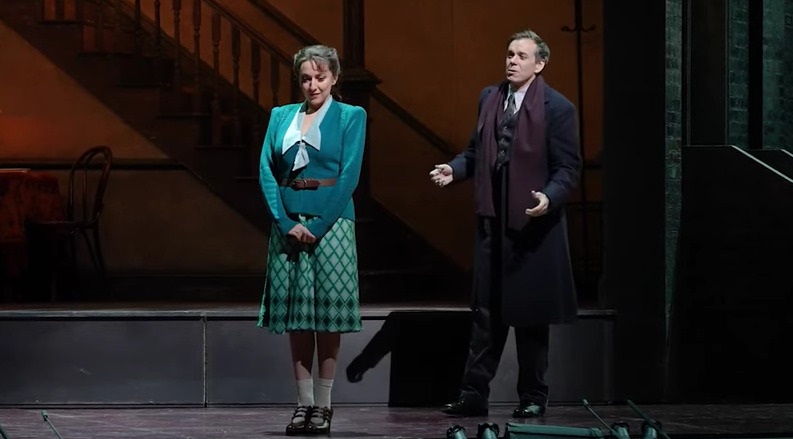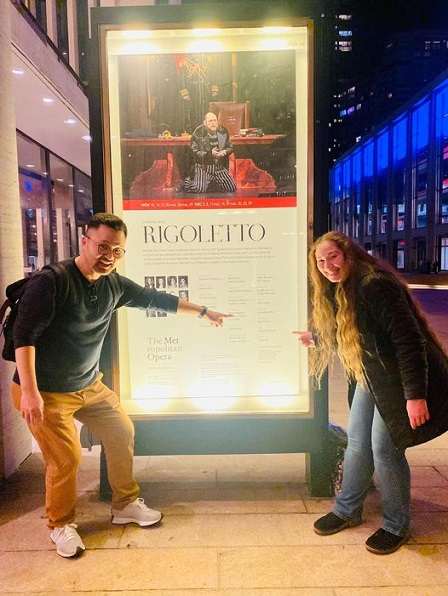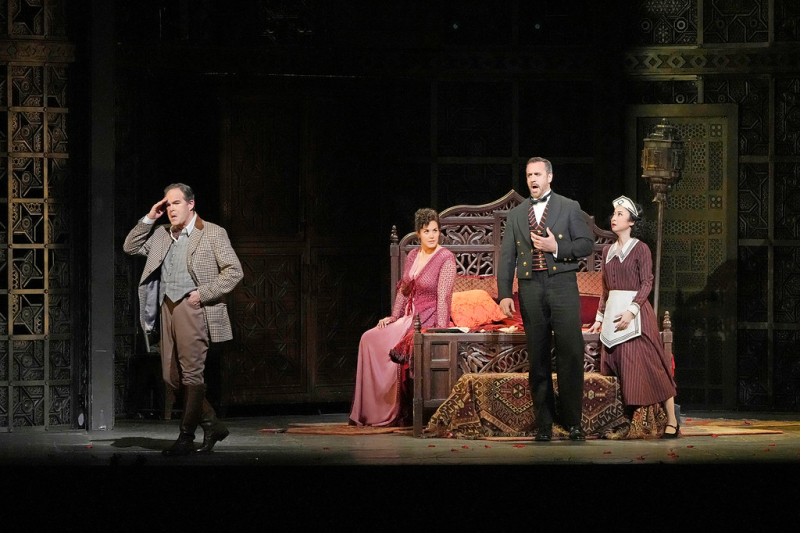
Tag: The Met

  • Helena Dix in Bellini’s NORMA @ The Met

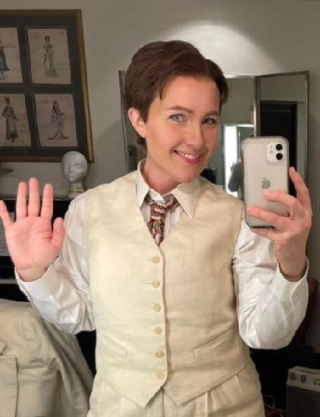
    Dix norma

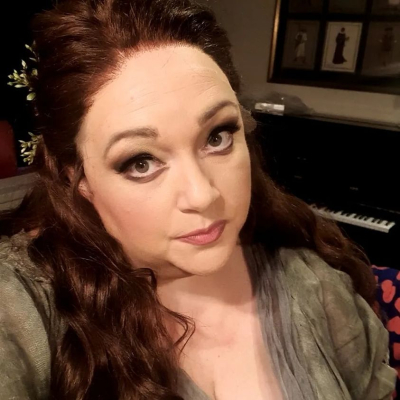
    Above: Helena Dix, costumed as Norma, in her Met dressing room; I borrowed this image from the soprano’s Facebook page

    Author: Oberon

    Saturday March 25th, 2023 matinee – The three great peaks of the bel canto repertoire are – for me – Donizetti’s LUCIA DI LAMMERMOOR, Rossini’s SEMIRAMIDE, and Bellini’s NORMA. This afternoon I was at The Met to see the season’s final performance of the Bellini. The casting of Sonya Yoncheva in the title-role turned out to be pretty controversial, and the soprano took to social media to complain that people were comparing her Norma to recordings and remembered performances from decades ago.

    I guess she is unaware that this has always been a favorite pastime of serious opera-lovers…something that I learned early on in my opera-going career. Examples: during the enormous ovation after the Mad Scene of Beverly Sllls’ first New York Lucia, Maria Grimaldi waltzed up behind me and growled in my ear: “Not as good as Lily Pons!”. And while I was yelling “brava” at the Met for Birgit Nilsson’s 1971 Isolde triumph, the fellow next to me, who was applauding feebly, said: “I guess you are too young to have heard Flagstad!” 

    Anyway, the problem became moot when Ms. Yoncheva (who was wonderful as Giordano’s Fedora earlier this season) took ill and withdrew from the final three NORMAs, one by one. Angela Meade was called in for the first Yoncheva cancellation, and the cover – Helena Dix – stepped in for the second. Everyone was waiting to see if Yoncheva would come back with a vengeance for today’s final NORMA, which was being broadcast.

    In truth, I was hoping for a cast change, and that Ms. Dix would be singing today. I’d started following the plucky Aussie soprano on Facebook a few weeks ago when I began to see her postings about what it’s like to cover a major role at The Met. She had covered Norma here in 2017, and had also covered Alice Ford in FALSTAFF in 2019, going on at one performance for her Met debut.

    This year, as it happened, she ended up singing quite a few of the NORMA rehearsals. But Ms. Yoncheva sang the prima, and the next two performances. When she became ill, Peter Gelb applied his frequent tactic: he located a “star” to step in rather than relying on the cover. Thus, Ms. Meade returned to a production in which she has previously appeared.

    This morning, as I was getting ready to leave for the noontime matinee, an e-mail from a soprano/friend of mine popped up: “Helena Dix is singing Norma today!” This elevated my mood considerably.

    The house was nearly full as Maurizio Benini took his place on the podium. Benini has frustrated me in the past with his eccentric tempi in operas like LUCIA DI LAMMERMOOR, MARIA STUARDA, and MANON. As the afternoon progressed, he upheld his reputation as a routinier. 

    Christian van Horn as Oroveso was simply superb in the opera’s opening scene, and he remained so throughout the afternoon: a potent vocal force and an imposing stage figure. His “Ah, del Tebro” later in the evening was gorgeously sung, and his shock at Norma’s revelation of her motherhood was a lightning bolt. Together with Ms. Dix and Mr. Spyres, Mr. van Horn made the opera’s poignantly dramatic finale, “Deh! Non volerli vittime…” heart-rendingly moving.

    Meanwhile, back in Act I, as the Druids withdraw from the forest clearing, the Romans appear: Michael Spyres as Pollione and Yongzhao Yu as Flavio. The latter showed a fine voice and was an alert actor, whilst Mr. Spyres – a marvelous Met Idomeneo earlier this season – was sounding more baritonal today. The Spyres voice has great immediacy and, despite a hoarse high-C in “Meco all’ altar di Venere” his singing and dramatic engagement (all afternoon, really) was a potent experience. The tenor was having a rousing go at the cabaletta “Me protegge, me difende“, reaching the final phrase with a penultimate A-flat which he then elevated to the more customary B-flat, at which moment Benini decided to amp up the orchestra, ruining the effect.

    When Ekaterina Gubanova was announced as Adalgisa, I admit I had misgivings; her Act II Brangaene at Geffen Hall at 2019 showed some unease in the music’s upper reaches, and Adalgisa is quite demanding in that regard. But Ms. Gubanova seemed today to have solved (for the most part) that problem. She was wonderfully expressive in her opening monologue, and she matched Mr. Spyres in passion and tonal appeal in their long duet where Adalgisa finally succumbs to Pollione’s pleadings.

    The opera’s sixth character, Norma’s confidante Clothilde, was the excellent Brittany Olivia Logan, who we need to hear in larger roles.

    Ms. Dix appeared onstage as the chorus hailed the coming of their high priestess. The soprano carefully mounted the pointless platform from which she must sing opera’s most demanding entrance aria, the immortal “Casta diva”. The Dix voice is not large, but it’s well-projected. Her opening address was authoritatively declaimed, ending with a shimmering softness at “Il sacro vischio io mieto…

    Benini set a slow pace for the “Casta diva…” which Ms. Dix sang as a spellbound invocation. As her soft tones flowed thru the vocal line, a hush fell over the house; in the second verse, a tiny embellishment on the phrase “Che regnar tu fai nel ciel” sent a frisson thru me…a delightful feeling that would be experienced several times as the opera progressed. For this is Ms. Dix’s signature vocal attribute: these delicate pianissimi that are woven into phrases at just the right moment, putting an individual stamp on the music. I came to anticipate them, and she never let me down.

    But we were jarred out of reverie when Benini set up a tempo for the cabaletta, “Ah! bello a me ritorna” that only a Sills or a Bartoli could have coped with. Ms. Dix went at it gamely, but to little avail.

    Things settled in after that, and the soprano’s confidence increased – though through no help from the conductor. Mlles. Dix and Gubanova formed a sisterly duetting society, and Mr. Spyres’ bristling anger at finding that his secret love had unwittingly betrayed him stirred up a fiery finish to the first act, polished off with a Dix top-D. 

    Ms. Dix’s contemplating the murder of her children was effectively done, and then Ms. Gubanova appeared and the two women got to the heart of the matter with a finely-matched “Mira O Norma” filled with lovely, expressive singing from both. Benini then luckily set a perfect tempo for “Sì, fino all’ore estreme” wherein the singers indulged in a bit of rubato, harmonized the scale passages to fine effect, and Adalgisa took her leave in a fit of optimism, unaware that they will never see each other again.

    The final scene of NORMA is a masterpiece all on its own: Norma’s hopes are dashed, but when she has Pollione in her power, she cannot kill him. Ms. Dix and Mr. Spyres excelled in a super-charged “In mia man alfin tu sei” but despite his defiance, she still cannot bring herself to slit his throat. About to reveal Adalgisa’s crime of breaking her sacred vows, Norma is overcome with guilt and names herself instead. Ms. Dix spins out more delicate suspended tones at “Io son la rea!“, and, later, at “O padre!” as she prepares to beg her father to spare her children. The tragedy moves towards its end with the devastating “Deh! Non volerli vittime” and a last haunting piano plea from Ms. Dix: “Ah! Padre, abbi di lor pietà!“.  Norma and Pollione go to their deaths, scorned and spat upon by the Druids.

    I went to the stage door to greet Mr. van Horn, and to meet Ms. Dix, who is a delightful person. A sizeable crowd had gathered; people, intrigued by her “cover” story, wanted to meet her. She gave me a special autograph before joining the young boys who had portrayed her sons, Axel and Magnus Newville, to pose for photos.

    Norma - helena  jpg

    You can get an idea of what makes Helena Dix an intriguing singer in this brief clip from the Verdi REQUIEM.

    ~ Oberon

  • A New LOHENGRIN @ The Met

    Screenshot 2023-02-24 at 12-49-51 Videos

    Above: Piotr Beczala and Tamara Wilson in LOHENGRIN at The Met

    Author: Oberon

    Sunday February 26th, 2023 matinee – The premiere of a new production of Wagner’s LOHENGRIN at The Met; this marks the fourth production of this magnificent opera that I have experienced at The Met. My first encounter with the opera was in Wieland Wagner’s production in 1967 – a performance that featured the Met debut of the marvelous soprano Elisabeth Grümmer. In 1976, August Everding’s production – with designs by the great Ming Cho Lee – was first given; I saw it several times, with incredible singers like Rene Kollo, Placido Domingo, Pilar Lorengar, Mignon Dunn, Anna Tomowa-Sintow, Eva Marton, and Leonie Rysanek in the leading roles.

    In 1998, Ben Heppner and Deborah Voigt headlined the cast of Robert Wilson’s fascinating, stylized production; Karita Mattila and Rene Pape later sang Elsa and King Henry respectively in this production, and two very sharply contrasted but equally exciting tenors made their Met debuts in the title-role of the Wilson production: Johan Botha and Klaus Florian Vogt.

    This afternoon, director François Girard followed up his fascinating Met debut production of PARSIFAL with a LOHENGRIN that follows Parsifal’s son to the banks of the River Scheldt to protect the virtuous Elsa. With stunning sets by Tim Yip, this afternoon’s performance gathered together a strong cast whose hard work was sometimes nullified by Yannick Nézet-Séguin’s brassy conducting.

    In a large underground bunker in the ruins of a haunted castle near Antwerp, we find the people of Brabant huddled among the tree roots. Aside from the threat of the invading Hungarian forces, they are a community struggling with the disappearance of young Gottfried, whose sister Elsa is alleged to have killed the boy. In opposition to Elsa are Count Telramund and his sorceress-wife, Ortrud. The divided populace all wear black hooded cloaks which we soon find have colour-coded linings: green for the good guys, red for the baddies, and white for supporters of Elsa, who is either a murderess or a blameless virgin/victim. Throughout the opera, the populace open their capes to show where their loyalties lie; this unison ‘flashing’ gesture grew tiresome – even hilarious – over time.

    Joining the large Met chorus – who sang splendidly all afternoon – were a group of dance artists who performed in-sync stylized movements; among them, my beautiful friend Willy Laury brought his own personal magnetism to every gesture.

    LOHENGRIN is a big sing for the six principal artists; they need a very thoughtful and alert conductor at the helm to make the most of their magnificent music. But today, the singers were frequently jinxed by the blasts of sound coming up from the pit. In those climactic passages where the voices need cushioning support, the singers instead found themselves having to force their tone in order to stay afloat. This trend of ramping up the orchestral volume has been in frequent evidence this season where conductors like Armiliato, Rizzi, and Scapucci have sometimes seemed to have been on a joyride, using decibels to make the music more superficially “exciting”. In a Wagner opera, the balance between voices and orchestra is even more crucial; Nézet-Séguin should have learned this by now.

    Despite this imbalance, the orchestra played gorgeously, most especially in Elsa’s Procession to the Cathedral in Act II, where the featured wind soloists were especially lovely to hear. The prelude to Act III – where the orchestra has the music all to itself – was suitably grand; the director used this music for a solo pantomime for Christine Goerke’s vividly over-the-top (in a good way) Ortrud.

    Brian Mulligan’s noble, calming presence and expressive face, aligned to his warm and attractive voice, made the role of the Herald more prominent than is often the case. In this production, the character is not just an ‘announcer’ but also a confidante of the king. Mr. Mulligan was first-rate, despite having to cope with the onslaughts from the pit at times. 

    Günther Groissböck’s dignified King Henry was an excellent portrait of a leader who has come to this land with a purpose, only to find himself playing judge and jury in a local conflict. Mr. Groissböck is not a helden-basso, possessed, as he is, of a handsome lyrical timbre of ample power for this music…under normal circumstances. The brassy blasts arising from the pit did him no favors, but he held to his own, with much impressive vocalism.

    Yevgeny Nikitin as the sinister Telramund managed to out-shout the orchestra in a couple of spots, but it should not have been necessary; beyond that, he offered many creepily subtle passages. Sparks flew in his scene with Ortrud at the start of Act II, which was one of the highlights of the afternoon…in part because the orchestra playing here was thoroughly supportive. Later in the act, as the wedding procession began to move onward, Nikitin’s Telramund stepped out of the crowd and menaced Elsa to striking effect.

    Having seen several marvelous Elsas in my day – in addition to those named above, there were Sabine Hass and Arlene Saunders – this afternoon I was happy to add Tamara Wilson to the list. This soprano, whose Met debut as Aida in 2014 was superb, should be singing here far more frequently. She has a house-filling sound, grounded in lyricism, with an appealing vulnerable streak to her timbre, and high notes that can soar or float at will. Her ‘dream’ aria in Act I and her Song to the Breezes in Act II were vocal highlights of the afternoon, and in her Act II confrontation with Ortrud, Ms. Wilson and Christine Goerke made sparks fly. Ms. Goerke first backed her victim all the way across the stage, taunting the would-be bride menacingly. But Ms. Wilson summoned Elsa’s courage, and turned the tables: soon it was Goerke who was retreating as Wilson advanced. The agitated strings that provide the undercurrent for this encounter gave perfect support. Tamara Wilson went on to sing thrillingly in the bridal chamber scene, and she was given a spirited ovation at her bows. 

    Goerke ortrud

    You’ve got to love Christine Goerke’s Ortrud. Although in recent seasons her top register has become unreliable, the sheer force of her personality and the inherent power of her singing can work wonders. In the span of a few weeks, she has given us an incredibly touching Madame Lidoine in DIALOGUES DES CARMELITES and has now turned in an epic Ortrud, suitably grand-scale theatrically, and vocally firing on all cylinders, despite the random stray note.

    In this production, Ortrud appears during the prelude: a silent and imposing figure with red hair, clad all in blood-red and gold. The character has little to sing in Act I, but Goerke made Act II all about Ortrud. First comes the tremendous duet with Telramund, in which the Goerke voice simply dripped with evil intent and conniving insinuation; this is followed soon enough by her deceitful, servile plea to Elsa to grant her amnesty. Waiting for Elsa to descend from her balcony, Goerke launches Ortrud’s diabolical invocation to the pagan gods. Sung with blistering passion and commitment, Goerke made a meal out of it, sustaining the climatic passage with fierce intensity. In the ensuing duet, Ortrud eventually wins Elsa over, and they harmonize in an almost bel canto passage, leaving the orchestra to take up the gorgeous melody (my favorite part of the entire score) as they enter the castle. In the later confrontation between the two women before the wedding ceremony, mentioned above, Goerke showed off some chesty resonances.

    Ms. Goerke entered spiritedly into M. Girard’s somewhat hokey mime scene for Ortrud at the start of Act III: preening herself whilst casting spells to destroy the marriage of Elsa and Lohengrin, Goerke seemed larger than life.

    Enjoying a huge and well-deserved triumph, the Polish tenor Piotr Beczala was everything you want in a Lohengrin, and more. As if arriving out of a time warp, the character is clad in contemporary style: white shirt and black trousers. From note one, Mr. Beczala’s expressive singing seemed made for role of the mysterious visitor. Hauntingly lyrical, with refined piano turns of phrase woven in, he put me in mind of Nicolai Gedda’s only Wagnerian excursion. Every word and note seemed to mean something to the tenor, and his handsome presence made him as appealing to watch as to hear. Especially pleasing was his singing in the bridal chamber scene, blending timbres luminously with Ms. Wilson. Mr. Beczala then rose beautifully to the demands of the opera’s finale, where “In fernem land” and the poignant tenderness of “Mein lieber Schwan!” were so beautifully voiced. It was a thrill to hear (and to be part of) the massive wave of applause and cheers that greeted the tenor’s solo bow.

    As the ovation continued, there were boos for the production team; this was understandable – even inevitable – I suppose, yet overall it was an inoffensive and at times engaging take on the opera.

    Watch the final ovation and curtain calls here.

    ~ Oberon

  • MAGIC FLUTE @ The Met

    Joelle Harvey

    Above: soprano Joélle Harvey, this evening’s Pamina

    Monday December 26th, 2022 – The Met’s pared-down, English-language MAGIC FLUTE always offers a chance to hear interesting singers, from veterans to debutantes. Tonight’s cast featured a longtime favorite, Alan Held, as the Speaker, and the Polish soprano Aleksandra Olczyk as the Queen of the Night in her Met debut season.

    Under Duncan Ward’s baton, the opera flew by. A packed house gave only meager applause to the arias (Ms. Olczyk’s “wrath of hell” aria being the exception). But at the curtain calls, it was Joélle Harvey who received the greatest barrage of cheers…and rightly so, for she sang exquisitely.

    Ben Bliss was an excellent Tamino, finely shaping and enunciating his Portrait Aria (which is cruelly shortened in this production) and truly impressive at “O endless night…”, the opening phrase of Tamino’s great scene with The Speaker. For me, this is the pivotal passage of the opera, and Mr. Held’s responses to Mr. Bliss’s questions had gravity and meaning. Excellent, gentlemen!

    The Three Ladies (Jessica Faselt, Megan Marino, and Carolyn Sproule) sounded overly-vibrant at first, but soon smoothed things out and did some fine singing. I especially liked Ms. Sproule’s timbre: it is the lowest voice that gives the Ladies’ trios their moving parts.  The Three Spirits were rather weak at first, but they later perked up. I love their advice to the suicidal Papageno: “You have a life, so live it while you can!”

    Joshua Hopkins was again a very enjoyable Papageno, sure of voice and clear of diction. Soloman Howard sang Sarastro’s two great arias with nobility and rich tone, and – at the opposite end of the vocal spectrum – Aleksandra Olczyk tossed off the Queen of the NIght’s pyrotechnics successfully: the voice brightens at the top, making the high-Fs easy targets for her.  A bit of pitchiness did not deter from her success.

    Rodell Rosel repeated his crafty Monastatos, and Lindsey Ohse’s spirited Papagena showed her lustiness in the spoken dialogue: I think she will be wearing the pants in that marriage.

    Ms. Harvey walked away with top honors this evening; Pamina’s aria had a tonal shimmer that fascinated me, especially in the floated piani notes, which gave me goosebumps. The soprano’s luminous sound at “Be truthful…be truthful...” was matched soon after with her radiant “Tamino mine…”

    ~ Oberon

  • Benjamin Bernheim in RIGOLETTO @ The Met

    Feola bernheim rigoletto

    Above: Rosa Feola and Benjamin Bernheim in RIGOLETTO at The Met

    Author: Oberon

    Saturday November 26th, 2022 matinee – After reading several glowing reviews of the French tenor Benjamin Bernheim over the past few years, and hearing of his recent success in LUCIA DI LAMMERMOOR opposite Lisette Oropesa at Vienna and Zurich, I decided to add today’s Met matinee of RIGOLETTO to my schedule. And I’m glad I did! This afternoon’s performance was strongly cast, from the title-role down to the Page and Guard.

    This was my first time to see the Bartlett Sher production. The staging is inoffensive, with some interesting ideas; but the scene of Gilda’s sacrifice at the inn was clumsily managed. The set sometimes revolves like a carousel on high speed. Having been brought to the palace by the courtiers, Gilda seems eager when the duke comes to her, but then she seems humiliated when she emerges from the bedroom soon after. Having a bloodstain on her white nightgown might have been a telling touch.

    In my estimation, Mr. Bernheim carried off top vocal honors. The voice is wonderfully clear and well-projected, with top notes that bloom. He is capable of ravishing soft singing, and he keeps the music fresh with subtle dynamic shifts. His performance was stylish and assured; I certainly hope we will hear more of him at The Met. 

    Kelsey

    Quinn Kelsey’s Rigoletto (photo above) was sung with great power and commitment. His incredibly sustained “Ah no, è follia!” at the end of the “Pari siamo!” monolog was one of the afternoon’s great thrills, and throughout the opera, his vocal generosity seemed boundless. Whether it was the baritone’s decision or the conductor’s, “Cortigiani, vil razza dannato!” was taken at an absurdly fast pace, giving it a surface urgency rather than a deeper sense of feeling; but when “Miei signori…” was reached, the great beauty and tenderness of the Kelsey voice was at its most impressive. There were a few rather husky notes as the opera progressed, but overall Kelsey’s Rigoletto was a stunning performance. (I should mention here the beautiful playing of the cellist in the “Miei signori…” section).

    Rosa Feola had many lovely passages as Gilda, though the sound of the voice is not truly distinctive. To me, she seems more of a lyric rather than a coloratura soprano, and some of the topmost notes tested her a bit. It would be nice to hear her as Liu or Mimi.  

    Aside from Mr. Bernheim, John Relyea’s Sparafucile was a big draw for me. The basso cuts a fine figure as the assassin, and his dark timbre is perfect for this music. At the end of his Act I encounter with Rigoletto, Mr. Relyea’s incredibly sustained low-F drew a round of applause.

    In her Met debut role of Maddalena, Aigul Akhmetshina displayed an attractive presence and a plushy voice; she merits more Met opportunities. I consider Monterone to be a very important character in the opera; though his scenes are relatively brief, if they are powerfully delivered they can make a great impact. Today Bradley Garvin sang the role with vivid authority. As the courtiers, Scott Scully (Borsa), Jeongcheol Cha (Marullo), and Paul Corona and Brittany Renee (the Cepranos) were all excellent, and Edyta Kulczak’s Giovanna – clearly on the Duke’s payroll – had a memorable moment: as Rigoletto stands aghast at having been an accomplice in the kidnapping of this own daughter, the nurse flees the house with her suitcase. Brilliant! 

    How many times over the decades that I have been going to the opera have the singers of the Page and the Guard in RIGOLETTO captured my attention? Today was the first! Met choristers Andrea Coleman and Yohan Yi each stepped up to bat, and each hit a home run. Ms. Coleman has a bit more to sing, and she sang it prettily indeed; and Mr. Yi’s “Schiudete: ire al carcere Monteron dee!” was strikingly voiced. I borrowed this photo of Mr. Yi and Ms. Coleman from the Met Chorus’s Facebook page:

    Yi and coleman

    I met Speranza Scapucci when she was at Juilliiard; several of my young singer-friends who were studying there at the time spoke highly of her. Lately, she has come into her own, with prestigious productions on her resumé, including a debut at La Scala conducting Bellini’s CAPULETI ED I MONTECCHI featuring Ms. Oropesa as Giulietta. This run of RIGOLETTO marked her Met debut performances.

    From the pit, Ms. Scapucci certainly gave us a lively RIGOLETTO; the opera swept by with a feeling of inevitability, yet she also had a handle on the more reflective passages. The only drawback, really, was her tendency to let the brass players cover the voices; things got out of hand in the ‘storm’ trio in the final act, where Mlles. Feola and Akhmetshina and Mr. Relyea were giving their all, to no avail.

    Metropolitan Opera House
    Saturday November 26th, 2022 matinee

    RIGOLETTO
    Giuseppe Verdi

    Rigoletto...............Quinn Kelsey
    Gilda...................Rosa Feola
    Duke of Mantua..........Benjamin Bernheim
    Maddalena...............Aigul Akhmetshina
    Sparafucile.............John Relyea
    Monterone...............Bradley Garvin
    Borsa...................Scott Scully
    Marullo.................Jeongcheol Cha
    Count Ceprano...........Paul Corona
    Countess Ceprano........Brittany Renee
    Giovanna................Edyta Kulczak
    Page....................Andrea Coleman
    Guard...................Yohan Yi

    Conductor...............Speranza Scappucci

    ~ Oberon 

  • Stella & Tucker: TOSCA @ The Met

    Stella tosca

    Antonietta Stella is Tosca (above) and Richard Tucker is Cavaradossi in this Saturday matinee broadcast from The Met in 1958. Leonard Warren is Scarpia, Salvatore Baccaloni is the Sacristan, and Dimitri Mitropoulos conducts.

    Listen here.

    CAST

    Floria Tosca: Antonietta Stella; Mario Cavaradossi: Richard Tucker; Scarpia: Leonard Warren; Sacristan:  Salvatore Baccaloni; Spoletta: Paul Franke; Angelotti: Norman Scott; Sciarrone: George Cehanovsky; Shepherd: George Keith; Jailer Louis Sgarro

  • Mary Curtis-Verna ~ Vissi d’arte

    6a00d8341c4e3853ef0120a721a16e970b

    Mary Curtis-Verna sings the “Vissi d’arte” from Puccini’s TOSCA on the Ed Sullivan Show in 1950.

    Watch and listen here.

    She sent me the above photograph after I sent her a fan letter. Ms. Currtis-Verna has a special place in my heart: she was my first-ever Turandot, at The Met in 1965, making a vivid impression.

  • Sasha Cooke’s Cherubino @ The Met

    Sasha cherubino

    Above: mezzo-soprano Sasha Cooke in a Cherubino selfie; borrowed from Sasha’s Facebook page

    Author: Oberon

    Thursday April 21st, 2022 – I very seldom go to evening performances at The Met these days; the long intermissions can leave me getting home after midnight, which makes me nervous. However, I could not possibly forego a chance to see Sasha Cooke’s Cherubino at The Met, and since this cast did not have a matinee I could attend, I went tonight with a plan to stay for two acts, thus hearing both of Sasha’s arias. Once there, the excellence of the entire cast made me wish I could stay to the end…to give Sasha a big “bravissima” during the bows.

    The Met’s current NOZZE DI FIGARO production, needless to say, is updated, having a sort of Downton Abbey feel. The set, of metallic latticework, seemed ugly at first, but I soon got used to it as it revolved from room to room. Richard Eyre’s staging is excellent, each character being finely delineated. I “learned” this opera in the late 1960s when I attended several performances of the New York City Opera’s English-language production, and the words kept coming back to me this evening: opera in English works well for comedies. Of course, tonight it was Italian that was being sung.

    Pfeffer-nimrod-david-resized

    The Israeli conductor Nimrod David Pfeffer (above) made his Met podium debut tonight; a member of the Company’s music staff since 2014, Maestro Pfeffer was given this last NOZZE of the current run, and he did a very fine job. The brisk overture set the tone of the evening, and he kept the energy level high whist still allowing the singers some leeway here and there to spin out their lines, or add a bit of embellishment. A couple of times, things got out-of-sync; but this was swiftly remedied. Of special note this evening were the expert continuo players: Howard Watkins (fortepiano) and Julia Bruskin (cello)…bravi!!

    Every person in the cast was outstanding; from both a vocal and a theatrical point of view, this NOZZE stood with the finest performances of this masterpiece that l have attended.

    Nozze 2

    Above, in a Ken Howard/Met Opera photo: Gerald Finley, Federica Lombardi, Christian van Horn, and Ying Fang

    Let’s start with the title-role: Christian van Horn’s Figaro was at the same entrancing level as his Mefistofele here in 2018. With his house-filling voice and tall, slender frame, this singer compels you to attend to his every note, word, and gesture; yet somehow he also always manages to be part of the ensemble, so attentive to everything that happens around him. His “Se vuol ballare” and “Non piu andrai” were splendidly sung. 

    Mr. van Horn and the lovely Ying Fang as Susanna made a cozy couple; they were very comfortable with each other physically, and their by-play in the opening scene was quite intimate. It seemed obvious that, while their marriage vows were as yet unspoken, this would not be a “brautnacht” in the true sense of the word. Ms. Fang’s singing was simply delicious; her voice so sweet and clear in the big House. As an actress, she proved deft and subtle, with expert timing and witty facial expressions. One can hear already a Contessa in her future, but for now let us savour her delectable Susanna.

    Lombardi finley

    Above, the Almavivas: Ferderica Lombardi and Gerald Finley; a photo borrowed from Mr. Finley’s Twitter page

    Gerald Finley’s Count was yet another feather in the cap of this wonderful Canadian bass-baritone, who I last saw as a magnificently-sung Athanaël in THAIS in 2017. He gave a perfect portrayal of the predatory Count, constantly thwarted by Figaro & Friends. I was surprised to discover that Mr. Finley is in his 60s now: he sounds and moves like a much younger man. The voice is in fine estate, including an interpolated top note as his dismissed his wife’s story about Cherubino’s presence in her boudoir: “I don’t believe you!”

    I heard the Italian soprano Federica Lombardi earlier this season as Musetta in BOHEME and thought she was good but unexceptional. Reading her Playbill bio tonight, I found that it’s loaded with Mozart roles; and then, hearing her “Porgi amor“, I could easily understand how her Mozart is valued. The voice is clear, with a kind of quiet allure; she sometimes employs straight-tone to lovely effect, and her dynamics gave me tingles of delight. In the ensemble where her husband tries to win her forgiveness, Ms. Lombardi’s voice flew up to two crystalline high-Cs. A tall, slender woman, the soprano looks striking onstage, and she conveyed the Contessa’s nobility and the long-suffering abuse she’s endured in he marriage. But also: she let us know that Rosina is still a young woman, and understandably tempted by the over-sexed Cherubino. Ms. Lombardi is a valuable addition to The Met roster

    Nozze

    Above, two girls and a boy in a bedroom: Ying Fang, Federica Lombardi, and Sasha Cooke; a Met Opera photo

    I first heard Sasha Cooke when she was a Met Young Artist; she was in the same ‘class’ as my lovely Lisette Oropesa, and they both had their ‘stepping out’ in solo parts in HANSEL & GRETEL: Sasha as the Sandman, and Lisette as the Dew Fairy. I heard Sasha at various Young Artist presentations, and was much taken with both her voice and her distinctive personal beauty. Since then, she has become a world-class recitalist whilst continuing to take on choice operatic roles. This season, after being absent since 2008, Sasha returned to the Met as Edwige in Handel’s RODELINDA and as Cherubino.

    The first thing I noticed about about Sasha tonight – aside from what a handsome boy she makes – was that the voice has grown larger and warmer over time, without losing its unique qualities. In the playful “Non so più cosa son“, she handled the Maestro’s swift tempo with complete assurance, and then made a very touching impression as the page turns more pensive at “E se non ho chi mi oda...” before polishing it off with a joyous …”parlo d’amor con me!”  In the page’s trademark aria, “Voi che sapete“, Sasha’s warm tone and perfect diction set her comfortably in the high echelon with my delightful Cherubinos of the past: Biancamaria Casoni, Evelyn Lear, Rosalind Elias, Kay Creed, Helene Schneiderman, Frederica von Stade, Susanne Mentzer, and Susan Graham.

    Sasha’s Cherubino was a lively youth, crawling under the bed to hide from the Count, enjoying her transformation into a girl, and finally clambering up a tall armoire to leap out of the window.  In sum, she simply lived the part…and it was very sweet to read that Ms. von Stade had sent Sasha her bejeweled ‘Cherubino’ shoe buckles to honor Sasha’s return to The Met. Now, we just need to keep her here!

    Four top-flight singing actors graced the cast with their presence: Elizabeth Bishop (whose Berlioz Dido and Gluck Iphigenie I had the good fortune to see) was a voicey Marcellina, with astute comic timing, whilst Maurizio Muraro, a basso buffo the great tradition of Salvatore Baccaloni and Fernando Corena, gave a powerful rendering of Bartolo’s “vendetta” aria. Paul Corona’s strong-toned Antonio was another plus, trying hard not to be duped by Figaro’s made-up story of who it was who jumped from the window. 

     As Don Basilio, Giuseppe Filianoti revealed his still-beautiful voice aligned to the touching colours he found in the words – something that comes naturally to a native Italian.

    ~ Oberon

  • @ My Met Score Desk for ELEKTRA

    Runnicles

    Above: Maestro Donald Runnicles

    Saturday April 16th, 2022 matinee – Feeling no need to again see Patrice Chéreau’s intimate staging of Strauss’s ELEKTRA in the vast space of The Met, I took a score desk this afternoon to hear my ‘second favorite’ opera (my #1 opera remains the same composer’s ARIADNE AUF NAXOS). While the Chéreau production is a misfit at The Met, it is fascinating to watch on DVD: look for it here.

    Today, The Met Orchestra under the baton of Donald Runnicles was the main attraction. They played Strauss’s astounding score for everything it’s worth: from the massive onslaughts of sound to those spine-tingling subtleties that the composer introduces at just the right moments. For the most part, Maestro Runnicles maintained a perfect balance between the orchestra and the voices, though – inevitably in this gruesome score – there were times when the voices were covered; and that might be what Strauss wanted all along. Mr. Runnicles also did everything he could to support soprano Nina Stemme, who was announced to be experiencing the effects of “seasonal allergies”.

    If a singer needs to have an announcement made before the opera starts to the effect that she/he is suffering from some physical malady and asks our indulgence, this comes off as a cop-out. If said singer then goes on to give an abysmal performance, she/he has covered her/his ass, and the audience will be forgiving.

    Today’s pre-curtain announcement of Nina Stemme’s allergy problem was not unexpected: she had been replaced (with success) by the debuting Rebecca Nash at the previous performance. But really, such announcements are unfair to the audience, who have paid good money to attend and who deserve to hear singers in their best of health. Ms. Stemme’s struggle today was palpable, and disturbing to hear. To me, it seemed like a simple case of taking on a role that is beyond her present capabilities. Signs of her vocal decline were evident in her 2016 performances here as Turandot and Isolde, and now – nearing the age of 60 – she has even less to work with. The result this afternoon was singing that was painful to the ear.

    Lise Davidsen was a thrilling Ariadne earlier this season, and her soaring top notes were amazing in the music of Chrysothemis today: high B-flat is definitely her “money note”. But the rest of the voice is not all that alluring, as her Four Last Songs at the Met’s Gala for Ukraine in March hinted at: the sound can get lumpy and inexpressive. I am wondering if she is really the new goddess of sopranos, or just another flash in the pan. Time will tell.

    Schuster elektra

    Overall, top honors today went to Michaela Schuster (above, in a Met Opera photo) for her vivid and subtle singing of Klytemnestra’s music. The mezzo-soprano illuminated the terror and insinuation of the character’s music with her great verbal clarity, making her long narrative the most engrossing scene in the opera.

    Greer Grimsley’s dark, growling sound was ominously powerful in the  music of Orest; his “Laß den Orest…” was very impressive, and indeed it was he, rather than Ms. Stemme, who made the Recognition Scene – the heart of the opera – so riveting this afternoon.

    Stefan Vinke did what he could with the brief, demanding, and thankless role of Aegisth. Harold Wilson made his mark as the Guardian, and the lively singing of Thomas Capobianco, set against the world-weariness of the inimitable Richard Bernstein, made the scene of the Young and Old Servants a perfect vignette.

    Speaking of inimitable, Tichina Vaughn wonderfully chesty “Wo bleibt Elektra?” got the opera off to a perfect start. Her sister-Serving Women – Eve Gigliotti, Krysty Swann (interesting timbre indeed), and Alexandra Shiner – did much with their quick exchanges of lines. And the beloved Korean soprano Hei-Kyung Hong, as the valiant Fifth Maid who suffers a whipping for her brave defense of Elektra, sang poignantly, with a crystalline top note to climax the opera’s opening scene.

    Metropolitan Opera House
    Saturday April 16th, 2022 ~ matinee

    ELEKTRA
    Richard Strauss

    Elektra………………..Nina Stemme
    Chrysothemis……………Lise Davidsen
    Klytämnestra……………Michaela Schuster
    Orest………………….Greer Grimsley
    Aegisth………………..Stefan Vinke
    Overseer……………….Alexandra LoBianco
    Serving Woman…………..Tichina Vaughn
    Serving Woman…………..Eve Gigliotti
    Serving Woman…………..Krysty Swann
    Serving Woman…………..Alexandria Shiner
    Serving Woman…………..Hei-Kyung Hong
    Confidant………………Alexandra LoBianco
    Trainbearer…………….Krysty Swann
    Young Servant…………..Thomas Capobianco
    Old Servant…………….Richard Bernstein
    Guardian……………….Harold Wilson

    Conductor………………Donald Runnicles

    ~ Oberon

  • Rolando Villazón’s Papageno @ The Met

    Villazon papageno

    Above: Rolando Villazón rehearsing the role of  Papageno; a Met Opera photo

    Saturday December 18th, 2021 – Though I would like to have seen The Met’s Julie Taymor MAGIC FLUTE again, financial constraints decided me to get score desks for all but a couple of Met performances this season. One of the main draws for FLUTE this time around was to hear Rolando Villazón essaying the role of Papageno. When Villazón’s career as a primo tenore faltered a few years back, he shifted into different repertory. But I believe his taking on Papageno might be a first step towards joining the ranks of baritones

    In the event, though he was HUGELY cheered at his solo bow, Villazón’s Papageno didn’t really work in vocal terms. His voice is no longer very attractive, being a bit dry and lacking in resonance. Much of the time he semi-spoke his musical lines, whilst the actual spoken passages, charmingly accented, were not always understandable. He made bird noises from time to time; his rooster crow was hilarious. It struck me that Placido Domingo in his 80s has more voice at his disposal than Villazón, who is not yet 50.

    The remainder of the cast has its pluses and minuses. Outstanding were Matthew Polenzani’s beautifully turned phrases, exquisite piano notes, and clear diction as Tamino, and the rich and rolling sound of basso of Morris Robinson, whose diction was also superb, as Sarastro. Patrick Carfizzi’s Speaker, Rodell Rosel as Monostatos, and Ashley Emerson’s Papagena were excellent, making much of their roles. Daryl Freedman’s Third Lady and Adam Lau’s Second Guard stood out. 

    Kathryn Lewek dazzled with the Queen of Night’s first aria, climaxing with a sustained high-F; later, in her Vengeance aria, Ms. Lewek’s singing was not quite as impressive as she has been in previous seasons. Hera Hyesang Park’s attractive lyric timbre acquired an edgy quality when she put too much pressure on the tone higher up. Felicia Moore has impressed me on YouTube, but today as the First Lady she sang well but not memorably, though the voice blossomed more as the afternoon went on. Sarah Larsen was fine as the 2nd Lady, Matthew Burns and Mark Schowalter spoke clearly as the Priests, and Richard Trey Smagur was a forthright 1st Guard. The Three Spirits were under-powered and pitchy; I hope when The Met gets a new ZAUBERFLOETE, the music of these Three Spirits will once again be sung by petite women, of the same ilk as Suzanne Adams, Christine Weidinger, Frederica von Stade, Helen Vanni, and Joann Grillo, all of whom were Spirits at The Met over the years.

    Jane Glover’s conducting was well-nigh perfect, and the orchestra played well; Chelsea Knox’s flute solos fell gracefully on the ear.

    An annoying child in the Family Circle whined and muttered often throughout the opera, and the sound of moving sets around behind the drop curtain during “O Isis and Osiris” spoiled that beautiful passage. But…all’s well as ends well. As the Three Spirits remind Papageno – and us: “You have a life, so live it while you can!”

    Saturday December 18th, 2021 matinee
    THE MAGIC FLUTE}
    Wolfgang Amadeus Mozart

    Pamina.......................................Hera Hyesang Park
    Tamino.......................................Matthew Polenzani
    Queen of the Night...........................Kathryn Lewek
    Sarastro.....................................Morris Robinson
    Papageno.....................................Rolando Villazón
    Papagena.....................................Ashley Emerson
    Monostatos...................................Rodell Rosel
    Speaker......................................Patrick Carfizzi
    First Lady...................................Felicia Moore
    Second Lady..................................Sarah Larsen
    Third Lady...................................Daryl Freedman
    Genie........................................Julian Knopf
    Genie........................................Julian Fertel
    Genie........................................N. Casey Schopflocher
    Priest.......................................Ashraf Sewailam Priest.......................................Mark Schowalter
    Guard........................................Richard Trey Smagur
    Guard........................................Adam Lau
    Slave........................................Stephen Paynter
    Slave........................................Kurt Phinney
    Slave........................................Craig Montgomery
    Solo Dancer.......................................Maria Phegan

    Flute Solo...................................Chelsea Knox

    Conductor....................................Jane Glover

    ~ Oberon 

  • LA BOHEME ~ A Met Matinee

    Boheme final scene

    Saturday November 20th, 2021 matinee – In 2016, Anita Hartig was a radiantly-sung Liu in TURANDOT at The Met. When her Violetta was announced in the 2018-2019 season, I was eager to hear her again, only to find that – at least at the performance I attended – she was having serious pitch problems. So this year, despite wanting to hear Charles Castronovo and Artur Ruciński in BOHEME, I hesitated to go because Ms. Hartig was the Mimi. Then I heard a clip from the prima of Mimi’s Act I narrative and the soprano sounded fabulous. So, there I was today, in a packed house, experiencing the Franco Zeffirelli BOHEME for the umpteenth time.

    The afternoon started on a sour note: while waiting for the curtain to rise, the two women sitting next to me removed their masks, started eating crackers, called people on their phones, and even called each other! Seriously! I wasn’t about to let them ruin the performance for me, so I abandoned my seat with a view and went back to my more usual score desk.

    I liked Eun Sun Kim’s conducting a lot. Her tempi felt just right, and she seemed to breathe with the singers, allowing them leeway with sustaining notes when they wished. The orchestra were in fine fettle, and I especially loved the harp passages at the opening of Act III.

    BOHEME is a love story, and today’s lovers were excellently paired. Ms. Hartig’s “Mi chiamano Mimi” was gorgeously sung and phrased, and she turned on the power for the ecstatic cresting phrase of the love duet, and again for the climax of the ensemble following Musetta’s Waltz. Ms. Hartig’s sustained high-C at the end of Act I was handsomely harmonized by Charles Castronovo, today’s Rodolfo. The tenor’s Act I aria was particularly appealing in his way with the words; his top notes do not ‘bloom’ but they have ample power. In Act III, his anguish in telling Marcello the real reason he must break with Mimi was passionately expressed. Ms. Hartig’s “Addio senza rancor” was very moving, and she gave us an exquisite pianissimo on the final “…rancor!” A few moments later, having decided to stay with Mimi until the Spring, Mr. Castronovo ravished the ear with his own lovely pianissimo on “…alla stagion dei fior!

    Artur Ruciński’s Marcello was sung with power and warmth; he led the ensemble ‘reprise’ of Musetta’s Waltz in a commanding way, and was wonderful in his Act III duet with Mimi, and then in his conversation with Rodolfo. Fererica Lombardi was a bright-toned Musetta, making the most of her Waltz. Alexander Birch Elliott was an excellent Schaunard, and I very much liked Nicholas Brownlee’s voice as Colline – so much so that I regretted leaving before his Coat Aria (the thought of sitting thru another endless Gelb-Intermission sent me packing after Act III). The Scottish baritone Donald Maxwell, long a favorite at the Royal Opera, Covent Garden, doubled in the roles of Benoit and Alcindoro.

    The Zeffirelli BOHEME has come in for some bashing of late. Some people feel it’s time for a change. But – like the Zeffirelli TURANDOT – it’s been a veritable cash cow for the Met, selling out (or selling “big”) no matter who is singing. Today’s nearly full house seemed attentive and appreciative. And of course they applauded the rise of the curtain on the Café Momus scene. Oh dear, people actually enjoying themselves at the opera! We can’t have that, now, can we?

    Metropolitan Opera House
    November 20th, 2021 matinee

    LA BOHÈME
    Giacomo Puccini

    Mimì....................Anita Hartig
    Rodolfo.................Charles Castronovo
    Musetta.................Federica Lombardi
    Marcello................Artur Rucinski
    Schaunard...............Alexander Birch Elliot
    Colline.................Nicholas Brownlee
    Benoit..................Donald Maxwell
    Alcindoro...............Donald Maxwell
    Parpignol...............Marco Antonio Jordão
    Sergeant................Tyler Simpson
    Officer.................Ross Benoliel

    Conductor...............Eun Sun Kim

    ~ Oberon