Tag: The Met

  • Johanna Meier Sings Strauss & Mahler

    Johanna meier

    I love finding any recordings by Johanna Meier. Despite the missing part of the first Strauss song, her vocalism is so pleasing in this 1982 recording from a concert by the Milwaukee Symphony conducted by Lukas Foss.

    Listen here.

    One of my all-time favorite sopranos, I saw Ms. Meier frequently at The Met and New York City Opera. She made a memorable impression in so many roles: as Puccini’s Musetta and Tosca, as Strauss’s Countess Madeleine, Marschallin, Ariadne, Kaiserin, Chrysothemis (both at The Met and at Tanglewood), as Rosalinda, Marguerite in FAUST, as Mozart’s Donna Anna, and Countess Almaviva, and as Wagner’s Elisabeth, WALKURE Brunnhilde, and – most especially – as Sieglinde.

  • Wonderful WALKURE @ The Met ~ 2009

    Botha meier walkure

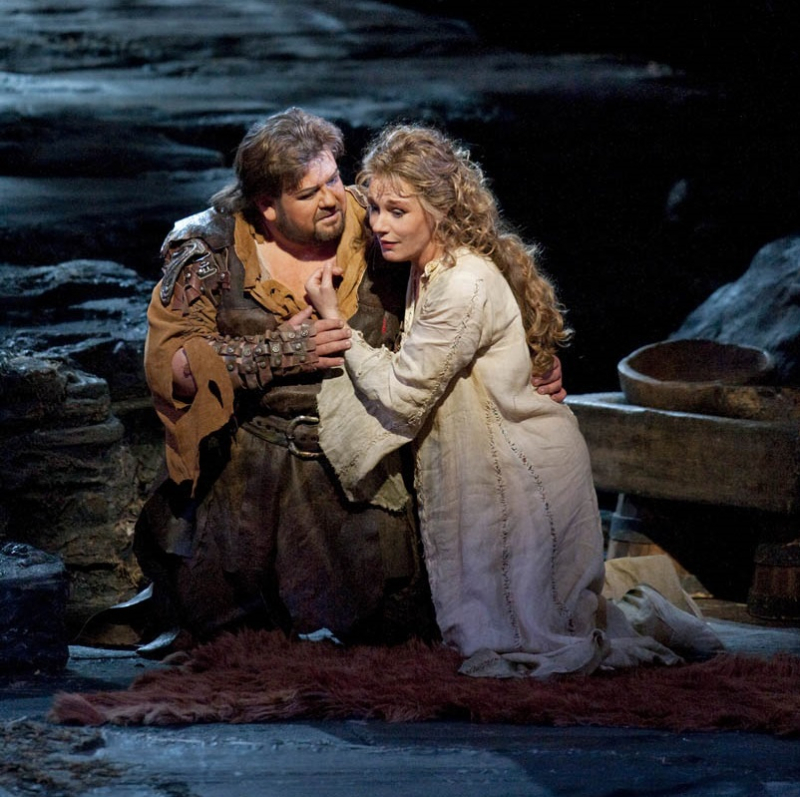
    On April 6th, 2009, Waltraud Meier and Johan Botha appeared as Sieglinde and Siegmund in DIE WALKURE at The Met – the only time they sang these roles together in New York City. They gave a thrilling performance of their Act I scene, conducted by James Levine.

    Waltraud Meier & Johan Botha – WALKURE ~ Act I scene – Levine cond – Met 2009

    The photo is by Ken Howard/Met Opera.

  • My First TANNHAUSER ~ 1978 @ The Met

    ONTannhauser1984

    Above: Richard Cassilly as Tannhauser and Tatiana Troyanos as Venus

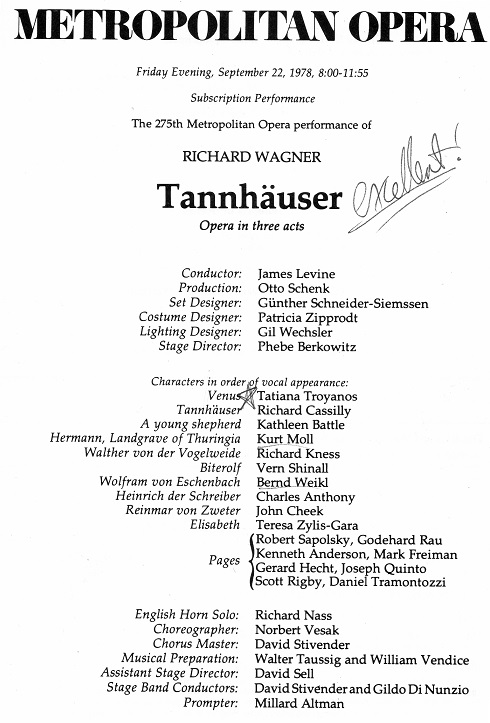
    I saw Wagner’s TANNHAUSER for the first time in 1978 in The Met’s classic Otto Schenk/Gunter Schneider-Siemssen production, conducted by James Levine. Here’s what I wrote in my opera diary the morning after:

    TANNHAUSER – first time – great!! Really a superb production (equal to the LOHENGRIN, but the opera is less exciting…) The sets, costumes, direction, and choral work were all excellent. Levine had some bombastic moments, and some places where he covered the singers, but his pacing was excellent and the orchestra played beautifully.

    Kathleen Battle was the very fine Shepherd – she sounds a bit like Reri Grist, which is a huge compliment. Vern Shinall made an exceptional impression as Biterolf, and Richard Kness (most likely the cover for the title-role) sang powerfully as Walther.

    Moll

    Kurt Moll, repeating his Met debut role as the Landgraf, brought his warm, velvety bass to the music – a great pleasure to hear his clear and steady tones, wonderfully resonant in the deep notes.

    Weikl

    Bernd Weikl as Wolfram (above) looked as handsome as he sounded. His voice is lyrical, and he projected superbly in the big hall. An outstanding performance! This was my first time hearing Weikl, and he immediately became a favorite. 

    Z-g

    As Elisabeth, Teresa Zylis-Gara (above) began with an exciting “Dich teure halle“, followed immediately by her thrilling singing in the duet with Tannhauser, wherein she conveyed subtle emotional changes convincingly. Zylis-Gara’s portrayal of the saintly woman as she searched desperately among the pilgrims for her beloved, and her subsequent downcast expression, were extremely poignant. She sang the Prayer with haunting expressiveness, and then walked slowly and sadly up the hill to her fate. It’s great to have Zylis-Gara moving into heavier German repertoire – the voice is satiny and strong; I would love to hear her as Elsa, Ariadne, Chrysothemis and, eventually, as Sieglinde.

    Richard Cassilly was a powerful, committed Tannhauser. His voice is not tonally beautiful, but he makes great use of it. The role is vocally grueling, almost sadistic in its demands. Cassilly was able to summon great reserves of sound, but he could also be subtle at need. He not only sang tirelessly, but made the character come vividly to life. His manic joy as he described the Venusberg to the stunned court, and later his crushed, agonized acting as a returning pilgrim were particularly well brought off. Cassilly’s potent rendering of the Rome Narrative, with his mocking of the Pope’s voice, was superb. He really deserved the huge ovation…bravo! 

    Tatiana Troyanos was electrifying as Venus, possibly her best role. She looked absolutely gorgeous, and her portrayal abounded in sensuous allure. Her wrath when she rejected Tannhauser was so intense, and her brief appearance in the opera’s final scene was simply spectacular. Her vocalism, which could smoulder alluringly one moment and blaze forth the next, was stunning. Troyanos was a stand-out in an outstanding cast.

    There were tumultuous ovations during the curtain calls, with the singers basking in the audience’s vociferous praise at the end of this glorious performance.”

    Tannhauser-1

    ~ Oberon

  • Troyanos & Domingo ~ duet from NORMA

    Snapshot pd tt jl 2

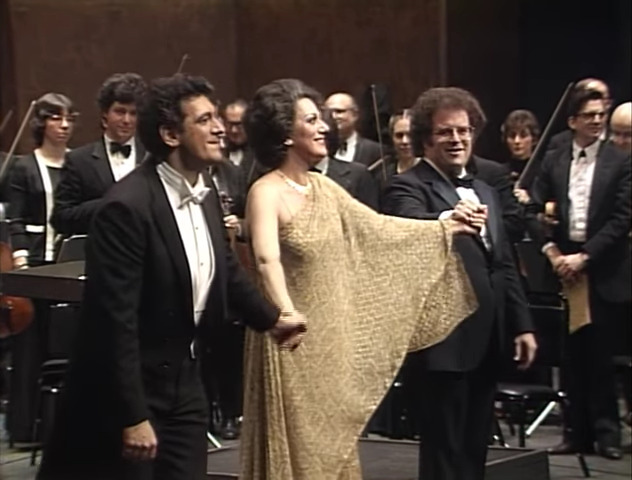
    Tatiana Troyanos and Placido Domingo sing the Pollione/Adalgisa duet from Act I of Bellini’s NORMA at a 1982 gala concert at The Met. James Levine conducts.

    Watch and listen here.

  • Troyanos & Domingo ~ duet from NORMA

    Snapshot pd tt jl 2

    Tatiana Troyanos and Placido Domingo sing the Pollione/Adalgisa duet from Act I of Bellini’s NORMA at a 1982 gala concert at The Met. James Levine conducts.

    Watch and listen here.

  • Juan Pons sings “Nemico della patria!”

    Snapshot pons 2

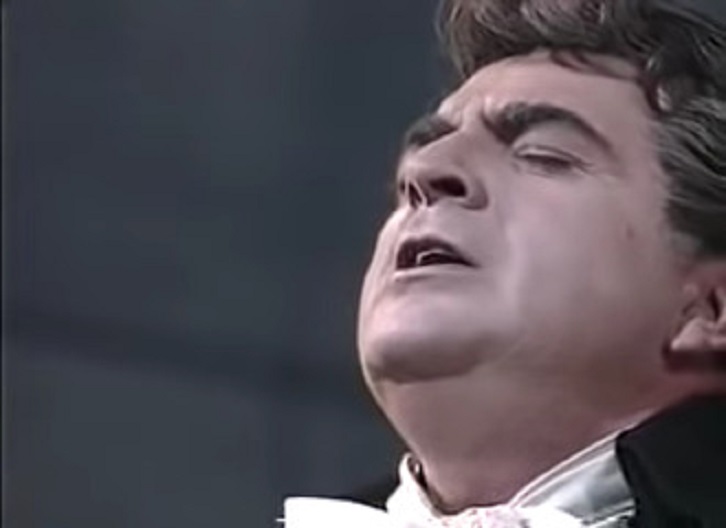
    Juan Pons sings the great aria “Nemico della patria!” from ANDREA CHENIER from a Met telecast in 1996. Watch and listen here.

    Pons, always such a generous singer, gave more than 300 performances at The Met in New York City and on tour. His name still crops up from time to time, singing character roles at Eurpoean houses.

  • Gabriella Tucci Has Passed Away

    Tucci

    Above: my favorite photo of Gabriella Tucci, costumed as Leonora in TROVATORE and posing at the New York World’s Fair in 1964. I cut it out of Opera News and pasted it on shirt-board; she signed it for me in 1968 after a performance of TURANDOT at The Met. It has been ‘borrowed’ by other websites, but this is the original.

    Soprano Gabriella Tucci passed away on July 11th, 2020, in Rome, the city of her birth. She was 90 years old. In recent days, I had been listening to Ms. Tucci a lot, unaware of her death. 

    Gabriella Tucci was the first soprano I called “my favorite”. She sang in some of the earliest Met broadcasts I heard from our house in the little town  – AIDA, OTELLO, FAUST, FALSTAFF, MADAMA BUTTERFLY, TRAVIATA, FORZA DEL DESTINO, and TROVATORE – and her voice, a blooming lyrical and wonderfully feminine sound, always seemed to get to the heart of the character she was portraying. 

    Ms. Tucci studied at the Accademia di Santa Cecilia and made her operatic debut at Lucca as Violetta in 1951. After winning a voice competition at Spoleto, she appeared in LA FORZA DEL DESTINO opposite Beniamino Gigli. In 1953, she sang Glauce in Cherubini’s MEDEA at the Maggio Musicale with Maria Callas in the title-role.

    Thereafter, the Tucci career then took off: she made her La Scala debut in 1959 as Mimi, and appeared at Rome, the Arena di Verona, Vienna, Berlin, Moscow, Tokyo, San Francisco, and Buenos Aires.

    82386433_10218182844816609_8898027572693041152_n

    Among Ms. Tucci’s notable evenings at La Scala was a 1964 production of TROVATORE where her co-stars were Piero Cappuccilli and Carlo Bergonzi (photo, above).

    Tucci desdemona

    Gabriella Tucci sang 260 performances with the Metropolitan Opera in New York City and on tour. In 1964, she was Desdemona (photo, above) in a new production of OTELLO that featured the return of James McCracken to The Met.

    Falstaff

    Also in 1964, Ms. Tucci sang Alice Ford in a new production of FALSTAFF conducted by Leonard Bernstein. In the above photo, she and colleagues Regina Resnik (Dame Quickly) and Rosaline Elias (Meg Page) attempt to hide Falstaff (Anselmo Colzani) in a laundry basket.

    She opened the Met’s 1965-1966 season in a new production of FAUST, and sang ravishingly in the love duet on a broadcast of that opera the following year. Her singing of “O silence! ô bonheur! ineffable mystère!” is pure magic:

    FAUST ~ scene – Gabriella Tucci – John Alexander – Justino Diaz – Met 1966

    On October 23rd, 1965, Ms. Tucci was heading to her dressing room after a matinee of FAUST when she was asked by Sir Rudolf Bing if she would be willing to step in for an ailing colleague in that evening’s performance of BOHEME. She did, with great success. And on April 16th, 1966, she was (officially) the last soprano to be heard at the Old Met when she sang the final trio from FAUST with Nicolai Gedda and Jerome Hines as the closing number at the gala that bade farewell to the venerable house.

    My first experience of hearing Gabriella Tucci live was at the Old Met in November of 1965; she sang – gloriously – the music of Leonora in TROVATORE, one of her most felicitous roles.

    Gabriella Tucci – D’amor sull’all rosee ~ TROVATORE

    In the late Summer of 1966, I traveled to New York City alone for the first time and joined the ticket line for the first performances at the New Met. I had been on the line for about five minutes when a woman next to me casually asked, “What singers do you like?” and I replied, “Gabriella Tucci!” She called some other friends over, and we discussed the soprano and her various roles in detail. Finally, I had found some kindred spirits after years of being a lonely opera-lover in my hometown. 

    Ms. Tucci was my first Aida and my first Elisabetta in DON CARLO. I saw her again in TROVATORE, and as  Liu and Mimi. But as the 1970s arrived, Tucci’s star had begun to fade; after years of singing roles like Aida and Amelia in BALLO that – in truth – extended her beyond her natural lyric realm, time seemed to catch up with her voice. She gave her last performance at The Met on Christmas Day, 1972, in FAUST

    Many years later, while I was working at Tower Records, a lively woman of a certain age came in; her hair was done in curls with a reddish tinge, and she wore a mini-skirt. I could not immediately place her, but her speaking voice gave me a clue: “Do you have the live performance of AIDA from Tokyo,1961?”   I handed her a copy. “Have you heard it?” she asked. “Yes, it’s very exciting…but…I am not sure it’s Mario del Monaco.” She smiled: “I am Gabriella Tucci, and I assure you it’s him!” I kissed her hand and after telling her she had always been a great favourite of mine, she smiled, and then returned to the topic of the Tokyo AIDA. “Why do you think it is not del Monaco?” I gave my reasons. She thought for a moment. “Well, who do you think it is, then?” and I replied “Gastone Limarilli.” “Hmmmm…you know your stuff. I did sing Aida with Gastone and I can understand your impressions of del Monaco’s performance…he was ill during that tour, and dropped out of the CAVALLERIA. I agree, he was not his best in the AIDA. But…he definitely sang that day!” She gave me a big hug, and swept from the room.

    Oddly, just the day before I learned of her passing, I was listening to that AIDA which includes her impressive “O patria mia“:

    Gabriella Tucci – O patria mia – AIDA – Tokyo 1961

    And then there’s the scene of the sighting of Pinkerton’s ship from Act II of MADAMA BUTTERFLY. Helen Vanni is Suzuki. Tucci elicits a burst of applause after her “…ei torna e m’ama!“. Listen to it here.

    It’s had to choose favorite Tucci items from among so many, but she and baritone Ettore Bastianini are superb in a scene from Act III of ANDREA CHENIER. Listen to them here.

    …and she sings a beautiful “Pace, pace mio dio” from FORZA DEL DESTINO:

    Gabriella Tucci – FORZA aria – Met 1965

    ~ Oberon

  • Sandra Warfield & James McCracken

    Thumbnail_image009

    Mezzo-soprano Sandra Warfield and tenor James McCracken were husband and wife. McCracken of course had a huge international career, Verdi’s Otello being one of his finest roles. Ms. Warfield’s career was not so hi-profile, though substantial.

    The couple were married in 1953. In 1957, feeling that The Met was not utilizing him to his full capabilities, McCracken headed to Europe where he and Ms. Warfield joined the Zurich Opera. In 1964, McCracken returned to The Met in triumph as Verdi’s Moor.

    In 1966, the couple sang together as Samson and Dalila in a Met concert performance at Lewisohn Stadium. In 1968, they sang these roles together again in the Met’s New York City Parks series. On January 13th, 1972, Warfield and McCracken finally appeared together in principal roles on The Met stage in a performance of SAMSON ET DALILA that marked Ms. Warfield’s final Met appearance.

    Sandra Warfield went on to a successful career in cabaret whilst her husband continued to be a major Met star until 1986, when he sang with the Company for the last time in a concert performance of AIDA in Central Park. Aprile Millo and Grace Bumbry were his co-stars that evening. Mr. McCracken passed away in 1988, and Ms. Warfield in 2009.

    In 1983, having absented himself from the Met yet again for three years, McCracken sang at the gala performance celebrating the 100th birthday of The Met. Having been thrilled by two of the tenor’s late-career performances as The Moor at Hartford and Boston, I was so happy to have been there on that gala afternoon to witness the warm welcome he received when he walked onstage to sing Otello’s great monolog, with James Levine conducting. You can watch that performance here. Thereafter he sang about a dozen more performances with the Company, including the AIDA that marked Leontyne Price’s farewell to opera in 1984 – a performance that was televised. 

    I am not sure if Mr. McCracken ever sang Andrea Chenier onstage, but his recording of the Act I Improviso is powerful:

    James McCracken – ANDREA CHENIER ~ Improviso

    Ms. Warfield is heard here as Mozart’s Marcellina in the Act I duet with Roberta Peters as Susanna.  And here are Warfield and McCracken together in the Judgement Scene duet from AIDA:

    Sandra Warfield & James McCracken – AIDA scene 

    ~ Oberon

  • Met’s MAGIC FLUTE – Saturday Matinee

    Taymor Flute

    ~ Author: Oberon

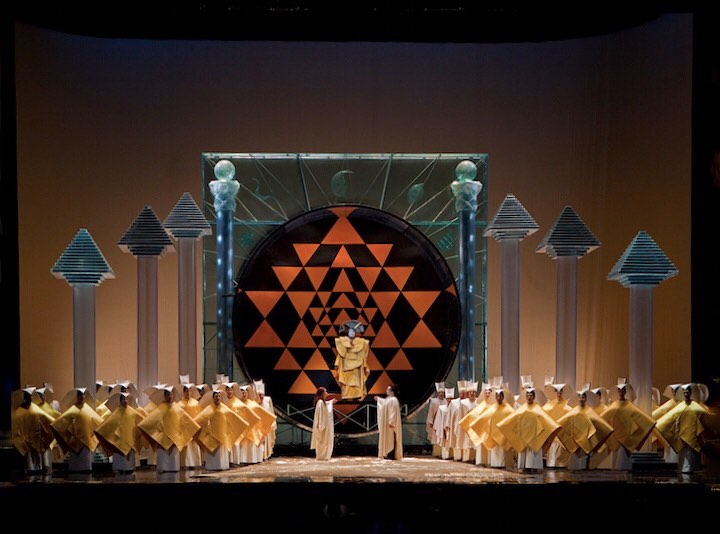
    Saturday December 21st, 2019 matinee – The Met’s shortened, English-language version of Mozart’s DIE ZAUBERFLOETE may not be as musically fulfilling as hearing the original, but it does afford an opportunity to hear lots of voices – from Met veterans to newbies – in one fell swoop, and thus I am likely to go two or three times each season that it is on offer. Although the cuts are irksome, and Papageno is too much the center of attention, there’s still enough opportunities for the singers to make their mark.

    The House was full of children today, and with people who’d forgotten to turn off their cellphones. The kids were receptive during the music, but some longish stretches of dialogue prompted then to have audible monologues of their own. Is it really necessary, in a 100-minute reduction, to bring up the Seven-fold Shield of the Sun? I suppose it really doesn’t matter, since apparently this is the last season we’ll see this production. (Or might they have a new ZAUBERFLOETE, and keep this Taymor holiday season specialty around?)

    Lothar Koenigs was on the podium this afternoon; his tempi were mostly spot-on, but there were some places where stage and pit were not totally in-sync. The Three Genii were unfortunately a weak trio vocally, and at times sounded a little like The Chipmunks. The Three Ladies – Gabriella Reyes, Megan Esther Grey, and Renee Tatum – sounded good individually, but did not always mesh well; the conductor seemed at times to leave them adrift. (Is Megan Esther Grey related to the great Wagnerian soprano, Linda Esther Grey? I will try to find out.)

    Ashley Emerson’s Papagena managed to get the words across when doing her “old lady” voice: no mean feat. Once transformed, she sang brightly. Rodell Rosel was an audience favorite as the crafty Monastatos. The Priests (Christopher Job and Scott Scully) and Guards (Arseny Yakovlev and Jeremy Galyon) did well.

    Joshua Hopkins sang excellently as Papageno, and the audience loved him; his referring to the Priests as “coneheads” was priceless. David Portillo’s attractive tone and appealing lyricism made his Tamino a winning vocal presence, with a nice feeling of tenderness. In his scene with Patrick Carfizzi’s Speaker, to my mind the key to the whole opera, both singers were clear of diction and dramatic intent. Mr. Portillo’s “O endless night!” was moving; and later, his “Music is the heart’s true home…” seemed to express what this opera is all about.

    Joelle Harvey’s vocal shimmer at “Be truthful!” was engaging, as was her self-defense to Sarastro. She made a lovely, vulnerable impression in Pamina’s aria with her expressive dynamic palette and persuasive phrasing. At her “Tamino mine!” a sense of radiance was met by Mr. Portillo’s ardent response. The two sang gently and sweetly in the quartet with the Two Guards.

    Kathryn Lewek’s Queen of the Night gave the afternoon its spark; after swirling thru the coloratura of her first aria, she sustained the high-F: an exciting moment. Her “Wrath of Hell” had great accuracy and brilliance, the high-Fs slightly metallic but hitting the bullseye each time. On her final command, “Swear!”, the soprano took a soft attack and then swelled the note to white-heat. She won vociferous applause here, and again at her solo bow. She has amply proven herself in this demanding role several times; I hope now we can hear her as Lucia or Constanze. 

    Morris  r jpg

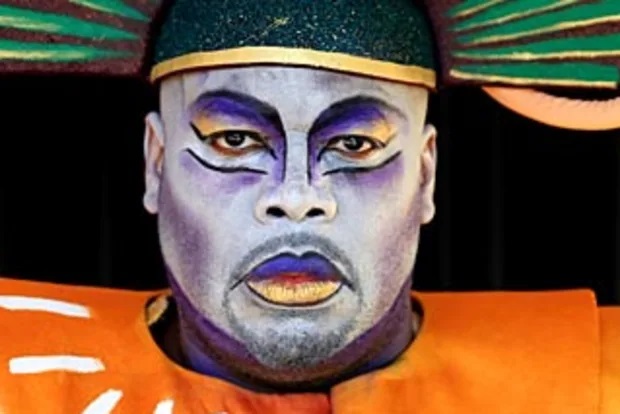
    Spectacularly anchoring the performance was Morris Robinson’s Sarastro: generous of tone, crystal clear of diction, and benevolent by nature. A grand performance from this formidable basso. Bravo!

    All afternoon, much of the spoken dialogue seemed over-wrought and campy; Papageno tended to shriek at the least provocation. David Portillo as Tamino spoke with a slight, charming accent: not amiss, as this prince has come from afar.

    ~ Oberon

  • MANON @ The Met

    72203039_2587859277931352_7352510735420751872_o

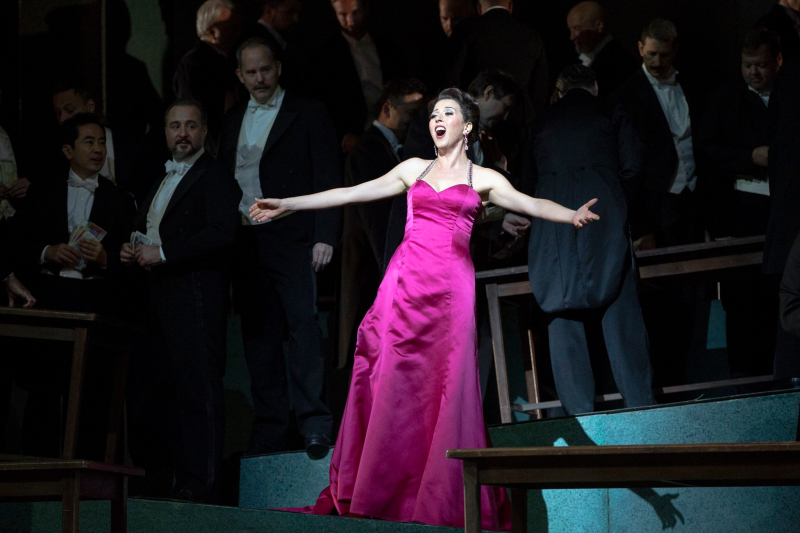
    Above: Lisette Oropesa as Manon in The Met’s production; a Marty Sohl/Met Opera photo

    Saturday matinee September 28th, 2019 – After a rather scrappy dress rehearsal on Friday September 20th, the Metropolitan Opera’s revival of their tedious Laurent Pelly production of Massenet’s MANON opened this past Tuesday. For today’s matinee, a group of friends who are admirers of Lisette Oropesa met up in the Family Circle boxes to see and hear the Cuban-American soprano in her latest new role. 

    Vocally, there are basically two types of Manons: the lyric-coloraturas and the full-fledged (and even slightly…beyond…) lyrics. The role was created by Marie Heilbronn, whose repertory included the coloratura roles of Marie (FILLE DU REGIMENT), Ophélie (HAMLET), Gounod’s Juliette, and Catherine in Meyerbeer’s ETOILE DU NORD. Massenet’s preferred Manon was Sibyl Sanderson, who created the high-flying title-role in his opera ESCLARMONDE. The light-voiced Brazilian soprano Bidu Sayão became a beloved Manon at The Met starting in 1937, and the tradition of coloratura-oriented Manons continued with Beverly Sills (perhaps her greatest role), Patricia Brooks, and Reri Grist.

    Sopranos with larger, richer voices have also taken on the role: Lucrezia Bori, Geraldine Farrar, Claudia Muzio (!), Victoria de los Angeles, Eleanor Steber, Anna Moffo, Virginia Zeani, Raina Kabaivanska, Jeannette Pilou, Catherine Malfitano, Carol Vaness, Renee Fleming, and Anna Netrebko. Some of these sopranos had to make adjustments in Manon’s coloratura set-pieces, and in dealing with (or omitting) the score’s high-Ds. And at times, the opera has seemed to take on a verismo tinge in these interpretations, as listening to their various recordings will show. 

    Lisette Oropesa’s Manon is in the lyric-coloratura vein, and it’s so enchanting to hear her intriguingly perfumed timbre in this music. This is a voice that draws us into the music, covering the wide range with that distinctive sound, rejoicing in the fiorature of the Cours la Reine arias, pinpointing those top-Ds, and seducing both the tenor and the audience with the serpentine vocal line of “N’est-ce plus ma main”: that passage which Beverly Sills knew was the key to the whole character. 

    To accomplish her success in the music of Manon, Lisette had to overcome a hideous production and an interpretation of the score by an out-of-touch conductor. As the opera progressed, we moved scenically from a dreary grey courtyard – surrounded by perched toy-town houses and cuckoo-clock windows that periodically opened and closed – to an ugly wheeled-out ‘garret’ for the lovers wherein the ‘petite table‘ seemed like an afterthought.

    The ridiculous ramps and metal dog-run fencing of the Cours la Reine deprived the setting of its glamour and left the bevy of ballerinas that Guillot had brought to cheer Manon up little space to execute some rather pointless choreography (the girls deserved better!) With the gaslights, Manon clad in a enormous feathered hat, boa, and ruffled gown, and the top-hatted men courting her in-sync, the scene recalled bad productions of HELLO DOLLY.

    Seeking out des Grieux at Saint Sulpice, Manon arrives in what looks like a long white slip. There’s a lot of stage business to this seduction, as compared to the Sills Manon who just stood there, enticing her lover with vocal allure until – at the right moment – she let her cape fall to reveal the diva’s legendary décolletage, to which her tenor immediately succumbed. In the Pelly production, a convenient bed (for the altar boys?) is where Lisette and Michael Fabiano end up in a bodice-ripping finale. It’s the tenor’s bodice that gets ripped.

    The gambling den in a drab basement room with more ramps, and with card tables wheeled busily on and off; the tension of the game between des Grieux and Guillot is minimized. The scene’s redeeming feature is the vision of Lisette in a stunning magenta gown.

    The opera’s final scene is misty and appropriately foreboding. Manon is beaten by the guards who are escorting her to the ship for deportation. She seems to die from this beating rather than from some infection she picked up in prison.

    Manon is one of the least appealing characters in all opera: selfish, willful, faithless, conniving. And those are her good qualities. But somehow, Lisette managed to be one of the very few Manons to make us feel sorry for her as the life ebbs out of her.

    Maurizio Benini on the podium seemed to have no feeling for the distinctive atmosphere of the score, redolent of a time and place that the production has simply glossed over; the large orchestra frequently unleashed Puccinian waves of passion. But the musicians did what they could, bringing forth the desired poetry: of particular appeal was the clarinet solo in the prelude, played with captivating tenderness and nuance by Inn-Hyuck Cho.  Mr. Cho also stayed in the pit thru much of the intermission, practicing various themes, much to my delight.

    The pairing of Lisette Oropesa and Michael Fabiano as the doomed lovers was not felicitous. They are a vocal mismatch, and though they went thru the motions of romance and seduction, it was only in a theatrical sense that they made it work. The tenor, who would seem better suited to the Puccini rather than the Massenet des Grieux, lacked the heady vocal elegance that Alfredo Kraus, Vinson Cole, and Enrico di Giuseppe have brought to this music. Mr. Fabiano managed his Dream aria nicely enough, seemingly employing falsetto, but a flattish start to “Ah, fuyez, douce image” led to what felt like a struggle thru this demanding aria. 

    Two excellent baritones enhanced the afternoon: Artur Ruciński as Lescaut and Brett Polegato as de Brétigny. Mr. Ruciński, who sang Enrico to Lisette’s Lucia at the Teatro Real in 2018, Madrid, and who is a very impressive Onegin in a DVD of the Tchaikovsky opera from Valencia, has sung Sharpless and Germont at The Met. He transforms Lescaut into a leading role, making his arias – which can in lesser hands devolve into character pieces – real vocal gems thru the beauty and colour of his timbre, whilst also creating a lively (and – eventually – moving) character. His curtain calls drew enthusiastic and well-deserved bravos.

    I first heard Canadian baritone Brett Polegato’s voice on a tape from the Cardiff Competition in 1995. He made a very fine impression, which was subsequently amplified by his wonderful 2001 recording (with Christine Goerke, conducted by Robert Spano) of Vaughan Williams’ A Sea Symphony for Telarc. Hailed upon its release as “…a Sea Symphony for the new century…”, this recording won a Grammy.

    It wasn’t until 2012 that I got to hear Mr. Polegato live: he sang Walton’s Belshazzar’s Feast with the Atlanta Symphony at Carnegie Hall. I sat in the front row and enjoyed his performance immensely, and I questioned at the time why he was not at The Met. And now here he is in his debut performances at The House, the voice very much at home in the big hall. As de Brétigny today, the baritone made the most of every line, especially in the garret scene quartet, and proved a wonderful support (literally) to Lisette’s Manon at the Cours la Reine. Had Manon only stuck with this well-to-do and dapper gentleman, she might have lived long…and prospered.

    Basso Kwangchul Youn brought warm, house-filling sound to the Comte de Grieux’s aria, in which he urges his son to forget about the priesthood and find a nice girl to marry, one worthy of himself and of the family. The Comte, his visit to Saint Sulpice having proved in vain, departs with the wistful farewell to his son – “Adieu … reste à prier!” – which was touchingly spoken by Mr. Youn.

    Carlo Bosi, a sensational Nick in FANCIULLA DEL WEST when it was last done at The Met, was equally high-profile this afternoon as Guillot, the man who destroys Manon and, consequently, des Grieux.

    In another example of how to make a smallish role resonate, Paul Corona as the Innkeeper was outstanding. He took a bow at the dress rehearsal, and I wish he had done so this afternoon so I could have given him a “bravo!“.

    Bidu_Sayao

    As a tease, the Met has installed Bidu Sayão’s Cours la Reine costume (above) in a glass display case on the Dress Circle level. This cloth-of-gold creation, incredibly detailed, served as a reminder of what MANON is all about. I hope one day that Lisette will have a production of this opera worthy of both herself and of the opera’s long traditions, with charming costumes, with a swing for Manon to sit on in the garden at Amiens for “Voyons, Manon“…and with de Brétigny bringing her an emerald necklace to dazzle her right after the kidnapping of her beloved chevalier.

    ~ Oberon