Tag: The Met

  • Marion Lippert

    Hqdefault

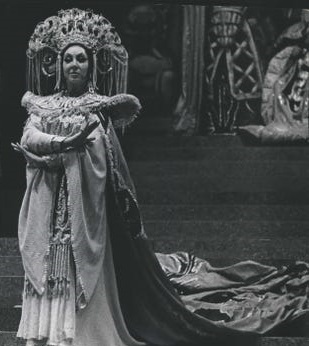
    Marion Lippert is a soprano I will always remember with affection, as she was my first (and a very lovely) Marschallin in a performance at The Met in 1970, conducted by Karl Böhm; she more than held her own in a stellar cast featuring Christa Ludwig, Reri Grist, and Walter Berry.

    Marion Lippert was born in Munich in 1936. Among her voice teachers was Annelies Kupper. Ms. Lippert made her operatic debut as Aida The Hague in 1956, later joining the opera companies of Cologne and Stuttgart, and singing in Berlin, Paris, Barcelona, and Venice. Her repertory included Lady Macbeth, Abigaille, Leonore in FIDELIO, Amelia in BALLO IN MASCHERA, Leonora in FORZA DEL DESTINO, Tosca, Norma, Senta, Elisabeth in TANNHAUSER, and Sieglinde.

    The soprano made her Met debut in 1968 as Turandot; she also sang Senta, and Elisabetta in DON CARLO   (which I saw) at the House in addition to the Marschallin.

    Lippert Turandot

    Turandot became a signature role for Ms. Lippert; here is her “In questa reggia” from an unnamed venue, in 1969. Her Calaf is Flaviano Labò.

    Marion Lippert – In questa reggia ~ TURANDOT – 1969

    Marion Lippert’s ‘Vissi d’arte‘ (though missing the opening line) may be found here.

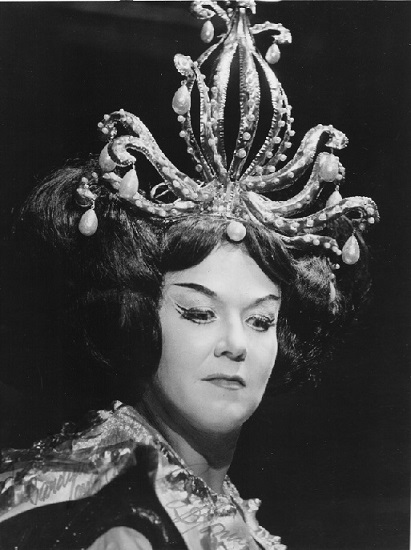
  • Ingrid Bjoner as Turandot

    Scanned Section 3-1

    Ingrid Bjoner sent me the above photo of herself as Turandot after I sent her a letter of praise letter after seeing her in this role at The Met in 1974.

    On the back of the photo, Ms. Bjoner wrote:

    Scanned Section 11-1

    Turandot is a fascinating role, and I have seen many sopranos undertake it over the years since Mary Curtis-Verna was my first icy princess at The Old Met in 1965.

    Birgit Nilsson was, of course, the Turandot of her day. But Ingrid Bjoner made a striking impression with her powerful, silvery sound, and – in truth – her characterization was more complex and interesting than Nilsson’s. I wrote about my impressions of the Bjoner Turandot here.

    And here she is, in a German-language performance:

    Ingrid Bjoner – TURANDOT ~ In questa reggia (in German) with Ludovic Spiess

    ~ Oberon

  • Aase Nordmo-Løvberg & Kolbjørn Høiseth

    Aase-nordmo-lvberg-6d8aba9d-d166-4244-b6c9-58dc451cbbf-resize-750

    Above: soprano Aase Nordmo-Løvberg

    Ms. Nordmo-Løvberg spent most of her career at Oslo and Stockholm. She was a highly-regarded soprano who worked with top conductors (such as Karajan and Solti). She sang at the Vienna State Opera, and gave a dozen performances at The Met in 1959-1960 singing Elsa, Eva, Sieglinde, and Beethoven’s Leonore.

    HOISETH Kolbjorn

    Above: the Norwegian tenor Kolbjørn Høiseth

    Mr. Høiseth’s career took him to London, Berlin, Stockholm, Lyon, and Bordeaux as well as numerous German houses. He specialized in Wagner and Verdi, also appearing in WOZZECK, FIDELIO, and ELEKTRA.

    In 1975, the tenor sang Froh in RHEINGOLD (in which role I saw him twice) at The Metropolitan Opera, where he also appeared as Siegmund in a single performance of WALKURE. His voice had a lyric quality, but also ample power when needed.

    Aase Nordmo Løvberg & Kolbjørn Høiseth – WALKURE – ACT I scene – Stockholm 1963

  • Blanche Thebom

    51J27V3W9WL

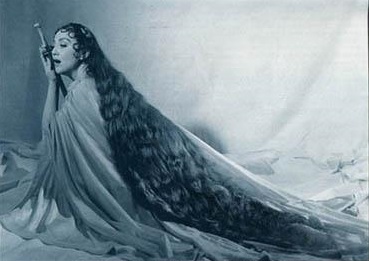
    Blanche Thebom (above), the glamorous mezzo-soprano whose career at The Met lasted over 30 years, was as well-known for her magnetic stage presence and her sensationally long hair as for her singing.

    She made her debut with the Metropolitan Opera Company in 1944 as Brangaene in TRISTAN UND ISOLDE in a performance at Philadelphia, Pennsylvania; two weeks later, she sang Fricka in DIE WALKURE at The Met. These performances drew rave reviews for Ms. Thebom, both for her singing and for her distinctive beauty and dramatic flair.

    Ms. Thebom went on to sing more that 360 performances with the Metropolitan Opera Company, in New York and on tour. She was a much-admired Carmen and Dalila, and in Verdi she made a regal impression as Amneris and Princess Eboli. She seemed capable of singing anything, from Adalgisa in NORMA to Venus in TANNHAUSER, while – in a lighter vein – she appeared as Prince Orlofsky and as Dorbella in COSI FAN TUTTE.

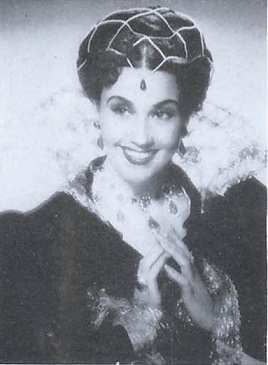
    Thebom Eboli

    Above: Blanche Thebom as Princess Eboli

    Blanche Thebom – O don fatale ~ DON CARLO

    Ms. Thebom appeared in the US premieres of two important works at The Met: as Baba the Turk in Stravinsky’s RAKE’S PROGRESS in 1953, and as Adelaide in Strauss’s ARABELLA in 1955. In the 1960s, she undertook what might be called “principal character” roles such as Genevieve in PELLEAS ET MELISANDE, Magdalene in MEISTERSINGER, and the Old Baroness in VANESSA. Her last role was that of the Countess in Tchaikovsky’s QUEEN OF SPADES – performed in English, at the New Met – in which she appeared opposite Teresa Stratas and Jon Vickers.

    After retiring from the Met, Blanche Thebom taught singing and also served on the Metropolitan Opera’s Board of Directors until 2008. She passed away in 2010, at the age of 94.

    AR-311309810

    In my earliest days of opera-loving, Blanche Thebom was already spoken of in our house. My father, who had seen her on TV, referred to her as ‘Blanche the Bomb’ due to her physical allure. And my grandmother told me about Thebom’s legendary hair, which had been used as a dramatic device when she sang Berlioz’s Dido at Covent Garden in 1957 (photo above).

    I finally heard Thebom’s voice on the radio in 1962:

    Metropolitan Opera House
    December 29th, 1962 Matinee/Broadcast

    PELLÉAS ET MÉLISANDE

    Pelléas.................Nicolai Gedda
    Mélisande...............Anna Moffo
    Golaud..................George London
    Arkel...................Jerome Hines
    Geneviève...............Blanche Thebom
    Yniold..................Teresa Stratas
    Physician...............Clifford Harvuot
    Shepherd................William Walker

    Conductor...............Ernest Ansermet

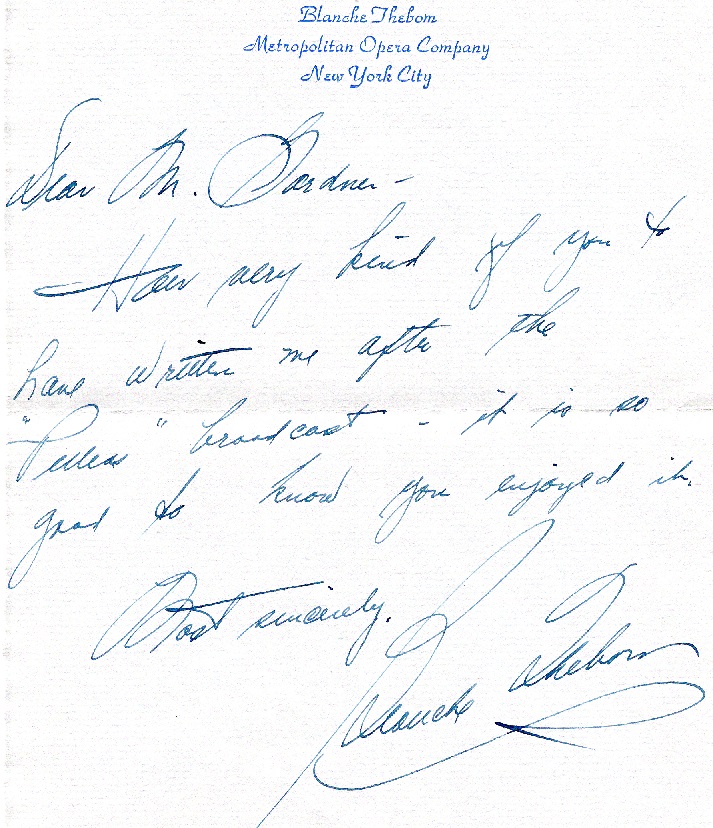
    Listening to her sing Debussy’s  Genevieve on a Texaco broadcast of PELLEAS ET MELISANDE, I was well-prepared to like her. And like her I did, so much so that I wrote her a letter; soon after, I received this elegant reply:

    Scanned Section 14-1

    More samplings of Blanche Thebom’s singing below. In RHEINGOLD, her usual role was Fricka, but I’m partial to her recording of Erda’s Warning:

    Blanche Thebom – Weiche Wotan weiche! ~ RHEINGOLD

    Blanche Thebom – Mon coeur s´ouvre a ta vois ~ SAMSON & DALILA

    Blanche Thebom – Wolf ~ Um Mitternacht

    ~ Oberon

  • @ My Met Score Desk for GOTTERDAMMERUNG

    1600x685_gotter

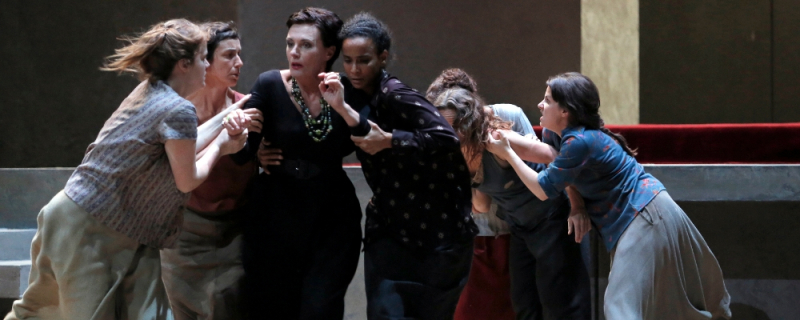
    Above: the Norn Scene from the Lepage/Met Opera production of GOTTERDAMMERUNG

    ~ Author: Oberon

    Saturday April 27th, 2019 matinee – The best thing about today’s matinee of Wagner’s GOTTERDAMMERUNG at The Met was the Norn Scene. With a mood of mystery and doom evoked by Maestro Philippe Jordan and the Met Orchestra in the prelude, the three singers who were weaving the ‘Rope of Destiny’ today were Ronnita Miller, Elizabeth Bishop, and Wendy Bryn Harmer. Each sounded splendid in her own way.

    Ms. Miller has a rich, deep contralto timbre; Ms. Bishop a brighter quality with a strong feeling for lyricism; and Ms. Harmer an authentic Wagnerian soprano voice: house-filling, with an ample high range. Each has a prolonged solo passage, describing much that has transpired in the first three operas of the RING Cycle.

    From her lush “Dammert der Tag?“, Ms. Miller had me in her thrall: such a dusky, abundant sound. She continued to fascinate me with “Die Nacht Weicht…” and concluded the scene with a deep plunge on “Hinab!” that had an other-worldly resonance.

    Ms. Bishop, who has been an excellent Dido and Iphigénie at The Met, was likewise in excellent voice today, and she brought subtlety and point to the words. Ms. Harmer’s singing was huge and grandly styled, her high notes gleaming.

    As the Norns descended to their mother, Erda, my hopes were high that the vocal standard they had set would be upheld as the afternoon progressed. In the interlude before the Dawn Duet, the noble horns and the Met’s fabulous clarinetist Inn-Hyuck Cho gave a sublime build-up to the entrance of Christine Goerke and Andreas Schager as Brünnhilde and Siegfried, the latter making his Met debut today.

    Ms. Goerke got off to a fine start, but – later in the prologue – her notes around G above the staff seemed a bit sour, and the high-C was there – and long – but a shade flat. Mr. Schager has a voice of helden-power, with some brassiness cropping up, and a steady beat to the tone. 

    The Rhine Journey was light and lively at first, and then turned epic. At the Gibichung Hall, we meet Gunther (Evgeny Nikitin, darkish of timbre and firm-toned), Gutrune (Edith Haller, debuting in a role Ms. Harmer might have doubled), and Hagen (Eric Owens, somewhat lacking in the monumental power of a Salminen or a König). The conductor tended to cover Mr. Owens at times, but the bass-baritone was chilling as he described in whispers the potion with which he would ensnare Siegfried.

    Siegfried arrives at the Gibichung Hall to the sound of bungled horn calls; blood-brotherhood is sworn, and the hero’s fate is sealed. Left alone, Mr. Owens in Hagen’s Watch sang well, but seemed more efficient than thrilling, and was unaided by the conductor.

    The clarinets depict a return to Brünnhilde’s Rock, where Ms. Goerke impresses as she welcomes her sister Waltraute, sung by Michaela Schuster – the mezzo whose Klytemnnestra last season was so impressive.  Ms. Schuster brought a wealth of nuance to her narrative, which had a sense of intimacy as well as urgency: doom is at hand, she warns.  Bringing a spine-tingling sense of introspection to her description of the resigned, weary Wotan, Ms. Schuster’s singing seemed truly personal, showing great vocal control; telling Brünnhilde that their father had spoken wistfully of her, the mezzo’s low notes were so alive. And she was simply glorious at “Erlöst warGott und Welt…” Her plea to Brünnhilde to abandon the ring causes the final rift between the two sisters: with a desperate cry, Waltraute rushes away.

    The excitement as Brünnhilde senses Siegfried’s return was somewhat dulled by Ms. Goerke’s non-blooming top range. But in the final moments of the act, Mr. Schager suddenly sounded like the tenor we’d been reading about.

    I would have liked to have heard Tomasz Konieczny’s Alberich in his scene with Hagen that opens Act II, but decided instead that the RING was over for me this season, and I headed home. The good has been very good, but there’s also been quite a lot of singing that left me feeling indifferent. It’s not a matter of how these operas should sound, but how they can sound.

    ~ Oberon

  • The Chéreau ELEKTRA ~ On Film

    Elektradvd

    ~ Author: Oberon

    Patrice Chéreau’s production of Richard Strauss’s ELEKTRA originated at Aix-en-Provence in 2013, in the 1350-seat theatre there. It did not impress me when it came to The Met in 2016; though musically vivid, as a theatrical experience it got lost in the vast space of the world’s largest opera house.

    The Aix performance was filmed, and released on DVD in 2014. I came upon it by chance at the library, brought it home, and was blown away by both its musical and dramatic power. It is a production that cries out to be seen up-close, and the camera work for the DVD takes us right into the action, as if from the start we are in service at the House of Atreus and watching this domestic horror-story unfold before our eyes. A brief sampling from the DVD here.

    The opera’s story is absorbingly told, with some liberties taken. The shifting loyalties of the maids and other household members are cunningly delineated.

    Veterans Renate Behle (visually fascinating), Franz Mazura, and Donald McIntyre make vivid impressions in smaller roles, and Chéreau’s idea of casting the beloved soprano Roberta Alexander as the sympathetic 5th Maid pays off handsomely: her singing and her portrayal are riveting, and she is hugely applauded during the bows.

    Memorable portrayals in the production:

    Rmassague32918919-icult-elektra-richard-strauss-direttore-esa160225184321-1456422413450

    Above: Tom Randle as Aegisth is aghast at being shown the corpse of his paramour Klytämnestra.

    24iht-loomis24-picA-articleLarge

    Above, siblings reunited: Evelyn Herlitzius as Elektra and Mikhail Petrenko as Orestes; the bass-baritone makes a strong impression as the haunted son of Agamemnon.

    9134600514_4a6e833a97_b

    Above, the sisters: Adrienne Pieczonka as Chrysothemis and Evelyn Herlitzius as Elektra. Ms. Pieczonka sounds fantastic in this film (of a live performance), her top notes pealing forth.

    Aix Elektra

    Above: Waltraud Meier as Klytämnestra. Ms. Meier’s singing, so alive with subtle inflection, did not always register at The Met, but she makes a striking impression – both vocally and visually – in the film. M. Chéreau eliminates the queen’s hysterical laughter on learning of the death of her son; I for one don’t miss it.

    3-format6001

    Above: Evelyn Herlitzius scored a great personal triumph as Elektra at Aix-en-Provence, and it is wonderful that her performance has been preserved. With a voice I would describe as “big lyric”, Ms. Herlitzius does not sing the music as we are accustomed to hearing it sung. Both in voice and in her athletic physique, the soprano seems almost youthful, though in fact she was around 50 years old when the film was made (You’d never guess it by watching her!). She powers thru the vocal demands, and shows off a secure, brightish top.

    However, the pressure she has put on her instrument in such arduous music has worn the voice down over time; her 2018 Met debut performances as Kundry were disappointing, showing the effects of hard usage on her timbre, the voice sometimes ineffectual in the large space. This makes having a document of her Elektra on fine vocal form all the more valuable, for her passion and commitment are unquestionable.

    You can find copies of this performance for purchase here. It’s well worth owning.  

    The Participants:

    Elektra Evelyn Herlitzius
    Klytämnestra Waltraud Meier
    Chrysothemis Adrianne Pieczonka
    Orest Mikhail Petrenko
    Aegisth Tom Randle
    Der Pfleger des Orest Franz Mazura
    Ein junger Diener Florian Hoffmann
    Ein alter Diener Donald McIntyre
    Die Aufseherin / Die Vertraute Renate Behle
    Erste Magd Bonita Hyman
    Zweite Magd / Die Schleppträgerin Andrea Hill
    Dritte Magd Silvia Hablowetz
    Vierte Magd Marie-Eve Munger
    Fünfte Magd Roberta Alexander

    Coro Gulbenkian

    Orchestre de Paris

    Conductor: Esa-Pekka Salonen

    ~ Oberon

  • My First WALKURE

    T16406_jon-vickers-canadian-tenor

    Above: Jon Vickers, my first Siegmund

    ~ Author: Oberon

    With Wagner’s RING Cycle currently playing at The Met, I’ve been thinking back to when I saw these operas for the first time. My first RHEINGOLD was conducted by Herbert von Karajan; it was part of a thrilling weekend I spent at The Met in 1969.

    It wasn’t until 1975 that I saw WALKURE, in a production based on Karajan’s Salzburg Festival production. Karajan of course had been due to stage and conduct the entire Cycle at The Met, but he never got beyond the first two operas before withdrawing from the project.

    My first WALKURE

    Of my first WALKURE, I wrote in my diary:

    “First time – an uneven performance: the good moments were very good, but much of the performance was a letdown.

    Sixten-ehrling

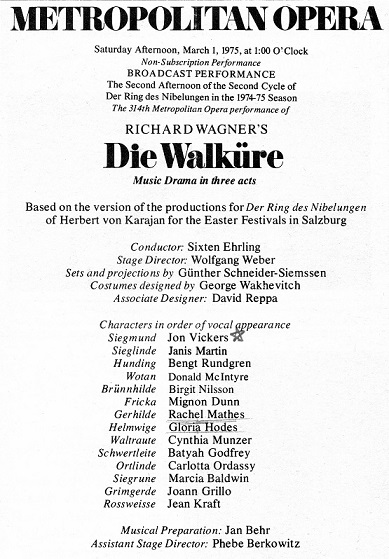
    Sixten Ehrling (above) did a really great job; he kept things moving, allowed the singers to be heard at all times, and his reading had warmth and clarity. The Valkyries were a mixed lot [I am not sure why I underlined two of the singers’ names on my cast page, especially as people like Marcia Baldwin, Batyah Godfrey, and Jean Kraft were favorites of mine at the time]. Bengt Rundgren was an impressive Hunding.

    Dunn Fricka

    Mignon Dunn as Fricka (above) got off to a rough start, but quickly got things in gear and was very fine. [She was another top favorite of mine, and in 1977 established herself as a star with her portrayal of Ortrud in LOHENGRIN].

    Wotanalone

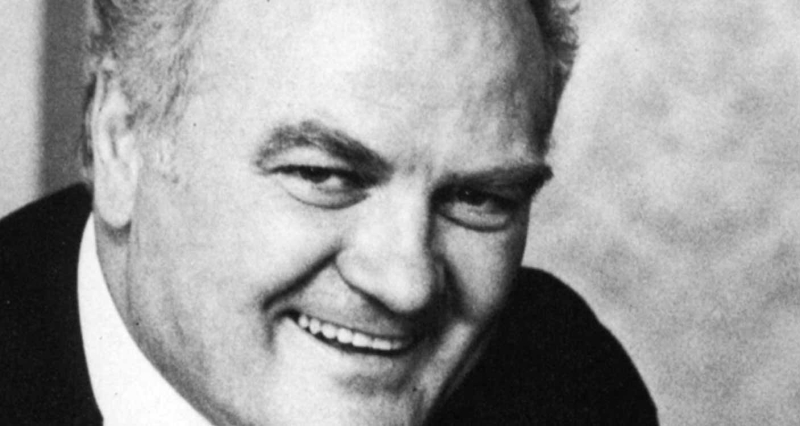
    Donald McIntyre (above) as Wotan was truly effective: well-sung, very involved, a first-class actor. His long Act II monologue was a high point of the performance.

    Birgit Nilsson was not good as Brunnhilde. She looks really old, was uninvolved as an actress, and she behaved stupidly during the curtain calls. Her “Ho-Jo-To-Ho!” was full of swoops and off-pitch notes. Most of Act II was very ambiguous pitch-wise, and her voice seems to have diminished in size and scope. In Act III, she sounded somewhat better, but pitch was really a problem, and spoiled much of her performance.

    Janis Martin as Sieglinde was very good in Act I, but after that she slid downhill. She does not have the ringing upper range for this music, and seemed always to be singing at full-force. Stage-wise she was not exciting at all. Considering all this, I was surprised that she received a rapturous ovation during the curtain calls.

    Only one word is needed for Jon Vickers’ Siegmund: perfect! Bravo!!


  • Nicolai Ghiaurov as Boris Godounov

    Scanned Section 2-1

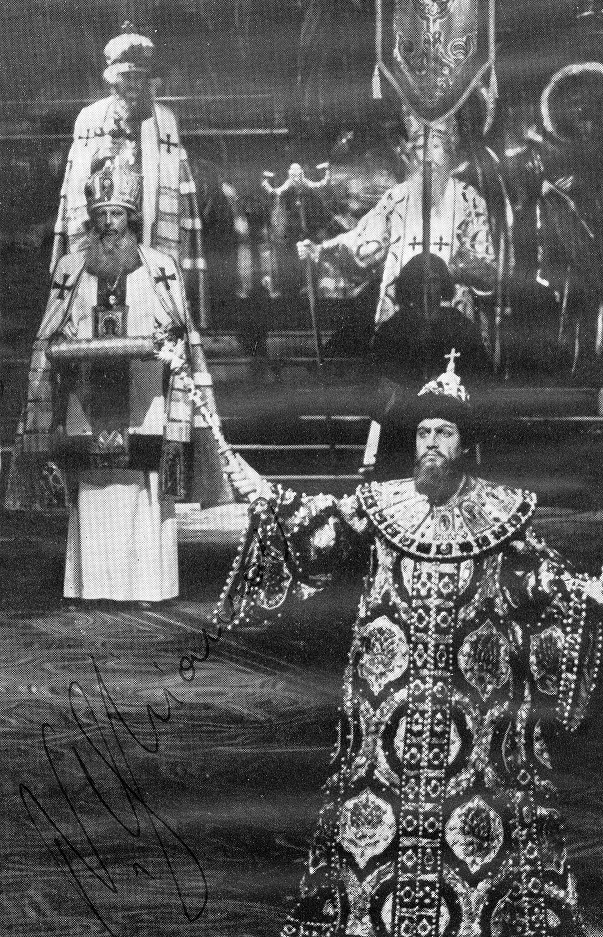
    Nicolai Ghiaurov signed this photo for me after a performance of DON CARLO at The Met in 1968.

    Nicolai Ghiaurov – Skorbit Dusha! ~ BORIS GODOUNOV

  • Sanford Sylvan Has Passed Away

    Sylvan

    Sanford Sylvan’s was one of my favorite voices of all time. It wasn’t simply beautiful and expressive: it had a personal quality, as if he was singing just to you. Very few singers have reached me on that level – Victoria de los Angeles and Dame Janet Baker come to mind – and it is so sad to think that Sandy’s voice has been stilled, at the age of 66. 

    I met Sanford Sylvan long before his name came to prominence in the vocal music field. In the early 1970s, while he was a student at the Manhattan School of Music, Sandy worked as an usher at The Met. At that time, he had long blonde hair that flowed down his back to his waist, and ice-blue, incredible eyes.

    Those were the great, heady years of my opera-loving career; I would make frequent 4-day trips from Syracuse to New York City, staying at the Henry Hudson Hotel and hearing the great singers of the last Golden Age at both New York City Opera and The Met. I had fallen in with a group of deranged young fans – about a dozen of us – who went crazy over such titans as Sills, Nilsson, Cossotto, and Bergonzi. We spent intermissions arguing over who was the best Violetta or Dutchman; we waited patiently at the stage door to meet our idols, and then adjourned to the old O’Neill’s for fondue and more discussion, into the wee hours. And then on to an all-nite diner at Columbus Circle where we listened to the house tapes we had made.

    We all of us, both guys and girls, had a crush on Sandy Sylvan. Since he saw us at the opera all the time, he became friendly with us. We would always invite him to O’Neill’s, and a couple of times he joined us. He was on the quiet side; we knew he was a voice student, but then…wasn’t everyone? Who would have guessed that, years later, he’d be at New York City Opera and making marvelous recordings.

    I first saw Sanford Sylvan onstage at the 1987 summer fest at Purchase, New York, as Mozart’s Figaro in the Peter Sellars production, set at Trump Tower. In the seasons to come, he sang Leporello, the Speaker in MAGIC FLUTE, the King of Scotland in Handel’s ARIODANTE, and Collatinus in Britten’s RAPE OF LUCRETIA at New York City Opera. In each of these diverse roles, he made a vivid impression.

    A champion of the music of John Adams, Sanford appeared in NIXON IN CHINA and THE DEATH OF KLINGHOFFER. In 1989, the baritone premiered Adams’s The Wound Dresser, settings of Walt Whitman’s Civil War poems, which had been composed specially for him.

    In May 2011, I finally had an opportunity to experience Sanford Sylvan’s iconic performance of The Wound Dresser live, in an concert given by the Oregon Symphony at Carnegie Hall. Both vocally and verbally, his was a remarkable interpretation, with a deeply personal resonance. He sang so beautifully, and I had every reason to believe I’d be hearing him again. 

    The baritone voice has always had a special appeal for me; from the very first opera LP I owned as a pre-teenager, featuring the great baritones of the day – Leonard Warren and Robert Merrill – this sonorous vocal range has seemed to have a hot-wire to the human spirit.

    Over time, two baritones came to epitomize for me all that can be enriching in the art of singing: Dmitry Hvorostovsky and Sanford Sylvan. They were so different in repertory and in the scope of their respective careers, but both moved me to the core. And now they are gone.

    From Samuel Barber’s Hermit Songs, “The Desire for Hermitage” tells me everything I love about Sanford Sylvan’s voice:

    Sanford Sylvan – Barber ~ The Desire for Hermitage

    “Ah! To be all alone in a little cell
    with nobody near me;
    beloved that pilgrimage before the last pilgrimage to death.
    Singing the passing hours to cloudy Heaven;
    Feeding upon dry bread and water from the cold spring.
    That will be an end to evil when I am alone
    in a lovely little corner among tombs
    far from the houses of the great.
    Ah! To be all alone in a little cell, to be alone, all alone:
    Alone I came into the world
    alone I shall go from it.”

  • Mignon Dunn as Dalila

    Mignon-dunn-01

    In the aftermath of the opening night performance of a new SAMSON ET DALILA at The Met, the folks on The List and at Parterre are discussing favorite interpreters of the opera’s title roles; the name of Mignon Dunn came up.  

    Mignon was a great favorite of mine and her performances in such roles as Laura in GIOCONDA, Fricka in the RING Cycle, Anna in TROYENS, Brangaene in TRISTAN UND ISOLDE, and Ortrud in LOHENGRIN are among my fondest operatic memories.

    In 1985, I had the good fortune to see Mignon Dunn as Dalila in a production by the Connecticut Opera Association at The Bushnell in Hartford. She and her co-stars, Jon Frederic West and Charles Karel, sang powerfully whilst doing what they could dramatically in an old-style, rather campy setting.

    In the course of my two-year project of rescuing music from my vast cassette collection, I was able to preserve this recording of Mignon singing Dalila’s opening aria from Act II with piano from a radio program in 1975 which I taped off the air:

    Mignon Dunn – Amour viens aider ma faiblesse – SAMSON & DALILA – Met Marathon 1975

    I’ll be seeing the Met’s new SAMSON ET DALILA twice in the coming weeks: once with each cast.

    ~ Oberon