Tag: The Met

  • Encore: ELEKTRA @ The Met

    Mask-of-agamemnon

    Above: The Mask of Agamemnon

    Saturday April 30th, 2016 matinee – Since ELEKTRA is one of my favorite operas – sometimes I think it is my favorite opera – I planned to see The Met’s new production of it once, and then to hear it again from a score desk.

    Some people had issues with the voices of Nina Stemme and Adrianne Pieczonka at the production’s Met premiere on April 14th: squally, shrill, and flat were among descriptive words I heard being tossed about. There were also complaints that Waltraud Meier, as Klytemnestra, was “inaudible” or at least seriously under-powered vocally. So when my friend Dmitry and I attended the second performance on April 18th, we were pleased to find that both Stemme and Pieczonka sounded much better than we’d been expecting, and that Meier, though vocally restrained when compared to such past exponents of the role as Resnik, Rysanek, Fassbaender, Christa Ludwig, or Mignon Dunn, was able to make something of the music thru diction and vocal colour.

    This afternoon, the three principal women all seemed rather out of sorts vocally. Stemme sounded frayed and effortful, the highest notes sometimes just a shade flat and her vibrato more intrusive than at the earlier performance. Ms. Pieczonka was likewise on lesser form, tending to sound shrill under pressure, and the voices of both sopranos seemed smaller and less free that I remembered. Ms. Meier was – honestly (and I am a big fan of hers) – nearly inaudible much of the time; a lot of her verbal detail didn’t penetrate the orchestra. (Since the performance was being broadcast, undoubtedly Ms. Meier made a much more vivid impression over the airwaves).

    Stemme and Pieczonka did achieve a higher level as the afternoon wore on; their most exciting singing came after the murder of Aegisth and on thru to the end of the opera. But compared to their earlier performance, they were both a bit disappointing. Of course, we have to take into account that these are two of the most fearsome and challenging roles in the soprano repertoire, and are being sung over a huge orchestra in a vast space. The wear and tear on their instruments must be incredible.

    The audience at large were undeterred by concerns over vocal matters, and they lustily cheered the three women at the curtain calls; the ovation for Ms. Stemme – well-merited for her generosity and courage – was enormous, and the house lights were turned on so she could see everyone standing and screaming for her.

    For me, it was the opera itself – and Esa-Pekka Salonen’s conducting of it – that made the performance memorable. The orchestra played spectacularly, and if Maestro Salonen sped thru some of the music (the Recognition Scene seemed really fast) it sort of added to the sense of exhilaration I was experiencing just from hearing the opera live again. 

    Eric Owens made an outstanding impression as Orestes today; his first lines established a powerful and rather creepy vocal presence, and at “Lass den Orest…” he was truly splendid. He has the right amplitude for this music in this house, and was deservedly hailed at his solo bow. 

    Special mention to Bonita Hyman for her rich, deep contralto singing as the First Maid, and to the remarkable Roberta Alexander, who again made such a moving impression as the Fifth Maid, a Chéreau ‘invention’ that paid off handsomely.

    Metropolitan Opera House
    April 30th, 2016 Matinee

    ELEKTRA
    Richard Strauss

    Elektra....................Nina Stemme
    Chrysothemis...............Adrianne Pieczonka
    Klytämnestra...............Waltraud Meier
    Orest......................Eric Owens
    Aegisth....................Burkhard Ulrich
    Overseer...................Susan Neves
    Serving Woman..............Bonita Hyman
    Serving Woman..............Maya Lahyani
    Serving Woman..............Andrea Hill
    Serving Woman..............Claudia Waite
    Serving Woman..............Roberta Alexander
    Confidant..................Susan Neves
    Trainbearer................Andrea Hill
    Young Servant..............Mark Schowalter
    Old Servant................James Courtney
    Guardian...................Kevin Short

    Conductor..................Esa-Pekka Salonen

  • Matinee @ The Met: OTELLO

    Hibla

    Saturday April 23rd, 2016 matinee – I went to this performance of OTELLO at The Met expressly to hear Hibla Gerzmava (above) as Desdemona. Feeling no need to see the production, I took a score desk. Since I could not see the stage, I missed a cast change that took place spontaneously between Acts III and IV.

    Aleksandrs Antonenko started out strongly, seeming to be in better voice as Otello than at the earlier performance I had heard; but by the end of Act III he was taking stuff down an octave and speaking the lines. A substitute sang Act IV while Antonenko acted the role.

    CK24Try3SVw

    The cover, named Francesco Anile (above), sounded more Italianate and his vibrato was less prominent than Antonenko’s; but since I was unaware of the change, I just thought – from what I was hearing – that Antonenko had gotten a second wind and was making a final push. A spokesperson for the Met came onstage before the curtain calls started to explain what had happened (this was also needed for the radio audience). Then Antonenko and Gerzmava bowed together…she seemed to be trying to console him…and finally Anile came out in jeans and sneakers with an old robe thrown over his shoulders.

    Antonenko’s uneven performance in the first half of the evening included a some really nice passages mixed in with the more effortful ones. But I wondered – as I had at the earlier performance I saw – whether he merited a new production (for an opening night) at The Met, considering his less-than-stellar vocalism. Since Domingo retired the role, only Johan Botha has been more than a serviceable Otello at The Met. Heppner, Galouzine, and Cura were variable, at best. Without a world-class exponent of the title-role around these days, new productions seem unwarranted.

    Ms. Gerzmava’s voice is beautifully ‘present’ in the big Met space. Her singing has a darkish glow, she phrases appealingly, and incorporates piano effects nicely, if rather sparingly (I kept hoping for more). A trace of sharpness was evident here and there, and the final A-flat of the Ave Maria would have been more effective if held just a bit longer.

    As has sometimes happened before at The Met, the sound of voices from the lighting bay in the auditorium’s ceiling ruined much of the Willow Song and Ave Maria; it was around the same time that a cellphone also went off.

    All of the wonderful things about Željko Lučić – the authentic Met-sized voice, the uninhibited range, the dramatic nuances he brings to his singing – are undone by continuous problems of pitch. So many thrilling moments in Lučić’s Iago today were offset by his seeming inability to control this serious defect.

    Chad Shelton’s Roderigo stood out – both in terms of voice and inflection – among the supporting cast today. Jennifer Johnson Cano (Emilia), Alexey Dolgov (Cassio), Jeff Mattsey (Montano), and Tyler Duncan (A Herald who is ready for bigger roles) all did well. And that beloved Wotan and Hans Sachs, James Morris, was warmly greeted at his curtain call in the role of Lodovico.

    Conductor Adam Fischer set the opera on its way with a stimulatingly powerful treatment of the storm music; The Met chorus and orchestra were ship-shape all afternoon. 

    A fun article about Signor Anile’s stepping in here.

    Metropolitan Opera House
    April 23rd, 2016 matinee

    OTELLO
    Giuseppe Verdi

    Otello..................Aleksandrs Antonenko/Francesco Anile (Act IV)
    Desdemona...............Hibla Gerzmava
    Iago....................Zeljko Lucic
    Emilia..................Jennifer Johnson Cano
    Cassio..................Alexey Dolgov
    Lodovico................James Morris
    Montàno.................Jeff Mattsey
    Roderigo................Chad Shelton
    Herald..................Tyler Duncan

    Conductor...............Adam Fischer

  • Unseen: Not Just Another TOSCA @ The Met

    Joseph Colaneri

    Above: Maestro Joseph Colaneri

    Saturday November 28th, 2015 matinee – Arriving at The Met for today’s matinee of TOSCA, I found that patrons are now being ‘wanded’ by security forces on entering the house. Once inside, I watched the auditorium not fill up: at curtain time there were an alarming number of empty seats. If a Saturday matinee of a popular opera on a holiday weekend cannot sell better than this, what’s to be done?  From my score desk, I avoided the dreariness of the Luc Bondy production, instead letting this exciting traversal of the score play out dramatically in my theatre of the mind. Later in the day, news came of Mr. Bondy’s death – he’s the same age as me. 

    Liudmyla Monastyrska’s 2012 Aida at The Met was interesting enough draw me back to the House this afternoon to hear her as Tosca. Roberto Aronica, a idiomatically solid Cavaradossi in a performance I attended earlier this season, and Marco Vratogna, new to me, shared the stage with the Ukrainian soprano. All three sang passionately, and they had the right sized voices for their roles in the big space. But in the end it was the opera itself, and conductor Joseph Colaneri’s marvelous feeling for the music, that kept me on to the end and had me shouting bravo! for the Maestro at the curtain calls.

    Colaneri is a real opera conductor: he knows that the voices come first and he can immediately establish a dynamic range to suit whatever cast he’s presiding over. Every singer is always heard, and if in the heat of the moment someone in the cast should rush ahead or linger too long on a note, Colaneri can immediately adjust and keep the flow of the music steady. My hat is off to him for this TOSCA, which seemed so fresh and alive, almost as if I was hearing it for the first time instead of the 500th.

    Today’s TOSCA was much more the sort of performance of this opera that I want to hear than the one I attended earlier this month, where Angela Gheorghiu’s walking-on-eggshells singing of the title role siphoned off much of the excitement. Today, Ms. Monastyrska displayed the needed vocal amplitude for the music of Tosca, and she and her colleagues sang with generosity and commitment all afternoon.

    Two powerful bassos each made their mark in the first act: Richard Bernstein (Angelotti) and John Del Carlo (Sacristan) both sounded huge, declaiming their lines vividly. Later, in Act III, Connor Tsui sang the song of the shepherd so impressively that I felt like applauding.

    Mr. Aronica, first of the principals to appear, has a sturdy, masculine sound which he flung into the house confidently. Some passing flatness at the passaggio was not a serious detriment to his performance. Having had to rein his voice in somewhat when singing opposite Mme. Gheorghiu in the earlier performance, he was today much better matched with Ms. Monastyrska and together they poured out the big melodies of the love duet with apt Puccinian fervor. Later, vowing to aid Angelotti, Aronica speared a triumphant high-B on “La vita mi costasse!” and held onto it.

    As the diva playing the diva, Ms. Monastyrska established her vocal credentials with her commanding offstage cries of “Mario! Mario!”. Once onstage, her voice revealed a slightly throaty throb, and a bit of flutter that quickly endeared itself as it gave a trace of vulnerability to the character. The Monastyrska sound sails easily into the hall, especially as she ventures to the upper end of her range. She puts very little pressure in the lower notes, and showed good instincts in lightening the voice for “Non la sospiri” and the playful banter about the colour of the Attavanti’s eyes. Some rather odd diction along the way didn’t bother me in the least, especially when she and Mr. Aronica cut loose to exciting effect in the climaxes of their duet.

    Diction and its effectiveness played a good part of the success of Marco Vratogna’s Scarpia. His voice has a darkish, menacing quality and his creepy verbal nuances revealed the sadism lurking under his quasi-elegant veneer. For all his dramatic bite, Vratogna could also deliver real, sustained vocalism when it suited him: his “Tosca divina, la mano mia…” was musically reassuring. The Attavanti fan having done its work, Ms. Monastyrska – her voice now at full flourish – gave a walloping shout at “Tu non l’avrai stasera…GIURO!” and went on to an exciting crescendo at “…egli vede ch’io piango!”  Maestro Colaneri then marshaled the orchestra and chorus for the grandiose finale, giving the music its full sweep but never overwhelming Mr. Vratogna’s relishing of the text as he salivates over his plan for Tosca’s ultimate surrender.

    Mr. Vratogna impressed at the start of Act II with his greasily subtle musings on being so close to having Tosca in his trap; increasingly angry with Spoletta, the baritone understandably blustered a bit. Cavaradossi is brought in and then taken off to be tortured and the cat-and-mouse game between Tosca and Scarpia begins.

    Ms. Monastyrska monumental high-A on “Solo, si!” was soon followed by one of her rare ventures into chest voice at “Sogghigno di demone!”…very effective. Maestro Colaneri built the drama thrillingly as Scarpia baited Tosca mercilessly; from a bold and brassy top C down to a plaintive murmur at “Che v’ho fatto in vita mia..?” Monastyrska had really gotten into it.

    Tosca blurts out the truth about Angelotti’s hiding place to Scarpia; her lover, on discovering she’s caved in, is about to disown her when news of Bonaparte’s victory at Marengo throws Scarpia for a loop. Colaneri in a great moment drove the orchestra relentlessly and Aronica tackled a passionate top-A on “Vittoria!”. The Monastyrska high-C as she sees her lover dragged away was massive – slightly raw, but thrilling.

    A false calm is restored. Scarpia/Vratogna offers his bargain. Describing his lust for Tosca, the baritone was slightly taxed by the highish tessitura here but verbally makes it all work. Monastyrska began the “Vissi d’arte” softly, slowly opening the voice and phrasing throughout with lovely modulations of colour and volume; she went totally lyric at “Diedi gioielli della Madonna al manto…” before the build-up to a house-filling B-flat, followed immediately by a pulling back on the A-flat and then a stunning crescendo to triple forte on the G. I’ve never heard it done this way, but the soprano pulled it off impressively.

    The murder scene was less effective than some I have heard – Monastyrska’s parlando phrases were not really effectively rendered – but Colaneri and his orchestra’s superb playing of the postlude to the murder was so atmospheric.

    Fantastic work from The Met horns at the opening of Act III; the prelude was yet another Colaneri jewel, evolving to the amazingly deep sounds that precede the introduction of the “E lucevan le stelle…” theme. Basso Tyler Simpson made his mark as the jailer, and then the haunting prelude to the tenor’s aria commences. Mr. Aronica was at his finest here, with an intense and passionate ending which won him sustained applause. 

    Monastyrska/Tosca arrives; she describes the murder of Scarpia vividly, culminating in a blindingly bright and very long high-C at “Io quella lama…”. Maestro Colaneri and his players sustained their high level as the soprano and tenor joined in a flowing duet before soaring to a stentorian high-B just before their unison “Trionfal!” And then Scarpia’s last trick is played out and the opera ends in a flash.

    The tedium of two Gelb-intermissions was relieved by chatting up a young pianist from Montreal, visiting the Met – and our City – for the first time. 

    Metropolitan Opera House
    November 28th, 2015 matinee

    TOSCA
    Giacomo Puccini

    Tosca...................Liudmyla Monastyrska
    Cavaradossi.............Roberto Aronica
    Scarpia.................Marco Vratogna
    Sacristan...............John Del Carlo
    Spoletta................Eduardo Valdes
    Angelotti...............Richard Bernstein
    Sciarrone...............Jeffrey Wells
    Shepherd................Connor Tsui
    Jailer..................Tyler Simpson

    Conductor...............Joseph Colaneri

  • At Home With Wagner IX

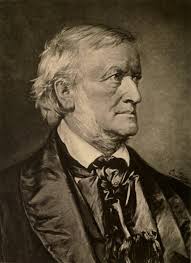
    Wagner

    What looked quite enticing on paper – a 1963 WALKURE from Stockholm – proved frustrating, not because the performance was sub-par in any way, but because it turned out to be mis-labled and incomplete.

    The recording starts mid-way thru Act I. Michael Gielen, a conductor I know little about, has the score well in hand although the orchestra isn’t always up to Wagner’s demands. Arne Tyrén is a less boisterous Hunding than some I have heard, and his voice can take on a wonderfully spooky quality. Birgit Nilsson’s ‘Ho-Jo-To-Ho’ is a marvel, her voice bright and fresh: she makes this daunting opening passage sound easy. Unfortunately, there’s not much more to be said of her performance here, since the Todesverkundigung is ruined by what seems to have been the wayward speed of the source machine used to tape the performance. The pitch rolls up and down with a seasick effect. Then, the third act is missing entirely!
    Nordmo loevberg

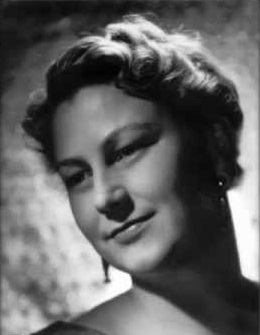
    The Wälsung twins are appealingly sung by Aase Nordmo-Lövberg (above) and Kolbjörn Höiseth. Ms. Nordmo-Lövberg, a very fine Elsa in Nicolai Gedda’s only performances of Lohengrin, brings poised lyricism and a fine sense of the words to the role of Sieglinde. 
    Kolbjorn-Hoiseth-300px

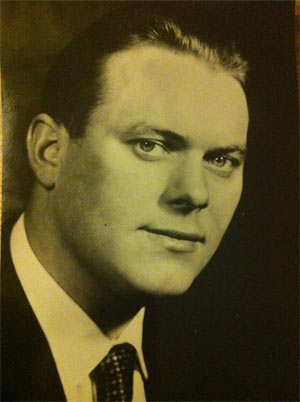
    Mr. Höiseth (above) sang briefly at The Met in 1975: he debuted as Froh in RHEINGOLD and repeated that role once; then he stepped in once for an indisposed colleague as Loge and once for an ailing Jon Vickers as Siegmund. I saw him in both the RHEINGOLD roles and he made a favorable impression. Here, as Siegmund, he is a good match for Nordmo-Lövberg – their voices are lyrically compatible. The tenor does experience a couple of random pitch problems, and seems just a shade tired vocally at the end of Act I – understandable, after such a taxing sing. But he makes a good effect in both the Sword Monologue and in the Winterstürme and also in the Act II scene where he attempts to calm to delirious Sieglinde as they flee from her pursuing husband. It’s a pity that the Todesverkundigung is so garbled: I would like to have heard Nilsson and Höiseth in this scene which is my favorite part of the opera.

    20011018-094545

    The mezzo-soprano Kerstin Meyer (above) had a more extensive Met career than her tenor colleague: she sang the Composer in the Met premiere of ARIADNE AUF NAXOS and also appeared as Carmen and Gluck’s Orfeo at the Old House. Here, as Fricka, she is impressive indeed: she begins lyrically – subtle and sure – and soon works herself into a state of righteous indignation. Her victory over Wotan is a triumph of will. Meyer sings quite beautifully, with clear expressiveness.

    Bjoerling-portrait

    Beautiful vocalism also marks the Wotan of Sigurd Björling (above). The voice is not stentorian, though he can punch out some impressive notes; the monologue is internalized, sung with a sense of hopelessness that is quite haunting. Despite errant pitch at times, Björling’s performance is moving and makes me truly regret that the third act is missing.

    ~~~~~~~~~~~~~~~~~~~~~~~~~~~~~~~~~~~~~~~~~~~~~~~~~~~~~~~~~~~~~~~~~~~~~~~~~~~~~~~~~~~~~~~~~~~

    Emc66-002-MF

    Above: Wolfgang Sawallisch

    A tremendous performance of GÖTTERDÄMMERUNG from Munich 1977 gave me a great deal of listening pleasure. I spent several hours with this recording, listening to whole acts repeatedly and zeroing in on favorite scenes to savor the individual characterizations of the very fine cast. Maestro Wolfgang Sawallisch’s shaping of the glorious score had a great deal to do with sustaining the air of excitement around this performance.

    This GÖTTERDÄMMERUNG was clearly recorded in-house; the sound of the microphone being fumbled with sometimes intrudes, and there are passages where a singer is too far off-mike to make a vocal impact…and other times when the recordist seems to be sitting literally in the singers’ laps.

    The first voice we hear is – incredibly – that of Astrid Varnay; essaying the role of the First Norn, Varnay sounds a bit matronly at times, but she is so authoritative and dramatically alert that it hardly matters. Her diction and word-colourings are endlessly admirable, and her low notes have deep, natural power – most especially on her final “Hinab!” As the Second Norn, Hildegard Hillebrecht is a bit unsettled vocally at times (the role lays low for her). Ruth Falcon’s singing of the Third Norn is more lyrical than some who have essayed the role.

    Sawallisch’s forward flow provides a nice build-up to Brunnhilde’s first entry; off-mike at first, it soon becomes evident that Ingrid Bjoner is on peak form for this performance. The voice won’t be to all tastes, but its silvery power, impressive lower range, and sustained phrasing which Bjoner brings forth are thrilling to me, a long-time fan. Jean Cox as Siegfried doesn’t quite equal his 1975 Bayreuth performance of the role, but he’s so sure of himself and has both the heft and the vocal stamina that’s needed. As Sawallisch builds the Dawn Duet with passionate urgency, Bjoner spears a couple of splendid high B-flats before her brightly attacked, sustained climactic high-C. 

    At the Gibichung Hall we meet the excellent Gunther of Hans Günther Nöcker and the vocally less-impressive but involved Gutrune of Leonore Kirchstein (near the end of the opera, she emits a gruesome scream on discovering the truth about Siegfried’s death). The dominating vocal force of the opera from here on in – along with Bjoner – is the resplendently sung and theatrically vivid Hagen of Karl Ridderbusch. The basso’s rendering of ‘The Watch’ is simply incredible. 

    Ae3fa3b49cd1956fc73b780d984a5e39

    Another potent performance is the splendid Waltraute of Ortrun Wenkel, who attained international fame for her remarkable performance as Erda in Pierre Chéreau’s 1976 production of the RING Cycle for Bayreuth which was telecast in its entirety and is preserved on DVD. Wenkel’s abundant tone and vivid sense of the character make her scene with the equally thrilling Bjoner Brunnhilde an outstanding part of this performance. If Waltraute’s parting high-A – always a thorny note for a contralto essaying this role – is cut short, it scarcely distracts from the excitement the Bjoner/Wenkel sister-scene has generated. 

    Bjoner is staunch in her defense of the ring from the attacking Gunther-Siegfried; abetted by Sawallisch and Mr. Cox, the soprano brings the first act of this performance to an exciting close.

    But then things soar even higher, for in an Act II that borders on insanity, the maestro and his cast all seemed to be in the grip of madness. The act begins with the eerie scene where Alberich (creepy singing from Zoltan Kelemen) appears as a vision to the sleeping Hagen. The summoning of the vassals is massively impressive, and later, in the great scene of oath-swearing, Cox and Bjoner blaze away. Throughout the act, the ever-keen Sawallisch guides his forces with a masterful hand. Simply thrilling.

    A nicely-blended trio of Rhinemaidens (Lotte Schädle, Marianne Seibel, and Liliana Netschewa) give us a lyrical interlude at the start of Act III: all three vocal parts are clearly distinguishable and they are finely supported by the atmospheric playing of the orchestra, with the horn calls very well-managed. Jean Cox is very much on-mike as he encounters the girls: his big, leathery high-C is sustained…and then he chuckles to himself.

    Following Hagen’s betrayal, Cox’s farewell to life and to Brunnhilde is wonderfully supported by Sawallisch: the orchestra playing here is so impressive, the tenderness of the final greeting so lovingly conveyed. 

    Now Sawallish takes up a deep, glowering rendition of the prelude to the Funeral March; contrasts of weight and colour add to the sonic build-up until the great theme bursts forth in its full-blown grandeur. The spot-on trumpet fanfare and the solid assurance of the horns are a great asset here.

    Ridderbusch is terrifying in vocal power and cruelty as he seizes control of the scene, but the raising of the hand of the dead Siegfried when Hagen goes for the ring puts Alberich’s son in his place at last. The cleansing descending scale sets the scene for Brunnhilde, and even though Bjoner is off-mike for the opening of the Immolation Scene, she is vocally unassailable: by “Wie sonne laute…” the  mike has found her and she shows both great power and great subtlety in this music. Bjoner’s low notes are vivid, her sustained, lyrical thoughts of the ravens imaginatively expressed, and her noble “Ruhe…ruhe, du Gott!” has a benedictive quality and is very moving. Following her passionate disavowal of the ring, the soprano surges forward with a thrilling greeting of Grane and some exalting top notes to seal her great success in this arduous role. Then Sawallisch and the orchestra bring the opera to a mighty close.

    6a00d8341c4e3853ef0192ac79f9a2970d-800wi

    Above: Jean Cox and Ingrid Bjoner

  • TURANDOT at The Met – 2nd of 4

    385682_332777790113678_298965728_n

    Above: Lise Lindstrom in the Metropolitan Opera’s production of TURANDOT

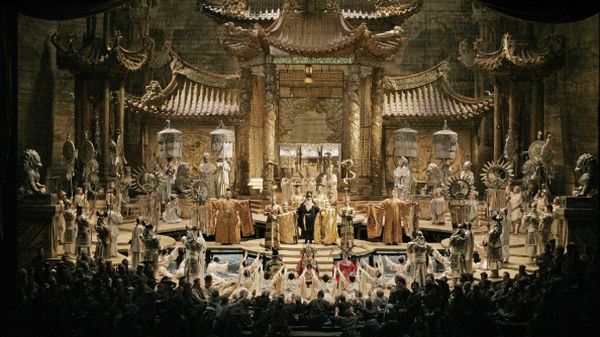
    Monday October 26th, 2015 – It’s always fun to bring someone to the opera who hasn’t been in a while or who is unfamiliar with a particular work. When my choreographer/friend Lydia Johnson and I decided to spend an evening at The Met, I quickly settled on Franco Zeffirelli’s classic production of TURANDOT. In an age where less is supposedly more when it comes to opera stagings, this TURANDOT clings to the forbidden notion that grand opera should still be grand. Is this the sort of thing the public really wants to see? A virtually full house, including tons of young people, seemed to be saying “Yes!”

    It was a good performance, but in the end it was the opera itself that was the star of the evening. Beyond the Chinoiserie which decorates the score, we have Puccini – the master-orchestrator – creating harmonies and textures that are so atmospheric. Lydia was fascinated by what she was hearing; I told her she must try FANCIULLA DEL WEST next.

    The Met Orchestra were on optimum form – and the chorus, too. Both forces were capable of lusty vigor one moment and subtle delicacy the next. Conductor Paolo Carignani paced the opera superbly and brought forth much detail from the musicians; a tendency to cover the singers at times should have been resolved by this point in the run, but instead the conductor went blithely on, seemingly unable to comprehend that a forte for Marcelo Alvarez is not the same as a forte for Mario del Monaco.

    For all that, the singing for the most part was pleasing and well-tuned to the drama of the work. David Crawford was an excellent Mandarin, ample-toned and investing the words with proper authority. Ronald Naldi as the Emperor Altoum projected successfully from his throne on Amsterdam Avenue, and Eduardo Valdes, Tony Stevenson, and – especially – Dwayne Croft made the most of the Ping-Pang-Pong scene.

    James Morris’ aged timbre made a touching effect in the music of the blind king Timur. Leah Crocetto’s soprano sounded a bit fluttery at the start, but she moved the audience with her lovingly-shaped “Signore ascolta” and was excellent in her third act scene, winning the evening’s loudest cheers at curtain call. While Marcelo Alvarez is clearly over-parted by Calaf’s music, a more thoughtful conductor could have aided the tenor in turning his lyrical approach to the role into something perfectly viable. But that didn’t happen, and while there were many handsome moments in Alvarez’s singing, at the climax of “Nessun dorma” the conductor was of no help. There was no applause after this beloved aria, even though it was actually quite beautifully sung.

    Lise Lindstrom is undoubtedly the most physically appealing Turandot I have ever beheld, and she also manages to make the character something more than a cardboard ice queen. Lindstrom’s lithe, attractive figure and her natural grace of movement were great assets in her portrayal; she looked particularly fetching in those scenes where she’s divested of the heavy robes and headpieces and seems like a young princess, almost vulnerable in her sky-blue gown and long black hair.

    After a couple of warm-up phrases in which there was a trace of cloudiness in her upper-middle voice, Lindstrom’s singing took on its characteristic high-flying power as she pulled the treacherous high notes out of thin air with assured attacks. The narrative “In questa reggia” was presented as both a vocal and verbal auto-biography, her upper range zinging over the orchestra. Lindstrom’s Riddle Scene was vividly dramatic; having experienced defeat, her plea to Altoum was urgent and moving, and the she advanced downstage to deliver the two shining top-Cs over the massed chorus. Her acting as Calaf offered her a way out was detailed and thoughtful. 

    In Act III Lindstrom was totally assured vocally, with a persuasive melting at Calaf’s kiss and a nuanced rendering of “Del primo pianto”; in the high phrases following the prince’s revelation of his name, the soprano was very much at home. She ended the opera on a high B-flat attacked softly and then expanded to a glistening brilliance.

    Lydia was very moved by the opera – and especially taken with the gestural language of Chiang Ching’s choreography – and we stayed to cheer the singers. She agreed with me, though, that dramatically the “happy ending” is incomprehensible. That Calaf should want to marry a woman who has sent dozens of men to their deaths, threatened to torture his own father, and caused the suicide of the faithful Liu just doesn’t make sense. But then, fairy tales seldom do.

    Metropolitan Opera House
    October 26th, 2015

    TURANDOT

    Giacomo Puccini

    Turandot................Lise Lindstrom
    Calàf...................Marcelo Álvarez
    Liù.....................Leah Crocetto
    Timur...................James Morris
    Ping....................Dwayne Croft
    Pang....................Tony Stevenson
    Pong....................Eduardo Valdes
    Emperor Altoum..........Ronald Naldi
    Mandarin................David Crawford
    Maid....................Anne Nonnemacher
    Maid....................Mary Hughes
    Prince of Persia........Sasha Semin
    Executioner.............Arthur Lazalde
    Three Masks: Elliott Reiland, Andrew Robinson, Amir Levy
    Temptresses: Jennifer Cadden, Oriada Islami Prifti, Rachel Schuette, Sarah Weber-Gallo

    Conductor...............Paolo Carignani

  • TURANDOT at The Met – 2nd of 4

    385682_332777790113678_298965728_n

    Above: Lise Lindstrom in the Metropolitan Opera’s production of TURANDOT

    Monday October 26th, 2015 – It’s always fun to bring someone to the opera who hasn’t been in a while or who is unfamiliar with a particular work. When my choreographer/friend Lydia Johnson and I decided to spend an evening at The Met, I quickly settled on Franco Zeffirelli’s classic production of TURANDOT. In an age where less is supposedly more when it comes to opera stagings, this TURANDOT clings to the forbidden notion that grand opera should still be grand. Is this the sort of thing the public really wants to see? A virtually full house, including tons of young people, seemed to be saying “Yes!”

    It was a good performance, but in the end it was the opera itself that was the star of the evening. Beyond the Chinoiserie which decorates the score, we have Puccini – the master-orchestrator – creating harmonies and textures that are so atmospheric. Lydia was fascinated by what she was hearing; I told her she must try FANCIULLA DEL WEST next.

    The Met Orchestra were on optimum form – and the chorus, too. Both forces were capable of lusty vigor one moment and subtle delicacy the next. Conductor Paolo Carignani paced the opera superbly and brought forth much detail from the musicians; a tendency to cover the singers at times should have been resolved by this point in the run, but instead the conductor went blithely on, seemingly unable to comprehend that a forte for Marcelo Alvarez is not the same as a forte for Mario del Monaco.

    For all that, the singing for the most part was pleasing and well-tuned to the drama of the work. David Crawford was an excellent Mandarin, ample-toned and investing the words with proper authority. Ronald Naldi as the Emperor Altoum projected successfully from his throne on Amsterdam Avenue, and Eduardo Valdes, Tony Stevenson, and – especially – Dwayne Croft made the most of the Ping-Pang-Pong scene.

    James Morris’ aged timbre made a touching effect in the music of the blind king Timur. Leah Crocetto’s soprano sounded a bit fluttery at the start, but she moved the audience with her lovingly-shaped “Signore ascolta” and was excellent in her third act scene, winning the evening’s loudest cheers at curtain call. While Marcelo Alvarez is clearly over-parted by Calaf’s music, a more thoughtful conductor could have aided the tenor in turning his lyrical approach to the role into something perfectly viable. But that didn’t happen, and while there were many handsome moments in Alvarez’s singing, at the climax of “Nessun dorma” the conductor was of no help. There was no applause after this beloved aria, even though it was actually quite beautifully sung.

    Lise Lindstrom is undoubtedly the most physically appealing Turandot I have ever beheld, and she also manages to make the character something more than a cardboard ice queen. Lindstrom’s lithe, attractive figure and her natural grace of movement were great assets in her portrayal; she looked particularly fetching in those scenes where she’s divested of the heavy robes and headpieces and seems like a young princess, almost vulnerable in her sky-blue gown and long black hair.

    After a couple of warm-up phrases in which there was a trace of cloudiness in her upper-middle voice, Lindstrom’s singing took on its characteristic high-flying power as she pulled the treacherous high notes out of thin air with assured attacks. The narrative “In questa reggia” was presented as both a vocal and verbal auto-biography, her upper range zinging over the orchestra. Lindstrom’s Riddle Scene was vividly dramatic; having experienced defeat, her plea to Altoum was urgent and moving, and the she advanced downstage to deliver the two shining top-Cs over the massed chorus. Her acting as Calaf offered her a way out was detailed and thoughtful. 

    In Act III Lindstrom was totally assured vocally, with a persuasive melting at Calaf’s kiss and a nuanced rendering of “Del primo pianto”; in the high phrases following the prince’s revelation of his name, the soprano was very much at home. She ended the opera on a high B-flat attacked softly and then expanded to a glistening brilliance.

    Lydia was very moved by the opera – and especially taken with the gestural language of Chiang Ching’s choreography – and we stayed to cheer the singers. She agreed with me, though, that dramatically the “happy ending” is incomprehensible. That Calaf should want to marry a woman who has sent dozens of men to their deaths, threatened to torture his own father, and caused the suicide of the faithful Liu just doesn’t make sense. But then, fairy tales seldom do.

    Metropolitan Opera House
    October 26th, 2015

    TURANDOT

    Giacomo Puccini

    Turandot................Lise Lindstrom
    Calàf...................Marcelo Álvarez
    Liù.....................Leah Crocetto
    Timur...................James Morris
    Ping....................Dwayne Croft
    Pang....................Tony Stevenson
    Pong....................Eduardo Valdes
    Emperor Altoum..........Ronald Naldi
    Mandarin................David Crawford
    Maid....................Anne Nonnemacher
    Maid....................Mary Hughes
    Prince of Persia........Sasha Semin
    Executioner.............Arthur Lazalde
    Three Masks: Elliott Reiland, Andrew Robinson, Amir Levy
    Temptresses: Jennifer Cadden, Oriada Islami Prifti, Rachel Schuette, Sarah Weber-Gallo

    Conductor...............Paolo Carignani

  • TURANDOT at The Met – 1st of 4

    Turandot-Met

    Wednesday September 23rd, 2015 – At a score desk this evening for the prima of TURANDOT at The Met; I’ll be attending a performance by each of this season’s four Turandots.

    The first act of tonight’s performance was stunning; the conductor, Paolo Carignani, molded the huge choral and orchestral forces into a vibrant sound tapestry and his reading of the score was dynamic, whilst also allowing the necessary moments of poetry to shine thru.

    Patrick Carfizzi got the evening off to an excellent start with his authoritative declamation of the Mandarin’s decree. Hibla Gerzmava’s full-bodied lyric soprano sounded luxuriant in Liu’s music; although she did not go in for the many piano/pianissimo effects that some singers have brought to this music – Gerzmava ended “Signore ascolta” with a crescendo on the final B-flat rather than a tapering of the tone – her gleaming sound was a welcome element to the performance. Marcelo Alvarez as the Unknown Prince sang with appealing lyricism, pacing himself wisely for the vocal rigors which lay ahead. James Morris was an affecting Timur, drawing upon his long operatic experience to create a touching vocal characterization of the old king. Dwayne Croft, Tony Stevenson, and Eduardo Valdes were a first-rate trio of court ministers.

    As the first act ended, I felt the old elation of being at the opera. But the ‘Gelb-intermission’ which followed totally destroyed the impetus of the evening. As is so often the case at The Met these days, the interval stretched to 40 minutes, the last ten of which found the entire audience back in their seats and raring to go while the musicians sat in the pit doodling idly.

    At last the conductor re-appeared and we had a delightful rendering of the Ping-Pang-Pong scene with Mr. Croft and his two tenor sidekicks successfully mining both the wit and the nostalgia of the music, one of Puccini’s most delectable creations – and superbly orchestrated into the bargain.

    I was looking forward to hearing Ronald Naldi – a long-time favorite of mine – as the Emperor Altoum but he was replaced by Mark Schowalter, who projected well from his distant throne. The exchange between the aged monarch and the Unknown Prince was interesting in that Mr. Alvarez eschewed the usual stentorian delivery of “Figlio del cielo…” (three times) for a more pensive vocal quality.

    Christine Goerke’s Turandot did not make the vocal impression I was hoping for; the uppermost notes in the princess’s treacherous music seemed slightly out of Goerke’s comfort zone. She managed well enough, and used a darkish middle and lower range to good effect. But the trumpeting brilliance of the tones above A, which we have come to expect from our Turandots, was not really forthcoming. I am not sure why she wished to sing this role, since Wagner and Strauss are now her natural habitat. 

    Faced with yet another stupor-inducing intermission, I left during the Act II curtain calls. 

    Metropolitan Opera House
    September 23rd, 2015

    TURANDOT
    Giacomo Puccini

    Turandot................Christine Goerke
    Calàf...................Marcelo Álvarez
    Liù.....................Hibla Gerzmava
    Timur...................James Morris
    Ping....................Dwayne Croft
    Pang....................Tony Stevenson
    Pong....................Eduardo Valdes
    Emperor Altoum..........Ronald Naldi
    Mandarin................Patrick Carfizzi
    Maid....................Anne Nonnemacher
    Maid....................Mary Hughes
    Prince of Persia........Sasha Semin
    Executioner.............Arthur Lazalde
    Three Masks: Elliott Reiland [Debut], Andrew Robinson, Amir Levy
    Temptresses: Jennifer Cadden, Oriada Islami Prifti, Rachel Schuette, Sarah Weber-Gallo

    Conductor...............Paolo Carignani

  • TURANDOT at The Met – 1st of 4

    Turandot-Met

    Wednesday September 23rd, 2015 – At a score desk this evening for the prima of TURANDOT at The Met; I’ll be attending a performance by each of this season’s four Turandots.

    The first act of tonight’s performance was stunning; the conductor, Paolo Carignani, molded the huge choral and orchestral forces into a vibrant sound tapestry and his reading of the score was dynamic, whilst also allowing the necessary moments of poetry to shine thru.

    Patrick Carfizzi got the evening off to an excellent start with his authoritative declamation of the Mandarin’s decree. Hibla Gerzmava’s full-bodied lyric soprano sounded luxuriant in Liu’s music; although she did not go in for the many piano/pianissimo effects that some singers have brought to this music – Gerzmava ended “Signore ascolta” with a crescendo on the final B-flat rather than a tapering of the tone – her gleaming sound was a welcome element to the performance. Marcelo Alvarez as the Unknown Prince sang with appealing lyricism, pacing himself wisely for the vocal rigors which lay ahead. James Morris was an affecting Timur, drawing upon his long operatic experience to create a touching vocal characterization of the old king. Dwayne Croft, Tony Stevenson, and Eduardo Valdes were a first-rate trio of court ministers.

    As the first act ended, I felt the old elation of being at the opera. But the ‘Gelb-intermission’ which followed totally destroyed the impetus of the evening. As is so often the case at The Met these days, the interval stretched to 40 minutes, the last ten of which found the entire audience back in their seats and raring to go while the musicians sat in the pit doodling idly.

    At last the conductor re-appeared and we had a delightful rendering of the Ping-Pang-Pong scene with Mr. Croft and his two tenor sidekicks successfully mining both the wit and the nostalgia of the music, one of Puccini’s most delectable creations – and superbly orchestrated into the bargain.

    I was looking forward to hearing Ronald Naldi – a long-time favorite of mine – as the Emperor Altoum but he was replaced by Mark Schowalter, who projected well from his distant throne. The exchange between the aged monarch and the Unknown Prince was interesting in that Mr. Alvarez eschewed the usual stentorian delivery of “Figlio del cielo…” (three times) for a more pensive vocal quality.

    Christine Goerke’s Turandot did not make the vocal impression I was hoping for; the uppermost notes in the princess’s treacherous music seemed slightly out of Goerke’s comfort zone. She managed well enough, and used a darkish middle and lower range to good effect. But the trumpeting brilliance of the tones above A, which we have come to expect from our Turandots, was not really forthcoming. I am not sure why she wished to sing this role, since Wagner and Strauss are now her natural habitat. 

    Faced with yet another stupor-inducing intermission, I left during the Act II curtain calls. 

    Metropolitan Opera House
    September 23rd, 2015

    TURANDOT
    Giacomo Puccini

    Turandot................Christine Goerke
    Calàf...................Marcelo Álvarez
    Liù.....................Hibla Gerzmava
    Timur...................James Morris
    Ping....................Dwayne Croft
    Pang....................Tony Stevenson
    Pong....................Eduardo Valdes
    Emperor Altoum..........Ronald Naldi
    Mandarin................Patrick Carfizzi
    Maid....................Anne Nonnemacher
    Maid....................Mary Hughes
    Prince of Persia........Sasha Semin
    Executioner.............Arthur Lazalde
    Three Masks: Elliott Reiland [Debut], Andrew Robinson, Amir Levy
    Temptresses: Jennifer Cadden, Oriada Islami Prifti, Rachel Schuette, Sarah Weber-Gallo

    Conductor...............Paolo Carignani

  • Leo Goeke

    Leo-Goeke

    During the 1970s, the American lyric tenor Leo Goeke (above) was a popular artist at both the New York City Opera and The Met. A finalist in the 1967 Met Auditions, Goeke sang more than 200 performances at The Met and on tour, including such roles as Tamino, Count Almaviva, and the Italian Singer in ROSENKAVALIER. He sang (beautifully) the Voice of the Young Sailor in the Met’s 1971 August Everding production of TRISTAN UND ISOLDE, and in 1973 he was Hylas in the Metropolitan Opera premiere of Berlioz LES TROYENS.

    Several of Leo Goeke’s numerous European successes are available on DVD: from England’s Glyndebourne Festival where he sang three Mozart roles and – in 1975 – Stravinsky’s Tom Rakewell in an interpretation that was hailed as ideal; and his performance as Gandhi in Achim Freyer’s Stuttgart Opera production of Glass’s SATYAGRAHA.

    Goeke passed away in 2012.

    Leo Goeke – Il mio tesoro – DON GIOVANNI – NYCO 10~29~72

  • Stella Abrera as Giselle @ ABT

    Abrera

    Above: Stella Abrera

    Saturday May 23rd, 2015 – Stella Abrera danced her first Giselle with American Ballet Theatre at The Met this evening; she had previously danced the role with the Company on tour. Ms. Abrera was originally to have debuted as the iconic Wili at The Met in 2008 but an injury intervened. Now at last we have the beauteous ballerina’s Giselle onstage here in New York, and what a lovely and moving interpretation it is. The audience, which included some 200 former members of ABT there to honor the Company’s 75th anniversary, gave Ms. Abrera and her partner, Vladimir Shklyarov, a delirious standing ovation.  

    ABT‘s GISELLE is a classic. Having seen it many times, there are of course aspects of it that I wish could be altered; but for a production which must frame any number of Giselles and Albrechts in a given season, it serves the ballet very well. The second act in particular is redolent of the perfume of the many phenomenal ballerinas who have graced this stage in this immortal role.

    While the Abrera debut was the evening’s centerpiece, there were many other impressive aspects to the performance. Leann Underwood was a vision in ruby-red as Bathilde, and Misty Copeland and Craig Salstein were on peak form for the Peasant Pas de Deux – I’ve never seen Craig dance better. Nancy Raffa’s mime as Berthe was clear and moving. Thomas Forster was a tall, intense Hilarion with a slightly creepy aspect, though his sincere love for Giselle was never in doubt. 

    Veronika Part’s plush dancing and Romanov-princess demeanor made her a stellar Myrthe; leaping along the diagonal in a swirl of white tulle, the imperious ballerina seemed gorgeously unassailable. Christine Shevchenko and Stephanie Williams danced beautifully as Moyna and Zulma, and the ABT Wilis, in Part’s thrall, won waves of applause for their precise, grace-filled dancing.

    Earlier this month I saw Stella Abrera in LES SYLPHIDES. She struck me as ideal in the Romantic style of this Fokine ballet; that performance seems now to have been a prelude to her Giselle. An immensely popular ABT ballerina, Abrera had the audience with her from the moment she opened the door to her cottage; as Giselle, she rushed out into the late-Summer morning full of joy and buoyed by her secret love, unaware that this was to be her last day on Earth.

    This Giselle had every reason to trust her Loys, for in Vladimir Shklyarov’s portrayal of the young nobleman there was a boyish sincerity and heart-on-sleeve openness that any girl would delight in. Shklyarov’s Albrecht had not thought far enough ahead as to the possible outcome of his village romance; he was genuinely in love and there was no trace of deceit behind his affection. Thus the naive pair saw no impediment to their romance; who knows? Albrecht might even have renounced his inheritance and they lived on together, happily ever after. Hilarion, in discovering the truth, ruins that scenario. Thus it seemed that Shklyarov’s Albrecht came to Giselle’s grave not as a repentant cad but as a bereft lover whose incautious behavior has destroyed his beloved.

    Abrera and Shklyarov both have beautiful, natural smiles, and they could not suppress the happiness of their mutual devotion throughout the early scenes of Act I. Their dancing together was light and airy, and Abrera’s solo was the lyric highlight of the first act. Yet whatever happens in Act I, and however moving Giselle’s mad scene might be – and Abrera’s was truly touching – it’s in Act II that the two dancers face the great test of both technical surety and poetic resonance. This evening Abrera and Shklyarov simply soared.

    Abrera’s Giselle gave all her purity and gentle strength to sustain her beloved throughout his ordeal. There was no way Myrthe could win against this Giselle’s steadfastness. In a spectacular pair of overhead lifts, Shklyarov swept Abrera heavenward with breathtaking steadiness. In his solos, the danseur‘s leaps and beats drew murmurs of admiration from the many dancers seated around us, and later his endless entrechats had the visual impact of a Joan Sutherland trill. Abrera, pallid and ethereal, danced sublimely. The final parting of the lovers was deeply affecting; cherishing the single flower Abrera had given him, Shkylarov seemed about to depart but in the end, drawn back by the memory of his lost Giselle, he collapsed amid the lilies on her grave.

    Standing ovations can seem de rigueur these days, but not this one: the moment the curtains parted on Abrera and Shkylarov standing alone on the vast stage, the audience rose as one and a great swelling of cheers filled the House. Not only do we have a superb ‘new’ Giselle to cherish – Abrera stands with the finest I have seen in the role – but also a deeply satisfying partnership that we can hope to enjoy frequently in coming seasons.