Tag: The Metropolitan Opera

  • @ The Met’s Opening Night ~ MEDEA

    Met medea

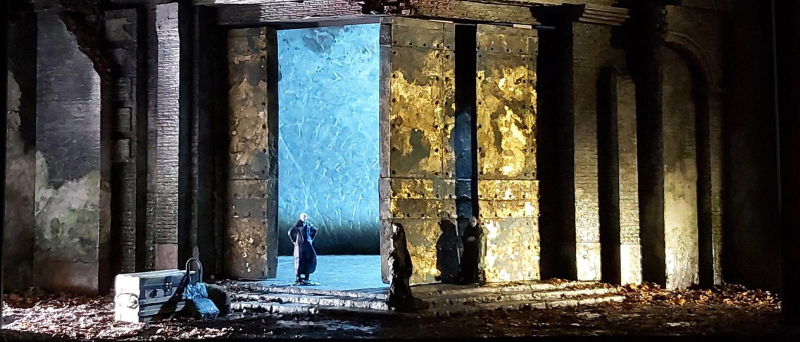
    Tuesday September 27th, 2022 – The Metropolitan Opera opened their 2022-2023 season this evening with the Met premiere of Cherubini’s MEDEA. Originally performed in French – the opera’s world premiere took place on March 13th, 1797, at the Théâtre Feydeau in Paris – MEDEA in its Italian version became one of Maria Callas’s greatest triumphs.

    This was my fourth time experiencing MEDEA in the theatre. In 1974, the New York City Opera staged the work for their premiere singing-actress, Maralin Niska, who was magnificent in the role. Incredibly, in 1982, the Company offered another new production of the work – somewhat more timeless in feeling – with Grace Bumbry very effective in the title-role. In 1987, the opera was given in Bridgeport, Connecticut, in a traditional setting; Gilda Cruz-Romo sang Medea. Gilda, a longtime favorite of mine, was not ideally suited to the role but she still had plenty of voice a her disposal; it was the last time I ever saw her onstage. 

    Met Opening Night tickets being prohibitively expensive, I took a score desk for this performance; I plan to go a second time to have a view of the sets and costumes. This evening was a huge personal triumph for Sondra Radvanovsky; singing to a sold out house – a real rarity at The Met in this day and age – she won a thunderous ovation of the kind singers like Tebaldi, Nilsson, Rysanek, and Dame Gwyneth Jones used to garner. Sondra deserved every decibel, for she threw herself into the difficult and demanding role with total commitment.

    The evening opened with the national anthem. I have always love singing it, but when we came to the words “…o’er the land of the free…” and was suddenly overcome with grief. We seem to be rushing headlong to our doom as a great democracy; I am hoping I won’t live long enough to experience the bitter end.

    MEDEA itself is maddeningly uneven: thrilling passages – mainly for the title-character – alternate with routine music; conductor Carlo Rizzi led a performance that was more dutiful than inspired. It was in the individual singers that the evening made its musical impact; chorus and orchestra played a vital role in keeping the opera afloat when the main characters were otherwise occupied.

    Matthew Polenzani’s Giasone is quite different from that of such earlier stalwarts in this music as Jon Vickers and James McCracken: more lyrical and thus more vulnerable. Polenzani sang beautifully, and his voice carried perfectly in the big hall. His expressive range veered from poetic (with his bride) to defiant (dealing with his ex-), to ultimate despair as he watched his entire world go up in flames. 

    Janai Brugger’s Glauce made much of what is a rather ungrateful role; Glauce has a very demanding aria early in the opera and thereafter is eclipsed both musically and dramatically by her rival, Medea. Ms. Brugger’s voice sails easily into the hall, and she combined full-toned lyricism with technical assurance.

    Michele Pertusi has had a long and distinguished career, and tonight, as Creon, he was most impressive. The voice is steady and sure, and it fills the house. It’s always wonderful to hear a native Italian making the most of the words. Pertusi’s Creon was outstanding, establishing real authority.

    I had previously experienced Ekaterina Gubanova as a powerful Cassandra in a concert performance of LES TROYENS, and as Brangaene in a concert version of Act II of TRISTAN UND ISOLDE where she sounded a bit taxed in her upper range. Tonight, as Medea’s faithful companion, Neris, Ms. Gubanova was superb. Her poignant aria, with its haunting bassoon accompaniment, was the musical centerpiece of the evening. The singer seemed to hold the house under a spell as she sang of her devotion to her mistress, winning warm applause at the aria’s end, and an enthusiastic round of bravas at her bows.

    Mille bravi! to Met principal bassoonist Evan Epifanio for his gorgeously mellow playing in Neris’s aria; he and Ms. Gubanova ideally complimented one another. 

    Witnessing the Radvanovsky triumph was vastly pleasing to me, as I have been a great admirer of the diva since her days as a Met Young Artist. In her many performances that I’ve experienced, she has always seemed to have a unique gift for making opera seem important. Sondra’s dynamic range is her greatest gift: the incredible focus and power of her highest notes can be followed moments later by a shimmeringly “alive” pianissimo. And she has an enthralling stage presence: a fearless actress, she seems to become the woman she is portraying. All this made her Medea a holy terror.

    Medea makes a sneaky entrance, and soon she is alone with her former lover/husband, to whom she pours out her emotions in the great aria “Dei tuoi figli la madre…“; here, the Radvanovsky voice ranges from extraordinary tenderness to blind fury. I might have wished for a more chesty expression at “Nemici senza cor!” (Sondra really opened the chest range in Act II!) but the soprano knew what she was about. Polenzani gave a powerful response, eliciting a blistering, sustained top note from the furious sorceress. They quarreled on, to brilliant effect.

    Act II commences without a break (thank god they didn’t bring up the houselights to quarter!) and Sondra, who had had a couple of throaty notes in Act I, was now blazing away on all cylinders, the voice fresh as can be, and the increasing use of chest voice adding to the thrills. Medea’s pleadings to Creon to be given one more day in Corinth cover a wide range of cajoling and deceit…Sondra and Mr. Pertusi were electrifying here. And when she won, Sondra celebrated her success: Medea now has time to work her destructive spells.

    Following Neris’s gorgeous aria, sounds of the wedding ceremony are heard, with the chorus invoking the gods to bless Glauce and Giasone. Medea counters this with diabolical mutterings of her own, cursing the crowd with a starkly chested “Rabia infernal!“. Then, suddenly, she sails up to a vibrant final phrase. I admit I was kind of hoping Sondra would “take the fifth” here, as Callas sometimes did, but that notion was lost in the barrage of applause.

    Act III is only about 30 minutes long, and is preceded by an over-long prelude. Sondra again stuns us with her powerful “Numi, venite a me!” and then gives us her finest, most magical singing of the evening with “Del fiero duol!” capped by en enormous high note. Polenzani, maddened by grief, assails her: “Our sons! What was their crime that they deserved to die?”…to which she answers, “They were your children!”

    I stood up from my desk to watch the finale: flames are licking at the walls of the temple; the corpses of the two boys are lying on the floor upstage. Medea delivers her final line to Giasone: Al sacro fiume io vo! Colà t’aspetta l’ombra mia!” (“I go to the sacred river…there, my shade will await you!”) and moves slowly to her dead sons. She settles herself between them, taking their bodies in her arms as the entire temple is engulfed in flames.

    There’s a video of tonight’s finale – and the curtain calls – that is a wonderful souvenir of the evening. However, having been recorded on a cellphone, it gives no idea of the sheer volume and depth of the sound of a full-house standing ovation at The Met. To Sondra, it must have felt like being hit by an avalanche of affection. Watch here.

    ~ Oberon

  • 50 Years Ago ~ End of The Bing Era @ The Met

    Montserrat_Caballé

    Above: Montserrat Caballé

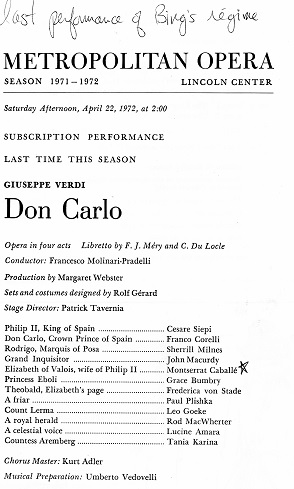
    On April 22nd, 1972, fifty years ago today, a matinee of Verdi’s DON CARLO was the final opera performance of Sir Rudolf Bing’s reign at The Metropolitan Opera. That evening, a gala concert featuring many great artists of the day paid tribute to the departing general manager.

    I attended the matinee, and I tried to get a ticket for the evening’s farewell concert, but none were to be had. Here’s what I wrote in my diary about the afternoon’s DON CARLO:

    “In spite of a few shortcomings, this was for the most part a superb and highly enjoyable performance; the opera itself is magnificent. Francesco Molinari-Pradelli’s conducting was dutiful, and not very inspired. I found myself wishing for a different maestro.

    All the singers were perfectly suited to their roles. Two fine tenors – Leo Goeke as Count Lerma and Rod MacWherter as the Herald – sounded wonderful in their brief musical moments. Lucine Amara and Frederica von Stade graciously took on small roles in honor of Mr. Bing: Ms. Amara repeated her 1950 Met debut role as the Celestial Voice to lovely effect, whilst Ms. von Stade stepped back from such roles as Nicklausse, Hansel, and Cherubino to make a sensational Theobald, the queen’s page. What a voice this mezzo has, and how boyish and alert her acting was! Paul Plishka was amply resonant as the mysterious Friar (aka Charles V).

    John Macurdy sang very well as the Grand Inquisitor, joining the great Cesare Siepi’s Philip II to make the confrontation of church and state a chilling scene. The Siepi voice remains impressive, giving us a wonderfully personal “Ella giammai m’amo“; his acting and bearing left nothing to be desired. Bravo!

    Grace Bumbry as Eboli gave one of the finest performances I have heard from her. A couple of snags in the Canzone del Velo were quickly forgotten as she swept thru the fiery Garden Scene trio and on to a striking “O don fatale” which elicited great applause. Bumbry looks sensational onstage, though her acting is sometimes mannered.

    Franco Corelli did not seem as vocally secure in the title-role as is the 1970 performances with Raina Kabaivanska, but still quite exciting. His singing was sustained and well-modulated, and of course he looks great onstage, though as an actor he sometimes went overboard. Still, Corelli always ignites the crowd.  Sherrill Milnes sounded better today than he did earlier in the season; his Posa is a masculine, commanding figure, and he makes you care about the character’s fate.

    Standing head and shoulders vocally above her colleagues, Montserrat Caballé was a sublime Elisabetta. Her regal bearing and innate sense of nobility made her physical stature irrelevant: she in unquestionably a queen in every sense of the word. She looked magnificent in the costumes, especially the rich red gown of the Auto da Fé scene. Ms. Caballé’s singing was thrilling from first note to last, and it is a pleasure to watch her sing: she expends no evident effort, whether producing an ensemble-topping forte or a shimmering pianissimo.  Her farewell to the Countess of Aremberg (both verses) was a poised moment of poetic beauty. All afternoon, the diva seemed to inspire her colleagues, especially in the Closet Scene quartet which was a highlight of the performance. And in the great aria “Tu che le vanita“, Ms. Caballé rose to spectacular heights, pouring out the queen’s despair rich-toned phrases, and weaving in uncanny pianissimi of spine-tingling delicacy. The aria won a huge ovation. And then La Caballé ended the evening by holding the opera’s final note FOREVER! Her Elisabetta ranks with the greatest operatic interpretations I have experienced to date. Bravississima!!!

    Don carlo-1 jpg

    Montserrat Caballé’s sensationally sustained final note at this performance is preserved on this recording of the opera’s ending from the broadcast: Cesare Siepi is Philip II, John Macurdy is the Grand Inquisitor, Placido Domingo is Don Carlo, and Paul Plishka’s is the Voice of Charles V.  Listen here.

    ~ Oberon

  • Jerome Hines

    Jerome hines as wotan

    Above: Jerome Hines as Wotan in DIE WALKURE at Bayreuth.

    Jerome Hines, the tall American basso, holds the record for the longest career of a principal artist at The Metropolitan Opera: between 1946 and 1987, Hines sang 875 performances with the Company in New York City and on tour. I saw him for the first time in 1963 as Mephistopheles in FAUST, one of eight performances I saw at The Old Met before it was demolished.

    In the ensuing seasons, I saw Hines as Alvise in GIOCONDA and Colline in BOHEME, as well as in a concert performance of scenes from BORIS GODUNOV at Carnegie Hall. The basso’s career took him to La Scala, the Bolshoi, Buenos Aires, and to the festivals at Glyndebourne, Edinburgh, and Bayreuth.

    At the Bayreuth Festival, Jerome Hines appeared as Gurnemanz, King Marke, and as Wotan, from which role the following excerpt is drawn:

    Jerome Hines – WALKURE finale – Kempe cond – Bayreuth 1960

    Jerome Hines passed away in 2003, having sung in public for the last time two years earlier as the Grand Inquisitor in concert at Boston.

  • TROVATORE @ The Met

    D H

    Above: Dmitri Hvorostovsky

    Tuesday September 29th, 2015 – Having cancelled most of his Summer engagements to commence treatment following the diagnosis of a brain tumor, the great Russian baritone Dmitri Hvorostovsky valiantly came to New York City to sing for us at The Metropolitan Opera. The necessity of returning to London to continue his treatment regimen meant that the baritone would only sing the first three of his scheduled Met performances as Count di Luna in IL TROVATORE, but to me it spoke highly of his dedication that he made the effort to come in for these high-profile performances which also feature the first Met Leonoras of Anna Netrebko.

    At the season prima, on September 25th, the audience greeted Hvorostovsky’s entrance with a show-stopping ovation. The evening ended with a tumult of cheers and applause as he took his bows, and the members of The Met orchestra flung flowers up onto the stage, signalling their affectionate regard for the great singer.

    And a great singer he is…truly. Tonight – the second of the three performances in which he’ll appear – Hvorostovsky was again given a prolonged round of applause at his entrance. To me, his voice sounded, amazingly, more beautiful than ever. “Il balen” was the vocal high-point of the evening: superbly phrased and deeply felt, sustaining the poetic musings of a character often described as “evil” but who is, essentially, a real romantic. 

    Hvorostovsky’s Count di Luna in fact manages to engage our empathy when he is cruelly beaten by Manrico’s men in the convent scene; Manrico slashes his rival’s face, and Hvorostovsky’s acting here was wonderfully committed. All evening, the baritone kept the character very much in the forefront of both the music and the drama, from with his snarling “Io fremo!” as he listens to Manrico serenading Leonora in Act I right to the end where – if my ears didn’t deceive me – Dima chimed in on Azucena’s final high B-flat with one of his own. 

    Dolora Zajick’s Azucena was thrilling from start to finish; the esteemed mezzo-soprano flung her fiery high notes and cavernous chest tones into the house with resplendent authority, her monologue  “Condotta ell’era in ceppi” a veritable whirlwind of emotion as she displayed an uncanny dynamic range from haunting near-whispers to thunderous outbursts. This evening she didn’t take the high-C in  “Perigliarti ancor languente” that had been one of her trademarks in this role, but instead swept onward like an force of nature. Her expressive singing of “Giorni poveri vivea…” was counter-balanced moments later with the sweeping anguish of “Deh! rallentate, o barbari!” which commenced on a lightning-bolt top note and plunged into vivid chest notes. In the opera’s final scene, Zajick displayed marvelous control in “Ai nostri monti” and in the trio where she seems to be singing in her sleep, only to awaken to the horror of Manrico’s execution. Her triumphant B-flat was a glorious cry of revenge achieved. 

    The Korean tenor Yonghoon Lee made a positive impression as Manrico, despite the fact that his voice is rather lighter than we are accustomed to in this music. In fact, Lee’s entire repertoire seems geared to roles which call for more vocal heft than he seems capable of: I wonder if he might not be better employed – at least for now – as Alfredo, the Duke of Mantua, and Tamino.

    But there’s no going back, and Lee’s impassioned commitment to both the music and the character of Manrico had the audience well engaged. Lee’s slender figure and intense acting gave the rebel leader a romantic, swashbuckling appeal; and his mixture of unbridled vocal passion with moments of hushed piano reflectiveness kept the music aurally stimulating. Oddly, he sometimes reminded me of Franco Corelli – not in terms of the voice itself, but with the smouldering ardor of his delivery. 

    Lee sang a beautifully modulated, emotional “Ah si, ben mio” and – if I am not mistaken – took “Di quella pira” in C with an endlessly sustained final note which was ever-so-slightly below pitch. The audience took the tenor to heart, and Mr. Lee was very warmly applauded at the curtain calls.

    Anna Netrebko seemed to be forcing her voice in some of Leonora’s music; in pushing for a larger, darker sound, some of the inherent lyric beauty of her tone is drained away. Her over-leaning into the chest register was a detriment: this isn’t Santuzza. There were many fine passages along the way, but also some errant pitch and some glare on the louder high notes (she skipped the D-flat at the end of the Act I trio). The audience, needless to say, adored her.

    Stefan Kocan was a powerfully-sung and dramatically commanding Ferrando, with Maria Zifchak a big-voiced Inez and my friend Edward Albert in the brief role of A Gypsy. Marco Armiliato’s conducting was ‘good routine’ – and better than that after the interval – and the orchestra played very well.   

    A program note explained that Ms. Netrebko’s costumes had been specially created for her. Her breasts were amply on display in the opening scene’s burgundy outfit, then at the convent she was all buttoned up, a prim and proper young ‘widow’ in black. She went in for a gypsy look for the scene prior to her (thwarted) marriage, with a nifty head-wrap.

    For all the passing “ifs, ands, or buts”, this was overall a pretty exciting night at the opera: there was involvement, passion, and some very impressive vocalism along the way.

    Metropolitan Opera House
    September 29th, 2015

    IL TROVATORE
    Giuseppe Verdi

    Manrico.................Yonghoon Lee
    Leonora.................Anna Netrebko
    Count Di Luna...........Dmitri Hvorostovsky
    Azucena.................Dolora Zajick
    Ferrando................Stefan Kocán
    Ines....................Maria Zifchak
    Ruiz....................Raúl Melo
    Messenger...............David Lowe
    Gypsy...................Edward Albert

    Conductor...............Marco Armiliato

  • Mario Sereni Has Passed Away

    MI0002863986

    Above: Mario Sereni as Giorgio Germont in Verdi’s LA TRAVIATA

    Mario Sereni, the Italian baritone who sang over 550 performances with The Metropolitan Opera between 1957 and 1984, has reportedly died at the age of 87.

    Sereni had a warm, rich sound with an easy top, and an instinctive feel for phrasing off the words of his native language. I first saw him at the Old Met as Belcore in L’ELISIR D’AMORE (with Freni, Gedda, and Corena, no less!); once the new House opened and I was going to the opera frequently, Sereni was a singer I saw often. He was popular with the fans, and always very cordial when we greeted him after a performance.

    Although he sang many of the great Verdi roles – Germont in TRAVIATA being particularly well-suited to his voice, and he also appeared as Amonasro, Count di Luna, Posa, Ford in FALSTAFF and Don Carlo in LA FORZA DEL DESTINO – it was in the more verismo-oriented operas that Sereni made his best impression, at least for me. His Tonio in PAGLIACCI was outstanding, and he was often cast in the sympathetic roles of Sharpless (MADAMA BUTTERFLY) and Marcello (LA BOHEME). One performance that I recall with special affection was his Carlo Gerard in ANDREA CHENIER, where he appeared opposite Raina Kabaivanska in her only Met performance as Maddalena. In the French repertoire, Sereni sang Valentin in FAUST and Escamillo in CARMEN; he even made a foray into Wagner, as the Herald in LOHENGRIN. Among other Sereni roles were Rossini’s Figaro, Donizetti’s Malatesta (DON PASQUALE) and Enrico (LUCIA), and Lescaut in the Puccini opera. Near the end of his Met career, he sang several performances of Schaunard in BOHEME, and that was the role of his final Met performance in 1984.

    Mario Sereni appears on several complete opera recordings; my personal favorite is (again) his Carlo Gerard in CHENIER on EMI, opposite Antonietta Stella and Franco Corelli. Also on EMI, he sings with Victoria de los Angeles on her classic recordings of BUTTERFLY and TRAVIATA. And he is in fine fettle on the RCA recording of LUCIA DI LAMMERMOOR, with Anna Moffo and Carlo Bergonzi. Here is the Wolfscrag Scene from that recording, in which Bergonzi and Sereni make such a vivid impression, both vocally and dramatically.

  • CLEMENZA DI TITO @ The Met

    Clemenza.0405.01

    Tuesday November 20, 2012 – The Metropolitan Opera’s current revival of their classic Jean-Pierre Ponnelle production of Mozart’s LA CLEMENZA DI TITO is a joy both to the ear and the eye. Marty Sohl’s production photo (above) illustrates the fantasy mixture of ancient Roman and baroque stylistic elements that give the sets and costumes their timeless visual appeal.

    Tonight, Harry Bicket led a sterling performance, with excellent continuo playing from Bradley Brookshire (harpsichord) and David Heiss (cello) as well as spectacular woodwind solos in two of the opera’s iconic arias: Andrew McGill (clarinet, in “Parto, parto”) and James Ognibene (basset horn, in “Non piu di fiori”). Mr. Bicket’s vivid pacing and his sense of the music’s flow put the singers in high relief; there were three outstanding vocal performances and overall it was one of the most satisfying evenings at The Met in recent seasons.

    Kate lindsey

    To think that I almost skipped this revival! But a chance to hear Kate Lindsey as Annio was not to be missed, and the beauteous young mezzo (above) gave an immaculate performance, her lithe figure and ease of movement onstage enhancing her interpretation at every turn. Like many of her predecessors in this fach, Kate spends a lot of her onstage time in trousers (she’ll debut at Glyndebourne as the Composer in ARIADNE AUF NAXOS in the coming year). Her singing tonight was pristine, with a particularly ravishing piano passage in “Tu fosti tradito” that would melt the coldest heart.  

    Gf

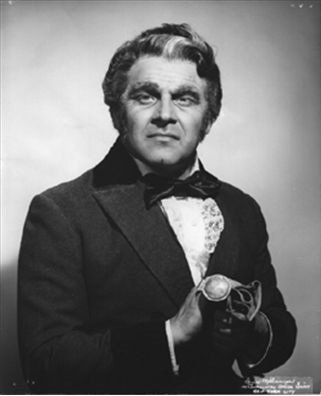
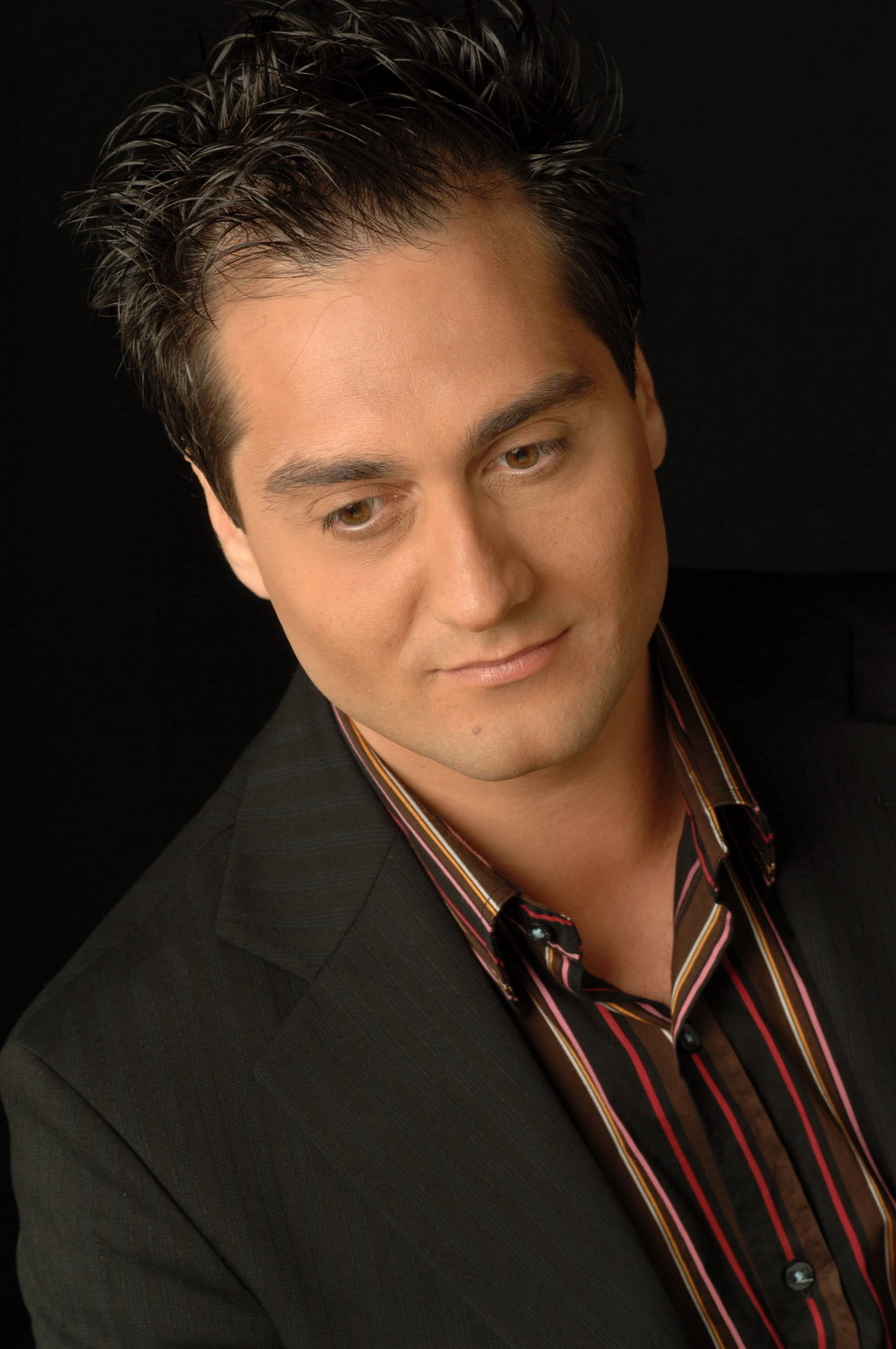
    With his noble and expressive face, Giuseppe Filianoti (above) made a splendid impression as Tito. His singing was clear and mellifluous, the words poetically delivered. The tenor finely delineated the emperor’s dilemma in dealing with his betrayal by his friend Sesto: should friendship trump justice? When I last heard Mr. Filianoti in the house, he was dealing with health issues, so it was really very pleasing to hear him on such beautiful vocal form tonight.

    Garanca

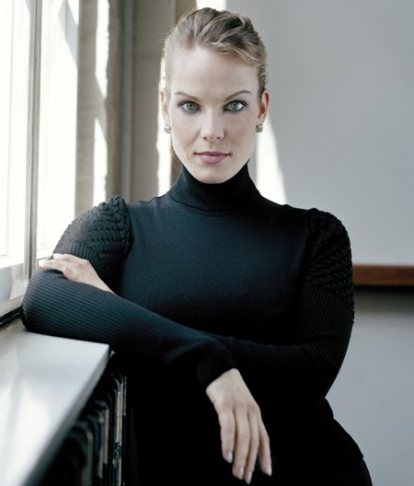
    Somehow I’ve managed not to encounter a live performance by the Latvian mezzo-soprano Elina Garanca (bove) up til now. I first heard her voice on a recording my friend Mollie sent me from the 2001 Cardiff Competition. Garanca has since developed into a world-class artist and after hearing her as Sesto tonight, she’s on my A-list of singers. Both in terms of vocal appeal and technical accomplishment, this was a stunning performance: Garanca’s voice is all of a piece, and she moves it thru the registers seamlessly. After a profoundly expressive rendering of the openng passages of the great aria “Parto, parto” Ms. Garanca sailed through the whirlwind coloratura flourishes of the aria’s later pages with nimble assurance. Later, as she knelt to invoke the strength to carry out her assassination of Tito, she summoned an amazing degree of projection, the voice sailing into the hall with startling force. In her second spectacular aria “Deh per questo istante solo”, the mezzo soprano coloured the voice movingly, reflecting the character’s anguish and also his stalwart refusal to implicate Vitellia in the crime. Ms. Garanca’s entire performance was a revelation.

    Barbara Frittoli, an unforgettable Desdemona at the Met in 1999, has more recently found considerable success in singing Mozart since she did her voice some damage during the first decade of the 21st century by singing music that was too heavy for her. Her canny manipulation of dynamics usually prevents her widening vibrato from becoming too prevelant. But for all her attractive qualities, Vitellia’s great aria “Non piu di fiori” simply lies too low for Ms. Frittoli to make her finest effect in the music. Vitellia in fact can be sung by a mezzo, except for that thorny top-D that Mozart threw into the act I trio, a note that eluded Ms. Frittoli tonight. Nevertheless, the soprano kept up her side of things all evening and the audience enjoyed her sometimes over-the-top dramatic portrayal.

    Lucy Crowe as Servilia is a pretty girl with luminous eyes and a pleasing lyric timbre. In his search for a wife, Tito’s first choice – Servilia – might have made him quite happy, especially with Ms. Crowe’s buxom grace and girlish smile.

    A wonderful Met evening, then, and there was every reason to stay to the end and shout’ bravi’ as the singers took their bows to sustained applause.

    Metropolitan Opera House
    November 20, 2012
    LA CLEMENZA DI TITO
    Mozart

    Tito.......................Giuseppe Filianoti
    Vitellia...................Barbara Frittoli
    Sesto......................Elina Garanca
    Servilia...................Lucy Crowe
    Annio......................Kate Lindsey
    Publio.....................Oren Gradus
    Berenice...................Toni Rubio

    Bradley Brookshire, Harpsichord Continuo
    Anthony McGill, Clarinet Soloist
    James Ognibene, Basset Horn Soloist
    David Heiss, Cello Continuo

    Conductor..................Harry Bicket