Tag: The New York Philharmonic

  • Shostakovich/Tchaikovsky @ The NY Phil

    Dmitri_Slobodeniouk_Photo_Credit_Marco_Borggreve-1024x683

    Above: conductor Dima Slobodeniouk, photo by Marco Borggreve

    Thursday November 18th, 2021 – It was wonderful to re-connect with The New York Philharmonic this evening when they offered a program of music by Shostakovich and Tchaikovsky at Alice Tully Hall. As the hall slowly filled to capacity, I loved seeing so many of my favorite musicians again, taking their places onstage after the long months of isolation. Sheryl Staples was the concert-master tonight, and a sense of anticipation seemed to fill the Hall.

    I was not sure how these big works would fare in the rather intimate space of Tully Hall, where we’re accustomed to hearing chamber music. But in fact, the sonic effect of the large ensemble was wonderful to experience: rich and deep; and when solo moments came along for the principals, the clarity was vivid. The risers for the winds and percussion were abandoned in this space. Most of the string players remained masked throughout the evening.

    As the date of the concert drew near, an announcement was made that the scheduled conductor, Semyon Bychkov, would be replaced by Dima Slobodeniouk, who is making his Philharmonic debut with these performances.

    Shostakovich wrote his first violin concerto 1947-48, but the composer hid it away until 1955, when it had its premiere performance by with the Leningrad Philharmonic, with David Oistrakh as soloist. It is to Oistrakh that Shostakovich dedicated the concerto.

    It had not been safe for Shostakovich to bring forth this piece until Josef Stalin had been dead for two years. The 1946 Zhdanov Doctrine had warned that the post-war divide between US imperialism and the democratic Soviet Union had produced a conflict in Soviet culture: a conflict between good and best. Shostakovich knew that “best” meant: ‘…adhering to cultural standards specified by the government.’ And he also knew that this concerto would not have been deemed “acceptable”. He had already been previously condemned by Stalin, and he knew enough not to tempt fate.

    Gomyo

    Violinist Karen Gomyo (above) opened the evening, playing the Shostakovich 1st violin concerto in her debut NY Philharmonic performances. And what a triumph she had in this exceptionally demanding piece! Ms. Gomyo is a native of Tokyo; she studied at the Juilliard School with Dorothy DeLay. She looked gorgeous tonight in her midnight-blue frock, upon which tiny silver sequins sparkled like diamonds.

    The concerto’s opening movement is entitled Nocturne. The deep strings underscore a low, doleful melody for the solo violin; as the music moves into a higher range, a sense of longing takes over.  The winds, and then the violins, accompany the soloist’s ascent. Harp notes sound, the basses growl, and the winds create darkish textures, with a particularly rich solo passage for bass clarinet. Now the soloist rises to a shimmering, sustained high note.

    The second movement, Scherzo, bounces out in agitato mode, the soloist deftly handling her tricky passages over the sound of plucking strings. Rhythms are brisk and uneven, taken at high speed, and the xylophone, horns, and clarinet add to the colorful palette of sound. The music breaks into a dance as the scherzo runs on to a big finish.

    The third movement, Andante, is a passacaglia; after a deep, dramatic start, the music becomes dirge-like, with the basses and low winds maintaining an almost ominous feeling. The solo violin sings a poignant lament; the horn has a solo passage, plushy played, and then the plodding basses are joined by their celli brothers. The violin embarks on a gigantic cadenza, which ranges from the depths to the heights and calls for exceptional technical mastery; Ms. Gomyo’s staggering virtuosity kept the audience spellbound during this incredible solo.

    The finale, a Burlesque marked allegro con brio, is introduced by the drums, with the xylophone again kicking in. How sweet to hear Anthony McGill’s clarinet singing forth! Ms. Gomyo makes a brilliant entrance.  Orchestra and soloist have frequent interactions, with the Passacaglia theme popping up out of nowhere, now animated in a presto setting. The finale dances along its bravura way to a dazzling conclusion.

    Ms. Gomyo was as riveting to watch as to hear: throughout her performance, her intensity and deep commitment could be read on her face. The audience responded to her thrilling performance with a vociferous standing ovation, the Philharmonic players joining in enthusiastically: a wonderful, celebratory atmosphere in the Hall.   

    After the interval, Tchaikovsky’s first symphony, known as “Winter Dreams” was sumptuously played by the orchestra, conducted with passion and great attention to detail by Maestro Slobodeniouk.

    While I have always thought of Tchaikovsky as one of my favorite composers, for me the first symphony is not one of his finest works. I’d only heard it played live once before, by this same orchestra; at that time I found it pleasant enough. But maybe that is all it is: pleasant.

    The first movement really felt over-long this evening; basically it seemed to be heading nowhere. Likewise, the fourth movement takes forever to get going, with various detours and a slow revving of the engines before the Allegro maestoso finally bursts forth  The highlights of this performance were the passages that Tchaikovsky assigned to the principals: Robert Langevin (flute), Liang Wang (oboe), Anthony McGill (clarinet), and Judith LeClair (bassoon). Liang Wang’s solo in the second movement, which becomes entwined with the sound of the Langevin flute, was a little slice of heaven.  Section by section, too, the orchestra simply sounded great: the viola and cello themes in the Adagio really glowed, and the richness of the cellos and basses in the final movement was truly savourable.

    Yet, despite superb playing, tonight the Tchaikovsky 1st joined the Beethoven Pastoral on my list of symphonies to avoid in future. I think Tchaikovsky did Winter better in THE NUTCRACKER.

    ~ Oberon
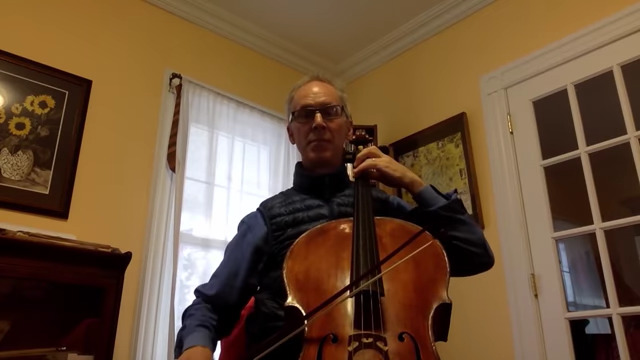
  • NY Philharmonic Cellists ~ Bach @ Home

    Snapshot bach celli

    Above: NY Philharmonic cellist Eric Bartlett

    Cellists of The New York Philharmonic play Bach’s Suite No. 1 for Unaccompanied Cello in G-major from their homes during the pandemic.

    Watch and listen here.

  • Adagietto

    181548_1702278990836_668676_n

    The remarkable artists of The New York Philharmonic playing Mahler from their homes in the time of the pandemic. Watch and listen here.

  • Trifonov’s Scriabin @ The NY Philharmonic

    14c1e62d63f40ab53a8f7836fb151aeb.jpg.w=262

    Above: pianist Daniil Trifonov

    ~ Author: Oberon

    Friday November 29th, 2019 – The New York Philharmonic‘s Artist-in-Residence, Daniil Trifonov, performing the Scriabin piano concerto on a program with Tchaikovsky’s 5th symphony. The Philharmonic’s Music Director, Jaap van Zweden, was on the podium.

    This long-awaited performance was somewhat compromised for me due to a health issue my spouse was experiencing. I at first decided to skip the concert and let my friend Ben Weaver write about it, but after much discussion, I went to Geffen Hall for the Scriabin and left at intermission, asking Ben to let me know how the Tchaikovsky went.

    This was my first experience of the Scriabin concerto live, and Mr. Trifonov was absolutely spectacular from first note to last. After a brief elegiac orchestral statement, a pensive solo introduces the pianist. The music offers contrasting moods, which Mr. Trifonov and the Philharmonic artists savoured. Playing rippling figurations, Mr. Trifonov evoked a feeling of ecstatic glow; the music then turned cinematic.

    Splendid solo moments from Richard Deane (horn) and Pascual Martínez-Forteza (clarinet) added to the radiance of the performance. Playing in the Steinway’s very highest register, Mr. Trifonov gave the music “toy piano” feeling, which soon found a counter-balance in the Philharmonic’s plush-toned basses. The movement ends grandly.

    The quiet opening of the poetic Andante was marred by the inevitable cellphone ringing. There’s quite a long, lovely passage for strings before the pianist joins in. A solo from Mr. Forteza finds Mr. Trifonov adding a descant-like, bejeweled line. The mood shifts from lively to doleful, the basses and celli in a tutti passage of velvety depth.

    At times, the solo piano line seems to meander (over caressive strings) before finding focus in a wistful theme, to which Mr. Trifinov brought his trademark expressive feel for nuance. A pristine, sustained trill – a Trifonov delight – marked the Andante’s calm finish.

    The pianist then immediately launched the final Allegro moderato, wherein a romantic piano theme as well as phrases for horn and clarinet at times created a feeling of tender longing. 

    Suddenly there’s a full stop. The music then resumes, with piano, clarinet, and horn all actively engaged. Now there’s a bit of a letdown: the composer seems to be searching for the right ending. He finds it in an unexpected drumroll, and a sustained chord from the piano.

    Basking in an enormous flood of applause, the tall pianist made us wait for his reappearance, and then wait still longer for his dreamy, introspective encore.

    Quote
     
    Tchaikovsky’s 5th symphony won the enthusiasm of audiences right from its premiere performance in 1888. But the critics were less impressed, and this caused Tchaikovsky – upon hearing the piece in Prague a bit later – to question whether the 5th was as fine as he’d originally hoped it was. He eventually managed to banish his misgivings.
     
    The symphony’s second movement – steeped in Romanticism – shares its melodic birthright with the Vision Scene from the composer’s SLEEPING BEAUTY. I had been really looking forward to hearing this in the theater again, but that will have to wait until another time.
     
    Meanwhile, Ben Weaver has sent me a brief note, stating that “…the 5th was really good. The horn solo (I assume it was played by Richard Deane) was one of the best I’ve ever heard. And Anthony McGill impressed in the clarinet solo. Maestro van Zweden took the music at a nice clip, but never rushed it. Big, exciting climaxes! The orchestra played it as well as anyone I’ve heard.” [Coming from Ben, that’s high praise indeed!]
     
    Ben ended his message with: “The audience went nuts.” That made me really sorry to have missed it.

    ~ Oberon

  • Trifonov’s Scriabin @ The NY Philharmonic

    14c1e62d63f40ab53a8f7836fb151aeb.jpg.w=262

    Above: pianist Daniil Trifonov

    ~ Author: Oberon

    Friday November 29th, 2019 – The New York Philharmonic‘s Artist-in-Residence, Daniil Trifonov, performing the Scriabin piano concerto on a program with Tchaikovsky’s 5th symphony. The Philharmonic’s Music Director, Jaap van Zweden, was on the podium.

    This long-awaited performance was somewhat compromised for me due to a health issue my spouse was experiencing. I at first decided to skip the concert and let my friend Ben Weaver write about it, but after much discussion, I went to Geffen Hall for the Scriabin and left at intermission, asking Ben to let me know how the Tchaikovsky went.

    This was my first experience of the Scriabin concerto live, and Mr. Trifonov was absolutely spectacular from first note to last. After a brief elegiac orchestral statement, a pensive solo introduces the pianist. The music offers contrasting moods, which Mr. Trifonov and the Philharmonic artists savoured. Playing rippling figurations, Mr. Trifonov evoked a feeling of ecstatic glow; the music then turned cinematic.

    Splendid solo moments from Richard Deane (horn) and Pascual Martínez-Forteza (clarinet) added to the radiance of the performance. Playing in the Steinway’s very highest register, Mr. Trifonov gave the music “toy piano” feeling, which soon found a counter-balance in the Philharmonic’s plush-toned basses. The movement ends grandly.

    The quiet opening of the poetic Andante was marred by the inevitable cellphone ringing. There’s quite a long, lovely passage for strings before the pianist joins in. A solo from Mr. Forteza finds Mr. Trifonov adding a descant-like, bejeweled line. The mood shifts from lively to doleful, the basses and celli in a tutti passage of velvety depth.

    At times, the solo piano line seems to meander (over caressive strings) before finding focus in a wistful theme, to which Mr. Trifinov brought his trademark expressive feel for nuance. A pristine, sustained trill – a Trifonov delight – marked the Andante’s calm finish.

    The pianist then immediately launched the final Allegro moderato, wherein a romantic piano theme as well as phrases for horn and clarinet at times created a feeling of tender longing. 

    Suddenly there’s a full stop. The music then resumes, with piano, clarinet, and horn all actively engaged. Now there’s a bit of a letdown: the composer seems to be searching for the right ending. He finds it in an unexpected drumroll, and a sustained chord from the piano.

    Basking in an enormous flood of applause, the tall pianist made us wait for his reappearance, and then wait still longer for his dreamy, introspective encore.

    Quote
     
    Tchaikovsky’s 5th symphony won the enthusiasm of audiences right from its premiere performance in 1888. But the critics were less impressed, and this caused Tchaikovsky – upon hearing the piece in Prague a bit later – to question whether the 5th was as fine as he’d originally hoped it was. He eventually managed to banish his misgivings.
     
    The symphony’s second movement – steeped in Romanticism – shares its melodic birthright with the Vision Scene from the composer’s SLEEPING BEAUTY. I had been really looking forward to hearing this in the theater again, but that will have to wait until another time.
     
    Meanwhile, Ben Weaver has sent me a brief note, stating that “…the 5th was really good. The horn solo (I assume it was played by Richard Deane) was one of the best I’ve ever heard. And Anthony McGill impressed in the clarinet solo. Maestro van Zweden took the music at a nice clip, but never rushed it. Big, exciting climaxes! The orchestra played it as well as anyone I’ve heard.” [Coming from Ben, that’s high praise indeed!]
     
    Ben ended his message with: “The audience went nuts.” That made me really sorry to have missed it.

    ~ Oberon

  • Unsuk Chin’s Šu @ NY Philharmonic

    Dynamic-7d51bfe5-c754-58e3-8aab-5dbdf16210f5

    Above: Wu Wei, tonight’s soloist at The New York Philharmonic

    Author: Oberon

    Tuesday October 22nd, 2019 – Unsuk Chin’s Šu, for Sheng and Orchestra, performed by Wu Wei, was the centerpiece of this evening’s New York Philharmonic concert at David Geffen Gall. Susanna Mälkki was on the podium for a program that also featured music by Haydn and Strauss. It turned out to be a memorable evening, continuing a string of inspiring performances that I have enjoyed in these first weeks of the classical music season.

    Haydn’s Symphony No. 22, Philosopher, was the opening work. It’s a short – and very neat – symphony, which commences with an Adagio throughout which a steady, pacing pulse is maintained. The English horn is prominent, as are the horns (who excelled in the third movement). The concluding Presto had a lovely, bustling atmosphere. Ms. Mälkki’s finely-measured and elegant conducting drew excellent playing from the ensemble. 

    Wu Wei then took his place for Marie-Josée Kravis Prize-winner Unsuk Chin’s Šu. The composer stated that, for her, the sheng is associated with the “yearning for a distant sound…”  Šu – and Wu Wei’s playing of it – is truly engaging.

    56475_sheng_lg

    What is a sheng?  You may well ask (I certainly did). Above is an illustration, and here is an interesting article about this ancient Chinese reeded instrument. And what does the sheng sound like? Not similar to the oboe or bassoon – which was what I was expecting – but instead it reminds me very much of the musette, that enchanting little French bagpipe that was fashionable in French court circles in the 17th and 18th centuries.

    Šu begins with whispered, other-worldly sounds from the solo instrument. A vast array of percussion instruments will be heard as the work progresses – shimmering bells, eerie gongs, powerful drumbeats – whilst Mr. Wu’s sheng sighs and shivers. He produces echo effects, bending high notes to vary the pitch, and sometimes sounding like a squeezebox.

    The music seems to come to us from distant galaxies; images of frozen landscapes are evoked. The composer shows her mastery of texture and of rhythmic shifts. Violins stationed in the hall’s upper tier sing as if from from the heavens. Deep tuba rumblings give way to big, dense brass waves; the music becomes bouncy and then pounding.

    As calm sets in, Mr. Wu plays a sort of cadenza: fast, rhythmic, ascending, A forward impetus then takes over: the music sways, and the player sways with it, shifting his weight as he reels off amazing passages.

    The music subsides to a quiver; the orchestra produces a sustained, deep hum as the sheng is heard in ethereal whispers. Chimes sound, and this dreamworld fades into memory.

    Both the audience and musicians onstage enthusiastically applauded Wu Wei for his phenomenal performance. As a second wave of cheering swept thru the house, Mr. Wu returned for a brilliant (and sometimes witty) encore that called for incredible virtuosity; both his playing and his physicality – including some stomping dance steps and interjected shouts – captivated the crowd, and he basked in a rock-star ovation at the end.

    Malkki

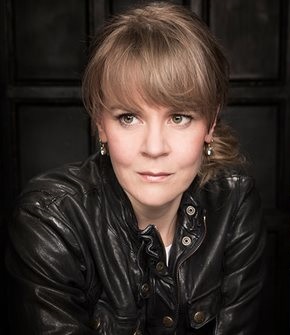
    Above: tonight’s conductor Susanna Mälkki

    Following the interval, Ms. Mälkki led a truly impressive performance of Richard Strauss’s Also Sprach Zarathustra. From its deep growl of a start rises the majestic, super-familiar theme that sets this blazing masterpiece on its way. The Philharmonic’s stellar bass section, joined by the organ, gave a rich depth to the music that sent chills thru me. Strauss has woven one appealing thread after another into this royal sonic tapestry; it’s a work in which there’s never a dull moment. Abounding in solo opportunities for individual instruments – clarinet, cello, trumpet, oboe, a trio of bassoons – the work further features a glorious tutti theme for celli and violins, and an enchanting Viennese waltz (led by the silken-tone of Sheryl Staples’ violin).

    Glimmers of ARIADNE AUF NAXOS, DER ROSENKAVALIER, and DIE FRAU OHNE SCHATTEN flitted thru the air as this epic performance by The Philharmonic sailed gorgeously forward. The only blot on the evening came when a grand orchestral cutoff was ruined by a child muttering and a cellphone going off, spoiling the dramatic effect of a sudden silence.

    ~ Oberon

  • 20th Century Masterworks @ The NY Philharmonic

    _DSC9923

    Above: Katarina Karnéus in ERWARTUNG at The New York Philharmonic; photo by Chris Lee

    ~ Author: Oberon

    Thursday September 26th, 2019 – This long-awaited program by The New York Philharmonic paired Arnold Schoenberg’s monodrama ERWARTUNG with Béla Bartók’s expressionist opera BLUEBEARD’S CASTLE. The Philharmonic’s music director, Jaap van Zweden was on the podium, and a trio of esteemed singers took on the demanding vocal roles. The orchestra was simply splendid, from first note to last.

    In 1989, the Metropolitan Opera presented these two works on a double bill, conducted by James Levine. Jessye Norman sang both The Woman in the Schoenberg and Judith in the Bartók; Bluebeard was sung by Samuel Ramey. It was a magnificent evening musically, though the setting and direction for the Bartók left a lot to be desired. But the staging of the Schoenberg was unforgettable: just a grand piano, hundreds of white candles, and Ms. Norman. How I would love to see it again!

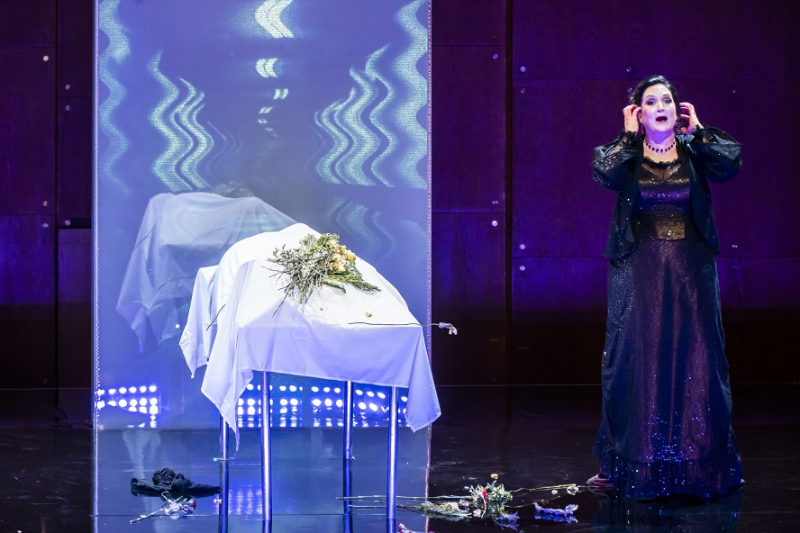
    The idea of presenting these two works in a semi-staged concert setting at Geffen Hall seemed intriguing on paper but was less successful in practice. The singers performed on a raised platform behind the musicians, who were seated in near darkness. The addition of silent actors – portraying medical staff and a crime-scene photographer in ERWARTUNG, and Bluebeard’s previous wives in the Bartók – neither added to nor distracted from the flow of the two works. From where we were sitting, we could not discern what was under the sheet of that autopsy table, which was revealed when they came to take The Woman away. One small screen sufficed for the projections, which were neither here nor there. The lighting effects, however, were well-integrated into the music, especially a blood-red drenching at one point.

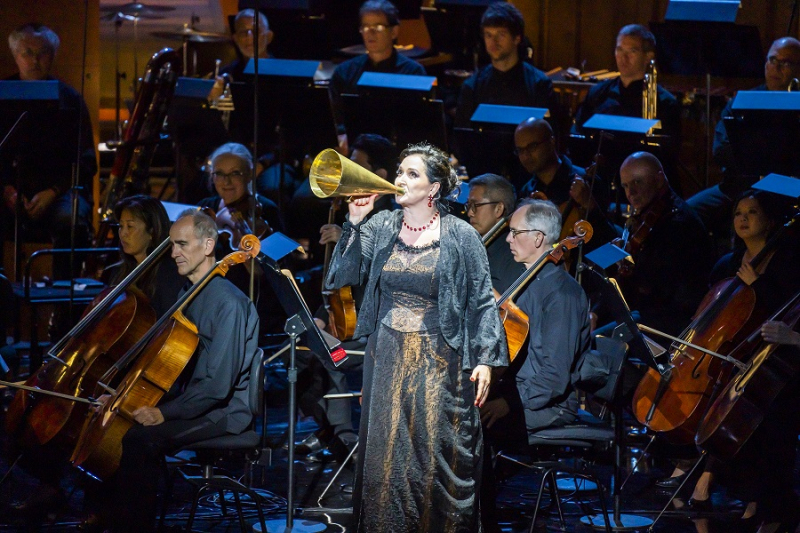
    The monodrama and the opera were linked theatrically by having Katarina Karnéus, who had just given a phenomenal performance in the Schoenberg, re-appear as the prologue to BLUEBEARD’S CASTLE. Here, Ms. Karnéus (using a megaphone) proved to be every bit as engaging as a speaker as she has been in her singing of The Woman. And while, in the end, the evening could have just as thrillingly been presented in straight-up concert form, that would have deprived us of Ms. Karnéus’s inspired acting of her role.

    The concert opened with a performance of the song Erwartung, from Schoenberg’s Vier Lieder, his opus #2, composed in 1899. This gorgeous piece of music, which I had never heard before, was originally written for voice and piano but was tonight performed in a setting for voice and harp. The Philharmonic’s harpist Nancy Allen played divinely, creating a poetic atmosphere. In a black gown shot with silver and holding a large bouquet, soprano Nina Stemme’s voice seemed beset by a wide tonal beat or fluctuation which rather undermined the strange beauty of the song. Ms. Stemme fared much better in BLUEBEARD, where she was fully warmed-up and with the voice profiting from the cushioning orchestra.

    Katarina Karnéus was the Cardiff Singer of the Year in 1995 and from there went on to a grand worldwide career. She came to The Met in 1999, debuting as Varvara in KATA KABANOVA and also appearing as Siebel, Olga in EUGEN ONEGIN, as Rossini’s Rosina, and as Cherubino. I had the pleasure of meeting her while I was working at Tower Records, and of attending a lovely recital she gave in 2001 with pianist Brian Zeger. She last sang at The Met in 2005; in the interim she has developed into a fascinating singing-actress.

    _DSC0141

    Above: Katarina Karnéus as The Woman in ERWARTUNG; photo by Chris Lee

    What a performance of ERWARTUNG Ms. Karnéus gave tonight! The voice encompasses an impressive vocal span, with a silvery sheen on the high notes and a dusky, dramatic throb in the lower range. Her wide-ranging singing is pointed and subtle in terms of word colourings, has a lovely vein of lyricism running thru it, and is possessed of striking power in the climactic moments. It’s an expressive, even bewitching, instrument. Beyond this, Ms. Karnéus is a compelling physical presence, and she captured the emotional state of The Woman with her vibrant and detailed physicality; at one point her entire body was overcome with trembling agitation. Mixed in with the madness were passages that were extraordinarily moving, as in the moment she tells her absent lover that he has “…not even the grace to let me die with you.”

    In recent years, only a handful of operatic performances have captivated me in the way Katarina Karnéus did tonight in ERWARTUNG. She is truly one of a kind.

    Here’s a sampling of the Karnéus voice:

    Katarina Karneus – Mahler ~ Ich bin der Welt abhanden gekommen

    _DSC0348

    Above: Katarina Karnéus in the spoken prologue to BLUEBEARD’S CASTLE at The New York Philharmonic; photo by Chris Lee

    After the interval, BLUEBEARD’S CASTLE commenced with a re-appearance of Ms. Karnéus in a speaking role; I must admit that I found myself wishing she was also singing Judith, for while there is no denying the power and commitment of Nina Stemme’s performance in that role, hers is a voice that has never reached me on a deeper level. That said, the soprano was in full-tilt form for the Bartók tonight and was much admired by the audience.

    In the role of Bluebeard himself, it gave me great pleasure to see onstage again the excellent baritone Johannes Martin Kränzle who, in 2014, was an ideal Beckmesser in his (to date) only Met appearances. We simply must have this man back at The Met, for he is a singing-actor (and an acting-singer) of the highest calibre. 

    _DSC0651

    Above: Johannes Martin Kränzle and Nina Stemme in BLUEBEARD’S CASTLE; photo by Chris Lee

    Ms. Stemme and Mr. Kränzle made the Bartók glow in all its dark radiance with their powerful vocalism and intense acting. They played beautifully off one another, seeming to feed off each others energy as well as off the astonishing sounds being produced by the artists of the Philharmonic.

    It was a performance to immerse oneself in totally, and by the time the harp and horns marvelously underscored Mr. Kränzle’s spectacular vocalism at the opening of the fourth door, I was thoroughly enthralled. Ms. Stemme’s blockbuster high-C at the opening of the fifth door was followed by simply mind-bogglingly impressivel singing from the baritone. Ever a compelling mover, Mr. Kränzle even executed a little dance, and then led his soprano is a waltz.

    Responding to Judith’s questions about the mysterious white lake, Mr. Kränzle was hauntingly moving as he replied: “…tears, Judith…tears!” And then – incredibly – he took his performance to an even higher level with his gorgeous singing of the passage where Bluebeard describes how he met his previous wives and what they mean to him: morning, noon, and evening have been personified for him by these women, and with Judith joining them, his world is complete. “Now it will be night forever!”

    _DSC1438

    Above: from BLUEBEARD’S CASTLE, photo by Chris Lee

    Throughout the evening, the playing of The New York Philharmonic was darkly dazzling, glorious, sublime. Maestro van Zweden reigned over the music with a sure sense of its enormous emotional range, from eerie piani to unfettered, magnificent fortes. The musicians played their hearts out, creating sonic textures that sent chills thru me time and again, and the numerous solo passages were given extraordinary clarity by these remarkable artists.  

    ~ Oberon

  • Philharmonic Ensembles ~ Season Finale

    NEWS-862x575

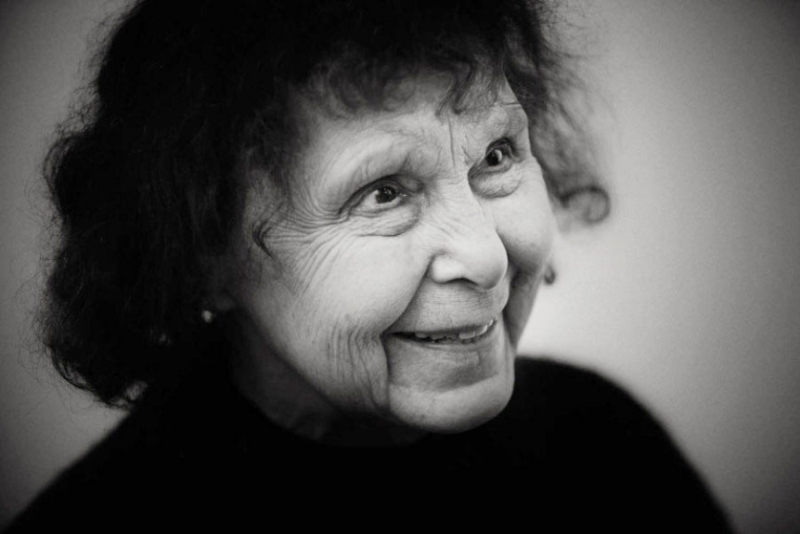
    Above: composer Sofia Gubaidulina

    ~ Author: Oberon

    Sunday May 26th, 2019 matinee – This afternoon’s Merkin Hall concert by musicians from The New York Philharmonic marked the season finale of the Philharmonic Ensembles series. These programs invariably mix new or off-the-beaten-path works with classics from the chamber music repertoire.

    Both in the choice of repertory and in the superb playing of the musicians, today’s concert was one of the finest I’ve ever experienced. The audience seemed enraptured; wonderfully silent and attentive, they created an atmosphere which doubtless inspired the players to outdo themselves. No coughing, no cellphones, no one dropped anything; there were a number of small children in the audience, but none of them made a peep. What an opportunity for blissful immersion in the music!

    An infrequently-performed work by Franz Schubert, Notturno, opened the concert. I greatly enjoyed hearing pianist Hélène Jeanney again, having previously heard her playing Zwilich and Debussy at these concerts. For today’s Schubert, she was joined by Na Sun (violin) and Qiang Tu (cello).

    Found among some of Schubert’s papers after his death, the Notturno is a work of timeless beauty and contemplation, commencing with harmonizing strings which pass through lovely modulations in which the piano sets a pace that feels like a slow waltz. Mlle. Jeanney then takes the lyrical lead with a gracious piano melody as the strings are plucked. In a role reversal, the pianist then assumes the role of a harpist, with gentle accents supporting the melodious strings.

    In a contrasting section, we move into a minor phase; there is a rising intensity and the music becomes quite passionate, with swirling cascades of notes from the keyboard. A sense of longing rises from the violin and cello, underscored by the restless piano. Na Sun and Qiang Tu then beautifully resume the original theme, the harmonies seeming even more poignant now. Following a rather sudden crescendo, the music rises to a calm finish. How poetic the atmosphere our three players conjured: simply sublime.

    The music of Sofia Gubaidulina always intrigues me, and today her Piano Quintet proved fascinating. This quintet is one of her earliest works, written in 1957 while she was still a student at the Moscow Conservatory. Several influences are in play in this quintet: Shostakovich, for sure, but maybe – even more – Prokofiev. And, strangely enough, there are also tinges of the French composers of the Impressionist school along the way. But Gubaidulina manages to weave these threads together convincingly. The quintet  sounds really original.

    Pianist Eric Huebner joined the Philharmonic’s Qianqian Li and Joo Young Oh (violins), Peter Kenote (viola), and Nathan Vickery (cello) for music-making of the highest order.  The composer gives the 2nd violinist a great deal to do in the quintet, and Joo Young Oh (his hair now blonde, and wearing a spiffy golden-tone jacket) played it all superbly.

    The opening Allegro has a rhythmic, fun start, with the music driven by Eric Huebner’s lively playing at the Steinway. Throughout, Mr. Huebner constantly reminds us of why it’s called a “piano quintet”: he’s a wonderful pianist. The music, accented, brings forth string harmonies as the piano comments. The second violin has his first chance to shine; his theme is then taken up by first violinist Quinquin Li. A long piano solo has an almost furtive quality, and then things become insistent and sonically dense. Nathan Vickery’s cello sings over pulsing motifs from the piano. The melody is passed about, then the strings assume a high, shimmering blend before the Allegro’s amusing ending.

    Peter Kenote’s viola takes the lead in the Andante marciale, which soon gets a swagger on. Laying back a bit, there’s a violin passage and the music turns fragmented. The march then picks up again, reminiscent of the its famous counterpart in Prokofiev’s L’Amour des Trois Oranges. The violin plays on high as the music strides away into the distance.

    Yearning strings and the quiet piano mark the start of the Larghetto sensibile, with the violin in a sad song that the cello joins; the piano however seems to hint at a jest. As the viola and 2nd violin blend, there’s a trace of exoticism. Syncopation rises up, becoming insistent until the viola leads us back to some searing harmonies. Mr. Kenote’s viola sounds alone, and Mr. Oh takes his violin on high in a solo passage. Harmonies shift, and Mr. Huebner at the Steinway has a final solo opportunity.

    To a bustling piano rhythm, Mr. Kenote leads off the concluding Presto. The music romps along, with momentary calmings along the way. Mr. Huebner continues to shine in the demanding piano music. After simmering down again, the cello begins to pulse and the cello and viola start buzzing in an ascent to the heights where the quintet finds its finish.

    25E4BB63-9DE4-4BCD-80B9-6AAFB6C0846F

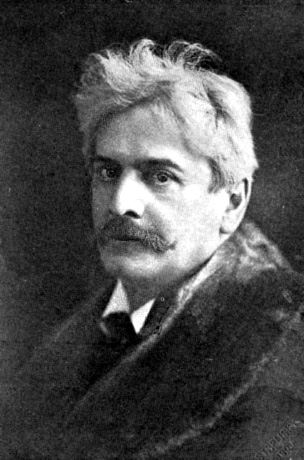
    Above: cellist and composer David Popper

    An unusual work by David Popper, Requiem, was originally composed for three cellos and orchestra; it was later transcribed for three double-basses and piano, which is how it was presented today (apparently there is also an arrangement for three trombones!).

    It’s a terrifically original work, and the three bass players – Blake Hinson, Satoshi Okamoto, and Rion Wentworth – were clearly savouring this opportunity show off what the double-bass can do, whilst pianist Steven Beck played an integral role in this gem of a piece. The doleful depths of the three basses, both in harmonies and in solo passages, continually evoked shivers as the resonances seem to invade the very soul. Passages for solo piano gave contrast; at one point, a trace of the Ave Maria was heard. The basses meanwhile made me think of the profound beauty of the opening of the “Hymn to the Sun” from Mascagni’s Iris.  

    I enjoyed the Popper rarity immensely: kudos to the bassists for bringing it to us in all its richness.

    To close the performance, Piano Trio #2 by Dmitri Shostakovich was given a sterling rendition by Yulia Ziskel (violin), Mr. Vickery (cello), and Jonathan Feldman (piano).

    This was by far the most familiar work on the program, so I put away my note pad and let the music dazzle and move me in this performance by three exceptional artists. Ms. Ziskel is a violinist who always maintains an alluring gleam on her tone; her playing could be at once ethereal and heart-wrenching. Following her poignant solo in the Largo, Mr. Vickery’s cello joined her in music that is achingly beautiful and deeply moving. Their playing reached the heights of expressiveness.

    The dazzling dance of the concluding Allegretto was so thrilling to experience today. Here Mr. Feldman’s brilliance and irresistible vitality were a pure joy, whilst Ms. Ziskel and Mr. Vickery continued to astonish. The quintet ends as the dance gives way to a reprise of the chorale of the Largo, providing a reassuring comfort which we so desperately need in these troubled times.

    As the Shostakovich progressed today, the world around me seemed to vanish; both the music the musicians reached me on a level that is rarely attained. For such moments in life, how can we express our gratitude?

    ~ Oberon

  • Shostakovich ~ Beethoven @ The NY Philharmonic

    Mdd-wn-main

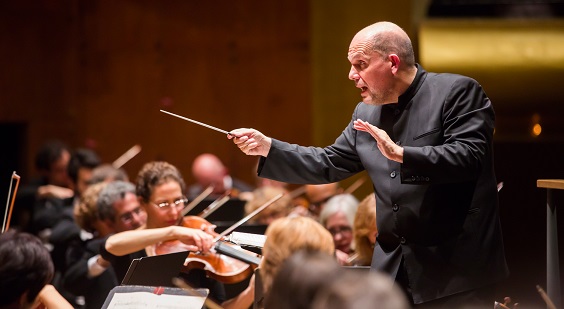
    Above: Maestro Jaap van Zweden; photo by Chris Lee

    ~ Author: Oberon

    Wednesday May 22nd, 2019 – As their 2018-2019 season winds down, The New York Philharmonic offered a well-contrasted pairing of works tonight at Geffen Hall: Shostakovich’s Chamber Symphony and Beethoven’s 3rd symphony: the Eroica. The Philharmonic musicians were on top form, and the orchestra’s Music Director, Jaap van Zweden, led a performance that ended with an enthusiastic ovation.

    For all the concert’s musical excellence, extraneous factors made the evening something of a trial. The lobby at Geffen Hall during the half-hour leading up to the performance’s start time has lately become weirdly chaotic: it has the feeling of an airport, with staff folks yelling at you to go here or there, and long, snaking lines between the velvet ropes to pass thru the “non-invasive” scanner only to be wanded once you’ve gotten the green light. It’s quite stressful, and hardly conducive to the state of mind one hopes to be in when a concert starts: calm, focused, receptive.

    The opening minutes of the Shostakovich featured a chorus of coughers from the audience; the woman next to us coughed throughout the concert while the fellow in front of us nearly busted a lung with one coughing fit: I actually thought he might pass out. Aside from ruining the music, germs are being spread. If you are sick, be courteous enough stay home.

    But the performance of the Shostakovich Chamber Symphony was simply thrilling. This work is an arrangement of the composer’s 1960 String Quartet No. 8, Op. 110, by Rudolf Barshai, a renowned violist and conductor who founded the Moscow Chamber Orchestra in 1956. Barshai’s transcription honors the original instrumentation: it’s set for large string ensemble. And it’s simply magnificent to hear.

    The symphony is in five movements, played without pause. From a somber start emerges a soft, sorrowing violin melody (beautifully played by concertmaster Frank Huang). Six basses bring a sense of grandeur to the music, which is richly layered. Suddenly, a sizzling energy flares up: the basses dig in, with swirling violins and slashing celli, as the music becomes a huge dance. For a spell, violins and violas compete; then the music comes to a sudden halt.

    The violas set the pace for a waltz, played by the violins, which later slows down and fades away. A dirge-like passage is followed by a poignant lament. Carter Brey’s cello sings to us in its highest range, a song which Mr. Huang’s violin takes up. The music meanders a bit, ebbing and flowing, before a magical fading finish.

    This work, and the Philharmonic’s playing of it, was one of the highlights of the season for me. Mssrs. Huang and Brey were enthusiastically applauded as they rose for a bow. I was surprised to read that this was The Philharmonic’s premiere performance of this symphony.

    I must admit that I don’t find Beethoven’s Eroica all that interesting. Its initial theme:

    Images

    …reminds me of a simple melodic scrap I wrote for a compulsory exercise in music theory class in high school. We hear it repeatedly in the symphony’s Allegro con brio, and to me it’s tiresome.

    Sherry Sylar’s oboe solos and some warm-toned horn playing captured my interest in the Adagio assai, but I don’t think Beethoven’s idea of a funeral march shows much imagination. It feels aimless, missing the weighted grief of Chopin’s or the epic grandeur of Wagner’s (and for wit, there’s always Gounod). The hunting horns in the Scherzo again reminded me of high school, where I struggled to be a proficient horn player, but without success. Ms. Sylar and clarinetist Anthony McGill illuminated their solo bits in the Finale, but I found my mind wandering. 

    Whenever a musical work that is highly regarded by many fails to reach me, it makes me feel deficient. What am I not getting? So it was interesting to read in the program notes that Beethoven’s 3rd was not initially regarded as a masterpiece, but seemed instead overly long and lacking a sense of unity.

    Still feeling that the Eroica has eluded me, I went to a classical music chat room to see if anyone else felt as I do about this symphony. Among the many posts heaping praise on Beethoven’s 3rd, someone wrote: “I would never deny the power and genius of the Eroica, but I never want to sit through it again.”

    Anna_rabinova

    The evening honored musicians who are retiring from The Philharmonic this season. One who I will especially miss is violinist Anna Rabinova (above), whose dedicated artistry I have come to know thru her appearances at the Philharmonic Ensembles concerts at Merkin Hall. I hope she’ll continue to be part of the City’s musical scene in the coming years.

    ~ Oberon

  • Larcher and Brahms @ The NY Philharmonic

    07_Banner_WDW__Vorlage

    Above: composer Thomas Larcher

    ~ Author: Brad S. Ross

    Thursday April 25th, 2019 – This evening at David Geffen Hall saw the performance of two imposing, if wildly dissimilar, symphonies—one old, the other new—as The New York Philharmonic made their best effort of this decidedly peculiar concert pairing.  Guest conducting the program was the Russian-born Semyon Bychkov, whose steady command brought typically formidable results from our city’s prized orchestra.  

    The first half of the concert was given over to the United States premiere of the Austrian composer Thomas Larcher’s visceral Symphony No. 2: Kenotaph.  It was prefaced with opening remarks by Larcher, who offered concise and mercifully brief pre-performance context for the work. The title (German for “cenotaph”) refers to an empty grave or monument to those buried elsewhere. It was composed between 2015 and 2016 amid the peak of the Syrian refugee crisis, which saw hundreds of thousands of migrants fleeing from their homeland towards a less-than-welcoming central Europe. This tragedy was foremost on Larcher’s mind as he wrote Kenotaph, which, as he put it, is not so much programmatic music as it is “music with empathy.”  Its form is cast, quite traditionally, in four movements over a duration of roughly 37 minutes.

    It opened with a bang on a furious, colorful Allegro, marked by numerous volatile bursts.  This momentum retreated briefly into a somber elegy, before returning with ferocious energy—an energy marked with shrieking strings, discordant brass bursts, and unrelenting percussion that led it to a frightening close.  Although occasionally on the discursive side, the movement was characterized by a gripping sense of musical drama that would set the tone for the rest of the work.

    It was followed by a mournful, string-heavy Adagio that opened on repeating glissandi in the high strings as warm brass chords and descending mallet lines swelled and trickled underneath—the effect was almost like something out of science fiction.  A voluminous march then launched the music into fearful new atmospheres as a lone violin line, performed by the concertmaster Frank Huang, faded the movement into a haunting silence.

    Next up was plucky and energetic Scherzo, molto allegro, driven by excitingly colorful percussion.  Accelerating tutti bell tones led the piece to a series of fortissimo bursts before an almost Baroque and, by comparison, shockingly tonal phrase brought the movement to a pleasant, bittersweet end.

    The final movement, Introduzione, was a somber and almost elegiac affair.  It began with a number of featured soli—trumpet, violin, viola—which, once again, were surprisingly tonal in sound.  The movement soon became violent and triumphant, as though the gates of hell had been thrust open and the devil himself was leading the charge.  The composition here was not unlike Camille Saint-Saëns’s Danse macabre, Malcolm Arnold’s Tam O’Shanter Overture, or some other ghastly jaunt of classical music history.  Larcher delightfully milked this for all it was worth and brought the movement to a number false codas before its final climax—always finding ways to say more without ever overstuffing the piece.  A quiet postlude followed that featured a ghostly violin solo—again performed by Huang.  Finally, as if burying the dead, a tasteful, yet haunting funeral march brought the symphony to its final and, appropriately, unresolved cadence.

    The audience’s response was kind, if not totally enthusiastic.  A modest number of curtain calls gave Larcher, Bychkov, and the work’s soloists much-deserved chances to take their bows, which, given the strangely contrasted pairing, is perhaps the best for which one could hope.  Nevertheless, musically Kenotaph should be regarded as one of the New York Philharmonic’s most exciting premieres of recent memory, alongside Esa-Pekka Salonen’s Cello Concerto, Anna Thorvaldsdottir’s Metacosmos, or Julia Wolfe’s Fire in my mouth.

    Had the evening had ended here—and it probably should have—this might have been one of the best concerts of the season.  Ticket-holders tend to require more than forty minutes of music to feel satiated, however, so after intermission the audience returned for an enjoyable, if unremarkable, performance of Johannes Brahms’s Fourth Symphony.

    Composed between the summers of 1884 and 1885, this would be the last of the Romantic composer’s symphonies before his death in 1897.  Cast in four movements over approximately 45 minutes, it comprises a lush and stately Allegro non troppo, a warm and overlong Andante moderato, a fairly dainty Allegro giocoso, and a lively Allegro energico e passionato, which finally injected some much-needed energy to the second half of the program.

    After the riveting first half of the concert, this listening experience was almost soporific by comparison.  Perhaps it’s simply unfair to judge such an antiquated work against the rigorous complexities of one so new, but it’s one this odd pairing begged to be made.  Nevertheless, one could not possibly walk away from this concert feeling anything less than satisfied.  All in all, it was another splendid night at the New York Philharmonic—the gem of this great city.

    ~ Brad S. Ross