Tag: The Philharmonic

  • Trifonov’s Scriabin @ The NY Philharmonic

    14c1e62d63f40ab53a8f7836fb151aeb.jpg.w=262

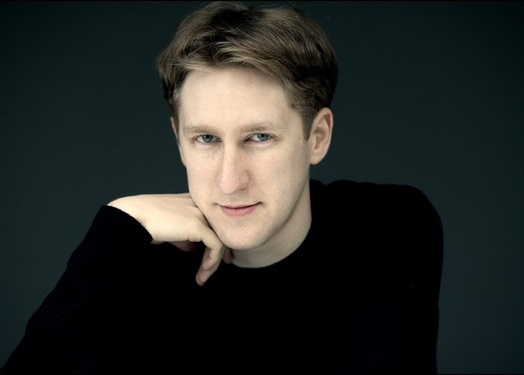
    Above: pianist Daniil Trifonov

    ~ Author: Oberon

    Friday November 29th, 2019 – The New York Philharmonic‘s Artist-in-Residence, Daniil Trifonov, performing the Scriabin piano concerto on a program with Tchaikovsky’s 5th symphony. The Philharmonic’s Music Director, Jaap van Zweden, was on the podium.

    This long-awaited performance was somewhat compromised for me due to a health issue my spouse was experiencing. I at first decided to skip the concert and let my friend Ben Weaver write about it, but after much discussion, I went to Geffen Hall for the Scriabin and left at intermission, asking Ben to let me know how the Tchaikovsky went.

    This was my first experience of the Scriabin concerto live, and Mr. Trifonov was absolutely spectacular from first note to last. After a brief elegiac orchestral statement, a pensive solo introduces the pianist. The music offers contrasting moods, which Mr. Trifonov and the Philharmonic artists savoured. Playing rippling figurations, Mr. Trifonov evoked a feeling of ecstatic glow; the music then turned cinematic.

    Splendid solo moments from Richard Deane (horn) and Pascual Martínez-Forteza (clarinet) added to the radiance of the performance. Playing in the Steinway’s very highest register, Mr. Trifonov gave the music “toy piano” feeling, which soon found a counter-balance in the Philharmonic’s plush-toned basses. The movement ends grandly.

    The quiet opening of the poetic Andante was marred by the inevitable cellphone ringing. There’s quite a long, lovely passage for strings before the pianist joins in. A solo from Mr. Forteza finds Mr. Trifonov adding a descant-like, bejeweled line. The mood shifts from lively to doleful, the basses and celli in a tutti passage of velvety depth.

    At times, the solo piano line seems to meander (over caressive strings) before finding focus in a wistful theme, to which Mr. Trifinov brought his trademark expressive feel for nuance. A pristine, sustained trill – a Trifonov delight – marked the Andante’s calm finish.

    The pianist then immediately launched the final Allegro moderato, wherein a romantic piano theme as well as phrases for horn and clarinet at times created a feeling of tender longing. 

    Suddenly there’s a full stop. The music then resumes, with piano, clarinet, and horn all actively engaged. Now there’s a bit of a letdown: the composer seems to be searching for the right ending. He finds it in an unexpected drumroll, and a sustained chord from the piano.

    Basking in an enormous flood of applause, the tall pianist made us wait for his reappearance, and then wait still longer for his dreamy, introspective encore.

    Quote
     
    Tchaikovsky’s 5th symphony won the enthusiasm of audiences right from its premiere performance in 1888. But the critics were less impressed, and this caused Tchaikovsky – upon hearing the piece in Prague a bit later – to question whether the 5th was as fine as he’d originally hoped it was. He eventually managed to banish his misgivings.
     
    The symphony’s second movement – steeped in Romanticism – shares its melodic birthright with the Vision Scene from the composer’s SLEEPING BEAUTY. I had been really looking forward to hearing this in the theater again, but that will have to wait until another time.
     
    Meanwhile, Ben Weaver has sent me a brief note, stating that “…the 5th was really good. The horn solo (I assume it was played by Richard Deane) was one of the best I’ve ever heard. And Anthony McGill impressed in the clarinet solo. Maestro van Zweden took the music at a nice clip, but never rushed it. Big, exciting climaxes! The orchestra played it as well as anyone I’ve heard.” [Coming from Ben, that’s high praise indeed!]
     
    Ben ended his message with: “The audience went nuts.” That made me really sorry to have missed it.

    ~ Oberon

  • Trifonov’s Scriabin @ The NY Philharmonic

    14c1e62d63f40ab53a8f7836fb151aeb.jpg.w=262

    Above: pianist Daniil Trifonov

    ~ Author: Oberon

    Friday November 29th, 2019 – The New York Philharmonic‘s Artist-in-Residence, Daniil Trifonov, performing the Scriabin piano concerto on a program with Tchaikovsky’s 5th symphony. The Philharmonic’s Music Director, Jaap van Zweden, was on the podium.

    This long-awaited performance was somewhat compromised for me due to a health issue my spouse was experiencing. I at first decided to skip the concert and let my friend Ben Weaver write about it, but after much discussion, I went to Geffen Hall for the Scriabin and left at intermission, asking Ben to let me know how the Tchaikovsky went.

    This was my first experience of the Scriabin concerto live, and Mr. Trifonov was absolutely spectacular from first note to last. After a brief elegiac orchestral statement, a pensive solo introduces the pianist. The music offers contrasting moods, which Mr. Trifonov and the Philharmonic artists savoured. Playing rippling figurations, Mr. Trifonov evoked a feeling of ecstatic glow; the music then turned cinematic.

    Splendid solo moments from Richard Deane (horn) and Pascual Martínez-Forteza (clarinet) added to the radiance of the performance. Playing in the Steinway’s very highest register, Mr. Trifonov gave the music “toy piano” feeling, which soon found a counter-balance in the Philharmonic’s plush-toned basses. The movement ends grandly.

    The quiet opening of the poetic Andante was marred by the inevitable cellphone ringing. There’s quite a long, lovely passage for strings before the pianist joins in. A solo from Mr. Forteza finds Mr. Trifonov adding a descant-like, bejeweled line. The mood shifts from lively to doleful, the basses and celli in a tutti passage of velvety depth.

    At times, the solo piano line seems to meander (over caressive strings) before finding focus in a wistful theme, to which Mr. Trifinov brought his trademark expressive feel for nuance. A pristine, sustained trill – a Trifonov delight – marked the Andante’s calm finish.

    The pianist then immediately launched the final Allegro moderato, wherein a romantic piano theme as well as phrases for horn and clarinet at times created a feeling of tender longing. 

    Suddenly there’s a full stop. The music then resumes, with piano, clarinet, and horn all actively engaged. Now there’s a bit of a letdown: the composer seems to be searching for the right ending. He finds it in an unexpected drumroll, and a sustained chord from the piano.

    Basking in an enormous flood of applause, the tall pianist made us wait for his reappearance, and then wait still longer for his dreamy, introspective encore.

    Quote
     
    Tchaikovsky’s 5th symphony won the enthusiasm of audiences right from its premiere performance in 1888. But the critics were less impressed, and this caused Tchaikovsky – upon hearing the piece in Prague a bit later – to question whether the 5th was as fine as he’d originally hoped it was. He eventually managed to banish his misgivings.
     
    The symphony’s second movement – steeped in Romanticism – shares its melodic birthright with the Vision Scene from the composer’s SLEEPING BEAUTY. I had been really looking forward to hearing this in the theater again, but that will have to wait until another time.
     
    Meanwhile, Ben Weaver has sent me a brief note, stating that “…the 5th was really good. The horn solo (I assume it was played by Richard Deane) was one of the best I’ve ever heard. And Anthony McGill impressed in the clarinet solo. Maestro van Zweden took the music at a nice clip, but never rushed it. Big, exciting climaxes! The orchestra played it as well as anyone I’ve heard.” [Coming from Ben, that’s high praise indeed!]
     
    Ben ended his message with: “The audience went nuts.” That made me really sorry to have missed it.

    ~ Oberon

  • Franck & Ravel @ The NY Philharmonic

    Thibaudet

    Above: pianist Jean-Yves Thibaudet

    Author: Oberon

    Saturday January 20th, 2018 matinee – This afternoon’s program at The New York Philharmonic might have been subtitled Music for Dancing: we heard a chamber score that’s been transformed into a ballet, and – after the interval – a succession of works inspired by dance forms: a sarabande, a set of waltzes, and finally a boléro that has become one of the most famous musical works ever created.

    From time to time, The Philharmonic programs a chamber work; this not only adds a new dimension to a given performance, but affords fans of the orchestra an opportunity to enjoy hearing some of the esteemed artists of The Philharmonic in a front-and-center setting.

    This afternoon, a sterling performance of César Franck’s Piano Quintet brought guest pianist Jean-Yves Thibaudet together with a quartet of extraordinary string players to play this gorgeous score – music used by choreographer Justin Peck for his lush and exquisite 2014 ballet Belles-Lettres at New York City Ballet.

    César Franck had fallen in love with one of his pupils, Augusta Holmès, who he met in 1875. The Piano Quintet was written under the influence of Franck’s romantic obsession, and thus was detested by Madame Franck to the end of her days. Composer Camille Saint-Saëns (no less) played the piano for the Quintet’s premiere performance, but he seems to have been offended by the music’s sensuality; Saint-Saëns rejected Franck’s proposal of dedicating the quintet to him.

    The players for the Franck quintet this afternoon were Sheryl Staples and Michelle Kim (violins), Cynthia Phelps (viola), and Eileen Moon-Myers (cello) with Mr. Thibaudet at the Steinway. The opening movement, Molto moderato quasi lento, commences with a violin theme played by Sheryl Staples; Ms. Staples throughout the Quintet played with ravishing lyricism. Mr. Thibaudet enters with a somewhat hesitant phrase, and then Ms. Moon-Myers’ dusky cello joins. The piano turns dreamy before a sudden eruption. Ms. Staples and Cynthia Phelps’ richly shaded viola savour every opportunity, and the Quintet has an especially nice role for the second violin which Ms. Kim set forth with lovely tone.

    The strings play in unison over a turbulent piano motif; a change to a more pensive mood finds piano and strings alternating. There’s a spacious, impassioned passage before the movement’s enigmatic end. 

    Late seating at this point was a serious distraction; the players waited patiently as latecomers stumbled to their seats. Ms. Staples was then thankfully able to re-establish the mood quickly with her silken playing of the soft, longing theme over hushed keyboard that opens the Lento con molto sentimento. A heart-wrenching descending motif for piano and cello announces a hauntingly beautiful passage with a poignant mix of voices. Then Mr. Thibaudet takes up another set of descending notes, like raindrops – or heartbeats. Ms. Staples plays with overwhelming beauty; the hesitancy of the piano recurs, and the cellist sustains a remarkable deep note. Mr. Thibaudet in the high register and Ms. Staples’s sweetest tones bring this romantic reverie to an end.

    The concluding Allegro non troppo ma con fuoco opens with Ms. Kim’s agitato figuration which Ms. Staples joins; the piano sounds almost ominous. Unison strings play over an active keyboard, evoking a sense of mystery and restlessness. A big, waltz-like buildup suddenly evaporates into an ethereal violin passage: Ms. Staples again at her finest. The music then grows unsettled in its rush to an abrupt finish.

    Warm enthusiasm greeted the quintet of players as they came out for a bow; I had hopes of an encore, but the stage was now to be re-set for the full orchestra.

    Jw

    Joshua Weilerstein (above) took the podium for the second half of this afternoon’s program, which opened with Ravel’s orchestration of Claude Debussy’s Sarabande et Danse. The sarabande originated in Central America as a dance for women, accompanied by castanets; it had an Arabian lilt. But the sarabande was regarded as too provocative, and was banned. Later the French took it on as a much more staid dance, at a slower tempo.

    Ravel’s setting of this piece, which Debussy wrote for solo piano, opens with a wind chorale; a full string section, with lovely basses, take over. Solo moments crop up – for clarinet (Anthony McGill), bassoon (Judith LeClair) and a trumpeter who I couldn’t see. The work ends with the sound of a gong which fades to nothingness. By contrast, the Danse was upbeat, showing Ravel’s orchestrational gifts to vivid effect. The harp and horn had their moments, and overall this coloristic, rhythmic little gem glowed.

    The Valses nobles et sentimentales is a suite of waltzes published in 1911 by Maurice Ravel as piano solos; an orchestral version was published in 1912. The title was chosen in homage to Franz Schubert, who had published a set of waltzes in 1823 entitled Valses nobles and Valses sentimentales. The Ravel orchestrated setting has a strong balletic association: Balanchine used them for his eerie La Valse, wherein a young girl is stalked by Death in a haunted ballroom.

    Mr. Weilerstein gave a vibrant interpretation, played fantastically by the huge orchestra. Mr. McGill (and a flautist I could not see from my location) made particularly fine impressions.

    Ravel’s Boléro was the closing work on the program, and it’s always great fun to hear it played live. Ravel composed this best-known of his works in 1928 for a ballet choreographed by Bronislava Nijinsky for Ida Rubinstein. Consisting only of repetitions of the same C-major theme over the same insistent rhythm, Boléro hypnotizes with its constant shifts in instrumentation as the music unfolds in one long, slow crescendo.

    The thrill of today’s performance for a devotee of the NY Phil such as myself was in hearing the various solo voices of the orchestra take up the tune: flute, clarinet, bassoon, saxophone (wow, this guy was really wailing!), and on and on in various combinations. And all the while, the relentlessly diligent strings pluck and the snare drums maintain the pace, starting softly and turning militant as the Boléro sways onward with mesmerizing inevitability.

    The crowd went absolutely wild as Boléro ended: everyone stood up and yelled.

    ~ Oberon

  • Franck & Ravel @ The NY Philharmonic

    Thibaudet

    Above: pianist Jean-Yves Thibaudet

    Author: Oberon

    Saturday January 20th, 2018 matinee – This afternoon’s program at The New York Philharmonic might have been subtitled Music for Dancing: we heard a chamber score that’s been transformed into a ballet, and – after the interval – a succession of works inspired by dance forms: a sarabande, a set of waltzes, and finally a boléro that has become one of the most famous musical works ever created.

    From time to time, The Philharmonic programs a chamber work; this not only adds a new dimension to a given performance, but affords fans of the orchestra an opportunity to enjoy hearing some of the esteemed artists of The Philharmonic in a front-and-center setting.

    This afternoon, a sterling performance of César Franck’s Piano Quintet brought guest pianist Jean-Yves Thibaudet together with a quartet of extraordinary string players to play this gorgeous score – music used by choreographer Justin Peck for his lush and exquisite 2014 ballet Belles-Lettres at New York City Ballet.

    César Franck had fallen in love with one of his pupils, Augusta Holmès, who he met in 1875. The Piano Quintet was written under the influence of Franck’s romantic obsession, and thus was detested by Madame Franck to the end of her days. Composer Camille Saint-Saëns (no less) played the piano for the Quintet’s premiere performance, but he seems to have been offended by the music’s sensuality; Saint-Saëns rejected Franck’s proposal of dedicating the quintet to him.

    The players for the Franck quintet this afternoon were Sheryl Staples and Michelle Kim (violins), Cynthia Phelps (viola), and Eileen Moon-Myers (cello) with Mr. Thibaudet at the Steinway. The opening movement, Molto moderato quasi lento, commences with a violin theme played by Sheryl Staples; Ms. Staples throughout the Quintet played with ravishing lyricism. Mr. Thibaudet enters with a somewhat hesitant phrase, and then Ms. Moon-Myers’ dusky cello joins. The piano turns dreamy before a sudden eruption. Ms. Staples and Cynthia Phelps’ richly shaded viola savour every opportunity, and the Quintet has an especially nice role for the second violin which Ms. Kim set forth with lovely tone.

    The strings play in unison over a turbulent piano motif; a change to a more pensive mood finds piano and strings alternating. There’s a spacious, impassioned passage before the movement’s enigmatic end. 

    Late seating at this point was a serious distraction; the players waited patiently as latecomers stumbled to their seats. Ms. Staples was then thankfully able to re-establish the mood quickly with her silken playing of the soft, longing theme over hushed keyboard that opens the Lento con molto sentimento. A heart-wrenching descending motif for piano and cello announces a hauntingly beautiful passage with a poignant mix of voices. Then Mr. Thibaudet takes up another set of descending notes, like raindrops – or heartbeats. Ms. Staples plays with overwhelming beauty; the hesitancy of the piano recurs, and the cellist sustains a remarkable deep note. Mr. Thibaudet in the high register and Ms. Staples’s sweetest tones bring this romantic reverie to an end.

    The concluding Allegro non troppo ma con fuoco opens with Ms. Kim’s agitato figuration which Ms. Staples joins; the piano sounds almost ominous. Unison strings play over an active keyboard, evoking a sense of mystery and restlessness. A big, waltz-like buildup suddenly evaporates into an ethereal violin passage: Ms. Staples again at her finest. The music then grows unsettled in its rush to an abrupt finish.

    Warm enthusiasm greeted the quintet of players as they came out for a bow; I had hopes of an encore, but the stage was now to be re-set for the full orchestra.

    Jw

    Joshua Weilerstein (above) took the podium for the second half of this afternoon’s program, which opened with Ravel’s orchestration of Claude Debussy’s Sarabande et Danse. The sarabande originated in Central America as a dance for women, accompanied by castanets; it had an Arabian lilt. But the sarabande was regarded as too provocative, and was banned. Later the French took it on as a much more staid dance, at a slower tempo.

    Ravel’s setting of this piece, which Debussy wrote for solo piano, opens with a wind chorale; a full string section, with lovely basses, take over. Solo moments crop up – for clarinet (Anthony McGill), bassoon (Judith LeClair) and a trumpeter who I couldn’t see. The work ends with the sound of a gong which fades to nothingness. By contrast, the Danse was upbeat, showing Ravel’s orchestrational gifts to vivid effect. The harp and horn had their moments, and overall this coloristic, rhythmic little gem glowed.

    The Valses nobles et sentimentales is a suite of waltzes published in 1911 by Maurice Ravel as piano solos; an orchestral version was published in 1912. The title was chosen in homage to Franz Schubert, who had published a set of waltzes in 1823 entitled Valses nobles and Valses sentimentales. The Ravel orchestrated setting has a strong balletic association: Balanchine used them for his eerie La Valse, wherein a young girl is stalked by Death in a haunted ballroom.

    Mr. Weilerstein gave a vibrant interpretation, played fantastically by the huge orchestra. Mr. McGill (and a flautist I could not see from my location) made particularly fine impressions.

    Ravel’s Boléro was the closing work on the program, and it’s always great fun to hear it played live. Ravel composed this best-known of his works in 1928 for a ballet choreographed by Bronislava Nijinsky for Ida Rubinstein. Consisting only of repetitions of the same C-major theme over the same insistent rhythm, Boléro hypnotizes with its constant shifts in instrumentation as the music unfolds in one long, slow crescendo.

    The thrill of today’s performance for a devotee of the NY Phil such as myself was in hearing the various solo voices of the orchestra take up the tune: flute, clarinet, bassoon, saxophone (wow, this guy was really wailing!), and on and on in various combinations. And all the while, the relentlessly diligent strings pluck and the snare drums maintain the pace, starting softly and turning militant as the Boléro sways onward with mesmerizing inevitability.

    The crowd went absolutely wild as Boléro ended: everyone stood up and yelled.

    ~ Oberon
  • Britten & Mozart @ The NY Phil

    Inon barnatan

    Above: pianist Inon Barnatan

    Friday October 30th, 2015 matinee – Still recovering from the flu that forced me to miss some scheduled events, I went to The Philharmonic this afternoon knowing I might not make it thru the entire program. But I was very keen to hear Britten’s Sinfonia da Requiema work that is rarely doneand to hear pianist Inon Barnatan – the Philharmonic’s artist-in-association this season – playing Mozart’s Piano Concerto No. 23. At intermission I would decide about staying on for the Beethoven 5th.

    Last season conductor Jaap van Zweden impressed in a pair of NY Philharmonic concerts that included a magnificent Shostakovich 8th. This afternoon’s performance resoundingly re-affirmed all the positive elements in the conductor’s realm of thought and expression. He is business-like and devoid of theatricality, favoring instead a deeply probing approach to the music. Yet this is not detached, by-the-book music-making, for his interpretations seem flooded with emotion.

    The Britten Sinfonia da Requiem was written in 1940 while the composer and his partner Peter Pears were living in Brooklyn. Having left England as a conscientious objector, Britten accepted a commission (from the Japanese, ironically) and set about creating a work – drawing on Latin texts from the Mass for the Dead – that would commemorate the deaths of his parents and also serve as a pacifist’s response to the horrors of war.

    The Sinfonia is a magnificent piece, and I wish it would be performed more often so that music-lovers could become better acquainted with it. The work calls for a huge orchestra, including massed phalanxes of violins, violas, cellos, and double basses as well as a large brass contingent and doubled winds, with alto sax, bass clarinet, two harps, and piano adding unexpected hues to the sonic palette. 

    For the opening Lacrymosa, an initial boom! gives way to brooding; the violas lament and there is an unsettling heartbeat motif. Rampant horns herald a series of ominous chords and doom-ladened drumstrokes. In the Dies Irae which follows, the flutes and horns stutter; the strings take up a brisk, galloping figuration. The heraldic trumpets and the magnificent horns ring forth, and the saxophone brings in an unusual colour. The music becomes almost zany before dwindling to nothing as the work evolves into the final Requiem Aeternum. Harp and winds intone a gentle hymn, taken up by the pensive horns. Bassoon and bass clarinet lead us to an uplifting violin theme, tinged with sadness. The music builds to a huge hymn-like passage and then suddenly reverts to softness: plucked strings over sustained clarinet tones that simply fade into thin air. 

    The performance was utterly mesmerizing: absolutely gorgeous playing from everyone and all crafted into a splendid whole by Maestro van Zweden. For a passing moment I wondered how it might have been had Britten used a chorus in his Sinfonia, but then I realized he was right in keeping the words unspoken and letting the instruments sing.

    The Hall’s wonderfully efficient stagehands then reconfigured the seating and rolled the Steinway into place. Watching and waiting, I felt the contentment of being connected to great music played by great musicians: a feeling that deepened in the ensuing Mozart. 

    For Mr. Barnatan is nothing less than a wizard of the keyboard, and in this performance of the Piano Concerto No. 23, allied with Maestro van Zweden and cushioned by the genial Philharmonic strings and winds, was indeed magical. The pianist’s control over a vast dynamic range and the sheer fluency of his technique made an excellent impression from the moment he began to play. Mr. Barnatan chose to play the cadenza as Mozart set it in the score; it’s rather brief – as cadenzas go – but very appealing.

    The pianist now drew us deeper and deeper into the music with the poetic delicacy of his playing of the Adagio. His solo passages were luminous, and there was lovely support from the wind soloists. A spellbinding sense of dolorous quietude was summoned forth, and a passage of very simple piano statements over plucked strings was most effective.

    Then Inon launched a barrage of coloratura to introduce the Allegro assai. Here his playing became ever more magical as he wove a spell of soft enchantment: the finesse of swirl after swirl of delicate notes played at high speed. Called back twice to warm applause, the pianist had clearly cast a spell over the Hall, and I cannot wait to hear him again…could we have the Schumann perhaps?? 

    By now there was no question of leaving – sore throat be damned! and I hadn’t coughed once – and so I was treated to a Beethoven 5th far more beneficial than any medicine. 

    The Beethoven symphonies don’t always send me, but the 5th truly did today, for Maestro van Zweden and the Philharmonic artists simply soared thru it, with a real sense of the music blooming. I gave up taking notes;  aside from the scrawl “…deep resonance of sound!!…” my program page is simply covered with names and exclamation point: “Liang Wang!”…”Langevin!”…”LeClair!”…”McGill”…”the trumpets!”…”Carter Brey!”…and “Philip Myers!!!” 

    As the plush and regal themes of the third movement sailed forth, I felt yet again the thrill of being connected to music on such an elemental and immediate level. A quote from Robert Schumann in the Playbill so well captured what I experienced today listening to the Beethoven (well, to the entire program, really!) today: “This symphony invariably wields its power over people of every age like those great phenomena of nature that fill us with fear and admiration at all times, no matter how frequently we may experience them.”  

    Jaap-van-Zweden-c-Marco-Borggreve-XL

    Above: Jaap van Zweden in a Marco Borrgreve portrait

    A final word about Jaap van Zweden: in the three concerts he’s conducted here that I have experienced, he has shown a mastery of a variety of musical styles and a real affinity for making the familiar seem fresh. After the Beethoven 5th today, the audience gave him an especially appreciative ovation, laced with bravos. Coming out for a second curtain call, the Maestro signaled for the players to stand, but they all shook their heads and left him with a solo bow…and then they joined in the applause, tapping their bows and stamping their feet. It was a lovely moment. In their search for a new Music Director, The Philharmonic may have found their man.   

  • Britten & Mozart @ The NY Phil

    Inon barnatan

    Above: pianist Inon Barnatan

    Friday October 30th, 2015 matinee – Still recovering from the flu that forced me to miss some scheduled events, I went to The Philharmonic this afternoon knowing I might not make it thru the entire program. But I was very keen to hear Britten’s Sinfonia da Requiema work that is rarely doneand to hear pianist Inon Barnatan – the Philharmonic’s artist-in-association this season – playing Mozart’s Piano Concerto No. 23. At intermission I would decide about staying on for the Beethoven 5th.

    Last season conductor Jaap van Zweden impressed in a pair of NY Philharmonic concerts that included a magnificent Shostakovich 8th. This afternoon’s performance resoundingly re-affirmed all the positive elements in the conductor’s realm of thought and expression. He is business-like and devoid of theatricality, favoring instead a deeply probing approach to the music. Yet this is not detached, by-the-book music-making, for his interpretations seem flooded with emotion.

    The Britten Sinfonia da Requiem was written in 1940 while the composer and his partner Peter Pears were living in Brooklyn. Having left England as a conscientious objector, Britten accepted a commission (from the Japanese, ironically) and set about creating a work – drawing on Latin texts from the Mass for the Dead – that would commemorate the deaths of his parents and also serve as a pacifist’s response to the horrors of war.

    The Sinfonia is a magnificent piece, and I wish it would be performed more often so that music-lovers could become better acquainted with it. The work calls for a huge orchestra, including massed phalanxes of violins, violas, cellos, and double basses as well as a large brass contingent and doubled winds, with alto sax, bass clarinet, two harps, and piano adding unexpected hues to the sonic palette. 

    For the opening Lacrymosa, an initial boom! gives way to brooding; the violas lament and there is an unsettling heartbeat motif. Rampant horns herald a series of ominous chords and doom-ladened drumstrokes. In the Dies Irae which follows, the flutes and horns stutter; the strings take up a brisk, galloping figuration. The heraldic trumpets and the magnificent horns ring forth, and the saxophone brings in an unusual colour. The music becomes almost zany before dwindling to nothing as the work evolves into the final Requiem Aeternum. Harp and winds intone a gentle hymn, taken up by the pensive horns. Bassoon and bass clarinet lead us to an uplifting violin theme, tinged with sadness. The music builds to a huge hymn-like passage and then suddenly reverts to softness: plucked strings over sustained clarinet tones that simply fade into thin air. 

    The performance was utterly mesmerizing: absolutely gorgeous playing from everyone and all crafted into a splendid whole by Maestro van Zweden. For a passing moment I wondered how it might have been had Britten used a chorus in his Sinfonia, but then I realized he was right in keeping the words unspoken and letting the instruments sing.

    The Hall’s wonderfully efficient stagehands then reconfigured the seating and rolled the Steinway into place. Watching and waiting, I felt the contentment of being connected to great music played by great musicians: a feeling that deepened in the ensuing Mozart. 

    For Mr. Barnatan is nothing less than a wizard of the keyboard, and in this performance of the Piano Concerto No. 23, allied with Maestro van Zweden and cushioned by the genial Philharmonic strings and winds, was indeed magical. The pianist’s control over a vast dynamic range and the sheer fluency of his technique made an excellent impression from the moment he began to play. Mr. Barnatan chose to play the cadenza as Mozart set it in the score; it’s rather brief – as cadenzas go – but very appealing.

    The pianist now drew us deeper and deeper into the music with the poetic delicacy of his playing of the Adagio. His solo passages were luminous, and there was lovely support from the wind soloists. A spellbinding sense of dolorous quietude was summoned forth, and a passage of very simple piano statements over plucked strings was most effective.

    Then Inon launched a barrage of coloratura to introduce the Allegro assai. Here his playing became ever more magical as he wove a spell of soft enchantment: the finesse of swirl after swirl of delicate notes played at high speed. Called back twice to warm applause, the pianist had clearly cast a spell over the Hall, and I cannot wait to hear him again…could we have the Schumann perhaps?? 

    By now there was no question of leaving – sore throat be damned! and I hadn’t coughed once – and so I was treated to a Beethoven 5th far more beneficial than any medicine. 

    The Beethoven symphonies don’t always send me, but the 5th truly did today, for Maestro van Zweden and the Philharmonic artists simply soared thru it, with a real sense of the music blooming. I gave up taking notes;  aside from the scrawl “…deep resonance of sound!!…” my program page is simply covered with names and exclamation point: “Liang Wang!”…”Langevin!”…”LeClair!”…”McGill”…”the trumpets!”…”Carter Brey!”…and “Philip Myers!!!” 

    As the plush and regal themes of the third movement sailed forth, I felt yet again the thrill of being connected to music on such an elemental and immediate level. A quote from Robert Schumann in the Playbill so well captured what I experienced today listening to the Beethoven (well, to the entire program, really!) today: “This symphony invariably wields its power over people of every age like those great phenomena of nature that fill us with fear and admiration at all times, no matter how frequently we may experience them.”  

    Jaap-van-Zweden-c-Marco-Borggreve-XL

    Above: Jaap van Zweden in a Marco Borrgreve portrait

    A final word about Jaap van Zweden: in the three concerts he’s conducted here that I have experienced, he has shown a mastery of a variety of musical styles and a real affinity for making the familiar seem fresh. After the Beethoven 5th today, the audience gave him an especially appreciative ovation, laced with bravos. Coming out for a second curtain call, the Maestro signaled for the players to stand, but they all shook their heads and left him with a solo bow…and then they joined in the applause, tapping their bows and stamping their feet. It was a lovely moment. In their search for a new Music Director, The Philharmonic may have found their man.   

  • Joy To The World: BRANDENBURGS @ CMS

    2000px-Johann_Sebastian_Bach_signature.svg_

    Tuesday December 16th, 2014 – New York City Ballet have Balanchine’s NUTCRACKER; The Philharmonic offers the MESSIAH; and The Met’s giving holiday performances of HANSEL & GRETEL. But it’s Chamber Music Society of Lincoln Center who give us an extra-special gift every year in the run up to Christmas Eve: the complete Brandenburg concertos of Johann Sebastian Bach.

    Last year the Society scheduled two performances of this programme, both of which were sold out. This year they have added a third performance, which is the one Dmitry and I attended tonight. And on Thursday they’ll take the Brandenburgs on the road, to the Harris Theater in Chicago.

    A large crowd this evenng, with additional rows of seating near the stage. A pair of fidgety neighbors were a bit of a distraction, but at least they were silent. The concertos, played in a different order each year, unfolded magically; each has its own complement of players and the Society assembled a roster of excellent musicians who traded off ‘seatings’ from one concerto to the next. So nice to see principal artists from The New York Philharmonic (Robert Langevin, flute, and Timothy Cobb, double-bass) and The Metropolitan Opera (Julia Pilant, horn) joining CMS from their neighboring home theatres. Mr. Cobb and John Gibbons (immaculate playing at the harpsichord) performed in all six concertos. The programme looks long on paper, but actually the evening flew by with a savourable mixture of virtuosity and expressive poetry.

    The performance opened with the #1 concerto in F-major, which sounds so Handelian to me. This is the concerto with two horns and a trio of oboes. Ms. Pilant and Julie Landsman sounded the brightly-harmonized horn calls with assurance, whilst Stephen Taylor, Randall Ellis, and James Austin Smith piped up delightfully with their oboes, joined by Marc Goldberg on bassoon. Oboe, violin, bassoon and bass sound the poignant adagio, then the high horns ring out briskly in the allegro. You think it’s over, but there’s a surprise fourth movement – it veers from minuet to polonaise – in which separate choirs of winds and strings summon up the rhythms of the dance.

    In concerto #6 (B-flat major) which follows, a trio of cellos (Pauk Watkins, Eileen Moon, Timothy Eddy) bring a particular resonance to the score. The adagio – one of Bach’s most movingly melodious inventions – opens with the solo viola (Lily Francis) who passes the theme to violinist Lawrence Dutton. This is a passage that one wants to go on and on. But the closing allegro sweeps us inexorably forward.

    Violinist Benjamin Beilman took the lead in the 4th concerto (in G-major); the satiny sheen of his sustained tones and his very deft management of the coloratura passages were indeed impressive, and he is an animated, deeply involved musician. The duo flautists Sooyun Kim and Robert Langevin warbled with silvery sweetness in the fleet phrases of the outer movements and blendied serenely in the central andante.  Ben Beilman’s striking virtuosity and his elegant lyricism marked a high point in an evening loaded with superb playing.

    After the interval, in the 5th concerto (D-major), John Gibbons’ harpsichord artistry was to the fore, giving great pleasure in a long, complex and brilliantly etched ‘mega-cadenza’ at close of the first movement. The central affetuoso movement brings the sterling flute of Mr. Langevin and the poised violin phrasing of Sean Lee, mingling their ‘voices’  with the keyboard textures Mr. Gibbons so impressively evoked. Yet again, we feel Bach’s genius being transmitted to us in all its poignant clarity. The mood and pace then bounce back emphatically with a brisk final allegro.

    The 3rd concerto, in G-major, is unique in that the expected central slow movement is replaced by a mere couple of chords before going immediately into allegro overdrive. Thus the entire piece simply rushes forward in a whirlwind of animated playing. The all-strings setting (plus harpsichord, of course) features a large ensemble and much rhythmic and melodic variety whilst always sailing onward.

    The evening’s final work, the 2nd concerto (in F-major), arrived far to soon. In flourishing flights to the upper range, David Washburn’s Baroque trumpet gave the arcangel Gabriel a run for his money. Equally scintllating to the ear was Sooyun Kim’s limpid flute playing: both in agility and in sustained, luminous tone, she made a wonderful impression. In the andante, a particularly fine blend of timbres from Ms. Kim, Stephen Taylor (oboe), Lawrence Dutton (violin) and Paul Watkins (cello) made me again want to linger; but the trumpeter’s silvery calls in the final allegro assai swept us on to the evening’s celebratory conclusion.

    The young violinist Sean Lee, playing the concertos with CMS for the first time, wrote movingly of the experience in a Playbill note: “I cannot think of a more joyous, warm, celebratory set of pieces to revel to, as if gathering around a fire during these winter months.” Amen to that!   

    The participating artists: