Tag: Thursday April

  • New Music for Percussion, Piano, and Strings

    S swartz

    Above: composer Steven Swartz

    ~ Author: Lili Tobias

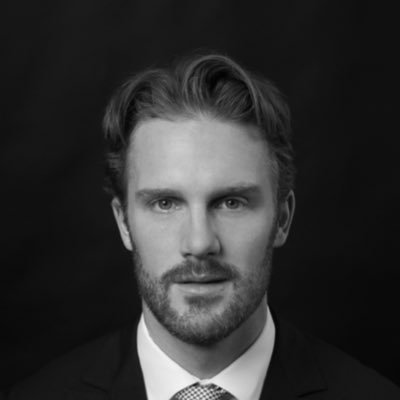
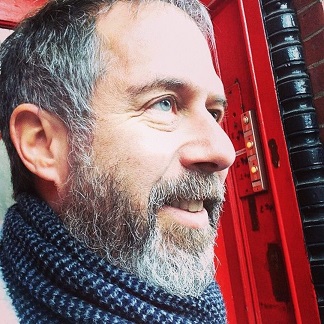
    Thursday April 24th, 2025 –  It was unexpectedly difficult to get to the location of the New Music for Percussion, Piano, and Strings concert, performed at NYU. After waiting in the lobby for half an hour and being ushered towards the elevators with no other directions, the other audience members and I finally arrived at Room 620 shortly before the music began. Composer Steven Swartz, who had an exciting premiere on the program, described the feat as “breaching the walls of the castle.” But fortunately, all the music on last night’s program was entirely worth the struggle of getting there!

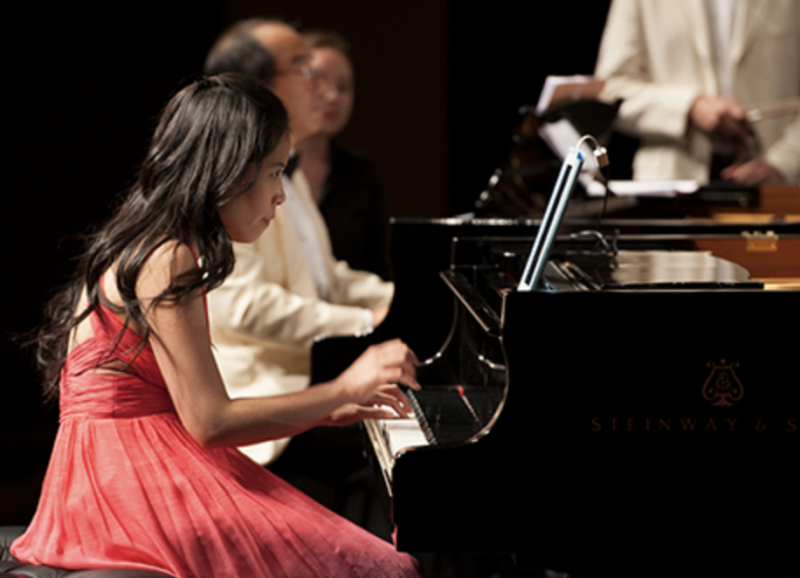
    The program began with two pieces for piano trio, each made up of a handful of very short movements. These were Miu Sato’s Threads of Belonging and Takashi Yoshimatsu’s Atom Hearts Club Suite No. 1. Despite the brevity of the music, both composers packed an incredibly diverse array of sounds into each piece, from lush, pianistic arpeggios that filled out the space around the violin and cello’s melodies to energetic syncopated rhythms in odd meters. The three performers, Angel Guanga (violin), Noelia Carrasco (cello), and Malka Bobrove (piano) are all currently undergraduate students at NYU, but their sound as an ensemble was nothing short of professional, playing with an incredible level of confidence and precision.

    I was also impressed with pianist Miles Avery’s performance of …couple égyptienne en route vers l’inconnu… by György Kurtàg. The music featured pointillistic collections of notes, connected together through the overtones left behind by the sustain pedal. Avery played every single note with such intention that each sound that emanated from the piano seemed to have an entirely different character from the last.
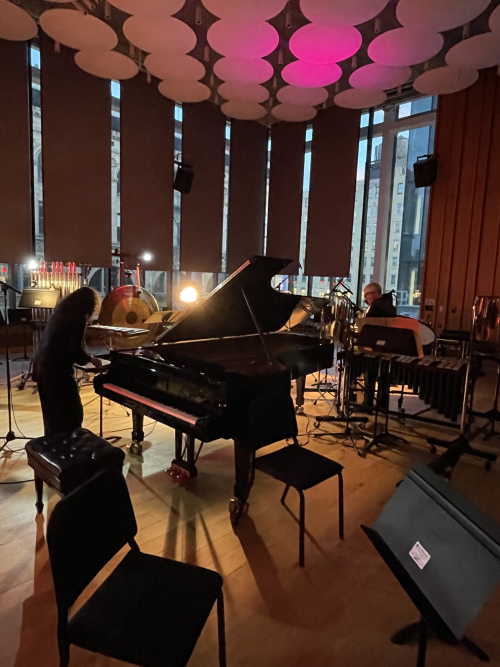
     

    Soundcheck - MN + JH


    Above: pianist Marilyn Nonken and percussionist Jonathan Haas do a soundcheck before the world premiere of Steven Swartz’s When the horizon has a mind of its own.


    I was absolutely mesmerized by the fragments of sound that emerged just to trail off again, reminding me of light refracted through glass. Swartz’s inspiration for this piece came from a light source as well—he observed the intricacies and ever-changing motion of the sunset and aimed to capture the elusiveness of those moments in this piece. I certainly felt that ephemeral nature: The music felt aimless in an entirely good way, the sort of aimlessness you might have when you’re walking through nature on a summer afternoon without being in a hurry to get anywhere in particular. I also felt an all-encompassing sense of serenity in the moments of silence between the notes, especially in the silences after the deep rumble of the bass drum or passages in the very lowest register of the piano. This piece of music is certainly one of those pieces that I want to listen to over and over again!


    The program ended with two pieces by Jacob Druckman, Reflections on the Nature of Water  (Shiqi Zhong, marimba) and Animus II (Bowen Zheng, mezzo-soprano, Natalie North, percussion, Zhaoxuan Song, percussion). Animus II was certainly the most eclectic music of the night: The colorful lighting, unintelligible singing, and bubbly electronic noises turned the room into an extraterrestrial landscape. As I was heading out, I caught a glimpse of one of the percussion scores, which was one of those half traditional notation, half graphic scores that bridges the gap between a useful tool and visual art. I also spoke with percussionist Natalie North, who told me that they had been working on this piece for the whole semester and had never performed from a score like that before. It certainly looked like they knew what they were doing though!


    Swartz mentioned in the program notes the playful nature of a sunset, and his music was equally playful. In fact, all the pieces on this program were exceptionally playful, each in their own unique ways, which made for such a joyful evening. I hope that When the horizon has a mind of its own has the opportunity to be performed many more times going forward!

    Lili Tobias

  • Graham Gala @ The Joyce ~ 2023

    Ying xin melissa sherwood

    Above: Ying Xin of the Martha Graham Dance Company; photo by Melissa Sherwood

    Author: Oberon

    Thursday April 20th, 2023 – The Martha Graham Dance Company are at The Joyce for a couple of weeks, and tonight was their gala evening. The program offered Graham’s All-City Panorama and Embattled Garden book-ending three excerpts from Canticle for Innocent Comedians (choreographed by Sonya Tayeh with the individual sections by Jenn Freeman, Martha Graham, and Micaela Taylor).

    All-City Panorama is a re-take on Martha Graham’s 1935 work, Panorama, which premiered at a summer retreat in Bennington, Vermont. The original Panorama was 45 minutes long, set to a score by Norman Lloyd, and was performed by student dancers, It served as a rallying call to for social change. Panorama was lost until 1992, when an early film was discovered; from this, the dancework was reconstructed by Yuriko, who passed away in 2022 at the age of 102.

    Panorama rosalie banner

    Above: from All-City Panorama, photo by Rosalie Banner

    Tonight’s performance boasted a large ensemble of teen-aged dancers, all clad in red (Martha Graham had designed the original costumes). Heralded by drums, they take the stage with a youthful energy that is exhilarating. Forming and re-forming in various sub-groups, they move in compelling design patterns – from runabouts to noble processions – employing classic Graham steps and gestures.  

    A central quintet was impressively danced, and at one point, everyone musters into a moving, stage-filling circle: a celebration of community. Following a finale filled with traveling leaps, the stage is emptied. The dancers took their bows to a vociferous ovation from the packed hall.

    Janet Eilber then appeared onstage, hailing the young dancers as the future of Graham; later in the evening, the past was also honored as veteran dancers among the audience were cheered. Overall, the evening felt like a celebration of the proud continuum of the Martha Graham Dance Company, now in their 97th season. It all left me wondering if I will live to see the 100th season.

    I was not impressed with Canticle for Innocent Comedians when I first saw it a year ago at City Center; but last week, I had a chance to see a studio rehearsal which made me alter my opinion. The choreography is demanding and often quite beautiful. I enjoyed it much more with the dancers in practice clothes; the costumes, while visually striking, seemed to detract from rather than enhance the movement, and they sometimes affect the dancers’ line. Tonight, the music, by pianist Jason Moran, also seemed more captivating than I remembered.

    Performed this evening, a suite of excerpts from the work opened with the breath-takingly lyrical duet Moon, choreographed by Martha Graham herself – apparently the only portion of her 1952 the work to have survived more or less intact. Tonight, it was hypnotically danced by So Young An and Jacob Larsen with a gentle sensuality and a feeling of tenderness and trust. 

    Stars, choreographed by Michaela Taylor, was brilliantly danced by two of Company’s charismatic Italian stars, Marzia Memoli and Alessio Crognale. Their partnering is effortless, and their personalities meld persuasively to illuminate the dance.

    The beauteous Ying Xin then appeared for the solo Death/Rebirth, choreographed by Jenn Freeman. This solo is a profound depiction of loneliness, and Ying Xin’s suppleness of movement – and her expressive face – made for a captivating dance experience: paradoxically draining emotionally and uplifting spiritually. 

    Minutes later, Ying Xin was back onstage, portraying Eve in Graham’s iconic Embattled Garden

    At the same rehearsal where Innocent Comedians gave me a second look, Graham’s Embattled Garden had been danced, complete with sets and costumes. The work is always stunning to see, but up close it was simply thrilling. The cast of four must not only be dancers, but also acrobats, actors, and possessed of vibrant personalities.

    Tonight, in the theatrical setting, a slightly different cast made a most powerful impression. The Noguchi sets are masterpieces in their own right, and the Carlos Surinach score seemed fresh and vivid. Ying Xin’s Eve is the epitome of feminine grace, and her partner Lloyd Knight’s Adam is magnificent both as a presence and as a mover.

    Garden hibbard nash

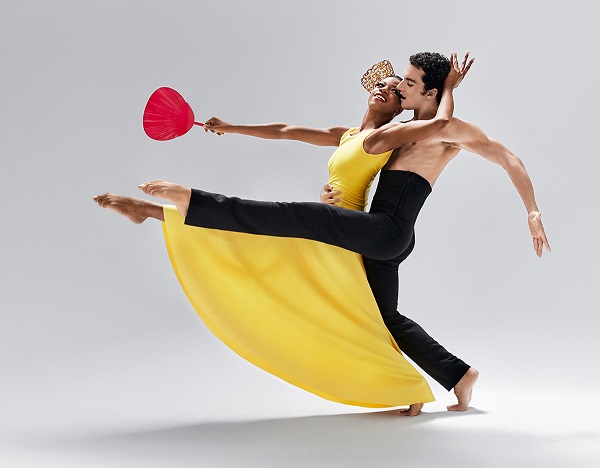
    Above, trouble in paradise: Leslie Andrea Williams and Lorenzo Pagano in a Hibbard Nash image

    Observing Adam and Eve from his perch in a fanciful Noguchi tree is the Stranger, danced by Lorenzo Pagano; lounging in the shade, fanning herself, is Lilith, danced by Leslie Andrea Williams. These intruders in Eden are hellbent on destroying the happiness of the young couple…just because they can. Aside from the astonishing flair and virtuosity of their dancing, Leslie and Lorenzo communicate volumes with their facial expressions and especially with their ever-observant, knowing eyes. Brilliant!

    ~ Oberon

  • Sasha Cooke’s Cherubino @ The Met

    Sasha cherubino

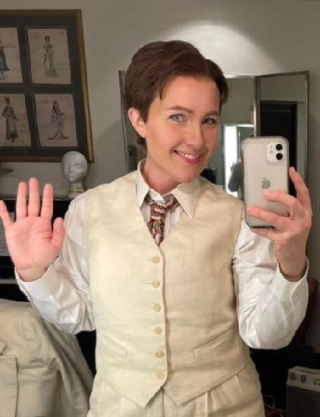
    Above: mezzo-soprano Sasha Cooke in a Cherubino selfie; borrowed from Sasha’s Facebook page

    Author: Oberon

    Thursday April 21st, 2022 – I very seldom go to evening performances at The Met these days; the long intermissions can leave me getting home after midnight, which makes me nervous. However, I could not possibly forego a chance to see Sasha Cooke’s Cherubino at The Met, and since this cast did not have a matinee I could attend, I went tonight with a plan to stay for two acts, thus hearing both of Sasha’s arias. Once there, the excellence of the entire cast made me wish I could stay to the end…to give Sasha a big “bravissima” during the bows.

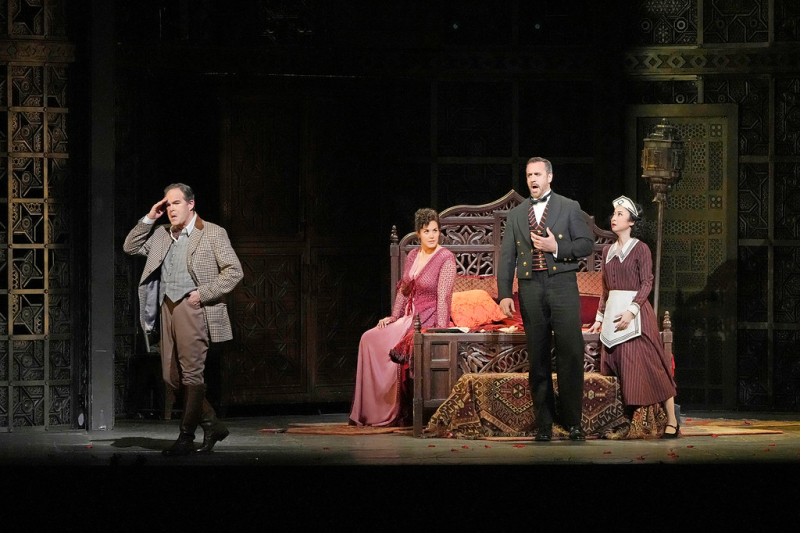
    The Met’s current NOZZE DI FIGARO production, needless to say, is updated, having a sort of Downton Abbey feel. The set, of metallic latticework, seemed ugly at first, but I soon got used to it as it revolved from room to room. Richard Eyre’s staging is excellent, each character being finely delineated. I “learned” this opera in the late 1960s when I attended several performances of the New York City Opera’s English-language production, and the words kept coming back to me this evening: opera in English works well for comedies. Of course, tonight it was Italian that was being sung.

    Pfeffer-nimrod-david-resized

    The Israeli conductor Nimrod David Pfeffer (above) made his Met podium debut tonight; a member of the Company’s music staff since 2014, Maestro Pfeffer was given this last NOZZE of the current run, and he did a very fine job. The brisk overture set the tone of the evening, and he kept the energy level high whist still allowing the singers some leeway here and there to spin out their lines, or add a bit of embellishment. A couple of times, things got out-of-sync; but this was swiftly remedied. Of special note this evening were the expert continuo players: Howard Watkins (fortepiano) and Julia Bruskin (cello)…bravi!!

    Every person in the cast was outstanding; from both a vocal and a theatrical point of view, this NOZZE stood with the finest performances of this masterpiece that l have attended.

    Nozze 2

    Above, in a Ken Howard/Met Opera photo: Gerald Finley, Federica Lombardi, Christian van Horn, and Ying Fang

    Let’s start with the title-role: Christian van Horn’s Figaro was at the same entrancing level as his Mefistofele here in 2018. With his house-filling voice and tall, slender frame, this singer compels you to attend to his every note, word, and gesture; yet somehow he also always manages to be part of the ensemble, so attentive to everything that happens around him. His “Se vuol ballare” and “Non piu andrai” were splendidly sung. 

    Mr. van Horn and the lovely Ying Fang as Susanna made a cozy couple; they were very comfortable with each other physically, and their by-play in the opening scene was quite intimate. It seemed obvious that, while their marriage vows were as yet unspoken, this would not be a “brautnacht” in the true sense of the word. Ms. Fang’s singing was simply delicious; her voice so sweet and clear in the big House. As an actress, she proved deft and subtle, with expert timing and witty facial expressions. One can hear already a Contessa in her future, but for now let us savour her delectable Susanna.

    Lombardi finley

    Above, the Almavivas: Ferderica Lombardi and Gerald Finley; a photo borrowed from Mr. Finley’s Twitter page

    Gerald Finley’s Count was yet another feather in the cap of this wonderful Canadian bass-baritone, who I last saw as a magnificently-sung Athanaël in THAIS in 2017. He gave a perfect portrayal of the predatory Count, constantly thwarted by Figaro & Friends. I was surprised to discover that Mr. Finley is in his 60s now: he sounds and moves like a much younger man. The voice is in fine estate, including an interpolated top note as his dismissed his wife’s story about Cherubino’s presence in her boudoir: “I don’t believe you!”

    I heard the Italian soprano Federica Lombardi earlier this season as Musetta in BOHEME and thought she was good but unexceptional. Reading her Playbill bio tonight, I found that it’s loaded with Mozart roles; and then, hearing her “Porgi amor“, I could easily understand how her Mozart is valued. The voice is clear, with a kind of quiet allure; she sometimes employs straight-tone to lovely effect, and her dynamics gave me tingles of delight. In the ensemble where her husband tries to win her forgiveness, Ms. Lombardi’s voice flew up to two crystalline high-Cs. A tall, slender woman, the soprano looks striking onstage, and she conveyed the Contessa’s nobility and the long-suffering abuse she’s endured in he marriage. But also: she let us know that Rosina is still a young woman, and understandably tempted by the over-sexed Cherubino. Ms. Lombardi is a valuable addition to The Met roster

    Nozze

    Above, two girls and a boy in a bedroom: Ying Fang, Federica Lombardi, and Sasha Cooke; a Met Opera photo

    I first heard Sasha Cooke when she was a Met Young Artist; she was in the same ‘class’ as my lovely Lisette Oropesa, and they both had their ‘stepping out’ in solo parts in HANSEL & GRETEL: Sasha as the Sandman, and Lisette as the Dew Fairy. I heard Sasha at various Young Artist presentations, and was much taken with both her voice and her distinctive personal beauty. Since then, she has become a world-class recitalist whilst continuing to take on choice operatic roles. This season, after being absent since 2008, Sasha returned to the Met as Edwige in Handel’s RODELINDA and as Cherubino.

    The first thing I noticed about about Sasha tonight – aside from what a handsome boy she makes – was that the voice has grown larger and warmer over time, without losing its unique qualities. In the playful “Non so più cosa son“, she handled the Maestro’s swift tempo with complete assurance, and then made a very touching impression as the page turns more pensive at “E se non ho chi mi oda...” before polishing it off with a joyous …”parlo d’amor con me!”  In the page’s trademark aria, “Voi che sapete“, Sasha’s warm tone and perfect diction set her comfortably in the high echelon with my delightful Cherubinos of the past: Biancamaria Casoni, Evelyn Lear, Rosalind Elias, Kay Creed, Helene Schneiderman, Frederica von Stade, Susanne Mentzer, and Susan Graham.

    Sasha’s Cherubino was a lively youth, crawling under the bed to hide from the Count, enjoying her transformation into a girl, and finally clambering up a tall armoire to leap out of the window.  In sum, she simply lived the part…and it was very sweet to read that Ms. von Stade had sent Sasha her bejeweled ‘Cherubino’ shoe buckles to honor Sasha’s return to The Met. Now, we just need to keep her here!

    Four top-flight singing actors graced the cast with their presence: Elizabeth Bishop (whose Berlioz Dido and Gluck Iphigenie I had the good fortune to see) was a voicey Marcellina, with astute comic timing, whilst Maurizio Muraro, a basso buffo the great tradition of Salvatore Baccaloni and Fernando Corena, gave a powerful rendering of Bartolo’s “vendetta” aria. Paul Corona’s strong-toned Antonio was another plus, trying hard not to be duped by Figaro’s made-up story of who it was who jumped from the window. 

     As Don Basilio, Giuseppe Filianoti revealed his still-beautiful voice aligned to the touching colours he found in the words – something that comes naturally to a native Italian.

    ~ Oberon

  • Flautist Anthony Trionfo @ The Morgan Library

    Trionfo

    Thursday April 14th, 2022 – Young Concert Artists presenting flautist Anthony Trionfo (above, in a Matt Dine portrait) in a noontime recital at The Morgan Library. Mr. Trionfo was joined by Emmanuel Ceysson (harp), Hsin-Yun Huang (viola), and Albert Cano Smit (piano) in a program of music by Debussy, Prokofiev, and YCA Composer Katherine Balch.

    I first heard Mr. Trionfo in recital at Merkin Hall in 2018 and was dazzled by his extraordinary talent. This afternoon, he chose works especially dear to him and then invited colleagues he especially enjoys working with to join him. The result was a very personal and pleasing hour of music-making of the highest order. 

    Cano_Smit_Albert4_credit_Chris_Lee

    Above: pianist Albert Cano Smit, photo by Chris Lee

    Sergei Prokofiev’s Sonata in D-major, Opus 94, opened the concert; Mr. Trionfo’s collaborator here was the tall, handsome Dutch/Spanish pianist Albert Cano Smit.  

    The sonata has a lyrical Moderato start, which soon peps up. A familiar melody is heard, and then there’s a sort of fanfare-like passage. Fanciful fluting follows, high and swift. Calming with more sustained themes, the familiar melody returns, moving on to a soft ending. The charming Scherzo has an exuberant quality, which both players relished. A peaceful interlude gives way to a feast of coloratura from Mr. Trionfo. The Andante has a dreamy quality, and an air of mystery. The concluding Allegro con brio opens with a rhythmic dance, and there are cascades of notes from the flautist. At the piano, Mr. Smit keeps things zipping along, and then has a strikingly dramatic interlude. A pensive melody for the flute leads on to the sonata’s flashy finish. The Trionfo/Smit duo reinforced the high esteem in which I hold Prokofiev’s music with their brilliant playing.


    Hsin-yun-huang

    For Ms Balch’s miniature, Musica Spoila, violist Hsin-Yun Huang (above) joined Mssrs. Trionfo and Smit. In announcing the work, Mr. Trionfo spoke of the intense concentration needed by the three players for this quirky, fifteen-minute score; he said the composer wanted the music to sound like a “crisp, light machine”, and the trio achieved just that quality.

    The music putters and sputters, with the viola scraping and plucking. Each player produces various sound effects: Mr. Trionfo makes eerie breathing noises on the piccolo, and the piano is sometimes tapped or plucked from within. It’s all very subtly done, and perfectly timed. The piece was over in the twinkling of an eye.

    I had heard Hsin-Yun Huang earlier this season playing Arnold Schoenberg’s Verklärte Nacht with Chamber Music Society of Lincoln Center; I was very glad of this opportunity to hear her again today.

    Emmanuel

    Above: harpist Emmanuel Ceysson

    Claude Debussy’s Sonata for flute, violin, and harp brought forth harpist Emmanuel Ceysson, who gained a large following of fans during his five seasons with The MET Opera Orchestra. Currently, he is principal harpist with the Los Angeles Symphony. He’s a great-looking guy whose love of music is palpable; watching Mr. Ceysson is as pleasing as listening to him.

    From the gentle start of the sonata’s opening Pastorale, the intriguing blend of the sweet-toned flute, the poignant viola, and the the caressive harp gives us a feeling of peace. In the lower range, Hsin-Yun Huang’s viola has a lovely duskiness. After a passage of gentle animation, the movement ends with a dreamy hush.  The central Interlude soon takes on the feeling of a gentle romp in a Spring meadow; to magical glissandi from Mssr. Ceysson’s golden harp, the sound of the flute and viola entwine in blithe melodies which become quite lively. The vibrant harp sets off the concluding Allegro con brio, giving an agitato feeling. The flute and viola exchange simple passages. The pace quickens, and the blended textures of the three instruments become denser, delighting the ear.

    The trio were enthusiastically applauded for their brilliant playing and, returning for a bow, they called on Mr. Smit to join them onstage.

    The music today was twice interrupted by the loud ringing of cellphones. As always, these intrusions came at just the wrong moments; I felt sorry for the players, who carried on despite the distraction.

    ~ Oberon

  • Larcher and Brahms @ The NY Philharmonic

    07_Banner_WDW__Vorlage

    Above: composer Thomas Larcher

    ~ Author: Brad S. Ross

    Thursday April 25th, 2019 – This evening at David Geffen Hall saw the performance of two imposing, if wildly dissimilar, symphonies—one old, the other new—as The New York Philharmonic made their best effort of this decidedly peculiar concert pairing.  Guest conducting the program was the Russian-born Semyon Bychkov, whose steady command brought typically formidable results from our city’s prized orchestra.  

    The first half of the concert was given over to the United States premiere of the Austrian composer Thomas Larcher’s visceral Symphony No. 2: Kenotaph.  It was prefaced with opening remarks by Larcher, who offered concise and mercifully brief pre-performance context for the work. The title (German for “cenotaph”) refers to an empty grave or monument to those buried elsewhere. It was composed between 2015 and 2016 amid the peak of the Syrian refugee crisis, which saw hundreds of thousands of migrants fleeing from their homeland towards a less-than-welcoming central Europe. This tragedy was foremost on Larcher’s mind as he wrote Kenotaph, which, as he put it, is not so much programmatic music as it is “music with empathy.”  Its form is cast, quite traditionally, in four movements over a duration of roughly 37 minutes.

    It opened with a bang on a furious, colorful Allegro, marked by numerous volatile bursts.  This momentum retreated briefly into a somber elegy, before returning with ferocious energy—an energy marked with shrieking strings, discordant brass bursts, and unrelenting percussion that led it to a frightening close.  Although occasionally on the discursive side, the movement was characterized by a gripping sense of musical drama that would set the tone for the rest of the work.

    It was followed by a mournful, string-heavy Adagio that opened on repeating glissandi in the high strings as warm brass chords and descending mallet lines swelled and trickled underneath—the effect was almost like something out of science fiction.  A voluminous march then launched the music into fearful new atmospheres as a lone violin line, performed by the concertmaster Frank Huang, faded the movement into a haunting silence.

    Next up was plucky and energetic Scherzo, molto allegro, driven by excitingly colorful percussion.  Accelerating tutti bell tones led the piece to a series of fortissimo bursts before an almost Baroque and, by comparison, shockingly tonal phrase brought the movement to a pleasant, bittersweet end.

    The final movement, Introduzione, was a somber and almost elegiac affair.  It began with a number of featured soli—trumpet, violin, viola—which, once again, were surprisingly tonal in sound.  The movement soon became violent and triumphant, as though the gates of hell had been thrust open and the devil himself was leading the charge.  The composition here was not unlike Camille Saint-Saëns’s Danse macabre, Malcolm Arnold’s Tam O’Shanter Overture, or some other ghastly jaunt of classical music history.  Larcher delightfully milked this for all it was worth and brought the movement to a number false codas before its final climax—always finding ways to say more without ever overstuffing the piece.  A quiet postlude followed that featured a ghostly violin solo—again performed by Huang.  Finally, as if burying the dead, a tasteful, yet haunting funeral march brought the symphony to its final and, appropriately, unresolved cadence.

    The audience’s response was kind, if not totally enthusiastic.  A modest number of curtain calls gave Larcher, Bychkov, and the work’s soloists much-deserved chances to take their bows, which, given the strangely contrasted pairing, is perhaps the best for which one could hope.  Nevertheless, musically Kenotaph should be regarded as one of the New York Philharmonic’s most exciting premieres of recent memory, alongside Esa-Pekka Salonen’s Cello Concerto, Anna Thorvaldsdottir’s Metacosmos, or Julia Wolfe’s Fire in my mouth.

    Had the evening had ended here—and it probably should have—this might have been one of the best concerts of the season.  Ticket-holders tend to require more than forty minutes of music to feel satiated, however, so after intermission the audience returned for an enjoyable, if unremarkable, performance of Johannes Brahms’s Fourth Symphony.

    Composed between the summers of 1884 and 1885, this would be the last of the Romantic composer’s symphonies before his death in 1897.  Cast in four movements over approximately 45 minutes, it comprises a lush and stately Allegro non troppo, a warm and overlong Andante moderato, a fairly dainty Allegro giocoso, and a lively Allegro energico e passionato, which finally injected some much-needed energy to the second half of the program.

    After the riveting first half of the concert, this listening experience was almost soporific by comparison.  Perhaps it’s simply unfair to judge such an antiquated work against the rigorous complexities of one so new, but it’s one this odd pairing begged to be made.  Nevertheless, one could not possibly walk away from this concert feeling anything less than satisfied.  All in all, it was another splendid night at the New York Philharmonic—the gem of this great city.

    ~ Brad S. Ross

  • New Music @ Rose Studio

    ~Author: Scoresby

    Thursday April 26 2018 – At the Chamber Music Society of Lincoln Center’s last New Music concert of the season, the Schumann Quartet and pianist Gloria Chien gave a wide-ranging performance. The first piece on the program was the last movement of Swiss composer Helena Winkelman‘s Quadriga Quartet for Strings titled “Sleipnir the eight-legged” based on the eponymous horse in Norse mythology. While only the last movement of the quartet, Ms. Winkleman is open to it being played alone. It is a rollicking piece that includes references to Bartok, jazz, metal, and Swiss folk music all in a contemporary idiom.

    The Schumann Quartet played through the virtuosic material with enthusiasm, indulging in all the fun timbres Ms. Winkleman imbeds in the score and still able to bring out the lyricism that punctuates the more cacophonous moments. In fact, violist Liisa Randalu and cellist Mark Schumann seemed to blend incredibly well as duo – matching each other to create a delicious backdrop for first violinist Erik Schumann and second violinist Ken Schumann’s lyrical melodies. Through the work, the rhythmic pulse sounds like a frenetic horse stomping through – it is a shame we only got to hear one movement of this quartet. I look forward to hearing more of Ms. Winkleman’s music soon.

    Screen Shot 2018-05-01 at 5.25.18 PM

    Above: Schumann Quartet; Photo Credit: Kaupo Kikkas

    The second work on the program was Timo Andres’s five continuous movement work Quintet for Piano, Two Violins, Viola, and Cello. The aptly named first movement Cannons and Fables, sounds like an upbeat riff on minimalist Schumann. The most interesting was the second movement, which is based on large dusty tremolos in all of the instruments. The quartet’s tight and structured sound contrasted the more rustic sounding piano part. While interesting to listen to – this doesn’t seem to Mr. Andres’s most interesting work.

    Henze’s brief “Sonatina for Violin and Piano” seemed highly structured and a completely different sound world than the earlier Andres. Second violinist Ken Schumann and Ms. Chien presented the work based off of themes from one of his operas. The Allegretto has an active piano work full of counterpoint and dissonance, with what seem to be quotes from Messiaen’s Quartet for the End of Time. Mr. K Schumann captured the almost romantic nostalgia in the second movement, his mute letting him produce a supple ghostly sound and his phrasing emphasizing the lyrical quality of the music. Ms. Chien in the last movement embraced the drama in the piano part and gave heft to the huge chords that end the piece below Mr. K Schumann’s highpitched violin.  

    After the rigidly structured world of Henze, the program moved into two selections from “Piano Etudes” by Augusta Read Thomas. The first (etude 3), titled Cathedral Waterfall – Homage to Messiaen, is a spacious work that uses the extreme reaches of the piano and heavy use of pedal to evoke a large cathedral. Ms. Chien let the piano boom in these chords, making the small space seem like an echo chamber. She managed to let the color of each chord be clear without blending into the next – thus producing a chiming sound. This effect sounded at once like Feldman’s sparse tone mixed with the large spaciousness that Crumb’s Makrosomos evoke. The second work (etude 2) called “Fire Waltz – Homage to Bartók” is a thrillingly fun Ligeti-esque work. Ms. Chien seemed to stick to its incisive rhythm and sound like a machine that kept getting interrupted. It was a fun reading that seemed to relish in Ms. Thomas’s jazzy composition style.

    Screen Shot 2018-05-01 at 5.22.19 PM

    Pianist: Gloria Chien

    The most well-known piece on the program was Arvo Pärt’s Fratres. Mr. Pärt originally composed the work in 1977 and has rearranged it over 15 times for different instrument combinations. While all share a structural chord sequence and something percussive, each one has a slightly different sound. In her speech beforehand, Ms. Randalu shared that Mr. Pärt thought of his music as existing not for a particular timbre or instrument, but in absolute forms – structural music. All four members of the quartet gave a dedicated performance. 

    Mr. K Schumann held the same note for all 10 minutes of the performance, letting everyone blend around and atop his drone. This version of Fratres is more spiritual and less earthy than other versions of the piece. They took the chords slowly, the instruments started in the high harmonics and over the course of the piece moved to the lowest notes through the chord sequence – Mr. M Schumann’s warm cello pizzicato breaking up the sequence. The lack of contrast in this version of the work, makes it much more sparse – perhaps intentional to evoke a choir. While certainly a beautiful work and given a detailed rendering here, it seemed like an odd way to end such an exciting program – perhaps it would have been better served an opener? Nonetheless, it capped another great performance in the CMS New Music Series.

  • Pierrot Lunaire @ Carnegie Hall

    ~Author: Scoresby

    Thursday April 19 2018 – On a rather chilly Spring day, Carnegie Hall’s Ensemble Connect had one of its last Weill Hall performances of the season. Every two years the ensemble changes over its fellows and this particular set of musicians will move on in June. As this is the last Ensemble Connect concert I was attending this season, it was interesting to see the contrast between when these players first joined and how they play now.

    The program began with Mozart’s incredibly difficult six movement Divertimento for Violin, Viola, and Cello in E-flat Major, K. 563. The program book seemed to have a typo, listing this work as only 15 minutes long (instead of 45) – perhaps thinking of one of the far shorter and earlier Divertimento for String Quartet. This is a virtuosic tour-de-force piece for all involved because it has incredible exposure for all the instruments, here Rebecca Anderson on Violin, Andrew Gonzalez on viola, and Julia Yang on cello. Ms. Yang’s warm, robust sound stood out immediately – she managed to blend well with Ms. Gonzalez and Ms. Anderson matching vibrato perfectly. 

    Screen Shot 2018-05-04 at 12.55.23 PM
    Above: Ensemble Connect

    Stylistically, the group kept the Allegro light and bouncing. During the Adagio Ms. Anderson’s solo passages were played with a touch of sweetness while Ms. Yang’s ascending cello motifs brought a touch of nostalgia. The Andante (the fourth movement) is a charming set of variations – while every instrument gets its line to shine most impressive were the blending between Mr. Gonzalez and Ms. Yang during the active violin variation. They created a supple backdrop for Ms. Anderson to play the sweet melody. In the fifth movement, the group let the music seemed to have fun with the light bouncy textures and brought the music’s humor out by letting the phrases breathe. The duet between Ms. Anderson and Mr. Gonzalez was fully of energy and light-hearted spirit. While there were a few technical glitches – it was a fun performance of a difficult work. 

    The after-intermission performance demonstrated how much the players in ensemble have grown – it was not only a successful performance of Schoenberg’s Pierrot Lunaire – but one of the best performances I’ve heard this year. The instrumentalists were Rosie Gallagher on flute, Bixby Kennedy, on clarinet, Mari Lee on violin, Madeline Fayette on cello, and Mika Sasaki on piano. As is tradition in Ensemble Connect, before the work began there was a short talk about the music – only here Mari Lee interviewed ‘Schoenberg’s Ghost’, who was wearing a Pierrot-like mask. It was a fun and creative way to introduce the music that a more traditional group wouldn’t have dared to do and Ms. Lee’s earnest questions gave both humor and seriousness to it. It seems Ms. Lee adapted some of the material from her own project Salon Séance for the interview.

    Pierrot is one of the landmark works of the twentieth century. Not quite theatre, not quite music – it lies somewhere in-between in a chamber setting. It was Schoenberg’s first major work using free atonality and is before he came up with his twelve-tone system. Musically it is a piece at the height of German Expressionism, set to the brooding poems of Albert Giraud to paint different fragments of the psyche. It feels at once dream-like and nightmarish with extremes of emotion. In order to enhance this feeling, the group used simple lighting to heighten the drama –  they turned off the regular house lights and replaced them with white spotlights during the first section, blood red lights during the second, and back to white spotlights for third. In this darker atmosphere with the glittering Viennese style chandeliers, one really felt immersed into Schoenberg’s world.

    Unfortunately soprano Mellissa Hughes who was originally supposed to sing the soprano part withdrew due to illness. Luckily, Ensemble Connect managed to get one of the most venerable Pierrot singers alive today: Lucy Shelton.  She was simply spellbinding and elevated the level of the young players to match her. In Columbine the Ms. Lee and Ms. Sasaki’s violin and piano duo gave heft to match Ms. Shelton’s Meine banges Leid (my pain) and immediately changed dynamics to match the zu lindern (soothing). Such precise dynamics from moments like that were the hallmark of this performance – but at the same time the players swelled to match the more crazed sections of the piece.  Ms. Shelton for her part, embodied the music taking a no-holds-barred style. Using hand gestures to and acting to portray the different facets of the characters, from the wisps of nostalgia in the last movement to the crazed laughter and anxiety in the Rote Messe to the cackling gossip in the Gallows Song, Ms. Shelton seemed like she was a witch reciting an incantation and with the dream-like lighting she was spellbinding. In the small hall, her voice filled the entire space and one felt completely immersed – it felt like she was telling you a story and drawing you into her world complete with horrors, traumas, sweetness, and nostalgia for the past. Rather than just a “crazy” approach as many singers bring to this piece, Ms. Shelton captured all the nuance of emotions embedded in both the text and music. Her yearning for the past in the end sounded sweet and  wistful as she whispered “And dream beyond for blissful stretches, O old perfume–from fabled times!”

    Screen Shot 2018-05-04 at 12.54.11 PM
    Above: Soprano Lucy Shelton

    The instrumentalists were no less into the music. While perhaps the could have captured some of the softer tones and romanticism in the third book, they were all precise and together.  A powerful moment at the end of the third movement, Ms. Gallagher’s impressive fluttering as Ms. Shelton sung “With a ghostly moonbeam” – Ms. Gallagher capturing the timbres with precise but soft tones. Ms. Fayette during her nervous outburst in Rote Messe mimicked Ms. Shelton’s crazed line. In the interlude before the last song of the second book, Mr. Bixby deep clarinet melded with Ms. Gallagher’s playing. In that last song, Ms. Lee captured the same timbre as Ms. Shelton’s singing – sounding like a dreamed echo. Ms. Sasaki let the piano. During Gemeinheit Ms. Fayette and Ms. Gallagher matched their vibrato perfectly, creating an ethereal dream-like texture. 

    In the Barcarole, Ms. Lee, Ms. Sasaki, and Ms. Gallagher created a disorienting backdrop of what sounded like a drunken boat ride. All in all, this group of musicians worked hard to create an excellent performance – a great end to the last Ensemble Connect performance in Weill.

  • Jonathan Biss|NY Philharmonic

    Jonathan_Biss_104_credit_Benjamin_Ealovega
    Above: pianist Jonathan Biss in a Benjamin Ealovega portrait

    Author: Scoresby

    Thursday April 20th, 2017 – The promising young conductor Courtney Lewis shared his New York Philharmonic subscription debut (he was the Assistant Conductor there from 2014 – 2016) with the pianist Jonathan Biss. The program was split between two orchestral works bookending two piano concerti. While individually the pieces were interesting, it was a little unclear how the program fit together. It was my first time hearing Mr. Lewis live and my first time hearing Mr. Biss in an orchestral performance – though I have enjoyed his solo performances in the past.

    The first selection on the program was Part Two Scene One of Berlioz’s Roméo et Juliette, Dramatic Symphony after Shakespeare’s Tragedy, Op. 17. The scene is broken down into a tone poem of sorts with the subtitles: Romeo Alone, Sadness, Distant Sounds of a Concert and a Ball, and Great Festivities in the Capulet’s Palace. While a Berlioz fan, I had never heard this particular work before. After last night’s performance I immediately went home and listened to the full piece online – it is some of Berlioz’s most original composing.

    1MlJi1ft

    Mr. Lewis (above) and the orchestra had superb dynamic control, starting from just a hush in the beginning that evoked a person meandering through a forest with the lighting shimmering and shifting under different trees. The music itself reminded me so much of the creeping chromaticism and lush sounds in Tristan and Isolde that I kept expecting to hear the famous Tristan Chord. Berlioz doesn’t go that far though, and instead the piece opens up into a great party scene.

    Mr. Lewis led this change in atmosphere marvelously – shifting from a tragic meditative walk into a brash, almost militaristic ball. This wasn’t light dance music in Mr. Lewis’s interpretation; instead, there were crashes and thumps with the percussion implying the coming tragedy. It was satisfying to see that the players seem to have genuine affection for him and it felt like they wanted him to succeed.

    Next on the program was the young composer Timo Andres’s The Blind Banister: Concerto for Piano and Chamber Orchestra with Jonathan Biss performing the piano part. The piece was composed as a companion piece to Beethoven Piano Concerto No. 2 in B-flat major, Op. 19 (on the program later), though as Mr. Andres admits in his notes there are few similarities other than a motif he takes from the cadenza of the Beethoven. Mr. Andres’s piece centers on downward/upward scalar motion and suspended seconds. It is tonal and has layers upon layers of atmosphere, with the piano a fabric holding it together. Mr. Lewis did a good job of highlighting different timbres in the score, while Mr. Biss gave the piece a dedicated performance. The woodblocks in the second movement were particularly fun to hear.

    The second half started with the underappreciated gem of the Beethoven Piano Concerti: No. 2 in B-flat major, Op. 19. I have always had affinity for this piece, being dainty and expressive at the same time. Mr. Biss was at his best in the first and last movements, playing with a touch as light as a feather. It was impressive hearing how he could change the color of a particular phrase with his changes in articulation, ranging from buttery legatos to harpsichord-like plucking.

    In the Adagio the orchestra shined – I thought the brass section sounded lovely with a warm sound. Mr. Biss played the dynamics of the adagio well, but didn’t have the same ease and gloss as he did in the first movement. The Rondo was played brusquely and with finesse; all of the structures were very tight. Mr. Biss did a good job of keeping the tune playful, making it sound like something someone could whistle. The orchestra gave an equally nimble performance.

    The final piece on this eclectic program was Elgar’s In the South (Alassio), Op. 50.  I’ve never had an affinity for Elgar before, but this unknown piece to me reminded me a lot of Strauss mixed with Italian folk tunes. Mr. Lewis played through the large swells of romanticism well. The quietest sections were the most memorable, with a charming duet between the harps and Associate Principal Viola Rebecca Young being a highlight of the evening. During the denser moments of the piece, some of the middle range instruments sounded muddy, but this is was due more to Elgar’s writing than Mr. Lewis’s conducting. Overall Mr. Lewis proved more than capable and demonstrated he is a flexible conductor well on his way to a major career. Mr. Biss lived up to his reputation as a fine Beethoven interpreter and a subtle artist. 

    ~ Scoresby

  • Carter Brey: Schumann @ The NY Phil

    Tumblr_m2ozpelCxd1qa028to1_1280

    Above: NY Philharmonic principal cellist Carter Brey, with his colleague Eileen Moon

    Thursday April 28th, 2016 – Performances of Robert Schumann’s cello concerto seem to be something of a rarity, so I was glad of an opportunity to hear it at The New York Philharmonic tonight. I always love to see the orchestra’s principal players stepping out for a soloist turn. Carter Brey’s playing was most enjoyable, as was watching him play; his colleagues swamped him with affectionate applause as he took his bows.

    A new work by Franck Krawczyk opened the concert. I’m fairly open to new music; when new works are programmed, I am always hoping for two things: that the composer might go beyond good craftsmanship and somehow touch the soul, and that there would be something to remember in the music. I found both tonight in Mr. Krawczyk’s Après, having its world premiere in these performances.

    Both my companion and I felt a sense of narrative in Après: she envisioned a scene in nature with large trees and roaming beasts while I imagined the final days of a war and its immediate aftermath. The program notes imply no story of any kind, but the composer does pay homage to Beethoven, Kurtag, and Dutilleux. 

    Après commences with a poignant, intense theme, the lower voices glowering. A big passage for strings, with the violins soaring upward and the violas then exuding calm follows; a single sustained note from the clarinet introduces somber winds, and things turn ominous. For a few seconds the music ambles restlessly, with percussive effects introduced quietly: chimes, cymbals, snare drum. 

    Suddenly, a clattering arises: all the musicians begin to drum on their stands or tap their instruments. The horns herald an odd dance. An unsettled feeling – almost of being trapped – develops and there’s a huge build-up which evaporates to a single note from the piano.

    The crack of a whip sparks a march-like section, with loud chimes. The lower winds darken, only to give way to the work’s most fantastical passage: the mingling of solo harp and piano creates an eerie tranquility. So atmospheric! The winds re-enter, the violins lament, the harp and piano sound together again. Brass and percussion swell to a great loudness, the violas are plucked, and then, in a wisp, the harp gives us a mysterious ending.

    The youthful-looking composer appeared for a bow; having heard Après – with that bewitching harp and piano motif – and having read of Mssr. Krawczyk’s musical roots (he was an accordionist), I’ll be finding more of his music to explore in the less hectic days of Summer. Of the new works presented in recent months by the Philharmonic, I rate Après very highly indeed.

    Mr. Brey then appeared for the Schumann concerto. Both the work and his playing of it were thoroughly pleasing, as was the feeling he conveyed of truly enjoying the music and of listening to his colleagues attentively in those moments when the soloist is silent. 

    Three movements are listed for this concerto, but they are played without pauses in between so that it becomes an arc, a sort of cello tone-poem. It opens with a heartfelt, rather sad theme. Even when things become more animated, there is a sense of longing. Mr. Brey’s playing is subtle and refined in the more sustained passages: there’s a constant stream of melody for the cello over commenting strings. Rising scales recur, and the French horn has some lovely moments.

    There’s an ironic waltz, with the pensive cello playing deep and lulling as the violins and violas are gently plucked. A tender cello theme leads to what ‘should be’ a cadenza, but the orchestra continues to play a part.

    Suddenly a dance erupts, and Mr. Brey’s animated fiorature cover a wide range at high speed. The virtuosity continues, with the orchestra stately or turbulent by turns, to the end; the audience couldn’t restrain their applause, breaking in before the final note had faded away. The tall cellist was warmly hailed, embraced by the conductor, and lionized by his colleagues.

    The program concluded with the Brahms 2nd symphony; it was (needless to say) gorgeously played, and Alan Gilbert’s vision of it is most congenial. I very much enjoyed watching the Maestro’s podium choreography tonight.

    In a letter on his second symphony, written around the time of its premiere, Brahms apparently referred to the state of melancholy as a signature of this work. There is, to be sure, a tinge of sad regret that runs thru the music, but also passages of hope, romance, affirmation. Overall, it is a warmly wonderful infusion for the spirit.

    The Brahms Second is rather front-loaded; the first two movements together last about 30 minutes while the final two together take less that half that time. The third and fourth movements – for all their  appeal and zest – seem somewhat light-weight after the riches of the first two. Of course, everyone is listening for the famous “lullaby” – which my grandmother actually sang to us when we were small: “Go to sleep, go to sleep, it is night-time for baby.” I also remember Christa Ludwig singing the ‘Brahms Lullaby’ as an encore at a recital she gave in this very hall many moons ago. The theme recurs in various guises throughout the opening movement of the 2nd symphony.

    Horns and winds welcome us, and a unison violin theme develops grandly and spreads thru the orchestra; the playing is resplendent. A horn solo lingers in the memory. The cellos play a lovely theme at the start of the second movement; horns and winds again mingle voices and the adagio moves opulently forward. Winds play over plucked celli, dancing thru the third movement towards a presto finish, and in the fourth movement a gentle start soon goes grand…and oddly Russian. The broad flow of melodies is simply delightful to bask in as the symphony sails to a spirited finale. Maestro Gilbert and his players were at their very finest here (all evening, actually) and the applause was still echoing as I walked up the aisle. 

    Tonight’s concert honored The Philharmonic’s retirees – four who are currently playing their final season, and several former members who were in the audience tonight and who stood for a bow. Retiring violist Irene Breslaw and violinist Carol Webb each made heartfelt speeches, recalling the high points of their years with the orchestra and speaking fondly of their colleagues. Their words were very moving.

    Flautist Sandra Church and violinist Newton Mansfield (a 55-year Philharmonic veteran!) are also in their final season; and violist Katherine Greene was honored tonight as she is celebrating her 25th anniversary with the orchestra.

  • Score Desk for ARABELLA

    Glass_of_water_350

    Thursday April 24th, 2014 – Of Richard Strauss’s three well-known romantic-style masterpieces, ARABELLA is probably the most difficult to love. ROSENKAVALIER has its marvelous progession of waltzes to lilt the listener along, and CAPRICCIO boasts its gorgeous Moonlight Music and the Countess Madeleine’s radiant final scene. In ARABELLA the memorable music seems to come in fits and starts, and although the final scene is really appealing, it doesn’t quite match the sweep of either of the other two operas’ closing passages. 

    In ROSENKAVALIER there’s the double-feature of love (the May-September affair of Octavian and the Marschallin followed by the thrill of new, impetuous love discovered by Octavian and Sophie); in CAPRICCIO, the Countess’s choice between her two lovers is symbolic of the operatic dilemma of ‘which is of greater import in an opera: the words or the music?’  For Arabella and Mandryka, it’s love at first sight and it comes along just when the Waldner family most needs it to happen. The misunderstanding between the newly-pledged couple is quickly resolved and they can go forward without impediment. It’s a neat little plot but somehow it fails to touch the heart the way ROSENKAVALIER does; and ARABELLA‘s musical denouement doesn’t quite thrill us like CAPRICCIO‘s does.

    Despite these thoughts about ARABELLA‘s appeal, I was keen to experience the opera live again and it was a good performance overall, thanks largely to Philippe Auguin’s excellence on the podium. The orchestra of course played remarkably well and – unlike the three most recent conductors whose Met performances I have attended (Mssers. Armiliato, Noseda and Mariotti), Auguin knows how to scale the score’s dynamics so his singers are always audible and never seem pressured to over-sing.

    Though perhaps lacking the last bit of vocal glamour that makes for a truly memorable Arabella (Della Casa, Te Kanawa and Fleming each had it…and how!), Erin Wall sang the title-role quite beautifully: the voice is clear with a nice sheen to it. Her performance was slightly compromised in Act I by having to sing the opera’s most beloved passage – the duet for Arabella and Zdenka – with Juliane Banse who is simply not up to the role of Zdenka/Zdenko at this point in her career. But in her narrative to end the first act, Wall was really lovely and expressive, and she was equally impressive in Act II where the passionate duet for the just-met Arabella and Mandryka was the evening’s vocal high point. Later, as Arabella bids farewell to each of her suitors in turn, Wall made the most of each phrase. 

    Michael Volle, who I first heard on a tape from his appearance at Cardiff Singer of the World in 1993, has arrived at The Met. His voice is Met-sized and unimpeded throughout the range, and it’s got a nice, rather gritty edge to it when needed. His Mandryka was impressive, and hopefully he’ll be back in other repertory.

    Ms. Banse, who we heard earlier this season in the Mahler 4th at Carnegie Hall, has lovely instincts but she now sounds too mature and quavery for such a youthful assignment as Zdenka. Her vibrato rather spoiled the Act I duet with Arabella tonight and overall she just seemed mis-cast. Banse made some very fine recordings earlier in her career; this belated Met debut seemed a miscalculation by both the singer and the House. When the originally-scheduled Genia Kühmeier withdrew from this revival, The Met could have seized the opportunity to give the role to one of their blooming lyric-coloraturas – maybe Lisette Oropesa, Erin Morley, or Ashley Emerson: any of them would have been more vocally apt than Ms. Banse. They didn’t know the role? Callas learned Elvira in PURITANI in seven days, whilst singing Brunnhilde in WALKURE in the same time-frame. Surely any of these young Met girls – helped by The Met’s musical staff – could have whipped up a delectable Zdenka in even less time. Oh well, water over the dam…or under the bridge.

    The rest of the cast did well, notably Garrett Sorenson (Matteo) and Brian Jagde (Elemer); Martin Winkler was a loud Waldner. Audrey Luna successfully negotiated the high-flying roulades of the Fiakermilli, winning the audience’s acclaim. I was recalling my favorite Fiakermilli, Rita Shane, who sang it at La Scala in 1970, conducted by Wolfgang Sawallisch. I received a copy of it on reel-to-reel and incredibly, Ms. Shane had been permitted to interpolate a final high-D to end ARABELLA‘s second act (Fiakermilli’s coloratura normally just dwindles to nought). That’s the kind of thing you don’t hear every day.

    Although there were many empty seats this evening at The Met, ARABELLA – not usually a major box office draw – was better-attended than some recent performances. It was already 10:00 PM when the second intermission started and I had to weigh the idea of staying to the end or of getting home by midnight. Though I would like to have heard Ms. Wall in the opera’s final scene, the idea of another extended and droopy intermission turned me off. As I was leaving, it seemed several other audience members had the same idea.

    Metropolitan Opera House
    April 24, 2014

    ARABELLA
    Richard Strauss

    Arabella................Erin Wall
    Mandryka................Michael Volle
    Zdenka..................Juliane Banse
    Matteo..................Garrett Sorenson
    Adelaide................Catherine Wyn-Rogers
    Count Waldner...........Martin Winkler
    Fortuneteller...........Victoria Livengood
    Count Elemer............Brian Jagde
    Count Dominik.......... Alexey Lavrov
    Count Lamoral...........Keith Miller
    Fiakermilli.............Audrey Luna
    Welko...................Mark Persing
    Djura...................Jeffrey Mosher
    Jankel..................Timothy Breese Miller
    Waiter..................Mark Schowalter
    Card Player.............Scott Dispensa
    Card Player.............Seth Malkin
    Card Player.............Earle Patriarco

    Conductor...............Philippe Auguin