Tag: Thursday December

  • Timo Andres @ Merkin Hall

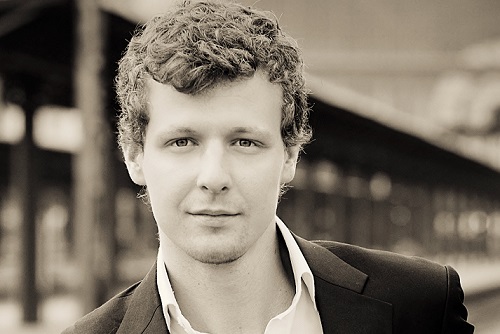
    Andres jpg

    Thursday December 16th, 2021 – Pianist/composer Timo Andres (above) in recital at Merkin Hall. This evening’s program, part of The Kaufman Music Center’s Piano Dialogues series, grew out of the musical friendship of Mr. Andres with his fellow composers, Sarah Goldfeather and Eric Shanfield. Honoring the continuing influence of Robert Schumann’s piano music, Mr. Andres performed the composer’s Waldszenen.  Ms. Goldfeather’s new work for Mr. Andres, and Mr. Shanfield’s aptly titled new work, Timo Variations, based on a theme which Mr. Andres composed for Eric in 2019, completed the program.

    Sarah Goldfeather

    I simply loved the new work by Sarah Goldfeather, entitled Fern Canyon, which opened the evening in its world premiere performance. Ms. Goldfeather could not have asked for a finer interpreter of her new work than Mr. Andres, a tall, bookish-looking fellow with beautiful hands.

    Fern Canyon is at first whimsical and repetitive at the start, keeping in the piano’s mid-range. Little flourishes turn up, and then the music gets more lyrical. Mr. Andres then lingers in the high range, with delicate figurations tickling the ear. Suddenly, the music turns grand, and Rachmaninoff springs immediately to mind. But the piece ends magically, with Mr. Andres keeping his foot on the pedal to sustain the sound of the final note, which hung beautifully on the air. Fern Canyon would make a wonderful dancework, in my view.

    Without taking a break, Mr. Andres then commenced Schumann’s Waldszenen, Opus 82. These nine short solo piano pieces were inspired by the German woodlands. In the Teutonic imagination, forests are ancient, restful, and – sometimes – eerily haunted places. Schumann’s nine miniatures conjure up such visions of the woods.

    Composed in 1849, this series of intimate scenes from Nature begins with Eintritt, the entry into a cool and shaded grove filled with forest murmurs. A simple, folkish tune emerges as the forest-stroller’s eye wanders about.

    Horn calls and the sounds of rifle-fire herald the human invasion of Nature’s sanctuary; in Jäger auf der Lauer, huntsmen who have been stalking their prey break into wild pursuit. The music conveys the thrills of the chase.

    The two ‘flower’ pieces that follow are very different in feeling: the simplicity of Einsame Blumen (Lonely Flowers) leads to the shadowy, flowing Verrufene Stelle (Haunted Places) which describes a dark red flower that draws its colour from Earth saturated with human blood.

    Things brighten with Freundliche Landschaft (Friendly Landscape) while the coziness of sitting before the fire with a pint are evoked in the almost hymn-like Herberge (The Inn).

    The best-known of the Waldszenen is Vogel als Prophet (Bird as Prophet), which captures a sonic image of forest birds, flitting from tree to tree. A central, more poetic passage praises the mystical powers of the forest’s avian dwellers.

    Then the music sings of hunters again: in Jagdlied (Hunting Song) the woodland sportsmen look forward to feasting on their catch of the day. The final Abschied (Farewell) was so affectingly played, but the jarring sound of a cellphone came at the worst possible moment.

    Throughout this Schumann cycle, Mr. Andres’s playing moved from the poetic to the passionate with a lovely mastery of dynamics, and an unfailingly distinctive style. 

    E shanfield

    Eric Shanfield‘s Timo Variations brought the program to an end. The theme was Mr. Andres’ own creation, brief and uncomplicated; thereafter the pianist embarked on a 9-variation journey, with a closing Aria.  Theme I, Scheletrica (“emaciated, meager”) features sharp accents. A reference to the Waldszenen comes next, in a brisk and brusk reply to Schumann’s Vogel als Prophet. Then, bell-like sounds give way to rippling effects in the 3rd variation. 

    Variation 4 is marked Espressivo (‘ritmico ma no meccanico’) – “rhythmic but not mechanical”  – wherein Mr. Andres followed those instructions to the letter. Variation 5 begins with a pulsing feeling, later flowing freely. Continuum (Variation 6) maintains a steadiness, then gives over to a fluttering feeling in Variation 7, which ends up expansively. In the 8th Variation, entitled Kreisleriana, flourishes are played over sustained notes before the music turns quite majestic. The ‘delicate and precise’ music of the 9th Variation is really fun to hear. 

    Each of these variations is rather longer than one might expect, but they are very inventive and pleasing to hear. Mr. Andres reveled in each of the variations Mr. Shanfield crafted for him. The Timo Variations end with a final Aria which is marked “Elegante“, a word that truly describes Mr. Andres’s playing.   

    I usually don’t stay for post-performance talks, but this evening I was in no rush to get home, so we stayed to hear what Mssrs. Andres and Shanfield and Ms. Goldfeather had to say. Being well-acquainted with one another, the three hardly needed a moderator. They chatted blithely, and some interesting things popped up along the way: Ms. Goldfeather noted the influence of Rachmaninoff on Fern Canyon, and also revealed that she does not own a piano. Mr. Shanfield said that he owns a piano, but admits to being “a terrible pianist”. 

    ~ Oberon

  • Janine Jansen and Friends @ Zankel

      Screen Shot 2017-12-19 at 12.47.01 PM

    Above: violinist Janine Jansen

    ~ Author: Scoresby

    Thursday December 7 2017 – This evening had one of the best chamber performances I’ve heard of the year in Carnegie Hall’s Zankel Hall. This commenced violinist Janine Jansen’s six performances as a part of Carnegie Hall’s Perspectives series; where artists of certain acclaim curate concerts in a given season. Ms. Jansen’s will include three chamber music performance (this being one of them), two orchestral performances, and a recital with Jean-Yves Thibaudet. This was the first time I had heard Ms. Jansen in recording or performance, so it was thrilling to hear such a well-programmed concert – though I had heard all the pieces on the program in concert before.

    The performance began with a performance of Bartok’s Contrasts for Violin, Clarinet, and Piano (this recording has Bartok playing along with Benny Goodman, who the piece was written for). Ms. Jansen was on violin, the esteemed Martin Fröst was on clarinet, and Lucas Debargue was on piano. In the first movement’s “recruiting dance”, Ms. Jansen and Mr. Fröst seemed to almost be dancing with each other on stage while playing. Mr. Fröst in particular captured all the jazzy timbres and fun improvisatory sounds – sounding free and loose. Mr. Debargue kept the stormy piano part quiet and atmospheric, never overwhelming the group.

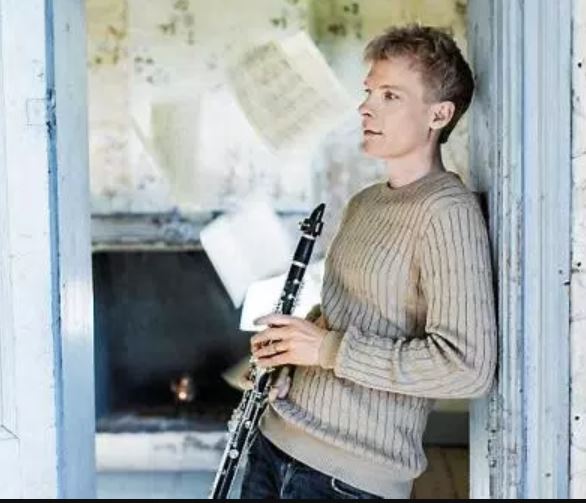
    Capture

    Above: Clarinetist Martin Fröst, photo by Mats Bäcker

    Ms. Jansen provided a rough gritty sound with perfect technique. The second movement brought a different sound world, languid and mysterious. They took a looser approach, letting each line sing. Mr. Debargue captured the folksiness and jazzy rhythms well. The last movement was played with stunning speed and accuracy. While fun through all the various riffs, it sounded a little too rushed. Nonetheless, with big personalities like Ms. Jansen and Mr. Fröst, the fun parts of the piece were giving distinct timbres. Mr. Debargue’s relaxed downward scales sounded contrasted the rougher timbres of Ms. Jansen and Mr. Fröst.

    The second piece on the program was a bit of rarity. Ms. Jansen and Mr. Debargue returned to play Szymanowski’s Mythes for Violin and Piano, Op. 30. For those that don’t know, Szymanowski’s music has a few distinct periods, but his most famous middle period sounds almost like a more radical Debussy with motion. Mr. Debargue played the opening of La Fontaine d’Aréthuse with a delicate color palette and impressionistic quality without making the piano sound too blurry. Ms. Jansen embraced the almost crass strangeness of the violins opening line. For a piece that has this late Debussy sound, one has to embrace all the effects in both instruments for the music to work, and here one couldn’t ask for better interpreters. As the first movement went on to its passionate climax Ms. Jansen seemed to let loose in a way that was missing in the Bartok.

    Screen Shot 2017-12-19 at 12.49.33 PM

    Above: Pianist Lucas Debargue

    The whirr of sound and color was thrilling, followed by a ghostly harmonic sections. Mr. Debargue was equally enjoyable, changing textures every few phrases. I look forward to hearing Mr. Debargue’s newly released Syzmanowski/Schubert album. The third movement, Dyrads and Pan has the violin imitating Pan’s flute for a good portion of the pieces. Through trills, quarter tones, muted sections, natural harmonics and a host of other methods that Syzmanowski dictates Ms. Jansen made the music sound like much more than just a violin. 

    The last piece on the program was The Quartet for the End of Time by Oliver Messiaen. In addition to Mr. Debargue and Ms. Jansen, Martin Fröst returned for the difficult clarinet part and cellist Torleif Thedéen joined on the cello. This is the sort of music that can really only heard live as recordings can’t capture its both apocalyptic and meditative mood in the same way. It also requires utmost coordination between each musician. Of the dozen or so performances I’ve heard in the past three years this was perhaps the best. During the first of eight movements, Mr. Fröst began almost as if he was conducting. His tone small, but his style emphasizing the bird trills. Mr. Debargue made his way softly through the 29 chord cycle that makeup the piano part. The play between Ms. Jansen and Mr. Fröst was again evident here – each seeming to get energy from the other. Nonetheless, they kept the strange mood somber and the atmosphere stagnant. Almost as if one were to walk into a large space and hear some birds chirping and people talking, getting enveloped in it. 

    The second movement brought an entire different style of playing, here letting the apocalyptic element of the piece shine. Mr. Debargue had a rough, almost crass sound explodes out of the quiet atmosphere, announcing the end of time. Mr. Thedéen and Ms. Jansen’s languid duet after maintained the eerie quality of the first movement, meandering through seemingly without direction. To capture these contradictory elements of the music is impressive; the group sounds like it has played together for years and I look forward to hearing their recording of it released earlier this month. One of the more striking aspects of this performance is that all the performers seemed comfortable with Messiaen’s lengthy silences. 

    The third movement is for solo clarinet and the emotional center of the piece. It truly is one of my favorite moments in all of music, so to hear such an excellent clarinet player perform it was moving. Mr. Fröst’s performance was perhaps the quickest I’ve heard in terms of tempo, but it allowed him to make each phrase have more energy and breath. It also made each rest and silence all the more apparent. During the famous long sustained screeches that crescendo from silence to the maximum sound a clarinet can make (only a clarinet can start from complete silence that way), Mr. Fröst’s body seemed to quiver as he approached the maximum sound of his instrument, but that convulsing was perfect for the physicality of the music. During the more active sections in-between each shriek, Mr. Fröst’s fast tempo let the bird-like melodies shine. While all performances sound bird-like, Mr. Fröst’s light tone and nimble trills seemed particularly well suited. 

    The fourth movement is a light interlude and it felt like being sucked out of a trance after the severity of solo clarinet movement. Here, Ms. Jansen, Mr. Fröst, and Mr. Thedéen sounded joyful and played well together. During the passages in unison it felt like they fused into one large instrument. Mr. Thedéen’s low pizzicatos were a delight. Turning back to the meditative mood, the fifth movement is a stunning meandering melody on the cello with a simple piano accompaniment. Mr. Thedéen’s had a drier sound at first, but then settled into a more romantic style by the end. Mr. Debargue played is murmurs on the piano softly, without ever eclipsing the cello. 

    Screen Shot 2017-12-19 at 12.52.25 PM

    Above: Cellist Tortleif Thedéen, photo by Nikolaj Lund

    The sixth and seven movements had the best chamber music playing of the night; each member of the quartet seemed fully invested in the music. During the dark sixth which has an extended section with all the instruments playing in unison with the same dynamic markings, not one instrument seemed eclipse another, an incredibly difficult feat. They played up all of the accents and gave a quick, fierce account. After the long introduction, there is a section where the clarinet and piano pound out longer rhythms that eventually take over the piece. Mr. Fröst and Mr. Debargue played this with verve, making each punctuation sound final until another fast break with all the instruments in unison sputtering a drawn out phrase. This contrast made the movement even more dramatic than it typically is. This led into the dissonant seventh movement, where the group seemed to be both aggressive and colorful in their sound. They managed to make it sound darker and more stormy than I’ve heard before.

    The last movement is an extended passage for violin and piano, similar to the cello section. Here though, Ms. Jansen had a slow ringing sound. Mr. Debargue provided a sublime accompaniment. Again, it was easy to slip into a trance with the slow slide up both the violin and piano. After landing in the highest registers of both, Ms. Jansen sounded the last note – but kept her posture as if there was more. This held the audience from applause and everyone sat in the silence of eternity for a full minute before a hearty applause. I wish more musicians captured those sublime moments of quiet after a performance, it felt just as important as the music itself. I look forward to hearing her next performances apart of her Perspectives series on January 18 and January 21.

  • Russian Jewish Composers @ ASO

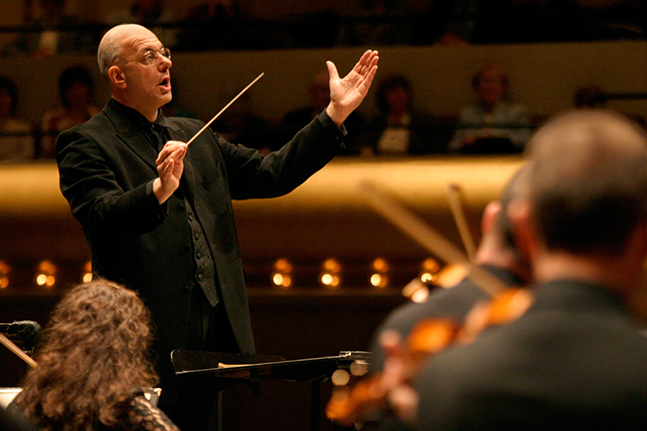
    Leon-Botstein

    Thursday December 17th, 2015 – Tonight at Carnegie Hall, Leon Botstein (above) was on the podium for a program of music written by Russian Jewish composers between 1874 and 1921. Performed by the American Symphony Orchestra, the concert featured two U.S. premieres and one New York premiere, as well as Anton Rubinstein’s 2nd cello concerto with soloist István Várdai.

    Aleksandr Krein’s The Rose and The Cross (‘Symphonic Fragments after Aleksandr Blok’) was composed between 1917-1920, making it the newest work on tonight’s program. Blok was a great Symbolist poet and his mystical drama The Rose and The Cross went thru more than 200 rehearsals at the Moscow Art Theater but was never performed in public. The composer Krein was inspired by Blok’s writing and composed this suite to honor the poet. Tonight’s performance marked the suite’s New York premiere.

    The music, which shows traces of harmonic advancement over the other three – older – works played this evening, opens with a somber, rather creepy atmosphere. Later it will take on an almost cinematic feeling, with effects such as trumpet fanfares and shades of exotica from the harp. A songful melody becomes a recurring theme, and the suite rises to a triumphant conclusion depicting the “boundless energy of the heart that sings.” 

    Várdai István nagyfelbontású fotó

    The Hungarian cellist István Várdai (above) then took the stage for the evening’s one (somewhat) familiar work: the second cello concerto of Anton Rubinstein. The oldest and most conservative piece on tonight’s bill, it marks the pianist-composer as a pioneer, since he was the first major Russian composer to work in the concerto genre (Tchaikovsky’s violin concerto still lay four years in the future). Rubinstein draws upon a very ‘Russian’ sense of melody; the concerto is a vastly pleasing work, and one which places great demands on the soloist.

    Mr. Várdai, tall and youthful-looking, is an extraordinarily gifted musician and seemed to win the hearts of the Carnegie Hall audience this evening within moments of starting to play. His timbre has a lovely, deep-violet colour and his technique is refined in both agility and dynamic control. From his opening soulful song, the cellist moved thru a scampering passage and on to a strikingly brisk downhill scale that ended on a delicious trill. A second theme plumbs the most pungent depths before turning into a rapid dance.

    The concerto’s movements flow into one another, with a wind chorale signaling the start of the Andante; Mr. Várdai embarks on an optimistic melody but the composer cannot resist a desire to let the music dance. After a mini-cadenza, a jogging Allegro carries us along. The orchestral texture lightens, with cello filigree, then lapses into an interlude and grows quiet. Things slow down beautifully for another injection of melody and the cellist then serves up a more sustained cadenza before a final surge to the end.

    Mr. Várdai’s superb performance elicited a very enthusiastic response from the audience; I very much hope to have further opportunities to experience his artistry.

    Following the interval, Mikhail Gnesin’s From Shelley (‘Symphonic Fragment after Percy Bysshe Shelley’s Prometheus Unbound‘) had its U.S. premiere. Written between 1906 and 1908 this short (8 minutes) work was composed while Gnesin was studying with Rimsky-Korsakov. Its brevity precludes any real development of ideas, yet there is a fine sense of the theme blossoming, and some very nice writing for the horns and harp. The ending is, in a word, beautiful. 

    The U.S. premiere of Maximilian Steinberg’s first symphony raised the question: why did it take nearly one hundred and ten years for this symphony to reach us? It’s as exciting and finely-crafted as many other well-known symphonies; the composer appears to have drawn inspiration from such symphonists as Beethoven and Schumann, eschewing the Russian-nationalist influence of his teacher Rimsky-Korsakov. 

    Steinberg’s 1st has an animated, congenial opening with the immediate establishing of a rich theme that that put me in mind of – of all things – Humperdinck’s HANSEL UND GRETEL (“Der Wind! Der Wind!”); this theme will re-sound throughout the symphony. This is big, pleasing music with a variety of rhythmic patterns. The timpani lend a stately quality.

    In an exuberant Allegro vivace, the composer lightens things to a scherzo quality, later taking on a waltzy air. This second movement ends with Mendelssohnian charm.

    After a darkish start, the Andante features a clarinet theme which develops into a tutti passage. In a gentle acceleration, horns and oboe play a part, and then in a richer build-up the horns grow passionate. Horn and clarinet voices entwine; oboe and flute pipe up. The music becomes cinematic in sweep before receding to solo clarinet.

    “Der Wind! Der Wind!” is again evoked by horns and trumpets as the finale commences. The oboe speaks out, then the horns launch a fugue. As the Allegro moderato continues on, the music meanders somewhat, as though Steinberg was unsure how best to end the piece: but end it does – strongly. 

    Kudos to Maestro Botstein for assembling a rewarding program of relative rarities, for including the Rubinstein cello concerto (and Mr. Várdai’s excellent playing of it), and for bringing the Steinberg symphony to these shores.

    This evening’s repertory – click on each composer’s name for biographical information:

    Aleksandr Krein – The Rose and the Cross (N.Y. Premiere)
    Anton Rubinstein– Cello Concerto No. 2
    Mikhail GnesinFrom Shelley (U.S. Premiere)
    Maximilian Steinberg– Symphony No. 1 (U.S. Premiere)

  • NYCB NUTCRACKER 2010 #6

    Hot_chocolate

    Thursday December 30, 2010 @ 2:00 PM – Today’s treat: Hot Chocolate!

    This was one of those difficult days at the ballet – nothing to do with the dancing, which was super all afternoon. But my usual safe-haven in the 5th Ring was full of chatty, cell-phone prone, camera clicking and food-consuming persons (a group, so it seems – they all knew each other). They were pretty quiet during the overture and then there was some commotion and they started going in and out and there was lots of whispering. Apparently they did not like the 5th Ring view and went to complain or find other seats. I gave up and went to standing room, But there was a kid up in the gallery who talked all the way thru the party scene with no attempt from his parents to shut him up. Other people were shushing and one woman said: “Take him out!” but the parents didn’t budge.

    So, all I remember about Act I today was that Vincent Paradiso seemed to be doing twice as many flat-footed entrechats as usual in the Soldier doll solo. I love it when the dancers improvise like that. The snow scene was very pretty and perhaps that music finally lulled the blabbering brat in the Fourth Ring to sleep.

    The main reason I went to the performance today was to see Rebecca Krohn’s Sugar Plum Fairy. Anyone who has been reading my blog for a while knows that Rebecca is one of my ballerinas of choice: I singled her out soon after she joined the Company and I’ve been very pleased with her progress – most especially in the last two or three years where she seemed to really take things to another level in terms of presence and presentation. She has the look, the technique and the artistry and she showed them all off to perfection today with a very impressive performance of this difficult role.

    Right from her first entry, everything looked so polished and clear. The solo was attractively danced in the lyric style with just a trace of prima ballerina hauteur here and there to keep things fascinating. Her cavalier in the pas de deux was Zachary Catazaro, one of the handsomest guys in the Company. I’d mostly only ever seen him in the large corps works so I had no idea how he would fare in this testing adagio or how he would register as a stage presence beyond his good looks. He did really well; he and Rebecca had clearly worked hard to develop a strong partnership and things went smoothly, they looked great together and they had a flair for finishing things off with just the right flourish. The audience seemed very taken with them and gave them a big cheer at the curtain calls. After this, I would look for Zachary’s partnering stock for go way up; as for Rebecca, one might say ‘a star is born’ but she’s been a star in my book for a while now.

    Zachary_catazaro  Krohn

    Zachary Catazaro and Rebecca Krohn; headshots by Paul Kolnik.

    Tiler Peck’s Dewdrop was spectacular, full of sustained balances and brilliant pirouettes. She varied the pacing of certain phrases, such as her spins en attitude which seemed to linger on the music to delightful effect. A phenomenal dancer in every respect.

    Marika Anderson and Gwyneth Muller were poised and gracious as the demi-flowers. Mary Elizabeth Sell repeated her excellent Spanish senorita from yesterday; today she danced with Devin Alberda, one of the corps de ballet‘s most accomplished young men. Both Mary and Devin seem ready for more and bigger assignments. Megan LeCrone’s Arabian is all mysterious allure, and superbly danced. Antonio Carmena (Tea) and Giovanni Villolobos (Candy Cane) were on fine form.

    As the Marzipan’s back-up quartet Likolani Brown, Alina Dronova, Callie Bachman and Meagan Mann danced charmingly and remained unperturbed when the fire alarm started going off during their piece. Brittany Pollack was the main Shepherdess, adding another sparkling performance to her list. In the finale, Brittany treated us to three beautifully elongated grand jetes: no signs of NUTCRACKER fatigue from this rising star.

    Brittany’s vibrant performance was one more reason to celebrate the perfection of the Balanchine staging of this ballet. There’s been a lot of controversy about the new ABT/Ratmansky production, but one thing is clear: the set pieces of the Act II divertissement in the Balanchine version are surely more rewarding to dance than their Ratmansky counterparts. Spanish, Arabian, Marzipan, Dewdrop – these Balanchine roles give young up-and-coming dancers great opportunities to step out and show what they can do. Ratmansky’s Spanish and Marzipan are nothing-special ensemble pieces, his Arabian is a bare-chested guy doing a walk-about, and there’s no Dewdrop at all. 

    It was interesting today to listen to the Battle of the Mice music while leaning against the back wall of the gallery, not watching the action. You don’t even need to see the stage to know exactly what’s happening because Balanchine uses every militaristic ruffle and flourish in the music – right down to the smallest instrumental nuance – to depict the conflict in theatrical detail.