Tag: Thursday February

  • Israeli Chamber Project @ Merkin Hall ~ 2025

    Israeli chamber project 2025

    Above: cellist Michal Korman and harpist Sivan Magen

    ~ Author: Oberon

    Thursday February 27th, 2025 – My previous encounter with the Israeli Chamber Project, in April of 2024, was nothing short of revelatory. Read about that concert here. Hoping to be similarly transported tonight, I was settling in when I realized there was no heat in the hall. It was so uncomfortable that I actually considered leaving at the intermission. Thank goodness I stayed, as the concluding Shostakovich was simply spectacular.  

    This evening’s program, entitled ORPHEUS’ HARP, featured four works in which the Project’s harpist, Sivan Magen, regaled us with his extraordinary artistry. Completing the program were piano trios by Shostakovich and Paul Ben-Haim.

    To open the concert, Mr. Magen was joined by violinist Itamar Zorman and the lovely cellist, Michal Korman, for Orpheus, Symphonic Poem for Violin, Cello and Harp by Franz Liszt/Camille Saint-Saëns. String chords sound, soon joined by the rhapsodic harp: Mr. Magen’s playing is truly delectable, his mastery of dynamics and his agility are spellbinding. The music begins to flow, with alternating currents of major and minor. The plush blend of timbres is a balm to the ear: the unison strings are rapturous, the harp magical. Large scale tremelos from cello and violin lend a sense of drama. The cello goes deep, heralding a lamenting passage; through a series of chords, the piece reaches a pianissimo conclusion. 

    Jacques Ibert’s Two Interludes for Clarinet, Cello and Harp dates from 1946. Tibi Cziger’s clarinet joins Ms. Korman and Mr. Magen in the wistful opening of the Andante espressivo; the music becomes increasingly sensuous, with the dusky sound of the Korman cello wonderfully alluring. Mr. Cziger’s rich timbre, his savorable piani, and his ravishing trills are entwined with Mr. Magen’s entrancing harp passages. The second interlude, Allegro vivo, has a Spanish lilt; it is music both lively and mysterious. The cello sounds sexy, the clarinet enticing, the harp exotic; their harmonies are so evocative.

    Paul Ben-Haim’s Variations on a Hebrew Melody for Piano Trio was composed in 1939. Read about the Munich-born composer here. Pianist Assaff Weisman joins Mr. Zorman and Ms. Korman in the work’s tumultuous opening; the doom-ladened cello, sizzling violin, and darkling piano create a creepy – even ominous – atmosphere. Unison, sighing strings give way to an enchanting piano solo, wherein Mr. Weisman slowly darkens the atmosphere before a rise of passion brings forth his trills and high filigree. Mr. Zorman introduces a dance filled with mood swings; the music turns waltzy. The piano sneaks up on us, suddenly sounding alarms. This is fabulous music, marked by an epic piano glissando

    The violin plays high over cello staccati, the pianist regales us with more magic before launching another dance, which comes to a dramatic halt. Mr. Weisman now introduces Ms. Korman, whose cello takes up a poignant lullaby in which Mr. Zorman joins. The music turns dreamy as this bittersweet work reaches its sublime finish.

    Following the interval, Robert Schumann’s Three Fantasy Pieces, Op. 73 for Clarinet and Harp were presented by Mssrs. Cziger and Magen. In the first movement we could enjoy the clarinetist’s dulcet tone and his elegant finesse. The music is spellbinding; Mr. Magen’s playing is nothing less than sublime, and the music finds a magical finish. Fanciful harping and lyrical themes from the clarinet mesh in the second movement, which proceeds with some expert coloratura from Mr. Cziger. The third song has an exuberant start which calms to a melodic flow. An interlude veers into minor mode before we come to a swift, sweet finish. The communication between the two artists was delightful to watch from my front-row seat.

    Mssrs. Magen and Weisman then took up Carlos Salzedo‘s Sonata for Harp and Piano which dates from 1922. A harpist himself, the composer ironically played the piano for the work’s premiere. The music leans towards modernism; from its fast, fun start, the piano plays a major role. A delicious sense of mystery develops, with subtle, intriguing harp motifs and trilling from both, as the instruments converse. Dynamic variety keeps the music ever-engaging; drama takes over with some extroverted keyboard passages, and then subtleties emerge. Mr. Weisman regales us with cascades of notes, and Mr. Magen has a passage with ‘prepared’ strings that alter the mood. Melismas herald an ethereal, pianissimo mood wherein a mystical atmosphere pervades. Some very delicate plucking follows; after a brief speed-up, a pacing motif leads to a dirge until some violent slashings seem to portend a dramatic finish; instead the music fades, as if it had all been a dream.

    The concert ended with a thrilling rendering of Dmitri Shostakovich’s Piano Trio No. 1 in C-minor, Op. 8, played to perfection by Ms. Korman and Mssrs. Zorman and Weisman. Cast in a single movement, this music has an immediate beauty; a pensive start turns playful as the fiddle commences a dance. Order is restored, but then things again get jaunty…and briefly urgent. A charming violin passage leaves Ms. Korman to a heartfelt cello solo, with the delicate piano lending support as Mr. Zorman then takes over, his high register shining. A more animated mood evolves, and Mr. Weisman’s playing gets quite grand. Buzzing strings intrude, and some wild violin measures turn into a dialogue with cello.

    There is a full stop, and then a caressive melody is passed from violin to piano before the cello joins. In cantabile mode, Mr. Zorman sounds divine…and then Ms. Korman takes up the theme, with the Weisman piano adding more colours. Lush, melodious music for the strings is embellished with shimmering sounds from the piano. Passion now rises, almost to madness; epic grandeur leads on to a swift finish.

    This concert reassured me of the power of music – especially when it’s so gorgeously played – to sustain us in an increasingly dismal world. I fear so much will be lost to us in the months ahead, but music can always help us find light in the darkness. Thank you, artists of the Israeli Chamber Project, for a truly uplifting evening.

    ~ Oberon

  • Composer Portrait: Amy Williams

    Amy williams

    ~ Author: Oberon

    Thursday February 22nd, 2024 – American composer Amy Williams (photo above by John Mazlish) was the guest at this evening’s Composer Portrait, a popular ‘interview and performance’ series offered by the Miller Theatre at Columbia University. Read the composer’s bio here.

    Tonight the illustrious JACK Quartet were with us to perform Tangled Madrigal (the world premiere of a Miller Theatre commission) and other works by the composer, who, as an accomplished pianist, joined them for a trio and a quintet.

    The evening opened with Cineshape 2 for piano and string quartet, composed in 2007. This was a compelling introduction to the composer’s music. It starts off with a sizzling motif from John Pickford Richards’ viola; as the music turns somber, the viola is joined by Jay Campbell’s distinctive cello, with the composer providing pizzicati from the piano. Suddenly there’s an explosive crash, followed by a passage for skittering piano and chirping violins. Another crash, and then the music turns dreamy, becomes agitated, and stutters before a third crash. The strings descend, the music pulsing, then shivering, before it fades magically away.

    For Bells and Whistles (2022) the composer was joined by violinist Christopher Otto and Mr. Campbell. The gentlemen tap their strings whilst Ms. Williams reaches into the piano to pluck the strings. It’s quite hypnotic! The music grows louder and becomes turbulent, the piano part is very active, with swirls of notes running up and down the keyboard. A trudging motif arises, churning and relentless. An eerie postlude ensues, develops a dense quality, and then turns other-worldly.

    One of Ms. Williams’ most highly regarded works, Richter Textures (2011), was inspired by the paintings of Gerhard Richter. Listed as being in seven movements, my companion and I both detected five: some of the subtle transitions seem to have eluded us.

    From an agitato start, the music turns high and spacey, with brilliant interjectory phrases from Jay Campbell’s cello. As the cello goes low and ominous, the unison violins and viola take up a slow, descending theme, which the cello eventually joins. Then things ascend to the heights.

    Slashing bows evoke a painter’s aggressive brush strokes; these are quietened, and the cello sings low, whist the violins linger on high. Insectuous, insistent buzzings give way to ethereal, kozmic high harmonies.  The music becomes driven – and rather jazzy – before a sudden stop.

    Following the customary interview of the composer, the world premiere of Tangled Madrigal was magnificently played by the JACK Quartet. Early Music influences colour this music, which is so beautifully written…and written with these specific players in mind. From a high, squeaky start, the composer takes us on a time-warp journey back to the Renaissance. Mr. Richards’ viola is gorgeously prominent, Mr. Otto’s violin shines, Jay’s cello has a song to sing, and violinist Austin Wullmans floats in the high register. There is a cadenza from the viola, but it’s the cello that has the last word. I think I could have derived even more pleasure from this piece had not the two girls sitting in front of kept whispering and checking their phones.

    The program was a fine introduction to the composer’s work, though a certain sameness prevailed as the evening progressed. It would have been interesting to hear Ms. Williams in a solo piano work, since her playing is truly captivating. So…the Miller will have to have her back at some point. Meanwhile, having the JACK Quartet for the whole evening was its own reward.

    ~ Oberon   

  • Stutzmann/Weilerstein/NY Philharmonic

    Stutzmann

    Author: Ben Weaver

    Thursday February 23rd, 2023 – For many years,  Nathalie Stutzmann (photo above) has been a highly accomplished singer, with numerous operatic and lieder recordings under her belt, and many awards, too. In recent years she has begun to spend more time on the conductor’s podium. I am always skeptical of performers transitioning to conducting because these are all highly specialized crafts. There have, certainly, been many extremely successful switch-overs, but mostly coming from the instrumentalist sides (people like Vladimir Ashkenazy and Christoph Eschenbach come to mind). It’s rare for singers to make the jump, and while someone like Plácido Domingo has conducted many operas over decades, he has never become more than passable in the pit. Which brings me back to Nathalie Stutzmann, who made her New York Philharmonic debut with these concerts, conducting a varied program of Wagner, Prokofiev, and Dvořák. Based on what I heard, Maestro Stutzmann is a phenomenal musician and she would have been a far more interesting new Artistic Director for the Philharmonic than the flashy but vapid Gustavo Dudamel.

    The concert opened with a superb overture to Wagner’s Tannhäuser – an opera Stutzmann will conduct at the Bayreuth Festival this summer. The mournful strings that open the work were lovingly molded as the drama built, the Philharmonic’s wonderful string section matching Stutzmann’s passion at every step. The rock solid wall of horns, trombones, and tuba was heavenly. Appearance of Venus had a magical, light sound that – perhaps for the first time for me – sounded like a Mendelssohn fairy got lost in Wagnerland. The explosive, thrilling climax of the work brought down the house. I suspect Maestro Stutzmann’s Tannhäuser in Bayreuth will be very special indeed.

    Weilerstein jpg

    Above: Alisa Weilerstein

    One of my favorite musicians, cellist Alisa Weilerstein (in a glorious red pantsuit) played Prokofiev’s Sinfonia concertante, Op. 125. Composed for (and with the help of) a very young Mstislav Rostropovich, this is a supremely difficult piece, which posed no difficulties for Weilerstein. The playful opening – like a ticking clock – is echt Prokofiev, and the cello enters almost immediately. Weilerstein’s gorgeous, mellow, glowing tone is always a balm to the ear. Even the crazed, breathless opening of the second movement sounded like the most romantic love song. Weilerstein’s passion and commitment never wavered; even when not playing, she gently swayed to the music. Prokofiev’s kaleidoscopic music – sweepingly romantic one moment, mockingly blowzy the next – can be tricky to navigate, but Weilerstein and Stutzmann had a deep connection and made everything whole. Stutzmann’s history of singing for conductors no doubt make her deeply sensitive to her soloists. She was careful to let Weilerstein room to breathe and to never let the orchestra overpower the cello. I hope Weilerstein and Stutzmann enjoyed working together because they make wonderful, deeply sympathetic music together; may their partnership continue and grow.

    Antonin Dvořák’s Symphony No. 9 in E-minor, Op. 95 (subtitled hastily by the composer “From the New World” as he handed the score off to be copied for the world premiere performance by the NY Philharmonic in 1893) is easily one of the most standard works in the classical repertoire: a warhorse as popular as Beethoven’s  5th and Tchaikovsky’s Nutcracker. It’s easy to get jaded and cynical, and roll our eyes when another performance is on the program. These works can be played by any orchestra with their eyes closed, and the audience will dutifully applaud. But sometimes you hear a performance that makes you sit up and rethink your cynicism, and reevaluate why these works are warhorses in the first place. It’s not pure chance that some of these compositions have been played more than others, and will continue to be played.

    This evening’s performance of Dvořák’s 9th was such a performance: Maestro Stutzmann led a revelatory, fresh, thrilling interpretation of a work we’ve all heard countless times. She struck a perfect balance between embracing the familiarity of the melodies while not lingering on them for their own sake. Harking back to Mendelssohn’s fairies dropping in on Wagner’s Tannhäuser, many moments of Dvořák symphony sounded like his beloved Slavonic Dances of decades earlier, effortlessly swirling and swaying. The second movement was perhaps the most wonderful music making of the evening from all involved. It’s chamber music-like orchestration, with small sections of the orchestra handing off music to one another, was wondrously coordinated. I was reminded of that famous speech Salieri delivers in Peter Shaffer’s “Amadeus” about Mozart’s Serenade for Thirteen Wind Instruments: “A single note, hanging there, unwavering. Until a clarinet took it over, sweetened it into a phrase of such delight!” That’s what the entire Largo felt like tonight: every note being sweetened into phrases of delight. The opening notes of the final movement have never sounded more like the theme from “Jaws” (wouldn’t be even a little bit surprised if that’s where John Williams got the idea considering how many of his ideas were directly lifted from existing works). The swirling rhythms and melodies have seldom sounded this fresh and exhilarating.

    The ovation that greeted the performance was huge, people leaving the theater were buzzing about the debuting conductor. I hope we see and hear much more of Maestro Stutzmann at David Geffen Hall.

    ~ Ben Weaver

  • Chen/Honeck @ The NY Philharmonic

    Schulhoff

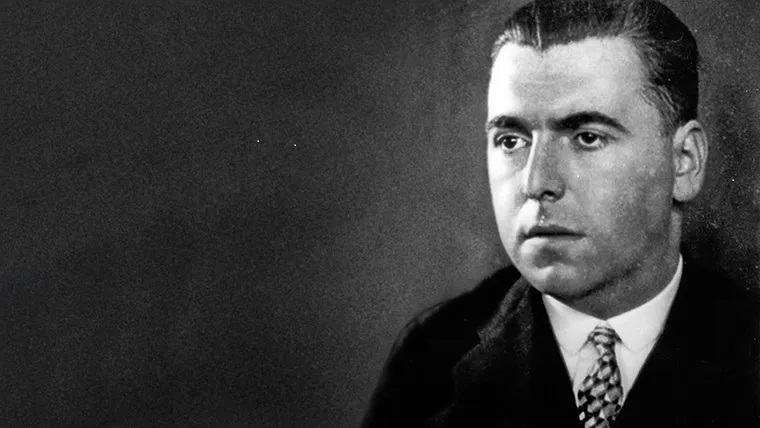
    Above: composer Erwin Schulhoff

    ~ Author: Ben Weaver

    Thursday February 24th, 2022 – Conductor Manfred Honeck returned to the New York Philharmonic with a thrilling concert of old chestnuts and a fresh take on an unfamiliar classic. Maestro Honeck and composer Tomáš Ille have created some marvelous orchestral arrangements of familiar pieces like a suite of Richard Strauss’ Elektra, Dvořák’s Rusalka, among others. In 2021 they premiered what may be their most successful collaboration yet: an orchestral arrangement of Erwin Schulhoff’s Five Pieces for String Quartet, composed in 1923 (and dedicated to Darius Milhaud).

    Shulhoff’s marvelous composition, a collection of dances (including a valse, a tango, and a tarantella), is a lively and inventive piece. Honeck and Ille created a highly imaginative suite, filled with a wide range of colors, with a touch of jazz (a style of music Schulhoff loved). Each movement – featuring a great deal of fun percussive instruments (including a marimba, a vibraphone, woodblock, tambourines, tom-toms, and castanets) – burst at the seams with excitement. A playful Alla Serenata gives way to a blousy Czeca. A soulful and passionate Tango milonga (with a lovely solo played by concertmaster Sheryl Staples) is followed by a head-spinning Tarantella, all played magnificently by the orchestra. Special kudos to the percussion section who juggled their instruments with aplomb.  And more kudos to Honeck and Ille for giving this wonderful pieces new life.

    Schulhoff is not as known as he should be. He was born Ervín Šulhov (Erwin Schulhoff being the Germanized version of the name) in 1894 in Bohemia. When he was 6 years old, Antonín Dvořák told his family to prepare their child for a musical career. Schulhoff was friends with people like Alban Berg. Schulhoff was arrested by the Nazis in 1941 and died in the Wülzberg Concentration Camp in Bavaria on August 18, 1942.

    Ray chen

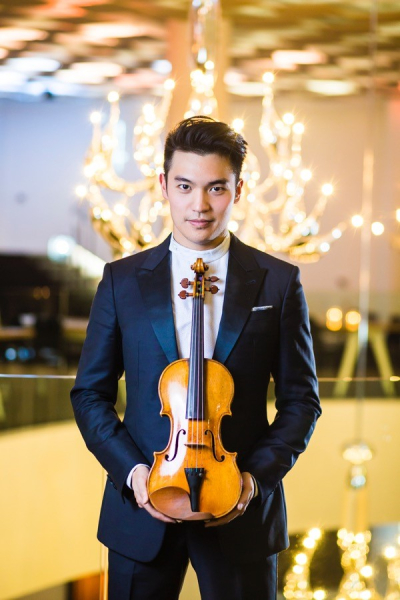
    Above: violinist Ray Chen

    Felix Mendelssohn’s famous E minor Violin Concerto, composed in 1844, is one of the standard violin concertos in the repertoire. Young violinist Ray Chen was making his Philharmonic debut this season and there’s alway ssome risk playing a work as familiar as this because everyone has heard it numerous times and no doubt has some favorites already in mind. Chen was dazzling. His playing is gorgeous and secure, with beautifully honeyed tones from the violin, and a very passionate and committed interpretation. He received wonderful support from Maestro Honeck, who supported the soloist at every turn. The audience greeted Chen enthusiastically. As an encore, he played dazzling variations on Waltzing Matilda, the unofficial anthem of Australia, the country of Chen’s birth. 

    Manfred_Honeck Felix_Broede

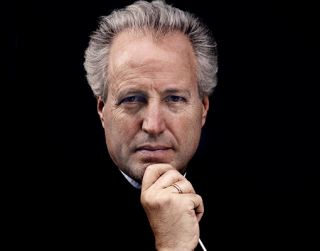
    Above: Maestro Manfred Honeck, in a Felix Broede portrait

    Antonín Dvořák’s cheerful Symphony No. 8 (composed in 1889), is one of his most enduring works. I’ve always called it Dvořák’s “Pastoral” symphony. Filled with sunshine and joy, melodies you feel like you’ve known your entire life (including a magical Waltz of the third movement), it came as a big contrast from the dark and stormy Symphony No. 7. Maestro Honeck clearly loves his work (he conducted it without a score), etching every moment and phrase with relish. The orchestra (including another wonderful solo from Sheryl Staples) was on peak form once again. A rousing ovation was well-deserved.

    ~ Ben Weaver

  • Gregory Feldmann|Nathaniel LaNasa @ Weill Hall

    83265515_10157528132085353_8525152423453392896_o

    ~ Author: Oberon

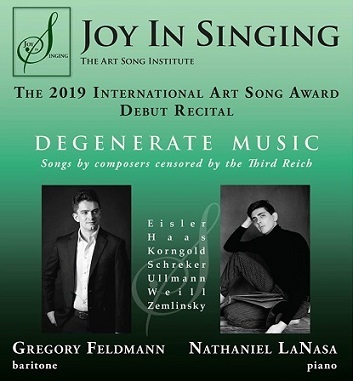
    Thursday February 27th, 2020 – Baritone Gregory Feldmann, recipient of the 2019 Joy in Singing Art Song Award, in recital at Weill Hall. Pianist Nathaniel LaNasa was the singer’s collaborator in a program of songs by composers whose music was suppressed under the Nazi regime.

    The program was particularly timely, living as we are during a period when our own government seems hellbent on destroying our democracy. It’s ironic that we fought Facism in the 1940s – and that in recent years we have sent our soldiers into harm’s way in faraway lands, purportedly to bring democracy and freedom to the oppressed – only to find our country is now under threat from within. With these thoughts in mind, tonight’s concert became much more than just another lieder recital.

    Mssrs. Feldmann and LaNasa, looking dapper in black bow-ties, took the stage to a hearty welcome from the packed house. The first half of their program was given over to songs by such well-remembered composers as Kurt Weill, Franz Schrecker, Alexander von Zemlinsky, and Erich Korngold.

    Kurt Weill’s cabaret-style “Berlin im Licht” opened the evening. Weill had been living in Paris – and then in New York – since 1933. But this song was composed for the Berlin Festival of September 1928 (ten years after Germany’s humiliation in World War I); that event marked a resurgence of German pride in its cultural endurance that would eventually fuel Hitler’s rise to power. Tonight, Mr. Feldmann and Mr. LaNasa gave the song a swinging, optimistic treatment.  

    Franz Schreker had died in 1934, but his music was still proscribed by the Third Reich. In three Schrecker songs, the musical attributes of this evening’s two artists came to the fore. In the Straussian style of Und wie mag die Liebe“, Mr. Feldmann’s handsome lyric baritone – and his persuasive way with words – assured us we were in for a great deal of very fine vocalism tonight. Of equal appeal was Mr.LaNasa’s playing, especially in the song’s postlude. 

    The partnership of the two musicians made for a luminous “Sommerfäden”, wherein the duo showed an affinity for Viennese-style melody. The shimmering piano introduction was enticingly played by Mr. LaNasa; this song has a rapturous mid-section, and then a big, operatic outpouring where Mr. Feldmann’s voice rang true.

    Stimmen des Tages” is darkish and unsettled at first; mood swings carry the two musicians thru to a passionate passage. Following a pause, the song resumes as if from the start. The gorgeous piano postlude was a treat in itself in Mr. LaNasa’s rendering.

    Four Alexander von Zemlinsky songs were most congenial to the Feldmann voice. The composer, who had moved to Vienna in 1933 and then on to New York City in 1938, was largely forgotten in Germany. His songs have long attracted great singers, and in the first three tonight – “Tod in Ähren“, “Nun schwillt der See so bang “, and “Entbietung” – singer and pianist were simply superb. “Tod in Ähren” stood out for me: following its big opening from the keyboard, it becomes a lament. Both musicians were so persuasive in this song’s gentle lyricism, and in the tenderness of farewell.

    The final Zemlinsky offering, “Afrikanischer Tanz” (African Dance), was a complete change of pace: aggressive and blood-stirring!  Mssrs. Fedmann and LaNasa caught the mood perfectly, and the song drew a whooping response from the crowd. 

    Erich Korngold, best-known of the evening’s composers (well, aside from Kurt Weill), was famous for his opera DIE TOTE STADT and for his film scores. He was already established in Hollywood by the time World War II broke out. Tonight we heard a set of four Korngold songs, of which the last – “Vesper” – was of particular appeal, with the piano’s repetitive notes evoking the evening chimes, and a vocal line that took the singer into his upper range. The song’s sustained ending was wonderfully evocative.   

    Following the interval, works by a trio of less fortunate composers: both Viktor Ullmann and Pavel Haas were sent to Theresienstadt, and then on to Auschwitz where they both perished in 1944, whilst Haans Eisler faced trials of a different sort.

    Ullman’s Liederbuch von Hafis consists of four songs, in which jazz influence can be felt. In the bouncy and ironic “Vorausbestimmung”, the music goes deep before one final bounce from the keyboard. In the following song,  “Betrunken” (Drunk), agitation finds a lull before proceeding on its droll trajectory.

    Mr. Fedmann’s lower range settled in nicely for “Unwiderstehliche Schönheit” (Irresistible Beauty), perhaps the most interesting of the Ullmann set: the piano takes up a trudging motif, a sort of tongue-in-cheek march. It is briefly interrupted by some bright, tinkling keyboard phrases before the pacing resumes. This leads immediately into the final song,”Lob des Weines” (In Praise of Wine), a salute to intoxication. Mssrs. Feldmann and LaNasa certainly had fun with this cycle. 

    Pavel Haas, who was Czech, drew on ancient Chinese texts for his Four Songs on Chinese Poetry; their sensual nature immediately won the label “degenerate”, and they offered so much fascination tonight as singer and pianist drew us along Haas’s musical pathway.

    The songs are full of longing – for home and for loved ones – which must have seemed all too poignant to Pavel Haas, who left his wife and child behind when he was deported. A recurring motif in the songs is a four-note musical ‘message’, referring to the Chorale to St. Wenceslaus: representing home and freedom, this small token would have been meaningful to other Czech prisoners at Terezín.

    In these four songs, Mssrs. Feldmann and LaNasa covered a wide spectrum of rhythmic, melodic, and poetic moods. Lines such as “My home is so far away…” and “My yearning keeps me awake…” seemed so poignant, and were so thoughtfully expressed tonight. But all is not gloomy, for the final song – “A Sleepless Night” – suddenly gives way to the sound of a magpie chattering at dawn, depicted by the pianist.

    A native of Leipzig, Haans Eisler spent the war years in Hollywood, where he was a successful composer of film score. His troubles came later, when he was investigated by the House Un-American Activities Committee; his own sister denounced him as a Communist. Eisler was deported in 1948.

    It was with Eisler’s “Friedenlied” (Peace Song) that the concert tonight ended. With a folkish feeling, this ballad sets forth a vision of hope. Despite a very annoying cellphone interruption, Mssrs. Feldmann and LaNasa carried on, with the pianist savouring a final postlude.

    A Zemlinsky encore was the performers’ response to a very enthusiastic ovation.

    These observations by the evening’s two artists are truly meaningful:

    “When we memorialize victims of atrocities such as World War II,” wrote Mr. LaNasa, “we must also remember the conditions that led to such horrors, and the voices of those who tried to tell the world what they feared was approaching.” And Mr. Feldmann said, “We want to commemorate the lives and work of these artists by giving our audience the opportunity to respond to their work. The oppressors of their day prevented society from hearing these words and scores, and it’s a privilege for us to thwart that mission with music that is so beautiful and potent.”

    The vociferous applause at the end of the concert indicated that the price these composers paid is not to be forgotten…and that they live on thru their music.

    ~ Oberon

  • Compagnie Hervé KOUBI @ The Joyce ~ 2020

    F751b7faaa4d48cf814701ab186c45bf

    Above: Compagnie Hervé KOUBI, photo by Frédérique Calloch

    ~ Author: Oberon

    Thursday February 20th, 2020 – Celebrating their 20th anniversary season, Compagnie Hervé KOUBI returned to The Joyce with Les nuits barbares ou les premiers matins du monde. I loved this Company when they appeared at The Joyce in 2018, and when I saw that they were returning to Gotham, I knew I’d want to be there.

    Performed by an all-male cast of dancers from the countries along the shores of the of the Mediterranean – from Algeria, Morocco, France, Burkina Faso, Italy, Israel, and Palestine – the work explores the human desire for belonging: an idea that harks back to ancient times, before the birth of nations.

    B66a9f62ccd24199abcd0119aec4dba6

    Above: photo by Frédéric de Faverney

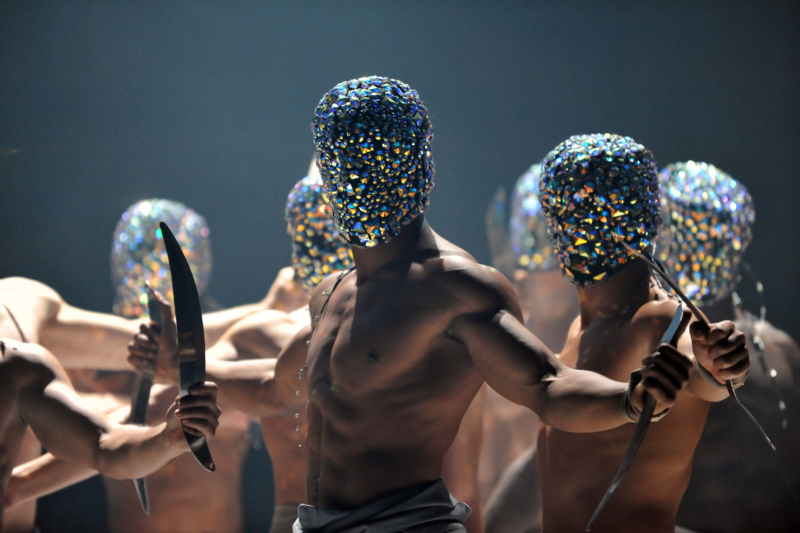
    The visually engrossing production features evocative lighting by Lionel Buzonie, and costumes by Guillaume Gabriel that include mask-like headgear adorned with Swarovski crystals which catch the light, adding to the mystique of the ballet’s darkish opening passages. The dancers appear first in long skirts, which are later shed in favor of fitted trousers. To say that these men are incredibly sexy is an understatement: they are also fearlessly committed to the work, and to the brotherhood.

    To sounds of primeval winds and waves, the dancers emerge from the shadows. They huddle together, earthbound, as the opening music of Wagner’s DAS RHEINGOLD speaks to us of beginnings. The community is restless, wary. They awaken in a brief passage of unison gestures.

    Knives are drawn, and an alarm sounds…but fades to mere tinkling sounds. There is a bathing ritual to the sounds of an antique flute, then the men take their places in a striking lineup across the rim of the stage, superbly lit.

    A tapping sound develops into vibrant drumming as the men compete in fantastic feats of tumbling, flipping, spinning on their hands or on their heads. The helmet-masks come off, the drumming gets wild. Then deep tones emerge from the sonic glow, alive with the exotic sound of finger cymbals.

    A respite, and then a whirring sound spins into a song – are the men actually singing? I was to far away to tell. Now the tribe begin tossing one another into the air; they soar with electifying bravura before being caught by their comrades. After circling in backbends, they cut loose to do more leaping and flipping: mind-boggling athleticism. The music turns metallic as the dancers again engage in uncanny break-dancing spins. Then they slowly disperse to music from the Mozart REQUIEM, only to return, engaging in ever more daring spinning and tossing.

    86734724_10218458400185321_4811273668363550720_n

    Suddenly one man is targeted and threatened with knives. Stripped of his skirt, and inverted, he performs a spectacular solo, spinning on his head as knife blades fan out from his whirling torso. The men – some on their knees like supplicants – return with metal poles; to the sound of distant voices, the poles become canes of props. Later they are tossed from man to man with amazing accuracy, and still later held aloft in cruciform.

    Now there evolves a big-beat, swirling tribal dance; the skirts have all been sheds. After more athletic feats and some spear-tossing, there is an intense run-about. To the sound of the deep chanting of Et lux perpetua, the men again line up along the edge of the stage: they seem to silently be bidding us farewell. Then they back into the shadows and begin to slowly exit – pairs or alone – heading into the unknown. As the last man vanishes from sight, one sensed the welling up of a great emotional force in the house. The audience, who have beheld this great human spectacle in awed silence, are ready to unleash a tremendous wave of applause.

    But…no: the men now return and, in a rather prolonged coda, continue to perform many of the same moves and feats we’ve already seen. As this coda brings nothing fresh to the piece, either choreographically or musically, it seemed expendable.

    At last, the packed house got their chance to hail Mssr. Koubi and his courageous dancers with waves of fervent applause and cheers.

    Efeeb7ea1079465dbd24d15aa611cea0

    Above: photo by Pierangela Flisi

    ~ Oberon

  • Stravinsky’s FIREBIRD @ The NY Philharmonic

    Pintscher_matthias_1819

    Above: composer and conductor Matthias Pintscher

    ~ Author: Brad S. Ross

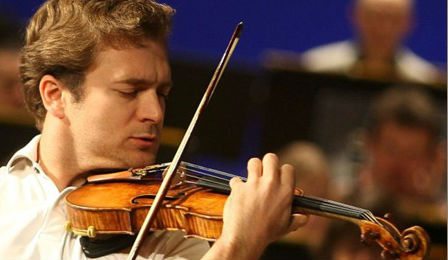
    Thursday February 21st, 2019 – It was an evening of exquisite sounds Thursday night at David Geffen Hall as the guest conductor Matthias Pintscher led the New York Philharmonic in music by two early 20th-century greats sandwiching one of his own, composed almost exactly a century years later.  Pintscher, a German-born composer and conductor now residing in New York City, has quickly built a reputation as one of the finest younger composer–conductors of recent memory to emerge on the world stage.  On this night, he brought with him a much-welcomed performance of his recent violin concerto, featuring the talents of the renowned French violinist Renaud Capuçon.

    The evening began with Maurice Ravel’s “Alborada del gracioso” (“Dawn Song of the Jester”) from his 1905 piano suite Miroirs, which he had transcribed for orchestra in 1918.  Ravel, a master of orchestration above all, peppered this score with myriad and most enjoyable colors, including numerous pizzicato phrases, muted brass, and varied percussive bursts.  Pintscher brought the best out of the Philharmonic, which performed here with precision and grace.  It made for a lively and dynamic opening piece.

    Violinist-Renaud-Capucon-

    Above: Renaud Capuçon

    Next up was Pintscher’s own mar’eh, a concerto for violin and orchestra composed in 2011 on a commission from the Lucerne Festival, Alte Opera Frankfurt, and the London Philharmonic Orchestra, which was here receiving its New York premiere.  Its title comes from a Hebrew word meaning “face sign” or, as the composer’s note indicates, “the aura of a face, a beautiful vision, something wonderful which suddenly appears before you.”  Why he chose to write it in lower case is as mystifying to me as any other inexplicably ungrammatical contemporary music title.

    The piece began quite eerily on a single suspended note played high on Capuçon’s violin, joined only by an ominous rumble in the percussion.  A languid melody soon entered, trading between Capuçon and various brass soloists, as dark colors began to emerge throughout the orchestra.  Following this menacingly silent introduction, a series of tantalizing full-ensemble swells seemed to indicate a change of direction for mar’eh before the work fell back into another series of quietly shifting timbres.  This carried on for some time until the same solitary high note and percussive rumble returned to bookend the concerto.

    Extended technique abounded throughout mar’eh and the players, including Capuçon, were at their absolute finest, but it was nevertheless hard to shake a sense of dissatisfaction when it was all over.  What the piece lacked was a sense of direction—momentum.  Its tempo always leaned toward the adagio, if that, and its dynamics, aside from the occasional fortissimo burst, rarely seemed to escape mezzopiano.  For a duration of roughly 23 minutes, this made for a hard-going listening experience.  The audience was politely receptive to it, however, even if their enthusiasm seemed more directed at its soloist than the composer.

    After intermission was the third and final piece of the night: Igor Stravinsky’s mighty Firebird.  Written in 1910, The Firebird marked the first of the composer’s many fruitful collaborations with the ballet impresario Sergei Diaghilev—a relationship that would also produce the likes of Petrushka and The Rite of Spring.  Premiering only eight days after his 28th birthday, it was also Stravinsky’s breakout piece and one that placed him on the world stage as one of the finest composers of his time and beyond.

    The audience knew it was in for a treat from the moment it began, as those memorable and ominous opening bars in the cello and bass harbingered the danger ahead.  The First Tableau was equal parts beautiful and menacing leading up to its volatile climax (the unforgettable “Infernal Dance of All Koschei’s Subjects”) and the haunting lullaby that follows.  The Second Tableau redeemed this carnage and misery with its exuberant and triumphant finale—one of the grandest in all classical music.

    The experience of hearing these magnificent bars played live by an orchestra as fine as the New York Philharmonic is one I wish every person on Earth could experience for himself.  The ethnomusicologist John Blacking once defined music as “humanly organized sounds…” if this be so, then these are no doubt some of the finest sonorities ever compiled by a single person.

    The crowd was quick to its feat upon conclusion with many shouts of “Bravo!”  This was easily one of the most animated displays of approval I’ve witnessed all season.  Pintscher and company received several curtain calls and every section of the ensemble was given a chance to take their bows.  The adulation was much-deserved for Pintscher and this stupendous orchestra, the gem of New York City.  Bravo, indeed.

    ~ Brad S. Ross

  • WALKURE: Act I @ The New York Philharmonic

    Simon _oneill

    Above: tenor Simon O’Neill

    ~ Author: Oberon

    Thursday February 15th, 2018 – We’ve been starved for Wagner of late, but now – in the course of a single week – we’ve had Dorothea Röschmann singing the Wesendonck Lieder, The New York Philharmonic offering Act I of DIE WALKURE (tonight), and, coming up: a matinee of PARSIFAL at The Met.

    This evening’s Philharmonic program opened with Pulitzer Prize-winner John Luther Adams’s Dark Waves, music which readily brings to mind the opening of Wagner’s DAS RHEINGOLD. Long, deep notes are the sustaining quality throughout the piece’s twelve-minute span. Beyond that, horn calls on fifths and the brief tweeting of the piccolo emerge thru the murky, at times almost mechanical, layers of sound. The volume ebbs and flows, at times becoming massive. This is music that surely casts a spell, though one patron was apparently not pleased and expressed himself with high, hooting boos that became comical after a bit.

    The Philharmonic’s new music director, Jaap van Zweden, yet again proved himself a Wagnerian of great skill and commitment. His presentation of the WALKURE Act I tonight was so alive – right from the rather fast tempo he chose for the score’s opening pages depicting Siegmund being tracked by his enemies – and the orchestra played superbly.

    Six harps are onstage, and, as the Act progressed, we had marvelous solo moments from Carter Brey (cello), Anthony McGill (clarinet), Amy Zoloto (bass clarinet), and Liang Wang (oboe) as well as some noble calls from the horns.

    As Hunding, John Relyea’s dark, menacing tone poured forth, full of irony and vitriol: this courteous host will likely stick a knife in your ribs given the opportunity. As with his magnificent Bartok Bluebeard at Carnegie Hall a year ago, Mr. Relyea proved himself yet again to be a singer of great vocal and physical command. One moment summarized the brilliance of Mr. Relyea’s portrayal: after Siegmund has told his history to Sieglinde, ending tenderly with “Nun weißt du, fragende Frau,warum ich Friedmund nicht heiße!” (‘Now you know, gentle wife, why I can never be called Peaceful.’), Hunding/Relyea interrupts the twins’ mutual attraction, singing venomously: “Ich weiß ein wildes Geschlecht!” (‘I know of your riotous race!’). Hunding’s denunciation of his guest, and his promise to slay him at dawn, drew black-toned vocalism from the basso.

    Ten years have passed since I first heard Simon O’Neill’s Siegmund at a matinee performance at The Met. Both in voice and interpretation, Simon has kept things fresh in this arduous role: his singing – by turns helden or lyrical – is wonderfully present, and his diction and colourings are impressively utilized in the long narrative passages. For Siegmund’s story is a sad tale indeed, and although on this night – when he’s stumbled into Hunding’s hut as a hunted man – he will experience happiness ever so briefly, within hours  he will be betrayed to his death by his own father.

    Mr. O’Neill makes these stories of loneliness and woe truly poignant; both here and in those passages when heroic tones are called for, he shows himself the equal of any Siegmund of my experience. His cries of “Wälse! Wälse!” in the Sword monolog were excitingly sustained. The cresting, poetic beauty of Simon’s “Winterstürme” and his powerful summoning of Nothung from the tree were highlights of the evening. And then, with van Zweden’s orchestra pulsing away with relentless vitality towards the finish line, Simon latched onto a clarion, hall-filling top-A at “Wälsungen blut!…” to cap the evening.

    In 2012, Heidi Melton’s singing of the 3rd Norn in GOTTERDAMMERUNG at The Met gave me reason to believe she could be the next great Wagnerian soprano. But since then, in subsequent encounters, I have found her disappointing. This evening, her physical presence and the voice’s limitations in the upper range drew a blank with me.

    So tonight, it was the excellence of the male singers, the thrilling playing of the orchestra, and Maestro van Zweden’s feel for this music that gave Wagner his due.  

    ~ Oberon

  • Pappano & Andsnes @ NY Philharmonic

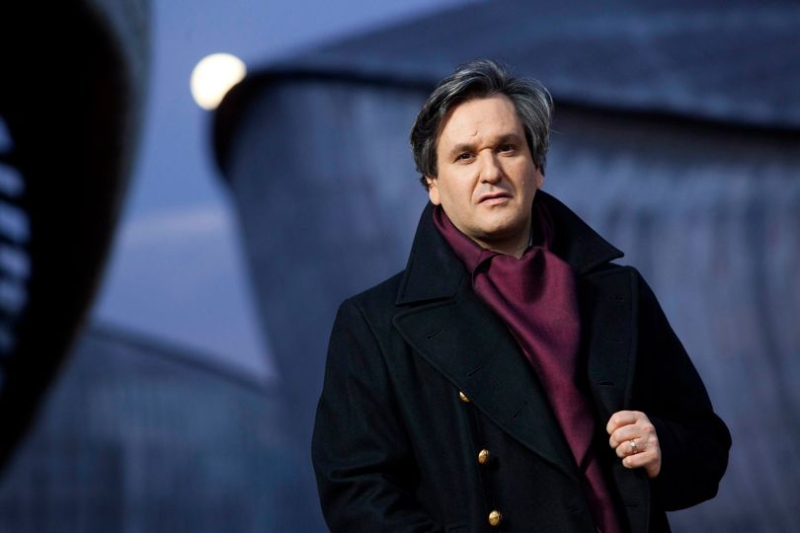
    Antonio-Pappano-conde-nast-traveller-28nov16-pr
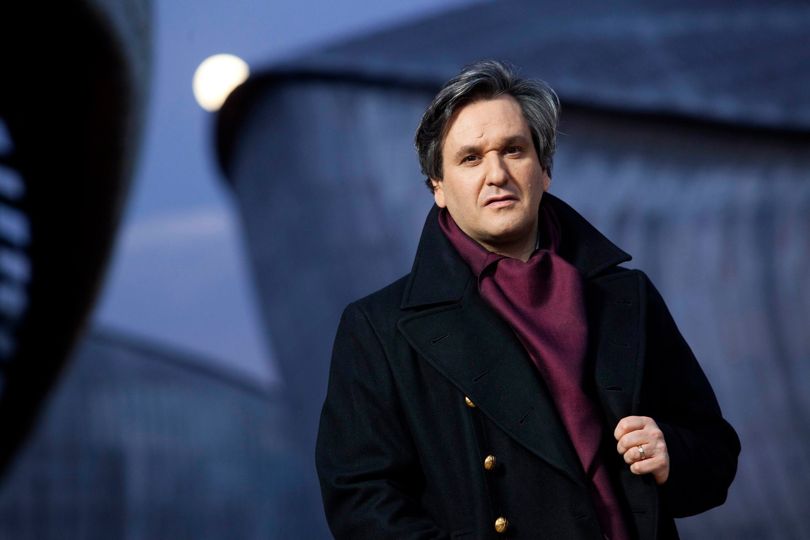
    Above: Conductor Antonio Pappano; Photo Credit: Musacchio & Ianniello

    ~Author: Scoresby

    Thursday February 8th,  2018 – The New York Philharmonic seemed in good form at David Geffen Hall. They were led by the wonderful Antonio Pappano, who I had never had the opportunity to hear before. I also hadn’t heard any of the works on the program live, though I have heard them all via recording. Pianist Leif Ove Andsnes and resident NY Philharmonic organist Kent Tritle rounded out the program. It is interesting to have heard the Philharmonic after a long break, as both this time and last time I heard the playing seemed higher quality than I recalled. It will be interesting to see how the sound changes again next year when Jaap Van Zweden assumes his full music directorship.

    Ralph Vaughan Williams’s Fantasia on a Theme by Thomas Tallis opened the program. I was surprised to learn in the program notes that the last time this famous piece was performed was 20 years before – it seems unusual for a piece that is perhaps Vaughan Williams’s most well-known. The all string orchestra is divided into three distinct groups during this work, the normal string orchestra, a separate orchestra that acts as the melody center, and a string quartet consisting of the principal players. Here, Mr. Pappano put the melodic orchestra in a row behind the strings that played the background counterpoint.

    I’ve never been particularly fond of this work, while stunningly beautiful I don’t feel the music goes anywhere. Mr. Pappano convinced me of its beauty though – the slow moving textures almost sounded like a minimalist organ work. The basses and cellos truly sounded like the pedals of an organ while the other strings managed to capture the full nuances of the Phrygian scale that the Tallis themed is based on. All the strings sounded quite clean. Perhaps the most convincing moment was when Cynthia Phelps entered with her melancholic viola melody (6:05 in the video above) – she managed to make the entire room sing. The other quartet members did a good job blending with her, but that lonely call after the richness of what precedes it will remain with me for a long time.

    The second work on the program was the Britten Piano Concerto, Op. 13. It is a bit of an odd piece, structured in four movements and lasting about thirty-five minutes. While interesting to hear, it didn’t sound to me nearly as original as other Britten works. Sort of like a medley of Stravinsky, Shostakovich, and Prokofiev with some of Britten’s classic colorful instrumentation. Nonetheless, it is a fun virtuosic piece of music that really shows off an orchestra – even if not the most worthwhile music.

    Capture

    Above: Pianist Leif Ove Andsnes; Photo credit: Gregor Hohenberg

    Mr. Andsnes milked the virtuosic first movement for all that it had, ripping through opening lines and making it sound gritty. Mr. Pappano’s accompaniment was spot on with the percussion cued perfectly for the piano’s percussive chords. Nonetheless, the movement is almost clown-esque and this interpretation seemed a little subdued for the material. Mr. Andsnes did seem to revel in the Rite of Spring-like chords (or perhaps I am thinking that because I’ve been listening to his new recording with Marc-André Hamelin).

    The second movement is a little less chaotic than the first, the first few lines make it sound like one is in a jazz bar with people who are smoking. The bass is plucking away, while someone is lightly tapping on tambourine. The viola and clarinet exchange jazzy sounding lines. Ms. Phelps again did a fabulous job, here embracing that smoky texture as did Mr. Andsnes when the piano finally comes in to some music that sounds straight out of Prokofiev.

    Eventually this setting yields to another virtuosic theme that recapitulates parts of the first movement. The third movement is a theme and variations that grows progressively denser – while interesting, it doesn’t quite feel like it belongs. Britten wrote many years later to replace a different version and it is easy to tell. The finale is exciting and showy, both Mr. Pappano and Andsnes making the most of it.

    The second half of the concert was devoted to Saint-Saëns Symphony No. 3 in C minor, Op. 78 with Kent Tritle performing the organ. While a popular piece, it hasn’t been done at the NY Phil in 8 years and so I haven’t gotten the chance to hear it live before. In some ways though, I feel like I still haven’t heard the piece properly. Because Mr. Tritle was playing an electronic organ, some of the grandness of the work didn’t seem to be present – indeed my friend and I chuckled a bit when the electronic organ entered as it just didn’t sound right for such a delicately composed piece. That is no fault of the organist, however, it would be lovely if Lincoln Center built an organ in David Geffen Hall.

    Mr. Pappano programmed the Vaughan Williams well, it mirrors both the sound of the organ and structure of the Saint-Saëns making for a satisfying second half. Mr. Pappano brought an incisive and almost frenzied energy to the Allegro moderato in the first movement. The famous theme sounded buzzing with energy. Most impressive though were the clear textures in the massive fugue in the second movement, not a note was out of place, being both transparent and energetic. One effect that I had never noticed was Saint-Saëns dazzling use of pianos in the second movement’s presto. They are light and just a tinkle above the orchestra, but give it this glistening sonority that sounded to me like stained glass in sunlight. It was delightful to hear and I look forward to hearing Mr. Pappano again. He manages to choral the orchestra into action and get the best of its players.

    ~ Scoresby

  • Pappano & Andsnes @ NY Philharmonic

    Antonio-Pappano-conde-nast-traveller-28nov16-pr
    Above: Conductor Antonio Pappano; Photo Credit: Musacchio & Ianniello

    ~Author: Scoresby

    Thursday February 8th,  2018 – The New York Philharmonic seemed in good form at David Geffen Hall. They were led by the wonderful Antonio Pappano, who I had never had the opportunity to hear before. I also hadn’t heard any of the works on the program live, though I have heard them all via recording. Pianist Leif Ove Andsnes and resident NY Philharmonic organist Kent Tritle rounded out the program. It is interesting to have heard the Philharmonic after a long break, as both this time and last time I heard the playing seemed higher quality than I recalled. It will be interesting to see how the sound changes again next year when Jaap Van Zweden assumes his full music directorship.

    Ralph Vaughan Williams’s Fantasia on a Theme by Thomas Tallis opened the program. I was surprised to learn in the program notes that the last time this famous piece was performed was 20 years before – it seems unusual for a piece that is perhaps Vaughan Williams’s most well-known. The all string orchestra is divided into three distinct groups during this work, the normal string orchestra, a separate orchestra that acts as the melody center, and a string quartet consisting of the principal players. Here, Mr. Pappano put the melodic orchestra in a row behind the strings that played the background counterpoint.

    I’ve never been particularly fond of this work, while stunningly beautiful I don’t feel the music goes anywhere. Mr. Pappano convinced me of its beauty though – the slow moving textures almost sounded like a minimalist organ work. The basses and cellos truly sounded like the pedals of an organ while the other strings managed to capture the full nuances of the Phrygian scale that the Tallis themed is based on. All the strings sounded quite clean. Perhaps the most convincing moment was when Cynthia Phelps entered with her melancholic viola melody (6:05 in the video above) – she managed to make the entire room sing. The other quartet members did a good job blending with her, but that lonely call after the richness of what precedes it will remain with me for a long time.

    The second work on the program was the Britten Piano Concerto, Op. 13. It is a bit of an odd piece, structured in four movements and lasting about thirty-five minutes. While interesting to hear, it didn’t sound to me nearly as original as other Britten works. Sort of like a medley of Stravinsky, Shostakovich, and Prokofiev with some of Britten’s classic colorful instrumentation. Nonetheless, it is a fun virtuosic piece of music that really shows off an orchestra – even if not the most worthwhile music.

    Capture

    Above: Pianist Leif Ove Andsnes; Photo credit: Gregor Hohenberg

    Mr. Andsnes milked the virtuosic first movement for all that it had, ripping through opening lines and making it sound gritty. Mr. Pappano’s accompaniment was spot on with the percussion cued perfectly for the piano’s percussive chords. Nonetheless, the movement is almost clown-esque and this interpretation seemed a little subdued for the material. Mr. Andsnes did seem to revel in the Rite of Spring-like chords (or perhaps I am thinking that because I’ve been listening to his new recording with Marc-André Hamelin).

    The second movement is a little less chaotic than the first, the first few lines make it sound like one is in a jazz bar with people who are smoking. The bass is plucking away, while someone is lightly tapping on tambourine. The viola and clarinet exchange jazzy sounding lines. Ms. Phelps again did a fabulous job, here embracing that smoky texture as did Mr. Andsnes when the piano finally comes in to some music that sounds straight out of Prokofiev.

    Eventually this setting yields to another virtuosic theme that recapitulates parts of the first movement. The third movement is a theme and variations that grows progressively denser – while interesting, it doesn’t quite feel like it belongs. Britten wrote many years later to replace a different version and it is easy to tell. The finale is exciting and showy, both Mr. Pappano and Andsnes making the most of it.

    The second half of the concert was devoted to Saint-Saëns Symphony No. 3 in C minor, Op. 78 with Kent Tritle performing the organ. While a popular piece, it hasn’t been done at the NY Phil in 8 years and so I haven’t gotten the chance to hear it live before. In some ways though, I feel like I still haven’t heard the piece properly. Because Mr. Tritle was playing an electronic organ, some of the grandness of the work didn’t seem to be present – indeed my friend and I chuckled a bit when the electronic organ entered as it just didn’t sound right for such a delicately composed piece. That is no fault of the organist, however, it would be lovely if Lincoln Center built an organ in David Geffen Hall.

    Mr. Pappano programmed the Vaughan Williams well, it mirrors both the sound of the organ and structure of the Saint-Saëns making for a satisfying second half. Mr. Pappano brought an incisive and almost frenzied energy to the Allegro moderato in the first movement. The famous theme sounded buzzing with energy. Most impressive though were the clear textures in the massive fugue in the second movement, not a note was out of place, being both transparent and energetic. One effect that I had never noticed was Saint-Saëns dazzling use of pianos in the second movement’s presto. They are light and just a tinkle above the orchestra, but give it this glistening sonority that sounded to me like stained glass in sunlight. It was delightful to hear and I look forward to hearing Mr. Pappano again. He manages to choral the orchestra into action and get the best of its players.

    ~ Scoresby