Tag: Thursday June

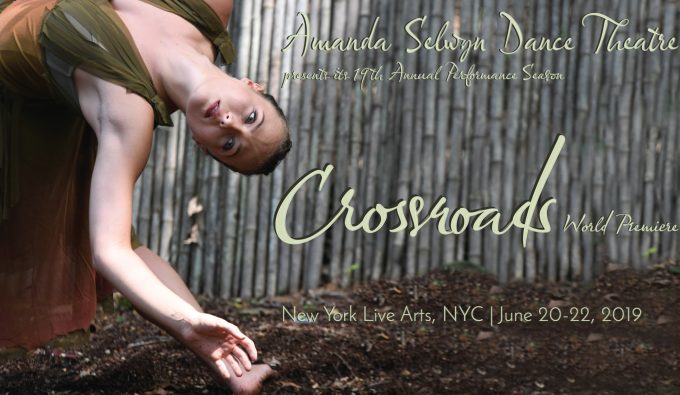
  • Amanda Selwyn’s CROSSROADS @ NY Live Arts

    680w_x395h_c-AmandaSelwynDanceTheatre_SeasonPostcard_Draft1-1

    ~ Author: Oberon

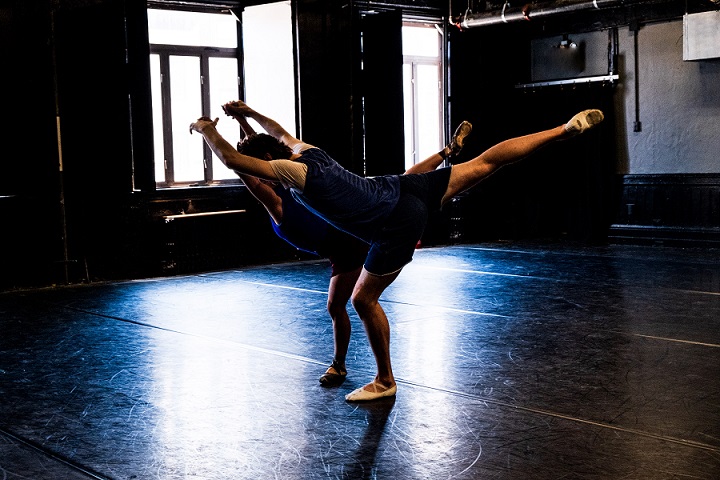
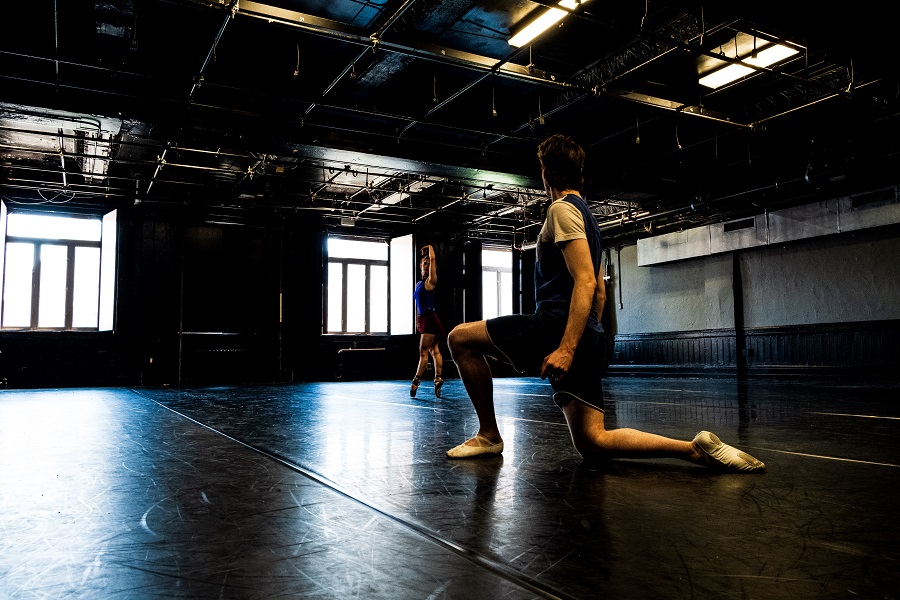
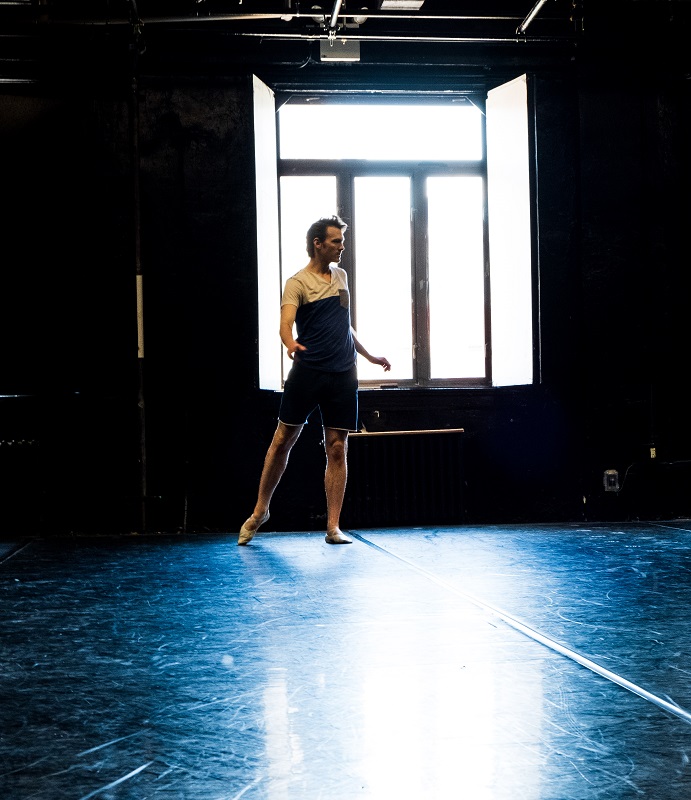
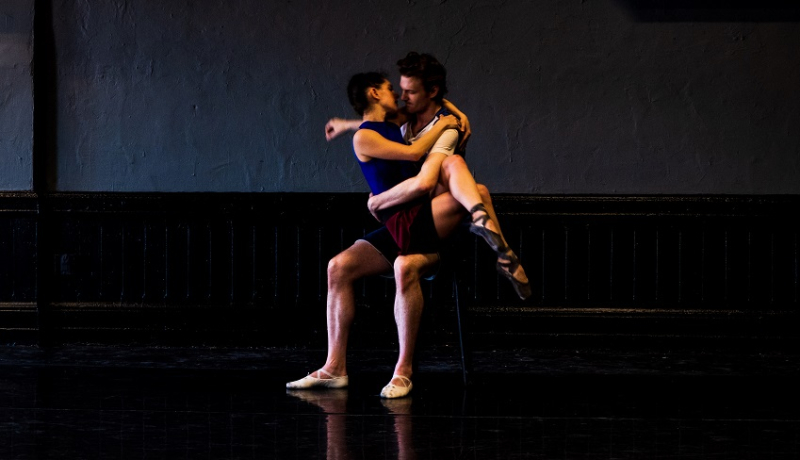
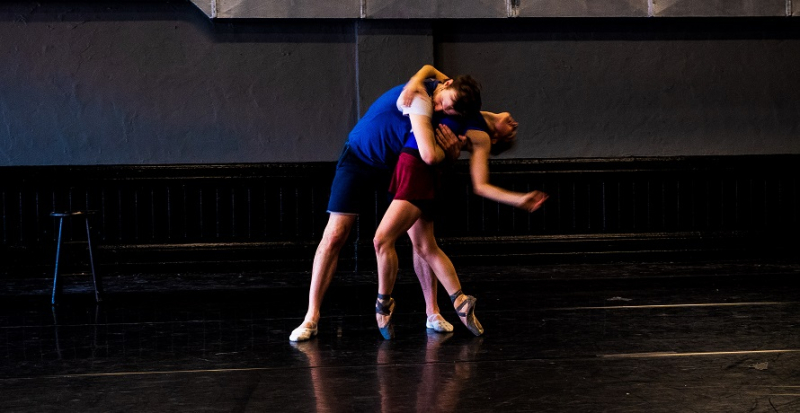
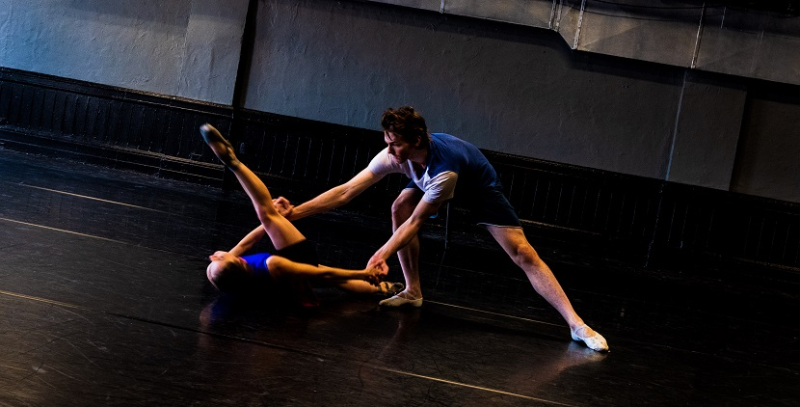
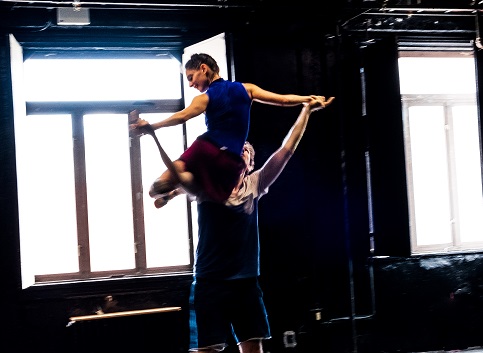
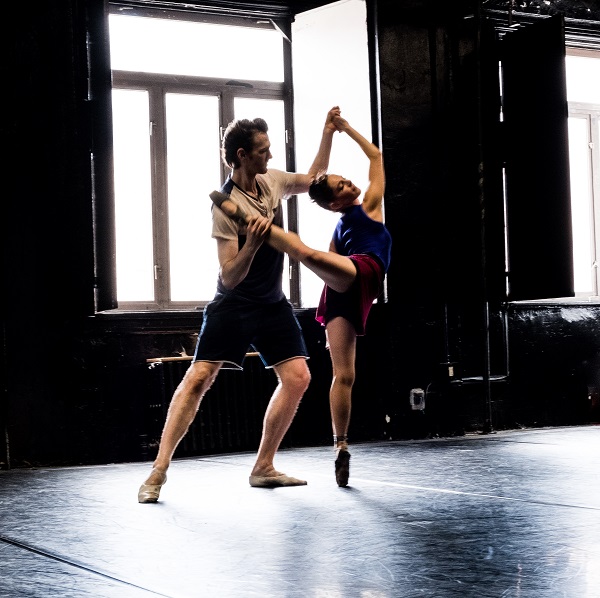
    Thursday June 20th, 2019 – Having seen three rehearsals of Amanda Selwyn’s CROSSROADS at various stages of its development, tonight I experienced the finished work in its premiere performance at New York Live Arts.

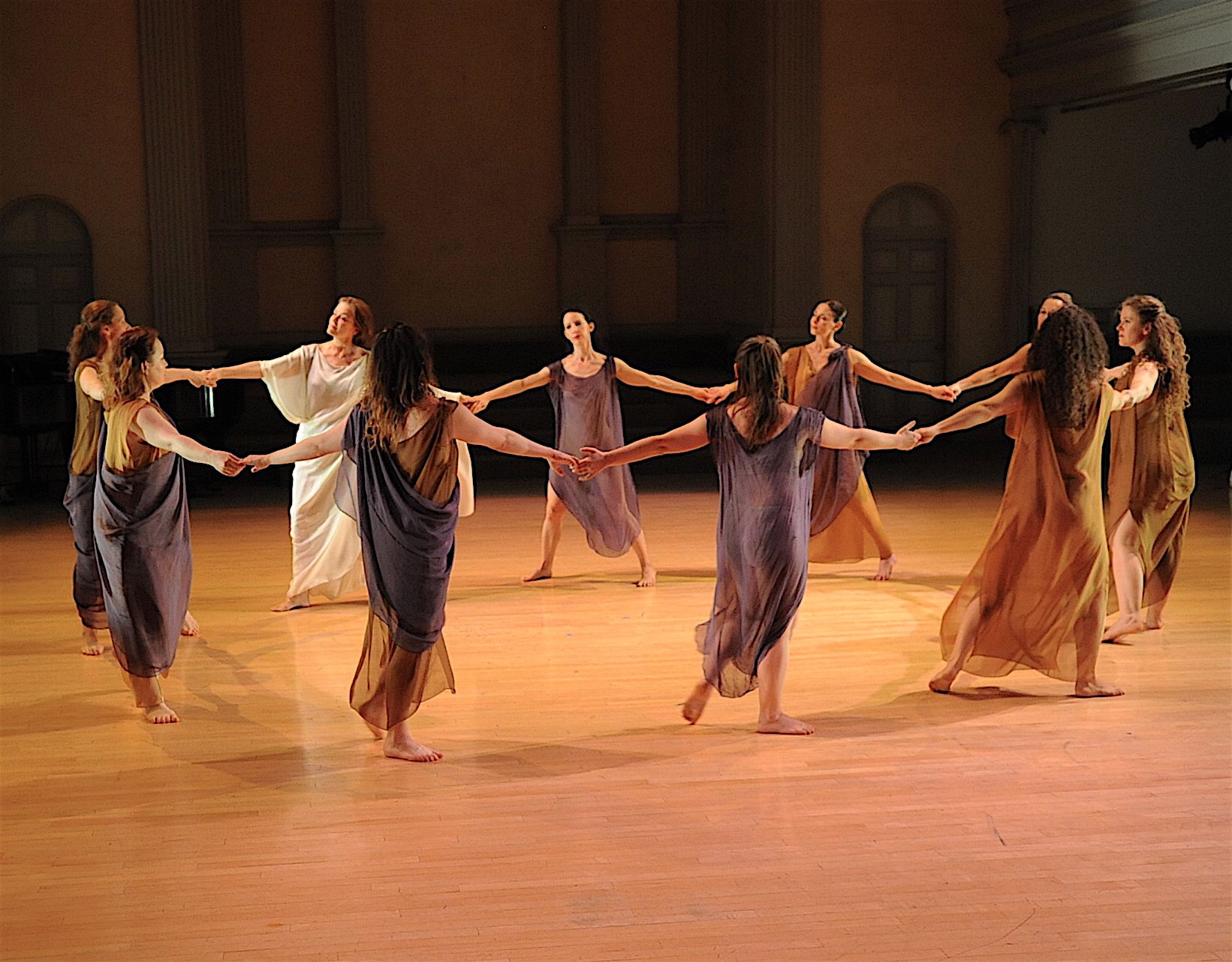
    The process began during wintertime rehearsals: brief movement motifs were introduced by each of the individual dancers. Over time, these were developed and woven into the choreographic tapestry. The dancing is set on a musical soundscape that veers from driven to meditative; the sets, costumes, and props give the piece an eye-opening visual framework, and expert lighting by Dan Ozminkowski is the crowning touch.

    In the months between concept and performance, there were some changes in the roster of performers; but Amanda ended up with a cast of brilliant and distinctive dancers whose commitment and flair kept the audience thoroughly engaged throughout the work’s 90-minute span.

    The art of René Magritte and M C Escher were initial inspirations for CROSSROADS. A row of fanciful doors provide a backdrop, and columns – illuminated from within – are moved about as the work’s opening movement progresses. Later, the dancers will continually re-arrange a set of boxes to be used as podiums…or obstacles. By the end, everything is stripped down to essentials, the boxes piled in a heap, the dancers liberated.

    But lets rewind to the start: Part I of CROSSROADS is entitled Sight. It begins with Ashley McQueen entering the shadowy space; she is a dancer with the grace of a ballerina, the groundedness of an Isadora acolyte, and the impetuous musicality of someone who dances because she must. All evening, my gaze kept returning to this woman and multi-hued dancing. Topping it all off, Ms. McQueen is also a comedienne to be reckoned with: her solo, stuck in an inflatable plastic chair, made me laugh out loud. 

    The other dancers now enter thru the upstage doors; they pair off – Ms. McQueen with Alex Cottone, Misaki Hayama with Isaac Kerr, and  Manon Hallay with Michael Bishop – whilst the distinctive and enigmatic Sarah Starkweather weaves among them, a dancer on her own path. The couples creates a flow of beautiful moves and poses, and then the tall and lithe Mr. Kerr comes forward in silence and takes a bite out of Magritte’s apple.

    The music now takes on a deep beat, and we are ready for some spacious dancing; fleeting solos and duets are part of the mix. As CROSSROADS progresses, each dancer will have multiple opportunities to show off his or her individuality and flair, seizing our focus in movement that veers from high-energy to expressive. The boys show off their partnering skills, the women each compelling in her own way. 

    With the columns on a diagonal, Ashley McQueen covers the space to dense, pensive music; her arms and hands speak to us poetically, and then her solo gets more animated. Misaki Hayama emerges thru one of the doors to dance a thoughtful, moving solo of loneliness and hope; Alex Cottone opens another door to dance with Misaki.

    A tom-tom beat sets off a bouncy, propulsive ensemble dance: these people are super-movers. Alex Cottone’s solo here is just one of innumerable passages in which this dancer of boundless energy and passion seized the stage. He dances with Ms. McQueen, and then with Ms. Hallay. Michael Bishop and Ashley McQueen, in a duet to languid, deep, and soulful cello music, execute beautiful lifts.

    After a blackout, Part II commences. Entitled Faith, it does indeed take on the feeling of a sacred rite when Alex Cottone is seen in a pool of blinding light on a low altar; his solo is simply spell-binding. As the light over Alex fades, another altar is illuminated and here the gorgeous Manon Hallay displays her beauteous line and floated arabesque in a solo at once alluring and pure. Both dancers here wear raspberry-hued costumes that accentuate their physical appeal.

    Each dancer now has his/her own box on which to dance or pose, at first in unison. Sarah Starkweather’s plastique solo inaugurates a fresh cycle of movement motifs. To a bigger beat, the boxes are rearranged, and fleeting pas de deux replace the solos briefly. In a spirited trio, Misaki, Manon, and Sarah dance in sync. 

    Faith now becomes a journey: boxes are arranged along the front of the stage and the dancers walk in procession over these obstacles, pausing to pose or perform gestural solos along the way. A back-beat develops, and the parade breaks up.

    A rather purgatorial “red quintet” springs up to a fresh tempo: Alex and the four women dance in sync, with breakouts and swift duets. Misaki’s fancy footwork here captured my eye. Sarah and Alex duet, then the quintet resumes. The beat is all. 

    Following a blessedly brief interval, Part III – Ascent – commences. In a foggy setting, Sarah Starkweather has a stormy solo to the sound of rushing water. Misaki and Ashley join her, the music (with big piano chords) has a throbbing depth; then Sarah – she of the unique presence – resumes her solo. 

    Alex Cottone, Michael Bishop, and the four women now have a quartet wherein the darkly lyrical cello gives a feeling of Russian passion; posing and moving, so attentive to one another, the dancers pair off. The woman in a row gesture in sync as the men provide visual counterpoint. This for me was the best part of CROSSROADS; it ends on a long cello tone.   

    Now comes the comic interlude: to spaced-out music, Ashley McQueen becomes helplessly trapped in an inflatable plastic chair. Her gestures and facial expressions are priceless. The other dancers come and go, unwilling – or too self-absorbed – to help her. Manon Hallay’s lovely arabesques again come into play; she seems intent on perfecting them whilst Ms. McQueen struggles valiantly to stand. Suddenly, Isaac Kerr rushes on and – in a flying leap – sails over the woman stranded in the chair. Meanwhile, Sarah Starkweather and Alex Cottone have carried on with their own duet throughout.

    The mood now shifts, aided by sounds of shifting sea tides: Manon Hallay and Michael Bishop have a tender duet, with lyrical partnering phrases. Misaki Hayama and Isaac Kerr dance a spacious duet, with airy lifts and a trace of romance, which the cello accentuates. Sarah Starkweather and Alex Cottone walkabout, connect, and have an agile, gently amusing duet.

    While Alex wanders alone, all the others advance from stage right, striking poses and gesturing – a very nice look here – before leaving Alex on his own again. A duet of passion for Ashley McQueen and Isaac Kerr is not without hints of danger. Following a solo passage for Sarah, Manon and Michael have a side-by-side duet with subtle dips and lifts. When Manon leaves him, Michael continues to dance with his memory of her.

    The three men dance as the women ‘Vogue’ behind them; then the four women take the floor. Following a brief, compulsive solo, Alex Cottone is left alone as the lights fade.

    CROSSROADS had flashed by: never a dull moment in this feast of movement. Thanks to the vibrant commitment of her seven dancers, Amanda Selwyn can chalk up yet another winning entry in her ongoing catalog of successes. How did I feel when CROSSROADS ended? I felt like dancing!

    ~ Oberon

  • Amanda Selwyn’s CROSSROADS @ NY Live Arts

    680w_x395h_c-AmandaSelwynDanceTheatre_SeasonPostcard_Draft1-1

    ~ Author: Oberon

    Thursday June 20th, 2019 – Having seen three rehearsals of Amanda Selwyn’s CROSSROADS at various stages of its development, tonight I experienced the finished work in its premiere performance at New York Live Arts.

    The process began during wintertime rehearsals: brief movement motifs were introduced by each of the individual dancers. Over time, these were developed and woven into the choreographic tapestry. The dancing is set on a musical soundscape that veers from driven to meditative; the sets, costumes, and props give the piece an eye-opening visual framework, and expert lighting by Dan Ozminkowski is the crowning touch.

    In the months between concept and performance, there were some changes in the roster of performers; but Amanda ended up with a cast of brilliant and distinctive dancers whose commitment and flair kept the audience thoroughly engaged throughout the work’s 90-minute span.

    The art of René Magritte and M C Escher were initial inspirations for CROSSROADS. A row of fanciful doors provide a backdrop, and columns – illuminated from within – are moved about as the work’s opening movement progresses. Later, the dancers will continually re-arrange a set of boxes to be used as podiums…or obstacles. By the end, everything is stripped down to essentials, the boxes piled in a heap, the dancers liberated.

    But lets rewind to the start: Part I of CROSSROADS is entitled Sight. It begins with Ashley McQueen entering the shadowy space; she is a dancer with the grace of a ballerina, the groundedness of an Isadora acolyte, and the impetuous musicality of someone who dances because she must. All evening, my gaze kept returning to this woman and multi-hued dancing. Topping it all off, Ms. McQueen is also a comedienne to be reckoned with: her solo, stuck in an inflatable plastic chair, made me laugh out loud. 

    The other dancers now enter thru the upstage doors; they pair off – Ms. McQueen with Alex Cottone, Misaki Hayama with Isaac Kerr, and  Manon Hallay with Michael Bishop – whilst the distinctive and enigmatic Sarah Starkweather weaves among them, a dancer on her own path. The couples creates a flow of beautiful moves and poses, and then the tall and lithe Mr. Kerr comes forward in silence and takes a bite out of Magritte’s apple.

    The music now takes on a deep beat, and we are ready for some spacious dancing; fleeting solos and duets are part of the mix. As CROSSROADS progresses, each dancer will have multiple opportunities to show off his or her individuality and flair, seizing our focus in movement that veers from high-energy to expressive. The boys show off their partnering skills, the women each compelling in her own way. 

    With the columns on a diagonal, Ashley McQueen covers the space to dense, pensive music; her arms and hands speak to us poetically, and then her solo gets more animated. Misaki Hayama emerges thru one of the doors to dance a thoughtful, moving solo of loneliness and hope; Alex Cottone opens another door to dance with Misaki.

    A tom-tom beat sets off a bouncy, propulsive ensemble dance: these people are super-movers. Alex Cottone’s solo here is just one of innumerable passages in which this dancer of boundless energy and passion seized the stage. He dances with Ms. McQueen, and then with Ms. Hallay. Michael Bishop and Ashley McQueen, in a duet to languid, deep, and soulful cello music, execute beautiful lifts.

    After a blackout, Part II commences. Entitled Faith, it does indeed take on the feeling of a sacred rite when Alex Cottone is seen in a pool of blinding light on a low altar; his solo is simply spell-binding. As the light over Alex fades, another altar is illuminated and here the gorgeous Manon Hallay displays her beauteous line and floated arabesque in a solo at once alluring and pure. Both dancers here wear raspberry-hued costumes that accentuate their physical appeal.

    Each dancer now has his/her own box on which to dance or pose, at first in unison. Sarah Starkweather’s plastique solo inaugurates a fresh cycle of movement motifs. To a bigger beat, the boxes are rearranged, and fleeting pas de deux replace the solos briefly. In a spirited trio, Misaki, Manon, and Sarah dance in sync. 

    Faith now becomes a journey: boxes are arranged along the front of the stage and the dancers walk in procession over these obstacles, pausing to pose or perform gestural solos along the way. A back-beat develops, and the parade breaks up.

    A rather purgatorial “red quintet” springs up to a fresh tempo: Alex and the four women dance in sync, with breakouts and swift duets. Misaki’s fancy footwork here captured my eye. Sarah and Alex duet, then the quintet resumes. The beat is all. 

    Following a blessedly brief interval, Part III – Ascent – commences. In a foggy setting, Sarah Starkweather has a stormy solo to the sound of rushing water. Misaki and Ashley join her, the music (with big piano chords) has a throbbing depth; then Sarah – she of the unique presence – resumes her solo. 

    Alex Cottone, Michael Bishop, and the four women now have a quartet wherein the darkly lyrical cello gives a feeling of Russian passion; posing and moving, so attentive to one another, the dancers pair off. The woman in a row gesture in sync as the men provide visual counterpoint. This for me was the best part of CROSSROADS; it ends on a long cello tone.   

    Now comes the comic interlude: to spaced-out music, Ashley McQueen becomes helplessly trapped in an inflatable plastic chair. Her gestures and facial expressions are priceless. The other dancers come and go, unwilling – or too self-absorbed – to help her. Manon Hallay’s lovely arabesques again come into play; she seems intent on perfecting them whilst Ms. McQueen struggles valiantly to stand. Suddenly, Isaac Kerr rushes on and – in a flying leap – sails over the woman stranded in the chair. Meanwhile, Sarah Starkweather and Alex Cottone have carried on with their own duet throughout.

    The mood now shifts, aided by sounds of shifting sea tides: Manon Hallay and Michael Bishop have a tender duet, with lyrical partnering phrases. Misaki Hayama and Isaac Kerr dance a spacious duet, with airy lifts and a trace of romance, which the cello accentuates. Sarah Starkweather and Alex Cottone walkabout, connect, and have an agile, gently amusing duet.

    While Alex wanders alone, all the others advance from stage right, striking poses and gesturing – a very nice look here – before leaving Alex on his own again. A duet of passion for Ashley McQueen and Isaac Kerr is not without hints of danger. Following a solo passage for Sarah, Manon and Michael have a side-by-side duet with subtle dips and lifts. When Manon leaves him, Michael continues to dance with his memory of her.

    The three men dance as the women ‘Vogue’ behind them; then the four women take the floor. Following a brief, compulsive solo, Alex Cottone is left alone as the lights fade.

    CROSSROADS had flashed by: never a dull moment in this feast of movement. Thanks to the vibrant commitment of her seven dancers, Amanda Selwyn can chalk up yet another winning entry in her ongoing catalog of successes. How did I feel when CROSSROADS ended? I felt like dancing!

    ~ Oberon

  • Rehearsal: Two Duets by Cherylyn Lavagnino

    DSCF4129

    Above: Ramona Kelley and Daniel Mantei rehearsing for Cherylyn Lavagnino Dance; photo by Dmitry Beryozkin

    ~ Author: Oberon

    Thursday June 21st, 2018 – Cherylyn Lavagnino Dance are preparing for their annual New York season with performances at the Tisch School of the Arts’ Jack Crystal Theatre on June 27th and 28th, 2018. Details and ticket information here.

    I had missed Cherylyn’s performances last season due to my prolonged ‘indisposition’; I was all set to attend the performance this month when a family obligation took over. So I was very grateful indeed to be able to go down to the Tisch studios this afternoon watch a rehearsal of two duets from the upcoming program: one from the ballet Kamila, set to the song cycle The Diary of One Who Vanished by Leoš Janáček, and a free-standing duet set to Janis Joplin’s classic rendering of Gershwin’s Summertime. The delightful ballerina Ramona Kelley and former ABT dancer Daniel Mantei were paired in these two distinctively different pas de deux. My friend Dmitry Beryozkin was there to photograph the dancers:

    DSCF3725

    DSCF3736

    DSCF3738

    DSCF3758

    DSCF3767

    DSCF3808

    DSCF3892

    DSCF3906

    DSCF3944

    DSCF3970

    B

    DSCF4024

    DSCF4076

    DSCF4130

    DSCF4149

    DSCF4152

    ~ Oberon
  • Gallant’s RETROGRADE UNIVERSE @ Danspace

    G

    Above: Loretta Thomas and the ensemble, photo by Melanie Futorian

    Thursday June 23rd, 2016 – The high-vaulted space of St Mark’s Church can become oppressively warm on a Summer evening, but it was worth this minor discomfort tonight as the engaging dancers of Catherine Gallant/DANCE and Dances by Isadora, under the artistic direction of Ms. Gallant, presented a program offering a wide-ranging musical experience, choreography both new and venerated, and dancing that unfailingly found the heart of each piece presented. The performance affirmed both the power and the poetry of the feminine spirit, seen tonight in its many aspects.
    L1730727

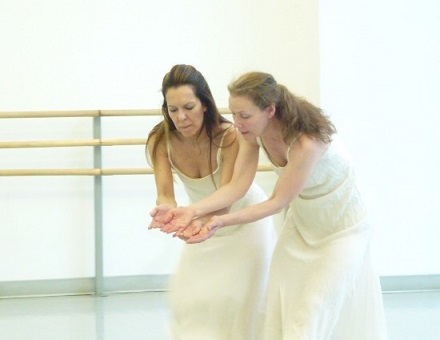
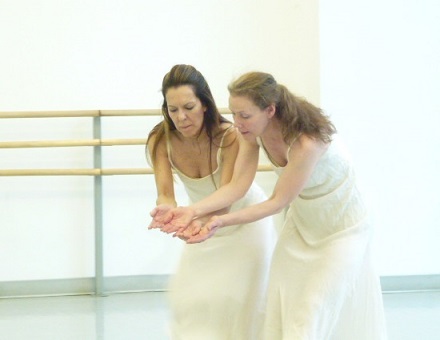
    Above: Janete Gondim and Eleanor Bunker rehearsing Catherine Gallant’s The Secret

    The evening could not have a had a more propitious start than Ms. Gallant’s The Secret; like white-clad angels, the two dancers – Janete Gondim and Eleanor Bunker – continually conveyed the sense of wonder which permeates this dancework like a delicious fragrance.

    With Ygor Shetsov at the piano, playing the Scriabin Poeme in F-sharp major, the two dancers moved about the space with a sort of quiet urgency, pausing to marvel at the treasure they had found, and which they were holding in the palms of their hands. The choreography flows gorgeously on the music: simple moves which take on a poetic resonance in the personalities of the two women; Janete and Eleanor were captivating to watch, and The Secret joins a short list of danceworks I’ve encountered in the past 20 years that ideally meld music, mood, and movement, leaving a lasting impression.

    C

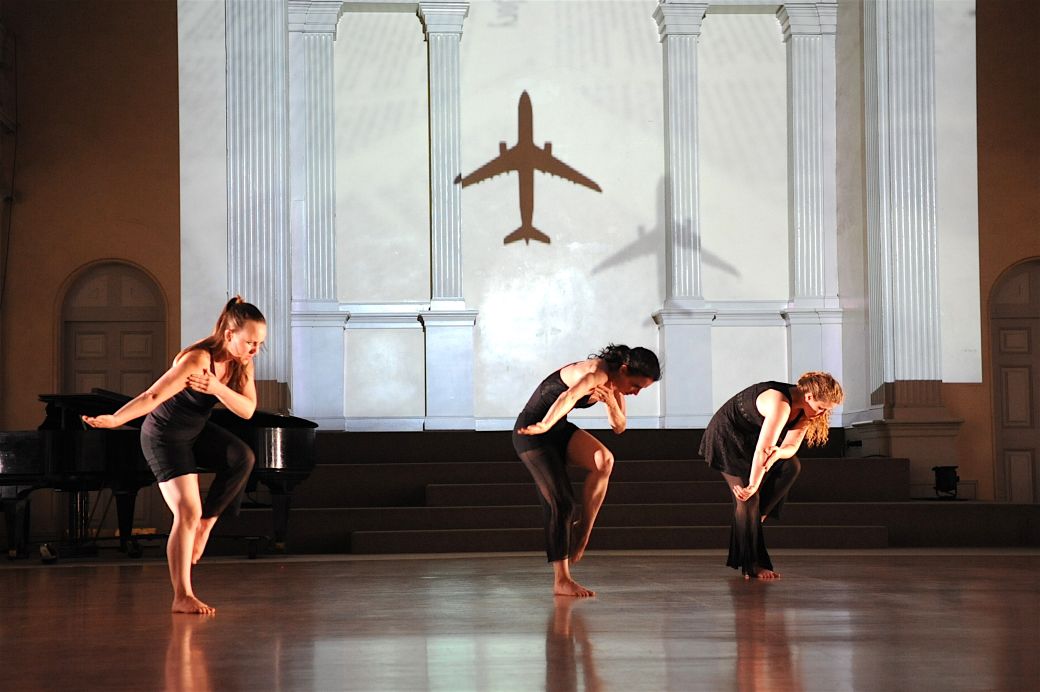
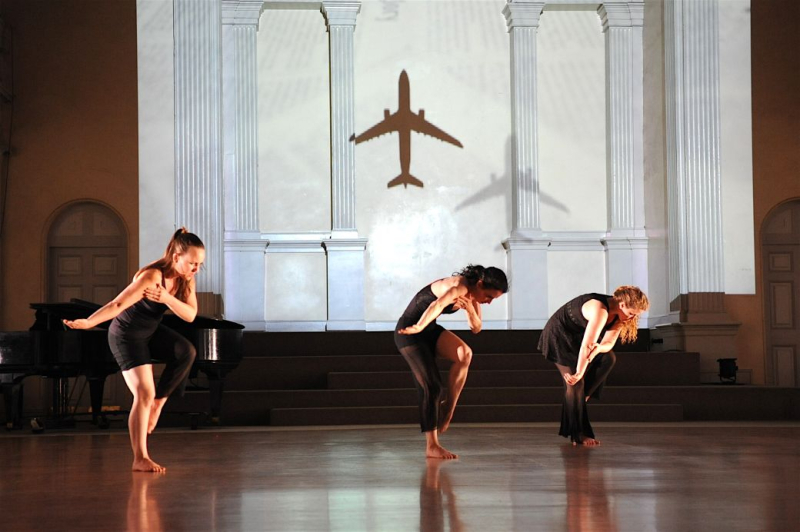
    The premiere of Ms. Gallant’s Retrograde Universe (above, in Melanie Furotian’s photo) offered a fine contrast to The Secret. Alternating passages of silence with music of Steve Reich, this piece found excellent interpreters in Michelle Cohen, Megan Minturn, Erica Lessner, and Charlotte Henrickson. The girls periodically flung themselves to the floor, or burst into paroxysms of anxious movement, whilst at other moments they simply stand stock still, striking sculptural poses. Whimsical projections of newsprint and of an airplane whose pilot had clearly lost his sense of direction added a touch of mystery to the work, which seemed at times to be going on a bit too long, but which was kept on track by the energies of the four dancers.

    Finally, a Gallant work created in 2009, features a score by Rome prize-winning composer Lisa Bielawa. Using texts from Franz Kafka, the composer creates music of haunting sonic textures as performed by violinist/vocalist Christina Courtin. Loretta Thomas danced this solo tonight, swathed in a long black veil. Her body ‘spoke’ the music, expressing an almost desperate loneliness. Ms. Courtin, in addition to being an emotive violinist, has a voice – plaintive and clear – which makes a poignant effect. At the end, Ms. Thomas, an artist to her fingertips, walked slowly upstage as the lights faded.

    Pogoplug.com d

    Above: Alvaro Gonzalez and Michelle Cohen in Meeting #12; photo by Melanie Futorian

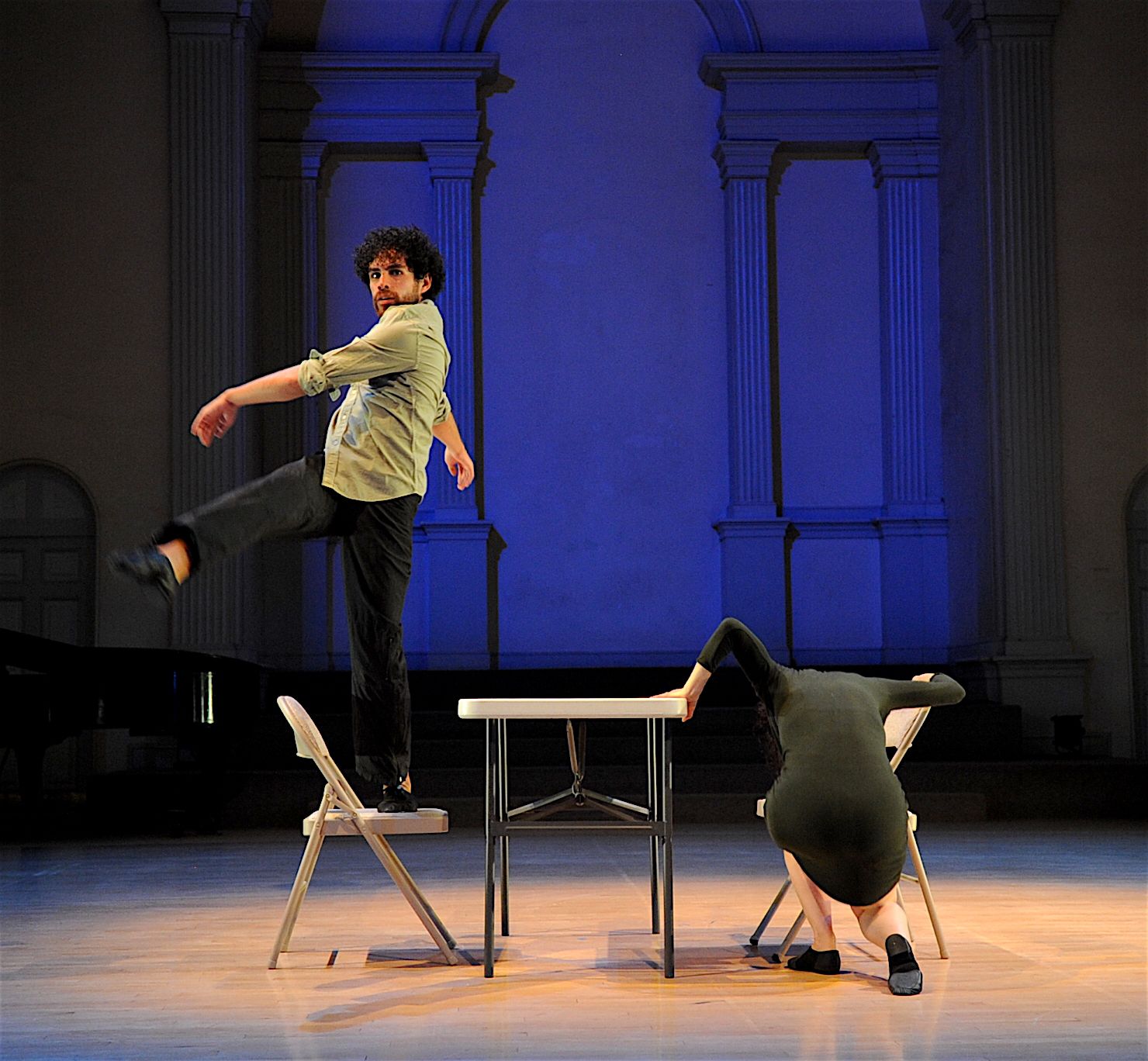
    A domestic drama, Meeting #12, opens with the dancers Michelle Cohen and Alvaro Gonzalez seated at a table. Much of this work is danced in silence, with interjections from Schubert’s E-flat major trio occasionally cropping up. The couple are enmeshed in a quarrel which becomes tempestuous, and the table and chairs eventually become part of the choreography. The beauteous Ms. Cohen and the scruffily handsome Mr. Gonzalez are ideally cast, and they make every moment of the work count. In the end, they find that actually conversing with one another may be the best solution. Projections of puffy clouds against a bright blue sky provide a visual counterpoint to the cramped kitchen in which the lovers have been arguing.

    The second half of the program was given over to works of Isadora Duncan.    

    Pogoplug.com e

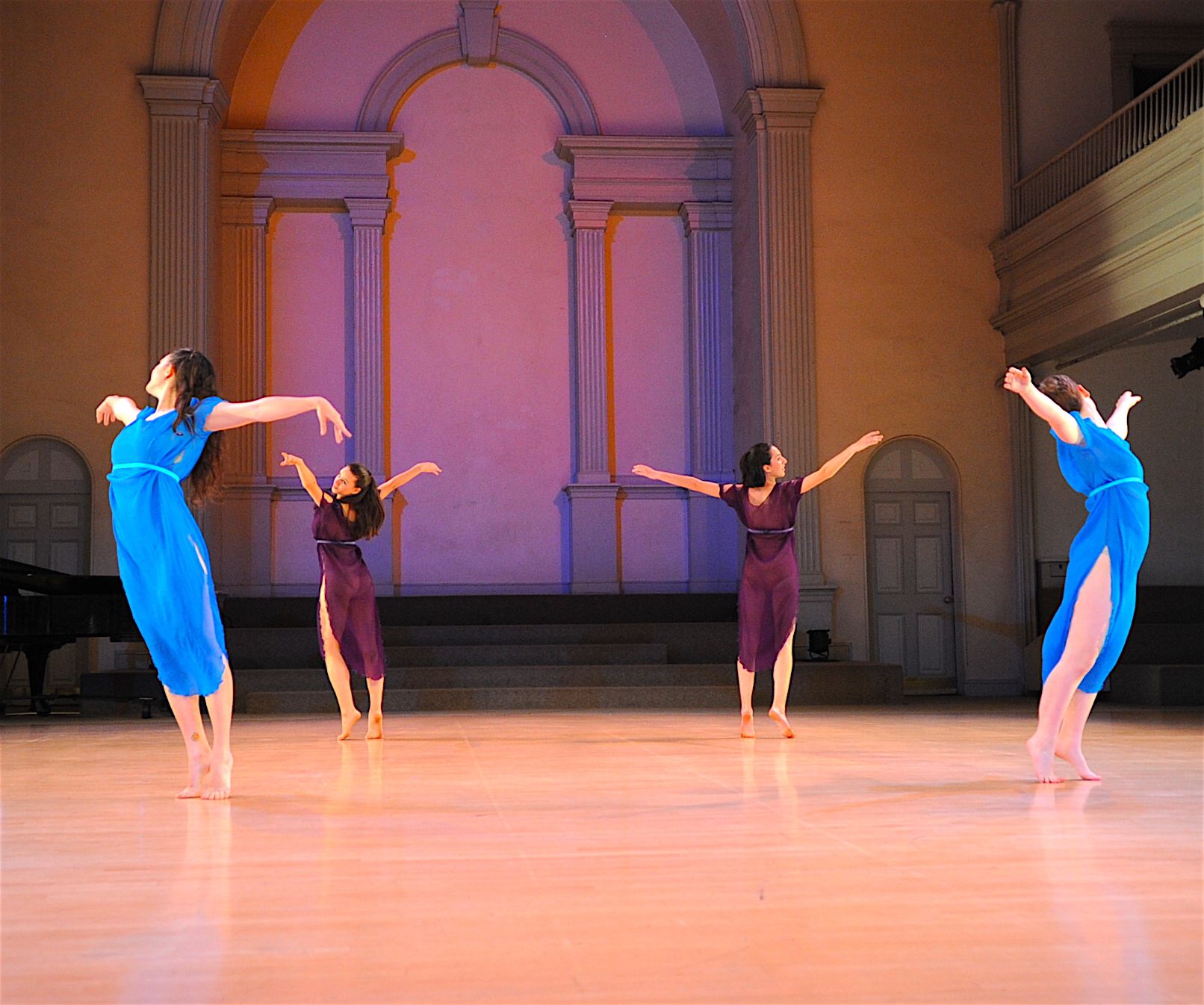
    Above: from Valse Brillante, photo by Melanie Futorian

    Loretta Thomas has staged Isadora’s Valse Brillante (created c. 1910) for the Company, and it was danced this evening with lively grace by Jessie King, Amelia Sanders, Ella Lang, and Chanda Cragnotti. At the piano, Yegor Shetsov reveled in the ebb and flow of the Chopin Grande Valse Brillante.

    Three solos – each set to a Scriabin étudewere engrossing in their contrasting moods, and in the committed interpretations of the dancers.

    In Crossing, Scriabin-turbulence buffeted the hesitant anxiousness of Catherine Gallant, who danced with great physical devotion, mirroring the stormy music. The pain of loss and the thought of “nevermore” were movingly evoked by Loretta Thomas in her sorrowful performance of Mother, one of the Duncan works recalling the tragic death of Isadora’s two young children. Personifying feminine strength and the courage of resistance, Kristen Foote, a guest artist from the Limón Dance Company, gave a performance of radiant authority in Revolutionary. Mr. Shetsov played the three Scriabin études which accompany these solos with virtuosity and dramatic nuance.

    Catherine Gallant and Loretta Thomas have been working on the reconstruction of two movements of an untitled work – set to movements of the Beethoven 7th symphony – which Isadora performed as a solo between 1904 and 1909 on US and European tours.    

    L1730931

    Ms. Gallant (clad in white in the above rehearsal photo) danced the leading role tonight in her re-imagining of the symphony’s Allegretto, and Loretta Thomas has choreographed the Presto. Watching the Gallant dancers in this evening’s performance, we are reminded of the unique position held by Isadora Duncan in the history of dance, and of the continuing necessity of seeing her dances lovingly revived and maintained, so that new generations can both honor and enjoy her work, both for its historical value and its continuing resonance in modern times.

    Here are some Melanie Futorian images from the two Beethoven movements, the Presto of which closed tonight’s performance on a joyous note.

    Pogoplug.com b

    A

    Loretta Thomas (in white) and the ensemble

    Pogoplug.com h

    Pogoplug.com j

    Pogoplug.comf

  • Gallant’s RETROGRADE UNIVERSE @ Danspace

    G

    Above: Loretta Thomas and the ensemble, photo by Melanie Futorian

    Thursday June 23rd, 2016 – The high-vaulted space of St Mark’s Church can become oppressively warm on a Summer evening, but it was worth this minor discomfort tonight as the engaging dancers of Catherine Gallant/DANCE and Dances by Isadora, under the artistic direction of Ms. Gallant, presented a program offering a wide-ranging musical experience, choreography both new and venerated, and dancing that unfailingly found the heart of each piece presented. The performance affirmed both the power and the poetry of the feminine spirit, seen tonight in its many aspects.

    L1730727

    Above: Janete Gondim and Eleanor Bunker rehearsing Catherine Gallant’s The Secret

    The evening could not have a had a more propitious start than Ms. Gallant’s The Secret; like white-clad angels, the two dancers – Janete Gondim and Eleanor Bunker – continually conveyed the sense of wonder which permeates this dancework like a delicious fragrance.

    With Ygor Shetsov at the piano, playing the Scriabin Poeme in F-sharp major, the two dancers moved about the space with a sort of quiet urgency, pausing to marvel at the treasure they had found, and which they were holding in the palms of their hands. The choreography flows gorgeously on the music: simple moves which take on a poetic resonance in the personalities of the two women; Janete and Eleanor were captivating to watch, and The Secret joins a short list of danceworks I’ve encountered in the past 20 years that ideally meld music, mood, and movement, leaving a lasting impression.

    C

    The premiere of Ms. Gallant’s Retrograde Universe (above, in Melanie Furotian’s photo) offered a fine contrast to The Secret. Alternating passages of silence with music of Steve Reich, this piece found excellent interpreters in Michelle Cohen, Megan Minturn, Erica Lessner, and Charlotte Henrickson. The girls periodically flung themselves to the floor, or burst into paroxysms of anxious movement, whilst at other moments they simply stand stock still, striking sculptural poses. Whimsical projections of newsprint and of an airplane whose pilot had clearly lost his sense of direction added a touch of mystery to the work, which seemed at times to be going on a bit too long, but which was kept on track by the energies of the four dancers.

    Finally, a Gallant work created in 2009, features a score by Rome prize-winning composer Lisa Bielawa. Using texts from Franz Kafka, the composer creates music of haunting sonic textures as performed by violinist/vocalist Christina Courtin. Loretta Thomas danced this solo tonight, swathed in a long black veil. Her body ‘spoke’ the music, expressing an almost desperate loneliness. Ms. Courtin, in addition to being an emotive violinist, has a voice – plaintive and clear – which makes a poignant effect. At the end, Ms. Thomas, an artist to her fingertips, walked slowly upstage as the lights faded.

    Pogoplug.com d

    Above: Alvaro Gonzalez and Michelle Cohen in Meeting #12; photo by Melanie Futorian

    A domestic drama, Meeting #12, opens with the dancers Michelle Cohen and Alvaro Gonzalez seated at a table. Much of this work is danced in silence, with interjections from Schubert’s E-flat major trio occasionally cropping up. The couple are enmeshed in a quarrel which becomes tempestuous, and the table and chairs eventually become part of the choreography. The beauteous Ms. Cohen and the scruffily handsome Mr. Gonzalez are ideally cast, and they make every moment of the work count. In the end, they find that actually conversing with one another may be the best solution. Projections of puffy clouds against a bright blue sky provide a visual counterpoint to the cramped kitchen in which the lovers have been arguing.

    The second half of the program was given over to works of Isadora Duncan.    

    Pogoplug.com e

    Above: from Valse Brillante, photo by Melanie Futorian

    Loretta Thomas has staged Isadora’s Valse Brillante (created c. 1910) for the Company, and it was danced this evening with lively grace by Jessie King, Amelia Sanders, Ella Lang, and Chanda Cragnotti. At the piano, Yegor Shetsov reveled in the ebb and flow of the Chopin Grande Valse Brillante.

    Three solos – each set to a Scriabin étudewere engrossing in their contrasting moods, and in the committed interpretations of the dancers.

    In Crossing, Scriabin-turbulence buffeted the hesitant anxiousness of Catherine Gallant, who danced with great physical devotion, mirroring the stormy music. The pain of loss and the thought of “nevermore” were movingly evoked by Loretta Thomas in her sorrowful performance of Mother, one of the Duncan works recalling the tragic death of Isadora’s two young children. Personifying feminine strength and the courage of resistance, Kristen Foote, a guest artist from the Limón Dance Company, gave a performance of radiant authority in Revolutionary. Mr. Shetsov played the three Scriabin études which accompany these solos with virtuosity and dramatic nuance.

    Catherine Gallant and Loretta Thomas have been working on the reconstruction of two movements of an untitled work – set to movements of the Beethoven 7th symphony – which Isadora performed as a solo between 1904 and 1909 on US and European tours.    

    L1730931

    Ms. Gallant (clad in white in the above rehearsal photo) danced the leading role tonight in her re-imagining of the symphony’s Allegretto, and Loretta Thomas has choreographed the Presto. Watching the Gallant dancers in this evening’s performance, we are reminded of the unique position held by Isadora Duncan in the history of dance, and of the continuing necessity of seeing her dances lovingly revived and maintained, so that new generations can both honor and enjoy her work, both for its historical value and its continuing resonance in modern times.

    Here are some Melanie Futorian images from the two Beethoven movements, the Presto of which closed tonight’s performance on a joyous note.

    Pogoplug.com b

    A

    Loretta Thomas (in white) and the ensemble

    Pogoplug.com h

    Pogoplug.com j

    Pogoplug.comf

  • Cherylyn Lavagnino Dance @ St. Mark’s

    5941803_orig

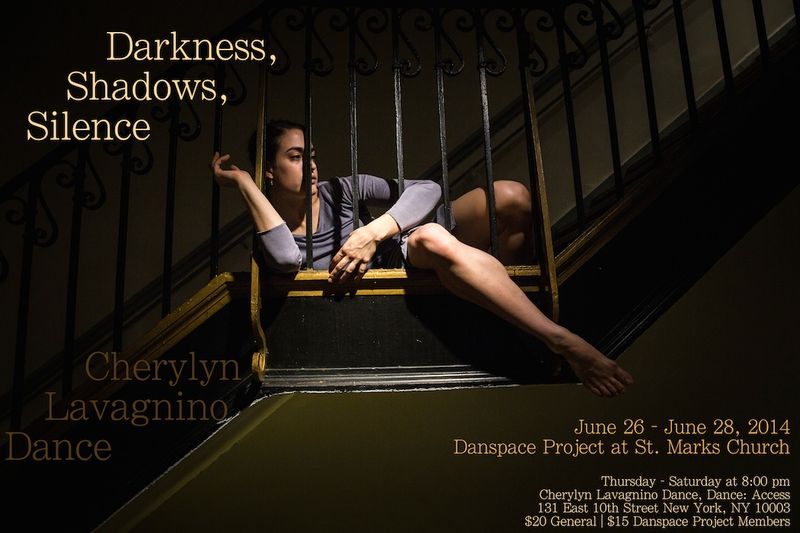
    Thursday June 26th, 2014 – Cherylyn Lavagnino Dance presenting a programme entitled Darkness, Shadows, Silence as part of the Danspace Project at St. Mark’s Church. It was rather stuffy inside the church on this summer evening, but the music and the dancing soon took my mind off any such concerns.

    Tonight’s first ballet is perhaps my favorite of Cherylyn’s works that I have experienced to date: TRYPTYCH is set to music by Francois Couperin and danced in bare feet. It opens with Claire Westby, invoking the dance from the mezzanine above. The four couples enter and commence a series of ensemble dances meshed with fleeting solo, duet or trio passages, the women wearing soft grey frocks and the men clad in simple dark costumes. Some of the phrases for the four women draw to mind the sisterly ensembles of Isadora Duncan. TRYPTYCH is spiritual though not heavy-handed: ritualistic yet human.

    I very much enjoyed the expressive interaction between Cherylyn’s beautiful dancers in this work: Giorgia Bovo, Selina Chau, Giovanna Gamna and Christine Luciano seemed deeply immersed in the music, and their partners – Michael D Gonzalez, Elliot Hammans, Travis Magee and Adrian Silver – came and went with a sense of quiet urgency. The ballet seems to draw to a lovely closing, but there is a pendant still to come.

    Scott Killian’s score for the final movement of TRYPTYCH alludes to Couperin yet is distinctly contemporary. An excellent duet for two men – Travis Magee and Elliot Hammans – gives way to another duet danced by Selina Chau (now on pointe) and Adrian Silver. The work ends with Ms. Westby in a benedictive phrase. This appended final movement at first seems somewhat unrelated to what’s gone on before, but Ms. Lavagnino and her dancers draw it convincingly full-circle in the end.

    Two movements of Cherylyn Lavagnino’s Schubert ballet TREIZE EN JEU were presented: this is a ballet for large ensemble wherein the dancers from TRYPTYCH are joined by Kristen Stevens, Eliza Sherlock-Lewis, Lila Simmons, and Justin Faircloth. Set to Schubert’s E-flat major trio, opus 929, the work displays the choreographer’s sense of structure, with a particularly memorable ‘pacing’ motif at the opening of the second movement as two phalanxes of dancers approach from opposite sides of the stage. Once again the individual personalities of the dancers played a vital element in the success of the piece. My only reservation was that the women’s costumes seemed too sporty and contemporary for the musical atmosphere: I would have addded long, gossamer black skirts. 

    Back in April, I visited Cherylyn’s studio where the works presented this evening were in rehearsal. And in the ensuing weeks I have read Kim Thúy’s novel, RU, from which Cherylyn’s newest work draws its inspiration. RU is a contemporary-style ballet set to a commissioned score by Scott Killian.

    The novel by Kim Thúy, which describes a young woman’s life as a post-Vietnam War political refugee, revolves around cultural dislocation and the struggle for identity. T’ai Chi’s passive resistance serves as gestural influence for the choreographer, and Christopher Metzger’s costumes for the women are reminiscent of the traditional Vietnamese áo dài dress: they are clad in white, with red accents indicating the bloodshed of war.

    Ms. Thúy’s novel is more like a book of poetry: each page contains only a few sentences (or, at most, a few paragraphs) describing in no specific order the details of escape from Asia to Canada, the cultural shock of this transplantation, and the writer’s emeging personality as a wife and mother. The choreography moves the female ensemble across a darkening landscape, suggesting their furtive escape from war and the formation of new bonds as their former lives are left behind. The men, bare-chested, can seem threatening or protective by turns. 

    In RU, Cherylyn Lavagnino and Scott Killian have summoned up the atmosphere of the novelist’s poetic vignettes yet the ballet also takes a wider view of displaced peoples, their exposure to abuse and treachery, and their assimilation into new cultures. I look forward to seeing this piece again in the future.

  • BalletCollective Studio Showing

    Home

    Above: BalletCollective dancer Taylor Stanley photographed by Christopher Starbody

    Thursday June 27th, 2013 – Today Troy Schumacher invited me to a special showing of his new work for BalletCollective, in preparation for the Company’s upcoming New York City performances.

    At the Ailey Citigroup Theater, friends and supporters of the Collective watched Troy working out some phrases with his exciting ensemble of dancers, all of whom are current or recent members of New York City Ballet. The work is accompanied by live music composed and conducted by Ellis Ludwig-Leone and played by ACME. During this preliminary tinkering session, lighting designer Brandon Baker tried out various effects. We were then shown a run-thru of the work-in-progress.

    The ballet, The Impulse Wants Company, takes wing on a poem by Cynthia Zarin, who was present for the showing. The music is both perfectly contemporary and beautifully melodic, with some interesting rhythmic figures; the musicians are expert.

    Ms. Zarin’s poem reflects on childhood visits to a beach, on nature, weather, on people and conversations recalled from the past. I didn’t read thru the poem until I’d seen the ballet, but the line “I was a water nymph” might have inspired the opening solo for Kaitlyn Gilliland, the tall ballerina who – with her poetic arabesque and arching back-bend – seems to conjure visions of Odette. David Prottas, a prince of a dancer, joins her. There is a trio of young women – Lauren King, Ashley Laracey and Meagan Mann – who remind me of Rhinemaidens or the nymphs on the lonely shore of Ariadne’s Naxos.

    Harrison Coll, a dynamic young dancer, joins Taylor Stanley in an off-kilter waltz, Taylor’s solo begins with him swaying like a tree in the breeze; later he travels up a diagonal in some skitteringly fast footwork before circling the space in a questing motif. 

    Troy Schumacher told us the that this ballet was created in ten days of studio time; in terms of both movement and imagination, it shows his distinctive choreographic style which uses the classic vocabulary of steps and port de bras with fresh, contemporary nuances. And he has the grest good fortune to be working with some of the best dancers in the world. 

    It was nice to see so many familiar faces from among New York City’s serious dance aficianados here supporting Troy today, and to greet the lovely former New York City Ballet ballerina Maya Collins, who now dances with Miami City Ballet.. 

    BalletCollective will be performing The Impulse Wants Company along with a re-working of their 2012 ballet Epistasis at The Joyce on August 14th and 15th. Information and tickets here.

    You can follow BalletCollective on Ashley Laracey’s blog: The Insider.

  • SENSEDANCE Rehearsal @ Joyce SoHo

    SenseDance-23

    Thursday June 23, 2011 – Since I wasn’t able to attend their Joyce SoHo performances, Henning Rubsam of SENSEDANCE invited photographer Matt Murphy and me to watch a rehearsal this evening. My friend Paul Monaghan is dancing with SENSEDANCE, and so is Max van der Sterre (Paul & Max above, in Matt Murphy’s photo).

    The SENSEDANCE performances, which took place on the following two evenings, played to full houses. I was glad to have a chance to see Henning’s work which melds classic ballet technique with a contemporary accent. The dancers are strong and appealing as individual personalities.

    SenseDance-3

    Amarathine Road” Music by Beata Moon/dancersTemple Kemezis & Max van der Sterre (above)

    SenseDance-11
     
     “Impending Re-Visit” Music by Rafael Aponte-Ledée/dancers Erin Ginn & Uthman Ebrahim (above)
      
    SenseDance-15

     “Göttingen” Music by Barbara (recording by Daniel Isengart)/dancer Paul Monaghan (above)

    SenseDance-20
     
     “HALF-LIFE” (premiere) Music: Laibach/dancers Max van der Sterre, Erin Ginn (above). Temple and Paul also appear in this work.
     
    SenseDance-12
     
    Above: choreographer Henning Rubsam watching Erin and Uthman.
     
     Here are some more of Matt Murphy’s images from this SENSEDANCE rehearsal:
     
    SenseDance-1
     
     Temple Kemezis, Temple reminds me a lot of Pascale van Kipnis.
     
    SenseDance-2
     
    Max van der Sterre
     
    SenseDance-13
     
     Erin Ginn, Uthman Ebrahim
     
    SenseDance-21
     
     Temple Kemezis and Max van der Sterre
     
    SenseDance-24
     
     Paul Monaghan
     
    All photos by Matt Murphy.