Tag: Thursday May

  • Claire Chase ~ Density 2036 @ Zankel Hall

    Claire chase

    Above: Claire Chase

    Author: Shoshana Klein

    Thursday May 25th, 2023 – Claire Chase’s Density 2036 project is long and ambitious: a 24-year long project of new commissions, inspired by Varèse’s famous flute piece Density 21.5. Each year, she performs an entire new program of works. This year, she’s 10 years into the project, so the 10 days leading up to this concert have been a recap of all of these new pieces, culminating in Thursday’s world premiere of a 50-minute chamber piece by Anna Thorvaldsdottir named Ubique. For this evening’s piece, the ensemble was composed of Claire Chase, flutes; Katinka Kleijn and Seth Parker Woods, cellos; Cory Smythe, piano; and Levy Lorenzo, live sound. The concert started with a conversation between Ara Guzelimian and Thorvaldsdottir, who described a blank page at the beginning of a composition as freeing – that composing a piece “starts with a sensation – finding something that doesn’t exist yet”

    The introduction – which turned out to be a recurring theme – was a deep, low rumbling (not unlike the sound the subway makes in Zankel Hall, begging the question if that was an intentional move by the composer writing for the hall). There was striking low lighting around the ensemble, really creating a space that brought you into the beginning of the performance. The lighting changed throughout the piece in a way that was engaging and followed the different sections – adding some literal color changes to the musical color changes, very tastefully.


    The piece seemed to have many movements (though if so, they weren’t indicated in the program) – some quite short and full of quick gestures and handoffs, others more slow-moving. There were more sections and honestly more tonality than I was expecting from Thorvaldsdottir. There were a few parts where bass flute and the two cellos mixed in really interesting ways – Thorvaldsdottir is always one for unique texture and sound, and this piece was no exception.


    At about 40 minutes into the 50-minute piece, Chase finally picked up a C flute, as opposed to the Contrabass flute (named Bertha, as we were told in the pre-concert conversation) and the regular bass flute (whose name I do not know) that she’d been playing so far. The “regular” flute at this point in the piece was strangely light and really felt like a different world – a change from the usual where the lower flutes have the otherworldly feeling.


    I didn’t feel like I got a good sense of the structure of the piece, but I still enjoyed it, and the recurring rumbling theme gave it some sense of unity. I imagine it would be interesting to be keeping up with the entire project of new flute works and really get to know Chase’s playing – undoubtedly her style influences all of these new commissions, and her explicit goal is for the new pieces to “expand the boundaries of the instrument”. It’s also worth mentioning that as ambitious as it sounds that Claire Chase played a full length recital every night for 10 nights this month, the plan for the final concert of Density 2036 is for her to put on a 24-hour long concert with all of the new music commissioned throughout the project. 


    ~ Shoshana Klein

  • Sasha Cooke/Kirill Kuzmin ~ how do I find you

    Sashacooke

    Above: Sasha Cooke in a Stephanie Girard portrait

    Author: Oberon

    Thursday May 25th, 2023 – Mezzo-soprano Sasha Cooke presenting a program of songs she commissioned from some of the most distinctive composers of our time in a concert at Merkin Hall. This ambitious project was conceived by Ms. Cooke in 2020, at the height of the devastation of COVID-19, and many of the songs reflect a wide range of experiences tied to the pandemic, from the virus’s global effects to intimate, domestic stories of isolation and loneliness. Pianist Kirill Kuzmin was Sasha’s perfect musical partner for the evening. 

    In approaching the composers and lyricists for this project, Sasha had put no limits on subject matter. Of course, the pandemic was on everyone’s mind, but other important topics were brought forward: California wildfires, school shootings, current US politics, and the internment of Asian immigrants on Angel Island in the 19th and 20th centuries.

    The artists took the stage to a sustained round of applause. Sasha looked radiant in a shimmering gown, and within a few moments we were basking in the glow of her wide-ranging voice and her thoughtful way with words. 

    Caroline Shaw wrote both the music and the words for the evening’s title song, how do i find you. In this lyrical, melodious piece, everything that is dear to me about Sasha’s voice came into play: the warmth of her timbre, the cushioned, unforced low notes and rapturous highs, and the sheer seamlessness of it all. And she is sounding more gorgeous and expressive than ever.

    A five-note descending scale is a recurring motif in Ms. Shaw’s song, tailored so perfectly to the words. The music gets quite grand, and then briefly declamatory, before a final passage of sustained tones.  

    Listen (music by Kamala Sankaram, words by Mark Campbell) features some lovely writing for the piano, and explores a wide tonal range for the voice. There comes a great outpouring, and then a mix of pastel colors at the end. The poet’s words are simple yet infinitely moving: “Listen, as you would to the words of a dying friend…”

    Risk Not One (music by Matt Boehler, words by Todd Boss) Sasha jumps right in, and a rhythm develops; The words are urgent: “Go for broke!” Sasha’s voice is big and rich here, and Kirill at the piano has lots of lively notes to play. Glorious singing, with a big finish.

    Self-Portrait with Dishevelled Hair (music by Missy Mazzoli, words by Royce Vavrek) Inspired by Rembrant’s painting of the same name, and by the idea that a self-portrait captures a moment in time, the music veers from pensive to animated to moving. “I will paint you a self-portrait of me…so that you and I, separated by centuries, might lock into each other’s gaze.”

    Spider (music by John Glover, words by Kelley Rourke) was one of my favorite songs on the program, though – to be honest – all the songs were favorites. The piano begins to ripple as the spider builds her web, and the music is thoughtful. Sasha’s voicing of the words is so clear…and then she begins to hum, like a lullaby.

    MasksUsedToBeFun (music by Frances Pollock, words by Emily Roller) was the most political song of the evening. It’s a light-hearted take on serious matters. From a bright start, the words are sometimes sung and sometimes spoken. Full of irony – and finger snapping – the piece rushes along, eventually taking singer and pianist to the brink of madness. The final lines are a hymn to our beloved democracy, followed by a touching piano postlude.

    (During a Q & A after the performance, a woman in the audience asked why “we” (left wingers) don’t reach out to “them” (the right wingers). The answer is simple: “they” are inflexible, cannot be reasoned with, nor think of anything other than imposing their beliefs on everyone else, and getting their own way – by hook or by crook. That’s why “we” end up “talking to ourselves”, as the woman so blithely put it.)

    Everything Will Be Okay (music by Christopher Cerrone, words by John K. Samson) was another favorite of mine; it tells of the recovery of a lost ‘treasure’. The song grows from a low start via simple voice and piano lines to a more dramatic passage before finding a tranquil ending, as peace of mind is restored. 

    After the Fires (music by Lembit Beecher, words by Liza Balkan) is a poetic narrative recalling the California fires of 2020, wherein the writer tells of returning home after the devastation. “There’s a feeling of memories having been erased along with the place.” The music covers a wide dynamic range, and the role of the piano is key. The song becomes very reflective, and finishes with a sense of quiet resignation. I loved watching Sasha sing this piece.

    (A Bad Case of) Kids (music by Andrew Marshall, lyrics by Todd Boss) is a drunken song, and Sasha’s take on it made me think of Flicka von Stade’s hilarious PERICHOLE aria. A poor bloke is stuck at home with the kids all day, day after day.  He pleads: “Find me a bed on the topmost floor, far from the cries of the maternity ward!” Sasha and Kirill had a blast with this song, which is quite operatic at times. The music rolls along, like something out of a music hall revue: a vivid finale to the concert’s first half. 

    The Work of Angels (music by Huang Ruo, words by David Henry Hwang), which tells of Angel Island and the Chinese Exclusion Act of 1882, where Asian immigrants were held, some for months…or even years. Of course this made me think of my beloved Wei, and the ongoing threats to Asians in this country. The singing is intimate, contrasting with some grand passages for the piano. The sound of the words becomes hesitant, as if afraid to speak of the things that happened to these people. It was some of the most poignant music we heard tonight, and it ends with a wordless vocalise.

    Altitude (music by Timo Andres, words by Lola Ridge), an enigmatic and strangely captivating song, in which Sasha almost compulsively repeats words whilst Kirill plays dotty accents. Then Sasha concludes this unique song in a gorgeous high phrase. 

    Still Waiting (music by Joel Thompson, words by Gene Scheer) is the harrowing tale of a mother in this age of school shootings. Reassuring at first, humming to herself, the woman misses a text from her daughter telling of a shooter in the school, followed by a second text: “”I’m OK, We’re evacuating. I love you.” This brings a huge outpouring of voice. In the final unaccompanied passage, Sasha almost lost control. I imagine this song is very difficult for a mother to sing, but it needs to be heard.

    In the Q & A at the program’s end, Sasha spoke of her difficulty in deciding what should follow Still Waiting. She chose That Night (music by Hilary Purrington, words by Mark Campbell), a long and rambling paean to the vitality and chaos of New York City life. It was a lot of fun to watch Sasha toss off the words; despite all the extroversion, the song has a thoughtful finish.

    Inward Things is Nico Muhly’s setting of a text by the 17th century English poet and theologian, Thomas Traherne. Muhly fashioned the piece so compellingly, and Sasha brought opulent tone and an engaging dynamic palette to bear on this beauteous music. The song’s end was especially sublime.

    Dear Colleagues (music by Rene Orth, words by Colleen Murphy) details the abundant problems masses of people faced during the pandemic while trying to work from home where kids, pets, and daily domestic stuff keep interrupting. The song is a working mother’s melodrama, which Sasha sang and acted with flair, whilst Kirill relished the choice piano interjections. The song has a hilarious ending.

    The Hazelnut Tree (words and music by Gabriel Kahane) tells of emerging from the confines of the indoors, of newspapers and television screens, into the natural world where we can find the true beauty of life. Mr. Kahane gives the words a fine melodic flow, which Sasha voiced so persuasively.

    Where Once We Sang (music by Jimmy López Bellido, words by Mark Campbell) marked the end of the evening. From the title, we knew what it would be about: lost time, lost opportunity…the pandemic months depriving musicians, dancers, and performing artists of their reason for living. Some were taken from us, others gave up. And by the time it was deemed safe again, the lost days were irretrievable.

    From the song’s unaccompanied start, Sasha conveyed everything those of us for whom music is our lifeblood felt and feared throughout those dark days. The song grows in fervor, which is then becalmed, and a sense of hope and quiet rapture settles over us.

    What I will always remember about this evening is the great pleasure of having been in that space with that voice.

    ~ Oberon

  • Berio Sinfonia@NY Phil

    Author: ~Scoresby

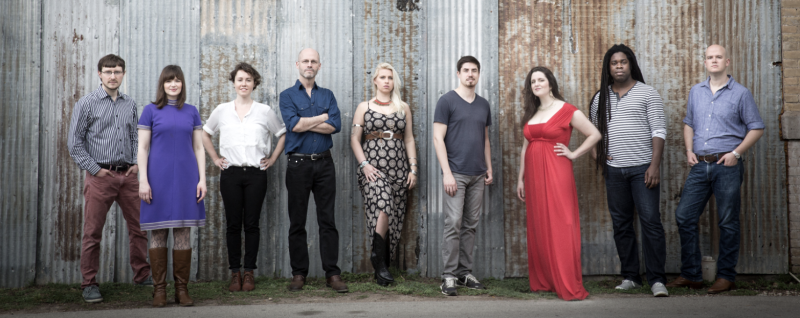
    Thursday May 24 2018 – “The unexpected is always upon us. Well, I must have said this before since I say it now” says Berio’s sprawling five movement work for orchestra and microphoned vocal octet: Sinfonia2018 marks the 50th anniversary of Berio’s opus magnum. It was commissioned by the NY Philharmonic for its 125th anniversary (Berio delivered the score a year late) and the work, more than most, feels like a stamp of its time. Written for Leonard Bernstein and the jazzy pop group the Swingle Singers originally, the music has a wide range references, from Mahler to Boulez. The text draws from Beckett, Lévi-Strauss, and Berio’s own writings. Some of the words are purposely difficult to hear, moving in and out of focus at Berio’s will. With music that is both funny and saturated with anxiety of events of 1968, the meaning of this piece is purposely obscured. 

    Screen Shot 2018-05-30 at 2.15.20 PM

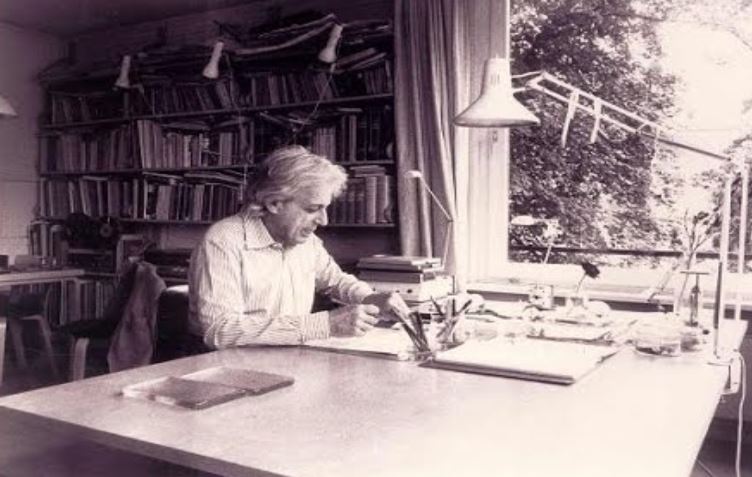
    From the Archives: Composer Luciano Berio

    It is a commentary both in a universal sense and a musical sense (the performers even narrate the music in real time, almost like a sports commentator in the third movement). 50 years later, it feels both relevant and a glimpse into a specific period. Philosopher Walter Benjamin wrote in his Thesis on the Philosophy of History: 

              This is how one pictures the angel of history. His face is turned toward the past . . . The storm irresistibly propels him into the future to which his back is turned, while the pile of debris before him grows skyward.  

    I never thought I’d hear a musical representation of Benjamin’s words, but Berio is able to so in this piece.

    Each of the first four movements (the fifth was added a few years later) has its own feel and exists in a completely different sound world then the others. The fifth ties the disparate entities together in a sort of amalgam of the movements. This evening, the New York Philharmonic presented the work with Seymon Bychkov conducting his second week in a row and the young new music ensemble Roomful of Teeth in its New York Philharmonic debut. It should be said, because this work has such a textual importance it was surprising that the NY Philharmonic opted to not use either supertitles or issue a libretto – particularly for the third movement of the piece. While in English, Berio’s tricky text is important and purposely difficult to hear at times. 

    In the mysterious opening of first movement, Mr. Bychkov managed to guide the orchestra with an incisive sound while blending with the organ-like Roomful of Teeth. Speech is incredibly important to Berio, in his works he always mimics it. Here, the Philharmonic took this to heart. As a singer would finish a line, the instrumentalists would pick up the melody imitating the singer’s timbre and speech pattern. It was an impressive transformation from speech to music and vice versa, making the weaving textures of the piece wonderful to hear. This magical effect reminded me a lot of Boulez’s Répons, composed nearly twelve years later. This is the only performance of the work I’ve heard where I could clearly hear all of the singers – the Philharmonic’s sensitive accompaniment surely the reason. The second movement comprises of a memorial to Martin Luther King Jr. The precise and pouncing brass/percussion outbursts balanced the more Gregorian chant-like singing texture that sits below – at once given the impression of being static and lurching forward. Mr. Bychkov drew a wide range of color from the orchestra, balancing the many textures while still making the outbursts sound percussive. The music briefly devolves into a march near the end before dissipating and here the orchestra seemed to blend into quietness of the hall.

    Screen Shot 2018-05-30 at 2.17.19 PM
    Above: Some of the members of vocal group Roomful of Teeth; Photo Credit: Bonica Ayala of BONICA AYALA PHOTOGRAPHY

    The third movement is the most experimental music Berio wrote. It has the third movement of Mahler’s Symphony No. 2 underlying it (which is in itself a setting of Mahler’s St. Anthony’s Sermon to the Fish from Das Knaben Wunderhorn) with many additions. Berio makes sure that the Mahler is never lost through the entire movement, but it comes in out of focus while the singers do everything from congratulating the conductor to singing about the anxiety of the role of art in politics. Mr. Bychkov managed to untangle the chaos of the music by making each texture transparent and audible, even in the most cacophonous sections. Whether through melody or rhythm, the Mahler was easily heard as were the slew of extra-musical references. Roomful of Teeth for their part, made the movement at once entertaining and somber, even getting laughs from some audience members. During the serious moments, such as questioning the point of art, they took a dedicated tone. This is incredibly difficult music to perform, but I can’t imagine it being rendered better. 

    In the fourth movement which has many short outbursts and feels comparatively sparse and calm, Mr. Bychkov’s precise conducting and the orchestra’s sharp sound provided a respite. The fifth movement’s recollections brought in bits of each of the other movements, almost like a summary of the entire work. It was wonderful to hear because it felt like a retrospective that tied everything together. The much younger looking crowd than usual (many hipster looking men in their late 20’s/early 30’s, likely do to Roomful of Teeth’s dedicated following) gave a well-deserved enthusiastic applause. Mr. Bychkov, Roomful of Teeth, and the NY Philharmonic couldn’t have performed the piece better, showing why at 50 this remains one of the most important symphonic works composed.

    Returning from intermission, the New York Philharmonic did its annual Milestones speeches, honoring members of the New York Philharmonic who are retiring and who have been a part of the orchestra for a certain number of years. This year, they honored the 25th anniversaries of Oboist Robert Botti, Principal Violist Cynthia Phelps, violist Robert Rinehart, and horn player R. Allen Spanjer. They also retiring members Mark Schmoockler (44 years), Vladimir Tsypin (35 years), and Archivist Barbara Haws (34 years). Ms. Haws gave a stirring speech about the importance of history and the connections that occur from a true institution like the New York Philharmonic. Her speech dovetailed perfectly with the Sinfonia, “The present honors the past. 100 years ago, seems like today.” 

    Screen Shot 2018-05-30 at 2.20.50 PM
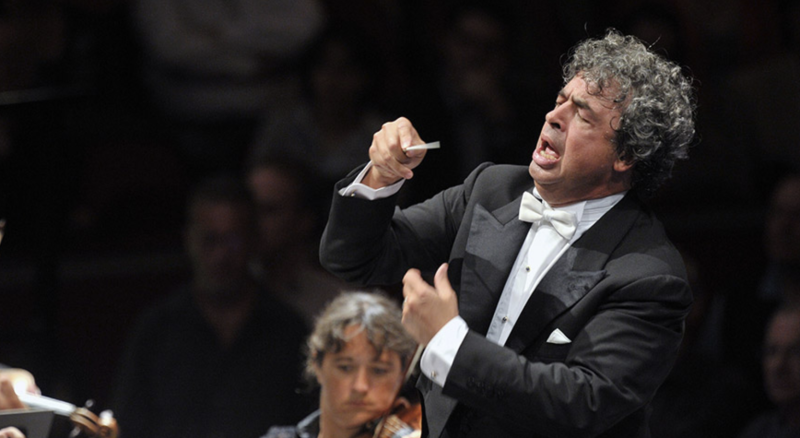
    Above: Conductor Semyon Bychkov; Photo credit: Chris Christodoulou

    After, the group performed Strauss’s last tone poem: An Alpine Symphony. The pairing of these two seemingly unrelated works comes from a line in the Sinfonia when the main narrator in the third movement makes a sarcastic jibe about the Alpine Symphony, saying something the effect of maybe a grand work like the Alpine Symphony will grow flowers (while discussing the lack of political potency music has). Mr. Bychkov and the Philharmonic were in top form. While this is personally my least favorite Strauss piece, Mr. Bychkov gave one of the best interpretations one could want. He made the strings sound vigorous, the brass warm, and the music layered. The orchestra crafted a round, gentle, and rolling sound – which contrasted the first half’s incisiveness well. During the exciting stormy sections, it was fun watching the percussionist get up to play the Thunder Sheet for its brief appearance. It was clear after this performance that Mr. Bychkov can get this orchestra to sound its best – I look forward to hearing him again soon.

  • Wang @ Carnegie

    ~ Author: Scoresby

    Thursday May 17th, 2018 – It is truly a rare occasion to see Carnegie Hall‘s Stern Auditorium completely sold out. It is even rarer to see this happen with stage seating too as was the case with pianist Yuja Wang‘s recital last week. Only Ms. Wang could do so with an unrelenting program like the one she played, with dark, not necessarily crowd pleasing works by Rachmaninoff, Scriabin, Ligeti, and Prokofiev. I haven’t enjoyed Ms. Wang’s solo performances as much in the past, but this felt like a completely different atmosphere than her usual fair. For one, the repertoire was much more intellectual and music lover oriented than her usual programs. For another, this program really seemed to be a statement. If it was any indication of how Ms. Wang’s Perspectives series will be at Carnegie Hall next season, I look forward to being able to attend the many events. 

    Capture
    Above: Pianist Yuja Wang; Photo Credit: Kirk Edwards

    Ms. Wang began the performance with a series of seven Rachmaninoff’s smaller works, all in minor keys and repeated keys back to back (except for the opening g minor prelude). Despite clapping from the audience in-between the works, it was obvious Ms. Wang wanted to play them as one giant set. These set up the rest of the concert incredibly well – she drew in the crowd with a sense of mystery, making Rachmaninoff’s writing sound much more modern than it typically is treated. Emphasizing dissonances and unstable textures, Ms. Wang’s Étude-tableau in C minor, Op. 39 No. 1 sounded like a torrent in the right hand with crisply articulated left hand percussion. But here the blurs and ripples took control – while the notes were clear, Ms. Wang managed to make the voicing fade behind the accompaniment making the piece more modernist.

    In the Prelude in B Minor, Op. 32 No. 10, Ms. Wang’s sensitive dynamic range and languid playing made the romantic climax seem less important than the surrounding, Debussy-like material. The best part of the evening was the Étude-tableau in E-flat Minor, Op. 39 No. 5 which ended the set. Here Ms. Wang had an unparalleled light touch which managed to let the melody sing through the storm of darker undercurrent. This was the opposite of virtuoso playing – many pianists hammer this etude out without much subtlety. Instead, Ms. Wang let the music’s storminess speak for itself, which led perfectly into the Scriabin that came next.

    The next work on the program was Scriabin Sonata No. 10, Op. 70. This is one of Scriabin last five pieces written for piano and has his characteristic mystical sound world in the extreme. While work is in much stricter sonata form than the other late piano sonatas, it still has a mysterious, almost ghostly atmosphere. Ms. Wang wove through the dense textures with ease, making both the structure clear and letting the ambiguous atmosphere seem full of color. Her notes never sounded crisp or grounded; they instead were washed with an ethereal sheen. Just as the magical trills that appear before the work launches into its second theme began to be played, someone’s cellphone ringer featuring a trilling bird went off.

    Capture
    From the Archive: Alexander Scriabin

    While admirably Ms. Wang continued to play, it was a funny indication of the music. The trills begin to take over the more melodic portions of the piece before the climactic recapitulation where tremolos and trills rule in all registers – as Scriabin put it “a blinding light”. Ms. Wang’s glossy playing made this piece seem remote in the best way possible – someone taking you into their isolated world. Adding to this effect was the stage seating. In order to accommodate everyone on the stage without disrupting the performance, Carnegie lowered the lights so there was just a small circle of light around Ms. Wang – making her seem in that same realm as Scriabin.

    ​To finish the first half of the program, Ms. Wang performed three short, but difficult Ligeti Etudes: No. 3 Touches bloquées, No. 9 Vertige, and No. 1 Désordre. To be clear, the Ligeti Etudes are some of the hardest pieces for piano ever written, but each one is also a musical world into itself. After the otherworldly Scriabin piece, Touches bloquées offered a different kind of isolation: that of machinery. The work sounds like a giant machine jerking around – Ligeti gets this odd rhythmic effect by having the pianist strike some keys silently in order to build in a particular rhythm to the piece.

    Ms. Wang gave a committed performance that captured all of this convulsive sound. Vertige is modeled after a falling Shepard’s Tone with many chromatic notes lined up and falling forever. Ms. Wang player her way through this exhausting etude with verve – plucking out each of punchy chords in-between the falling. Finally, the first half ended with the jazzy and punchy disorder, a funny musical joke by Ms. Wang after such a dark/intellectual first half. 

    Capture

    From the Archives: Composer Györg Ligeti

    After what seemed more like a 30 or so minute intermission, the final work on the program was Piano Sonata No. 8 in B-flat Major, Op. 84. Despite the program notes saying that this was Prokofiev’s most optimistic of the war-time sonatas – the sprawling first movement of this piece a moody, wandering work. Ms. Wang’s performance captured the eccentric melody lines and temperamental well. She used a similar remote style of playing that she used in the Rachmaninoff and Scriabin here, but with well timed percussive outbursts in the bass that gave a contrasting mood.

    In the Allegro moderato sections of the first movement Ms. Wang’s rapid fire style of playing was thrilling to watch, bringing the movement to a climax. More impressive though was Ms. Wang’s sense of space and silence at the end of the movement. In the romantic second movement, Ms. Wang seemed at her warmest of the night in the lighthearted theme before plunging into the electric final movement. Here, Ms. Wang plucked out precise articulation with a lithe sound, speeding through the virtuosic sections. The highlight was the mysterious coda-esque moment before the last outburst. Here Ms. Wang seemed relish in the atmosphere before the crashing ending (which had all the tight control of the rest of the performance).

    While a thrilling recital from start to finish, I do wonder if her diverse crowd found it as satisfying. In many ways this was her at her most introspective – no crowd pleasing works like her usual programs and while certainly virtuosic playing, emphasizing the ephemeral instead of flash. Ms. Wang has a history of extensive encores, as such the crowd didn’t seem surprised when she brought out five of her favorite show-stopper type pieces. The crowd seemed enthused with these – much more so than the pieces on the actual program. While Ms. Wang wasn’t indifferent to her crowd, she certainly seemed all-business this evening with brusque bows and a sense of pushing forward. As a final gesture she played Liszt’s transcription of Schubert’s Gretchen am Spinnrade, going back to that dark place of the rest of the concert and seemingly shunning the audience there to hear her – it was like magic.

    ~ Scoresby

  • Augustin Hadelich @ The NY Philharmonic

    0920_augustin-hadelich02

    Above: Augustin Hadelich; photo Jesse Costa/WBUR.

    Author: Scoresby

    Thursday May 25th 2017 – In a flavorful all-Czech program, the young conductor Jakub Hrůša made his New York Philharmonic debut at David Geffen Hall. The violinist Augustin Hadelich was featured on the program, returning to the New York Philharmonic. While I had never heard Mr. Hrůša before, I have been a fan of Mr. Hadelich’s for some time.

    The first piece on the program was the enigmatic Dvorak Violin Concerto in A minor, Op. 53. This is a virtuosic showpiece from early on in Dvorak’s career and has never been a favorite of mine. Mr. Hadelich gave an astoundingly clean, dexterous, and lyrical account once again proving he is a superb interpreter. In the first movement he managed to structure the wandering sections and yet still find time to pause to savor the lyrical sections. The orchestra had a warm sound, but the orchestral writing for this piece is too large for a solo violin. Nonetheless, the musicians blended well with Mr. Hadelich’s tone, creating a very satisfying performance. There was a moment at the end of the first movement in which the horn and violin seemed to fuse timbres creating a beautiful effect evoking a warmer version of a woods call. These sensual movements made the piece much more exciting than I had expected.

    Another was the way the woodwinds played the searing melody during the first movement – it felt like the one could feel the energy from that section of the orchestra. During the virtuosic final movement, Mr. Hadelich managed to playfully entertain with the many Czech dances – the orchestra following his lead well under Mr. Hrůša. Right before launching into the fast pace finish, Mr. Hadelich took one dramatic pause as if to breathe. It was perfectly timed and made the rush to the finish even more alert. As an encore, he gave a technically perfect and surprisingly lyrical account of Paganini’s Caprice No. 1. Mr. Hadelich managed to squeeze all the color that one can out of a showpiece like that.

    2016_09_Herzau_Jakub_Hrusa-9568_72dpi

    Above, conductor Jakub Hrůša photographed by Andreas Herzau

    The evening’s second half started with three of Dvroak’s Slavonic Dances: Op. 46, No. 1; Op. 72, No.2; and Op. 72, No. 7. The first one is a loud colorful fanfare that sounds nationalistic. Mr. Hrůša led a clear account that let the instruments breathe – the crowd burst into applause at the finish of this dance. The second is a much more tragic/lyrical piece which was deftly handled. While indulging for some of the thick textures, Mr. Hrůša made sure to keep the orchestra at bay to build into the third piece in the set – which sounded similar to the opening fanfare. These were crowd-pleasers certainly, but played well and with a sense of purpose.

    After having read about it and listened to it on recording for many years, I finally got the chance to hear Janacek’s Taras Bulba, Rhapsody for Orchestra. This imaginative piece is loosely based on Gogol’s eponymous novella – but Janacek picks three particular scenes to set into music. The first depicts the son of Taras Bulba falling in love with a Polish woman, which eventually ends when Taras executes him for treason. The music itself alternates between sweeping sections depicting the tryst and intense war sounds. In the background of both sections the organ and bells are a constant reminder of his fate.

    Mr. Hrůša drew a colorful and dramatic account, creating extremes in the alternate sections while having enough charisma to push through the piece. The orchestra emphasized the special sound effects well. The ending chord with the organ and bells created an almost vacuum-like effect, throwing the hall into silence. During the second movement, Taras Bulba’s other son is captured by the Polish and is watching them dance as his death draws nearer and nearer. Eventually after meeting Taras Bulba he is executed.

    Here the orchestra sounded much lighter than in the first movement. The harps in the introduction lifted up the entire orchestra, playing both passionately and lyrically. The players managed to produce pulsing dance rhythms well, making the dance seem stuttering and intense. I noticed many similarities between the structure of this movement and Janacek’s second string quartet. He uses the violins in many of the same ways and the opening chords of the quartet appear through the entirety of second movement of the orchestral piece. I also noticed that Janacek manages to create sweeping opera-like sections. Mr. Hrůša managed to get deep anxious playing from the orchestra leading into the final bars. As if to add to the musical drama some audience member shouted a defiant “Nooo!” just as the movement was ending.

    While the last movement depicts Taras Bulba dying, he also sees his own soldiers escaping capture. Thus the music Janacek compose during this movement is mighty and proud. While well played, Mr. Hrůša had the orchestra climax in volume too early, making the other large dynamics less powerful.

    Nonetheless, one of my favorite parts of the piece is when the percussion strikes silencing all of the other instruments. The horns then slowly come in out of sync with each other, creating a call and response echoing effect. The orchestra pulled this off perfectly – building to a dramatic ending with the organ and bells being used to maximum effect. The result was both terrifying and uplifting, transporting the audience to the idealist vision of Janacek’s fantasy.

    ~ Scoresby

  • Alexander Sitkovetsky/Wu Qian @ CMS

    2171-sitkovetsky

    Above: Wu Qian and Alexander Sitkovetsky

    Author: Scoresby

    Thursday May 11th, 2017 – I had the experience of going to Chamber Music Society of Lincoln Center’s wonderfully intimate Rose Studio for a duo performance – from a married couple no less: violinist Alexander Sitkovetsky  and pianist Wu Qian. I am always a fan of performances in the Rose Studio as you feel enveloped in the music – there is no bad seat in a hall this small. I have only ever heard solo piano performance and all string chamber music in here, so it was interesting to see how the space is different with a mixed ensemble.

    The program was well-balanced, with each half starting with one shorter piece followed by one full-length sonata. It commenced with Korchánski’s arrangement of Manuel De Falla’s Suite populaire espagñole for Violin and Piano. While I have heard the entirety of the piece once in performance, violinists tend to only play the jaunty last movement as an encore piece. It was a pleasure to hear it in full here.

    Mr. Sitkovetsky’s playing was clean and clear. He seemed to use extra bow pressure to make the lines come out very smoothly, adding a sweeping vibrato in the more romantic lines. Mr. Sitkovetsky was at his best during the pulsing dance sections. As a whole, their take was slower than I am used to, which allowed Ms. Qian to do an excellent job bringing out the impressionistic elements of the piano part. Particularly noteworthy was her silky tone in the second movement and percussive pulses in the fourth movement, both reminding me of de Falla’s Nights in the Gardens of Spain (which composed within a year of the Suite).

    he first half of the program ended with Schumann’s Sonata in D minor for Violin and Piano, Op. 121. While I hadn’t heard it live before this program, I have never had much of an affinity for this piece. I typically find it too busy-sounding, with the first movement quite repetitive. Nonetheless, the duo did a fine job with the piece making many of the lines more clear than they typically are. They took a structured approach, allowing one to hear a coherent flow of ideas through the piece (which is not always the case). Mr. Sitkovetsky managed to get a more muscly sound than earlier, most noticeable in the last movement. Ms. Qian handled the technical demands and quirky off-beats well.

    The second half of the program began with Alfred Schnittke’s Suite in the Old Style for Violin and Piano. Schnittke’s pieces typically have a conglomerate sound, mixing a modernist idiom with other styles. Here Schnittke composed the piece in a completely Baroque style (with the exception of one note). Mr. Sitkovetsky had a sweet and playful tone. He and Ms. Qian seemed in complete sync as they wove their way through the various movements. I loved the way they played the third movement, a minuet that sounds more like a lullaby. Here the dance pulse of the minuet was clear. They managed to conjure up a beautiful sense of yearning for another time: it was nostalgia in the best way possible.

    This led straight into the difficult fugue which they played with a bouncy, light tone, and sheer virtuosity. They managed to highlight all of the voicing well, with great coordination between them – the violin almost felt like an extension of the piano. In the final movement “Pantomime“, they took a slow, methodical approach that emphasized the humor. This made the dissonant climax after the child-like introduction hysterical – a few audience members let out quiet chuckles. The piece ends with an amusing incomplete scale into silence.

    The program concluded with Grieg’s Sonata No. 3 in C minor for Violin and Piano, Op. 45. This was once a favorite of the violin repertoire, but has decreased in popularity over the years. I’ve always been a fan and found this reading invigorating. The passionate and edgy melody of the first movement fit Mr. Sitkovetsky’s full sound well. Ms. Qian provided sparkling playing with Lisztian waterfall-like arpeggios mixed with dark coloring. The start of second movement is a sugary and sentimental, reminiscent of a Trenet song if the violin were a vocalist. It is a nice escapist melody. 

    In the final movement, Mr. Sitkovetsky and Ms. Qian brought out all of the folksy dance-like rhythms. It is always a good sign when everyone in the audience seems to be tapping their feet or bobbing their head. The back and forth between the instruments was lovely, as was watching their shadows move on the back of the hall. They brought Grieg’s colors to life, making every phrase ring. To hear such lush music in a small space was a treat.

    ~ Scoresby

  • Hadelich/Honeck @ The NY Philharmonic

    Hadelich

    Above: violinist Augustin Hadelich

    Thursday May 28th, 2015 – Earlier this season, Dmitry and I heard Augustin Hadelich give a memorable performance of the Samuel Barber’s violin concerto at Carnegie Hall. I was keen to hear the violinist again, and tonight the opportunity came with his appearance at Avery Fisher Hall with The New York Philharmonic playing Mozart’s “Turkish” concerto. Manfred Honeck was on the podium, opening the evening with the FLEDERMAUS overture; following the interval, we had Brahms’ 4th symphony.

    The tuneful FLEDERMAUS overture was given a brisk, opulent rendition by the Philharmonic; Maestro Honeck gave this infectious music a vibrant sway, and Liang Wang’s oboe solo was a highlight. Toe-tapping and nodding in three-quarter time seized the audience, an inevitability whenever this overture is played.

    Mozart’s 5th violin concerto (K. 219) is popularly referred to as “the Turkish” though there’s little feeling of the exotic in the music until near the end of the final movement. Mr. Hadelich, who I feels ranks very high among today’s top violinists for sheer beauty of tone, made his mark immediately when the opening Allegro aperto movement is surprisingly interrupted for a radiant adagio theme for the soloist. In the slow movement – the Adagio proper – the violinist was at his most persuasively lyrical, his warmth of tone and innate sense of the phrasing giving enormous pleasure. The final movement seems pretty much a standard rondo until Mozart suddenly tosses in a sustained passage of witty “Turkish” music that he used so charmingly in The Abduction from the Seraglio. After this diversion, a minuet sweeps graciously by and the concerto ends gently.

    There’s a cadenza near the end of each of the concerto’s three movements, and as there are no ‘official’ versions for these miniature showpieces, Mr. Hadelich composed his own and they ideally showcased both his dulcet tone and his nimble technique.

    A warm reception from the audience drew an encore from the violinist: a staggeringly virtuosic Paganini piece with slithering mile-a-minute scale passages expertly set forth by Mr. Hadelich. The audience listened in awestruck silence to this coloratura display, then erupted in cheers; the soloist was called out twice to a standing ovation, which he so thoroughly merited. 

    Following the interval, Maestro Honeck and the orchestra treated us to a sonorous Brahms 4th. This symphony, full of inspiring melodies, sounded particularly plush tonight. The composer himself conducted the 1885 premiere of this, his last symphony, and since then it has stood among the great musical masterworks of all time…and it certainly seemed so tonight. Though sometimes described as ‘tragic’, the fourth symphony prompted Clara Schumann to write to Brahms with this summation: “It is as though one lay in Springtime among the blossoming flowers, and joy and sorrow filled one’s soul in turn.” That is exactly how I felt listening to it this evening.

  • Viktoria Tereshkina in ABT’s BAYADERE

    Tereshkina

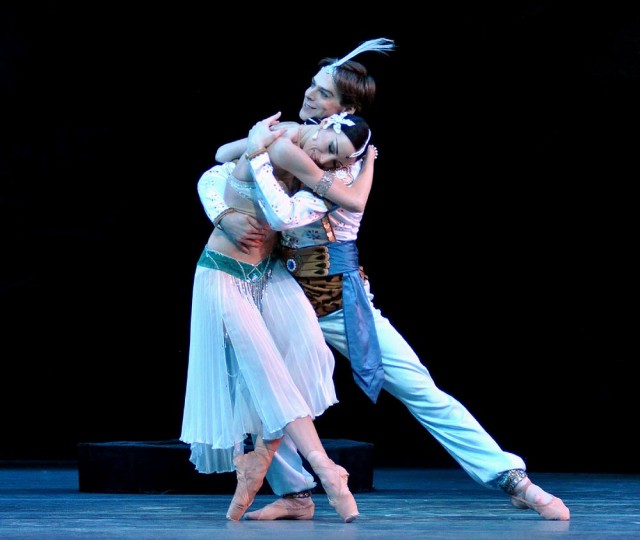
    Thursday May 29th, 2014 – This red-letter date had finally arrived: the guest appearance of ballerina Viktoria Tereshkina (above) in ABT‘s production of LA BAYADERE. I fell in love with Tereshkina when I saw her dancing Balanchine’s BALLET IMPERIAL with the Kirov at City Center in 2008. Vladimir Shklyarov was this evening’s Solor while ABT‘s beautiful Isabella Boylston portrayed Gamzatti.

    ABT‘s BAYADERE is old-fashioned looking, but that’s fine…it’s an old-fashioned ballet. The Lanchberry arrangement of Ludwig Minkus’s melodious score often takes on a cheapish, ‘music hall’ feeling, yet nothing can destroy the perfection of the Kingdom of the Shades, in which the ABT corps danced so well tonight; they very much deserved the sustained applause they received after their entrée.

    There was lots of excellent dancing to be seen all evening, starting with Aaron Scott’s energetic and commanding Head Fakir: very clever of him to slip the antidote to the High Brahmin just before Nikiya finds an asp at her bosom. One distracting element of attending ballet performances at The Met is the noise the toe-shoes make on the opera house’s stage. Somehow the lovely Stella Abrera overcame this problem in her Shade solo, lyrically and silently danced; her sister Shades were Skylar Brandt (very impressive as she crossed the stage in a series of arabesque hops on pointe) and Melanie Hamrick, always a pleasure to watch.

    Zhiyao-zhang

    Zhiyao Zhang (above) stepped out from the corps to dance the demanding solo of the Bronze Idol and did a very neat and precise job of it; he is a young dancer to keep an eye on.

    6a00d8341c4e3853ef017d3d08210a970c-800wi

    Casting about for a photo of Isabella Boylston, I recalled the day Jade Young and I watched Bella (above) rehearsing with Pontus Lidberg for MORPHOSES.  She was on particularly radiant form tonight as Gamzatti, a more complex character than she at first seems. Though vengeful, she is merely acting as her position dictates: a princess can’t be trumped by a mere temple dancer. Gamzatti accepts and embraces her arranged marriage; it’s Solor who has thrown a monkey wrench into things by failing to observe the accepted etiquette and giving his heart elsewhere. Thus for all her spitefulness in Act I, Gamzatti does engage our sympathies when her wedding ceremony crumbles before her very eyes in the ballet’s final scene: Isabella was particularly lovely in the solo here, expressing a bride’s hope and quiet joy, shadowed by the knowledge that her husband’s heart is elsewhere. Earlier, at the betrothal fete, she showed her technical command with some elegant and very grand dancing. The audience loved her.

    Jr_bayadere_tereshkina_shklyarov_014_1000.sized

    Above: Tereshkina and Shklyarov in the Mariinsky production of BAYADERE; photo by John Ross.

    Vladimir Shklyarov completely won the Met audience’s collective heart tonight; enthusiastic applause greeted his solo passages and his partnering of Ms. Tereshkina was simply exquisite. Shklyarov’s dancing was marked by big virtuosity, his jumps sublimely floated and grandly elevated, his turns rapid and sure. His portrayal was marked by great tenderness for Nikiya and the despair of helplessly watching his beloved expire, forced by decorum to turn his back on her anguish. Remorse and guilt, and then the elation of finding Nikiya again among the Shades, were finely depicted by the danseur; by the time he stands before the Brahmin to be married, Solor is nearly mad, haunted by visions of his love. 

    Ms. Tereshkina was everything one can hope for in a Nikiya; her dancing – all rooted in a stupendously strong technique – was refined, spiritual, and deeply musical. Forming a particularly resonant relationship with her partner, the ballerina reveled in the tenderness and ecstacy of their mutual love. In the solo danced before the betrothed Gamzatti and Solor, Tereshkina’s lithe and fluid body revealed the temple dancer’s sense of both duty and humiliation in a finely nuanced performance. In the Kingdom of the Shades, the ballerina attained a remarkable level of technique and artistry, re-affirming the great admiration I had felt when I first saw her dancing with the Kirov. She made a stunning spirit in the final scene as she drove the bridal couple asunder.

    When the final curtain fell on Nikiya and Solor ascending the stairway to heaven, the audience commenced an appreciative ovation that lasted longer than anything I’ve heard at the opera or the ballet in recent seasons. Tereshkina and Shklyarov bowed together several times, and even after the house lights were up and the gold curtain definitively closed, they were called out yet again. The audience clearly wanted solo bows, but the two stars remained resolutely a couple throughout the ovation.

    One especially lovely moment during the bows: Tereshkina came to the very edge of the stage and gave a deep curtsey to the musicians in the pit, thanking them with a sweeping gesture. 

    I must remember in future not to spend the extra money for a balcony seat at ABT; there’s a massive invasion of the Balcony level from Family Circle: people who have paid less but want more clambering over me, marking seats with jackets and scarves, inquiring ‘Is that seat taken?’  The Met’s depleted ushering staff aren’t able to police the area, so this practice is virtually unimpeded. I myself retreated to the near-empty Family Circle once these eager, pushy people descended. I mean, if you are half-a-block from the stage, a few more yards either way hardly matters. But then, even during Shades, people continue playing musical chairs, much to the disadvantage of the performance. Had it been anyone other than Tereshkina, I probably would have left.

  • SALOME @ Carnegie Hall

    FWM_conducting_2_(credit_Roger_Mastroianni)

    Thursday May 24, 2012 – This concert performance of Richard Strauss’ SALOME by the Cleveland Orchestra under the baton of Franz Welser-Most has been on my calendar for months. Photo of the conductor above by Roger Mastroianni.  The maestro and his musicians gave a spine-tingling account of this most dazzlingly colourful of operatic scores. From the massive onslaughts of ominous themes predicting the opera’s brutal outcome to the shimmering delicacy of filagree harp or the sensuous spinning of mid-East exotica in the winds, SALOME has never sounded better. The great sway and sweep of the Dance of the Seven Veils was enthralling, and the maestro’s fingertip control of dynamics helped soprano Nina Stemme turn the arduous final scene into a personal triumph.

    One unfortunate aspect of the presentation though was that the singers were seated on raised platforms along the outer walls of the stage. This meant that for 1/3 of the audience in the hall’s upper reaches, the protagonists were simply not visible. We had a great view of the Nazarenes, Jews and Soldiers but had nary a glimpse of Ms. Stemme all evening. It seems like presenters are always trying to do something clever when giving an opera in concert form; it’s best just to line the singers up across the front of the stage and let ’em rip.

    Nina Stemme scored a huge success in the title-role. I’ve had a great run of Salomes in my years of opera-going: Rysanek, Bumbry, Niska, Marton, Behrens, Malfitano, Mattila. Ms. Stemme’s final scene was on a par with the finest of these, though earlier in the opera the tone was a bit edgy, not always in focus, and some top notes were a shade flat. There’s also not a lot of sheer beauty in the Stemme timbre although – like the immortal Behrens – she can persuade you through vocal colouring that certain notes are disturbingly lovely. But any misgivings were swept clean away by the power and expressivity of her vocalism in the opera’s magnificent closing pages. 

    Eric Owens sang with powerful commitment as Jochanaan. His tone has a somewhat covered, throaty quality and in a few spots the force of the orchestra almost overwhelmed him. He stayed the course and was clearly well-liked by the audience.  Rudolf Schasching sang with cutting power and verbal subtlety as Herod and Jane Henschel made the most of every phrase of Herodias’s neurotic music: these two singers contibuted much to the evening’s success. Jennifer Johnson Cano, a Met Rhinemaiden, sang with seductive, darkish appeal as the Page, and Garrett Sorenson was a strong Narraboth. Oddly, Mr. Sorenson remained onstage after his character’s suicide and was still there as Salome met her fate. Sturdy excellence from a trio of lower voices – Evan Boyer, Sam Hindley and Brian Keith Johnson – who doubled variously as Nazarenes and Soldiers. The Jews were a noisy, annoying lot but that’s exactly what Strauss wanted.