Tag: Thursday November

  • Orchestra of St. Luke’s: All-Mendelssohn Program

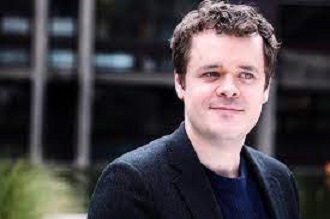
    Benjamin Grosvenor

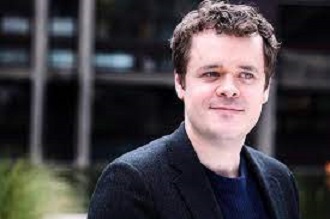
    Above: pianist Benjamin Grosvenor

    Author: Ben Weaver

    Thursday November 17th, 2022 – The Orchestra of St. Luke’s and conductor Harry Bicket continued their multi-season traversal of the works of Felix Mendelssohn on Thursday evening at Carnegie Hall.

    British pianist Benjamin Grosvenor was the soloist in Mendelssohn’s Piano Concerto No. 1 in G-minor, Op. 25, composed in 1831. The 22-year-old composer’s Piano Concerto is not a standard piece in the concerto repertoire and that’s rather inexplicable. It’s a well-crafted work, with wonderful melodies, wide range of moods, and plenty for a soloist to dig into. A stormy opening from the orchestra and a quick, dramatic entry for the soloist set the tone for a wild ride. Grosvenor is an accomplished pianist and his dazzling playing was never lacking in beauty and excitement. The concerto is written without a pause between movements, effortlessly flowing from the tumultuous first to the lyrical second movement. One thing that stands out is the lack of sentimentality from Mendelssohn: he is earnest without cheap effects, and Grosvenor reflected that wonderfully. An especially lovely passage in the Andante movement passes the melody from the piano to lower strings, and here Grosvenor and the string players of the orchestra were spellbinding. A seamless transition into a quirky final movement was nicely handled, and Grosvenor continued his dazzling playing. Perhaps only a bit of humor was lacking in the whole proceeding, but I’ll place the blame for his on Maestro Bicket because this also marred an otherwise wonderful performance of Mendelssohn’s most famous work, incidental music to A Midsummer Night’s Dream.

    Mendelssohn composed the famous Concert Overture when he was 18 years old and it became a staple of the concert repertoire quickly: a magnificent work filled with whimsy, drama, and endlessly hummable tunes, it conquered the world. 15 years later Mendelssohn was commissioned to write additional music for Shakespeare’s play and – remarkably – the now mature composer managed to time-travel to his youth and compose a score as magical as the Overture had been. After a shimmering playing of the Overture, Bicket and the Orchestra of St. Luke’s launched into the Scherzo – a lively wind section driven ode to fairies (excellent playing by the flutes especially).

    Hiding among the players all along was actor David Hyde Pierce, appearing seemingly from nowhere as Puck: which is, obviously, the best way for Puck to appear. Hyde Pierce’s performance of selected sections of the text were delightful: by turns dramatic (Titania shocked to discover her husband’s tricks), a wryly delightful Puck, and gravely pompous Oberon, the real ass of the play. The veteran actor and comedian of TV, film, and stage, moved effortlessly from one mood to the next, sometimes without taking a breath. A marvelous performance! I have always enjoyed Mendelssohn’s music for these melodramas in the work, and so many recordings omit them, alas. So it was a pleasure to hear this music, especially as sensitively played as it was. 

    Soprano Elena Villalón and mezzo-soprano Cecelia Hall were most excellent Fairies, one wishes Mendelssohn had written more music for the singers. Members of the The Choir of the Trinity Wall Street were also excellent in their music; I especially appreciated their very clear diction.

    The Orchestra of St. Luke’s played extremely well all night. The only difficulties came in the beautiful Notturno. Featuring extensive writing for the horns, perhaps the players got tired. The only thing missing in the whole – as I mentioned above – was a sense of humor in the proceedings. The dramatic and lyrical passages were magnificent, but a somewhat lighter touch would have been welcome. Since this afflicted both the Piano Concerto and A Midsummer Night’s Dream, I’ll place this squarely on the shoulders of Maestro Bicket. Maybe he was just having one of those days; let’s blame it on a spell.

    ~ Ben Weaver
  • Orchestra of St. Luke’s: All-Mendelssohn Program

    Benjamin Grosvenor

    Above: pianist Benjamin Grosvenor

    Author: Ben Weaver

    Thursday November 17th, 2022 – The Orchestra of St. Luke’s and conductor Harry Bicket continued their multi-season traversal of the works of Felix Mendelssohn on Thursday evening at Carnegie Hall.

    British pianist Benjamin Grosvenor was the soloist in Mendelssohn’s Piano Concerto No. 1 in G-minor, Op. 25, composed in 1831. The 22-year-old composer’s Piano Concerto is not a standard piece in the concerto repertoire and that’s rather inexplicable. It’s a well-crafted work, with wonderful melodies, wide range of moods, and plenty for a soloist to dig into. A stormy opening from the orchestra and a quick, dramatic entry for the soloist set the tone for a wild ride. Grosvenor is an accomplished pianist and his dazzling playing was never lacking in beauty and excitement. The concerto is written without a pause between movements, effortlessly flowing from the tumultuous first to the lyrical second movement. One thing that stands out is the lack of sentimentality from Mendelssohn: he is earnest without cheap effects, and Grosvenor reflected that wonderfully. An especially lovely passage in the Andante movement passes the melody from the piano to lower strings, and here Grosvenor and the string players of the orchestra were spellbinding. A seamless transition into a quirky final movement was nicely handled, and Grosvenor continued his dazzling playing. Perhaps only a bit of humor was lacking in the whole proceeding, but I’ll place the blame for his on Maestro Bicket because this also marred an otherwise wonderful performance of Mendelssohn’s most famous work, incidental music to A Midsummer Night’s Dream.

    Mendelssohn composed the famous Concert Overture when he was 18 years old and it became a staple of the concert repertoire quickly: a magnificent work filled with whimsy, drama, and endlessly hummable tunes, it conquered the world. 15 years later Mendelssohn was commissioned to write additional music for Shakespeare’s play and – remarkably – the now mature composer managed to time-travel to his youth and compose a score as magical as the Overture had been. After a shimmering playing of the Overture, Bicket and the Orchestra of St. Luke’s launched into the Scherzo – a lively wind section driven ode to fairies (excellent playing by the flutes especially).

    Hiding among the players all along was actor David Hyde Pierce, appearing seemingly from nowhere as Puck: which is, obviously, the best way for Puck to appear. Hyde Pierce’s performance of selected sections of the text were delightful: by turns dramatic (Titania shocked to discover her husband’s tricks), a wryly delightful Puck, and gravely pompous Oberon, the real ass of the play. The veteran actor and comedian of TV, film, and stage, moved effortlessly from one mood to the next, sometimes without taking a breath. A marvelous performance! I have always enjoyed Mendelssohn’s music for these melodramas in the work, and so many recordings omit them, alas. So it was a pleasure to hear this music, especially as sensitively played as it was. 

    Soprano Elena Villalón and mezzo-soprano Cecelia Hall were most excellent Fairies, one wishes Mendelssohn had written more music for the singers. Members of the The Choir of the Trinity Wall Street were also excellent in their music; I especially appreciated their very clear diction.

    The Orchestra of St. Luke’s played extremely well all night. The only difficulties came in the beautiful Notturno. Featuring extensive writing for the horns, perhaps the players got tired. The only thing missing in the whole – as I mentioned above – was a sense of humor in the proceedings. The dramatic and lyrical passages were magnificent, but a somewhat lighter touch would have been welcome. Since this afflicted both the Piano Concerto and A Midsummer Night’s Dream, I’ll place this squarely on the shoulders of Maestro Bicket. Maybe he was just having one of those days; let’s blame it on a spell.

    ~ Ben Weaver

  • Shostakovich/Tchaikovsky @ The NY Phil

    Dmitri_Slobodeniouk_Photo_Credit_Marco_Borggreve-1024x683

    Above: conductor Dima Slobodeniouk, photo by Marco Borggreve

    Thursday November 18th, 2021 – It was wonderful to re-connect with The New York Philharmonic this evening when they offered a program of music by Shostakovich and Tchaikovsky at Alice Tully Hall. As the hall slowly filled to capacity, I loved seeing so many of my favorite musicians again, taking their places onstage after the long months of isolation. Sheryl Staples was the concert-master tonight, and a sense of anticipation seemed to fill the Hall.

    I was not sure how these big works would fare in the rather intimate space of Tully Hall, where we’re accustomed to hearing chamber music. But in fact, the sonic effect of the large ensemble was wonderful to experience: rich and deep; and when solo moments came along for the principals, the clarity was vivid. The risers for the winds and percussion were abandoned in this space. Most of the string players remained masked throughout the evening.

    As the date of the concert drew near, an announcement was made that the scheduled conductor, Semyon Bychkov, would be replaced by Dima Slobodeniouk, who is making his Philharmonic debut with these performances.

    Shostakovich wrote his first violin concerto 1947-48, but the composer hid it away until 1955, when it had its premiere performance by with the Leningrad Philharmonic, with David Oistrakh as soloist. It is to Oistrakh that Shostakovich dedicated the concerto.

    It had not been safe for Shostakovich to bring forth this piece until Josef Stalin had been dead for two years. The 1946 Zhdanov Doctrine had warned that the post-war divide between US imperialism and the democratic Soviet Union had produced a conflict in Soviet culture: a conflict between good and best. Shostakovich knew that “best” meant: ‘…adhering to cultural standards specified by the government.’ And he also knew that this concerto would not have been deemed “acceptable”. He had already been previously condemned by Stalin, and he knew enough not to tempt fate.

    Gomyo

    Violinist Karen Gomyo (above) opened the evening, playing the Shostakovich 1st violin concerto in her debut NY Philharmonic performances. And what a triumph she had in this exceptionally demanding piece! Ms. Gomyo is a native of Tokyo; she studied at the Juilliard School with Dorothy DeLay. She looked gorgeous tonight in her midnight-blue frock, upon which tiny silver sequins sparkled like diamonds.

    The concerto’s opening movement is entitled Nocturne. The deep strings underscore a low, doleful melody for the solo violin; as the music moves into a higher range, a sense of longing takes over.  The winds, and then the violins, accompany the soloist’s ascent. Harp notes sound, the basses growl, and the winds create darkish textures, with a particularly rich solo passage for bass clarinet. Now the soloist rises to a shimmering, sustained high note.

    The second movement, Scherzo, bounces out in agitato mode, the soloist deftly handling her tricky passages over the sound of plucking strings. Rhythms are brisk and uneven, taken at high speed, and the xylophone, horns, and clarinet add to the colorful palette of sound. The music breaks into a dance as the scherzo runs on to a big finish.

    The third movement, Andante, is a passacaglia; after a deep, dramatic start, the music becomes dirge-like, with the basses and low winds maintaining an almost ominous feeling. The solo violin sings a poignant lament; the horn has a solo passage, plushy played, and then the plodding basses are joined by their celli brothers. The violin embarks on a gigantic cadenza, which ranges from the depths to the heights and calls for exceptional technical mastery; Ms. Gomyo’s staggering virtuosity kept the audience spellbound during this incredible solo.

    The finale, a Burlesque marked allegro con brio, is introduced by the drums, with the xylophone again kicking in. How sweet to hear Anthony McGill’s clarinet singing forth! Ms. Gomyo makes a brilliant entrance.  Orchestra and soloist have frequent interactions, with the Passacaglia theme popping up out of nowhere, now animated in a presto setting. The finale dances along its bravura way to a dazzling conclusion.

    Ms. Gomyo was as riveting to watch as to hear: throughout her performance, her intensity and deep commitment could be read on her face. The audience responded to her thrilling performance with a vociferous standing ovation, the Philharmonic players joining in enthusiastically: a wonderful, celebratory atmosphere in the Hall.   

    After the interval, Tchaikovsky’s first symphony, known as “Winter Dreams” was sumptuously played by the orchestra, conducted with passion and great attention to detail by Maestro Slobodeniouk.

    While I have always thought of Tchaikovsky as one of my favorite composers, for me the first symphony is not one of his finest works. I’d only heard it played live once before, by this same orchestra; at that time I found it pleasant enough. But maybe that is all it is: pleasant.

    The first movement really felt over-long this evening; basically it seemed to be heading nowhere. Likewise, the fourth movement takes forever to get going, with various detours and a slow revving of the engines before the Allegro maestoso finally bursts forth  The highlights of this performance were the passages that Tchaikovsky assigned to the principals: Robert Langevin (flute), Liang Wang (oboe), Anthony McGill (clarinet), and Judith LeClair (bassoon). Liang Wang’s solo in the second movement, which becomes entwined with the sound of the Langevin flute, was a little slice of heaven.  Section by section, too, the orchestra simply sounded great: the viola and cello themes in the Adagio really glowed, and the richness of the cellos and basses in the final movement was truly savourable.

    Yet, despite superb playing, tonight the Tchaikovsky 1st joined the Beethoven Pastoral on my list of symphonies to avoid in future. I think Tchaikovsky did Winter better in THE NUTCRACKER.

    ~ Oberon

  • TURANDOT @ The Met

    Turandot0607.07

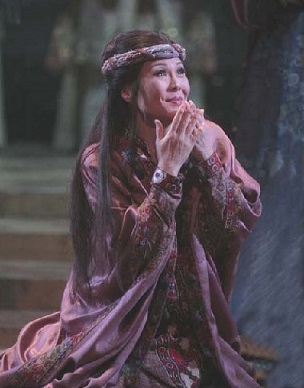
    Above: Hei-Kyung Hong as Liu in a Beatriz Schiller/Met Opera photo

    ~ Author: Oberon

    Thursday November 16th, 2017 – I invited my friend Claudia Schreier to this evening’s performance of TURANDOT at The Met; I wanted her to experience one of last truly grand opera productions in the Met’s repertory. The presence in the cast of Hei-Kyung Hong as Liu was a major factor in choosing this particular evening.

    As at every performance of TURANDOT I’ve attended in the past 30 years, the house was packed. And, as at every Hei-Kyung Hong performance I have attended at The Met, the soprano’s presence in the cast drew large numbers of Asian opera fans. It turned out to be – yet again – Ms. Hong’s night. 

    The evening got off to a sluggish start: Carlo Rizzi’s pacing of the Mandarin’s opening address was slower than the MTA and caused baritone Jeongcheol Cha to dig deep for sufficient breath to sustain the phrases of his proclamation. Later, Rizzi thoughtlessly allowed too much orchestral volume at times, undermining expressive opportunities for his singers.

    23658727_10156216374773690_1557430116954388631_n

    The towering figure of Bulgarian basso Giorgi Kirof as Timur (above, taking a curtain call) came onto the scene; in his Met debut, Mr. Kirof’s looming stature gave Ms. Hong’s petite figure as Liu an almost childlike aspect. The basso – a stalwart of the Sofia National Opera – gave a vocally moving performance, reaching emotional heights in the heartbreak of “Liù…Liù…sorgi! È l’ora chiara d’ogni risveglio!” which literally choked me up.

    Alexey Lavrov was a terrific Ping, with a big, warm sound; his “Ho una casa nell’Honan…” was superbly sung. As his sidekicks Pang and Pong, Tony Stevenson and Eduardo Valdes gave characterful singing. I actually love the scene of the three ministers, which Puccini orchestrated so precisely. As the Emperor Altoum, Ronald Naldi’s voice ‘spoke’ clearly – all the way from Amsterdam Avenue.

    Aleksandrs Antonenko had a fine evening as Calaf. He measures out the voice thoughtfully in Act I, saving up for the arduous singing ahead. But his “Non piangere, Liu” was finely judged, revealing veins of beauty in his powerhouse voice. Throughout the Riddle Scene, the tenor scored with dramatically-lit singing, and joined Oksana Dyka’s Turandot on a firm and sustained high-C at the end of “In questa reggia“. Mr. Antonenko also took – and held – a strong high-C at “No, no, Principessa altera! ti voglio ardente d’amor!

    Mr. Antonenko’s “Nessun dorma” was persuasively sung, reveling in the music’s inherent lyricism; he pulled off the climactic phrase impressively and managed to both acknowledge and forestall a wave of ‘bravos!’ by holding up his hand, letting the opera flow forward. The tenor’s singing in the final duet was first-rate, with some lovely expressions of tenderness as Turandot succumbed to him.

    Oksana Dyka’s voice is slender of tone yet strong of projection. The top range doesn’t blossom but the notes are there; it took a few phrases for the sound to shake loose. As she moved downstage in the course of “In questa reggia” the voice began to speak into the house with increasing effect. Her Riddle Scene was filled with characterful expression: fire and ice. Following her collapse and her desperate plea to her father, the scene turned dramatically absorbing.

    Ms. Dyka, her hair down and nearly prone with despair, is literally overcome with wonderment when Calaf/Antonenko offers her a way out of the bargain. She simply stares at him, realizing that this is a different kind of man than she’s accustomed to dealing with. Then he gently helps her to her feet. The chemistry between the two singers here was genuine; I’ve never seen that moment done quite that way.

    Ms. Dyka’s voice seemed freer in Act III, and she was sustaining the phrases more and reveling in the upper range notes, holding them to generate increased excitement. Her “Del primo pianto” was movingly sung, opening up her humanity which has been bound in ice for so long. In the final moments of the opera, the soprano’s “Padre augusto…Conosco il nome dello straniero! Il suo nome è…Amor!” had a silvery gleam and a prolonged top-B.

    Hei-Kyung Hong’s Liu has captivated audiences time and again in her long Met career. As someone who has seen and heard so many splendid sopranos essay the role of Liu – people like Moffo, Freni and Caballe – I feel Hei-Kyung’s stands at the pinnacle both for her physical perfection and her deeply moving singing.

    If her Wikipedia page is accurate, Hei-Kyung is now 58 years old. Her voice has retained its freshness thanks to her wisdom in choosing repertoire. Tonight both the beauty of her sound and the instinctive rightness of her phrasing gave the music a deeply feminine quality; she also has a feeling for the Italianate style that escapes many non-Italian-born singers. Both her arias were as finely sung as I’ve ever heard them, and her death scene was truly heart-rending. She received a vociferous ovation, very much deserved.  

    All evening, the Met Orchestra made marvelous music, with particular magic from the violin of concertmaster David Chan who made so many of his phrases shine. Likewise, the chorus were at their most fervent and full-voiced.

    Turandot0910.06 sohl

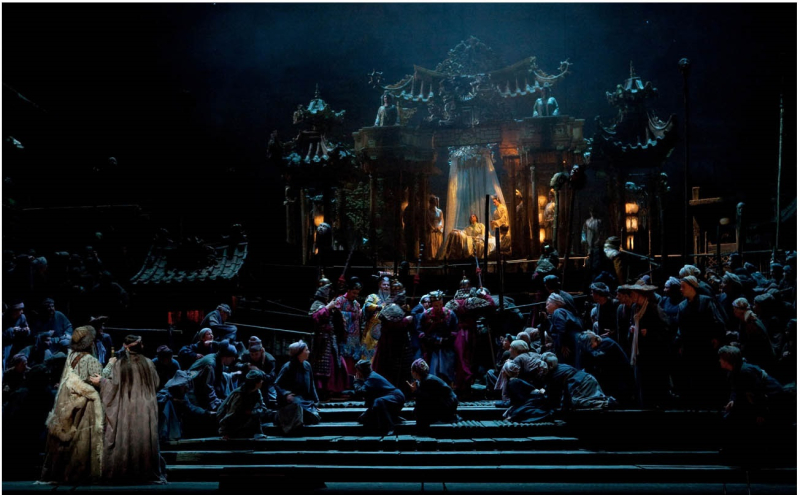
    Above: Act I production photo by Marty Sohl/Met Opera

    Some of the original staging has been altered and to me this weakens the overall effect of the opera. And the crowd scenes seem less crowded than in the past. The 45-minute intermission after the 35-minute first act would have been unbearable had I not had the one-and-only Claudia Schreier to keep me company.

    Catch the curtain calls here, with the charming episode of the “missed bouquet”.

    ~ Oberon

  • At Jennifer Muller’s Studio

    L1510781

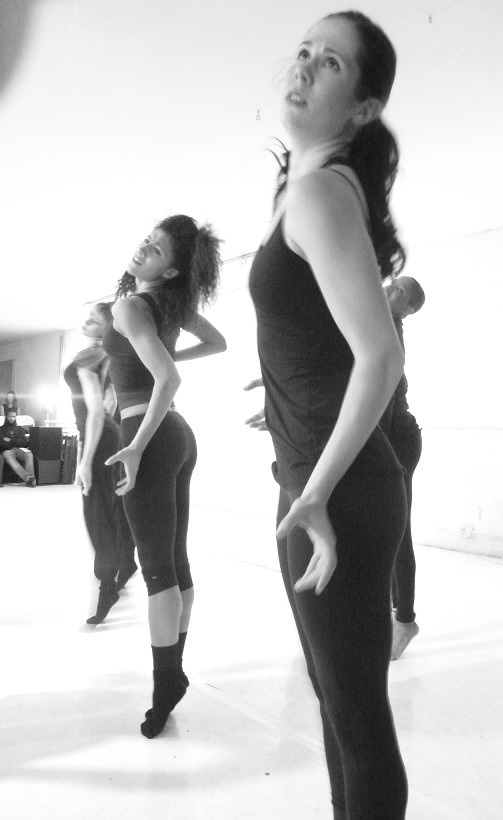
    Above: from Jennifer Muller’s MISERERE NOBIS, with dancer Shiho Tanaka in the left-foreground

    Thursday November 20th, 2014 – Celebrating the remarkable milestone of a 40th anniversary, Jennifer Muller/The Works invited friends of the Company to a studio showing tonight. Excerpts from five Jennifer Muller danceworks – plus a complete showing of her most recent creation, MISERERE NOBIS – were performed by The Works’ distinctive, dynamic dancers.

    L1510656

    Above: dancer Michael Tomlinson warming up

    The dances shown tonight ranged in date-of-creation from 2005 (ISLAND) to Jennifer’s current and wonderfully-contrasted successes MISERERE NOBIS and WHEW!  As with all the finest choreographers over time, she has delved deeply into the vast catalog of music: tonight alone we heard Allegri, Mozart, and Barber in tandem with such contemporary composers as Julia Kent, Peter Muller, and Marty Beller. One moment we are in church and the next we are being jazzed; this musical variety keeps everything at The Works fresh and vivid.

    In the intimate studio space, we the viewers come as close to dance as we are likely to get. The dancers of Jennifer’s company know this room so well that they are able to dance full-out without concern for spatial limitations. Big lifts, often a motif in Jennifer’s choreography, are often accomplished with just centimeters of head-room; but the dancers all seem to have a sixth sense of just how far they can take things.

    The programme was so well-devised, with Jennifer’s illuminating commentary between works just enough to give us insight without becoming too chatty. The dancing was vivid and personal. 

    L1510747

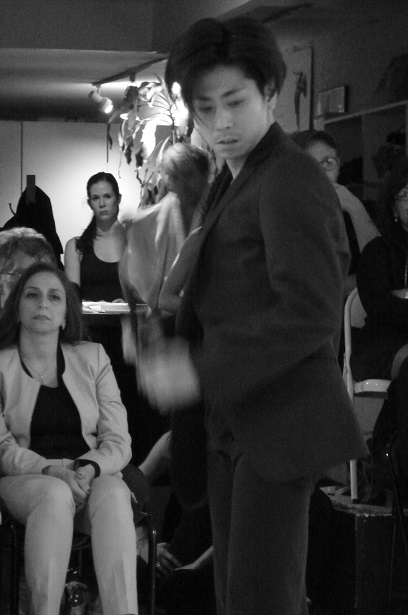
    I attempted to take some photos but most of the movement was too swift for me to capture. Gen Hashimoto (above) was briefly almost still in his beautifully-executed solo from ARIA, performed to the poignant “Dalla sua pace” from Mozart’s DON GIOVANNI.

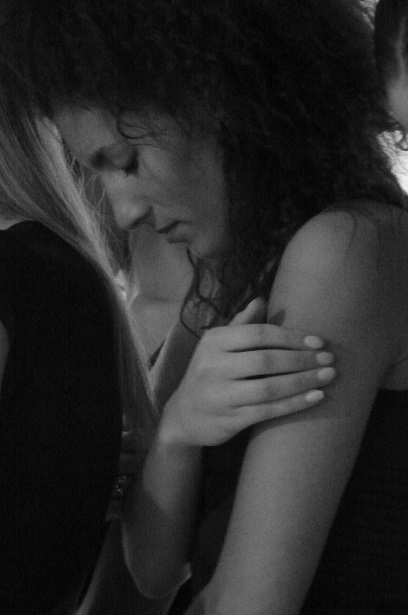
    Otherwise, my only successful images came from MISERERE NOBIS which happens to be a particular favorite of mine from among Jennifer’s works. Here are a few photos from this all-female ensemble work:

    L1510770

    L1510773

    Elise King

    L1510787

    L1510796

    L1510802

  • Joshua Bell & The NY Philharmonic

    Joshua-bell_s345x230

    Thursday November 13, 2014 – Violinist Joshua Bell (above) plays the Glazunov violin concerto in a series of five concerts with The New York Philharmonic. Case Scaglione takes the podium for these performances, which also features Debussy’s Afternnoon of a Faun and Prokofiev’s symphony #5.

    My friend Monica and I attended the second evening of the programme; since we are both passionate ballet enthusiasts, we very much enjoyed experiencing the Debussy in a concert setting; we have often seen the Jerome Robbins setting of the work at New York City Ballet, and recently Boston Ballet brought their ‘original’ version to Lincoln Center.

    One of the composer’s most famous works, Claude Debussy’s Prélude à l’après-midi d’un faune referred to in this evening’s Playbill by its English title – premiered in 1894. The work is considered a turning point in the history of music: Pierre Boulez once said he considers the score to be ‘the beginning of modern music’. Tonight the Philharmonic gave a beautifully shaped rendering of this sensuous piece, which commences with the languid flute theme. Individual voices emerged dreamily from the overall soundscape and Debussy’s alluring colour scheme was indeed seductive. Neither Monica nor I could recall having previously heard the gentle chime of a triangle near the end of the piece; it seemed very prominent tonight. Case Scaglione rightly summoned the Philharmonic’s principal flautist, Robert Langevin, for a solo bow during the warm applause that greeted this opening work.

    Composer Alexander Glazunov (1865-1936) managed to endure ten years in Russia following the Bolshevik Revolution; he fled to Paris in 1928. His compositions from that point on are considered less impressive than his earlier works which include the richly melodic score for the ballet RAYMONDA, a suite from which was recently featured in ABT’s Autumn season at Lincoln Center.

    The violin concerto, Glazunov’s most frequently-performed work, was composed it in 1904. It is dedicated to, and was premiered by, the great Hungarian violinist Leopold Auer, the teacher of Heifetz, Milstein, and Elman, among others. Glazunov casts this concerto in an unbroken arc, with the three vari-paced movements subtly linked. A virtuosic cadenza carries us to the exuberant finale in which the soloist dazzles against a tapestry of orchestrated fireworks.

    Joshua Bell, taller than I had imagined and retaining a youthful energy of demeanor in his mid-40s, displayed the warmth of tone and the clear shimmer of upper-range diminuendo that are hallmarks of his playing. I was a bit surprised to note that he was using a score, but he handled it with casual assurance. Creating a fine rapport with conductor and musicians, Joshua drew the succession of themes in the opening movement into long, impeccably turned phrases; in the almost frantic pacing of the final allegro, he seized upon the sparkling coloratura passagework with thrilling dexterity. The crowd called him out for a well-deserved solo bow.

    After the interval, the Prokofiev: he wrote his fifth symphony during the summer of 1944, while staying at a dacha in the countryside outside Moscow. Having stored up his musical ideas over time, he wrote with speed and surety. The symphony was first performed in Moscow in January 1945 with the composer conducting.

    The first movement is dense of texture and thick with themes: there are five distinct tunes to be discerned, and the composer integrates them with skill. The movement closes on a grandiose note; I must say I wasn’t totally enamoured of this opening andante; it seemed a bit turgid and over-extended. But thereafter, the Prokofiev I have come to love was very much in evidence. The second movement in particular is a great delight with its relentless forward motion decorated by interjections of wit and melodic irony. The tempo gradually accelerates, almost to the point of veering out of control.

    The adagio conjures up the blend of unhappy romance and wistful tenderness we associate with the composer’s ROMEO AND JULIET, with a turbulent central passage. Then on to the final Allegro giocoso, where we again find Prokofiev at his most inventive, opening with an echo of the first theme of the first movement, and then a passage for the clarinet – Prokofiev at his most magical – superbly voiced by principal Anthony McGill. The symphony plunges forward to its conclusion, re-affirming the composer’s fixed positon in my constellation of favorite composers.

  • Celebrating Britten @ The NY Philharmonic

    2926592313

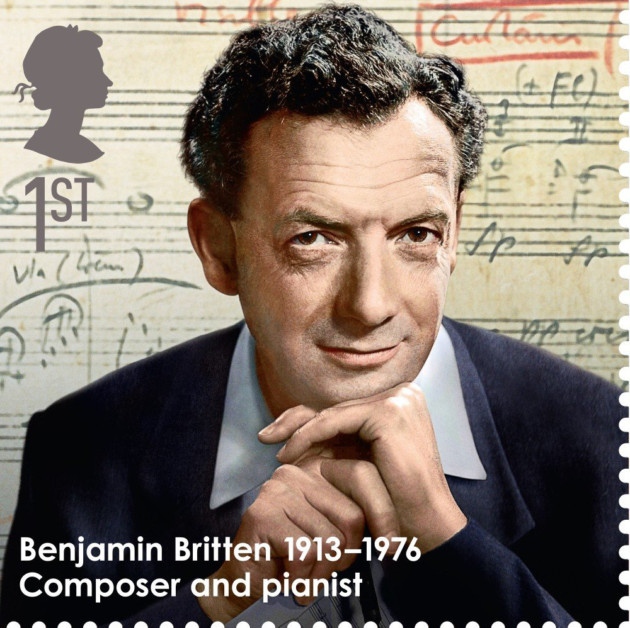
    Thursday November 21, 2013 – The New York Philharmonic‘s celebration of the 100th anniversary of the birth of Benjamin Britten was a lovely fête which brought forth the composer’s familiar Serenade for Tenor, Horn and Strings and the less-frequently-performed Spring Symphony.

    The performance took on added drama when the scheduled tenor was forced to withdraw for health reasons literally on the eve of the concert. This caused the Philharmonic to launch a desparate search for tenors who could 1) sing this demanding music and 2) were available on such short notice. Things turned out very well indeed, with a disarmingly attractive performance of the Serenade by Michael Slattery and a thoroughly impressive rendering of the Spring Symphony by Dominic Armstrong who, as Maestro Alan Gilbert told us, had never so much as looked at the score til the morning of the performance.

    The richly emotional Serenade for Tenor, Horn and Strings opens and closes with solo passages for horn which are played without use of the valves that stabilize pitch. The instrument is difficult enough to play as it is – I know: I played horn in high school – but Britten throws in this extra complication to render the sound with a ‘hunting horn’ ambiance. Thus the Philharmonic’s formidable principal horn, Philip Myers, appeared onstage with two horns – one for the Prologue and Epilogue, and the second ‘normal’ horn for the remaining movements of the work.

    Britten sets the Serenade’s poems, which span five centuries of English verse, in the upper range of the tenor voice; this gives the music an air of rather eerie innocence, yet the singer must also show great maturity in terms of both technique and sensitivity to the texts. The vocal movements are: “Pastoral” (with text by Charles Cotton), a hymn to sunset which sounds like a lilting lullabye; “Nocturne” (to words by Alfred, Lord Tennyson), where the horn calls echo as evening falls over the land; William Blake’s “Elegy”, which addresses a dying rose and is tinged with plaintive melancholy. In the Serenade‘s most unsettling passage, to an anonymous 15th-century text, the “Dirge” is a fugue of relentless, creeping madness evoking the fires of Hell which will ‘burn thee to the bare bone…and Christ receive thy soul’ (this song haunts me for days everafter whenever I hear it). In sharp contrast, Ben Jonson’s “Hymn” is light-hearted and upbeat, bringing the singer’s task to an ‘excellently bright’ conclusion. As the voice falls silent, the offstage horn closes the Serenade on a benedictive note.

    M slattery

    I had heard tenor Michael Slattery (above) often during his time at Juilliard, and was pleased to be present at his impromptu Philharmonic debut tonight. Slender and boyish in his elegant tux, Michael took the high tessitura in stride, with many felicitous passages of vocal color and inflection: his diction was clear and touchingly expressive. Philip Myers played with gleaming, burnished tone and exceptional power in the phrases that serve as a counter-poise to the voice. Maestro Gilbert drew evocative playing from the string ensemble, and the entire performance had a nocturnal incandescence that was truly pleasing. Michael Slattery reacted with disarming sincerity to the audience’s warm applause, being called out with Mr. Myers and the conductor for extra bows.

    The Spring Symphony was commissioned by the Koussevitzky Music Foundation and is dedicated to Serge Koussevitzky and the Boston Symphony Orchestra though it was actually premiered at the Conncertgebouw in Amsterdam during July 1949 before its American premiere the following month at Tanglewood by Koussevitzky and the BSO. Britten calls for a huge orchestra, adult and children’s choruses, and three vocal soloists. The score is dazzling in its range of instrumental colours and textures, and the texts include both hymns of praise to the coming of Spring and some charming moments of levity in depicting day-to-day happenings. This work is quintessentially British: the poems invoke English pastoral imagery and the deftly ‘sudden’ ending – “And now, my friends, I cease” – is punctuated by a  plump C-major chord.

    Maestro Gilbert marshalled his forces for a thoroughly impressive and enjoyable performance: a special “hurrah” for the Brooklyn Youth Chorus who are called upon to both sing and whistle. The ‘save the day’ performance by tenor Dominic Armstrong revealed an attractive voice with mastery of dynamics and colours as well as of textual incisiveness that belied his unfamiliarity with the work. The slender and very pretty soprano Kate Royal has a feather-light lyric soprano and sang charmingly while the distinctive voice of Sasha Cooke – heard only two days earlier at Chamber Music Society – stood out for glowing tone and poetic resonance.

    This was my first time experiencing the Spring Symphony – I’d never even heard it on a recording – and it was a very good idea of Maetro Gilbert’s to choose it as a birthday salutation for the composer, for it is not often performed.

    I must register one tiny complaint – nothing to do with the music or the musicians – but I do wish that plastic water bottles could be banned from the concert stages. In the ‘old days’ small tables were set next to the soloists’ chairs with glasses of water which the singers could sip decorously between numbers. Now we have a distracting ritual of bending over, uncapping the bottle and gulping away like basketball players on the bench. The ‘old way’ of hydrating is much more elegant, and far less conspicuous.

  • Lar Lubovitch Dance Company @ Florence Gould Hall

    Saltimbanques-pierre-reverdy-L-1

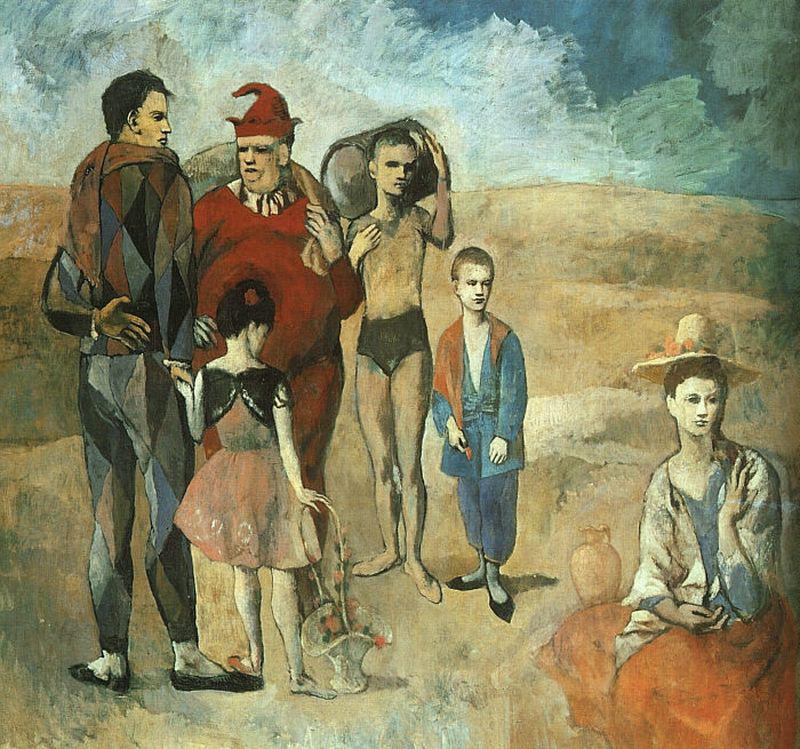
    Above: Les Saltimbanques, the painting by Picasso that inspred Lar Lubovitch’s newest creation, TRANSPARENT THINGS.

    Thursday November 15, 2012 – Three recent works by Lar Lubovitch comprised the programme tonight at Florence Gould Hall where Lar’s superb troupe of dancers held the stage to fine effect, abetted in the final work by excellent playing of the Debussy G-minor quartet by the Bryant Park Quartet.

    Opening with the ravishingly dark and lyrical LEGEND OF TEN, set to the Brahms F-minor quintet, the Lubovitch dancers showed from the first moment both their collective technical expertise and their individuality as poets of movement. In this dance of swirling and evocative patterns, the heartfelt music buoys the dancers throughout; from time to time a dancer will step forward and briefly pay reverence to the audience before melding back into the flow of the dance. The gorgeous and distinctive Lubovitch women – Nicole Corea, Laura Rutledge and Kate Skarpetowska – are partnered in ever-shifting match-ups by the beautiful men of the Company: Attila Joey Csiki, Reed Luplau, Brian McGinns, George Smallwood and Anthony Bocconi. A central pair – Elisa Clark and Clifton Brown – weave their ongoing pas de deux into the ensemble; tall and radiant, the couple bring an unusual sense of dignity to what might otherwise simply be a romantic duet. Clifton’s imperial wingspan and the hypnotic styling of his arms and hands are a blessing to behold, and Elisa matches him in expressive nuance. Compelling dance from all, and the work is surely one of Lar’s greatest masterpieces.

    377924_2509974742725_1469896582_n

    Darkness of a more jagged and comtemporary feel marks CRISIS VARIATIONS, in which a smaller ensemble of dancers – Nicole Corea, Laura Rutledge, Attila Joey Csiki, Reed Luplau and Anthony Bocconi – writhe and struggle against unseen demons whilst yet another of Lar’s imaginative duets – danced by the enigmatic Kate Skarpetowska and the dynamic Brian McGinnis – ebbs and flows among the struggling community. Kokyat’s image of Kate and Brian, above, captures one of the pas de deux’s most spine-tingling moments.

    What gives CRISIS VARIATIONS its unique flavour in the Yevgeniy Sharlat score; in this turbulent and entrancingly crafted music, individual instruments – harpsichord, saxophone, organ – lend a nightmarish gleam to the tapestry of movement. The ballet, though steeped in deep despair, is not without subtle hints of tongue-in-cheek self-pity.  

    The newest of Lar’s works, entitled TRANSPARENT THINGS, is a pure joy. Reid Bartelme’s costumes translate from the Picasso painting with remarkable faithfulness, and the dancers take to the mirthful and sometimes self-mocking characters of this vagabond troupe of entertainers with flair.

    Schreiber IMG_5214

    Attila Joey Csiki (above, Steven Schreiber photo) is perfect as the mercurial Harlequin, his solo dancing marked by the pure grace of his pliant style. Kate Skarpetowska and Laura Rutledge seem literally to have stepped out of the painting; Brian McGinnis is a tower of strength in his billowy red suit and Clifton Brown in simply marvelous to watch. Boysihly beautiful Reed Luplau brings a touch of innocence and a creamy, chiseled chest to his velvet-clad Blue Boy.

    Playing from memory, the musicans of the Bryant Park Quartet give a rendering of the Debussy score which ranges from sentimental to ebullient. Violinist Anna Elashvili seemed ready to spring from her chair and join the dance. At the close of the ballet’s third section, the dancers invade the musician’s space and are momentarily stilled; Attila lovingly rests his head against the cello. In this charming moment the marriage of music and dance are quietly celebrated. Brilliant!