Tag: Thursday October

  • Vengerov/Osetinskaya @ Carnegie Hall ~ 2022

    Maxim_vengerov-

    Above: Maxim Vengerov

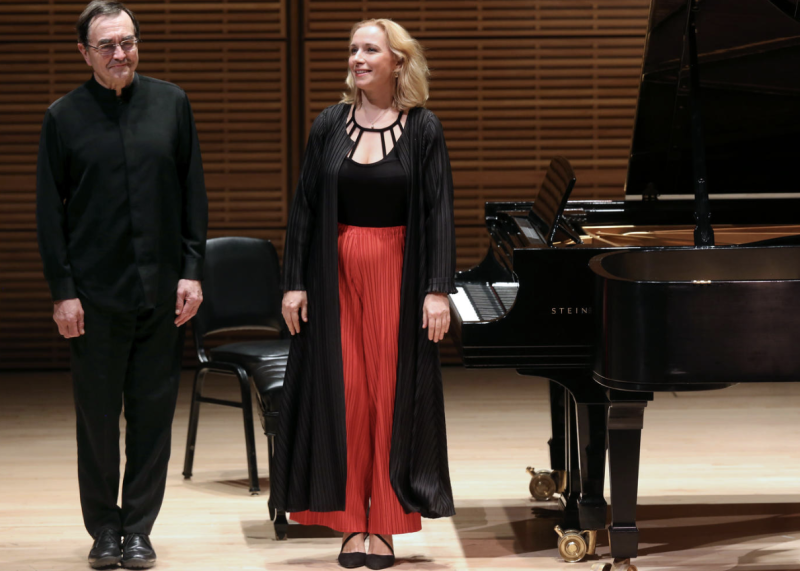
    Thursday October 20, 2022 – In February 2020, just days before life-altering pandemic commenced, Maxim Vengerov and Polina Osetinskaya gave a memorable recital at Carnegie Hall. This evening, they were back on the Carnegie stage with another enticing program.

    But our evening did not quite go as planned. First, a 20-minute delay of the start of the concert caused the audience to become restless. Then, during the music, the women behind me chatted whilst a woman next to me fell asleep and snored lightly. Then, about 90 seconds before the end of the Kreutzer sonata, a woman stood up and struggled over the people in her row to get to the aisle. My friend Dima, who is Russian, always says ‘Russian audiences are the worst’; we decided to have a late supper rather than endure more distractions. It was kind of sad to leave, because Mr. Vengerov and Ms. Osetinskaya really were playing divinely.

    The artists finally took the stage, Mr. Vengerov rather oddly clad in what appeared to be a bulky blue sweater and matching trousers. Ms. Osetinskaya on the other had was a vision of elegance in a black frock which perfectly showed off her lithe figure. 

    J. S. Bach Violin Sonata No. 1 in B-Minor, BWV 1014, is different from many other works for violin and harpsichord from this era, because the right hand of the harpsichord is fully written out by Bach. Up to this point in time, it had been customary for only the left hand and the chords for the keyboard to be specified. But BWV 1014 changed the relationship of the instruments: the harpsichord would now be equal to the violin, not merely an accompaniment. The harpsichord thus became a second melodic voice, changing the art of the violin sonata forever.

    Of course, Ms. Osetinskaya was at the Steinway rather than a harpsichord; her playing of the Bach was simply exquisite,  though – in fact – she surpassed herself in the ensuing Beethoven. It is the piano that opens the Bach sonata with a really gorgeous passage, and then the violin enters on a long, soft-suspended tone. Throughout the sonata, the two artists’ dynamic modulations were perfectly in sync.

    The first Allegro is lively and charming, and the Andante – with its hushed, sustained start – has a fine, dignified feeling. The minor-key finale is fast and fun, with the two players keenly tuned into one another as the music hastens along.

    Polina-Osetinskaya

    The artists took only a momentary break – not leaving the stage – before commencing their luminous rendering of Beethoven’s immortal Violin Sonata No. 9 in A-Major, Op. 47, “Kreutzer“.

    The sonata begins with a slow introduction played by the solo violin. The piano then responds, Ms. Osetinskaya displaying a gracious subtlety. Mood swings now come into play: passages of animation alternate with more pensive phrases. The music gets almost angry before the composer reverts to the calm of the sonata’s opening.

    Ms. Osetinskaya launches the familiar theme of the Andante with a softly rippling motif. Now comes a delicious set of variations in which the ravishing sound of the piano sustains each mood and meshes with Mr. Vengerov’s sweetly turned phrases, his whisper-light top notes, and fabulous trills.

    From its sprightly start, the third movement, a tarantella based on another familiar theme, calls for great virtuosity from both players: “Tons of notes!!”, I scrawled on my Playbill. The sonata ends with a celebratory final rush. The audience gave the musicians a resounding ovation though, in fact, they deserved even more.

    Mr. Vengerov is scheduled to return to Carnegie Hall on Sunday May 21st, 2023, for a Concert in Honor of Andrei Sakharov. Gidon Kremer, Steve Isserlis, Evgeny Kissin, Lera Auerbach, and the Emerson String Quartet willm also take part.

    Now if we could just get Ms. Osetinskaya here for a concerto evening, or – better still – a solo recital…!

    We headed out, sorry to miss the arrangements of six songs from Dmitri Shostakovich’s marvelous song cycle, From Jewish Folk Poetry; these songs are so dear to me.

    ~ Oberon

  • ABT GISELLE: Brandt ~ Cornejo ~ Petersen

    Herman-Cornejo (3)

    Thursday October 21st, 2021 – After watching some clips of Ana Sophia Scheller in a recent production of GISELLE at Cagliari, Italy, I suddenly felt a great desire to see this immortal ballet live again. But…where? I’ve been so out of touch during the pandemic; but then I remembered that ABT were about to begin a season at the New York State Theater; might they be giving giving GISELLE? I went to their website and…voilà! There is was: a whole week of GISELLEs to choose from. Fortune smiles on me yet again. I quickly chose this evening’s performance, drawn by the presence in the cast of Herman Cornejo (photo) as Albrecht. The ticket was ordered, and soon enough I was cozy in my 3rd Ring AA seat and experiencing this ballet which carries so much personal meaning for me.

    The audience, who have been starved for live performances of ballet for a year and a half, were wonderfully attentive and wildly enthusiastic. The orchestra, under David LaMarche’s astute leadership, played the Adam score superbly; we often take the pit bands of our two ballet companies for granted, but both ensembles are loaded with excellent musicians, and tonight the ABT orchestra played this incomparable score very handsomely indeed.

    In the first act, dancers whose characters do not re-appear after the intermission made such fine impressions that I was wishing there were curtain calls in order to show appreciation for their performances. This was especially true of the inimitable Susan Jones, whose Berthe is so touching; her mime is incredibly clear and telling. Isadora Loyola, a vision all in red, was a striking Bathilde. A tall couple were cast in the Peasant Pas de deux: the dancing of Betsy McBride and Jose Sebastian gave the duet a spacious feel. Ms. McBride’s deft footwork and Mr. Sebastian’s cushioned landings made a very pleasing effect.

    Andrei Ishchuk was a tall, impressive Hilarion. As I have often said in the past, Hilarion is the ‘good guy’ in GISELLE; had Giselle trusted her longtime beau and seen thru Albrecht’s deception, her story would have had a different outcome. But…love in blind (and don’t I know it…) At any rate, Mr. Ishchuk did a fine job with the part, including some flashy air turns in his tormented dance in Act II.

    ABT’s first-class Wilis seemed unfazed by the somewhat more limited space of the State Theater stage (as opposed to that of The Met). Their dancing made the ballet’s second act everything it should be. Fangqi Li and April Giangeruso were lovely in their solo passages as Moyna and Zulma respectively.

    Petersen_Stephanie Jade Young

    Stephanie Petersen (above, in a Jade Young portrait) danced Myrthe beautifully. During this week of ABT GISELLEs, this role has gone thru several casting changes: originally, Catherine Hurlin was listed for this evening, and but then Christine Shevchenko’s name appeared in her place. Stephanie was to have danced Zulma tonight, but a pre-curtain announcement made her the Queen of the Wilis instead.

    It was simply delightful to see Ms. Petersen again; in the past I’ve seen her dancing not only with ABT but also for Joshua Beamish, Emery LeCrone, and Claudia Schreier…and every time she’s dazzled me. Stephanie, who returns to the stage from the COVID layoff – and from becoming a mother – is on fabulous form, and her Myrthe was regally danced (both her solos simply entrancing) and dramatically more nuanced than some I have seen: for beneath the icy, commanding presence of the Wili queen, one can still see the young woman that Myrthe once was. Brava, Stephanie!  

    I saw Herman Cornejo as Albrecht in 2008 – I believe it was his ABT role debut – opposite Xiomara Reyes. Read about that wonderful performance here. Tonight, this now 40-year-old prince of the dance triumphed yet again; his Albrecht is boyish of face and figure, compelling in his dancing, and incredibly expressive and impressive in his partnering. The bravura passages were tossed off with élan, and his affectionate dancing with Ms. Brandt in Act I gave way to his soul-searing partnering in Act II, where his remorse was so movingly expressed. The two overhead lifts were simply astounding, and his final parting from the girl who not only forgave him but saved him from his fate, was heart-rending. In a beautiful gesture, during the final bows, Herman sent Ms. Brandt out alone, only joining her after she had faced the avalanche of cheers that descended on her.   

    Skylar-Brandt

    Skylar Brandt’s Giselle can stand proudly in my pantheon of great interpreters of this iconic role. The long-limbed ballerina danced her heart out all evening, and she had the audience with her every step of the way. Her first solo – Giselle emerging from her home on her last day on this Earth – had an immediacy and freshness that was most appealing. Her modesty and shyness with Albrecht were lovingly portrayed, and her big solo – just before her world comes crashing down – featured triumphant yet delicate hops on pointe and remarkably swift turns. The mad scene was that of a dazed girl, unable to comprehend what has befallen her. 

    Dazzling is the only word for Skylar’s dancing of Giselle’s whirlwind turns after being summoned from her grave by Myrthe…this passage evoked a massive round of cheers and applause from the audience. Then, from the very start of her pas de deux with Albrecht, the ballerina cast a poetic spell over me. She and Herman were so moving, the danseur gorgeously partnering her with infinite tenderness. Giselle’s steadfastness, protecting her beloved from the Wili’s curse, was poignantly expressed. I felt a knot in my throat as their inevitable parting loomed. And then the weeping started. 

    ~ Oberon

  • Shaham|Sokhiev @ The New York Philharmonic

    43631700_10158224011972293_9087441948343533568_n

    Above: violinist Gil Shaham and conductor Tugan Sokhiev, photo by Chris Lee/NY Philharmonic

    ~ Author: Oberon

    Thursday October 25th, 2018 – An all-Russian evening at The New York Philharmonic. Tugan Sokhiev, Music Director of Orchestre National du Capitole de Toulouse, was making his Philharmonic debut on the podium, with Gil Shaham as violin soloist.

    Alexander Borodin composed In the Steppes of Central Asia to honor Tsar Alexander II on the 25th anniversary of his coronation. The eight-minute work has an ethereal start, from which emerges a plaintive clarinet solo played by Pascual Martínez-Forteza; this artist’s sumptuous tone was a joy to hear throughout the evening. Maestro Sokhiev held sway over the music, which was gorgeously played – especially by the celli. Solos for English Horn and flute, a rich passage for the horns, and the violins in a tutti of cinematic sweep kept the ear constantly allured. The music becomes majestic, worthy of a venerable Tsar.

    As the work progressed, I was very much put in mind of the composer’s opera Prince Igor, and found myself wondering where Peter Gelb’s expensive poppy field might be languishing.

    Mr. Shaham then joined the orchestra for Prokofiev’s Violin Concerto No. 1. This work was choreographed by Jerome Robbins in 1979; the ballet, Opus 19/The Dreamer, is by far my favorite from the Robbins catalog, and is frequently performed by the New York City Ballet.  It’s always wonderful to experience music I’ve come to know at the ballet in its original concert setting, and it goes without saying that the choreography danced in my mind during Mr. Shaham’s marvelous performance.

    Prokofiev’s knack for blending lyricism and irony was a continual source of pleasure in tonight’s performance by Mssrs. Shaham and Sokhiev. The concerto’s haunting opening, with the shining, silver – almost astringent – sound of Mr. Shaham’s violin draws us into a dreamlike state. Everything is magical, with the violas pulsing as the soloist engages in shimmering fiorature. The music becomes driven, only to meld into a slow cadenza. Then a chill sets in, with the flute shimmering. Mr. Shaham, returning to the original melody, lets the sound vanish into thin air.

    In the ensuing Scherzo, the music abounds in sarcasm; Mr. Shaham met all the technical demands with impetuous energy, including some really gritty playing. This is such amazing music to experience, right up to its sudden end.

    The the work’s final movement commences with a moderate-tempo, march-like theme, first played by the bassoon, and later by the brass.  Mr. Shaham’s playing of the songful melodies Prokofiev gifts him was luxuriantly modulated. His tone taking on a nocturnal iridescence, the violinist made the concerto’s final moments pure heaven.

    Mr. Shaham played a 30-second delight of an encore his announcement of which I could not hear. It was witty little treat, but a cellphone interjection at the start was not welcome.

    Sokhiev-8-crdit-Patrice-Nin-1024x680

    Above: Maestro Tugan Sokhiev, photo by Patrice Nin

    I last heard Tchaikovsky’s Symphony No. 4 played by the Philharmonic in 2016 in at performance that impressed and even thrilled me sonically, without reaching me on a spiritual level. Tonight, Maestro Sokhiev achieved that last distinction in a performance of soaring lyricism and searing passion, played splendidly by the orchestra. Perhaps it is true that it takes a conductor with a Russian soul to find the deepest resonances of Russian music.

    Tchaikovsky’s fourth symphony grew out of a highly emotional period of the composer’s life. After a disastrous attempt at marriage, he suffered from writer’s block whilst also struggling with depression and pondering his sexuality. He finished the symphony in 1877 and it was premiered in 1888.  The the opening bars of music stand as a metaphor for Fate; in Tchaikovsky’s own words: “…the fatal power which prevents one from attaining the goal of happiness”.

    This evening’s performance was thrilling in every way. From the splendid opening and straight thru to the end, the orchestra were on peak form. The depth of sound from the ensemble – and the numerous solo passages that frequently sing forth – constantly impressed, and the Maestro had everything under fingertip control. From the grandest imperial passages to the uncanny delicacy of the more restrained moments, his mastery of colour and balance seemed ideal. My companion for the evening, Ben Weaver, who knows this music inside out, was very taken with Sokhiev’s pacing ,which made the symphony seem fresh to him.

    The Philharmonic’s soloists produced an endless flow of enchanting playing: Mr. Forteza and his colleagues – Robert Langevin (flute), Sherry Sylar (oboe), and Judith LeClair (bassoon) – seized upon the generous melodic gifts which Tchaikovsky lavished upon them. The horns were plush, the trumpets and trombones commanding in their fanfares. The timpanist was a marvel of velvet touch is the waltzy passage of the first movement, and in the ‘interlude’ of the otherwise Allegro finale, the triangle sounded with a pristine glimmer.

    There seemed to be a particular sheen on the string playing tonight, and they made the pizzicati of the Scherzo dazzlingly alive. Watching Maestro Sokhiev cue them and entice their keen manipulation of the dynamic range during this captivating movement was a treat in itself.

    In recent days, the feeling that we are poised now of the edge of an abyss makes music, poetry, art, and Nature seem more vivid and essential than ever. A beautiful face among the crowd tonight captured my imagination, but filled me with apprehension that such innocence may soon be swept away in a tide of hatred.

    ~ Oberon

  • Aimard | Stefanovich @ Carnegie

    ~Author: Scoresby

    Thursday October 25 2018 – The difference between hearing a particular musician live versus hearing a recording of them can be extraordinary. For Pierre-Laurent Aimard and Tamara Stefanovich‘s two piano performance in Carnegie’s Zankel Hall, I was excited by the repertoire but unsure how it would be performed. Familiar with Mr. Aimard’s many recordings but never having heard him live, I have always thought of him as a thoughtful, but somewhat understated pianist. This duo proved me wrong in one of the most exciting and beautiful performances I’ve heard in the past few years. 

    Screen Shot 2018-10-26 at 7.00.51 PM
    Pierre-Laurent Aimard and Tamara Stefanovich during last night’s recital; Photo Credit: Steve Sherman

    This was a concert of equals, exchange, and contrasts. To begin the program, they selected seven works from Bartok’s Mikrokosmos. For those who haven’t studied piano, the Mikrokosmos occupy an odd place: wonderful short studies meant to illuminate aspects of technique/musical thinking ranging from the beginner (Book 1) to virtuoso performer (Book 6). Bartok made sure that each of these were compositionally interesting and many are imbued with folksy melodies.

    The short selection Ms. Stefanovich and Mr. Aimard drew from covered the range of styles. One was the Debussy like Chord and Trill Study in which Mr. Aimard played a constant Debussy-like trill to Ms. Stafanovich’s chordal melody. The light touch and exquisite pedaling made this short study shine. In the aptly named New Hungarian Folk Song (originally for voice and piano), they brought out the Messiaen-like textures in the base chords below the lyrical melody. To end the selections they played the Ligeti-like Ostinato trading accents and rhythms with each other. It was a nice launching point for the rest of the evening.

    Next was Ravel’s very early work Sites auriculaires which consists of a Habanera in the first movement and a second movement titled Between bells. In the Habanera, Mr. Aimard plucked out a sensual low pulse that is kept quietly moving through the movement while Ms. Stefanovich brought a clean sound to the more melodic part. The performers made the most of the luscious bell-like sonorities in the opening of Between bells that sound like later Ravel, full of whole tones with large dynamics. The silken middle section was given a soft pedaling and lots of space to let the notes resonate.

    The major work on the first half of the program was the US Premiere of Harrison Birtwistle’s Keyboard Engine, A Construction for Two Pianos. Like the rest of the program, this piece is a study in opposites: ranging from dynamics, thematic material between performers, rhythmic contrasts, toccata like lines paired with heavy chords, and many others. The two pianos seem split in this material – always interrupting the other with its contrast, sometimes aligning to produce a new sonority altogether. After a dodecaphonic sounding start of quiet repetitious notes the music roars to life with sudden loud dynamics in the extreme registers of the piano. The pianos are slowly exchanging a call and answer type format and the dialogue between them becomes more frenzied. After a brief respite with dreamy material, a rapid pace ensues with an ostinato that is punctuated by polyrhythms in both instruments. Both performers seemed to gleefully indulge interrupting the other’s lines and hitting giant chords in sync.

    These spacious and frenzied passages continue to alternate for the remainder of the work and each time a passage moves in to the opposite extreme it takes on slightly different material. Ms. Stefanovich and Mr. Aimard managed to capture the frenzy, intimacy, and mischievousness that this piece has – it would be fantastic for two dancers to stage given the many contrasts. One of my favorite sections was near the end when Mr. Aimard’s piano begins to create sympathetic vibrations with the other piano by holding down specific keys with the sustain pedal. These transfers of sound and timbre gave a bell like quality to some of Ms. Stefanovich’s chords. I found myself transfixed in the jazzy riffs of rhythm and spinning themes of the piano. It must take incredible coordination to pull off such an assured performance of this work that seemed to be perfectly both in and out of sync. It was a pleasure to see both pianists studying each other carefully for cues.

    Screen Shot 2018-10-26 at 6.55.43 PM
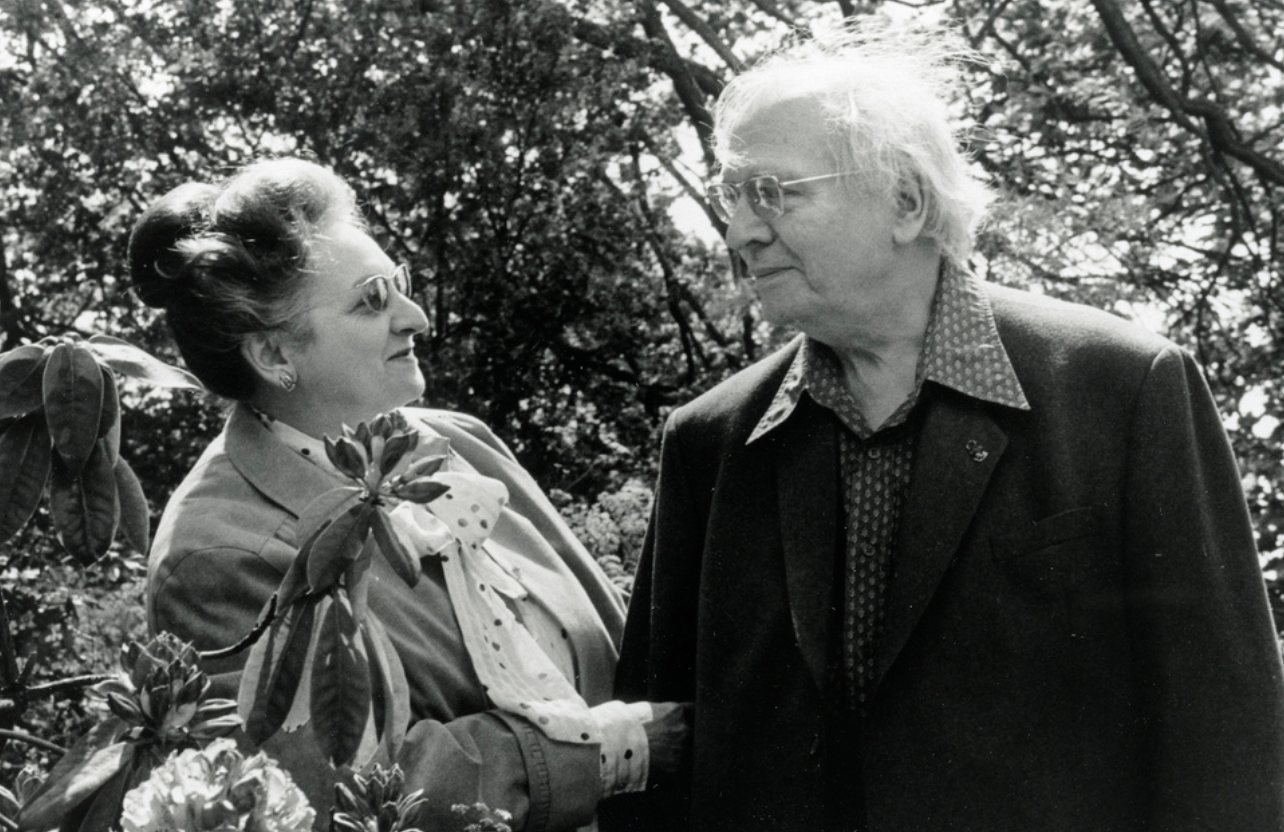
    Above: Loriod and Messiaen many years later, still in love

    The treat of the evening came after intermission in the form of Messiaen’s Visions de l’amen. This sprawling seven movement, 50-minute (small for Messiaen’s standards) work is a classic two piano piece with each of the movements dedicated to a vision of a reason to be thankful (or an amen as Messiaen puts it) – this is a cosmic, mystical piece of music in a way only Messiaen can deliver. Like the Birtwistle work, each piano has its own distinct voice – a fleeting, fast ethereal part that was written for Messiaen’s future wife Yvonne Loriod and an earthier chordal part written for himself. Ms. Loriod was perhaps the greatest contemporary music pianist of the 20th century and the dedicatee of almost all of Messiaen’s piano music – they had a partnership of equals. Ms. Stefanovich took on Loriod’s voice and Mr. Aimard took Messiaen’s.

    Before the opening Amen of creation, the performers took a good two minutes on stage letting the audience quiet down and the rumbling of the subway beneath to pass before beginning. Mr. Aimard managed to make the ppp in the score for his primordial opening sound like a whisper coming out of the slight noise from the crowd earlier before introducing the main melodic theme of the work. Meanwhile, the pppp high-pitched bells from Ms. Stefanovich rang in a soft, but lucid texture. The creeping in Ms. Stefanovich’s part is classic Messiaen – a song of the stars that is continually moving atop Mr. Aimard’s expanding chords. The interaction between the two is like light hitting stained glass and creating refractions – the light being Ms. Stefanovich’s bending colors. The music continued getting faster and louder as the “Creation” unfolded until the resonance from the piano held in the air with one last loud chord. In the next movement’s long introduction, Mr. Aimard nailed the jazzy harmonies and riffs barrowed from the Quartet from the End of Time’s sixth movement in the low register. Ms. Stefanovich’s managed to play through the rapid bird like sequences in the high reaches of the piano in a sing-song fashion in perfect time with beefy chords from Mr. Aimard. This exchange and dialogue of thematic material was so much fun to both watch and hear.

    One of my favorite moments from the evening was after the first outburst of passion in the Amen of desire. The music got very quiet producing a moment of éblouissement. Mr. Aimard played a tender love theme while Ms. Stefanovich in the tinkled a taught, but honeyed variation of the original ‘star’ melody in the upper registers. The quiet sensitivity of Ms. Stefanovich’s made the music sing. This gave way to a loud run of manic, effervescent love at the climax of the movement with both performers seemingly investing all of their energy. It was clearly that this work is personal to both of them. Only the ending of the Amen of the consummation got even louder, more manic, and extreme in its sound.

    Screen Shot 2018-10-26 at 7.02.18 PM
    Pierre-Laurent Aimard and Tamara Stefanovich; Photo Credit: Steve Sherman

    Through all the dense textures, both performers managed to emphasize Messiaen’s stunning language taking through the virtuosic runs of Ms. Stefanovich’s high register and the huge chords of Ms. Aimard’s lower register. In the fffff final, organ like chords spanning the register of the entire piano the audience gave a well-deserved rapturous applause before the notes even decayed. They ran the gamut of textures, timbres, and emotions – ending in exaltation. As one more conservative in taste neighbor near me put it “I never thought I’d like that sort of modern music, but hearing that piece in person was like a religious experience!” Indeed it is and it is difficult to get a sense of the proportions of such a piece from a recording.

    — Scoresby

    The Performers:

    Pierre-Laurent Aimard, piano

    Tamara Stefanovich, piano

    The Repertoire:

    Bartók: Seven Selections from Mikrokosmos

    Ravel: Site auriculaires

    Birtwistle: Keyboard Engine, A Construction for Two Pianos

    Messiaen: Visions de l’amen

  • Salon Seánce @ Tarisio

    ~Author: Scoresby

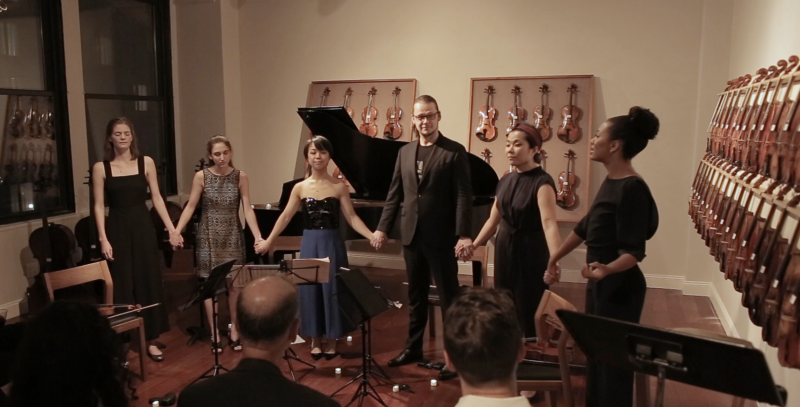
    Thursday October 19 2018 – After the many concerts I’ve reviewed in the past week or so that had theatrical elements, ranging from the NY Philharmonic’s MUTED to Berlioz’s Lélio, it was satisfying to hear a performance that finally seemed to strike the rare balance between excellent music and intellectually interesting theater. Salon Séance, co-founded by siblings violinist Mari Lee (an ensemble connect Alumnus) and Simon Lee (who provided the research for the work), performed its unusual structure in the show room of the string instrument auction house Tarisio with electric candles all over the stage and a backdrop of 50 or so rare instruments. Essentially, this performance consisted of full pieces of music by a specific composer being played, punctuated with short theatrical monologues that illuminate context in which those pieces were composed while threading a common theme through it all. The theme of this concert about Britten and Auden was addressing the question “How Do I live in a Broken World?”

    Screen Shot 2018-10-24 at 5.42.55 PM
    Above Ms. Valla leading the musicians in contacting Britten’s spirit; photo credit: Rodrigo Aranjuelo

    In the opening, actress Sagine Valla was alone​ as​ the five​ musicians walked toward the stage speaking to her. Because of this unusual setup there was none of the traditional clapping as the musicians entered, a welcome relief from the usual program. After a bit of awkward dialogue, the performance became interesting when the musicians and Ms. Valla gathered in a circle to summon the spirit of Benjamin Britten. After a few unsuccessful attempts, she suggested for the musicians to play something to rouse Britten. The quartet then launched into the first movement of his String Quartet No. 1, Op. 25 played by fantastic chamber musicians and the performance didn’t let up until the end of the evening.

    The quartet performing included violinists Rebecca Anderson (an Ensemble Connect Alumnus) and Mari Lee, cellist Mihai Marica (a regular at CMS at Lincoln Center), and violist Ayane Kozasa (a founding member of the Azuri Quartet). The first movement of this piece alternates between two contrasting themes that slowly develop using each other as springboards. The first is a slow ethereal theme layered with nostalgia played with the violins and viola in the highest ranges of their instruments while the cello plucks an almost child-like theme in a completely different register. Ms. Anderson, Ms. Lee, and Ms. Kozasa did a wonderful job of sustaining the high-pitched melody cleanly while Mr. Marica’s warm pizzicatos filled the room. The group brought verve to the raucous second theme, but they were best in the closing bits of the movement as the first theme turns from sweetness to longing.

    Instead of moving into the next movement, Ms. Valla (now taken by Mr. Britten’s spirit) began to talk in the first person about Britten’s life during the time the quartet was composed. Ms. Valla (with Noelle Wilsons’s brilliant script) painted Britten’s move to New York and the way his love of California made him long to be back in England. She also introduced the moment Britten met poet W.H. Auden who later became the core of the evening’s drama.

    After a riveting performance of the other three movements, Ms. Lee, Ms. Valla, and pianist Julia Hamos joined together for the most creative part of the evening. While Ms. Lee and Ms. Hamos performed the Waltz, March, and Moto perpetuo from Britten Violin Suite, Op. 6, Ms. Valla gave a monologue about Britten’s travels through Europe. At first, she talked about how he went to Vienna and found it magical just as the Waltz began. As Ms. Valla transitioned to talk about the way Britten felt alienated by the rise of Nazism the music moved into the sinister the March. Ms. Valla’s monologue wasn’t constant, there was plenty of space for the music too. Instead it was sort of a trio between the three performers. While Ms. Lee and Ms. Hamos were a bit too loud for Ms. Valla at times, it is hard to play a difficult piano part softly enough for a speaker in such a small space (the audience fit only perhaps 40 people).

    The drama of the night reached its peak when the text shifted back to Britten’s fraught relationship with Auden as the Moto perpetuo begins. Here Mr. Lee’s detailed research and Ms. Wilson’s energetic script paid off as Ms. Valla captured Britten’s jealously and infinite admiration for Auden, all while their personal connection soured. As the music broke off, Ms. Valla recited an emotionally abusive letter Auden sent to Britten, essentially lambasting him for what Auden thought was naivety and privilege on Britten’s part. Ms. Valla then claimed to lose Britten’s spirit from exhaustion and the piece goes into intermission.

    Screen Shot 2018-10-24 at 5.48.16 PM

    Above: Ms. Anderson, Ms. Lee, Mr. Marica, and Ms. Kozasa; Photo Credit: Rodrigo Aranjuelo

    After intermission, “Britten” talked about the horror he felt at World War II and performing at the Bergen-Belsen Concentration Camp with Menhuin for survivors, “I never felt the same after that trip.” It was his vehement belief that art was a panacea for those dark times. With this in mind, the quartet performed the complete String Quartet No. 2, Op. 36 which was composed contemporaneously. While the first two movements are lovely, the Chacony is one of Britten’s most substantial pieces of music. Each quartet member (Ms. Lee and Ms. Anderson switched positions) gave her/his all in the difficultly paced movement, getting every nuance from the sunny bursts of optimism that end the work to the sinewy dissonant textures that start the movement. It was among the liveliest chamber music performances I’ve heard this year, but with Ms. Valla’s speech in mind about the war it became even more emotionally potent.

    The genius of Ms. Lee’s production and Mikael Södersten’s direction is that the speech never sounds corny and the music is from top notch performers. This a serious historically informed piece about Britten’s inner life that links directly with the music they perform, almost like immersive program notes that both the novice and aficionado can enjoy. My only wish is that there was more speech in the second half of the program. Nonetheless, it is a relief from the staid concert environment. From the audience members I talked to afterword seemed to make even the most jaded listeners seemed won over – a rewarding evening all around. I look forward to seeing the project’s next production with the next composer. 

    ~Scoresby

    To recap, the performers:

    Rebecca Anderson, violin

    Julia Hamos, piano

    Ayane Kozasa, viola

    Mari Lee, violin/co-creator

    Simon Lee, researcher/co-creator

    Mihai Marica, cello

    Mikael Södersten, director/advisor

    Sagine Valla, actor

    Noelle P. Wilson, playwright

    The program:

    Britten String Quartet No. 1, Op. 25

    Britten Violin Suite, Op. 6 selections

    Britten String Quartet No. 2, Op. 36

  • André Watts|ORPHEUS @ Carnegie Hall

    Watts11_high - david bazemore

    Above: pianist André Watts, photo by David Bazemore

    ~ Author: Oberon

    Thursday October 26th, 2016 – Pianist André Watts joined ORPHEUS this evening as the beloved chamber orchestra kicked off their 2017-2018 Carnegie Hall season with a New York premiere and classics by Mozart and Beethoven. We learned that 600 school-children were in attendance – up in the balcony – having been provided with tickets free of charge. A subtitle for the program might have been “Pianists Who Compose”, as Mozart, Beethoven, and Iyer each first won renown at the keyboard. 

    Vijay-Iyer

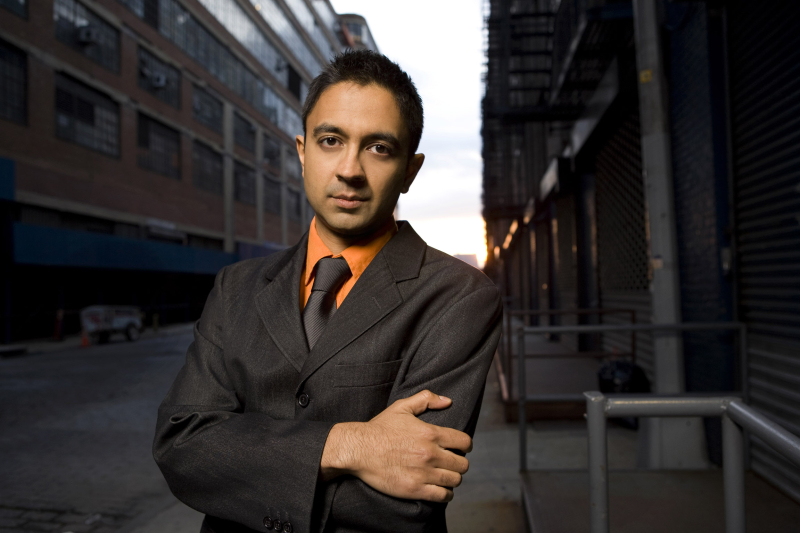
    American composer Vijay Iyer (above) is a jazz pianist, bandleader, producer, electronic musician, and writer. Tonight ORPHEUS offered the New York premiere of Mr. Iyer’s Asunder, an eclectic and vastly pleasing work that suits the ORPHEUS players to perfection.

    In his program note, Mr. Iyer said that, on first receiving the ORPHEUS commission, he thought of writing a piece that would reflect the current deep divisions in our country and “…how it feels to be an American today: pulled apart, broken, anxious, untethered…” He thought of writing big, violent music but then he chose instead to write a piece that “…imagines unity anew…” Bravo! for taking such a stance, Mr. Iyer.

    Asunder is presented in four movements; it opens with pacing horns and an oddly noble feeling. Pulsing rhythms and a somewhat ominous timpani carry us thru to a passage for strident winds. Swirls of notes from both strings and winds allude to the movement’s title: Agitated. It ends with dour, deep sounds.

    Marked Patient and mysterious, the second movement begins with plucking and a jazzy piccolo solo over bass and cello. A Mid-Eastern flavour permeates; following a build-up to an almost militant passage, a Glassian repetitive motif takes over and we settle into a slow sway.

    Calm and precise, like clockwork begins with a gorgeous flute solo; bell tones and other percussive effects designate the effect of time. A repeated downward passage is repeated just a few too many times (my sole reservation about the work).

    Solo oboe over bass accompaniment opens the concluding Lush movement; then a rather drowsy clarinet takes over. The Mid-East is evoked again as the music assumes the feeling of a desert journey, then pulses up over deep bass notes. The glockenspiel sounds again, and after a plucked passage the finale turns cinematic.

    Percussionist Maya Gunji did a great job in the Iyer, as did several of her woodwind colleagues, though I couldn’t see them clearly enough to name names. And the strings sounded superb…all evening, in fact. Mr. Iyer was called to the stage and was enthusiastically applauded by audience and musicians alike.

    The Steinway was then rolled out, and André Watts appeared to a warm welcome from the Carnegie audience.

    André Watts came to public prominence at the age of 16 when Leonard Bernstein chose him as a soloist, making his New York Philharmonic debut on one of the orchestra’s Young People’s Concerts – a concert which was broadcast nationwide on CBS-TV. Two weeks later, Bernstein again called upon the young and charismatic Mr. Watts to substitute at the last minute for the ailing Glenn Gould in performances of Liszt’s E-flat Concerto with the New York Philharmonic. In 1976, André Watts’ recital for the Live From Lincoln Center series was the first full-length recital broadcast in the history of television.

    The Watts career has spanned over half a century, interrupted at times by health issues. Now 70 years old, he plays with the energy and distinction that have endeared him to audiences worldwide over the decades; he played, in fact, like a very jeune homme.

    Mozart’s Piano Concerto No. 9, composed in January 1777, picked up the appellation “Jeunehomme” “young man”) by mistake when Mozart’s mention (in a letter) of the name of the young pianist who inspired the work –  Victoire Jenamy (1749-1812) – somehow got scrambled from Jenamy to Jeunehomme. Victoire was the daughter of the famous 18th-century ballet master Noverre, and she was apparently in Salzburg during the winter of 1776-77 where she met Mozart. This was the first of the composer’s piano concertos to appear in print, published in Paris around 1780.

    My first impression of Mr. Watts as he began to play (I’d never heard him live before) was: “He makes the piano sing!” This concerto is very demanding, and – as the pianist remarks in his program note – shows such  maturity of writing from a 21-year-old that we could easily be convinced it comes from a later time in the Mozart’s career. It is, overall, music that brings genuine comfort and joy.

    In the opening Allegro, Mr. Watts displayed a light touch in a series of delicious trills, with much charming filigree; yet there was also warm power and rhythmic vitality to be enjoyed. An elaborate cadenza held the audience in silent thrall. The following Andantino begins in a somber mood, and the pianist’s sad song (again with some sweet trills) was expressively played. As a more hopeful feeling rises, the orchestra has a really lovely passage: the music has an unusual sense of containment, of assurance and grace. A downward-flowing cadenza, with yet more intriguing trills, showed Mr. Watts’ control and artistic depth.

    The finale, a Rondo, commences with virtuosic feats from the pianist. A fine flow develops, with cascades of piano notes. In the middle of the movement, Mozart injects a courtly Minuet interlude, introduced by the soloist who unfurls the melody gently over a pizzicato accompaniment. Another cadenza, now with a rising aspect, again gives us savourable trills.

    The audience abundantly hailed Mr. Watts and the ORPHEUS players: a full standing-ovation ensued. We hoped for an encore, but the pianist – perhaps wisely – left us to our Mozartean reveries.

    Following a longish intermission, the Beethoven 1st symphony provided a perfect finale to the evening. We’d just heard this work a couple of weeks ago, played by the Orchestra of St. Luke’s in this very hall. It’s such a cordial piece, and I’ve grown really fond of it. It was nice to hear it again so soon. 

    The Beethoven 1st is the symphony that seems to start mid-phrase. The ORPHEUS players gave a marvelous performance, with a breadth and richness of sound that filled the venerable space. Rhythmic acuity and some lovely solo bits from the winds players engaged us from first note to last, and made for an impressive end to a thoroughly satisfying evening of music-making.

    The Program:

    VIJAY IYER: Asunder (New York Premiere)

    MOZART: Piano Concerto No. 9, K. 271 “Jeunehomme

    BEETHOVEN: Symphony No. 1

    ~ Oberon

  • Frank Huang Plays Bruch @ The NY Phil

    Frank Huang

    Thursday October 27th, 2016 – The New York Philharmonic‘s concertmaster, Frank Huang (above), dazzled the audience at Geffen Hall tonight with his playing of Bruch’s first violin concerto; the highly enjoyable program also featured works by Bartók and Dvořák; Pablo Heras-Casado was on the podium.

    Béla Bartók’s Dance Suite opened the evening. These delightful dancing miniatures display the composer’s signature inventiveness in terms of colour and rhythm whilst providing numerous opportunities for individual players to shine: it’s a wonder they are not programmed more often. Maestro Heras-Casado seemed to have the lilt and sweep of the music in his blood, and the orchestra gave a vibrant performance every dance-step of the way.

    Written in 1923, the suite is listed as being in six movements, though they seem – with a brief pause here or there – to flow into one another. A droll bassoon theme starts things off; the horns sound and the string players tap their bows on their instruments. Big energy develops, only to subside. Lovely passage for violins and harp, the clarinet interjects, and a merry jogging sets forth. Ear-tingling combinations – oboe and bass clarinet, flute and harp – keep cropping up, as do the piano and celesta. A wind choir leads into a high violin passage (Sheryl Staples, tonight’s concertmaster) and when things turn dreamy, Cynthia Phelps’ viola mingles with the harp. Big brass plunges in, and the music takes on a bouncing swagger.

    This suite made an outstanding impression. I do regret that I cannot name the individual players of the various solo wind passages; tonight more than ever I wished these sections of the orchestra were on risers so we could watch them as they play. I did get a glimpse of Liang Wang, who played the numerous Bartok solo phrases with his customary clarity and warmth…wonderful!

    Mr. Huang then appeared for the Bruch. We are accustomed to seeing him as a somewhat reserved figure in his role of concertmaster; stepping into soloist mode, Mr. Huang becomes very animated, bending and swaying as the music impels him. His passionate performance was captivating both to hear and to watch.

    A recording of the Bruch #1 was the first non-operatic CD I ever bought – paired with the Barber concerto, and played by Anne Akiko Myers. The Bruch was thus familiar to me well before I ever ventured to listen to the Tchaikovsky, Sibelius, or Beethoven concerti; and this evening’s performance – my first time experiencing it live – reminded me of what a great piece it is. 

    From the concerto’s initial rising solo passage, Mr. Huang’s tone was most alluring: lustrous at all dynamic levels, and displaying a sensuous quality which he allowed to permeate the music in just the right measure, at just the right moments. A sentimental melody gives way to a filigree of rising trills, and a blend with horn is simply gorgeous. Rising and descending scales from the violin develop into a sweeping orchestral passage. A two-part cadenza and the poignant melody that follows found Mr. Huang at his most persuasive. Excellent!

    The Prelude has flowed directly into the Adagio, making a very long ‘play’ for the soloist, and causing the composer to wonder if he ought not refer to the whole work a fantasy rather than a concerto. He was persuaded otherwise by the great violinist Joseph Joachim.

    In the concluding Allegro energico, Mr. Huang took up the familiar dancelike theme with a nice gypsy swing; decorative threads of coloratura were un-spooled by the violinist with elegant virtuosity, his tone ever-lovely and his articulation showing effortless clarity. The audience, one of the most attentive in recent memory, were clearly much taken with Mr. Huang’s performance: vociferous bravos filled the hall from the moment the concerto ended, and at his solo bow the whole house stood up and cheered whilst his colleagues onstage joined enthusiastically in the ovation.

    Heras- casado

    Following the interval, Maestro Haras-Casado (above) and the players treated us to an outstanding performance of the Dvořák 7th. This familiar work seemed fresh and vital this evening, with plenty of expert solo playing along the way – though the horns were running hot-and-cold throughout. The big, yearning theme of the first movement was especially pleasing to hear tonight, as was the woodwind chorale over plucking strings in the Adagio. Things turn blithe in the folk-dance flavor of the Scherzo, but the composer turns more pensive again as the Finale commences. The rise of a Slavonic march, and the taking up of a new, lyrical theme, led onward to the symphony’s optimistic conclusion.

  • Leonidas Kavakos: Double Duty @ The NY Philharmonic

    Kavakos

    Thursday October 20th, 2016 – Leonidas Kavakos (above) was both soloist and conductor for this evening’s program at The New York Philharmonic. Mr. Kavakos is the Philharmonic’s current Mary and James G. Wallach Artist-in-Residence, and in this capacity will blessedly be with us frequently in the current season. Tonight, the prodigiously talented violinist played Bach and then moved to the podium to conduct works by Busoni and Schumann.

    With the mystique of a Tolkien wizard, Mr. Kavakos worked his magic in a brilliant rendering of J.S. Bach’s Violin Concerto in D minor (reconstructed), BWV 1052; surrounded by an ensemble of the orchestra’s elite string players, and with Paolo Bordignon at the harpsichord, he cast a spell over the hall with his playing. Following a sizzling cadenza midway thru the first movement, the violinist and his colleagues drew us in with the lamenting beauty of the adagio. An unfortunate cellphone intrusion in the very last moments of the movement was brushed aside as Mr. Kavakos sailed forward with stunning virtuoso playing in the allegro, where he summoned up visions of the legendary “mad fiddlers” who played as if possessed by demons.

    The whole ensemble went merrily along on the soloist’s swift ride, and I must mention Timothy Cobb’s plush tone and amiable agility on bass. Shouts of ‘bravo‘ rang thru the hall as the concerto ended. Mr. Kavakos and Sheryl Staples, this evening’s concertmaster, clearly form a mutual-admiration-society; after bowing to the audience’s enthusiasm, the soloist signaled Ms. Staples to rise but instead she and all her colleagues remained seated, vigorously applauding Mr. Kavakos. When he finally got the players to stand, the applause re-doubled.

    The Geffen Hall stage crew swiftly re-set the space for the next work: I had discovered Ferruccio Busoni’s Berceuse élégiaque earlier this season when the Curtis Symphony Orchestra performed it at Carnegie Hall, and was very glad of an opportunity to experience it again tonight.

    This is music wrapped in a somber mystery. The composer wrote these lines as a brief ‘prologue’ to the piece:

    “The child’s cradle rocks, the hazard of his fate reels; life’s path fades, fades away into the eternal distance.”

    During the ten-minute course of this eerie lullaby, the music rises very slowly from the depths; the subtle interjections from the harp add a dreamlike quality, as does the celesta which joins the darkling ensemble near the end. As a chillingly marvelous finish, a gong sounds and its reverberations fade to nothingness.

    The Philharmonic’s Playbills are always loaded with fascinating articles and information; I read them on the train trip homeward after the concerts. One passage in the notes on the Busoni struck a tragic note: Gustav Mahler conducted the Philharmonic premiere of the Berceuse élégiaque on February 21st, 2011. Suffering from heart disease, Mahler was forced to withdraw from a second performance of the work; he sailed back to Europe and died in Vienna in May. The February 21st Philharmonic concert thus marked the last time he ever conducted. 

    Robert Schumann’s Symphony No. 2 was the evening’s concluding work. Here my companion and I were at a loss: the music is absolutely lovely from start to finish, and it was conducted and played with both steadfastness and genuine affection by Mr. Kavakos and the artists of the Philharmonic. But somehow it is simply too much of a good thing. We were trying to figure out the reasons why this music, so congenial, seems to go in one ear and out the other; there’s no edge to it anywhere, and nothing that reaches the heart. Also, for me, part of the problem is all the tutti playing: there’s a shortage of those passages where solos might lure us in or smaller components of the orchestra might bedevil one another. Only in the adagio, where the oboe, clarinet and horns had chances to step forward, did my interest perk up. For the rest, the music simply washed over us to beautiful but unmemorable effect.

  • Bychkov-Batiashvili-Capuçon @ The NY Phil

    Bychkov-semyon-batiashvili-lisa-capucon-

    Thursday October 22nd, 2015 – A Brahms-centric program at The New York Philharmonic this evening, with two of the Master’s most beloved works and an impressive contemporary work inspired by his music.

    Detlev Glanert’s Brahms-Fantasie is one of the most appealing pieces of ‘new’ music I have experienced in the current century. So much ‘classical’ music being written today is expertly crafted and impressive in a cerebral way, but little of it reaches the heart or soul. In this 12-minute, overtly Brahmsian homage, Mr. Detlev eschews the current trend for over-reliance on percussion for achieving effects, and he is unafraid of melody.

    After a dynamic opening statement, the music simmers down to a misterioso passage followed by a delicate section of single notes, quietly played. A dolorous theme develops, with a slow buildup to an episode of rhythmic grandeur. Following some rather gnarly phrases, a minor-key dance eventually gives way to a big turmoil of voices before settling back into simmering mystery. Near the end, a brass chorale takes on a gloomy aspect. Glanert shows his skill at creating varying moods, and the Philharmonic players made the most of the melodic opportunities afforded them, with Maestro Bychkov in sure and steady command.

    Next up was the Brahms “Double” concerto. “I have had the amusing idea of writing a concerto for violin and cello …If it is at all successful, it might give us some fun,” wrote Johannes Brahms to Clara Schumann in the summer of 1887.

    The two soloists – particular favorites of mine: violinist Lisa Batiashvili and cellist Gautier Capuçon – were warmly welcomed when they appeared onstage. As these two artists are as attractive to the eye as to the ear, we were in for a thoroughly absorbing experience. Mr. Capuçon’s soulful playing blends ideally with the silken style of Ms. Batiashvili, and as theme after theme was summoned up by these remarkable players – their voices echoing or entwining – the audience was drawn deeply into the music.

    The central andante was especially congenial this evening, with its beautiful opening melody which is played by the soloists and the strings, enhanced by the orchestra’s solo flute, bassoon, and clarinet. In the concluding movement, Batiashvili and Capuçon were at their most alluring as they introduced the familiar mellifluous second theme. The concerto then sailed on to its inspired finale; the audience erupted in hearty applause the moment the final note had sounded, and an enthusiastic ovation called the soloists and Maestro back twice. 

    Following the interval, we had the Brahms 1st symphony. The composer declared that this symphony, from sketches to finishing touches, took 21 years – from 1855 to 1876 – to complete.

    Here we could bask in Maestro Bychkov’s ideal pacing and his obvious affection for the music; he is a conductor who favors depth over theatricality. And so for 40 minutes we were immersed in this symphony with its wealth of themes and its somewhat Beethovian air. The inner movements were particularly impressive today: the wistful Andante sostenuto with its lovely duet for solo violin and horn, and the charming Allegretto. In the finale (and all evening, actually), Philip Myers and the Philharmonic horns produced wonderfully plush, resonant sound. And it is here that Brahms makes his most obvious salute to Beethoven with a majestic theme, first heard in the strings, that evokes the “Ode to Joy” from Beethoven’s 9th.

    Tonight’s Program:

    DETLEV GLANERT: Brahms-Fantasie
    BRAHMS: Concerto for Violin and Cello A minor op. 102 (Double Concerto)
    BRAHMS: Symphony No. 1 in C minor, Op.68

  • Glazounov & Chausson at ABT

    Jalteuscher1gs

    Above: Devon Teuscher as Caroline in JARDIN AUX LILAS, in a Gene Schiavone photo

    Thursday October 23rd, 2014 – Music, as much as dance, can draw us to the ballet. Tonight’s ABT programme featured works by Alexander Glazounov and Ernest Chausson. You’re unlikely to hear any of the enchanting score of RAYMONDA in the concert hall, and Chausson’s poignant Poème for violin and orchestra seems rarely to get programmed (the composer’s grander and even more gorgeous Poème de l’amour et de la Mer is equally neglected these days.) The opportunity to hear these works, as much as to see the ballets set to them, drew me to Lincoln Center tonight.

    RAYMONDA DIVERTISSEMENTS, billed as a world premiere, seems to be a re-mix of excerpts from the ballet previously given by the Company. The Petipa choreography has been staged by Irina Kolpakova and Kevin McKenzie; they took a bow together at the end. The costumes, all white with black fur trim, were oddly bland. Hee Seo, that elegant ballerina, was a bit too reticent in the principal ballerina role. A touch more grandeur of delivery or a dash of spice would have cast her very fine dancing into higher relief. James Whiteside seemed somewhat miscast in this classically-styled work; his dancing was a little stiff, his plié needing a deeper cushion at times. Nonetheless, the steps were clearly executed and his partnering was fine. He’s a handsome guy, and I look forward to seeing him in other ballets.

    Misty Copeland and Sarah Lane danced well in a duo variation which did not allow them to display their finest aspects; a pas de quatre for four boys failed to have any sense of unity. Delightful varations from Skylar Brandt and Christine Shevchenko were highlights of the performance. The fussy bows, with the girls striking poses as they curtsied, were pointless.

    In JARDIN AUX LILAS, violinist Benjamin Bowman played Chausson’s romantically steeped score with silky tone. Devon Teuscher danced lyrically as the unhappy Caroline, doomed to be parted from her beloved; Devon’s performance had the right feeling of grace under social pressure and was danced with a nicely nuanced sense of controlled urgency. Cory Stearns was superb as her beloved, so touching as fate intervenes in his hopes and desires: a poignant, noble youth in the throes of romantic despair. Veronika Part held the stage magnificently as the mysterious mistress, a character equally pitiable in her own right. Roman Zhurbin’s cool, controlled performance as The Man She Must Marry left us wondering just exactly how much he knew.