Tag: Thursday September

  • Parlando: Night Music @ Merkin Hall

    Merkin

    ~ Author: Lili Tobias

    Thursday September 26th, 2024 – A wonderful night to spend listening to Parlando’s Night Music! Led by conductor Ian Niederhoffer, Parlando is a one-of-a-kind orchestra that strives to introduce listeners to underrepresented works through inventive programming and spoken introductions that provide context for each piece. As is standard for the ensemble, Thursday’s program featured a wide range of classical music all united under the theme of “night” (and this concert covered a span of just over 200 years!).

    The concert opened with the Nocturne from Fauré’s The Shylock Suite, Op. 57. I was unfamiliar with this piece, but it was a pleasure to hear for the first time. The orchestra played with an exceedingly delicate and precise tone. Though the piece was quiet all the way through, every note was clearly audible throughout the hall.


    Next was Takemitsu’s By The Sea, which I was really looking forward to (and it didn’t disappoint)! In the past, I’ve seen some of Takemitsu’s chamber music scores and have always been blown away by how beautiful the written music itself is. This was my first time hearing any piece of his live, and any conception of how I thought the written music might sound was eclipsed by the incredible real-life sounds of the orchestra and two soloists. When introducing By The Sea, Niederhoffer mentioned that the first version of this piece was a duo between flute and guitar, and I could still feel the chamber music-like qualities present in the orchestral re-arrangement. The soloists and the strings lead each other back and forth in a constant ebb and flow of dynamic swells—just like the waves of the ocean the piece was inspired by.


    Parlando


    Flautist Yoobin Son and harpist Parker Ramsay (photo above by Crios Photography) then joined the orchestra once more for the second movement from Mozart’s Concerto for Flute, Harp, and Orchestra in C Major, K. 299. I was especially impressed with Son’s incredible phrasing and expressive playing, which brought this intensely lyrical movement to another level. (She also wore a stunning lilac dress from designer Issey Miyake which seemed to float and dance along to the music.)


    The final piece on the program, Bartók’s Music for Strings, Percussion, and Celesta, Sz. 106, was a pleasant surprise. As someone who is not generally a fan of Bartók, I happened to love this piece. However, even after learning a bit about the social context surrounding its composition, I had a very different emotional response to the music. While the first movement wasn’t quite my cup of tea (especially after having had to sightread the fugue subject once for a musicianship class in college!), I greatly enjoyed the second, third, and fourth movements. The second and fourth I found especially fun—a stark contrast with the anguish Bartok may have intended it to convey. My ears latched onto the driving rhythms and confident percussive attacks and interpreted the music as lively and powerful, in a predominantly positive way.


    The orchestra was met with a well-deserved standing ovation at the end, and the concert was followed by a lively reception. While there was talk during the reception of finding a larger venue for future Parlando concerts, I actually think that smaller-scale performances could be a huge benefit towards Niederhoffer’s vision. A more intimate concert space could help open up dialogue between the musicians, audience, and even composers if they’re still living. As an audience member, I felt a bit boxed in by the spoken introductions to each piece—almost as if I was being told what to feel rather than encouraged to react to the music in my own way. While I completely understand the value in providing this musical context to the audience, I think there is a lot of further potential to create a more multi-faceted dialogue that draws from the diverse backgrounds and unique interpretations of both the musicians and the audience members. I’m excited to see what the future of Parlando holds!


    ~ Lili Tobias
  • 20th Century Masterworks @ The NY Philharmonic

    _DSC9923

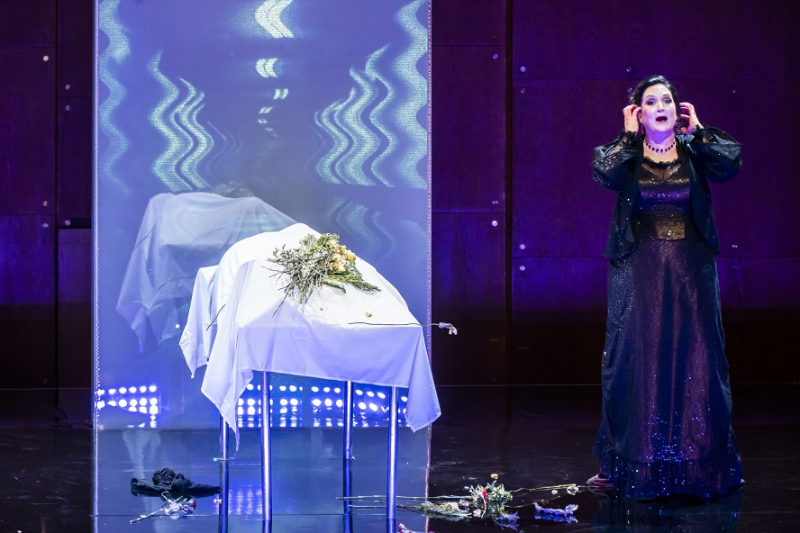
    Above: Katarina Karnéus in ERWARTUNG at The New York Philharmonic; photo by Chris Lee

    ~ Author: Oberon

    Thursday September 26th, 2019 – This long-awaited program by The New York Philharmonic paired Arnold Schoenberg’s monodrama ERWARTUNG with Béla Bartók’s expressionist opera BLUEBEARD’S CASTLE. The Philharmonic’s music director, Jaap van Zweden was on the podium, and a trio of esteemed singers took on the demanding vocal roles. The orchestra was simply splendid, from first note to last.
    In 1989, the Metropolitan Opera presented these two works on a double bill, conducted by James Levine. Jessye Norman sang both The Woman in the Schoenberg and Judith in the Bartók; Bluebeard was sung by Samuel Ramey. It was a magnificent evening musically, though the setting and direction for the Bartók left a lot to be desired. But the staging of the Schoenberg was unforgettable: just a grand piano, hundreds of white candles, and Ms. Norman. How I would love to see it again!

    The idea of presenting these two works in a semi-staged concert setting at Geffen Hall seemed intriguing on paper but was less successful in practice. The singers performed on a raised platform behind the musicians, who were seated in near darkness. The addition of silent actors – portraying medical staff and a crime-scene photographer in ERWARTUNG, and Bluebeard’s previous wives in the Bartók – neither added to nor distracted from the flow of the two works. From where we were sitting, we could not discern what was under the sheet of that autopsy table, which was revealed when they came to take The Woman away. One small screen sufficed for the projections, which were neither here nor there. The lighting effects, however, were well-integrated into the music, especially a blood-red drenching at one point.

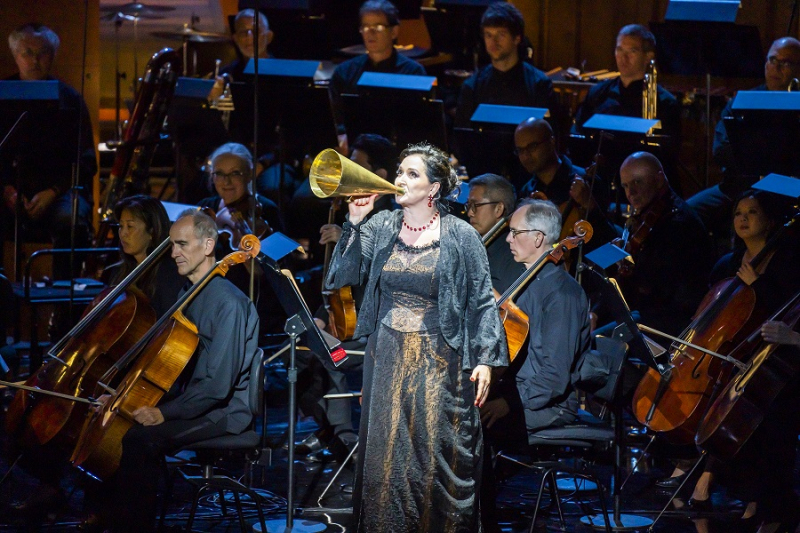
    The monodrama and the opera were linked theatrically by having Katarina Karnéus, who had just given a phenomenal performance in the Schoenberg, re-appear as the prologue to BLUEBEARD’S CASTLE. Here, Ms. Karnéus (using a megaphone) proved to be every bit as engaging as a speaker as she has been in her singing of The Woman. And while, in the end, the evening could have just as thrillingly been presented in straight-up concert form, that would have deprived us of Ms. Karnéus’s inspired acting of her role.

    The concert opened with a performance of the song Erwartung, from Schoenberg’s Vier Lieder, his opus #2, composed in 1899. This gorgeous piece of music, which I had never heard before, was originally written for voice and piano but was tonight performed in a setting for voice and harp. The Philharmonic’s harpist Nancy Allen played divinely, creating a poetic atmosphere. In a black gown shot with silver and holding a large bouquet, soprano Nina Stemme’s voice seemed beset by a wide tonal beat or fluctuation which rather undermined the strange beauty of the song. Ms. Stemme fared much better in BLUEBEARD, where she was fully warmed-up and with the voice profiting from the cushioning orchestra.

    Katarina Karnéus was the Cardiff Singer of the Year in 1995 and from there went on to a grand worldwide career. She came to The Met in 1999, debuting as Varvara in KATA KABANOVA and also appearing as Siebel, Olga in EUGEN ONEGIN, as Rossini’s Rosina, and as Cherubino. I had the pleasure of meeting her while I was working at Tower Records, and of attending a lovely recital she gave in 2001 with pianist Brian Zeger. She last sang at The Met in 2005; in the interim she has developed into a fascinating singing-actress.

    _DSC0141

    Above: Katarina Karnéus as The Woman in ERWARTUNG; photo by Chris Lee

    What a performance of ERWARTUNG Ms. Karnéus gave tonight! The voice encompasses an impressive vocal span, with a silvery sheen on the high notes and a dusky, dramatic throb in the lower range. Her wide-ranging singing is pointed and subtle in terms of word colourings, has a lovely vein of lyricism running thru it, and is possessed of striking power in the climactic moments. It’s an expressive, even bewitching, instrument. Beyond this, Ms. Karnéus is a compelling physical presence, and she captured the emotional state of The Woman with her vibrant and detailed physicality; at one point her entire body was overcome with trembling agitation. Mixed in with the madness were passages that were extraordinarily moving, as in the moment she tells her absent lover that he has “…not even the grace to let me die with you.”

    In recent years, only a handful of operatic performances have captivated me in the way Katarina Karnéus did tonight in ERWARTUNG. She is truly one of a kind.

    Here’s a sampling of the Karnéus voice:

    Katarina Karneus – Mahler ~ Ich bin der Welt abhanden gekommen

    _DSC0348

    Above: Katarina Karnéus in the spoken prologue to BLUEBEARD’S CASTLE at The New York Philharmonic; photo by Chris Lee

    After the interval, BLUEBEARD’S CASTLE commenced with a re-appearance of Ms. Karnéus in a speaking role; I must admit that I found myself wishing she was also singing Judith, for while there is no denying the power and commitment of Nina Stemme’s performance in that role, hers is a voice that has never reached me on a deeper level. That said, the soprano was in full-tilt form for the Bartók tonight and was much admired by the audience.

    In the role of Bluebeard himself, it gave me great pleasure to see onstage again the excellent baritone Johannes Martin Kränzle who, in 2014, was an ideal Beckmesser in his (to date) only Met appearances. We simply must have this man back at The Met, for he is a singing-actor (and an acting-singer) of the highest calibre. 

    _DSC0651

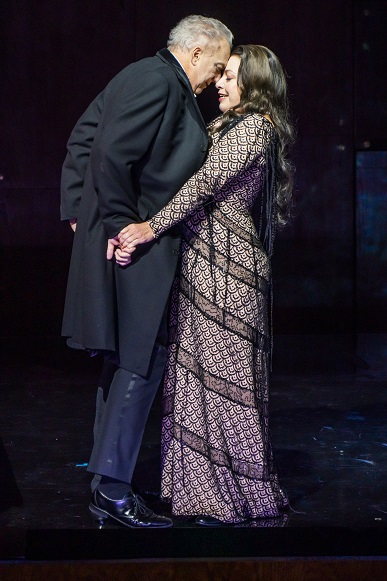
    Above: Johannes Martin Kränzle and Nina Stemme in BLUEBEARD’S CASTLE; photo by Chris Lee

    Ms. Stemme and Mr. Kränzle made the Bartók glow in all its dark radiance with their powerful vocalism and intense acting. They played beautifully off one another, seeming to feed off each others energy as well as off the astonishing sounds being produced by the artists of the Philharmonic.

    It was a performance to immerse oneself in totally, and by the time the harp and horns marvelously underscored Mr. Kränzle’s spectacular vocalism at the opening of the fourth door, I was thoroughly enthralled. Ms. Stemme’s blockbuster high-C at the opening of the fifth door was followed by simply mind-bogglingly impressivel singing from the baritone. Ever a compelling mover, Mr. Kränzle even executed a little dance, and then led his soprano is a waltz.

    Responding to Judith’s questions about the mysterious white lake, Mr. Kränzle was hauntingly moving as he replied: “…tears, Judith…tears!” And then – incredibly – he took his performance to an even higher level with his gorgeous singing of the passage where Bluebeard describes how he met his previous wives and what they mean to him: morning, noon, and evening have been personified for him by these women, and with Judith joining them, his world is complete. “Now it will be night forever!”

    _DSC1438

    Above: from BLUEBEARD’S CASTLE, photo by Chris Lee

    Throughout the evening, the playing of The New York Philharmonic was darkly dazzling, glorious, sublime. Maestro van Zweden reigned over the music with a sure sense of its enormous emotional range, from eerie piani to unfettered, magnificent fortes. The musicians played their hearts out, creating sonic textures that sent chills thru me time and again, and the numerous solo passages were given extraordinary clarity by these remarkable artists.  

    ~ Oberon

  • Robin Becker’s INTO SUNLIGHT: A Documentary

    6a00d8341c4e3853ef014e8607bdb8970d-800wi

    Above: dancers Yoko Sugimoto-Ikezawa and Joseph Jehle in a 2011 performance of Robin Becker’s INTO SUNLIGHT at the 92nd Street Y; photo by Kokyat

    ~ Author: Oberon

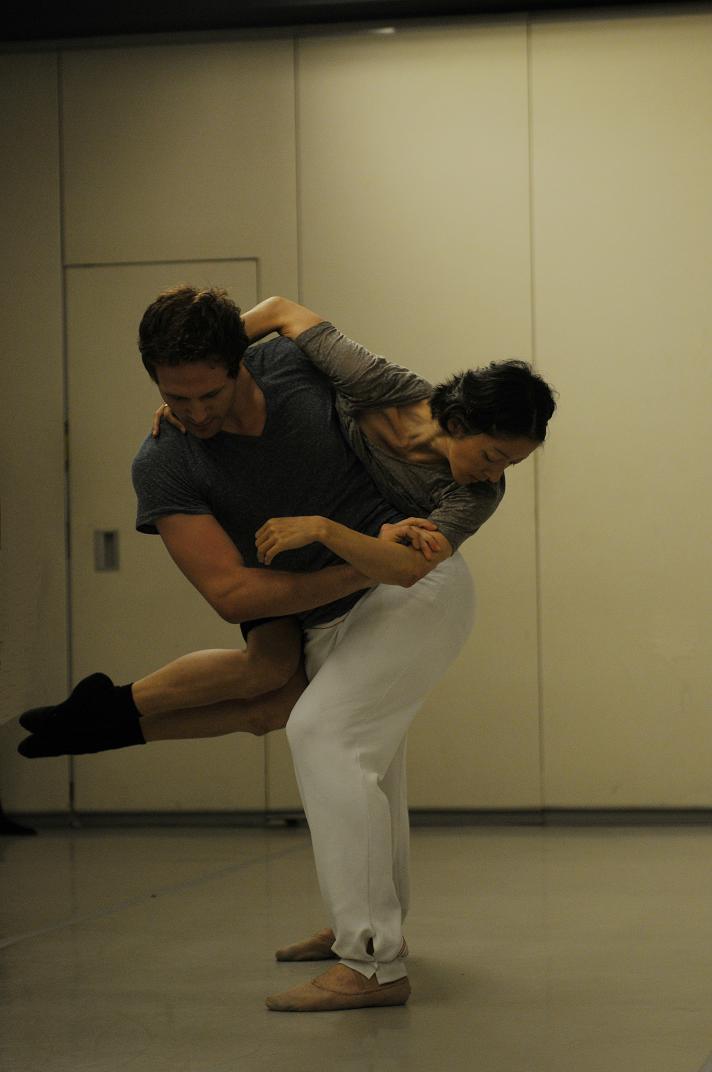
    Thursday September 27th, 2018 – Having followed the development of Robin Becker’s profoundly moving anti-war dancework INTO SUNLIGHT from its early rehearsals in 2010, I was honored to be invited to a screening of the new documentary film about the piece this evening.

    Robin Becker did not set out to create a dancework about the Vietnam War; her idea was to make a piece that would grow out of her sense of helpless despair when the US commenced its war against Iraq. In researching for her project, she came upon David Maraniss’s book THEY MARCHED INTO SUNLIGHT. She immediately felt its power as a depiction of the human aspects of war and of war’s effect on both the people fighting it and on their loved ones waiting at home for them to return (or not), as well as thoughtful citizens enraged by the policies and careless disdain for the value of human life of the politicians who wage wars.

    They-marched-into-sunlight-9780743261043_hr

    INTO SUNLIGHT was inspired by the David Maraniss book ‘They Marched Into Sunlight‘, an account of two days in October 1967 when “…war was raging in Vietnam as the anti-war movement was raging in America.” I’m eyeing my copy of the book on my bookshelf as I write this, and will start re-reading it in a few days.

    The book – and the ballet – revolve around two events that took place on those days in October of 1967: the ambush of a battalion of American soldiers in the Vietnam jungle, and a protest against the Dow Chemical Company at the University of Wisconsin.

    Robin Becker has given the tragic tale a new dimension thru her choreography. Set to a score Chris Lastovicka, Robin’s ballet entwines both threads of the book – the war abroad and the reaction at home – in a cohesive narrative, as dark and haunting as any dancework I have witnessed. Along with Jacqulyn Buglisi’s deeply resonant TABLE OF SILENCE, INTO SUNLIGHT stands as a truly meaningful dance experience. Both works share a common root: they are about something.

    Watch a trailer for INTO SUNLIGHT here. And visit the documentary’s website here.

    Page-9a-dancers

    Above: Robin Becker and company photographed while in Vietnam in 2015 for performances of INTO SUNLIGHT

    Ron Honsa’s film is outstanding on every count. He brings us gorgeously-shot performance footage, segments of Ms. Becker and David Maraniss speaking of the connection between the dancework and the book; and Mr. Honsa follows the Becker company to Vietnam, where INTO SUNLIGHT was performed in 2015.

    But Mr. Honsa delves deeper, bringing us interviews with people whose lives were permanently affected by the events of October 1967: Consuelo Allen, Clark Welch, and Paul Solgin.

    Consuelo Allen’s father, Lieutenant Colonel Terry Allen, Jr., had been home on leave and was saying goodbye to his family before heading back to Vietnam when his five-year-old daughter Consuelo cried out: “You can’t leave! You’re going to die!”  On that fatal morning of October 17, 1967, as he led his Black Lions battalion on a search-and-destroy mission in the Long Nguyen Secret Zone, Terry Allen, Jr. and sixty of his men were killed in an ambush.

    Clark Welch was one of Terry’s commanders. He suffers extreme mental torment over the loss of his men. Both Clark and Consuelo are deeply touching as the tell their stories for the film.

    Paul Solgin was one of the demonstrators at the University of Wisconsin; many of the demonstrators sustained injury at the hands of club-swinging police. Ironically, their freedom of speech and of dissent might be thought to be among the ideals that the soldiers serving in Vietnam were fighting to protect.

    6a00d8341c4e3853ef0133f5d2f779970b-800wi

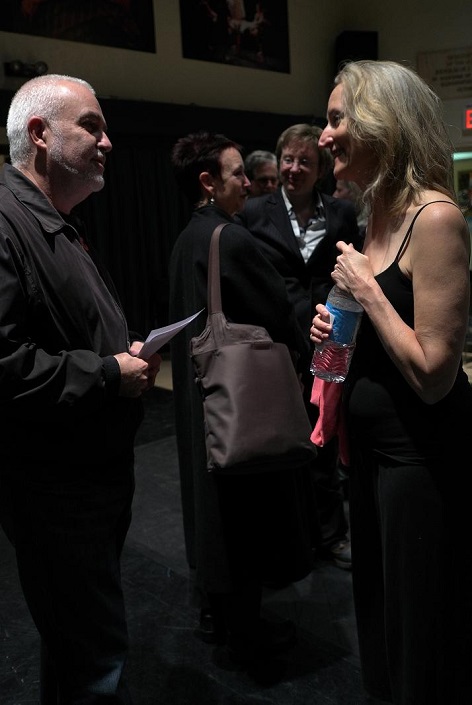
    Above: me and Robin Becker after the 92nd Y showing of INTO SUNLIGHT in 2011; photo by Kokyat.

    Among the audience at this evening’s showing of the documentary was dancer Nicole Sclafani, who plays a major role in Robin Becker’s INTO SUNLIGHT. In the ballet, Nicole’s duet with Oisín Monaghan depicts a woman who dreamed of the death of her brother from a horrific abdominal wound sustained in battle, only to awaken the next day to find that her dream was prophetic.

    Another true story that is told in INTO SUNLIGHT is of the death of West Point football hero Don Holleder, who – with his comrades – rushed headlong onto the battlefield that October morning and was immediately gunned down. Compellingly danced by Chazz Fenner-McBride, it’s one of the ballet’s heart-stopping moments. 

    Yet another of the most poignant scenes in the dancework is that of a young widow, danced by Yoko Sugimoto-Ikezawa, visiting the grave of her soldier-husband, portrayed in the film by Ricky Werthen. The distraught woman clings to the gravestone, unable to comprehend the loss of her beloved.

    This was written by me after initially reading Mr. Maraniss’s book:

    “For all the emotional power behind the factual re-telling of these events, by far the most overwhelming aspect of the story comes many years after the incidents when the leaders of the two factions who met on that battlefield that October morning meet once again – now old warriors – and explore the anonymous patch of Vietnamese land where so many young men (from both sides) laid down their lives. If only the two commanders could have met before the battle, they might have realized their differences were vastly outweighed by their common humanity. They could have shaken hands and walked back to their respective camps, refusing to kill each other simply because someone had told them it was the thing to do.”

    42661569_10156269132114998_7428979763382845440_n

    UPDATE: This documentary will be shown at AMC Loew’s on Saturday October 20th at 4:00 PM as part of the Chelsea Film Festival.

    ~ Oberon

  • Boston Trio @ Weill Hall

    Landing_image_mobi

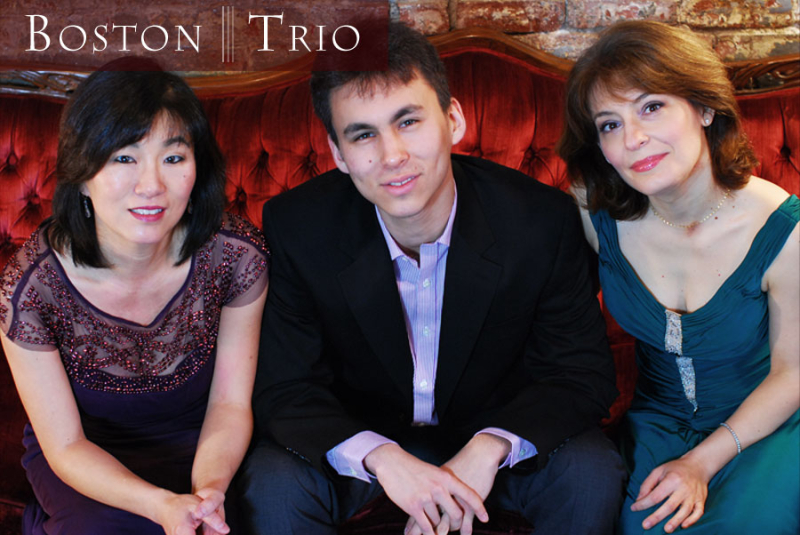
    Above: The Boston Trio: Heng-Jin Park, piano; Jonah Ellsworth, cello; Irina Muresanu, violin

    Author: Oberon

    Thursday September 28th, 2017 – Inaugurating my 2017-2018 Carnegie season with an ensemble new to me – the Boston Trio – in concert at Weill Hall. In terms of both programming and playing, the evening (aptly sub-titled Wheel of Colors) was a genuine pleasure; a large and very attentive audience made for a congenial atmosphere.

    The program was finely-constructed, with some ‘new’ music to begin, followed by an incredibly inventive arrangement of a symphonic classic, and concluding with a familiar and beloved Dvořák piano trio. We sat close, on the keyboard side, and were deeply immersed in the music. The pianist wore red, the violinist a lovely pale lemon-yellow frock, and the cellist an open-collar blue shirt; they were as pleasing to watch as to hear, and Ms. Muresanu’s elegant posture was an added delight.

    Jennifer Higdon: Piano Trio

    I. Pale Yellow

    II. Fiery Red

    I admit to being unfamiliar with Jennifer Higdon‘s music, though her name figures prominently among current composers. The two movements of Higdon’s Piano Trio seemed like miniature tone poems, and they were superbly played by the Boston Trio.

    In the first, Pale Yellow, the composer reveals a romantic bent: the music is lyrical, melodious, devoid of angularity. Yet while harkening back to a more gracious era, the piece seems utterly contemporary and fresh. It served as a perfect introduction to the three artists of the Boston Trio.

    Pale Yellow begins with a wistful passage for the piano; the cello comes in on a soft, sustained tone. The violin joins, entwining its voice with the cello in close, intriguing harmonies. The music flows lovingly: the cello sinks to the deep range as the violin sings high and sweet. Our three players develop a warm resonance of sound and then the music turns turbulent before rising…soaring. There’s a sort of coda, with the violin again lingering on high. A lovely, gradual resolution leaves the audience in a spellbound state.

    A complete volte face for the second movement: Fiery Red is aptly titled. It commences with violent energy, Ms. Muresanu slashing her bow across the strings. At the piano, Heng-Jin Park strikes up a dynamic dance, but suddenly things come to a halt. Then the strings begin to buzz as the piano gets a bit jazzy. This develops into a plodding piano figuration as violin and cello pluck away. An energy build-up sends the violin and cello high with a scratchy edge to their playing. From a piano heartbeat, the volume amps up and the music starts to sway heavily. Musical peaks and valleys eventually surge forward to the ending. 

    Great playing from all three musicians, and the audience really seemed to be soaking it all in. Now I need to hear more of Higdon’s music: it’s refreshing to find a contemporary composer who in unafraid of melody and sentiment on the one hand, and who can then can turn bristling and quirky moments later.

    After the briefest of pauses, the trio returned for the Debussy.  

    Debussy/arr. Beamish: La Mer

    I. De l’aube à midi sur la mer

    II. Jeux de vagues

    III. Dialogue du vent et de la mer

    The idea of hearing Debussy’s  La Mer arranged for piano trio was a key factor in my decision to attend this concert. Sally Beamish, London-born violist and composer, arranged the Debussy masterwork in 2013 for the Trio Apaches, a British ensemble. I can only marvel at what Ms. Beamish accomplished, and marvel further at the Boston Trio’s splendid playing of the piece.

    There’s no sense of miniaturization or of anything being ‘left out” in Ms. Beamish’s adaptation: the sound our trio produced tonight had a quite amazing orchestral quality, and Debussy’s reputation as a colorist didn’t suffer at all as they played with such depth both of tone and of feeling.

    Ms. Beamish hands much of the responsibility for the success of her setting to the pianist, and Heng-Jin Park seized on the opportunity, playing beautifully and conjuring the mood shifts of each of the three movements. 

    The pianist commences De l’aube à midi sur la mer quiet and low, and the tremelo strings join in, developing a sense of mystery. Dense textures evolve, with gently rocking waves evoked by the strings; later, piano and cello pulsate with a violin overlay. Taking on a symphonic quality, the three players bring out delicious colours. The violin shimmers, the cello sings deep, the piano is luminous: sustained, heartfelt, passionate playing from all.

    Rippling sensations from the keyboard open Jeux de vagues, with the strings in agitation. Heng-Jin Park gracefully executes the melismas that Debussy originally assigned to the harp – so atmospheric – and Ms. Muresanu’s trills are a further attraction. The music fades into a hazy mist.

    Low grumbling from Heng-Jin Park’s Steinway and a restless passage from Mr. Ellsworth’s cello set Dialogue du vent et de la mer on its way. The restless yearning of a downward-bending 2 note/4 note motif that recurs in this movement is a signature element of La Mer, and Ms. Beamish’s arrangement employs it intriguingly. The depth of sound the three musicians achieve is most gratifying, and contrasts magically with the calm stillness of the piano repeating the main motif. This theme is taken up by all three, with a build-up of ecstatic tension.

    Experiencing the Debussy in this intimate setting is something I’ll always remember; roses for Ms. Beamish to hail her accomplishment, and gratitude to the Boston Trio for bringing the work to us, and playing it so very well.

    Following the interval, Dvořák provided an ideal conclusion to the evening.   

    Dvořák: Piano Trio in F Minor, Op. 65

    I. Allegro, ma non troppo

    II. Allegretto grazioso

    III. Poco Adagio

    IV. Finale. Allegro con brio

    With the new music and the Debussy arrangement behind us, I simply let the familiar Dvorák play on, genuinely savoring the artistry of the three musicians and vastly enjoying their performance. My companion of the evening, choreographer Claudia Schreier, spoke afterwards of experiencing a deep connection both to this music and the Boston Trio’s performance of it.

    A full-house standing ovation followed the Dvorák; the musicians came out for a couple of bows, and, as it became evident the crowd wanted to hear more music, the trio graciously gave us the Presto from Haydn’s C-major trio. This music is sparkling, with a somewhat ironic quality, and with a darkish interlude. It showed off the three players superbly and brought the evening to a merry end.

    ~ Oberon

  • Open House @ Jennifer Muller/The Works

    L1620675

    Thursday September 24th, 2015 – Jennifer Muller/The Works kicked off their 2015-2016 season with an open house/studio event attended by friends and supporters of the Company. Ms. Muller, ever the cordial hostess, spoke of the Company’s work (both in terms of performing and outreach) before turning the floor over to her vibrant dancers who performed excerpts from the Muller repertory, dancing full-out in a compact space yet never brushing against the viewers – nor the ceiling, despite some high lifts.

    L1620578

    Jennifer Muller welcoming her guests

    The works presented this evening dated from as far back as 1991 (Gen Hashimoto in a solo from REGARDS set to a Tracy Chapman song) to a glimpse of the Company’s current work-in-progress, INTERVIEW: THE WARHOL PROJECT with music by Steve Reich. Also in the mix were excerpts from FLOWERS (2004), ALCHEMY (last season’s brilliant multi-media dancework), and WHEW! (a light-hearted, full-company work that premiered in 2014).

    Jennifer’s dancers are hard to capture in still photos: they are always on the move. I took a few photos during the showing, more as souvenirs for myself:

    L1620611

    Michael Tomlinson, Seiko Fujita

    L1620665

    Caroline Kehoe

    L1620709

    L1620723

    L1620692

    Sonja Chung

    L1620674

    Michael Tomlinson eyeing the female ensemble

    L1620725

    Jennifer Muller/The Works have always been a mullti-national, multi-cultural dance troupe. This season the young Frenchman, Alexandre Balmain (above) has joined the Company.

  • Dual-ing Pianos @ Juilliard’s Paul Hall

    Steinway_piano

    Thursday September 26th, 2013 – Students and faculty members from Juilliard’s Collaborative Piano Department joined forces in a really enjoyable concert at Paul Hall tonight. The Department’s pianists had decided that, in addition to playing for singers and instrumentalists, they wanted to work together on music written for two pianos or piano four-hands. They gave their first programme last season and tonight theye were back for Round Two.

    Paul Hall is a special place for me. Having attended a few concerts there on my visits from Hartford many years ago, I started going frequently once I had moved the NYC in 1998. It was at Paul Hall that I first heard my remarkable contralto-friend Makiko Narumi as well as many other Juiliard singers who have gone on to successful careers. Following Makiko’s untimely death in 2002, I found it difficult to sit in Paul Hall, for all the memories the place stirred up. I mostly stopped attending performances there, and it wasn’t until May 2012 that I felt comfortable in the space again: a superb all-Britten programme evening with tenor Spencer Lang and pianist Dan Kurland seemed – in an odd way – a benediction to my friendship with Makiko; she would not have wanted me mourning her ten years after the fact.

    It was in fact Dan Kurland who told me about tonight’s Dual-ing Pianos programme. I’ve never seen such a big crowd in Paul Hall before; I sat in my customary seat – third row on the aisle – and thoroughly enjoyed every moment of this excellent presentation.

    Music spanning two centuries – from Mozart to Lutoslawski – was performed. After brief opening remarks from the head of the Collaborative Piano Department, Jonathan Feldman, the music commenced and rolled onward for 75 minutes without interruption; seven pieces were performed, nicely placed on the programme to emphasize the contrasting styles of the composers. The audience were attentive and appreciative, and the sound coming from the two Steinways was rich and evocative.

    Aaron Copland’s EL SALON MEXICO in a two-piano arrangement was played by Kristen Doering and Art Williford. Bright fanfares evolve into a swaying dancelike passage; a big rhythmic section melts into a gentle romanza which leads to another animated section. The fanfares return, and there is a motif of almost childish naïveté before the boisterous conclusion. This arrangement – and indeed every piece on the programme – would make an excellent dancework.

    Mozart’s Fugue for Two Pianos in C minor was performed by Margo Garrett and Jonathan Feldman, both of the Juilliard Faculty. Evoking  Bach, the work was wonderfully pleasing to experience in this intimate setting. I was very curious about Ms. Garrett’s score, which had an charming binder and in which the music seemed to appear in columns rather than full pages. 

    Darius Milhaud’s Scaramouche suite received a colourful performance by Juliana Han and Jung A Bang. The opening movement, Vif, has an almost music-hall quality; the second, Modéré, begins with a ‘classic’ feel which gives way to a rather wistful melody. In the concluding Brazileira – a full-tilt Latin dance number – the two girls played with enormous vitality.

    Robert Schumann’s Andante and Variations brought forth pianists Luis Ortiz and Miles Fellenberg, playing beautifully. The variations flow like the unwinding of a silken ribbon of melody, with the shifting rhythms and colours playing on our emotions; the final dreamy passage was particularly lovely.

    In Witold Lutoslawski’s Paganini Variations, the familiar strand of melody was marvelously corrupted by the 20th-century Polish composer, giving the music an off-kilter and nightmarish quality. Pianists Siyi Fang and Ari Livne did a brilliant job with this darkly luminous piece.

    Brian Zeger is a pianist I have long admired; tonight he and Bretton Brown played the evening’s only work for piano-hands – and the last work Franz Schubert composed in that genre: the Rondo in A major, D 951. Their playing had great clarity and purity of expression and was a highlight of the programe.

    The evening came to a conclusion with four pianists playing CARMEN Fantasy, arranged by Mack Wilberg. Dan Kurland and Raymond Wong were at one Steinway, Jung A Band and Zsolt Balogh at the other. This wild and wonderful piece draws on familiar themes from Georges Bizet’s opera: the Toreodor Song, the Habanera, the Act II prelude, and Carmen’s ‘Chanson Boheme’. Relentlessly paced and filled with cunning dissonances, this could be the soundtrack for a Hollywood horror film (Micaela’s Nightmare?). It brought the concert to a rousing conclusion, and had me humming the ‘Chanson Boheme’ all the way home on the A train.

  • John J Zullo/Raw Movement @ St. Mark’s

    Zullo_ExSk_4

    Above: dancer Mike Hodge in John Zullo’s this Exquisite diversion/mysterious Skin

    Thursday September 19, 2013 – John J Zullo Dance/Raw Movement presented three works at St. Mark’s Church In the East Village tonight. An unusual and pleasing dance venue, St. Mark’s sanctuary transforms into a spacious theater-in-the-round. John Zullo’s danceworks function well in this setting, and the evening was enhanced by excellent lighting (Mark Simpson) as well as by the boundless energy of the dancers. The programme featured ALL what THIS do HAS you HAPPENED see? BEFORE, and the world premieres of this Exquisite diversion/mysterious Skin and project Xiii.

    ALL what THIS do HAS you HAPPENED see? BEFORE was the evening’s longest work. The space has been hung with gauzy panels and wrapped in a broad ribbon of white fabric. As the six dancers enter, pacing along the perimeter, they make blatant eye contact with the seated audience members. The dancers then step into a central pool of light and begin to move in silence.

    As the piece progresses in a series of distinct scenes distinguished by the lighting concept, we see movement motifs repeated or rearranged. An animated opening passage in which the dancers rarely touch one another gives way to a broadly lyrical musical theme; solos for each dancer are woven into the movement tapestry. The gossamer fabric-panels are lowered into the dance-space and audience members are ushered into the performing area to observe the dancers at close range. The space is flooded with golden light, and eventually the dancers withdraw from the setting, leaving audience members standing in their places.

    Music for this work includes Monolake, Ludovico Einaudi, David Lynch, and Autechre and the simple costume designs of Hector Perez give the dancers a touch of see-thru allure.  The six dancers – Jenna Liberati, Mary Madsen, Olivia Orozco, Tyler Patterson, Jeff Davis and  Bong Ian Dizon – are all excellent and thoroughly at ease in the physical demands of John Zullo’s choreography. There were passing moments when the work seemed a bit over-long, but the vibrant personal qualities of the individual dancers kept our focus firmly on the movement.

    I’d had a glimpse of the evening’s second work, this Exquisite diversion/mysterious Skin earlier this year at LaMaMa. Inspired in part by Scott Heim’s novel
    “Mysterious Skin,” in which two young boys are sexually exploited and
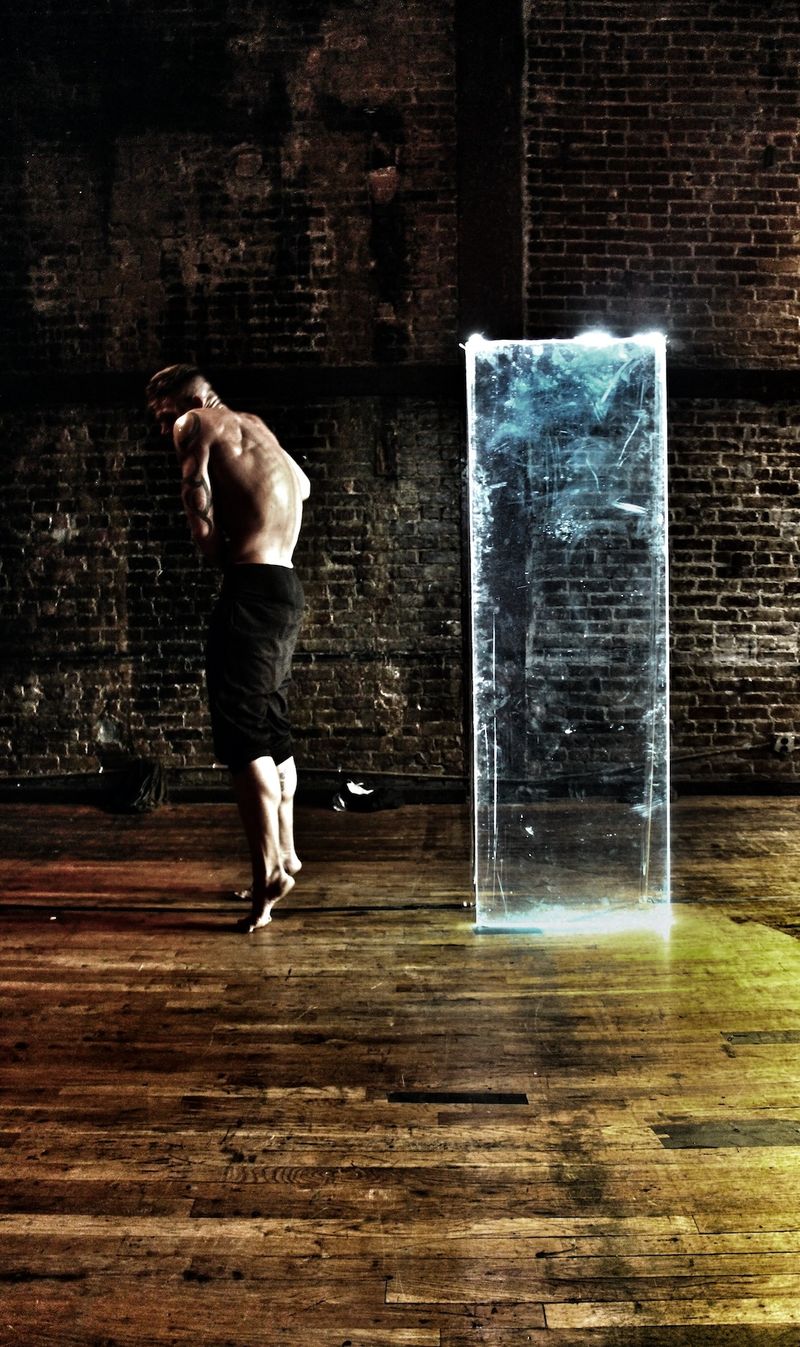
    assaulted, this darkly sensual and provocative dancework is set amidst luminous lucite panels which serve as both mirrors of the dancers involved and windows into their dark doings. The collage-score, arranged by David Englehard, includes Olafur Arnalds, Max Richter, and Deru; and at one point singer Jessie Davis wanders into the space singing “Dream A Little Dream of Me”.

    L1220636

    Tyler Patterson (rehearsal photo, above) opens this Exquisite diversion/mysterious Skin with a restless, floor-oriented solo. Later, stripped down to black briefs, Tyler’s beautiful vulnerability became a poignant element of the work. The shadow effects, off-setting the radiance of the lighted mirrorlike-panesl, create a haunting visual landscape. Jenna Liberati, Olivia Orozco, Jeff Davis, Bong Dizon, and Mike Hodge are the other fine dancers in this unsettling, brink-of-a-nightmare work.     

    project Xiii begins with a digital clock in the center of the space being set for a 13-minute countdown. The piece commences with John Zullo dancing the first of twelve solos, each to music chosen by the various dancers. Guest artists mingle with Company members, each dancer having 60 seconds to work their self-made phrase. This imaginative piece had the benefit of Mark Simpson’s lighting; Mark’s contributions to the evening were underscored here as Jenna Liberati, in a pool of light just a couple feet away from me, danced with her own shadow. This piece was an excellent way to end the evening.

  • Balanchine/Stravinsky @ NYC Ballet

    Igor stravinsky

    Thursday September 27, 2012 – The third programme in the New York City Ballet‘s 2012 Stravinsky festival included the first ballet that I ever saw the Company perform: BAISER DE LA FEE. This work of pure enchantment holds a special place in my heart and while the memory of Patricia McBride and Helgi Tomasson dancing the ballet’s principal roles on that first night roles stays strong in the memory, I was particulary keen to see tonight’s pairing of Tiler Peck and Gonzalo Garcia making their BAISER debuts.

    But first a zesty appetizer: SCHERZO A LA RUSSE was performed by students from SAB. It’s always fun to see, with it’s unfinished sentence at the end.

    BAISER with its intoxicating score (conducted by Jayce Ogren, who at the end of the evening gave us a delicious reading of FIREBIRD) always weaves its dreamy spell. And under that spell, Tiler Peck and Gonzalo Garcia danced superbly: Tiler’s pirouettes so swift, soft and fair, and Gonzalo brushing the floor with his fingertiips in his mysterious solo. Their artistry, individually and in unison, is thoroughly satisfying to experience. As the melody of ‘None but the lonely heart’ pulses in the orchestra, the dream ends – or does it go on? – as the lovers back away from one another, eyes heavenward. Alina Dronova and Faye Arthurs were very agile and lovely in their demi-soliste roles.

    DANSES CONCERTANTES with its fussy Eugene Berman costumes, old fashioned ‘flats’ setting and entr’acte curtain, has a music hall flavour. It seems a bit dated, and the score – perfectly pleasant – is unmemorable in the long run. Brilliant dancing from Megan Fairchild, Andrew Veyette and a dozen premiere corps dancers (forming four colour-coded  pas de trois) showed the ballet to its best advantage, but tonight it seemed longish and very much of a theatrical era that has vanished.

    Firebird_2

    But FIREBIRD seemed like solid gold tonight, with its glowing score – Stravinsky’s most marvelous, in my view – and its ever-entrancing Chagall designs. For me this is a ballet that never ages. Teresa Reichlen is an elegant vision in her fiery tutu, and with her fluttering gestures, her lovely stretched-out leaps and the gentle hush of her Berceuse, she was perfect. Ask LaCour and Savannah Lowery as the prince and princess were likewise impressive. And to the gorgeous melodies of their ensemble, a dozen fetching ballerinas in their Chagall peasant-gowns wove a particularly enchanting spell: Anderson, Arthurs, Brown, Hankes, King, Laracey, LeCrone, Mann, Pazcoguin, Pollack, Smith and Wellington – a fine corps-watchers opportunity. If the girls take the whole thing a bit tongue-in-cheek, that actually makes it all the more fun. Thank you, my beauties.

    SCHERZO À LA RUSSE: Students from the School of American Ballet

    DIVERTIMENTO FROM ‘LE BAISER DE LA FÉE’: *T. Peck, *Garcia, Arthurs, Dronova

    DANSES CONCERTANTES: M. Fairchild, Veyette

    FIREBIRD: Reichlen, la Cour, Lowery, Scordato

  • Rehearsal: Janusphere Dance Company

    Copy of 28

    Thursday September 29, 2011 – On October 7th and 8th, Janusphere Dance Company will present DEVELOPING HORIZONS at the Ellen Stewart Theatre (aka LaMaMa), 66 East 4th Street. Ticket information here. Works choreographed by Darion Smith (the Company’s director), Selina Chau and Danielle Genest will be performed. Since Kokyat and I are unable to attend the performances, Darion very kindly arranged for us to watch a rehearsal tonight at the DANY studios. Above: Marie Lorena Fichaux and Milan Misko.

    It’s always nice to walk into a studio and see people we know: Milan Misko, Leyland Simmons, Selina Chau and Luke Manley. The dancers new to us each all made excellent individual impressions and we’ll look forward to seeing them again. Darion’s choreography is demanding both in terms of technique and partnering; the dancers worked tirelessly throughout the three hour rehearsal while Kokyat recorded their work with his two cameras.

    Copy of 10

    Matt Van Buskirk

    Copy of 3

    Anne-Sophie Rodriguez and Marie Lorena Fichaux

    Copy of 11

    Leyland Simmons

    Copy of 12

    Misei Daimaru and Luke Manley

    Copy of 23

    Marie Lorena Fichaux and Milan Misko

    Copy of 33

    Choreographer Selina Chau with dancer So Young An. Selina has created an expressive solo entitled Ashley on this lovely young dancer. They worked together on developing the gestural nuances that are the key to the solo.

    Copy of 34

    So Young An

    Copy of 35

    So Young An in Selina Chau’s Ashley

    Copy of 37

    Anne-Sophie Rodriguez, Milan Misko

    Copy of 41

    Eun Jung Jung, Luke Manley

    Copy of 27

    Milan Misko, Marie Lorena Fichaux

    Copy of 18

    Luke Manley, Misei Daimaru

    Copy of 30

    Milan Misko, Marie Lorena Fichaux

    Copy of 43

    Darion Smith

    All photos by Kokyat.

  • Cherylyn Lavagnino’s Autumn Soiree


    Copy of 23

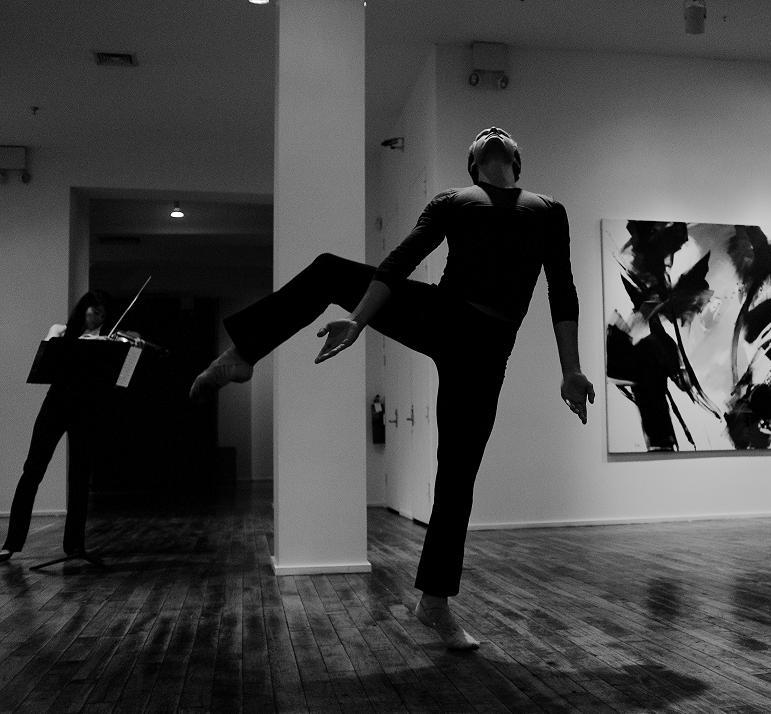
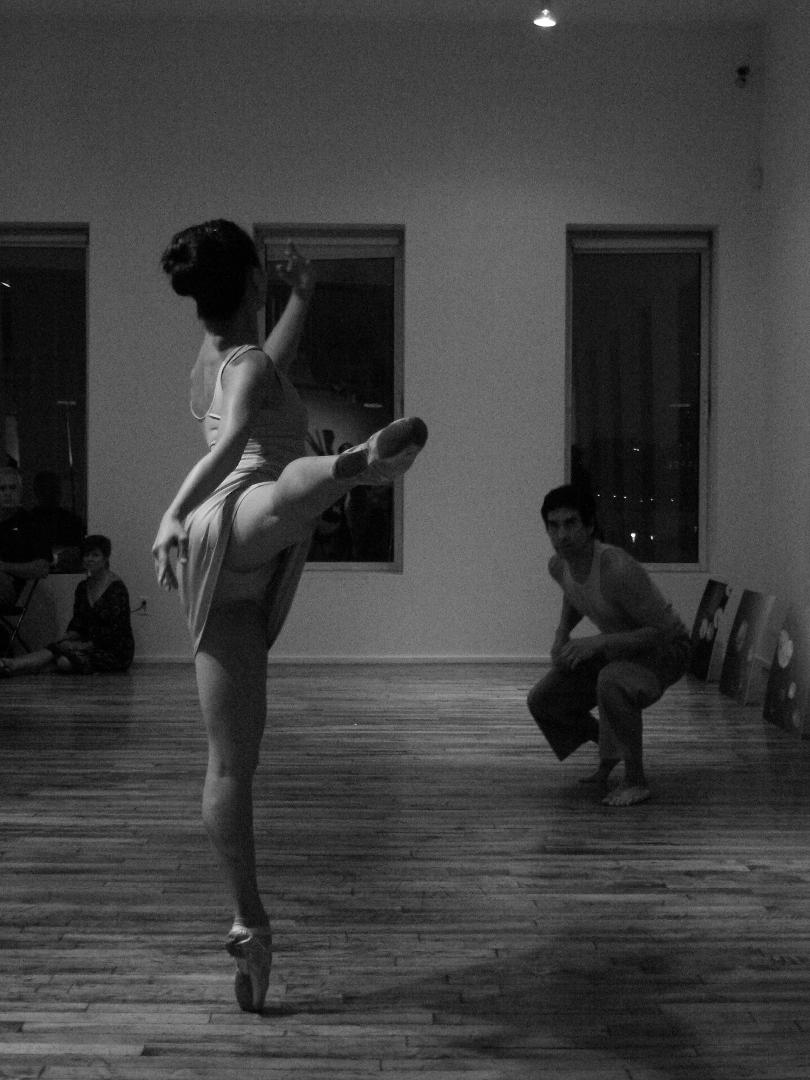
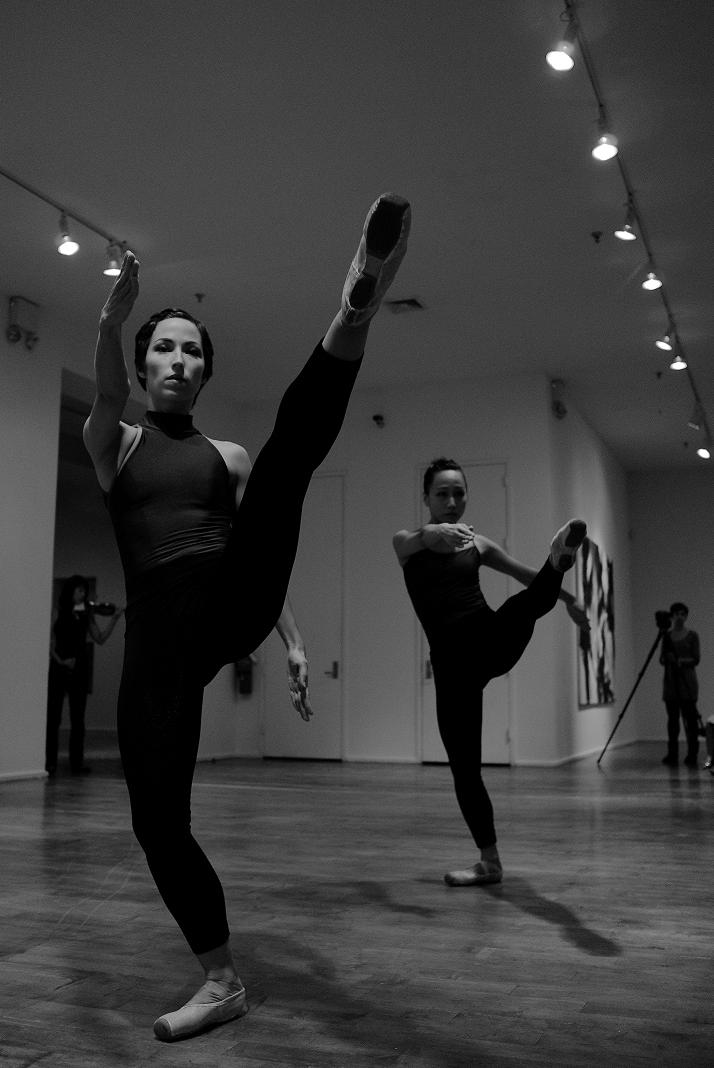
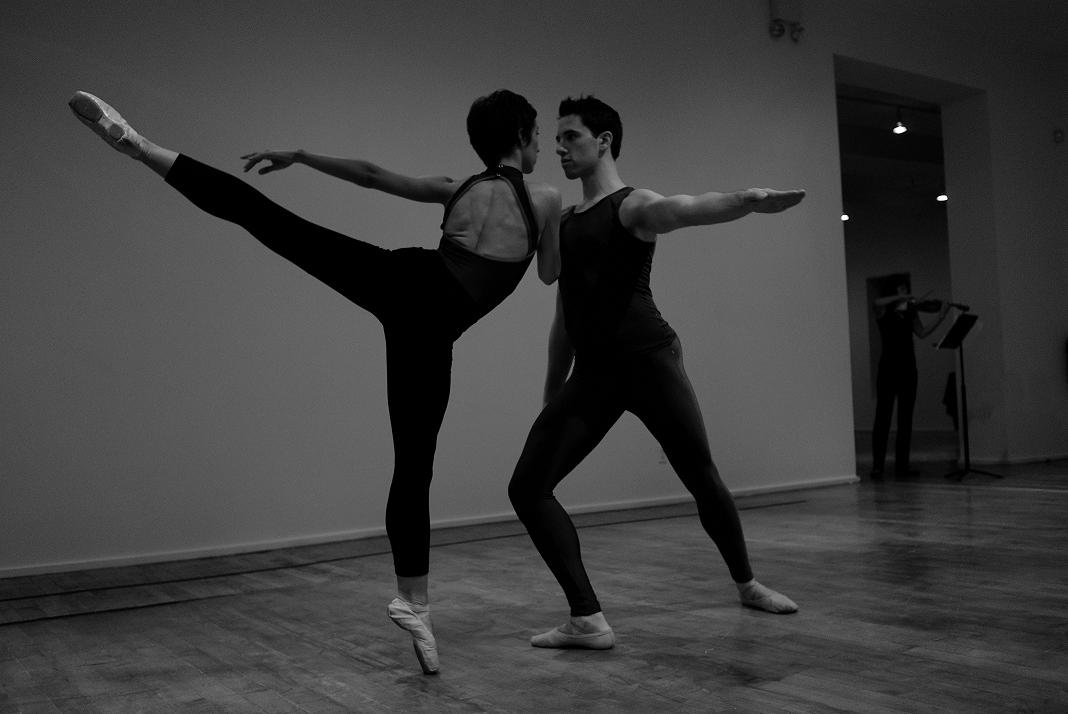
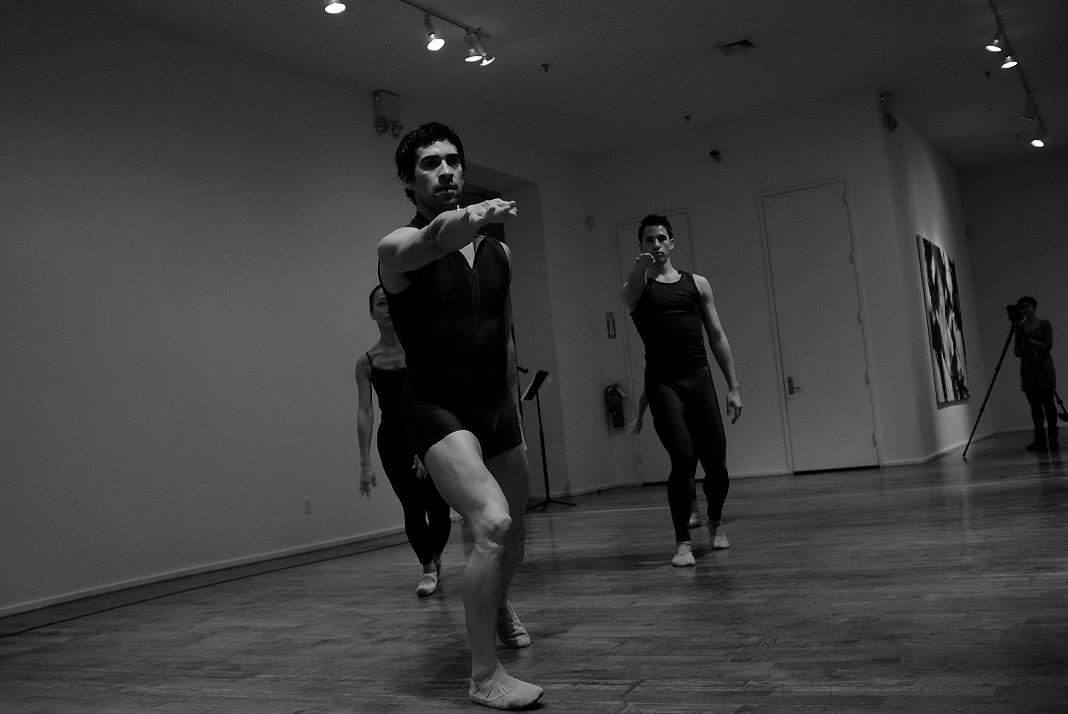
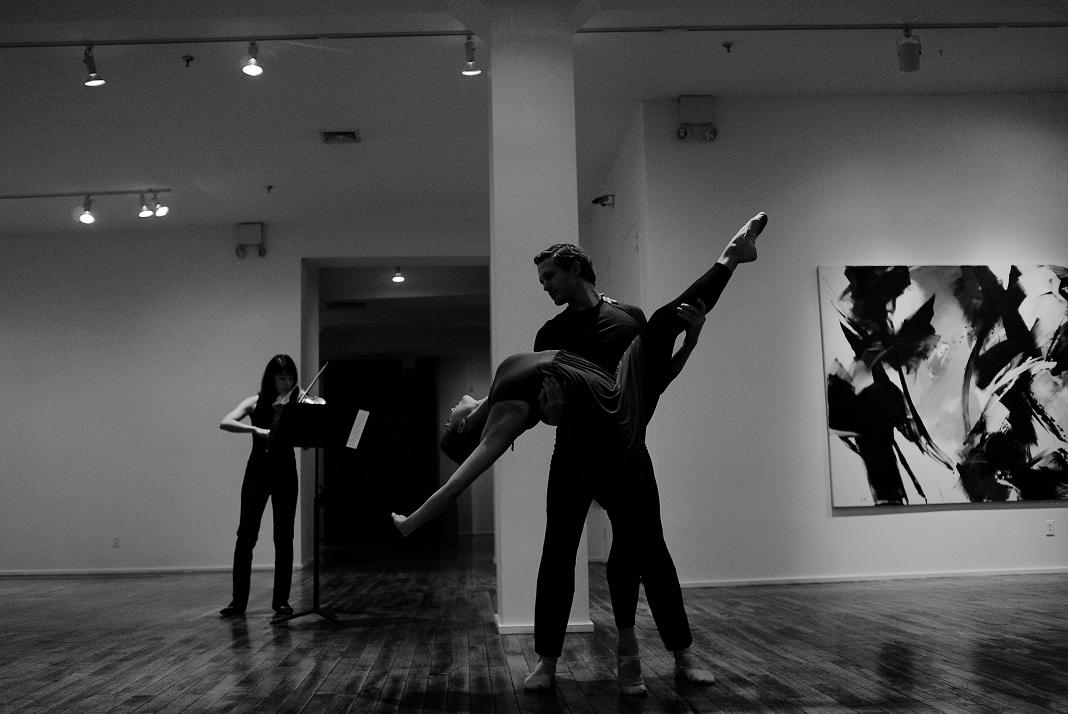
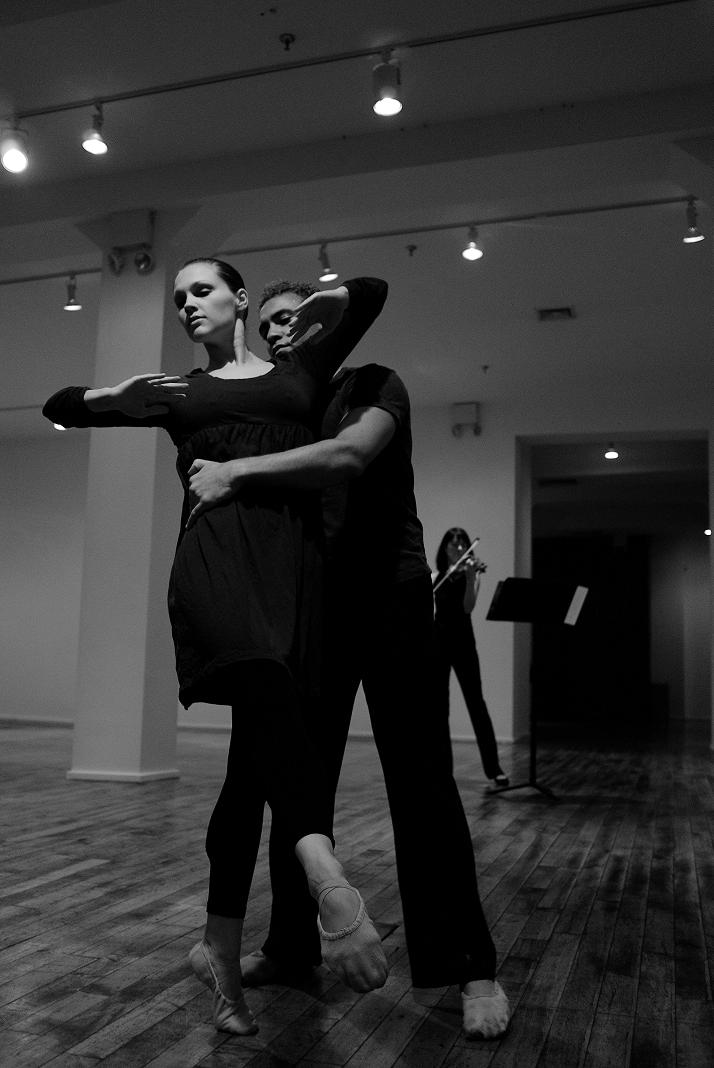
    Thursday September 22, 2011 – A really fine evening of dance from Cherylyn Lavagnino‘s beautiful Company, enhanced by live music and performed in a “salon” setting at the Chelsea Art Museum. Above, violinist Jane Chung and dancer Luke Manley in QUIET PLACE, the evening’s final offering.

    Two duets, a quartet and a large ensemble work were danced in different areas of the museum’s large upper gallery. The audience, despite being urged to walk about, mostly remained in their seats, moving their chair as the performance shifted from space to space.

    Copy of 3

    Composer Scott Killian provided the original score for DUET #3 in which two men move thru scuptural poses, often linked like conjoined twins. There’s no hint of romance or physical attraction between the two dancers – Justin Flores and Josh Powell (above). Instead the piece has a rather brotherly feel, and though the pacing in general is slow it is quite demanding in terms of stamina and strength.

    Copy of 8

    As DUET #3 ended, Josh walked away from the space leaving Justin in a pensive pose; he was soon joined by the lovely Selena Chau for the artful duet A BIRD CAME DOWN THE WALK, set to an entrancing score by Toru Takemitsu. This pas de deux seems a perfect companion piece to DUET #3 and some of the same motifs appear in the choreography, subtly altered. Selena and Justin (above) gave a lyrical performance; Ms. Lavagnino’s partnering settings are very appealing and persuasively interpreted by her excellent dancers.

    Copy of 15

    Moving to another area in the large gallery, four dancers appeared to perform WILL which is set to a score by Jane Chung which the composer, a polished violinist, played live tonight. Above, dancers Sarah Bek and Selena Chau.

    Copy of 11

    The work opens with two duets: in the first Ms. Chau and her partner Justin Flores (above) dance with  expressive lyricism – Selena’s vulnerable quality is so appealing  and Justin a fine and attentive partner. Meanwhile…

    Copy of 10

    …the second couple (Sarah Bek and Patrick O’Neill) stand to the side, facing one another silently.

    Copy of 12

    Sarah and Patrick’s duet has a more edgy element to it; these tall and attractive dancers match up well and danced with commanding assurance.

    Copy of 18

    Justin Flores in WILL.

    Copy of 19

    Justin and Patrick in WILL.

    Copy of 30

    A large ensemble then took over the central space of the gallery for the concluding QUIET PLACE; Ms. Chung played the Passacaglia for Solo Violin by Heinrich Ignaz Biber as the dancers moved thru ever-shifting pairings and sub-groups in patterns that evoked images of reverence and ritual.

    Copy of 21

    The individual dancers have ample opportunities for expressiveness: Josh Powell, above…

    Copy of 22

    …Luke Manley and Eric Williams…

    Copy of 25

    …Darion Smith, with Ms Chung in the background.

    Copy of 26

    Violinist Jane Chung, dancers Luke Manley and Claire Westby

    Copy of 27

    Julia Mayo, Josh Palmer, Jane Chung

    Copy of 31

    Josh Palmer

    Copy of 24

    Luke Manley, Eric Williams

    Copy of 28

    Ms. Lavagnino’s choreography in this larger-scale work impressed in its musicality and underlying sense of passion for movement. She’s becoming one of my favorite contemporary choreographers.

    A note about violinist/composer Jane Chung, from the Musica Bella website:

    “Jane Chung, violin/viola, has performed as soloist, recitalist and chamber musician across the United States and Europe, including the festivals of Prussia Cove, Aspen, Taos, Britten-Pears, Utah and Spoleto. She has collaborated as a chamber musician with Joel Krosnick, Rostislav Dubinsky, Luba Edlina, and Steven Isserlis, and the dance company TERRAIN. An enthusiastic performer of contemporary music, Ms. Chung has been a regular guest artist of the Naumburg Award-winning Da Capo Chamber Players since January 2003, including tours to Moscow, St. Petersburg and Minsk. She has also appeared with the Elements Quartet, Non Sequitur, Azure Ensemble, odeonquartet, and worked with Mario Davidovsky and Eric Chasalow.

    Ms. Chung trained primarily at Yale University, where she received a Master of Music degree and a B.A. (magna cum laude) in architecture, and was winner of both the graduate and undergraduate concerto competitions. She then studied in Vienna as a Fulbright grant recipient. Her main teachers include Peter Oundjian and Donald Weilerstein. Ms. Chung has served on the faculty of Mark O’Connor Fiddle Camp and the Great Neck Music Center, and she has taught violin and chamber music at Yale. She is also worked with American Ballet Theatre’s orchestra and has performed with the New York Philharmonic, Orpheus Chamber Orchestra, Seattle Symphony, and Metamorphosen Chamber Orchestra.”

    All photographs by Kokyat. Visit his Leica photoblog here.