Tag: Till Fellner

  • Pittsburg Symphony Orchestra @ Lincoln Center

    Thumbnail_till_felner

    Above: pianist Till Fellner, photo by Jean-Baptiste Millot

    ~ Author: Ben Weaver

    Sunday May 19th, 2019 matinee – Great Performers at Lincoln Center presenting Maestro Manfred Honeck and his Pittsburg Symphony Orchestra in a super-sized concert at Lincoln Center this afternoon: Mahler’s Symphony No. 5 was preceded by Beethoven’s Piano Concerto No. 5 – two substantial works that rarely share the stage.

    Austrian pianist Till Fellner was the soloist for Beethoven’s 1809 magnum opus, the imposing “Emperor” Piano Concerto. By 1809 Beethoven’s hearing was already deteriorated enough that he stopped playing the piano in public. It is the only one of is concertos that he did not premiere himself. After a single chord from the orchestra, the piano enters majestically with an extended solo. This is followed by another single chord from the orchestra and a cadenza-like solo from the piano; and then again – for the third time – before the orchestra finally launches a traditional introduction.

    The lovely Adagio is scored sparingly for the piano, muted strings and winds and it leads without a pause into the raucous final Rondo. Mr. Fellner is a magician behind the keyboard. There is an extraordinary sense of simplicity and ease in his playing; even in the most arduous passages, he makes the music sound like it is being played by the gods themselves. But there is nothing simple about his interpretations, which are filled with shadows and light. He makes the music come alive in a way no other living pianist does. Fellner seems to breathe the music into existence. Each live performance I have attended by this extraordinary musician leaves me in awe. Maestro Honeck and the Pittsburg Symphony musicians seemed to be breathing the same music as Mr. Fellner. They were the perfect partners for this exceptional performance.

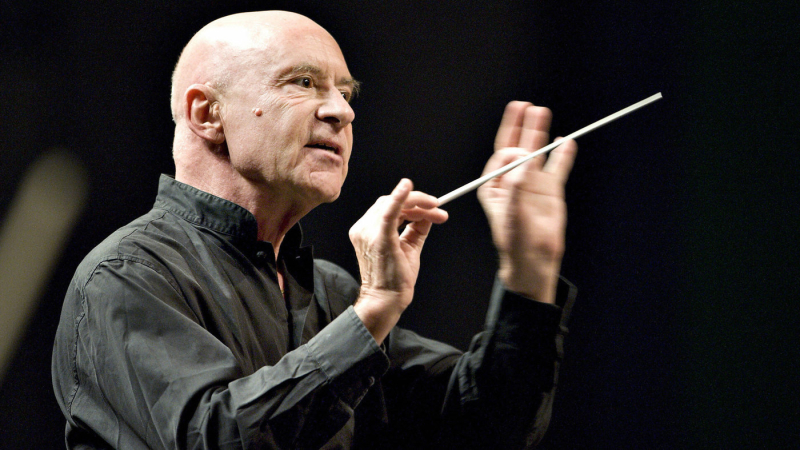
    Thumbnail_Manfred_Honeck

    Above: Maestro Honeck, photographed by Reinhold Möller

    Gustav Mahler’s mighty Symphony No. 5 received a somewhat mixed performance after the intermission. The star-turn trumpet introduction to the symphony was beautifully done, and Honeck’s tightly-controlled and dark funeral march signaled a great start. And for the Pittsburg Symphony, even at maximum volume, the sound remained wonderfully transparent. What was missing from the 3rd and 4th movements as the symphony shifts from darkness to light with its swirling waltzes, gallops and love songs (the Adagietto was nicely paced, but the climax never materialized) was a sense of fun; everyone still seemed to be stuck in the death-haunted first two movements of the symphony. Fortunately the final Rondo came whizzing in like a Mendelssohnian fairy. Honeck’s lightening of textures was a striking effect here and it brought the work to an appropriately affirming conclusion.

    ~ Ben Weaver
  • Fellner|Eschenbach|NY Philharmonic

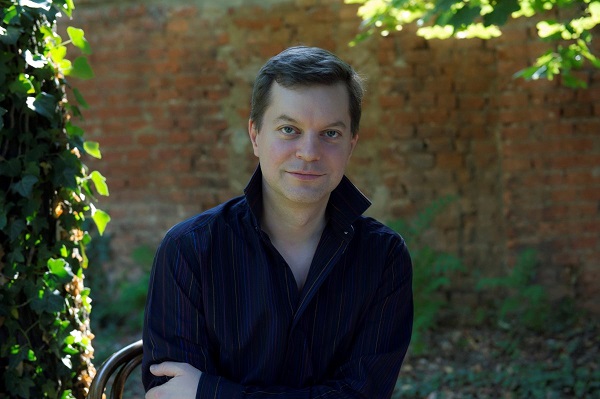
    Till-Fellner Gabriela Brandenstein

    Above: pianist Till Fellner, photographed by Gabriela Brandenstein

    ~ Author: Ben Weaver

    Saturday April 21st, 2018 – The great Austrian pianist Till Fellner made his belated NY Philharmonic debut last week with an unforgettable performance of Mozart’s Piano Concerto No. 22. Composed in 1785, while he was also composing Le Nozze di Figaro, the E-flat major concerto was following one of Mozart’s most famous works: the 21st concerto’s famous slow movement (two centuries later dubbed “Elvira Madigan” after it was used in a movie of that name.) 

    Whatever the 22nd lacks in fame, it most certainly is one of Mozart’s masterpieces. A big and extended orchestral introduction, which includes timpani and horns, leads to piano’s debut solo. There are several points in the concerto – not cadenzas – that showcase the piano playing without orchestral accompaniment. Mr. Fellner’s beautifully light and quick playing was superb. I have long been a big fan of is artistry: the clarity of his playing, the beauty of sound, perfectly controlled volume and runs, have long placed him among the best pianists of our time. In many ways he reminds me of Murray Perahia at his finest; that’s about the highest compliment I could pay a pianist. Fellner’s playing of this evening’s Mozart was as good as one could expect from anyone. Each note was like a pearl in sunlight. The depth of feeling in the leaping octaves of the slow movement were like love-sick sighs. I think this Andante may actually be Mozart’s most perfect slow movement. And the Allegro finale was thrilling, with some key contributions from flautist Robert Langevin and bassoonist Judith LeClair.

    Having a great concert pianist-cum-conductor Christoph Eschenbach on the podium was a great added bonus. Eschenbach, leading reduced forces of the NY Philharmonic, understands how to accompany the piano and showed extraordinary sensitivity, never rushing or fighting the solo instrument, allowing the piano to sing and lead. It was wonderful to finally have Mr. Fellner with the NY Phil, and I hope he will return regularly in the future.

    As an encore, Mr. Fellner played Liszt’s “Le lac de Wallenstadt” from “Album d’une voyageur“; he played it wonderfully.

    (Just as a side note: The magnificent final movement of the 22nd concerto was among works featured prominently in Miloš Forman’s film adaptation of “Amadeus.” The great Czech/American auteur, who also directed films  “One Flew Over The Cuckoo’s Nest” and “People vs. Larry Flynt,” and led the Columbia University film school for many years, passed away on April 13th.)

    Eschenbach

    Maestro Eschenbach (above) returned to the podium following the interval for Bruckner’s last, unfinished Symphony No. 9. In failing health for the entire composition of this work, Bruckner completed the first three movements and struggled with the finale for a year. He worked on it on the last day of his life, October 11, 1896. But he only left behind sketches (some fully scored) which were not enough for anyone to be able to legitimately piece together a full movement. (Though several have tried, none of the completions are more than curiosities.) Bruckner once suggested that his Te Deum should be performed as the finale if he did not finish the work; most people realize it was not a serious suggestion for a few reasons, one of which being that a choral finale would lead to comparisons to Beethoven’s 9th, which Bruckner would not have wanted. So the work is almost always performed in only three completed movements.

    The symphony begins with murmuring strings, interrupted by horns, like calls to battle. The brass section always gets big workouts playing Bruckner, and this evening they did not disappoint. Overall the orchestra were on spectacular form, and Maestro Eschenbach was able to corral the massive forces into a thundering wave. Bruckner had a truly unique gift for creating columns and walls of sound that sound like no one else’s. Many other composers could compose loud music, but there is something so unique and specific to Bruckner when he unleashes the full orchestra. As a listener, I often feel like I’m inside a cathedral and the walls are shaking with the voice of God. Of the great symphonists, Beethoven was able to represent musically the sounds of Earth. Sibelius is second to none to making us feel the chill of Mother Nature. Mahler could recreate the sounds of heaven. Shostakovich gave us sounds of man, in all his misery and triumph. Bruckner was a deeply religious man and I am not, but in these moments – and they exist in all of Bruckner’s works – I can imagine if God had a voice, he would sound like this.

    In the second movement, the Scherzo, the thundering march of doom is one of Bruckner’s most memorable moments. The relentless pounding of percussion and strings is stuff of nightmares. No doubt John Williams was aware of this Scherzo when he was scoring “Star Wars.” And the final Adagio is the perfect musical farewell, its conclusion sounding like a clock slowly running down.

    It is nice to have the orchestra seated on risers (a welcome change since Jaap van Zweden took over the Philharmonic as principal conductor) so one can see the various players in the back. Maestro Eschenbach also rearranged the cello and viola sections (for both Mozart and Bruckner) to have cellos on the right and violas in the middle next to the violins. Whether this was Eschenbach’s preference or a new full-time arrangement, we shall see.

    ~ Ben Weaver