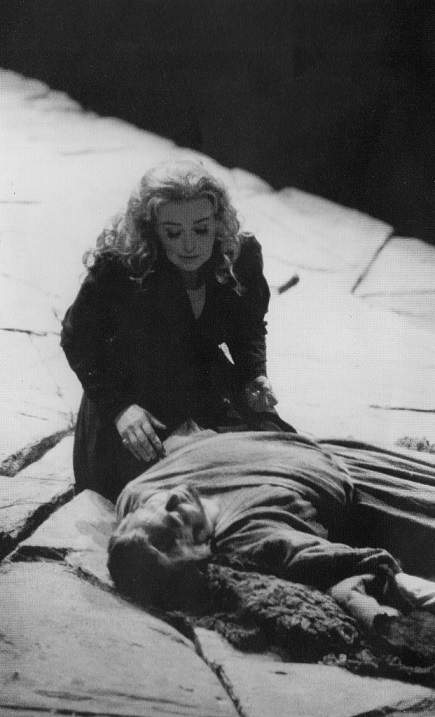
Tag: TRISTAN UND ISOLDE

  • TRISTAN UND ISOLDE: Jones & Kollo

    Scanned Section 31-1

    ~ Author: Oberon

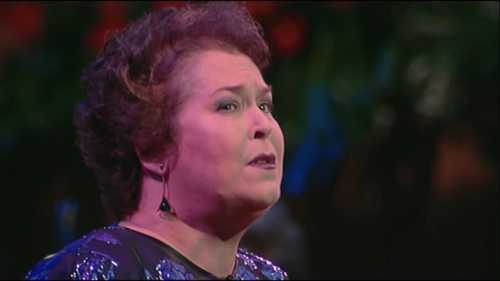
    Recalling the day I spotted this DVD of TRISTAN UND ISOLDE on the shelf at the Library of the Performing Arts. The production is from the Deutsche Oper Berlin, filmed on tour at Tokyo in 1993. It stars Dame Gwyneth Jones and Rene Kollo (photo above), two veteran Wagner specialists who were in their mid-50s at the time. During a few days of break from live opera and symphonic performances, I watched this TRISTAN one act at a time on three successive days of bitter cold weather. Despite flaws, I found it to be a moving experience.

    TRISTAN is an opera that took me a long time to embrace. Following my first live performance of it – the thrilling prima of a new production at The Met in 1973 with Birgit Nilsson and Jess Thomas in the name roles – I still found myself shying away from repeated viewings. It was the Dieter Dorn/Jürgen Rose Met production that finally brought me under the spell of this great opera; unfortunately, that gorgeous setting has since been discarded for a tedious updated production – set on a 20th-century battle cruiser – that makes little dramatic sense. Who knows when I’ll see TRISTAN in the theatre again?

    On the DVD, I found the Deutsche Oper’s simple and spare Götz Friedrich production serviceable – though lacking in poetry – in the first two acts. There’s a lot of standing about, but perhaps that’s the nature of the piece. One exciting moment comes at the close of the Liebesnacht, when the stage is flooded with light at King Marke’s return. And I was deeply moved that it is Kurwenal, not Isolde, who collapses in despair over the mortally wounded Tristan as the curtain falls on Act II.

    In the third act, the production reaches its zenith. On an outcropping of rock at Castle Kareol, bathed in silvery light from a desolate sun, Tristan lies near death. During the long scene between Tristan and his faithful retainer Kurwenal, the relationship between the two men has never seemed so poignant (this is thanks in part to Gerd Feldhoff’s splendid acting as Kurwenal). Isolde arrives, her auburn hair now streaming loose, and seeks to revive her lover. The confusion of the arrival of the second ship is well-handled: Kurwenal slays Melot, but then he too meets his death. King Marke’s lamenting words are unheeded by Isolde, who has left earthly matters behind.

    Maestro Jiří Kout shapes the yearning prelude thoughtfully; his conducting throughout the long opera manages to be both passionate and respectful of the singers. At curtain-rise, Clemens Bieber’s singing of the Sailor’s plaintive song is very effective.      

    Dame Gwyneth Jones, possessor of one of the biggest voices ever unleashed in an opera house, shows off that power to fine effect when she chooses; but much of the music is quietly and expressively sung, displaying the soprano’s incredible control. Her highest notes are steady and strong. Annoyingly and inexplicably, the filming continually shows us Tristan rather than Isolde during her Act I Narrative and Curse. While Dame Gwyneth looks rather mature – the costuming in Acts I and II is a bit dowdy – she is entirely credible. Her Liebestod is not vocally perfect, but it moved me deeply. A year after this performance was filmed, I saw the soprano as Elektra at The Met where her singing had staggering force and brilliance.

    Rene Kollo’s experienced Tristan is cannily sung; his tone can display a steady beat, but he is nonetheless vocally persuasive throughout. His third act is truly impactful; passing moments of vocal strain can be overlooked in view of the power and commitment of Kollo’s singing and acting. 

    Hanna Schwarz, Chereau’s Fricka and a splendid Met Klytemnestra in 1999 and 2002, is a bewitching Brangaene; her voice is lyrical yet well-pointed. Ms. Schwarz, slender and graceful, appears to have materialized from out of the Mists of Avalon. Magnificent singing, awash with heartbreak, sets Robert Lloyd among the finest of King Markes.

    5a9227538e4ebb2db0d340baa39aefb5

    I’ve seen some mighty impressive Kurwenals in my day, but I think Gerd Feldhoff (above) takes the prize – not only for his the clumsy sincerity of his declarations of love for and loyalty to Tristan, but also for his truly beautiful and moving vocalism. His performance makes the third act unforgettable.

    Maestro Kout gives us an expressive rendering of the “Wesendonck” prelude to Act III. Also making a strong mark in the final act are the superb English horn player, tenor Uwe Peper’s crippled and touchingly voiced Shepherd, and Ivan Sardi’s Steersman.

    Peter Edelmann, whose father Otto was an iconic Baron Ochs, beams with smug self-satisfaction as he betrays Tristan: a small but telling bit of characterization.

    I’ll be returning to this DVD in future, for so many reasons.

    ~ Oberon 
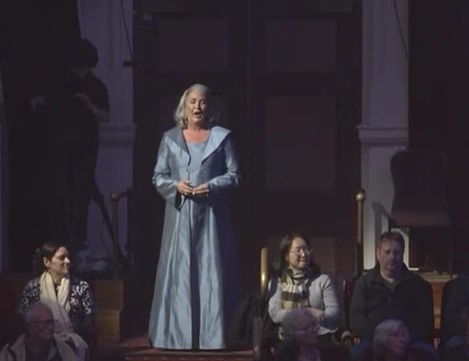
  • TRISTAN UND ISOLDE ~ Act II ~ Auckland Philharmonia

    Karneus

    Above: Katarina Karnéus singing Brangäne in a concert performance of Act II of Wagner’s TRISTAN UND ISOLDE by the Auckland Philharmonia, conducted by Giordano Bellincampi.

    CAST:

    Tristan – Simon O’Neill; Isolde – Ricarda Merbeth; Brangäne – Katarina Karnéus; Kurwenal – Johan Reuter; King Marke – Albert Dohmen; Melot – Jared Holtin

    Watch and listen here.

  • Boulez Conducts TRISTAN & ISOLDE

    Pierre-boulez

    Above: Pierre Boulez

    In April of 1967, the Bayreuth Festival’s Wieland Wagner production of TRISTAN UND ISOLDE was brought to Osaka, Japan, for three performances, featuring a stellar cast: Wolfgang Windgassen (Tristan), Birgit Nilsson (Isolde), Hertha Töpper (Brangäne), Frans Andersson (Kurvenal),  Hans Hotter (King Marke), Sebastian Feiersinger (Melot), Georg Paskuda (Young Sailor/Shepherd), and Gerd Nienstedt (Steersman).

    These performances marked the only time Pierre Boulez conducted this Wagner masterpiece.

    Watch and listen here.

    For me, this recording captures, perhaps more truly than any other, the way Birgit Nilsson sounded live in the performances of hers that I heard at The Met.

  • TRISTAN UND ISOLDE ~ Chicago 1979

    Knie vickers

    Above: Roberta Knie as Isolde & Jon Vickers as Tristan; photo by Tony Romano

    A performance of Wagner’s TRISTAN UND ISOLDE given by Lyric Opera of Chicago in 1979. Franz-Paul Decker conducts, with the following cast:

    Tristan – Jon Vickers
    Isolde – Roberta Knie
    Brangaene – Mignon Dunn
    Marke – Hans Sotin
    Kurwenal – Siegmund Nimsgern
    Melot – Richard Versalle
    Shepherd – Gregory Kunde
    Steersman – Daniel McConnell
    Voice of a Young Sailor – William Mitchell

    Listen here.

  • Narrative and Curse

    Traubel as Isolde

    Helen Traubel sings – magnificently – Isolde’s Narrative and Curse from the first act of Wagner’s TRISTAN UND ISOLDE.

    Helen Traubel – Isolde’s Narrative and Curse – Rodzinski cond

    “With the gleaming sword,
    I stood over him,
    Ready to avenge Morold’s death.

    He looked up – not at the sword,
    not at my hand –
    he looked into my eyes.
    His anguish
    touched my heart.
    The sword…I let it fall!

    His wound I healed so that he could travel homeward…and no longer trouble me with his gaze.”

  • Elizabeth Connell ~ Liebestod

    Snapshot - connell - Copy

    Elizabeth Connell sings the Liebestod from TRISTAN UND ISOLDE at a 2007 concert conducted by Richard Hickox.

    Watch and listen here.

  • Birgit Nilsson ~ Liebestod

    Snapshot

    In 1971, Birgit Nilsson was my first Isolde, in a new production at the Metropolitan Opera. For several years after seeing her in the role, I did not want to see the opera again. When I finally did  – in 2008 (!) – I realized what I’d been missing. TRISTAN UND ISOLDE now holds a high place in my list of favorite operatic works.

    Birgit Nilsson – Liebestod ~ TRISTAN UND ISOLDE – Knappertsbusch conducting

  • Blanche Thebom

    51J27V3W9WL

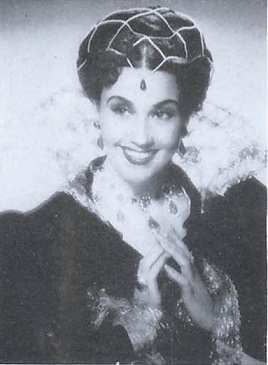
    Blanche Thebom (above), the glamorous mezzo-soprano whose career at The Met lasted over 30 years, was as well-known for her magnetic stage presence and her sensationally long hair as for her singing.

    She made her debut with the Metropolitan Opera Company in 1944 as Brangaene in TRISTAN UND ISOLDE in a performance at Philadelphia, Pennsylvania; two weeks later, she sang Fricka in DIE WALKURE at The Met. These performances drew rave reviews for Ms. Thebom, both for her singing and for her distinctive beauty and dramatic flair.

    Ms. Thebom went on to sing more that 360 performances with the Metropolitan Opera Company, in New York and on tour. She was a much-admired Carmen and Dalila, and in Verdi she made a regal impression as Amneris and Princess Eboli. She seemed capable of singing anything, from Adalgisa in NORMA to Venus in TANNHAUSER, while – in a lighter vein – she appeared as Prince Orlofsky and as Dorbella in COSI FAN TUTTE.

    Thebom Eboli

    Above: Blanche Thebom as Princess Eboli

    Blanche Thebom – O don fatale ~ DON CARLO

    Ms. Thebom appeared in the US premieres of two important works at The Met: as Baba the Turk in Stravinsky’s RAKE’S PROGRESS in 1953, and as Adelaide in Strauss’s ARABELLA in 1955. In the 1960s, she undertook what might be called “principal character” roles such as Genevieve in PELLEAS ET MELISANDE, Magdalene in MEISTERSINGER, and the Old Baroness in VANESSA. Her last role was that of the Countess in Tchaikovsky’s QUEEN OF SPADES – performed in English, at the New Met – in which she appeared opposite Teresa Stratas and Jon Vickers.

    After retiring from the Met, Blanche Thebom taught singing and also served on the Metropolitan Opera’s Board of Directors until 2008. She passed away in 2010, at the age of 94.

    AR-311309810

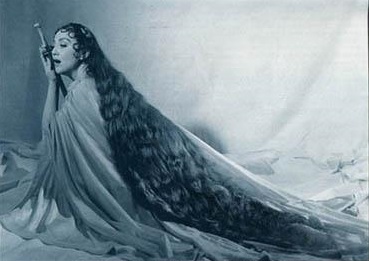
    In my earliest days of opera-loving, Blanche Thebom was already spoken of in our house. My father, who had seen her on TV, referred to her as ‘Blanche the Bomb’ due to her physical allure. And my grandmother told me about Thebom’s legendary hair, which had been used as a dramatic device when she sang Berlioz’s Dido at Covent Garden in 1957 (photo above).

    I finally heard Thebom’s voice on the radio in 1962:

    Metropolitan Opera House
    December 29th, 1962 Matinee/Broadcast

    PELLÉAS ET MÉLISANDE

    Pelléas.................Nicolai Gedda
    Mélisande...............Anna Moffo
    Golaud..................George London
    Arkel...................Jerome Hines
    Geneviève...............Blanche Thebom
    Yniold..................Teresa Stratas
    Physician...............Clifford Harvuot
    Shepherd................William Walker

    Conductor...............Ernest Ansermet

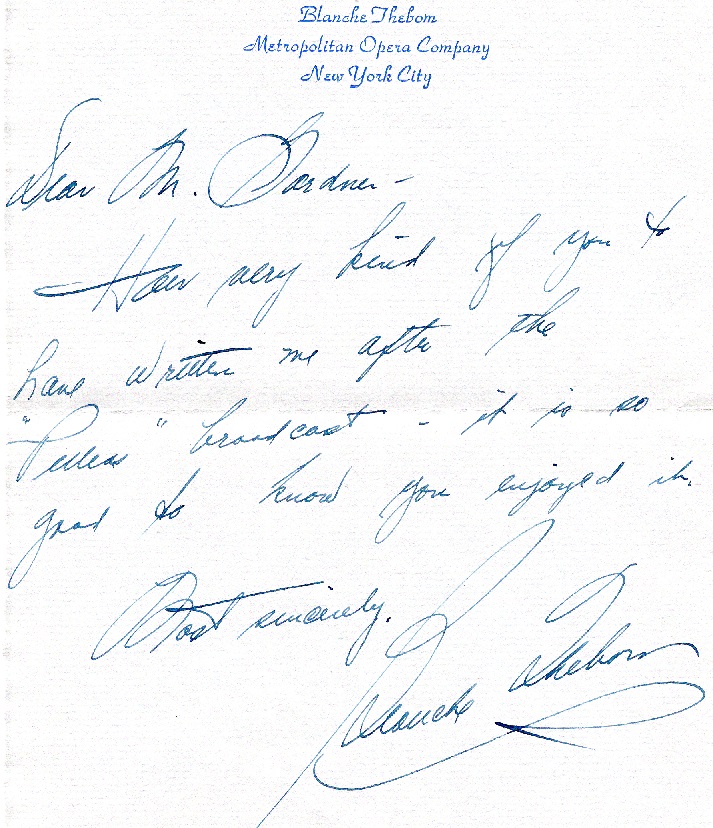
    Listening to her sing Debussy’s  Genevieve on a Texaco broadcast of PELLEAS ET MELISANDE, I was well-prepared to like her. And like her I did, so much so that I wrote her a letter; soon after, I received this elegant reply:

    Scanned Section 14-1

    More samplings of Blanche Thebom’s singing below. In RHEINGOLD, her usual role was Fricka, but I’m partial to her recording of Erda’s Warning:

    Blanche Thebom – Weiche Wotan weiche! ~ RHEINGOLD

    Blanche Thebom – Mon coeur s´ouvre a ta vois ~ SAMSON & DALILA

    Blanche Thebom – Wolf ~ Um Mitternacht

    ~ Oberon

  • The Angel

    Myrrha01
    December 23, 2011 – Today is the birthday of Mathilde Wesendonck (above) who wrote five poems which Richard Wagner set to music in 1857-1858; the cycle became known as the Wesendonck Lieder. At the time, Wagner and his wife Minna lived together in the Asyl, a small cottage on the estate of Otto Wesendonck, Mathilde’s husband. It is unclear whether Wagner and Mathilde actually had an intimate physical relationship but the composer certainly was infatuated with her, causing his mentally unstable wife to erupt in jealous fits.

    The poems themselves are wistful and dreamlike; their language reflects the emotional intensity of the Romantic style which by that time was highly developed. Wagner called two of the songs in the cycle “studies” for TRISTAN UND ISOLDE: in Träume we hear the roots of the love duet from the opera’s second act, and Im Treibhaus uses themes later developed in the prelude to Act 3. The chromatic-harmonic style of TRISTAN suffuses all five songs and creates the musical unity of the cycle.

    Wagner initially wrote the songs for female voice and piano alone, but later produced a fully orchestrated version of Träume, which was performed by a chamber orchestra under Mathilde’s window on the occasion of her birthday in 1857. The orchestration of the whole cycle was later completed by Felix Mottl, the famed Wagnerian conductor.

    Tiana Lemnitz sings the cycle’s opening song, Der Engel here.

    “An angel came down to me   
    on shining wings  
    and bore my spirit  heavenward.”