Tag: Tuesday December

  • Christmas Eve 2024 @ Carnegie Hall

    Mozart

    ~ Author: Oberon

    Tuesday December 24, 2024 – I spent Chrstmas Eve with a dear, long-time friend at Carnegie Hall, where the The New York String Orchestra were offering their customary Christmas Eve concert. The all-Mozart program brought us an overture, a concerto, and a symphony – all by the Master, and all beautifully played by the young musicians of this large and unique orchestra.

    Maestro Jaime Laredo opened the evening with the overture to The Impresario, a comic singspiel which Mozart composed in 1786. This overture is short…I might even say too short!
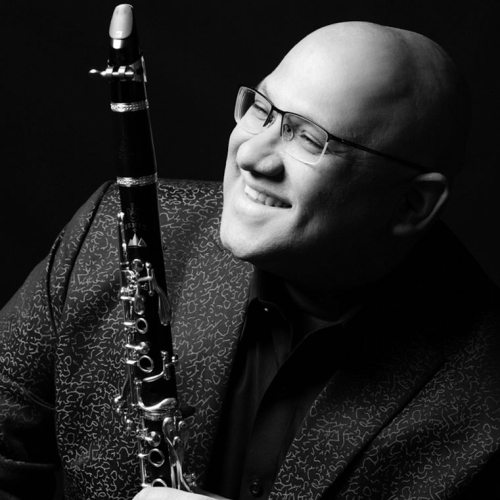
    Morales

    Ricardo Morales (above) then took the stage as soloist in Mozart’s heavenly Clarinet Concerto. I’ve never forgotten hearing music from this celebrated piece for the first time: in the film Out of Africa, Baroness Blixen (Meryl Streep) and Denys Finch Hatton (Robert Redford) are on safari; Finch Hatton has brought along a gramophone, and he puts on an old 78 rpm of the concerto, which attracts a pair of curious monkeys who – after listening raptly for a few moments – attack the gramophone.

    The first movement, Allegro, has a pulsing, melodious start. Dulcet clarinet roulades immediately introduce us to Mr. Morales’ mastery of dynamics, and his gift for incredible subtlety in his playing. His silky-smooth sound is captivating, and his agility astounds, with  fabulously clear scale-work and a charming passage where he deftly bounces from low to high notes. A mini-cadenza leads to the movement’s finale, where the Morales clarinet warbles like a magical bird over the orchestra’s plush playing.

    The Adagio – the heart of the concerto, and perhaps of Mozart’s entire oeuvre – introduces the clarinet’s simple but heartfelt melody, soon taken up by the orchestra. A fresh, wide-ranging theme evolves, in which Mr. Morales’ control and breath support are mind-boggling to experience. Following a brief cadenza, the main theme returns, hauntingly lovely; a heavenly trill from the clarinet draws the movement to a close.

    The concerto’s final Rondo has a sprightly start; Mr. Morales commences a flow of fantastical fiorature. The orchestra has an exotic, minor-mode passage, and then the clarinet’s wide range – from gleaming highs to velvety low notes – is explored in colorful playing. A magical performance, full of wonders. Bravissimo, Mr. Morales! 

    Symphony No. 36, “Linz”, closed the evening. Mozart was en route to Vienna when he stopped at Linz to visit an old friend, Count Thun-Hohenstein. On learning that a concert was scheduled just 5 days after his arrival at Linz, Mozart worked feverishly to compose a new work for the occasion: the result was a symphony in C-major, which soon earned the nickname the “Linz” Symphony.

    The first movement has a regal start. In the ensuing melody, bassoon and oboe stand out. A wistful mood sets in for a bit, then more joyous music sounds…with an odd rhythmic echo of Handel’s Hallelujah chorus. The music flows on, by turns thoughtful and grand.

    The ensuing Poco adagio begins elegantly. The music darkens, but only slightly, with the timpani evoking a sound of distant thunder. Somber moments alternate with courtly ones. The third movement – Menuetto – feels stately and grand at first, then becomes a conventional minuet, with some outstanding playing by bassoonist Laressa Winters.

    Mozart’s chose a Presto rather than a Rondo for the symphony’s finale, wherein swift and gracious themes alternate with lyrical lulls.

    Heading to the train home, I asked my companion if he felt that Mozart sometimes went on and on in his symphonies – something one rarely feels in his operas. He replied: “I was just thinking the same thing!” 

    ~ Oberon

  • CMS Brandenburgs ~ 2022

    Bach

    Tuesday December 20th, 2022 – Chamber Music Society of Lincoln Center‘s annual presentation of Bach’s Brandenburg Concertos is always a highlight of the New York concert season, and this year these immortal works maintained their ‘masterpiece’ status as the Society rounded up a spectacularly talented team of players. As is the CMS custom, the concertos are presented in a different order each year, and the program is given three times in order to accommodate all the music lovers who are craving a holiday alternative to the Messiah and the Nutcracker.

    This evening, a packed house enthusiastically responded to music-making of the highest level. As a special treat, the gentlemen of the Escher Quartet joined the lineup; I love these guys, both as musicians and as personalities. 

    The program opened with the 5th Brandenburg, which belongs to the harpsichordist. Shai Wosner played the long cadenza with striking clarity and elegance. Violinist Daniel Phillips and cellist Sihao He then joined Mr. Wosner for a gorgeous  rendering of the Affetuoso, Clad in a royal purple gown, flautist Sooyun Kim dazzled with her luminous tone and deft technique. The complimentary string trio of violinist Aaron Boyd, violist Paul Neubauer, and bassist Lizzie Burns were excellent. Ms. Burns and Mr, Wosner went on to be pillars of musical perfection as the evening flowed onward.

    Next up was the 2nd Brandenburg, with trumpet virtuoso Brandon Ridenour sailing superbly thru the music. Mssrs. He and Wosner were joined by violinist Brendan Speltz, flautist Demarre McGill, and oboist James Austin Smith in weaving a lovely tapestry of sound in the Andante. Adam Barnett-Hart, Aaron Boyd, and Pierre Lapointe formed an admirable string trio, and it is always wonderful to hear Peter Kolkay offering his mellow bassoon tone to the music. In the concluding Presto, Mr. Ridenour and Mr. Smith vied with one another as they traded phrases, much to our delight.

    In the 4th concerto (in G-major), violinist Adam Barnett-Hart was very much in his element, alternating sustained tones of gentle lustre and with passages of high-speed coloratura. Duetting flautists Demarre McGill and Sooyun Kim dazzled the ear with the swift surety of their playing in the outer movements, and tugged at the heartstrings with the poignant harmonies of the central Andante. Ms. Burns and cellist Brook Speltz brought just the right weightiness of sound to counter-balance the high voices of the flutes and violin. In the final Presto, Mr. Barnett-Hart displayed incredible virtuosity.

    Following the interval, the 1st concerto, brought forth two horn players, Michelle Reed Baker and Julia Pilant, festively gowned (respectively) in red and green. They sounded as fine as the looked, and their duetting harmonies drew plushy responses from a trio of oboists: Stephen Taylor, James Austin Smith, and Randall Ellis. Mr. Kolkay’s dulcet bassoon playing has a prominent role here. The horns are silent during the poignant Adagio, where Aaron Boyd and the oboe trio spun pleasing harmonies over velvety unison phrases from Mihai Marica’s cello and Ms. Burns’ bass. The high horns swing into the jaunty Allegro, after which a wave of applause greeted the players. But there’s still a fourth movement – a mix of minuet and polonaise – in which separate choirs of winds and strings alternated, keeping the musical textures fresh til the end.

    The 6th concerto features pulsing cello and bass figurations, and duetting violas (Mssrs. Neubauer and Phillips). Mr. Neubauer and cellist Sihao He (graciously accompanied by Ms. Burns’ bass) drew us in to the moving tenderness of the Adagio, Mr. He concluding with a brief cadenza. Then without pause, the sneaky start of the closing Allegro begins to sweep us along. Mr. He dazzled us with his swift, fluent playing, whilst the two violists had a field day with the fast-paced music. This Allegro induced fervent applause from the crowd.

    The evening’s finale, the 3rd concerto, is a particular favorite of mine; it calls for three violins (Mssrs, Boyd, Brendan Speltz, and Barnett-Hart), three violas (Mssrs. Lapointe, Phillips, and Neubauer) and three cellos (Mssrs. Marica, He, and Brook Speltz), whilst the dedicated Wosner/Burns duo kept everything merry and bright. This concerto is unusual in that its “phantom” Adagio movement consists only of a brief passage from Mr. Wosner’s keyboard. Bach immediately sends the players back into a swirling Allegro. The evening’s performance drew to an end, the audience rising to hail the players with great – and much-deserved – enthusiasm. A second bow was called for, and then we headed out into the chilly night air, our spirits fortified by glorious music of Bach.

    ~ Oberon

  • CMS Brandenburgs ~ 2017

    Bach

    Above: the Master of Music, Johann Sebastian Bach

    ~ Author: Oberon

    Tuesday December 19th, 2017 – Chamber Music Society of Lincoln Center‘s annual holiday-season performances of Bach’s immortal Brandenburg Concertos offer an antidote to NUTCRACKER and MESSIAH – not that there’s anything wrong with Tchaikovsky or Handel, to be sure. But the Brandenburgs speak to us without sentimentality or piety: pure music, pure joy.  

    This year marked my fifth CMS Brandenburgs, and as usual the Society have assembled a brilliant ensemble – from beloved Bach specialists to rising stars – to make the season merry and bright:

    Kenneth Weiss, HARPSICHORD • Kristin Lee, Cho-Liang Lin, Daniel Phillips, Danbi Um, VIOLIN • Mark Holloway, Yura Lee, Richard O’Neill, VIOLA • Efe Baltacigil, Nicholas Canellakis, Colin Carr, CELLO • Joseph Conyers, DOUBLE BASS • Robert Langevin, Carol Wincenc, FLUTE • Randall Ellis, James Austin Smith, Stephen Taylor, OBOE • Peter Kolkay, BASSOON • Julie Landsman, Jennifer Montone, HORN • Brandon Ridenour, TRUMPET

    Wu Han, co-Artistic Director of Chamber Music Society, welcomed the packed house with her customary enthusiasm and wit. Does any other Artistic Director on the Gotham scene evince such pride in the organization she heads, in the ‘product’ she dispenses (great music), and in the people – these super-musicians – who make each program so meaningful and enjoyable? The overflow crowd, filling the extra rows of seats installed specially for this program, attest to the fact that she and David Finckel are doing everything right.

    I’ve never before been in a theater when the classic yet ominous line “Is there a doctor in the house?”  comes over the loudspeakers. A gentleman quickly rose and went to see what he could do to help an individual in distress; hopefully it was all resolved to the good.

    Each year at the CMS Brandenburgs, the six concertos are played in a different order: tonight it was the fifth which opened the evening. From the New York Philharmonic, Robert Langevin brought his magic flute to the festivities. In music entwining flute and violin, Mr. Langevin and Cho-Liang Lin were exquisite in matters of subtle dynamics and pristine trills. Cordial playing from the string ‘choir’ – Daniel Phillips (violin), Yura Lee (viola), Colin Carr (cello), and Joseph Conyers (bass) – gave the concerto an appealing, warm resonance. In a dazzling cadenza near the end of this concerto’s opening Allegro, harpsichordist Kenneth Weiss thrilled me with his sparkling dexterity, made all the more alluring with hints of rubato. Although applause between movements is normally unwelcome, I couldn’t blame the audience for breaking in here to salute Mr. Weiss and his colleagues.

    The fifth concerto’s wistful Affetuoso was dreamily played by Mssers. Lin, Langevin, and Weiss. The deeper voices inaugurate the final Allegro, and here is the perfect opportunity to heap praise on the phenomenal Joseph Conyers, whose grand and glorious bass sound was a constant source of pleasure throughout the evening.

    Josephconyers

    Above: Joseph Conyers

    In concerto #6 (B-flat major), violins are absent. Instead, a formidable pair of violists – Yura Lee and Richard O’Neill – face a deluxe trio of cellists (Colin Carr, Efe Baltacigil, and Nicholas Canelakkis) across the music stands. The pulsing Allegro is highlighted by some high-speed coloratura from Mr. Carr; when his fellow cellists join in, watching their swift unison bow-work gave me a smile.

    In the sixth concerto’s Adagio – one of Bach’s most moving creations – commences with Richard O’Neill and Colin Carr (under-pinned by the Conyers bass) poignantly drawing us in. Yura Lee then takes up the theme, and for a few blessed moments, the music gives us a transfusion of hope. Colin Carr’s plush sound here gave a soul-reaching expressiveness. Sublime! But, without a pause, the closing Allegro sweeps us inexorably forward: Mr. Carr and the two violists make music that is fast and fun.

    Carol+Wincec+%281%29

    Above: Carol Wincenc

    The fourth Brandenburg commenced. Flautist Carol Wincenc’s name looms legendary in my pantheon; how wonderful to hear her playing live tonight for only the second time in my experience. Svelte and serene, Ms. Wincenc looked fetching in a ruffled black frock which drew admiring comments from the people sitting around us as she took her bows. Her flute sounds pure and sweet, and in Mr. Langevin she found a duetting partner of equal prestige. Their harmonizing was so elegant, abetted by Mr. Conyers’ amiable bass. Yet another voice is heard: violinist Kristin Lee’s tone mingled with the two flutes in a luminous blend, wondrous and subtle. A petite cadenza from Ms. Wincenc had a shimmering quality.

    For the 4th’s finale, I jotted “Speed Demon” next to Ms. Lee’s name: I vastly enjoyed watching her rapid bowing here: fabulous! The flautists were warbling divinely, and cellist Nick Canellakis contributed his customary polished playing: it felt like these musicians were setting the world to rights. A series of modulations carries the fourth concerto to its finish.

    Following the interval, the second Brandenburg found Danbi Um in the lead, with superb wind playing from Ms. Wincenc, James Austin Smith (oboe), Peter Kolkay (bassoon), and with trumpet virtuoso Brandon Ridenour soaring on high. Cellist Efe Baltacigil’s pacing motif set the stage for a delectable playing of the Andante in which Mlles. Um and Wincenc and Mr. Smith vied to see who could play the sweeter: a ravishing mix of timbres from these great artists. In the concluding Presto, trumpet and oboe matched wits to delight us even further.

    The third concerto, a particular favorite of mine, calls for three violins (Mr. Phillips, Ms. Um, and Kristin Lee), three violas (Richard O’Neill, Mark Holloway, and Yura Lee) and three cellos (Mssrs. Canellakis, Carr, and Baltacigil) whilst the intrepid Kenneth Weiss and Joseph Conyers continued to keep everything vivid. This concerto is unusual in that its Adagio movement consists only of a brief passage from Mr. Phillips’ violin: Bach immediately sends the players back into a swirling Allegro. This evening’s performance of the third showed yet again why the Brandenburgs are so cherished.

    First came last tonight, as the program concluded with the first Brandenburg (in F-major): the one that always reminds me of Handel. The ensemble here features two horns and a trio of oboes. With violinist  Daniel Phillips in charge, Jennifer Montone and Julie Landsman sounded velvety in their harmonized horn calls whilst Stephen Taylor, Randall Ellis, and James Austin Smith piped up to gratifying effect with their oboes, joined by Peter Kolkay on bassoon. Oboe, violin, bassoon, and bass sound the poignant Adagio, then the high horns ring out briskly in the Allegro. You think this concerto is over, but there’s a surprise fourth movement – it veers between Minuet and Polonaise – in which separate choirs of winds and strings summon up rhythms of the dance. This self-fulfilling ‘encore’ gave us a fine opportunity to enjoy Peter Kolkay’s lively bassoon playing.

    ~ Oberon

  • @ My Met Score Desk: NABUCCO

    J levine

    Above: James Levine

    Tuesday December 27th, 2016 – Listening to James Levine conduct tonight’s ‘alternate cast’ performance of Verdi’s NABUCCO at The Met was something of a revelation. The venerable Maestro was greeted by a sustained roar of cheers and applause when he was spot-lighted in the pit at the start of the evening. Within moments, he and the Met musicians had set the music blazing off the page.

    The score seemed remarkably fresh…and important: one could understand immediately why this opera sent Verdi’s star on its immortal trajectory. A great sense of passion and propulsion prevailed, but the more solemn passages also rang true. Chorus and orchestra were on high form, and the opera swept forward vividly. For all the sense of urgency that Maestro Levine brought to the music, there were also wonderfully detailed moments, most notably the ‘busy’ wind playing that bubbles under the melodic line of the quintet “S’appresan gl’istanti“. Taking things into overdrive, the Maestro propelled the big ensemble/finale of Act II to an exhilarating finish.

    Following a marvelous rendering of the overture – which highlights several themes to be heard later in the opera – the chorus drew us in to the plight of the Israelites; particularly moving was the passage for female voices over a rolling harp line.

    As Zaccaria, bass Dmitry Belosselskiy’s commanding voice immediately set the tone for an evening of big-scale, unstinting singing. Although his lowest notes were not firmly settled (he even left one out), the imposing voice rang grandly into the hall – I began to think what a Wotan/Wanderer he might be.

    I’ll go to hear any singer who tackles the role of Abigaille in Verdi’s NABUCCO. Tonight, the Russian soprano Tatiana Melnychenko took on this fearsome music in her Met debut; it’s her only scheduled Met performance of the season. In looking at her bio, it seems Ms. Melnychenko is making an international career by performing two roles: Abigaille and Lady Macbeth; she has already sung the former at Verona, Montreal, Barcelona, Covent Garden, and Liege. After two acts as Abigaille, I thought she’d be interesting to hear as Tosca, Minnie, Maddalena di Coigny, or Gioconda.

    The soprano seemed a bit tentative at first: the voice showing some unsteadiness and a hesitancy to sing in full chest-voice. Soon, though, she got matters in hand, and in the trio with Fenena and Ismaele, Ms. Melnychenko did some nice – even pretty – soft singing. Nancy Fabiola Herrera, and Adam Diegel played the couple who wouldn’t let opposing religious viewpoints stand in the way of their love. The tenor sang passionately in his ungrateful role whilst Ms. Herrera brought Mediterranean warmth to her vocalism, with strong dramatic accents and a nice dynamic mix. 

    Željko Lučić can be a very frustrating singer to listen to: the instrument is impressive, he can thunder forth or sustain a piano line, and his vocalism is imbued with an innate emotional quality; but so often, he wanders off pitch and that negates all the enjoyable aspects of his work. Tonight was one of his best performances in my experience, and while passing notes went slightly awry, the overall effect of his singing made a powerful impact.

    All voices heretofore mentioned were in play during the dramatic moments where Ismaele saves Fenena from execution, Nabucco subjugates the Israelites, and their temple is set aflame; with Levine spurring them on, the first act ended excitingly.

    We then move on to the great test-piece for soprano. Abigaille’s discovery of the fact that she is in truth a slave rather than a princess is expressed in a passionate recitative spanning two octaves; the soprano dealt with this quite well, with touch of wildness here and there, and some good soft, reflective phrases thrown in. She scaled down her big, somewhat unwieldy voice to make a pleasing effect in the reflective cavatinaAnch’io dischiuso un giorno“. Forewarned by the High Priest of Baal – sung by the young Serbian basso Sava Vemić with smouldering tone – of Fenena’s treachery in betraying her faith, Ms. Melnychenko then tackled the great cabalettaSalgo già del trono aurato“, throwing in some insinuating piano phrases amid the eager, full-throttle expressions of her anticipated seizing of the throne. She handled the demands of this treacherous music successfully, if not with the total élan of Elena Souliotis on the classic Decca recording. Melnychenko spit out the words “…l’umile schiava” with venomous irony. The top C’s were approached from slightly below, but then tonalized, and she sustained the final one to round-off the scena with overall positive marks.

    Levine led the atmospheric prelude to the second scene of Act II with evident love for the music; the cellos sounded wonderful. In the great recitative “Vieni, O Levita” and the ensuing invocation “Tu sul labbro“, Mr. Belosselskiy rolled out the tone in powerful, well-modulated phrases. The voice seems now more geared to the upper than the lower range, but he did sustain the concluding low-G to fine effect. People started applauding during the quiet postlude, spoiling the moment. 

    Abigaille rushes in, demanding that Fenena give up the crown; Ms. Herrera lashes out with a big retort: “Pria morirò…!” (“I’d sooner die!”). Suddenly Nabucco appears (he was rumored to be dead) and cries “Dal capo mio la prendi!” (“You’ll have to take the crown from my head!”).

    Nabucco Lucic

    Mr. Lučić (above) was so commanding here, and throughout the quintet that follows; his proclamation of himself as “god” (with thunderbolts greeting his blasphemy) and his truly affecting soft singing in his ‘mad scene’ maintained a very high level of dramatic vocalism. Ms. Melnychenko sustained the act’s final A-flat securely.

    I’d only planned to be there for the first half tonight; the excitement of the performance almost persuaded me to stay on, but the thought of a 40-minute intermission short-circuited that idea. On the 7th of January, I’ll be at the final NABUCCO of the season and will surely stay to the end of that matinee performance.

    It’s to James Levine that true credit and thanks must go for serving up this exciting performance, reminding us yet again of Verdi’s monumental place in the pantheon of operatic composers. The conductor not only gave the music great vitality but showed a keen attention to the needs of the singers. When Ms. Melnychenko seemed to want to slow down the pace in her cavatina, the conductor skillfully nudged her along, preventing the impetus from stalling.

    The House was nearly full, and indeed two of the three remaining NABUCCO performances are sold out. In recent seasons, it’s been the big, Met-sized productions that seem to be drawing crowds: TURANDOT, BOHEME, AIDA, and now NABUCCO. There’s definitely something to be said for the atmosphere that develops when The Met is packed.

  • Met’s Holiday MAGIC FLUTE

    Zauberflote Marty Sohl

    Tuesday December 20th, 2016 – Julie Taymor’s inventive production of Mozart’s MAGIC FLUTE (above, in a Marty Sohl/Met Opera photo) is the Metropolitan Opera’s 2016 holiday season offering. In this pared-down version, sung in English, quite a bit of dialogue is cut, but – alas! – so are some of my favorite moments from the score. The overture is reduced to merely the opening chords; half of Tamino’s ‘portrait’ aria is sacrificed; and the loss of the enchanting “Bei Männern” duet and of the divine Chorus of the Priests are the unkindest cuts of all.

    The Taymor is the third Met production of FLUTE in my operatic career, following the dazzling Chagall and the vivid David Hockney. Ms. Taymor’s setting is a charmer, with a crew of black-clad deck-hands manipulating giant puppets, a huge pre-historic bird to carry the Three Genii aloft, and a bevy of colorful avian-ballerinas (led by Emery LeCrone) who are enchanted by Papageno’s bells. 

    Antony Walker led a finely-paced performance, where both the light-hearted and the profound aspects of the score were given due honor. The sound of Érik Gratton’s flute, playing from the pit, fell most graciously on the ear, especially in the Trial Scene.

    Brugger, Janai 2

    The Met put forth a very appealing cast this evening. Janai Brugger (above) as Pamina and Ben Bliss as Tamino sang so persuasively that the loss of half of Ben’s aria and of Janai’s duet with Papageno were to be all the more lamented. Mr. Bliss, who gave a lovely recital at Weill Hall earlier this season, was a tall and ardent Prince, his singing clear and stylish.

    Ms. Brugger’s Pamina was a revelation: her warm vibrato and delicious turns of phrase captivated me all evening. The voice is very ‘present’ in the big hall; her highest notes, often nuanced to a luminous piano, were exquisite. The great aria was a moving expression of feminine vulnerability wherein Pamina’s mistaken belief that Tamino no longer loves her was movingly conveyed. I’m very sorry now that I missed Ms. Brugger’s Liu at The Met; the role I most want to hear her in – soon – is Mimi in BOHEME.

    Headshot-watch02a

    Morris Robinson (above) was a majestic, vocally grand Sarastro. His voice spans the range with true command – the deep notes wonderfully resonant – and in matters of phrasing and diction he imbues the music with a rich sense of humanity. It’s always a great pleasure to hear Mr. Robinson at the Met, and tonight his performance was particularly impressive. 

    Christopher Maltman’s Papageno was a genuine joy, his singing robust and sprightly by turns, and his Brit accent adding an extra bit of charm. An agile actor, Mr. Maltman took the production’s pratfalls in stride. He made the birdcatcher a vivacious but never silly character, and we were all rooting for him to win his Papagena, played – with creaky quirkiness when old and blithe perkiness when young – by Dísella Lárusdóttir.

    As the Queen of the Night, Jessica Pratt was undaunted by this most difficult of debut roles. In two arias, touching on five high-Fs, the soprano is in a make-or-break situation; Ms. Pratt came thru with flying colours, bringing a striking sense of drama to her spoken instructions to Pamina (to commit murder) and with deft coloratura in the ensuing aria. In her final command: “Swear! Swear! Swear to avenge me!” Ms. Pratt latched onto a brilliantly sustained top note that rang splendidly into the hall.

    Shenyang played the all-too-brief role of The Speaker; his scene with Tamino outside the temple is actually my favorite part of the opera, wherein Tamino’s world is turned upside-down. Shenyang and Mr. Bliss were excellent here, and how I was wishing that the bass-baritone sang in New York far more frequently. 

    Robert Brubaker gave a brilliant performance as the duplicitous Monastatos, his singing strong and his diction clear. Making his exit after being repelled by Pamina, Mr. Brubaker casually tossed the line: “If I can’t have the daughter, I’ll try for the mother!” over his shoulder. I laughed out loud. 

    Wendy Bryn Harmer, Sarah Mesko (debut), and Maria Zifchak made a very fine trio of Ladies, vocally well-matched and carrying out all their stage business with aplomb. An especially impressive trio of Genii – Daniel Katzman, Misha Grossman, and Dylan Hansen Hamme – sang firmly and blended very well in music that is often delivered weakly and with unsure pitch. Good work, boys! Mark Schowalter and Scott Scully (Priests) and Noah Baetge and Rod Nelman (Guards) rounded out the evening’s cast.

    In the well-sold House were hundreds of children, and for the most part they were silent as mice. Of course the exception had to be sitting right next to us: she did some epic nose-blowing throughout the latter scenes of the evening. Step out to the hallway, dear!

    Then, on leaving the theatre, my friend Claudia and I were accosted by a deranged patron who was incensed and righteously offended that the opera had not been given complete and was not sung in German: somehow this became our fault. After a moment of being polite, I was overcome by his severe case of halitosis. He blustered on and on while we ignored him. Finally he rushed away, crashing into the revolving door. What a miserable bloke.

    But all’s well as ends better, as the hobbits say. We had a great time at the Met tonight.

  • Met’s Holiday MAGIC FLUTE

    Zauberflote Marty Sohl

    Tuesday December 20th, 2016 – Julie Taymor’s inventive production of Mozart’s MAGIC FLUTE (above, in a Marty Sohl/Met Opera photo) is the Metropolitan Opera’s 2016 holiday season offering. In this pared-down version, sung in English, quite a bit of dialogue is cut, but – alas! – so are some of my favorite moments from the score. The overture is reduced to merely the opening chords; half of Tamino’s ‘portrait’ aria is sacrificed; and the loss of the enchanting “Bei Männern” duet and of the divine Chorus of the Priests are the unkindest cuts of all.

    The Taymor is the third Met production of FLUTE in my operatic career, following the dazzling Chagall and the vivid David Hockney. Ms. Taymor’s setting is a charmer, with a crew of black-clad deck-hands manipulating giant puppets, a huge pre-historic bird to carry the Three Genii aloft, and a bevy of colorful avian-ballerinas (led by Emery LeCrone) who are enchanted by Papageno’s bells. 

    Antony Walker led a finely-paced performance, where both the light-hearted and the profound aspects of the score were given due honor. The sound of Érik Gratton’s flute, playing from the pit, fell most graciously on the ear, especially in the Trial Scene.

    Brugger, Janai 2

    The Met put forth a very appealing cast this evening. Janai Brugger (above) as Pamina and Ben Bliss as Tamino sang so persuasively that the loss of half of Ben’s aria and of Janai’s duet with Papageno were to be all the more lamented. Mr. Bliss, who gave a lovely recital at Weill Hall earlier this season, was a tall and ardent Prince, his singing clear and stylish.

    Ms. Brugger’s Pamina was a revelation: her warm vibrato and delicious turns of phrase captivated me all evening. The voice is very ‘present’ in the big hall; her highest notes, often nuanced to a luminous piano, were exquisite. The great aria was a moving expression of feminine vulnerability wherein Pamina’s mistaken belief that Tamino no longer loves her was movingly conveyed. I’m very sorry now that I missed Ms. Brugger’s Liu at The Met; the role I most want to hear her in – soon – is Mimi in BOHEME.

    Headshot-watch02a

    Morris Robinson (above) was a majestic, vocally grand Sarastro. His voice spans the range with true command – the deep notes wonderfully resonant – and in matters of phrasing and diction he imbues the music with a rich sense of humanity. It’s always a great pleasure to hear Mr. Robinson at the Met, and tonight his performance was particularly impressive. 

    Christopher Maltman’s Papageno was a genuine joy, his singing robust and sprightly by turns, and his Brit accent adding an extra bit of charm. An agile actor, Mr. Maltman took the production’s pratfalls in stride. He made the birdcatcher a vivacious but never silly character, and we were all rooting for him to win his Papagena, played – with creaky quirkiness when old and blithe perkiness when young – by Dísella Lárusdóttir.

    As the Queen of the Night, Jessica Pratt was undaunted by this most difficult of debut roles. In two arias, touching on five high-Fs, the soprano is in a make-or-break situation; Ms. Pratt came thru with flying colours, bringing a striking sense of drama to her spoken instructions to Pamina (to commit murder) and with deft coloratura in the ensuing aria. In her final command: “Swear! Swear! Swear to avenge me!” Ms. Pratt latched onto a brilliantly sustained top note that rang splendidly into the hall.

    Shenyang played the all-too-brief role of The Speaker; his scene with Tamino outside the temple is actually my favorite part of the opera, wherein Tamino’s world is turned upside-down. Shenyang and Mr. Bliss were excellent here, and how I was wishing that the bass-baritone sang in New York far more frequently. 

    Robert Brubaker gave a brilliant performance as the duplicitous Monastatos, his singing strong and his diction clear. Making his exit after being repelled by Pamina, Mr. Brubaker casually tossed the line: “If I can’t have the daughter, I’ll try for the mother!” over his shoulder. I laughed out loud. 

    Wendy Bryn Harmer, Sarah Mesko (debut), and Maria Zifchak made a very fine trio of Ladies, vocally well-matched and carrying out all their stage business with aplomb. An especially impressive trio of Genii – Daniel Katzman, Misha Grossman, and Dylan Hansen Hamme – sang firmly and blended very well in music that is often delivered weakly and with unsure pitch. Good work, boys! Mark Schowalter and Scott Scully (Priests) and Noah Baetge and Rod Nelman (Guards) rounded out the evening’s cast.

    In the well-sold House were hundreds of children, and for the most part they were silent as mice. Of course the exception had to be sitting right next to us: she did some epic nose-blowing throughout the latter scenes of the evening. Step out to the hallway, dear!

    Then, on leaving the theatre, my friend Claudia and I were accosted by a deranged patron who was incensed and righteously offended that the opera had not been given complete and was not sung in German: somehow this became our fault. After a moment of being polite, I was overcome by his severe case of halitosis. He blustered on and on while we ignored him. Finally he rushed away, crashing into the revolving door. What a miserable bloke.

    But all’s well as ends better, as the hobbits say. We had a great time at the Met tonight.

  • Trifonov Triumphs @ The NY Phil

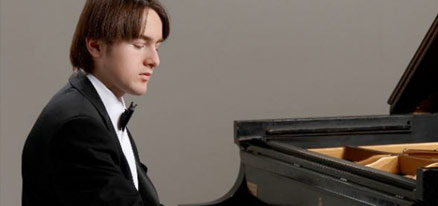
    Daniil-Trifonov

    Above: pianist Daniil Trifonov

    Tuesday December 30th, 2014 – My final musical event of the year. Avery Fisher Hall was packed with avid music-lovers as the Spanish conductor Juanjo Mena (NY Philharmonic debut) took the podium for the opening work, Capriccio espagnol by Nikolai Rimsky-Korsakov. 

    Painted in vibrant colours and dancing in dazzling rhythms, this Capriccio is a vivid evocation of Spain. Finding inspiration in Spanish folk songs, Rimsky-Korsakov cast the piece in five continuous  movements: Alborada (“morning song”); Variazoni; again Alborada; “Scene and Gypsy Song”; and the fabulous Fandango Asturiano (a dance popular in northern Spain) which features the lilting sonic illusion of guitars being strummed to the jaunty clicking of castanets. The work features prominent passages for the solo violin, Sheryl Staples winning a round of ‘bravas‘ as the conductor led her forward a solo bow at the end. Likewise Carter Brey (cello), Robert Langevin (flute) and Anthony McGill (clarinet) were all embraced by the enthusiastic crowd. And the horns were having a fine night of it. Señor Mena’s debut was off to an auspicious start.

    Kudos to the Hall’s stagehands who re-configured the seating and parked the Steinway front-and-center in the twinkling eye.

    The appearance of the boyish Daniil Trifonov was warmly greeted; with a charismatic air of mystery, this pale young man seemed to summon up imaginings of such great pianistic wonders as Chopin and Liszt who, if we believe what is written, could cast a spell over the multitudes with their virtuosic musical wizardry and their spiritual connection to the piano itself. Mr. Trifonov was so clearly enamoured of the keyboard, caressing it with his elegantly styled hands, nearly putting his ear to the keys as if they were whispering secrets to him. Intense when in motion, he seemed to be under in the piano’s thrall, unable to resist it, like an obsessive lover. If all of this sounds high-flown, it’s thoroughly true – though of course it would all be for nought if he lacked the technical mastery to match his physical passion. But…he has massive technique: he seems to burn with it, in fact. 

    So it became both an aural and a visual fascination to experience his playing tonight, playing that was beautifully embraced by the orchestral sound under Maestro Mena’s articulate leadership. For all the spectacular fluency of Trifonov’s agility as his hands whisked magically up and down the keyboard, it was in the central Andante that his mystic conversation with Rachmaninoff reached us most affectingly: especially in the gentle hush of the long, slow ascent at the end.

    Hailed by the crowd, the pianist gave us a solo encore played with delicate rapture. You can get a sense of the spell Daniil Trifonov casts with his playing here. And this quote from a Playbill article about the pianist says so much about him as an artist:  “…he approaches his work almost as a mission, and has compared the classical performer to a pastor and the performance space to a temple of art. He is ever mindful of the audiences who, he believes, need to experience something profound and meaningful in every concert.”

    Mena

    Above: conductor Juanjo Mena

    Maestro Mena has an Old World aura about him: passionate yet gentlemanly. His rendering of the Tchaikovsky 6th (Pathétique) symphony had great melodic breadth as well as a sense of nobility. From Judith LeClair’s pensive opening bassoon passage, the symphony bloomed sonically with some truly splendid playing by the Philharmonic’s richly gifted artists. In the midst of so much fabulous music-making, one moment stood out as exceptional: Anthony McGill’s truly remarkable – whispered – playing of the clarinet theme near the end of the first movement. This was some of the purest and truest music-making I’ve ever experienced: how daring of Mr. McGill to play it ppppp…and how gorgeously he succeeded!

    The symphony’s final movement, the Adagio Lamentoso, was choreographed (more as a ritual than an actual ballet) by George Balanchine; seeming to be the choreographer’s farewell to the world, it was performed only once during his lifetime, at the New York City Ballet’s 1981 Tchaikovsky Festival. Longtime NYCBalletomanes have different memories of repeat performances, but it’s most likely true that it was seen again – just once – after Balanchine’s death, danced as a memorial. I never saw it, but I wish that I had.

  • Joy To The World: BRANDENBURGS @ CMS

    2000px-Johann_Sebastian_Bach_signature.svg_

    Tuesday December 16th, 2014 – New York City Ballet have Balanchine’s NUTCRACKER; The Philharmonic offers the MESSIAH; and The Met’s giving holiday performances of HANSEL & GRETEL. But it’s Chamber Music Society of Lincoln Center who give us an extra-special gift every year in the run up to Christmas Eve: the complete Brandenburg concertos of Johann Sebastian Bach.

    Last year the Society scheduled two performances of this programme, both of which were sold out. This year they have added a third performance, which is the one Dmitry and I attended tonight. And on Thursday they’ll take the Brandenburgs on the road, to the Harris Theater in Chicago.

    A large crowd this evenng, with additional rows of seating near the stage. A pair of fidgety neighbors were a bit of a distraction, but at least they were silent. The concertos, played in a different order each year, unfolded magically; each has its own complement of players and the Society assembled a roster of excellent musicians who traded off ‘seatings’ from one concerto to the next. So nice to see principal artists from The New York Philharmonic (Robert Langevin, flute, and Timothy Cobb, double-bass) and The Metropolitan Opera (Julia Pilant, horn) joining CMS from their neighboring home theatres. Mr. Cobb and John Gibbons (immaculate playing at the harpsichord) performed in all six concertos. The programme looks long on paper, but actually the evening flew by with a savourable mixture of virtuosity and expressive poetry.

    The performance opened with the #1 concerto in F-major, which sounds so Handelian to me. This is the concerto with two horns and a trio of oboes. Ms. Pilant and Julie Landsman sounded the brightly-harmonized horn calls with assurance, whilst Stephen Taylor, Randall Ellis, and James Austin Smith piped up delightfully with their oboes, joined by Marc Goldberg on bassoon. Oboe, violin, bassoon and bass sound the poignant adagio, then the high horns ring out briskly in the allegro. You think it’s over, but there’s a surprise fourth movement – it veers from minuet to polonaise – in which separate choirs of winds and strings summon up the rhythms of the dance.

    In concerto #6 (B-flat major) which follows, a trio of cellos (Pauk Watkins, Eileen Moon, Timothy Eddy) bring a particular resonance to the score. The adagio – one of Bach’s most movingly melodious inventions – opens with the solo viola (Lily Francis) who passes the theme to violinist Lawrence Dutton. This is a passage that one wants to go on and on. But the closing allegro sweeps us inexorably forward.

    Violinist Benjamin Beilman took the lead in the 4th concerto (in G-major); the satiny sheen of his sustained tones and his very deft management of the coloratura passages were indeed impressive, and he is an animated, deeply involved musician. The duo flautists Sooyun Kim and Robert Langevin warbled with silvery sweetness in the fleet phrases of the outer movements and blendied serenely in the central andante.  Ben Beilman’s striking virtuosity and his elegant lyricism marked a high point in an evening loaded with superb playing.

    After the interval, in the 5th concerto (D-major), John Gibbons’ harpsichord artistry was to the fore, giving great pleasure in a long, complex and brilliantly etched ‘mega-cadenza’ at close of the first movement. The central affetuoso movement brings the sterling flute of Mr. Langevin and the poised violin phrasing of Sean Lee, mingling their ‘voices’  with the keyboard textures Mr. Gibbons so impressively evoked. Yet again, we feel Bach’s genius being transmitted to us in all its poignant clarity. The mood and pace then bounce back emphatically with a brisk final allegro.

    The 3rd concerto, in G-major, is unique in that the expected central slow movement is replaced by a mere couple of chords before going immediately into allegro overdrive. Thus the entire piece simply rushes forward in a whirlwind of animated playing. The all-strings setting (plus harpsichord, of course) features a large ensemble and much rhythmic and melodic variety whilst always sailing onward.

    The evening’s final work, the 2nd concerto (in F-major), arrived far to soon. In flourishing flights to the upper range, David Washburn’s Baroque trumpet gave the arcangel Gabriel a run for his money. Equally scintllating to the ear was Sooyun Kim’s limpid flute playing: both in agility and in sustained, luminous tone, she made a wonderful impression. In the andante, a particularly fine blend of timbres from Ms. Kim, Stephen Taylor (oboe), Lawrence Dutton (violin) and Paul Watkins (cello) made me again want to linger; but the trumpeter’s silvery calls in the final allegro assai swept us on to the evening’s celebratory conclusion.

    The young violinist Sean Lee, playing the concertos with CMS for the first time, wrote movingly of the experience in a Playbill note: “I cannot think of a more joyous, warm, celebratory set of pieces to revel to, as if gathering around a fire during these winter months.” Amen to that!   

    The participating artists:

  • NYCB NUTCRACKER 2011 #4

    6a00d8341c4e3853ef013487e41fdc970c-800wi

    Tuesday December 27, 2011 – Above, today’s Sugar Plum Fairy at New York City Ballet: Abi Stafford in a Henry Leutwyler photo. Thanks to the Company’s new pricing policy, I only got to see four NUTCRACKERs this season as opposed to my usual seven or eight. I simply can’t afford to go as often as I would have liked, and the notion of bringing a guest is pretty much a thing of the past.

    I’m sure by this point in the holiday season that the dancers and musicians are thoroughly sick of this ballet but they never gave any indication of their NUTZ-fatigue tonight. The house was substantially full despite some gaps of empty seats in the orchestra. To see Abi’s Sugar Plum, with Amar Ramasar as her Cavalier, was a big draw for me this evening. And I hadn’t see Janie Taylor’s Dewdrop in recent seasons so the lineup tonight was especially appealing.

    Vincent Paradiso’s Drosselmeyer is vigorous, and he looks dapper as a prematurely grey and still youthful ‘uncle’. Excellent rapport with the children and guests; Vincent brings some real dancing into his interpretation and animates the entire scene with his lively gestures. Marika Anderson’s Frau Stahlbaum has an interestingly high-strung quality; Christian Tworzyanski is her genial spouse. Conductor Ryan McAdams took the soldier’s solo at an unusually fast pace but Troy Schumacher nailed it with some virtuoso dancing; Sarah Villwock and Kristen Segin were charming in the commedia dell’arte kissing duet. In the Snow Scene I was smitten with Lauren Lovette’s radiant dancing.

    Abi Stafford’s Sugar Plum Fairy opened the second act with her finely-danced solo; she then greeted the procession of divertissement dancers, led off by Mary Elizabeth Sell and Zachary Catazaro who looked authentically Spanish and danced brightly, with Mary holding one balance to striking effect. She’s a dancer deserving of more and more opportunities. Georgina Pazcoguin’s sultry glamour as Arabian held the audience in the palm of her hand: “I like her best!” the little boy sitting behind me said aloud as Gina finished her solo; her fantastic combinations in the finale were the frosting on a delicious Pazcoguin cake. Giovanni Villalobos, another dancer we should see more of, was a sprighty Tea and Sean Suozzi’s space-filling, theatrically vivid Candy Cane energized the crowd. Ashley Laracey danced the tricky Marzipan solo with total command, polishing off her triple pirouettes to perfection. In the ensuing Waltz of the Flowers, Amanda Hankes and Brittany Pollack danced beautifully, leaving me to ponder which of them has the loveliest smile.

    Janie

    Janie Taylor (Leutwyler image, above) is the most ethereal Dewdrop I’ve seen; all different ballerina-types have been cast in this role over the years, from majestic goddesses to petite princesses. I love the variety of interpretations, and Janie’s stands out. With her high-flying extension and elegant jetes, the ballerina brings a touch of impetuosity to everything she does. The audience seemed very taken with her performance, showering her with applause as she flashed thru the brilliant fouette combination; later, in the finale her swift pirouette-to-arabesque sequence was beautifully timed, then she went flying off in a big, stretched-out leap.

    Abi and Amar kept the audience, full of youngsters, in a keenly attentive state with their dancing of the adagio, the grand climax of the Balanchine NUTCRACKER. Here the choreographer shows us the art of classical ballet partnering, echoing the lyric grandeur of the Tchaikovsky score. In this pas de deux, Abi and Amar combined youthful freshness and a sense of courtly manners. Building from one passage to the next, the dancers capitalized on the inherent drama of the duet with its final suspenseful promenade and Abi’s sustained balance; Amar then daringly tossed the ballerina into the air before sweeping her into the final dive. The audience ate it up. 

    TUESDAY EVENING, DECEMBER 27, 6 PM (Conductor: McAdams)

    SUGARPLUM: A. Stafford; CAVALIER: Ramasar; DEWDROP: Taylor; HERR DROSSELMEIER: Paradiso; MARZIPAN: Laracey; HOT CHOCOLATE: Sell, Catazaro; COFFEE: Pazcoguin; TEA: Villalobos; CANDY CANE: Suozzi; MOTHER GINGER: Thew; FLOWERS: Hankes, Pollack; DOLLS: Villwock, Segin; SOLDIER: Schumacher; MOUSE KING: Dieck; DR & FRAU STAHLBAUM: Anderson, Tworzyanski

    As we now head into the Winter season at New York City Ballet, many long-time fans of the Company are finding their loyalty tested as they remain fully supportive of the dancers but find the marketing practices of the current regime off-putting. How it will play out remains to be seen.