Tag: Tuesday October

  • An Evening of Trios @ Carnegie Hall

    Trio 1

    Performance photo by Chris Lee, courtesy of Carnegie Hall

    ~ Author: Oberon

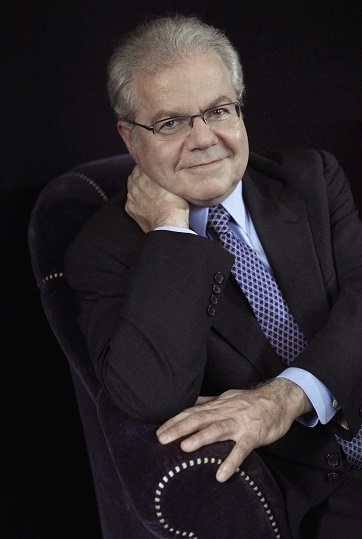
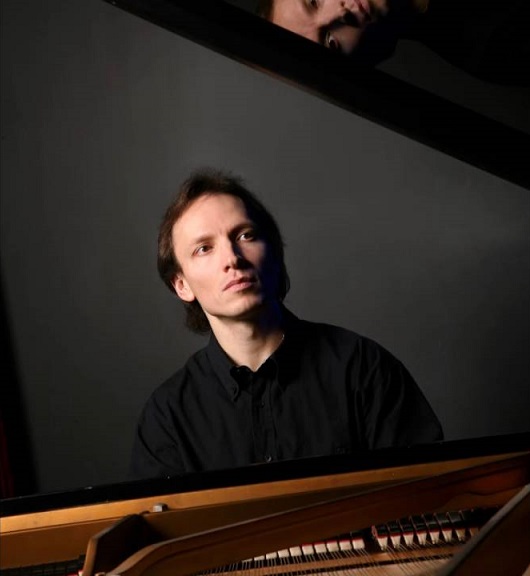
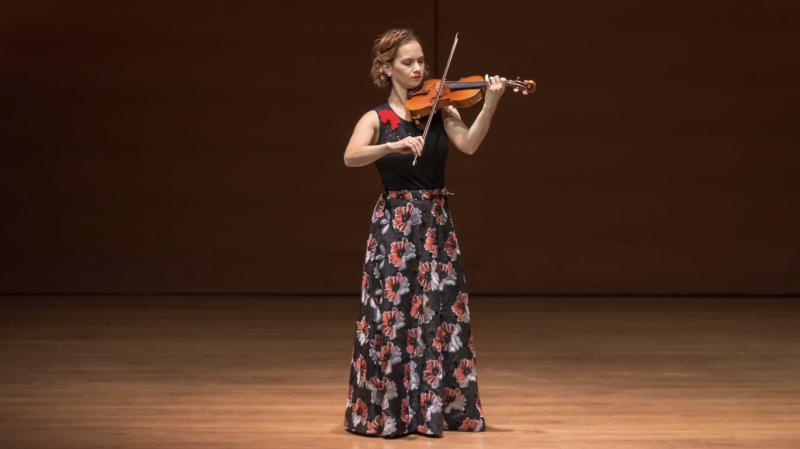
    Tuesday October 24th, 2023 – Three beloved luminaries of the classical music world joined forces on the Carnegie Hall stage tonight, playing trios by Haydn, Ravel, and Mendelssohn. Pianist Jean-Yves Thibaudet, violinist Lisa Batiashvili, and cellist Gautier Capuçon took the stage to a warm welcome from the crowd.

    I’m sure the two gentlemen will forgive me if I mention my particular affection for Ms. Batiashvili; I became familiar with her artistry thru her appearances with the New York Philharmonic during Alan Gilbert’s tenure. Violinist and maestro formed a particularly cordial musical relationship; their rapport was as lovely to watch as to hear. Tonight, it was wonderful to see Lisa on the Carnegie Hall stage, looking elegant in a black trouser number with black stilettos.

    The opening Allegro moderato of the Haydn E-major Trio commences with a plucked motif, which will recur at times as the movement goes forward. In the cantabile passages, the sweetness of Ms. Batashvili’s tone was finely meshed with the mellow lyricism of the Capuçon cello, whilst M. Thibaudet at the Steinway produces silvery cascades of notes.

    The Allegretto opens with a rather somber unison passages, and then M. Thibaudet begins a long piano solo, with appealing commenting phrases from the violin and cello. Some vivid flourishes near the movement’s end carry us on to the final cadence.

    The trio’s final Allegro has a gently bustling feeling, with the players bringing lovely subtleties to the music. A darkish, minor-key interlude develops into a tempest, and the movement then takes a da capo before reaching a coda with retards and pauses etched in. Beautiful blends of timbres, and a sense of camaraderie among the artists that was lovely to observe.

    The players rose for a bow, and then immediately sat down to play Maurice Ravel’s Piano Trio.

    M. Thibaudet’s delicate piano introduction to the opening Modéré creates a sense of mystery. The strings join, and the music develops a gentle sway. Cello and violin exchange brief melodic sentences, and the music grows passionate. Then Ms. Batiashvili spins out exquisite phrases in the violin’s highest range; following an agitato interruption. The music turns dreamy.

    Ravel titles the second movement Pantoum, which refers to a Malaysian form of poetry.  It is sprightly and dancelike, with the strings conversing. There are some stormy bits, and then an acceleration. M. Thibaudet opens the third movement, Passacaille, with a low, simple theme. M. Capuçon joins, with a hauntingly deep, rather mournful melody, and Ms. Batiashvili brings her magic to a ravishing solo. Passion waxes and wanes, with the music becoming dense and darkish; things quieten for a sustained cello solo, richly played. The piano brings the movement to a close.

    The last movement of the Ravel is an Allegro appassionato. It has a high, airy start, luminously played from our trio. The music gets grand. Ms. Batiashvili executes a sustained trill, to which M. Capuçon replies with a trill of his own. At the Steinway, M. Thibaudet’s technical wizardry is on display. The music rushes on, restless…and dazzling.  

    The Mendelssohn piano trios are the first chamber works I fell in love with, and while the first of the two is my favorite, I am always very pleased to hear either of them played live. Tonight, it was the second that was on offer, played to perfection.

    The C-minor Piano Trio finds Mendelssohn at his passionate, rhapsodic finest. The pianist immediately sets the tone with an unsettled opening theme; a second theme – song-like and fervent – takes over, played first by the violin and cello with the piano accompanying. M. Thibaudet is simply marvelous here, and the ebb and flow of the familiar melodies gave a feeling of reassurance.

    The piano opens the ensuing Andante, lending a feeling of peace. Violin and cello harmonize with extraordinary beauty of tone, creating a wistful mood. Next comes a true Mendelssohnian delight: a jittery, scrambling Scherzo, to which the players brought pristine technique and spine-tingling nuances. The trio’s finale veers from between minor and major modes, with mood swings shifting from agitated to tranquil. Here the perfect blending of the three voices was at its most savourable.

    The audience, one of the most attentive and alert in recent seasons, cheered heartily as the musicians took their bows. An encore was demanded: the Vivace from Dvořák’s Piano Trio in E-minor, Opus 90. The  music has a gypsy lilt and featured a long solo for Ms. Batiashvili, a remarkably sustained tremelo from M. Capuçon, and an array of delights from M. Thibaudet.

    After a couple of weeks of my feeling out-of-sorts, this concert provided a miracle cure. Thank you, Lisa, Jean-Yves, and Gautier!!

    Lisa b capucon thibaudet carnegie 2023

    Heading out for a bow; photo by Chris Lee

    Trio 2

    Photo by Chris Lee, courtesy of Carnegie Hall

    ~ Oberon

  • Philadelphia Orchestra ~ Rachmaninov/Higdon

    Rachmaninoff jpg

    Above: Sergei Rachmaninov

    ~ Author: Ben Weaver

    Tuesday October 17th, 2023 – The Philadelphia Orchestra was Sergei Rachmaninov’s favorite orchestra. He not only composed multiple works which they premiered, but it was the orchestra he chose to record his symphonies and piano concertos with. And, through the decades, the Philadelphians have played Rachmaninov as well as anyone and better than most.

    The orchestra’s current artistic director, Yannick Nézet-Séguin, has already recorded Rachmaninov’s complete symphonies and piano concertos (with Daniil Trifonov as soloist) and is continuing his presentation of the works at Carnegie Hall. (In a one-time-only mega event, pianist Yuja Wang and the combination of maestro Nézet-Séguin and Philadelphia Orchestra  performed all the piano iano Concertos and the Rhapsody on the Theme of Paganini at Carnegie Hall in a single memorable concert last season.) On October 17th Nézet-Séguin presented a marvelous evening of two of Rachmaninov’s audience favorite works: the Symphonic Dances and Symphony No. 2.

    Rachmaninov composed the Symphonic Dances in 1940 and the Philadelphia Orchestra and Eugene Ormandy premiered it in January of 1941. Apparently Ormandy was not very fond of the work, though he did perform it frequently and record it more than once. 

    The first dance opens with a three-note staccato motif, dark – even sinister – in tone, and it remains the driving rhythmic force throughout the movement. An alto saxophone plays a memorable role during the quieter moments (alas the wonderful player is not specified in the Playbill.) Rachmaninov ends the movement with a modified quote from his First Symphony, a work that had been lost 40 years earlier, so he knew nobody would have any idea what they were hearing. (The score was fortunately discovered again, but after Rachmaninov died, so he did not get an opportunity to hear it again after it’s catastrophic premiere led to his composers’ block.) Maestro Nézet-Séguin took a hard-driven, very steady, and deliberate pacing in the beginning of the work, speeding up considerably when the opening theme returned later in the movement.

    The second dance is a stilted Waltz that I always thought of a cousin to Ravel’s La Valse. The compositions share an odd limping rhythm, the wistful minor key melodies swirling like aged ballerinas remembering happier days. Perhaps Nézet-Séguin lingered a little too much occasionally here, but always recovered the pulse of the work. The final dance, with its heavy reliance on the Dies Irae (a theme Rachmaninov used in many of his works) fights against a quotation from Rachmaninov’s own All-night Vigil Vespers, as light tries to conquer darkness. It seems the heavens win (Rachmaninov even scribbled “Hallelujah” in the score.) The Philadelphia Orchestra and Nézet-Séguin dazzled all the way through.

    The Symphony No. 2 in E minor, Op. 27 is, along with his Piano Concerto No. 2, Rachmaninov’s most beloved work and oft-performed work. A gigantic, lush, deeply Romantic and melodic work was a hit from its premiere (conducted by Rachmaninov himself in St. Petersburg in 1908; the US premiere took place just one year later in – where else – Philadelphia under the composer’s baton.) Maestro Nézet-Séguin’s interpretation was magnificent, sometimes even revelatory. The tumultuous climax of the first movement, with its howling brass, for the first time reminded me of Tchaikovsky’s Pathétique Symphony. The magnificent Adagio movement – with a ravishing melody everyone recognizes – contains a tremendous extensive solo for the clarinet, played by principal clarinetist Ricardo Morales with incredible beauty and tenderness that made you lean forward. The final Allegro vivace movement was a high voltage thrill ride which the orchestra dispatched with effortless aplomb.

    I must acknowledge that the concert opened with a performance of Jennifer Higdon’s Fanfare Ritmico, a brief 1999 piece I occasionally thought may have resembled John Adams’ “Short Ride in a Fast Machine.” But the resemblances were fleeting even if they existed. My red flags went up when I looked at the list of instruments used in this 6 minute piece and it contains, as so many contemporary works do, every imaginable percussion instrument there is. Perhaps 2/3 of the instruments listed were percussive. I suppose to Higdon’s credit she does not use them all at once (something others do and never to anybody’s benefit). But she does fall into the same trap countless contemporary composers do where being unable to transition from one theme to another, the easiest path is to have somebody hit something. And so things kept getting hit. When it ended I said to my companion: “Well, whatever that was, they played it very well.”

    ~ Ben Weaver

  • Fouad Boussouf’s NÄSS @ The Joyce

    Nass fff

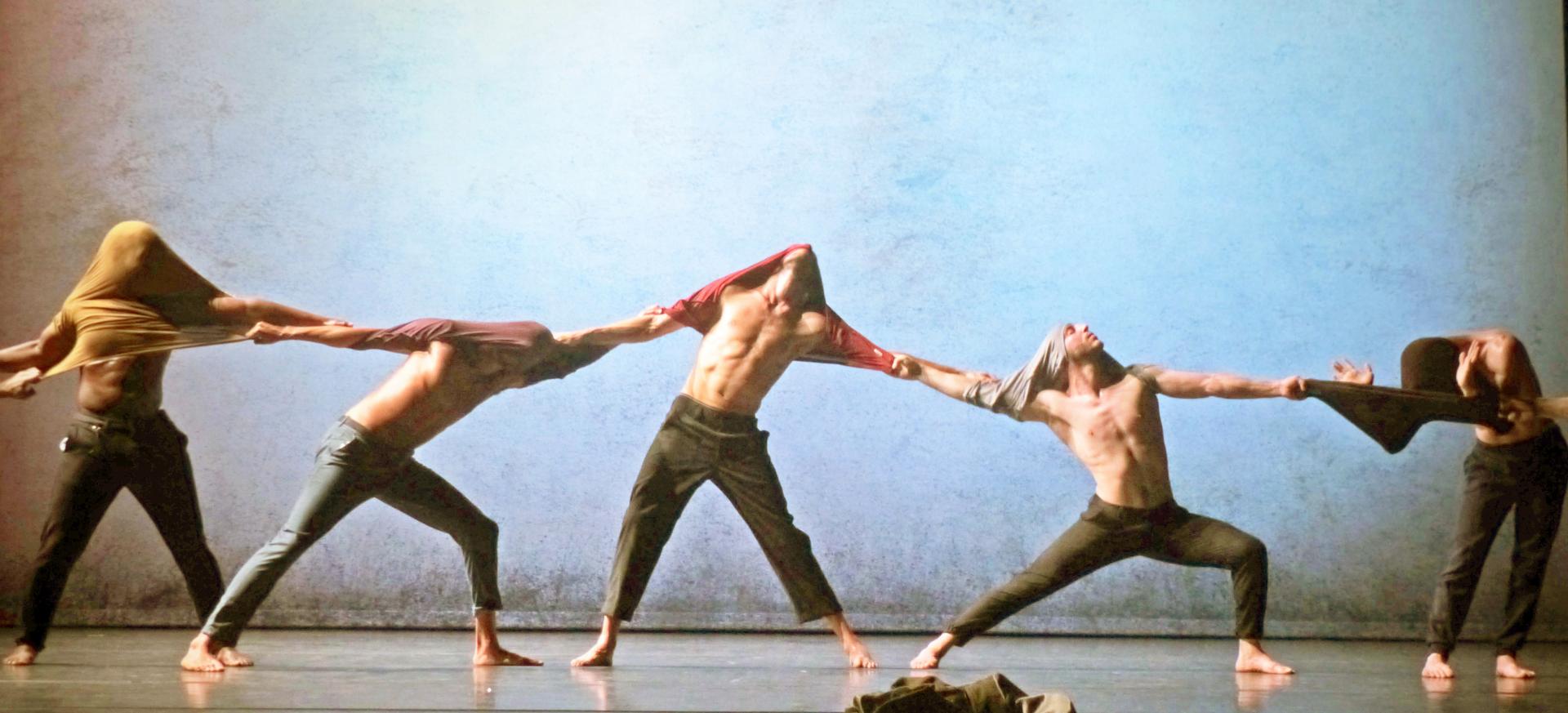
    Tuesday October 18th, 2022 – An exhilarating evening at The Joyce as choreographer Fouad Boussouf brought his handsome Company of dancers from his native Morocco to thrill us with Näss. The title is Arabic for “people”, and it’s a work where eclectic dance styles converge effortlessly, combining restless, relentless activity with a feeling of ancient masculine rituals. For an hour, the seven men danced to rhythmically wide-ranging music, with perfect timing and synchronization; though clearly carefully structured and well-rehearsed, Näss feels wonderfully and thoroughly spontaneous.

    The dancers in Näss are Sami Blond, Mathieu Bord, Maxime Cozic, Yanice Djae, Loïc Elice, Justin Gouin, and Maëlo Hernandez.

    Nass_Charlotte_Audureau4

    Above, photo by Charlotte Audureau

    The curtain rises on a totally darkened stage. Very slowly, the back panel is illuminated with the dancers ranged in a line-up, backs to the audience. Mingled with the sounds of street noise noise and garbled talking, angel voices are heard. Drumming strikes up and the men begin moving in place, stepping to the beat.

    Suddenly, they burst into movement, stomping and romping about the space. Unison moves, with gestures of supplication, are mingled with free-flowing solo passages and duets which vary in feeling from humorous to wildness. 

    Boussouf Nass_Charlotte_Audureau2

    Above photo by Charlotte Audureau

    The lighting takes on a golden hue; the men’s jackets are slowly shed and each is wearing a loose t-shirt of autumnal solour. Going into breakdance mode, they give us headstands and intricate floor motifs executed with panache. The t-shirts become part of the dance: they are pulled up to cover the men’s faces and expose their abs as the light fades a bit and a sense of calm is briefly felt. The dancers start talking.

    Then a quintet of men step-dancing in unison circle the stage in almost military precision whilst two others dance a pas de deux in their own world. The brotherhood then tramp about the space with heavy-footed accents. The lighting shifts, providing shadowplay.

    The dancers move upstage, clustered with backs to us; they become silhouettes as the music fades and the lighting is slowly extinguished until they vanish into the darkness from whence they came.   

    As silence fell there was a very brief lull before a house-wide standing ovation commenced. People screamed and shrieked as the dancers came out for their bows. Great atmosphere! Then the seven men began striking poses along the edge of the stage, and they commenced an impromptu encore, clapping their hands to set the pace. The audience picked up the rhythm, clapping and stomping. It was like being at a revival meeting where everyone has been saved. I felt high as a kite.

    Boussouf fouadcharlotteaudureau

    Photo: Charlotte Audureau

    ~ Oberon

  • Fouad Boussouf’s NÄSS @ The Joyce

    Nass fff

    Tuesday October 18th, 2022 – An exhilarating evening at The Joyce as choreographer Fouad Boussouf brought his handsome Company of dancers from his native Morocco to thrill us with Näss. The title is Arabic for “people”, and it’s a work where eclectic dance styles converge effortlessly, combining restless, relentless activity with a feeling of ancient masculine rituals. For an hour, the seven men danced to rhythmically wide-ranging music, with perfect timing and synchronization; though clearly carefully structured and well-rehearsed, Näss feels wonderfully and thoroughly spontaneous.

    The dancers in Näss are Sami Blond, Mathieu Bord, Maxime Cozic, Yanice Djae, Loïc Elice, Justin Gouin, and Maëlo Hernandez.

    Nass_Charlotte_Audureau4

    Above, photo by Charlotte Audureau

    The curtain rises on a totally darkened stage. Very slowly, the back panel is illuminated with the dancers ranged in a line-up, backs to the audience. Mingled with the sounds of street noise noise and garbled talking, angel voices are heard. Drumming strikes up and the men begin moving in place, stepping to the beat.

    Suddenly, they burst into movement, stomping and romping about the space. Unison moves, with gestures of supplication, are mingled with free-flowing solo passages and duets which vary in feeling from humorous to wildness. 

    Boussouf Nass_Charlotte_Audureau2

    Above photo by Charlotte Audureau

    The lighting takes on a golden hue; the men’s jackets are slowly shed and each is wearing a loose t-shirt of autumnal solour. Going into breakdance mode, they give us headstands and intricate floor motifs executed with panache. The t-shirts become part of the dance: they are pulled up to cover the men’s faces and expose their abs as the light fades a bit and a sense of calm is briefly felt. The dancers start talking.

    Then a quintet of men step-dancing in unison circle the stage in almost military precision whilst two others dance a pas de deux in their own world. The brotherhood then tramp about the space with heavy-footed accents. The lighting shifts, providing shadowplay.

    The dancers move upstage, clustered with backs to us; they become silhouettes as the music fades and the lighting is slowly extinguished until they vanish into the darkness from whence they came.   

    As silence fell there was a very brief lull before a house-wide standing ovation commenced. People screamed and shrieked as the dancers came out for their bows. Great atmosphere! Then the seven men began striking poses along the edge of the stage, and they commenced an impromptu encore, clapping their hands to set the pace. The audience picked up the rhythm, clapping and stomping. It was like being at a revival meeting where everyone has been saved. I felt high as a kite.

    Boussouf fouadcharlotteaudureau

    Photo: Charlotte Audureau

    ~ Oberon

  • Cellist Zlatomir Fung @ Weill Hall

    Zlatomir-Fung

    Tuesday October 19th, 2021 – One of my favorite musicians, Zlatomir Fung, made his Carnegie debut this evening at Weill Hall, a red-letter event for me. Zlatomir, whose unique name derives from his Bulgarian and Chinese-American parentage, was the first American in four decades – and the youngest cellist ever – to win first prize at the International Tchaikovsky Competition in 2019.

    I first heard Mr. Fung in a Young Concert Artists recital at Merkin Hall in February 2019, and was captivated by his remarkable talent. Read about the evening here.

    Mishka

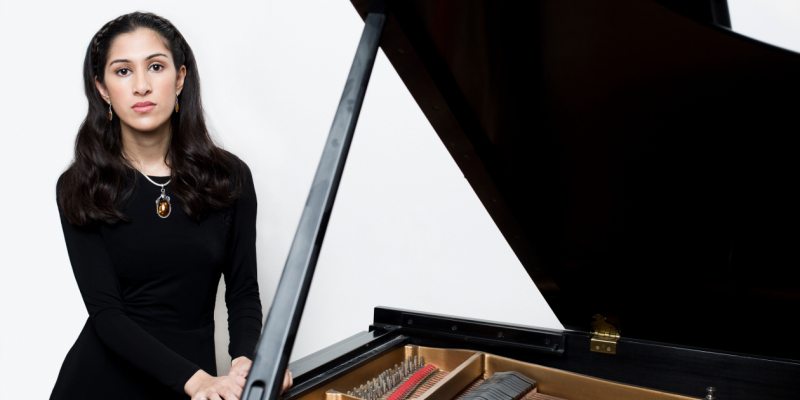
    Joined at Weill Hall this evening by pianist Mishka Rushdie Momen (above), the cellist gave us a marvelous program of classics from the Romantic period. The concert was sold out, and the audience’s rapt attention was a tribute both to the music and to the musicians. 

    Robert Schumann’s Adagio and Allegro, Op. 70, was composed in 1849. The pensive adagio, heart-tugging in its emotional expressiveness, gives way to the lively and passionate allegro, a deft flow of music that sometimes looks back to the opening movement. From note one, I was transfixed by Mr. Fung’s achingly beautiful playing, which drew me – and my fellow audience members – immediately in to the music.

    Franz Schubert’s Sonata in A-Minor, D. 821, “Arpeggione“, was written in 1824, soon after the beloved song cycle Die Schöne Müllerin and shortly before the C-major symphony.

    The sonata’s opening movement is a songful allegro moderato, tinged with a feel of nostalgia. A dance springs up, with a folkish flavor, and a passage of staccati from the cello aligns with sparkling notes from the piano. The movement continues, shifting between sadness and joy…a sort of reflection on the times in which we are living. 

    From its poignant opening, the sonata’s central adagio found Mr. Fung at his most persuasively eloquent as the music carried him across a wide dynamic range, leaving the listener in awe of his sustained, finely nuanced phrasing. Ms. Momen was a ideal companion. This was music-making of the highest calibre.  

    The concluding allegretto is energetic, at times having with a somewhat jaunty feel; both players displayed great  nimbleness, dancing us along to a surprisingly subdued finish. 

    Antonín Dvořák’s “Silent Woods“, Op. 68, No. 5, was – to me – the heart of the evening; subtle dynamic shadings from both players constantly allured the ear, and the astonishing resonance in Mr. Fung’s playing reached the depths of my soul. A dance-like passage gives way to a wave of passion; this subsides only to sweep over us again moments later. Mr. Fung’s glorious descending phrase at the end was thrilling.

    The musicians took only the briefest of breaks between works, but they seemed wonderfully fresh as they returned to the Weill Hall stage for the program’s concluding work: César Franck’s epic and very demanding Sonata in A-major. The cellist Jules Delsart was so moved when he first heard this sonata in its original violin setting that he obtained the composer’s permission to arrange the work for his own instrument. This arrangement was published in 1887.

    The sonata’s opening Allegretto ben moderato joins two themes: one for the cello and one for piano. These themes, especially the cello’s, will return in the following movements. The players seemed to gently bend the melodies, putting a personal stamp on this familiar music. 

    Turbulence rises for the second movement, a dramatic scherzo, in which the restless piano is over-lain with a vivid, dramatic passage for the violin. Lyrical moments, featuring this sonata’s second well-loved theme, come and go. From a veritable feast of notes, passion rises with the great melody sounding forth. Becalmed, deep resonance from the cello lingers briefly, then another rise to a triumphant finish.

    The Recitativo-Fantasia brings back sonic images from the previous movements. There is a feeling of improvisation here which leads in a slow buildup to another haunting melody for the cello. Then the final Allegretto con moto commences with the piano and cello seemingly exchanging thematic thoughts. Things grow turbulent again, and earlier themes resurface, all leading to a vibrant, joyous ending.

    Enthusiastic applause, the audience standing, brought Mr. Fung and Ms. Momen back for an encore: a Nocturne by Alexander Borodin which was unfamiliar to me. This was elegantly played, with appealing dynamic shifts and a spine-tingling tremelo passage from the cellist. As throughout the evening, I loved watching Mr. Fung’s expressive face as he played; he seemed to be communing with Saint Cecilia, all to the greater glory of the music.

    ~ Oberon

  • Unsuk Chin’s Šu @ NY Philharmonic

    Dynamic-7d51bfe5-c754-58e3-8aab-5dbdf16210f5

    Above: Wu Wei, tonight’s soloist at The New York Philharmonic

    Author: Oberon

    Tuesday October 22nd, 2019 – Unsuk Chin’s Šu, for Sheng and Orchestra, performed by Wu Wei, was the centerpiece of this evening’s New York Philharmonic concert at David Geffen Gall. Susanna Mälkki was on the podium for a program that also featured music by Haydn and Strauss. It turned out to be a memorable evening, continuing a string of inspiring performances that I have enjoyed in these first weeks of the classical music season.

    Haydn’s Symphony No. 22, Philosopher, was the opening work. It’s a short – and very neat – symphony, which commences with an Adagio throughout which a steady, pacing pulse is maintained. The English horn is prominent, as are the horns (who excelled in the third movement). The concluding Presto had a lovely, bustling atmosphere. Ms. Mälkki’s finely-measured and elegant conducting drew excellent playing from the ensemble. 

    Wu Wei then took his place for Marie-Josée Kravis Prize-winner Unsuk Chin’s Šu. The composer stated that, for her, the sheng is associated with the “yearning for a distant sound…”  Šu – and Wu Wei’s playing of it – is truly engaging.

    56475_sheng_lg

    What is a sheng?  You may well ask (I certainly did). Above is an illustration, and here is an interesting article about this ancient Chinese reeded instrument. And what does the sheng sound like? Not similar to the oboe or bassoon – which was what I was expecting – but instead it reminds me very much of the musette, that enchanting little French bagpipe that was fashionable in French court circles in the 17th and 18th centuries.

    Šu begins with whispered, other-worldly sounds from the solo instrument. A vast array of percussion instruments will be heard as the work progresses – shimmering bells, eerie gongs, powerful drumbeats – whilst Mr. Wu’s sheng sighs and shivers. He produces echo effects, bending high notes to vary the pitch, and sometimes sounding like a squeezebox.

    The music seems to come to us from distant galaxies; images of frozen landscapes are evoked. The composer shows her mastery of texture and of rhythmic shifts. Violins stationed in the hall’s upper tier sing as if from from the heavens. Deep tuba rumblings give way to big, dense brass waves; the music becomes bouncy and then pounding.

    As calm sets in, Mr. Wu plays a sort of cadenza: fast, rhythmic, ascending, A forward impetus then takes over: the music sways, and the player sways with it, shifting his weight as he reels off amazing passages.

    The music subsides to a quiver; the orchestra produces a sustained, deep hum as the sheng is heard in ethereal whispers. Chimes sound, and this dreamworld fades into memory.

    Both the audience and musicians onstage enthusiastically applauded Wu Wei for his phenomenal performance. As a second wave of cheering swept thru the house, Mr. Wu returned for a brilliant (and sometimes witty) encore that called for incredible virtuosity; both his playing and his physicality – including some stomping dance steps and interjected shouts – captivated the crowd, and he basked in a rock-star ovation at the end.

    Malkki

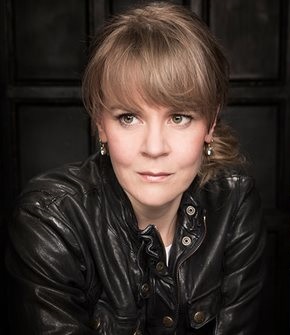
    Above: tonight’s conductor Susanna Mälkki

    Following the interval, Ms. Mälkki led a truly impressive performance of Richard Strauss’s Also Sprach Zarathustra. From its deep growl of a start rises the majestic, super-familiar theme that sets this blazing masterpiece on its way. The Philharmonic’s stellar bass section, joined by the organ, gave a rich depth to the music that sent chills thru me. Strauss has woven one appealing thread after another into this royal sonic tapestry; it’s a work in which there’s never a dull moment. Abounding in solo opportunities for individual instruments – clarinet, cello, trumpet, oboe, a trio of bassoons – the work further features a glorious tutti theme for celli and violins, and an enchanting Viennese waltz (led by the silken-tone of Sheryl Staples’ violin).

    Glimmers of ARIADNE AUF NAXOS, DER ROSENKAVALIER, and DIE FRAU OHNE SCHATTEN flitted thru the air as this epic performance by The Philharmonic sailed gorgeously forward. The only blot on the evening came when a grand orchestral cutoff was ruined by a child muttering and a cellphone going off, spoiling the dramatic effect of a sudden silence.

    ~ Oberon

  • Grimaud|Philadelphia Orchestra @ Carnegie Hall

    Default_4310-081

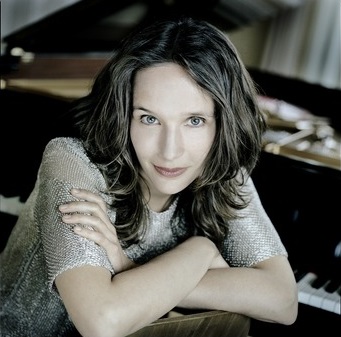
    Above: pianist Hélène Grimaud

    ~ Author: Ben Weaver

    Tuesday October 15th, 2019 – When The Philadelphia Orchestra premiered Valerie Coleman’s orchestral version of Umoja, Anthem for Unity last month, it was the first time the orchestra had played music by a living female African -American composer. Yes, there are still such firsts to be had in 2019. 

    Ms. Coleman’s work was originally written in 1997 for a female chorus, then arranged for a woodwind quintet (Coleman’s own acclaimed chamber ensemble, Imani Winds.) And now the full orchestral arrangement makes something clear: Ms. Coleman, born in Louisville, Kentucky, is a major voice in contemporary classical music and is a magnificent orchestrator.


    One thing I always note upon entering the concert hall where a contemporary piece is to be played is how big the percussion section is. Typically. it is large: everything and the kitchen sink. The problem, though, isn’t so much that there is more percussion than Mahler ever used, but that it is used as a crutch by so many contemporary composers; a crutch to transition from point A to point B to point C of the music. Unable to develop their material, too often composers rely on a few bangs and smashes from percussion to reset and change the subject. It’s lazy, it’s transparent and it’s bad music. And it is something Valerie Coleman notably does not do in her extraordinary orchestral version of Umoja, Anthem for Unity, a roughly 14 minute cinematic tone poem of shifting moods, sweeping melodies, surprising orchestral effects (the bowed vibraphone that opens the piece, for example) and undeniable joy.


    Thumbnail_6a00d8341c4e3853ef022ad378896b200c


    Ms. Coleman (above) explains in the Playbill that the work grew out of a simple, short melody. “Here the melody is sung sweetly in its simplest form and is reminiscent of Appalachian-style music. From there, the melody dances and weaves throughout the instrument families, interrupted by dissonant viewpoints led by the brass and percussion sections…” Someone described the work almost as a concerto grosso, where the music passes around, evolving and shifting from section to section. This gives many artists on stage to shine, notably the wind and the brass sections. Maestro Yannick Nézet-Séguin shaped the work expertly and the thunderous ovation that greeted Ms. Coleman on stage at the end, one hopes, sends a message to leaders of orchestras and opera houses. Tonight, the Metropolitan Opera’s  general manager Peter Gelb sat directly in front of me; did he realize that before us was an extraordinary composer, worthy of more commissions. Why not an opera, Mr. Gelb?


    Béla Bartók’s Piano Concerto No. 3 received a spectacular performance from Hélène Grimaud. The playful, spiky, percussive writing of the outer movements presented no challenges to Grimaud, her crystal clear playing etching each note as if out of marble. Yet the percussiveness was never mere banging on the keyboard either; Grimaud is too good of an artist for cheap tricks. But it is in the concerto’s slow movement, Adagio religioso, that Bartók’s soul and Grimaud’s musicality and artistry truly shone. Conductor and orchestra provided first rate support. 


    After intermission Richard Strauss’ last tone poem, Eine Alpensinfonie, received a thrilling, no holds-barred performance. Strauss began composing the work after years of putting it off after the death of Gustav Mahler in 1911. “Mahler’s death has affected me greatly,” Strauss wrote and set out to complete Eine Alpensinfonie, an unacknowledged tribute to Mahler. Certainly Mahler’s love of nature – which he attempted to capture in his music throughout his entire career – is here in spades as one travels through the Alps.


    Strauss divides the symphony into sections representing different parts of the region. Between the growling, dark Night that opens and closes the symphony, the wanderer observes a glorious Sunrise, a magnificent Waterfall, a treacherous Glacier, a horrifying Thunderstorm and chilling winds disappear with Sunset as Night returns. Strauss, of his many gifts, was an exceptional orchestrator. His command of large orchestral forces, of sound-painting has no betters. (Equals, maybe, but no betters.) The Philadelphians threw themselves into the music as if possessed, with Nézet-Séguin once again demonstrating that his grasp of the great Romantics is something of a specialty.


    ~ Ben Weaver


  • Dover Quartet|Emanuel Ax @ Zankel Hall

    Dover+Quartet+2+credit+Carlin+Ma

    Above: the Dover Quartet, photographed by Carlin Ma

    Author: Oberon

    Tuesday October 15th, 2019 – My first chance to hear the Dover Quartet live, in a finely-devised program at Zankel Hall that offered quartets by Britten and Brahms, plus the Schumann piano quintet with Emanuel Ax at the Steinway.

    Benjamin Britten’s String Quartet No. 1 in D-major was superbly rendered by the Dovers; their playing seemed to make an immediate and direct connection with the audience, who all evening were raptly attentive – and warmly appreciative.

    The opening passage of the Andante sostenuto finds the violins and viola blending in an ethereal, high-lying motif that evokes seabirds crying above a deserted beach. There is a feeling – not of loneliness, but of being alone – that is wonderfully evocative. The music then turns more vigorous, the players digging in over a steady rhythm. The mood shifts back to the otherworldly again, followed by a rich-textured paragraph with viola and cello playing in unison. A buildup of tension calms to a high pianissimo, and a coda resolves into a misty softness.

    In the Allegro con slancio, a soft pulsing underscores witty comments from each instrument; a sudden burst of joy in the music made me smile. A unison passage leads to a strutting dance; then, turning more subtle, the movement has a wry ending.

    A feeling of tranquility sets on with the Andante calmo, which is lulling and pensive. Octaves sound, violinist Joel Link takes up an achingly beautiful theme, and Camden Shaw’s cello sings poignantly. The music turns hymn-like. Violins and viola take phrases over an insistent cello plucking. The music ascends to the heights, and Milena Pajaro van de Stadt’s viola makes a lovely impression, and then Mr. Link’s violin rises to a sweet concluding high tone.

    In the last movement, Molto vivace, a witty theme is passed about, with plucking and strumming keeping things upbeat. The music’s driven and whimsical, with little shivers laced in. Banners of melody wave before us, and virtuosic bits lead on to a unison finish.

    The musicians did not leave the stage following the Britten; after acknowledging the audience’s appreciative applause – and having to rise a second time, thanks to prolonged applause – they commenced immediately on the Brahms quartet.

    Johannes Brahms’ Opus 67 – the String Quartet No. 3 in B-flat major – is one of those very pleasant works that does not always resonate for me. Tonight, from note one, the Dovers gave it a kind of freshness that made it seem new…like hearing it for the first time. And that’s saying a lot.

    The individual players shone in this music. The opening movement, Vivace, pairs the second violinist (Bryan Lee) with violist Milena Pajaro van de Stadt in a friendly doubles match against Joel Link (violino primo) and cellist Camdem Shaw. They trade duetting passages in a way that makes the term vivace ring true. Elsewhere, a recurring trilling motif from Mr. Link was a further enticement.

    In the Andante, Mr. Link makes  the gorgeous theme sound better than ever with his expressive playing. Here again, each voice makes its mark. The music ranges from pensive to urgent rising to a lovely “Amen” at the finish.

    The scherzo, here referred to (appropriately) as Agitato, opens with a surprisingly sad passage, but soon perks up.  Mr. Link revels in his dynamic range, and Ms. Pajaro van de Stadt’s viola is very prominent, her tone having an Autumnal glow but with a trace of grit tantalizingly thrown in here and there. She even has a sort of cadenza, the better for us to savour her playing. This movement ends on a sustained chord with a lovely feel of “settling”. 

    The Dover’s take on the opus 67’s theme-and-variations finale made me admire them all the more. Brahms weaves in themes heard earlier, and the music is sometimes quite meditative. Enthusiastic applause and cheers greeted the musicians as they took their bows.

    EA2215_LisaMarieMazzucco

    Following the interval, the inimitable Emanuel Ax (above, in a Lisa Marie Mazzuco photo) joined the Dover for Robert Schumann’s Piano Quintet in E-flat Major. This very familiar – and very marvelous – music seemed to flow like a limpid stream, the pianist setting the tone with his playing, which was both elegant and spirited.

    The Allegro brillante sets out dramatically, the cello and viola exchange plush-toned phrases. At the keyboard, Mr. Ax ‘s intrinsic gifts of timing and dynamic control are cause for delight. The listener could luxuriate in the Mozartean glow of the music, with passing wisps of dark cloud dispelled in a grand finish.

    The second movement, the dark clouds have lingered: it commences as a halting funeral march, and we feel the undertaker sneaking about. A sublime lyrical interlude follows, but then the lamenting march resumes. After being briefly invigorated, with the viola sounding forth and the piano in a rolling motif, the music resumes it funereal procession. Mr. Ax’s playing here is sublime.

    The Scherzo, its agile scales and lively arpeggios contrasting with a lyric interlude and a brief downcast passage, finally turns brilliant, with the feel of a gypsy dance. Sparkling playing from Mr. Ax here continued in the Allegro ma non troppo, which opens with an accented theme from the piano. Schumann juxtaposes dance-like gaiety with cunning lulls, and a fugue brings this entrancing work to a close.

    The audience responded to this stellar performance with a spontaneous standing ovation, laced with shouts of approval. The musicians were called out twice, and while we were all clearly in hopes of an encore, perhaps there’s nothing that could have followed that radiant Schumann.

    ~ Oberon

  • Maxim Vengerov @ Carnegie Hall

    Maxim-Vengerov

    Above: violinist Maxim Vengerov

    ~ Author: Oberon

    Tuesday October 30th, 2018 – Three wonderfully contrasted violin sonatas were on offer tonight at Carnegie Hall as the renowned Maxim Vengerov took the stage, joined by the excellent Roustem Saïtkoulov at the Steinway.

    About ten years ago, Mr. Vengerov – as most classical music-lovers know – developed a mysterious arm/shoulder ailment that took nearly four years to diagnose and treat. He returned to the stage in 2012, and I first heard him live in 2015, playing the Tchaikovsky violin concerto with the New York Philharmonic. It was a thrilling performance, and tonight I was very excited to be hearing him again. In the grand and glorious setting of Carnegie Hall tonight, Mssrs. Vengerov and Saïtkoulov made a most congenial collaboration, to the great benefit of the music they’d chosen, and to the great delight of the audience.

    Johannes Brahms’ Violin Sonata No. 3 in D-Minor is in four movements rather than the more usual three. It opens with an achingly romantic lyrical theme, aglow with passionate colours. The Vengerov/Saïtkoulov partnership brought a lot of nuance to the music, with a lovely dynamic palette and finely dovetailed modulations. In a heartfelt piano passage, Mr. Saïtkoulov’s playing moved me. An intoxicating, soulful finish seemed to entrance the audience.
     
    The Adagio commences with a wistful melody, sublimely tailored; the players’ astute attention to dynamics again kept up their intriguing effect. The familiar descending theme of this movement brought a feeling of plushy, Olde World magic, but then a dropped program booklet and a cellphone intrusion ruined the ending.
     
    Rhythmic vitality, and some charming plucking motifs, adorned the Scherzo, which has a somewhat sentimental quality: no mere jesting here.

    Then players immediately launched the concluding Presto agitato, full of great swirls of notes and a rich mix of colours. Syncopations are at work here; the music builds and subsides, and then re-bounds in a rush to the finish. Prolonged applause, but the players did not come out for a bow.

    George Enescu wrote his Violin Sonata No. 2 in F-Minor at the age of seventeen, reportedly in the space of a fortnight. Mssrs. Vengerov and Saïtkoulov play in unison for the sonata’s rather mysterious start. Turbulence is stirred up, but reverts to the unison motif. The piano then shimmers as the violin sings above with rising passion. Vengerov and Saïtkoulov both demonstrated great control of dynamics as the music took on a restless quality. They play in unison again, moving to a quiet finish.
     
    A sad song opens the second movement, marked Tranquillement, pervaded by a strangely lovely feeling of melancholy. Again Mr. Vengerov displays pinpoint control of line in an affecting soft theme that rises to an exquisite sustained note. There’s a darkish quality from the piano as the violin is plucked. Then: a sudden stop. The music resumes – so quietly – with a shivering violin tremolo. The ending is simply gorgeous.
     
    The concluding movement, marked simply Vif (“Lively”), starts off all wit and sparkle; both musicians savor the animation, tossing in wry soft notes from time to time. The music turns briefly grand, then softens, and the liveliness resumes. The players are on the verge of exceeding the speed limit when they suddenly veer into an unexpected ‘romance’. But wit prevails in the end.
     
    Roustem Saïtkoulov  Piano
     
    Above: pianist Roustem Saïtkoulov
     
    Maurice Ravel’s Violin Sonata was premiered in Paris on May 30, 1927, with none other than George Enescu as violin soloist, and Ravel himself at the piano. The opening Allegretto starts quietly, with a piano theme that is taken up by the violin. Mr. Vengerov sweetens his tone here, making the most of the melodic possibilities. The violin trembles over a shadowy piano passage, and then a transportive lyricism builds, with the violin rising and lingering. A heavenly conclusion: sustained violin tone over a shimmering piano.
     
    To open the Blues: Moderato, the violinist plucks in altering soft and emphatic notes. The piano sounds rather glum at first, then starts pulsing persuasively as the violin gets jazzy, bending the phrases enticingly.
     
    From a gentle start, the Perpetuum mobile finale lives up to its name. The piano goes scurrying along, and Mr. Vengerov turns into a speed demon. The music rocks along – Rhapsody in Blue and Fascinatin’ Rhythm are evoked briefly – with the violinist verging on manic whilst Mr. Saïtkoulov’s playing stays light and luminous.
     
    The concluding works on the printed program both felt very much like encores: Heinrich Ernst’s decorative incarnation of The Last Rose of Summer and Nicolo Paganini’s super-elaborate take on the great aria Di tanti palpiti from Rossini’s TANCREDI (arranged by Fritz Kreisler) each had an “everything-but-the-kitchen-sink” feeling. Mr. Vengerov managed the fireworks well, drawing a celebratory audience response. My feeling was that one or the other of these two virtuoso pieces would have sufficed.
     
    As an encore, Fritz Kreisler’s Caprice Viennois was beautifully played. The audience then began streaming out. We were in the lobby when we heard a second encore commencing; but it was too late to double back.
     
    ~ Oberon

  • Hilary Hahn @ White Light Festival

    ~Author: Scoresby

    Tuesday October 23 2018 – Lincoln Center’s White Light Festival every October/November is always an interdisciplinary highlight of the season that offers a variety of different events. This year’s ranges from the upcoming US Premiere of Kaija Saariaho’s new opera Only the Sound Remains to a music with dance performance of Feldman’s Triadic Memories featuring pianist Pedja Muzijevic and choreographer Cesc Gelabert. Part of this celebration of spiritual/communal art featured the genial violinist Hilary Hahn in all too rare NY concert. She performed two of the three of the Bach Sonatas and Partitas that she just released on recording. The last work was one of the other three she recorded as her debut album, and it seems will perform them this Spring in Europe. According to Ms. Hahn’s Instagram, this was her first solo concert in the US in her career.

    Screen Shot 2018-10-25 at 12.38.40 PM
    Above: Violinist Hilary Hahn playing Bach; Photo by Kevin Yatarola Courtesy of Lincoln Center

    Ms. Hahn was performing to a sold out, enthusiastic audience in the intimate Alice Tully Hall yesterday evening. It should be said that all six of these pieces are extremely difficult to play well and yet at the core of the violin repertoire. The first work on the program was Sonata No. 1 in G minor. Ms. Hahn coaxed a large, beautiful sound out of her violin in the opening Adagio. Her sound was reminiscent of a purer Arthur Grumiaux (different intepratively). In the Fugue, Ms. Hahn took a more aggressive sounding virtuosic as she traversed each of the many double and triple stops. Out of the many live performances I’ve seen of this work, this is the first time I’ve heard this movement sound almost as clean as a recording – a near impossible feat. In addition to her accuracy, it was striking to be able to hear the countermelodies in the bass that usually disappear in the dense textures rang with clarity. In Ms. Hahn’s rendering, the intricate contrapuntal structure was easy to hear. While she was retuning before the third movement, the audience gave a hearty applause. After the gorgeous Sciliano, Ms. Hahn gave a brisk, full-bodied account of the presto. Her use of a quick tempo and her interesting finger work let the entire bass line ring through the movement letting the entirety of the piece shine.

    In the opening Allemende of the Partita No. 1 in B minor Ms. Hahn took her time and employed small cells of melodic phrases that were punctuated by the larger chords. It was a unique take on this movement, make it sound angular – almost in the vein of Stravinsky. She seemed to take a similar approach in Courante that when moving into the Double expanded into a carefully coordinated flash of notes that was always clear. Part of that clarity came from giving almost every note its own bowing, making each shine in its own way. The audience applauded here too before the final four movements. Another highlight was the careful pacing of the Sarabande. As in other areas, Ms. Hahn’s preternatural ability of voicing every line let the music sing.

    Screen Shot 2018-10-25 at 12.41.23 PM

    Above: Violinist Hilary Hahn

    After intermission was Partita No. 2 in D minor. Ms. Hahn continued with the same big sound and near orchestral quality of playing. While beautifully rendered and intellectual satisfying, I couldn’t help but feel that her performance felt lacking in intimacy. As encore to the Partita, Ms. Hahn opted to replay the massive Chaconne. While I felt it was quite a bit odd at first to play a 15 minute encore of music just performed earlier, this was her best playing of the night. Perhaps relieved to be over with her first US solo concert, she seemed relaxed and personal with this second reading. Phrases that had been burly had a softer edge to them, the lyrical parts of the work had more space, and Ms. Hahn seemed to use quieter dynamics than she had the rest of the evening. It was thrilling to hear such a change in performance style from the rest of the concert and the crowd seemed to be just as enthralled.

    Scoresby