Tag: Tuesday October

  • Lisette Oropesa @ Chamber Music Society

    IMG_0207Lisette

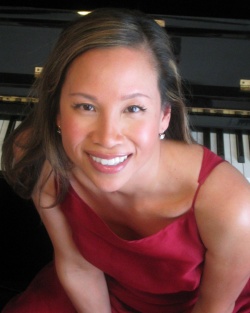
    Tuesday October 18th, 2016 – Soprano Lisette Oropesa (above, photographed by Steven Harris) making her Chamber Music Society of Lincoln Center debut in the opening concert of the Society’s 2016-2017 season.

    The program commenced with a charming performance of Haydn’s ‘Surprise‘ symphony, and if the element of surprise in this very familiar work has long since evaporated, there was still a murmur of delight which passed thru the packed house when that ‘wake up!’ chord sounded. The symphony, a veritable fountain of melodic and rhythmic delights, was played by an ensemble of top-notch musicians: the kind of artists that maintain the Society’s impeccable standards.

    With Michael Brown’s wonderfully attentive and polished playing of the Steinway setting the pace, we could relish the divine piping of Tara Helen O’Connor’s flute and a most pleasing mixture of swiftness and sweetness from Erin Keefe’s violin. Danbi Um, in a pretty forest-green frock, stood out in a brief mingling of voices with Ms. O’Connor flute – Danbi would have more expansive opportunities in the Palestrina/Mendelssohn combination after the interval. Of the lower voices, Richard O’Neill’s dusky viola sound and his deep involvement in the music are always most welcome; and though music stands blocked our view of Mihai Marica, his cello spoke clearly. This assemblage of musicians were as pleasing to watch as to hear, and they set the tone for the evening with their virtuosity and grace.

    It seems incredible that ten years have passed since the voice of Lisette Oropesa first captured my imagination when she sang a very brief role in a performance of Mozart’s IDOMENEO at The Met. I immediately seized on the notion that this was a singer who would be going places, and she has proven me correct: her career has positively bloomed, and she moves from engagement to engagement, conquering audiences from Munich to Santa Fe, from Dallas to Madrid. Conductors tend to love her, as much for her vocal clarity and musicianship as for her preparedness and sunshine-filled personality.

    Lisette walked onstage this evening in a midnight-blue gown, jewels at her neckline, superbly coiffed: the very picture of elegance. With the one-and-only Gilbert Kalish at the Steinway, the soprano proceeded to captivate the audience with her shimmering voice and rapturous delivery. All of the things I love about her singing were in abounding evidence tonight: the distinctive colour, the mastery of dynamics, the magical turns of phrase, the imaginative way with words. In three Mendelssohn songs – “Wanderlied“, “On the Wings of Song” and “Suleika” – Lisette cast a spell over the hall, and Mr. Kalish was a most valuable fellow sorcerer. Together, they created an atmosphere of fascination; and the audience’s enthusiastic response affirmed my feelings.

    Soprano and pianist returned immediately, joined by David Schifrin; some Schifrin fans seated near me buzzed with anticipation. Following the brief piano introduction, the eminent clarinetist made a breathtaking entrance on the sustained tone that heralds Franz Schubert’s “Shepherd on the Rock“; moments later, Lisette began to sing and all seemed right with the world. 

    Shepherd on the Rock” has the feeling of a bel canto scena. Passages of sustained lyricism give way to flights of coloratura, with voice and clarinet mingling in a way that reminds us a bit of the flute and soprano mix in Lucia di Lammermoor’s ‘Mad Scene’.

    The singer must convey the moods of Schubert’s shepherd: his delight in hearing his own voice echo back to him from the valley, his tender longing for his sweetheart far away, and his optimism at the coming of Spring. All this Lisette accomplished with her intrinsic sensitivity to the narrative, finding an ideal give-and-take with her collaborators. The vocal writing here covers a wide range, from peaky top notes to some unusual plunges to the depths; Lisette had it all at her fingertips, and her voice once again spun a web of enchantment. She and the two gentlemen basked in the audience’s very cordial applause.

    At a time when so many lyric-coloratura sopranos on the scene seem to me lacking in real distinction, Lisette shows us what a ‘vocal personality’ really is: it’s not just the sound, nor the technique, nor the communicative gifts; nor really anything to do with physical attractiveness. It’s a light from within, and that’s what sets Ms. Oropesa apart from the rest. 

    Following the intermission, David Finckel let us know that we’d be hearing an added work this evening: a Mendelssohn fugue would follow the brief and rare Palestrina piece we were about to hear. Mr. Finckel then joined Danbi Um, Erin Keefe, and Richard O’Neill to perform Palestrina’s ‘Sanctus’ from Missa Aeterna Christi Munera. The spiritual simplicity of the music, with its poignant beauty, was finely underscored by Mr. Finckel’s gently resonant cello.

    After only a brief pause, the quartet gave us the Mendelssohn fugue: it is launched by Richard O’Neill’s velvety viola, taken up by Ms. Keefe and Ms. Um in turn, and then by the Finckel cello. This lovely work, perhaps too brief to be programmed often, displayed Danbi Um’s satin-sheened tone and the appealing expressive qualities of her playing. 

    We had reached that point in the evening where the final work loomed before us. With all that had gone before, what kind of finale could be devised that would cap the performance in a properly spectacular way? With their customary flair for programming, the Society had kept an ace up their sleeve, and within literally five seconds of Michael Brown’s introduction to the Ravel A-minor trio, I had goosebumps and a tingling spine. What playing from Mr. Brown and his colleagues, Ms. Keefe and Mr. Marica…simply astounding!

    Ravel produced his only work in the piano-trio genre in a burst of fevered inspiration during the summer of 1914, as Europe’s armies mobilized for war. The result is one of Ravel’s most intense – yet still lyrical – works.

    Michael Brown immediately established the atmosphere of the opening movement with his darkish, misterioso playing. Ms. Keefe and Mihai Marica were well-matched in beauty of timbre. A remarkable sustained tone from the cellist was followed by Ms. Keefe’s exquisite ascent to the heights: their perfumed mingling of voices gave me the chills. Simply ravishing passages in the upper reaches from the violin, and then the piano becomes more animated with a rising sense of drama. This subsides to a sweet cello theme; the players demonstrate fantastic pianissimo control. The violin goes deep, the piano quietens to a whisper. Spellbinding fade-away…an engrossing moment.

    Immediately the mood shifts to bright and then lilting in the plucky second movement, featuring a rising motif and a skittishness that sets up a fun ending.

    Mr. Brown’s left-handed piano introduction to the third movement hints at the ominous; Mr. Marica’s cello enters: pensive and low, whilst Ms. Keefe’s violin expresses a sense of yearning. In a hypnotic interlude, Mr. Brown drew me ever deeper into the mood with his incredibly intimate playing. The cello and then the violin re-enter; passion builds, and it’s sublime. Following a soft string duo, the cello sinks to the deep register, and the piano even deeper.

    The finale commences high and buzzy, with a light, bright texture. All three musicians are simply sailing along, and a feeling of rapture develops. Ms. Keefe and Mr. Marica launch a series of trills that might go on forever; but then the swirls and eddies of melody sweep everything forward, to a simply gorgeous end. Such extraordinary playing of an extraordinary piece: the audience burst into eager applause, and the three musicians were called back for a second bow. 

    Marilyn Horne was in the audience tonight, bless her heart. And having Lisette Oropesa and Richard O’Neill on the same program gave me the notion of wanting to hear them together in William Bolcom’s Let Evening Come. This song cycle was composed for the beloved soprano Benita Valente, to whose voice Lisette’s bears a kinship; as a Met Young Artist, a decade ago, Lisette had an opportunity to work with Ms. Valente. I’ve been listening to Benita’s atmospheric recording, and now I’m really wanting to hear the Bolcom performed live

    The Repertory:

    • Haydn Symphony in G major for Piano, Flute, Two Violins, Viola, and Cello, Hob. I:94, “Surprise” (1791)
    • Mendelssohn Selected Songs for Soprano and Piano, Opp. 34 and 57 (1835-41)
    • Schubert Der Hirt auf dem Felsen for Soprano, Clarinet, and Piano, D. 965, Op. 129 (1828)
    • Palestrina Sanctus from Missa Aeterna Christi Munera (1590)
    • Ravel Trio in A minor for Piano, Violin, and Cello (1914)
  • Young Concert Artists: Seiya Ueno/Wendy Chen

    Ueno

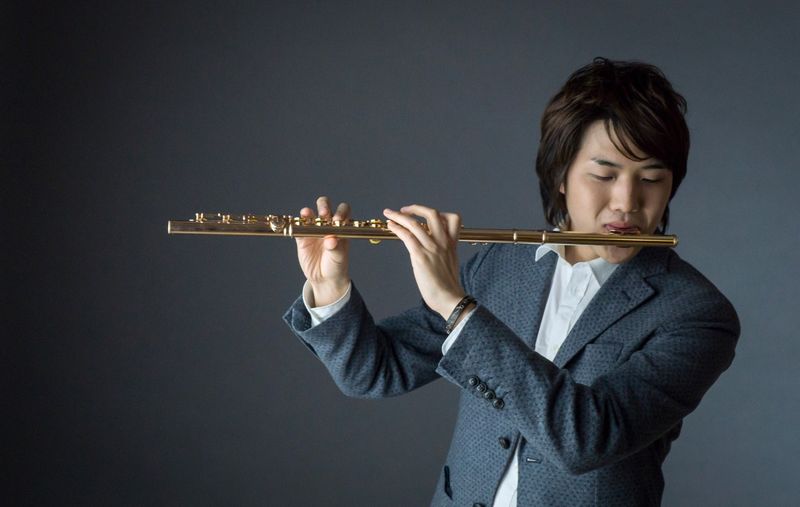
    Tuesday October 20th, 2015 – The Japanese flautist Seiya Ueno (above, in a Matt Dine photo) with guest artist Wendy Chen at the keyboard for the opening event of the Young Concert Artists season. Tonight at Zankel Hall, these two exceptional artists presented a programme that spanned the centuries from Bach to Boulez.

    Susan Wadsworth, the founder and director of Young Concert Artists, greeted us at this inaugural concert of her 55th season concert series; what this woman has done for music and for young musicians deserves our deepest gratitude.

    The artists then appeared, Mr. Ueno elegant in tail-coat tuxedo, and Ms. Chen simply luminous in a soft sea-green frock. They commenced at once on the Bach Sonata in B minor, BWV 1030, and immediately established a lyrical rapport both with one another and with the audience. Mr. Ueno’s playing is stylish and deft, and his assured technique makes him capable of anything, including some captivating soft attacks. Watching Ms. Chen’s extraordinarily graceful hands move up and down the keyboard became a prime visual aspect of the evening. 

    Sinking into the dreamy world of Debussy’s Prélude à l’aprés-midi d’un faune, the two artists painted in sensuous Monet hues. Mr. Ueno’s soft attacks and hushed taperings of line were ideally seconded from Ms. Chen’s piano, evoking images from the ballet which caused such a scandal at its premiere.

    Wendy_chen_01_category

    Above: pianist Wendy Chen

    The duo scored a huge success with Pierre Boulez’s Sonatine, a work filled with challenges for both players. Mr. Ueno is called upon to create rasping, burbling effects; the music whirrs and shrills and pauses on long trills; Ms. Chen meanwhile is weaving her own spell from the Steinway, maintaining an attentive connection to the sounds of the flute. Their superb playing of this complex and demanding work drew enthusiastic bravos from the crowd.

    Much as I love the operas of Richard Strauss, his Sonata in E-flat major, Op. 18 for flute and piano was actually new to me. Ms. Chen’s somber opening phrases soon give way to a burst of energy and the duo are off in an infectious allegro. The score is chock full of lovely themes, many of them whispering of ROSENKAVALIER and ARIADNE AUF NAXOS. Mr. Ueno seized on these melodies and lavished them with plush, full-toned ‘singing’, and in the final movement he warbled deliciously as Ms. Chen maintained the varying rhythmic patterns with élan.

    There have been many fantasies created on themes from Bizet’s opera CARMEN; tonight Mr. Ueno brought forth François Borne’s Carmen Fantasie whichde rigueurincludes such chestnuts as the ‘fate’ motif, the Habanera, the Toreador Song and the Chanson Boheme but also seeks out less obvious passages from the opera, such as Micaela’s tune from her Act I duet with Don Jose, and the latter’s pleading “Ne me quittez pas” which was deliciously embroidered upon by the flautist. As the fantasy progresses, the demands for bravura embellishments increase: cascading scales at break-neck speed and whirlwind flourishes of notes were delivered with remarkable clarity and vivacity by Mr. Ueno, with Ms. Chen yet again a flawless partner.

    Responding to the audience’s warm applause, Mr. Ueno appeared alone and in a charming, rather halting speech thanked us for sharing the evening with him and ended with the heartfelt declaration: “I love music..and I love you!” He then offered a ravishing Debussy encore, Syrinx.

    I realized as the evening drew to its close that this was – incredibly – my first-ever flute recital So, even in our senior years, there are still new experiences to be enjoyed in classical music!

  • CMS: Brahms the Master

    Shifrin_david04RGB

    Above: clarinetist David Shifrin

    Tuesday October 21st, 2014 – The music of Johannes Brahms is well-represented at the great classical music venues of New York City this season. At the Philharmonic, Lisa Batiashvili just finished a series of concerts where she gave a resplendant reading of the composer’s violin concerto. Upcoming Brahms events on my calendar include Yefim Bronfman playing the piano concerto #2 with Riccardo Muti and the Chicago Symphony at Carnegie Hall (January 31st, 2015); a performance of the GERMAN REQUIEM at Carnegie with Daniele Gatti leading the Vienna Philharmonic (March 1st, 2015); an All-Brahms evening at Chamber Music Society on April 24th, 2015; and Jonathan Biss playing the piano concerto #1 with the New York Phiharmonic (May 21st – 23rd, 2015).

    Tonight at Alice Tully Hall, the artists of Chamber Music Society of Lincoln Center carried the Brahms banner high in an evening devoted to some of the composer’s most endearing, intimate works, all of which were composed during the final decade of his life. 

    My ability to concentrate was somewhat taxed this evening by small but pesky audience distractions, and an unfortunate late seating after the first movement of the opening work really broke the mood. But eventually the excellent music-making prevailed.

    Timothy Eddy launched the Trio in A minor for Clarinet, Cello and Piano, Op. 114, with the warmth and richness of his tone immediately evoking the sensations of tenderness and regret that will colour the entire evening. David Shifrin, in his 26th year of performing with the Society, called forth the plum-coloured resonance of his clarinet, and Shai Wosner – a pianist new to me – played with elegance and impressive dynamic control. The blending of the three instruments in the adagio was particularly heartfelt.

    Mr. Wosner returned for the Sonata in D minor for Violin and Piano, Op. 108, with violinist Erin Keefe who looked lovely in a midnight-hued pleated chiffon gown. The two musicians immediately established a fine rapport and together they poured forth the melodic themes in an unending stream of poignant lyricism. Ms. Keefe, in the sonata’s gently romantic adagio, moved compellingly from the delicacies of the initial passages to the more passionate expressions as the music flows forward. In the sentimental intermezzo that follows, both players ideally sustained the mood, carrying us into the finale where the two musicians spurred one another on with playing that managed to be both eloquent and lively.

    Shai_wosner

    After the interval, pianist Shai Wosner (above) took the stage alone for two brief solo keyboard works: the Intermezzo in E-flat major, Op. 117, No. 1, and the Rhapsody in E-flat major, Op. 119, No. 4. The Intermezzo’s melody is drawn from a lullabye associated with Lady Anne Bothwell, a young 16th century Scotswoman who was classically seduced and abandoned, singing to her infant son. Mr. Wosner’s refined playing here held the hall in a rapt silence before giving way to the grand flow of the Rhapsody. The two pieces, so contrasted yet linked by a common key, made for an intimate interlude before the concert’s closing work: the Quintet in B-minor for Clarinet, two Violins, Viola and Cello, Op. 115.

    Alexander Sitkovetsky (violin 1) and Mark Holloway (viola) joined Ms. Keefe, and Mssrs. Wosner and Shifrin for this richly melodic musical feast, the voices trading themes in this quintet with its somewhat unusual structure: it closes not with a vivid presto but with a set of variations – Mr. Shifrin’s clarinet in high relief – which end in an unexpectedly thoughtful state. Earlier, it was in the quintet’s adagio that the five players created some of the most luminous resonances of the entire evening. I wanted it to go on and on.

    Tonight’s Repertory:

    Participating Artists:

  • Great Piano Quartets @ Chamber Music Society

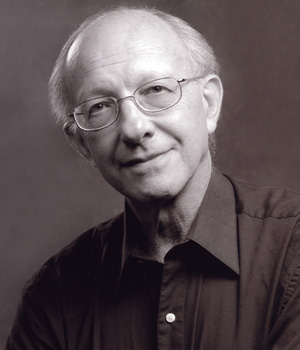
    Gilbertkalish_large

    Above: pianist Gilbert Kalish of the Chamber Music Society of Lincoln Center

    Tuesday October 22nd, 2013 – Piano quartets from three centuries were on the bill today at this Chamber Music Society of Lincoln Center performance. As I walked down the corridor to enter the auditorium at Alice Tully Hall, I experienced the odd sensation of being in church; these CMS concerts are not only completely satisfying musically, but they are so spiritually uplifting in their ability to carry us out of the everyday world to something more pure and elevated. 

    I had an incredible seat, second row center, looking up at the musicians at close range. The lines of communication – between player and player, and between musicians and audience – were so direct and intimate; I don’t exaggerate when I say it was a transportive experience.

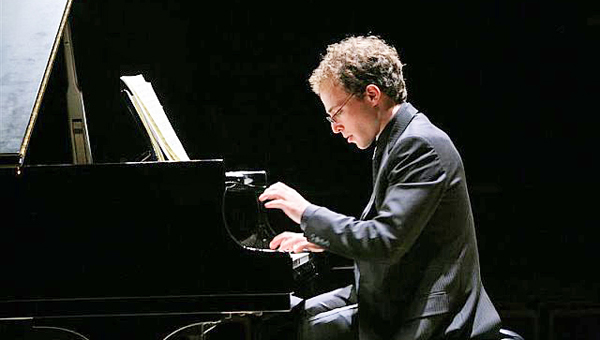
    O weiss

    Above: pianist Orion Weiss

    Mozart first: the ill-fated genius composed two piano quartets, a relatively rare genre during the Viennese
    Classical period. The E-flat major quartet K. 493 is the second of these, and dates from 1786. It is thought to be the piece that Mozart himself played at Count Joseph Thun’s palace when the composer journeyed to Prague in 1787 to witness the overwhelming success there of his opera LE NOZZE DI FIGARO. This quartet is considered among the peaks of Mozart’s chamber music, and it certainly seemed so today in a performance of remarkable musical clarity and emotional immediacy.

    Orion Weiss was at the Steinway, with Nicolas Dautricourt (violin), Paul Neubauer (viola) and Keith Robinson (cello) center-stage. Their playing was impeccable, and I so deeply enjoyed watching the communication between them: a silent language of the eyes and a tilt of the head. Mr. Neubauer, as expressive of face as in his musicianship, seemed the conduit linking the four players emotionally. The music flowed freely as melody and embellishment passed from one player to another. An atmosphere of quiet intensity filled the hall, the audience breathing in the sustaining beauty of Mozart’s perfection.

    A complete change of mood as we were transported forward to 1931 and the intoxicating rhythms and alluring turns of phrase of the Spanish composer Joaquin Turina’s A-minor quartet, opus 67. Here the players were out to seduce the ear, led by Yura Lee (violin) with Messrs. Neubauer, Robinson and Weiss.

    Turina composed this piano quartet in 1931; its flavour of
    Spanish folk music, with gypsy and Andalusian nuances, is characteristic of the composer’s work, which was influenced by his predecessors Manuel de Falla and Isaac Albeniz. Veering effortlessly from the fiery rhythms to the more sustained song-like motifs, Ms. Lee and her colleagues reveled in sensuous glow of the music; Mr. Weiss fulfilled the demanding piano writing with élan, and again I greatly enjoyed the the silent sense of conspiracy among the players as they wound their way thru the subtle turns of the music.

    Yura Lee switched gracefully from violin to viola for the evening’s concluding work, the Brahms Quartet #2, Opus 26. For this long (50 minutes) and demanding work, keyboard master Gilbert Kalish was at the Steinway, Nicolas Dautricourt returned with his violin, and the superb Mr. Robinson polished off his evening perfectly – the only player involved in all three works tonight. 

    Johannes Brahms himself played the piano part at this work’s premiere in 1863; Robert Schumann had already hailed Brahms as Beethoven’s heir apparent, and the piano quartet was one of the works that propelled the composer into his position as one of the immortal Three Bs – Bach, Beethoven and Brahms – in the pantheon of classical music.

    Tonight this masterpiece unfolded in all its glory. In a touching tribute in the playbill, Mr. Dautricourt spoke of being mentored by Mr. Kalish at Ravinia in 2002 when the Frenchman had first arrived in the United States. It must have been a great experience for them to perform together this evening.

    Mr. Dautricourt’s playing is so passionate and expressive; I found myself drawn to this tall and charismatic musician, who is apparently equally at home in both jazz and the classics. Mr. Kalish’s playing was resonant and sublime, with Ms. Lee and Mr. Robinson yet again as pleasing to watch as to hear. The cumulative effect of their performance drew a sustained applause from the attentive and dedicated audience of music-lovers.

    The anticipation I felt going into the concert was amply rewarded: I had expected the best that music can offer, but – intangibly – it was even better than that.

    The participating artists tonight were:

  • Verdi REQUIEM @ Carnegie Hall

    Angel

    Tuesday October 23, 2012 – I’d been looking forward to this performance for weeks; the Verdi MESSA DA REQUIEM is one of my favorite pieces of music, glorious from first note to last. I have experienced some thrilling live performances over the years, including three superb evenings at Tanglewood. Great conductors, great soloists and top-notch choral groups have placed their stamp on this grandiose and poignant score.  

    Tonight’s performance will not fall in the memorable category, although the playing of the Philadelphia  Orchestra was thrilling, and the singers of the Westminster Symphonic Choir gave their hearts and souls to the work’s resplendent choral passages.

    Opening the work with an achingly slow and very inspiring rendering of the score’s first pages, conductor Yannick Nézet-Séguin went on to a very impressive performance of the entire work. He moulded the great arcs of music with a fine sense of grandeur and he and his players shone in the more introspective moments. Only his rather pretentious holding of the applause by not lowering his baton after a reasonable pause at the end seemed off-kilter; it wasn’t that profound of a performance.

    The REQUIEM is sometimes referred to as a ‘sacred opera’; it is so very operatic by nature that, as with all operas, performances of it tend to stand or fall by its principal vocalists. Tonight we had an even split of a surprisingly excellent mezzo-soprano and a very fine basso, aligned with a soprano who seemed sometimes on the verge of distress and a tenor who labored valiantly to make his once-generous voice flesh out Verdi’s magnificent melodies.

    791

    Christine Rice (above), a singer totally new to me, gave a very pleasing performance in every respect, Her timbre has a soprano feel to it, but she used a comfortably plush and resonant chest voice to make the most of her every phrase. In an evening of often wayward vocalism, I found myself sighing with relief whenever Ms. Rice stood up to sing. Basso Mikhail Petrenko might not have the sheer vocal heft of some of the singers who have preceded him in this music, but his sound is steady and warm and his vocalism is expressive. The opening pages of the Lacrymosa, where Ms. Rice and Mr. Petrenko joined forces, was the evening’s purest sonic pleasure.

    Marina Poplavskaya’s opening phrase was painful to the ear; her voice sounded unsteady and ill-sorted. As the evening progressed, a feeling of lack of vocal support grew. Her voice often sounded pallid and tentative, and she used a piano approach to high notes to cover a spreading quality that emerged when she sang full-out. Shortness of breath was worrisome, as were vagaries of pitch here and there; her lower-middle register did not always speak. And some of the most thrilling moments of the REQUIEM, when the soprano voice should sail out over the massed choral and orchestral forces, went for naught tonight as Ms. Poplevskaya’s sound was erased by the sopranos of the chorus.

    Opera lovers can’t help but be aware of Rolando Villazon’s vocal struggles in recent seasons. This very likeable singer tried to sing with his usual generosity and passion, but the sound now is smallish and grey. The top does not bloom, but narrows instead. And he has a very strange method of attacking notes with a biting huskiness. Attempting to make the music interesting, he drew down the tone to a thread at times but it did not sound well-supported; and a patch of off-pitch singing in the Hostias was disconcerting.

    It was a sad night for the soprano and tenor though the audience, typically, did not seem to notice anything was amiss. I wonder how much more impressive the evening would have been if different vocalists had taken on these roles. It was a squandered opportunity, in my view.

    • The Philadelphia Orchestra
      Yannick Nézet-Séguin, Music Director
    • Marina Poplavskaya, Soprano
    • Christine Rice, Mezzo-Soprano
    • Rolando Villazón, Tenor
    • Mikhail Petrenko, Bass
    • Westminster Symphonic Choir
      Joe Miller, Conductor
  • Cedar Lake @ The Joyce/Programme A

    31296_400062764209_7693009209_3962736_5753174_n

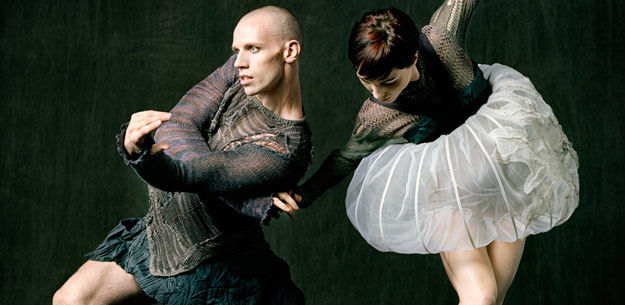
    Tuesday October 26, 2010 – This first of two programmes by Cedar Lake Contemporary Ballet at The Joyce provided a tremendously satisfying evening of dance:

    Week 1 (October 26 – 31)
    Sunday, Again” by Jo Strømgren
    UNIT IN REACTION” by Jacopo Godani (NY PREMIERE)
    Hubbub” by Alexander Ekman (NY PREMIERE)

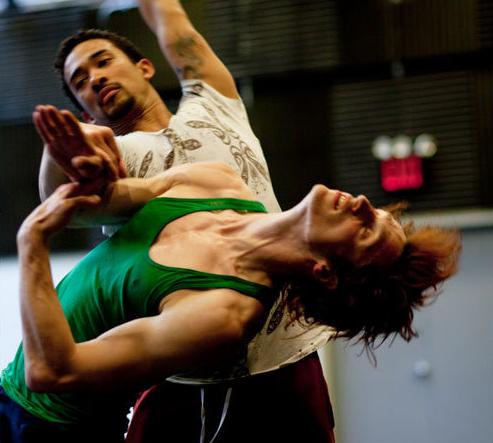
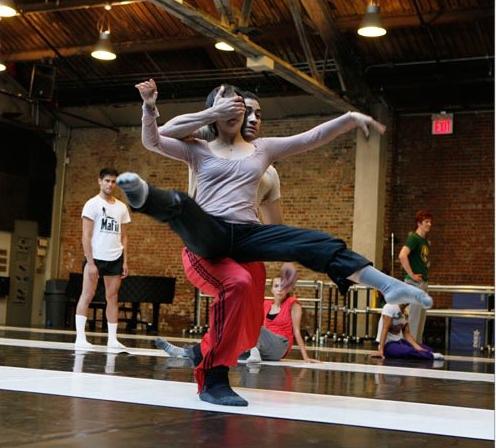
    Top photo: Jon Bond & Manuel Vignoulle in rehearsal for HUBBUB. View the Company roster here.

    Makeitnew

    SUNDAY, AGAIN (Julieta Cervantes photo, above) is one of the pieces from Cedar Lake‘s repertoire that I most enjoy and admire and I’m very glad for the opportunity to see it again (twice…it’s on both Joyce programmes). This work by Jo Stromgren is set to music of J S Bach and features the entire Company dressed in tennis whites. The theme of the work is: what to do on yet another Sunday spent with the domestic partner.

    Cedar-lake

    Jason Kittelberger wants to go out and play badminton and his lover Acacia Schachte wants to stay in. This leads to the work’s tempestuous opening duet by these two magnificent dancers (above) in which the most edgy, risky aspects of dance partnering are displayed. The play of tension between the two dancers and the intensity of their individual personalities make this a thrilling start to the evening.

    From there the work evolves into an ensemble piece with the underlying idea of getting a badminton game going. This leads to shifting dynamics between men and women and to witty moments as when Harumi Tereyama draws a shuttlecock out of her mouth and teases Jubal Battisti with it. Later, Gwynenn Taylor-Young pats down Ana-Maria Lucaciu til she finds another shuttlecock. Between these and other duets, the dancers stride across the stage with racquets and nets at the ready. Finally the game begins: men vs women. But all too soon the afternoon’s over and the drapes are drawn.

    UNIT IN REACTION by Jacopo Godani is a New York premiere. Six of Cedar Lake’s ultra-powerful and fascinating dancers form the first of two alternating casts who will perform this work during the first week of the current season: Jon Bond, Jason Kittelberger, Oscar Ramos, Ana-Maria Lucaciu, Acacia Schachte and Ebony Williams. In a darkish setting, these dancers move with restless energy in a series of solos and duets which stretch the limits of physical movement. Acacia Schachte and Oscar Ramos seize their moments vibrantly and a duet for Ana-Maria and Ebony is especially potent. Jon Bond, one of the most thrillingly agile and sexy dancers ever to take the stage, is mind-boggling in his solo. Throughout this work with its pounding, fragmented percussion/industrial score, Jason Kittelberger is an ominous, forceful figure. The six dancers won screams and whoops from the packed house as each stepped forward for a bow at the end.

    2010-2109_0316_3

    The New York premiere of Alexander Ekman’s HUBUB provided a truly witty and apt finale to the evening. To the relentless clicking of that antique, obsolete apparatus – the typewriter – the dancers, stripped down to the briefest and most revealing of costumes, each have their own metal-frame podium on which they stand, sit or hide under.

    In an endless, pretentious monologue the voice of dance criticism reads from the endless sheaf of typewritten pages, telling the viewer what the dance is all about, what it means and how to react to it. In fact, the narrator is saying next-to-nothing and merely stating the obvious in dressed-up language. 

    31396_401979974209_7693009209_4013507_5489653_n

    Central to HUBBUB is a hysterically funny duet in which the thoughts of two dancers – Harumi Tereyama and Nickemil Concepcion – are heard in voice-over as they perform a pas de deux. Harumi and Nickemil danced this piece with dead-pan expressions as the audience laughed aloud. (Above: a rehearsal photo of the pair by Jubal Battisti).

    In the final movement of HUBBUB, the inner thoughts of the dancers are revealed – their mundane likes and dislikes and their secret habits. The music of Xavier Cugat had underlined the opening segments of HUBBUB but here we have one of the Chopin nocturnes, yet another imaginative stroke.

    The evening ended with a genuine standing ovation.

    20091008-143625-pic-666111519

    Is twenty-six year old Alexander Ekman the world’s cutest choreographer? He has my vote.

    So the evening was a great kickoff for the two-week Cedar Lake season. Allthough I have a special fondness for the Company’s home-theatre on 26th Street, the Joyce provides more seats – all occupied tonight – meaning that more people can see this troupe of dancers: some of the most potent and distinctive in Gotham. Ticket info here.