Tag: Wagner

  • van Zweden’s Bruckner 8th @ The NY Phil

    JaapVanZweden

    Above: Jaap van Zweden, Musical Director of The New York Philharmonic

    ~ Author: Oberon

    Friday September 28th, 2018 – This evening was our first opportunity to hear Jaap van Zweden lead The New York Philharmonic since he officially took up the position of Musical Director. My friend Ben Weaver and I splurged and bought tickets to this concert because Bruckner is always on our must-hear list. In 2014, I had my first live encounter with the composer’s 8th in this very hall, under Alan Gilbert’s baton. It was a revelation.

    Tonight, Jaap van Zweden offered Conrad Tao’s Everything Must Go as a prelude to the Bruckner 8th. Does this massive symphony need a prelude? No. As with many ‘new’ works we’ve encountered over the past few seasons, Everything Must Go is expertly crafted but it sounds like so much else: by turns spare and noisy, with frequent percussive bangs and pops, this eleven-minute piece (it felt longer) passed by without providing any sense of the composer’s individual voice. Perhaps hearing more of Mr. Tao’s work – music not yoked to an existing masterpiece that employs the same orchestral forces – will lead us to discover who he is.

    Since there was no pause between the Tao and the Bruckner, the audience’s response to Everything Must Go could not be gauged. I wonder if the young composer took a bow at the end; we had headed out as the applause commenced.

    For the first two movements of the Bruckner, I was enthralled. The orchestra sounded truly superb, and Maestro van Zweden held sway with a perfect sense of the music’s architecture. It was a tremendous relief and balm to emerge from the day’s madness (the Kavanaugh hearings) into Bruckner’s vibrant world.

    The Philharmonic musicians offered rich tone and marvelous colours, the brass sounding grand and the violins singing lyrically in their big theme. The music has a Wagnerian sense of the monumental, and a ceaseless melodic flow. Among the solo moments, Sherry Sylar’s oboe stood out. At one point there’s an almost direct quote from Tchaikovsky’s SLEEPING BEAUTY. During a respite/interlude, softer themes mingle before a splendid onslaught from the brass turns grandiose. The movement ends on a murmur.

    The Scherzo has as its main and oft-repeated theme a churning 5-note figure that has worked its way into the soundtrack for GAME OF THRONES. As the movement progresses, the harp makes a lovely effect, as do the entwining voices of solo woodwinds. Textures modify seamlessly, sustaining our pleasure.

    A deep sense of longing suffuses the opening of the Adagio, with its rising passion. Again the harp glimmers magically. The rise and fall of great waves of sound bring passages of almost unbearable beauty; there’s a spectacular build-up to music of searing passion which evaporates into soft halo of solo winds. As the music re-builds, a Tchaikovskian glory permeates. It seems, though, that Bruckner cannot quite decide how to end this epic movement.

    Pulsing, march-like, and majestic, the Finale leads us onward. A big swaying rhythm from the timpani leads into a huge tsunami of sound. The work began to feel like a series of climaxes, though, and traces of brass fatigue started to crop up. The Maestro and the musicians were engulfed by gales of applause and cheers at the end. 

    I’m probably in a minority in feeling that Alan Gilbert’s 2014 rendering of the Bruckner 8th with the Philharmonic reached me on a deeper level, as well as being more exhilarating. “Well, it was faster!”, Ben Weaver would say. À chacun son goût…

    ~ Oberon

  • Audrey Stottler Has Passed Away

    AudreyStottler

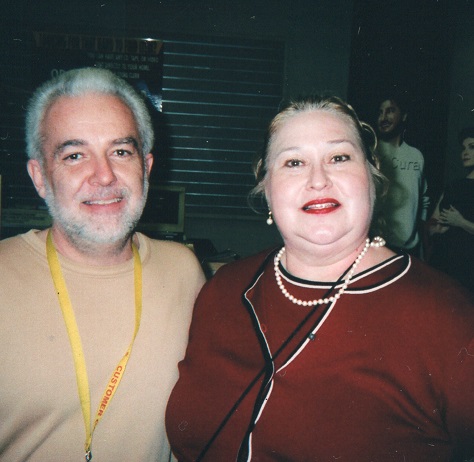
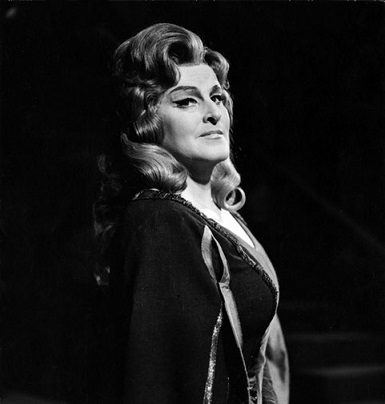
    September 15th, 2018 – I’ve learned of the death of Audrey Stottler (above), who I met in 2003 when she was in New York City to cover – and sing a single performance of – the Dyer’s Wife in FRAU OHNE SCHATTEN at The Met.

    Audrey came in the opera room at Tower Records where I was working at the time, and my boss Bryan and I chatted her up. Bryan had seen her as Turandot at Virginia Opera in 1993. and I’d seen her 2002 Met Turandot – a role she sang worldwide – and we were looking forward to the FRAU. She was most gracious during our long conversation.

    Audrey had a notable success as the Dyer’s Wife; I recall being especially impressed by her juicy upper tones, the unusual richness of her lower range, and the sense of lyricism in her singing.

    This scene from WALKURE displays her vocal attributes quite well:

    Audrey Stottler – Die Walküre ~ Der manner sippe

    And this is thrilling, grand-scale Wagner singing:

    Audrey Stottler – Tristan und Isolde ~ Isolde’s Narration & Curse

    At the time of her unexpected death, Audrey was running a popular voice studio in Minneapolis.

    Scanned Section 2-1 (3)

    Bryan took this photo of me with Audrey the day we met her. There are some lovely tributes to her on Norman Lebrecht’s blog.

    ~ Oberon

  • The Colón RING

    2982284

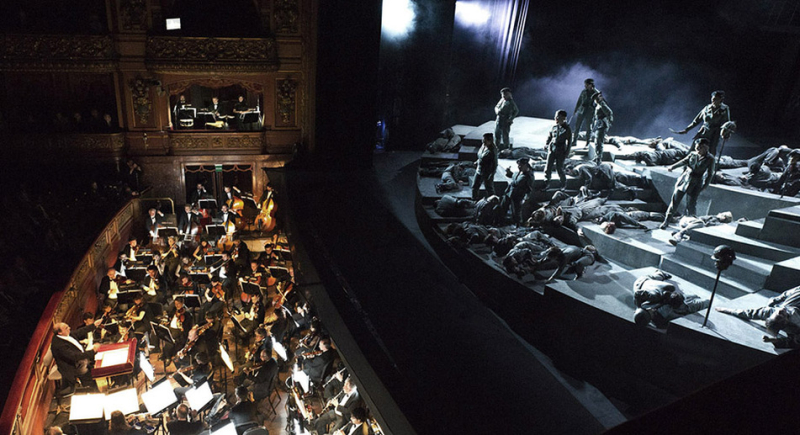
    Above: the Valkyries on the field of battle in the Teatro Colón’s abbreviated RING Cycle; Maestro Roberto Paternostro is on the podium

    ~ Author: Oberon

    In 2012, the Teatro Colón in Buenos Aires presented the first performances of Cord Garben’s reduction of Richard Wagner’s monumental RING DES NIBELUNGEN; Garben cut the usual run-time of the complete Cycle from fifteen to seven hours, and meant his version to be performed in a single day. I’ve been watching it on DVD, finding it by turns intriguing and maddening.

    The production was to have been directed by Katharina Wagner, great-grand-daughter of the composer. In the documentary film that is part of the boxed DVD set, Ms. Wagner arrives at Buenos Aires to start rehearsals and finds that the theatre is behind schedule in the creating of the physical production: sets, costumes, and wigs are not ready. Ms. Wagner decides she cannot work under such conditions. She flies back to Germany, but then returns to Buenos Aires…only to resign from the production.

    Enter one of La Fura dels Baus’s director/choreographers: Valentina Carrasco. Described by soprano Linda Watson, who plays Brünnhilde, as a ‘spitfire fireball’, Ms. Carrasco and her team take matters in hand and – in just over a month of rehearsals – get the Colón RING stage-worthy. Meanwhile, there have been problems on the musical end of things, too: some of the originally-cast singers have dropped out, and conductor Roberto Paternostro becomes frustrated with the musicians of the Colón orchestra; the Maestro walks out of a rehearsal, calling their playing “a farce”. Somehow it all comes together, and the production is a hit – at least musically.

    Ms. Carrasco’s key idea is introduced early in Rheingold; the Rhinemaidens appear to be nannies guarding their treasure: a baby. Bad idea? I thought so at first. But then, babies represent the future…the hopes and dreams of mankind. Alberich steals the ‘golden child’, and by scene three, the Nibelheim scene, he has set up a ‘baby factory’ to increase his ‘wealth’: in a combination torture chamber and nursery, women are continuously and forcibly impregnated, their babies cruelly snatched from them and kept under the eye of sinister nurses. Other pregnant women are seized on the streest and enslaved, giving the term “forced labor” a fresh meaning. It’s a hellish scene, reminding us of the horrors of THE HANDMAID’S TALE. 

    As the Cycle evolves, we continue to see children as pawns; separated from their parents by the State, the shadow of Trump’s Amerika looms large. And in Siegfried, Fafner keeps some kids in a cage. Talk about self-fulfilling prophecies… 

    But what about the story-telling? The musical flow? In Rheingold, the narrative is fairly clear, but the characters of Donner, Froh, and – unkindest cut of all – Erda are eliminated altogether. Jukka Rasilainen in his military uniform with medals and gold sash, is a Perónist Wotan. And Simone Schröder, as Fricka, wears her hair in one of Eva Perón’s iconic styles. The musical cuts are scattered; in interviews, the singers speak frequently of the production’s biggest challenge: remembering what has been deleted and what your next line will be.

    There’s some really good, characterful singing in Rheingold: Andrew Shore brings with him a sterling reputation as Alberich on the world’s stages, and both Mr. Rasilainen and Ms. Schröder are fine. The Rhinemaidens –  Silja Schindler, Uta Christina Georg, and Bernadett Fodor – fare well on a tricky set that includes a water pool and a sandbox; I like Ms. Fodor’s voice especially. Wotan follows Gollum’s example: to get the ring, he bites or hacks off Andrew Shore’s finger with the ring wrapped around it.

    Stefan Heibach is a lyrical Loge; he wears a fedora, raincoat, and sunglasses. Kevin Conners excels as Mime – later, in Siegfried, he will excel his own excellence. The giants are impressively sung by Daniel Sumegi (Fasolt) and Gary Jankowski (Fafner), the latter confined to a wheelchair. They are accompanied by a band of young thugs, some wearing soccer togs. I half expected to see Klaus Barbie flitting in and of the Nibelheim torture chamber.

    Musically, the first act of Walküre, one of the most perfect acts in the entire operatic repertoire, is hacked apart. The arranger is especially unkind to Sieglinde, which is unfortunate as the role is very finely taken by soprano Marion Ammann. Ms. Ammann is an excellent singing-actress, gamely entering into the director’s concept of the role: she is indeed her husband’s ‘property’, for Hunding has kept her tethered to the floor on a short rope with a rough noose around her neck. She has been unable to stand erect for such a long time that, when Siegmund sets her free, she can barely walk. Ms. Ammann’s vocalism makes the substantial cuts in ‘Der Männer Sippe’ all the sadder. Stig Andersen, remembered for his Met Siegfrieds in the year 2000, is an excellent companion to Ms. Ammann. The pulling of the sword from the tree seems like an after-thought here. Daniel Sumegi, a paunchy Hunding, wears a wife-beater t-shirt. He sounds creepy, and he plays the character as truly revolting. We feel no shred of sympathy for this Hunding.

    Linda Watson as Brünnhilde doesn’t sing ‘Ho-Jo-To-Ho‘ to open Act II of Walküre; Cord Garben simply jumps from Wotan’s fantastic opening lines to mid-Wotan/Fricka duet. Ms. Schröder loses a lot of Fricka’s music but does well with that which is left to her.  

    Mr. Rasilainen navigates the cuts in Wotan’s monologue successfully – all too soon, it’s “Das ende.”  Ms. Watson’s singing of the passage where Brünnhilde weighs Wotan’s new instructions is excellent, and beautifully filmed. The pursued Wälsungs arrive, and Ms. Ammann is really thrilling in this scene of Sieglinde’s guilt and her love for her brother; her singing is expressive and passionate. Mr. Andersen is moving in Siegmund’s lines throughout Act II. The weight of the world is on him; all he wants is to be with Sieglinde. He and Ms. Watson are very effective in the Todesverkündigung (‘Annunciation of Death‘) which  is staged with heartfelt simplicity. Now the cuts come fast and furious. Hunding fells Siegmund, then lets his thugs kick the hapless man to death. 

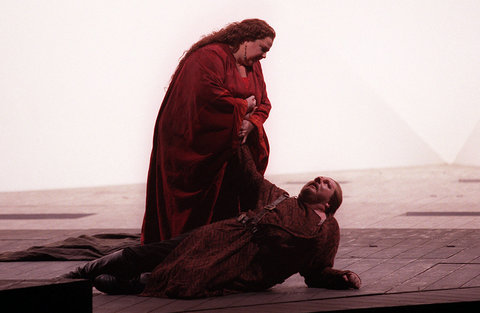
    As Walküre moves to its conclusion, the production becomes truly affecting. The parting of Wotan and Brünnhilde is heart-rendingly intimate and beautifully acted by Ms. Watson and Mr. Rasilainen. After Wotan has kissed away his daughter’s divinity, she sinks to the floor. White-clad angels appear and surround her slumbering form with candles – a gorgeous image:

    2746493

    As the Magic Fire music plays, Mr. Rasilainen as Wotan removes his military jacket and other signs of his power and command; he almost seems to age before our eyes. As the music of Walküre reaches its solemn end, he walks slowly away from the glowing Valkyrie rock: the king of the gods is now the Wanderer.

    As the applause welcoming Maestro Paternostro back to the podium for Siegfried fades, someone in the audience shouts “Viva Wagner!” I was feeling about the same at this point.

    This Siegfried is populated by convincing singing-actors. Cord Garben’s cuts are judicious in this opera, probably the most difficult of the four to compress. We get just enough of the Siegfried/Mime banter, with tenors Leonid Zakhozhaev and Kevin Conners very much at home as hero and dwarf respectively. Much is made of the fact that Mime is both Siegfried’s father and mother – Mr. Conners dons a blonde drag wig to accentuate his maternal characteristics. Nothung is discussed – and later re-forged – but the riddle scene for the Wanderer and Mime is completely excised.

    The horn-call and solo serve as in interlude, leading us to Fafner’s cave, where Act II centers on Siegfried and Fafner. The wheelchair-bound, drowsy giant is surrounded by his entourage while his child-slaves observe the action from behind bars. There’s a rumble; Siegfried wounds Fafner. Their ensuing dialogue is excellently voiced by Mr. Zakhozhaev and by basso Fernando Rado, who is credited as the Siegfried Fafner, even thought the fellow in the wheelchair looks a lot like Gary Jankowski, who sang the role in Rheingold.

    In one of the production’s serious visual lapses, the Forest Bird appears as a furry green muppet. Silly. Wotan wanders in, aged and weary; Siegfried breaks his grandfather’s spear by hand, sending the old man on his way.

    The candles are still glowing around Brünnhilde’s rock. Fortunately, the opera’s dumbest line – “Das ist kein mann!” – is cut. The ecstatic genius of Wagner at “Heil dir, sonne!” finds Linda Watson at her best; she maintains peak form as cuts carry her directly to “Ewig war ich“. Brünnhilde resists, so Mr. Zakhozhaev woos her with ardent, lyrical singing. Capitulation: “Radiant love! Laughing death!” Ms. Watson falls short of the high-C. It doesn’t matter. Together, the lovers blow out the last remaining candle. The audience bursts into massive applause.

    One of my favorite RING scenes, The Norns, is cut altogether. Instead, Götterdämmerung opens with the Dawn Duet; the couple seem to be living in a balconied duplex apartment in the low-rent district. Both singers are excellent here, mining the lyricism of their vocal lines music and well-supported by Maestro Paternostro and the orchestra. Ms. Watson and Mr. Zakhozhaev have this music in their blood; the soprano creates another vocal high-point as she calls on the gods to witness her love for Siegfried.

    At the Gibichung Hall, Mr. Sumegi is a chilling Hagen, and he has Gutrune (Sabine Hogrefe) and Gunther (Gerard Kim) completely under his thumb. Mr. Shore’s Alberich briefly menaces Hagen. Then Zakhozhaev/Siegfred strolls in; Sumegi/Hagen is impressive as he describes how the Tarnhelm works. Mr. Zakhozhaev sings the toast to his wife expressively, but he nearly chokes on the polluted potion. Once drugged, he kisses Gutrune passionately. Siegfried’s blood-brotherhood with Gunther is mentioned almost in passing, and the two men are off to secure Brünnhilde for Gunther as Ms. Hogrefe’s cuddly, adorable Gutrune anticipates her union with Siegfried. Mr. Sumegi’s deals darkly with Hagen’s Watch.

    As the Waltraute scene is cut entirely, we remain at the Gibichung Hall; Brünnhilde, dressed in a very odd, constraining bridal gown, is led in like a dog by Gunther. The whole business of “…how did you get that ring?…” is quickly dispatched, and Brünnhilde goes wild, ripping off her wedding gown and over-turning furniture. There’s no “Oath”…just Brünnhilde, Gunther, and Hagen plotting in an exciting trio.

    On a golf course, Siegfried practices his swing; no Rhinemaidens here, but some caddies instead. Jarred back to reality by another potion, Siegfried extols Brünnhilde. Hagen attacks him with a golf club. Mr. Zakhozhaev sings his tender farewell to his true wife. He dies a slow death, bleeding from the mouth. During the Funeral March, his body lies alone on the stage until at last he is borne away.

    In the scene of Gutrune awaiting her groom’s return, Ms. Hogrefe is quite touching; she screams when Hagen’s deceit is revealed. Hagen bullies his siblings, finally fighting with – and killing – Gunther. Brünnhilde arrives, and explains the facts to Gutrune; the set slowly turns as Gunther is carried off.

    Brünnhilde is alone with Siegfried’s body. The Immolation Scene, very effective in Ms. Watson’s interpretation, becomes an intimate rather than a public ceremony: the soprano’s singing of “Wie sonne lauter...” touched me deeply; as she sang, ‘angels’ covered Siegfried with a red shroud. A vision of Wotan appears, and he looks down on how things have played out; at “Ruhe, ruhe, du Gott!” the now-powerlessgod slowly withdraws.

    The Rhinemaidens enter and receive the ring from Brünnhilde; Ms. Watson is exciting, polishing off her singing to powerful effect before joining Siegfried in his shroud. The angels re-appear with candles which they arrange around the lovers’ bodies. Now the populace fill the stage; the baby is restored to the Rhinemaidens, and all of the children who had been stolen from their parents rush on to be reunited as loving families. They stand, like humanity in all its glory, looking out into the future. It made me cry, actually, while also making me disgusted with the sadists who currently hold sway over our beloved country; may the gods deliver us from evil.  

    Linda Watson receives a mammoth ovation – she has won me over in the course of the presentation – and Mr.Zakhozhaev is strongly hailed, rightly so. Maestro Paternostro, all of the singers, and indeed everyone on the musical side of things are heartily cheered. The production team are booed, but – while not everything in their concept worked – they saved the day, and much of what they brought forth was thought-provoking, effective…and timely.

    One of the most fun bits in the documentary about the preparation for the production is a brief scene in which soprano Sabine Hogrefe (who stepped in for Christine Goerke in a Met performance as Elektra earlier this year) and tenor Leonid Zakhozhaev are rehearsing the final passage of the duet that closes Siegfried. Ms. Hogrefe flings out a bright high-C. At that moment in time, the two singers don’t know if the production will actually happen; they are simply swept along by the irresistible glory of Wagner’s music.

    ~ Oberon

  • Annuciation of Death

    4

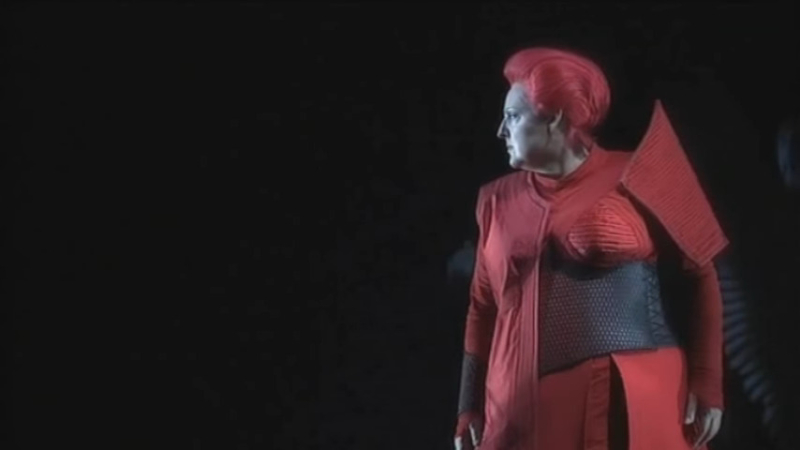
    Brünnhilde (soprano Linda Watson, above) appears as a vision to Siegmund – announcing his imminent death – in Act II of Wagner’s DIE WALKURE.

    I’ve recently experienced something of a revelation regarding Ms. Watson – more about that soon when I write about “The Colón RING“.

    Tenor Endrick Wottrich, who is Siegmund in this recording, sadly passed away in the Spring of 2017 at the age of 52.

    Linda Watson & Endrick Wottrich – Todesverkundigung ~ WALKURE – Bayreuth 2006

  • “Tristan!”…”Isolde!”…

    Alfred Roller - Set design for Act II - Wagner - Tristan und Isolde

    Above: Alfred Roller’s 1903 set design for Act II of TRISTAN UND ISOLDE

    Ben Weaver writes about some of his favorite recordings (and a DVD) of Wagner’s TRISTAN UND ISOLDE. Ben, a longtime TRISTAN addict, helped me to break down my resistance to this opera when we stood thru three performances of it – including Waltraud Meier’s only Met Isolde – in 2008. Prior to that, I had only seen the opera once, in 1971, with a stellar cast in a then-new production. In part, it was the magic of that performance that kept me from seeing it again for so many years: I felt nothing could compare.

    Earlier this year, I watched several video versions of the opera, becoming thoroughly immersed. The Met’s DVD, in the production that has moved me so much, is rightly hailed by Ben Weaver at the end of his article. Levine and the orchestra are splendid, and if Jane Eaglen and Ben Heppner are not physically everyone’s idea of how the lovers should look and move, to me they create all that is needed with their voices. Add Dalayman, and Pape, and the marvelous settings, and…voilà!…TRISTAN!

    Here is Ben’s article:

    Richard Wagner’s 1859 opera Tristan und Isolde was declared unplayable by orchestra musicians and un-singable by singers. Wagner spent nearly 6 years after completing it trying to get it staged. He failed repeatedly. Rio de Janiero, Strasbourg, Paris, Karlsruhe, Dresden, Weimar, Prague were all failures. Over 70 rehearsals in Vienna led to cancellation of the scheduled premiere. Finally the generosity of King Ludwig II of Bavaria – who would also pay for Wagner’s theater in Bayreuth – allowed the world premiere to take place in Munich on June 10, 1865 with the husband and wife team of Ludwig and Malvina Schnorr von Carolsfeld singing the title roles, with Hans von Bülow – with whose wife Wagner was having an affair – conducting. After only 4 performances, on July 21st, the tenor suddenly collapsed and died. Rumors began circulating that the exertion of singing the part of Tristan killed him. That’s probably not true, although the opera did additionally claim the lives of two conductors: both died in the orchestra pit during Act 2 – Felix Mottl in 1911 and Joseph Keilberth in 1968.

    Tristan is certainly one of the most challenging operas in the repertoire, and great Tristans and Isoldes do not come around very often. There are even fewer who can sing the voice-wrecking parts for long without damaging  their voices beyond repair. Some opera houses have gone decades without mounting it for lack of adequate singers. On record, the opera has fared better, in part because some singers who never attempted it in the theater agreed to sing it for a microphone.
     
    The first complete studio recording of Tristan und Isolde came in 1952 courtesy of EMI and the great Wagnerian Wilhelm Furtwängler. Furtwängler’s take on the opera is uber-Romantic. His conducting style could be traced back to von Bülow. Furtwängler’s tempos are slow, but the music never sags and never loses its pulse. His grasp of the totality of the work – the control over Wagner’s revolutionary redefining of tonality and chromaticism – is total. Sometimes the slow tempos reveal facets of the narrative that other, speedier performances don’t: for example when the sailors mock Isolde in Act 1 – the deliberateness of the tempo under Furtwängler makes their words far more threatening than the usual light mocking laughter. The Philharmonia Orchestra – at the time one of the finest ensembles in the world – plays exceptionally well. The opening Vorspiel builds magnificently, its climax washes over like an ocean wave.

    Kirsten Flagstad, who by 1952 had been singing Isolde for decades (albeit usually in heavily abridged form) and would soon retire from the stage altogether, is Furtwängler’s regal Isolde. But though her large voice is still in fine shape – warm, rich, for the most part even throughout the range – Flagstad is more of an aging Queen Isolde, not a spirited princess. And her highest notes can turn acidic and tight. (There’s a myth that Flagstad’s high C in Isolde’s Curse was actually sung by Elisabeth Schwarzkopf.) Flagstad’s exchanges with a youthful Blanche Thebom as Brangäne rather emphasize her advanced age. Tenor Ludwig Suthaus is an excellent Tristan: a true heldentenor, his voice is big, warm and rich. And he is tireless in Act 3. He has excellent grasp of the words too, doing far more word-painting than Flagstad. For all her considerable stage experience with the role Flagstad can be indifferent to details; for the big moments she always finds the necessary vocal and dramatic bite, but some of the longer monologues – her Act 1 confrontation with Tristan – can cause drowsiness. Even masterful orchestral accompaniment and Furtwängler’s genius can’t make up for a sometimes absent soprano. The young Dietrich Fischer-Dieskau is a superb Kurwenal: cocky in Act 1 and terrified for his master in Act 3.
     
    A note on the 1952 recording, produced by Walter Legge: disappointing…the mono sound, though clean and full, in the louder moments loses a lot of detail, especially where the voices are concerned. In spite of its historical significance, the chance to have a complete Isolde from Flagstad (alas, too late) and the superb musicianship of Wilhelm Furtwängler, this famous recording would not be a first choice in a collection.
     
    Nilsson

    Above: Birgit Nilsson recorded Isolde commercially twice
     
    As Flagstad retreated from the stage, legendary Swedish soprano Birgit Nilsson became the leading Isolde (and Brünnhilde) of the post-war era. Her huge, tireless, piercing Nordic soprano – soaring effortlessly over any orchestra and conductor – was known to pin listeners to their theater seats. She sang Isolde in any opera house worth its reputation. Her debut as Isolde at the Metropolitan in 1959 made the front page of the New York Times. One staffer at the Royal Opera House in London once told Gramophone magazine that everyone was always surprised to find the back wall still standing after a Nilsson performance.  But for all her vocal supremacy, Nilsson was also often criticized for being too cold and generalized in her interpretations. She was not a natural-born dramatist and in the theater the singular glory of her voice may have been enough, but how do her interpretations fare on record?  
     
    Nilsson recorded the role of Isolde on two official sets (and numerous pirates.) The earlier Nilsson recording captures her in the early stages of her stardom with conductor Georg Solti. Made in Vienna in 1960, just as he began committing his legendary Ring to disc with producer John Culshaw, Solti’s Tristan (also produced by Culshaw, but lacking the Ring’s sound-effects orgy) is very much in keeping with Solti’s general approach to music making: the fiery Hungarian could whip an orchestra into a frenzy like no one else. And “frenzy” doesn’t necessarily mean speed. Some conductors think they are achieving excitement by playing fast. The fury Solti could bring out from musicians was a combination of volume and sheer intensity of feeling. The apocalypse was never far off the page in a Solti performance. But he was not incapable of introspection and tenderness. That was one of the glories of a great Solti performance.
     
    So it is with his Tristan und Isolde. It is a great Solti performance, with the glorious Vienna Philharmonic making each note glow, seethe and sigh. The Prelude is a gorgeously executed tone poem, recorded with crystal clarity by Culshaw. The plucking strings are like hammer blows, which is dramatically apropos. Birgit Nilsson establishes her vocal supremacy right off the bat. Her steady, steely voice presents a resentful Irish princess you don’t want to mess with. At the end of Isolde’s Curse, Nilsson launches fearless and fearsome vocal daggers – perhaps unequaled by another soprano. Nilsson’s voice is in supreme shape here. But the criticisms of coldness are not invalid. While Nilsson’s fury can be second to none because of the natural power of her voice, in her interactions with the Tristan of Fritz Uhl, Nilsson hints at but never fully embraces tenderness and desperation. In many ways she’s the perfect foil for Solti. Their approaches to music and drama are on the same page. To achieve true pathos Solti needs a naturally dramatic performer and he does not have that in a young Nilsson. By focusing on Nilsson’s natural vocal strengths he does not help her bring out Isolde’s love for Tristan or true transfiguration in her Liebestod – which is magnificently sung, but cool. 
     
    Fritz Uhl, today a nearly forgotten Austrian tenor, comes much closer to true pathos as Tristan. Uhl had a warm, sturdy voice, with weight and power and easy high notes, and his transformations from a cold soldier who swore to bring his friend King Marke a beautiful bride in the first half of Act 1 – to a surprised lover after drinking the potion – to a lovesick romantic in Act 2 and finally to a tortured and abandoned lover in Act 3 – are mostly believable, even if they lack the very last ounce of conviction to be complete.

    The Brangäne of Regina Resnik is a matronly disappointment here; she sounds like Isolde’s nagging grandmother (though Resnik was actually younger than Nilsson.) Perhaps she would have been a better partner for Flagstad. Tom Krause is a fine Kurwenal and Arnold van Mill’s booming bass is perfectly acceptable and unexceptional. The great tenor Waldemar Kmentt appears in the brief role of the Young Sailor.
     
    Nilsson’s second official recording of the opera – made live in Bayreuth in 1966 with conductor Karl Böhm – is one of the great performances of any opera committed to record. Here Nilsson found a perfect foil in Böhm, whose ability to inspire singers to feel was far greater than Solti’s. Böhm’s is a less hectic reading, too; it may come as a surprise that Böhm’s tempos are actually significantly faster: he clocks in at 20 minutes under Solti. And yet, for all his speed, Böhm manages to present a warmer reading of the score, a more romantic one, with more ebbs and flows than Solti. With that, Böhm surrenders nothing on intensity in the opera’s dramatic moments. There are passages of unforgettable power: Nilsson puts to rest accusations of dramatic indifference. Her Isolde here is a complete portrait. Haughty in Act 1, shattering rage and fury in her Curse and melting tenderness after taking the potion and in the Love Duet in Act 2. The sorrow of her Liebestod is transformative. And she is in spectacular vocal shape as well, tossing off every high note effortlessly, her middle shimmering with warmth.
     
    Nilsson’s partner is Wolfgang Windgassen, the most famous Wagner tenor of the post-war era. Wolfgang Wagner once joked that “When Windgassen stops singing we might as well close the Festspielhaus.” Windgassen’s voice is an acquired taste. He was singing essentially outside of his natural vocal abilities, but sheer will power and strong technique kept him signing Wagner’s voice-wrecking roles for many years. He can sometimes sound dry and frequently at the absolute limit of his abilities. But his command of the role is undisputed. In the Love Duet, Windgassen and Nilsson sing as if truly only to one another. And in Act 3 Windgassen creates a devastating portrait of a man coming undone.
     
    518d2650910c3f555f4e118d89f3f63c
     
    Above: Christa Ludwig as Brangäne, with her potions
     
    The supporting cast could hardly be improved: Christa Ludwig’s Brangäne (her perfectly-judged fussiness in Act 1, heavenly warnings to the lovers in Act 2), Eberhard Wächter’s gruff Kurwenal and Matti Talvela’s youthful, devastated King Marke (the shimmer and sob in his voice could melt stone) are vocally and dramatically perfect. Also lovely to have a young Peter Schreier as the Young Sailor to open the opera. The Bayreuth Festival Orchestra is magnificent too, though coming from the covered pit of the Festspielhaus the recording creates a far different soundscape than Solti’s studio balanced Vienna Philharmonic. Many have commented that Böhm’s Tristan provides a great example of Bayreuth’s famed acoustic. The fully integrated sound between voices and orchestra, often imitated but never duplicated, was beautifully captured by the engineers.
     
    Karajan vickers 1967
     
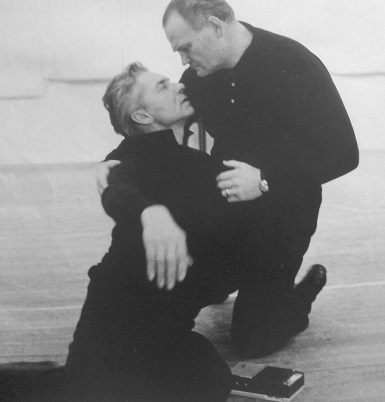
    Above: Herbert von Karajan and Jon Vickers rehearsing for Karajan’s Walküre production, 1967
     
    Herbert von Karajan’s recordings of the Ring in the late 1960s surprised many listeners because Karajan took what many called the “chamber” approach to the scores. He lightened and thinned out the textures to reveal hidden layers. They are magnificent performances and fascinating recordings. If anyone expected Karajan’s Tristan to do something similar with Wagner, they were sorely disappointed. Karajan’s Tristan is like granite: heavy and humorless. This would not be a problem if only the recording’s producer, Michel Glotz (no doubt with the conductor’s approval), did not create a highly manipulated soundscape with the volume of the magnificent Berlin Philharmonic flying from extreme ‘Is anybody making a sound?’ to ‘Holy shit, my ears are bleeding.’ The extreme – very extreme – dynamic range makes the recording practically unlistenable. It is an exercise in futility to find some sort of middle ground with the volume knob. Perhaps future remastering of this recording will give listeners something more aurally reasonable. 

    When it comes to the performance itself, it is echt-Karajan as he began entering his autumn years: there’s a heaviness and a lack of flexibility, no matter how virtuosic the orchestra. Although I find this to be more true of his recordings made for EMI in the 1970s (like this Tristan, but also his Fidelio and Der fliegende Holländer) than for DG. (The one happy exception was Karajan/EMI’s stunning, lights as a summer breeze Die Meistersinger von Nürnberg with the Staatskapelle Dresden.)
     
    Karajan found the perfect Tristan to match his heavy approach: Canadian tenor Jon Vickers. Vickers’ Tristan has, frankly, never been equaled on record. His is an overwhelming, searing portrayal of a proud Knight who sacrifices his pride for love. Vickers’ Act 3 is the stuff of nightmares; his anger, rage, misery and hopelessness will send chills down a spine. No other tenor, no matter how good he is, has come close to the devastation Vickers leaves in his wake. 
     
    It’s almost unfair to the rest of the cast, but they manage to hold their own. The Isolde is Helga Dernesch and though Dernesch sang many heavy soprano roles – including Brünnhilde and Beethoven’s Leonora for Karajan – she was not a true soprano. In fact, in just a few years she transitioned to the more comfortable mezzo roles and sang for many more years. There are signs of vocal strain in her Isolde; Karajan’s leisurely tempos certainly don’t help her cope with Wagner’s demands. But Dernesch is an imaginative, sensitive actress and her shimmering, moving performance only needed a more sensitive conductor. Christa Ludwig repeats her familiar Brangäne, but everything about her performance was better for Böhm. Walter Berry is a reliably excitable and sensitive Kurwenal, and Karl Ridderbusch’s magnificently sung Marke is one of the finest on record.

    About 10 years would pass before another new Tristan would surface on record. Carlos Kleiber’s notoriously limited repertoire fortunately did include Tristan. He conducted it for several seasons in the 1970s at the Bayreuth Festival and recorded it for DG in the early 1980s with the glorious Staatskapelle Dresden. Always the meticulous musician not prone to cheap thrills, Kleiber’s performance is cerebral, fast and lean. His tempos occasionally feel rushed, but overall his performance clocks in close to Solti’s. The Staatskapelle Dresden, producing one of the most unique orchestral sounds in the world, is a balm for the ear. Not even Vienna and Berlin Philharmonics could produce such consistently gorgeous, warm sounds and they respond to Kleiber’s aristocratic view magnificently. The real uniqueness of this performance, though, are the singers, all of whom had extensive experience with Lieder. Kleiber’s is the most word-conscious and conversational Tristan on record. Every word is etched out by the cast as if writing in stone, every reaction is rooted in the words that came before. Tristan is at its core a series of dialogues and no other group of singers on record has collectively paid the kind of attention to Wagner’s text as Kleiber’s singers do. 
     
    Price M
     
    The Welsh soprano Dame Margaret Price (above) was Kleiber’s surprising choice to sing Isolde. It’s a part she never sang on stage and Wagner was not part of her repertoire. A true Mozartian, Price possessed one of the most beautiful voices in opera. Rich, pure, warm, lyrical, even throughout its extensive range, Price never produced an ugly sound. Her Isolde is the most feminine princess of all. At the most dramatic moments she is singing at capacity, but never falters. Her faithful companion Brangäne is sung by the great Brigitte Fassbaender and their conversations in Act 1 and 2 are truly conversations: there’s an intimacy and warmth between them other singers don’t replicate. Tristan is sung by the veteran heldentenor René Kollo. Kollo’s is not a traditionally beautiful tenor. (But he is a real tenor). There’s a rawness to his sound and occasional unsteadiness in the upper reaches of the voice. But he’s an intelligent enough of an artist to make Tristan truly interesting. He never approaches Vickers’ overwhelming hysteria, but this is a different type of performance. Kollo fits perfectly into Kleiber’s Lieder interpretation. Kollo’s confrontation with Isolde in Act 1 borders on the angry, but in the Love Duet (the orchestra shimmering as if stars themselves were singing) Kollo and Price are glorious. They nearly whisper their lines. Kollo’s Act 3 hallucinations expose his ravaged voice, but his commitment to the drama and the beauty of the orchestral accompaniment wash the vocal flaws away.
     
    The same is also true of Dietrich Fischer-Dieskau’s Kurwenal. Long past his vocal prime, if anyone can claim the crown of Lieder King, it’s Fischer-Dieskau. Vocally gruff, he makes every utterance count. And then there’s the Marke of Kurt Moll. Possessing one of the most extraordinary and unique voices in opera – ever – Moll is a giant among basses. He could sing the phone book and I would want to bask in the beauty of the sound. The fact that he is such a moving actor makes his Marke’s Monolog one of the most glorious things ever recorded. 

    Other notable recordings of Tristan include Leonard Bernstein’s: the conducting is stunning. Karl Böhm is said to have attended some rehearsals and declared it to be the finest Wagner conducting he’s ever heard. Bernstein is fortunate to have a deeply moving Isolde of Hildegard Behrens. But the tenor Peter Hoffman is really not to everyone’s taste – he certainly is not to mine. His mushy, core-less voice all but ruins what could have been an all-around great performance. 
     
    Daniel Barenboim’s very fine recording with the Berlin Philharmonic is beautifully conducted as well. Barenboim is one of our finest living Wagnerians. His interpretation is broad and dramatic; and it is wonderfully recorded. Waltraud Meier delivers a powerful Isolde; it became a signature role for Meier, one of the most intelligent and powerful singing actresses of our time. (Meier’s performance of Isolde’s Narrative and Curse at James Levine’s 25th Anniversary Gala at the Met is truly one of the most memorable operatic performances. Everyone watching collectively held their breath for 10 minutes.) Here she is perhaps slightly studio-bound, but the comfort of the studio also lets her sing without fear. Meier is really a high mezzo, definitely not a soprano, so her extensive forays into the soprano realm (Isolde, Sieglinde, Beethoven’s Leonora, Berg’s Marie) came with some risk and occasional concern. Not so here: she sings gloriously. Siegfried Jerusalem’s Tristan is a predictably solid interpretation: he is vocally secure and dramatically sensitive. Matti Salminen’s majestic Marke is unforgettable.

    Antonio Pappano’s studio recording boasts a unique Tristan of legendary tenor Plácido Domingo. It is a role Domingo never attempted on stage and perhaps he waited just a little too long to take on the role. He is slightly paternal to the youthful Isolde of the young Swede Nina Stemme. But Domingo sings – lord, does he sing it! The warm, rich Italianate tenor, a lifetime of singing bel canto and Verdi, truly shows. He understands the drama too, even if he doesn’t have the word-painting of Vickers and Kollo. Nina Stemme, just starting her international career, is in glorious voice as Isolde. A tad too young for Domingo, but she can sing it beautifully too. The voice is rich and steady, even throughout the range, and beautiful in its slightly icy Nordic timbre. 
     
    Christian Thielemann’s live Vienna recording of the opera is surprisingly forgettable for a conductor as good as he is. All the notes are there and Vienna Philharmonic, of course, knows their way around the score. But there’s little sympathy between conductor and his singers. The star of the set is Deborah Voigt, who sings quite movingly and beautifully. But the whole proceeding is thrown into chaos with the opera’s final note: Voigt lands on the final note way off pitch. These things happen, of course, and this is a live performance. But why would Deutsche Grammophone not fix this before releasing it commercially? Why would Voigt not insist on fixing this glaring mistake which is the last impression we have of the whole thing?
     
    24 eaglen-heppner
     
    Above: Jane Eaglen and Ben Heppner in The Met’s DVD recording of Tristan und Isolde
     
    And very much worth mentioning is the video recording of Tristan from the Metropolitan in 1999, conducted by James Levine. With these performances the Met broke a 20 year drought of Tristan – last time they staged staged the opera was in the early 1980s because they did not think anyone after that was up for the challenge … until the arrival of Jane Eaglen and Ben Heppner. Eaglen’s voice – large, rich, feminine, with a solid middle and bottom and an easy top – all effortlessly produced – was perfect for the role. And her successes singing parts like Bellini’s Norma and Mozart’s Donna Anna, Eaglen had the much needed flexibility and warmth. Because she was a very heavy woman, and not a particularly graceful one, inspiring many mean-spirited comments from nasty nobodies, people often project dullness to her dramatic involvement and musicality. That has always been simply false. Eaglen was, in fact, an extremely musical singer with a keen sense of drama and humor. I have listened to audio-only recordings of her performances (Isolde and Brunnhilde from the Met especially) and the care Eaglen puts into her reading of the text is really beyond reproach. And her singing is marvelous too. She truly was a unique Wagnerian soprano who combined a big, easy sound with a beautiful voice and stamina to sound like she could do another round at the end of every performance.
     
    Ben Heppner was a frequent partner for Eaglen. Though Tristan was perhaps just a tad too heavy for him – and I often feared that he would not make it through the performance (he almost always did) – Heppner always sang beautifully and intelligently. He and Eaglen made a glorious couple. The Met production, staged by Dieter Dorn and designed by Jürgen Rose with lights by Max Keller, was one of the most greatest things in the Met’s arsenal. Dorn staged it perfectly for Eaglen and Heppner, taking their physical limitations (especially Eaglen’s) and using them as strengths, and the stunning semi-abstract designs by Rose and magnificent lighting Keller created truly unforgettable imagery. (Magically, Eaglen and Happen sing the Love Duet in the dark.) The supporting cast of Katarina Dalayman as a superb Brangäne and a searing Marke of René Pape – with the glory that was the Met Orchestra under Levine in what we now recognize was everybody’s heyday – make this video one of the finest the Met ever produced and the finest video recording of Tristan und Isolde. What a shame that Peter Gelb threw it out – after only 20 performances – for something vastly inferior.”

    ~ Ben Weaver

  • Leonie Rysanek as Sieglinde

    Scanned Section 6-1

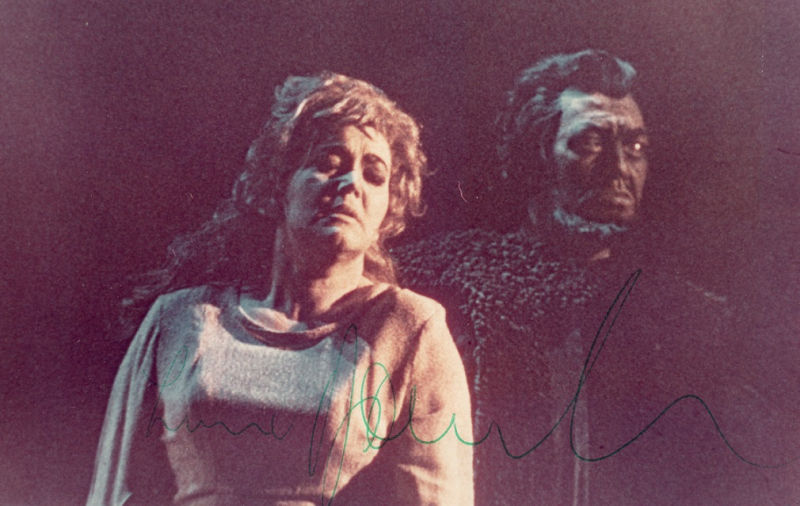
    I brought this photo of Leonie Rysanek with me for her to autograph after a performance of FRAU OHNE SCHATTEN at The Met in 1971. Why she was signing photos with a green pen I am not sure…her signature is barely legible; but she loved the photo. With her in the picture is basso David Ward, as Hunding.

    I did not see Rysanek as Sieglinde until 1988, in a matinee performance that marked the last time she sang this signature role of hers at The Met. Hildegard Behrens, to whom Rysanek later left the Lotte Lehmann Ring, was Brünnhilde. The two divas took many bows together after the performance, to the delight of the huge crowd.

    Walkure6465.01

    Among the great tenors who sang Siegmund to Rysanek’s Sieglinde was Jon Vickers (Met Opera Guild photo, above).

    In 1985, Rysanek sang Sieglinde in the first act of WALKURE as part of her 25th anniversary gala celebration at The Met; Peter Hofmann was her Siegmund that afternoon. My friend Paul Reid and I were there. Rysanek had become famous for her scream at the moment Siegmund pulls the sword from the tree; this was apparently Wieland Wagner’s idea, and it became a signature moment whenever the soprano sang Sieglinde anywhere in the world. 

    As the 1985 gala was a concert performance, with the orchestra onstage and the singers in gown and tux, there was some speculation as to whether Rysanek would include the scream. “It would break the frame of the concert,” said the woman sitting behind us. “She won’t scream.” She screamed.

    As a sampling of Rysanek in the role of Sieglinde, here she is – in fabulous voice – at Bayreuth in 1967, opposite James King:

    Leonie Rysanek – Der Männer Sippe ~ WALKURE – with James King – Böhm cond – Live @ Bayreuth 1967

  • Marta Fuchs

    39235935a63d757910b3525bd1f52d09

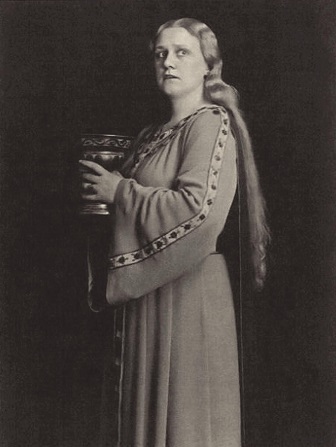
    Above: Marta Fuchs as Kundry

    Marta Fuchs began her career as a contralto in 1923; for the first five years, she sang only concerts. In 1928, at Aachen, she began singing such operatic roles as Gluck’s Orfeo, Verdi’s Azucena, and Carmen. Then, in 1930, Fuchs made the switch to dramatic soprano, though she retained parts of her old repertoire. At the Dresden Oper, she sang the world premieres of several now-forgotten operas.

    In 1931, she debuted at the Deutschen Opernhaus, Berlin, as Octavian in Der Rosenkavalier; she had a great success. From 1935, she was associated with both Dresden Oper and Berlin’s Staatsoper. Marta Fuchs became one of her generation’s foremost interpreters of the great Wagner roles. From 1933 to 1942, at Bayreuth, she was a celebrated Isolde (1938), Kundry (1933-1937), and Brünnhilde (1938-1942).

    In 1936 she appeared as a guest with the ensemble of the Dresden State Opera at the Covent Garden Opera in London as Donna Anna in Don Giovanni, as Marschallin in Rosenkavalier, and as Ariadne in Ariadne auf Naxos; and in 1938, she sang Isolde at the Théâtre des Champs-Élysées in Paris. 1942 brought successful guest appearances at the Maggio Musicale, Florence (as Leonore in Fidelio), and the Vienna State Opera, where she continued to appear until 1944.

    An ardent Christian, Fuchs steered clear of the rising tide of National Socialism. Because Adolf Hitler was an ardent lover of Wagner, he had met Fuchs. In 1936, the soprano told Hitler: “Mr Hitler, you are going to make war!” After Hitler’s protestation, she replied, “I don’t trust you.” In May 1939 Hitler greeted her asking, “Now, have I made war?” Fuchs replied, “I still don’t trust you.”

    Marta Fuchs fled the destruction of Dresden, eventually settling in Stuttgart and appearing with the opera company there. She retired from singing in 1954, and passed away some twenty years later.

    Many years ago I had heard the Fuchs voice during a time when I was exploring singers of the past. But recently, I came back to her, and am much taken with the beauty and expressiveness of her singing in Brünnhilde’s pleading of her case to Wotan from Act III of Walkure:

    Marta Fuchs – War es so schmählich ~ WALKURE

    And here is her wonderful Liebestod from Tristan und Isolde:

    Ef7c73fe9cb47a77997a845a90adf7e1

    Marta Fuchs – Liebestod ~ Tristan und Isolde

    ~ Oberon

  • Philharmonic Ensembles|Reinecke Rules!

    Reinecke-770x470

    Above: composer Carl Reinecke (1824 – 1910)

    ~ Author: Oberon

    Sunday May 27th, 2018 – The last in this season’s Philharmonic Ensembles series at Merkin Hall. These concerts, in which artists from the New York Philharmonic perform masterpieces, rarities, and contemporary works from the chamber music repertory, are always highly enjoyable. Today’s expertly-devised program introduced me to the delightful music of Carl Reinecke, and works by Vivaldi, Penderecki, and Brahms were also superbly played.

    Harpsichordist Paolo Bordignon introduced the opening work, Vivaldi’s Trio Sonata, Op.1, No. 3, in which he was joined by Duoming Ba (violin), Peter Kenote (viola) and Satoshi Okamoto (bass). Hearing this music on a gloomy day, following a distressing week, was a perfect palliative. In this four-movement work (the third being very brief), both the playing and the communication between the musicians drew us immediately into the elegant and lively world of Vivaldi, far from the madding crowds and disconcerting headlines of daily life.

    I was particularly intrigued by the beautiful instrument Mr. Okamoto was playing with such agility and charm. You can see it, and hear him playing, in this brief film.

    In a striking contrast, we next had Krzysztof Penderecki’s Duo concertante for violin and double bass, which was composed in 2010 on a commission from violinist Anne-Sophie Mutter. It was played this afternoon by Kuan Cheng Lu, violin, and Rion Wentworth, bass. The composer devised the piece as a sort of conversation between the two instruments; Ms. Mutter described it as two voices “evading each other”: while one soloist is developing a musical theme, the other falls nearly silent.

    With their expert timing, and a clear sense of enjoyment in what they were doing, the two musicians gave a performance full of vitality, precision, and wit. Among the words I jotted down along the way: agitation, brooding, mini-scherzo, jazzy bass, plodding, shimmering, almost a march, soft and high, ultra-sustained bass note, pensive violin, a dance, tapping and stamping at the end. The audience were clearly much taken with this piece, and the playing of it: loud, enthusiastic applause followed.

    The afternoon provided an opportunity to make the acquaintance of a composer new to me, Carl Reinecke. How his music has eluded me until now is inexplicable. He was a prolific composer of operas, symphonies, concertos, and chamber music, as well as a highly regarded conductor, pianist, and pedagogue. Franz Liszt hired Reinecke as piano teacher for his daughter, Cosima, who later married Richard Wagner. In 1904, at the age of 80, Reinecke made recordings of seven works playing on a piano roll; thus he was the earliest-born pianist to have his playing preserved in any format.

    Reinecke’s Trio for oboe, horn, and piano was composed in 1886. The Philharmonic’s principal oboist Liang Wang was joined by Howard Wall, horn, with Zhen Chen at the piano for today’s performance of this work, steeped in the Romantic spirit. This is music that’s terrifically appealing. 

    The piece also moved me on a personal level, for my sister played oboe and I the horn back in our youthful years in the little town. The sounds of these two instruments today, played with such tonal richness and impeccable musicality by Mssrs. Wang and Wall today, pleased me deeply.

    The composer’s cordial theme for the opening Allegro moderato must have greatly pleased the composer, for he repeats it over and over. Gorgeously played by Mr. Wang, the melody has an exotic feel. The horn joins and the music expands. A romance-tinged piano solo brings Mr. Zhen into the mix, his playing colourful and alert. A great horn theme, abundantly toneful in Mr. Wall’s ‘singing’ of it, leads to a grand passage. The voices entwine, and after a martial bit, melodies flow on with increased drama. A da capo develops a sense of urgency, which eventually subsides.

    The Scherzo, Molto vivace has charm of its own; it’s witty and bubbly, and gets a five-start rating as scherzi go. The players relished every turn of phrase, with the pianist having a lot to do. This scherzo has a sudden end; you could almost hear the audience smiling.  

    The melodic warmth of the cavatina-like Adagio brought forth a rich horn theme upon which Mr. Wall lavished the kind of tonal plushness that turned a frustrated horn player like me green with envy. And he has such prodigious reserves of breath at his command. When Mr. Wang joined, a fabulous tone-fest filled the hall. More sonic glamour from Mr. Wall in a glorious mix with the piano followed; sumptuous harmonies abounded as the movement came to its conclusion.  

    In the opening passages of the Rondo finale, Mr. Zhen had just the right feeling for what sounds like a forerunner of the piano rag. The music, full of mirth and magic, gave all three players abundant opportunity to shine, singly and as a collective. The audience response was heartfelt, as the music and playing merited. This was one of the great musical treats of the season which is now nearing its end.

    Sustaining the Romantic aura of the Reinecke, the concert concluded with the Piano Trio No. 1 of Johannes Brahms, played by Hannah Choi, violin, Patrick Jee, cello, and Steven Beck, piano. Mr. Jee spoke with great affection of this music, which clearly means so much to him. When the performance ended, he seemed in a highly emotional state – a state reflected in his rich, resonant playing. 

    The work begins pensively. After a brief piano introduction comes the marvelous cello solo theme of which Mr. Jee had spoken. His playing of it reflected what the music means to him: sheer beauty. Ms. Choi and Mr. Back prolonged the atmosphere which the cellist had established, savouring the themes and reveling in the the blendings of their voices. This long first movement, with its achingly lovely melodies and modulations, gave a great deal of pleasure.

    The Scherzo made me think of hunters on the chase; it becomes exuberant before being overtaken by an almost pastoral theme which becomes quite grand before a da capo takes us back to the hunt.

    The Adagio is like a meditative dream from which we don’t want to awaken. Woven in are luminous solo passages for each of the three instruments whilst in blended passages their tonal appeal was most affecting.

    The final Allegro is waltzy and minorish, a perfect opportunity to cease note-taking and just enjoy watching Ms. Choi and Mssrs. Jee and Beck playing their way thru this melodious music. How can we thank such artists? Only by standing and cheering.

    Emerging from the hall, the wind had kicked up – brisk and refreshing. The afterglow of this concert is strong and lasting.

    ~ Oberon

  • Wagner’s 205th

    7290---base_image_5.1424268049

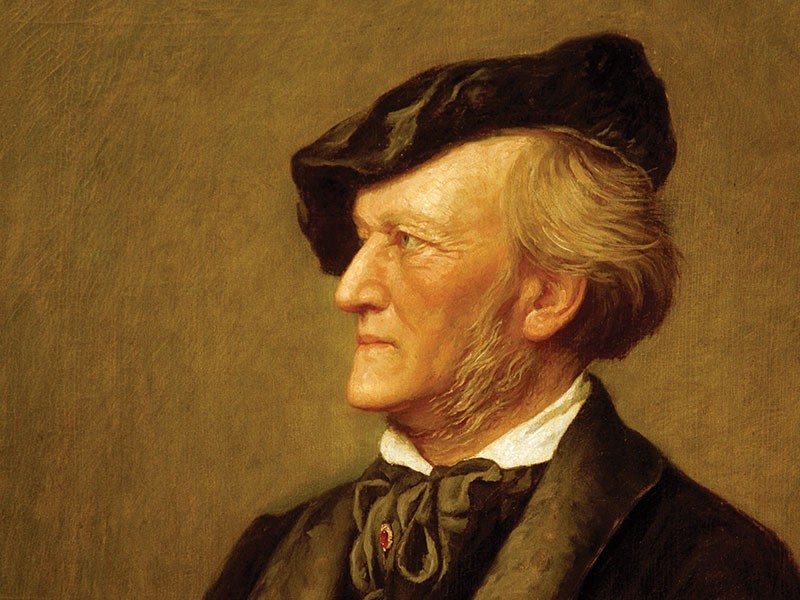
    May 22nd, 2018, marked the 205th birthday of Richard Wagner. His operas remain – for me – the most absorbing in the repertoire. 

    Here are some highlights to celebrate his unique genius:

    Anja Silja – Dich teure halle – TANNHAUSER – Cologne Radio 1968

    Bernd Weikl as Amfortas – w Jan-Hendrick Rootering – Levine cond – Met bcast 1992

    Gertrud Bindernagel sings Isolde’s Liebestod 

    Nicolai Gedda – In fernem land ~LOHENGRIN – Stockholm 1966

    Wagner led a fascinating life. It is said that more books have been written about him than any other historical figure except Jesus.

  • Wagner’s 205th

    7290---base_image_5.1424268049

    May 22nd, 2018, marked the 205th birthday of Richard Wagner. His operas remain – for me – the most absorbing in the repertoire. 

    Here are some highlights to celebrate his unique genius:

    Anja Silja – Dich teure halle – TANNHAUSER – Cologne Radio 1968

    Bernd Weikl as Amfortas – w Jan-Hendrick Rootering – Levine cond – Met bcast 1992

    Gertrud Bindernagel sings Isolde’s Liebestod 

    Nicolai Gedda – In fernem land ~LOHENGRIN – Stockholm 1966

    Wagner led a fascinating life. It is said that more books have been written about him than any other historical figure except Jesus.