Tag: Wagner

  • My First TANNHAUSER ~ 1978 @ The Met

    ONTannhauser1984

    Above: Richard Cassilly as Tannhauser and Tatiana Troyanos as Venus

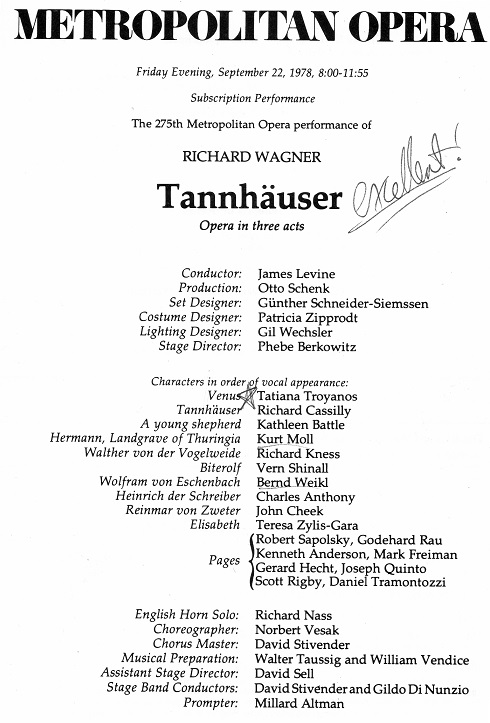
    I saw Wagner’s TANNHAUSER for the first time in 1978 in The Met’s classic Otto Schenk/Gunter Schneider-Siemssen production, conducted by James Levine. Here’s what I wrote in my opera diary the morning after:

    TANNHAUSER – first time – great!! Really a superb production (equal to the LOHENGRIN, but the opera is less exciting…) The sets, costumes, direction, and choral work were all excellent. Levine had some bombastic moments, and some places where he covered the singers, but his pacing was excellent and the orchestra played beautifully.

    Kathleen Battle was the very fine Shepherd – she sounds a bit like Reri Grist, which is a huge compliment. Vern Shinall made an exceptional impression as Biterolf, and Richard Kness (most likely the cover for the title-role) sang powerfully as Walther.

    Moll

    Kurt Moll, repeating his Met debut role as the Landgraf, brought his warm, velvety bass to the music – a great pleasure to hear his clear and steady tones, wonderfully resonant in the deep notes.

    Weikl

    Bernd Weikl as Wolfram (above) looked as handsome as he sounded. His voice is lyrical, and he projected superbly in the big hall. An outstanding performance! This was my first time hearing Weikl, and he immediately became a favorite. 

    Z-g

    As Elisabeth, Teresa Zylis-Gara (above) began with an exciting “Dich teure halle“, followed immediately by her thrilling singing in the duet with Tannhauser, wherein she conveyed subtle emotional changes convincingly. Zylis-Gara’s portrayal of the saintly woman as she searched desperately among the pilgrims for her beloved, and her subsequent downcast expression, were extremely poignant. She sang the Prayer with haunting expressiveness, and then walked slowly and sadly up the hill to her fate. It’s great to have Zylis-Gara moving into heavier German repertoire – the voice is satiny and strong; I would love to hear her as Elsa, Ariadne, Chrysothemis and, eventually, as Sieglinde.

    Richard Cassilly was a powerful, committed Tannhauser. His voice is not tonally beautiful, but he makes great use of it. The role is vocally grueling, almost sadistic in its demands. Cassilly was able to summon great reserves of sound, but he could also be subtle at need. He not only sang tirelessly, but made the character come vividly to life. His manic joy as he described the Venusberg to the stunned court, and later his crushed, agonized acting as a returning pilgrim were particularly well brought off. Cassilly’s potent rendering of the Rome Narrative, with his mocking of the Pope’s voice, was superb. He really deserved the huge ovation…bravo! 

    Tatiana Troyanos was electrifying as Venus, possibly her best role. She looked absolutely gorgeous, and her portrayal abounded in sensuous allure. Her wrath when she rejected Tannhauser was so intense, and her brief appearance in the opera’s final scene was simply spectacular. Her vocalism, which could smoulder alluringly one moment and blaze forth the next, was stunning. Troyanos was a stand-out in an outstanding cast.

    There were tumultuous ovations during the curtain calls, with the singers basking in the audience’s vociferous praise at the end of this glorious performance.”
    Tannhauser-1

    ~ Oberon

  • Sir Simon Rattle conducts RHEINGOLD – 2004

    Snapshot anna l - Copy

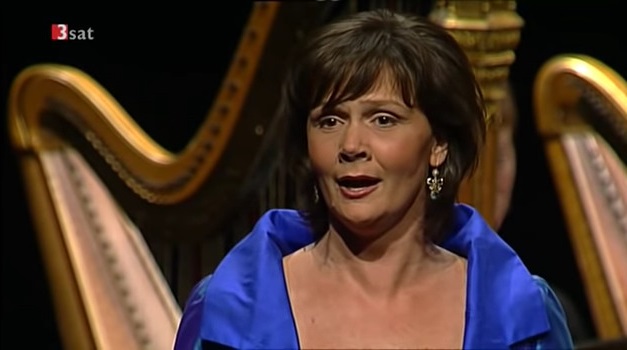
    Above: Anna Larsson (Erda) gives a wonderfully subtle interpretation in this concert performance of Wagner’s DAS RHEINGOLD at Baden-Baden, 2004. Sir Simon Rattle conducts a very impressive cast.

    Watch and listen here.

    You’ll want to block the annoying ads.

    CAST:
    Sir Willard White – Wotan
    Oleg Bryjak – Alberich
    Kim Begley – Loge
    Yvonne Naef – Fricka
    Robbin Leggate – Mime
    Geraldine McGreevy – Freia
    Anna Larsson – Erda
    James Rutherford – Donner
    Timothy Robinson – Froh
    Peter Rose – Fasolt
    Robert Lloyd – Fafner
    Kate Royal – Woglinde
    Karen England – Wellgunde
    Christine Rice – Flosshilde

    Orchestra of the Age of Enlightenment
    Sir Simon Rattle

    Baden-Baden, 2004

  • Sir Simon Rattle conducts RHEINGOLD – 2004

    Snapshot anna l - Copy

    Above: Anna Larsson (Erda) gives a wonderfully subtle interpretation in this concert performance of Wagner’s DAS RHEINGOLD at Baden-Baden, 2004. Sir Simon Rattle conducts a very impressive cast.

    Watch and listen here.

    You’ll want to block the annoying ads.

    CAST:
    Sir Willard White – Wotan
    Oleg Bryjak – Alberich
    Kim Begley – Loge
    Yvonne Naef – Fricka
    Robbin Leggate – Mime
    Geraldine McGreevy – Freia
    Anna Larsson – Erda
    James Rutherford – Donner
    Timothy Robinson – Froh
    Peter Rose – Fasolt
    Robert Lloyd – Fafner
    Kate Royal – Woglinde
    Karen England – Wellgunde
    Christine Rice – Flosshilde

    Orchestra of the Age of Enlightenment
    Sir Simon Rattle

    Baden-Baden, 2004

  • Stuttgart Cellists ~ PARSIFAL

    Snapshot celli

    Cellists from the Stuttgart Staatsorchester play music from Wagner’s PARSIFAL.

    Watch and listen here.

  • Isolation Wagner

    Snapshot prelude lohengrin

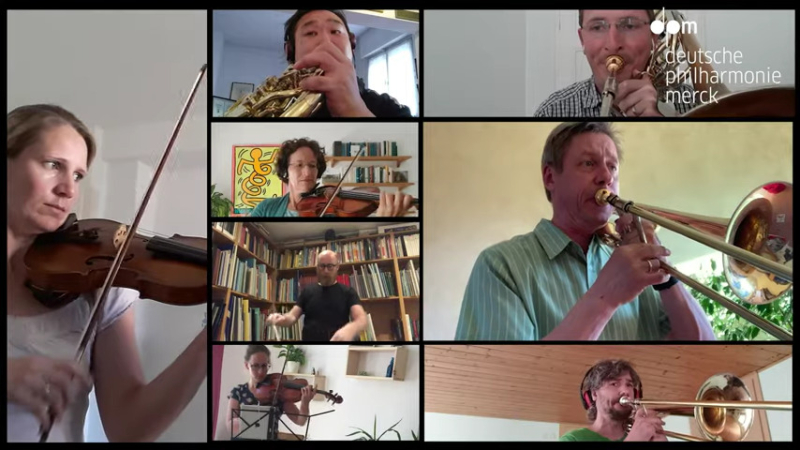
    The artists of the Deutsche Philharmonie Merck, led by Chief Conductor Ben Palmer, perform the prelude to Act III of Wagner’s LOHENGRIN in isolation.

    Watch and listen here.

  • Ticho Parly

    Parly

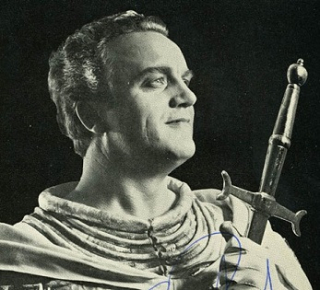
    Ticho Parly (above, as Lohengrin) would have been my first-ever Tristan if I’d been able to secure a ticket for one of his 1966 Met performances of the role, opposite Ludmila Dvořáková. But every performance at the Met in that opening season was sold out well in advance, and so it was not until 1982 that I had the unexpected pleasure of hearing this estimable helden-tenor.

    Born in Denmark, Ticho Parly went from being a treble to being a bass-baritone. It was while studying with Charles Paddock (the teacher of Anthony Laciura and Greer Grimsley) in New Orleans that Parly settled in as a tenor. He made his operatic debut with New Orleans Opera as Pong in Turandot.

    Returning to Europe, the tenor sang at Aachen, Brussels, Wuppertal, Lisbon, Kassel, Amsterdam, and Vienna. He made his Bayreuth debut in 1963 as Walther von Stoltzing in Meistersinger, and returned to the Festival to sing Siegmund and Siegfried in 1966.

    1966 was also the year of his Met debut, in the afore-mentioned Tristan und Isolde. Parly’s other Met roles were Erik in Fliegende Hollander and Aegisth in Elektra.

    Ticho Parly’s career kept him shuttling between Europe and the Americas: he sang at Covent Garden, La Scala, Paris, Covent Garden, San Francisco, Mexico City, and at the Teatro Colón. His roles included Tannhauser, Parsifal, Loge, the Drum Major in Wozzeck, Herod in Salome, the Emperor in Frau ohne Schatten, Florestan, Bacchus, and Peter Grimes. He was active thru 1988, when he sang Otello in Denmark, and passed away in 1998 in Seattle where he had been teaching.

    Here’s the story of my one opportunity to hear Ticho Parly live:

    An enterprising organization called The Wagner International Institution offered the complete Ring Cycle in concert form at Northeastern University on Boston. The operas were given on four consecutive Sunday afternoons. My friend Paul and I decided to give the Walkure a try, prompted mainly by the fact that Roger Roloff was singing Wotan. We enjoyed it thoroughly, and immediately obtained tickets for the Götterdämmerung, scheduled for two weeks later.

    Scanned Section 7-1

    Ticho Parly was not the announced Siegfried in the pre-publicity for this Ring, but on performance day, there he was onstage. He’d had a long career and I was unsure of what to expect from him, but here’s what I wrote the day after:

    “Ticho Parly was a surprise Siegfried. He sang commandingly and sustained the long, often cruelly demanding part impressively. He had ample vocal heft, and the tone is still quite pleasant; his diction so clear, and his feeling for the music so sure. His third act was especially fine: a huge and sustained high-C on “Hoi-ho!” (greeting the hunting party) and a firm rendition of his long narrative. His final apostrophe to Brünnhilde was tenderly sung, and moving. In sum: an excellent performance!”

    Mr. Parly recorded Siegfried’s farewell to Brünnhilde: here.

    Mr. Parly and Gladys Kuchta sing the final duet from Siegfried from a 1966 NY Philharmonic concert conducted by Lukas Foss. Ms. Kuchta never quite makes it up the the concluding high-C but otherwise it’s a very interesting performance. Listen here.

    ~ Oberon

  • WALKURE @ Vienna 2016

    Snapshot walkure

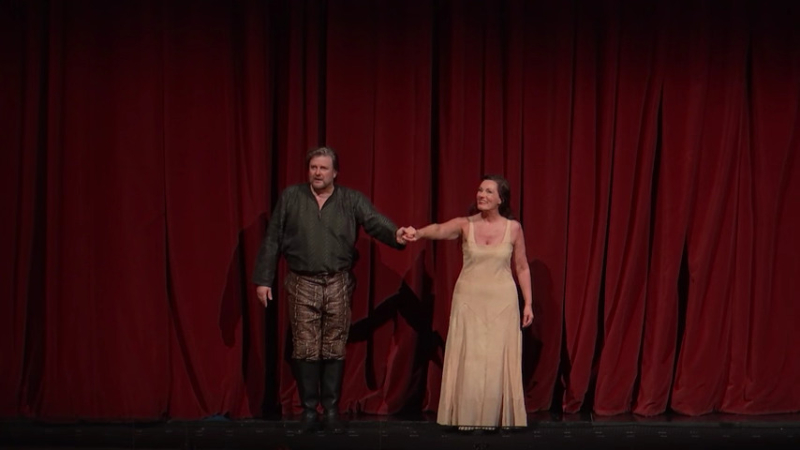
    Above: Christopher Ventris and Waltraud Meier winning a huge ovation after Act I of WALKURE

    Adam Fischer conducts a performance of Wagner’s WALKURE at the Vienna State Opera in 2016 with Linda Watson (Brunnhilde), Waltraud Meier (Sieglinde), Michaela Schuster (Fricka), Christopher Ventris (Siegmund), Tomasz Konieczny (Wotan), and Ain Anger (Hunding).

    Watch and listen here.

  • Premiere: Levine/Schenk GÖTTERDÄMMERUNG

    Scanned Section 6-1
    During these endless days of being at home, I’ve been reading thru my opera diary, a hand-written document I started in 1962 and which now fills numerous file folders. So many wonderful memories of the great performances I saw over the years were stirred up by reading about them.

    One such exciting night was the 1988 premiere of the Otto Schenk GÖTTERDÄMMERUNG, the closing opera of Wagner’s epic RING Cycle. Often referred to affectionately as “the Levine RING”, full cycles of the production in the ensuing seasons created a great international buzz; Wagnerites from all over the globe gathered in New York City to witness this classic staging.

    Having already seen the RHEINGOLD, WALKURE and SIEGFRIED, I had a pretty good idea of what to expect; still, when the Gibichung Hall loomed into view, it took my breath away. Levine was mostly magnificent, though there were moments when he let things drag a bit; his orchestra gave it their all, and the chorus sounded sensational as they gathered in lusty expectation of the double wedding.

    As to the singers, here’s what I wrote upon returning to my room at the Colonial House after the performance: 

    “Casting was strong, with pretty singing from the Rhinemaidens – Joyce Guyer (in her Met debut), Diane Kesling, and Meredith Parsons – and Franz Mazura made an astoundingly vivid Alberich, singing with oily malice. The opening scene of Act II, with Alberich pawing at the sleeping Hagen, was very atmospheric.

    The Gibichung brother and sister were rather curiously cast: as Gunther, Anthony Raffell’s voice sounded veiled and throaty, and Kathryn Harries’ beautiful (and beautifully acted) Gutrune was undone by effortful singing and a prominent vibrato. [I mentioned that Cornell MacNeil and Lucine Amara could have made for far more interesting casting in these roles!].

    The Norn Scene, which I have always loved, benefited from the super casting of Mignon Dunn as 1st Norn, sung with richly doom-ladened tone. Hanna Schwarz (2nd Norn) had a couple of husky moments, but overall sang vividly, with excellent diction. As the 3rd Norn, Marita Napier sometimes sounded a bit insecure, but she did not let down the side. These three really made something of their opening discussion. 

    Toni Kramer sang erratically but acceptably in the torturous role of Siegfried. He seemed to be husbanding his powers, doing his best singing in Act III.

    C l + h b

    Above: Christa Ludwig as Waltraute and Hildegard Behrens as Brunnhilde

    The divine Christa Ludwig made a thrilling Waltraute, singing with great clarity and verbal point. The distinctive Ludwig tone – that cherished sound – drew the audience in to her every phrase. Add to this the anguished urgency of her delivery, and the result was a veritable triumph.

    The Ludwig Waltraute produced one of my all-time favorite curtain calls: stepping before the gold curtain for her first solo bow, she was greeted by such a din of applause and shouting that she halted in her tracks; her eyes opened wide in amazement, and she broke into a huge smile. It seemed to me that she had not expected such an avalanche of affection. She bowed deeply, clearly savoring this outpouring of love from the crowd.

    Matti

    The towering magnificence of Matti Salminen as Hagen (above) produced tremendous excitement in the House. His huge voice was at peak form, effortlessly filling the hall with sinister sound. In the scene where Hagen’s father appears to him in a dream, Salminen and Franz Mazura matched one another in both power and eerily expressive subtlety: thoroughly engrossing. The basso’s portrayal as the drama of Act II unfolded was towering in its epic nastiness and in his manipulation of the situation to attain the character’s sole goal: to regain the ring. This was a performance thrilling to behold, and to hear. 

    The roar of applause for each of Salminen’s solo bows was thunderous, and I was so excited to be part of it, shouting myself hoarse.

    ~ Sample the Salminen Hagen, from a later broadcast…it gives me he chills: 

    Matti Salminen as Hagen – Met 1993

    Snapshot

    Hildegard Behrens (above) was a Brunnhilde of terrifying intensity and incredible feminine strength. This was an overwhelming interpretation, in which voice and physicality combined to transcend operatic convention, reaching me on the deepest possible level. Behrens lived the part, in no uncertain terms.

    The Dawn Duet found Behrens portraying the tamed warrior maid to perfection, savoring her domestic bliss but eager that Siegfried should go out into the world and do great deeds. Her unconventional beauty and her inhabiting of the character were so absorbing to behold. Later, In the scene with Waltraute, Behrens as Brunnhilde listened anxiously to all her sister’s words and she began to grasp the first signs of the downward spiral that would culminate with Siegfried’s betrayal and her own sacrifice. Even so, she dismissed Waltraute with fierce disdain. Behrens’ vivid depiction of Brunnhilde’s terror and helpless dejection as the false Siegfried wrested the ring from her was palpable.

    Scanned Section 1-1

    In one of the evening’s most gripping moments, Behrens – having become possessed by Brunnhilde’s plight in Act II – responded to Siegfried’s oath by snatching Hagen’s spear away him and singing her own oath with blistering abandon. Totally immersed in the character, her pain was painful to behold. In the powerful trio that ends Act II, Behrens, Raffell, and Salminen were splendid.

    Behrens GOTTER

    Above: Hildegard Behrens as Brunnhilde ~ Immolation Scene

    In the Immolation Scene, the great strength of Brunnhilde’s love for Siegfried, and her determination to perish in the flames of his funeral pyre, marked the culmination of Hildegard Behrens’ sensational performance. Her singing was powerful, with unstinting use of chest voice and flaming top notes; there were moments when expressionistic effects crept in but it all seemed so right. The amazing thing about Behrens’ singing and acting here was that it all seemed spontaneous…she seemed to be living it all in the moment. One cannot ask more of an operatic portrayal.

    The curtain calls went on and on, the audience eager to show their appreciation with volleys of bravos as the singers stepped forward time and again. Here we must also thank James Levine, whose grand design underlies the great success to date of the individual operas. Ahead, in the Spring, seeing the full cycle in a week’s time is already on my calendar. My dream will come true!” 

    ~ Oberon

  • Arlene Saunders Has Passed Away

    Eva

    Above: Arlene Saunders as Eva in DIE MEISTERSINNGER

    It’s so sad to read of the death of soprano Arlene Saunders, who I saw in four different roles over the course of her career. She died on April 17th, 2020, of complications associated with COVID-19.

    Just last Summer, I discovered a series of films made in the 1970s by the Hamburg State Opera and truly enjoyed watching Ms. Saunders as the Countess in NOZZE DI FIGARO, Agathe in FREISCHUTZ, and most especially her Eva in DIE MEISTERSINGER. The Hamburg film of the Wagner opera can in fact be watched in its entirety on YouTube here.

    It was as Eva that Arlene Saunders sang her only performances with the Metropolitan Opera, in 1976. But I had the good fortune to see her on the Met stage earlier, when the Hamburg company brought Stravinsky’s RAKE’S PROGRESS to Lincoln Center in 1967. She was an ideal Anne Trulove. 

    69137360_10216986454667603_1711224264759181312_n
    In the years to come, I saw Ms. Saunders as the Marschallin (Opera Company of Boston), as Minnie in FANCIULLA DEL WEST (New York City Opera), and as Elsa in LOHENGRIN (at The Bushnell in Hartford). As each of these vastly different characters, she seemed perfect.

    In 2007, I attended a solo recital attended by a young American tenor; during the interval, a woman came over to speak to the people seated in front of me. I was pretty sure it was Arlene Saunders, and sure enough, the couple greeted her as “Arlene…!”  I so wanted to speak to her and thank her for the wonderful performances I’d seen her give, but my innate shyness took over. I always regretted that missed opportunity…now, more than ever.

    And here’s Ms. Saunders in music from my favorite opera, ARIADNE AUF NAXOS:

    Arlene Saunders – Ariadne Monolog Part II ~ ARIADNE AUF NAXOS – Hamburg 1968

    ~ Oberon

  • Souvenirs from Cardiff ~ Part II

    6a00d8341c4e3853ef01bb09d9801f970d-800wi

    ~ Author: Oberon

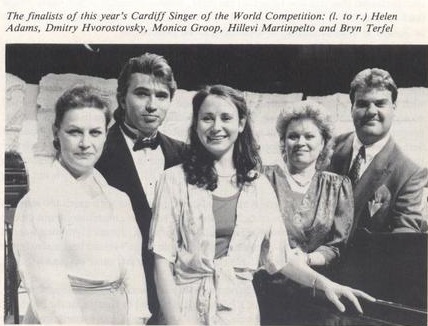
    1989 was a banner year for the Cardiff Singer of the World Competition: the “Battle of the Baritones” put the competition on every opera lover’s map. Dmitri Hvorostovsky and Bryn Terfel vied for the top prize; in the end, Dima was named Singer of the Year and Sir Bryn captured the Lieder Prize. Both men went on to hugely successful international careers.

    Of course, at the time, there was no internet to speak of. You could not instantly follow the competition from afar, and even news of it was slow to reach us from the other side of The Pond. But my wonderful friend Mollie Warren diligently taped much of the proceedings directly off the BBC; then she made copies of the cassettes to send to me. So within a couple of weeks, I was listening – in Hartford CT – to the sounds of Mssrs. Hvorostovsky and Terfel: I like to think I was one of the very first people in the Western Hemisphere to hear these voices.

    The three other finalists in the 1989 competition were Finnish mezzo-soprano Monica Groop, Swedish soprano Hillevi Martinpelto, and the Australian soprano Helen Adams. I cannot seem to find much information regarding Helen Adams in the years following her appearance at Cardiff; she is heard here in “Depuis le jour” from LOUISE.  

    Monica Groop

    Above: Monica Groop

    Monica Groop’s extensive international career in opera, concert, and song has included a memorable portrayal of Lucretia in Britten’s RAPE OF LUCRETIA in 2003 at New York City Opera; it marked the only time I saw this wonderful singer live onstage. Her other operatic roles have ranged from Melisande to Zerlina, and she has sung and recorded a great deal of Baroque music – in which she excels – as well as lieder of Schubert and Brahms, and the complete songs of Edvard Grieg.

    Some samples of Ms. Groop’s artistry, singing in Italian, French, and German:

    Monica Groop – Stà nell’Ircana ~ ALCINA

    Monica Groop – D’amour l’ardente flamme ~ DAMNATION DE FAUST

    Monica Groop sings Schubert’s Du bist die Ruh

    Monica Groop at Cardiff, 1989:

    Monica Groop – Cardiff 1989 – CLEMENZA~WERTHER

    Hillevi Martinpelto went on from Cardiff to a very successful career, performing and recording with prominent orchestras and conductors.

    Here she is singing Weber…

    Hillevi Martinpelto – Ocean! Thou mighty monster ~ OBERON

    …and in a true rarity:

    Hillevi Martinpelto – from Karl-Magnus Fredriksson’s The Disguised God ~ Soprano & Chorus

    Here is Hillevi Martinpelto at Cardiff, 1989:

    Hillevi Martinpelto – FORZA aria – Cardiff 1989

    And finally, the winners:

    Dmitri-Hvorostovsky

    …Dima… 

    Dmitri Hvorostovsky – BALLO aria – Cardiff 1989

    Hqdefault

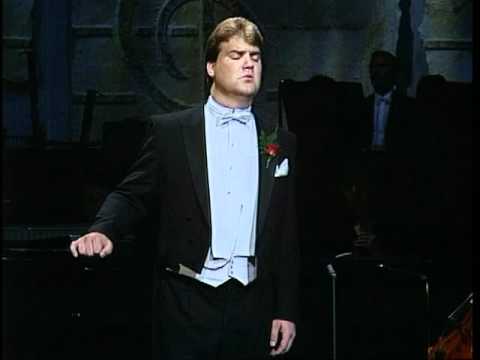
    …and Bryn…my original cassette of Bryn from the competition would not play, but here he is, onstage, singing Schumann…

    …and here’s a bit of Wagner, from a commercial recording:

    Bryn Terfel – Song to the Evening Star – TANNHAUSER

    ~ Oberon