Tag: Washington DC

  • Table of Silence ~ 2019

    L2010773

    Wednesday September 11th, 2019 – Today marked the annual Lincoln Center performance of Jacqulyn Buglisi’s Table of Silence, a danced ritual commemorating the 9/11 terrorist attacks on New York City and Washington DC. This year, it took on an even deeper resonance as a plea for reason and compassion in our dark and dangerous world.

    As each day seems to bring ever more unsettling headlines, I am constantly put in mind of the words sung by the desperate wife and mother Magda Sorel in Gian-Carlo Menotti’s opera The Consul:

    “To this we’ve come:
    that men withhold the world from men.
    No ship nor shore for him who drowns at sea.
    No home nor grave for him who dies on land.
    To this we’ve come:
    that man be born a stranger upon God’s earth,
    that he be chosen without a chance for choice,
    that he be hunted without the hope of refuge.
    To this we’ve come. And you, you too, shall weep.”

    Table of Silence shines like a beacon of hope; each year, it seems more beautiful…and more meaningful. 

    ~ Oberon

    Note: some photos here.

  • Raina Kabaivanska as Amelia Grimaldi

    Kabaivanska

    Above: soprano Raina Kabaivanska

    Teatro All Scala gave a two-week season at The Kennedy Center in Washington DC in September 1976, a highlight of the Center’s Bicentennial Celebration. The performances marked La Scala’s first appearance in the United States with an exclusive engagement at the Opera House. The repertory: Verdi’s Macbeth, starring mezzo-soprano Shirley Verrett, La Bohème, La Cenerentola, and Simon Boccanegra.

    By chance, I happened to catch a broadcast of the Boccanegra and recorded a bit of it, despite some radio interference from a late summer storm. Raina Kabaivanska sang Amelia, Piero Cappuccilli was Simon Boccanegra, and Claudio Abbado conducted.

    Here is the beautiful ‘recognition’ duet, where Simon is re-united with his long-lost daughter:

    BOCCANEGRA duet – Kabaivanska & Cappuccilli – Scala at Washington DC – 1976

  • Natalia Troitskaya as Adriana Lecouvreur

    00323174

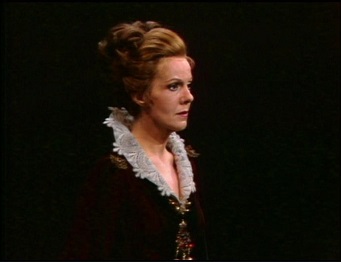
    Natalia Troitskaya, born in Belgrade of Russian descent, had a major career as a lirico-spinto soprano during the 1980s. She sang at many major European houses, having a long association with both the Vienna State Opera and the Staatsoper Hamburg. She sang in South America, and in the USA at Washington DC and Los Angeles.

    Troitskaya seemed to vanish from the operatic world around 1991; later, I learned that she had passed away in 2006 at the age of 55 following a long illness. She left hardly any commercial recordings, but there are some live performances that were preserved from broadcasts.

    Natalia Troitskaya – ADRIANA LECOUVREUR – Adriana’s entrance – Barbican~London 1987

  • Robin Becker’s INTO SUNLIGHT

    War-memorial dc

    Above: the Vietnam War Memorial in Washington DC

    Friday October 25th, 2013 – My association with Robin Becker’s dancework INTO SUNLIGHT, set during the Vietnam War era, stretches back to November 2010 when my dancer/friend Paul (Oisin) Monaghan suggested that Kokyat and I drop in to one of Robin’s rehearsals. I was immediately drawn to Robin’s movement style and to the theme of the work.

    Inspired by Pulitzer prize-winning author David Maraniss’s book THEY MARCHED INTO SUNLIGHT,
    Robin Becker has crafted an hour-long dancework with a musical score by Chris
    Lastovicka. While the events depicted –
    the ambush of a batallion of American soldiers in the Vietnam jungle and
    the protest against Dow Chemical at the University of Wisconsin – took
    place on two consecutive days in October of 1967, INTO SUNLIGHT
    resonates far beyond those specific incidents, and will continue to
    resonate as long as mankind resorts to warfare as a way of settling
    religious and idelogical differences – differences which will never be settled anyway.

    INTO SUNLIGHT was shown in June 2011 at the 92nd Street Y; now it has come to
    the Florence Gould Theater. For the most part, the leading dancers have
    retained their roles from the original cast: Nicole Sclafani, Yoko Sagimoto-Ikezawa, Lisa Clementi, Oisin Monaghan, Chazz Fenner-McBride and Edwardo Brito.  Sarah Parker is new to the Company and makes a beautiful impression.

    Over the two years since I saw this dancework, the original dancers have matured: in physique, technique and stagecraft, they now give the work more nuance and complexity while maintaining their individual appeal as personalities. This developmental process has given INTO SUNLIGHT a more polished and compelling look, without sacrificing freshness. The Company are supplemented by an ensemble of nine young dancers who bring their own faces and forms into play.

    Among the most vivid moments of INTO SUNLIGHT are
    two duets: in one, Nicole Sclafani and Paul Monaghan depict the dream a
    young woman had of her brother’s horrific death from a massive abdominal
    wound – a dream which came true. Later – in the work’s most poignant passage – Yoko Sugimoto-Ikezawa visits
    the grave of her beloved (the ensemble dancer Ricky Wenthen) where she seeks to
    connect with his spirit.

    There is also an animated trio for three soldiers – Oisin Monaghan, Chazz
    Fenner-McBride and Edwardo Brito – recalling the innocent rough-housing of their younger days while dealing with the realities of serving in a war in a far-away land and watching their buddies being killed or maimed. Chazz also has a physically demanding solo depicting the moment that West Point football hero Don
    Holleder rushed heedlessly onto the battleground towards his vanquished
    comrades only to be gunned down. The three boys are distinctive stage personalities: Oisin, pale and enigmatic; Edwardo with his easy moves, handsome torso and expressive face; and Chazz, who has lost his puppy-dog boyishness and is now a muscularized young man, moving with compelling energy.

    The work shifts between solemn rites and more animated emsemble passages; only near the end does the balance go off somewhat: the final two movements are perfomed mostly in slow-motion, the dancers re-arranging themselves in structures which then dissolve and re-form. As lovely as this is to watch, after a while it can’t sustain us visually and our focus begins to falter. Some compression here would make for a more powerful experience as the work moves to its pensive conclusion.

    But despite this concern, INTO SUNLIGHT is beautifully performed: it’s a dancework that is thought-provoking and meaningful, even as civilization continues to blunder thru war after war. I congratulate Robin Becker, Chris Lastovicka, and everyone involved in bringing this work to the stage.

  • Beijing Dance Company @ Alice Tully Hall

    BDC 3 Warriors photo

    Friday November 25, 2011 – Beijing Dance Company are on a US tour this month; having danced in Boston, Pittsburg, and Washington DC they are at Alice Tully Hall for a four-performance run. There’s been something of a Chinese invasion here of late: Cloud Gate and Beijing Dance Theater have recently been at BAM, and the National Acrobats of the People’s Republic of China put on a vastly entertaining single show at Brooklyn College last month. The trend continues in January with performances of THE PEONY PAVILION by the China Jinling Dance Company at Lincoln Center. Information here.

    The works presented tonight by Beijing Dance Company were inspired by Chinese folklore and myth, dating back hundreds of years BC. Of the ten danceworks presented, most had a sentimental feeling underscored by the traditional-sounding music. Only in the final Yellow River could one sense a slight break with tradition. As one colorful work followed another, the excellence of the dancers and their commitment to dance was strongly evident.

    References to iconic cultural elements abound: calligraphy, bamboo, the crane, the butterfly, flying fairies, the terra-cotta warriors, Bhuddist rituals. Costumes were rich in detail though sometimes a bit garish while a series of projections which set the tone of each piece might have been even more effective if the colours had been more subdued. 

    My favorite work of the evening was Free and Unfettered Spirits in which the men of the Company seemed at one with nature; wearing mossy-green full-sleeved costumes the brotherhood danced their rites in an outdoor setting. Earlier, in her solo Flying Fairy, dancer Zhao Qiao manipulated the super-long sleeves of her dress in mesmerizing swirls and flourishes. The most powerful and exciting dance came from the four men who appeared as warriors (top photo) in Emperor Qin’s Soldiers; their fusion of kung fu, acrobatics and ballet elicited a loud ovation.

    Perhaps the best-known work on the programme was The Butterfly Lovers, a Romeo and Juliet tale of forbidden love. Very well-danced, this work at times veered into the realms of cloying sentimentality; it is a little too long and the choreography sometimes seemed thinly stretched over the music. Nevertheless, the dancing was excellent.

    The audience for the most part were attentive and enthusiastic – except, of course, the young boy sitting near us who squirmed and muttered throughout the first half without any admonishment from his mother. Most dance programmes are not for kids, especially one like this which is somewhat stately in its pacing and musical presentation.