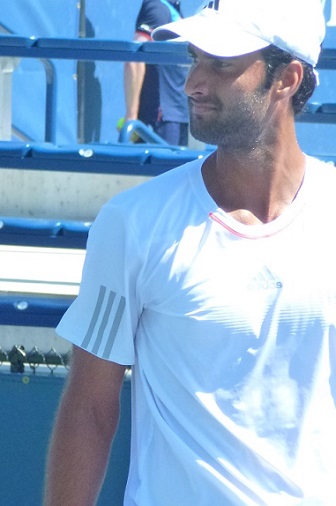
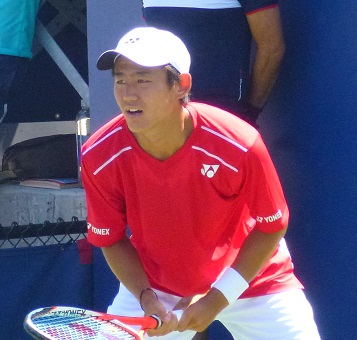
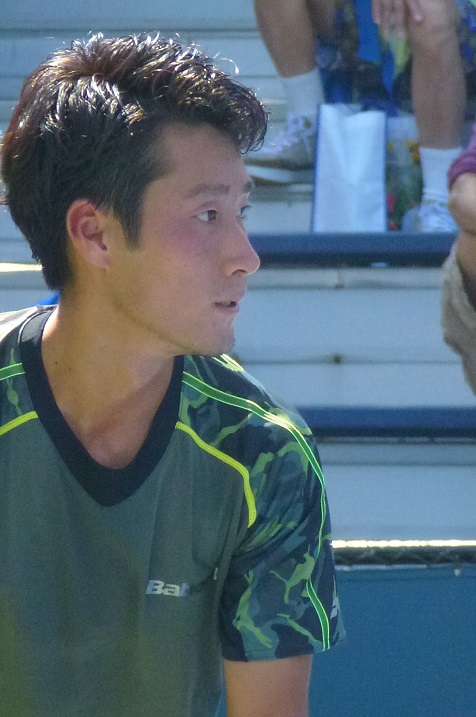
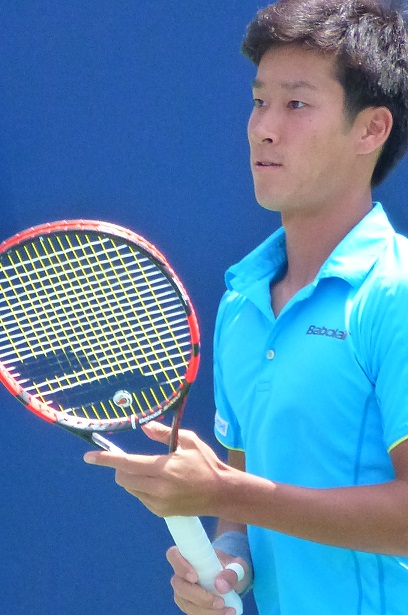
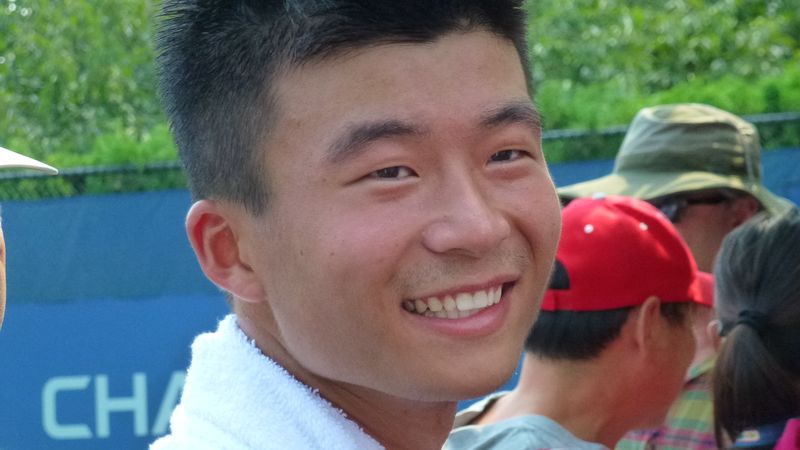
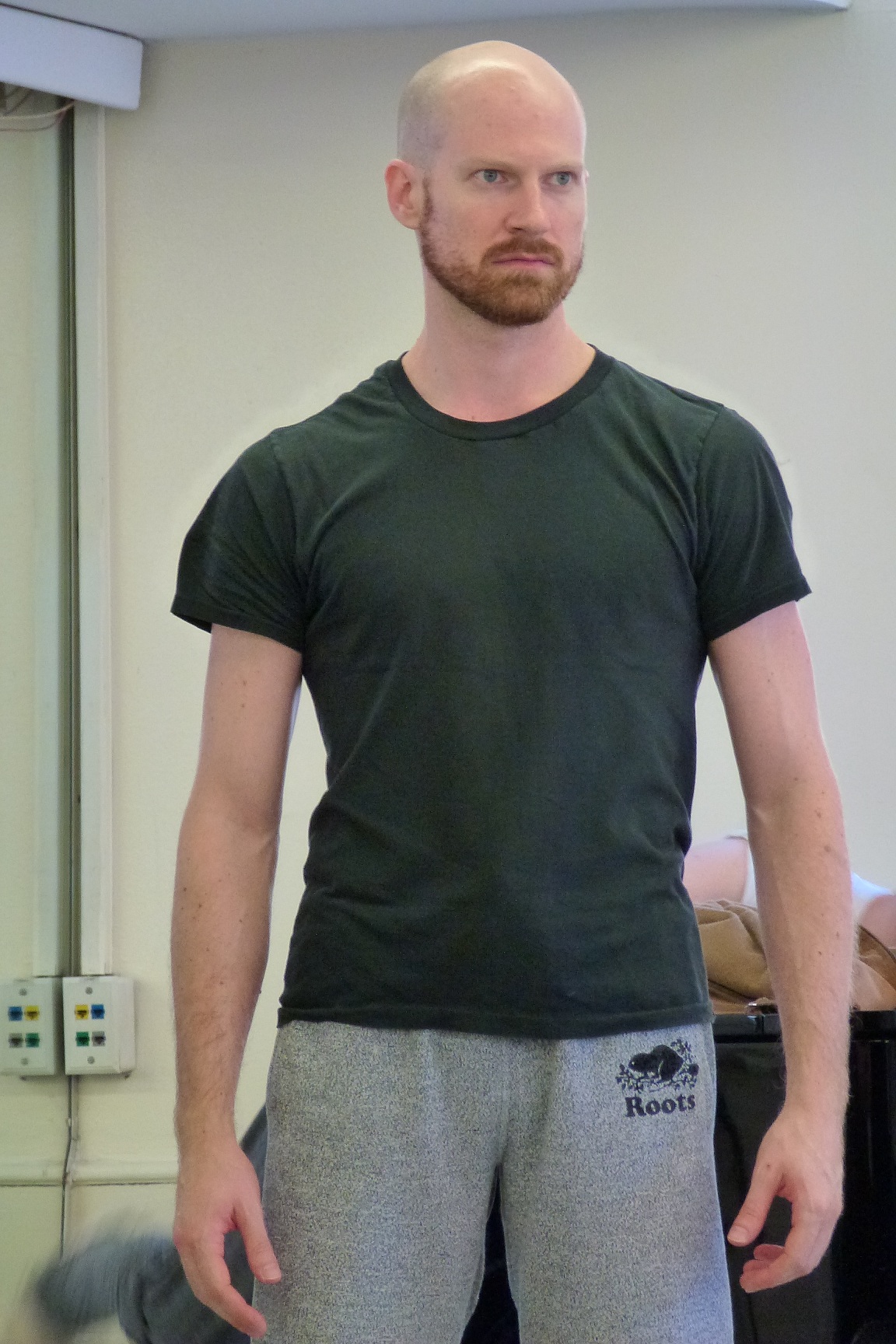
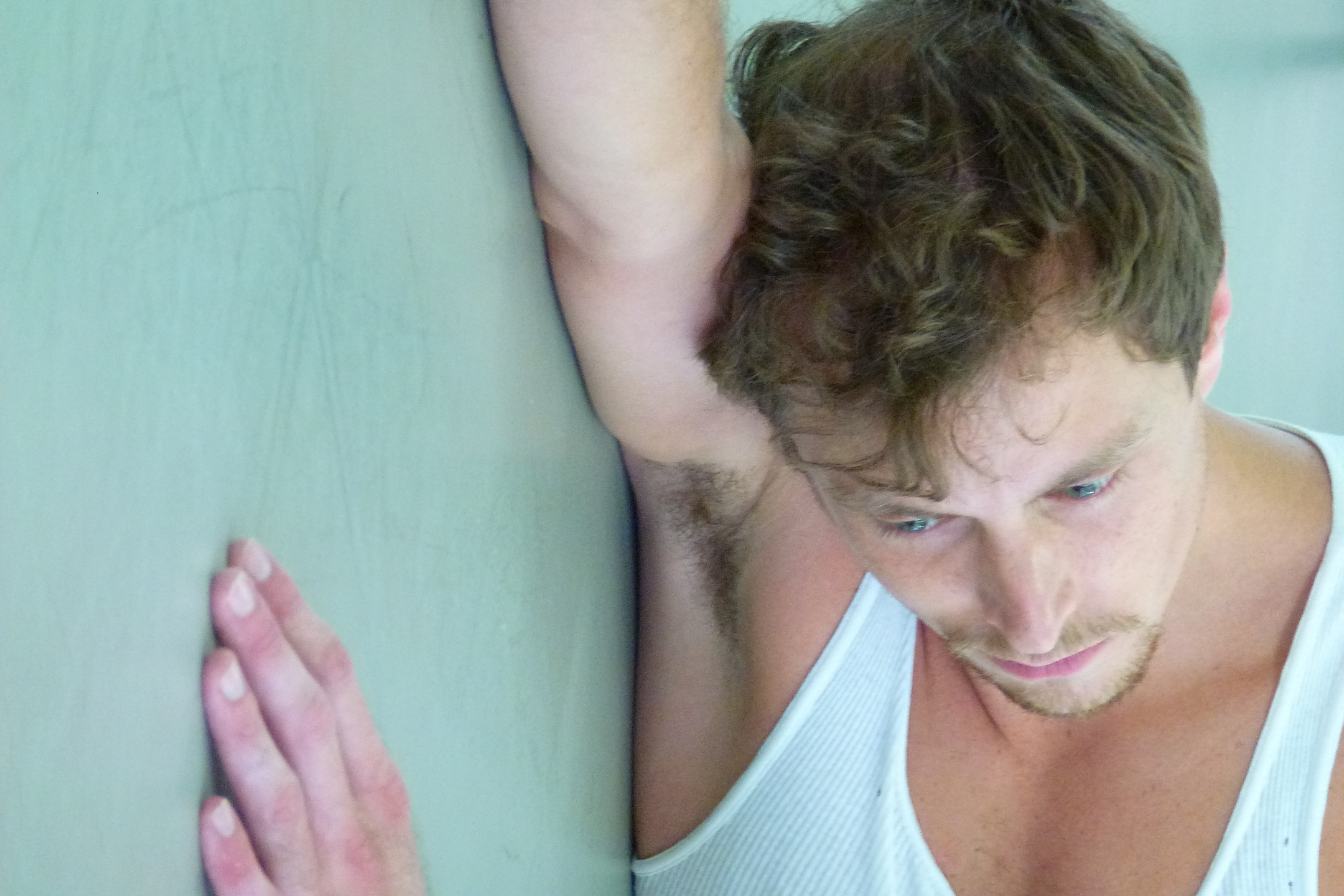
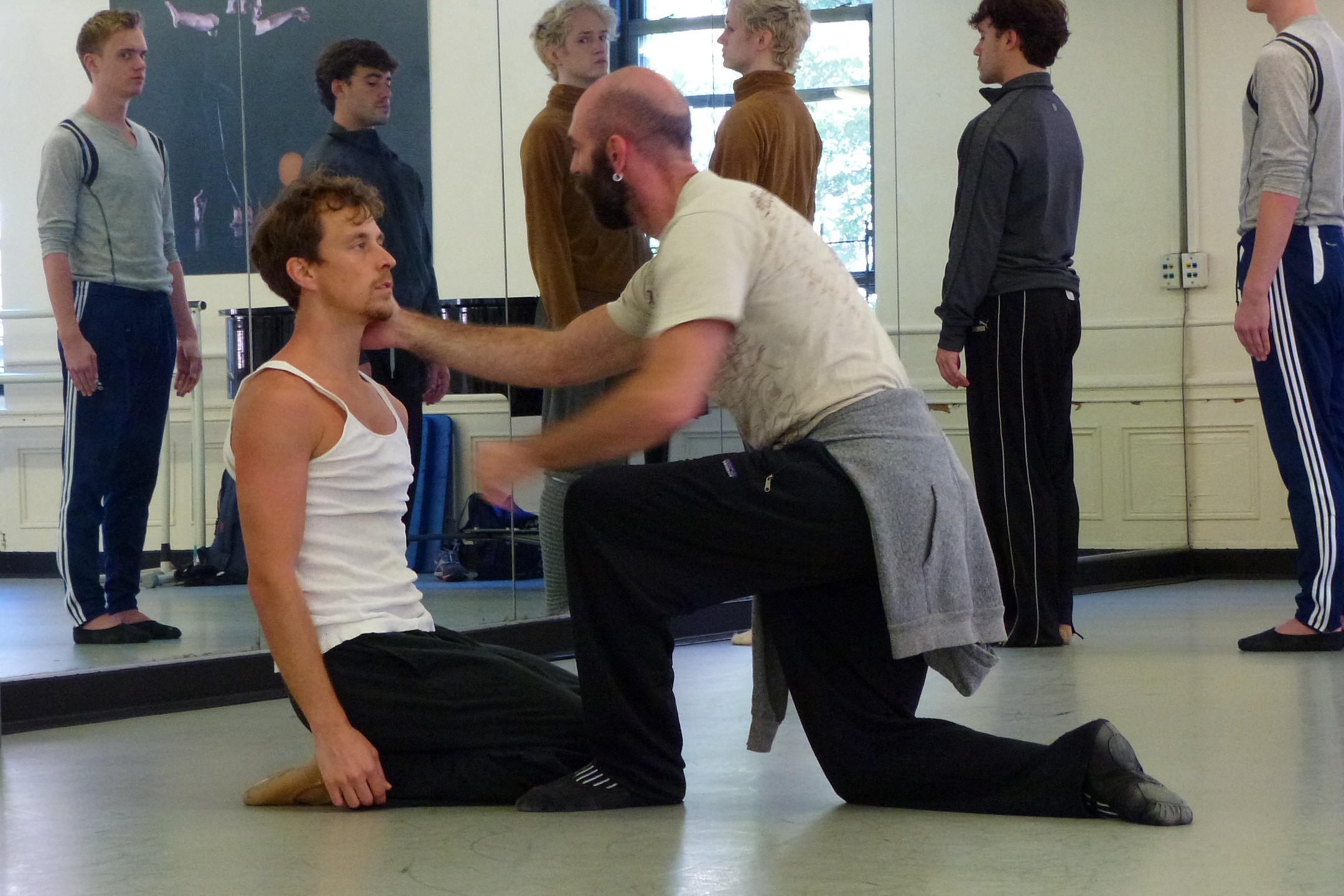
Tag: Wednesday August

  • Gerstein|Langrée @ Mostly Mozart

    KirillGerstein045

    Author: Oberon

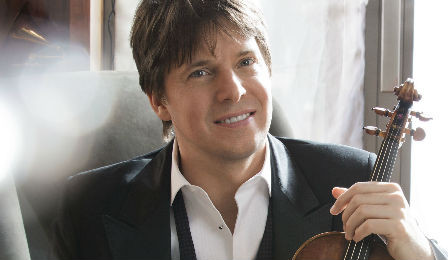
    Wednesday August 16th, 1017 – How doubly grateful I felt when I saw that Kirill Gerstein (above, in a Marco Borggreve portrait) would be playing the Schumann Piano Concerto at tonight’s Mostly Mozart concert; grateful first of all because I greatly admire Mr. Gerstein as an artist, and grateful yet again for the opportunity to finally hear this concerto played live. It seems that it is not programmed all that often these days.

    It’s rather unusual to find an extended solo piano work included on an orchestral program, but Mr. Gerstein’s rendering of Brahms’ Variations on a Theme by Robert Schumann was a wonderful prelude to his performance of the Schumann concerto…or rather, it would have been, had not audience distractions nearly ruined it. The pianist’s lyric warmth and a beautiful modulations of dynamic were truly congenial, but he had no sooner commenced to play than a loud thudding noise spoiled the music: someone among the stage audience had dropped something – something heavy.

    Mr. Gerstein soldiered on, but as the variations continued a plague of coughing swept thru Geffen Hall. Hardly a bar of music went by without a cough, snort, clearing of throat, or other upper-respiratory distraction. After a while it became comical; I gave up thinking I could derive any real enjoyment from Gerstein’s playing, and I have to congratulate him for maintaining his focus: there’s no way he could have been unaware of these annoyances. Before the piece was over, something else had been dropped, and a cellphone went off. As the pianist took his bows, my friend Dmitry and I rolled our eyes; but we were determined that our evening would not be spoilt.

    The Mostly Mozart Festival Orchestra players then took their seats, and Mr. Gerstein returned with Maestro Louis Langrée for the Schumann concerto. I became intrigued with this with this work years ago thru the film Madame Sousatzka, and have waited literally decades to hear it played live. I once asked a pianist/friend why it is not performed more often, and he replied: “It’s too easy.” It may be ‘easy’ to play, but it pleases audiences and was tonight given a top-notch performance by Gerstein, Langrée, and Company.

    The first movement opens with a dramatic outburst from the soloist, followed by a simple, expressive melody played by the woodwinds; this theme will re-appear in various guises in the first and last movements.  The second movement is referred to as an Intermezzo, and it is perhaps here that the real reason pianists choose other concertos over Schumann to display their artistry is to be found: without a real adagio or andante, expressive possibilities might be considered limited. For all that, Mr. Gerstein found much to be savoured here, and his playing was clear and shining. The final movement is full of vitality and sweeps us along in its dancing rhythms, with enjoyable references back to the concerto’s opening movement.

    The Mostly Mozart woodwind players relished their opportunities here: Jon Manasse’s dulcet clarinet was a sheer balm to the ear, and Dwight Parry is a remarkable oboist. Their highlights, and the beautiful flow of Gerstein’s playing of the piano part – which includes a passage of shimmering light over delicate accompaniment – were simply the outstanding moments in a superb performance.

    For an encore, Mr. Gerstein chose an arrangement of the Romanze: Andante non troppo, con grazia from Clara Schumann’s piano concerto, opus 7, composed when Fräulein Wieck was only 13 years old. Robert Schumann later devised a setting of the Romanze for piano and cello, with just a touch of timpani at the end. It was this musical love letter we heard tonight, ravishingly played by Mr. Gerstein and Mostly Mozart’s principal cellist Ilya Finkelshteyn. Markus Rhoten’s gentle sounding of the timpani had the magical effect of a heartbeat: the heartbeat of Clara’s love for her Robert. The overall effect of this encore was truly touching.
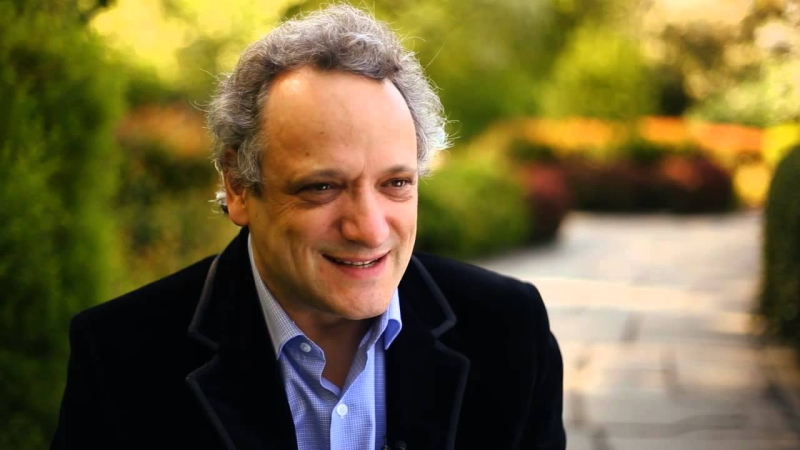
    Maxresdefault

    The evening concluded with Maestro Langrée (above) conducting the Brahms 1st Symphony. The composer declared that this symphony, from sketches to finishing touches, took 21 years – from 1855 to 1876 – to complete.

    Tonight’s performance was rich-textured and lovingly paced, giving its 40-minute span a Beethovian air. The inner movements were particularly pleasing: the tender Andante sostenuto and the charming Allegretto. Throughout, the Mostly Mozart wind soloists gave ample pleasure – Jasmine Choi’s flute playing is priceless in it’s clarity and sheen. The symphony swept by, an affirmation of faith in the enduring power of great music as the world around us darkens.

    ~ Oberon

  • US Open Qualifiers 2016

    L1760385

    Above: US Open ball-boys waiting for the first match of the day

    Wednesday August 24th, 2016 – Last summer, I only made it out to the US Tennis Center for two days of the 2015 US Open Qualifying Tournament. This year, I was hoping to make it three days, but looking at the schedule for Tuesday it seemed that none of the players I am most interested in seeing were going to play til Wednesday, so I decided to skip the opener (despite perfect weather) and head out to Queens for day 2.

    After a sluggish ride on the #7 train, I got to the Center with time to do a walkabout before my first match. Major changes have been made: the new Grandstand is ready for use, walkways have been widened, and the addition of more restrooms and drinking fountains will be a boon when the crowds pour in for the main tournament next week.

    L1760341

    I couldn’t have asked for a more enjoyable day of tennis than what today offered. Mercifully, there’s been a lull in the recent heatwave, though temperatures will soon start creeping upwards again; hopefully last year’s catastrophic Hell-like conditions at the Open won’t be repeated. Honestly, I don’t know how the players do it: especially on certain courts, the sun is utterly merciless and there is no place to hide from it.

    L1760407

    My day started with checking out a new (to me) player: China’s Yan Bai (above). He was facing the American Noah Rubin, who was a huge favorite with the very large crowd that had gathered for this qualifying match. Yan Bai seemed out-of-sorts, and after watching him lose three games in a row, I wandered over to have a look at his compatriot Ying-Ying Duan. I later learned that Yan Bai retired from his match, leaving Rubin to proceed into the second round.

    L1760414

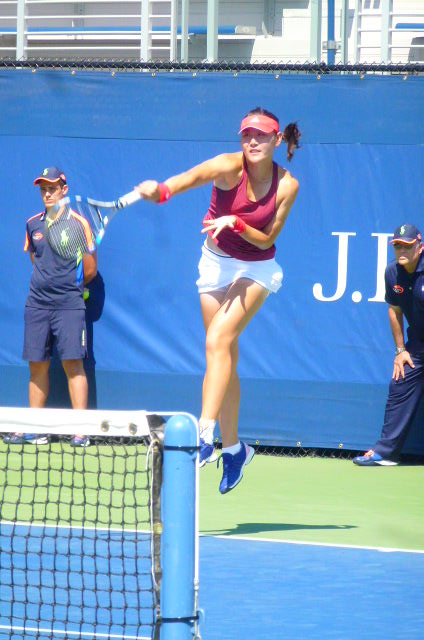
    Things were rosier for Ying-Ying Duan (above). After losing a tight first set to the Tunisian Ons Jabeur, the Chinese woman’s athleticism and power prevailed: she dominated in the two remaining sets.

    I then went out to the far courts to have a look at the new Grandstand; while there, I could hear the sound of some really big hitting coming from court 4, so I went to see who was playing, and found a really exciting match in progress.

    L1760423

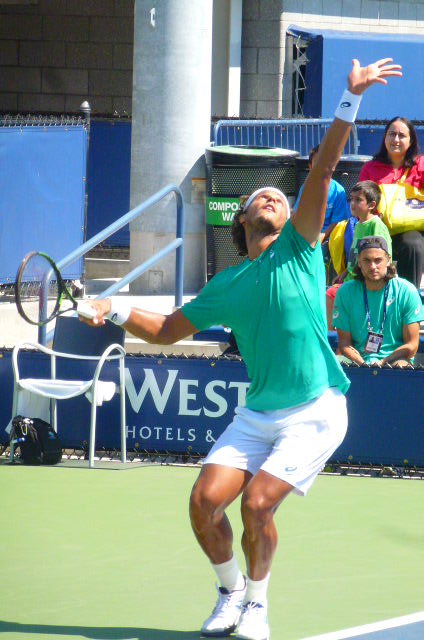
    The players were João Souza (Brazil), above…

    L1760429

    …and Andrew Whittington (Australia), above.

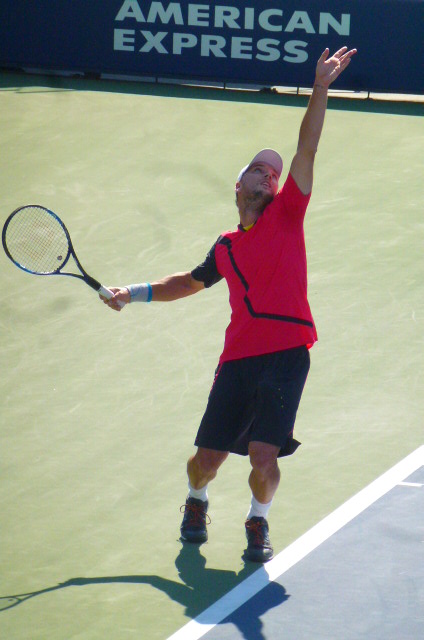
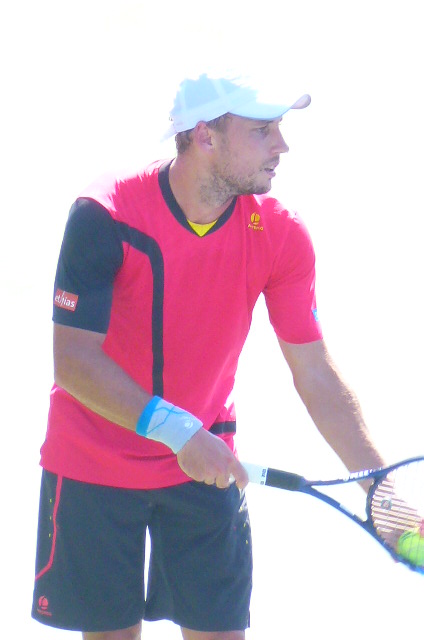
    Whittington has a cracking serve which Souza was pretty much able to reply to: they pounded away on point after point. The Aussie’s tendency to over-hit allowed the Brazilian to take the upper hand; if Whittington can develop the accuracy to match his power, he will be a force to be reckoned with. 

    L1760438

    Souza reveled in his return-of-serve ability; his own serve (above) has an almost operatic quality: a slow build-up leading to a walloping bang! The final score of 6-4, 6-4 doesn’t quite reflect the threat Whittington posed, but Souza carried the day. It was a hard-fought match, and the forceful, charismatic Brazilian enjoyed vociferous support from his fans.

    L1760446

    Above: João Souza takes a celebratory selfie with fans after the match.

    The rest of my day was vastly pleasing, as three of my favorite players notched up straight-set victories over combative opponents.

    L1760451

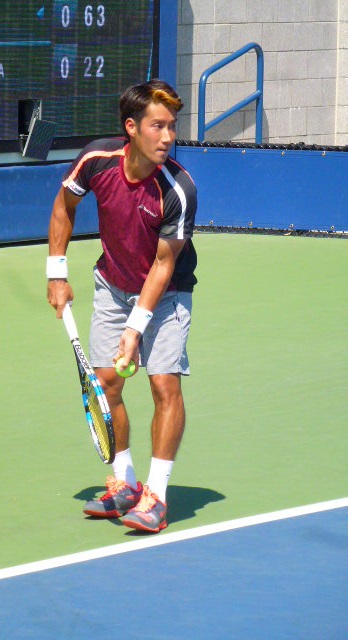
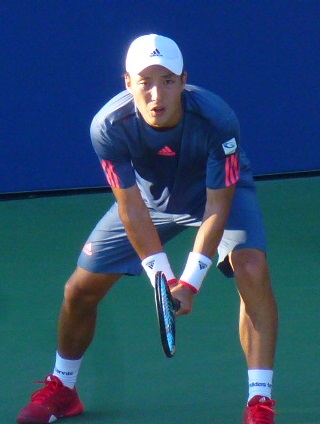
    Japan’s Yuichi Sugita (above) was the #1 seed among the qualifiers this year, and in his spirited match against the Frenchman Alexandre Sidorenko, the handsome Japanese displayed the wonderfully neat and crafty aspects of his game that make him a formidable opponent.

    L1760465

    Sugita is a stylish player who likes to maintain cool control over his matches. That he can also dig deep and show a ferocious willpower was displayed in the sixth game of the first set where Sugita came from being 0-40 down on his serve to win the game in a series of impressively-constructed points. I truly enjoyed watching him play.

    L1760488

    Above: Steve Darcis

    I made it over to Court 17 (“The Oven”) just in time for the start of the Steve Darcis match. Steve is a Belgian player who I have admired since first seeing him play at the 2007 US Open Qualifiers. In the ensuing years, his career has been something of a roller-coaster: once ranked as high as #44 worldwide, he seems to have been hampered by injuries which have kept him from attaining the position in the tennis world one might expect from him, given his skills. When he’s on, he is ON…he plays textbook, winning  tennis, and he’s a joy to watch.

    L1760484

    And that is exactly what we saw today: Steve Darcis methodically dismantled the game of American Tommy Paul, a bigger and stronger player. Undeterred by the blistering mid-day heat, the Belgian found his rhythm immediately and played some gorgeous points: his shot placement is just so much fun, and he can vary the pace by sumptuously floating the ball over the net, achieving enviable depth and control.L1760497

    The crowd was very pro-Paul; Steve barely got a hand-clap when his name was announced. A bit later, a group of enthusiastic Darcis supporters arrived at the court, supporting him with shouts of “Allez! Allez, Steve!” Darcis marched to victory as if it was pre-destined. I was able to catch up with him on his walk back to the clubhouse; literally drowning in sweat, he thanked me for my congratulations. 

    L1760591

    After the exhilaration of the Darcis win, I wanted the best possible finish to my wonderful day of tennis, and it was Japan’s Go Soeda (above) who gave me just what I was looking for. The day had turned sublime: a breeze had kicked up, shadows fell atmospherically across the courts, most of the children had been taken home, and a crowd of serious tennis-lovers ringed Court 6 for Go’s match against the Roumanian Marius Copil.

    L1760559

    Go Soeda would probably be considered a veteran player at this point, yet his still-boyish looks, taut physique, and bursts of energetic bravado remain intact; I’ve seen him play so many times, but never better than today. Copil was a strong opponent – and who knew there were so many Roumanian fans in Gotham? – who took Go to a tie-breaker in the first set. The second set was pretty much dominated by the Japanese, and I sat in the high bleachers savoring the beautiful evening and the brilliance of Go’s playing.

    L1760610

    Above: Go Soeda

    Overall, this was one of my happiest US Open experiences since I started going in 1998. The drawbacks were relatively minor, though annoying: cellphones, babbling bystanders who indulge in lengthy court-side conversations with friends while ignoring the match at hand, and – this year more than ever – huge number of babies being carried about by earnest moms. I wonder if it’s a good idea to bring tiny children out on such torrid days, a-glare with inescapable sunshine.

    I also wondered if the linesmen should be required to take an eye exam each year: there were so many bad calls along the way.

    My plan to return for the Thursday session was abandoned after I realized how sunburnt I had gotten on Wednesday. Hopefully some of my Wednesday heroes will continue to move onward.

  • Joshua Bell @ Mostly Mozart

    Joshua-Bell

    Above: violinist Joshua Bell

    Wednesday August 17th, 2016 – Geffen Hall was packed to the rafters for Mostly Mozart tonight: all the stage seats were taken, and there was a line for ticket returns: could it have had something to do with Joshua Bell being the scheduled soloist?  Mr. Bell certainly impressed in his performance of Mozart’s 4th violin concerto, and the program overall was highly enjoyable.

    Any hearing of Felix Mendelssohn’s overture to A Midsummer Night’s Dream is bound to summon up visions of Balanchine’s enchanted forest – it’s quite amazing, in fact, when you think of the amount of narrative and dancing Mr. B was able to fit into this 12-minute overture, without ever for a moment seeming over-busy. The Mostly Mozart Orchestra coped well with the brisk tempi set by the youthful-looking conductor, Matthew Halls, and it was so much sheer fun to hear these familiar themes played live again. I must mention Jon Manasse’s lovingly-phrased clarinet solo.

    Joshua Bell then appeared to a warm greeting from the crowd. In this rendering of the Mozart violin concerto #4 in D-major, the violinist and the conductor formed a steady rapport. Unobtrusively using a score, Mr. Bell launched the solo line in the stratosphere and went on to play the Allegro vivace‘s capricious music with easy aplomb. There’s a lot of high-velocity coloratura in play here, and it culminates with a florid, witty cadenza of Mr. Bell’s own design.

    On a high, sweetly sustained note, Mr. Bell lures us into the Andante cantabile; the melody eventually dips into a lower range where his playing a balm to the ear. An elegant ‘interlude’ has a different sort of appeal; then the main theme recurs, before the violinist ascends to another high-lying cadenza. 

    After an elegant start, the Rondeau turns sprightly – a delicate mini-cadenza teases us and then there’s another more extended cadenza. The soloist joins the massed violins in a sort of chorale, and Mr. Bell continues to seize opportunities for yet two more cadenzas, the first having an ironic buzzing quality.

    As ever, Mr. Bell’s physically engaged playing is as enjoyable to watch as to hear. The random smudged note here or there was nothing to deter from the ongoing sweep of his music-making, and though I agreed with my companion that the cadenzas sometimes seemed rather too ‘modern’, they gave the performance an individuality that was refreshing in its own right.

    Beethoven’s overture to Coriolan, Op. 62, was the composer’s first opportunity to write for the stage, and his success has kept the overture in the repertory. Originally conceived as a prelude to the play of the same title by the composer’s friend Heinrich Joseph von Collin – a theatrical success in Vienna in 1802 – the overture didn’t appear until 1807, when the play’s popularity had waned. It seems that only one performance of the play with Beethoven’s overture took place: on April 17th, 1807. After that, the eight-minute overture went on to thrive as a concert number.

    This evening’s performance was finely-wrought by Maestro Halls, and most attractively played. The contrasting themes of anger and tenderness express the theme of the play: the betrayal of his duty as a Roman general by Coriolanus, and his mother’s entreaties to abandon his plan to lead the enemy forces in an attack on Rome. Her pleading is effective: Coriolanus abandons his scheme and faces his punishment.

    A warm and appealing performance of Beethoven’s “little” symphony – the 8th – concluded the evening on an optimistic note. The last time I heard this symphony performed live was in December 2013 when the Spanish conductor Rafael Frühbeck de Burgos, then in his 80th year, led the New York Philharmonic in the work and left my friend Dmitry and I with wonderful memories of the highly-respected Maestro, who passed away in June 2014. We still speak of that Philharmonic concert with special affection. 

    Timed at around twenty-five minutes, this four-movement symphony flies by: there’s no adagio to make us stop and ponder, but rather a charming and often witty flow of themes with the congeniality of dance rhythms ever-ready to buoy the spirit.

    A lively podium presence, Maestro Halls was well in his element here, and the musicians seemed fully engaged in this music which successfully blends elegance with folkish gaiety. The horns sounded plush, and again Mr. Manasse made his mark: an outstanding musician.

  • US Open Qualifying Tournament 2015 – Day 2

    L1600687

    Above: Yoshihito Nishioka

    Wednesday August 26th, 2015 – Today’s first match at the US Open qualifying tournament was a tough one for me, because I really like both players and I didn’t want to see either one of them lose. Japan’s Yoshihito Nishioka, who recently made tennis news with this improbable shot, was pitted against Yuki Bhambri of India. 

    L1600675

    Above: Yuki Bhambri

    Yuki is much taller than Yoshi, with a powerful build. But Yoshi, a lefty, has great technical skills and is able to generate strong pace. For eight games, they stayed on serve and there were some very dynamic rallies. Nishioka broke Bhambri in the 9th game and was able to stave off 3 break points in the following game to take the set.

    The second set found the Japanese experiencing a perceptible dip in energy. Bhambri took advantage; he broke Nishioka and held on to take the set 6-1. I did a walkabout, wondering which way the match would go.

    L1600725

    When I got back to the court, a breeze had kicked up and Nishioka, having changed to a red shirt, seemed revitalized. He took control and, with some well-fought points along the way, won the match…and the crowd’s acclaim.

    L1600759

    Another fine Japanese player, Yuichi Sugita (above), was unfazed by the powerful hitting of his imposing opponent, Austria’s Gerald Melzer. Melzer had his moments, and his fans, and he managed to break Sugita in the second set. But overall, Sugita sailed confidently through the match with the authority of a young prince. I really loved watching him play.

    L1600786

    Above: Yuichi Sugita

    After the Sugita-Melzer match, I’d hoped to see Nicolas Almagro in action. Yes, surprisingly the Spaniard, who had a career-high ranking of #9 in 2011 – has fallen down the charts following a prolonged layoff to recover from an injury and was thus forced to qualify for the US Open. Approaching the court where Almagro was playing, I could see there was no chance of getting anywhere within viewing distance. I later heard that he won his match, so that augurs well.

  • Graham Deconstructed: EMBATTLED GARDEN

    6a00d8341c4e3853ef015432a5d60c970c-800wi

    Above: Isamu Noguchi at Versailles in the 1950s

    Wednesday August 19th, 2015 – Martha Graham’s Embattled Garden (1958) is the choreographer’s re-telling of events in the Garden of Eden. The ballet is performed to a score by Carlos Surinach, with a set designed by Isamu Noguchi and costumes by Ms. Graham herself.

    This evening, as part of the Martha Graham Dance Company‘s series Graham Deconstructed, a full performance of the work was given in the intimate setting of the Graham Studios at Westbeth on Bethune Street. The heat in the theatre-space seemed stifling at first, but once the dancing started such earthly concerns were forgotten.

    As audience members arrived, a film of the original cast of EMBATTLED GARDEN was being shown. In her opening remarks, Janet Eilber, ever the gracious danceworld-hostess, told us that the film had been shot between a matinee and an evening performance: a time when the dancers are normally resting, eating, and gathering their strength for the second show. Thus some of the dancing is sketched in rather than full-out. Still, it’s quite a document.

    Ms. Eilber spoke of the exotic characteristics of this ballet: the tropical colours of the Noguchi set, the subtle ‘Spanish’ effects of the Carlos Surinach score (to which Graham’s choreography at one point responds with a flamenco motif), and the costuming details which evoke Iberia: the two men wear toreador-style trousers and Lilith’s tortoise-shell comb looks like a peineta (the supportive part of a classic mantilla). Although Biblical references to Eden are avoided in EMBATTLED GARDEN, Lilith’s rich-red fan has always symbolized The Apple for me. 

    Once the capacity audience had settled in, Ms. Eilber asked the four dancers to demonstrate some of the signature passages that define their respective roles. There was then a brief pause, and the ballet was shown in its full, sensual glory.

    Of the cast, only Mariya Dashkina Maddux as Eve had previously danced her role. Masha, as she is affectionately known, has recently become a mother and she returns to performing with that indefinable added glow which new-motherhood often imparts. One of the Company’s most lyrical movers, Masha as Eve found a perfect balance of pride and vulnerability. 

    The three dancers debuting in this ballet are Lloyd Mayor (Adam), Lauren Newman (Lilith), and Lorenzo Pagano (The Stranger); each made a vivid individual impression, and they are already putting their personal stamps on these iconic Graham roles

    Lauren Newman and Lorenzo Pagano make a wonderfully conspiratorial couple: it’s all in the eyes – they seemed to be in constant visual contact no matter where they were on the stage at a given moment. Ms. Newman was seductive and self-assured, whilst Mr. Pagano looked dazzling in the athletic choreography; his Renaissance handsomeness could shift from angelic to demonic in the twinkling of an eye. 

    Lloyd Mayor is probably getting tired of being referred to as ‘boyishly handsome’ but…there it is. As he takes on new Graham roles, his expressiveness finds new depths. His performance as Adam was passionate, physically alluring, and lushly resonant.

    This international cast – American, Italian, Ukrainian, and Swiss – were given a most enthusiastic salute of applause and cheers at the close of their performance. They had danced under sultry conditions which – as Ms. Eilber pointed out – were very suitable to the ballet’s steamy content.

    I felt that many in the crowd were seeing EMBATTLED GARDEN for the first time. And some may even have been having their first-ever Graham experience: I have no doubt they will be back for more.

  • US Open Qualifying Tournament 2014 #2

    L1470053

    Above: Yuichi Sugita of Japan

    Wednesday August 20th, 2014 – Today was a really good day at the US Open Qualifying Tournament. What constitutes a “really good day” at a tennis tournament? A day when the players you like…win!

    L1470045

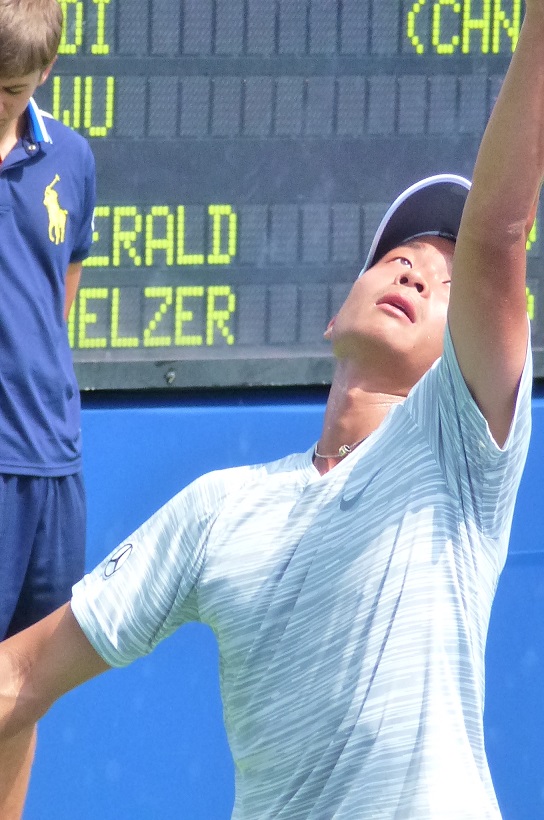
    Today started excellently with China’s Di Wu (above) scoring an impressive victory over Gerald Melzer of Austria. Di Wu dominated the match with his steady play, slowly wearing down his opponent. Patience and surety of technique kept the Chinese boy on the path to victory. The 6-2 6-2 score says it all.

    L1470049

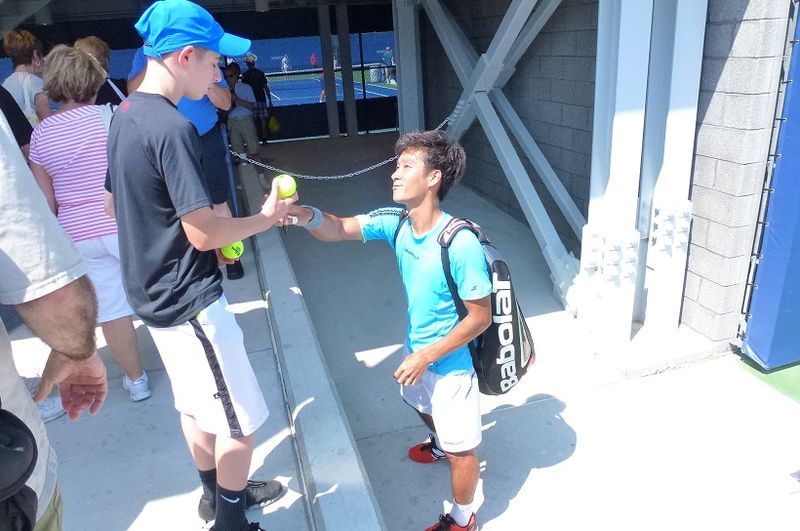
    Above: Di Wu signing autographs after his match

    L1470101

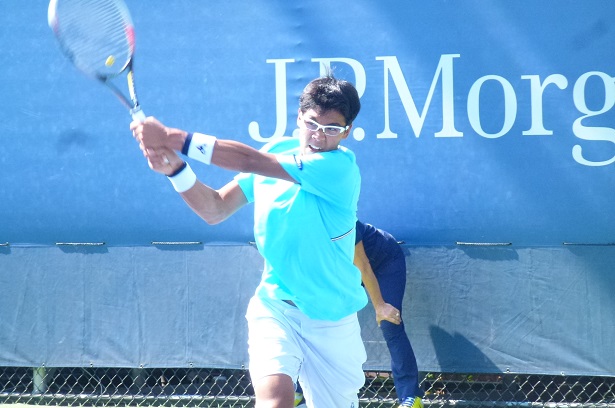
    A new face from Korea, Hyeon Chung (above), convincingly beat Argentina’s Augustin Velotti. Hyeon Chung, rather gangly and loose-limbed – and sporting some funky sunglasses – kept his opponent under control and was enthusiastically supported by a large contingent from New York’s Korean community.

    L1470062

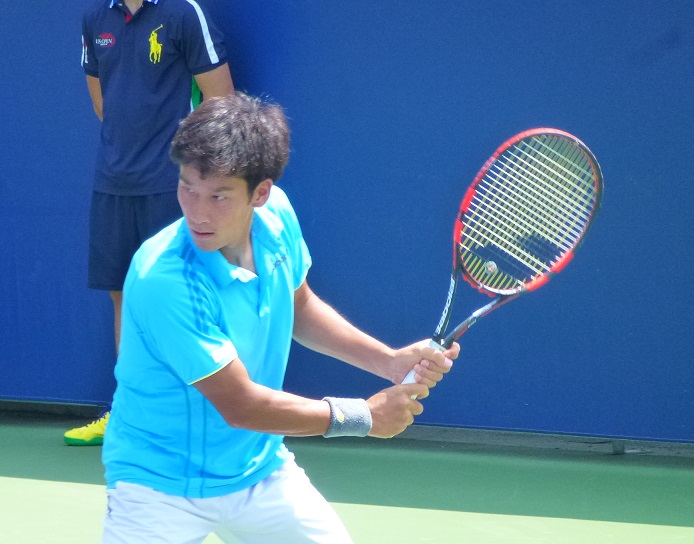
    Yuichi Sugita (above) played an exciting match against Germany’s Tim Puetz. Yuichi had opportunities to close out the first set sooner than he did, but his patience paid off. In the second set. Tim Puetz put up a strong battle, with some rowdy vocal support from the German fans, but Yuichi never lost his cool and he prevailed in the end, playing some beautiful tennis along the way. Rather reticent throughout the match, Yuichi let out a celebratory whoop when he scored match point.

    L1470086

    Above: Yuichi after the match

    L1470122

    Yuki Bhambri (above), the tall player from India, took an early break from the Lithuanian Laurynas Grigelis. But Grigelis broke back and the match progressed with some very exciting rallies and fantastical shots from both players. They seemed well-matched in the first set – it seemed it could go either way – but then Yuki took the edge. He sustained his high level of play throughout the second set, giving Grigelis few chances to make any headway. A strong victory for the Indian.

    L1470146

    Above: Yuki Bhambri

    L1470108

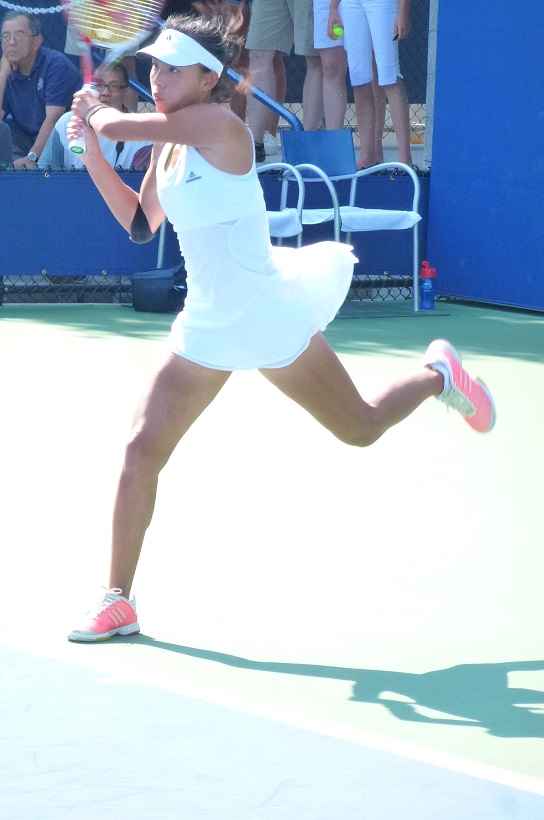
    I don’t get to watch many women’s matches at the Open; there are so many male players I try to follow, plus – to be honest – women’s tennis at the qualifying level is not always exciting. Today I did watch China’s Qiang Wang (above) fighting hard to sustain a win over Russia’s Evgenia Rodina in a three-set match buoyed by good audience particpation.

    I hadn’t been over to the corner courts (4, 5, and 6) on Tuesday and I was surprised today to see the renovations that have taken place since last Summer. The three courts are streamlined, with new scoreboards, seats that don’t over-heat as the sun beats down on them, and added “mezzanine” seating at each end of the court.

    One funny thing happened: the girl at the food stand misunderstood me, thinking I wanted a beer. She asked for ID! I said, “I need ID to buy a diet Coke?”

  • In the Studio with Miro Magloire

    L1200876

    Above: Holly Curran and Traci Finch rehearsing for New Chamber Ballet

    Wednesday August 28th, 2013 – Miro Magloire, always one of the busiest people on the New York City dance scene, is busier than ever these days. Not only is he preparing for the upcoming performances of his New Chamber Ballet (September 6th & 7th at City Center Studios) but he is also creating five new works for the Austrian Cultural Forum’s Moving Sounds Festival for a performance on September 20th, as well as looking ahead to New Chamber Ballet‘s tour to Germany.

    For the Moving Sounds Festival, New Chamber Ballet will team up with
    the Argento Chamber Ensemble for a program of five new ballets – and a
    revival – to music by contemporary Austrian and American composers. A world premiere collaboration with
    composer Michel Galante, a new work to a new score by composer Nina C.
    Young, and new creations to scores by Beat Furrer, Georg Friedrich Haas,
    and Arthur Kampela will be featured. The program – which will also include a revival of Miro’s ECHOES to music by Anton Webern – takes place at the Bohemian National Hall, Czech Center, 321 East 73rd Street, NYC on September 20th. Visit the Festival’s page here.

    I stopped in at Ballet Hispanico today where Miro and his dancers – Elizabeth Brown, Sarah Atkins, Holly Curran, Amber Neff and Traci Finch – were working on some of the new rep. Composer Nina C Young dropped by to see the piece Miro is creating to her score.

    Here are some photos I took of the new works in rehearsal:

    L1200839

    Ellizabeth Brown and Amber Neff

    L1200709

    Traci Finch and Holly Curran

    L1200794

    Amber Neff

    L1200807

    Elizabeth Brown

    L1200932

    Holly Curran, Amber Neff

    The final half-hour of the rehearsal time was devoted to Amber Neff working on the solo IN A SIMPLE BLACK DRESS, one of my favorites among Miro’s ever-expanding repertoire of intimate ballets. Here are some images of Amber rehearsing this solo:

    L1200988

    L1210107

    L1210054

    L1210147

    L1210189

  • In the Studio with Kensaku Shinohara

     L1200504

    Click on the image to enlarge.

    Wednesday August 28, 2013 – I stopped by at Far Space today where dancer/choreographer Kensaku Shinohara was rehearsing a work for four dancers that he’ll be presenting on September 29th, 2013 at the Dumbo Arts Festival. Performance detail here.

    Currently titled MATH TIME, the evolving work will most ilkely have a new name – possibly 1000 DESIGNS – by the time of the Festival performances. The piece was shown at Bryant Park in early August, so it is structurally completed; today Kensaku and his dancers were working on fine-tuning and nuances.

    Here are some images from the rehearsal:

    L1200423

    Ellyn Sjoquist and Lynda Senisi

    L1200469

    Lynda Senisi, Damani Pompey and Ellyn Sjoquist

    L1200476

    Ellyn

    L1200509

    Jake and Damani

    L1200433

    Kensaku, Jake and Damani discuss the fine points

    L1200618

    Jake Bone, Damani Pompey

    L1200653

    Lynda, Ellyn, Jake


    L1200471

  • US Open Qualifying Tournament 2013 #2

    L1190982

    Above: Japan’s Go Soeda

    Wednesday August 21, 2013 – Back to the US Open for the second day of the 2013 qualifying tournament; it was much hotter than yesterday and there were considerably larger crowds at most of the matches. I had a good time though I may not go back for the two remaining days: I no longer enjoy being in the sun for such long stretches of time.

    L1190923

    At 11:00 AM two Chinese players had their matches on nearly-adjacent courts: Ze Zhang (above) faced the Austrian Martin Fischer on Court 15…

    L1190928

    …while Di Wu (above) played France’s Josselin Ouanna on Court 12.

    Ze Zhang has a lot of natural talent; he began rather casually and lost the first set but then he really perked up and played some brilliant points. He won the second set and the tide had clearly turned. An exciting third set produced a tie-breaker and althought Zhang lost, he really played impressively. 

    L1190916

    Di Wu (above) is a dynamic, compactly built player. Facing the taller and stronger Mssr. Ouanna, Di Wu had his work cut out for him. Ouanna hits big, but Di Wu never flinched; he simply played his own game and outclassed the Frenchman time and again. Ouanna may have been off his best form (he’s a very fine player) as he called for the trainer at one point. For a moment I thought he might withdraw, but he gamely continued and Di Wu moved on to secure the victory.

    L1190950

    Di Wu after the match.

    L1200001

    I shuttled back and forth between the two matches and they each wrapped up just in time for me to grab a seat at Court 11 where Go Soeda (above), a great favorite of mine, played an exceptionally clean and brilliant match against Austin Krajicek. Krajicek is a powerful player; he serves big and employs plenty of driving force. Go stuck with his steady, sure-handed style of play, winning a high percentage of his first-serve points and keeping unforced errors to a minimum.

    The heat index reached its apex during this match; the air was still and heavy and we were all baking under the intense sun. I don’t know how the players kept up the pace. After Go took the first set I went off to get hydrated and saw that my other Japanese guy, Tatsuma Ito, was about to start his match. Since they were showing the Soeda match on the big screen, I could keep tabs on that while watching Tatsuma play against Damir Dzumhur of Bosnia and Herzegovina.

    L1200049

    Japan’s Tatsuma Ito

    Each player had his contingent of supporters in the crowd and there was a good atmosphere; the sun was beginning to drop into the West and a lovely breeze kicked up. I really enjoyed this match and watching Tatsuma calmly and methodically dismantle his opponent. Damir had some exciting moments but Tatsuma simply soldiered thru and wrapped up the win in just 70 minutes of playing time.

    L1200122

    Tatsuma Ito after the match.

    I’d planned to go back for more tennis on Thursday but I’m sunburnt, and rain is predicted. I think I just need a day to chill. We’ll see who moves on to the Friday matches and then decide whether to go back for the final day.

  • Rehearsal: John-Mark Owen’s REQUIEM

    L1000256

    Dancer Josh Christopher (above) takes a central role in John-Mark Owen’s REQUIEM.

    Wednesday August 29, 2012 – Today I went over to the 92nd Street Y where choreographer John-Mark Owen was rehearsing for his upcoming presentation of REQUIEM. The performances are scheduled for September 13th thru 15th at Manhattan Movement and Arts Center.  Ticket information here.

    Taking on the Mozart REQUIEM from a choreographic standpoint is a major project, and John-Mark has risen to the task in this ensemble work which avoids a literal interpretation of the sacred texts and favours instead a painterly approach. Each ‘frame’ of the ballet becomes part of a living gallery; John-Mark applies a dramatic subtext but he isn’t a slave to it. The sculptural feeling of certain passages, as well as the unison ‘choral’ phrases of walking or marching, respond to the architecture of the music with its sense of ritual.

    L1000183

    John-Mark has assembled a strong cast, with particularly vivid performances by Aaron Mattocks (above) as a sinister and even brutal dark angel…

    L1000263

    …and the intense lyricism of John Christopher (above). Kerry Shea and Amy Brandt have the principal female roles.

    Here are some images from the rehearsal and of the individual dancers involved:

    L1000119

    The ensemble

    L1000149

    Josh Christopher and John-Mark Owen

    L1000267

    Aaron Mattocks, Amy Brandt

    L1000284

    Ensemble

    L1000156

    Josh Christopher, Aaron Mattocks

    L1000305

    Jason Stotz, Nadezhna Vostrikov

    L1000163

    JoVonna Parks, Oisin Monaghan

    L1000195

    Kelsey Coventry

    L1000274

    Alfredo Solivan

    L1000215

    Kristen Deiss, Kelsey Coventry

    L1000036

    Kerry Shea

    L1000060

    Josh Christopher

    L1000028

    Nadezhna Vostrikov

    L1000088

    Kelsey Coventry, Jason Stotz

    L1000162

    Oisin Monaghan, Matt Van

    L1000024

    John-Mark Owen