Tag: Wednesday February

  • YCA: Nathan Lee @ The Morgan Library

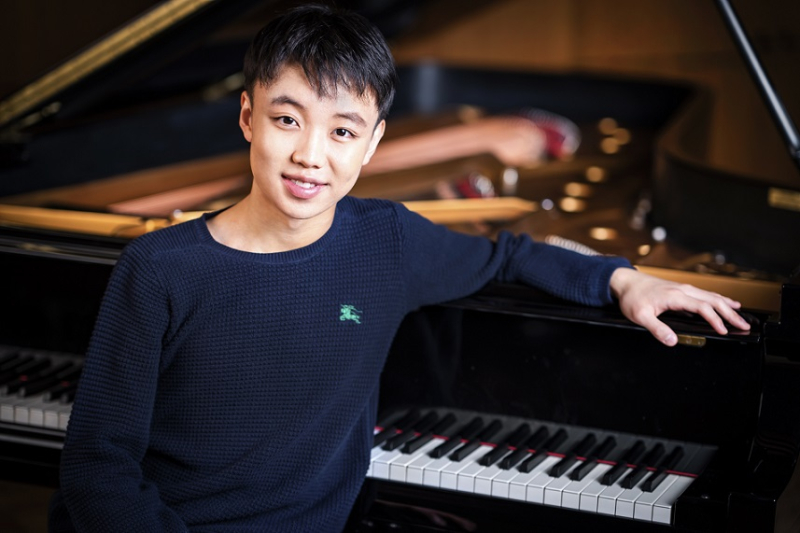
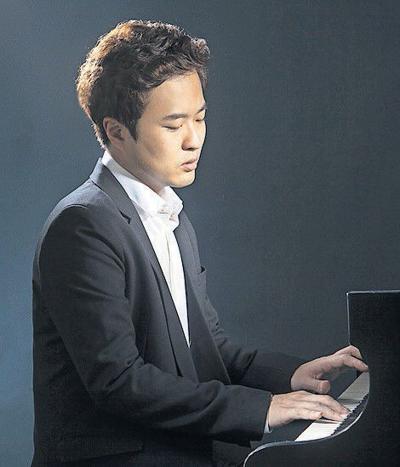
    Lee_Nathan3CreditChrisLee

    Above: pianist Nathan Lee, photo by Chris Lee

    ~ Author: Oberon

    Wednesday February 19th 2020 matinee – Young Concert Artists continued their popular series of noontime concerts at The Morgan Library today as pianist Nathan Lee played works by Ludwig van Beethoven, Chris Rogerson, and Robert Schumann in succession with nary a break in between.

    The youthful pianist, clad all in black with subtly bejeweled shoes, opened his program with Beethoven’s Sonata No. 27 in E-minor, Op. 90 – a lovely gift to us for the composer’s 250th birthday celebration. Unlike most traditional sonatas, this one has only two movements; the composer’s tempo markings are in German rather than the usual Italian.

    The opening phrases are alternately robust and subtle, and as the music develops there is a continual shift between thoughtful and intense passages. Mr. Lee’s playing of swift downward scales was exhilarating, and he moved effortlessly from drama to delicacy as the piece evolved. The second movement offers a sweet flow of melody with contrasting moments of animation. Mr. Lee is as engaging to watch as to hear, his facial expressions reflecting the moods of the music, his eyes often closed.

    The music of Chris Rogerson, who was Young Concert Artists‘ composer-in-residence from 2010-2012, made a very positive impression on me when I first encountered his String Quartet #1 performed by the Omer Quartet at a YCA  concert at Merkin Hall in December of 2018. Ever on the lookout for music that might capture the imagination of one of my choreographer/friends, I sent this quartet on to Claudia Schreier. Long story short: Ms. Schreier is choreographing a ballet to Mr. Rogerson’s String Quartet #1 for Chamber Dance Project in Washington DC, which will premiere in June 2020.

    This afternoon, Mr. Lee played Chris Rogerson’s ‘Til it was dark; the work was Mr. Rogerson’s first YCA Commission in 2010. The composer’s program notes reveal the nostalgic background for ‘Til it was dark, and made me think of my own boyhood in the little town when we’d play tag and hide-and-seek outdoors as the sun set slowly on summer evenings.

    The work’s first movement, Break, seems to speak of the noisy euphoria we felt as kids when school let out. Mr. Lee was called on to bang emphatically on the keyboard or to reel off swirling festoons of notes. As the music turns dreamy, then mysterious, and finally pensive, Mr. Lee caught all these moods thru his canny use of piano/pianissimo gradations. Later, when virtuosity is called for, the pianist delivers in spades. 

    “Three more minutes!” was the warning call of Chris’s dad that it was almost time to come indoors. The music seems to depict the frantic desire to get as much fun out of the dwindling daylight as one could. By turns sprightly and loudly animated, things eventually calm before a final propulsive rush to a witty end.

    Important Things takes on a more serious tone; Mr. Lee’s playing becomes thoughtful, almost tender. In his program note, Mr. Rogerson writes of those “…quieter moments with friends, when you wanted to say something that was on your mind…but of course, you never did.” By turns expansive, wistful, and passionate, the music finally alternates short dreamy phrases with harsher ones. Dreaminess prevails, and quietude settles over us. In this very personal (yet also universal) reflection – which put me in mind of Samuel Barber’s evocative Knoxville: Summer of 1915 – Mr. Rogerson could not have asked for a finer interpretation that Mr. Lee’s.

    The young pianist then immediately commenced on Robert Schumann’s Carnaval for piano, Op. 9, written in 1834-1835. In these twenty-one miniatures, Schumann depicted himself (with Florestan and Eusebius representing his split personalty), his beloved Clara (Chiarina), his friends, and also characters from the commedia dell’arte. In 1915, Michel Fokine choreographed the music for his ballet of the same title, created for Diaghilev’s Ballets Russes. Amazingly, I’d never heard the entire Schumann score until today.

    Art_63_06_13

    Above: the legendary ballerina Tamara Karsavina as Columbine in Fokine’s ballet Carnaval

    Nathan Lee took us on a delightful journey with his brilliant playing, and thru his coloristic gifts introduced us to – among others – the lively Pierrot, the smug wit of Harlekin, the scampering Coquette, and the youthful gaiety of Chiarina. From the grand introduction, the music’s rhythmic subtleties and irresistible waltzes drew us onward thru this 30-minute panorama wherein the essential element – charm – was in abundance in Mr. Lee’s playing.

    The pianist returned for an encore: the Sarabande from Bach’s 4th Partita, subtly played.

    ~ Oberon
  • Pianist Dasol Kim @ The Morgan Library

    5bc8cc9dcb693.image

    Above: pianist Dasol Kim, photo by Christian Steiner

    ~ Author: Oberon

    Wednesday February 27th, 2019 matinee – Young Concert Artists presenting pianist Dasol Kim in a noontime recital at The Morgan Library. An imaginative program, superbly played in this intimate, high-ceilinged and sonically alive hall, made for a heart-warming experience on a chilly, overcast day. 

    Mr. Kim has been a prize-winner at numerous competitions. He has been a soloist with major orchestras in Europe and the USA, and his debut disc – of works by Robert Schumann – was released by Deutsche Grammaphon in 2015.

    Opening his recital at the Morgan this afternoon, the lithe-framed pianist displayed a wonderful sense of rhythmic vitality in Beethoven’s Piano Sonata No. 26 in E-flat Major, Op. 81a. The pulse of the music was finely set forth as the atmosphere moves from melancholy to triumphant to joyous. A loud, ill-timed cough from someone in the hall rather spoiled the ending of the first movement, but Mr. Kim was not fazed in the least and proceeded to a perfect rendering of the moody Andante espressivo, which shifts between pensive and hopeful passages. His playing here showed a wonderful delicate touch.  In the sonata’s final movement, the rapid passages were then effortlessly clear and vivid, with big attacks and fiorature aplenty. A sort of coda brings the work to a big end, and brought the first of the afternoon’s volleys of applause from the appreciative audience.

    Chopin’s Scherzo No. 4 in E Major, Op. 54, shows a certain motivic relationship to the Beethoven. Mr. Kim offered fanciful, jewel-like cascades of notes, laced with charming mini-pauses along the way. A sudden shift to sadness is a surprise; the music turns dreamy before returning to this sad theme, which Mr. Kim played so movingly. With a burst of passion, happiness returns. The piece ends grandly.

    Mr. Kim then offered an engrossing – indeed hypnotic – performance of Maurice Ravel’s astonishing Gaspard de la nuit. This most demanding of solo piano works was inspired by a book by Aloysius Bertrand (1807-1841) of the same name which contained verses, prose-poems, and drawings relating to fantasies of imps, devils, nymphs, ill-fated lovers, visions of death, and nightmares. Gaspard de la nuit is a nick-name for Satan.

    The opening movement, Ondine, tells of the attempt of the eponymous water nymph to draw her mortal beloved down to her submerged castle, from which they will rule the deep. Dasol Kim’s playing of the shimmering, rapturous fihurations was so evocative. Music of magical delicacy turns passionate; the pianist plays glittering scales as the sound builds, to be followed by a feeling of dreamlike drifting.

    The incredibly haunting Le gibet (The Gallows) depicts a hanged man silhouetted against the setting sun. This darkly hesitant, eerily beautiful music (so chillingly used in the noir vampire film, The Hunger) was a perfect vehicle for Mr. Kim’s mesmerisingly sustained interpretation: his sublime control here gave me the chills.

    After a sly start, Scarbo (an elusive dwarf who haunts dreams) turns into a high-velocity dance with cunning pauses and crafty mood swings. With dazzling dexterity, Mr. Kim portrayed this sneaky creature; the music turns ghostly before Scarbo vanishes quietly into the night.

    To end his program, Mr. Kim offered Nikolai Kapustin’s ‘Intermezzo’ from Eight Concert Etudes, Op. 40: a jazzy work played with a debonair lilt. The music speeds up, the pianist reeling off the lively, dancing passages with flair. This dazzling finale/encore elicited a standing ovation from the crowd.

    ~ Oberon

  • YCA Presents Samuel Hasselhorn

    SamuelHasselhorn

    Wednesday February 15th, 2017 – Baritone Samuel Hasselhorn (above) presented by Young Concert Artists in recital at Merkin Hall. With Renate Rohlfing at the Steinway, the evening was a definitive success for both the tall singer and his lovely, expressive pianist. The imaginative program, which included both the familiar and the rare, was both beautifully sung and emotionally engaging.

    In my 50+ years of recital-going, baritones have invariably giving me lasting memories: Wolfgang Holzmair, Dmitri Hvorstovsky, the two Thomases (Allen and Hampson), Bo Skovhus, Matthias Goerne, Sanford Sylvan, Kurt Ollmann, Christopheren Nomura, Randall Scarlata, Keith Phares, John Michael Moore, David Won, Shenyang, Thomas Cannon – their voices echo in the mind and heart. Mr. Hasselhorn now joins that distinguished list.

    In their opening Schumann set, Mr. Hasselhorn and Ms. Rohlfing explored a wide range of moods: from the urgency of Tragödie I and the pensive resignation of Tragödie II, they progressed to the vivid narrative of Belsazar (Mr. Hasselhorn operatically powerful, with Ms. Rohlfing excelling), and the rather unusual Mein wagen rollet langsam. The effect of the defeat of Napoleon on two of his faithful foot-soldiers was marvelously depicted in song by Mr. Hasselhorn in Die beiden Grenadiere, with its sounding of the Marseillaise. Passionate desire fills Lehn’ deine Wang, and the contrasts of poetic and turbulent love were superbly expressed by baritone and pianist in Du bist wie eine Blume and Es leuchtet meine liebe, the latter ending with Ms. Rohlfing’s finely-played postlude.

    In charmingly accented and very clear English, Mr. Hasselhorn delighted us with Britten’s ironic Oliver Cromwell and The foggy, foggy dew. The singer’s exceptional control was manifested in his poignant rendering of O waly, waly with Ms. Rohlfing giving tender support. A long comic Britten narrative, The Crocodile, ended the evening’s first half.

    Addressing the audience before commencing the evening’s second half, Mr. Hasselhorn spoke of the woes of our planet today, thrown into further chaos by recent events. The plight of refugees worldwide, and the threats posed by war and terrorism to a hopeful humanity prompted the baritone to devise a set of works especially meaningful to him on a personal level; these he now offered to us with singing of real sincerity and depth of feeling.

    The juxtaposition of Hugo Wolf’s madly dramatic Die Feuerreiter (‘The Fireman’) and Franz Schubert’s haunting Litanei auf das Allerseelen (‘Litany for All-Saints’) was a masterstroke of programming beyond anything I’ve ever experienced in a recital. The fierceness and wild desperation of the Wolf was memorably contrasted with the sublime prayer for peace penned by Schubert. Mr. Hasselhorn and Ms. Rohlfing were simply thrilling: the pianist in a virtuoso rendering of the Wolf whilst the singer’s urgency in the narrative reached a feverish level. By contrast, the Schubert was heart-rending in its lyricism and spirituality. By taking only a brief pause between these two, our two artists cast a veritable spell over the house.

    Renate-Rohlfing

    Above: pianist Renate Rohlfing

    Three Poulenc songs, reflections on the Nazi occupation of Paris, showed the Hasselhorn/Rohlfing partnership at its most persuasive. The pre-dawn removal of (fictional) freedom-fighter André Platard in La disparu, a prayer to the Virgin in Priez pour pays (the pianist truly sublime here), and the return from the front of an exhausted sergeant in Le retour de sergent made a triptych – painted in the inimitable Poulenc style – which perfectly encapsulates a specific time and place. 

    The singer and pianist then sent chills thru me with the devastating emotional power of their performance of Schubert’s Erlkönig. Mr. Hasselhorn summoned up the three contrasting characters of the narrative with subtle rather than overly-theatrical variants of tone-colour – simply splendid singing! – and Ms. Rohlfing gave the piano’s role, with its contrast of relentlessness, desperation, and cruel seduction, full rein. A luminously intense performance.

    In the brief Wanderers Nachtlied II, poetry seeped gently into the air from Ms. Rohlfing’s keyboard, to be handsomely taken up by Mr. Hasselhorn like a benediction. Lingering on the heights of expressiveness, singer and pianist brought me to tears with the poignant song of Der blinde kind (‘The Blind Boy’), a youth who refuses to wallow in self-pity over his affliction. Mr. Hasselhorn’s gestures, stance, and expressive features portrayed the boy’s physical and emotional state movingly, evoking understanding rather than pity: such a touching song, superbly rendered.

    Schubert’s last song, Die taubenpost (‘The carrier-pigeon’), seems like a simple avowal of young love as the poet sends his trusty pigeon bearing messages to his beloved. The pigeon’s name Sehnsucht – that magical word for ‘longing’ – and he is the messenger of fidelity. For those of us who love from afar, the song takes on a sweet depth of meaning. True to all that has gone before, Mr. Hasselhorn and Ms. Rohlfing were perfect here. Their encore, the blessed An die musik (‘To Music’), served as a summarizing of this exceptional evening of song.

    I shall hope to hear Mr. Hasselhorn here in New York City again soon; how I should love to hear his voice in Schumann’s Dichterliebe! It also seems to me that there are many operatic roles in which he could shine at The Met. For this evening, I again express gratitude to Susan Wadsworth and Young Concert Artists for bringing us another in their series of exemplary recitals.

  • Dmitri Hvorostovsky @ Carnegie Hall

    20110128_dmitri-hvorostovsky-3

    Wednesday February 17th, 2016 – No one in the realm of classical music needs to be told the background of tonight’s Carnegie Hall recital by the great baritone Dmitri Hvorostovsky. He has, since his 1989 winning of the Cardiff Competition, become one of the most admired and beloved of artists; his current personal health battle has his devotees worldwide praying for him and pulling for him. Now, for the second time since his diagnosis, he has come to New York City to honor his commitments to sing for us.

    Carnegie Hall was completely sold out, and the applause greeting Dima and his pianist, the excellent Ivari Ilja, was particularly warm. The program was a taxing one for the voice – songs by Glinka, Rimsky-Korsakov, Tchaikovsky, and Richard Strauss – and Hvorostovsky sang with his characteristic generosity, tenderness, and passion. It is – and always has been – a uniquely beautiful voice, one of the very very few today that gives such constant and pleasing rewards. 

    A bit of sharpness in the first Glinka song soon vanished as the voice warmed to the hall. As the Glinka set continued, the caressive warmth of the voice came to the fore. Always a singer possessed of a vast dynamic range, Dima tonight moved impressively from haunting soft passages to thrillingly sustained, powerful top notes, and everything was coloured with emotional hues from longing to tranquility to regret.

    Rimsky-Korsakov’s “Not the wind, blowing from the heights” was an especially marvelous rendering in the evening’s first half, and – after the interval – Hvorostovsky gave us some of the Tchaikovsky romances that have been among his signature pieces: songs that he has helped to popularize throughout the world. These were beautifully voiced.

    In the evening’s concluding group of Strauss songs, so familiar yet so welcome in these hauntingly sung interpretations, Hvorostovsky expressiveness was at full flourish. 

    One audience distraction after another intruded on the evening, but these complaints we will set aside for now, and feel instead a sense of gladness just to have been there.

  • IOLANTA/BLUEBEARD’S CASTLE @ The Met

    7-133410_gallery

    Above: Boris Kudlicka’s set design for The Met’s production of Bartok’s BLUEBEARD’S CASTLE

    Wednesday February 18th, 2015 – This pairing of ‘short’ operas by Tchaikovsky and Bartok at The Met didn’t really work. IOLANTA is an awkward work: too short to stand alone but too long to be successfully coupled with another opera. BLUEBEARD, so intense musically and rather static dramatically, is best paired with something like Schoenberg’s ERWARTUNG or Stravinsky’s OEDIPUS REX. Aside from the musical mismatch, the evening was further spoilt by an endless intermission.

    Tchaikovsky’s IOLANTA is full of nice melodies and is perfectly palatable but at no point do we feel connected to the story or the characters as we do with ONEGIN or PIQUE-DAME. The production is gloomy, with a central ‘box’ (Iolanta’s bedroom) which periodically (and rather annoyingly) rotates. The stage direction was random and incoherent, the minor characters popping in and out, and then a big choral finale populated by men in waiters’ aprons. Nothing made much sense, really.

    Musically, IOLANTA was given a not-very-inspired reading by Pavel Smelkov. It took Anna Netrebko a while to warm up; her singing became more persuasive as the evening wore on. She was attractive to watch and did what she could dramatically with a limited character and a dreary production. Mzia Nioradze was a sturdily-sung Marta. Among the male roles, Matt Boehler stood out vocally as Bertrand. Neither Vladimir Chmelo (Ibn-Hakia) nor Alexei Tanovitski (King Rene) seemed to be Met-caliber singers, and Maxim Aniskin’s Duke Robert was pleasant enough vocally though of smallish scale in the big House.

    IOLANTA was in fact only saved by a superb performance as Vaudemont by Piotr Beczala. From the moment of his first entrance, the tenor’s generous and appealing sound and his commanding stage presence lifted the clouds of tedious mediocrity that had settled over the scene. As his most Gedda-like vocally, Beczala seemed to enflame Ms. Netrebko and their big duet had a fine sense of triumph.

    The House, which was quite full for the Tchaikovsky, thinned out a bit at intermission. Those who stayed for the Bartok were treated to an impressive musical performance thwarted to an extent by busy, awkward staging. Mr. Smelkov seemed more in his element here than in the Tchaikovsky; the orchestra played Bartok’s gorgeous score for all it’s worth, and that’s saying a lot.

    After the eerie, ominous spoken prologue, we enter Bluebeard’s dark domain. Where we should see seven doors, we instead see an automatic garage door closing. Then begins the long conversation between Bluebeard and Judith which will end with her bound in permanent captivity with his other wives.

    The staging did the two singers – Michaela Martens and Mikhail Petrenko – no favors; periodically they appeared – for no apparent reason – in an isolated ‘cupboard’ high up at extreme stage left while the central space was filled with the filmed image of a gaping elevator shaft (see photo at the top of this article). The opening of each each ‘door’ was staged as a series of odd vignettes. Nothing made much sense. The final scene was ugly and failed to project the sense of mystery that should hover over Judith’s fate.

    Both Ms. Martens and Mr. Petrenko were on fine vocal form, and both brought unusual warmth and unexpected lyricism to much of their music. They sang powerfully, the mezzo showing a large and expressive middle register and resonant lower notes, with the basso having both power and tonal beauty at his command.

    At several points along the way, their singing seemed somewhat compromised by the staging; and never more so than in Judith’s famous high-C. At this moment, the director placed the singer far upstage – almost on Amsterdam Avenue – and so although Ms. Martens nailed the note, she was too far back to crest the orchestra. I suspect it was staged this way as a covering device for the vocal unreliability of the production’s earlier Judith, Nadja Michael. 

    But overall, Ms. Martens and Mr. Petrenko each made a distinctive vocal showing; and it was they, the Met orchestra, and Piotr Beczala’s Vaudemont earlier in the performance that gave the evening its lustre and saved it from sinking into the murky depths. Attempts to show some kind of link between the two operas by means of certain stage effects proved unconvincing. The Bartok, especially, deserves so much better.  

    Metropolitan Opera House
    February 18, 2015

    IOLANTA
    P I Tchaikovsky

    Iolanta....................Anna Netrebko
    Vaudémont..................Piotr Beczala
    Robert.....................Maxim Aniskin
    King René..................Alexei Tanovitski
    Bertrand...................Matt Boehler
    Alméric....................Keith Jameson
    Ibn-Hakia..................Vladimir Chmelo
    Marta......................Mzia Nioradze
    Brigitte...................Katherine Whyte
    Laura......................Cassandra Zoé Velasco

    BLUEBEARD'S CASTLE
    Béla Bartók

    Judith.....................Michaela Martens
    Bluebeard..................Mikhail Petrenko

    Conductor..................Pavel Smelkov

  • Violin Concertos @ NYC Ballet

    318356_2232197878477_977158597_n

    Above: Russell Janzen of New York City Ballet

    Wednesday February 19th, 2014 – Ballets by Jerome Robbins, Peter Martins, and George Balanchine – each set to a great 20th century violin concerto – were on the bill at New York City Ballet this evening. To an already-great line-up of dancers there was a late addition: Russell Janzen made his debut in BARBER VIOLIN CONCERTO; Tiler Peck and Amar Ramasar were also making role debuts tonight.

    Three conductors passed the baton one to another as the evening progressed; the Company’s two concertmasters – Kurt Nikkanen and Arturo Delmoni – shared the soloist spotlight, Kurt playing the Prokofiev and Arturo playing Barber and Stravinsky. It was a programme during which really missed my beautiful seat in Fourth Ring AA where I used to watch the orchestra from on high.

    The evening opened on a high note: the curtain rose on Robert Fairchild, all in white, as the restless dreamer of Jerome Robbins’ OPUS 19/THE DREAMER – my favorite Robbins ballet. Robert danced the ballet’s opening solo with deep musicality and supple fluidity of movement. Out of the blue, his muse materializes: Tiler Peck, in this role for the first time, found a perfect balance between the classical vocabulary and the sometimes jagged expressionism the ballet requires. In the more lyrical passages, her lush pirouettes had remarkable clarity; to a role that has been gorgeously danced in recent seasons by Wendy Whelan, Jenifer Ringer, and Janie Taylor, Tiler brought her own distinctive touches. Robbins gives the corps some dreamy moves – and also some athletic ones – in OPUS 19; I very much enjoyed tonight’s collective which was made up of some of my favorite dancers.

    It took me a few hearings to figure out exactly what it is about the opening measures of the Barber violin concerto that sings to me so clearly: it’s the use of the piano, especially the opening chord. It gave me a little frisson again tonight; while I love so many violin concertos I think sometimes the Barber is my actual favorite. I remember one summer driving very fast out Route 6 with Kenny to the end of the world – Provincetown – with the Barber blasting on the car stereo. Music and memory are so often indelibly linked.

    In tonight’s performance of the Barber, Teresa Reichlen and Russell Janzen looked great together – not just because they are long-limbed and attractive, but because they share a sense of elegance that manifests itself in their bearing and the grace of their line. A chill passed thru me as Amar Ramasar entered, a fallen angel with a dangerous ‘loner’ appeal who will eventually draw Tess to the dark side. Megan Fairchild excels in the barefooted role created by Kate Johnson: it’s a far cry from the charming, pristine pointe-work that is Megan’s specialty, but she jumps right in and makes it happen.

    After their classical parterning passages in the first movement, Tess and Russell will each experience a transformation. At first seeming to console Amar, Tess falls under his spell and is borne away to an unknown fate; their duet is a psychological conflict which reaches its turning point when the subjugated woman lets her hair down. Amar’s character is not so much seductive as simply a force that cannot be withstood; Tess in her vulnerability looks ravshingly ravished. Random thought: I’d love to see Amar in the Martha Graham rep.

    In the final allegro, Russell strives to withstand the endless torment of Megan’s advances: she’s playing one of the most annoying characters in all dance. She ends up writhing on the floor as Russell backs away, covering his eyes to blot out the vision of her over-sexed frenzy. In a final attempt to get what she wants, Megan literally climbs up Russell’s back to perch on shoulder; in a last defense, he flips her over and sends her crashing to the floor. The two dancers handled this tricky finale with aplomb and in fact danced the whole third movement to perfection.

    6a00d8341c4e3853ef014e887730ac970d-800wi

    Above: Janie Taylor, in a Henry Leutwyler portrait

    Tonight’s Stravinsky had a special energy; it was in fact one of the finest performances of this ballet I’ve seen. Part of the singular excitement in the atmosphere tonight may have stemmed from the presence of Janie Taylor, the Company’s enigmatic/charismatic principal ballerina who is soon to retire. I’ve been crazy about Janie since she first stepped out, a mere slip of a girl just over from SAB, to dance the lead in LA VALSE. After building a reputation as a dancer at once fragile and fearless, a long hiatus due to a complicated injury took her away from the stage for months…years, even. Her ‘second career’ has been a real source of joy for me and so tonight it was bittersweet to think that in a few days she will be vanishing from this stage, leaving only perfumed memories. But what memories they are!

    Tonight’s performance showed off of Janie’s balletic split personality: a palpable vulnerability alinged to a steely technical resiliance: she’s simply extraordinary…and irreplacable. Ask LaCour’s partnering of this blonde enigma developed a wonderful simpatico, a sense of tenderness in what is after all an abstract and ’emotionless’ ballet. In that marvelous moment where the ballerina stands against her partner as he shows her a view of the world with a sweeping gesture of the arm, I thought I’d never seen anything so beautiful.

    Janie and Ask seemed poised to walk off with the gold tonight, but the other Stravinsky couple – Rebecca Krohn and Adrian Danchig-Waring – were so potent technically and so vivid in their presentation that the entire ballet took on a grand dynamic, abetted by the excellent corps (the quartet of leaping boys won a ‘bravo’ all their own). Rebecca Krohn has really done wonders in the leotard ballets; she looks phenomenally confident and polished, and for me she’s the equal of any ballerina I’ve seen in this rep, going way back to Suzanne and Karin. Her generous dancing found a fine match in Adrian Danchig-Waring’s vibrant physicality; together these two dancers crafted amazing shapes as they moved thru the ballet’s demanding partnering motifs, ending their pas de deux with Adrian in a finely-timed fall to the floor and Rebecca in a sweeping back-bend.

    Extra delight: Faye Arthurs in a brief partnered segment with Adrian; she danced in both the Prokofiev and the Stravinsky tonight. So nice to run into Erica Pereira and Caitlin Dieck…and Tess, after the show.

    OPUS 19/THE DREAMER: *T. Peck, R. Fairchild [Conductor: Sill, Solo Violin: Nikkanen]

    BARBER VIOLIN CONCERTO: Reichlen, *Ramasar, M. Fairchild, *Janzen [Conductor: Otranto, Solo Violin: Delmoni]

    STRAVINSKY VIOLIN CONCERTO: Taylor, la Cour, Krohn, Danchig-Waring [Conductor: Capps, Solo Violin: Delmoni]

  • Collegiate Chorale: Glass and Golijov

    Toltec

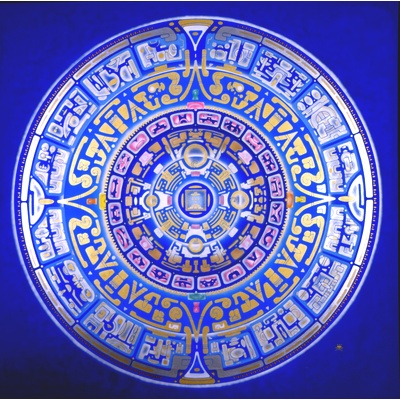
    Above: A Toltec star-shield

    Wednesday February 27, 2013 – A few minutes into this concert by the Collegiate Chorale, an expression from the 60’s came to me: “Mind-blowing!” The evening, one of the most purely pleasurable I have ever spent in a concert hall, featured two great contemporary works: the Toltec Symphony (#7) of Philip Glass, and OCEANA, a marvel-filled cantata by Osvaldo Golijov. The cumulative sonic effect of this music was like that of a mystical drug: I felt both vividly stimulated and wonderfully relaxed: a paradox, but there it is.

    The Glass dates from 2005 when it was commissioned by the National Symphony Orchestra to honor the 60th birthday of conductor Leonard Slatkin. The composer was inspired by the ancient culture of the Toltecs, remnants of which may still be found in Northern Mexico. Like many wise peoples, the Toltecs lived in close harmony with nature; the symphony evokes not only that link but the mysterious harmonies of forgotten rituals.

    The term Minimalist doesn’t really apply to Philip Glass; his view of music is in fact panoramic and the Toltec is universes away from Minimalism. It’s a vast and grand piece. The composer’s signature motif of repeated rhythmic patterns is very much in play, but there are layers of sound bulit on that foundation.

    The work opens subtly, with harp, maracas and celeste; as the first movement (entitled The Corn) develops, there is a spine-tingling ebb and flow of dynamics and textures from huge tutti passages that pulsate thunderously to trancelike delicacies that float on air. The second movement (The Sacred Root) is a grand choral tapestry, veering in song from seductive sway to hypnotic chant; at one point four singers step forward to deliver a counter-song. The chanting, sustained over timpani, finally dwindles magically into silence.

    The symphony’s final movement opens with a chorale of brass and violins into which the woodwinds and harp soon join. At this point there was an annoying late seating which broke the mood of the piece; with only a few minutes of music left, was it really necessary to seat people at that point?  Better to have taken a pause between the second and third movements and gotten the stragglers in place before continuing.

    Trying to recover my focus, I was intrigued by a passage for harp and strings, interrupted twice by the timpani. The winds join in a grand welling-up only to subside again. A four-square rhythmic, benedictive choral finale develops with halting pauses between segments, inducing an ecstatic feeling. With luminous high-flutes sounding over gently rocking strings, the Toltec vanishes into the mist like a lost civilization.

    There was no intermission but rather a longish pause in which the stage was re-set for the Golijov. I’ve recently become fascinated with this composer thanks to hearing his music used by choreographer Lydia Johnson. For OCEANA, the brass and woodwinds leave us as do the percussionists: aside from a quartet of flautists and three musicians playing small percussion instruments, OCEANA is all-strings – including guitars – and singing. 

    Neruda_0

    The enigmatic and perfumed poetry of Pablo Neruda (above), from Cantos Ceremonial, gives wing to Osvaldo Golijov’s matchless musical imagination. In this cantata, modeled on Bach, the illusive words of the poet will rise up from the mystic murmurs of harp and guitar and the sounds of the rainforest which open the work.

    Biella

    The sensational Venezuelan vocalist Biella Da Costa (above) revealed a mellow, sultry voice of huge range and capable of entrancing vocal effects woven into her alluring sound. Wow!  As the work progressed from one movement to the next, I found myself thinking: “What sonic magic will we experience next?” Between the orchestra, the chorus and the soloist, the ear is constantly seduced while the soul veers madly from the realms of the spiritual to the sensual.

    In a splendid aria, the jazzy singer bounces her voice around a big range, joyously carefree in this litling vocalise which percolates over guitar, bass and flutes. Then the chorus takes over, rocking and rolling like a sailing ship on a breezy day. Folkish percussion with harp and guitar tingle as a group of young women from the Manhattan Girls Chorus join in the music-making: wind and waves carry us forward, making me want to dance.

    Finally we reach the choral finale: the Oceana chant, a dreamlike invocation, makes us feel like we’re in church. The vision of the sea and the clouds fades like a dream as the music evaporates into a hush.

    IMG_1862Chorale

    Conductor James Bagwell (above, in an Erin Baiano photo) is to be praised not only for his steering of the musical ship tonight but for this imaginative and wonderfully satisfying programming.  Ms. Da Costa was nothing short of a revelation, and let’s have some special roses for harpist Sara Cutler who played so marvelously all evening. 

    Osvaldo Golijov susrprisingly joined the singers and musicians onstage during the applause; I’m not sure the audience recognized him though.


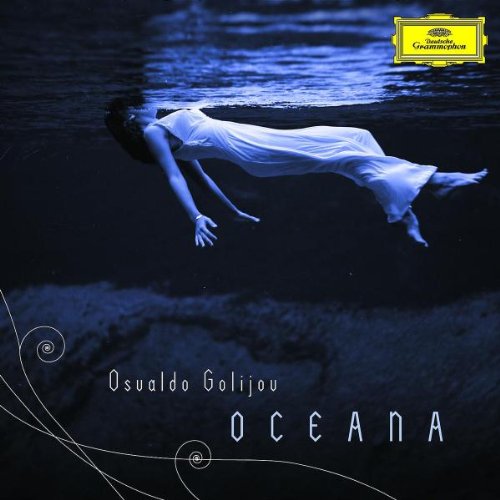
    -Osvaldo-Golijov -Oceana

    OCEANA is available on CD

    Philip-Glass-Glass -Symphony-No.7-'Toltec'

    …as is Glass’s Toltec Symphony.