Tag: Wednesday July

  • Vilda Frang @ Mostly Mozart

    Thumbnail_vilde-frang-2012

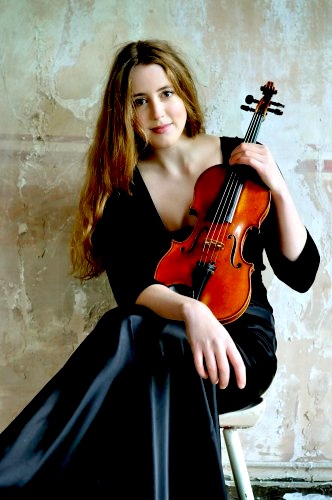
    Above: violinist Vilda Frang/photo from EMI Classics

    ~ Author: Ben Weaver

    Wednesday July 24th, 2019 – Beethoven’s two warhorses were on the program of the Mostly Mozart Festival tonight: the Violin Concerto and the Eroica Symphony, with Andrew Manze presiding over the proceedings.

    For the Mostly Mozart Festival, the main auditorium of David Geffen Hall has been transformed into a night-club-like atmosphere (for a couple of years now), with the stage moved up and seating created on the sides and behind the orchestra. Amphitheater-like concert halls have been all the rage in Europe (and to a lesser extent in the US) since the Berlin Philharmonie was built; seemingly every new concert hall replicates that structure. (In the US, Walt Disney Hall, home of the LA Philharmonic, is built the same way). I’ve never been to one of these concert halls, so maybe the acoustics really are ideal 360° around the orchestra in these halls.


    I am, however, not convinced that the arrangement being used for the Mostly Mozart concerts improves the sound for anyone inside David Geffen, where the acoustics have been notoriously bad since the theater’s construction in the 1960s and no amount of fiddling has changed that. (It seems that plans to gut the theater and rebuild with a superior interior are permanently shelved again. Apparently NYC and NY Philharmonic do not deserve a world-class concert hall…) Generally, when a large orchestra plays in David Geffen Hall, the sound in the orchestra section is fine, if a bit dense. However, the further up you go, the more the sound disappears. In the highest sections I find that the sound seems to be coming from across the plaza.


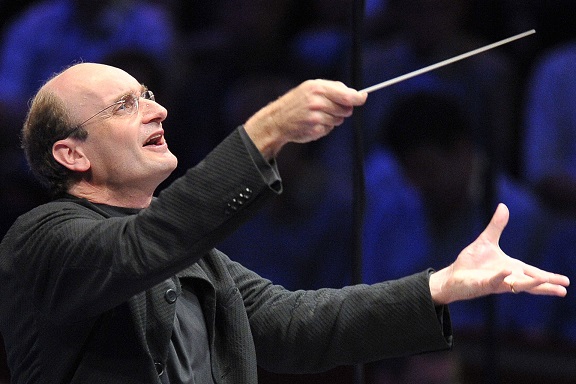
    I bring up my issues with the acoustics of David Geffen Hall because in these Mostly Mozart Festival performances the size of the orchestra is cut drastically; Andrew Manze, a famed violinist and conductor specializing in early music and period instrument practices, has a unique take on the sound of the orchestra. Even tough the chamber-sized ensemble plays on modern instruments, Maestro Manze’s orchestral balance brought to mind a small period-instrument ensemble. This would have been wonderful if the hall’s acoustics were not mediocre to begin with and as I mentioned above, I’m not convinced the rearrangement of seating in the hall enhances the sound in any way.


    It so happens that for Beethoven’s Violin Concerto the light sound of the orchestra was mostly very effective: that’s because Norwegian violinist Vilde Frang, making her MMF debut, delivered a truly unique performance. Beethoven’s demands on the violinist are intense; the concerto shocked the public upon its 1806 premiere. They were not prepared for a long and serious concerto like this: the revolutionary side of Beethoven was definitely part of this work. Ms. Frang, however, did the almost unthinkable: she played one of the most popular works of music in a way I’ve never heard anyone attempt: while abdicating nothing of Beethoven’s power, she delivered a gentle, dreamy performance. If most violinists compete with the orchestra for volume and heft, Frang and Manze joined forces to make the audience lean in: Frang’s frequent pianissimi – quieter than this concerto is used to – floated through the hall like gentle breezes. She never forced the instrument to fight or compete for attention, and Manze never forced the MMF Orchestra either. This was a perfect union of minds and musicians delivering a deeply felt and carefully thought out and fascinating performance. I hope Ms. Frang returns to NYC soon; she is a violinist to watch.
     

    Andrew-Manze-1920x1280


    Above: conductor Andrew Manze


    Things felt more familiar with the performance of Beethoven’s 3rd Symphony, the famed Eroica. The 1803 work changed the course of music and what a symphony was thought to be; there are now only 2 steps from Beethoven to, say, Mahler (No. 3 to No. 9 to everything that followed.) The opening chords of the Allegro con brio were bright and forceful. The movement unfolded with energy and verve. Marcia funebre was dark and brooding, but seemed closer in spirit to the earlier Violin Concerto than “Beethoven the revolutionary.”  To me, the Scherzo is always the most difficult movement to pull off: it seems to not belong to this symphony. Its jollity and energy are closer to Beethoven’s previous two symphonies, not the granitic Eroica. I’m afraid tonight that feeling remained, though the movement was played well. And the final Allegro molto was a perfectly executed march from darkness to triumph. 


    Except…back to the cursed acoustics of the hall. What was missing was the sound surrounding you, going behind you and coming back to hit the back of your head. The fact that Maestro Manze was using greatly reduced forces isn’t the reason for that; I’ve heard soloists and chamber ensembles at Carnegie Hall deliver ear-shattering sounds. At David Geffen Hall and in MMF’s seating configuration, no matter how much they tried, the sound simply gets lost.


    An orchestra like the NY Philharmonic can make the rafters shake through sheer will and size of the ensemble. It truly is a disgrace that a city like New York is incapable of building a hall for its home band and Festival. Maybe MMF should consider moving some of their performances to Carnegie Hall, which seems to be vacant during the summer. Tonight’s wonderful concert by Andrew Manze, Vilde Frang, and Mostly Mozart Festival Orchestra deserved to be heard.


    ~ Ben Weaver

  • Teatro Nuovo ~ LA STRANIERA

    P01br19s

    Above: composer Vincenzo Bellini

    ~ Author: Oberon

    Wednesday July 17th, 2019 – Will Crutchfield’s Teatro Nuovo presenting Bellini’s rarely-performed opera LA STRANIERA at Rose Hall in the Jazz at Lincoln Center home-space. The semi-staged performance featured the following cast:

    Alaide (La Straniera) – Christine Lyons, soprano
    Isoletta – Alina Tamborini, soprano
    Arturo – Derrek Stark, tenor
    Valdeburgo – Steven LaBrie, baritone
    Il Priore – Vincent Grana, bass
    Montolino – Dorian McCall, bass-baritone
    Osburgo – Isaac Frishman, tenor

    Chorus and Orchestra of Teatro Nuovo
    Will Crutchfield, maestro al cembalo
    Jakob Lehmann, primo violino e capo d’orchestra

    Written in 1829, LA STRANIERA was Bellini’s fourth opera. It has, in the last 50 years, been briefly associated with such bel canto paragons as Renata Scotto and Montserrat Caballe. One of the Scotto performances, from Palermo 1968, was in my reel-to-reel collection for years; hearing the opera live tonight brought back memories of enjoying her persuasive styling of this music. 

    In terms of plot, the opera borders on the risible: a queen (Alaide, known as La Straniera – the “Foreign Woman”) has been living incognito in a hut by a lake. She has inspired the love of the local Count Arturo, who murders a supposed rival who is in fact Alaide’s brother. Somehow, it’s Alaide who is accused of having committed the murder; but at her trial, the dead man suddenly shows up, saying he had fallen into the lake. Things muddle on until the king’s messenger appears to tell Alaide (turns out she’s the Queen of France) that she must resume the throne as the ‘other’ queen has died. At this news, the still-smitten Count Arturo kills himself, and Alaide has the obligatory mad scene. As with so many operas written in this time period, the story line is merely an excuse for a lot of singing. 

    Musically, LA STRANIERA has its moments but they are rather few and far between. There’s an awful lot of filler, most of it pleasant enough…but it’s music that rarely grips the imagination. There is no feeling of a musico-dramatic arc in the opera, but rather a series of disjointed scenes in which the story’s convoluted twists and turns make minimal sense. Above all, if these old operas are to be revived, the singing must be spectacular.  

    Vocally, the opening scene for Valdeburgo and Isoletta was really impressive and augured well for the rest of the evening. Baritone Steven LaBrie has a handsome voice, sizeable and expressive, with a gift for dramatic nuance. As Isoletta, a hapless bride-to-be, Alina Tamborini displayed a most interesting timbre, with a trace of flicker-vibrato that was very appealing. She has the wide range demanded by the composer – clear high notes and plush low ones – and a lovely trill.

    Tenor Derrek Stark’s sustained opening note of his long introductory recitative assured us that his would be a pleasing voice to hear in Arturo’s plentiful music. Later, in uncomprehending anger, Mr. Stark unleashed a brilliant top note that sent wave of murmuring approval thru the hall. The tenor’s flashy jacket was something of a visual distraction, though.

    Just as the onstage harp solo announcing the appearance of La Straniera (Alaide) sounded, the man sitting behind us began rummaging thru his belongings; he continued, undeterred by dirty looks and shushing. I think he was looking for a sandwich. This interruption was the beginning of ongoing deterrents to my concentration.

    Soprano Christine Lyons’s offstage opening lines did not intrigue; her voice had a throaty quality which – luckily – would soon become less evident. As the first act unfolded, the soprano produced many fine passages, with a good feel for dynamics and for the text. In her scenes with Mr. LaBrie and Mr. Stark, Ms. Lyons offered expressive singing, with an appealing sense of the character’s vulnerability.

    Having been accused of murdering Valdeburgo, Alaide has a ‘mad scene’ in which she incoherently tries to explain to the angered townspeople why she is holding a bloody sword. The vocal demands here, which come in fits and starts, brought out a weighted chest voice from the soprano that seemed better suited to verismo than bel canto.

    While all this was happening, the hall had become freezing due to air conditioning overkill. A woman in the front row kept checking her phone, the screen flashing brightly. In front of us were a whispering couple. Across the aisle, a squeaky chair added an unwanted obbligato to the music. And the young primo violino e capo d’orchestra, seated at audience level, was animated to the point of distraction. 

    Midway thru the intermission, we decided that Bellini had delighted us long enough.

    ~ Oberon

  • CMS: Summer Evenings I

    54f4d4450aeee1.82526134

    Above: violinist Erin Keefe, photographed by Lisa-Marie Mazzucco

    Wednesday July 15th, 2015 – Chamber Music Society of Lincoln Center are presenting their inaugural Summer Series: three concerts at Alice Tully Hall. The scheduled programs feature works by the greatest composers played by some of the finest musicians of our time: a surefire recipe for success.

    Tonight’s opening concert was sold out, with music lovers outside Tully Hall pleading with anyone who might have a spare ticket. Onstage, as the house lights dimmed, the Society’s co-artistic director Wu Han welcomed us with her usual warmth and enthusiasm, ending her speech by wishing us all “…happy summer fishing…I hope you catch some trout!” – a reference to the program’s closing work, Schubert’s beloved “Trout” quintet.

    Erin Keefe and Juho Pohjonen then appeared for Mozart’s B-flat major violin sonata, K. 378. Ms. Keefe’s gown, in rich shades of tourquoise and purple, evoked Klimt: it appeared someone had thrown handfuls of gold dust onto the frock, giving it a shimmering sheen. Ms. Keefe plays as handsomely as she looks and – joined by Mr. Pohjonen, who was at the keyboard for all three works tonight – they set the evening on its way with their gracious rendering of the Mozart. 

    In the opening movement, Allegro moderato, the two players trade off cascading motifs. The heart of the sonata, the Andante sostenuto e cantabile, has a touching song-like quality which the violin introduces almost hesitatingly, the pianist seemingly completing each ‘sentence’. Later, the violin takes up a more sustained theme, the opening bars of which seem to have been drawn from the old Jesuit hymn ‘Schönster Herr Jesu’; we used to sing this tune in church under the title ‘Fairest Lord Jesus’, and hearing it again this evening gave the sonata a personal appeal.

    The concluding Rondo: Allegro had a joyous lilt and the players showed especial affinity for the sprightly, deftly driven final section. They linger momentarily as if thinking of going off on a different tangent, but instead they resume the original trajectory and there’s a charming rush to the finish line.

    Tonight’s performance of Beethoven’s piano trio in E-flat major (Op. 70, #2) kept me enthralled, both by the intrinsic beauty of the music itself and by the exquisite details brought forth by the three players: Mr. Pohjonen (piano), Paul Huang (violin) and Jakob Koranyi (cello).

    Juho Pohjonen is a poet of the keyboard; he seems both a wonderfully attentive colleague and a player whose musicality reaches us from his own personal dreamworld. Treading this line between keen awareness and a deep spirituality, this enigmatic pianist is always fascinating to encounter. Violinist Paul Huang, the youthful-looking but already superbly accomplished current holder of a prestigious Lincoln Center Career Grant, proved his capacity for keeping an audience of serious music aficionados under his spell at his Morgan Library recital earlier this year. Depth of expressiveness and poignant lustre of tone have set cellist Jakob Koranyi among the most admirable musicians of the day; his mastery of dynamic control, so often encountered in the Beethoven trio tonight, is a particular joy.

    Dressed in white dinner jackets, the three young men reveled in the slow melodic unfolding of the Poco sostenuto in the opening movement of the trio which had begun with an almost melancholy phrase from the solo cello which is taken up by the violin then the piano in turn. Beethoven’s heritage, as successor to Mozart and Haydn, illuminates the second movement; then the third seems to herald Mendelssohn with its lyricism and grace. In the Finale: Allegro, the three players produced a wealth of nuanced detail which was wonderfully fresh and luminous, and never for a moment seemed fussy or merely ornate. 

    In their revelatory performance, Messrs. Pohjonen, Huang, and Koranyi were truly inspiring; their generous playing and impressive artistry set this Beethoven firmly in the top echelon of memorable musical experiences of recent seasons.

    Schubert’s “Trout” quintet was sumptuously played by Ms. Keefe with Roberto Diaz (viola), Mr. Koranyi (cello), Timothy Cobb (double bass) and the luxuriant pianism of Mr. Pohjonen. Making their mark in the ensemble, Mr. Diaz’s caramel richness of tone and Mr. Cobb’s genial tread (and his amiable seizing of every melodic moment) meshed with Mr. Keefe’s arching lyricism, Mr. Koranyi’s striking opulence of expression, and the combination of delicacy and power in Mr. Pohjonen’s playing, to hold the audience in a state of receptive eagerness.

    The inclusion of a variations movement, where Schubert’s popular song “Die forelle” is heard in a variety of rhythms and textures, was part of the composer’s agreement with Herr Paumgartner, the wealthy amateur cellist who commissioned the quintet. Schubert then has the last word; after a false ending which – as usual – fooled the audience into premature applause, the composer tacks on an Allegro giusto which is both short and deliciously sweet.

    The Society’s remaining two Summer Series performances (July 19th and 22nd) are reportedly nearly sold out, but it’s worth a try by going on-line here, or by calling the Alice Tully box office (212-875-5788), or by going there in person. 

    The Repertory:

    The Participating Artists:

  • Cedar Lab @ Cedar Lake

    1969399_10152531894249210_2500814993722967151_n

    Above: Cedar Lake‘s Jon Bond

    Wednesday July 30th, 2014 – I have always loved Cedar Lake Contemporary Ballet‘s homespace on West 26th Street and I very much enjoyed this evening’s presentation of Cedar Lab, a new adventure for the Company wherein the dancers create choreography on their colleagues.  Tonight, works-in-progress by Jon Bond, Navarra Novy-Williams, Matthew Rich, Joaquim de Santana and Vânia Doutel Vaz were presented.

    Earlier this month I stopped in at a rehearsal of two of the works, those created by Navarra and Vânia, so I had a sampling of tonight’s programme. The Cedar Lake dancers are among Gotham’s most talented and alluring, and this opportunity for five of them to spread their choreographic wings did indeed make for a stimulating evening. A quote from dancer/choreographer Navarra Novy-Williams set the tone for this new initiative: “We explored a lot, and I’m certain we are still exploring.”

    The only drawback to my enjoyment of the evening was that I was seated in the back row which, despite being on risers, caused my view of anything happening on the floor to be cut off by the rows of spectators in the intervening space. Since most of the choreographers made use of floor time in their danceworks, this aspect of the presentation went for nought from my perspective. 

    The opening work set a very high standard for the evening in terms of choreography, music, production elements, and dancing. Joaquim de Santana presented his duet DISTANT SILENCE, set to Sigur Rós’ “Fjögur Píanó” and “I Just wanted to Know” by Phillip Jack. The work opened with a brief film by Billy Bell in which the dancers – Jon Bond and Vânia Doutel Vaz – made a ghostly appearance. A large white drape is then torn down and Jon and Vânia appear in the flesh. They cross the space in a flow of gorgeously plastique moves, illuminating the music and choreography in a way that puts the viewer under a spell. Dancing in true sync or in partnered passages, Jon and Vânia were a compelling pair. Jon’s solo, with Vânia doing a walk-about, underscored his status as one of the great movers in the modern danceworld. Vânia is a marvelous match for him: her solo – in the second ‘movement’, set to spoken word and mechanical music – was very finely wrought. Mr. de Santana knows his dancers well and employed their incredible gifts to the finest advantage. There were no bows after the individual works, but if there has been Jon, Vânia and Joaquim would have brought down the house.

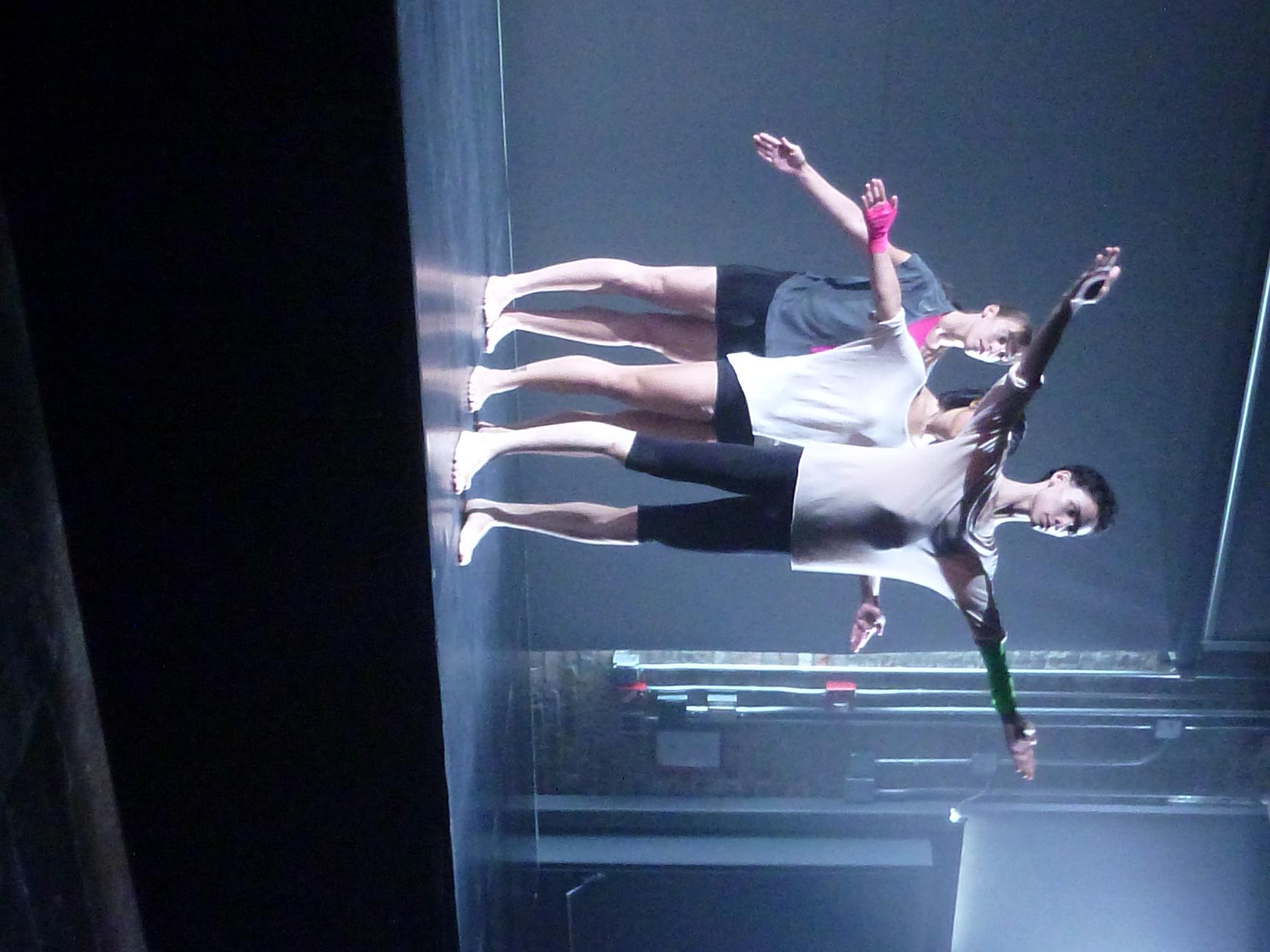
    Vânia was the next featured choreographer: her ensemble work THEM THERE was danced to an original score by Tom Sansky. The dancers wear simple white shirts and black briefs. One by one they step into the spotlight to pose and emote as their colleagues dance quietly in the background. Combining solo opportunities and in-sync ensemble passages, the overall effect was excellent though I wish I could have seen what was going on on the floor. Ebony Williams, that paragon of contemporary dance, was the last to step into the solo spotlight; she was soon engulfed by her fellow dancers. 

    I was dazzled by RESIDUAL REACTION, a film in which Matthew Rich combined his ‘double-major’ of dance and fashion, working with Billy Bell who directed and edited the work. A fabulous dance track from Nalepa and Flume sent the movie into orbit with incredible footage of Cedar Lake‘s sexy and spellbinding dancers. And they have never looked more sensuous: Nickemil Concepcion, Joseph Kudra, Navarra Novy-Williams, Guillaume Quéau, Ida Saki, Rachelle Scott, Madeline Wong, with guests Patrick Coker and Daphne Fernberger. The camera invades their privacy, lingering on their skin and muscle with provocative investigation as they move with seductive glamour to the music. Baby powder is an unexpected element, and later – dancing on a rooftop – we are enslaved by the emblematic gorgeousness of the Cedar Lake dancers. I hope this film will soon be available on the Company website, or on YouTube. It makes a super-enticing trailer. The moment it ended I wantd to watch it again.

    Some audience members are summoned to the stage to observe MUSE, Navarra Novy-Williams’ series of three solos, danced in turn by Acacia Schachte, Madeline Wong, and Rachelle Scott. Acacia, with her very personal mystique, snaps her fingers to turn on the spotlight for her solo which includes some very witty moves and covers the space fluently. Madeline, in a fanciful puff-skirt, dances to a big lyrical theme by Ennio Morricone, and then Rachelle displays powerful balance and control as she dances to “Moon River“. Here, more than elsewere, my inability so see the floorwork of the dancers was especially disheartening. But enough of the flavour of Navarra’s work emerged, and the music was particularly well-used.

    Jon Bond produced a nightmarish work, THE DEVIL WAS ME, dealing with the aspects of sin – one of my favorite topics! Music by Murcof and Peter Broderick summoned excellent work from the dancers – those already mentioned above plus Billy Bell, Gwen Benjamin, Joaquim de Santana and Jin Young Won. The work begins with a deeply ominous theme, Rachelle Scott in the spotlight; later she will endure a satanic ritual performed on a table. The dark gathering of masked feral creatures is briefly relieved by a passage where the dancers appear in silhouette before a yellow-gold sunset. But the overall tone is sinister and sinful.  The one thing that might have made this purgatorial work even more fascinating would have been to have Jon Bond dancing in it.

    The house was packed, and when I emerged into the lovely summer evening light there was a long line of dance-lovers waiting to get in to the second show. This sort of initiative is a feather in Cedar Lake‘s cap, and I sincerely hope Cedar Lab becomes an annual event.

  • Fadi J Khoury Dance @ NYLA

    Back-company

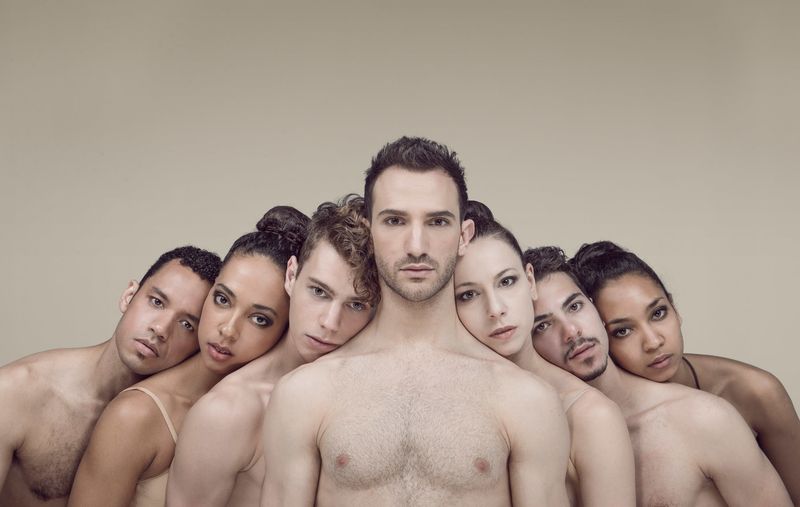
    Above: the artists of Fadi J Khoury Dance, photo by Nir Arieli

    Wednesday July 23rd, 2014 – Fadi J Khoury Dance enjoyed a highly successful opening night at New York Live Arts, the first of two sold-out evenings. Founded by Fadi Khoury, a native of Iraq, the Company boasts an international roster: dancers from Turkey, Spain, Italy, France, Costa Rica, and Colombia join together to present danceworks in a style in which Fadi, as choreographer, has skillfully merged elements of ballet and ballroom, with a dash of distinctively Middle Eastern spice thrown into the mix. 

    I met Fadi and his partner, Sevin Ceviker, when they were dancing with Nejla Yatkin’s troupe; another of tonight’s dancers, the lovely Karina Lesko, has also danced for Nejla and for Morales Dance.

    The opening work tonight, TANGO UNFRAMED, was danced to a collage of tango-oriented music by Ron Jackson, Emilio Solla, and Rosa Antonelli. Judith Daitsman’s lighting designs were an intrisic element in the evening’s visual appeal. 

    Blending the sultry sophistication of the tango with a fusion of ballet and contemporary movement, TANGO UNFRAMED opens with a striking vision of the lithe and charismatic Fadi Khoury standing in a pool of light. His solo dancing is marked by expansive port de bras and an elegance of phrasing which is underscored by a subtle sensuality. Sevin Ceviker, in high heels and a pretty frock, appears in her own spotlight and establishes a connection with Fadi.

    The three other couples come and go from the dance; there is a female ensemble segment and then a finely-wrought duet for Sevin and Fadi, danced to a piano solo. They display a mystic affinity both for the music and for one another.

    Fadi has been onstage all the time up to this point, but now the space clears and the stage remains empty for a piano interlude. Then there is an amusing quartet where two girls set their sights on two boys only to find that the boys have their sights set on one another.

    Sevin and Fadi commence another duet which blossoms into the work’s closing ensemble for the entire Company.  The audience responded with genuine enthusiasm to this evocative, passionate work. 

    The intermission stretched a bit long and though I usually dislike hearing music played during intermissions at dance performances – it tends to detract from the music the choreographer has chosen to set his dances to – some Middle Eastern melodies here would have been welcome. 

    ARABESQUE opens with Sevin Ceviker seated upstage in a lighted space as fog swirls about. The music is ominous, with an outer-space feeling. She remains on the floor for a while, then rises to dance on pointe. The other women join her, dancing to a big beat, then suddenly Fadi explodes onto the scene with a spacious jeté.

    The bleak sound of the desert wind signals the start of a ritualistic duet for Sevin and Fadi; they are kneeling, facing upstage, and they remain on the floor for a long time but luckily Fadi is a choreographer who knows what to do with floor time and so the duet sustained our interest, especially when Fadi sank back in a pair of voluptuous backbends.

    The ensemble intrudes, the boys bare chested in satiny midnight blue tights. Then Sevin and Fadi resume their duet, the music driving to a pounding beat: things get sexy, yet the movement remains balletic. The girls dance to a swirl of Arabic music, then the boys come leaping on one by one. Sevin and Fadi continue to dance in their own private realm.

    In a new section, two couples appear, followed by a boy’s trio and a trio for the girls which melds into a dance for all six. Sevin and Fadi ignite another duet passage, which leads into the concluding ensemble for the whole Company.

    The composers drawn upon for ARABESQUE are Mercan Dede, Samer Ali and Said Mrad: a very effective mixture, and again Ms. Daitsman’s lighting was excellent.

    The evening ended with a rousing standing ovation and the Company dancers were all greeted with cheers, marking an auspicious start for Fadi J Khoury Dance. Let’s see where this success leads them!

  • Installation: Cedar Lake

    L1180461

    Wednesday July 24th, 2013 – Cedar Lake Contemporary Ballet‘s interim artistic director Alexandra Damiani conceived and directed this evening’s expansive and stimulating installation which was presented at my favorite New York dance venue: Cedar Lake‘s home space on West 26th Street.

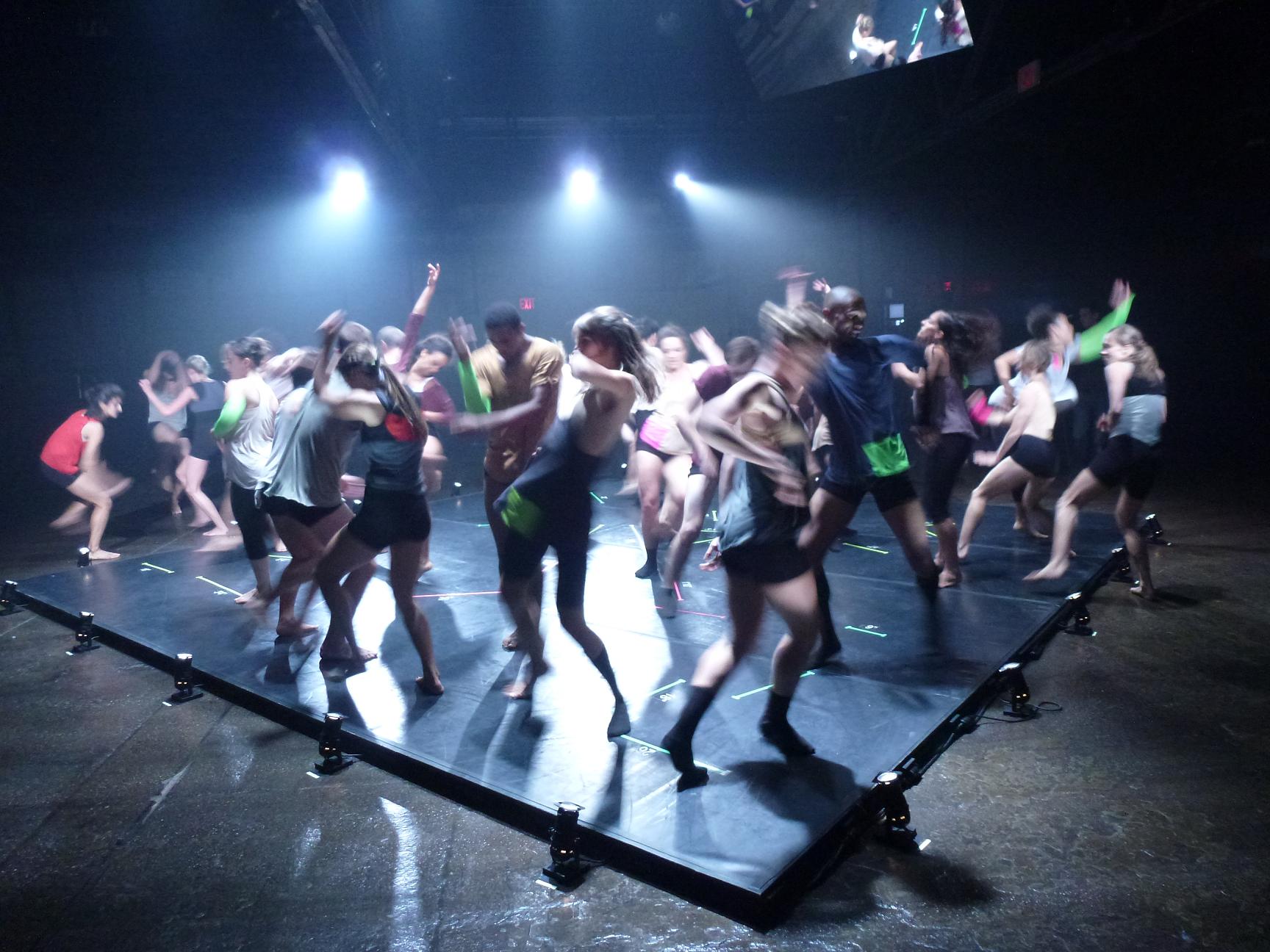
    Thirty-two young dancers who had participated in this year’s Cedar Lake 360° summer intensive culminated their experience by joining Company members in a panoramic dance presentation featuring Clifton Taylor’s imaginative lighting, and sexy costuming by Cedar Lake‘s Matthew Rich. Company members Jason Kittelberger & Acacia Schachte, Jon Bond, Rachelle
    Scott and Ebony Williams each had a hand in the choreography, their work blended into a seamless montage of movement along with repertory excerpts from Sidi Larbi Cherkaoui and Andonis Foniadakis. All of this took place to the accompaniment of a sweepingly propulsive sound collage developed by (and including  original music by) Jasper Gahunia.

    Cedar Lake’s installations are both fascinating and frustrating: as an audience member you get to wander the space, sometimes actually coming into contact with the dancers. There are always three or four dance elements going on simultaneously in different areas of the space and that’s what leads to a bit of frustration: while watching one module of movement your eye is caught by something happening across the crowded room. After the first ten minutes I was thinking that even if I could attend all four showings of the installation I would still not be able to take it all in.

    The student dancers were super; many intriguing dance personalities are developing here and I feel certain several of them will become familiar to us as their careers develop. Of course it was exciting to see the Company members, some of them dancing and others on the side-lines.

    L1180428

    Photography is encouraged during Cedar Lake installations but I’m not skilled enough to take advantage of the situation, given the speed of the movement and the ever-shifting light. Only when a dancer is momentarily still (Company member Billy Bell, above) was my camera of any use to me. So for the most part I simply watched the event unfold, trusting that there will be images forthcoming from more seasoned photograhers.

  • Cedar Lake 360°

    L1020791

    Wednesday July 27, 2011 – As the culmination of a unique Summer Intensive, Cedar Lake Contemporary Ballet are presenting an installation entitled Cedar Lake 360°at their home theater (547 West 26th Street). The work premiered on July 27th and there are additional performances on the 28th and 29th, with two showings each evening (7:30 PM and 9:00 PM). Ticket information here.

    Cedar Lake artistic director Benoit-Swan Pouffer’s newly created installation is performed by the dancers of the Cedar Lake Company along with students from the Summer Intensive program. In all, nearly fifty students are participating, split into two casts.

    Since I was unable to attend any of the performances, I was invited to watch the back-to-back dress rehearsals on the afternooon of the premiere. It it always exciting to be in the Cedar Lake performing space, and the Cedar Lake dancers – among my top favorites on the Gotham scene – appear in the installation to inspire both the viewer and the students with their peerless energy and their utterly unique personalities.

    L1020571

    The installation, which occupies the entire wide open theatre-space of the Cedar Lake venue, features a dynamic composed-and-compiled score by Mikael Karlsson and superb lighting by Amith Chandrashaker. Sidi Larbi Cherkaoui and Cedar Lake dancers Harumi Terayama And Manuel Vignoulle were involved in the choreographic design.

    IMG_1599

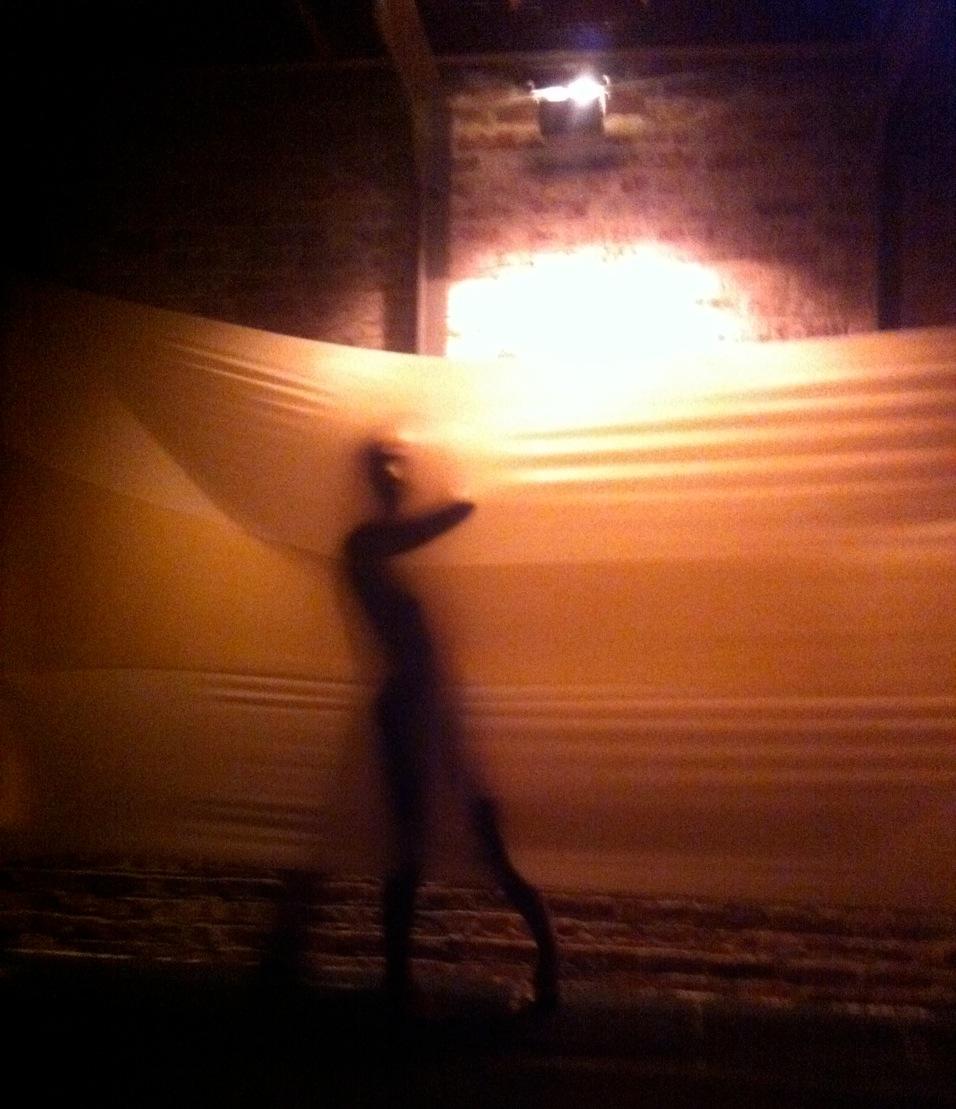
    Among the many highlights of this installation is a dramatic solo performed by Cedar Lake’s inimitable Jon Bond behind a gold-lighted panel of fabric thru which the dancer’s shadow and the images of his face and body pressing againt the shroud produce a nightmarish effect from which he eventually breaks free. 

    L1020559

    Installation-viewing presents a challenge in that there is so much going on simultaneously – you always feel while watching one segment you are missing something else in another part of the space. Even seeing the piece in twice, I felt there was a lot more to be discovered. 

    L1020687

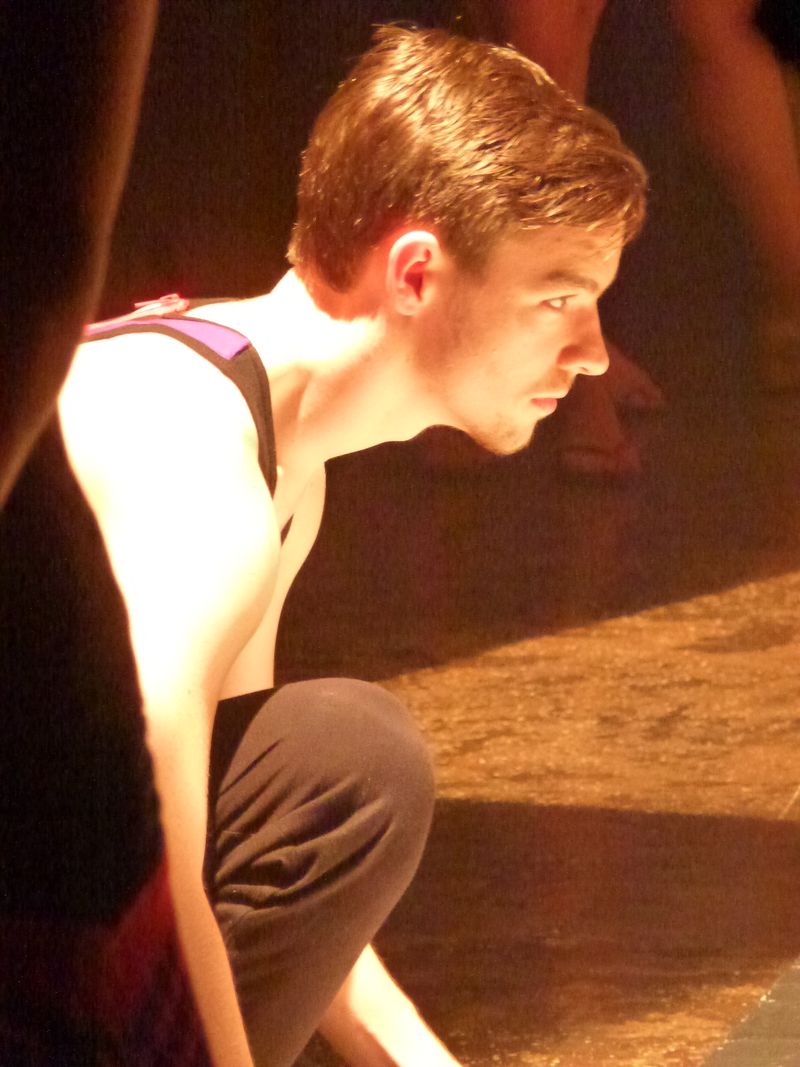
    I enjoyed seeing again three dancers among the student participants who I’ve seen before: Greg Lau (above), Angelica Stiskin and Austin Diaz. Among the double student cast there were a large number of very impressive and exciting individuals; I’m sure I’ll be encountering several of them again in the coming months.

    The afternoon also served to show my total inadequacy as a dance photographer. I simply don’t have the knack for it yet, but I will keep trying.