Tag: Wednesday March

  • Hubbard Street @ The Joyce

    Shota

    Above: Shota Myoshi of Hubbard Street Dance Chicago

    ~ Author: Oberon

    Wednesday March 20, 2024 – So great to see Hubbard Street Dance Chicago again! When I lived in Hartford, we’d go up to see them each Summer when they came to Jacob’s Pillow. Tonight at The Joyce, they offered a finely-devised program which was musically and stylistically varied, and superbly danced.

    Coltrane choate burnett foto michelle reid

    Above: dancers Jacqueline Burnett and Aaron Choate in Coltrane’s Favorite Things; photo by Michelle Reid

    Lar Lubovitch’s Coltrane’s Favorite Things was created in 2010 and was taken into the Hubbard Street rep in 2023. I confess that I’ve had a lifelong allergy to jazz, and while I admire John Coltrane’s inventive take on the Rogers and Hammerstein hit from The Sound of Music, I must admit that there were times when the music seemed endless. But: no worries! Mr. Lubovitch’s flowing, fleet-footed choreography filled the stage with movement, and the dancers seemed to be having a blast dancing it. 

    There may have been some cast changes from the listing in the Playbill, but one distinctive dancer stood out: Shota Myoshi (photo at the top) is a petite young man who dances large. His sheer joy at executing the technical feats of the choreography seemed to set the tone for his colleagues. Everyone danced their hearts out, winning a vociferous ovation at the end of the piece.

    On leaving the hall at the end of the show, I ran into the irrepressible JJ (aka Jonathan E Alsberry), an iconic Lubovitch dancer who is now Senior Rehearsal Director at Hubbard Street. And with him was the great man himself: Lar Lubovitch. So wonderful to see them again!

    Rena butler

    Hubbard Street’s giving the New York premiere performances of Rena Butler’s Aguas Que Van, Quieren Volver during this run; production photo above. It is a captivating work in every regard. And the first acclaim goes to lighting designer Julie E Ballard; her settings seemed to create a narrative of their own in the work, which details the shifting emotions of a ménage à trois. From some performance photos I found, it looks like this piece is sometimes danced (as tonight) by a man and two women, and other times by a woman and two men. 

    This evening, the dancers were Jacqueline Burnett, Simone Stevens, and Eliot Hammons. They were technically perfect, and emotionally powerful. Each has solos to dance – Ms. Burnett’s being particularly well-choreographed, and beautifully danced – and the partnering ranges from sexy to quirky. Ms. Stevens brought a nervous energy to her dancing, and a personal intensity, whilst the tall Mr. Hammons moved and partnered with a distinctive personal grace; he seemed to be holding the triangle together by sheer force of will and desire. The music, which often has a sexy sway, was sublime, especially the ‘title song’.

    At the end, order is restored – at least for the moment: beautiful final image of the threesome standing together. The work captivated me on a personal level, as I recalled the difficulties we faced in our own ménage à trois back in the early 1990s. Jealousy undid us.  

    Barton

    The program ended with a masterpiece: return to patience by Aszure Barton, sent to a score by Caroline Shaw that may have been inspired by Satie.  To me, this seemed to be a contemporary renewal of the tradition of ‘the white ballet’: everything is purely and wondrously white as the lights slowly come up on the entire company standing in place. Balanchine’s Serenade is cunningly given a graceful nod as the dancers in unison shift their feet into first position. Thereafter, thoughts of Swans, Wilis, Shades, and Sylphs constantiy dance thru the mind. Solos (again Ms. Burnett and Mr. Hammons stood out) are woven into passages for groups and fleeting partnering motifs. Mr. Myoshi was again entrancing.

    The group dances in sync, with lyrical arabesques and slow ‘leaning’ passages.The tempo speeds up, but only a bit, for another solo from Mr. Hammons, joined by a sextet. The movement becomes more animated, with a male quartet and a female solo observed by all in a semi-circle. There is a reverential bow, but that is not quite the end.

    Ms. Barton’s work held the audience under a spell, and then the dance seemed to recede as if we had experienced a dream that fades away. There was a moment of silence, before the audience responded with fervent applause.    

    ~ Oberon

  • Saxophonist Steven Banks @ The Morgan Library

    Steven banks

    Wednesday March 23rd, 2022 matinee – Young Concert Artists presenting a noontime “encore” concert by saxophonist Steven Banks (photo above) at the Morgan Library. Pianist Xak Bjerken joined Mr. Banks for a wonderfully varied program.

    From way back in my high-school days, I’ve loved the sound of the saxophone; I chose the French horn, but in band, I always sat next to our phenomenal first sax player. This afternoon was the first time I’ve ever attended a full recital of music for the instrument, and I was bowled over by Mr. Banks’ opulent sound, commanding technique, and deep musicality. 

    The program opened with Canadian composer Denis Bédard‘s Fantasie, a delightful piece which Mr. Banks played on soprano sax. As the afternoon evolved, he moved to alto sax, and then to tenor sax. The exuberant opening of the Bédard immediately established Mr. Banks as a virtuoso of the first order. His tone is luminous, his technique compelling, his breath control astonishing. Tall and slender, he is a charismatic musician, and he had the audience under his spell within seconds. Bédard makes the pianist an equal partner in this work, and Mr. Bjerken played with great clarity and feeling, both here and throughout the concert.

    The Fantasie features flowing melodies, with alternating passages of lyricism and animation; as the music takes a pensive turn, both artists made much of the sustained phrasing. Then, a da capo of the zestful opening speeds on to a quirky end.

    Xak Bjerken

    Above: pianist Xak Bjerken

    I became familiar with Paul Creston’s Sonata in E-flat Major, Op. 19, during the pandemic via YouTube; this afternoon, I was very glad for the opportunity to hear it played live. The piece was premiered by one of the most popular American saxophonists of his day, Cecil Leeson, in New York City in 1940. For this, Mr. Banks took up his alto sax.

    The sonata is in three movements; the first, marked “With Vigor“, has a lively beginning and goes on thru many contrasts of speed and flow, including  a warm, drawn-out melody and passages of bustling wit. Both Mr. Barnes and Mr. Bjerken showed off a wide range of dynamics. The second movement, “With Tranquility“, finds Mr. Bjerken with a solo which develops into a lovely song in which both artists showed a gift for finely-shaped phrasing and for finding appealing colours. The music becomes passionate, then turns dreamy. The sustained ending was immaculately rendered. Following a spirited opening the third movement – “With Gaiety” – moves on to an interlude wherein Mr. Banks summoned up some of his sweetest sounds. The music then breezes on to its finish.

    Now that we have Mr. Banks among us as a saxophone paragon, let’s hope contemporary composers will follow Paul Creston’s lead and bring us more sonatas – and/or concertos – for the instrument.

    Mr. Banks then spoke of the next three works, which are often featured as encores; he wanted to bring them to us as a set, and as such they were highly enjoyable to hear…their contrasts setting each work in high relief.

    First came Claude Debussy’s brief and haunting Syrinx, which is usually heard as a flute solo. Languorous and seductive, this music found fresh hues in the saxophone range: a dusky quality develops, and Mr. Banks’ fantastic dynamic control made it so alluring.

    From Astor Piazzolla, we heard Milonga del Angel, which Mr. Bjerken commenced with a slow swaying motif from the piano. The music is full of suggestion: at first inviting, then more insistent.  

    Steven Stucky’s Scherzino is playful and slithering at first, then becomes songful, and finally dotty. The piano goes high before we reach a sudden end.

    Mr. Banks’ next offering was a large piece he wrote himself: Come As You Are. It is in four movements, three honoring of his siblings, and the final one dedicated to his mother; each movement drew its inspiration from a beloved spiritual. For this, Mr. Banks brought forth his tenor sax.

    In the first movement, Lift My Eyes, we could hear echoes of “My Lord, What a Morning”. There are big bursts of melody, and the pianist plays an important role here. An uncannily sustained note from Mr. Banks led to a slow, quiet cadenza.

    Times of the Storm draws on “Wade in the Water”; it is bustling, jazzy music. At one point, Mr. Banks turned his back to the audience and achieved a sort of echo effect as Mr. Bjerken reached into the piano to pluck individual strings. A sense of quiet rapture settles over us; from the keyboard, Mr. Bjerken plays swirling pianissimo spirals of notes.  

    Strength of my Life moved me deeply, since the old song “His Eye Is On The Sparrow” was a great favorite of my maternal grandmother, who would sing it to me in her old age with a quavering voice. From a lulling start by the piano, the saxophone sings to us passages that veer from poignant to passionate. Mr. Banks finishes this movement with a long tone that slowly vanished into the air. What a sound!

    For the fourth and concluding movement of this suite – Lift My Hands – Mr. Banks turned to “I Still Have Joy”. A somber start soon grows more lively. I cannot recall ever hearing a more sumptuous saxophone tone than what Mr. Banks gave us here…well, all afternoon, actually.  And then he turns to some flights of coloratura before a big build-up to the finish.

    This singular creation, at once personal and universal, was such an impressive undertaking for the artist. His family were present, hearing the music performed ‘live‘ for the first time.

    The program concluded with Pedro Iturralde’s Pequena Czarda, which has a dramatic start before becoming a big sad-love song. A fast and bouncy czardas pops up, slows for an interlude, and then ends with a swirl of notes.

    Mssrs. Banks and Bjerken gave us so much to enjoy this afternoon. The concert marked a reunion with my high-school classmate Deb Hastings, who came down from Connecticut specially for the occasion. After the two-year pandemic lull, it was wonderful to see her again…and to hear together such fresh, vibrant music so engrossingly played.

    ~ Oberon

  • Petrenko|Bayerisches Staatsorchester @ Carnegie Hall

    CH1375937

    Above: Kirill Petrenko on the Carnegie Hall podium; photo by Chris Lee

    ~ Author: Ben Weaver

    Wednesday March 28th, 2018 – Kirill Petrenko is finishing his term as the Generalmusikdirector of the Bavarian State Opera and in the 2019-20 season will take over as the chief conductor of the world’s most prestigious orchestra, Berlin Philharmonic. It is with the Bavarian State Opera forces (in the concert hall dubbed Bayerisches Staatsorchester) that Petrenko is making his Carnegie Hall debut this season. His only previous NYC appearances were at the Metropolitan Opera where he led a very memorable revival of Ariadne auf Naxos in 2005 and Khovanschina in 2012. For this Carnegie debut concert, Petrenko programmed two oft-forgotten works by two very famous composers: Johannes Brahms’ Double Concerto and Pyotr Tchaikovsky’s Manfred Symphony.

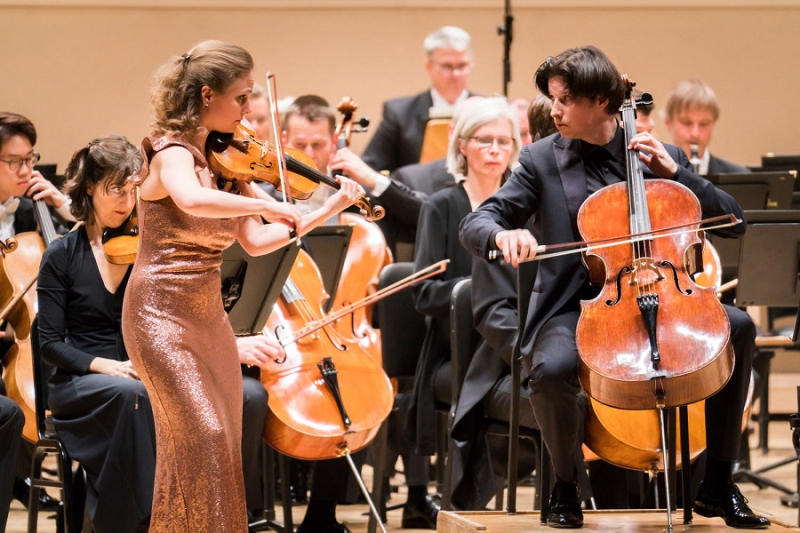
    Brahms composed the Concerto for Violin, Cello and Orchestra, Op. 102, in 1887. It was his last orchestral composition and it was greeted coolly even by ardent supporters like Eduard Hanslick. Soon Brahms himself was dismissing it as “folly” in letters to Clara Schumann. Neglected for many years, it certainly deserves to be heard more often; it surrenders nothing to his famed violin concerto in inspiration, melody and excitement. The writing may not seem as virtuosic as the violin concerto perhaps because Brahms composed a truly double concerto. The two instruments don’t have the kind of virtuosic writing that concertos often do. The music is more of a dialogue for violin and cello – and orchestra, too. It takes a great deal of camaraderie between the two soloists and conductor to bring the pieces together. Maybe it’s the lack of true star turns for the soloists that keeps some musicians away. But when played as superbly as it was by Julia Fischer and Daniel Müller-Schott, with Maestro Petrenko on the podium, the results are breathtaking.

    CH1375954

    Above: Julia Fischer and Daniel Müller-Schott playing the Brahms Double Concerto, with Maestro Petrenko; a Chris Lee photo

    The work begins with a dramatic and brief orchestral opening and immediately the cello launches into an extended solo. One of the few passages of this kind in the work, Müller-Schott immediately established himself as an artist. Rich and velvety notes poured from the instrument. Julia Fischer, a former child prodigy who has grown into a true artist of the violin, soon joined in for one of the concerto’s many extended conversations between the two instruments. Ms. Fischer’s sound is delicate and sweet, the notes rolling effortlessly from her bow. Fischer and Müller-Schott have collaborated many times over the years. Their discography together includes a lot of chamber music, as well as the Brahms concerto. Their musical partnership came across beautifully in the performance, whether playing in unison or handing off music back and forth, it’s the sort of relationship that takes time to develop. The hushed, pastoral-ish second movement was wondrous and the Bohemian inspired dances of the Finale were perfect. Maestro Petrenko and the superb Bayerisches Staatsorchester forces were excellent partners.

    Ms. Fischer and Mr. Müller-Schott gave an encore: an extended virtuoso piece: Passacaglia by Johann Halvorsen. It was really great!

    CH1375936

    Above: Julia Fischer and Daniel Müller-Schott, photo by Chris Lee

    Tchaikovsky’s largest orchestral work, the Manfred Symphony was composed in 1885, between his more famous 4th and 5th Symphonies. Inspired by Byron’s poem (Schumann composed a famous overture based on it as well), Tchaikovsky – already master of the large orchestral forces – outdid himself with sheer size of forces needed, including a harmonium (typically replaced by an organ in performances and recordings.) Initially Tchaikovsky considered it to be his finest composition, but after a mixed reception from critics and the public, in what was a common refrain of his life, turned on it and declared it awful; even considered destroying everything but the first movement. Fortunately his instinct to burn it did not come to pass because it is certainly one of his greatest works. And I often think it may be his greatest symphony.

    What I find astonishing about the Manfred Symphony is the sheer amount of invention – melodic and orchestration. In some ways it reminds me of Verdi’s Falstaff. Some complain that Verdi’s last opera is lacking in melody, but it might actually contain more melodies than all of his other works combined. They simply fly by and disappear so quickly that one can fail to notice. That’s my view of Tchaikovsky’s Manfred. The melodies and brilliant orchestration can be so sudden, so novel and so brief that it’s all gone and moved on to something else entirely before you realize what you just heard. It is truly a work that demands repeated hearings.

    The dark first movement depicts Manfred’s anguished wanderings in the Alps; “His life shattered…”, as the program note (by Mily Balakirev) describes. With halting phrases, Tchaikovsky depicts a peaceful pastoral one moment, Manfred’s pain the next. The explosive climax – one of Tchaikovsky’s most beautiful melodies – is hair-raising. I often hear it as a perfect musical accompaniment to the moment in Wuthering Heights where Heathcliff is found dead in Catherine’s room, thunder and lightning blaring outside. The two middle movements are, by contrast, blasts of light. The light fairy music of the Scherzo (in the program a fairy of the Alps appears to Manfred splashing in a waterfall) would have pleased Mendelssohn, I think. The slow third movement presents a portrait of a peaceful nature, something Beethoven would have recognized perhaps. And in the final movement, again a darkness descends. The music swirls and growls as Manfred visits the caves of Arimanes. And the anguished love theme from the first movement returns to signal Manfred’s death – greeted with an organ playing a hymn.

    The forces of the Bayerisches Staatsorchester played the work superbly. Kirill Petrenko led an all-around thrilling performance, goading the players to play bigger and louder (I was reminded of the famous story of Richard Strauss rehearsing Elektra and yelling to the players: “Louder, louder! I can still hear Madam Schumann-Heink!”) But effortlessly bringing volume and emotion down to a whisper when needed as well. Though Manfred has long been neglected (many complete recorded cycles of Tchaikovsky’s symphonies do not include it), over the past few years it has been heard in NYC several times. New York Philharmonic played it with Semyon Bychkov (one of Petrenko’s mentors) and Vienna Philharmonic played it at Carnegie with Valery Gergiev. Perhaps Maestro Bychkov’s performance was bigger. The NY Philharmonic’s heavier sound might account for the bigger bombast. Bayerisches Staatsorchester has a leaner, more pointed sound overall. It provided greater transparency in the more heavily orchestrated parts (and there are many.) Personal tastes will vary on the preferred sound. But no doubt Kirill Petrenko led a superb night of music-making. His future with the Berlin Philharmonic is very exciting.

    CH1375935

    Above: Kirill Petrenko and the musicians of the Bayerisches Staatsorchester acknowledge the applause at the close of this evening’s concert; photo by Chris Lee

    ~ Ben Weaver

  • YCA Presents Flautist Anthony Trionfo

    Anthonyhiresmattdine3

    Above: Anthony Trionfo, photographed by Matt Dine

    ~Author: Oberon

    Wednesday March 28th, 2018 – Young Concert Artists presenting flautist Anthony Trionfo at Merkin Hall. Mr. Trionfo is a musician of prodigious talent and scintillating personality; along with the excellent pianist Albert Cano Smit and a quartet of string players, he offered a wide-ranging, adventurous program combining the familiar, the rare, and the new.

    Gabriel Fauré‘s Fantasy in E minor, Op. 79, opened the evening. Mr. Trionfo’s shining tone and his feel for the sensuous undercurrents of the opening Andantino gave way, in the Allegro, to florid passages of crystalline coloratura. Mr. Cano Smit was the ideal partner here, his playing impeccably tailored, his seriousness of intent and commitment most welcome in such a young artist. 

    Returning alone to the stage, Mr. Trionfo gave a superbly confident performance of J.S. Bach’s Partita in A minor, BWV 1013. In this suite of dances, the flautist showed great subtlety and a multi-hued timbre that kept the music ever-alive. The Courante had a feel of birdsong, the Sarabande a forlorn air of touching simplicity. In the concluding Bourrée anglaise, the playing was light-filled and lovely.

    The New York premiere of drip/spin by Katherine Balch, the 2017 YCA Composer-in-Residence, was prefaced by Mr. Trionfo’s remarks about the ‘dew-drop necklace’ – silk threads and mucus droplets – with which the glow-worm attracts and entraps its prey. The perpetual motion of the piano part seems to envision the spinning toils of the glow-worm, whilst the sighs and blips from the flute depict the unsuspecting victim. Some of the piano keys have been ‘prepared’, adding a ghostly quality. The flute lingers on high, until an energy drain occurs. Then the piano begins a rolling motif; in its death throes, the preyed-upon flute goes wild, with harsh accents that finally sputter out.

    Al21165

    For the Chant de Linos by André Jolivet, a string quartet comprised of Mélanie Genin (harp), Aleksey Semenenko (violin), Ida Kavafian (viola) and Sang-Eun Lee (cello) joined Mr. Trionfo onstage. André Jolivet (1905-1974) composed this work on commission from the Paris Conservatoire in 1944 as a compulsory test piece for competitors in the Solo de Concours; the prize was won that year by Jean-Pierre Rampal. The work is a threnody (or lament to the dead) inspired by the story of Linos, son of Apollo. Linos taught Orpheus to play the lyre, and he was later killed by Heracles for criticizing him too much. André Jolivet was a composer inspired by the legends from antiquity; he wrote many chamber music works, eleven concertos, as well as orchestral and vocal music.

    The rich yet transparent textures of the strings are quite contemporary in sound yet they evoke a distant, mythic past. A dreamy passage for flute and harp draws us in; the music can veer from lyrical to explosive in the twinkling of an eye. A subtle flute solo leads to a darkish dance played by all. Things get a bit woozy before turning to lament; following a cadenza, the music dances onward with the flute trilling and piping. What a great idea to program this ensemble piece tonight: a wonderful opportunity to hear this music, and so beautifully played.  

    Albert cano smit

    Above: pianist Albert Cano Smit

    A fascinating performance of Lowell Liebermann’s Sonata for flute and piano, Op. 23, followed the interval. The opening Lento con rubato soon wraps us in the strange beauty of its misterioso atmosphere. Delicate sounds from the piano’s upper register are followed by a big outburst which subsides into ghostliness. Single notes struck by the pianist underscore a sinuous flute motif; then the flute sound turns big and piercing. Rippling piano figurations summon the flautist back to song, a gentle flow becoming a percolation. The haunting melody returns in all is mystery, and Mr. Trionfo’s flute makes a final ascent to a remarkably sustained note that tapers away.

    In the ensuing Presto energico, there is much bouncy, lively coloratura from the flute which Mr. Trionfo conveyed brilliantly, with lots of body English; meanwhile the piano writing is animated…almost wild. The music sails forward, with virtuosic playing from Mr. Cano Smit whilst Mr. Trionfo spins high flourishes with his flute. This work drew a very warm audience response, with the composer taking a bow to waves of enthusiasm.

    Ian Clark’s Zoom Tube again gave Mr. Trionfo the opportunity to demonstrate some of the various sound effects his flute could produce…like the Balch, but more extroverted and pop-oriented. He sometimes seemed to be producing two different sounds at the same time, ‘speaking’ or blowing air, playfully jazzing things up, even emitting a whooping scream at one point.

    Mr. Trionfo’s arrangement of the traditional Carnival of Venice provided an immensely enjoyable showcase for his virtuosity. After a captivating trill, the flautist embarked on a series of variations on the familiar tune: the blues, bel canto, jazz, a Latin lilt, ‘Casta diva‘, and on and on. Mr. Cano Smit was the perfect accomplice in this imaginative tour de force as the two players kept the audience thoroughly engaged with their technical dazzle and well-contrasted personalities.

    As an encore, Mr. Trionfo offered Debussy’s Syrinx, ending on a sustained, gossamer pianissimo.

    ~ Oberon

  • Tetzlaff @ Tully

    ~ Author: Scoresby

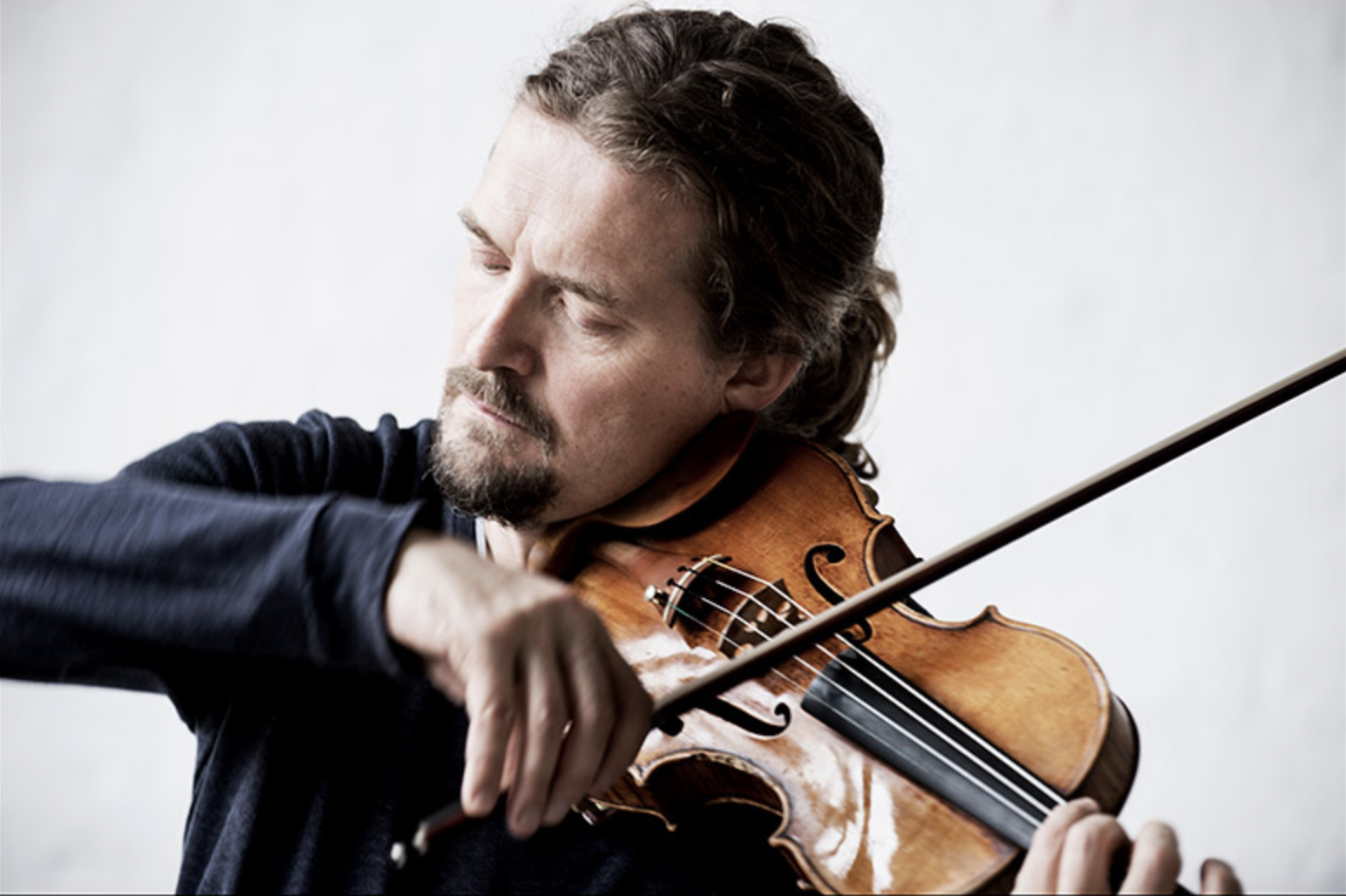
    Wednesday March 28th, 2018 – It is difficult to write about Bach’s Sonatas and Partitas for Solo Violin, especially live performances. It is stunning music with too many layers to write about, nearly impossible to play well live (recordings polish all the difficulties away), and something that many people are familiar with. Of course it is far harder to play them in an evening – the endurance required is a feat that few violinists attempt. As part of the Lincoln Center Great Performers series in Alice Tully Hall, violinist Christian Tetzlaff gave a solo recital of two thirds of the set. Mr. Teztlaff has a history of performing these works every few years in NY, he has played them twice in full at the 92nd Street Y before (both of which I regretfully missed) and just issued his second recording of the set last year. Thus it seemed like the perfect opportunity to sit down and listen.

    Mr. Tetzlaff was all business this evening, walking out on stage and starting to play the Grave of Sonata No. 2 in A minor, BWV 1003 before the audience had even stopped clapping. The audience took this entire movement before settling in (people were still rustling in their seats, whispering, etc…). He took a brisk tempo and sounded almost improvisatory with this opening. The sound was clean and had almost no vibrato. Without a pause he jumped straight in to the Fuga, making the two movements sound like something out of the Well-Tempered Clavier

    The fugue was orchestral in scale and each down-bow was emphasized to give the piece its own internal rhythm. The effect was hypnotic, drawing the listener into Mr. Tetzlaff’s world. While not clean playing by any means, that’s not the point when listening to Mr. Tetzlaff. He is able to build large structures without making the music sound pretentious – his playing is fluid and with ease all at once.

    Giorgia Bertazzi
    Above: violinist Christian Tetzlaff; photo credit: Giorgia Bertazzi

    The Andante was the highlight of the concert. Again a faster pace than is typically played, Mr. Tetzlaff used this to bring out the accompanying pulse in the bass. Just by playing it faster, the piece sounded more orchestral and unified without losing its charm. Many violinists eschew this pulse for the main melody, but Mr. Tetzlaff gave them equal importance making the melody sound like a baroque soloist sitting atop an accompanying recorder. Despite that large sonority, Mr. Tetzlaff was unassuming in his playing – not injecting anything besides bringing out that counter-melody. There was basically no tension nor ornamentation, just the soft padding of the pedal point and the beautiful melody sitting atop. It is moving to hear music played that joyously and humbly; the happiness was contagious.

    In the sunnier second half of the program with Sonata No. 3 in C major, BWV 1005 and Partita No. 3 in E major, BWV 1006, Mr. Tetzlaff was more at home. His unpretentious, almost folksy sound worked well with both of these works. The Fuga of Bach’s 3rd sonata is one of Bach’s most complex fugues. It starts with a simple theme that is put through the wringer of different techniques that would be difficult on a keyboard, let alone a violin. Mr. Tetzlaff navigated its complexity by highlighting the inner voices and given a soft bowing, making this work sound more intimate despite a slew of mistakes. The dense chords became chorale like. 

    The other highlight of the program was the fourth movement of this sonata. Mr. Tetzlaff played the Allegro assai with ease, eliminating all of the rough sonorities that torment other violinists. His tone was understated, quiet, and made every voice entirely visible. His bowing was magical to watch, it looked (and sound) as if there was no tension – just gliding through the technical piece like water pours into a glass. This allowed him to make each key shift stand out and take on its own timbre – a brilliant way of playing Bach. The last Partita fit Mr. Tetzlaff’s down-to-Earth sensibilities. He played with a delicate sensibility letting the music unravel on its own through various bursts of speed and thoughtful passagework. He eschewed almost all ornamentation and just played the music.

    After the performance one person nearby me said ‘Well, he can’t play all the notes’, to which I gladly agree. Instead his performance was human, vulnerable, and humble. In spite of some of his idiosyncratic rhythms, this performance showed that he is the antithesis of a virtuoso, something all too rare. 

    ~ Scoresby

  • Paul Taylor @ Lincoln Center 2016

    ImageProxy.mvc

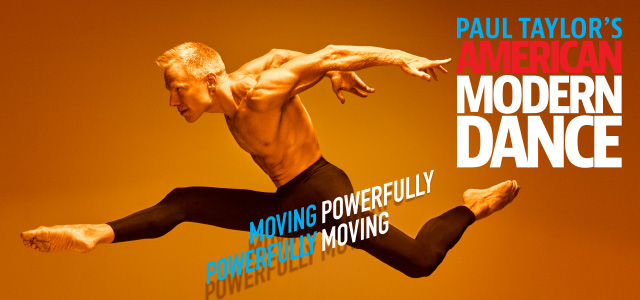
    Wednesday March 23rd, 2016 – “Taylor Does Graham” was my alternate headline for this article. Martha Graham’s Diversion of Angels has triumphantly entered the repertory of Paul Taylor’s American Modern Dance Company. I’ve always loved seeing the Graham dancers in this work, and now I also love seeing the Taylors: between these two companies, some of the greatest movers and shapers of our day are to be found. In the photo at top: Michael Trusnovec.

    Graham paragons Blakeley White-McGuire and Tadej Brdnik set Diversion on the Taylor company. The casting of the work’s three main couples seemed spot-on, with the elegant, patrician Laura Halzack in White paired with Michael Trusnovec; restless, passionate Parisa Khobdeh (in Red) dancing with Sean Mahoney; and the sun-filled joy of Eran Bugge’s Woman in Yellow handsomely partnered by Michael Novak. A women’s quartet consisting of Michelle Fleet, Jamie Rae Walker, Heather McGinley, and Christina Lynch Markham comprised a marvelously high-end “supporting” cast, and George Smallwood’s strong performance as the odd-man-in all made for a great deal of spacious, eye-catching dance.

    Several passages linger in the memory: the long frozen, stylized pose sustained by Ms. Halczak and Mr. Trusnovec early in the piece, and the lovely floated quality of Laura’s series of slow turns; Ms. Khobdeh’s agitated solo amidst the four women, her great sense of urgency as she rushes across the stage on some unknown quest, and Mr. Mahoney’s wonderful “catch” of her as she rushed to him; Ms. Bugge, who captivated me all evening, has a most congenial role; she brought Springtime freshness to her solo passages, and to her lyrically animated duet with Mr. Novak.

    A sustained deep note in the Norman Dello Joio score signals the “White” pas de deux; it almost goes without saying that the Halzack/Trusnovec duo were truly inspired and inspiring here.  

    Paul Taylor’s Three Dubious Memories is a gem of a ballet. When I first saw it a couple of years ago, it was mainly the witty elements that persuaded me of its stage-worthiness. Tonight somehow it seemed much deeper and more of a story-telling ritual than a mere series of relationship-vignettes. 

    In Three Dubious Memories, an incident from the evolving story of a romantic triangle is remembered differently by each of the three people involved. The competition between two men (Robert Kleinendorst and Sean Mahoney) for the affections of Eran Bugge brings the men to blows. But then, in a volte-face, the men are seen as a cozy pair and Ms. Bugge as the interloper. We’ll never know the real story, but Mr. Taylor has left us to ponder the way in which we each remember things.

    In addition to brilliant dancing and acting from the principal trio, Three Dubious Memories provides an intriguing role for James Samson: a silent narrator, a sort of master-of-ceremonies. James summons up each telling of the tale by the three protagonists; he also leads an ensemble of ‘choristers’ in stylized rituals. James did a beautiful job in this role which calls for both expressiveness and athleticism. In one memorable moment, Heather McGinley perches on James’s shoulders like a looming icon. The ballet was beautifully lit by Jennifer Tipton.

    In the evening’s concluding work, Spindrift, dates from 1993 and is set to Arnold Schoenberg’s String Quartet Concerto (after Handel), played live by the Orchestra of St Luke’s. To the sound of wind and waves, Michael Trusnovec emerges from the midst of a communal group moving in stylized slowness. Michael’s character displays the shifting nature of a romantic spirit with an affinity for the natural world; he’s an outsider, cast upon a mystic shore among a rather suspicious tribe.

    Certain movement motifs recall Nijinsky’s Faun, and in fact the costuming also makes us think of the Debussy ballet. The Handel/Schoenberg music seems at once old and new as Mr. Trusnovec pursues Mr. Halzack and is occasionally distracted by the quirky presence of Ms. Bugge.

    In the ballet’s second movement, an adagio solo for Mr. Trusnovec is the heart of Spindrift; in subtle twists of his torso, the power and beauty of this magnificent dancer’s physique given full rein, as is his indelible artistry: so compelling to behold. The movement becomes livelier and more off-kilter for a spell, then slows and – as Mr. Trusnovec melts into a reverential kneeling back-bend, the ballet seems about to end. But there’s another movement, laced with solos and duets for all the participants.

    As is all the great Taylor works, there are moments of seeming simplicity that make an unexpected impact; one such in Spindrift was a passage where four woman crossed on a diagonal, walking slowly. Other impressive passages were a duet for Ms. Bugge and Mr. Trusnovec and another one in which Michael was paired with Robert Kleinendost; Robert was on peak form all evening.

    In fact, the entire Taylor company’s looking pretty extraordinary these days. I was hoping to see more of Michelle Fleet (she only danced in the opening work, with Ms. Bugge replacing her in Spindrift); Francisco Graciano and Michael Apuzzo also appeared all-too-briefly, yet – as always – they each made their mark. Madelyn Ho, the newest dancer on the roster, appeared in the ensemble in Spindrift.

    I had great seats (thank you, Lisa Labrado!) and was delighted to spend the evening with my ballet-loving friend Susan, who I rarely see these days. And it’s always so nice to run into Janet Eilber, Blakeley White-McGuire, Take Ueyama and his wife Ana, and Richard Chen-See.

    Onward now to more Taylor…and then, in April, Graham!

  • Paul Taylor Dance Company/Lincoln Center 2014 #3

    ImageProxy.mvcptdc

    Wednesday March 26, 2014 – With America going to pot, Paul Taylor’s A FIELD OF GRASS was a particularly timely opening work on tonight’s programme as the venerable choreographer’s troupe of outstanding dancers neared the end of their three-week season at Lincoln Center. To the gently joyous and sometimes ironic songs of Harry Nilsson, the dancers evoked the joys of getting high.

    Robert Kleinendorst’s opening solo has an innocent air, a toke or two getting him there as he savors a summer afternoon. He’s joined by others from the commune, everyone relaxed and ever-so-slightly paranoid. There’s a blissful, light-stepping duet for Robert and the sensational Michelle Fleet, and Aileen Roehl is simply groovy in a featured role. Eran Bugge, Christina Lynch Markham, Sean Mahoney and Francisco Graciano bend, sway and celebrate under the influence; all that’s missing is the obligatory trip to the grocery store.

    In a violent mood swing, the second work tonight was Taylor’s 2005 ballet BANQUET OF VULTURES set to Morton Feldman’s eerie Oboe and Orchestra. A quote from 19th-cenutry Scottish poet John Davidson’s ‘War Poem‘ heralds the encompassing darkness of this work:  “And blood in torrents pour In vain–Always in vain, For war breeds war again!”

    The curtain opens on a shadowy stage, with an ensemble of camouflage-clad dancers writhing in candlelight. The dancers’ moves suggest the hopeless stupor of those long held in tortured captivity; awakened to another day of terrorized despair, they begin to rush about in furtive panic, seeking routes of escape.

    Michael Trusnovec, a malevolent power-figure in a dark suit and red tie, emerges from the gloom; with a reptilian slither in his walk and an emphatic stamping of his heels, this sadistic jailer strikes fear in the huddled captives. Seizing upon his prey, Jamie Rae Walker, Michael systematically breaks her down, with a brutal act of rape before he stabs her and drags her body away to be discarded.

    The narrative is destined to be endlessly repeated: a new master of war, Robert Kleinendorst, now appears and dances a spastic solo, flinging himself to the floor in paroxyms of rage before he approaches the prisoners, instilling them with visions of a fresh hell. 

    The communicative powers of Ms. Walker and Mssers. Trusnovec and Kleinendorst were at full sail in this powerful work which evokes the now largely-forgotten bastions of cruelty – Guantanamo and Abu Ghraib – and the unfettered vanity of George W Bush and his war-mongering administration.

    I first experienced CLOVEN KINGDOM at Jacob’s Pillow not long after its creation; Paul Taylor’s works were my first exposure to modern dance and CLOVEN KINGDOM struck me an an especial favorite and it remains so to this day, after many viewings. 

    Meshing music by Arcangelo Corelli, Henry Cowell and Malloy Miller, Paul Taylor develops this visually stunning ballet against a sound collage that combines the elegant formality of the Baroque with sensuous back-beats and jungular vibrations. Treading along the fault lines between the civilized and the savage, the quartet of men in tuxedos – Michael Trusnovec, Michael Apuzzo, Michael Novak and George Smallwood – move with a kind of predatory elegance. The women wear sweeping gowns in attractive hues and later some of them add mirrored heardresses, casting jewel-like refractions of light about the stage and into the theatre. Urgently lyrical swirls, stylized gestures, and witty pairings decorate the evolving choreography for the female ensemble: Michelle Fleet, Eran Bugge, Laura Halzack, Jamie Rae Walker, Aileen Roehl, Heather McGinley, Christina Lynch Markham and Kristi Tornga. In one of those inimitable Taylor touches, Ms. Roehl – in lime green – periodically crosses the stage in a leaping diagonal: a woman with a mission…though we have no idea what impels her quest. Brilliant!

    As this was my last Taylor performance of the current season, I want to express my sincere appreciation to the marvelous Taylor dancers – with roses for the newcomers Ms. Markham and Ms. Tornga for their excellent work – and a note of thanks to the Company’s Lisa Labrado, who is always so helpful. And then, of course, there’s the Great Man himself.

  • Rehearsal: Zvi @ Steps Repertory Ensemble

    L1080268

    Wednesday March 27th, 2013 – Choreographer Zvi Gotheiner is setting his dancework “Chairs”, which premiered in 1992, on the Steps Repertory Ensemble who will be performing it during their upcoming season at Ailey Citigroup Theater. My friend Joe and I dropped in at a rehearsal today to see how things are developing.

    For this dancework, Zvi uses music culled from film soundtracks, Rachmaninoff etudes, and Russian Orthodox
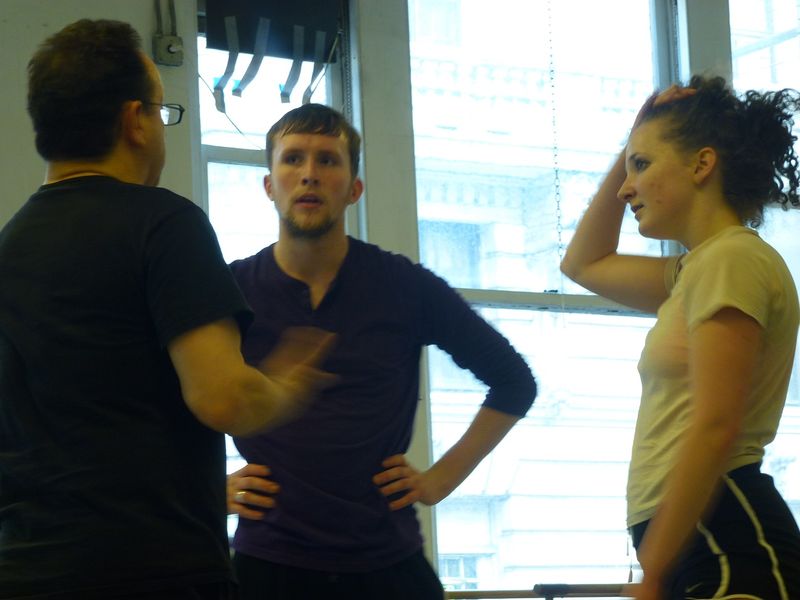
    sacred music. Today we were watching the dancers work on specific passages…

    L1080260

    …stopping periodically to refer to a video of a live performance which gave us an idea of how the work will feel when it’s costumed and lit. Mindy Upin and Lane Haplerin, above, having a look.

    There’s a tremendous sense of energetic flow in the choreography, particularly in a quartet passage…

    L1080318

    …and Zvi spent some time working out partnering details with dancers Jake Bone and Lane Halperin (above); their duet has a restless, space-covering energy.

    L1080219

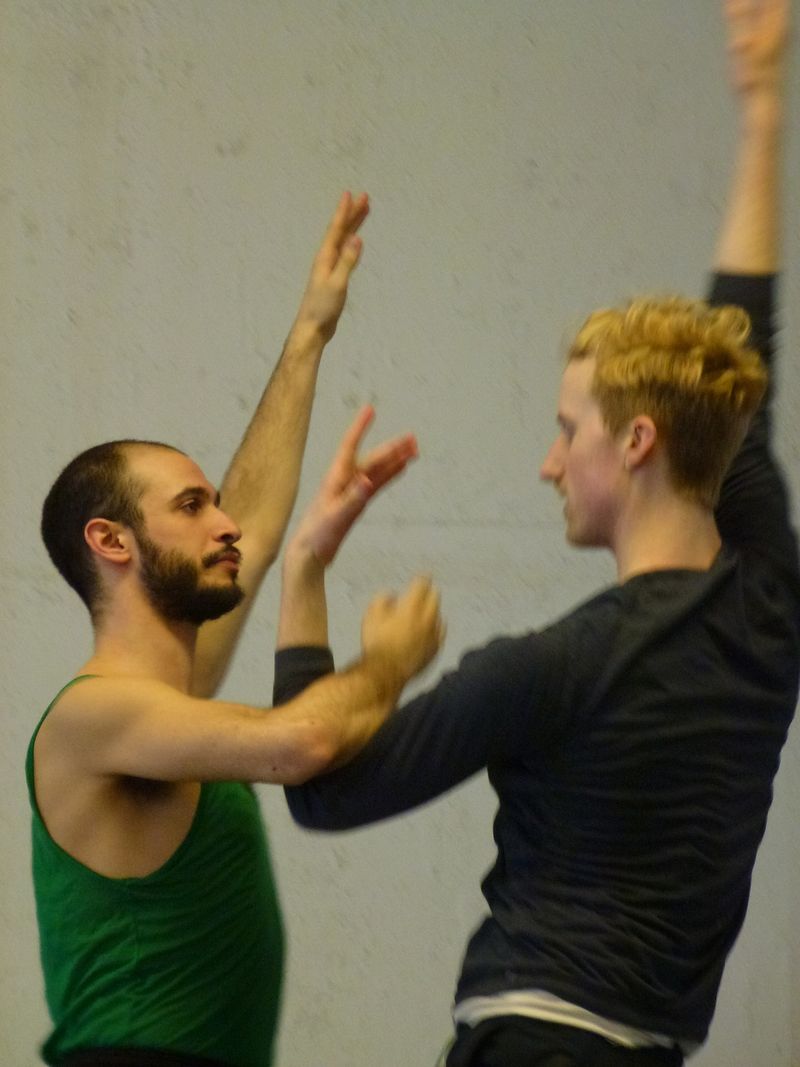
    We’d just missed a sampling of a duet for two men (David Scarantino and Clinton Edward Martin, above) but just from the phrases we saw, and a few sneak peeks at the video, “Chairs” is clearly a very interesting piece.

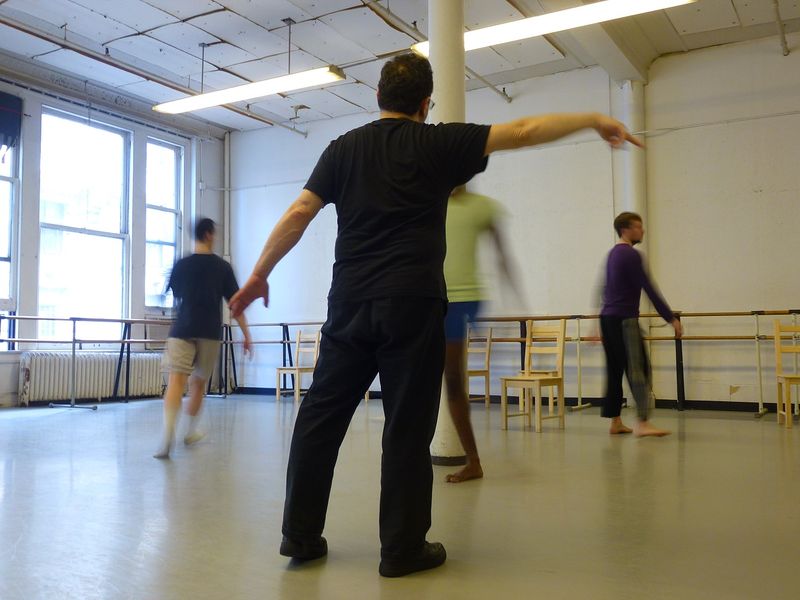
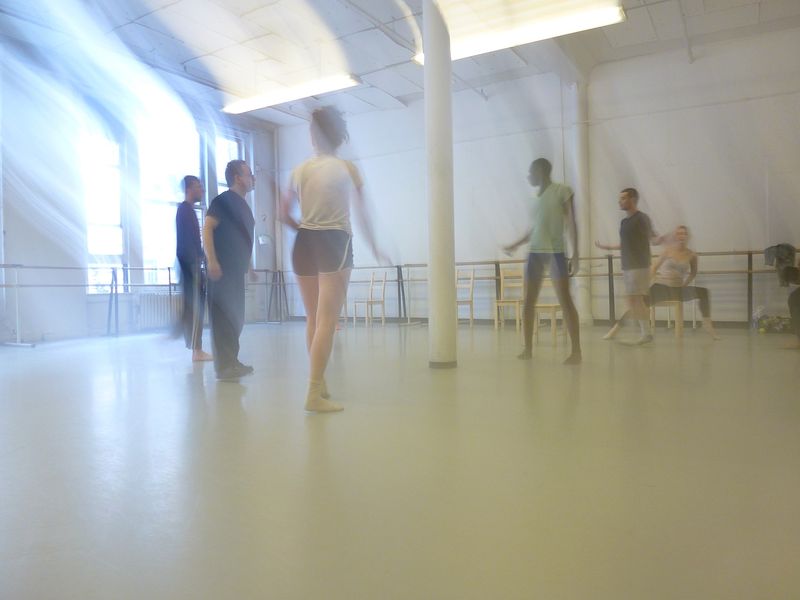
    Most of my photos today looked like this:

    L1080235

    So we’ll have to wait for the performances to get the full impact of what “Chairs” will look like. Just as I did a few months when I checked out Manuel Vignoulle’s rehearsal, I really loved the atmosphere at the Steps Rep studio. And it’s lovely to chat with the Company’s director Claire Livingstone.

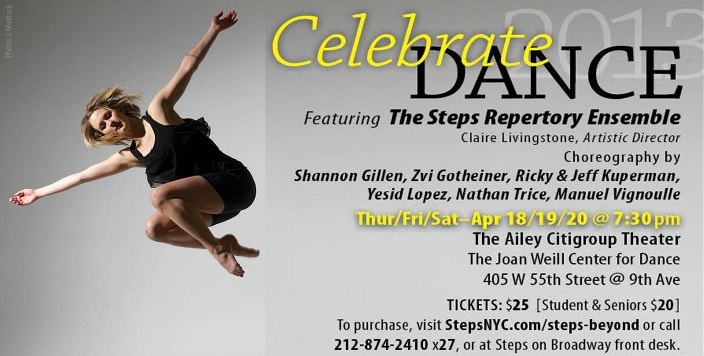
    In addition to Zvi’s “Chairs”, and the Vignoulle creation, the programme will feature works by Shannon Gillen, Ricky and Jeff Kuperman, Yesid Lopez and Nathan Trice.

    188405_435059263251133_2135932523_n

  • Ballet Next @ MMAC

    Copy of 12c

    Wednesday March 28, 2012 – For the second in their Exhibitions Series at Manhattan Movement and Arts Center, Ballet Next presented a delightful programme of new and classic works performed by world-class dancers to live music. Above: Ballet Next’s founding artists Michele Wiles and Charles Askegard, photo by Kokyat. Click on the image to enlarge.

    Cellist Elad Kabilio and the Ballet Next music ensemble struck up the celebratory processional from the final act of Tchaikovsky’s SLEEPING BEAUTY as the house lights dimmed. Ana Sophia Scheller and Joaquin de Luz then appeared as Aurora and her Prince to dance the celebrated wedding pas de deux. These two remarkable dancers gave an elegant interpretation of this duet. Ana Sophia is a beautiful and aristocratic young Princess, dancing with her signature polished technique and vastly pleasing mastery of classic style. Joaquin looks like the perfect teenaged Prince; his dancing vivid, his feet in 5th position right out of a textbook. It was so purely enjoyable to watch these beloved dancers at close range and bask in their musicality and artistry. Bravi! Bravissimi!!

    New choreography is a key element of Ballet Next‘s mission and tonight we were shown a new pas de deux choreographed by Charles Askegard. Charles mentioned that this was not his first choreographic endeavor, and he also spoke of the challenges of dancing your own choreography. Using excerpts from Stravinsky’s enchanting Baiser de la Fee, the opening duet passage has a frisky playfulness but also moments of romance. Michele Wiles and Charles each have a solo with jazzy inflections woven in, and the coda has a twist of irony. Excellent choice of music (very well-played) and – of course – great dancing.

    We had previously seen the duet ENTWINED that Margo Sappington created as a calling card for Ballet Next. Now the choreographer is enlarging on this work, adding a solo for Michele Wiles and a marvelous pas de trois. Ms. Sappington spoke of her desire to fashion one more movement for this piece – a duet for two women. Pianist Ben Laude invested the Satie works with moody, dusky colours. In the opening pas de trois, Charles Askegard employs his renowned partnering skills as he manipulates the heavenly bodies of Ana Sophia Scheller and Georgina Pazcoguin with silken assurance. The new solo for Michele Wiles explores her more vulnerable, dreamy side. And then there’s the sensuous duet danced by Georgina Pazcoguin and Charles Askegard which gives us the feeling of eavesdropping on something very tender and very private. 

    The evening ended with the music ensemble, now harpsichord- rather than piano-based, playing Vivaldi’s rollicking La Follia as two majestic ballerinas, Michele Wiles and Drew Jacoby, danced in unison and ‘spoke’ to one another in a complex gestural dialect. In this Mauro Bigonzetti dancework, solo passages for each of the two women show off their unique feminine powers before they reunite in a fast-paced finale, settling at last into the same enigmatic pose that opened the piece. Brilliant dancing from Mlles. Wiles and Jacoby, and spirited playing from the musicians left the audience exhilarated.

    The next Ballet Next Exhibition will be April 25th at Manhattan Movement and Arts Center. And it has just been announced that the Company will be at The Joyce for a week in October.