Tag: Wednesday November

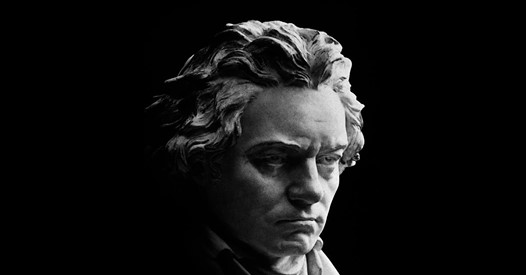
  • All-Beethoven @ Lincoln Center’s Great Performers

    66153624_23843479431240714_7828252017846910976_n.png

    ~ Author: Ben Weaver

    Wednesday November 20th, 2019 – Violinist Isabelle Faust and pianist Alexander Melnikov – long time musical partners – joined the celebrations of Beethoven’s 250th birthday as part of the Lincoln Center’s Great Performers series with an all-Beethoven recital at Alice Tully Hall. The 70-minute, no-intermission, program featured Beethoven’s last three violin sonatas.

    Composed in 1801-02 and dedicated to Tsar Alexander I of Russia, the three sonatas of his Op. 30 were Beethoven’s final word on the genre, even though he was only 31 years old. (In total, he composed 8 violin sonatas.) At this stage Beethoven had not yet written his Eroica Symphony (that would come 2 years later), changing the trajectory of the symphony and his own musical development

    Beethoven’s violin sonatas, like so much of his “early” music, look back on Mozart’s contributions to the genre, while at the same time developing new languages. Whereas Mozart’s violin sonatas were focused on the violin – with the piano as an accompaniment – Beethoven forced the piano into the spotlight, with a more prominent voice and bigger, more “symphonic” writing. In the sonata No. 6’s opening movement the violin seems to be playing catch-up with the piano in introducing the melodies. In the final movement, a theme and set of variations, the piano again dominates.

    While the following two sonatas give the violin a much bigger role, as performed by Isabelle Faust and Alexander Melnikov, the piano’s dominance was clear throughout the evening. Ms. Faust’s playing, quiet and brittle at times, with an edge to the tone, required the listener to lean in. She rarely demanded attention for her instrument or her playing; she is certainly not a “showboat” performer. Mr. Melnikov, a more aggressive player by nature, was the dominant force on the stage almost by default. The relaxed tempos set by the duo made clear this was not heaven-storming Beethoven.

    Sadly, as the evening progressed, the quiet playing by Faust, which I initially attributed to a “lean-in” personality, started to grow flat and dull. Whether drama or joy, one could hardly tell the difference. I almost got the sense that Faust was sight-reading the music, as if she’d hardly ever seen these notes before. (That’s clearly not the case: she and Melnikov recorded the complete sonatas for Harmonia Mundi some years ago and did so very well.) How unfortunate then that on this evening she was unable to gather enough spirit to help launch New York’s Beethoven year celebration.

    ~ Ben Weaver

  • All-Beethoven @ Lincoln Center’s Great Performers

    66153624_23843479431240714_7828252017846910976_n.png

    ~ Author: Ben Weaver

    Wednesday November 20th, 2019 – Violinist Isabelle Faust and pianist Alexander Melnikov – long time musical partners – joined the celebrations of Beethoven’s 250th birthday as part of the Lincoln Center’s Great Performers series with an all-Beethoven recital at Alice Tully Hall. The 70-minute, no-intermission, program featured Beethoven’s last three violin sonatas.

    Composed in 1801-02 and dedicated to Tsar Alexander I of Russia, the three sonatas of his Op. 30 were Beethoven’s final word on the genre, even though he was only 31 years old. (In total, he composed 8 violin sonatas.) At this stage Beethoven had not yet written his Eroica Symphony (that would come 2 years later), changing the trajectory of the symphony and his own musical development

    Beethoven’s violin sonatas, like so much of his “early” music, look back on Mozart’s contributions to the genre, while at the same time developing new languages. Whereas Mozart’s violin sonatas were focused on the violin – with the piano as an accompaniment – Beethoven forced the piano into the spotlight, with a more prominent voice and bigger, more “symphonic” writing. In the sonata No. 6’s opening movement the violin seems to be playing catch-up with the piano in introducing the melodies. In the final movement, a theme and set of variations, the piano again dominates.

    While the following two sonatas give the violin a much bigger role, as performed by Isabelle Faust and Alexander Melnikov, the piano’s dominance was clear throughout the evening. Ms. Faust’s playing, quiet and brittle at times, with an edge to the tone, required the listener to lean in. She rarely demanded attention for her instrument or her playing; she is certainly not a “showboat” performer. Mr. Melnikov, a more aggressive player by nature, was the dominant force on the stage almost by default. The relaxed tempos set by the duo made clear this was not heaven-storming Beethoven.

    Sadly, as the evening progressed, the quiet playing by Faust, which I initially attributed to a “lean-in” personality, started to grow flat and dull. Whether drama or joy, one could hardly tell the difference. I almost got the sense that Faust was sight-reading the music, as if she’d hardly ever seen these notes before. (That’s clearly not the case: she and Melnikov recorded the complete sonatas for Harmonia Mundi some years ago and did so very well.) How unfortunate then that on this evening she was unable to gather enough spirit to help launch New York’s Beethoven year celebration.

    ~ Ben Weaver

  • Emmanuelle Haïm @ The NY Philharmonic

    Haim1hdl17105

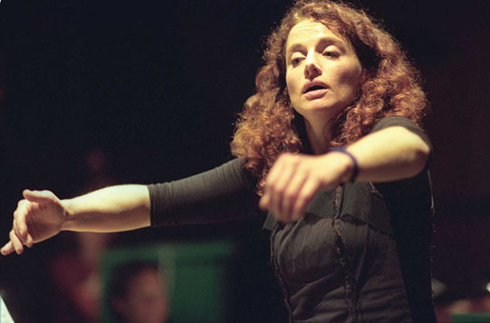
    Above: Emmanuelle Haïm

    ~ Author: Oberon

    Wednesday November 21st, 2018 – Music of Handel and Rameau was on this evening’s bill as Baroque specialist Emmanuelle Haïm made her New York Philharmonic debut. Neither composer’s name is really associated with the orchestra (MESSIAH of course being the exception), but their music was most welcome tonight, following in the wake of a pair of less-than-enjoyable ‘contemporary’ works we’d just recently heard at Carnegie Hall.

    From first note to last, the music offered this evening – and the Philharmonic’s playing of it – seemed truly fresh and vital. And Ms. Haïm is so engaging to watch: her deep affection for the music is evident at every turn, and her conducting has an embracing style which drew superb playing from the orchestra. On Thanksgiving eve, we wondered how big of a crowd might turn out, but the house was substantially full. It was the most attentive audience of the classical music season to date – always a good sign.

    It was fun to enter the auditorium this evening and see two harpsichords parked on the Geffen Hall stage, one for Ms. Haïm, the other for Paolo Bordignon. Handel’s Concerto Grosso, Op. 6, No. 1, calls for a relatively small ensemble of musicians, with Sheryl Staples as concertmaster.

    From her first downbeat, Ms. Haïm’s conducting had a choreographic feeling. Swaying with the music, her gestures resonated like balletic port de bras. One could imagine her, gorgeously gowned and bejeweled, leading the dancing at Versailles in another lifetime. What a marvelous presence!

    In the Concerto Grosso, violinists Sheryl Staples and Qian Qian Li along with cellist Carter Brey, form a musical sub-set, playing trio motifs with elegance and verve.  The Allegro movements sparkled, the Adagio soothed and charmed, the exhilarating finale was full of life.

    58216

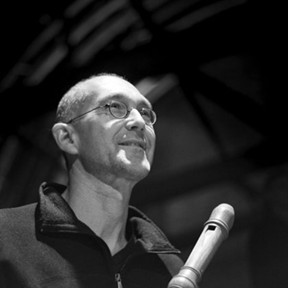
    Two of Handel’s Water Music suites were performed. In the first, No. 3 in G-minor, the tall and slender Sébastien Marq (above) brought his polished recorder tone and technique to the mix. Switching from alto to soprano after the suite’s first movement, Mssr. Marq piped away to captivating effect. Oboes, bassoon, bass, and theorbo add textures that constantly lure the ear, and a violin solo in the Minuet was graciously played by Ms. Staples. The familiar tunes of the final Gigues made for a happy ending.

    Philharmonic horn players Richard Deane and Allen Spanjer joined the ensemble for the Water Music Suite #1 in F-major; they were seated on the highest riser alongside oboist Sherry Sylar, a second young oboist I didn’t recognize, and bassoonist Kim Laskowski. These five artists made musical magic as the suite sailed forward.

    Ms. Sylar’s plangent playing of a solo in the Adagio was pure beauty, and the two hornsmen reveled in the harmonized coloratura passages of the second Allegro. The woodwind trio blended lovingly in the Andante, and then the noble horns graced the Minuet. In the Air, our string trio from the Concerto Grosso emerged again, to lovely effect, as the horns sustained long notes in support. Horn calls open the Minuet, and then the suite dances on with a Bourrée-Hornpipe-Bourrée combination: swift and light to start, with a woodwind trio intervention, and then a fast finale that tripped the light fantastic.

    Applause filled the hall; Ms. Haïm came out for a bow, but made a bee-line for the upper riser, where she drew the horn players from their chairs, then had Ms. Sylar take a solo bow (to warm shouts of ‘brava!‘), and then had the mystery oboist and Ms. Laskowski rise. What a fine gesture!  

    Selections from Rameau’s opera Dardanus, arranged as a suite by Ms. Haïm, made a splendid effect as the program’s second half. The opera, a classic five-act Tragédie en musique which premiered in 1739, follows Dardanus – the son of Zeus and Electra – in his feud with King Teucer. Their eventual pact of peace is reached as Dardanus marries Teucer’s daughter Iphise, who he’d met through the intervention of the sorcerer Isménor.

    If the plot sounds unlikely, the score is enchanting. An enlarged ensemble tonight brought abounding grace and drama to music which covers an extraordinary range of rhythms and textures. Among the many sonic treats are the sound of a repeatedly dropped chain in the “Entry of the Warriors“, a delicate blend of flutes and triangle in the Air, and the suggestive shaking of the tambourine.

    Ms. Haïm’s Philharmonic debut was a sure success; she passed among the musicians, greeting them individually as the applause rolled on. I hope she will come back to the Philharmonic in the future, bringing more Baroque gems with her. And what might she do with Gluck, Mozart, or Berlioz?

    ~ Oberon

  • Huang|Noseda|New York Philharmonic

    Frank_huang_1684x936

    Above: The New York Philharmonic’s concertmaster Frank Huang

    ~ Author: Oberon

    Wednesday November 22nd, 2017 – The announcement of the death of the great Russian baritone Dmitri Hvorostovsky coloured my entire day. It came, by unhappy coincidence, on the anniversary of the assassination of John F Kennedy which took place in 1963: the most disturbing world-event of my youth. That brutal murder – and its aftermath – I still remember so clearly.

    This evening, I went as planned to  The New York Philharmonic‘s program of Russian and French works. Though I was in the mood for darker, more soul-reaching music, the program – magnificently played – did lift my spirits, if only temporarily.

    As far as I know, Mr. Hvorostovsky appeared with The New York Philharmonic for only one program: in 1998, he sang Mahler’s Kindertotenlieder with the orchestra. I was there, and was swept away by the peerless beauty of his voice and by his deeply poetic interpretation. How I wished he could have been with us again tonight. But the program did commence with music from Hvorostovsky’s homeland: a suite from Nicolai Rimsky-Korsakov’s opera The Legend of the Invisible City of Kitezh. It ended up being my best-loved work of the evening and it was brilliantly delivered by the Philharmonic players, under Gianandrea Noseda’s baton.

    Hearing music from The Legend of the Invisible City of Kitezh brought back memories of a day in 1983 when I stepped off a bus in Boston on a Sunday afternoon and began walking towards the opera house where the Rimsky-Korsakov opera was being performed at a matinee. Suddenly the sky opened up; no store that was open sold umbrellas. I made a run for it, but was literally drenched from head to toe by the time I got to the theatre. Needless to say, I did not enjoy the performance at all, and left at intermission…still soaking wet.

    The suite from The Legend of the Invisible City of Kitezh is in four movements, depicting episodes from the opera: a Hymn to Nature, Fevronia’s wedding procession, the invasion of the Tatars and the subsequent battle, and Fevronia’s Ascension to the Invisible. It begins on a sombre note, with harps adding a touch of magic. Throughout the suite, solo wind passages abound; Maestro Noseda brought out these colouristic facets, and the Philharmonic artists played them delightfully.

    A broad viola theme stands out, and the percussionists are kept on their toes with bells, chimes,and glockenspiel in addition to the timpani, bass, and snare drums that come to attention for the battle scenes. The suite was an excellent program-opener.  

    It’s always a great pleasure when principals from the Philharmonic step into the concerto spotlight. Tonight, concertmaster Frank Huang performed Camille Saint-Saëns’ Violin Concerto No. 3 – my first time hearing it live. The concerto begins without an orchestral introduction; instead, only quiet, darkish chords  provide a background for the rather harsh opening phrases of the violin. Mr. Huang’s playing here seemed a little unsettled, with traces of sharpness of pitch. But within seconds, the violinist had settled into the music and gave a really impressive, technically assured performance.

    As the concerto’s first movement develops, there are dramatic contrasts between full-bodied, passionate themes and more sedate passages. There is a sense of yearning in the music which Mr. Huang conveyed to perfection. In the Andantino which follows, the composer meshes the solo violin with winds in music with an elegant air. 

    The concluding movement begins with a slow introduction and some almost jagged interjections from the  violin. The Allegro non troppo itself is launched with an up-sweeping motif for the solo violin. Passages of coloratura for the soloist alternate with more lyrical elements; then commences a surprising cantabile, where Mr. Huang’s beauty of tone was ravishingly engaging. Pages of virtuosic writing show off the soloist’s fluent technique, and hints of gypsy passion are thrown in. The leaping violin theme returns and is most welcome. An orchestral chorale is an innovative detour before the concerto sails on to a bravura finish. Mr. Huang was rightly accorded a prolonged ovation from the audience whilst his onstage colleagues tapped their bows and stamped their feet in acclaim.

    Noseda

    Above: Gianandrea Noseda

    Rachmaninoff’s Symphony No. 3, under Maestro Noseda’s baton, followed the interval. Like so many symphonic works, its a piece I’m not really familiar with, and I must say, I felt slightly disappointed with it musically. It’s all terribly impressive and enjoyable to hear, but the emotions are rarely engaged. Perhaps it was just my mood, but I kept longing for a deeper experience.

    That said, the artists of the Philharmonic played it most impressively. And it is to them that I owe thanks for moving or thrilling me on this evening: to Mr. Huang of course, but also to other players who had prominent passages tonight: Sheryl Staples (violin), Yoobin Son and Mindy Kaufman (flute/piccolo), Sherry Sylar (oboe), Pascual Martinez Forteza (clarinet), Kim Laskowski (bassoon), and Amy Zaloto (bass clarinet).

    Encouraged by the great success of his Rhapsody on a Theme of Paganini (1934), Rachmaninoff started  work on his third symphony in the summer of 1935. Leopold Stokowski and the Philadelphia Orchestra gave the premiere on November 6, 1936. It was not well-received by the audience, nor by the press. Perhaps, as with those early auditors, I need to hear it a few more times to cultivate a more positive reaction. 

    There are countless appealing passages – a cello tutti was especially beautiful – and the final movement’s journey from optimism thru a vale of doubt and the onward via a meditative passage to a ringing conclusion evoked a big response from the Geffen Hall audience.

    ~ Oberon
  • Hilary Hahn/Jaap van Zweden @ The NY Phil

    E0022344_23154243

    Above: violinist Hilary Hahn

    Wednesday November 26th, 2014 – After experiencing conductor Jaap van Zweden’s performance of the Shostakovich 8th with The New York Philharmonic last week, I was very glad of the chance to attend a second concert under his baton. In addition, the evening provided my first opportunity to hear Hilary Hahn live.

    The evening opened with a genuine rarity: Johan Wagenaar’s Cyrano de Bergerac Overture which was inspired by Edmund Rostand’s play of the same name. The play premiered in 1897, the concert overture dates from 1905. The overture commences with a bold statement, then waxes poetical, romantic or swashbuckling by turns. It’s a melody-rich piece; though sometimes compared to the works of Richard Strauss, there’s no hint in the Wagenaar of the absonance that tends to crop up in some of Strauss’s works.

    Ms. Hahn then appeared for the Korngold violin concerto. Most widely known as a composer of film scores, Erich Wolfgang Korngold arrived in Hollywood in the 1930s, already an established classical composer. Themes from his movie scores found their way into his concert works; for the violin concerto, Korngold drew upon his music for the films Another Dawn, Juárez, Anthony Adverse, and The Prince and the Pauper. Jascha Heifetz premiered the concerto in 1947.

    Ms. Hahn looked fetching in a silvery-steely strapless gown; slender and elegant, she is as lovely to watch as to hear. In the concerto’s opening movement, much of it set in the violin’s high register, Ms. Hahn displayed a truly shimmering quality of timbre. In the second movement, Romance, she caught the quality of sehnsucht that the rapturous themes evoke; and in the quirky, devilish technical demands of the final Allegro assia vivace, she really went to town, dazzling us with her virtuosity.

    Ms. Hahn and Maestro van Zweden were greeted with sustained applause after the concerto; coming out for a second solo bow, the comely violinist took up her bow for a Bach encore. Tonight’s Playbill states that Hilary Hahn has not appeared with the NY Phil for a decade; she should immediately be signed for future appearances: she’s a treasurable player and we should have every possible opportunity to experience her artistry.

    Following the interval, Jaap van Zweden unfurled the Beethoven 7th for us. This symphony is just about perfect: neither too short nor too long, and especially appealing in its rhythmic variety. The symphony’s first movement opens slowly (marked ‘sostenuto‘…’sustained’) and then turns animated. The famiiar allegretto that follows – one of Beethoven’s most widely-appreciated passages – has a stately sway to it. The lively dance of the ensuing Presto propels us irresistibly to the finale with its exhilarating feeling of joyous abandon. The music sailed on with Maestro van Zweden, the  musicians, and Beethoven carrying the audience along on buoyant waves of sound. Richard Wagner called this symphony “the apotheosis of the dance itself…” and the audience responded with vigorous enthusiasm to the almost breathless pace which the conductor imposed in this uninhibited finale.

  • Martha Graham’s ‘Hérodiade’

    Miki herodiade

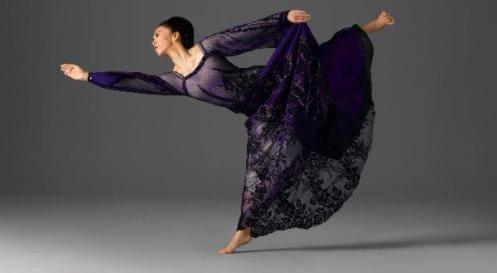
    Above: Miki Orihara in Graham’s Hérodiade

    Wednesday November 20, 2013 – Two of today’s foremost interpreters of the works of Martha Graham – Miki Orihara and Katherine Crockett – appeared tonight in a studio showing of the great choreographer’s 1944 work Hérodiade. As a splendid prelude, Ms. Crockett also danced Spectre-1914. It was an evening that resonated for me in so many different ways.

    Martha Graham Dance Company‘s artistic director Janet Eilber welcomed an overflow crowd to this second of three presentations of this programme. The Company’s spacious studio/theater on the eleventh floor of the Westbeth complex had been hung with black drapes, and after Ms. Eilber’s brief remarks, the majestic Katherine Crockett appeared to dance Spectre-1914, the opening solo from Martha Graham’s Chronicle.

    6a00d8341c4e3853ef0168eb764f31970c-800wi

    Above: Katherine Crockett, photographed by Matt Murphy

    Chronicle, dating from 1936, is Graham’s powerful statement on the devastation and futility of war; it is a great masterwork for female ensemble and it opens with a magnificent solo in which the dancer manipulates a voluminous skirt lined in red fabric to evoke both the bloodshed and the flames of war.

    Spectre-1914 had all but passed from memory until 1994 when it was researched and reconstructed by Terese Capucilli and Carol Fried, using film clips and still photos by Barbara Morgan. May Terpsichore bless these women for their efforts, for Spectre-1914 is as powerful a dancework as may be found, and it was danced tonight with marvelous amplitude and a deep sense of consecration by the marvelous Katherine Crockett. The audience beheld the dance in an awed state of pin-drop silence.

    Noguchi herodiade set

    Above: the Isamu Noguchi set pieces for Martha Graham’s Hérodiade

    After the Noguchi setting had been swiftly installed in the space, we watched a full performance of Graham’s ballet Hérodiade. Set to music by Paul Hindemith and commissioned by Elizabeth Sprague Coolidge for the Library of Congress, the ballet was originally called Mirror Before Me, and was first seen on October 30, 1944, at the Elizabeth Sprague Coolidge Auditorium, Library of Congress, Washington, D.C. Writing of that performance for the New York Times (November 1, 1944), critic John Martin said: “Miss Graham has created a powerful study of a woman awaiting a ‘mysterious destiny’ of which she has no knowledge…into it she has poured a somber tension that is relentless and altogether gripping. The music is rich and dark in color and the action on the stage meets it magnificently on its own terms.”

    That music, scored for chamber orchestra, was written by Paul Hindemith, a composer perhaps best-loved in the dance world for his superb Four Temperaments, choreographed by Balanchine.

    When I received the announcement that Hérodiade would be performed this evening, I suppose my natural reaction as an opera-lover was that it would be a dance about the Biblical princess Herodias and her daughter Salome and their conspiracy to have the prophet John the Baptist executed. But that is not the case: there are no allusions to either the Strauss or Massenet operas, nor to the Bible, nor to Oscar Wilde who penned the famous play Salome – Salome does not figure in the Graham work at all.

    Martha Graham had been interested in the poem Hérodiade by Stephane Mallarmé and in creating her ballet, the choreographer eschewed a specific narrative and instead turned to an abstraction of the character. Herodias is never named; she is simply referred to as ‘A Woman’. In Graham’s description, we see “a glimpse into the mirror of one’s being,” and she refers to this Woman as ‘doom-eager’, going forth with resolve to embrace her destiny.

    The Hindemith score is in eleven short movements, and we watch with intense interest as the radiant Miki Orihara, as the Woman in a deep violet gown, and the more austere Ms. Cockett, her Attendant in simple grey, move about the space. The choreography is restless and urgent, the Woman clearly obsessed with whatever fate awaits her while the Attendant seeks to comfort or forestall her mistress. The two dancers were simply engrossing to behold: Miki often in rapid, complex combinations moving swiftly about the stage while Katherine deployed her uncanny extension with mind-boggling expressiveness.

    In the end, Miki steps out of her rich gown and is revealed in virginal white; the Attendant withdraws and the Woman, taking up a black veil, contemplates her destiny. Mysterious, and all the more powerful for the unanswered questions it raises, Hérodiade is breath-taking.

  • Steps Repertory Ensemble Rehearse Vignoulle

    L1050278

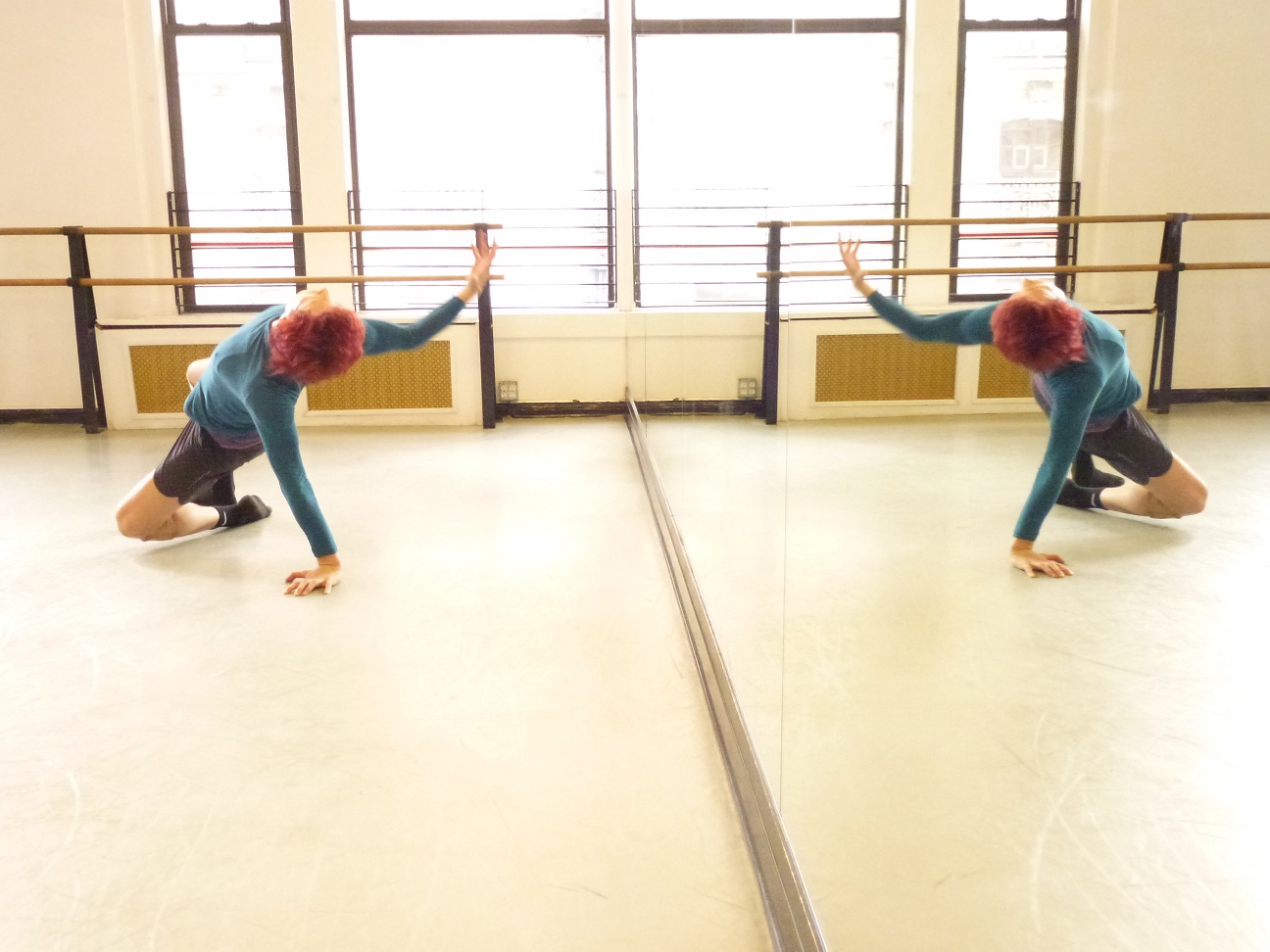
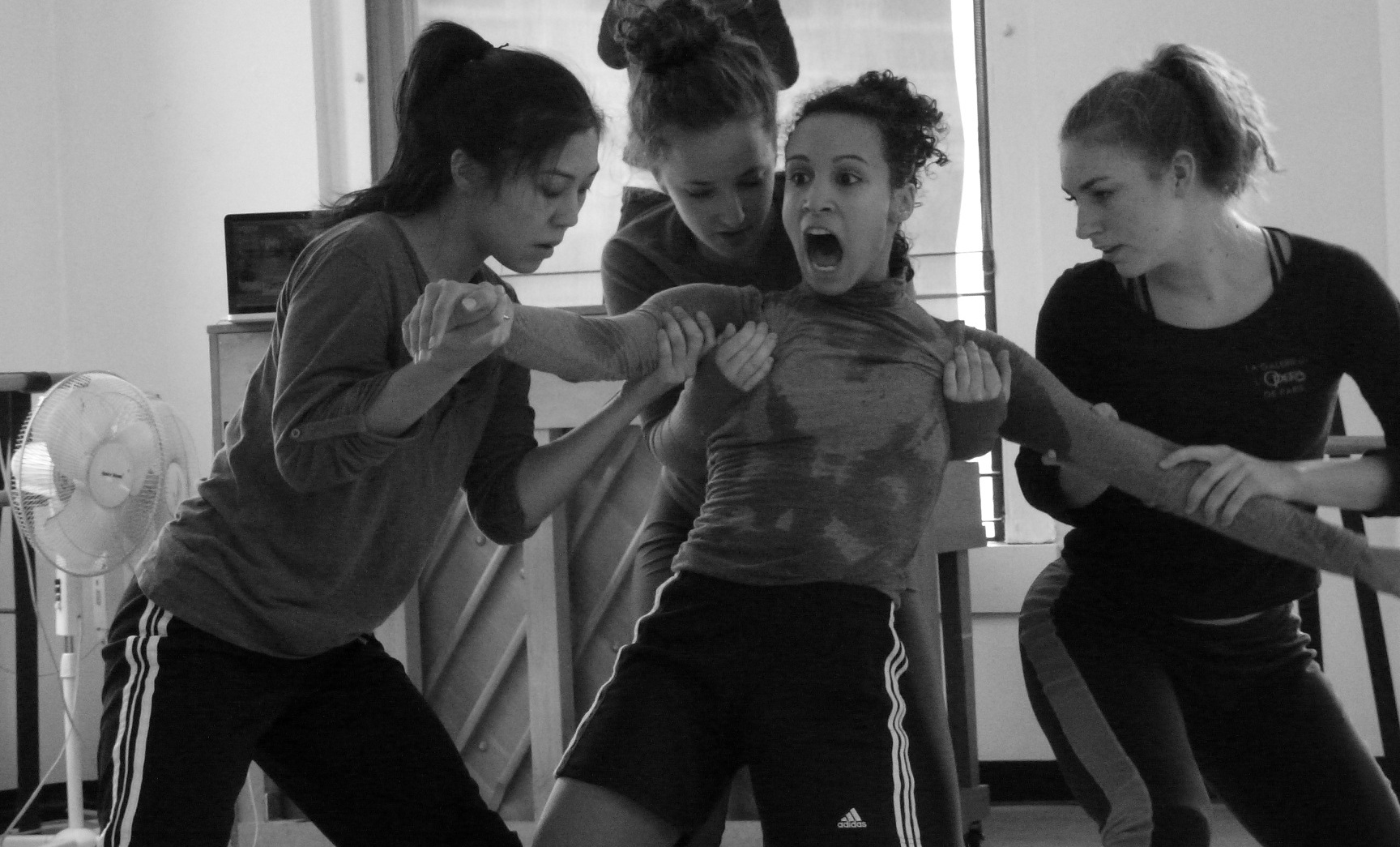
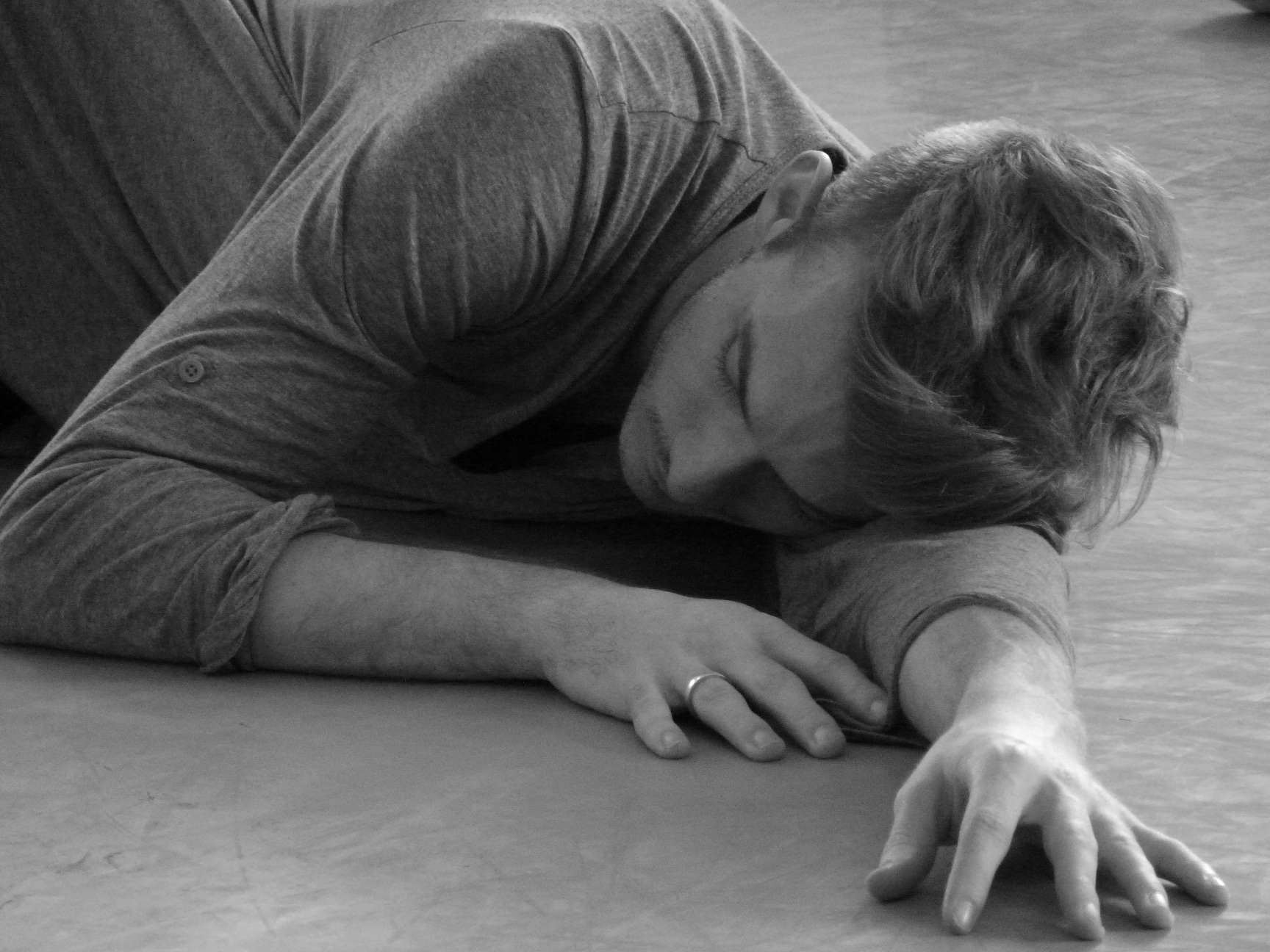
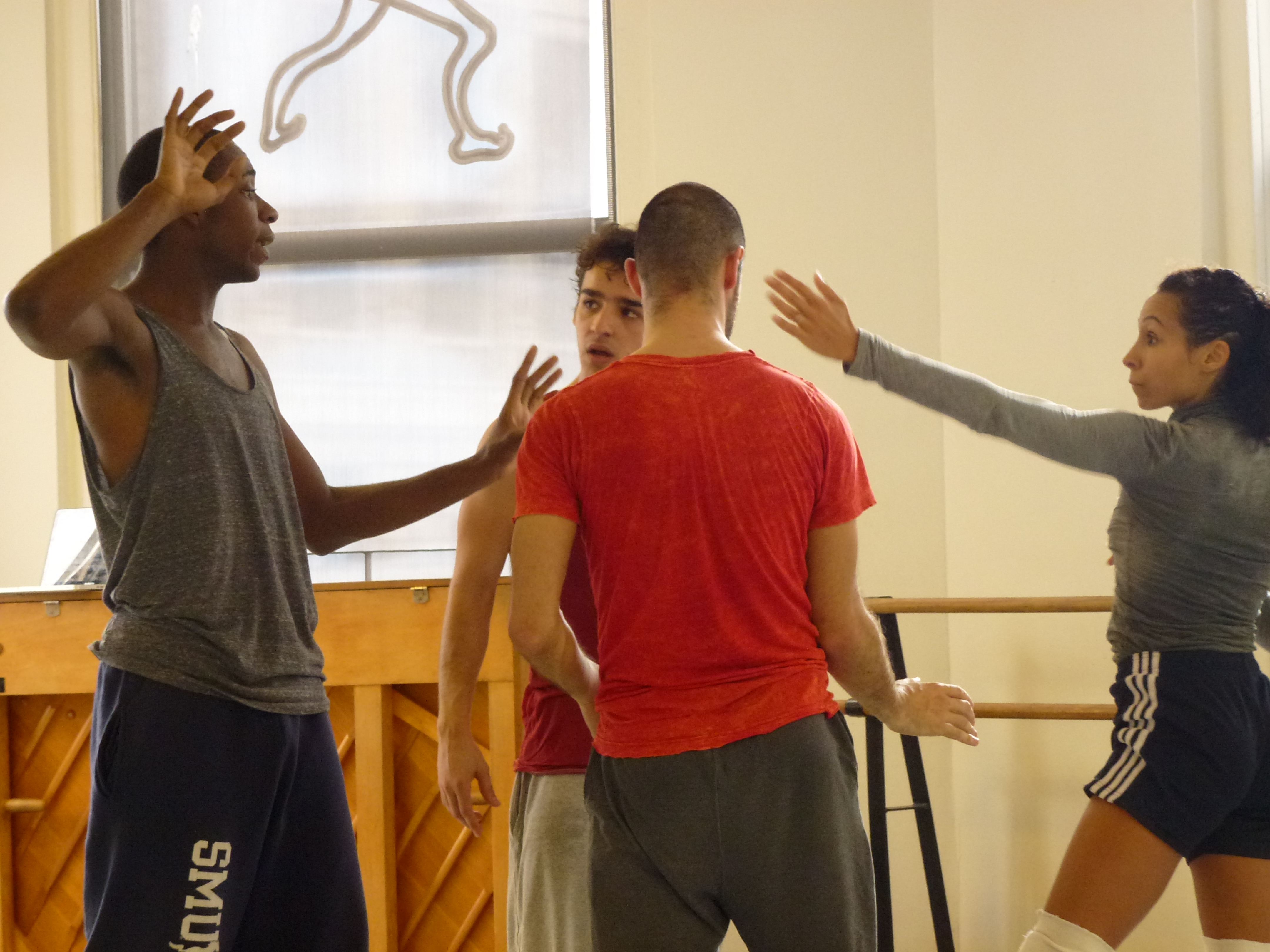
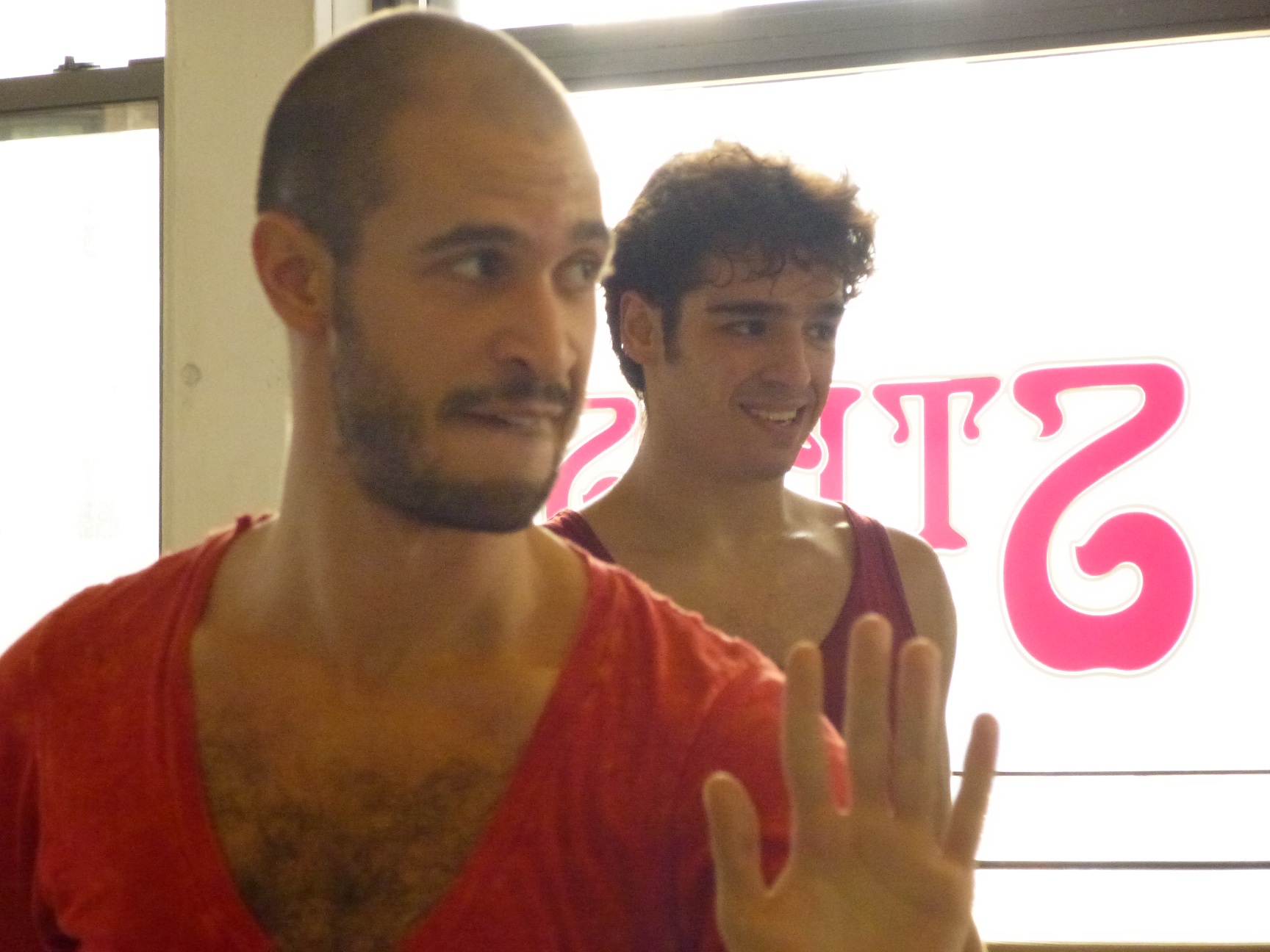
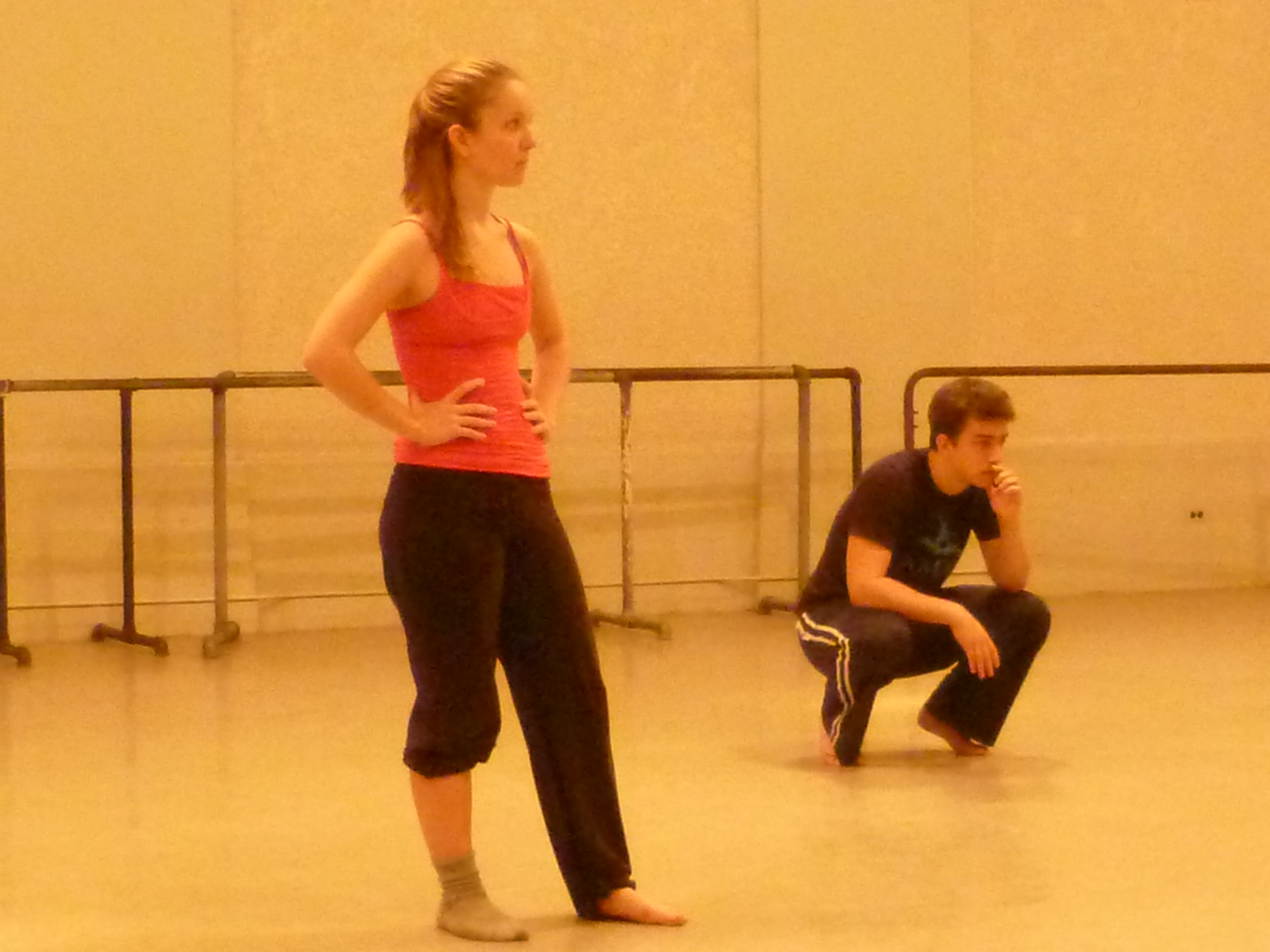
    Wednesday November 28, 2012 – I stopped by at Steps on Broadway today where the Steps Repertory Ensemble were rehearsing a new work by Manuel Vignoulle. I got to know Manuel as a dancer through his performances with Cedar Lake Contemporary Ballet. This was my first time meeting him, and his infectious energy and devilishly sexy accent made the studio hour fly by. It’s always fun when a choreographer leaps in to demonstate during rehearsals, and Manuel was continually showing the dancers what he wanted. His choreography is athletic and risky; a passage of repose contrasts to the edgy, restless atmosphere that the work has built up.

    Manuel’s piece for the Steps Repertory Ensemble is entitled “Le Moi Sauvage” and it will be part of the Company’s Celebrate Dance performances at Ailey Citigroup scheduled for April 19-21, 2013. Chances are it will be shown sooner than that in a studio setting.

    L1050403

    Britney Tokumoto, Lane Halperin, Marielis Garcia and Katherine Spradzs

    L1050383

    Victor Larue

    L1050308

    Discussing the mechanics of a lift

    L1050254

    David Scarantino, Gabriel Malo

    L1050256

    Landes Dixon

    L1050384

    Marielis Garcia

    L1050273

    Manuel Vignoulle

    Now that I’ve had my introduction to the Steps Repertory Ensemble (thanks to Mindy Upin), I’m hoping to cover more of their work in the coming months, leading up to their April performances.

  • Amy Marshall Dance Company: Rehearsal

    P1140016

    Wednesday November 24, 2010 – The dancers of Amy Marshall Dance Company are preparing for a studio showing on November 29th for friends of the Company at which Amy will unveil a new logo and announce the launch of their new website which features a collaboration with designer Norma Kamali and photographer Lois Greenfield. I dropped in at City Center studio for an hour today to watch the dancers running thru Riding the Purple Twilight, a section of which will be performed at Monday’s fete.

    During a break, Chad Levy gave me a sneak peek at the new website. It’s stunning. I look forward to ‘introducing’ it on my blog.

    P1140004

    Having my camera with me was of little use when the choreography is as fast-paced as this. Most of my images were just blurs of motion. A least in the above picture you can tell who that these are people.

    P1140067

    Shannon MacDowell and Louis Acquisto, above.

    More about Amy Marshall Dance Company after Monday’s event.