Tag: Wednesday October

  • American Composers Orchestra @ Zankel Hall

    PXL_20241031_001633210

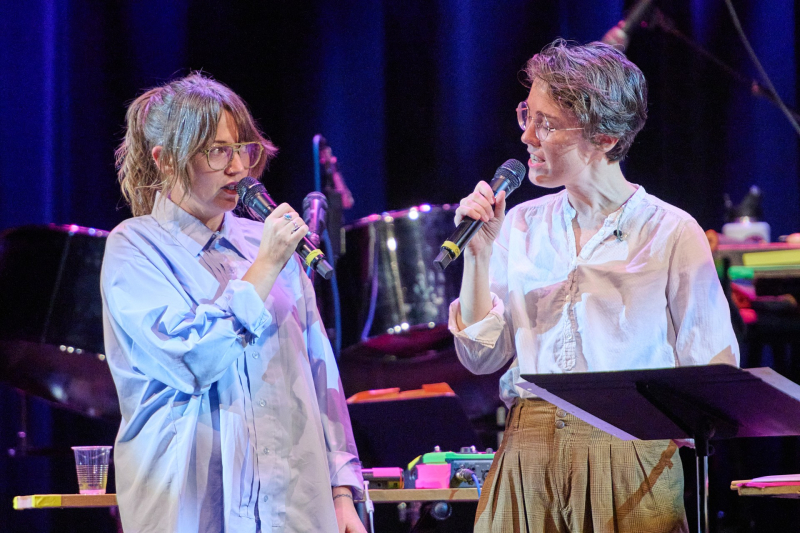
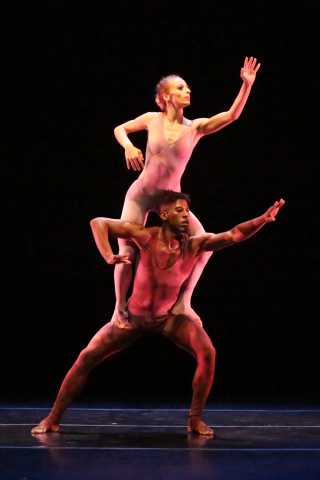
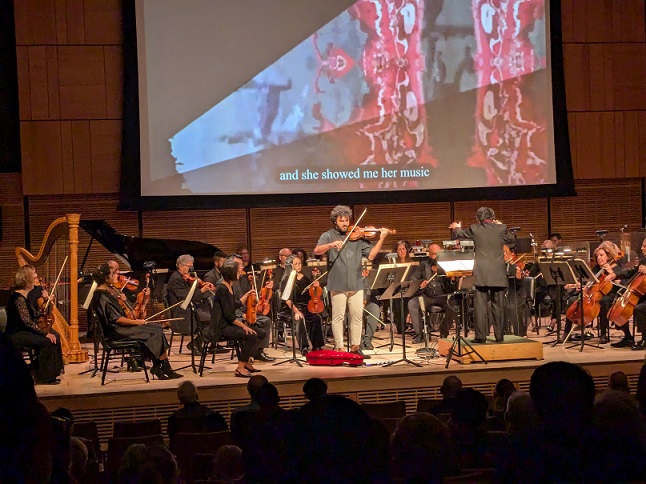
    Above: Curtis Stewart & Kebra-Seyoun Charles

    ~ Author: Shoshana Klein

    Wednesday October 30th, 2024 – I’ve had a thing about the concept of borders since the US border patrol incinerated my innocent house plants at the US Canada border in 2022. The name of this concert by the American Composer’s Orchestra was “The New Virtuoso: Borders” and at the beginning, Curtis Stewart framed the concert in a way that sounded really great. He talked about using virtuosity in new ways, rethinking the way the instruments work, and considering the use of borders. This included the concept of good borders (like healthy boundaries) versus harmful borders – like those used to start wars, and those that mark our identities without causing harm. I really wondered if the music would live up to this deep description. 

    The program:

    Michael Abels: Borders 

    Kebra-Seyoun Charles: New Work (ACO Commission, developed via EarShot CoLABoratory/World Premiere)

    Curtis Stewart, Embrace (ACO Commission)

    Paul Novak, Forest Migrations (ACO Commission/World Premiere)

    Victoria Polevá, The Bell

    The first piece was by Michael Abels, who has written the music to a bunch of blockbuster movies. The description of the piece and the inspirations for it that was printed in the program was beautiful – the idea was that in the first movement, the guitar is within the borders of the bar lines and in the second movement it’s not. The second movement also depicts a child running – sometimes in joy and sometimes in fear. It was a little hard to hear all of that in the music but in the second movement the guitar was definitely leading more and there were complicated rhythmic sections where the guitar and orchestra were definitely in different meters, which was a cool effect.


    The Paul Novak piece “Forest Migrations” was about trees and ecological borders – he used the orchestra of the metaphor for forest and forest migration caused by climate change. He described how the movement of the piece would be slow – each player playing one at a time, and also mentioned that musicians owe a debt to the trees that their instruments are made of, which I thought was really interesting. I really liked the concept but I was not convinced that the effect was going to be unique. In reality, it was really well done but not what I expected from the description – there was a lot more movement and melody than I was expecting. I like the way the concept of borders were explored and discussed in this new way, but once again, I was not sure I heard it in the music the way it was described. 


    Before the start of Kebra-Seyoun Charles‘ piece, Curtis Stewart asked if they wanted to say anything else about it and they said “have fun.” The piece was all about blending musical styles – so mostly genre borders were those being addressed. There was harpsichord in the orchestration, which was really cool juxtaposed against some of the other musical styles that were played, and in the first movement the piece kept falling into a sort of Bach sound. The idea of the first movement was walking down the street in New York and catching snippets of lots of different things and I think it achieved that relatively well. The whole piece was very virtuosic and seemed really technically difficult for the bass soloist (though it was the composer, so they did a great job and obviously knew what they were getting into!). The second movement started very schmaltzy and almost sounded like a quote from something. Charles seemed to be having fun and they actually got the orchestra to sound kind of raucous in a way that you don’t hear often in a concert hall, which was refreshing.


    The Victoria Poleva piece had dark and interesting sound worlds – it definitely explored the concept of a bell and the concept of war, though in reality a lot of the peace was actually really uplifting and bright. Another thing that was bright was the soloists dress which was right yellow and sparkly! This piece felt a lot more cinematic than Michael Abel’s piece, ironically. One movement was almost entirely an ascending major scale with various harmony changes. There were some really cool whistling wind whistling sounds going along with string string sounds that were like ghost noises. It was kind of interesting that this Ukrainian composer who mentioned Ukraine and mentioned the war didn’t really mention borders, though maybe it’s just implicit enough that it wasn’t necessary.
     

    PXL_20241031_014727965


    The last piece was by Curtis Stewart (above), who is also the artistic director of the ACO. This was probably the most involved piece of the program. There was a video and there was audio recording and there was audience participation! I’m always impressed when a composer tries to incorporate audience participation. In this context it worked pretty well, we basically sang chords in a progression. I wasn’t that much of a fan of the video but having the audio was nice. It was a compilation of his mother’s voice talking about music, interspersed with the composers from the concert and school kids from the ACO’s young composer program answering the same questions that she had. One of those questions that he mentioned before he started stuck with me was “how does music carry you through the changes in your life.” The piece was less full of electronics than I was expecting given his setup, but I did really like the music.


    Conductor Mei-Ann Chen, who I’ve heard great things about, seemed like a dynamic, clear, and energetic leader who would be fun to play under. Overall, I suppose the theme of the concert for me was something along the lines of “great thoughts and concepts that don’t always come through in the music” but in some ways that’s par for the course in new music, and honestly I still prefer it to a lack of contextualization or tying things together – I love a concert that ties ideas together and brings up relevant issues. Many things were tried and many of them were successful.

    ~ Shoshana Klein

  • Rectangles and Circumstance @ 92nd Street Y

    Thumbnail_So Percussion-0014

    Above: Caroline Shaw; performance photo by Joseph Sinnott

    ~ Author: Lili Tobias

    Wednesday October 23rd, 2024 – As part of a tour of the new album Rectangles and Circumstance, Caroline Shaw and Sō Percussion performed a concert at the 92nd Street Y’s Kaufmann Concert Hall this past Wednesday. The concert was split into two halves—the two sides of the record—plus a performance in between of Shaw’s 2017 piece for Sō Percussion, Narrow Sea.

    As I walked into the concert hall, my eyes were immediately drawn to the immense set-up of musical instruments. There were truly so much stuff on stage that was hard to pinpoint exactly what was making what noise most of the time, leaving the origin of many of the sounds a mystery to me. Regardless of the specifics, I thought that Shaw and Sō Percussion were able to craft incredibly effective transitions from phases of primarily vocals (sung by Shaw herself) to mostly instrumentals to a balance of both. I’m curious how this performance might feel in a smaller venue though, so that the audience could get a better view of the instruments.


    Thumbnail_So Percussion-0693


    Singer Alicia Olatuja joined Sō Percussion (above, photo by Joseph Sinnott) for the performance of Narrow Sea. Her voice was quite different from Shaw’s, and it was cool to hear the contrast in how it blended with the percussion. Water also played a large part in both Narrow Sea and Rectangles and Circumstance. The final song on the first half of Rectangles and Circumstance was “The Parting Glass,” which is a Scottish/Irish folk song. During the performance of this song, a pitcher water was poured into a bowl, which one of the percussionists then dipped a set of crotales (I think) into. This had the effect of bending the pitch downwards and dampening the sound—very cool! In Narrow Sea, Olatuja multi-tasked by pouring water into bowls, all while still singing. The percussionists then hit the bowls with mallets as the water filled them up.


    Shaw is definitely no stranger to setting interesting lyrics, and the lyrics on Rectangles and Circumstance were especially intriguing. They were largely inspired by nineteenth-century poems, taken in new directions by Shaw and the members of the quartet. In many of the songs, the repetition and extra-grammatical usage of the words felt mesmerizingly surreal. Shaw often sang into some kind of vocoder that added harmonies or looped her singing. She was also joined by another singer (whose name unfortunately doesn’t appear in the program!) on a few of the songs, and the two of their voices were balanced so well that it almost sounded like the vocoder, but more natural.


    Thumbnail_So Percussion-0254


    Performance photo by Joseph Sinnott


    I was blown away by the cover of Schubert’s “An die Musik,” which ended the concert (and the album). The ensemble seamlessly transitioned into this final song through a long sustained rumbling sound that I could literally feel echoing through my body as it radiated through the hall. Going with a water metaphor (since that seemed to be a theme in this performance) I felt like I was submerged in water but the water was music, fragments of melody floating by on the waves of sound. As the song came to its end, Shaw introduced some distorting effects on her vocals. It was almost as if I was drifting off to sleep while listening to the song playing on an old record player in another room. The perfect end to the evening!


    While I had only heard Shaw’s more “classical” music in the past, I felt so much resemblance in her compositional language to the music tonight as well. In particular, I’ve always admired how Shaw handles very simple sounds in her music. She’s able to tread the line between simple and complex sounds exceedingly well, never over-complicating anything that doesn’t need to be. I also find that she is able to create very effective transitions between contrasting parts of her music, bringing the listener to the new sonic environment in a completely instinctive way. She and the members of Sō Percussion seemed to gel really well on stage, and that strong partnership was apparent in the music itself too. It was wonderful to hear a different side of Shaw’s music, and side full of collaboration, that felt both new and also familiar at the same time! 


    ~ Lili Tobias

  • Graham @ The Joyce ~ 2021 – Program B

    MGDC_Jacob_MSherwood-02

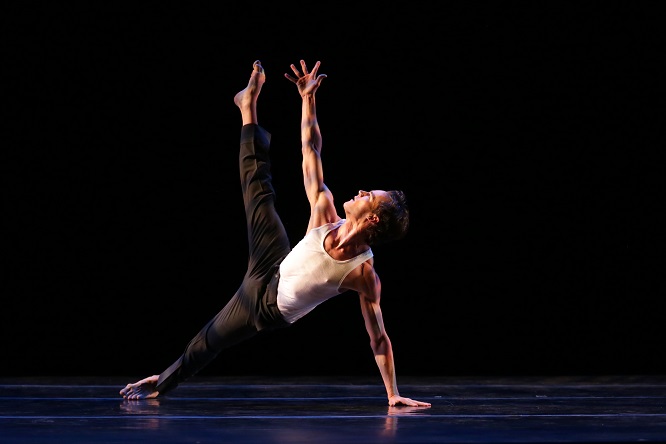
    Above: Jacob Larsen of the Martha Graham Dance Company in Sir Robert Cohan’s solo Jacob; photo by Melissa Sherwood

    Wednesday October 27th, 2021 – The Martha Graham Dance Company is presenting two programs at The Joyce in these final days of October, 2021. I happened to see Program B before seeing Program A.

    During the long months of the pandemic, I found myself seriously missing the Graham dancers. Whenever I was down in The Village, I would walk by the Company’s home at 55 Bethune Street on the off-chance of seeing some of them, even though I knew full well that some of them had left the City. I did run into Lorenzo Pagano once, and that truly made my day. Otherwise, my only encounter with any of these fascinating people during the shutdown was via the Company’s webcasts of Immediate Tragedy in June 2020 and the three-part GrahamFest95 in May 2021.

    This evening, my ‘reunion’ with the Graham Company was simply spectacular. It’s a company of stars, and they all shone tonight to dazzling effect.  

    Leslie steps hibbard nash jpg

    Above: Leslie Andrea Williams in Steps in the Street; photo © Hibbard Nash Photography 

    The excellent program opened with the powerful Steps in the Street, the second movement of Martha Graham’s epic all-female anti-Facist dancework Chronicle. Set to a vibrant, martial score by  Wallingford Riegger, Chronicle premiered at the Guild Theater here in New York City in December of 1936. In her introductory remarks, the Graham Company’s artistic director Janet Eilber called the work “…a dance of determination and resilience.”

    Led by the ever-luminous Leslie Andrea Williams, the women back rather hesitantly onto the stage one by one in silence. As the music commences, the choreography becomes complex (both in steps and gestures); it’s extremely demanding, calling for deep dedication and boundless energy. The Graham women were simply magnificent; their individual beauty and power radiated at every moment. These are women I have admired so much in recent years: So Young An, Laurel Dally Smith, Natasha M. Diamond Walker, Marzia Memoli, Anne O’Donnell, Anne Souder, and Xin Ying…watching them flash across the stage in intricate combinations – or simply walking with tremendous dignity and strength – was an exhilarating experience. New to the Company are Devin Loh and Kate Reyes. At the center of it all, the arresting presence of Ms. Williams glowed like a beacon of feminine strength and grace. 

    MGDC_Jacob_MSherwood-06

    Above: Jacob Larsen, photo by Melissa Sherwood

    Sir Robert Cohan‘s solo Jacob takes its name from dancer Jacob Larsen; Sir Robert, who passed away in January of this year at the age of 95, created the work on the dancer remotely during the period of pandemic isolation. Set to Nils Frahm’s Hammers, the dance opens with pulsating music as the dancer, clad in dark trousers and a wife-beater tee-shirt, does a run-about the finely-lit space, pausing from time to time in a pose with arms outstretched.

    Mr. Larsen’s dancing filled the space with the choreographer’s finely-cratfted movement, his face handsome and expressive. Thrice he collapsed to his knees and then magically executed back-somersaults. Combining energy and artistry expertly, the danseur gave a compelling performance. During the solo’s final moments, danced in silence in the fading light, one could sense the audience’s pent up admiration building; and when the lights came up, Jacob was greeted with a great wave of applause and bravos, so richly deserved. “A star is born!”, I scrawled in my program.  

    Natasha lloyd

    Above: Natasha M. Diamond-Walker and Lloyd Mayor in Untitled (Souvenir); photo by Melissa Sherwood

    I was very pleased to see Pam Tanowitz’s Untitled (Souvenir) again. I saw it twice during its premiere performance run in 2019 and had different (but all positive) feelings about it at each viewing. Caroline Shaw’s score was again a key element to my enjoyment of the piece: with elements of Americana, British Baroque, and an echo of hymn “The Lord Is Our Great Shepherd” all brilliantly woven together by the composer. The Graham dancers all looked fabulous in their costumes by Ryan Lobo and Ramon Martin of TOME.

    This time around, Untitled (Souvenir) summoned up for me images of an English garden party sometime in the early days of the 20th century, when Art Deco was all the rage in Europe. Anne O’Donnell and Marzia Memoli are onstage for the work’s silent opening; Marzia unfolds into a beautiful arabesque and then the dancing starts: witty, but very much tongue-in-cheek. Other dancers now arrive: Lloyd Mayor, striking in lounging pajamas; the tall beauty Natasha Diamond-Walker; Lloyd Knight hopping on; the distinctive (and glamorously gowned) Xin Ying; Jacob Larsen (looking fresh after his brilliant solo performance); and Laurel Dalley Smith, who I always love to watch.

    Everyone strikes poses, frequently ignoring the other guests. I was particularly taken with Natasha Diamond-Walker’s ‘character’: her spotlit, silent solo displayed the many mood shifts of a woman at once alluring and insecure. At one point, she even hid behind a piece of scenery…which is something I would do at a party.

    There are duets, fleeting suggestions of romance, a trio of men in the cross-currents of mutual interests. In all, the work is a delight. And again, I must praise Caroline Shaw’s wonderful score, with cunningly accented motifs and a lambent cello solo. Iconic Graham moves and gestures pop up, getting a fresh take in Ms. Tanowitz’s choreography.

    MGDC_Treading_MSherwood-13

    Above: Marzia Memoli and Lloyd Kinght in Treading; photo by Melissa Sherwood

    Following the interval, Elisa Monte’s duet work, Treading, was stunningly danced by Lloyd Knight and Marzia Memoli. These two gorgeous creatures gave their all in a steamy, intimate pairing which demands great strength and control…and perfect timing. In their sleek body tights, Marzia and Lloyd generated a hothouse atmosphere, holding the audience in rapt attentiveness as their bodies folded and snaked thru the slow partnering motifs.

    MGDC_Treading_BrianPollock-05

    Lloyd (above, in a Brian Pollock photo) was mesmerizing to behold right from his opening solo…

    MGDC_Treading_MSherwood-03

    …and Marzia created incredible shapes (Melissa Sherwood’s photo above), and her lush back-bend was a stunning moment. For me, Marzia’s was another ‘star is born’ performance tonight, and the audience seemed in full agreement. 

    MGDC_Treading_MSherwood-09

    Above: Marzia and Lloyd in Treading; photo by Melissa Sherwood  

    Treading drew a huge response from the audience, and Ms. Monte joined the dancers onstage for a bow. Roses and champagne to Marzia and Lloyd for their breathtaking performance!

    Anne o lloyd diversion

    Above: Anne O’Donnell and Lloyd Mayor in Diversion of Angels; photo by Luis Luque

    Diversion of Angels had its premiere at Connecticut College in August of 1948. This ballet is set to a wonderful romantic score by Norman Dello Joio; in it, three couples dance duets reflecting on different aspects of love. A Couple in Red embodies passionate love; a Couple in White, mature love; and a Couple in Yellow, the joys of young, flirtatious love.

    Diversion is one of the Graham ballets that places extraordinary demands on all the dancers in the cast. So Young An, Devin Loh, Kate Reyes, and Anne Souder formed a lovely ensemble, their dancing filled with commitment, beauty, and energy. At one point, they are seated on the floor, gazing ardently into the eyes of their cavaliers: a very romantic moment in this ultra-romantic ballet. A newcomer to Graham, Richard Villaverde, made his mark with his handsome presence and deft dancing.

    The three couples were splendid, each in their own way. Leslie Andrea Williams, a vision in White, danced like a goddess, and her partner, Alessio Crognale, was equally impressive. Together, they expressed the couple’s deep sense of quiet ecstasy, secure in their mutual love.

    Anne O’Donnell looks fetching in Red, and she had the perfect partner in Lloyd Mayor. Their dancing, both individually and in duet passages, was vibrant and wonderfully true to the music. At one point, while Lloyd was elsewhere, Anne seems to be tempting Alessio; that’s the thing about passionate lovers: their passion can get directed in a different direction at the drop of a hat.

    Laurel Dalley Smith was like a ray of sunshine in Yellow; Jacob Larsen completed his stellar evening as Laurel’s cavalier. Their choreography includes some daredevil catches and lifts: Laurel flew like a golden bird into Jacob’s arms and was swiftly swept aloft. Brilliant! I just loved watching them, and I must say that Laurel’s performance had the same ‘star-is-born’ feeling as Jacob’s and Marzia’s…the third in a single evening.

    And what an evening it was…it stands as one of the great dance performances I have witnessed in the last quarter-century. Although tinged with regret for two ‘missing persons’ – who I hope are both well along on the road to recovery – the evening was made memorable by the unstinting generosity and mind-boggling talent of these unique and extraordinary dancers.

    ~ Oberon

  • Julia Fischer|Philippe Jordan @ The NY Phil

    Fischer_J

    Above: violinist Julia Fischer

    ~ Author: Oberon

    Wednesday October 30th, 2019 – Philippe Jordan was on the podium at Geffen Hall this evening as The New York Philharmonic presented their program of Prokofiev, Mendelssohn, and Beethoven: an ideal mix, in my opinion. The comely and compelling violinist Julia Fischer was the guest soloist for Mendelssohn’s violin concerto, the orchestra’s stellar woodwind soloists were all present and accounted for, and the entire evening had a special glow about it.

    Prokofiev’s Symphony No. 1, Classical, strikes me as a perfect piece of music. At a running time of just 15 minutes, the symphony is a compact delight, abounding in rhythmic variety and appealing themes. The opening Allegro con brio is in the traditional sonata form, but the composer keeps throwing us curve balls: witty bits crop up out of nowhere. Maestro Jordan and the Philharmonic artists seemed truly to enjoy playing this music, which, in the flashing leaps and zesty grace notes of the second theme made me smile to myself.

    A gentle melody on high for the violins is the key feature of the Larghetto, with pizzicati, treading basses, and colourful bassoons all part of the composer’s scheme. The Gavotte makes me think of the composer’s ROMEO AND JULIET, while the ebullient finale sounded wonderfully clear and alive. Throughout, flautist Robert Langevin, clarinetists Anthony McGill and Pascual Martínez-Forteza, oboist Sherry Sylar, bassoonist Judith LeClair, and their woodwind-section colleagues charmed the ear with their polished playing; when Maestro Jordan asked them to stand for a bow, the audience responded warmly.

    Violinist Julia Fischer then joined the orchestra for Mendelssohn’s Violin Concerto in E-minor. This was my first opportunity to hear Ms. Fischer playing live; she sounded marvelous and looked fetching is a deep grey gown shot thru with glimmering silver. There’s shining silver in her sleek tone as well.

    The first movement’s marking of Allegro molto appassionato derives from the composer’s premonition of writing “…[A concerto] in E-minor running through my head, the beginning of which gives me no peace.” With splendid support from the orchestra, Ms. Fischer displayed her expressive gifts, lovely feeling for dynamics, and exquisite control of pianissimo. In the cadenza, her soft playing in the stratosphere was remarkable; this she followed with a rocking motif as the ensemble take up the theme. The music becomes very animated as the Allegro moves to its finish.

    A sustained bassoon tone carries the music directly into the Andante wherein the glowing melody is given a tender, haunting quality as Ms. Fischer’s playing moves serenely from piano to pianissimo: simply breathtaking

    Following a brief interlude, the violinist embarks on festoons of fiorature – played with sparkling surety – in the concerto’s concluding movement. Passages of Mendessohnian ‘faerie music’ are heard, and then Ms. Fischer revels in the rapid-bowing of the effervescent finale. With the final note of the concerto still hanging on the air, the audience unleashed a tumultuous applause, and everyone stood up to cheer. Ms. Fischer and Maestro Jordan are clearly simpatico, and their performance was thrilling. The crowd clearly wanted an encore, but none was forthcoming.

    Philippe-jordan

    Above: Maestro Philippe Jordan

    The concluding work, Beethoven’s 7th symphony, was magnificently shaped by the Maestro, who dips and bends into the music, eliciting splendid playing from the orchestra. This symphony has a dance-like sense of forward momentum upon which Mssr Jordan built his interpretation. His pacing – on the fast side – was so vital, and the textures of the music so lovingly layered, with the wind soloists again producing magical effects. 

    Swept along by the music, I put away my pen and indulged myself in forty minutes of pure selfish enjoyment. One small and intriguing motif in this symphony that always captures my imagination is a seeming “preview” of six-note passage from the Grail knights’ march in Wagner’s PARSIFAL music. Did Wagner openly borrow this from Beethoven, or is it a subconscious association? Either way, it played over and over in my mind during the train ride home. 

    This has so far been a particularly impressive and satisfying season for classical music here in Gotham, and tonight’s concert was yet another edifying experience.

    ~ Oberon

  • Monteverdi’s L’ORFEO @ Alice Tully Hall

    Monteverdi ORFEO

    ~ Author: Oberon

    Wednesday October 18th, 2017 – Tonight marked the first event in our Great Performers at Lincoln Center subscription series: Monteverdi’s L’ORFEO was performed by the Monteverdi Choir and the English Baroque Soloists under the baton of Sir John Eliot Gardiner. Tenor Krystian Adam appeared as Orfeo, enjoying great personal success in the role. The large cast was peopled by fine singing-actors who made their characters come alive in a semi-staged setting. There was some off-pitch singing in the course of the evening, but by the final moresca all was forgiven.

    The opera, which was fiirst performed in 1607 as the ducal court of Mantua, charts the story of the singer Orfeo’s love for Euridice, her death from a snake bite, and Orfeo’s journey to hell to bring his beloved back. Moved by Orfeo’s despair and devotion, Plutone allows Euridice to leave the underworld – with the stipulation that Orfeo not look at her during their journey. Orfeo cannot resist, and by gazing at his beloved, he causes her second death. The intervention of Orfeo’s father, Apollo, sends Orfeo heavenward, where he can spend eternity observing Euridice in the afterlife.

    Soprano Hana Blažíková opened the prologue as La Musica (she later also appeared as Euridice). At first Ms. Blažíková’s voice seemed too large – almost Tosca-like – but she settled in quickly and did some really impressive, controlled singing in her solo with the excellent harpist Gwyneth Wentink. The story then unfolds. 

    I hated the semi-staging, at least in the opening scenes where the costumed nymphs and shepherds cavorted in fake camaraderie that had the air of a high-school play. They seemed self-conscious as they embraced one another endlessly, whilst singing repeatedly about how very happy they were for Orfeo. When the story turns darker, things improved considerably. Thenceforth, everyone was clad in black and moved in stylized formations, with the musicians sometimes part of the action. 

    Mr. Adam as Orfeo made a vivid impression from his first lines. As the character moves from joy to despair, the tenor’s palette of vocal colour provided phrase after phrase of deeply satisfying singing. His long scena upon losing his Euridice for a second time was a vocal marvel, with the words and his poignant phrasing of the music all of a piece.

    Basso Gianluca Buratto, a masterful singing-actor, doubled as Caronte and Plutone. As Caronte, having  denied Orfeo entrance to the underworld, moved eerily around the stage, intrigued by the sounds of the musical instruments and the people playing them. Mr. Buratto’s large, inky bass sound was superbly inflected, making his scenes highlights of the evening.

    A third fascinating voice was that of Korean counter-tenor Kangmin Justin Kim who – as Speranza – sang from the mezzanine. The voice is clear, steady, mystical. There was also fine singing from Lea Desandre (Messagera) and Francesca Boncompagni (Prosperina) – each with a lovely face and form – and notable beauty of tone in Gareth Treseder’s Eco, sung from above with a voice that hung on the air.

    Under Sir John Eliot Gardiner’s expert leadership, the evening musically provided endless pleasures. The instrumental ensemble played superbly and there was so much fine vocalism to savour. L’ORFEO was played straight thru in a 2-hour+ stretch, but it flew by.

    ~ Oberon

  • Danish String Quartet @ Zankel Hall

    Danish-Quartet

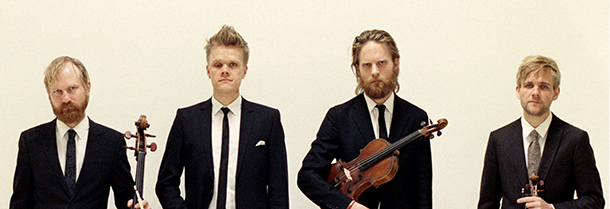
    Wednesday October 26th, 2016 – The Danish String Quartet (above) in concert at Zankel Hall in a program pairing final masterworks by Shostakovich and Schubert, with cellist Torleif Thedéen joining the Quartet for the Schubert. It was an extraordinary evening of music-making, with the two vividly contrasted pieces superbly played.

    The program opened with a performance of the last of Shostakovich’s fifteen quartets. Composed in 1974, it consists of six inter-connected movements and has the mood of a farewell to life; indeed, the composer died the following year, after a career periodically darkened by deep conflicts with the Soviet government. The ailing Shostakovich created a work of lyrically spare, bleak textures alternating with violent rhythmic gestures.

    The atmosphere of the 15th quartet precludes note-taking; from its quiet opening passage played by the second violin, we are drawn into a unique sound-world of severe beauty and grim intensity. The Danish String Quartet’s playing of the opening movement – which the composer indicated should be performed so slowly that listeners would flee the hall out of boredom – took on an almost religious aspect: a sustained and intimate meditation.

    The Quartet’s hallmark mastery of dynamics, the natural flow of the music from voice to voice, and their finely-balanced layering of sound, created an incredible atmosphere which was sustained throughout the 40-minute work. Moments of great delicacy stood in contrast to jagged slashings; an off-kilter waltz, sustained notes that spring out of nowhere, vibrant trills, a resonant viola cavatina, deep passion from the cello, an overall sense of desolation. Despite a few Playbill-flippers seated near me, the audience was held in a rapt state throughout the piece; the applause – deep and sincere, but not boisterous – signaled the impact the music and the musicians had made.

    Feeling both drained and enriched by this monumental musical experience, I remained in my seat throughout the intermission, deep in thought.

    Following the interval, the Schubert string quintet in C-major, with cellist Torleif Thedéen joining the ensemble. This quintet, written in 1828, was Schubert’s last extended piece of chamber music. It seems that the composer never heard this final masterwork performed; he died on October 2nd, 1828, and the quintet was not performed publicly until 1850.

    One of the longest works in the chamber music repertory, Schubert’s C-major quintet sounds more like a celebration of life than a prelude to death. The composer was desperately ill while composing it, but the work has a feeling of optimism – as though he felt he might actually re-bound and compose for another 30 or 40 years. It was not to be, and – as with Mozart, Chopin, and Pergolesi – we are left to ponder what might have been. 

    The Danish String Quartet’s traversal of the Schubert was so persuasive both in tonal beauty and rhythmic inflection that the work sped by. The songful-to-stormy opening movement, with its return to tranquility in C-major, is followed by one of music’s most marvelous adagios, underscored by plucked lower notes. The players seemed to be having serious fun in the Scherzo, and then moved on to the gypsy-flavour of the finale.

    At the close of the Schubert’s joy-filled final Allegretto, the Danes were given an enthusiastic ovation from the audience. The players responded with an encore: a lyrical, chorale-like quintet that was lovingly played.

    The Participating Artists:

    The Danish String Quartet:

      ~ Frederik Øland, Violin
      ~ Rune Tonsgaard Sørensen, Violin
      ~ Asbjørn Nørgaard, Viola
      ~ Fredrik Schøyen Sjölin, Cello

    Torleif Thedéen, Cello

    The Repertory:

    • SHOSTAKOVICH String Quartet No. 15 in E-flat Minor, Op. 144
    • SCHUBERT String Quintet in C Major, D. 956

  • In Troubled Days of Peace @ ASO

    Donnie-Ray-Albert

    Above: baritone Donnie Ray Albert

    Wednesday October 19th, 2016 = The American Symphony Orchestra presenting concert settings of operas by Ernst Krenek and Richard Strauss in their season-opening program. The timely theme of dictatorships and the eternally evasive concept of peace hung in the air at Carnegie Hall, where appreciative music lovers had gathered, skipping a pointless presidential ‘debate’ in favor of hearing some rarely-performed works. 

    Ernst Krenek’s Der Diktator was completed in August 1926. You can read a synopsis of the opera and find background material here, since I’m going to concentrate on the evening’s presentation.

    Leon Botstein and his intrepid players gave a fine rendering of the very palatable score. The performance was dominated by Donnie Ray Albert as the Dictator. A stalwart force in the realms of opera and concert since 1976, Mr. Albert is now 66 years of age, and boasts a voice that has retained its power, along with interpretive skills that are truly impressive. Whether in bold declamation or in the music’s more lyrical passages, Mr. Albert gave a masterful performance. Another impressive voice was that of Karen Chia-Ling Ho as Maria: displaying a large, spinto sound and hall-filling top notes, the soprano also invested her singing with dramatic urgency. Ilana Davidson, a petite woman with a baby-dollish timbre, piped up boldly as Charlotte, and Mark Duffin was able to combine the power of a helden- and the verbal edge of a character-tenor. Portraying an officer blinded by poison gas while in the Dictator’s service, Mr. Duffin wore sunglasses and managed, for all his gritty vocal power, to create a moving figure.

    Richard Strauss’s Friedenstag (Peace Day) was premiered at Munich in 1938, with Adolf Hitler among the audience. Set during the Thirty Years War, the story is unfolds in a city under siege; after many twists and turns of plot, the wife of the city’s Commandant intercedes with the head of the besieging force and brings about a reconciliation. With music includes many reminders of DIE FRAU OHNE SCHATTEN, FRIEDENSTAG is a good experience for an old Strauss-lover like me; however, it is somewhat weakened by an endless series of “finales”, as though Strauss did not know when to stop.

    Continuing his highly successful evening, Donnie Ray Albert made a grand impression as the Commandant with his generous singing and imposing stature. I had very much been anticipating hearing Tamara Wilson as Maria, the Commandant’s wife, but when we arrived at Carnegie Hall, we found that she had canceled and was being replaced by Kirsten Chambers. A program-insert bio lists Ms. Chambers as the cover for both Isolde and Salome at The Met this season. Blonde, and clad in a bright red gown, the soprano unsparingly hurled herself into the demanding music of Maria, showing a voice of considerable thrust. If one top note was just shy of the mark, overall she managed well in a fiendish role, and saved the evening.

    R Lugo

    Bass Ricardo Lugo (above), as the opposing general, made a vibrant impression with his imposing voice and intrinsic sense of the drama. He was an excellent foil for Mr. Albert, and, between these two powerhouse voices, they kept our focus on the work keenly secured. Mr. Duffin, amplifying the forceful impression he had made in the Krenek, was back as the Burgomaster: one of his upper notes was sustained for an incredibly long time…I really don’t know how he did it!

    FRIEDENSTAG has a number of small roles in which savvy interpreters are able to make their mark. I especially liked the clear sweetness of Scott Joiner’s tenor as a Piedontese soldier (he sang in Italian) and Carsten Wittmoser’s sturdy vocalism as a Musketeer. Tenor Doug Jones and baritone Steven Eddy (in a dual role) seized their chances and did very well, with baritones Steven Moore, Daniel Collins, and Benjamin Cohen contributing strongly. 

    In small vignettes, a number of chorus members stepped forward from time to time. One of these had a special meaning for me: Rachel Rosales, as a Woman of the People, is a soprano I heard lo! these many seasons ago as an exquisite Leila in LES PECHEURS DES PERLES at New York City Opera. I have seen her name listed among choral rosters before, and was feeling nostalgic when she intoned her brief, dramatic solo, a solo which made me think of Strauss’s writing for Die Amme in FRAU OHNE SCHATTEN. In the finale tonight (the final finale), Ms. Rosales and other chorus sopranos sent some high notes sailing into the hall.  

    The Participating Artists:

    American Symphony Orchestra
    Leon Botstein, conductor
    Bard Festival Chorale/James Bagwell, director
    Ilana Davidson, Karen Chia-ling Ho and Kirsten Chambers, sopranos
    Donnie Ray Albert and Steven Eddy, baritones
    Mark Duffin, Scott Joiner and Doug Jones, tenors
    Carsten Wittmoser, bass-baritone
    Ricardo Lugo, bass

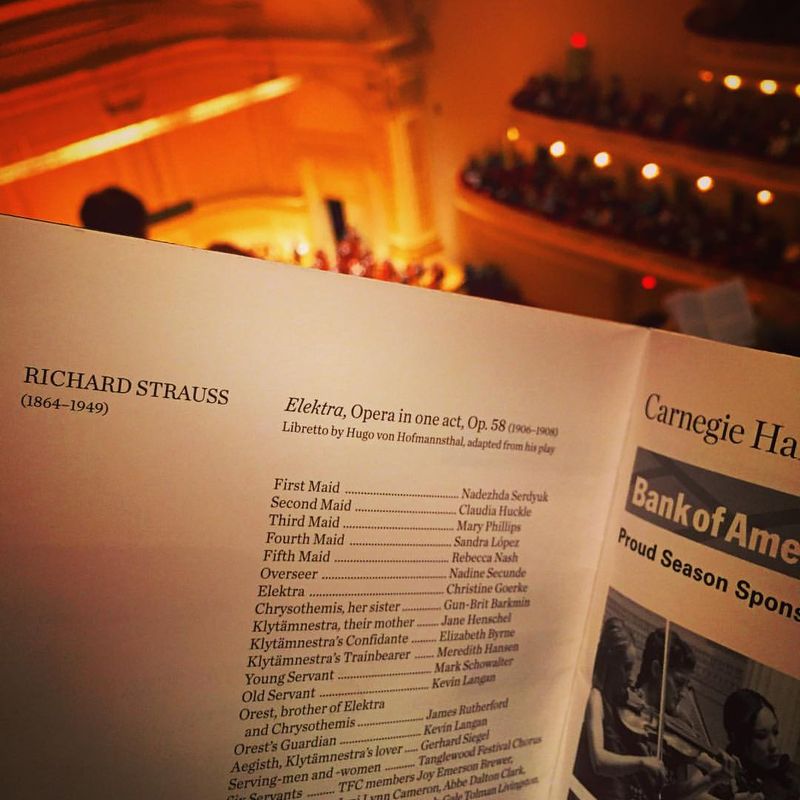
  • BSO: ELEKTRA @ Carnegie Hall

    Andris-Nelsons-Conductor-007

    Wednesday October 21st, 2015 – Conductor Andris Nelsons (above) leading a powerful concert performance of Richard Strauss’s ELEKTRA given by the Boston Symphony Orchestra at Carnegie Hall. The evening was a great personal triumph for soprano Christine Goerke, who gave a vocally and physically super-charged rendering of one of opera’s most demanding roles.

    Strauss calls for a massive orchestra for this, his most demented work; the Boston players were sprawled across the entire space of the Carnegie stage, with the chorus at the end singing from an upper tier of the hall. The musicians played their hearts out and, under Nelsons’ authoritative baton, they delivered the music with tremendous flair in all its glistening glory. There were also superbly refined stretches, notably in the Klytaemnestra scene where the maestro and musicians painted a neurotic sound setting for an amazingly nuanced performance of the role by Jane Henschel.

    The large cast included some names to reckon with in the smaller roles: Nadine Secunde (Overseer), Elizabeth Byrne (Confidante), the Met’s Mark Schowalter (Young Servant) and stalwart basso Kevin Langan (Old Servant/Orestes’ Guardian).

    In the opening scene, the psychopathic maids were a raucous lot; as they carried on their vile gossip session about Elektra – the royal princess reduced to the status of a caged animal in her own home – Ms. Goerke, in a striking blood-red gown, strode among the violins in a state of fevered anxiousness. At last the maids hauled off the fifth of their number to be beaten for defending Elektra, and Ms. Goerke took center stage.

    She began the great monolog with sounds of deep, guttural anguish. As in her recent Met Turandot, Goerke’s voice narrowed as she ventured higher and some of the upper notes were covered by the orchestra. This necessitated an adjustment for those of us inured to the likes of Nilsson, Behrens, and Dame Gwyneth Jones in this music. Yet Goerke knew what she was doing and she went about the music on her own terms; by the scene with Klytaemnestra, the Goerke voice was firing on all cylinders and she delivered a performance on a par with her career-defining portrayal of the Dyer’s Wife at The Met in 2013.

    Cg

    Above: Christine Goerke

    The soprano’s portrayal of Elektra was so committed and intense: she entered into the physicality of the role as if in a staged performance, interacting brilliantly with her colleagues and even including a frantic, manic dance at the end. Vocally she sailed forth undaunted by the orchestra’s volume and hurling out the character’s dramatic punch lines (“Triff noch einmal!”) with force. Summoning up a colossal effort for the last sprint, Goerke packed a final punch with her ecstatic “Schweig, und tanze!” before collapsing into her chair. The ensuing ovation for the intrepid soprano was epic, and very much well-deserved.

    As the hapless Chrysothemis, Gun-Brit Barkmin made a far better impression than she had as Salome in this same hall in 2014. Slender of frame and of voice, she nevertheless finds a way of projecting over the orchestra and her shining top notes made me think she might be a good SIEGFRIED Brunnhilde. Errant pitch was sometimes evident, but overall Ms. Barkmin did well and was a good foil for Ms. Goerke. 

    Henschel

    Jane Henschel (above), though the top of her voice must now be handled with care, gave such a illuminatingly subtle and detailed performance as the demented Klytaemnestra – playing off the words and using a kozmic array of vocal colours – that a few random strained notes were only of passing worry. She and Goerke made their encounter crackle with verbal vibrancy: the most dramatically engrossing passage of the evening.

    James Rutherford was a sturdy-voiced but not especially imaginative Orestes. The great Recognition Scene was not persuasively staged, though Goerke’s singing after the revelation was wonderful….and deeply felt; and here the orchestra playing was sublime. Gerhard Siegel was a capital Aegisth, vividly neurotic and strongly sung: his final “Weh mir!”, voiced onstage, was a lightning bolt rather than a last gasp.

    Auth.aspx

  • Preview: Mats Ek’s AXE @ Martha Graham

    AXE

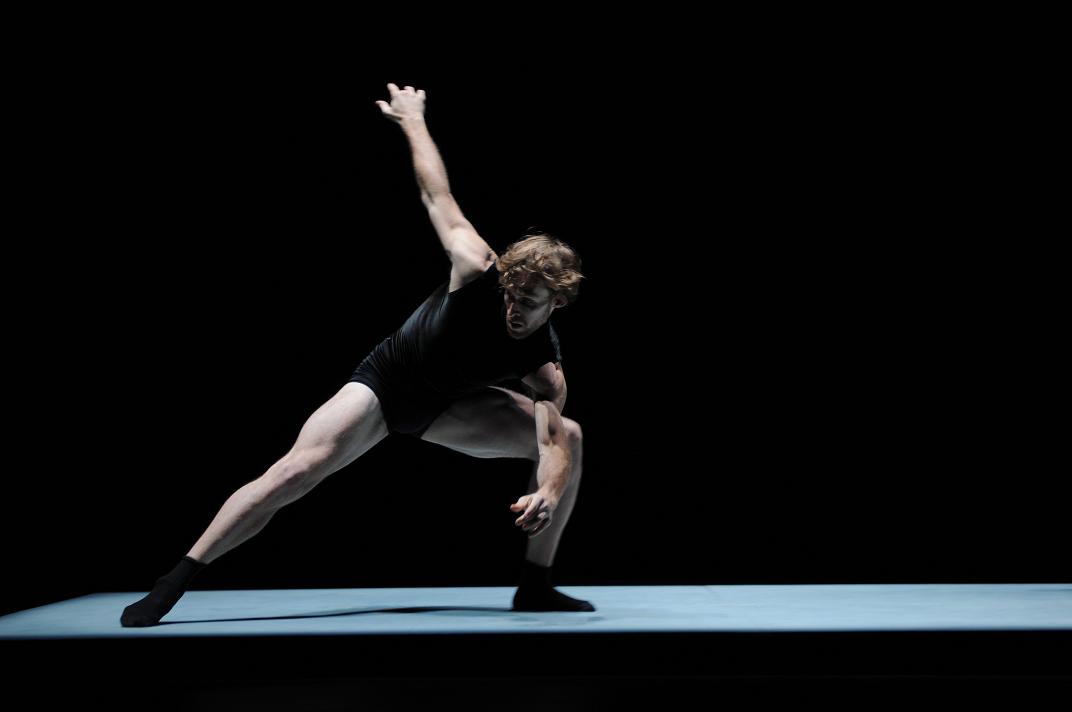
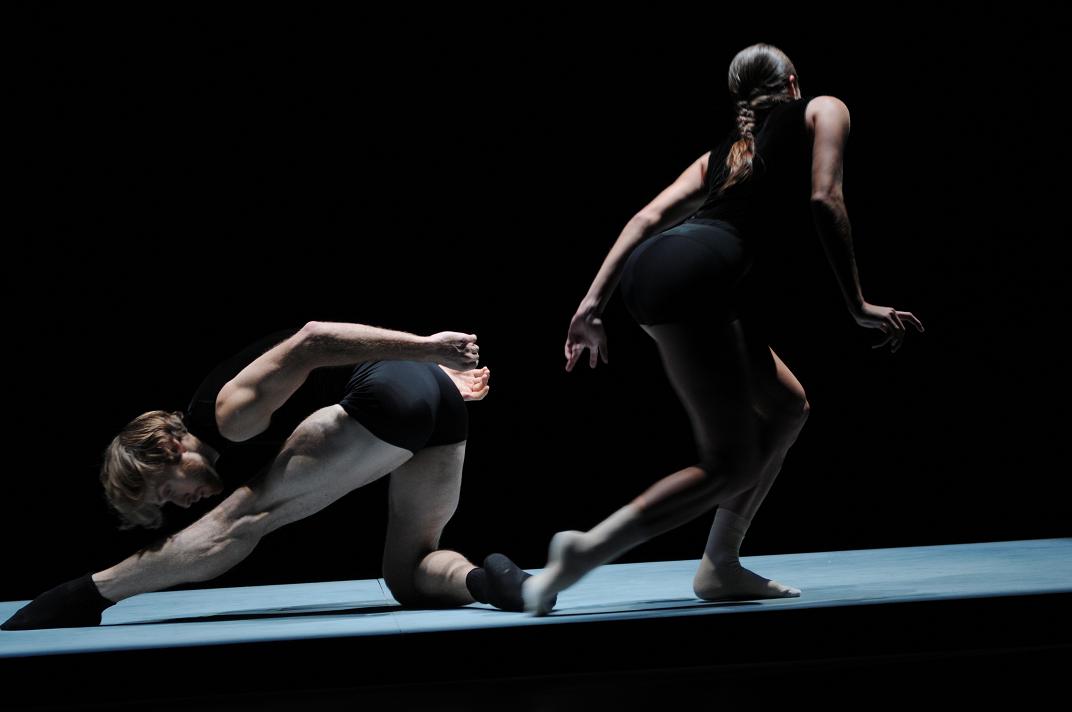
    Wednesday October 14th, 2015 – The Martha Graham Dance Company premiered Mats Ek’s AXE at the Jacob’s Pillow Dance Festival in August 2015, and will give the work’s New York premiere at NY City Center in April 2016 as part of the Company’s 90th Anniversary celebration. This evening, friends and fans of the Graham Company gathered for a studio preview of the Ek duet, which was danced by Company principals Ben Schultz (above) and PeiJu Chien-Pott (below).

    6a00d8341c4e3853ef01b7c716ffe8970b

    These studio events at the Graham homespace at Westbeth on Bethune Street are a great bonus for the Company’s many avid followers: whether introducing us to a new work or delving into explorations of the established classics of the Graham repertoire, we are given an opportunity to experience the works in an intimate setting and have an insider’s look at the creative or re-creative process. And of course there is also the genuine thrill of encountering the phenomenal  Graham dancers at close range.

    The staged version of AXE is based on a work Ek originally created on film. It is an intense domestic-drama duet which revolves around a man splitting wood, observed by his long-time mate. Layered in subtle sheets of emotion, the work takes on a profound quality that transcends the physical action. In a stroke of genius, Ek sets the duet to music of Tomaso Albinoni, giving it a timeless quality.

    Janet Eilber, the Graham Company’s artistic director, spoke of her long-held desire to have an Ek work in the Company’s repertoire, and of how it came to pass, thru chance and persistence. In brief, four Graham dancers – PeiJu Chien-Pott, Anne O’Donnell, Ben Schultz, and Lloyd Knight – traveled to Sweden where the choreographer worked with them to transform his film into a live dancework. The result is nothing less than extraordinary.

    Prior to showing us a full run-thru of the work, Ms. Eilber queried the four dancers about their experience of working with the choreographer who, it seems, was both detail-oriented and enigmatic. PeiJu and Ben then demonstrated key phrases from the ballet before presenting an absolutely stunning ‘performance’ of AXE that literally gave me goosebumps.

    AXE will be a must-see ballet when the Company celebrate their 90th anniversary at City Center in April 2016. It fits superbly into the Graham repertoire, and dance-lovers owe a debt of gratitude to Ms. Eilber for having secured it for us.

    Season-Announce-header

    PeiJu Chien-Pott (above) heralds the coming season…I cannot wait!    

  • MORPHOSES: BACCHAE @ The Joyce

    Copy of 113

    Wednesday October 26, 2011 – MORPHOSES presents its production of Luca Veggetti’s BACCHAE at The Joyce. The work draws inspiration from – but is not a literal setting of – Euripides’ ancient Greek tragedy. Composer Paolo Aralla and flautist Erin Lesser are major forces in this creation, with lighting by Roderick Murray and costumes by Mr. Veggetti and Benjamin Briones. In the top photo: dancer Gabrielle Lamb.

    Luca Veggetti’s BACCHAE is a dancework which summons up images of both the rites of the Bacchae – those wild women driven to ecstacy in their worship of Dionysus – and the death of the Theban King Pentheus at their hands. Set in a space surrounded in black silk drapery, the ballet takes on a funereal tone as the abstracted narrative moves to its brutal climax. The sudden exposure of the rear brick wall near the end draws us back to reality, awakening from a nighmare of deception and murder.

    In a prologue, a puppet (skillfully manipulated by an actor all in black) mimes sets forth themes of the  Dionysian rituals to which the Bacchae subscribe. At the dress rehearsal this device seemed to me not to work very well, but it the performance it was surprisingly effective.

    Copy of 21

    But we have already met Dionysus by this time; as in the play, ‘he’ is the first player to appear: Euripides describes his appearance and demeanor as feminine, and Luca Veggetti casts a female – Frances Chiarverini (above) – in the role. Frances is a mistress of the Veggetti style which calls for fluid movement, maintaining a steady flow of motion through knees that are often bent, keeping the body low to the floor. Pivoting and sliding across the space as the hands and arms cut thru the air in angled gestures, the effect can be spiderlike and in this darkish setting seemed almost ominous.

    Copy of 39

    As King Pentheus, the antagonist of the disguised god and who is determined to end the Bacchic rites, Adrian Danchig-Waring (above) brought magnificent presence and powerful dancing to the role. Lured into the trap Dionysus sets for him – an invitation to witness the Bacchae at their rituals – Adrian’s Pentheus is seduced and betrayed to his death.

    Copy of 40

    The two-part pas de deux of Pentheus and his cousin Dionysus is a central aspect of BACCHAE, danced with a powerful sense of give-and-take by Adrian and Frances (above).

    Copy of 55

    The third major character in the drama is Agave, the mother of Pentheus, who unwittingly murders her son after he is caught secretly witnessing the Dionysian revels of the Bacchae. Gabrielle Lamb’s passionate sense of drama – seemingly a natural gift rather than something she’s developed – was vividly projected through both her intense facial expressiveness and her superbly limber body.

    Copy of 7

    The idea of a traditional Greek chorus is adapted here with an ensemble of excellent dancers who weave themselves into the dramatic situations, often appearing or vanishing under the hems of the silken drapes.

    Copy of 89

    As one of the Bacchae, dancer Yusha-Marie Sorzano (above) carries a stick – a reference to the first confrontation between the Bacchae and the soldiers of Pentheus who were sent to shut down their celebrations and bring order out of chaos. The women, using only sticks, were able to fend off the armed guards thru the fervour of their passionate loyalty to Dionysus. In an ensemble, the woman swipe and flourish their sticks thru the air, moving to the swooshing sounds in aggressive stances.

    Copy of 79

    In the opening scene, standing on the sounding platform which is a central element of the work, flautist Erin Lesser (above) evokes the shifting winds of time as she breathes and even speaks across the mouthpiece of her enormous contrabass flute. Throughout this long ‘aria’, Ms. Lesser’s energies and technical skills seemed to re-double from one passage to the next…

    Copy of 65

    …while in the final scene, she re-appears playing her silver flute as Agave/Gabrielle ponders her violent act.

    Luca Veggetti and his collegues have crafted a work that is unlike any other, a unique and evocative summoning of an ancient tale that speaks clearly to us of the vanity of gods and the fervor of their followers which can so often go to extremes. Very apt for today’s world.

    More of Kokyat’s images from this production appear here.

    I felt it was of tremendous benefit to my enjoyment of the evening that I took the time to read the Euripides play before attending. The ballet, which lasts a little over an hour, seemed too short in a way; I wanted more.

    So good to see Arlene Cooper, Giorgia Bovo, Emery LeCrone and Justin Peck among the audience this evening.

    Synopsis of the dancework:

    “Dionysus, the god of wine, prophecy, religious ecstasy, and fertility returns to his birthplace in Thebes in order to clear his mother’s name and punish the insolent city-state for refusing to allow people to worship him.

    King Pentheus of Thebes has declared illegal the Bacchic rituals initiated by his cousin Dionysus. As these rituals represent a threat to social order, King Pentheus orders his soldiers to violently suppress them.

    Dionysus begins the long process of trapping Pentheus, leading him to his death. He convinces the intrigued and excited king to witness the rituals and volunteers to help him clandestinely observe the highly secretive all-female gatherings.

    Dionysus, manipulating the situation, orders the Bacchic worshippers, including the king’s mother Agave, to attack the now vulnerable ruler. As he falls, Pentheus reaches for his mother’s face but Agave, driven mad by Dionysus, proceeds to rip her son limb from limb.”

    MORPHOSES dancers:

    Sarah Atkins
    Yusha-Marie Sorzano
    Brittany Fridenstine-Keefe
    Frances Chiaverini
    Gabrielle Lamb
    Emma Pfaeffle
    Christopher Bordenave
    Brandon Cournay
    Adrian Danchig-Waring
    Willy Laury
    Morgan Lugo

    Watch an brief BACCHAE video here.

    Kokyat and I have followed the creation of BACCHAE from the audition process thru a preview evening (where the mystical ‘sound platform’ was introduced) to a recent studio rehearsal. Luca Veggetti and MORPHOSES artistic director Lourdes Lopez have graciously given us an insider’s look at their creative process, and the dancers have been so kind and generous as we eavesdropped on their work.