Tag: Wednesday September

  • BalletX @ The Joyce ~ 2024

    20240925_BalletX-Heroes_ChristopherDuggan_853

    Above: Savannah Green in Takehiro Ueyama’s HEROES; photo by Christopher Duggan for BalletX

    ~  Author: Oberon

    Wednesday September 25th, 2024 – Philadelphia’s BalletX at The Joyce tonight, offering three New York premieres: Takehiro Ueyama’s HEROES, Jodie Gates’ BEAUTIFUL ONCE, and Loughlan Prior’s MACARONI. Over the years, this Company has commissioned nearly 130 world premieres.

    The three works presented tonight were well-contrasted, and I must immediately praise the Lighting Designer, Michael Korsch, whose work was nothing less than sensational; this gave a special glow to the evening. Of the beautiful and highly accomplished BalletX dancers, two were known to me: Savannah Green (who danced in the closing work) and Jerard Palazo, who danced in the ballets by Loughlan Prior and Takehiro Ueyama, and who generated considerable star-power.
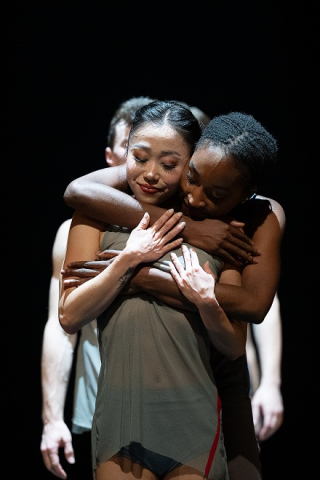
    20240925_BalletX-BeautifulOnce_ChristopherDuggan_191

    Above: Minori Sakita and Ashley Simpson in Jodie Gates’s BEAUTIFUL ONCE; photo by Christopher Duggan for BalletX

    The evening opened with Jodie Gates’s BEAUTIFUL ONCE, set to a score by Ryan Lott performed by Son Lux and yMusic. The slurring music of the opening moments soon transforms into rhapsodic themes as the dancers meet on the gorgeously lit stage, embracing one another with genuine affection. The choreography – danced on pointe – is full of sweeping lifts and swirling movement, all gracefully executed. A series of duets, laced with fleeting solos and passages danced as trios and quartets, keeps the eye thoroughly engaged. 

    The music becomes dense and passionate, and a sense of belonging pervades the stage. When the dancers are not dancing, they remain on the sidelines, as if supporting their colleagues. A lovely quintet for the women seems to offer a perfect ending to the piece, but then the men take over and the dancing flows on. As the ballet nears its end, individual couples step forward and embrace – not passionately, but tenderly.

    The program note refers to BEAUTIFUL ONCE as “a response to the chaotic moments in life”, and reminds us of the blessèd assurance of friendship and community.

    20240925_BalletX-Macaroni_ChristopherDuggan_422

    Above: Jonathan Montepara and company in Loughlan Prior’s MACARONI; photo by Christopher Duggan for BalletX

    I hardly ever enjoy comic ballets (Jerome Robbins’ THE CONCERT being an exception) and I can’t say that I derived much pleasure from Loughlan Prior’s MACARONI, a spoof on gay manners from the powdered wig era. The music, by Claire Cowan, served the choreographer well, laced with sounds of the harpsichord to evoke the baroque.

    The cast of eight included three women en travesti, dancing on pointe. Everyone danced superbly whilst showing expert comic timing and entering fully into the campy atmosphere. But as the work progressed, I felt rather sad: yes, we have made so much progress over the years…and yes, we must be able to laugh at ourselves. But there is still rampant homophobia and plenty of anti-gay/anti-trans violence in this country. Just a week ago, I heard three Spanish boys talking about me on the subway, using their favorite slur: pato. Will it never end?

    20240925_BalletX-Heroes_ChristopherDuggan_529

    Above: Francesca Forcella and Jerard Palazo infrom Take Ueyema’s HEROES; photo by Christopher Duggan for BalletX

    After the interval, Takehiro Ueyama’s HEROES summoned up a world of poignant beauty and mystery – a world we can always access in our imaginations but which the choreographer here transforms into reality. In his program note, Take dedicates the ballet to citizens who played a crucial role in the recovery of Japan from the devastation of World War II.

    Here, Mr. Korsch’s lighting designs (in collaboration with Christopher Ham) were extraordinarily atmospheric, and Eugenia P. Stallings’ costume designs – red garments that seemed at once ancient and ultra-contemporary – evoked the priestly rites that bind the community together.

    The piece opens with a prologue: deep rumblings are heard, and the summoning sound of chimes. From the pit, Tokoshieni – composed by percussionist Kato Hideki and performed by him and violinist Ana Milosavljevic – transports us to an illusory place and time. A red-clad couple emerge from the shadows and perform a slow, stylized duet to the sound of mysterious whispers. An eerie, brooding feeling creeps in; the man performs a slow solo and and the woman responds in kind. They don red jackets and vanish into the darkness.

    The music of John Adams – The Chairman Dances – rises as the full stage becomes illuminated. A diagonal of white chairs stage right becomes a walkway as the dancers enter. They move the chairs about, establishing a place for the evolving ritual. The chairs are lined across the stage and there is a wonderful seated passage of arm and hand gestures. A unison dance and individual walkabouts are highlighted by brief solos. 

    The music turns spacious and the dance slows, only to rebound as the dancers march about. Another unison passage leads to everyone dropping to the floor…only to rise and race about in a circle. Now the jackets come off and are collected; the dancers sit in a semi-circle, with the corpse of a woman covered with a jacket.

    A new beat develops; there is an intense duet which evolves into a trio and then a wild female solo. The lighting continues to play a powerful part in the effect of the choreography. In a visual coup, there is a striking line-up across the space, and the dancers advance towards us. They then fall into single-file and proceed to cross the bridge of chairs, sure of their destiny.

    More of Christopher Duggan’s images from HEROES:
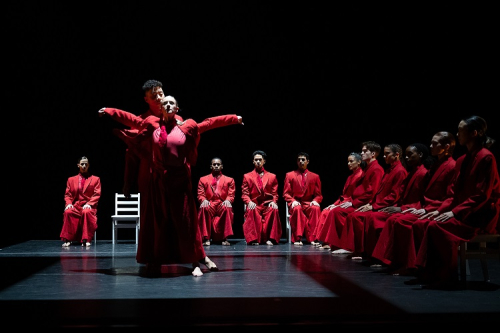
    20240925_BalletX-Heroes_ChristopherDuggan_616

    Above: dancers Skyler Lubin and Mathis Joubert

    20240925_BalletX-Heroes_ChristopherDuggan_917

    Above: dancer Itzkan Barbosa

    ~ Oberon

  • Table of Silence ~ 2019

    L2010773

    Wednesday September 11th, 2019 – Today marked the annual Lincoln Center performance of Jacqulyn Buglisi’s Table of Silence, a danced ritual commemorating the 9/11 terrorist attacks on New York City and Washington DC. This year, it took on an even deeper resonance as a plea for reason and compassion in our dark and dangerous world.

    As each day seems to bring ever more unsettling headlines, I am constantly put in mind of the words sung by the desperate wife and mother Magda Sorel in Gian-Carlo Menotti’s opera The Consul:

    “To this we’ve come:
    that men withhold the world from men.
    No ship nor shore for him who drowns at sea.
    No home nor grave for him who dies on land.
    To this we’ve come:
    that man be born a stranger upon God’s earth,
    that he be chosen without a chance for choice,
    that he be hunted without the hope of refuge.
    To this we’ve come. And you, you too, shall weep.”

    Table of Silence shines like a beacon of hope; each year, it seems more beautiful…and more meaningful. 

    ~ Oberon
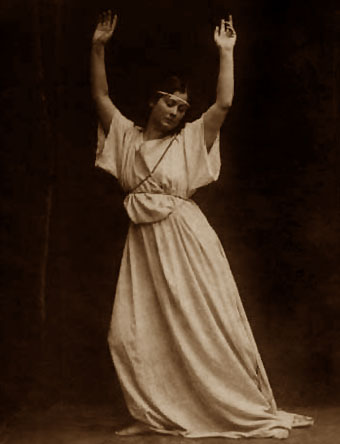
    Note: some photos here.

  • Hamilton’s House

    L1970579

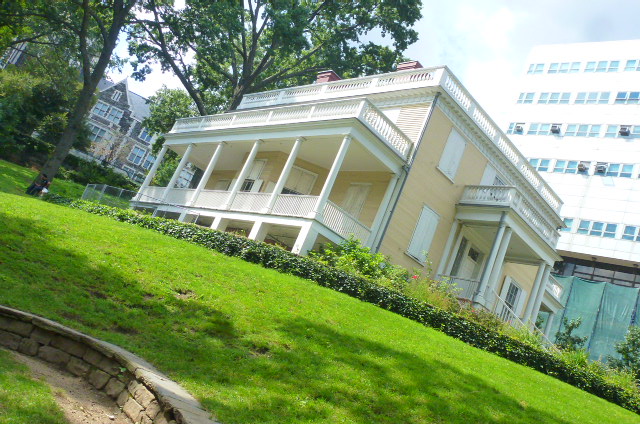
    Wednesday September 19th, 2018 – Having lived in New York City for twenty years, and been a frequent Gotham visitor since the 1960s, it’s always fun to discover places here in town that I did not know existed. I happened upon Alexander Hamilton’s house – officially called Hamilton Grange National Memorial – one day in August while visiting a friend who was recuperating from surgery. The house was not open to visitors that day, but it looked so distinguished sitting there in its grassy park that I knew I wanted to return and investigate.

    I was pretty sure my high-school friend Deb Hastings would be interested in this landmark; I suggested we head there the next time she came into town…which turned out to be today.

    Hamilton’s house is located on 141st Street at Saint Nicholas Avenue in Manhattan. With the success of the musical HAMILTON, the house has become something of a tourist destination. Deb saw HAMILTON and loved it. Myself, it interests me not at all.

    After strolling around the exterior…

    L1970571

    L1970568

    …we went into the visitor’s center for our “un-guided” tour, which started at noon. Only another woman and her teenaged son were in our ‘group’…the boy reminded me so much of my first lover, TJ.

    Films shown at such landmarks are not always of great interest, but the two we watched here were excellent: the first about Hamilton’s life (and death) and the other about the incredible feat of moving the house to its present location from a couple of blocks away.

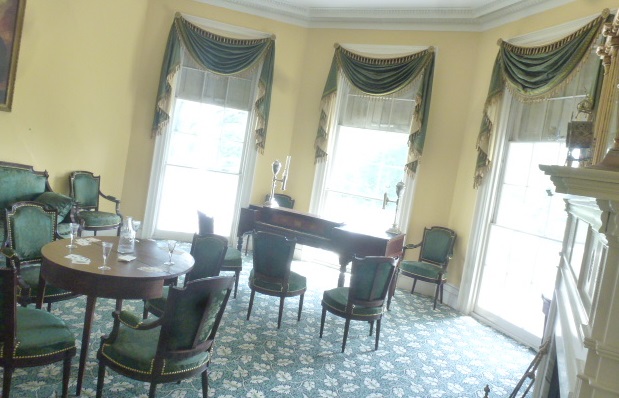
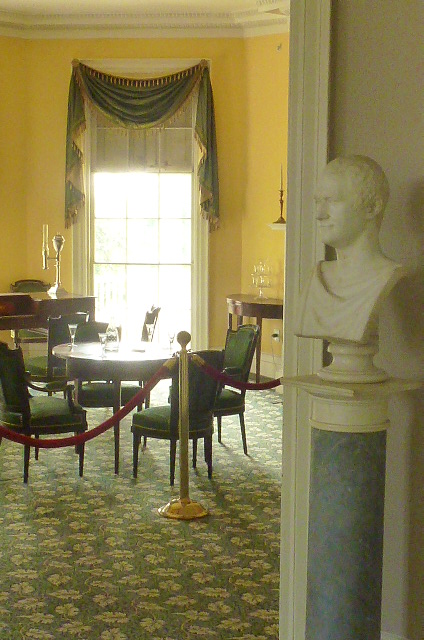
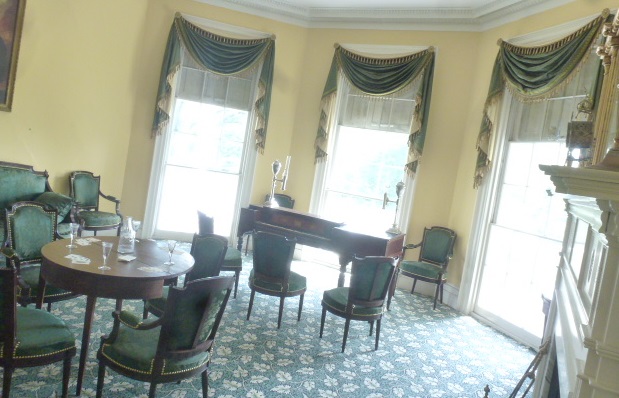
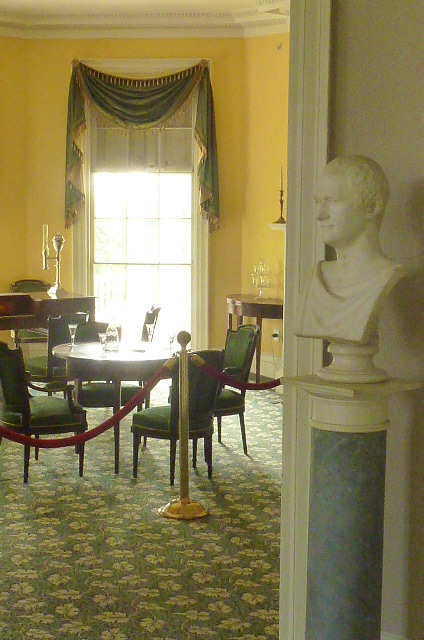
    We climbed a steep, narrow staircase to the main floor, where three period rooms are open to the public:

    L1970532

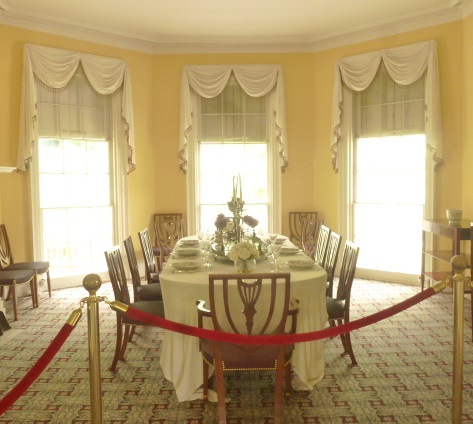
    The dining room…

    L1970561

    …sitting room…

    L1970546

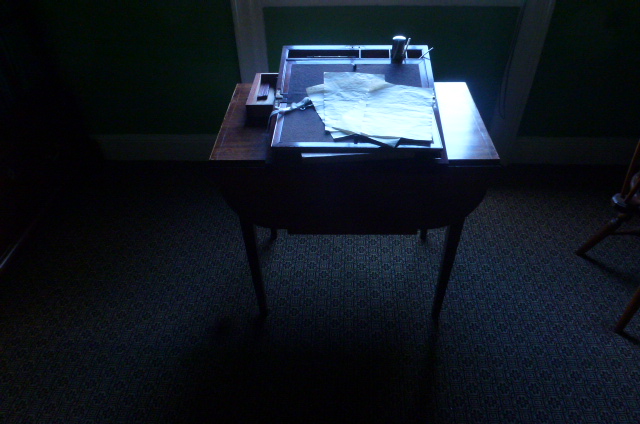
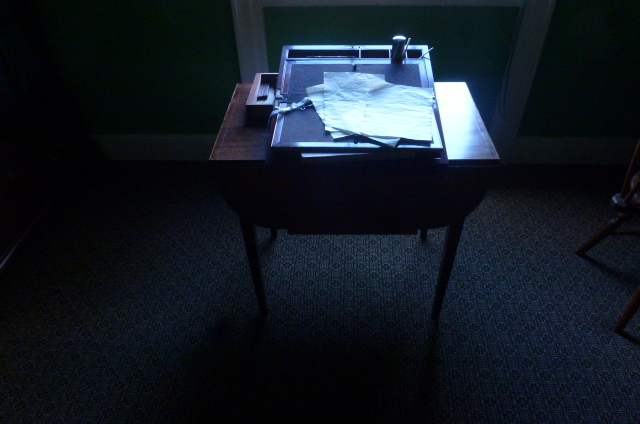
    …and Hamilton’s small study, with a little writing table, above…

    L1970548

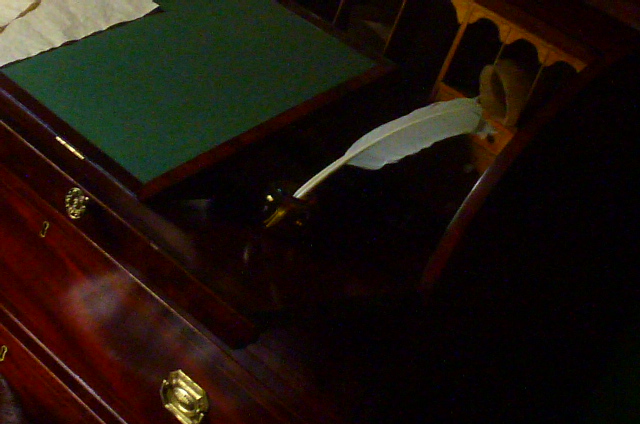
    …and a large desk.

    More images from our visit:

    L1970509

    L1970524

    L1970529

    L1970551

    L1970556

    L1970559

    Sitting room carpet detail

    Though our tour was not guided, a woman from the National Parks Service was on hand, and she answered Deb’s questions in detail. We then walked up the hill to Amsterdam Avenue and had a delicious lunch at the Grange Bar and Eatery.

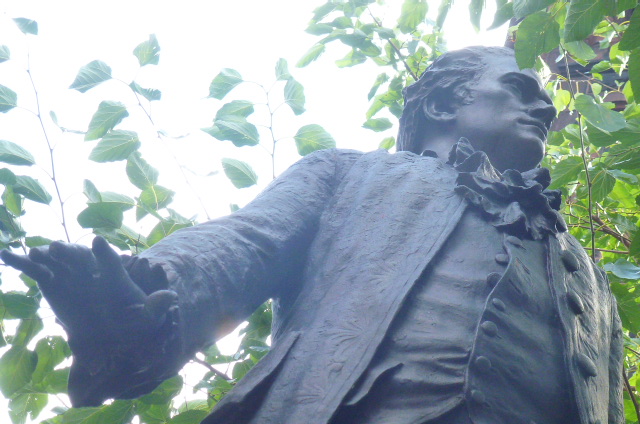
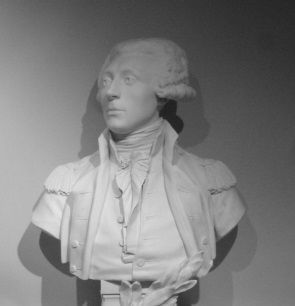
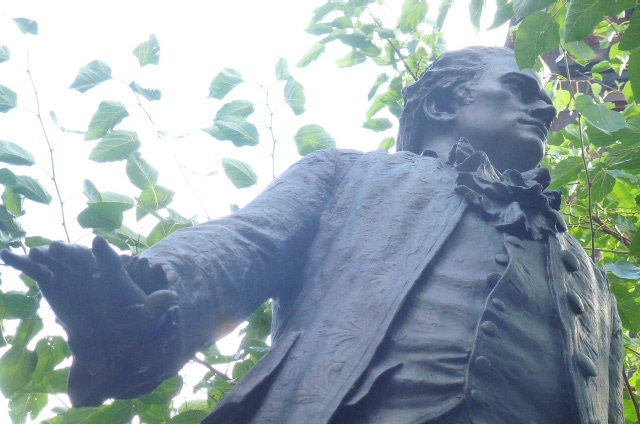
    {The statue shown in the photo at the top of this article stands in the churchyard at St Luke’s Episcopalian, adjacent to where Hamilton’s house was located prior to its being moved to the current location.}

    ~ Oberon
  • Hamilton’s House

    L1970579

    Wednesday September 19th, 2018 – Having lived in New York City for twenty years, and been a frequent Gotham visitor since the 1960s, it’s always fun to discover places here in town that I did not know existed. I happened upon Alexander Hamilton’s house – officially called Hamilton Grange National Memorial – one day in August while visiting a friend who was recuperating from surgery. The house was not open to visitors that day, but it looked so distinguished sitting there in its grassy park that I knew I wanted to return and investigate.

    I was pretty sure my high-school friend Deb Hastings would be interested in this landmark; I suggested we head there the next time she came into town…which turned out to be today.

    Hamilton’s house is located on 141st Street at Saint Nicholas Avenue in Manhattan. With the success of the musical HAMILTON, the house has become something of a tourist destination. Deb saw HAMILTON and loved it. Myself, it interests me not at all.

    After strolling around the exterior…

    L1970571

    L1970568

    …we went into the visitor’s center for our “un-guided” tour, which started at noon. Only another woman and her teenaged son were in our ‘group’…the boy reminded me so much of my first lover, TJ.

    Films shown at such landmarks are not always of great interest, but the two we watched here were excellent: the first about Hamilton’s life (and death) and the other about the incredible feat of moving the house to its present location from a couple of blocks away.

    We climbed a steep, narrow staircase to the main floor, where three period rooms are open to the public:

    L1970532

    The dining room…

    L1970561

    …sitting room…

    L1970546

    …and Hamilton’s small study, with a little writing table, above…

    L1970548

    …and a large desk.

    More images from our visit:

    L1970509

    L1970524

    L1970529

    L1970551

    L1970556

    L1970559

    Sitting room carpet detail

    Though our tour was not guided, a woman from the National Parks Service was on hand, and she answered Deb’s questions in detail. We then walked up the hill to Amsterdam Avenue and had a delicious lunch at the Grange Bar and Eatery.

    {The statue shown in the photo at the top of this article stands in the churchyard at St Luke’s Episcopalian, adjacent to where Hamilton’s house was located prior to its being moved to the current location.}

    ~ Oberon

  • TURANDOT at The Met – 1st of 4

    Turandot-Met

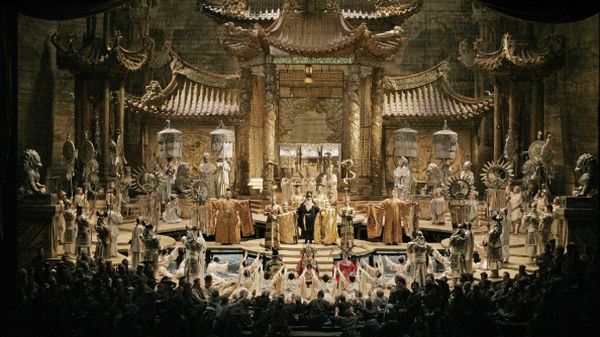
    Wednesday September 23rd, 2015 – At a score desk this evening for the prima of TURANDOT at The Met; I’ll be attending a performance by each of this season’s four Turandots.

    The first act of tonight’s performance was stunning; the conductor, Paolo Carignani, molded the huge choral and orchestral forces into a vibrant sound tapestry and his reading of the score was dynamic, whilst also allowing the necessary moments of poetry to shine thru.

    Patrick Carfizzi got the evening off to an excellent start with his authoritative declamation of the Mandarin’s decree. Hibla Gerzmava’s full-bodied lyric soprano sounded luxuriant in Liu’s music; although she did not go in for the many piano/pianissimo effects that some singers have brought to this music – Gerzmava ended “Signore ascolta” with a crescendo on the final B-flat rather than a tapering of the tone – her gleaming sound was a welcome element to the performance. Marcelo Alvarez as the Unknown Prince sang with appealing lyricism, pacing himself wisely for the vocal rigors which lay ahead. James Morris was an affecting Timur, drawing upon his long operatic experience to create a touching vocal characterization of the old king. Dwayne Croft, Tony Stevenson, and Eduardo Valdes were a first-rate trio of court ministers.

    As the first act ended, I felt the old elation of being at the opera. But the ‘Gelb-intermission’ which followed totally destroyed the impetus of the evening. As is so often the case at The Met these days, the interval stretched to 40 minutes, the last ten of which found the entire audience back in their seats and raring to go while the musicians sat in the pit doodling idly.

    At last the conductor re-appeared and we had a delightful rendering of the Ping-Pang-Pong scene with Mr. Croft and his two tenor sidekicks successfully mining both the wit and the nostalgia of the music, one of Puccini’s most delectable creations – and superbly orchestrated into the bargain.

    I was looking forward to hearing Ronald Naldi – a long-time favorite of mine – as the Emperor Altoum but he was replaced by Mark Schowalter, who projected well from his distant throne. The exchange between the aged monarch and the Unknown Prince was interesting in that Mr. Alvarez eschewed the usual stentorian delivery of “Figlio del cielo…” (three times) for a more pensive vocal quality.

    Christine Goerke’s Turandot did not make the vocal impression I was hoping for; the uppermost notes in the princess’s treacherous music seemed slightly out of Goerke’s comfort zone. She managed well enough, and used a darkish middle and lower range to good effect. But the trumpeting brilliance of the tones above A, which we have come to expect from our Turandots, was not really forthcoming. I am not sure why she wished to sing this role, since Wagner and Strauss are now her natural habitat. 

    Faced with yet another stupor-inducing intermission, I left during the Act II curtain calls. 

    Metropolitan Opera House
    September 23rd, 2015

    TURANDOT
    Giacomo Puccini

    Turandot................Christine Goerke
    Calàf...................Marcelo Álvarez
    Liù.....................Hibla Gerzmava
    Timur...................James Morris
    Ping....................Dwayne Croft
    Pang....................Tony Stevenson
    Pong....................Eduardo Valdes
    Emperor Altoum..........Ronald Naldi
    Mandarin................Patrick Carfizzi
    Maid....................Anne Nonnemacher
    Maid....................Mary Hughes
    Prince of Persia........Sasha Semin
    Executioner.............Arthur Lazalde
    Three Masks: Elliott Reiland [Debut], Andrew Robinson, Amir Levy
    Temptresses: Jennifer Cadden, Oriada Islami Prifti, Rachel Schuette, Sarah Weber-Gallo

    Conductor...............Paolo Carignani

  • TURANDOT at The Met – 1st of 4

    Turandot-Met

    Wednesday September 23rd, 2015 – At a score desk this evening for the prima of TURANDOT at The Met; I’ll be attending a performance by each of this season’s four Turandots.

    The first act of tonight’s performance was stunning; the conductor, Paolo Carignani, molded the huge choral and orchestral forces into a vibrant sound tapestry and his reading of the score was dynamic, whilst also allowing the necessary moments of poetry to shine thru.

    Patrick Carfizzi got the evening off to an excellent start with his authoritative declamation of the Mandarin’s decree. Hibla Gerzmava’s full-bodied lyric soprano sounded luxuriant in Liu’s music; although she did not go in for the many piano/pianissimo effects that some singers have brought to this music – Gerzmava ended “Signore ascolta” with a crescendo on the final B-flat rather than a tapering of the tone – her gleaming sound was a welcome element to the performance. Marcelo Alvarez as the Unknown Prince sang with appealing lyricism, pacing himself wisely for the vocal rigors which lay ahead. James Morris was an affecting Timur, drawing upon his long operatic experience to create a touching vocal characterization of the old king. Dwayne Croft, Tony Stevenson, and Eduardo Valdes were a first-rate trio of court ministers.

    As the first act ended, I felt the old elation of being at the opera. But the ‘Gelb-intermission’ which followed totally destroyed the impetus of the evening. As is so often the case at The Met these days, the interval stretched to 40 minutes, the last ten of which found the entire audience back in their seats and raring to go while the musicians sat in the pit doodling idly.

    At last the conductor re-appeared and we had a delightful rendering of the Ping-Pang-Pong scene with Mr. Croft and his two tenor sidekicks successfully mining both the wit and the nostalgia of the music, one of Puccini’s most delectable creations – and superbly orchestrated into the bargain.

    I was looking forward to hearing Ronald Naldi – a long-time favorite of mine – as the Emperor Altoum but he was replaced by Mark Schowalter, who projected well from his distant throne. The exchange between the aged monarch and the Unknown Prince was interesting in that Mr. Alvarez eschewed the usual stentorian delivery of “Figlio del cielo…” (three times) for a more pensive vocal quality.

    Christine Goerke’s Turandot did not make the vocal impression I was hoping for; the uppermost notes in the princess’s treacherous music seemed slightly out of Goerke’s comfort zone. She managed well enough, and used a darkish middle and lower range to good effect. But the trumpeting brilliance of the tones above A, which we have come to expect from our Turandots, was not really forthcoming. I am not sure why she wished to sing this role, since Wagner and Strauss are now her natural habitat. 

    Faced with yet another stupor-inducing intermission, I left during the Act II curtain calls. 

    Metropolitan Opera House
    September 23rd, 2015

    TURANDOT
    Giacomo Puccini

    Turandot................Christine Goerke
    Calàf...................Marcelo Álvarez
    Liù.....................Hibla Gerzmava
    Timur...................James Morris
    Ping....................Dwayne Croft
    Pang....................Tony Stevenson
    Pong....................Eduardo Valdes
    Emperor Altoum..........Ronald Naldi
    Mandarin................Patrick Carfizzi
    Maid....................Anne Nonnemacher
    Maid....................Mary Hughes
    Prince of Persia........Sasha Semin
    Executioner.............Arthur Lazalde
    Three Masks: Elliott Reiland [Debut], Andrew Robinson, Amir Levy
    Temptresses: Jennifer Cadden, Oriada Islami Prifti, Rachel Schuette, Sarah Weber-Gallo

    Conductor...............Paolo Carignani

  • Tchaikovsky/Balanchine @ New York City Ballet

    10708211_10152712762704814_256726488_n

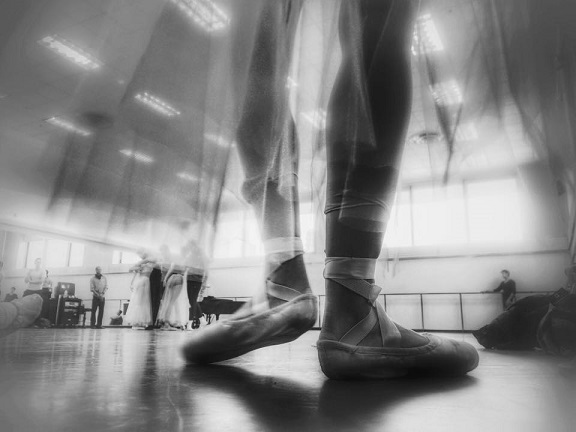
    Above: at a New York City Ballet rehearsal; photo by Craig Hall

    Wednesday September 24th, 2014 – An impressive line-up of favorite dancers in familiar roles, the music of Tchaikovsky, the choreography of Balanchine: what better way for me to start a new season at New York City Ballet?

    Under Clothilde Otranto’s baton, the four Tchaikovsky scores were nicely served up by the NYC Ballet‘s intrepid musicians. Tonight was probably considered an ‘easy’ night for these players: scores they have played dozens of times. They always deserve their spot-lighted ‘curtain call’ at the end of the evening, and it was good to hear a warm swelling of applause for them tonight.

    Ms. Otranto seemed to be favoring fast tempi in SERENADE tonight; the musicians assured that the emotional colours of the music came thru, and the dancers took it all in glorious stride. From curtain-rise, the corps provided an endless panorama of beautiful faces, forms, and personalities. It’s funny that I still find myself looking for people like Amanda Edge and Pauline Golbin among these ice-blue-gowned angels: and where’s Amanda Hankes tonight? Ah, well, they have danced into other phases of their lives – gone from this stage but never forgotten. 

    For present loveliness, we have a delectable quartet of demi-solistes: Faye Arthurs, Alina Dronova, Meagan Mann, and Mary Elizabeth Sell. And Gwyneth Muller always moves me as the consoling maternal figure at the end of the ballet.

    This was a blonde SERENADE: Sara Mearns, Sterling Hyltin, and Teresa Reichlen all looked sumptuous, especially when their hair came down for the final movement. Sara’s luxuriant dancing was given noble grounding by Jared Angle, ever the ideal cavalier. Sterling – her lingering balances spot-on – found just the right mixture of elegance and vivacity, catching the many musical moods in which her ‘character’ finds herself. Tess was divine lyricism personified, and Adrian Danchig-Waring seemed to have come down from Mount Olympus. The sight of Adrian and Tess crossing the stage together, raising Sara from her dream, and Tess’s marvelous slow-turning supported arabesque summed up everything that is SERENADE. The audience responded with a deeply resonant ovation; I am sure there were people in the audience seeing SERENADE for the first time, and I’m sure they will want to see it again.

    The quiet radiance of Maria Kowroski’s Preghiera in MOZARTIANA showed the great ballerina at her most communicative: the lovely passage with her hands in prayerful attitude was especially evocative tonight, as was the gentle silence of her pin-point bourrées. Later, as the ballet’s mood becomes more expansive, Maria’s swirling turns and trademark extension were woven into the music with queenly assurance. I couldn’t take my eyes off her. Tyler Angle was on fine form, his dancing marking the first of three displays of male virtuosity which had the audience cheering this evening. Maria and Tyler have formed an impressive partnership and I look forward to their future endeavors. The ever-excellent Daniel Ulbricht maintained the elegance of the ballet with his stylish dancing – his Gigue has become a signature role – and the Menuet was graciously performed by Marika Anderson, Megan Johnson, Emily Kikta, and Gwyneth Muller.

    A rousing rendition of the TCHAIKOVSKY PAS DE DEUX caused the audience to shed any trace of decorum and yell lustily as Ashley Bouder and Gonzalo Garcia traded technical fireworks in a vivid and smile-inducing performance. After a graciously musical adagio, Gonzalo gave an astonishing performance of his solo – some of the best dancing he’s ever done – nailing the myriad turns at the end before a final brilliant combination to the knee, expertly timed. The crowd went wild. Ashley then swept thru her own dazzling display of danced coloratura, tossing in spicy little pauses and teasing us with her technical savoir faire. Another roar went up as her solo’s final fantastical turns stopped on the proverbial dime. Now with the audience squarely in the palms of their hands, these two magicians of dance swept thru a blazing coda – Ashley’s deluxe fouettés yet another savorable moment – and brought down the house. 

    In the haunted ballroom setting for the Élégie of TCHAIKOVSKY SUITE #3, Rebecca Krohn and Ask LaCour brought tears to my eyes with their poetic evocation of an ideal found…and lost. Rebecca’s restless, almost feral allure was captivating to behold. And Ask is so perfect here: covering the space with questing leaps in pursuit of his elusive muse. Their performance moved me deeply, their parting and Ask’s sinking back into a reverie of heartache drawing up so many emotions.

    Abi Stafford and Justin Peck sustained a mood of mystery in the Valse Mélancolique, Justin’s innate sense of drama nearly drawing the coolly captivating Abi into his world. Yet it is she who prevails: at the end he backs away from her, completely under her spell. Abi and Justin are among my favorite dancers to watch; having them cast together here was a very nice gift.

    In the Valse, a particularly appealing trio of diverse beauties – Olivia Boisson, Lara Tong, and Claire Kretzschmar – looked fetching in one of the ballet’s many featured corps passages.

    In a bewitching performance, Erica Pereira spun marvelously thru the plentitude of pirouettes Balanchine demands of her in the Scherzo; her lustrous black hair and shimmering silver-white tulle flowing as she traced a comet-like trajectory around the stage. Antonio Carmena matched Erica’s spinning flourishes with his airy leaps; they fly off in opposite directions at the end. 

    And now we come to the grand finale: Theme and Variations. The recently refurbished costumes for this ballet seem to glow as Tiler Peck and Joaquin de Luz set forth the elegant opening Theme. Moments later, in her first solo variation, Tiler displayed her epic perfection as a classical ballerina with some truly glorious dancing. The audience showered her with a torrent of applause. The ballet progressed – with excellent suppport from the corps – as Tiler and Joaquin moved continually from one peak of perfection to another. Joaquin’s marziale variation was thrillingly executed, the devilishly handsome dancer basking in another avalanche of cheers, the iconic de Luz smile justifiably lighting up. The ballet swept forward, buoyed not only by the two spectacular principals but by a very impressive quartet of demi-solistes: Lauren King, Brittany Pollack, Mary Elizabeth Sell, and Lydia Wellington. Their cavaliers in the finale were Daniel Applebaum, Allen Peiffer, David Prottas and Andrew Scordato.

    As Ms. Otranto guided the evening to its triumphant close, the audience burst yet again into a passionate ovation: Tiler and Joaquin – and indeed the entire Company – were saluted at the end of a great evening…a great evening for dance, for Tchaikovsky, and for the enduring magnificence of Mr. B.

  • Isadora: Lament, Hope, and Renewal

    Duncan_2

    Wednesday September 17th, 2014 – Lori Belilove and the Isadora Duncan Dance Company presented an evening of film, live performance and discussion in an intimate salon setting at the Company’s home space on West 26th Street. A few days after marking the anniversary of Isadora’s untimely death (on September 14th, 1927), Lori and her Company keep the spirit of ‘the mother of modern dance’ vividly alive.

    For me, this week brought the unusual happenstance of back-to-back evenings of Martha Graham and Isadora Duncan. These two pioneering forces on the frontiers of modern dance seem to me to be twin goddesses: from them, so many blessings flow – even onto the present day.

    Central to this Isadora evening was the showing of a silent film clip of brief fragments from Dance of the Priestesses, a ‘lost’ Duncan work. This film, made in 1963, features extremely rare footage of Anna Duncan, one of the original Isadorables. In the film,  Anna dances with Julia Levien and Hortense Kooluris, two women who were the teachers of Lori Belilove: thus the direct line of passing the torch from generation to generation is maintained. 

    The film was entrusted to Lori Belilove and it inspired her to embark on a restoration of Dance of the Priestesses which, until now, had been little more than a legend. The dance is set to music by Christoph Willibald von Gluck from his opera IPHIGENIE EN TAURIDE. In the film, Anna, Julia and Hortense show a wonderful weighted quality. Lori was able to impart this to the dancers of her current Company and, after viewing the film, we were treated to a beautiful live rendering of the piece. Lori has set it for five women (Isadora’s ensemble works can be danced by small or large contingents of dancers). The girls looked stately in their midnight-blue gowns, with Morgana Rose Mellett in a prominent role and Kim D’Agnese, Emily D’Angelo, Faith Kimberling, and Nicole Poulos as her sister/priestesses. Their performance evoked the ancient gods and the mythic rituals of times long vanished.

    686

    Also on film, we saw a full performance of Slow March (photo above) as performed by the Company last May.

    Isadora created danceworks in several moods, stemming from her mental state at the time of creation. Joyous, celebratory dances gave way to dark, lamenting themes following the death of her two children. Lori Belilove performed two of these despairing solos tonight: Death and The Maiden (set to Chopin) and Mother (set to Scriabin). The mood was brightened by two Chopin mazurkas danced by Mlles. D’Agnese, Mellett, Kimberling and D’Angelo in signature pink-and-white Grecian tunics. Lori and the four girls joined in an extended finale: Dance of the Blessed Spirits and Orpheus’ Lament, both drawn from themes from Gluck’s opera ORFEO ED EURIDICE

    Pianist Melody Fader played all the selections for the evening, an enhancement to the atmosphere of the performance. 

    Watching the dances this evening, I couldn’t help but think that today’s young choreographers could benefit greatly in studying Isadora’s work. In terms of musicality, structure and creation of mood, Isadora’s instincts always seem spot-on. As dancer Miki Orihara wrote in her notes for her recent solo concert, we may look into the future of dance by investigating the past.

  • A Balanchine Evening @ NYC Ballet

    Mourka & mr b

    Above: Mr. B with Mourka

    Wednesday September 25th, 2013 – This evening’s all-Balanchine programme at New York City Ballet was a veritable parade of favorite dancers. The audience, at least in my immediate vicinity, seemed comprised of long-time NYCBers; in fact I seemed to be at the lower end of the age spectrum. It was an attentive crowd, though rather subdued in terms of expressing enthusiasm.

    Any evening that begins with Faye Arthurs onstage is off to a beautiful start; the ballerina – partnered by Zachary Catazaro – danced the opening theme of Balanchine FOUR TEMPERAMENTS. This ballet is for me the most spectacular of the Balanchine black-and-whites, not only because of its marvelous steps and structuring, but the Hindemith score seems to me a true 20th century masterpiece. 

    Lauren King and Allen Peiffer (who literally danced all night) took the second theme, crossing the stage with semaphoric gestures; the melodic sway of the third theme brought forth yet another impressive partnership: Ashley Laracey and Justin Peck. All three couples danced to perfection.

    Robert Fairchild’s Melancholic had a restless grandeur about it: what a compelling stage presence! Meagan Mann and Georgina Pazcoguin circled the handsome danseur, deploying their extensions to dramatic effect. Tyler Angle replaced his brother Jared in the Sanguinic pas de deux; I do not recall having previously seen Tyler paired with Savannah Lowery but it turned out to be an interesting match-up, with Tyler bringing a touch of classic nobility which dovetailed with Savannah’s authoritative contemporary style. In Phlegmatic, Adrian Danchig-Waring seemed to have descended from Mount Olympus: his striking physique and intense focus were engrossing. Ashley Bouder gave a stunning Choleric, her dancing – vivid and grandly secure – was marked by sustained balances and a rich feeling of commitment. In the pit, guest conductor Carolyn Kuan led this splendid score with passionate élan, and pianist Cameron Grant made a significant contrbution to the ballet’s atmosphere.

    EPISODES is basically a series of four duets, three of them performed with attendant corps dancers. Clothilde Otranto and the NYCB musicians gave clarity to the quirky Webern pieces which comprise the ballet’s score, ending with the composer’s imaginative tribute to Bach in a setting from Musical Offering.

    Abi Stafford and Sean Suozzi were finely-matched in the ballet’s opening Symphony; their articulation of the steps and their fluent work as partners made me wish to see them together in other ballets. Three couples echo the principal pair: Marika Anderson with Russell Janzen, Gwyneth Muller with Allen Peiffer and Gretchen Smith with Andrew Scordato. This entire opening movement, with the stage bathed in an unusual verdigris hue, was absorbing to watch.

    Things then take a darker turn as Teresa Reichlen and Ask LaCour appear in pools of light and dance a mysterious succession of five brief duets, their relationship physical but unfathomable. The ballet’s sense of mystery extends to the ethereal Janie Taylor’s appearance in Concerto; dancing with Sebastien Marcovici (who is just back from a hiatus), Janie retains the allure of being the Company’s most enigmatic ballerina.

    EPISODES ends with a gorgeous ritual: a corps of fourteen female acolytes weave patterns around the central couple: Maria Kowroski-  looking supremely divine – and her noble consort Jonathan Stafford. The two principal dancers, so well matched both in physique and in their ability to make expressive nuances count in these abstract ballets, were superb.   

    Principal ballerina Megan Fairchild talks about Balanchine’s DUO CONCERTANT here. When Chase Finlay sustained an injury onstage last week, forcing him to withdraw from his immediate-future performances, I wondered who might partner Ms. Fairchild in this evening’s performance. My thoughts ran to Jared Angle, who had danced DUO so perfectly at Yvonne Borree’s farewell. And sure enough: Jared it was, stepping into the ballet tonight with his signature nobility of style and peerless partnering abilities.

    Kurt Nikkanen and Cameron Grant performed this panoramic Stravinsky score – it veers from playful to deeply expressive – with impressive musicianship. The ballet is an ideal vehicle for Megan Fairchild, sweeping her from girlish impetuosity to womanly tenderness on the brilliant changing modes of the rhythms and harmonies of the instrumental voices. Jared was by turns playful, protective and poignant as he interacted with his ballerina; their partnership was a rewarding one to experience, and the audience – heretofore rather reserved in their reactions to the evening – greeted the dancers and musicians with warm applause. Now I’m wanting to see the Megan/Jared duo in other ballets.

    From its iconic opening diagonal of sleekly white-clad, pony-tailed ballerinas to the final ritualistic tableau as the dancers kneel or raise their arms (in homage to Balanchine and Stravinsky, I imagine) SYMPHONY IN THREE MOVEMENTS is one of NYCB‘s treasures. Excellent demi- and corps work in tonight’s performance, which opened with the vitality of Daniel Ulbricht’s remarkable high leaps; Ana Sophia Scheller, letting her hair down, shows us that a first-class tutu-and-tiara ballerina can also be a dynamic contemporary stylist. Rebecca Krohn looked stunning in her deep-rose leotard and danced with abandon, matched by Andrew Veyette’s speed and clarity. In the central pas de deux, one of Balanchine’s more effective, Sterling Hyltin and Amar Ramasar were at their finest. Earlier, Sterling had made a swift trajectory, circling the stagetwice in pique turns at ever-increasing speed. Amar’s charismatic presence, his commancing partnering and his generosity as a dancer make him an invaluable member of this troupe.

    As the work soared forward to its energetic conclusion, propelled by Carolyn Kuan’s baton, one felt yet again the great genius of Balanchine, and the continuing pleasure of experiencing his works, year after year.

    THE FOUR TEMPERAMENTS: Arthurs, Catazaro, King, Peiffer, Laracey, J.Peck, R. Fairchild, Lowery, T. Angle, Danchig-Waring, Bouder

    EPISODES: A. Stafford, Suozzi, Reichlen, laCour, Taylor, Marcovici, Kowroski, J.Stafford
     
    DUO CONCERTANT: M. Fairchild, J Angle
    SYMPHONY IN THREE MOVEMENTS: Hyltin, Scheller, Krohn, Ramasar, Ulbricht, Veyette