Tag: World War

  • My First – and Only – Public Appearance

    coppelia size

    (This article originally appeared on Oberon’s Grove in 2008. I’ve brought it forward to the Glade as it’s about an especially meaningful period of my life.)

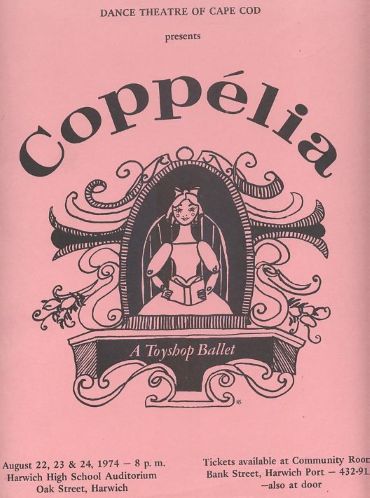
    When I was twenty-five I fell in love with a 17-year-old kid who spent his summers working for a small ballet company, Dance Theatre of Cape Cod. He invited me to spend a summer with him there; we would live in a room in a big house in Harwichport across the street from the studio.

    Within a week after we got there, he was totally immersed in the ballet. They were mounting COPPELIA at the end of the summer; he was dancing Franz and also was the business manager for the school. He and Helen, the woman who ran the program, were very close. I could see that I was going to be playing second fiddle to COPPELIA all summer.

    At this point in my life, I had never seen a ballet performance; just tidbits on TV. I was a big opera fan, but whenever there was a ballet in an opera performance I was bored to death.
    coppelia 2

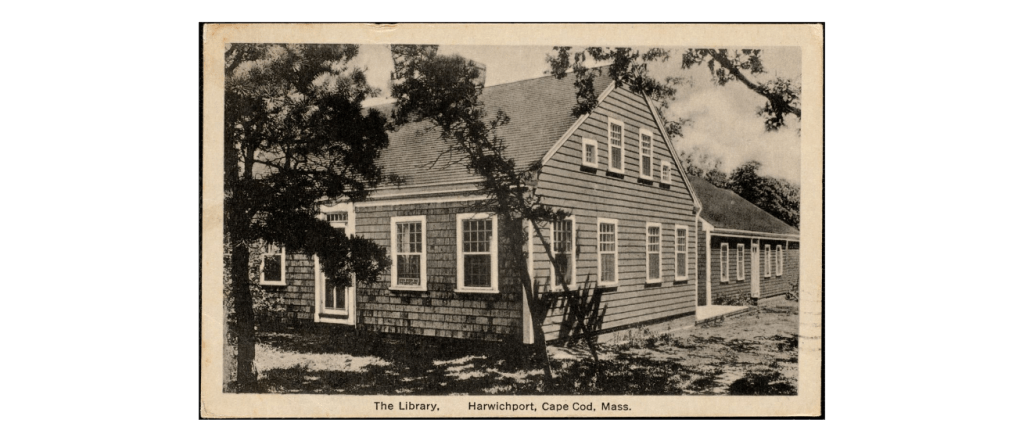
    The studio was located behind (and connected to) the Harwichport Town Library, directly across the street from the house where we were staying. So, the music of COPPELIA wafted over from the studio, and that drew me there. When I first walked into the studio I was much intrigued by the musty smell of old costumes that were hung out to air, and the girls (ages 8-16) were dazzled to have a man watching them. They became giggly and adorable.

    The teacher eyed me with the sort of interest that small-time ballet mistresses have eyed young men for decades: could she transform me into a “dancer”?  She had TJ to play Franz, she had a local actor to play Doctor Coppelius, and the boyfriend of one of the girls to play the Mayor. She wanted very much to have another male in her production, especially to pique the jealousy of the rival ballet school a few miles away.

    “I’m planning to stage a little folk dance in the third act,” she said to me. “Would you think about it? I’ll make it easy for you…” TJ was poking me in the ribs, “Say yes!” She played the piece for me: it would be myself and one of the girls; the music (which Balanchine uses for the Jesterettes) was bouncy and the piece was short.  Realizing that if I didn’t join in I would be seeing very little of TJ all summer, I said OK.

    Then came the clincher: I had to take class. This gave me pause, but only for a minute. I was slender then, and in reasonably good shape. We drove to a small dance supply shop in Hyannis where TJ helped me get a dance belt, tights and slippers.

    My first class was a riot. The beginners class, 8- and 9-year-olds, were thrilled to have a man in their class. They all wanted to stand next to me at the barre. When we began tendus, the teacher waltzed up to me and said: ” Point your foot!” to which I replied “Point my foot…at what?”

    The studio had a ghost, Ada, who we contacted nightly using a Ouija board. She was a nurse who told us she had cared for soldiers returning home after World War I. How she ended up in a dance studio was never revealed. (I have since found out that the building did indeed house recuperating soldiers upon their return from Europe!)

    I found that I had a natural affinity for ballet, not that I would have guessed. I began rehearsing my dance; my partner was a beautiful black-haired 14-year-old named Elaine. We got on perfectly. We played a betrothed couple who danced at Swanhilda’s wedding fete. Elaine was light and springy so the lifts were easy.In the dance, she did most of the work. Lots of stomping and romping. The piece ended with me on one knee; I reeled her in from some turns she was doing, she sat on my other knee and we smooched.

    coppelia 3

    Above: only known photo of me wearing tights…with my partner Elaine Aronson, a talented 14-year old.

    Costumes…I wore a blue satin vest, white tights and shirt, and blue suede boots. Elaine wore a white “peasant” dress with red character shoes and flowers in her hair. One of the mothers did my makeup. We had 3 performances, and our dance was a hit. One night one of Elaine’s friends tossed her a bouquet when we were bowing. Little kids asked us for our autographs.

    After that summer TJ and I moved to Hartford; eventually we split up. I continued taking class for about 3 years. Whenever I hear the music of COPPELIA I’m transported back to that sweltering studio and that care-free time.

    Beth Taylor had danced Swanhilda in our performances; the following winter she danced the Sugar Plum Fairy in another company’s NUTCRACKER. TJ and I drove down to the Cape in wintry weather to see her; aside from Beth several of the kids who had been in COPPELIA were dancing in the NUTCRACKER.

    coppelia 4c

    TJ took this picture of me & Beth after the show; it was the last time I ever saw her, or any of the other people I’d spent my memorable summer with.  

  • Through The Great War @ CMS

    Ww I

    ~ Author: Oberon

    Tuesday February 20th, 2018 – When I was in school, The Great War was rather glossed over by my history teachers; they always seemed to focus on World War II, which had ended just two decades before I graduated from high school. But my sixth grade teacher made us study World War I, which he felt had been a “stupid war” in that it solved nothing in itself but set the stage for Adolf Hitler’s rise. My teacher had served in World War II, and one day he brought in some big picture books which included horrific photos from the liberated concentration camps. This was my introduction to the Holocaust: those images have haunted me ever since as my first encounter with “man’s inhumanity to man”.  My sixth grade teacher teacher eventually committed suicide.

    This article helped me put The Great War in context by relating it to the world situation some 100 years on. For a more personal view of life during the war years, Vera Brittain’s TESTAMENT OF YOUTH – and the deeply moving film based on it – brings the lives (and deaths) of men who served and the women who waited for them vividly to life. 

    The glory and horror of wars thru the centuries have inspired works in all forms of literature and art, from poems to operas to paintings and architectural monuments. Wartime has given rise to great music, much of it painfully beautiful. It was just such music that we heard tonight at Alice Tully Hall as Chamber Music Society of Lincoln Center presented works by Hungarian, French, and English composers written during the time of the Great War. 

    ErnőDohnányi1905

    Above: composer Ernő Dohnányi

    The evening opened with Ernő Dohnányi’s Quintet No. 2 in E-flat minor for Piano, Two Violins, Viola, and Cello, Op. 26 (1914). I admit to being unfamiliar with this composer’s music, but after hearing this sumptuously-played quintet tonight, I agree completely with violinist Alexander Sitkovetsky’s remark in his program note that Dohnányi is seriously underrated. The composer, who passed away in 1960, left a sizeable catalog of works – from operas, symphonies, and concerti to chamber and solo piano pieces. Hopefully the enthusiastic reception of the quintet tonight will prompt the Society to program more of the Hungarian composer’s music in future.

    Mr. Sitkovetsky was joined for this evening’s performance by fellow violinist Cho-Liang Lin, violist Paul Neubauer, cellist Keith Robinson, with Orion Weiss at the Steinway. 

    From its doleful – almost chantlike – opening, the Allegro non troppo moves on the pulsing of Mr. Lin’s violin to an anticipatory piano theme, in which Mr. Weiss reveled, with the strings in rich harmonies. The piano grows rhaosodic, and Mr. Sitkovetsky takes up a wistful melody, then Mssrs Neubauer and Lin carry it forward. The music elevates to the grand scale, full of passion. Blissful piano music is heard, while the sound of Paul Neubauer’s viola kept breaking my heart. Tenderness and mystery entwine towards a gentle ending.

    The viola inaugurates the Intermezzo with a cordial invitation to dance, the music waltz-like with a Viennese lilt. A sprightly dance pops up, led by brilliantly decorative playing from Mr. Weiss; things turn light and witty. Over rolling waves from the piano, the violin and viola sing again. Pulsing strings lead on to a quiet finish.

    The Finale opens with the lamenting song of Mr. Robinson’s cello; in canon, the viola, violin-2 and -1 fall in. The mood is somber, reflective, with dense harmonies. A reverential theme from Mr. Weiss carries us to a sublime string passage. Thru modulations, we return to the opening canon-theme. A rising tempo means rising passion, which expands only to subside into a reunion with the cello’s theme over misterioso piano. The atmosphere becomes achingly beautiful, with sweet sailing on high from the Sitkovetsky violin. Lush, rhapsodic music tears at the heart. Then comes a gentle, descending motif from the piano as the music evaporates into thin air. Magnificent playing from all, with the enraptured audience savoring every moment.

    Maurice Ravel’s Le Tombeau de Couperin was originally composed for solo piano; the composer orchestrated it in 1920, and it was this version that George Balanchine used for his 1975 ballet Le Tombeau de Couperin which I have seen – and loved – countless times over the years. The music was later arranged by for wind quintet by Mason Jones, using four of the original six piano movements. It was this setting for wind instruments that we heard tonight.

    With these pieces, Ravel honored the memory of six friends he’d lost to the war. But rather than convey feelings of doom or despair, the pieces are by turns charming, noble, and even witty: what wonderful people these six friends must have been to inspire such music.

    Chamber Music Society put together yet another first-class ensemble for these Ravel gems: Sooyun Kim, with her flûte enchantée, Romie De Guise-Langlois (clarinet), James Austin Smith (oboe), Marc Goldberg (bassoon), and Eric Reed (horn). To say that they made beautiful music together would be an understatement.

    The Prelude is wonderfully ‘busy’ music, with swirling motifs from the oboe and silvery piping from the flute. Ms. De Guise-Langlois, who gets such glamorous tone from her clarinet, always delights me – I was so happy to hear her again tonight – and the mellow bassoon and dulcet horn bring more colours to the mix. Birdsong hovers as the Fugue begins, again with the fluent playing of Mssrs. Goldberg and Reed varying from rich to subtle as the music flows along. James Austin Smith’s oboe was gracefully prominent in the Springlike Menuet, the theme taken up by the flute. Near the end, Romie’s clarinet sings as the music concludes on a rather jazzy note, with a bassoon trill. Sooyun Kim’s sparkling flute opens the Rigaudon, with Eric Reed’s horn clear and warm-toned. An interlude brings a sinuous oboe passage with a Mideastern feeling, the bassoon in a downward tread, before a brief resumption of the opening rigaudon tune comes to a quick, witty end.

    Edward Elgar’s Quintet in A minor for Piano, Two Violins, Viola, and Cello, Op. 84, dating from 1918-19, begins hesitantly before weeping violins set a mood, gorgeously sustained by Mr. Robinson’s cello. A lovely slow dance develops a sense of irony from Mr. Lin’s violin. Emerging from a big tutti comes the deep voice of the cello in a descending motif: more marvelous playing from Mr. Robinson. Mr. Weiss sets out big piano statements met by agitated strings as passions arise, subsiding for phrases from viola and violin-2 (Mr. Sitkovetsky). Close harmonies and a long, out-of-the-air cello note herald yet another cello highlight, full of longing. The initial hesitancy of the movement returns before a quiet plucking signals an end.

    There’s nothing quite like an Elgar Adagio, and this one finds Paul Neubauer at his most ravishing in a sustained viola theme of heartrending beauty. Continuing gorgeousness as viola, cello, and Steinway exchange phrases; Mr. Lin’s violin passage is lovely hear. The glorious mix of voices becomes overwhelming: this music goes right thru me, it’s so heartfelt as Mr. Weiss’s intoxicating playing propels it along. Turning bittersweet, and then to a hymn of peace, the vibrant, emotional playing of the five artists made this a deeply moving experience.

    In the concluding Moderato-Allegro, with the developing passion of its opening, there’s a forward impetus. The ebb and flow of dynamics and harmonies is magically sustained by the players, carrying us thru a misterioso moment, a violin duet, a tremelo motif from the viola, and an animated yet poignant passage to sustain our emotional involvement. It’s the piano again that urges the music forward; a great restlessness looms up, and then subsides, only to re-bound to a triumphant yet dignified finish.

    A great night of music-making, in terms of both programming and playing: just what we’ve come to expect from Chamber Music Society

    ~ Oberon