Tag: Wu Han

  • Romantic Perspectives @ Chamber Music Society

    Wu Han

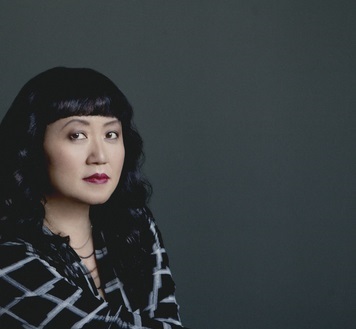
    Above: pianist Wu Han

    Sunday January 39th, 2022 – This evening’s program at Chamber Music Society of Lincoln Center, entitled Romantic Perspectives, was truly a soul-warming experience, following a week of cold weather and a gusty snowstorm the previous day.

    The program got off to an exciting start with a performance of the Scherzo from Johannes Brahms’s “F-A-E” Sonata for Violin and Piano, dating from 1853. With Wu Han at the piano, violinist Chad Hoopes brought real flair to his playing. From the buzzy opening, the two musicians were in perfect sync. This Scherzo has a lyrical interlude, wherein the players’ dynamics meshed ideally; then, back to a lively allegro. What an exhilarating way to start a concert!

    Next came a spectacular performance of Gustav Mahler’s sole work in the chamber music genre: the Quartet in A-minor for Piano, Violin, Viola, and Cello, composed in 1876. Violinist Danbi Um, elegant in a ruffled ultramarine tulle gown, led her colleagues onstage. Before taking her place at the Steinway, Wu Han stepped forward to introduce us to two young musicians making their CMS debuts this evening: violist Timothy Ridout, and cellist Sihao He

    No pianist can establish a musical mood quite like like Wu Han does; with the deep, brooding opening measures of the Mahler, she immediately drew us in. The fabulous sound Sihao He summons from his cello was soon blending with Mr. Ridout’s handsome viola tone and the silken magic of Ms. Um’s violin. As the single movement progressed, the four musicians took us deeper and deeper into the music, their playing resplendently full-bodied and thrillingly intense. Passions ebb and flow, and then a darkish calm settles over us. Ms. Um’s exquisite playing, and the extraordinarily poetic phrasing of Mssrs. Ridout and He, were all underscored by Wu Han’s captivating dynamic mastery. It seemed impossible to think that only four players could produce such an ‘orchestral’ sound; their performance moved me deeply.

    Ridout

    Above: violist Timothy Ridout

    Composed in 1861, Antonín Dvořák‘s Quintet in A-minor for Two Violins, Two Violas, and Cello, Op.1, brought together the evening’s full string contingent: violinists Danbi Um and Chad Hoopes, violists Paul Neubauer and Timothy Ridout, and cellist Sihao He.

    Written when Dvořák was twenty years old, this quintet was the first of his works to be ascribed an opus number. In the opening Adagio — Allegro ma non troppo, the unison slow introduction gives way to a dancing, animated feeling. The tone qualities of the five musicians were perfectly integrated, with Mr. Hoopes excelling in the numerous melodic flights for violin, nimbly seconded by Ms. Um; and Sihao He amplified the beautiful impression he had made in the Mahler. This movement has an unusual ending.

    The ensuing Lento brings forth cantabile melodies; the main theme is taken up by Mr. Ridout’s viola (Dvořák’s own instrument) playing over a rhythmical accompaniment provided by the other players. The middle section of the movement provides a fresh theme, after which we hear a reprise of the introductory melody. The composer gives both violists ample opportunity here, and the contrasting timbres of Mssrs. Neubauer and Ridout were savourable indeed. The violins play in unison, then Mr. Hoopes again moved me with a high-lying passage. A swaying mood develops, and a rising violin motif leads us to the movement’s finish

    The quartet’s Finale – Allegro con brio involves three primary themes. The marvelous sound of Sihao He’s cello was continually alluring to the ear, and Mr. Ridout again shone in a songful passage. The superb blend these five artists achieved carried us on to the work’s ending, hailed by the crowd with warm applause.

    It is interesting to note that Dvořák seemingly never heard his opus 1; its first public performance came seventeen years after his death, and it was not published until 1943.

    Sihao he

    Above: cellist Sihao He

    Having recently enjoyed Maxim Vengerov’s stunning performance of César Franck‘s Violin Concerto at Carnegie Hall, I was definitely in the mood for more of Franck’s music. This evening’s CMS program ended with the composer’s Quintet in F-minor for Piano, Two Violins, Viola, and Cello, dating from 1879.

    With a descending phrase from Danbi Um, the passionate slow introduction to the first movement is underway. Wu Han’s gorgeous entry has a hesitant feeling, as if the composer is not quite sure where he wants to take us; a rather fitful acceleration finally achieves Allegro status. Now all five players begin to pass the melodies from one to another. Mr. Neubauer’s dusky viola, Wu Han’s magical piano, the lovely sense of longing from Danbi Um’s violin, the poignant sound of Sihao He’s cello…all combined as the music turns huge. In this movement, a melody of chromatic half-steps is heard, creating a musical tension which  our players today clearly relished.

    The second movement, marked Lento, con molto sentimento, begins with a haunting theme from Wu Han’s keyboard, and sublime lyricism from Danbi Um. The chromaticism which awoke in the opening movement becomes more pervasive now, with Ms. Um and Mr. He trading phrases. Wu Han’s playing is heavenly, and the cellist is simply stunning. The music builds in grandeur and then dissipates, becoming celestial. Mr. Neubauer’s lovely viola passage, ethereal sounds from the piano, and Danbi Um’s haunting violin draw the movement to a tender finish.

    Chad Hoopes opens the final movement with a bustling motif, joined by Ms. Um in an agitato mode. The strings play the work’s main melody in unison, with a vibrant crescendo. A brief, sweet song from Danbi Um leads to a big build-up of sound and emotion as the quintet sails onward to an epic finale.

    A full-house standing ovation greeted the players, who were called back for a second bow, much to everyone’s delight.

    ~ Oberon

  • Esteemed Ensemble @ Chamber Music Society

    51295376_23843411079570734_7199686573439320064_n.png

    Above: the artists of today’s esteemed ensemble – Wu Han, Daniel Hope, Paul Neubauer, and David Finckel – at Chamber Music Society of Lincoln Center

    ~ Author: Oberon

    Sunday January 27th, 2019 – Four great musicians joined forces this evening at Alice Tully Hall as Chamber Music Society of Lincoln Center continued their season with a program of works by Josef Suk, Johannes Brahms, and Antonín Dvořák.

    A-1120029-1275043084.jpeg

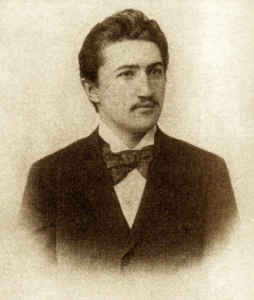
    Josef Suk (above), the least-known of the three composers, was a prominent violinist and Dvořák’s son-in-law. Suk’s Quartet in A minor, Op. 1, dates from 1891; it was his first published work.

    From its passionate start, with the strings playing a unison theme from which David Finckel’s cello and Daniel Hope’s violin emerge in prominent solo lines, this vivid music abounds in gorgeousness . Wu Han at the Steinway brings the tempo down a bit and a flow of melodies commences. Paul Neubauer’s viola heralds a brief drama – a tempest that soon subsides, though a subtle agitation lingers. Cellist David Finckel’s darkish timbre contrasts with the high silkiness of Mr. Hope’s violin. The strings united provide a rich texture that gives the impression of a full string orchestra in play, whilst Wu Han relishes Suk’s appealing writing for the piano. A passage of soul-filling passion brings the first movement to a glorious end.

    The extraordinary softness of Wu Han’s touch at the Steinway lures us into the central Adagio. Then a cello theme of great richness is brought forth by Mr. Finckel, taken up by Mr. Hope’s violin singing sweetly on high, echoed by the Neubauer viola. The strings have a beautifully blended passage: luminous playing from all. With the rippling piano and gleaming violin, a feeling of rapture rises up. The music stops, then the cello and piano lead us into a new dream. Violin and viola harmonize as the cello offers a plucked accompaniment. The Adagio – in which the magical essence of chamber music seems to be sublimely enshrined – reaches its heavenly end, fading into bliss.

    But there’s no time for reverie: Wu Han launches the concluding Allegro con fuoco at once, the strings offering sharp accents along the way. Later the pianist produces a high shimmer – a sparkling delicacy over which the strings harmonize. Things turn folkish, with a gypsy dance getting quite expansive before a lull of calm; then on to a grand finish. 

    This was my second hearing of Josef Suk’s Opus 1 and the second time it has had the same magical effect on my. Why is this composer’s music not heard more often?  

    Next on the program was Johannes Brahms’ Quartet No. 3, Op. 60 which was written in 1855-56 and revised in 1874. The period in which Brahms began sketching this work was a very difficult time, for his friend Robert Schumann had been confined in a mental hospital; Brahms was in a highly emotional state.

    The dramatic, sorrowing phrases that open the Allegro con fuoco attest to Brahms’s troubled spirit. But the music swirls forward on the wings of a piano theme; it becomes almost celebratory but then retreats to a doleful conclusion.

    The piano is the motivating force of the ensuing Scherzo; the music is agitated, almost angry. The Andante commences with a long cello solo, expressively played by Mr. Finckel. Mr. Hope then duets with the cello; Mr. Neubauer joins in an entwining string trio; the piano has a lovely part to play. A sense of longing builds.

    The concluding Allegro, which begins with a restless motif played by Wu han and Mr. Hope. Far from the traditional upbeat finale, this one by Brahms lingers in a serious, rather pensive mood, ending with an abrupt chord.

    After the interval, Dvořák’s Quartet in E-flat major, Op. 87 (1889) was splendidly played. This quartet has its folksong aspects, especially in the outer movements. The opening Allegro con fuoco is thematically abundant, with trade-offs among the string voices and lovely piano passages. After a big, thrilling buildup, the music simmers down; there’s a very effective tremolo motif exchanged by the violin and viola before the first movement comes to its finish.

    David Finckel opened the Lento with a poetic cello melody, which is carried onward by Mr. Hope’s violin. The piano has a lyrical part to play here – charmingly rendered by Wu Han – as the themes pass thru sublime modulations. A slow dance commences, with plucked strings, and the movement finds its resolution.

    The third movement, Allegro moderato, has the feel of a waltz. From its exciting start, the music presses forward with rustic elements: the piano takes on the aspect of a hammer dulcimer. Mssrs. Hope and Neubauer match subtleties, and the violist has a final say as the movement concludes.

    The zesty Finale is a real crowd-pleaser, and, when played as it was tonight, assures itself of a vociferous reaction from an appreciative audience.

    For all the excellence of the Brahms and Dvořák, it was the opening Suk that lingered in my mind.

    ~ Oberon

  • Esteemed Ensemble @ Chamber Music Society

    51295376_23843411079570734_7199686573439320064_n.png

    Above: the artists of today’s esteemed ensemble – Wu Han, Daniel Hope, Paul Neubauer, and David Finckel – at Chamber Music Society of Lincoln Center

    ~ Author: Oberon

    Sunday January 27th, 2019 – Four great musicians joined forces this evening at Alice Tully Hall as Chamber Music Society of Lincoln Center continued their season with a program of works by Josef Suk, Johannes Brahms, and Antonín Dvořák.

    A-1120029-1275043084.jpeg

    Josef Suk (above), the least-known of the three composers, was a prominent violinist and Dvořák’s son-in-law. Suk’s Quartet in A minor, Op. 1, dates from 1891; it was his first published work.

    From its passionate start, with the strings playing a unison theme from which David Finckel’s cello and Daniel Hope’s violin emerge in prominent solo lines, this vivid music abounds in gorgeousness . Wu Han at the Steinway brings the tempo down a bit and a flow of melodies commences. Paul Neubauer’s viola heralds a brief drama – a tempest that soon subsides, though a subtle agitation lingers. Cellist David Finckel’s darkish timbre contrasts with the high silkiness of Mr. Hope’s violin. The strings united provide a rich texture that gives the impression of a full string orchestra in play, whilst Wu Han relishes Suk’s appealing writing for the piano. A passage of soul-filling passion brings the first movement to a glorious end.

    The extraordinary softness of Wu Han’s touch at the Steinway lures us into the central Adagio. Then a cello theme of great richness is brought forth by Mr. Finckel, taken up by Mr. Hope’s violin singing sweetly on high, echoed by the Neubauer viola. The strings have a beautifully blended passage: luminous playing from all. With the rippling piano and gleaming violin, a feeling of rapture rises up. The music stops, then the cello and piano lead us into a new dream. Violin and viola harmonize as the cello offers a plucked accompaniment. The Adagio – in which the magical essence of chamber music seems to be sublimely enshrined – reaches its heavenly end, fading into bliss.

    But there’s no time for reverie: Wu Han launches the concluding Allegro con fuoco at once, the strings offering sharp accents along the way. Later the pianist produces a high shimmer – a sparkling delicacy over which the strings harmonize. Things turn folkish, with a gypsy dance getting quite expansive before a lull of calm; then on to a grand finish. 

    This was my second hearing of Josef Suk’s Opus 1 and the second time it has had the same magical effect on my. Why is this composer’s music not heard more often?  

    Next on the program was Johannes Brahms’ Quartet No. 3, Op. 60 which was written in 1855-56 and revised in 1874. The period in which Brahms began sketching this work was a very difficult time, for his friend Robert Schumann had been confined in a mental hospital; Brahms was in a highly emotional state.

    The dramatic, sorrowing phrases that open the Allegro con fuoco attest to Brahms’s troubled spirit. But the music swirls forward on the wings of a piano theme; it becomes almost celebratory but then retreats to a doleful conclusion.

    The piano is the motivating force of the ensuing Scherzo; the music is agitated, almost angry. The Andante commences with a long cello solo, expressively played by Mr. Finckel. Mr. Hope then duets with the cello; Mr. Neubauer joins in an entwining string trio; the piano has a lovely part to play. A sense of longing builds.

    The concluding Allegro, which begins with a restless motif played by Wu han and Mr. Hope. Far from the traditional upbeat finale, this one by Brahms lingers in a serious, rather pensive mood, ending with an abrupt chord.

    After the interval, Dvořák’s Quartet in E-flat major, Op. 87 (1889) was splendidly played. This quartet has its folksong aspects, especially in the outer movements. The opening Allegro con fuoco is thematically abundant, with trade-offs among the string voices and lovely piano passages. After a big, thrilling buildup, the music simmers down; there’s a very effective tremolo motif exchanged by the violin and viola before the first movement comes to its finish.

    David Finckel opened the Lento with a poetic cello melody, which is carried onward by Mr. Hope’s violin. The piano has a lyrical part to play here – charmingly rendered by Wu Han – as the themes pass thru sublime modulations. A slow dance commences, with plucked strings, and the movement finds its resolution.

    The third movement, Allegro moderato, has the feel of a waltz. From its exciting start, the music presses forward with rustic elements: the piano takes on the aspect of a hammer dulcimer. Mssrs. Hope and Neubauer match subtleties, and the violist has a final say as the movement concludes.

    The zesty Finale is a real crowd-pleaser, and, when played as it was tonight, assures itself of a vociferous reaction from an appreciative audience.

    For all the excellence of the Brahms and Dvořák, it was the opening Suk that lingered in my mind.

    ~ Oberon

  • David Finckel and Wu Han

    W_006_ChamberMusicSociety_CherylynnTsushima_20170712

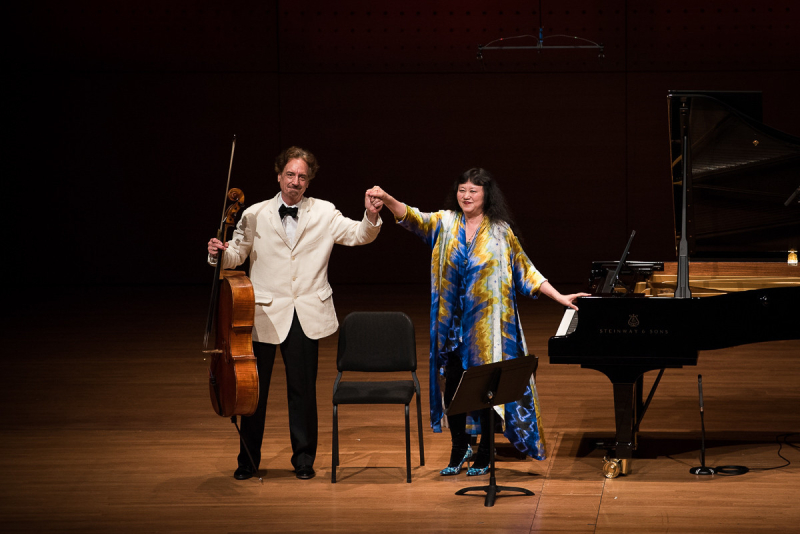
    Above: David Finckel and Wu Han, photo by Cherylynn Tsushima

    Due to the severe wind and rainstorm on Sunday, I had to miss the Chamber Music Society of Lincoln Center‘s program featuring Tamara Mumford and the Escher String Quartet. I was there in spirit.

    I did want to draw everyone’s attention to this wonderful article about Chamber Music’s Society’s co-Artistic Directors, Wu Han and David Finckel. They are two of my favorite players and personalities in the music world, and it’s enlightening (and fun!) to read more about them.

    ~ Oberon