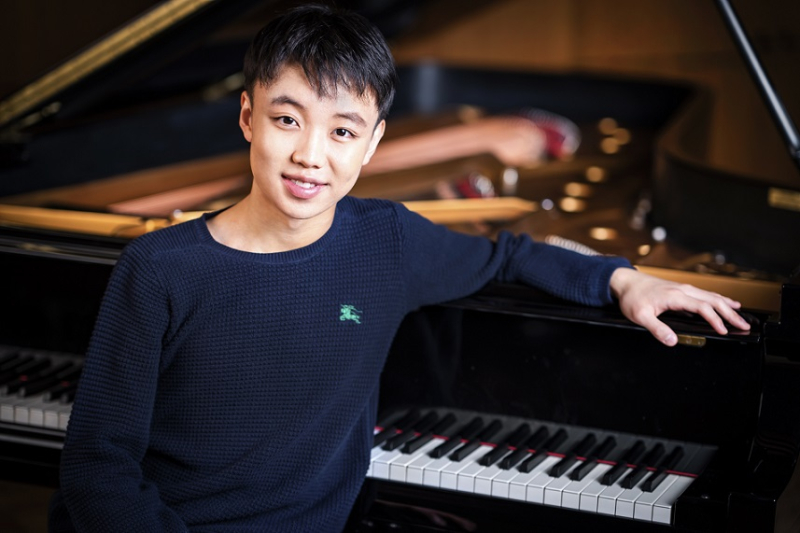
Tag: Young Concert Artists

  • Joseph Parrish in Recital @ Merkin Hall

    Joseph Parrish

    ~  Author: Oberon

    Tuesday March 25th, 2025 – Young Concert Artists presenting bass-baritone Joseph Parrish (photo above) in recital at Merkin Hall, with Francesco Barfoed at the piano.

    I first heard Mr. Parrish in a performance of Pauline Viardot’s CENDRILLON given by City Lyric Opera in 2021; I was immediately impressed by his singing, acting, and charismatic personality. In 2023, he sang superbly at the Gerda Lissner Winners Concert, having won first prize in the song/lieder division. And in 2024, Mr. Parrish made a most convincing (and beautifully sung) Salieri in Rimsky-Korsakov’s opera MOZART AND SALIERI, performed by Parlando

    Tonight, Mr. Parrish showed that his is a voice that can bring people together. His stage presence is relaxed and cordial, with glimmers of humor along the way; it is a voice with an extensive range and a mastery of dynamics that allows him to veer impressively between hall-filling power and the most gentle of pianissimos. He can turn a phrase like a magician, whilst all the time his body language and expressive face draw listeners to him like a magnet. This is charisma personified.
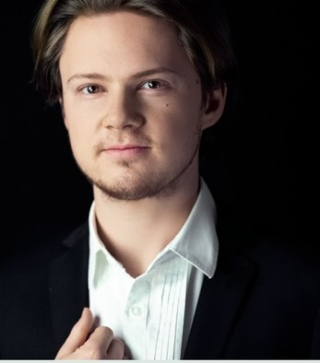
    Pianist

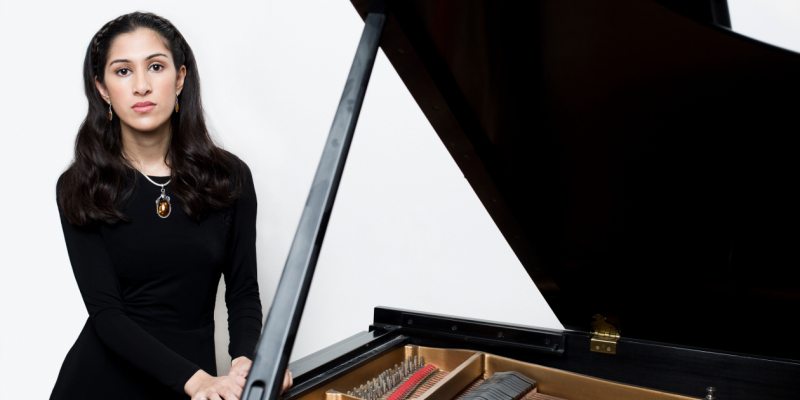
    For the first half of the program, Mr. Parrish shared the stage with a stellar pianist: Francesco Barfoed (photo above). Francesco is a musician of extraordinary talent, his playing so perfectly aligned with the singer’s vision of the music.

     Mr. Parrish opened the evening with Harry Burleigh’s “Elysium”, and in this single song he set a very high standard for himself: a standard which he would often surpass as the concert progressed. “Elysium” displayed the voice’s sheer power, as well as its sense of control…the last note was simply awesome. More Burleigh next – “You ask me if I love you” – in which the singer details the sensations he experiences when with his beloved…as if to say: “Do you really need to ask?

    Classics from two masters of lieder followed: Mahler’s romantic Liebst du um Schönheit with its poetic words, so lovingly rendered, and Schubert’s immortal Ständchen, in which the pianist plays a major role; the music covers a big vocal range and part of the allure is in the detailing of subtle nuances. The song reached a majestic pinnacle but then ends quietly. Then back to Burleigh for “Her Eyes Twin Pools“; Mr. Barfoed’s playing here is essential to the song’s meaning, whilst the singer’s face, expressive hands, and slender form create a visual poem all their own. 

    Charles Brown’s ‘The Barrier‘ at first seems to sing of an admirer’s shyness in hesitating to approach the object of his desire, but there is another reason for his reluctance, revealed in the song’s final line. Whilst listening to the song, I was thinking: “How lovely…how poetic…” and then the last words sent a chill thru me. 

    Along The Dusty Road” by Hal Johnson seems like a folksong at first; a touch of the blues takes us to a spiritual place; Mr. Parrish sang so many beautiful notes in this song until reaching a whispered final tone that hung on the air.

    Charles Brown’s “Song Without Words” is just that. The singer begins with humming, then switches to what the French call “bouche fermée  which has a slightly different feel from plain old humming. The singer opens his mouth but no words emerge, just sound. Who knew vocalizing could be so expressive? 

    The New York Premiere of Psalm by YCA Composer-in-Residence Alistair Coleman draws on the old German hymn “How a Rose E’er Blooming“. The words “No one…” are repeated endlessly, as Mr. Parrish displays his vast dynamic range. The words change to “We were…we are…” and the music grows more passionate. The piano then introduces the carol itself, creating an air of fragrant softness. Hypnotically, “…the thorn…” now becomes the song’s lyric.

    After the interval, Mssrs. Parrish and Barfoed returned with a Margaret Bonds piece, You Can Tell The World“, a song with a theatrical feel – so alive – and giving the pianist a chance to shine brightly; it reaches a fantastical finish. Three beloved classics came next. First, “Deep River” in which Joseph made such a poignant impression, displaying the strength, range, and awesome breath control at his command. In “A City Called Heaven“, I had that uncanny feeling that he was singing just to me. At last, the triumphant “Ride On, King Jesus” in which his singing moved me so deeply with his range, power, and vitality.
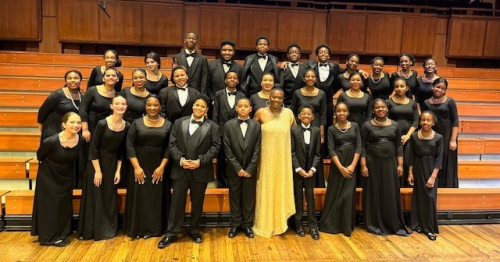
    Children of the gospel choir

    Now the young singers of the Washington Performing Arts Children of the Gospel Choir (above) took the stage, greeted by a vociferous ovation. Dressed in black gowns and tuxedos, they are just plain gorgeous to behold. And then they sang! Under the elegant and inspiring conducting of the group’s artistic director Michele Fowlin, and accompanied by the delightful pianist Anthony “Tony” Walker, they dazzled Merkin Hall with their young voices, weaving perfect harmonies, gesturing poetically, and swaying to Mr. Walker’s marvelous rhythms. Judging by the perfection their singing achieved, I would guess Ms. Fowlin can be a demanding taskmaster, but also that she has a heart of gold. She seemed to glow with pride for her young prodigies.

    Their Praise Medley encompassed Greg Roberts’ Prelude to Worship, Rodnie Bryant’s We Offer Praise, and Richard Smallwood’s Anthem of Praise. The audience went crazy for these astounding kids, and Ms. Fowlin and Mr. Walker caused screams of joy to erupt as they took their bows. One boy in the choir reminded me so much of mi amor de loin, Brix, in far away Cebu; after one song, the boy fell to his knee and opened his arms as if to embrace the world.

    Mr. Parrish offered three more songs – Bobby McFerrin’s Don’t Worry Be Happy, the profound Let Us Break Bread Together, and Richard Smallwood’s Total Praise (Joseph at the piano himself…!); the last two songs were arrangements by Ms. Fowlin. By then, I’d pocketed my pen and was letting the magic carry me. So much joy filled the hall as the evening came to an end.

    ~ Oberon
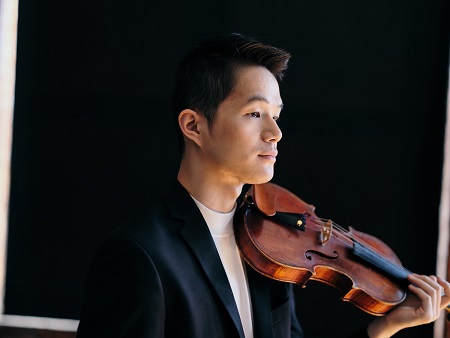
  • YCA Presents Violinist Lun Li ~ Debut Recital

    Lun li

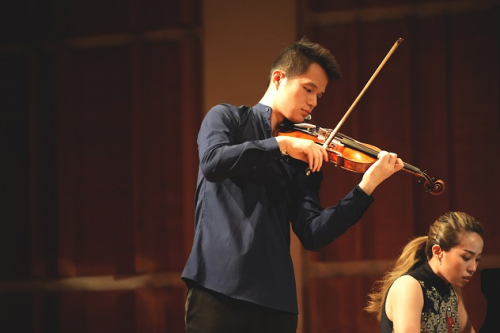
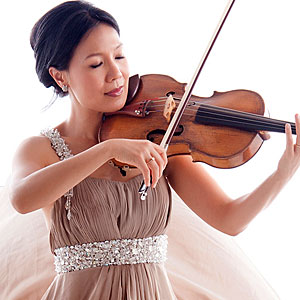
    Wednesday April 26th, 2023 – Young Concert Artists presenting the New York debut recital of violinist Lun Li (above) tonight at Merkin Hall. Pianist Janice Carissa shared the stage with the young violinist in a wide-ranging program which Lun Li described in a program note:

    My debut program explores the interplay between fantasy and reality through the works of Bartók, Messiaen, Schumann and others. I have chosen a set of repertoire that explores this blurred dimension, and more importantly, allows the listener to form sonic connections without needing extensive knowledge and context. I invite you to form your own personal narratives with this program.”

    In the program’s brief opening work, “Don Quixote” from 18 Miniatures by Giya Kancheli, both players showed themselves to be passionate and highly accomplished musicians. The music has a boisterous start, which develops into a strutting dance. Thereafter, extroverted phrases alternate with delicate, witty ones.

    Lun Li then spoke briefly, and asked that we withhold applause during the remainder of the program’s first half. He and Ms. Carissa then commenced on a marvelous performance of Francis Poulenc’s Violin Sonata.

    Poulenc originally wrote this sonata in 1942/1943, for the young French violinist Ginette Neveu, who perished in a plane crash in 1949 at the age of thirty. Thereafter, the composer revised the sonata, making several changes in the last movement. The work recalls the composer’s memories of the great Spanish poet Federico García Lorca (1899-1936); suspected of homosexuality, García Lorca was executed by the Fascists soon after the outbreak the of the civil war.

    The sonata’s opening Allegro con fuoco makes a frantic start before easing into a tango-like mood, which speeds up before halting for a long pause. A tender melody develops with great passion; alternating moods carry us to a fantastic finish.

    Poulenc headlined his second movement, an Intermezzo, with a quotation from García Lorca: “The guitar makes dreams weep,” alluding to the poet’s own guitar arrangements of Spanish songs. The music begins with a lulling piano motif accompanied by plucked violin notes. A subtle melody becomes rapturous, the piano lapses into a dreamlike state. Off-kilter harmonies sound before an upward violin glissando brings a quizzical end.

    The third movement’s title, Presto tragico, foreshadows the death of the poet: fast and urgent passages mesh with dancelike swirls of notes, climaxing with a violent chord. A searing violin theme jolts us, then the music subsides to a tragic, mournful conclusion.

    Honoring Lun Li’s request for “no applause” was difficult after such a thrilling performance, but the mood held and he commenced the high, soft agitato of Salvatore Sciarrino’s Per Mattia, a brief work that flowed seamlessly into the ensuing Schoenberg. 

    Janice carissa.

    Above: pianist Janice Carissa

    Arnold Schoenberg’s Phantasy, Op. 47, began life as a solo violin piece, to which the composer later added a separate piano accompaniment. Lun Li and Ms. Carissa here displayed the wonderful sense of teamwork that underlined their playing all evening. The pianist, whose gown was a work of art in and of itself, is wonderfully subtle, and she deftly handled the rhythmic shifts in which this music abounds. Together, the players veered from the ethereal to the drunken, dancing along thru stuttering, jagged passages which morphed, incredibly, into Fritz Kreisler’s Miniature Viennese March. This was a brilliant ending to the concert’s first half: jaunty, and impeccably played.

    Music of Olivier Messiaen, his Fantaisie, opened the evening’s second half; the composer is perhaps best remembered for his magnificent, poignant Quartet for the End of Time. The Fantaisie opens with Ms. Carissa delivering an emphatic statement from the piano. Dance-like passages are heard, and then Lun Li’s violin soars over gorgeous rippling figurations from the pianist. The music sails along, alternating rapid passages with thoughtful ones: mood swings that are relished by the players. From a high-velocity, tumultuous buildup, the music becomes cinematic. Animated/agitated music gives way to another high-flying, silken violin theme. The climax is reached, with the composer offering a swift, dazzling finish. 

    Robert Schumann’s quirky Bird as Prophet, arranged by Leopold Auer, comes next. Ascending violin phrases have a touch of irony, and then a lyrical song springs up, with a shimmering trill. The music features some wistful hesitations.

    4

    Lun Li and Ms. Carissa polished off the evening with a compelling performance of Béla Bartók‘s Violin Sonata No.2, Sz. 76. Lun Li aptly described this music as being “from a different planet”, and from its big, strange start it is indeed kozmic, weird, and wonderful. Passion and pensiveness send alternating currents thru the hall, sagging violin motifs develop into an epic expressiveness. As things simmered down, Lun Li remained unfazed by the ill-timed sound of a cellphone: he delivered a plucking ‘cadenza’ from which a dance emerged: cascades of notes from the violin over a pounding rhythm from the keyboard. Fabulous playing…they sounded like a whole orchestra! 

    Bartók offers a fantastical sonic variety in this piece in terms of tempi and dynamics: a piano solo of epic power gives way to a spidery violin motif. Lun Li becomes a veritable speed demon, playing fast and furious, and taking things to new heights. The music calms, and slows; the violin sighs, then starts plucking, and the music dances onward.

    2

    The audience hailed the musicians with a fervent ovation at the sonata’s end, and Lun Li graciously thanked us for having accompanied him on this musical journey. He then launched a performance of Schubert’s  Erlkönig that was an astounding demonstration not only of his virtuosity but of his unbounded passion and his heartfelt dedication to music.

    I look forward eagerly to hearing Lun Li again…and soon: on Friday May 5th, he will play the Prokofiev 2nd with the Riverside Symphony at Alice Tully Hall. Tickets and info here

    Performance photos courtesy of Young Concert Artists.

    ~ Oberon.

  • Accordion & Saxophone @ The Morgan Library

    Yca

    Above: Steven Banks and Hanzhi Wang

    Tuesday February 22nd 2023 – Young Concert Artists presenting a noontime concert at The Morgan Library featuring the unusual combination of accordion and saxophone. The players – Hanzhi Wang (accordion) and Steven Banks (saxophone) – have both previously appeared at The Morgan in solo recitals; they are brilliant, unique artists, and I was eager to hear them live again. But the afternoon did not turn out as planned.

    We settled into our seats, but after a few minutes we were shivering. We put our coats back on, but the damp chill was pervasive. Looking around, it seemed that everyone in the audience was bundled up, and I was recalling an evening many years ago when the young Frederica von Stade gave a recital in a frigid hall in Syracuse, NY, where the maintenance staff had inadvertently shut off the heat; luckily, someone located a small space heater which was set up onstage to keep the singer somewhat warm.

    This afternoon’s musicians took the stage, Mr. Banks towering over the petite Ms. Wang. They launched their program with an arrangement of Handel’s Recorder sonata in G-minor, HWV 360; it took a moment to adjust to the brighter sound of the saxophone in music we are accustomed to hearing played with the softer timbre of the recorder, but Mr. Banks immediately scaled back his dynamic palette, bringing delicious subtleties to the music. Meanwhile Ms. Wang, looking so lovely in her pleated white frock, transformed her accordion into a compact organ, playing with such cordial tone and bending the phrases with consummate skill. As he music veered from courtly to festive, the players were wonderfully in sync and so attentive to one another, making for a musical treat.

    Three miniatures by Krzysztof Penderecki – the great and sorely missed Polish master-composer – were so fascinating to hear. The first, Allegro, is weirdly spastic; it seems to reach its quirky end in a matter of seconds, with the players wryly relishing the innate humour of the piece. A dark and doleful Andante cantabile followed, the timbres of the two instruments blending to perfection. The concluding Allegro ma non troppo is a bouncy dance, polished off zestfully by Ms. Wang and Mr. Banks.

    Now Ms. Wang offered excerpts from Bach’s Goldberg Variations: the very familiar Aria, played with great depth of feeling, followed by four variations which called for all manner of fanciful fiorature, dispatched with effortless grace and polish by this remarkable virtuoso.

    Virtuosity continued in abundance as Ms. Wang gave us two works by Martin Lohse: Autumn Rain, with its dotty raindrops sparklingly defined, and the more somber Winter’s Tale, in which gentle snowflakes drift down on an overcast wintry afternoon. Ms. Wang’s incredible dexterity was simply mind-boggling to observe, her fingers flying nimbly over the keys as she spun out the music, much to our delight.

    But we were now chilled to the bone, and we silently agreed that we needed to leave and seek some warmth. We slipped up the stairs as the stage was being set for the next piece, and a few other audience members followed us out. I was sorry to miss Mr. Banks’s set, and the anticipated Astor Piazzolla finale.

    ~ Oberon

  • Accordion & Saxophone @ The Morgan Library

    Yca

    Above: Steven Banks and Hanzhi Wang

    Tuesday February 22nd 2023 – Young Concert Artists presenting a noontime concert at The Morgan Library featuring the unusual combination of accordion and saxophone. The players – Hanzhi Wang (accordion) and Steven Banks (saxophone) – have both previously appeared at The Morgan in solo recitals; they are brilliant, unique artists, and I was eager to hear them live again. But the afternoon did not turn out as planned.

    We settled into our seats, but after a few minutes we were shivering. We put our coats back on, but the damp chill was pervasive. Looking around, it seemed that everyone in the audience was bundled up, and I was recalling an evening many years ago when the young Frederica von Stade gave a recital in a frigid hall in Syracuse, NY, where the maintenance staff had inadvertently shut off the heat; luckily, someone located a small space heater which was set up onstage to keep the singer somewhat warm.

    This afternoon’s musicians took the stage, Mr. Banks towering over the petite Ms. Wang. They launched their program with an arrangement of Handel’s Recorder sonata in G-minor, HWV 360; it took a moment to adjust to the brighter sound of the saxophone in music we are accustomed to hearing played with the softer timbre of the recorder, but Mr. Banks immediately scaled back his dynamic palette, bringing delicious subtleties to the music. Meanwhile Ms. Wang, looking so lovely in her pleated white frock, transformed her accordion into a compact organ, playing with such cordial tone and bending the phrases with consummate skill. As he music veered from courtly to festive, the players were wonderfully in sync and so attentive to one another, making for a musical treat.

    Three miniatures by Krzysztof Penderecki – the great and sorely missed Polish master-composer – were so fascinating to hear. The first, Allegro, is weirdly spastic; it seems to reach its quirky end in a matter of seconds, with the players wryly relishing the innate humour of the piece. A dark and doleful Andante cantabile followed, the timbres of the two instruments blending to perfection. The concluding Allegro ma non troppo is a bouncy dance, polished off zestfully by Ms. Wang and Mr. Banks.

    Now Ms. Wang offered excerpts from Bach’s Goldberg Variations: the very familiar Aria, played with great depth of feeling, followed by four variations which called for all manner of fanciful fiorature, dispatched with effortless grace and polish by this remarkable virtuoso.

    Virtuosity continued in abundance as Ms. Wang gave us two works by Martin Lohse: Autumn Rain, with its dotty raindrops sparklingly defined, and the more somber Winter’s Tale, in which gentle snowflakes drift down on an overcast wintry afternoon. Ms. Wang’s incredible dexterity was simply mind-boggling to observe, her fingers flying nimbly over the keys as she spun out the music, much to our delight.

    But we were now chilled to the bone, and we silently agreed that we needed to leave and seek some warmth. We slipped up the stairs as the stage was being set for the next piece, and a few other audience members followed us out. I was sorry to miss Mr. Banks’s set, and the anticipated Astor Piazzolla finale.

    ~ Oberon

  • Flautist Anthony Trionfo @ The Morgan Library

    Trionfo

    Thursday April 14th, 2022 – Young Concert Artists presenting flautist Anthony Trionfo (above, in a Matt Dine portrait) in a noontime recital at The Morgan Library. Mr. Trionfo was joined by Emmanuel Ceysson (harp), Hsin-Yun Huang (viola), and Albert Cano Smit (piano) in a program of music by Debussy, Prokofiev, and YCA Composer Katherine Balch.

    I first heard Mr. Trionfo in recital at Merkin Hall in 2018 and was dazzled by his extraordinary talent. This afternoon, he chose works especially dear to him and then invited colleagues he especially enjoys working with to join him. The result was a very personal and pleasing hour of music-making of the highest order. 

    Cano_Smit_Albert4_credit_Chris_Lee

    Above: pianist Albert Cano Smit, photo by Chris Lee

    Sergei Prokofiev’s Sonata in D-major, Opus 94, opened the concert; Mr. Trionfo’s collaborator here was the tall, handsome Dutch/Spanish pianist Albert Cano Smit.  

    The sonata has a lyrical Moderato start, which soon peps up. A familiar melody is heard, and then there’s a sort of fanfare-like passage. Fanciful fluting follows, high and swift. Calming with more sustained themes, the familiar melody returns, moving on to a soft ending. The charming Scherzo has an exuberant quality, which both players relished. A peaceful interlude gives way to a feast of coloratura from Mr. Trionfo. The Andante has a dreamy quality, and an air of mystery. The concluding Allegro con brio opens with a rhythmic dance, and there are cascades of notes from the flautist. At the piano, Mr. Smit keeps things zipping along, and then has a strikingly dramatic interlude. A pensive melody for the flute leads on to the sonata’s flashy finish. The Trionfo/Smit duo reinforced the high esteem in which I hold Prokofiev’s music with their brilliant playing.


    Hsin-yun-huang

    For Ms Balch’s miniature, Musica Spoila, violist Hsin-Yun Huang (above) joined Mssrs. Trionfo and Smit. In announcing the work, Mr. Trionfo spoke of the intense concentration needed by the three players for this quirky, fifteen-minute score; he said the composer wanted the music to sound like a “crisp, light machine”, and the trio achieved just that quality.

    The music putters and sputters, with the viola scraping and plucking. Each player produces various sound effects: Mr. Trionfo makes eerie breathing noises on the piccolo, and the piano is sometimes tapped or plucked from within. It’s all very subtly done, and perfectly timed. The piece was over in the twinkling of an eye.

    I had heard Hsin-Yun Huang earlier this season playing Arnold Schoenberg’s Verklärte Nacht with Chamber Music Society of Lincoln Center; I was very glad of this opportunity to hear her again today.

    Emmanuel

    Above: harpist Emmanuel Ceysson

    Claude Debussy’s Sonata for flute, violin, and harp brought forth harpist Emmanuel Ceysson, who gained a large following of fans during his five seasons with The MET Opera Orchestra. Currently, he is principal harpist with the Los Angeles Symphony. He’s a great-looking guy whose love of music is palpable; watching Mr. Ceysson is as pleasing as listening to him.

    From the gentle start of the sonata’s opening Pastorale, the intriguing blend of the sweet-toned flute, the poignant viola, and the the caressive harp gives us a feeling of peace. In the lower range, Hsin-Yun Huang’s viola has a lovely duskiness. After a passage of gentle animation, the movement ends with a dreamy hush.  The central Interlude soon takes on the feeling of a gentle romp in a Spring meadow; to magical glissandi from Mssr. Ceysson’s golden harp, the sound of the flute and viola entwine in blithe melodies which become quite lively. The vibrant harp sets off the concluding Allegro con brio, giving an agitato feeling. The flute and viola exchange simple passages. The pace quickens, and the blended textures of the three instruments become denser, delighting the ear.

    The trio were enthusiastically applauded for their brilliant playing and, returning for a bow, they called on Mr. Smit to join them onstage.

    The music today was twice interrupted by the loud ringing of cellphones. As always, these intrusions came at just the wrong moments; I felt sorry for the players, who carried on despite the distraction.

    ~ Oberon

  • Saxophonist Steven Banks @ The Morgan Library

    Steven banks

    Wednesday March 23rd, 2022 matinee – Young Concert Artists presenting a noontime “encore” concert by saxophonist Steven Banks (photo above) at the Morgan Library. Pianist Xak Bjerken joined Mr. Banks for a wonderfully varied program.

    From way back in my high-school days, I’ve loved the sound of the saxophone; I chose the French horn, but in band, I always sat next to our phenomenal first sax player. This afternoon was the first time I’ve ever attended a full recital of music for the instrument, and I was bowled over by Mr. Banks’ opulent sound, commanding technique, and deep musicality. 

    The program opened with Canadian composer Denis Bédard‘s Fantasie, a delightful piece which Mr. Banks played on soprano sax. As the afternoon evolved, he moved to alto sax, and then to tenor sax. The exuberant opening of the Bédard immediately established Mr. Banks as a virtuoso of the first order. His tone is luminous, his technique compelling, his breath control astonishing. Tall and slender, he is a charismatic musician, and he had the audience under his spell within seconds. Bédard makes the pianist an equal partner in this work, and Mr. Bjerken played with great clarity and feeling, both here and throughout the concert.

    The Fantasie features flowing melodies, with alternating passages of lyricism and animation; as the music takes a pensive turn, both artists made much of the sustained phrasing. Then, a da capo of the zestful opening speeds on to a quirky end.

    Xak Bjerken

    Above: pianist Xak Bjerken

    I became familiar with Paul Creston’s Sonata in E-flat Major, Op. 19, during the pandemic via YouTube; this afternoon, I was very glad for the opportunity to hear it played live. The piece was premiered by one of the most popular American saxophonists of his day, Cecil Leeson, in New York City in 1940. For this, Mr. Banks took up his alto sax.

    The sonata is in three movements; the first, marked “With Vigor“, has a lively beginning and goes on thru many contrasts of speed and flow, including  a warm, drawn-out melody and passages of bustling wit. Both Mr. Barnes and Mr. Bjerken showed off a wide range of dynamics. The second movement, “With Tranquility“, finds Mr. Bjerken with a solo which develops into a lovely song in which both artists showed a gift for finely-shaped phrasing and for finding appealing colours. The music becomes passionate, then turns dreamy. The sustained ending was immaculately rendered. Following a spirited opening the third movement – “With Gaiety” – moves on to an interlude wherein Mr. Banks summoned up some of his sweetest sounds. The music then breezes on to its finish.

    Now that we have Mr. Banks among us as a saxophone paragon, let’s hope contemporary composers will follow Paul Creston’s lead and bring us more sonatas – and/or concertos – for the instrument.

    Mr. Banks then spoke of the next three works, which are often featured as encores; he wanted to bring them to us as a set, and as such they were highly enjoyable to hear…their contrasts setting each work in high relief.

    First came Claude Debussy’s brief and haunting Syrinx, which is usually heard as a flute solo. Languorous and seductive, this music found fresh hues in the saxophone range: a dusky quality develops, and Mr. Banks’ fantastic dynamic control made it so alluring.

    From Astor Piazzolla, we heard Milonga del Angel, which Mr. Bjerken commenced with a slow swaying motif from the piano. The music is full of suggestion: at first inviting, then more insistent.  

    Steven Stucky’s Scherzino is playful and slithering at first, then becomes songful, and finally dotty. The piano goes high before we reach a sudden end.

    Mr. Banks’ next offering was a large piece he wrote himself: Come As You Are. It is in four movements, three honoring of his siblings, and the final one dedicated to his mother; each movement drew its inspiration from a beloved spiritual. For this, Mr. Banks brought forth his tenor sax.

    In the first movement, Lift My Eyes, we could hear echoes of “My Lord, What a Morning”. There are big bursts of melody, and the pianist plays an important role here. An uncannily sustained note from Mr. Banks led to a slow, quiet cadenza.

    Times of the Storm draws on “Wade in the Water”; it is bustling, jazzy music. At one point, Mr. Banks turned his back to the audience and achieved a sort of echo effect as Mr. Bjerken reached into the piano to pluck individual strings. A sense of quiet rapture settles over us; from the keyboard, Mr. Bjerken plays swirling pianissimo spirals of notes.  

    Strength of my Life moved me deeply, since the old song “His Eye Is On The Sparrow” was a great favorite of my maternal grandmother, who would sing it to me in her old age with a quavering voice. From a lulling start by the piano, the saxophone sings to us passages that veer from poignant to passionate. Mr. Banks finishes this movement with a long tone that slowly vanished into the air. What a sound!

    For the fourth and concluding movement of this suite – Lift My Hands – Mr. Banks turned to “I Still Have Joy”. A somber start soon grows more lively. I cannot recall ever hearing a more sumptuous saxophone tone than what Mr. Banks gave us here…well, all afternoon, actually.  And then he turns to some flights of coloratura before a big build-up to the finish.

    This singular creation, at once personal and universal, was such an impressive undertaking for the artist. His family were present, hearing the music performed ‘live‘ for the first time.

    The program concluded with Pedro Iturralde’s Pequena Czarda, which has a dramatic start before becoming a big sad-love song. A fast and bouncy czardas pops up, slows for an interlude, and then ends with a swirl of notes.

    Mssrs. Banks and Bjerken gave us so much to enjoy this afternoon. The concert marked a reunion with my high-school classmate Deb Hastings, who came down from Connecticut specially for the occasion. After the two-year pandemic lull, it was wonderful to see her again…and to hear together such fresh, vibrant music so engrossingly played.

    ~ Oberon

  • YCA Presents Martin James Bartlett

    Bartlett_martin_james

    Above: British pianist Martin James Bartlett

    Author: Oberon

    Thursday February 24th, 2022 – Young Concert Artists presenting pianist Martin James Bartlett in recital at Merkin Hall.

    Opening his refreshing and unique program with two Bach transcriptions, Mr. Bartlett immediately established himself as an engaging artist with his performance of the Busoni arrangement of Ich ruf du dir, Jesu Christ, BWV 639, wherein an air of mystery was created and the sustained to spellbinding effect. This was followed by Dame Myra Hess’s arrangement of Jesu, Joy of Man’s Desiring in which the lyrical flow of the music was enhanced by Mr. Bartlett’s mastery of dynamics.

    The lively animation of Rameau’s Suite in A-Minor, RCT 5/VII. Gavotte et six doubles, was played as a gallant invitation to the dance, with virtuosic spirit in the changing dance rhythms, and a grand finish. 

    Haydn’s Sonata No. 31 in A-flat Major; HOB. XVI:46 began life as a divertimento. Mr. Bartlett’s marvelous agility and sense of fun made the opening Allegro moderato a delight. The Adagio, commencing with a left-handed opening passage, is quite gentle, with some elegant little trills etched in. In the concluding Presto, Mr. Bartlett dazzled us with his virtuosity, whilst introducing sly subtleties along the way. By this point, the engaging young pianist had the audience in the palm of his hand.

    Following the interval, Franz Liszt’s solo piano arrangement of the Liebestod from Wagner’s TRISTAN UND ISOLDE was a wonderful treat, starved as I am for live performances of the music of the Master of Bayreuth. Mr. Bartlett played with great passion, and also great tenderness; again, his dynamic range put a personal mark on this sublime music.

    Contemporary British composer Julian Anderson wrote She Hears to honor the memory of Imogen Holst. Ms. Holst was the daughter of Gustav Holst, and was a composer herself as well as an educator and writer; she was known for her uncanny gift for hearing music on a transcendental level. The Anderson work, and Mr. Bartlett’s playing of it, had a fascinating sense of introspection that seemed to captivate the audience.

    Three Rachmaninoff gems came next. The first two were transcriptions by Earl Wild: both the melodious flow of Where Beauty Dwells and the rhapsodic qualities of the Vocalise, Op. 34, No.14, displayed Mr. Bartlett’s true affinity for the music of the Russian composer. The third Rachmaninoff work, Polka de W.R. was jaunty, and spiced with wry hesitations: music that played to the young pianist’s sense of humor…and his brilliant technique.

    My ballet-loving companion and I were so pleased to hear Ravel’s La Valse as the concert’s closing work, our thoughts drifting back to the many performances of Balanchine’s haunting ballet of the same title that we have witnessed. From its rumbling start, and thru the moods of mystery and drama in which Ravel’s score abounds, we were drawn deeper and deeper into the music. By the final madness, Mr. Bartlett seemed possessed, his fingers sweeping the keyboard with fiery passion to summon the vision of dancing on the edge of a volcano.

    The audience had clearly taken this personable and vastly talented young pianist to their hearts, and he responded to our avid applause with a silken rendition of Gershwin’s Embraceable You.

    ~ Oberon

  • Cellist Zlatomir Fung @ Weill Hall

    Zlatomir-Fung

    Tuesday October 19th, 2021 – One of my favorite musicians, Zlatomir Fung, made his Carnegie debut this evening at Weill Hall, a red-letter event for me. Zlatomir, whose unique name derives from his Bulgarian and Chinese-American parentage, was the first American in four decades – and the youngest cellist ever – to win first prize at the International Tchaikovsky Competition in 2019.

    I first heard Mr. Fung in a Young Concert Artists recital at Merkin Hall in February 2019, and was captivated by his remarkable talent. Read about the evening here.

    Mishka

    Joined at Weill Hall this evening by pianist Mishka Rushdie Momen (above), the cellist gave us a marvelous program of classics from the Romantic period. The concert was sold out, and the audience’s rapt attention was a tribute both to the music and to the musicians. 

    Robert Schumann’s Adagio and Allegro, Op. 70, was composed in 1849. The pensive adagio, heart-tugging in its emotional expressiveness, gives way to the lively and passionate allegro, a deft flow of music that sometimes looks back to the opening movement. From note one, I was transfixed by Mr. Fung’s achingly beautiful playing, which drew me – and my fellow audience members – immediately in to the music.

    Franz Schubert’s Sonata in A-Minor, D. 821, “Arpeggione“, was written in 1824, soon after the beloved song cycle Die Schöne Müllerin and shortly before the C-major symphony.

    The sonata’s opening movement is a songful allegro moderato, tinged with a feel of nostalgia. A dance springs up, with a folkish flavor, and a passage of staccati from the cello aligns with sparkling notes from the piano. The movement continues, shifting between sadness and joy…a sort of reflection on the times in which we are living. 

    From its poignant opening, the sonata’s central adagio found Mr. Fung at his most persuasively eloquent as the music carried him across a wide dynamic range, leaving the listener in awe of his sustained, finely nuanced phrasing. Ms. Momen was a ideal companion. This was music-making of the highest calibre.  

    The concluding allegretto is energetic, at times having with a somewhat jaunty feel; both players displayed great  nimbleness, dancing us along to a surprisingly subdued finish. 

    Antonín Dvořák’s “Silent Woods“, Op. 68, No. 5, was – to me – the heart of the evening; subtle dynamic shadings from both players constantly allured the ear, and the astonishing resonance in Mr. Fung’s playing reached the depths of my soul. A dance-like passage gives way to a wave of passion; this subsides only to sweep over us again moments later. Mr. Fung’s glorious descending phrase at the end was thrilling.

    The musicians took only the briefest of breaks between works, but they seemed wonderfully fresh as they returned to the Weill Hall stage for the program’s concluding work: César Franck’s epic and very demanding Sonata in A-major. The cellist Jules Delsart was so moved when he first heard this sonata in its original violin setting that he obtained the composer’s permission to arrange the work for his own instrument. This arrangement was published in 1887.

    The sonata’s opening Allegretto ben moderato joins two themes: one for the cello and one for piano. These themes, especially the cello’s, will return in the following movements. The players seemed to gently bend the melodies, putting a personal stamp on this familiar music. 

    Turbulence rises for the second movement, a dramatic scherzo, in which the restless piano is over-lain with a vivid, dramatic passage for the violin. Lyrical moments, featuring this sonata’s second well-loved theme, come and go. From a veritable feast of notes, passion rises with the great melody sounding forth. Becalmed, deep resonance from the cello lingers briefly, then another rise to a triumphant finish.

    The Recitativo-Fantasia brings back sonic images from the previous movements. There is a feeling of improvisation here which leads in a slow buildup to another haunting melody for the cello. Then the final Allegretto con moto commences with the piano and cello seemingly exchanging thematic thoughts. Things grow turbulent again, and earlier themes resurface, all leading to a vibrant, joyous ending.

    Enthusiastic applause, the audience standing, brought Mr. Fung and Ms. Momen back for an encore: a Nocturne by Alexander Borodin which was unfamiliar to me. This was elegantly played, with appealing dynamic shifts and a spine-tingling tremelo passage from the cellist. As throughout the evening, I loved watching Mr. Fung’s expressive face as he played; he seemed to be communing with Saint Cecilia, all to the greater glory of the music.

    ~ Oberon

  • Samuel Hasselhorn ~ Erlkönig

    Hasselhorn

    Samuel Hasselhorn sings Franz Schubert’s Erlkönig with the Orchestre Régional de Normandie, conducted by David Wroe.

    Watch and listen here.

    I’ve had the pleasure of hearing Mr. Hasselhorn in two recitals here in New York City. As a Young Concert Artists winner, he sang at Merkin Hall in 2017, and at The Morgan Library in 2018.

  • YCA: Nathan Lee @ The Morgan Library

    Lee_Nathan3CreditChrisLee

    Above: pianist Nathan Lee, photo by Chris Lee

    ~ Author: Oberon

    Wednesday February 19th 2020 matinee – Young Concert Artists continued their popular series of noontime concerts at The Morgan Library today as pianist Nathan Lee played works by Ludwig van Beethoven, Chris Rogerson, and Robert Schumann in succession with nary a break in between.

    The youthful pianist, clad all in black with subtly bejeweled shoes, opened his program with Beethoven’s Sonata No. 27 in E-minor, Op. 90 – a lovely gift to us for the composer’s 250th birthday celebration. Unlike most traditional sonatas, this one has only two movements; the composer’s tempo markings are in German rather than the usual Italian.

    The opening phrases are alternately robust and subtle, and as the music develops there is a continual shift between thoughtful and intense passages. Mr. Lee’s playing of swift downward scales was exhilarating, and he moved effortlessly from drama to delicacy as the piece evolved. The second movement offers a sweet flow of melody with contrasting moments of animation. Mr. Lee is as engaging to watch as to hear, his facial expressions reflecting the moods of the music, his eyes often closed.

    The music of Chris Rogerson, who was Young Concert Artists‘ composer-in-residence from 2010-2012, made a very positive impression on me when I first encountered his String Quartet #1 performed by the Omer Quartet at a YCA  concert at Merkin Hall in December of 2018. Ever on the lookout for music that might capture the imagination of one of my choreographer/friends, I sent this quartet on to Claudia Schreier. Long story short: Ms. Schreier is choreographing a ballet to Mr. Rogerson’s String Quartet #1 for Chamber Dance Project in Washington DC, which will premiere in June 2020.

    This afternoon, Mr. Lee played Chris Rogerson’s ‘Til it was dark; the work was Mr. Rogerson’s first YCA Commission in 2010. The composer’s program notes reveal the nostalgic background for ‘Til it was dark, and made me think of my own boyhood in the little town when we’d play tag and hide-and-seek outdoors as the sun set slowly on summer evenings.

    The work’s first movement, Break, seems to speak of the noisy euphoria we felt as kids when school let out. Mr. Lee was called on to bang emphatically on the keyboard or to reel off swirling festoons of notes. As the music turns dreamy, then mysterious, and finally pensive, Mr. Lee caught all these moods thru his canny use of piano/pianissimo gradations. Later, when virtuosity is called for, the pianist delivers in spades. 

    “Three more minutes!” was the warning call of Chris’s dad that it was almost time to come indoors. The music seems to depict the frantic desire to get as much fun out of the dwindling daylight as one could. By turns sprightly and loudly animated, things eventually calm before a final propulsive rush to a witty end.

    Important Things takes on a more serious tone; Mr. Lee’s playing becomes thoughtful, almost tender. In his program note, Mr. Rogerson writes of those “…quieter moments with friends, when you wanted to say something that was on your mind…but of course, you never did.” By turns expansive, wistful, and passionate, the music finally alternates short dreamy phrases with harsher ones. Dreaminess prevails, and quietude settles over us. In this very personal (yet also universal) reflection – which put me in mind of Samuel Barber’s evocative Knoxville: Summer of 1915 – Mr. Rogerson could not have asked for a finer interpretation that Mr. Lee’s.

    The young pianist then immediately commenced on Robert Schumann’s Carnaval for piano, Op. 9, written in 1834-1835. In these twenty-one miniatures, Schumann depicted himself (with Florestan and Eusebius representing his split personalty), his beloved Clara (Chiarina), his friends, and also characters from the commedia dell’arte. In 1915, Michel Fokine choreographed the music for his ballet of the same title, created for Diaghilev’s Ballets Russes. Amazingly, I’d never heard the entire Schumann score until today.

    Art_63_06_13

    Above: the legendary ballerina Tamara Karsavina as Columbine in Fokine’s ballet Carnaval

    Nathan Lee took us on a delightful journey with his brilliant playing, and thru his coloristic gifts introduced us to – among others – the lively Pierrot, the smug wit of Harlekin, the scampering Coquette, and the youthful gaiety of Chiarina. From the grand introduction, the music’s rhythmic subtleties and irresistible waltzes drew us onward thru this 30-minute panorama wherein the essential element – charm – was in abundance in Mr. Lee’s playing.

    The pianist returned for an encore: the Sarabande from Bach’s 4th Partita, subtly played.

    ~ Oberon