Tag: Zankel Hall

  • Alisa Weilerstein ~ FRAGMENTS 2

    CH11513997

    Above, Alisa Weilerstein/FRAGMENTS 2 ~ performance photo by Fadi Kheir

    ~ Author: Shoshana Klein

    Tuesday January 21st, 2025 – This evening at Zankel Hall, Alisa Weilerstein’s’ Fragments project continued with its the second installation. You may remember the first one, last April.


    Like last time, there was no program given until the end – a practice I still find interesting, though slightly frustrating. I had a bit of a conclusion that the ideal listener either knows the Bach suites by heart, or doesn’t know them at all; someone like me (knowing them but certainly not well versed on the particular movements, etc) ends up a little stuck on which is which and where we are. 


    For the staging, the same light boxes that were set up for the first installment are set up spread around the stage rather than in a circle around the cellist like they were last time. She entered in full darkness – though during that moment, someone’s phone went off and said clearly “calling emergency services” and everyone laughed, which was a fun communal moment.


    This setting struck me as more theatrical than the last – it started with a bang and bright lights, and Weilerstein was wearing fishnets, a bright fuchsia short dress, and dramatic stage makeup with her hair curled and all over the place. It seemed to evoke a sort of dramatization and maybe a teenage emotionality.


    The way that she played the Bach suite movements were sweeping, very light even though much of the suite is in minor. Her playing of the fast passages is very elegant – bringing out the vocal and conversational qualities of these multi-line pieces written for one instrument.


    CH11513956


    Performance photo by Fadi Kheir


    For the first couple movements there were really smooth transitions and stark lighting changes. The new pieces were lit with green and the Bach was a warmer white/yellow. I wondered if it would continue like that the whole time with the lighting just indicating whether or not we were hearing a new piece, but as it went on the changes became less stark, and the movements had different types of lighting. Maybe adding to this, or reflected by it, particularly in the beginning of the set, the Bach had a more veiled angstyness while the newer pieces had more brash emotionality in the forefront, as if the newer compositions were unearthing the meanings of the Bach and saying them more plainly.


    One standout movement near the end had only pizzicati and required Weilerstein to sing along with her playing. It was simple sounding and also grounding, particularly because this person who is at the highest levels of cello playing was singing like a normal person. Not to say it was bad, it just humanized her in a way that brought reality back in a really sweet way.


    ~ Shoshana Klein

  • Kristian Bezuidenhout @ The OSL Bach Festival

    Kristian Bezuidenhout

    Above: Kristian Bezuidenhout, photo by Marco Borggreve 

    ~ Author: Oberon

    Tuesday June 25th, 2024 – The Orchestra of St. Luke’s brought their Bach Festival 2024 to a close tonight at Zankel Hall with a program titled Bach and Sons. Kristian Bezuidenhout (above) was conductor and soloist. The concert was sold out, with audience enthusiasm running high. The popularity of the series has prompted to OSL to announce a 4-performance festival for next year.

    This evening’s program featured works by J S Bach and two of his sons, and ended with Mozart. The opener, Johann Christian Bach’s Symphony in G-Minor, Op. 6, No. 6, immediately engaged the audience. From the scurrying start of the opening Allegro, the music sounded thoroughly fresh and inviting. Horns and oboes join the strings, and the OSL’s bass player, John Feeney, marked the epicenter of the entire evening. The Andante opens with a unison passage, leading to a steady, pulsing beat decorated with stealthy trills. A lovely violin theme is heard. An urgent start to the concluding Allegro molto develops into roller coaster up-and-down scale passages, hunting horns, and exaggerated string tremolos.

    Next, Mr. Bezuidenhout at the pianoforte commenced J. S. Bach’s Contrapunctus XIV from The Art of Fugue, BWV 1080, performed in an adaptation for strings. The cello, viola, and bass – and eventually the violins, seemingly one by one – join in this lament-like work. Poignant harmonies abound, the music gradually becoming somewhat animated.

    Music of C. P. E. Bach came next, with Maestro Bezuidenhout taking up the Keyboard Concerto in D-Minor, Wq.17, H 420. The energetic opening Allegro was masterfully played, with a cadenza that displayed Mr. Bezuidenhout’s technical assurance and intriguing subtlety. The ensuing Adagio has a dreamy feeling, with periodic interjections of drama. Gracious harmonies invite the keyboard to join, with enticing turns and trills woven in. The turbulent opening of the final Allegro has a trace of a Spanish feel. Delicious playing from Mr. Bezuidenhout kept the audience entranced.

    Following the interval, more from C.P.E. Bach: his String Symphony No. 3 in C-Major, Wq. 182, H. 659. From its speedy start, swirling violin motifs come to a sudden change of mood when the Adagio suddenly takes over: here, an interlude of affecting violin passages is interrupted by urgent stabbing tones from the bass. In the final Allegretto, melodic phrases are intruded upon by insistent bass and cello comments.

    What finer end for a Bach Festival than music of Mozart! While Bach and his progeny are the source from which all musical blessings flow, their music – so meaningful to the mind and spirit – seldom touches heart. Thus, Mr. Bezuidenhout’s outstanding rendering of the Mozart’s Piano Concerto No. 9 in E-flat Major, K. 271, “Jeunehomme”, reached me on an altogether different level.

    The 9th, composed in 1777, is considered Mozart’s first truly mature piano concerto. In terms of musical scope, technical demands, and depth of feeling, it seems to signal a new phase for the composer. The string ensemble, reinforced with horns and oboes, plays a unison introductory passage, and then Mr. Bezuidenhout immediately captivates us with a sustained trill. His playing throughout is remarkable for its dynamic range, with a delicacy of touch that charms the ear.

    Having been a frustrated horn player in my teens, a brief horn solo reminds me of the fact that I didn’t take it seriously until my senior year: a lesson too late for the learning. Mr. Feeney’s bass resonance – such a pleasure to hear all evening – was of special appeal here. The piano cadenza, a jewel in the musical diadem of the evening, included spine-tingling nuances and hushed pianissimi which were vastly pleasing to the ear.

    Dolorous might be too heavy a word for the concerto’s Andantino…wistful is perhaps more apt. All I know is, this music went straight to my heart…which has been in a tormented state of late. A full-bodied theme, brief but later repeated, was impactful. And the Bezuidenhout cadenza was immaculate and engrossing: a series of trills was a joy in and of itself.

    But…no time for reverie. The pianist commences the concluding Rondo as a solo, which will recur; of particular charm was a keyboard cantabile played over plucked accompaniment.

    Mr. Bezuidenhout has always been a prince among pianists, and with the redoubtable artists of St. Luke’s all on such fine form, the evening was a balm to the ear and the soul. I simply did not want this concert to end; it was the final live musical event of my seventy-fifth year; next week, the fourth act of my life/opera commences. For the moment – like Alceste – Je sens une force nouvelle.”   

    ~ Oberon

  • Bach & Handel – Orchestra of St. Luke’s

    Screenshot 2023-06-19 at 06-50-56 Events (2)

    Above: Hugh Cutting

    ~ Author: Oberon

    Tuesday June 17th, 2023 – The Orchestra of St. Luke’s, conducted by Bernard Labadie, presenting countertenor Hugh Cutting in a program of music by Bach and Handel at Zankel Hall.

    The players of St. Luke’s, led by their gracious concertmaster, Krista Bennion Feeney, set the mood of the evening with a cordial performance of the Sinfonia from the Bach cantata “Wir müssen durch viel Trübsal” (“We must pass thru great sorrow”), BWV 146, featuring organist Avi Stein. This music drew us in with its melodic flow and rhythmic grace. A key element of the entire program was the rich double-bass playing of John Feeney: like the heartbeat of the universe.

    Mr. Cutting then took the stage; blonde and boyish, he reminds me a bit of cellist Jonathan Swensen. In Bach’s immortal “Vergnűgte Ruh” BWV 170, Mr. Cutting’s lovely clarity of tone, his mastery of dynamics, and his intriguing personality at once engaged us; it was easy to understand why, in 2021, he was the first countertenor to win the Kathleen Ferrier Award. The voice effortlessly fills the hall, and his gorgeous straight-tone notes, gradually infused with a touch of sensuous vibrato, were spine-tingling.

    The second half of the program was given over to Handel, commencing with the overture to Giulio Cesare, which was the very first music of Handel I ever heard in live performance…yes, the night of Beverly Sills’ triumphant Cleopatra at New York City Opera. Mr. Cutting then offered a sly and captivating rendering of Cesare’s ‘hunting’ aria, “Va tacito e nascosto” from Giulio Cesare, with Zohar Schondorf playing the demanding horn part. The two gentlemen seemed to revel in their duetting, bowing to one another at the aria’s finish.

    The charismatic Mr. Cutting then switched characters to offer Tolomeo’s angry aria, “L’empio, sleale, indegno!” from Giulio Cesare. With acting as vibrant as his singing, he has a wonderful gift for ornamentation, reveling in his technical prowess, much to the audience’s delight.

    A four-movement suite from Handel’s Ariodante featured some nimble playing from bassoonist Shelley Monroe Huang in the second and fourth movements. In the third, marked Allegro, Maestro Labadie set an exhilarating pace, and then accelerated to the finish line.

    Mr. Cutting brought vibrant dramatic accents to the opening recitative “Otton, qual portenso fulmine è questo?” from Agrippina; then, in the pensive aria “Voi che udite“, he was at his most affecting, his singing seconded to lovely effect by oboist Melanie Feld. In the da capo, Mr. Cutting’s voice was incredibly moving. Here again, Mr. Feeney’s double bass was so poignant.

    In “Furibondo spira il vento” from Handel’s Partenope, the singer tossed off Handel’s florid demands with stunning virtuosity: his scale passages swift and sure, his low notes lending dramatic vitality. This incredible showpiece caused the audience to erupt in cheers and applause at the end. Mr. Cutting was called back three times; the crowd so wanted an encore, but none was forthcoming.

    We must hear this voice again, and soon. There is so much music I want to hear him sing.

    ~ Oberon

  • Emanuel Ax|Stéphane Denève @ The NY Phil

    Emanuel-ax

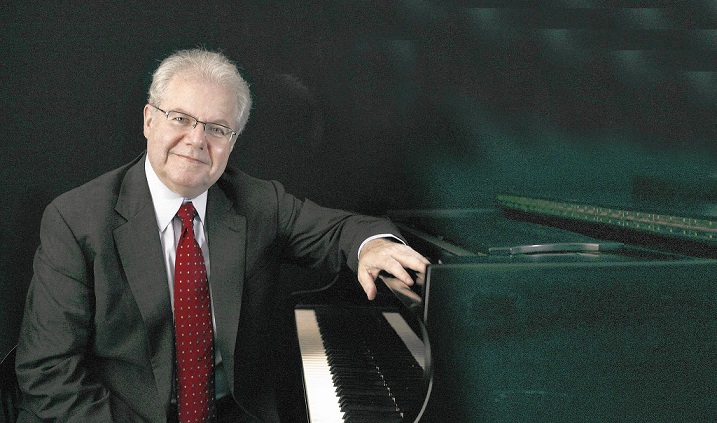
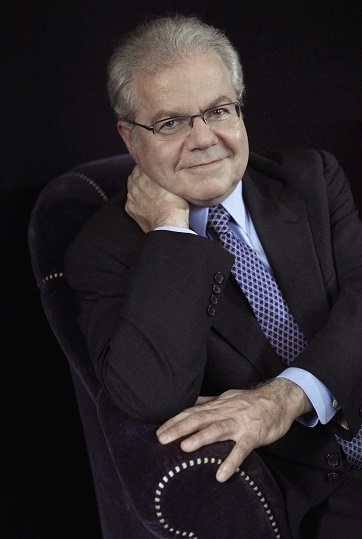
    Above: pianist Emanuel Ax

    ~ Author: Oberon

    Saturday October 26th, 2019 – How wonderful to encounter Emanuel Ax again so soon after his lovely performance of the Schumann piano quintet with the Dover Quartet last week at Zankel Hall. Tonight the great pianist joined The New York Philharmonic for Beethoven’s Piano Concerto #1.

    The announced program looked long on paper, and indeed – after an engrossing first half – there was something of a slump with Albert Roussel’s 3rd symphony. It’s understandable that Maestro Stéphane Denève would want to include it, but somehow it did not quite fit in with the other works: it didn’t hold hold up well in the company of Beethoven and Ravel.

    Jennifer+Higdon

    Above: composer Jennifer Higdon

    Jennifer Higdon’s blue cathedral, composed in 2000 in memory of her brother, opened the evening. Read the composer’s eloquent program note on this work here.

    blue cathedral opens with most ethereal of sounds: barely audible at first, the music slowly seeps into our consciousness. Cello, the plaintive flute, clarinet, piano, and harp bring their colours to bear; the strings are lush and grand, with the high violins set against the deep celli and basses. A massive wave of drums and low brass hits like a tsunami. The marimba, oboe, and Cynthia Phelps’ dusky viola are heard: each solo voice seems to evoke a particular memory of the departed.

    The music then becomes cinematic, with a back-beat dynamic. Brass fanfares lead to epic grandeur before calm sets in. Now the solo voices are heard again – flute, clarinet, oboe – and an especially fine passage for a cello/viola quartet as the music fades to the gentle chiming of a solitary bell.

    In her program note, Ms. Higdon wrote about her use of the clarinet, which was her brother’s instrument. It was in the passages for that instrument, sublimely played by the inimitable Pascual Martínez-Forteza, that Ms. Higdon’s moving tribute to her sibling found its most poignant voice.

    Emanuel Ax, ever a welcome guest at the Philharmonic, was warmly greeted as he took his place at the Steinway. The pianist sat quietly as the musical introduction – at first courtly, then stately – sets the mood. Mr. Ax then began his enchanting performance: crystal-clear arpeggios, subtly modulated, drew us in. Beethoven’s font of melody – both for the pianist and the orchestra – is filled to overflowing. In a long paragraph, the pianist displayed his gifts with nimble downhill scales played pianissimo, and cascades of notes of great delicacy, clarity, and warmth.

    Following a majestic orchestral passage, the long cadenza – which seems almost like a sonata in itself – was impeccably delivered, the audience in a state of rapt attentiveness. One sensed that an ovation might erupt at this point, but Maestro Denève was able to forestall an intrusion by keeping a cautionary hand raised.

    Now came the Largo, featuring one of Beethoven’s most gorgeous themes. For the next several minutes, my companion and I were transfixed by the ongoing dialog between Mr. Ax’s keyboard and Pascual Martínez-Forteza’s clarinet. Two great musicians, trading subtleties: mesmerizing! 

    Mr. Ax immediately commenced the concerto’s concluding Rondo: Allegro, bringing to mind – with its jaunty interjections – the ballet Prism which Helgi Tomasson choreographed to this score for New York City Ballet in 2000. The esteemed pianist continued to dazzle us right to the last note, causing the audience to leap to their collective feet as he took his bows; Mr. Martínez-Forteza was also asked to rise, deservedly so.

    An encore was demanded, and Mr. Ax sustained the ballet connection for me with his Chopin, used by Jerome Robbins in his ballet Dances at a Gathering.

    Stephane_Deneve_01_811x486

    Following the interval, Maestro Stéphane Denève (above) brought us two works by his fellow Frenchmen: Albert Roussel’s Symphony #3 (composed 1929-1930) and Maurice Ravel’s immortal La Valse, which premiered in 1930. 

    The Roussel at first seemed wonderfully refreshing: its jazzy, driven, bustling opening augured well for thorough enjoyment. Yet as the work unfolded, it seemed full of ideas but lacking in coherence. The first, second, and fourth movements each felt overly long, and there was a sense of increased audience restlessness. The piece features a lot of ‘big’ music; rhythmic variety and enticing instrumentation are never lacking. Though poignant, witty, and ebullient by turns, the music slips in one ear and out the other, leaving little lasting impression. Some wonderful solo passages for violin, played beautifully by Frank Huang, were appealing.

    Image

    Above: New York City Ballet’s Marika Anderson in George Balanchine’s La Valse

    “We are dancing on the edge of a volcano…” wrote Maurice Ravel’s in his notes for La Valse. Such a timely concept, as our world these days often seems to be rushing toward its doom. This music, which George Balanchine choreographed for his evocative “death and the maiden” ballet of the same title, has been with me for decades.

    Tonight’s performance, under Maestro Denève’s ardent baton, was everything one can hope for in this marvelous music. The musicians made the most of every opportunity, whether by solo or by section. La Valse again entranced with its dark allure and inevitability. Resistance is futile.

    As we were walking down to the subway, my friend Cherylyn Lavagnino and I both spoke of the effect that the playing of Mssrs Ax and Martínez-Forteza in the Beethoven adagio had on us, and of the consolation of such musical experiences in these dark days. Thank you, gentlemen.

    ~ Oberon

  • Dover Quartet|Emanuel Ax @ Zankel Hall

    Dover+Quartet+2+credit+Carlin+Ma

    Above: the Dover Quartet, photographed by Carlin Ma

    Author: Oberon

    Tuesday October 15th, 2019 – My first chance to hear the Dover Quartet live, in a finely-devised program at Zankel Hall that offered quartets by Britten and Brahms, plus the Schumann piano quintet with Emanuel Ax at the Steinway.

    Benjamin Britten’s String Quartet No. 1 in D-major was superbly rendered by the Dovers; their playing seemed to make an immediate and direct connection with the audience, who all evening were raptly attentive – and warmly appreciative.

    The opening passage of the Andante sostenuto finds the violins and viola blending in an ethereal, high-lying motif that evokes seabirds crying above a deserted beach. There is a feeling – not of loneliness, but of being alone – that is wonderfully evocative. The music then turns more vigorous, the players digging in over a steady rhythm. The mood shifts back to the otherworldly again, followed by a rich-textured paragraph with viola and cello playing in unison. A buildup of tension calms to a high pianissimo, and a coda resolves into a misty softness.

    In the Allegro con slancio, a soft pulsing underscores witty comments from each instrument; a sudden burst of joy in the music made me smile. A unison passage leads to a strutting dance; then, turning more subtle, the movement has a wry ending.

    A feeling of tranquility sets on with the Andante calmo, which is lulling and pensive. Octaves sound, violinist Joel Link takes up an achingly beautiful theme, and Camden Shaw’s cello sings poignantly. The music turns hymn-like. Violins and viola take phrases over an insistent cello plucking. The music ascends to the heights, and Milena Pajaro van de Stadt’s viola makes a lovely impression, and then Mr. Link’s violin rises to a sweet concluding high tone.

    In the last movement, Molto vivace, a witty theme is passed about, with plucking and strumming keeping things upbeat. The music’s driven and whimsical, with little shivers laced in. Banners of melody wave before us, and virtuosic bits lead on to a unison finish.

    The musicians did not leave the stage following the Britten; after acknowledging the audience’s appreciative applause – and having to rise a second time, thanks to prolonged applause – they commenced immediately on the Brahms quartet.

    Johannes Brahms’ Opus 67 – the String Quartet No. 3 in B-flat major – is one of those very pleasant works that does not always resonate for me. Tonight, from note one, the Dovers gave it a kind of freshness that made it seem new…like hearing it for the first time. And that’s saying a lot.

    The individual players shone in this music. The opening movement, Vivace, pairs the second violinist (Bryan Lee) with violist Milena Pajaro van de Stadt in a friendly doubles match against Joel Link (violino primo) and cellist Camdem Shaw. They trade duetting passages in a way that makes the term vivace ring true. Elsewhere, a recurring trilling motif from Mr. Link was a further enticement.

    In the Andante, Mr. Link makes  the gorgeous theme sound better than ever with his expressive playing. Here again, each voice makes its mark. The music ranges from pensive to urgent rising to a lovely “Amen” at the finish.

    The scherzo, here referred to (appropriately) as Agitato, opens with a surprisingly sad passage, but soon perks up.  Mr. Link revels in his dynamic range, and Ms. Pajaro van de Stadt’s viola is very prominent, her tone having an Autumnal glow but with a trace of grit tantalizingly thrown in here and there. She even has a sort of cadenza, the better for us to savour her playing. This movement ends on a sustained chord with a lovely feel of “settling”. 

    The Dover’s take on the opus 67’s theme-and-variations finale made me admire them all the more. Brahms weaves in themes heard earlier, and the music is sometimes quite meditative. Enthusiastic applause and cheers greeted the musicians as they took their bows.

    EA2215_LisaMarieMazzucco

    Following the interval, the inimitable Emanuel Ax (above, in a Lisa Marie Mazzuco photo) joined the Dover for Robert Schumann’s Piano Quintet in E-flat Major. This very familiar – and very marvelous – music seemed to flow like a limpid stream, the pianist setting the tone with his playing, which was both elegant and spirited.

    The Allegro brillante sets out dramatically, the cello and viola exchange plush-toned phrases. At the keyboard, Mr. Ax ‘s intrinsic gifts of timing and dynamic control are cause for delight. The listener could luxuriate in the Mozartean glow of the music, with passing wisps of dark cloud dispelled in a grand finish.

    The second movement, the dark clouds have lingered: it commences as a halting funeral march, and we feel the undertaker sneaking about. A sublime lyrical interlude follows, but then the lamenting march resumes. After being briefly invigorated, with the viola sounding forth and the piano in a rolling motif, the music resumes it funereal procession. Mr. Ax’s playing here is sublime.

    The Scherzo, its agile scales and lively arpeggios contrasting with a lyric interlude and a brief downcast passage, finally turns brilliant, with the feel of a gypsy dance. Sparkling playing from Mr. Ax here continued in the Allegro ma non troppo, which opens with an accented theme from the piano. Schumann juxtaposes dance-like gaiety with cunning lulls, and a fugue brings this entrancing work to a close.

    The audience responded to this stellar performance with a spontaneous standing ovation, laced with shouts of approval. The musicians were called out twice, and while we were all clearly in hopes of an encore, perhaps there’s nothing that could have followed that radiant Schumann.

    ~ Oberon

  • Aimard | Stefanovich @ Carnegie

    ~Author: Scoresby

    Thursday October 25 2018 – The difference between hearing a particular musician live versus hearing a recording of them can be extraordinary. For Pierre-Laurent Aimard and Tamara Stefanovich‘s two piano performance in Carnegie’s Zankel Hall, I was excited by the repertoire but unsure how it would be performed. Familiar with Mr. Aimard’s many recordings but never having heard him live, I have always thought of him as a thoughtful, but somewhat understated pianist. This duo proved me wrong in one of the most exciting and beautiful performances I’ve heard in the past few years. 

    Screen Shot 2018-10-26 at 7.00.51 PM
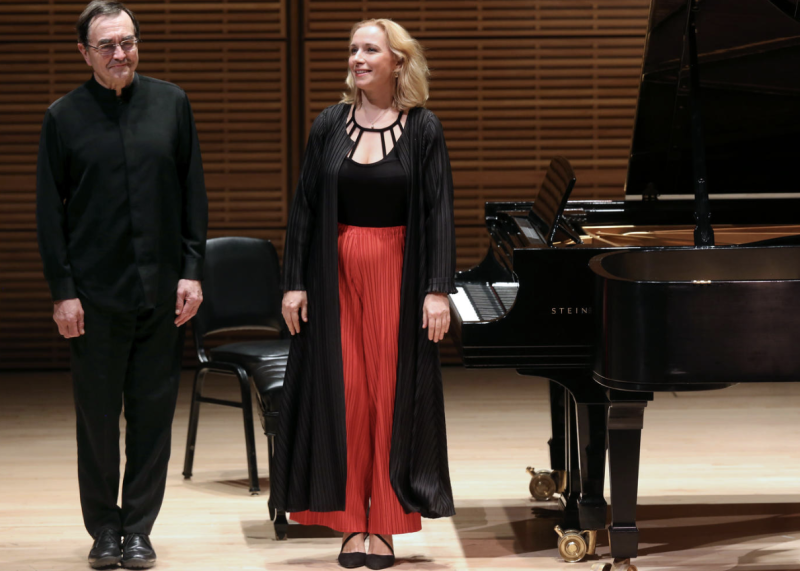
    Pierre-Laurent Aimard and Tamara Stefanovich during last night’s recital; Photo Credit: Steve Sherman

    This was a concert of equals, exchange, and contrasts. To begin the program, they selected seven works from Bartok’s Mikrokosmos. For those who haven’t studied piano, the Mikrokosmos occupy an odd place: wonderful short studies meant to illuminate aspects of technique/musical thinking ranging from the beginner (Book 1) to virtuoso performer (Book 6). Bartok made sure that each of these were compositionally interesting and many are imbued with folksy melodies.

    The short selection Ms. Stefanovich and Mr. Aimard drew from covered the range of styles. One was the Debussy like Chord and Trill Study in which Mr. Aimard played a constant Debussy-like trill to Ms. Stafanovich’s chordal melody. The light touch and exquisite pedaling made this short study shine. In the aptly named New Hungarian Folk Song (originally for voice and piano), they brought out the Messiaen-like textures in the base chords below the lyrical melody. To end the selections they played the Ligeti-like Ostinato trading accents and rhythms with each other. It was a nice launching point for the rest of the evening.

    Next was Ravel’s very early work Sites auriculaires which consists of a Habanera in the first movement and a second movement titled Between bells. In the Habanera, Mr. Aimard plucked out a sensual low pulse that is kept quietly moving through the movement while Ms. Stefanovich brought a clean sound to the more melodic part. The performers made the most of the luscious bell-like sonorities in the opening of Between bells that sound like later Ravel, full of whole tones with large dynamics. The silken middle section was given a soft pedaling and lots of space to let the notes resonate.

    The major work on the first half of the program was the US Premiere of Harrison Birtwistle’s Keyboard Engine, A Construction for Two Pianos. Like the rest of the program, this piece is a study in opposites: ranging from dynamics, thematic material between performers, rhythmic contrasts, toccata like lines paired with heavy chords, and many others. The two pianos seem split in this material – always interrupting the other with its contrast, sometimes aligning to produce a new sonority altogether. After a dodecaphonic sounding start of quiet repetitious notes the music roars to life with sudden loud dynamics in the extreme registers of the piano. The pianos are slowly exchanging a call and answer type format and the dialogue between them becomes more frenzied. After a brief respite with dreamy material, a rapid pace ensues with an ostinato that is punctuated by polyrhythms in both instruments. Both performers seemed to gleefully indulge interrupting the other’s lines and hitting giant chords in sync.

    These spacious and frenzied passages continue to alternate for the remainder of the work and each time a passage moves in to the opposite extreme it takes on slightly different material. Ms. Stefanovich and Mr. Aimard managed to capture the frenzy, intimacy, and mischievousness that this piece has – it would be fantastic for two dancers to stage given the many contrasts. One of my favorite sections was near the end when Mr. Aimard’s piano begins to create sympathetic vibrations with the other piano by holding down specific keys with the sustain pedal. These transfers of sound and timbre gave a bell like quality to some of Ms. Stefanovich’s chords. I found myself transfixed in the jazzy riffs of rhythm and spinning themes of the piano. It must take incredible coordination to pull off such an assured performance of this work that seemed to be perfectly both in and out of sync. It was a pleasure to see both pianists studying each other carefully for cues.

    Screen Shot 2018-10-26 at 6.55.43 PM
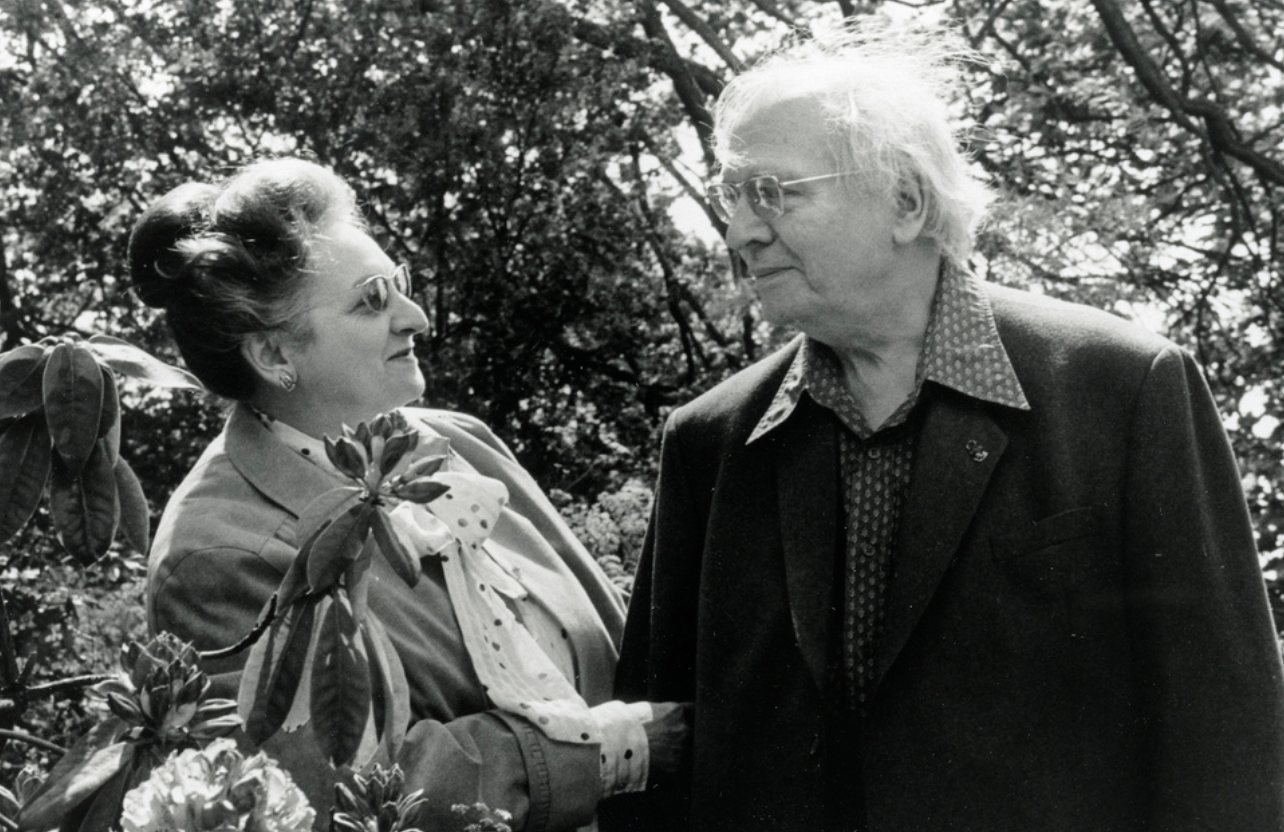
    Above: Loriod and Messiaen many years later, still in love

    The treat of the evening came after intermission in the form of Messiaen’s Visions de l’amen. This sprawling seven movement, 50-minute (small for Messiaen’s standards) work is a classic two piano piece with each of the movements dedicated to a vision of a reason to be thankful (or an amen as Messiaen puts it) – this is a cosmic, mystical piece of music in a way only Messiaen can deliver. Like the Birtwistle work, each piano has its own distinct voice – a fleeting, fast ethereal part that was written for Messiaen’s future wife Yvonne Loriod and an earthier chordal part written for himself. Ms. Loriod was perhaps the greatest contemporary music pianist of the 20th century and the dedicatee of almost all of Messiaen’s piano music – they had a partnership of equals. Ms. Stefanovich took on Loriod’s voice and Mr. Aimard took Messiaen’s.

    Before the opening Amen of creation, the performers took a good two minutes on stage letting the audience quiet down and the rumbling of the subway beneath to pass before beginning. Mr. Aimard managed to make the ppp in the score for his primordial opening sound like a whisper coming out of the slight noise from the crowd earlier before introducing the main melodic theme of the work. Meanwhile, the pppp high-pitched bells from Ms. Stefanovich rang in a soft, but lucid texture. The creeping in Ms. Stefanovich’s part is classic Messiaen – a song of the stars that is continually moving atop Mr. Aimard’s expanding chords. The interaction between the two is like light hitting stained glass and creating refractions – the light being Ms. Stefanovich’s bending colors. The music continued getting faster and louder as the “Creation” unfolded until the resonance from the piano held in the air with one last loud chord. In the next movement’s long introduction, Mr. Aimard nailed the jazzy harmonies and riffs barrowed from the Quartet from the End of Time’s sixth movement in the low register. Ms. Stefanovich’s managed to play through the rapid bird like sequences in the high reaches of the piano in a sing-song fashion in perfect time with beefy chords from Mr. Aimard. This exchange and dialogue of thematic material was so much fun to both watch and hear.

    One of my favorite moments from the evening was after the first outburst of passion in the Amen of desire. The music got very quiet producing a moment of éblouissement. Mr. Aimard played a tender love theme while Ms. Stefanovich in the tinkled a taught, but honeyed variation of the original ‘star’ melody in the upper registers. The quiet sensitivity of Ms. Stefanovich’s made the music sing. This gave way to a loud run of manic, effervescent love at the climax of the movement with both performers seemingly investing all of their energy. It was clearly that this work is personal to both of them. Only the ending of the Amen of the consummation got even louder, more manic, and extreme in its sound.

    Screen Shot 2018-10-26 at 7.02.18 PM
    Pierre-Laurent Aimard and Tamara Stefanovich; Photo Credit: Steve Sherman

    Through all the dense textures, both performers managed to emphasize Messiaen’s stunning language taking through the virtuosic runs of Ms. Stefanovich’s high register and the huge chords of Ms. Aimard’s lower register. In the fffff final, organ like chords spanning the register of the entire piano the audience gave a well-deserved rapturous applause before the notes even decayed. They ran the gamut of textures, timbres, and emotions – ending in exaltation. As one more conservative in taste neighbor near me put it “I never thought I’d like that sort of modern music, but hearing that piece in person was like a religious experience!” Indeed it is and it is difficult to get a sense of the proportions of such a piece from a recording.

    — Scoresby

    The Performers:

    Pierre-Laurent Aimard, piano

    Tamara Stefanovich, piano

    The Repertoire:

    Bartók: Seven Selections from Mikrokosmos

    Ravel: Site auriculaires

    Birtwistle: Keyboard Engine, A Construction for Two Pianos

    Messiaen: Visions de l’amen

  • Dorothea Röschmann @ Zankel Hall

    Dorothea-Roschmann

    Above: soprano Dorothea Röschmann

    ~ Author: Oberon

    Tuesday February 13th, 2018 – Soprano Dorothea Röschmann in recital at Zankel Hall, with Malcolm Martineau at the piano. This was an evening of music-making of the highest order, for both soprano and pianist are masters of their art, and communicators sans pareil.

    Ms. Röschmann made her Metropolitan Opera debut in 2003 as Susanna in NOZZE DI FIGARO and subsequently performed three more Mozart roles there: Pamina, Ilia, and Donna Elvira. She last sang at The Met in 2008. Elsewhere, of late, she has ventured into heavier repertoire including the roles of the Marschallin and Desdemona. I had not heard her live since the Met IDOMENEO, and was very much hoping I would enjoy this re-connection as much as I did hearing her then. She surpassed my highest hopes.

    What I loved most about Ms. Röschmann’s singing this evening was her fascinating employment of her vibrato as a means of expression. Within a given phrase, she could mete out the vibrancy, hone it down to straight tone, or unfurl it to full dramatic effect; this gave her singing a panoramic emotional range, from vulnerable or pensive to unstinting grandeur. It’s a wonderfully feminine voice, and her diction and her shading of the texts drew us deeply into each song.

    Commencing with Schubert, the soprano’s vibrato in “Heiss mich nicht reden” as the very first seemed a bit  prominent; yet by mid-song, Ms. Röschmann’s intuitive manipulation of it was already making its effect. “So lasst mich scheinen” with its gentle start, was lovingly sung. Mr. Martineau’s introduction to “Nur wer die Sehnsucht kennt” set the mood for Ms. Röschmann’s singing: so poignant, with the passing anxiety at separation from her beloved fading back to melancholy. The familiar “Kennst du das Land” was magnificent in every way, expressive of the poem’s varying moods, with delicious lower notes and the words so clear and finely-coloured; and Mr. Martineau here was divine.
     
    Singer and pianist left the stage briefly before returning for the final Schubert, “Nachtstück“. This night-song, sung by an old man wandering the woods as Death hovers about him, took on an operatic aspect with Mr. Martineau’s atmospheric playing of the introduction, and the sense of mystery in the soprano’s haunting – and then expansive – singing. The piano evokes the sound of the old man’s harp as the song winds thru major/minor modulations: such moving music to experience.
     
    1024
    Above: pianist Malcolm Martineau, photographed by Thomas Oliemans 
     
    In Mahler’s Rückert Lieder, Ms. Röschmann’s gifts as a storyteller were abundantly evident. From the playful “Blicke mir nicht in die Lieder” and the gently magical, Springlike joy of “Ich atmet’ einen linden Durftt“, with Mr. Martineau’s sweet postlude, soprano and pianist moved to the drama of “Um mitternacht“. This was  profoundly delivered, Ms. Röschmann summoning rich tone for a great outpouring of sound, all the while keeping us under her spell with varying degrees of vibrato; Mr. Martineau’s playing matched the singing in all its glory.
     
    In “Liebst Du Um Schönheit“, the soprano chose to linger slightly from time to time, giving the song a delicious individuality of expression. Then, with the final Mahler, “Ich bin der Welt abhanden gekommen“, the intrinsic and somewhat unusual beauty of Ms. Röschmann’s voice made this beloved, meaningful poem utterly personal. A touch of lightness here and there was enchanting, her singing so thoughtful and womanly. The end of this song can sometimes be shaded with resignation, but in Ms. Röschmann’s moving singing of the final lines, we instead feel her sense of deep contentment. Mr. Martineau beautifully sustained the poetry with his transportive playing of the postlude.   
     
    The second half of the program was given over to songs with words written by women. Robert Schumann’s Gedichte der Königin Maria Stuart, Op. 135. are settings to texts drawn from the letters of Mary, Queen of Scots, written at significant points in her tragic life. Presage of disaster seems a constant force in the Queen’s story, right from her birth. In these Schumann settings, we move from a wistful farewell to France and a hopeful prayer marking the birth of her son, to a dramatic letter Mary wrote to her cousin, Elizabeth I – the cousin who would eventually betray Mary Stuart to her death. This very dramatic song was vividly rendered by Ms. Röschmann and Mr. Martineau, who then progressed to the scene of Mary’s impending execution: in “Abschied von der Welt” – the Queen’s farewell to the world – the pianist’s colourings of reflection and resignation were ideal. The final “Gebet” is a prayer for her own soul: eighteen years a prisoner, Mary Stuart is at last set free by Death. Ms. Röschmann really lived these songs, so deeply that in the end she truly seemed in a trance.       
     
    To hear Ms. Röschmann and Mr. Martineau performing Richard Wagner’s Wesendonck Lieder was an experience to cherish. At a point in time when the Metropolitan Opera seems to be so stinting with their Wagner offerings (only PARSIFAL this season), we are always eager to hear the Master’s music where- and when-ever possible.
     
    Just now I am reading Judith Cabaud’s lovely/sad biography of Mathilde Wesendonck, the beautiful young poetess whose relationship with Wagner – whether physical or spiritual – hastened the demise of the composer’s first marriage and, in a way, set the stage for Wagner’s finding his soulmate in Cosima Von Bülow.
     
    Whilst Wagner was living in a small house on the Wesendonck’s Swiss estate, the lives of the composer and Fray Wesendonck became entwined. Mathilde was the inspiration for TRISTAN UND ISOLDE; each day, Wagner would send her a page or two of this opera which he was writing with such feverish diligence. This inspired Mathilde to write a series of poems, which she sent to Wagner, one by one, and which he instantaneously set to music. Then one day, a note from Wagner to his muse was intercepted by Minna Wagner’s servant and that was the beginning of the end – of both the Wagners’ marriage and of his living as the Herr Wesendonck’s guest.
     
    And so we are left with this set of five songs, so marvelously moving in their atmosphere of romantic longing. They were eventually orchestrated, and that is how they are most often heard these days. But my very first exposure to the Wesendonck Lieder came in 1970 when I attended a recital by Dame Janet Baker at Syracuse, New York. Martin Isepp was the pianist. It was a performance I’ll never forget, and hearing this music live again tonight had a “full-circle” feeling, nearly fifty years on.  
     
    Ms. Röschmann and Mr. Martineau put us deeply under a Wagnerian spell, commencing with “Der Engel” in which the Röschmann voice entranced with its flickering vibrato, its velvety lower tones, and her expressive power of the poetic. The agitation of “Stehe still!” commenced some sensational playing from Mr. Martineau, and, as the music turned more lyrically yearning, Ms. Röschmann’s singing took on a very personal intimacy, her lower tones having a sensuous smoulder. Mr. Martineau, at the song’s end, was so evocative.
     
    With “Im Triebhaus” we are suddenly borne away to Castle Kareol, the wounded Tristan’s lonely childhood home, where he now awaits his Isolde. The musical introduction to this song was lifted by Wagner directly into the prelude of TRISTAN‘s third act. Here, yet again, the blessings of Ms. Röschmann’s way with words were invaluable. The piano’s harmonic modulations and voice’s gradations of both vibrancy and dynamic created a whole world, with the pianist incredibly poignant. The Röschmann lower notes continued to strike a particularly sensitive spot in my spine, producing tremblings of emotion. And Mr. Martineau’s finishing notes were to die for.
     
    With the passions of “Schmerzen“, Ms. Röschmann’s deeper tones literally tore at the heart, whilst ecstatic playing from Mr. Martineau left the soprano beaming radiantly as the song drew to its close. She lingered in a dreamlike state as the pianist set forth the opening bars of “Träume“. By this point I was breathless, drunk on the sheer beauty of the music, Ms. Röschmann’s heavenly singing, and the tenderness of Mr. Martineau’s playing. Could I not now stay here in their world, in this realm where Wagner and his Mathilde found sanctuary?
     
    My return to reality was blessedly buffered as the deep, very cordial applause of the crowd drew the singer and pianist back for three encores – Liszt, Schumann, and (I believe) Schubert – each lovelier than the last. That we have such music in the world, and such musicians to bring it to us, counts for so much in this day and age.
     
    ~ Oberon

  • Danish String Quartet @ Zankel Hall

    Danish-Quartet

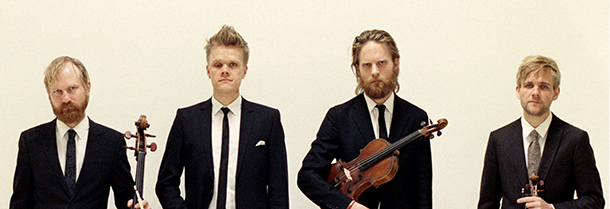
    Wednesday October 26th, 2016 – The Danish String Quartet (above) in concert at Zankel Hall in a program pairing final masterworks by Shostakovich and Schubert, with cellist Torleif Thedéen joining the Quartet for the Schubert. It was an extraordinary evening of music-making, with the two vividly contrasted pieces superbly played.

    The program opened with a performance of the last of Shostakovich’s fifteen quartets. Composed in 1974, it consists of six inter-connected movements and has the mood of a farewell to life; indeed, the composer died the following year, after a career periodically darkened by deep conflicts with the Soviet government. The ailing Shostakovich created a work of lyrically spare, bleak textures alternating with violent rhythmic gestures.

    The atmosphere of the 15th quartet precludes note-taking; from its quiet opening passage played by the second violin, we are drawn into a unique sound-world of severe beauty and grim intensity. The Danish String Quartet’s playing of the opening movement – which the composer indicated should be performed so slowly that listeners would flee the hall out of boredom – took on an almost religious aspect: a sustained and intimate meditation.

    The Quartet’s hallmark mastery of dynamics, the natural flow of the music from voice to voice, and their finely-balanced layering of sound, created an incredible atmosphere which was sustained throughout the 40-minute work. Moments of great delicacy stood in contrast to jagged slashings; an off-kilter waltz, sustained notes that spring out of nowhere, vibrant trills, a resonant viola cavatina, deep passion from the cello, an overall sense of desolation. Despite a few Playbill-flippers seated near me, the audience was held in a rapt state throughout the piece; the applause – deep and sincere, but not boisterous – signaled the impact the music and the musicians had made.

    Feeling both drained and enriched by this monumental musical experience, I remained in my seat throughout the intermission, deep in thought.

    Following the interval, the Schubert string quintet in C-major, with cellist Torleif Thedéen joining the ensemble. This quintet, written in 1828, was Schubert’s last extended piece of chamber music. It seems that the composer never heard this final masterwork performed; he died on October 2nd, 1828, and the quintet was not performed publicly until 1850.

    One of the longest works in the chamber music repertory, Schubert’s C-major quintet sounds more like a celebration of life than a prelude to death. The composer was desperately ill while composing it, but the work has a feeling of optimism – as though he felt he might actually re-bound and compose for another 30 or 40 years. It was not to be, and – as with Mozart, Chopin, and Pergolesi – we are left to ponder what might have been. 

    The Danish String Quartet’s traversal of the Schubert was so persuasive both in tonal beauty and rhythmic inflection that the work sped by. The songful-to-stormy opening movement, with its return to tranquility in C-major, is followed by one of music’s most marvelous adagios, underscored by plucked lower notes. The players seemed to be having serious fun in the Scherzo, and then moved on to the gypsy-flavour of the finale.

    At the close of the Schubert’s joy-filled final Allegretto, the Danes were given an enthusiastic ovation from the audience. The players responded with an encore: a lyrical, chorale-like quintet that was lovingly played.

    The Participating Artists:

    The Danish String Quartet:

      ~ Frederik Øland, Violin
      ~ Rune Tonsgaard Sørensen, Violin
      ~ Asbjørn Nørgaard, Viola
      ~ Fredrik Schøyen Sjölin, Cello

    Torleif Thedéen, Cello

    The Repertory:

    • SHOSTAKOVICH String Quartet No. 15 in E-flat Minor, Op. 144
    • SCHUBERT String Quintet in C Major, D. 956

  • Bronfman & Braunstein @ Zankel Hall

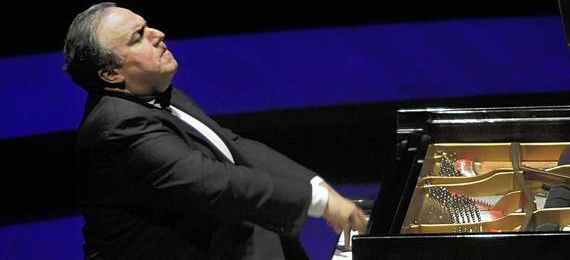
    Yefim-Bronfman

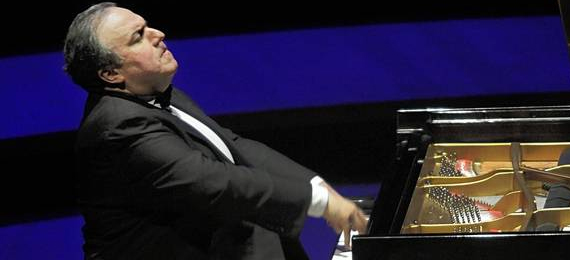
    Saturday June 18th, 2016 – Yefim Bronfman (above) concluding a Prokofiev piano sonata cycle at Zankel Hall this evening, playing the 5th and 9th sonatas. Violinist Guy Braunstein joined Mr. Bronfman for the two Prokofiev violin sonatas.

    After passing some days in a state of reclusive depression over the Orlando shootings, I ventured out tonight even though I was not really in the mood for it. But Bronfman is one of my most-admired musicians, and Prokofiev among my favorite composers, so I felt a strong desire to be there. Prokofiev’s music is not consoling, as a rule, though there are passages that reach to the soul, especially in the Andante of the second violin sonata, where Mr. Braunstein was at his finest this evening.

    Watching Yefim Bronfman perform is a particularly pleasing experience for me. He walks out, bows genially, sits down, and he and the keyboard become one. There are no frills, and no theatricality in his playing: it’s all about the music and his communing with it. Very brief pauses between movements keep the impetus of the music – and our delight in it – in true focus.

    Bronfman’s rendering of the 5th piano sonata was deeply satisfying, the audience engrossed as he immersed himself in the music’s ever-shifting melodic and rhythmic elements. This was exactly the ‘great escape’ from world-weariness I so desperately needed tonight. From its songful start, the opening Allegro tranquillo was a complete delight: the touches of dissonance adding spice, with wit, irony, and drama all having their say. A delicate march heralds the Andantino, with fetching trills, before things get darker and more emphatic, leading to a low-rumbling of a finish. By turns jaunty, lyrical, and pungent, the concluding Poco allegretto was polished off with Bronfman’s inimitable clarity and grace, the music seeming to vanish into a dream at the end.

    Hqdefault

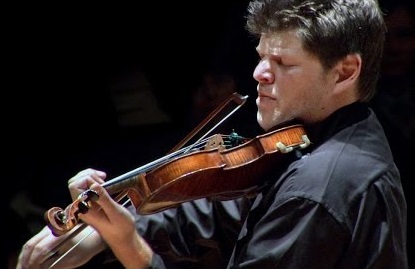
    Above: Guy Braunstein

    Mr. Braunstein then joined the pianist for the violin sonata #1. Here the piano’s somber opening of the Andante assai gives way to a rather hesitant start for the violin, with some buzzing trills before things expand to a rather labored passage. Then the piano’s misterioso murmurs underpin the violin’s sliding scales. The emphatic start of the Allegro brusco drew some energetic foot stamping from Mr. Braunstein as the turbulence envelops us; and then suddenly his violin sings a lusty song. After re-grouping and re-energizing, the music turns more pensive – but only briefly: a riotous dance ensues, subsiding into lyricism before another dramatic surge.

    The Andante features a shimmering piano motif as the violin sings in the alto range; both instruments move to the higher spheres in a unison passage, which eventually goes very high indeed. Back to the alto colourings for more of the violin’s forlorn phrases. High and lilting, the piano signals the movement’s soft ending. A sprightly jig sets off the finale, calming eventually and leading to a delicate pizzicati paragraph. Some lively scrambling makes us think the end is nigh, but instead the violin’s mute goes on and rolling scales summon an impression of “the wind in a graveyard”; the sonata ends sadly.

    The performance drew an enthusiastic response from the sold-out house; a bit of iffy intonation from the violin in places mattered little in the end, since Braunstein’s mixture of poetry and vigor made the music so savorable. 

    Following the interval, Mr. Bronfman returned for the 9th piano sonata. The first movement starts gently, and continues amiably, though there’s an underlying restlessness. More expansive passages, and some low, rumbling scales lead to an eventual quiet finish. The second movement is scherzo-like, with rippling scales and a jogging rhythm; a pensive passage, more jogging, and another soft ending.

    The Andante tranquillo brought forth more Bronfman magic: a wistful melody, followed by a glittering brilliance that subsides to mystery and then to sadness. From deep rumblings, the music rises to a high melancholy. After a big start, the Allegro finale turns ironic; “shining” music gleams forth, surrendering to mirth, percolating on high, whispering a farewell. Here Bronfman’s virtuosity and subtle colorations were at their most alluring.

    To end the evening, Prokofiev’s second violin sonata, which had started life as a flute sonata, and which David Oistrakh had prevailed on the composer to re-cast for violin in 1943. This familiar work was played with a wonderful melding of the two instruments, the players so alert to one another and marking the beauty of the Andante with glowing sound. Traces of my earlier concerns about pitch in the violin line cropped up again, but my pianist-companion seemed to feel that the issue was minor, and so I let the energy and optimism of the Allegro con brio the finale carry me along…together with the rest of the crowd, who swept to their feet at the finish to salute the generous playing and the final expression of joie de vivre from the two players.

  • Bronfman & Braunstein @ Zankel Hall

    Yefim-Bronfman

    Saturday June 18th, 2016 – Yefim Bronfman (above) concluding a Prokofiev piano sonata cycle at Zankel Hall this evening, playing the 5th and 9th sonatas. Violinist Guy Braunstein joined Mr. Bronfman for the two Prokofiev violin sonatas.

    After passing some days in a state of reclusive depression over the Orlando shootings, I ventured out tonight even though I was not really in the mood for it. But Bronfman is one of my most-admired musicians, and Prokofiev among my favorite composers, so I felt a strong desire to be there. Prokofiev’s music is not consoling, as a rule, though there are passages that reach to the soul, especially in the Andante of the second violin sonata, where Mr. Braunstein was at his finest this evening.

    Watching Yefim Bronfman perform is a particularly pleasing experience for me. He walks out, bows genially, sits down, and he and the keyboard become one. There are no frills, and no theatricality in his playing: it’s all about the music and his communing with it. Very brief pauses between movements keep the impetus of the music – and our delight in it – in true focus.

    Bronfman’s rendering of the 5th piano sonata was deeply satisfying, the audience engrossed as he immersed himself in the music’s ever-shifting melodic and rhythmic elements. This was exactly the ‘great escape’ from world-weariness I so desperately needed tonight. From its songful start, the opening Allegro tranquillo was a complete delight: the touches of dissonance adding spice, with wit, irony, and drama all having their say. A delicate march heralds the Andantino, with fetching trills, before things get darker and more emphatic, leading to a low-rumbling of a finish. By turns jaunty, lyrical, and pungent, the concluding Poco allegretto was polished off with Bronfman’s inimitable clarity and grace, the music seeming to vanish into a dream at the end.

    Hqdefault

    Above: Guy Braunstein

    Mr. Braunstein then joined the pianist for the violin sonata #1. Here the piano’s somber opening of the Andante assai gives way to a rather hesitant start for the violin, with some buzzing trills before things expand to a rather labored passage. Then the piano’s misterioso murmurs underpin the violin’s sliding scales. The emphatic start of the Allegro brusco drew some energetic foot stamping from Mr. Braunstein as the turbulence envelops us; and then suddenly his violin sings a lusty song. After re-grouping and re-energizing, the music turns more pensive – but only briefly: a riotous dance ensues, subsiding into lyricism before another dramatic surge.

    The Andante features a shimmering piano motif as the violin sings in the alto range; both instruments move to the higher spheres in a unison passage, which eventually goes very high indeed. Back to the alto colourings for more of the violin’s forlorn phrases. High and lilting, the piano signals the movement’s soft ending. A sprightly jig sets off the finale, calming eventually and leading to a delicate pizzicati paragraph. Some lively scrambling makes us think the end is nigh, but instead the violin’s mute goes on and rolling scales summon an impression of “the wind in a graveyard”; the sonata ends sadly.

    The performance drew an enthusiastic response from the sold-out house; a bit of iffy intonation from the violin in places mattered little in the end, since Braunstein’s mixture of poetry and vigor made the music so savorable. 

    Following the interval, Mr. Bronfman returned for the 9th piano sonata. The first movement starts gently, and continues amiably, though there’s an underlying restlessness. More expansive passages, and some low, rumbling scales lead to an eventual quiet finish. The second movement is scherzo-like, with rippling scales and a jogging rhythm; a pensive passage, more jogging, and another soft ending.

    The Andante tranquillo brought forth more Bronfman magic: a wistful melody, followed by a glittering brilliance that subsides to mystery and then to sadness. From deep rumblings, the music rises to a high melancholy. After a big start, the Allegro finale turns ironic; “shining” music gleams forth, surrendering to mirth, percolating on high, whispering a farewell. Here Bronfman’s virtuosity and subtle colorations were at their most alluring.

    To end the evening, Prokofiev’s second violin sonata, which had started life as a flute sonata, and which David Oistrakh had prevailed on the composer to re-cast for violin in 1943. This familiar work was played with a wonderful melding of the two instruments, the players so alert to one another and marking the beauty of the Andante with glowing sound. Traces of my earlier concerns about pitch in the violin line cropped up again, but my pianist-companion seemed to feel that the issue was minor, and so I let the energy and optimism of the Allegro con brio the finale carry me along…together with the rest of the crowd, who swept to their feet at the finish to salute the generous playing and the final expression of joie de vivre from the two players.