Tag: Zlatomir Fung

  • Cellist Zlatomir Fung @ Weill Hall

    Zlatomir-Fung

    Tuesday October 19th, 2021 – One of my favorite musicians, Zlatomir Fung, made his Carnegie debut this evening at Weill Hall, a red-letter event for me. Zlatomir, whose unique name derives from his Bulgarian and Chinese-American parentage, was the first American in four decades – and the youngest cellist ever – to win first prize at the International Tchaikovsky Competition in 2019.

    I first heard Mr. Fung in a Young Concert Artists recital at Merkin Hall in February 2019, and was captivated by his remarkable talent. Read about the evening here.
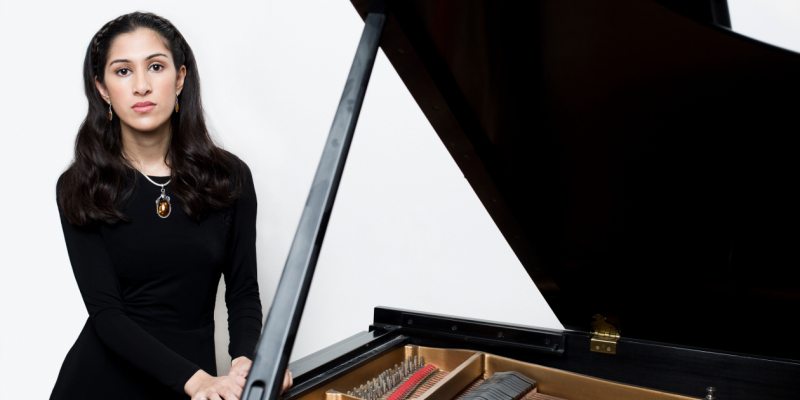
    Mishka

    Joined at Weill Hall this evening by pianist Mishka Rushdie Momen (above), the cellist gave us a marvelous program of classics from the Romantic period. The concert was sold out, and the audience’s rapt attention was a tribute both to the music and to the musicians. 

    Robert Schumann’s Adagio and Allegro, Op. 70, was composed in 1849. The pensive adagio, heart-tugging in its emotional expressiveness, gives way to the lively and passionate allegro, a deft flow of music that sometimes looks back to the opening movement. From note one, I was transfixed by Mr. Fung’s achingly beautiful playing, which drew me – and my fellow audience members – immediately in to the music.

    Franz Schubert’s Sonata in A-Minor, D. 821, “Arpeggione“, was written in 1824, soon after the beloved song cycle Die Schöne Müllerin and shortly before the C-major symphony.

    The sonata’s opening movement is a songful allegro moderato, tinged with a feel of nostalgia. A dance springs up, with a folkish flavor, and a passage of staccati from the cello aligns with sparkling notes from the piano. The movement continues, shifting between sadness and joy…a sort of reflection on the times in which we are living. 

    From its poignant opening, the sonata’s central adagio found Mr. Fung at his most persuasively eloquent as the music carried him across a wide dynamic range, leaving the listener in awe of his sustained, finely nuanced phrasing. Ms. Momen was a ideal companion. This was music-making of the highest calibre.  

    The concluding allegretto is energetic, at times having with a somewhat jaunty feel; both players displayed great  nimbleness, dancing us along to a surprisingly subdued finish. 

    Antonín Dvořák’s “Silent Woods“, Op. 68, No. 5, was – to me – the heart of the evening; subtle dynamic shadings from both players constantly allured the ear, and the astonishing resonance in Mr. Fung’s playing reached the depths of my soul. A dance-like passage gives way to a wave of passion; this subsides only to sweep over us again moments later. Mr. Fung’s glorious descending phrase at the end was thrilling.

    The musicians took only the briefest of breaks between works, but they seemed wonderfully fresh as they returned to the Weill Hall stage for the program’s concluding work: César Franck’s epic and very demanding Sonata in A-major. The cellist Jules Delsart was so moved when he first heard this sonata in its original violin setting that he obtained the composer’s permission to arrange the work for his own instrument. This arrangement was published in 1887.

    The sonata’s opening Allegretto ben moderato joins two themes: one for the cello and one for piano. These themes, especially the cello’s, will return in the following movements. The players seemed to gently bend the melodies, putting a personal stamp on this familiar music. 

    Turbulence rises for the second movement, a dramatic scherzo, in which the restless piano is over-lain with a vivid, dramatic passage for the violin. Lyrical moments, featuring this sonata’s second well-loved theme, come and go. From a veritable feast of notes, passion rises with the great melody sounding forth. Becalmed, deep resonance from the cello lingers briefly, then another rise to a triumphant finish.

    The Recitativo-Fantasia brings back sonic images from the previous movements. There is a feeling of improvisation here which leads in a slow buildup to another haunting melody for the cello. Then the final Allegretto con moto commences with the piano and cello seemingly exchanging thematic thoughts. Things grow turbulent again, and earlier themes resurface, all leading to a vibrant, joyous ending.

    Enthusiastic applause, the audience standing, brought Mr. Fung and Ms. Momen back for an encore: a Nocturne by Alexander Borodin which was unfamiliar to me. This was elegantly played, with appealing dynamic shifts and a spine-tingling tremelo passage from the cellist. As throughout the evening, I loved watching Mr. Fung’s expressive face as he played; he seemed to be communing with Saint Cecilia, all to the greater glory of the music.

    ~ Oberon

  • Zlatomir Fung @ XVI Tchaikovsky Competition

    Zlatomir+Fung+1_Photo+by+MattDine+dmf

    Zlatomir Fung (above, in a Matt Dine photo) has won First Prize in the cello division at the 2019 Tchaikovsky Competition. Established in 1958, and held every four years in Moscow and St. Petersburg, the Competition has – over time – added categories of cello and voice to the initial competitions for pianists and violinists.

    Earlier this year, I had the great pleasure of attending Mr. Fung’s New York recital debut under the auspices of Young Concert Artists.  It was an outstanding evening of music-making, and it did not surprise me in the least to learn today that the young cellist has seized the top prize at the Tchaikovsky: he’s simply phenomenal.

    Mr. Fung and pianist Tengku Irfan played Gabriel Fauré’s Après un rêve as an encore at their Merkin Hall YCA recital in February of this year. Listen to it here.

    ~ Oberon

  • Young Concert Artists: Zlatomir Fung

    Fung_Zlatomir5CreditMattDine-1140x642

    Above: cellist Zlatomir Fung, in a Matt Dine photo

    ~ Author: Oberon

    Tuesday February 19th, 2019 – Young Concert Artists presenting cellist Zlatiomir Fung in his New York debut recital at Merkin Hall. Tengku Irfan was the pianist for this wide-ranging, thrillingly-played program.

    “Young” was the operative word tonight. And both of these musicians disprove the old adage that ‘youth is wasted on the young’; they have spent their teen years developing their talent, and building impressive performance résumés. Now they are ready for anything.

    Mr. Fung, a native of Oregon, reveals a charming personality in this Q & A from the Violin Channel. Of Bulgarian and Chinese heritage, the earnest 19-year-old cellist was greeted by enthusiastic cheers from the packed house when he walked onstage at Merkin Hall tonight. In the course of his opening work – four of the Eleven Capricci for Solo Cello by Joseph Dall’Abaco – Zlatomir Fung established himself as both a poet and virtuoso of the highest order.

    These Dall’Abaco works are a very pleasant alternatives to the Bach cello suites with which cellists so often open their recital programs. Mr. Fung displayed clean, warmly resonant tone, a gift for dynamic finesse, and a depth of feeling that seemed remarkable in one so young. In the first Capriccio, trills and grace notes were deftly etched into the musical line. To end his set of four, Mr. Fung chose the 11th, which includes passages of demented agitato, played with great fervor. As applause engulfed the cellist, he took a spot among my top five players of the instrument…or maybe even…my top three? 

    Pianist Tengku Irfan – slender of frame and looking far younger than his score of years – then joined Mr. Fung for a revelatory performance of Enest Bloch’s Baal Shem. This music was new to me; the passion and tenderness with which the two artists played it made a direct connection to my soul.

    Ernest Bloch, a native of Switzerland, was a young violinist on tour in the USA when, falling short of money, he got stranded in New York City and decided to stay here. Moved by a Hasidic Jewish service he attended in 1919, Bloch wrote the Baal Shem, subtitled “Three Pictures of Hasidic Life.

    During the opening Vidui, I was so mesmerized by the playing of Mssrs. Fung and Tengku that I couldn’t write even the briefest note about the music; all I can say is that it moved me deeply – both the music itself and the playing of it. The piano introduction to the ensuing Nigun – masterfully played by Irfan Tengku – leads to music-making of searing intensity from both players. A series of descending trills for the cello took my breath away. In a complete mood swing, the concluding Simchas Torah has a very optimistic feel: an almost romantic-style passage leads to dancing and ultimately to passion. With a tumult of cheers and applause, the audience saluted the two musicians after this spell-binding performance. 

    In a remarkable display of what a cello can do, Mr. Fung gave a triumphant performance of Luciano Berio’s Sequenza. From his opening tapping, patting, and slapping of his cello, Mr. Fung creates all manner of sound effects – shivering, squeaking, barking, scratching, gliding – as the piece proceeds. Mixed in are brief touches of whispered pianissississimo, including an ultra-quiet ending. This bravura showcase knocked the audience for a loop; Mr. Fung took a bow amid a din of enthusiasm.

    Following the interval, the pianist and cellist gave the premiere performance of Prelude by Katherine Balch, the current YCA Composer-in-Residence. This was my second hearing of music by Ms. Balch, and again it struck me as finely-crafted music from a composer who has perhaps not yet found her own distinctive voice.

    From a turbulent start, we go on a magical mystery tour and – via some strong accents – to noisy music that works both players into a frenzy. The gimmick of having the pianist reach inside the piano to produce isolated sounds has been done before – I never get the point of it – but a mad cello cadenza gives the piece a spark. An amusing sour taste sets in as some intentionally ambivalent pitches crop up. Drifting onward, Prelude leads without pause into the evening’s final work: the Brahms Cello Sonata in E-minor, Opus 38.

    TengkuIrfanpianolad001_1533856206

    Above: pianist Tengku Irfan, photo by Owee Ah Chun

    In the Brahms, the partnership of cellist and pianist showed yet again how finely matched these two musicians are. It’s a bit of an odd sonata, in that there’s really not a ‘slow’ movement per se. But the opening Allegro non troppo (actually very ‘non troppo’) makes up for it: it has a darkish glow with a poignant, wistful melodic line. The pianist here was a marvel, and Mr. Fung summoned incredible depth of tone from his cello. The second movement is a Menuetto that sometimes teasingly has the air of a waltz; the musicians play at times in unison. Mr. Tengku had the Steinway in full flourish for the concluding Allegro, and Mr. Fung sealed his New York debut triumph with spectacular playing.

    As an encore, these two young artists offered a luminous rendering of Gabriel Fauré’s “Après un rêve“. The sheer enthralling beauty of their playing held the audience in a state of breathless awe.

    ~ Oberon