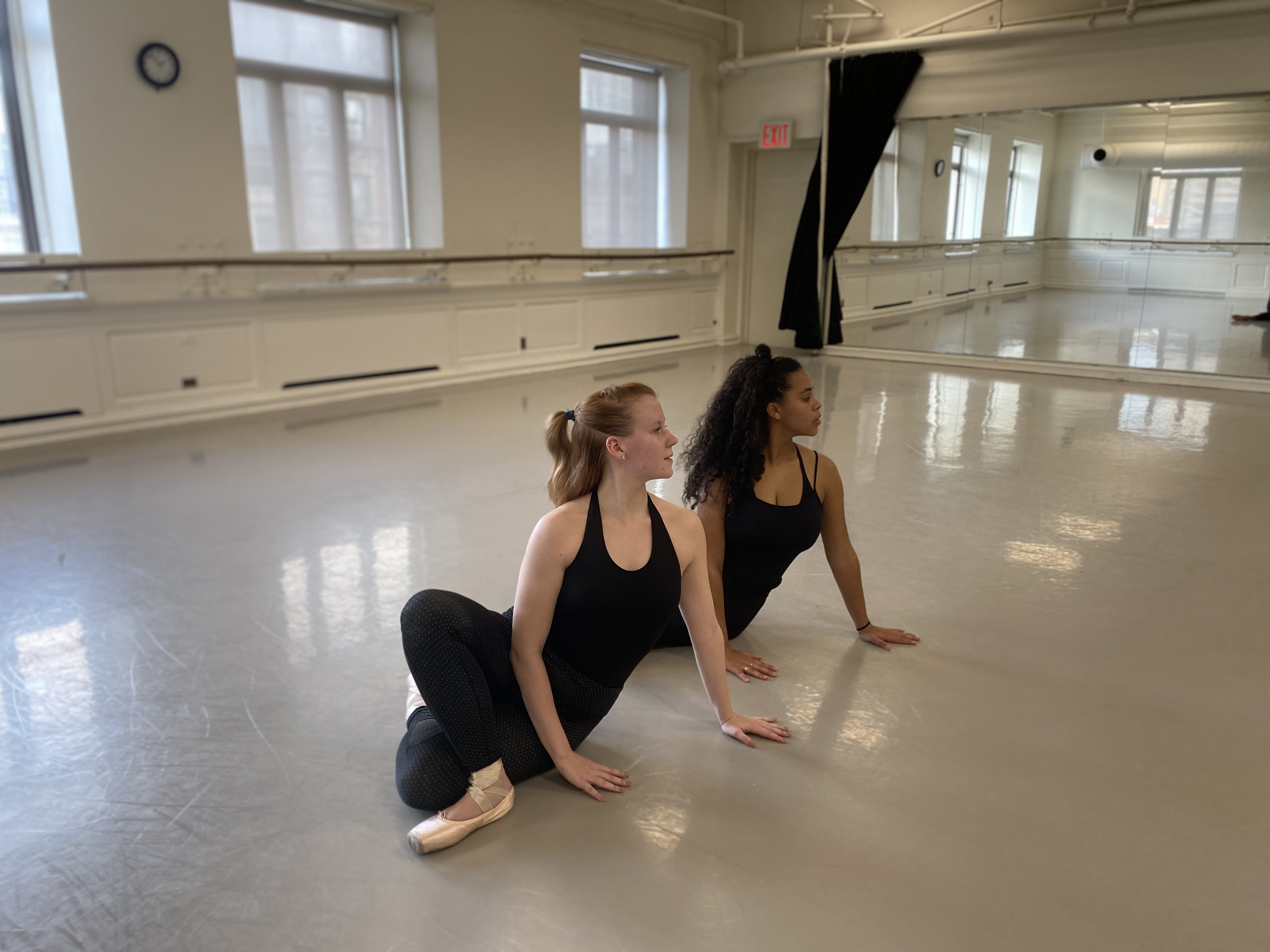
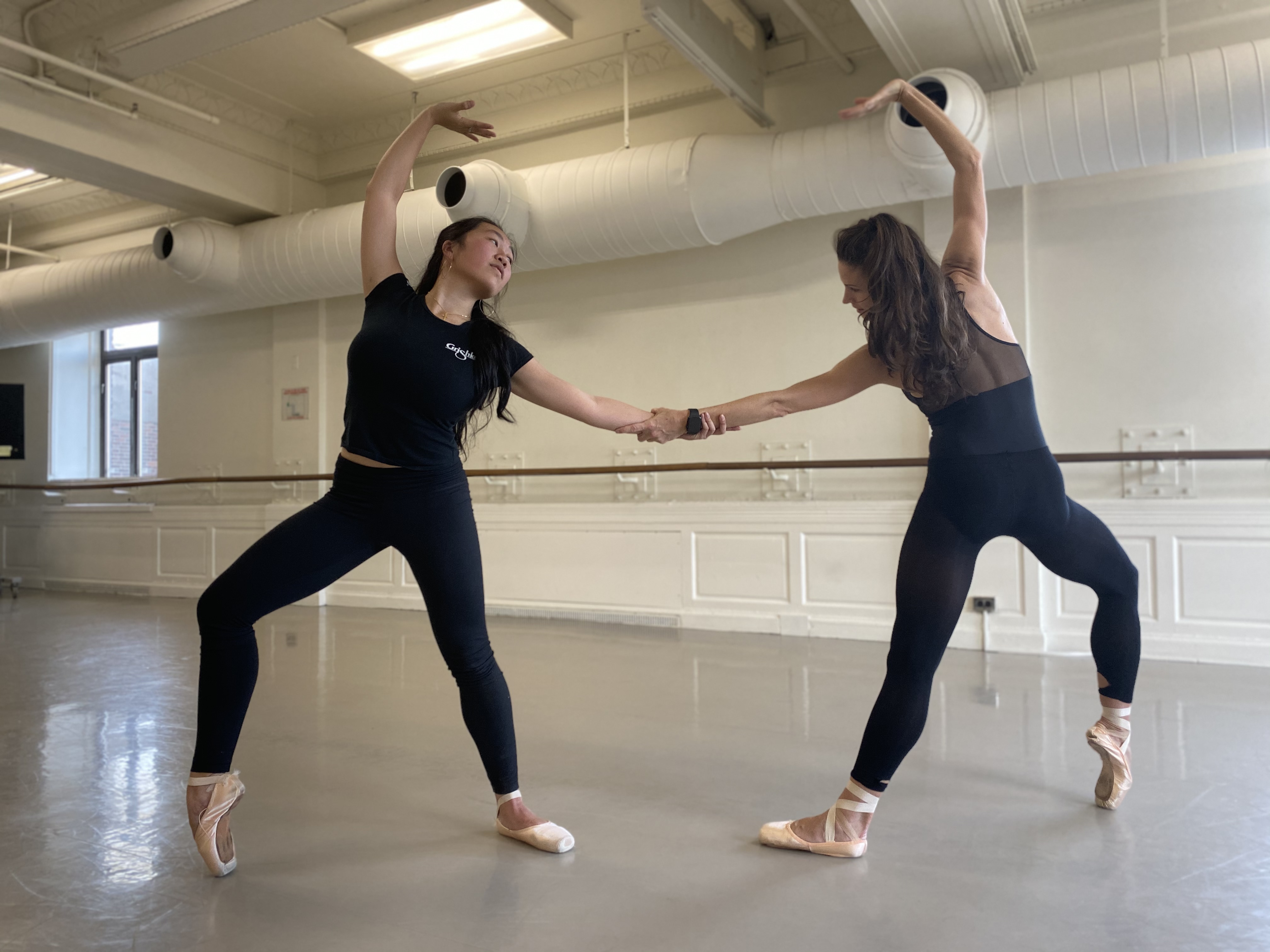
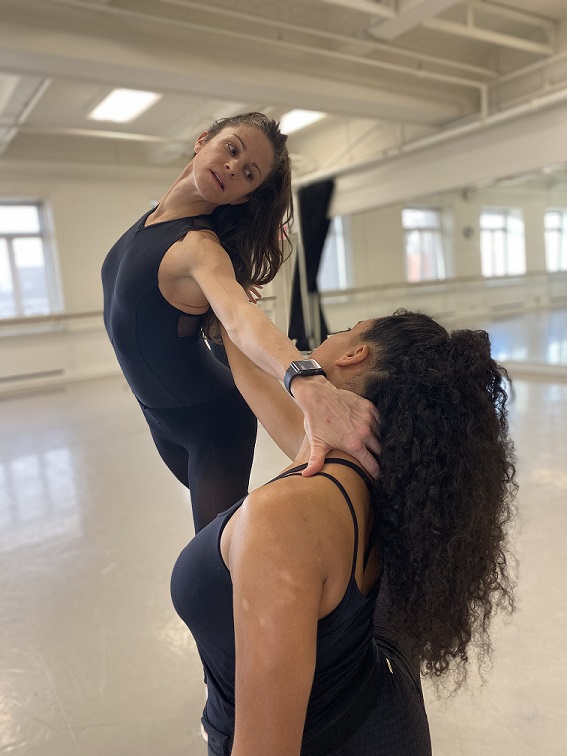
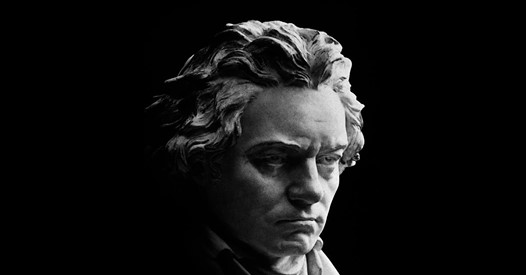
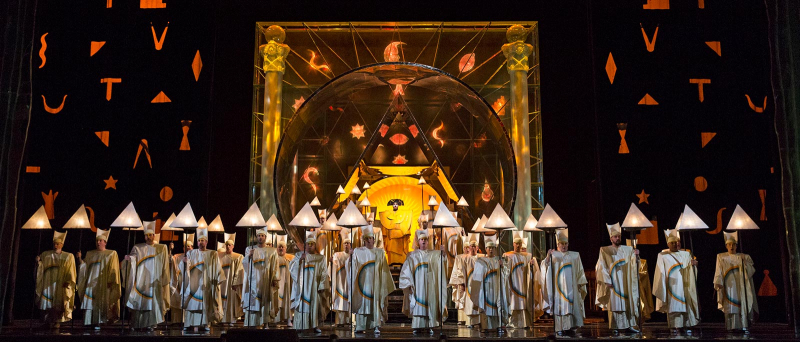
Just back from a Met matinee of the Julie Taymor MAGIC FLUTE. This season is reportedly the last in which this production will be given. I have enjoyed this 100-minute, English-language version many times over the years, but every time – and especially today – the cuts are painful, and none more so than that of the Chorus of the Priests. So I am posting this rendition in Hungarian (!) as compensation.
Author: Philip Gardner
-
Trifonov’s Scriabin @ The NY Philharmonic
Above: pianist Daniil Trifonov
~ Author: Oberon
Friday November 29th, 2019 – The New York Philharmonic‘s Artist-in-Residence, Daniil Trifonov, performing the Scriabin piano concerto on a program with Tchaikovsky’s 5th symphony. The Philharmonic’s Music Director, Jaap van Zweden, was on the podium.
This long-awaited performance was somewhat compromised for me due to a health issue my spouse was experiencing. I at first decided to skip the concert and let my friend Ben Weaver write about it, but after much discussion, I went to Geffen Hall for the Scriabin and left at intermission, asking Ben to let me know how the Tchaikovsky went.
This was my first experience of the Scriabin concerto live, and Mr. Trifonov was absolutely spectacular from first note to last. After a brief elegiac orchestral statement, a pensive solo introduces the pianist. The music offers contrasting moods, which Mr. Trifonov and the Philharmonic artists savoured. Playing rippling figurations, Mr. Trifonov evoked a feeling of ecstatic glow; the music then turned cinematic.
Splendid solo moments from Richard Deane (horn) and Pascual Martínez-Forteza (clarinet) added to the radiance of the performance. Playing in the Steinway’s very highest register, Mr. Trifonov gave the music “toy piano” feeling, which soon found a counter-balance in the Philharmonic’s plush-toned basses. The movement ends grandly.
The quiet opening of the poetic Andante was marred by the inevitable cellphone ringing. There’s quite a long, lovely passage for strings before the pianist joins in. A solo from Mr. Forteza finds Mr. Trifonov adding a descant-like, bejeweled line. The mood shifts from lively to doleful, the basses and celli in a tutti passage of velvety depth.
At times, the solo piano line seems to meander (over caressive strings) before finding focus in a wistful theme, to which Mr. Trifinov brought his trademark expressive feel for nuance. A pristine, sustained trill – a Trifonov delight – marked the Andante’s calm finish.
The pianist then immediately launched the final Allegro moderato, wherein a romantic piano theme as well as phrases for horn and clarinet at times created a feeling of tender longing.
Suddenly there’s a full stop. The music then resumes, with piano, clarinet, and horn all actively engaged. Now there’s a bit of a letdown: the composer seems to be searching for the right ending. He finds it in an unexpected drumroll, and a sustained chord from the piano.
Basking in an enormous flood of applause, the tall pianist made us wait for his reappearance, and then wait still longer for his dreamy, introspective encore.
Tchaikovsky’s 5th symphony won the enthusiasm of audiences right from its premiere performance in 1888. But the critics were less impressed, and this caused Tchaikovsky – upon hearing the piece in Prague a bit later – to question whether the 5th was as fine as he’d originally hoped it was. He eventually managed to banish his misgivings.The symphony’s second movement – steeped in Romanticism – shares its melodic birthright with the Vision Scene from the composer’s SLEEPING BEAUTY. I had been really looking forward to hearing this in the theater again, but that will have to wait until another time.Meanwhile, Ben Weaver has sent me a brief note, stating that “…the 5th was really good. The horn solo (I assume it was played by Richard Deane) was one of the best I’ve ever heard. And Anthony McGill impressed in the clarinet solo. Maestro van Zweden took the music at a nice clip, but never rushed it. Big, exciting climaxes! The orchestra played it as well as anyone I’ve heard.” [Coming from Ben, that’s high praise indeed!]Ben ended his message with: “The audience went nuts.” That made me really sorry to have missed it.~ Oberon
-
Trifonov’s Scriabin @ The NY Philharmonic
Above: pianist Daniil Trifonov
~ Author: Oberon
Friday November 29th, 2019 – The New York Philharmonic‘s Artist-in-Residence, Daniil Trifonov, performing the Scriabin piano concerto on a program with Tchaikovsky’s 5th symphony. The Philharmonic’s Music Director, Jaap van Zweden, was on the podium.
This long-awaited performance was somewhat compromised for me due to a health issue my spouse was experiencing. I at first decided to skip the concert and let my friend Ben Weaver write about it, but after much discussion, I went to Geffen Hall for the Scriabin and left at intermission, asking Ben to let me know how the Tchaikovsky went.
This was my first experience of the Scriabin concerto live, and Mr. Trifonov was absolutely spectacular from first note to last. After a brief elegiac orchestral statement, a pensive solo introduces the pianist. The music offers contrasting moods, which Mr. Trifonov and the Philharmonic artists savoured. Playing rippling figurations, Mr. Trifonov evoked a feeling of ecstatic glow; the music then turned cinematic.
Splendid solo moments from Richard Deane (horn) and Pascual Martínez-Forteza (clarinet) added to the radiance of the performance. Playing in the Steinway’s very highest register, Mr. Trifonov gave the music “toy piano” feeling, which soon found a counter-balance in the Philharmonic’s plush-toned basses. The movement ends grandly.
The quiet opening of the poetic Andante was marred by the inevitable cellphone ringing. There’s quite a long, lovely passage for strings before the pianist joins in. A solo from Mr. Forteza finds Mr. Trifonov adding a descant-like, bejeweled line. The mood shifts from lively to doleful, the basses and celli in a tutti passage of velvety depth.
At times, the solo piano line seems to meander (over caressive strings) before finding focus in a wistful theme, to which Mr. Trifinov brought his trademark expressive feel for nuance. A pristine, sustained trill – a Trifonov delight – marked the Andante’s calm finish.
The pianist then immediately launched the final Allegro moderato, wherein a romantic piano theme as well as phrases for horn and clarinet at times created a feeling of tender longing.
Suddenly there’s a full stop. The music then resumes, with piano, clarinet, and horn all actively engaged. Now there’s a bit of a letdown: the composer seems to be searching for the right ending. He finds it in an unexpected drumroll, and a sustained chord from the piano.
Basking in an enormous flood of applause, the tall pianist made us wait for his reappearance, and then wait still longer for his dreamy, introspective encore.
Tchaikovsky’s 5th symphony won the enthusiasm of audiences right from its premiere performance in 1888. But the critics were less impressed, and this caused Tchaikovsky – upon hearing the piece in Prague a bit later – to question whether the 5th was as fine as he’d originally hoped it was. He eventually managed to banish his misgivings.The symphony’s second movement – steeped in Romanticism – shares its melodic birthright with the Vision Scene from the composer’s SLEEPING BEAUTY. I had been really looking forward to hearing this in the theater again, but that will have to wait until another time.Meanwhile, Ben Weaver has sent me a brief note, stating that “…the 5th was really good. The horn solo (I assume it was played by Richard Deane) was one of the best I’ve ever heard. And Anthony McGill impressed in the clarinet solo. Maestro van Zweden took the music at a nice clip, but never rushed it. Big, exciting climaxes! The orchestra played it as well as anyone I’ve heard.” [Coming from Ben, that’s high praise indeed!]Ben ended his message with: “The audience went nuts.” That made me really sorry to have missed it.~ Oberon
-
A Memorable ROSENKAVALIER
[Reviving this article, which has been updated with some audio clips]
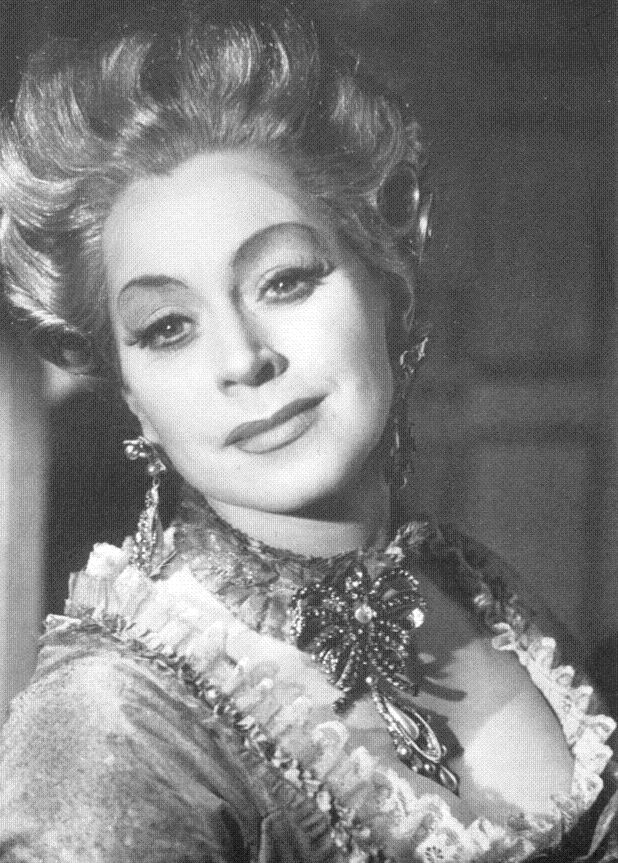
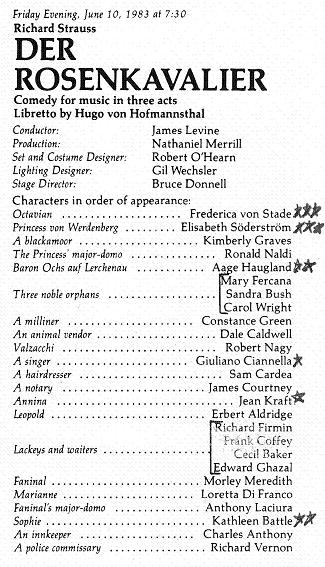
In 1983, the Metropolitan Opera took DER ROSENKAVALIER on their annual Spring tour. James Levine was the conductor and the stellar cast was led by Elisabeth Söderström (above) as the Marschallin, Frederica von Stade as Octavian, Kathleen Battle as Sophie, and Aage Haugland as Baron Ochs. Interestingly, this particular alignment of stars never performed the Strauss opera at The Met. It was given in six cities on the tour, culminating with this performance…

…in Boston, which I was lucky enough to attend. Unfortunately one of my most vivid memories of the evening was the presence of some people sitting about six rows behind me who talked throughout the performance. Even though I had sprung for an orchestra seat – the better to concentrate on the array of vocal talent onstage – these people served notice that sitting in expensive seats doesn’t make you classy. They were continuously being shushed by people around them (as annoying as their talking, actually) and the usher came to admonish them at one point. Apparently they had some sort of clout that kept them from being ejected; at any rate, they spoiled a great performance. I’m sure they are all dead now, and good riddance.Despite this major distraction, the performance was extremely moving and superbly sung. Maestro Levine, whose 1976 ROSENKAVALIER broadcast had seemed sluggish and thick-textured orchestrally, was now fully in his element with the Strauss score. The towering Aage Haugland – a great favorite of mine during his Met career – was a grand Baron Ochs, and Miss Battle was a shimmering-voiced Sophie.
It was the vocal and theatrical chemistry between Elisabeth Söderström and Frederica von Stade that gave this ROSENKAVALIER its unique appeal. Their older women/younger man romance was brilliantly portrayed, while their distinctive vocal timbres served their respective characters to perfection. By this point in time, the Söderström voice was an expressive rather than opulent instrument, but she truly knew her way around this music and her singing was so meshed with the character’s moods – it was simply all of a piece. In the monolog, she poked fun at herself as “die alte frau, die alte Marschallin“, sung with a crackly old-lady sound. Telling Octavian that he will soon tire of their romance, she seized von Stade by the shoulders, trying to shake some sense into him. The Söderström Marschallin was an unforgettable mixture of dignity, bitterness, and nostalgia: a woman who watches something cherishable slipping thru her fingers and finds the courage to let it go.
Frederica von Stade, with her immaculately tailored sound, was boyish and impetuous in behavior. and her vocalism was always elegant and wonderfully personal. Other Octavians – Ludwig (my first!), Baltsa, Troyanos – have sung this music in grander style but no other Octavian of my experience has quite captured the coltish confusion of a boy on the brink of manhood who has a loving heart and a tender, noble young spirit…which von Stade showed us so memorably.
While the Söderström/Battle/von Stade collaboration was never heard in a complete public performance of ROSENKAVALIER here in New York City, the three women did perform the opera’s Act III trio at the Met’s 100th anniversary gala. The day-long celebration was telecast live; I attended the matinee portion and can attest to the palpable atmosphere in the house as the three women sang this magical Strauss creation. You can listen to them here, with Levine on the podium.
For years, I assumed this film clip was the only extant souvenir of this unforgettable convergence of voices – though I am sure someone recorded it someplace along the tour’s path – but recently my friend Ben Weaver surprised me with recordings of the first and third acts in very good sound from a rehearsal at the Met just before the tour commenced. Someone there had the presence of mind to realize that this was a rarity in the making and that Ms. Söderström’s Marschallin was a jewel worth preserving; and so this valuable sound document has come down to me, some thirty years after the event.
Elisabeth Söderström – monolog from ROSENKAVALIER~Act I – Levine cond – Met stage rehearsal 1983
Frederica von Stade (above) regrettably never sang a complete Octavian at The Met – though she did sing a gorgeous Rose Presentation duet with Judith Blegen on the same gala programme as the filmed clip above.
In 1987, Elisabeth Söderström made her ‘first’ Met farewell singing the Marschallin on a Saturday matinee which was broadcast. That was a very moving experience, yet it has always been the Boston performance that’s stayed so clearly in my mind. The magic of the Söderström Marschallin is so perfectly distilled in the closing moments of Act I, where her ‘silberne rosen‘ takes on a ghostly patina of lyrical regret and resignation.
Elisabeth Söderström – Die silberne rose – 1st Met farewell 2~21~87
~ Oberon
-
Rehearsal: Cherylyn Lavagnino’s Monsters of Grace
Above: Dorrie Garland and Dervia Carey-Jones of Cherylyn Lavagnino Dance
Monday November 26th, 2019 ~ In the early afternoon, I went down to the NYU/Tisch studios where Cherylyn Lavagnino was running a rehearsal of her latest creation, Monsters of Grace, set to the aria “In The Arc of Your Mallet” from the almost-forgotten Philip Glass opera Monsters of Grace.
Here is the text of the aria, drawn from the writings of the Persian poet and scholar Rumi (1207-1273):
“Don’t go anywhere without me.
Let nothing happen in the sky apart from me,
or on the ground, in this world or that world,
without my being in its happening.
Vision, see nothing I don’t see.
Language, say nothing.
The way the night knows itself with the moon,
be that with me. Be the rose
nearest to the thorn that I am.
I want to feel myself in you when you taste food,
in the arc of your mallet when you work,
when you visit friends, when you go
up on the roof by yourself at night.
There’s nothing worse than to walk out along the street
without you. I don’t know where I’m going.
You’re the road, and the knower of roads,
more than maps, more than love.”It seems very…contemporary, doesn’t it?
And here are some photos from the rehearsal, courtesy of Cherylyn Lavagnino Dance:
Dervia Carey-Jones, Dorrie Garland, Kaitlyn Yiu, and Lila Simmons
Corinne Hart and Dervia Carey-Jones
Kaitlyn Yiu and Dorrie Garland
Kaitlyn and Dorrie
Cherylyn’s choreography strikes me as ideally suited to the music; the ballet has the feeling of ritual…a feeling I love.
My thanks to Cherylyn and her beautiful and generous dancers Dervia Carey-Jones, Dorrie Garland, Corinne Hart, Lila Simmons, and Kaitlyn Yiu for this engaging studio experience.
~ Oberon
-
Rehearsal: Cherylyn Lavagnino’s Monsters of Grace
Above: Dorrie Garland and Dervia Carey-Jones of Cherylyn Lavagnino Dance
Monday November 26th, 2019 ~ In the early afternoon, I went down to the NYU/Tisch studios where Cherylyn Lavagnino was running a rehearsal of her latest creation, Monsters of Grace, set to the aria “In The Arc of Your Mallet” from the almost-forgotten Philip Glass opera Monsters of Grace.
Here is the text of the aria, drawn from the writings of the Persian poet and scholar Rumi (1207-1273):
“Don’t go anywhere without me.
Let nothing happen in the sky apart from me,
or on the ground, in this world or that world,
without my being in its happening.
Vision, see nothing I don’t see.
Language, say nothing.
The way the night knows itself with the moon,
be that with me. Be the rose
nearest to the thorn that I am.
I want to feel myself in you when you taste food,
in the arc of your mallet when you work,
when you visit friends, when you go
up on the roof by yourself at night.
There’s nothing worse than to walk out along the street
without you. I don’t know where I’m going.
You’re the road, and the knower of roads,
more than maps, more than love.”It seems very…contemporary, doesn’t it?
And here are some photos from the rehearsal, courtesy of Cherylyn Lavagnino Dance:
Dervia Carey-Jones, Dorrie Garland, Kaitlyn Yiu, and Lila Simmons
Corinne Hart and Dervia Carey-Jones
Kaitlyn Yiu and Dorrie Garland
Kaitlyn and Dorrie
Cherylyn’s choreography strikes me as ideally suited to the music; the ballet has the feeling of ritual…a feeling I love.
My thanks to Cherylyn and her beautiful and generous dancers Dervia Carey-Jones, Dorrie Garland, Corinne Hart, Lila Simmons, and Kaitlyn Yiu for this engaging studio experience.
~ Oberon
-
The Soldier’s Tale @ Chamber Music Society
Above: pianist Anne Marie McDermott
~ Author: Oberon
Sunday November 24th, 2019 – A thoughtfully-devised program this evening at Chamber Music Society of Lincoln Center gave prominence to the inspired – and inspiring – pianist Anne-Marie McDermott. Ms. McDermott has given me some of my happiest times at CMS, most memorably with her playing of Mozart’s K. 466 in May 2018: a performance which drew a vociferous ovation.
Tonight, the pianist played in every work on the program, commencing with Beethoven’s Trio in B-flat major for Clarinet, Cello, and Piano, Op. 11 (1797) for which she was joined by the Spanish clarinetist Jose Franch-Ballester, and cellist Gary Hoffman, whose leap to prominence followed his 1986 win of the Rostropovich International Competition in Paris. Together, the three musicians filled Beethoven’s score with vibrant musicality.
The timbres of the three ‘voices’ aligned perfectly, and rhythmic clarity was a hallmark of their performance. Dramatic accents cropped up in the opening Allegro con brio, to which a pensive interlude brings contrast.
A waltz-like motif for the cello is taken up by the clarinet in the Adagio: a fine opportunity to savor the coloristic gifts of Mssrs. Franch-Ballester and Hoffman. Ms. McDermott brought gentley nuances to the mix, and, after a slightly darker passage, her delicacy of touch underscored Mr. Hoffman’s graciously expressive softness of melody.
The trio’s finale is a theme-and-variations affair which gets off to a perky start. The first variation brings some elaborate piano passages, the second a cello/clarinet duo, and the third is fast and fun. After veering into minor mode for the fourth variation, the music proceeds to a passing about of the theme, a petite marche, some tickling trills from the keyboard, and a witty finish.
The concert’s centerpiece was a vivid performance of Igor Stravinsky’s L’Histoire du soldat (The Soldier’s Tale), in the trio version for violin, clarinet, and piano (1918, arranged 1919), Mr. Franch-Ballester brought two clarinets to the stage for this work, which commences with The Soldier’s March, filled with jaunty swagger and relentless piano. A bouncing piano figuration introduces The Soldier’s Violin, wherein Ida Kavafian’s bow dances across the strings, and the clarinet provides a sense of jollity. The music seems about to fade away until it hits a punctuating chord.
A Little Concert brings swirls of notes, the piano rhythm pulsing along. The music has an ironic feeling, and turns insistent before its sudden end. A dance triptych (Tango, Waltz, Ragtime) finds Ms. Kavafian’s violin in waltzing mode, with rhythmic piano and commenting clarinet. The final movement of his colourful suite, The Devil’s Dance, has a wild streak. The three musicians seemed truly to enjoy playing this miniature masterpiece, which clocks in at a mere fifteen minutes but covers a lot of musical territory in its course.
Following the interval, Ms. McDermott had the stage all to herself with some marvelous Mendelssohn: selections from Lieder ohne Worte (Songs Without Words). She chose numbers 1, 2, and 3 from the cycle which made for a nicely contrasted segment of the program. Her playing was both elegant and passionate, and her mastery of dynamics was very much to the fore.
Bedřich Smetana’s Trio in G-minor for Piano, Violin, and Cello, Op. 15 (1855, revised in 1857) was written in memory of the composer’s four-year-old daughter Gabriela, who succumbed to scarlet fever in 1854.
Thus, the work begins with Ida Kavafian’s playing of a violin solo of yearning tenderness, with a rise in passion which subsides to a cello theme and an ascending phrase for the violin. Suddenly, a forward impetus springs up, and the music gathers steam to a grand outburst. Following a brief violin cadenza, the string players introduce a buzzy agitato, over which Ms. McDermott plays some sparkling piano passages. The music grows rhapsodic, and grand passions burst forth before Mr. Hoffman’s lyrical cello and Ms. Kavafian’s shining violin conspire to play on our emotions. The Moderato assai comes to an emphatic, passionate conclusion.
Bustling, almost furtive strings lend a scherzo-like feeling to the start of the second movement. Melodic motifs sing forth, building to grandeur before finding a quiet place to conclude. The three musicians dig in for the final Presto, for which Ms. McDermott sets a fast pace. In a reflective mood, Ms. Kavafian and Mr. Hoffman have appealing solo passages, and the pianist a thoughtful interlude.
Now some fast plucking takes over, and the music dances along for a bit. But a calmer mood returns, with the music going deep. The trio ends grandly, with an affirmative air of hope springing from the ashes of tragedy.
~ Oberon
-
All-Beethoven @ Lincoln Center’s Great Performers
~ Author: Ben Weaver
Wednesday November 20th, 2019 – Violinist Isabelle Faust and pianist Alexander Melnikov – long time musical partners – joined the celebrations of Beethoven’s 250th birthday as part of the Lincoln Center’s Great Performers series with an all-Beethoven recital at Alice Tully Hall. The 70-minute, no-intermission, program featured Beethoven’s last three violin sonatas.
Composed in 1801-02 and dedicated to Tsar Alexander I of Russia, the three sonatas of his Op. 30 were Beethoven’s final word on the genre, even though he was only 31 years old. (In total, he composed 8 violin sonatas.) At this stage Beethoven had not yet written his Eroica Symphony (that would come 2 years later), changing the trajectory of the symphony and his own musical development
Beethoven’s violin sonatas, like so much of his “early” music, look back on Mozart’s contributions to the genre, while at the same time developing new languages. Whereas Mozart’s violin sonatas were focused on the violin – with the piano as an accompaniment – Beethoven forced the piano into the spotlight, with a more prominent voice and bigger, more “symphonic” writing. In the sonata No. 6’s opening movement the violin seems to be playing catch-up with the piano in introducing the melodies. In the final movement, a theme and set of variations, the piano again dominates.
While the following two sonatas give the violin a much bigger role, as performed by Isabelle Faust and Alexander Melnikov, the piano’s dominance was clear throughout the evening. Ms. Faust’s playing, quiet and brittle at times, with an edge to the tone, required the listener to lean in. She rarely demanded attention for her instrument or her playing; she is certainly not a “showboat” performer. Mr. Melnikov, a more aggressive player by nature, was the dominant force on the stage almost by default. The relaxed tempos set by the duo made clear this was not heaven-storming Beethoven.
Sadly, as the evening progressed, the quiet playing by Faust, which I initially attributed to a “lean-in” personality, started to grow flat and dull. Whether drama or joy, one could hardly tell the difference. I almost got the sense that Faust was sight-reading the music, as if she’d hardly ever seen these notes before. (That’s clearly not the case: she and Melnikov recorded the complete sonatas for Harmonia Mundi some years ago and did so very well.) How unfortunate then that on this evening she was unable to gather enough spirit to help launch New York’s Beethoven year celebration.
~ Ben Weaver
-
All-Beethoven @ Lincoln Center’s Great Performers
~ Author: Ben Weaver
Wednesday November 20th, 2019 – Violinist Isabelle Faust and pianist Alexander Melnikov – long time musical partners – joined the celebrations of Beethoven’s 250th birthday as part of the Lincoln Center’s Great Performers series with an all-Beethoven recital at Alice Tully Hall. The 70-minute, no-intermission, program featured Beethoven’s last three violin sonatas.
Composed in 1801-02 and dedicated to Tsar Alexander I of Russia, the three sonatas of his Op. 30 were Beethoven’s final word on the genre, even though he was only 31 years old. (In total, he composed 8 violin sonatas.) At this stage Beethoven had not yet written his Eroica Symphony (that would come 2 years later), changing the trajectory of the symphony and his own musical development
Beethoven’s violin sonatas, like so much of his “early” music, look back on Mozart’s contributions to the genre, while at the same time developing new languages. Whereas Mozart’s violin sonatas were focused on the violin – with the piano as an accompaniment – Beethoven forced the piano into the spotlight, with a more prominent voice and bigger, more “symphonic” writing. In the sonata No. 6’s opening movement the violin seems to be playing catch-up with the piano in introducing the melodies. In the final movement, a theme and set of variations, the piano again dominates.
While the following two sonatas give the violin a much bigger role, as performed by Isabelle Faust and Alexander Melnikov, the piano’s dominance was clear throughout the evening. Ms. Faust’s playing, quiet and brittle at times, with an edge to the tone, required the listener to lean in. She rarely demanded attention for her instrument or her playing; she is certainly not a “showboat” performer. Mr. Melnikov, a more aggressive player by nature, was the dominant force on the stage almost by default. The relaxed tempos set by the duo made clear this was not heaven-storming Beethoven.
Sadly, as the evening progressed, the quiet playing by Faust, which I initially attributed to a “lean-in” personality, started to grow flat and dull. Whether drama or joy, one could hardly tell the difference. I almost got the sense that Faust was sight-reading the music, as if she’d hardly ever seen these notes before. (That’s clearly not the case: she and Melnikov recorded the complete sonatas for Harmonia Mundi some years ago and did so very well.) How unfortunate then that on this evening she was unable to gather enough spirit to help launch New York’s Beethoven year celebration.
~ Ben Weaver
-
NCB Farewells ~ Gallery
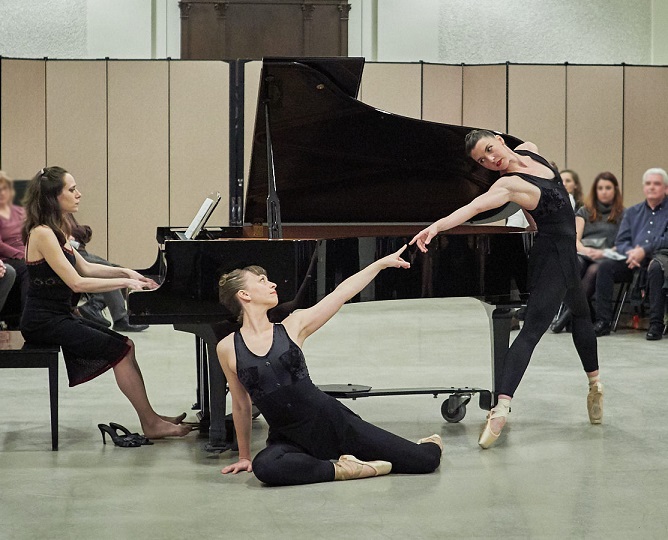
Above: pianist Melody Fader and dancers Elizabeth Brown and Sarah Atkins in Miro Magloire’s Klavierstück
Photographer Arnaud Falchier provides these images from the Saturday November 23rd, 2019, performance at Miro Magloire’s New Chamber Ballet. The evening marked the farewell performances of two longtime Company dancers: Elizabeth Brown and Sarah Atkins. Read about the performance here.
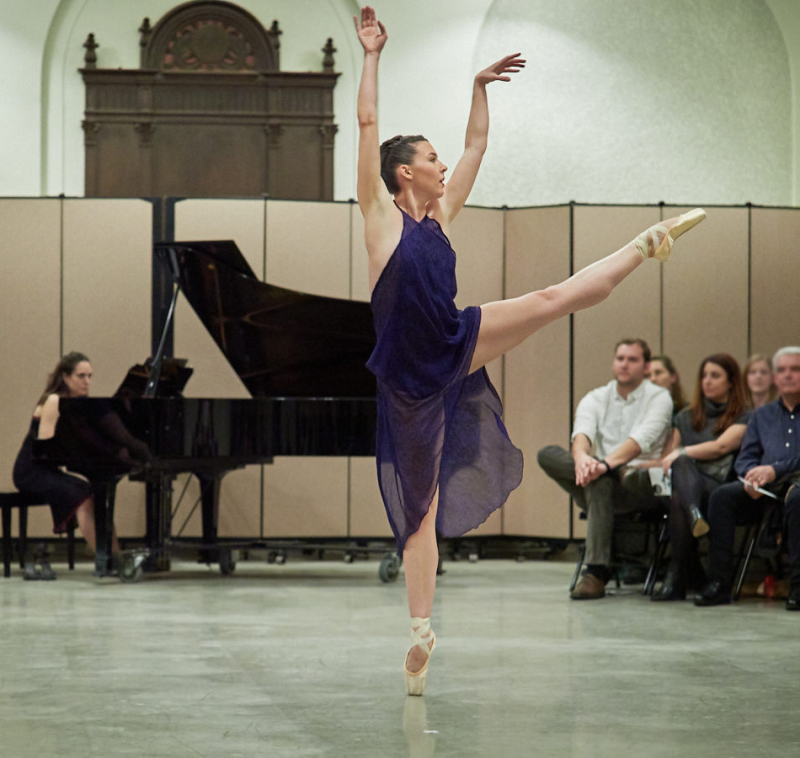
Sarah Atkins in the solo For Another Day, created for her by Miro
Sarah Atkins in For Another Day
Miro’s gift to founding Company dancer Elizabeth Brown: the solo Morning Song
Elizabeth Brown in her solo Morning Song
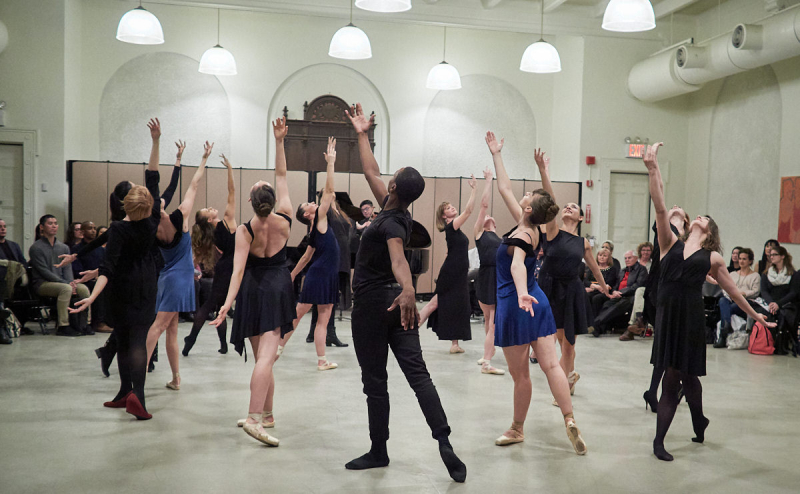
Former members gather to celebrate the community that is New Chamber Ballet in As One
Alumni and current NCB dancers in As One
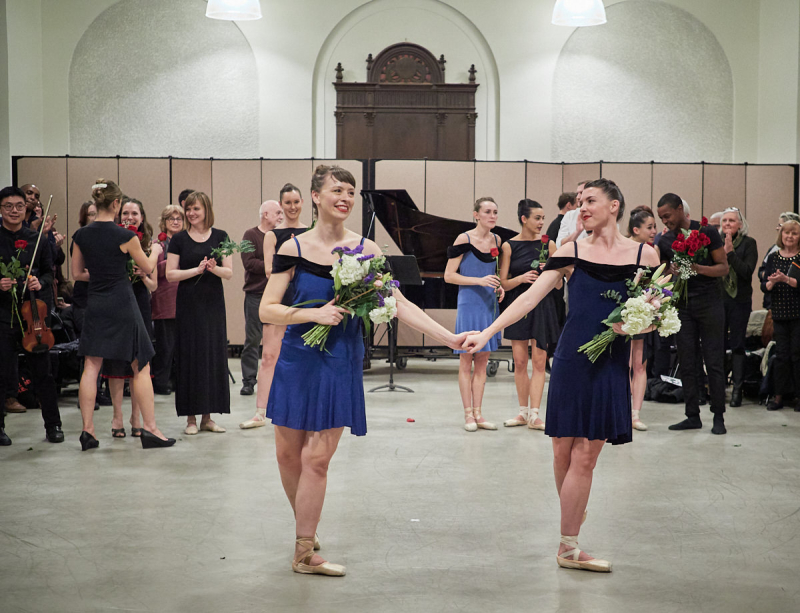
Elizabeth Brown and Sarah Atkins taking their final New Chamber Ballet bows
All photos by Arnaud Falchier
~ Oberon