Author: Philip Gardner
-
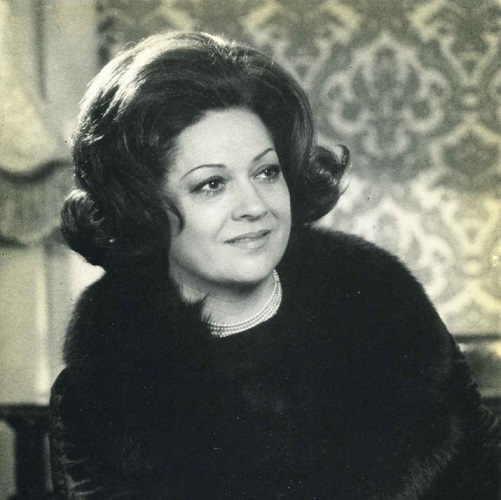
Arlene Saunders Has Passed Away

Above: Arlene Saunders as Eva in DIE MEISTERSINNGER
It’s so sad to read of the death of soprano Arlene Saunders, who I saw in four different roles over the course of her career. She died on April 17th, 2020, of complications associated with COVID-19.
Just last Summer, I discovered a series of films made in the 1970s by the Hamburg State Opera and truly enjoyed watching Ms. Saunders as the Countess in NOZZE DI FIGARO, Agathe in FREISCHUTZ, and most especially her Eva in DIE MEISTERSINGER. The Hamburg film of the Wagner opera can in fact be watched in its entirety on YouTube here.
It was as Eva that Arlene Saunders sang her only performances with the Metropolitan Opera, in 1976. But I had the good fortune to see her on the Met stage earlier, when the Hamburg company brought Stravinsky’s RAKE’S PROGRESS to Lincoln Center in 1967. She was an ideal Anne Trulove.

In the years to come, I saw Ms. Saunders as the Marschallin (Opera Company of Boston), as Minnie in FANCIULLA DEL WEST (New York City Opera), and as Elsa in LOHENGRIN (at The Bushnell in Hartford). As each of these vastly different characters, she seemed perfect.In 2007, I attended a solo recital attended by a young American tenor; during the interval, a woman came over to speak to the people seated in front of me. I was pretty sure it was Arlene Saunders, and sure enough, the couple greeted her as “Arlene…!” I so wanted to speak to her and thank her for the wonderful performances I’d seen her give, but my innate shyness took over. I always regretted that missed opportunity…now, more than ever.
And here’s Ms. Saunders in music from my favorite opera, ARIADNE AUF NAXOS:
Arlene Saunders – Ariadne Monolog Part II ~ ARIADNE AUF NAXOS – Hamburg 1968
~ Oberon
-
John Aylward’s ANGELUS
Above: Paul Klee’s Angelus Novus (1920)
A New Focus Recordings release of John Aylward’s Angelus, performed by the Ecce Ensemble, has come my way. In the pre-dawn hours of yet another day of pandemic isolation, I put on my headphones and listened to the 40-minute work; I found it to be an engrossing sonic experience.
Above: composer John Aylward
Among the composer’s sources of inspiration for this work were the Paul Klee painting Angelus Novus, the stories of his mother’s experiences of fleeing Europe during World War II, and the words of great writer-philosophers from which the monodrama’s texts are drawn.
Adrienne Rich’s “What is Possible” is the first of the work’s ten movements, and also the longest. A setting of the poem by Adrienne Rich, it calls for both spoken and sung passages from the singer. Nina Guo has a wonderfully natural speaking voice, devoid of theatricality or affectation. The sung lines reveal Ms. Guo’s wide range, and her mastery of it. Coloristic writing for the instrumentalists will be a notable feature throughout the entire work; in this first section, the wind soloists dazzle. From this single track omward, the watchword of the enterprise seems to be clarity: it is perfectly recorded.
For the second track, the composer turns to Walter Benjamin’s “Angelus Novus”, a description of the Klee painting. The music is insectuous, the vocal line sometimes has a melting quality.
“Dream Images“, drawn from Nietzsche, opens with lecture-like spoken words, and an undercurrent of muzzled speech. Ms. Guo’s rhetoric can suddenly transform into flights of song. She speaks of the “…need for untruths…” and goes into a repetitious loop at “…our eyes glide only over the surface of things…”
Deft instrumentation sets forth in “The Abstract“, inspired by Schopenhauer’s The World as Will and Representation. The concrete (cello) contrasts with the abstract (oboe), mixing with Ms. Guo’s voice. The singer steps back for the closing lines (“…you are like an actor who has played your part…), spoken in a state of detachment.
Percussion and voice mesh in the miniature “Supreme Triumph” to a D.H. Lawrence text. This flows directly into “Secret Memory“, from Carl Jung’s Aion: Researches into the Phenomenology of the Self. The oboe is prominent and the voice flies high, with some uncanny sustained tones. The flute then joins the soprano in a kind of cadenza, ending with a wispy swoop.
This carries us into the seventh movement, Anima, a setting which blends words by the composer and Thomas Mann. As the flute warbles, the vocal line becomes quirky indeed – with clicks, hisses, and shushings. The text morph to German, with more vocal sound effects.
Plato’s Phaedrus, and phrases from the Catholic Angelus prayer, are sources for “Truth“. with its evocative instrumentation as the singer embarks on a sort of fantastical mad scene. Strings, winds, and percussion swirl along before subsiding to underpin the singer’s chanted prayer.
Plato holds his place for the ninth movement, the voice in lyrical flights interspersed with fragmented spoken lines. The music becomes intense, with ominous drums and screaming winds, as bells signal a warning before fading to stillness.
The final movement of Angelus is the most marvelous of all. A brooding prelude for the woodwinds emerges to a setting of excerpts from Weldon Kees’ A Distance from the Sea. The speech/song is pensive and illusive, with Ms. Guo in a reflective lyrical state. “Nothing will be the same…” she sings, in a moment now so strangely timely. “The night comes down…” she speaks, as the music turns soft and hazy, and then vanishes into air.
Above: Nina Guo
Nina Guo’s performance of Angelus is so impressive, and her colleagues from the Ecce Ensemble make the music truly vivid. The players are Emi Ferguson (flutes), Hassan Anderson (oboe), Barret Ham (clarinets), Pala Garcia (violin), John Popham (cello), and Sam Budish (percussion). Jean-Philippe Wurtz conducts.
The release date is April 24th, 2020. Look for it here, or (digitally) here.
~ Oberon
-
John Aylward’s ANGELUS

Above: Paul Klee’s Angelus Novus (1920)
A New Focus Recordings release of John Aylward’s Angelus, performed by the Ecce Ensemble, has come my way. In the pre-dawn hours of yet another day of pandemic isolation, I put on my headphones and listened to the 40-minute work; I found it to be an engrossing sonic experience.
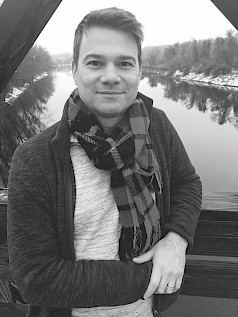
Above: composer John Aylward
Among the composer’s sources of inspiration for this work were the Paul Klee painting Angelus Novus, the stories of his mother’s experiences of fleeing Europe during World War II, and the words of great writer-philosophers from which the monodrama’s texts are drawn.
Adrienne Rich’s “What is Possible” is the first of the work’s ten movements, and also the longest. A setting of the poem by Adrienne Rich, it calls for both spoken and sung passages from the singer. Nina Guo has a wonderfully natural speaking voice, devoid of theatricality or affectation. The sung lines reveal Ms. Guo’s wide range, and her mastery of it. Coloristic writing for the instrumentalists will be a notable feature throughout the entire work; in this first section, the wind soloists dazzle. From this single track omward, the watchword of the enterprise seems to be clarity: it is perfectly recorded.
For the second track, the composer turns to Walter Benjamin’s “Angelus Novus”, a description of the Klee painting. The music is insectuous, the vocal line sometimes has a melting quality.
“Dream Images“, drawn from Nietzsche, opens with lecture-like spoken words, and an undercurrent of muzzled speech. Ms. Guo’s rhetoric can suddenly transform into flights of song. She speaks of the “…need for untruths…” and goes into a repetitious loop at “…our eyes glide only over the surface of things…”
Deft instrumentation sets forth in “The Abstract“, inspired by Schopenhauer’s The World as Will and Representation. The concrete (cello) contrasts with the abstract (oboe), mixing with Ms. Guo’s voice. The singer steps back for the closing lines (“…you are like an actor who has played your part…), spoken in a state of detachment.
Percussion and voice mesh in the miniature “Supreme Triumph” to a D.H. Lawrence text. This flows directly into “Secret Memory“, from Carl Jung’s Aion: Researches into the Phenomenology of the Self. The oboe is prominent and the voice flies high, with some uncanny sustained tones. The flute then joins the soprano in a kind of cadenza, ending with a wispy swoop.
This carries us into the seventh movement, Anima, a setting which blends words by the composer and Thomas Mann. As the flute warbles, the vocal line becomes quirky indeed – with clicks, hisses, and shushings. The text morph to German, with more vocal sound effects.
Plato’s Phaedrus, and phrases from the Catholic Angelus prayer, are sources for “Truth“. with its evocative instrumentation as the singer embarks on a sort of fantastical mad scene. Strings, winds, and percussion swirl along before subsiding to underpin the singer’s chanted prayer.
Plato holds his place for the ninth movement, the voice in lyrical flights interspersed with fragmented spoken lines. The music becomes intense, with ominous drums and screaming winds, as bells signal a warning before fading to stillness.
The final movement of Angelus is the most marvelous of all. A brooding prelude for the woodwinds emerges to a setting of excerpts from Weldon Kees’ A Distance from the Sea. The speech/song is pensive and illusive, with Ms. Guo in a reflective lyrical state. “Nothing will be the same…” she sings, in a moment now so strangely timely. “The night comes down…” she speaks, as the music turns soft and hazy, and then vanishes into air.
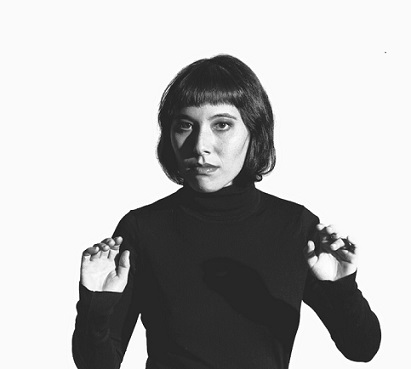
Above: Nina Guo
Nina Guo’s performance of Angelus is so impressive, and her colleagues from the Ecce Ensemble make the music truly vivid. The players are Emi Ferguson (flutes), Hassan Anderson (oboe), Barret Ham (clarinets), Pala Garcia (violin), John Popham (cello), and Sam Budish (percussion). Jean-Philippe Wurtz conducts.
The release date is April 24th, 2020. Look for it here, or (digitally) here.
~ Oberon
-
Anne-Sophie Mutter: Ave Maria

Violinist Anne-Sophie Mutter sends us a musical blessing in the time of the pandemic. Watch it here.
-
Clifford Harvuot

Above, finalists in the Metropolitan Opera’s 1941-42 Auditions of the Air: tenor Elwood Gary, soprano Frances Greer, the Met’s General Manager Edward Johnson, soprano Margaret Harshaw, conductor Wilfred Pellertier, and baritone Clifford Harvuot.
As a winner of the Auditions of the Air, Clifford Harvuot’s first appearance on The Met stage came at a Sunday Night Gala on March 15, 1942. He sang the Prologo from PAGLIACCI. From then until December 21, 1975, the baritone chalked up nearly 1,300 performances with the Company, in New York City and on tour.
Harvuot particularly excelled in two Puccini roles, both of which brought out a feeling of ‘humanity’ in his voice. One was Sonora, the miner in FANCIULLA DEL WEST who is hopelessly in love with Minnie. It is Sonora who, in Act III, persuades the other miners that they must set Minnie’s beloved Dick Johnson free. Clifford Harvuot sing Sonora nearly 30 times at The Met, his Minnies being Leontyne Price, Dorothy Kirsten, and Renata Tebaldi.
He was also a very sympathetic Sharpless in MADAMA BUTTERFLY, appearing in the role with the great Butterflies of the day: Tebaldi, Albanese, Stella, Kirsten, and Tucci.
Helen Vanni – Carlo Bergonzi – Clifford Harvuot – BUTTERFLY trio – Met 1962
Other frequent Harvuot roles:
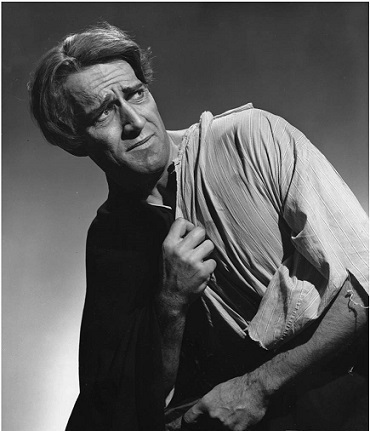
Angelotti in TOSCA
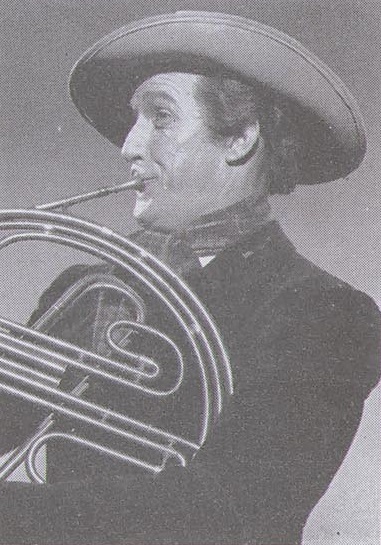
Schaunard in BOHEME
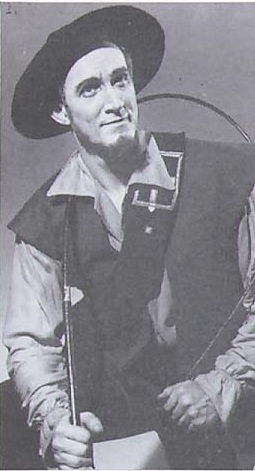
Alfio in CAVALLERIA RUSTICANA
Listen to Clifford Harvuot as Silvio in PAGLIACCI with Lucine Amara as Nedda here.
~ Oberon
-
Hertha Töpper as Octavian
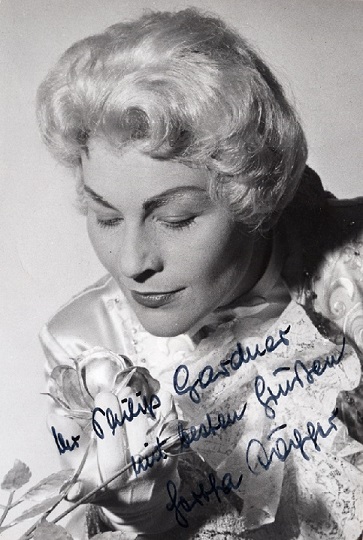
Above: Hertha Töpper as Octavian in DER ROSENKAVALIER
[Update: Hertha Töpper passed away on March 28th, 2020, at the age of 95]
I’ll never forget listening to Strauss’s DER ROSENKAVALIER for the first time: it was a Saturday matinee broadcast from the Old Met at Christmastime in 1962. I was 14 years old and had been in love with opera for three years.
At that time, the German operas were not easy for me; I had made it thru my first broadcast RING Cycle in 1961 and I seem to recall having been more thrilled by the story than by the music. ROSENKAVALIER, with its long conversational stretches, posed a challenge all its own. But the singing of the three female leads in the opera’s final scene moved me deeply, and when the broadcast ended I sat down and wrote fan letters to all three of them: Hertha Töpper (Octavian), Anneliese Rothenberger (Sophie), and Régine Crespin (the Marschallin). Within days I received replies from all three.
Metropolitan Opera House
December 22, 1962 Matinee/Broadcast
DER ROSENKAVALIER
Octavian.....................Hertha Töpper
Princess von Werdenberg......Régine Crespin
Baron Ochs...................Otto Edelmann
Sophie.......................Anneliese Rothenberger
Faninal......................Ralph Herbert
Annina.......................Rosalind Elias
Valzacchi....................Paul Franke
Italian Singer...............Sándor Kónya
Marianne.....................Thelma Votipka
Mahomet......................Marsha Warren
Princess' Major-domo.........Robert Nagy
Orphan.......................Loretta Di Franco
Orphan.......................Nadyne Brewer
Orphan.......................Dina De Salvo
Milliner.....................Lilias Sims
Animal Vendor................Frank D'Elia
Hairdresser..................Harry Jones
Notary.......................Gerhard Pechner
Leopold......................Erbert Aldridge
Lackey.......................Joseph Folmer
Lackey.......................John Trehy
Lackey.......................Lou Marcella
Lackey.......................Edward Ghazal
Faninal's Major-domo.........Andrea Velis
Innkeeper....................Charles Anthony
Police Commissioner..........Norman ScottConductor....................Lorin Maazel
Ms. Töpper sent me the gorgeous photo which appears at the top of this article. Ever since then, this has remained the quintessential image of Octavian for me. As it turned out, Octavian was Töpper’s only Met role, though she had an enormous career in Europe.
Here’s a sampling of the Töpper Octavian, with Erika Köth as Sophie:
Hertha Töpper & Erika Köth – Presentation of the Silver Rose ~ ROSENKAVALIER
Hertha Töpper was born in 1924 and made her operatic debut at Graz as Ulrica in BALLO IN MASCHERA in 1945. By 1951 she was singing at Bayreuth, and had debuted at Munich as Octavian. She went on to sing at all the major opera houses and festivals of Europe; among her most prominent roles were Brangäne, Carmen, Fricka, and Dorabella. She also was a well-loved recitalist and concert singer, specializing in the music of Bach.
A couple of years ago, by chance, I plucked Töpper’s recording of Bartok’s BLUEBEARD’S CASTLE (in German) from the library shelf; it proved to be a revelation, with fantastic singing from both the mezzo and the great Dietrich Fisher-Dieskau, and truly atmospheric conducting by Ferenc Fricsay.
~ Oberon
-
Krzysztof Penderecki Has Passed Away

It’s sad to read of the death of one of the greatest composers of our time: Krzysztof Penderecki. His music means a lot to me, most especially his 7th symphony which is subtitled The Seven Gates of Jerusalem. Read an article about this incredible work here. His Polish Requiem is another enduring favorite of mine, but then there is just one treasure after another to be found in the Penderecki catalog.
Penderecki ~ O gloriosa virginum
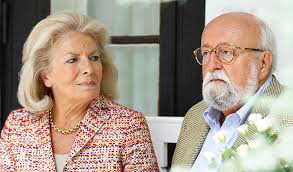
There is an excellent documentary about the composer, wherein we meet his lovely wife Elżbieta Penderecka (née Solecka), whom he married in 1965. They lived in the Kraków suburb of Wola Justowska…

…on a 70-acre estate where the composer had planted thousands of trees which he imported from around the world.
Penderecki was the only contemporary composer who truly fascinated me – both thru his works and his personality – and the only one whose music I return to frequently. He lived a long life, and his music will continue to touch people’s souls. Now may he sleep in peace.
~ Oberon
-
Sandra Warfield & James McCracken
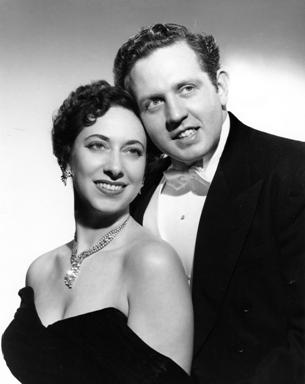
Mezzo-soprano Sandra Warfield and tenor James McCracken were husband and wife. McCracken of course had a huge international career, Verdi’s Otello being one of his finest roles. Ms. Warfield’s career was not so hi-profile, though substantial.
The couple were married in 1953. In 1957, feeling that The Met was not utilizing him to his full capabilities, McCracken headed to Europe where he and Ms. Warfield joined the Zurich Opera. In 1964, McCracken returned to The Met in triumph as Verdi’s Moor.
In 1966, the couple sang together as Samson and Dalila in a Met concert performance at Lewisohn Stadium. In 1968, they sang these roles together again in the Met’s New York City Parks series. On January 13th, 1972, Warfield and McCracken finally appeared together in principal roles on The Met stage in a performance of SAMSON ET DALILA that marked Ms. Warfield’s final Met appearance.
Sandra Warfield went on to a successful career in cabaret whilst her husband continued to be a major Met star until 1986, when he sang with the Company for the last time in a concert performance of AIDA in Central Park. Aprile Millo and Grace Bumbry were his co-stars that evening. Mr. McCracken passed away in 1988, and Ms. Warfield in 2009.
In 1983, having absented himself from the Met yet again for three years, McCracken sang at the gala performance celebrating the 100th birthday of The Met. Having been thrilled by two of the tenor’s late-career performances as The Moor at Hartford and Boston, I was so happy to have been there on that gala afternoon to witness the warm welcome he received when he walked onstage to sing Otello’s great monolog, with James Levine conducting. You can watch that performance here. Thereafter he sang about a dozen more performances with the Company, including the AIDA that marked Leontyne Price’s farewell to opera in 1984 – a performance that was televised.
I am not sure if Mr. McCracken ever sang Andrea Chenier onstage, but his recording of the Act I Improviso is powerful:
James McCracken – ANDREA CHENIER ~ Improviso
Ms. Warfield is heard here as Mozart’s Marcellina in the Act I duet with Roberta Peters as Susanna. And here are Warfield and McCracken together in the Judgement Scene duet from AIDA:
Sandra Warfield & James McCracken – AIDA scene
~ Oberon
-
Prologo

One of my all-time favorite renderings of the Prologue to Leoncavallo’s PAGLIACCI by the wonderful Puerto Rican baritone Pablo Elvira.


 Oberon's Glade