Author: Philip Gardner

  • Farewells @ New Chamber Ballet

    6a00d8341c4e3853ef016767bb8206970b-800wi

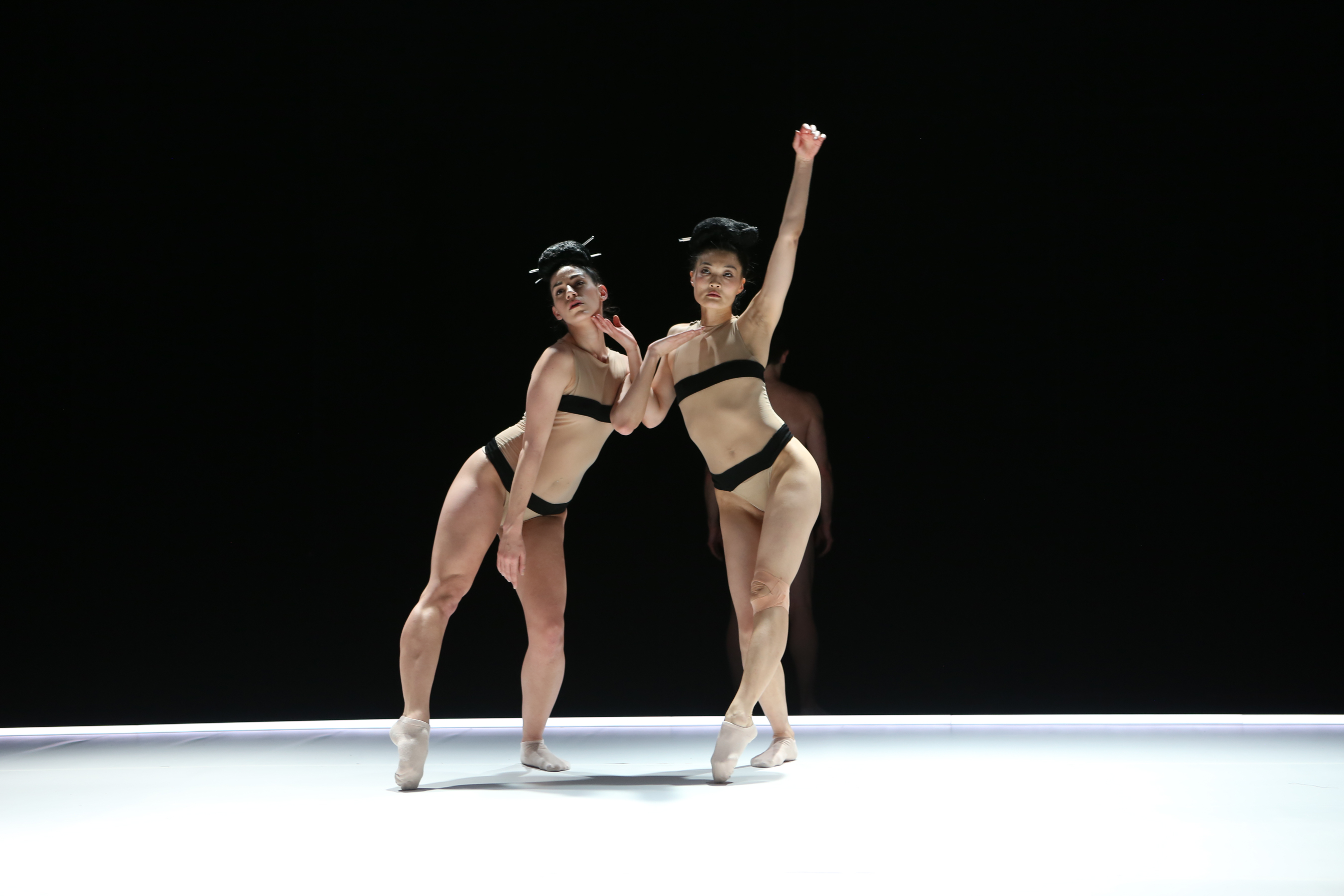
    Above: Elizabeth Brown and Sarah Atkins of New Chamber Ballet, photo by Kokyat

    ~ Author: Oberon

    Saturday November 23rd, 2019 – While I felt happy to be part of New Chamber Ballet’s 15th anniversary season, tonight felt bittersweet as two dancers long associated with Miro Magloire’s company were giving their farewell performances: Elizabeth Brown (a founding member) and Sarah Atkins.

    Over the years since I began following Miro’s work, his Company has undergone many changes in roster. Inevitably, with smaller dance troupes, one forms an attachment to individual dancers, and this is especially true of New Chamber Ballet as Miro has frequently invited to me rehearsals over the years, so that I’ve often felt like I’m a non-dancing member of the family. Watching Elizabeth and Sarah tonight brought back so many memories, not only of their own performances but of all the other women they have danced with thru the years. This kind of nostalgia is lovely in its way, but it also means we’re all getting older.

    The evening’s program opened with Klavierstück, to solo piano music by Karlheinz Stockhausen. The grand piano had been rolled into the center of the space, where pianist Melody Fader deftly took in stride the composer’s demands. Danced by the evenings two honorees – Elizabeth Brown and Sarah Atkins – it’s a work in which the piano becomes an altar or shrine. 

    6a00d8341c4e3853ef0168e695be97970c

    Above: Sarah Atkins, photo by Kokyat

    Next came a solo, For Another Day, created by Miro specially for Sarah Atkins. With the piano now back in its usual place at the point of the seating diamond, Melody Fader played the sixth of Franz Schubert’s Moments musicaux to which Ms. Atkins danced with a deep sense of the music’s lyrical flow. Circling the space, the dancer made eye contact with audience members: a beautiful expression of leave-taking. To dance this gorgeously at one’s farewell speaks volumes for Sarah’s technique and artistry. As the solo ended, a tidal wave of vociferous applause cheers was unleashed; everyone stood up to salute the dancer, who had to bow many times. 

    For an excerpt from Miro’s full-length work Phantom, music of Wolfgang Rihm, which veers from dreamlike to dramatic, was marvelously played by Ms. Fader and the enormously talented violinist Doori Na. Here we must pause to praise the technical assurance of the fearlessly adventurous Melody and Doori, who tackle any score Miro sets before them with flair. Over the years, they – as much as the choreography and dancing – have made New Chamber Ballet so distinctive. A chance to peer over Doori’s shoulder at his illuminated score for the Rihm was a highlight of my evening.

    The dancers – Amber Neff, Rachele Perla and NCB newcomers Anabel Alpert and Megan Foley – coped well with the choreography, which is often floor-oriented and includes demanding passages of the same-sex partnering that Miro has been developing in recent works. Tonight, in this gala setting, it seemed earthbound and over-long. Matters were not helped by the audience seating configuration, which feels like a airport boarding lounge when the flights have been delayed. 

    6a00d8341c4e3853ef01b7c90150ea970b

    Above: Elizabeth Brown rehearsing Morning Star with violinist Doori Na, photo by Nir Arieli

    This was my third viewing of Morning Song, the solo Miro made in 2017 for Elizabeth Brown to John Cage’s violin piece “Cheap Imitation”. A new costume for this ballet tonight was less to my liking than the original, but that became irrelevant during this sensational performance by Ms. Brown and Mr. Na.

    Morning Star is one of Miro’s greatest creations, and my favorite among all his works.  Elizabeth Brown is the inspirational force behind the solo’s success, with its feeling of timeless ritual and quiet ecstasy. It is a portrait of feminine power and mystique, and Ms. Brown dances it divinely. It ends as the dancer circles the space in hypnotically slow turns, finishing with an Isadora-like greeting of the dawn, arms upraised.

    As a founding member of New Chamber Ballet, Elizabeth has been an superlative muse for Miro, and an inspiration for dance-lovers; her technical prowess, unique persona, and deep devotion to the art merit the highest praise.

    During the mammoth applause that greeted her after Morning Song this evening, Elizabeth and Doori bowed deeply to one another, underscoring the intrinsic connection between music and dance that is Miro’s trademark.

    To conclude the program, Miro offered a pièce d’occasion entitled As One. Set to Antonín Dvořák’s Romance for violin and piano – played with impeccable verve, charm, and joy by Melody Fader and Doori Na – the work is Miro’s hymn to all the dancers who have performed for him thru New Chamber Ballet’s 15-year history.

    As such, and in a celebratory move that seemed to take Elizabeth and Sarah by surprise, a bevy of former NCB dancers who had been seated randomly among the crowd suddenly rose and stepped into the dance space, performing an homage to the two departing stars whilst also celebrating the continuum of Miro’s tireless work, in which the dancers and the dance are one.

    6a00d8341c4e3853ef01b8d1a3507e970c

    Above: Elizabeth and Sarah. Thanks for the memories, ladies…and please: keep on dancing!

    ~ Oberon

  • Preislied

    Alexkim2

    Above: tenor Alex Kim

    I like this Korean tenor’s lyrical rendering of the Prize Song from Wagner’s DIE MEISTERSINGER.

  • Les Grecs ont disparu!

    Pollet2

    Françoise Pollet (above) and Dwayne Croft are Cassandre and Chorèbe in this dramatic scene from Hector Berlioz’s LA PRISE DE TROIE:

    Françoise Pollet & Dwayne Croft – PRISE DE TROIE scene – Levine cond – Met bcast 1994

  • Julia Fischer|Philippe Jordan @ The NY Phil

    Fischer_J

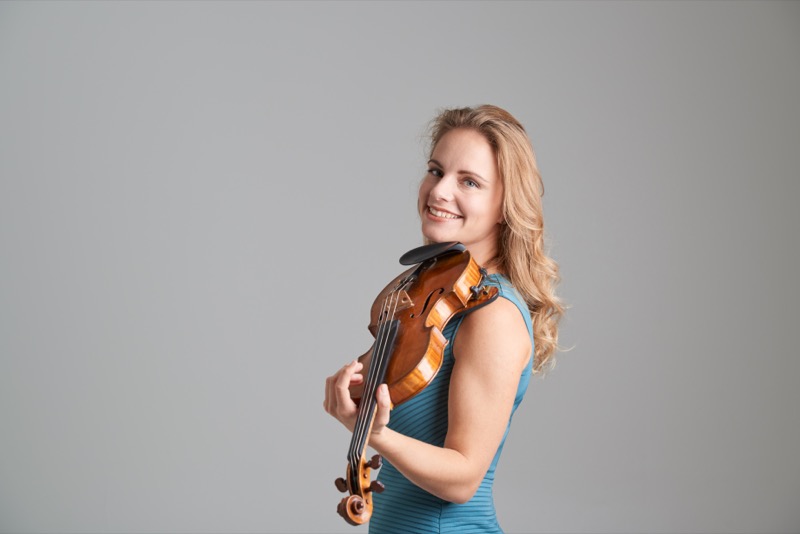
    Above: violinist Julia Fischer

    ~ Author: Oberon

    Wednesday October 30th, 2019 – Philippe Jordan was on the podium at Geffen Hall this evening as The New York Philharmonic presented their program of Prokofiev, Mendelssohn, and Beethoven: an ideal mix, in my opinion. The comely and compelling violinist Julia Fischer was the guest soloist for Mendelssohn’s violin concerto, the orchestra’s stellar woodwind soloists were all present and accounted for, and the entire evening had a special glow about it.

    Prokofiev’s Symphony No. 1, Classical, strikes me as a perfect piece of music. At a running time of just 15 minutes, the symphony is a compact delight, abounding in rhythmic variety and appealing themes. The opening Allegro con brio is in the traditional sonata form, but the composer keeps throwing us curve balls: witty bits crop up out of nowhere. Maestro Jordan and the Philharmonic artists seemed truly to enjoy playing this music, which, in the flashing leaps and zesty grace notes of the second theme made me smile to myself.

    A gentle melody on high for the violins is the key feature of the Larghetto, with pizzicati, treading basses, and colourful bassoons all part of the composer’s scheme. The Gavotte makes me think of the composer’s ROMEO AND JULIET, while the ebullient finale sounded wonderfully clear and alive. Throughout, flautist Robert Langevin, clarinetists Anthony McGill and Pascual Martínez-Forteza, oboist Sherry Sylar, bassoonist Judith LeClair, and their woodwind-section colleagues charmed the ear with their polished playing; when Maestro Jordan asked them to stand for a bow, the audience responded warmly.

    Violinist Julia Fischer then joined the orchestra for Mendelssohn’s Violin Concerto in E-minor. This was my first opportunity to hear Ms. Fischer playing live; she sounded marvelous and looked fetching is a deep grey gown shot thru with glimmering silver. There’s shining silver in her sleek tone as well.

    The first movement’s marking of Allegro molto appassionato derives from the composer’s premonition of writing “…[A concerto] in E-minor running through my head, the beginning of which gives me no peace.” With splendid support from the orchestra, Ms. Fischer displayed her expressive gifts, lovely feeling for dynamics, and exquisite control of pianissimo. In the cadenza, her soft playing in the stratosphere was remarkable; this she followed with a rocking motif as the ensemble take up the theme. The music becomes very animated as the Allegro moves to its finish.

    A sustained bassoon tone carries the music directly into the Andante wherein the glowing melody is given a tender, haunting quality as Ms. Fischer’s playing moves serenely from piano to pianissimo: simply breathtaking

    Following a brief interlude, the violinist embarks on festoons of fiorature – played with sparkling surety – in the concerto’s concluding movement. Passages of Mendessohnian ‘faerie music’ are heard, and then Ms. Fischer revels in the rapid-bowing of the effervescent finale. With the final note of the concerto still hanging on the air, the audience unleashed a tumultuous applause, and everyone stood up to cheer. Ms. Fischer and Maestro Jordan are clearly simpatico, and their performance was thrilling. The crowd clearly wanted an encore, but none was forthcoming.

    Philippe-jordan

    Above: Maestro Philippe Jordan

    The concluding work, Beethoven’s 7th symphony, was magnificently shaped by the Maestro, who dips and bends into the music, eliciting splendid playing from the orchestra. This symphony has a dance-like sense of forward momentum upon which Mssr Jordan built his interpretation. His pacing – on the fast side – was so vital, and the textures of the music so lovingly layered, with the wind soloists again producing magical effects. 

    Swept along by the music, I put away my pen and indulged myself in forty minutes of pure selfish enjoyment. One small and intriguing motif in this symphony that always captures my imagination is a seeming “preview” of six-note passage from the Grail knights’ march in Wagner’s PARSIFAL music. Did Wagner openly borrow this from Beethoven, or is it a subconscious association? Either way, it played over and over in my mind during the train ride home. 

    This has so far been a particularly impressive and satisfying season for classical music here in Gotham, and tonight’s concert was yet another edifying experience.

    ~ Oberon

  • Ah! Lève-Toi, Soleil!

    Franco_corelli-thumb-250x290-30666

    From a live performance nearly 50 years ago, Franco Corelli sings Romeo’s great aria from Gounod’s ROMEO ET JULIETTE.

    ~ Franco Corelli – Ah! lève-toi soleil! ~ ROMEO ET JULIETTE – 3~16~70

  • Emanuel Ax|Stéphane Denève @ The NY Phil

    Emanuel-ax

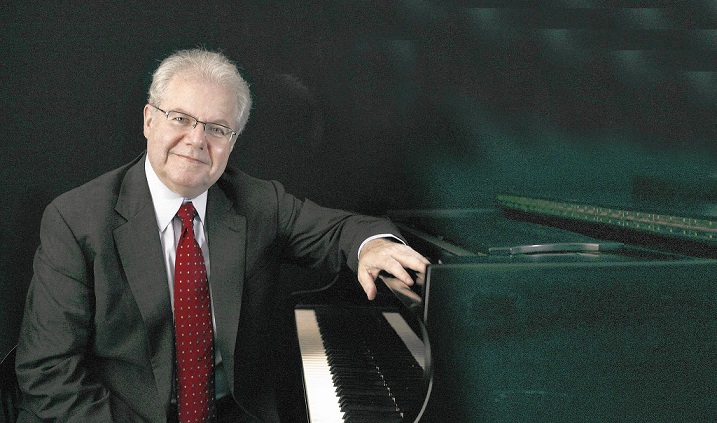
    Above: pianist Emanuel Ax

    ~ Author: Oberon

    Saturday October 26th, 2019 – How wonderful to encounter Emanuel Ax again so soon after his lovely performance of the Schumann piano quintet with the Dover Quartet last week at Zankel Hall. Tonight the great pianist joined The New York Philharmonic for Beethoven’s Piano Concerto #1.

    The announced program looked long on paper, and indeed – after an engrossing first half – there was something of a slump with Albert Roussel’s 3rd symphony. It’s understandable that Maestro Stéphane Denève would want to include it, but somehow it did not quite fit in with the other works: it didn’t hold hold up well in the company of Beethoven and Ravel.

    Jennifer+Higdon

    Above: composer Jennifer Higdon

    Jennifer Higdon’s blue cathedral, composed in 2000 in memory of her brother, opened the evening. Read the composer’s eloquent program note on this work here.

    blue cathedral opens with most ethereal of sounds: barely audible at first, the music slowly seeps into our consciousness. Cello, the plaintive flute, clarinet, piano, and harp bring their colours to bear; the strings are lush and grand, with the high violins set against the deep celli and basses. A massive wave of drums and low brass hits like a tsunami. The marimba, oboe, and Cynthia Phelps’ dusky viola are heard: each solo voice seems to evoke a particular memory of the departed.

    The music then becomes cinematic, with a back-beat dynamic. Brass fanfares lead to epic grandeur before calm sets in. Now the solo voices are heard again – flute, clarinet, oboe – and an especially fine passage for a cello/viola quartet as the music fades to the gentle chiming of a solitary bell.

    In her program note, Ms. Higdon wrote about her use of the clarinet, which was her brother’s instrument. It was in the passages for that instrument, sublimely played by the inimitable Pascual Martínez-Forteza, that Ms. Higdon’s moving tribute to her sibling found its most poignant voice.

    Emanuel Ax, ever a welcome guest at the Philharmonic, was warmly greeted as he took his place at the Steinway. The pianist sat quietly as the musical introduction – at first courtly, then stately – sets the mood. Mr. Ax then began his enchanting performance: crystal-clear arpeggios, subtly modulated, drew us in. Beethoven’s font of melody – both for the pianist and the orchestra – is filled to overflowing. In a long paragraph, the pianist displayed his gifts with nimble downhill scales played pianissimo, and cascades of notes of great delicacy, clarity, and warmth.

    Following a majestic orchestral passage, the long cadenza – which seems almost like a sonata in itself – was impeccably delivered, the audience in a state of rapt attentiveness. One sensed that an ovation might erupt at this point, but Maestro Denève was able to forestall an intrusion by keeping a cautionary hand raised.

    Now came the Largo, featuring one of Beethoven’s most gorgeous themes. For the next several minutes, my companion and I were transfixed by the ongoing dialog between Mr. Ax’s keyboard and Pascual Martínez-Forteza’s clarinet. Two great musicians, trading subtleties: mesmerizing! 

    Mr. Ax immediately commenced the concerto’s concluding Rondo: Allegro, bringing to mind – with its jaunty interjections – the ballet Prism which Helgi Tomasson choreographed to this score for New York City Ballet in 2000. The esteemed pianist continued to dazzle us right to the last note, causing the audience to leap to their collective feet as he took his bows; Mr. Martínez-Forteza was also asked to rise, deservedly so.

    An encore was demanded, and Mr. Ax sustained the ballet connection for me with his Chopin, used by Jerome Robbins in his ballet Dances at a Gathering.

    Stephane_Deneve_01_811x486

    Following the interval, Maestro Stéphane Denève (above) brought us two works by his fellow Frenchmen: Albert Roussel’s Symphony #3 (composed 1929-1930) and Maurice Ravel’s immortal La Valse, which premiered in 1930. 

    The Roussel at first seemed wonderfully refreshing: its jazzy, driven, bustling opening augured well for thorough enjoyment. Yet as the work unfolded, it seemed full of ideas but lacking in coherence. The first, second, and fourth movements each felt overly long, and there was a sense of increased audience restlessness. The piece features a lot of ‘big’ music; rhythmic variety and enticing instrumentation are never lacking. Though poignant, witty, and ebullient by turns, the music slips in one ear and out the other, leaving little lasting impression. Some wonderful solo passages for violin, played beautifully by Frank Huang, were appealing.

    Image

    Above: New York City Ballet’s Marika Anderson in George Balanchine’s La Valse

    “We are dancing on the edge of a volcano…” wrote Maurice Ravel’s in his notes for La Valse. Such a timely concept, as our world these days often seems to be rushing toward its doom. This music, which George Balanchine choreographed for his evocative “death and the maiden” ballet of the same title, has been with me for decades.

    Tonight’s performance, under Maestro Denève’s ardent baton, was everything one can hope for in this marvelous music. The musicians made the most of every opportunity, whether by solo or by section. La Valse again entranced with its dark allure and inevitability. Resistance is futile.

    As we were walking down to the subway, my friend Cherylyn Lavagnino and I both spoke of the effect that the playing of Mssrs Ax and Martínez-Forteza in the Beethoven adagio had on us, and of the consolation of such musical experiences in these dark days. Thank you, gentlemen.

    ~ Oberon

  • Miró Quartet @ Weill Hall

    Miro2

    Above, the Miró Quartet: Daniel Ching and William Fedkenheuer (violins), Joshua Grindele (cello), and John Largess (viola). Photo by Naova Ikegami.

    ~ Author: Oberon

    Thursday October 25th, 2019 – For their concert at Weill Hall this evening, the Miró Quartet honored the history of string quartet performance in America by replicating a program performed by the country’s first professional touring string quartet – the Kneisel Quartet – over a hundred years ago.

    Franz Kneisel, then concertmaster of the Boston Symphony Orchestra, founded his quartet in 1885. The program offered tonight by the Miró was first performed by the Kneisel in 1910 during the Kneisel Quartet’s 25th anniversary season. The Miró Quartet are celebrating their own 25th anniversary this season, so the connection has layers of meaning.

    The first half of tonight’s concert was beset with extraneous distractions; following an over-long interval, the Miró took the chill off a hall that had become frigid due to A/C overload with their sizzling performance of Schubert’s Death and the Maiden.   

    Mozart’s “Hunt” quartet, K.458, opened the evening. The Miró’s violinists faced one another, with the cellist and violist in the middle. Right from the music’s joyous start, a wonderful vitality could be felt in the quartet’s music-making. Daniel Ching’s trill tickled the ear, and a five-note motif was passed from player to player with wit and sparkle. A gracious interlude and a paragraph in the minor key were so persuasively delivered.

    The cordial mood the Miró had established was then spoilt by late seating. It took a while for things to re-settle in the hall. There were more latecomers allowed in later. Very distracting.

    The Menuetto: Moderato profited from lovely depth of tone from each player. The ensuing Adagio has the feel of a melancholy bel canto aria, with a tender melody sung first by the violin and then taken up by the cello. As the movement continued, with exquisite playing from Mr. Ching, the sound of quiet snoring crept into our collective consciousness. I could not tell if the players could hear it or not. At any rate, they carried on with the sprightly start of the final  Allegro assai, the cellist reveling in his rich tone, everything lively and appealing.  

    The Kneisel Quartet were advocates for contemporary works of their day; thus music by Reinhold Glière and César Franck was on the program; it felt odd to hear only parts of string quartets by these two composers, but it seems that the idea of playing individual movements of works was not frowned upon in 1910.
     
    Each of the three remaining works on the program’s first half was prefaced by a spoken introduction from one of the players. As there was a very thorough program note about the content of the concert, the talking seemed unnecessary. 
     
    The Glière Andante (his Opus 1, #2) and the Franck Scherzo were delightfully played. The Glière is a ‘theme-and-variations’ affair, launched by the viola and cello playing pizzicati under sustained tones from the violins. A gently rocking feeling takes over, with decorative fiorature from the violin; then the music turns fast and furious, with the brisk, deep cello bringing a sense of urgency. Ethereal sounds from the violin next lend a pensive air – very subtle playing here – and then a dance springs up, with plucking lower voices and shivering violins. 
     
    The Franck Scherzo, the shortest movement of his lengthy D-major Quartet, brought forth mutes for the violins, lending the charming piece a magical lightness akin to Mendelssohn’s faerie music.  
     
    S Ho
     
    Above: pianist Stephanie Ho, photographed by Masataka Suemitsu
     
    In another departure from ‘normal’ string quartet programming, the unusual inclusion of a work for cello and piano on tonight’s program points up yet again how things were sometimes done back in the day. Pianist Stephanie Ho joined the Miró’s cellist Joshua Gindele tonight for Adrien-François Servais’ Fantasie sur deux air Russes.
     
    The cellist and pianist are long-time friends and colleagues, so their playing was beautifully meshed and simpatico. Ms. Ho commenced the work with a solemn opening piano statement. The first cello melody, oddly familiar, was lushly played. And then, with a delicious trill from Mr. Gindele, a dance strikes up, and it soon turning into a gallop. The cello goes very high, and then very low. Following some hesitations, a sad waltz develops.  This leads to a virtuoso competition between cello and piano…great fun! After a few small detours, comes the brilliant finish. The two musicians embraced as the audience warmly applauded their expert performance.
     
    Returning after the prolonged interval, the Miró Quartet swept aside any and all distractions or concerns with a thrilling rendering of Schubert’s immortal Death and the Maiden.

    The opening Allegro drew vibrant playing from the Miró. The individuality of the players’ respective timbres achieves a surprisingly coherent, compelling blend: they make this familiar music sound fresh – and what more can we ask? Their rhythmic surety and variety of dynamics make their playing irresistible.

    The sublime Andante con moto, which introduces the doleful “Death” theme, moved me deeply with its air of hushed lamenting. The emotional ebb and flow of this movement seemed to well up from Mr. Gindele’s richly resonant cello, suffusing the whole with a spiritual glow.

    The Scherzo is quite brief; we don’t know if Wagner intentionally lifted one rhythmic motif here to serve as a leitmotif for Nibelheim in his opera DAS RHEINGOLD, but it always gives me a smile.

    Now the finale is reached, with Mr. Ching festooning the music with precise filigree over the passion and drive of his colleagues’ playing. A high-velocity rush suddenly shifts into hyper-gear as the music careens almost recklessly to its end. 

    Playing at the peak of their powers, the dazzling Miró artists turned the concluding Presto into the crowning glory of this outstanding musical experience. Though “death’ is in the work’s title, the word I  kept scrawling in my notes about the Miró’s playing was: “…alive..!”

    ~ Oberon

  • Karole Armitage’s You Took a Part of Me

    Armitage Gone! Dance_You Took a Part of Me (2019)_ Dancers_ Megumi Eda  Sierra French_Costume_ Peter Speliopoulos_ PhotoJulie Lemberger_2019-6891

    Above: Sierra French and Megumi Eda in Karole Armitage’s You Took a Part of Me; photo by Julie Lemberger

    ~ Author: Oberon

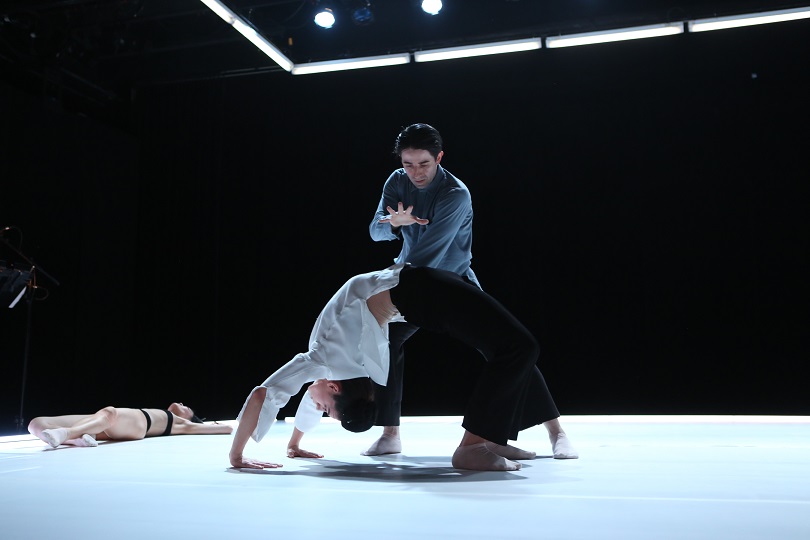
    Wednesday October 23, 2019 – Karole Armitage’s You Took a Part of Me, trailers and photos of which were apparently banned on Twitter, is playing this week at New York Live ArtsDrawing inspiration from Noh, the ancient ritualized Japanese form of dance-drama, You Took a Part of Me centers on the memory of an erotically charged love affair which has left a Woman (now a Ghost) in search of emotional resolution and a restoration of inner peace.

    On entering the theater, we see the stage set with an elevated platform outlined in fluorescent lights, with a small adjacent space with a low stool stage left; overhead, a square of tube light hovers. You Took a Part of Me is performed by three dancers: Megumi Eda (the Ghost), Sierra French (her Double), and Christian Laverde-Koenig (her Lover). A fourth dancer, Alonso Guzman, clad all in black with his face partly hidden, takes the traditional Noh role of the koken, a sort of valet. The lighting design by Clifton Taylor and the costuming by Peter Speliopoulos were key elements in the production’s success.

    Set to a poignantly spare, flute-centric score by Reiko Yamada, You Took a Part of Me unfolds in seven movements. Initially I felt that we might be watching a silent play, but the ballet is in fact filled with gorgeous, stylized dancing that flows like classical Japanese calligraphy. As the Woman’s memories darken, the dance becomes more angular and somewhat smudged.

    The Woman/Ghost is first seen seated on the low stool, the konen assisting her with her long hair. Her Double appears: identically clad in long white trousers, they seem like conjoined twins, with their hair entwined. They perform a mirror duet, in sync or in echo effect, with lyrical port de bras. During this, the Lover has taken a seat on the stool; an actor waiting for his entrance, he stares into the audience.

    03. Armitage Gone! Dance_You Took a Part of Me (2019)_ Dancers_ Megumi Eda  Cristian Laverde-Koenig_Costume_ Peter Speliopoulos_Photo Steven Pisano_20190611-DSC00346

    Above: Christian Laverde-Koenig and Megumi Eda; photo by Steven Pisano

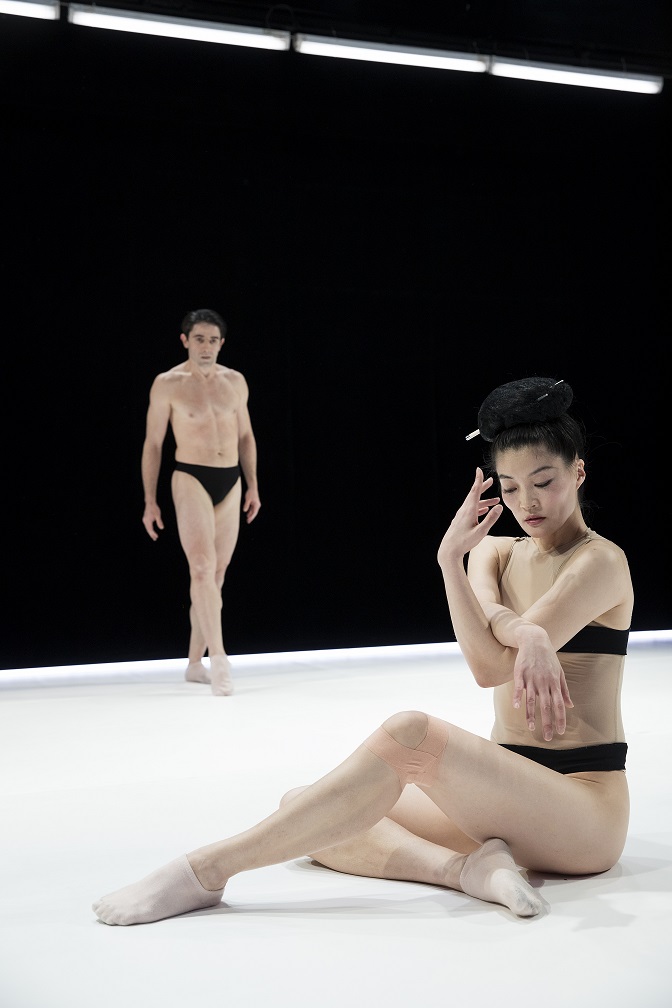
    The Ghost and her Lover now dance a Memory Duet. To a spellbinding flute solo, they at first seem cordial and graceful, but then the seductiveness veers toward a more controlling stance on the Lover’s part. The konen enters and strips the two dancers down to thongs. The duet becomes intensely intimate, the flute so evocative of their passion. After their climax, silence falls. The Lover silently departs.

    As the Ghost dances a solo, Abandonment, the Lover – having put his shirt and trousers on – reappears and again sits on the stool. Ms. Eda, as the Ghost, collapses to the floor as her Double appears. Mr. Laverde-Koenig and Ms. French now engage in a pas de deux, Hijacked Mind, which replicates his earlier duet with Ms. Eda.

    Armitage Gone! Dance_You Took a Part of Me (2019)_ Dancers_ Megumi Eda  Sierra French  Cristian Laverde-Koenig_Costume_ Peter Speliopoulos_ Photo Julie Lemberger_2019-6671 copy

    In this intriguing scene (Julie Lemberger photo, above), as Ms. Eda dreams on the floor, the Double and the Lover seem to mimic his earlier duet with the Ghost. But here he often controls his partner without touching her. The konen again strips the couple; Ms. Eda rises and she and Ms. French have a competitive duet. As this progresses, Mr. Laverde-Koening reappears – now clad only in his thong – and again sits staring into space. Then a trio, Attachments, ends with the three wrapped in a seemingly naked knot on the floor.

    Now the Ghost/Woman is left alone, in white as at the start, the konen again ministering to her needs. She retains one of her long hairpins. As her memories replay in her mind, I found myself wondering if she intended to commit seppuku, inserting the pin into her neck, cutting the arteries with one stroke. This was the form of ritual suicide practiced by the widows of disgraced samurai.

    Armitage Gone! Dance_You Took a Part of Me (2019)_ Dancers_ Megumi Eda  Cristian Laverde-Koenig_Costume_ Peter Speliopoulos_ Photo Julieta Cervantes-252

    Above: Christian Laverde-Koenig and Megumi Eda; photo by Julieta Cervantes

    Between the excellence of the dancers, the power and poetry of the movement, and the sublime resonance of the music, You Took a Part of Me held the audience enraptured.

    Faye Arthurs, who I had a chance to catch up with after the performance, interviewed Karole Armitage for Fjord.

    ~ Oberon

  • Karole Armitage’s You Took a Part of Me

    Armitage Gone! Dance_You Took a Part of Me (2019)_ Dancers_ Megumi Eda  Sierra French_Costume_ Peter Speliopoulos_ PhotoJulie Lemberger_2019-6891

    Above: Sierra French and Megumi Eda in Karole Armitage’s You Took a Part of Me; photo by Julie Lemberger

    ~ Author: Oberon

    Wednesday October 23, 2019 – Karole Armitage’s You Took a Part of Me, trailers and photos of which were apparently banned on Twitter, is playing this week at New York Live ArtsDrawing inspiration from Noh, the ancient ritualized Japanese form of dance-drama, You Took a Part of Me centers on the memory of an erotically charged love affair which has left a Woman (now a Ghost) in search of emotional resolution and a restoration of inner peace.

    On entering the theater, we see the stage set with an elevated platform outlined in fluorescent lights, with a small adjacent space with a low stool stage left; overhead, a square of tube light hovers. You Took a Part of Me is performed by three dancers: Megumi Eda (the Ghost), Sierra French (her Double), and Christian Laverde-Koenig (her Lover). A fourth dancer, Alonso Guzman, clad all in black with his face partly hidden, takes the traditional Noh role of the koken, a sort of valet. The lighting design by Clifton Taylor and the costuming by Peter Speliopoulos were key elements in the production’s success.

    Set to a poignantly spare, flute-centric score by Reiko Yamada, You Took a Part of Me unfolds in seven movements. Initially I felt that we might be watching a silent play, but the ballet is in fact filled with gorgeous, stylized dancing that flows like classical Japanese calligraphy. As the Woman’s memories darken, the dance becomes more angular and somewhat smudged.

    The Woman/Ghost is first seen seated on the low stool, the konen assisting her with her long hair. Her Double appears: identically clad in long white trousers, they seem like conjoined twins, with their hair entwined. They perform a mirror duet, in sync or in echo effect, with lyrical port de bras. During this, the Lover has taken a seat on the stool; an actor waiting for his entrance, he stares into the audience.

    03. Armitage Gone! Dance_You Took a Part of Me (2019)_ Dancers_ Megumi Eda  Cristian Laverde-Koenig_Costume_ Peter Speliopoulos_Photo Steven Pisano_20190611-DSC00346

    Above: Christian Laverde-Koenig and Megumi Eda; photo by Steven Pisano

    The Ghost and her Lover now dance a Memory Duet. To a spellbinding flute solo, they at first seem cordial and graceful, but then the seductiveness veers toward a more controlling stance on the Lover’s part. The konen enters and strips the two dancers down to thongs. The duet becomes intensely intimate, the flute so evocative of their passion. After their climax, silence falls. The Lover silently departs.

    As the Ghost dances a solo, Abandonment, the Lover – having put his shirt and trousers on – reappears and again sits on the stool. Ms. Eda, as the Ghost, collapses to the floor as her Double appears. Mr. Laverde-Koenig and Ms. French now engage in a pas de deux, Hijacked Mind, which replicates his earlier duet with Ms. Eda.

    Armitage Gone! Dance_You Took a Part of Me (2019)_ Dancers_ Megumi Eda  Sierra French  Cristian Laverde-Koenig_Costume_ Peter Speliopoulos_ Photo Julie Lemberger_2019-6671 copy

    In this intriguing scene (Julie Lemberger photo, above), as Ms. Eda dreams on the floor, the Double and the Lover seem to mimic his earlier duet with the Ghost. But here he often controls his partner without touching her. The konen again strips the couple; Ms. Eda rises and she and Ms. French have a competitive duet. As this progresses, Mr. Laverde-Koening reappears – now clad only in his thong – and again sits staring into space. Then a trio, Attachments, ends with the three wrapped in a seemingly naked knot on the floor.

    Now the Ghost/Woman is left alone, in white as at the start, the konen again ministering to her needs. She retains one of her long hairpins. As her memories replay in her mind, I found myself wondering if she intended to commit seppuku, inserting the pin into her neck, cutting the arteries with one stroke. This was the form of ritual suicide practiced by the widows of disgraced samurai.

    Armitage Gone! Dance_You Took a Part of Me (2019)_ Dancers_ Megumi Eda  Cristian Laverde-Koenig_Costume_ Peter Speliopoulos_ Photo Julieta Cervantes-252

    Above: Christian Laverde-Koenig and Megumi Eda; photo by Julieta Cervantes

    Between the excellence of the dancers, the power and poetry of the movement, and the sublime resonance of the music, You Took a Part of Me held the audience enraptured.

    Faye Arthurs, who I had a chance to catch up with after the performance, interviewed Karole Armitage for Fjord.

    ~ Oberon

  • Unsuk Chin’s Šu @ NY Philharmonic

    Dynamic-7d51bfe5-c754-58e3-8aab-5dbdf16210f5

    Above: Wu Wei, tonight’s soloist at The New York Philharmonic

    Author: Oberon

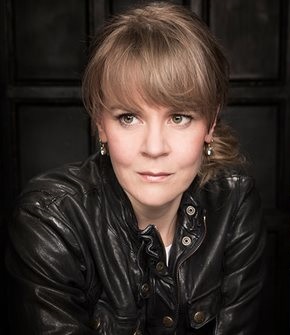
    Tuesday October 22nd, 2019 – Unsuk Chin’s Šu, for Sheng and Orchestra, performed by Wu Wei, was the centerpiece of this evening’s New York Philharmonic concert at David Geffen Gall. Susanna Mälkki was on the podium for a program that also featured music by Haydn and Strauss. It turned out to be a memorable evening, continuing a string of inspiring performances that I have enjoyed in these first weeks of the classical music season.

    Haydn’s Symphony No. 22, Philosopher, was the opening work. It’s a short – and very neat – symphony, which commences with an Adagio throughout which a steady, pacing pulse is maintained. The English horn is prominent, as are the horns (who excelled in the third movement). The concluding Presto had a lovely, bustling atmosphere. Ms. Mälkki’s finely-measured and elegant conducting drew excellent playing from the ensemble. 

    Wu Wei then took his place for Marie-Josée Kravis Prize-winner Unsuk Chin’s Šu. The composer stated that, for her, the sheng is associated with the “yearning for a distant sound…”  Šu – and Wu Wei’s playing of it – is truly engaging.

    56475_sheng_lg

    What is a sheng?  You may well ask (I certainly did). Above is an illustration, and here is an interesting article about this ancient Chinese reeded instrument. And what does the sheng sound like? Not similar to the oboe or bassoon – which was what I was expecting – but instead it reminds me very much of the musette, that enchanting little French bagpipe that was fashionable in French court circles in the 17th and 18th centuries.

    Šu begins with whispered, other-worldly sounds from the solo instrument. A vast array of percussion instruments will be heard as the work progresses – shimmering bells, eerie gongs, powerful drumbeats – whilst Mr. Wu’s sheng sighs and shivers. He produces echo effects, bending high notes to vary the pitch, and sometimes sounding like a squeezebox.

    The music seems to come to us from distant galaxies; images of frozen landscapes are evoked. The composer shows her mastery of texture and of rhythmic shifts. Violins stationed in the hall’s upper tier sing as if from from the heavens. Deep tuba rumblings give way to big, dense brass waves; the music becomes bouncy and then pounding.

    As calm sets in, Mr. Wu plays a sort of cadenza: fast, rhythmic, ascending, A forward impetus then takes over: the music sways, and the player sways with it, shifting his weight as he reels off amazing passages.

    The music subsides to a quiver; the orchestra produces a sustained, deep hum as the sheng is heard in ethereal whispers. Chimes sound, and this dreamworld fades into memory.

    Both the audience and musicians onstage enthusiastically applauded Wu Wei for his phenomenal performance. As a second wave of cheering swept thru the house, Mr. Wu returned for a brilliant (and sometimes witty) encore that called for incredible virtuosity; both his playing and his physicality – including some stomping dance steps and interjected shouts – captivated the crowd, and he basked in a rock-star ovation at the end.

    Malkki

    Above: tonight’s conductor Susanna Mälkki

    Following the interval, Ms. Mälkki led a truly impressive performance of Richard Strauss’s Also Sprach Zarathustra. From its deep growl of a start rises the majestic, super-familiar theme that sets this blazing masterpiece on its way. The Philharmonic’s stellar bass section, joined by the organ, gave a rich depth to the music that sent chills thru me. Strauss has woven one appealing thread after another into this royal sonic tapestry; it’s a work in which there’s never a dull moment. Abounding in solo opportunities for individual instruments – clarinet, cello, trumpet, oboe, a trio of bassoons – the work further features a glorious tutti theme for celli and violins, and an enchanting Viennese waltz (led by the silken-tone of Sheryl Staples’ violin).

    Glimmers of ARIADNE AUF NAXOS, DER ROSENKAVALIER, and DIE FRAU OHNE SCHATTEN flitted thru the air as this epic performance by The Philharmonic sailed gorgeously forward. The only blot on the evening came when a grand orchestral cutoff was ruined by a child muttering and a cellphone going off, spoiling the dramatic effect of a sudden silence.

    ~ Oberon