Author: Philip Gardner

  • Angelin Preljocaj’s GRAVITY @ The Joyce

    Author: Oberon

    Photo by Jean-Claude Carbonne

    Sunday October 26th, 2022 matinee – GRAVITY is the fourth work choreographed by Angelin Preljocaj that I’ve had the pleasure to see. His LA STAVAGANZA and SPECTRAL EVIDENCE for New York City Ballet were unusual and engrossing, and ANNOCIATION – a duet for two women drawing on the bible story and danced by the late, lamented Cedar Lake Contemporary Ballet – remains vividly in my mind to this day. 

    This afternoon, I was able to secure tickets for what has been essentially a sold out run of the choreographer’s GRAVITY at The Joyce. Thank you, Mr. Z! 

    Described as “a poetic meditation on the force that binds us all…”, GRAVITY is a treasure trove of dance and music. The last time a ballet kept me awake all night was after the 2006 premiere of Jorma Elo’s SLICE TO SHARP for the Diamond Project at New York City Ballet. The music Elo chose, by Biber and Vivaldi, gave a stellar group of dancers – Maria Kowroski, Ana Sophia Scheller, Sofiane Sylve, Wendy Whelan, Joaquin de Luz, Craig Hall, Edwaard Liang, and Amar Ramasar – wings on which to fly. Brilliance everywhere! The opening night drew a six-minute ovation.

    M. Preljocaj’s GRAVITY was danced by twelve dancers, and though their names are not familiar to me, their physical prowess and compelling artistry gave me the same thrill as that lineup of NYCB gods and goddesses in the Elo.

    The afternoon commenced with an announcement that, due to Visa red-tape, the lighting crew of Ballet Preljocaj had been denied entry to the USA. Racing against time, tech people from The Joyce were able to devise – via phone calls with their French counterparts – a lighting scheme that saved the show.

    GRAVITY opens in near darkness; to ominous sounds, the slumbering dancers slowly awaken. A feeling of wonderment develops as they rise and commence a dance in slow motion. As the individuals draw closer to one another, a sense of community flourishes. They form a circle in a pool of light. One woman (whose name I wish I knew) has a remarkable solo: staying on her mark, she poses in arabesque, arms gently caressing the air, turning ever so slowly as she hypnotically alters her pose with amazing steadiness and poise.

    The men, clad in skirts, perform a ritual dance in unison; to the sound of the harpsichord, the women join. Suddenly, explosive drumming bursts forth, and an octet is danced slowly to shifting percussion rhythms. The stage clears; two couples approach from opposing wings, the men prone on the floor, dragging themselves along. A pas de quatre is danced to a gorgeous violin theme; the partnering is sublime, laced with touches of wit as the piano joins in the music. A feeling of intimacy evolves, the partnering becoming quirky; the music turns poignant, the dancing increasingly poetic. This segment was an outstanding part of an outstanding ballet: endless fascination.

    A sudden burst of animantion to pulsing music feels urgent, and a bit threatening. Some floor work from the dancers as the lighting responds to the marvelous, cinematic music. Three couples appear, the men abandoning the women, who lie on the backs like corpses. Soft eerie sounds accompany the women in a unison passage…incredible. 

    The music then goes for Baroque, with a stylized sextette by be-skirted couples. In silence, two men carry what appear to be corpses of two women wearing helmets. Piano music sounds, the helmets are removed and the men leave the women to dance a duet to metallic sounds. 

    An insistent beat brings all twelve dancers onstage for a ritualistic passage; a male duo beomes a trio. A machine-gun rhythm leads to a sonic swoosh. Two women in white have an amazing duet in which their hands develop a propeller motif of mind-boggling speed.

    All the dancers, clad in white, now form a circle as the familiar music of Ravel’s Bolero commences. They dance about, creating shapes with their arms, the group expanding and contracting as the music expands its relentless beat. If filmed from above, these patterns would have a kaleidoscopic effect.

    An ending seems to have been reached, but there is a coda. As the dancers are gently lain down to rest, the lone mystery woman from the ballet’s opening resumes her slow, expressive solo: her steadiness and control are fascinating to behold; her dance becomes a benediction. 

    The moment darkness fell, the entire packed house stood up as one and gave the dancers a tumultuous ovation. They had to come forward to bow repeatedly as waves of applause surged and shouts of acclamation filled the hall. At last, M. Preljocaj dashed onto the stage, greeted by whoops of delight.

    ~ It was a special day for me as my guest was Elaine Aronson; in 1974, Elaine and I danced together in a production of COPPELIA given on Cape Cod. Over the ensuing years, I often wondered where she was and what she was doing. By chance, I recenty found her on Facebook, e-messaged her, and we met up. Miraculously, she now lives in Manhattan after having spent 40 years in Los Angeles. This afternoon’s Preljocaj masterpiece was a perfect way to celebrate our reunion.
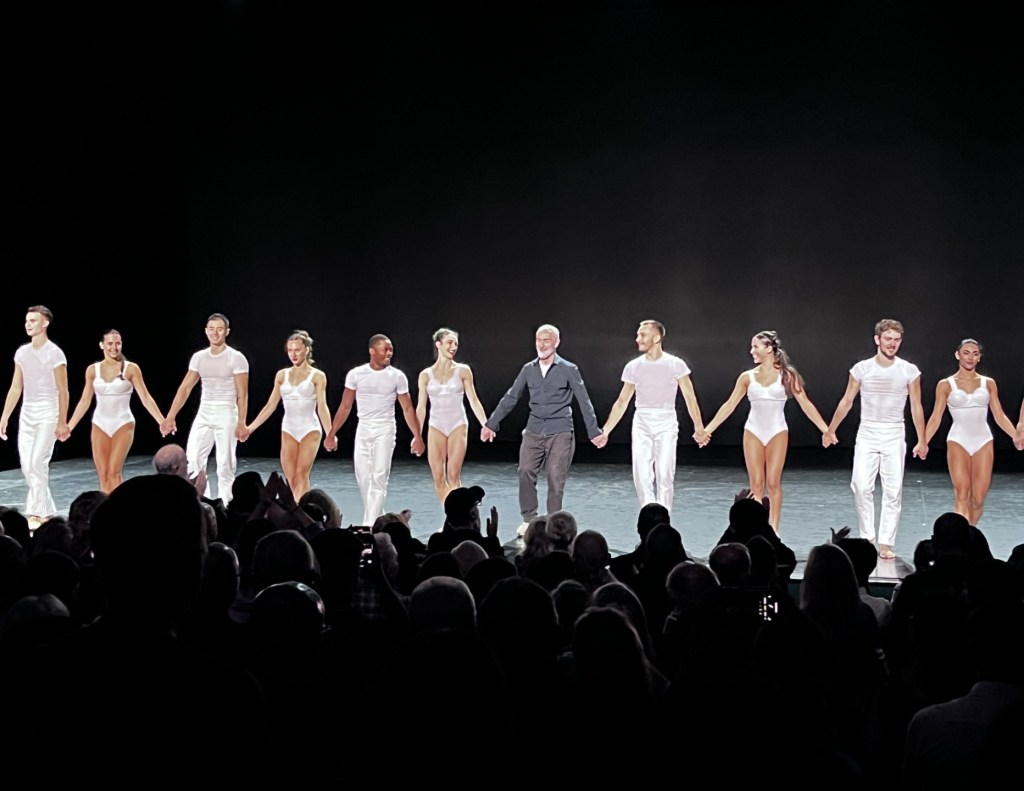
    Curtain call photo by Elaine.

    ~ Oberon
  • Benita Valente Has Passed Away

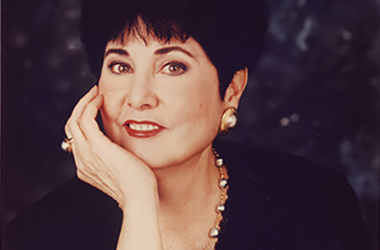
    Soprano Benita Valente has passed away at the age of 91. A native of Delano, California, she studied singing with two renowned prima donnas: Lotte Lehmann and Margaret Harshaw.

    A winner of the Met Auditions in 1960, she debuted at the Met as Pamina in 1973 and went on to give 75 performances with the Company, in NYC and on tour; I saw both her Pamina and her Nannetta in FALSTAFF in the great house. She also sang Gilda in RIGOLETTO, Susanna in NOZZE DI FIGARO (and she later took on the Contessa in the same opera), and Ilia in IDOMENEO at The Met. In 1984, she sang the role of Almirena in the Met’s premiere of Handel’s RINALDO. Her interpretation of that character’s great aria, “Lascia ch’io pianga” is much admired: listen here. Ms. Valente gave her last Met performance in 1992.

    In addition to her opera performances, Benita Valente was a beloved singer of lieder and oratorio. Such composers as William Bolcom, Albeto Ginastera, John Harbison, and Libby Larsen wrote music specially for her. Her recital and concert appearances took her to music centers around the world, and she made several recordings, among them Vaughan Williams’ Sea Symphony and Schubert’s Shepherd on the Rock. One of my favorites in her discography is a collection of arias and duets with Tatiana Troyanos.

    Retiring from singing in 2000, Benita Valente taught and gave master classes at Marlboro, Ravinia, Ottowa, and Temple University. She also worked with singers from the Met’s Young Artists Program; I met her in that capacity in 2007, when Lisette Oropesa was in the program:

    As a parting song, listen to Benita Valente singing Schubert’s “Nacht und Träume“, with Richard Goode at the piano, here.

  • Mara Zampieri in Catalani’s LA WALLY

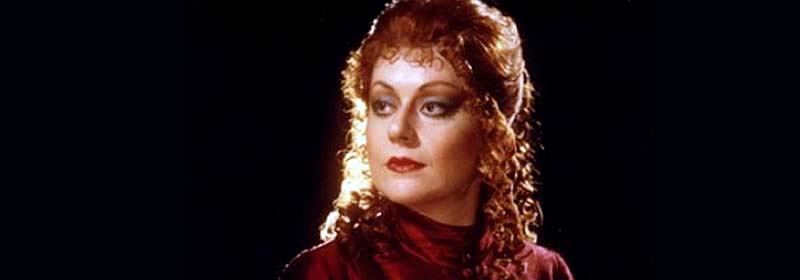
    Mara Zampieri (above) stars in a production of Alfredo Catalani’s rarely staged LA WALLY, given at Bregenz in 1990.

    Watch and Listen here.

    Cast: Wally – Mara Zampieri; Hagenbach – Michael Sylvester; Gellner – David Malis; Walter – Ildiko Raimondi; Stromminger – Norman Bailey; Afra – Liliana Nikiteanu; Il Pedone – Kolos Kováts

    Conductor: Pinchas Steinberg

  • Meier/Carreras/Justus TOSCA @ New York City Opera ~ 1975

    I was glad to discover this New York City Opera performance of Puccini’s TOSCA from 1975 has been posted on YouTube.

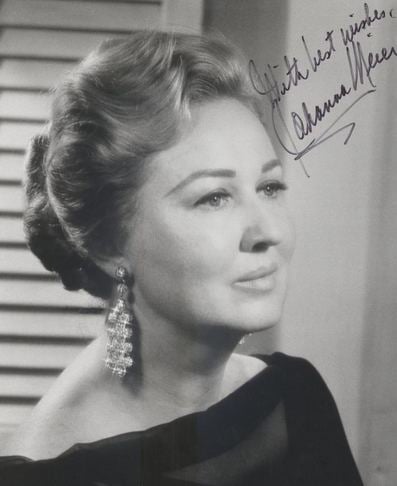
    Johanna Meier (above) – a great favorite of mine – sang with both The NYC Opera and The Met; I had the great pleasure of seeing her as Musetta, Contessa Almaviva, Strauss’s Ariadne, Marguerite in FAUST, Chrysothemis, the Marschallin, Donna Anna, Elisabeth in TANNHAUSER, the Empress in FRAU OHNE SCHATTEN, and – outstandingly – as Sieglinde.

    Listen here.

    (Two outstanding passages in this TOSCA are Meier’s introspective and sustained singing of the “Vissi d’arte“, with its gorgeous pianissimo final note, and her blazing top-C in Act III as she tells her lover how she murdered Scarpia. These moments are at 1:09:45 and 1:36:30 respectively. )

  • Sejong Soloists ~ 2025: From Bach to Dorman

    (This is one of several articles that did not make the transfer from Oberon’s Grove to Oberon’s Glade. Although it’s out of chronological order, I am very glad to have it – even belatedly – on the new blog.)

    Above, tonight’s soloists Gil Shaham and Adele Anthony; photos by Chris Lee.

    Author: Oberon | Tuesday April 8th, 2025 — Having greatly enjoyed the Sejong Soloists’ concert at Zankel Hall in May 2024, I was keen to hear them again this evening at the same venue. The program offered three beloved Baroque masterpieces along with a 1944 piece by David Diamond and a world premiere by Avner Dorman.

    Antonio Vivaldi’s Trio Sonata in D-Minor, Op. 1, No. 12 (Variations on “La Follia”) has been set by choreographers who value it for its mood swings and rhythmic variety. The theme was gorgeously set forth by the lustrous playing of the Sejong artists, the ensuing variations veering from extreme delicacy to near madness.

    J. S. Bach’s Concerto for Two Violins in D Minor, BWV 1043, has great meaning for ballet-goers who know it as George Balanchine’s immortal Concerto Barocco. It was wonderful to hear Gil Shaham again — the accustomed allure of his timbre is ever-welcome — joined by Adele Anthony, gowned in scarlet. The concerto’s outer movements, Vivace and Allegro, were brilliantly played with marvelous ensemble support, but it’s the sublime Largo that always gets to me. The soloist duo were ideally showcased, and the Sejong players sounded so pleasingly poetic — I especially loved watching their two double bassists, Satoshi Okamoto and Nina Bernat, whose resonance and congenial sense of tempo-setting were abounding.

    David Diamond’s Rounds premiered in 1944 after conductor Dimitri Mitropoulos had complained to the composer that the melancholy of so many 12-tone works was weighing on his spirit. Rounds is a delight, reminding me at times of Aaron Copland’s Appalachian Spring and Hershy Kay’s treatment of American folk tunes for Balanchine’s Western Symphony. The violins sizzle at the start, the music playful and full of animated staccati from the celli and melodic variety from the violins. Again, the double basses were fascinating to hear and to watch. After a brief “spacey” passage, the composer’s salutes to Americana tease the ear. A fugue-like passage chugs along, then turns lyrical with subtly humorous interjections. The piece was enthusiastically applauded by the audience, many of whom—like myself—had never heard it before.

    J. S. Bach’s Air on the G-String from Orchestral Suite No. 3 in D Major, BWV 1068 offered consolation for the bleakness of the times we live in. Its familiarity has the reassuring feel of being among beloved friends. The players achieved a magical blend, and again the basses—with their measured, gentle tread like a heartbeat of humanity—were mesmerizing.

    The world premiere of Avner Dorman’s A Time to Mourn and a Time to Dance, Concerto for Two Violins and Strings was introduced by the composer. This compact (18-minute) work is in four movements played without pause. The first and third movements are solemn, even funereal; the second and fourth are reassuring—joyous celebrations of dance. Ms. Anthony opens the meditative first movement with an ultra-soft, lonesome melody; Mr. Shaham joins as the orchestra harmonizes gently, the soloists’ lines interwoven. The music grows brighter and more animated before returning to pianissimo. In the spirited Upbeat, there are hints of jazz and a pulsing rhythm that rushes onward as the violins buzz furtively, like a swarm of insects. Mr. Shaham’s high and sweetly sad melody opens Lamentful; he is joined by Ms. Anthony while the celli bring a sense of mourning. Hints of darkness and despair emerge along with sighs of sadness. Some plucked measures lead to the Exuberant finale, a danse à la Russe in which the violin duo play vibrantly over an emphatic beat. The ensemble take up a unison theme over accented accompaniment. Mr. Shaham truly shines here. The composer took a bow to warm applause.

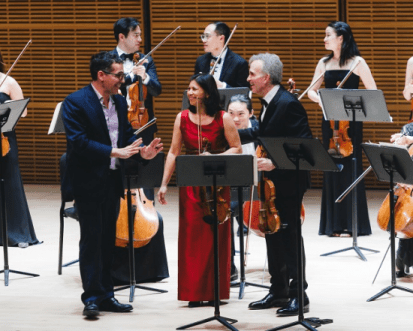
    Above: composer Avner Dorman with soloists Adele Anthony and Gil Shaham following the world premiere of A Time to Mourn and a Time to Dance. Photo by Emilio Herce. The Sejong Soloists are an orchestra well worth hearing; I look forward to our next encounter.

    ~ Oberon

  • Masterpieces by Mendelssohn and Shostakovich @ Zankel Hall

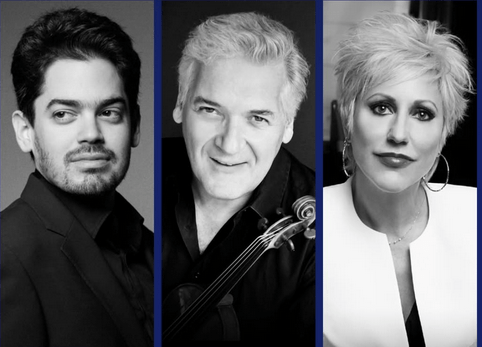
    Above: Lahav Shani, Pinchas Zukerman, and Amanda Forsyth

    Friday October 17th, 2025 – Guest artists (and married duo) Pinchas Zukerman and Amanda Forsyth joined musicians from the Israeli Philharmonic Chamber Ensemble at Zankel Hall tonight for a concert which featured two of my favorite chamber works – the Mendelssohn Piano Trio #1 and the Shostakovich Piano Quintet. Each half of the program commenced with music by Paul Ben-Haim

    Lahav Shani, director of the Israeli Philharmonic, was the pianist of the evening…and what a pianist! His playing throughout the evening was nothing short of spectacular.

    The concert commenced with Ben-Haim’s Berceuse Sfaradite. As he walked out onto the Zankel Hall stage, Mr. Zukerman was greeted with prolonged, affectionate applause. This beloved artist, now 77 (my age exactly!) played the Ben-Haim Berceuse (a transcription of a vocal song) so sweetly and tenderly, gorgeously accompanied by Mr. Shani. As the music faded sublimely into its ethereal finish, the audience burst into vibrant, sustained applause – and wouldn’t stop until Mr. Z came out for a bow. 

    Mendelssohn’s Piano Trio No. 1 was the work that first drew me into the world of chamber music. Decades ago, whilst living in Hartford, I’d tuned in early for a Metropolitan Opera Saturday radio broadcast. The local station played the Mendelssohn as a ‘prelude’ to the Met performance. For some reason, I flipped on my cassette recorder and taped the trio. I was captivated by the music; I hadn’t even jotted down the names of the musicians, but I played the tape often in the ensuing years; I still have it…though it no longer plays. 

    Tonight was only my second hearing of the 1st trio played live: nowadays it seems that it’s the 2nd piano trio of Mendelsohn that is most often heard in concerts. For me, the first trio far outshines the second with its flow of melody, enticing harmonies, and persuasive mood swings; it is music so familiar and so evocative for me.  

    The opening movement introduces us to Ms. Forsyth’s rich cello tone; she sets forth the signature main theme of the Molto allegro agitato, a melody I find heart-rendingly beautiful: it strikes right to the soul. Harmonies develop, and there’s a brief, pensive interlude with piano passages. This is followed by a rising passion, as swirling piano motifs lead to the movement’s end.

    Mr. Shani’s playing of the introduction to the Andante con moto was so appealing; the strings join but the piano continues to be prominent, sometimes veering into minor mode. A sense of urgency rises…and falls. Mr. Zukeman plays a lovely theme, underpinned by cello staccati. Then, a gently rocking cello rhythm carries us to a quiet end. 

    Mendelssohn, master of the scherzo, gives us a sprightly one here. Mr. Shani’s playing dazzles, and Mr. Zukerman’s timbre and technique are is irresistible. The trio’s final allegro is full of swings from major to minor and back again. Plucked notes from the cello develop into a plush duet for the two string voices. The piano urges things along, and there’s a slight lull before the build-up to the final passages. The three artists were enthusiastically cheered for their beautiful rendering of this musical treasure. Part of me wanted to leave then, and carry this sweet memory with me. But another piece I love, by Shostakovich, loomed before us. 

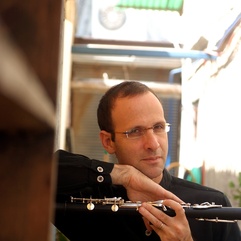
    But first, another Ben-Haim work: clarinetist de luxe  Ron Selka (above) and Maestro Shani offered a truly engaging performance of Ben-Haim’s Songs without Words for Clarinet and Piano. Like the opening Ben-Haim piece, these songs were first vocalises. The opening Arioso found Mr. Selka taking the long phrases in stride with his amazing breath control and spine-tingling tone. The ensuing Ballad mimics the insistent babbling of a story-teller, whilst the concluding Sephardic Melody is drawn from a traditional folk song. Mssrs. Selka and Shani served up this music to perfection. 

    Mr. Shani then displayed his abundant technique and deep-felt artistry when he joined the Toscanini Quartet (violinists Yevgenia Pikovsky and Asaf Maoz, violist Dmitri Ratush, and cellist Felix Nemirovsky) for the evening’s closing work: a magnificent rendering of the Shostakovich Piano Quintet.

    Composed in 1940 – between the Sixth and Seventh Symphonies – the quintet was an immediate success. It won the then-controversial composer the Stalin Prize in the same year, and was thereafter played frequently by Soviet quartets, often with Shostakovich himself at the piano.

    The basic structure of this truly amazing work is as follows:

     I. Prelude: Lento: A piano-led prelude that previews the work’s highly emotional tone.

    II. Fugue: Adagio: A grand, complex fugue, which builds in tension before fading out.

    III. Scherzo: Allegretto: A somewhat frantic movement that contrasts with the more formal opening movements.

    IV. Intermezzo: Lento: A lyrical movement that provides a feeling of calm before the finale.

    V. Finale: Allegretto: The final movement is upbeat and features various distinctive themes; the ending is whimsical, with the piano having the final say. 

    As the musicians took their places, I had to decide whether to continue taking notes or to sit back and savour this monumental work without the distraction of trying to find words to describe what is essentially beyond description. So I put my pen away…

    A momentary string issue with Ms. Pikovsky’s violin caused a slight disruption, but even this could not deter me from my concentration. How fascinating is every note of this score (and most especially its monumental Adagio) and how marvelous was the Toscanini Quartet’s playing of it. Of course, Mr. Shani at the Steinway was at the epicenter of this musical masterpiece: truly an artist of the finest quality. Slight audience distractions could not detract from my deep enjoyment on this glorious music, so perfectly played by this impeccable quintet.

    A hearty ovation broke out the moment the last note of the Shostakovich sounded. An encore was demanded, but I couldn’t catch Mr. Shani’s announcement of what the piece was. Appropriately, it brought together the Toscaninis, the pianist, and Mr. Selka’s mellow-toned clarinet for a breezy, romantic piece into which lovely melodies were woven

    Thus, an evening which could make us feel – if only for a couple of hours – that all’s well with the world.

    ~ Oberon

  • The NY Philharmonic’s Detour to Bologne and Mozart

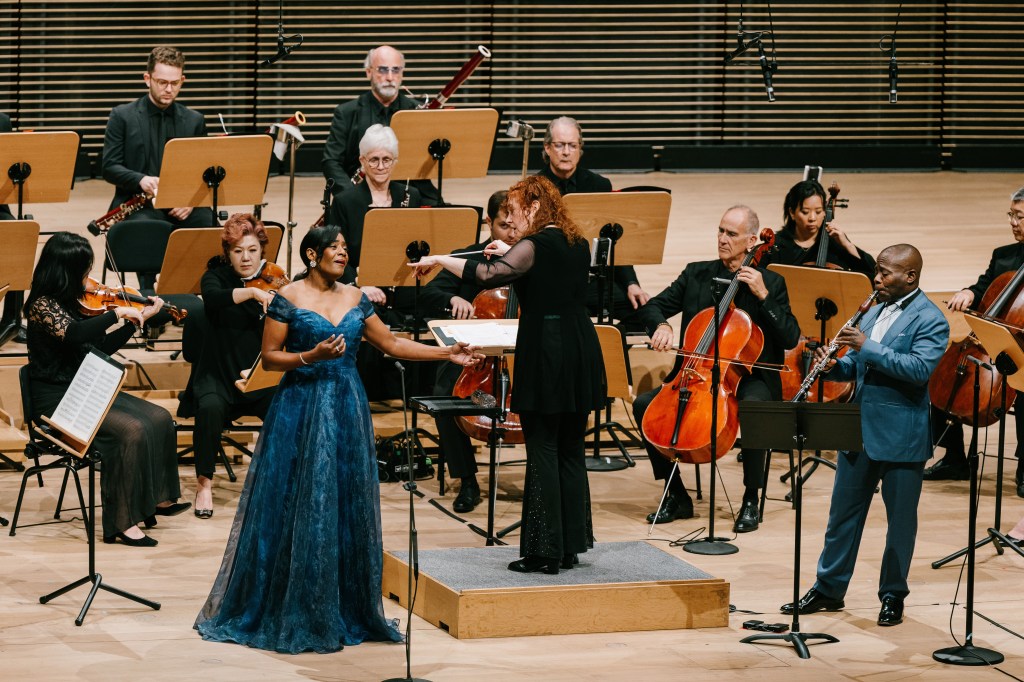
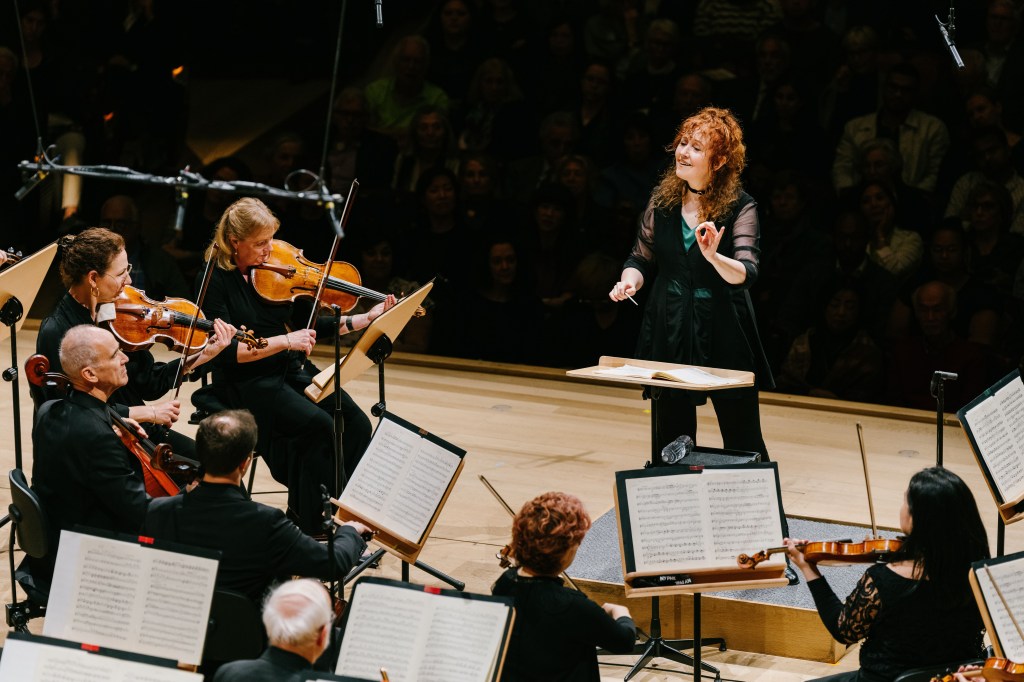
    Above: Jeannette Sorrell on the podium, with the evening’s soloists Sonya Headlam and Anthony McGill. Photo by Fadi Kheir.

    ~ Author: Lane Raffaldini Rubin

    Thursday October 16th, 2025 – This week the New York Philharmonic took a detour from its regular programming of large-scale Romantic and Modernist works to present a selection of eighteenth-century music.

    Jeannette Sorrell led the Philharmonic in works of Wolfgang Amadeus Mozart and the perennially under-programmed Joseph Bologne, Chevalier de Saint-Georges. Bologne has often been referred to as “the Black Mozart”, a term now thankfully retired. In fact, given the historical circumstances, one must wonder whether Mozart was really the “white Bologne”.

    Bologne, eleven years Mozart’s senior, was brought as a boy from the French colony of Guadeloupe to Paris, where he dazzled the élite and became a sort of living legend. None other than the would-be American president John Adams reported hearing King Louis XVI describe Bologne as “the most accomplished Man in Europe in Riding, Shooting, Fencing, dancing, [and] Music.” As a musician Bologne was specifically known as a virtuoso violinist, an innovative composer of concertos for that instrument, and a skilled director of instrumental ensembles and opera companies across Paris.

    But entrenched racism kept Bologne from accomplishing all that he was capable of. When Marie Antoinette advocated for Bologne’s appointment as director of the Paris Opéra, leading ladies in the company claimed that they could not take direction from a man such as Bologne.

    In certain ways, Mozart followed the path laid by Bologne to become a European musical sensation, favorite of royals and socialites alike. Sorrell, leader of the Cleveland-based baroque ensemble Apollo’s Fire, assembled a program that featured examples of Bologne’s writing for violin and opera and was bookended by one of Mozart’s earliest works and one of his most mature late works.

    The program opened with the three-part overture to Mozart’s opera La finta semplice, written in 1768 at the encouragement of Emperor Joseph II when Mozart was all of twelve years old. One can’t help but wonder how much help Wolfgang received from his father Leopold in the composition of his earliest works, but Wolfgang’s nascent style does shine through. This is particularly true in the rhythmic motor and curved figuration of phrases passed between high and low strings. The Italianate third section of the overture features a snappy language that breaks from the conservatism of the first two sections. Sorrell and the Philharmonic, with an appropriately sized string ensemble, played this music with elasticity, transparency, and continuous directionality of phrasing.

    Soprano Sonya Headlam, a frequent collaborator of Sorrell’s, joined the Philharmonic in the recitative Enfin une foule importune and aria Amour, devient moi propice from Bologne’s 1780 opera L’Amant anonyme. After hearing the youthful Mozart, Bologne’s music was striking in its stormy palette of timbres. The accompanied recitative was actively orchestrated and full of alluring minor-key rumblings, bringing to mind the seria style of Gluck. The orchestra had much more interesting music than the soprano, unfortunately, whose material unfolded unremarkably above this accompaniment.

    Anthony McGill, the Philharmonic’s principal clarinet, joined the orchestra as the soloist in Bologne’s Violin Concerto No. 2 in an arrangement for clarinet by Derek Bermel. McGill approached the concerto’s lyrical solo passages with characteristically sweet, placid tone. He assuredly tossed off many of the fast movements’ bravura passages that feature what were string crossings in the original version for violin. A cadenza that comes relatively early in the movement was hushed and pastoral, presaging the beautiful long melodic lines of the second movement. Sorrell kept the Philharmonic very well balanced through brilliant and lyrical passages alike. By the end of the third movement, McGill’s playing and Bermel’s arrangement convinced me that this concerto was perfectly suited for the clarinet.

    (A point of personal privilege: on the same evening that McGill played Bermel’s version of Bologne’s concerto, the South Dakota Symphony Orchestra, my old ensemble, and the Lakota group The Creekside Singers were performing a piece it had commissioned from Bermel and Emmanuel Black Bear.)

    McGill and Headlam joined forces in the scena Parto, parto, ma tu ben mio from Mozart’s opera La clemenza di Tito. Headlam’s full-throated instrument came in striking contrast to McGill’s vibrato-less clear voice. In moments of musical dialogue between the soprano and clarinet Headlam noticeably sweetened up her sound, which was most beautiful in the lower tessitura of the vast pitch range required of her in this music.

    Mozart’s Symphony No. 40, which rounded out the program, served as an ideal avatar for some of the evening’s big questions: Why bring a baroque bandleader—an outsider to the symphony circuit—to conduct the Philharmonic? Can an ensemble like the Philharmonic engage in the traditions of historically informed performance?

    Above: Jeannette Sorrell; photo by Fadi Kheir

    Sorrell’s reading of the first movement infused electricity into each melodic figure, with perfectly tapered phrases and an abundance of character in the bass lines. Elegant appoggiaturas are tossed between the violins and winds in the second movement, taken tonight with a lovely quick tempo. And the fourth movement, played with restraint, continues this dedication to the shapes of phrases, even as they speed quickly by.

    Sorrell may be more of a bandleader than a symphonic conductor, but there wasn’t a moment all evening that she did not have firm control of the ensemble’s tempo, shape, or timbre. She shepherded the group in what could only be considered sensible techniques of historical performance (minimal vibrato, decaying long bow strokes, transparency of sound, fleet tempos), without veering either into a mannered, academic treatment in one direction or an over-styled, exaggerated spiciness in the other.

    This is what the New York Philharmonic should sound like playing Mozart, or Bologne, or any music from before 1800.

    ~ Lane Raffaldini Rubin

    Performance photos by Fadi Kheir, courtesy of the New York Philharmonic.

  • Roberta Alexander Has Passed Away

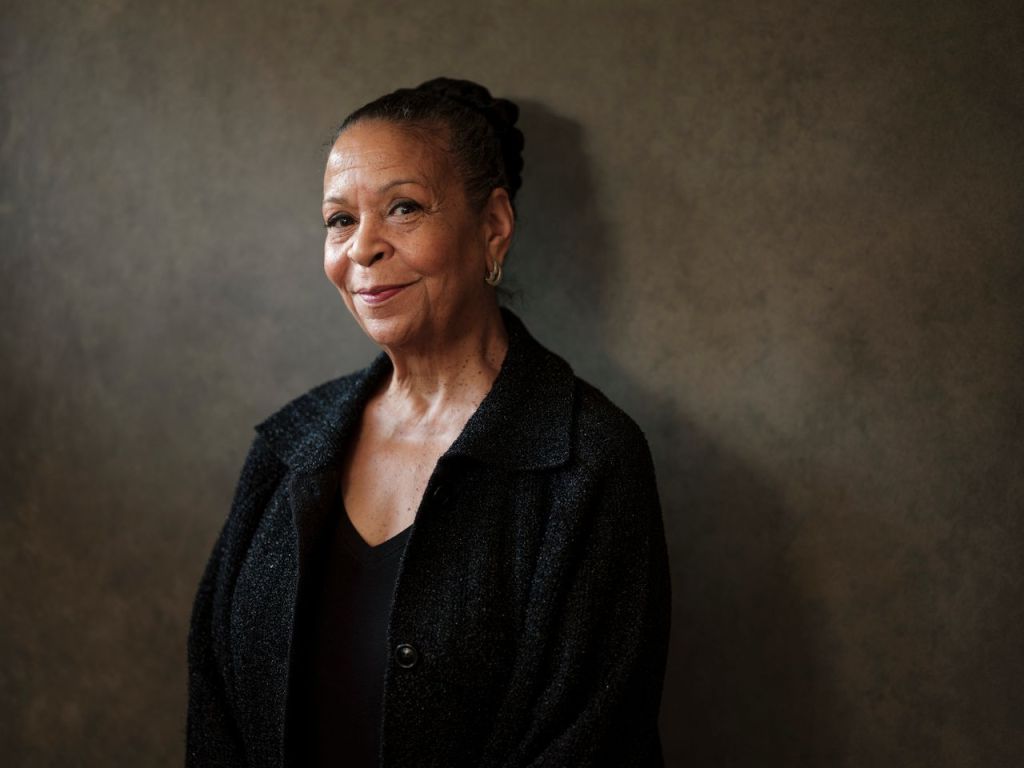
    Roberta Alexander, whose voice and personality might best be described as endearing, has passed away. A native of Virginia, she studied at the University of Michigan. At the age of 23, she moved to The Netherlands and began developing her career in such European centers as Berlin, London, Vienna, Glyndebourne, and Paris.

    Parallel to her opera performances, she sang concert repertoire with such notable conductors as Carlo Maria Giulini, Seiji Ozawa, Zubin Mehta, Bernard Haitink, James Levine, and Sir Simon Rattle. Her recital appearances took her all over the world, and she made several recordings, including a delightful series on the Etcetera label.

    Ms. Alexander made her Metropolitan Opera debut in 1983 as Zerlina. Her Met career continued with Jenufa, Gershwin’s Bess, Mimi, Mozart’s Vitellia, Contessa Almaviva (a lovely interpretation, which I saw), and Donna Elvira; and Offenbach’s Antonia.

    In 2013, the soprano had a shining late-career success when Patrice Chéreau cast her as the 5th Maid in what was to be his final opera production: Strauss’s ELEKTRA at the Aix-en-Provence Festival. In 2016, this production came to The Met, and Ms. Alexander was greeted with loving applause when she stepped forward for a solo bow at the end.

    Among her Etcetera label recordings, I am extremely fond of her disc of arias and songs by Samuel Barber, conducted by Edo de Waart (who had been Roberta’s first husband). Listen to an excerpt from this collection here.

  • Maralin Niska ~ “Vissi d’arte”

    Maralin Niska sings the “Vissi d’arte” from Puccini’s TOSCA in a New York City Opera performance, date not given. Listen here.

    Read about Ms. Niska here.

  • Clarice Carson and Dominic Cossa: Scene from LA PRISE DE TROIE ~ 1972

    Clarice Carson is Cassandra and Dominic Cossa is Chorebus in a scene from Berlioz’s LA PRISE DE TROIE. This concert presentation took place in 1972 at Carnegie Hall; John Nelson conducts the Pro Arte Orchestra.