Author: Philip Gardner

  • Baroque Violin Virtuosity @ Chamber Music Society of Lincoln Center

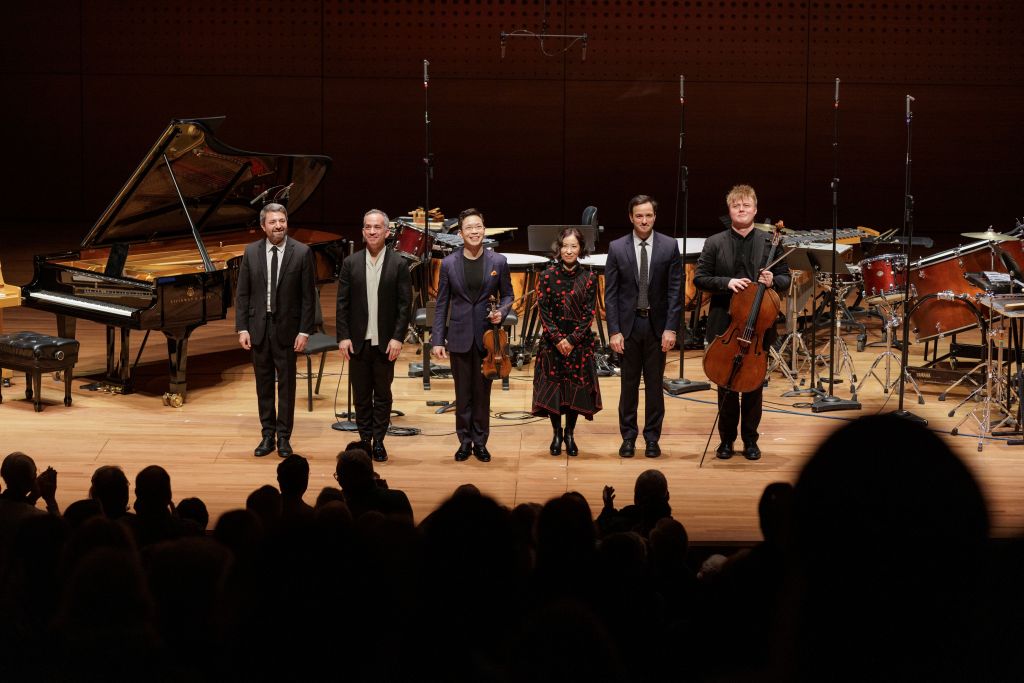
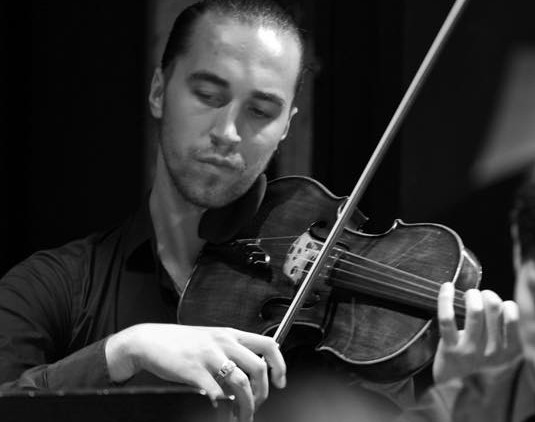
    Sunday December 7th, 2025 – Music by five of the of the giants of the Baroque period was on offer this evening as Chamber Music Society continues their current season, in which the violin is being celebrated. 

    The program for this concert was announced months ago, but there were two surprising additions: two recently-discovered works by Johann Sebastian Bach led to the opening of the Alice Tully Hall stage’s back wall to reveal the dramatically-lit 19-ton Kuhn concert organ. Paolo Bourdignon seated himself before this monumental, 4192-pipe instrument to play the ‘new’ Bach pieces (both dating from c. 1705) which were having their NY concert premieres.

    The first, Ciacona and Fuga in D-minor for Organ, BWV 1178, immediately bowled us over with the epic power of the towering instrument. As the piece progresses, we experience the vast dynamic range M. Bourdignon could summon, from profoundly rich chords to delicate filigree within echoed passages. 

    Next up,we heard the Ciacona in G-minor for Organ, BWV 1179; this – being in the minor key – had a darkish quality, laced with enticing subtleties. Througout both of these short works, the organist revealed his mastery of style and technique. 

    Georg Philipp Telemann’s 1735 Fantasia No. 10 in D-major for Violin, TWV 40:23, one of twelve fantasias the composer wrote, brought forth Chad Hoopes, one of five fantastic violinists to be featured during the evening. The opening Presto has a merry feeling, and the clarity of Mr. Hoopes’ playing drew us in. The central Largo sounded oddly familiar; it has a poignant sense of longing. The violinist charmed us with his sweet tone and delicate trills. The final Allegro – commencing with a joyous tune – was neatly dispatched, drawing warm applause from the packed house.

    Violinist James Rhee now took the stage for George Frideric Handel’s Sonata in A-major, with cellist Edward Aaron and Mssr. Bourdignon providing the elegant continuo. The three instantly achieved a cordial blend in the opening Larghetto – music with a gracious air – before moving on to an Allegro in which each player had a chance to shine; this was expertly played. In a brief and tender Adagio, Mr. Rhee’s playing was magical. The concluding, familiar Allegro had a lovely flow to it, the trio reveling in the perfection of their partnership. 

    From Arcangelo Corelli, we heard his 1714 Concerto Grosso in D-major for strings and continuo, Op. 6, No. 4. A series of introductory chords are followed by a burst of animation as violinists Kristin Lee and Richard Lin trade passages. The Corelli brought double-bass player Anthony Manzo’s first appearance of the evening; after the interval, he and M. Bourdignon will delight us thoughout Vivaldi’s Four Seasons. The Lee/Lin duo showed ideal pacing and pretty harmonies in the moderato of the Corelli; then they set off Baroque fireworks during the concluding Allegro, wherein they and the supporting ensemble were all bowing at breakneck speed. 

    More from JS Bach: the Concerto in E-major for Violin, Strings, and Continuo, BWV 1042, written “before 1730“. This music has the quality of encountering a friend one has not heard from for many years: it’s so recognizable yet ever so welcome and endearing. Arnaud Sussmann enjoyed a personal triumph here: his playing was simply sensational from first note to last. His shimmering cadenza in the opening Allegro presaged the magic spell he cast in the haunting Adagio that follows. The violinist’s uncanny control of dynamics – and his deep feeling for the music – turned this into a transportive experience; Mssrs. Arron and Manzo gave the violinst heartfelt support.  In the final, fantastical Presto, the ensemble – which further included Ms. Lee, Mssrs. Hoopes, Rhee, and Lin, and violists Aaron Boyd and James Thomspon – took in stride the swift tempo with some pristine, prestissimo playing. At the end, Superman Sussmann basked in the vibrant applause of his colleagues and the elated crowd.

    Ending the evening with a big Baroque bang was Antonio Vivaldi’s The Four Seasons, Op. 8 No. 1-4, which first burst upon the world in 1725. I became familiar with this music thru watching several performances of the Jerome Robbins ballet of the same title at New York City Ballet back in the day.

    Each ‘season’ had a different featured violin soloist: Mr. Hoopes confirmed his excellence in the evening’s opening Telemann with La primavera (Spring)…in fact, he supasssed himself, meriting a scrawl of exclamation points in my notes. In Spring’s opening Allegro, Mssrs. Hoopes and Sussmann engage in a bit of competition. In the Largo, Mr. Thompson’s viola seemed to comment on the violinist’s melody from across the stage. The concluding Allegro is a virtual breath of Spring, with Mssrs. Arron and Manzo bringing lovely details for this danza pastorale

    Mr. Hoopes stepped over into the very classy violin lineup as James Rhee took the centerstage position for L’estate (Summer). The opening Allegro non molto has a sneaky start, but soon Mr. Rhee is regaling us with some whirlwind playing, with the Arron cello as a co-conspirator. The ravishing Adagio finds Mr. Rhee in a sustained song of delicate pianissimi and spine-tingling trills. In the concluding Summer storm, Mr. Rhee’s playing becomes madly passionate, drawing a huge wave of applause. 

    Kristin Lee, in a striking, ruffled frock, became the goddess of L’autunno (Autumn); her playing is swift and joyous at first, joined by Mr. Arron’s’ cordial cello. Ms. Lee then offers us a sweet softness…and a sustained trill…in a brief interlude. In the Adagio – which is sometimes thought to depict sleeping drunkards – the cello, bass, and harpsichord create enticing colours as they join the violinist in drifting, dreamlike harmonies that have a mysterious feeling. The air clears for la caccia (The Hunt), an Allegro that has a swaying, emphatic feeling, crowned by agile playing from Ms. Lee.

    And finally, we come to L’inverno (Winter) where the virtuoso playing of Richard Lin crowned the evening. It commences with a passage for the soloist and cellist which sounds like scraping ice off a frozen surface. Then Mr. Lin simply takes off, like an Olympic skater bent on earning Gold. With his awesome technique and suave tone, the violinist’s playing is dizzying and delightful. The Largo brings a sweet melody over plucked motifs, and then a mood swing into an allegro rush to the finish line.

    The crowd, which had been wonderfully quiet and attentive, now swept to its collective feet, hailing the musicians like conquering heroes.  Nothing quite compares to a standing ovation in this space where – for two blessèd hours – we have left the darkness of the world behind. 

    But let us not lose hope just yet; this uplifting Handel chorus can raise our spirits, at least for a moment.

    “Let their celestial concerts all unite,
    Ever to sound His praise in endless blaze of light.”

    ~ Oberon

  • A second report on the Pittsburgh Symphony’s recent Carnegie Hall concert

    [Note: by coincidence, two writers from this blog wrote about the same concert, which was given by the Pittsburgh Symphony at Carnegie Hall on December 3rd, 2025. Scroll down the blog to read Shoshana Klein’s write-up.]

    Above: Maestro Manfred Honeck

    Author: Grayson T. Kilgo​

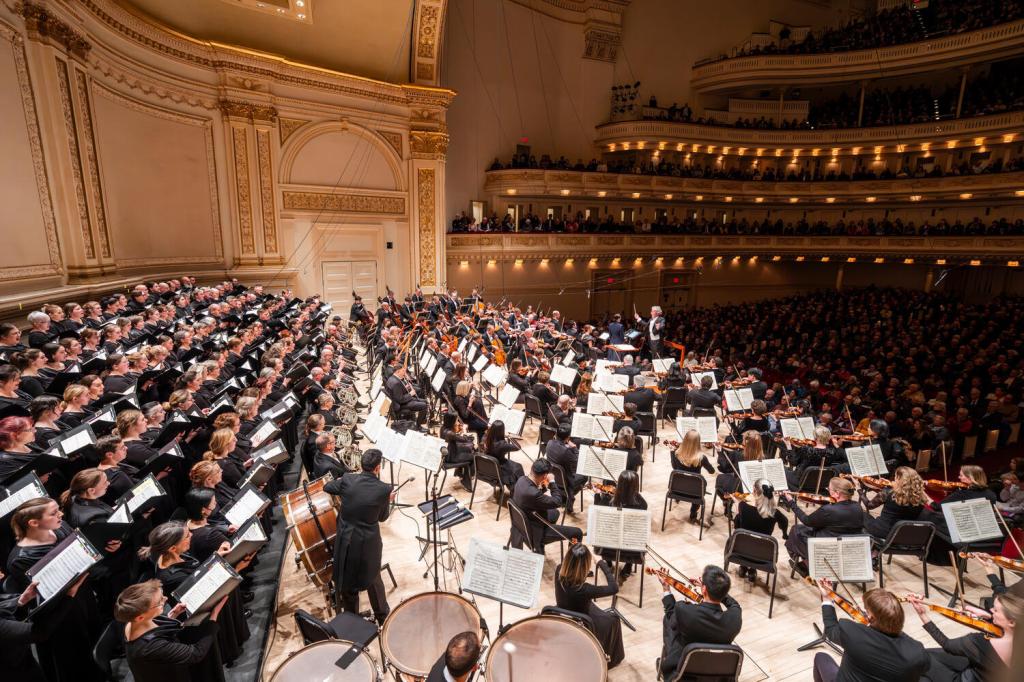
    I was sitting in the center rear orchestra at Carnegie Hall on Wednesday night, which is typically the best place to take in the full sound of an ensemble without losing detail. The warmth of the brass lands cleanly there, and the acoustics make even the smallest gestures unmistakable. It’s also the place where every cough and every dropped cellphone announces itself, uninvited, a reminder that Carnegie never lets you forget you’re part of the room whether you want to be or not. Small microphones on wires hung from the ceiling for the night’s live WQXR broadcast, which meant Pittsburgh’s first appearance at Carnegie in eleven years was not only a sold-out return to New York, but also a performance carried to a national audience.

    I read through the program notes before the lights dimmed. The night opened with the New York premiere of Lera Auerbach’s Frozen Dreams, followed by Seong-Jin Cho in Rachmaninoff’s Rhapsody on a Theme of Paganini, and closed with Shostakovich’s Fifth Symphony. It was, in a way, an all-Russian program. Auerbach was born in the former Soviet Union before defecting to New York as a teenager, and placing her commissioned work alongside Rachmaninoff and Shostakovich set up a progression that moved from a contemporary voice to something more historically grounded. Building the night around a modern commission, a major concerto with a widely known soloist, and a symphony the orchestra is closely identified with under music director Manfred Honeck showed a clear sense of programming and identity. Their Grammy-winning recording of the Shostakovich is still regularly referenced, so bringing it back to Carnegie felt less like a safe choice and more like a quiet assertion of identity.

    The ensemble, in long tuxedo tails with a few bold expressions of concert black mixed in, took their seats and prepared to execute the program.

    Frozen Dreams opened almost imperceptibly. Honeck gently opened his hand, letting the atmosphere open with it, and the sound arrived in a quiet, suspended layer. Auerbach’s writing moved through muted brass, thin glissandos, and brief figures that dissolved almost as soon as they formed, with trills in the strings and winds adding a cold, unsettled texture. From my seat I couldn’t see the percussion, but I heard something glass-like underneath that gave the sound an edge. The piece felt caught between memory and the present moment, and I found myself able to stay with that tension rather than resist it. I wondered if others in the hall felt the same, since this kind of meditative dissonance sits outside what many people expect from a more traditional program. For me it was less about narrative and more about holding a moment still, and it closed with the same quiet release with which it began.

    Seong-Jin Cho took the stage for Rachmaninoff’s Rhapsody on a Theme of Paganini, the centerpiece of the night. The work moves through twenty-four variations on Paganini’s Caprice No. 24, shifting between quick, sharp writing and the wide lyricism of the eighteenth variation. Cho, whom I had only known through recordings and reviews, is described as a player of clarity and restraint, and that came through immediately. The fast variations were clean and controlled, and in the quieter moments he drew out color and expression without exaggeration. The performance felt technically flawless and balanced from start to finish.

    During his well-deserved Chopin encore, the Waltz in C-sharp minor, I noticed the principal cellist watching him closely, almost absorbed. It stayed with me. Cho offered clarity and space throughout the night, and at times I found myself wanting the orchestra to meet that with a bit more edge in the larger passages. The performance was thoughtful and precise, and the strongest live account of the rhapsody I have heard.

    Shostakovich’s Fifth is where the identity of the Pittsburgh Symphony came through most clearly. Honeck has led the orchestra since 2008, and the tightness of the ensemble reflects how deliberately he has shaped its sound. Their connection to this symphony runs deep, including a Grammy-winning 2017 recording, but hearing it in person made you feel how much boldness sits underneath their control. Pittsburgh plays with a kind of daring that sits on an edge without toppling over.

    The first movement held tension without heaviness. The scherzo had a dry bite that stayed pointed without drifting into caricature. The third movement created one of the stillest stretches of the night. The long, exposed string lines carried clearly, and the room went unusually quiet for a hall this size.

    The finale built steadily, gaining strength without sudden pushes. The brass became very present; Carnegie naturally magnifies that, but Pittsburgh’s section has a physical solidity that lands deep in the chest. The percussion added weight without blurring the texture. After the last chord, the room sat quiet for a beat before applause broke. As I exited onto 57th Street, I felt spent but satisfied. The program had range, and Pittsburgh played with a presence that made their return to New York feel fully theirs.

    ~ Grayson T. Kilgo

  • Pittsburgh Symphony @ Carnegie Hall

    ~ Author: Shoshana Klein

    Above: composer Lera Auerbach takes a bow, applauded by the conductor, Manfred Honeck. Photo by the author.

    Wednesday December 3rd, 2025 – I have (mostly) fond memories of hearing the Pittsburgh Symphony regularly when I was in undergrad – as a music student, you’re expected to attend often – what better way to learn from your teachers than to hear them perform live every weekend? 

    There have been some notable roster changes since then – concertmaster Noah Bendix-Bagley left for Berlin, prompting a long search for someone to fill those large (though young) shoes. A few years ago, principal bassoonist Nancy Goeres retired – I was excited to hear her replacement, Julia Harguindey. More recently, Lorna McGhee, principal flute, left for Boston, which is a huge loss for the wind section–every time I heard her I was amazed at her tone. In much more niche news, I miss my oboe teacher, Scott Bell, trustily sitting second throughout my years there. He’s happily retired and likely busy playing Bridge. Really, much of the orchestra has turned over since 2018 or so, and not to their detriment! 

    The evening’s program:

    LERA AUERBACH Frozen Dreams (NY Premiere)

    RACHMANINOFF Rhapsody on a Theme of Paganini

    SHOSTAKOVICH Symphony No. 5

    This extremely standard program started off with one thing less well–known: the commissioned piece Frozen Dreams by Lera Auerbach. The composer framed the piece in an interesting and philosophical way in the program notes – the tension between music being both static and different for every listener. The piece had great textures and rhythms – marimba or waterphone paired with string pizzicato was a great effect – and the piece used pitch bends, lots of string harmonics texturing, and some complicated hocketing – almost all executed very well. 

    The Rachmaninoff started off a little stronger than I was expecting – not as timidly as it could in order to build, and not at all slow either, one of the earlier variations almost leaving the winds behind. Pianist Seong-Jin Cho was great – I don’t know of him but he seems masterful, especially with the full bodied orchestra behind him. I always forget how the familiar themes of this piece sneak their way in. The piece briefly showed off Max Blair, sounding great as always as assistant principal, as did English horn player Tim Daniels.

    The flagship movement – the sappy climax of the piece – was balanced well, not at all over the top but still engaging, from both soloist and orchestra. A well-deserved encore was a delicate Chopin Waltz (C-sharp minor). Cho played it very subdued with sparingly used builds towards important moments – really a treat. 

    Shostakovich’s 5th Symphony hits differed in our own brand of fascism – I always end up reading program notes, even when I know the history of a piece. These were particularly well done, explaining the controversy between this piece being a “propaganda symphony” and an act of defiance and truth in Soviet Russia. 

    The first movement gives opportunities to hear most of the winds. Those who have been there forever still sound amazing and look exactly the same as I remember, and the new bassoonist and guest principal flute player sounded great.

    The second movement took me by surprise – conductor Manfred Honeck took a lot of liberty with the time, stretching things and breathing a lot of life into it. Perhaps some of this was not having listened to the piece in quite a while, but it felt fresh and exciting.  

    Cynthia DeAlmeida – with whom I am well acquainted and got to say a quick hello to afterward, does get a mention for her solo in the 3rd movement – very worth paying attention to (even if you’re not in undergrad trying to soak up as much oboe playing as you can), with a very present and shimmery tone. Mike Rusinek took over the solo on the clarinet with a much more translucent sound. Pittsburgh’s strength has always been its soloistic and individual solo wind players, and that certainly hasn’t changed.

    The fourth movement started fast to my ear – I heard a story about Bernstein and this piece, that he misread or misinterpreted a tempo marking and ended up doing the accelerando at the end of the piece in double time (who knows if this is accurate, but it does end very fast in his recording). This interpretation started fast and ended very slowly! I always thought the speed up added to the feeling of frenzy, that there was something to cover up, emotionally – but I guess intentional slowness could do the same thing.

    In conclusion, the PSO is still a wind-forward orchestra and even better than before with some turnover. I know some of my enjoyment of this concert was nostalgia, but I can’t help but be impressed!

    ~ Shoshana Klein

  • Shadow Cities @ The Joyce

    Photo by Nir Arieli

    Author:  Oberon

    Wednesday December 3rd, 2025 – Ephrat Asherie Dance teamed up with composer/pianist/Grammy award-winner Arturo O’Farrill for Shadow Cities, a vivid marriage of music and movement. Seven dancers and a quartet of musicians filled the hour-long run time with elements of breakdance, waacking, hip hop, and house. 

    Ms. Asherie won a Bessie Award back in 2016 for Innovative Achievement in Dance. Mr. Arturo O’Farrill and his colleagues moved thru the varying moods and rhythms of the music giving the show an immediacy that seemed to envelop the enthusiastic audience and carry us on a joy-ride that ended up feeling way too brief. 

    David Dalrymple’s costume designs showed off the sneaker-footed dancers in multi-coloured everyday wear, and lighting designer Kathy Kaufmann created an array of moods, incorporating shadowplay and projections of colourful squares. Boxes serve as furniture, props, and things to be tossed about.

    The Company dancers are Ms. Asherie, Manon Bal, Ron “Stealth-1” Chunn, Teena Marie, Val “Ms Vee” Ho, Eriko Jimbo, and Dorren “Moglii” Smith. From the start, I was not always sure which dancer was dancing at a particular time; their photos in the program were very small, and of course my eyesight is not what it once was. At one point, I was pretty sure that the Company’s ‘swing’ dancer, Matthew “Megawatt” West was onstage. Suffice it to say, the all danced divinely…including some passages that felt like improv.

    As the house slowly filled up, I was surprised to find a lot of ‘seniors’ in attendance. I had been expecting more young people, even to the point where they might stand up and start dancing along with those onstage. Instead, silence reigned – apart from frequent bursts of applause and a lively ovation at the end. 

    Music and dance played equal parts in the evening’s success. Composer Arturo O’Farrill is a superb pianist, and Juan Carlos Polo’s a terrific percussionist. The versatile Larry Bustamante took up different wind instruments in the course of the evening. Eduardo Belo is probably the only double-bassist I’ve ever seen who doesn’t stay anchored to one spot. He moved about the space, mingled with the dancers, and did some steps himself – all whilst displaying his bass-playing expertise. At times, his bass seemed to become his dance partner.

    The curtain rises, and for a few moments, silence reigns. The bass is heard, joined by the drummer and pianist. The music calms as a questing woman moves among her fellow dancers. A silhouette segment is visually striking. The lighting goes red, introducing a shadowdance. 

    Animalistic sounds lead to an animated, jazzy trio. Mr. Bustamante showed us it’s possible to play the flute and sing at the same time. There are solo dances, and fleeting duets,and passages where everyone dances in sync. The music continues to draw us in: a percussion solo, and a piano interlude with a distinctly Baroque appeal. The sax goes wild, the pianist reaches into the case to pluck the strings, the flute gets jazzy. The dancers respond to these sounds as if the music is emanating from their souls. 

    A finale seems to have been reached, but then the pianist takes up a fresh theme. The boxes, which have been a part of almost every scene of the work, are now stacked to resemble a towering skyline; a spotlight casts their shadow onto the backdrop. We are reminded that we’re in a city where dance – and music – never sleep.

    ~ Oberon

  • Margaret Jane Wray Has Passed Away

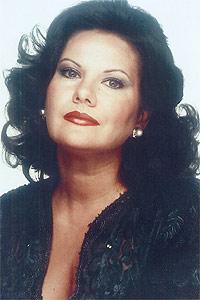
    Margaret Jane Wray, a singer who appeared in both mezzo-soprano and soprano roles during her career, has passed away at the age of 62. A native of Texas, she made her operatic debut with the Houston Grand Opera and went on to be a Met Auditions Finalist in 1985 and to receive the Richard Tucker Award in 1989.

    Ms. Wray made her Metropolitan Opera debut in 1987 as Annina in TRAVIATA and went on to sing nearly 100 performances with the Company thru 2010. Her roles ranged from the Mother’s Voice in HOFFMANN, Inez in TROVATORE, Berta in BARBIERE DI SIVIGLIA, the Sandman in HANSEL & GRETEL, the Priestess in AIDA, and Helmwige in WALKURE to Gutrune, Ortrud, Santuzza, and Amneris. 

    She was a notable Sieglinde, though she never sang the role at The Met. Her career took her to Carnegie Hall, La Scala, L’Opera in Paris, and the opera houses of Munich, Berlin, Brussels, Toulouse, Frankfurt, Nice, and Seattle. 

    I saw her in several of her Met roles, and also as Hippolyta in MIDSUMMER NIGHT’s DREAM at Glimmerglass Opera in 1987.

    In 2005, Margaret Jane sang the 3rd Norn in GOTTERDAMMERUNG with Seattle Opera. Her sister Norns were Ewa Podles and Stephanie Blythe, and Robert Spano was the conductor:

  • “Louder! I Can Still Hear The Voice of Frau Heink!”

    The above quote, ascribed to Richard Strauss, is said to have originated during a rehearsal for the world premiere of Strauss’s ELEKTRA, in which Ernestine Schumann-Heink was cast as Klytemnestra and the composer was conducting.

    Perhaps it was the beginning of a trend towards conductors allowing opera orchestras to swamp the singers…a trend much in evidence at The Met these days.

    ~~~~~~~~~~~~~~~~~~~~~~~~~~~~~~~~~~~~~~~~~~~~~

    Sunday November 30th, 2025 matinee – This will be brief, since I did not stay for the entire opera. Having found much to admire in Daniele Rustioni’s conducting of DON GIOVANNI on November 15th, I was curious to hear what he might do with LA BOHEME. The cast featured singers I love: Juliana Grigoryan as Mimi, Stephen Costello as Rodolfo, Mané Galoyan as Musetta, Alexander Köpeczi as Colline, Iurri Samoilov as Schaunard, and Donald Maxwell as Benoit/Alcindoro. New to me was the excellent and big-voiced baritone David Bizic as Marcello.

    As the first act progressed, it became evident that the conductor was not particularly interested in supporting the singers. Like other current Met conductors, he seemed intent on grabbing every chance to have the orchestra play loud and fast, sometimes covering the voices. 

    Oc course, there were beautiful moments along the way: Costello’s hauntingly prophetic “Che visa da malata…” when he first gazes at Mimi, and his ravishing pianissimo (down to a whisper) at the end of his aria; Ms. Grigoryan’s narrative was so appealing, especially at “Ma quando vien lo sgelo“, wherein she took her time, luxuriating in the  lovely warmth of her timbre. But the intro to the love duet was too grandly played from the pit, spoiling the poetry of the couple’s first exchanges of affection. Mr. Costello harmonized on the duet’s final note…something I wish more tenors would do.

    The tenor sang lovingly as he introduced Mimi to his comrades at Cafe Momus, and Mssrs. Köpeczi and Samoilov (who have more to sing in this scene than one might think) excelled. Ms. Galoyan, arriving at Momus, eschewed the usual screeching that many Musettas use to attract attention; her Waltz was caressingly sung, with a spectacular diminuendo on the top-B as the end. Then Mr. Bizic showed us the value of a powerful voice as he reprised the waltz theme…Bravo! The marching band and the pit players provided a noisy finale to the scene, at time slightly out of sync. 

    In the last minutes of the Momus ecene, I decided not to stay for the rest of the opera…there would be a 45-minute intermission coming, followed by a 30-minute one after the tavern scene…and then there was to be a “Curtain Chat” after the opera ended, meaning a long wait at the stage door to meet these people who had given us a beautiful BOHEME…despite the intrusive music that sometimes rose from the pit.

    Back on November 8th, I’d been at a BOHEME conducted by Keri-Lynn Wilson; on that afternoon, I was happy to experience a performance where the voices never seemed to vanish behind a wall of orchestral sound. Talking to some of the singers after the show, they had kind words for Ms. Wilson. I couldn’t help but wish that she had been on the podium this afternoon.

    ~ Oberon

  • Ariadne Rescues Bacchus

    At a 1974 performance of Strauss’s ARIADNE AUF NAXOS at the New York City Opera, the tenor singing Bacchus began running out of steam as the opera reached its finale. Just as it seemed he might not make it thru the arduous final bars of his role, soprano Johanna Meier started singing the lines with him.

    All’s well as ends well.

  • 1958 Met Broadcast of MADAMA BUTTERFLY

    Antonietta Stella is Cio-Cio-San in a 1958 radio broadcast from The Met of Puccini’s MADAMA BUTTERFLY.

    Listen here.

    CAST:

    Cio-Cio-San – Antonietta Stella; Pinkerton – Eugenio Fernandi; Suzuki – Margaret Roggero; Sharpless – Clifford Harvuot; Goro – Alessio De Paolis; Bonze – Ezio Flagello; Yamadori – George Cehanovsky; Kate Pinkerton – Madelaine Chambers; Commissioner – Calvin Marsh

    The conductor is Dimitri Mitropoulos

    Although I didn’t get to the Old Met until 1963, when Stella and Fernandi were no longer singing there, I saw most of the other singers in this BUTTERFLY cast numerous times in the ensuing years. Ezio Flagello was a perfect Leporello in my first-ever Met performance, and Calvin Marsh was Leporello that same night.

  • Benjamin Beilman and Gloria Chien @ Chamber Music Society

    ~ Author: Oberon

    Sunday November 23rd, 2025 – Violinist Benjamin Beilman and pianist Gloria Chien presenting a program of works ranging thru three centuries tonight at Alice Tully Hall. Chamber Music Society of Lincoln Center is focusing on the violin this season – their Winter Festival is entitled ‘Violin Celebration’ – and tonight’s Beilman/Chien concert might be thought of a delicious prelude to the festival: it was one of the finest violin recitals of my many years of experience.

    The violin itself was the focal point this evening, and, after his opening piece, the violinist gave a heartfelt speech extolling the magical instrument that he plays: the fabled Bartolomeo Giuseppe Guarneri ‘del Gesù’, 1740.

    The evening opened with Eugène Ysaÿe’s Sonata in D-minor for Violin, Op. 27, No. 3, “Ballade”. Composed in 1923, this single-movement solo work is in two sections: a sort of recitative that gives way to an Allegro. The Lento opening a has yearning quality before a livelier feeling develops into the  Allegro section, wherein Mr. Beilman reveled in the music’s virtuoso demands. His playing – from poignant to passionate – was alive with fabulous tone quality, perfect dynamic control, and remarkably fluent technical prowess. His performance elicited a lively ovation from the crowd; the evening is off to a marvelous start.

    Béla Bartók’s Sonata No. 2 for Violin and Piano, BB 85, was written a year before the Ysaÿe. A single low note from Ms. Chien at the Steinway opens the sonata. The music is full of mood swings, from mysteriously weighted to vigorous folk-dance motifs. Ms. Chien’s playing, veering from dreamlike to the edge of wildness, perfectly merges with the Beilman sound: by turns soulful and sprightly. The sonata’s understated ending was so expressively rendered by the two artists, with the violin ethereally on high.

    Karol Szymanowski composed his Nocturne and Tarantella for Violin and Piano, Op. 28, in 1915. The Nocturne opens with a mystical piano introduction, the violin entering low and pensive before ascending to some high trills; here Ben Beilman’s control was strikingly in evidence. Now the Tarantella strikes up: Spanish and Italian influences are evident, but also – oddly – traces of old Asian harmonies. The dance begins wildly, lulls into a more thoughtful mood, then on to an epic finish. 

    I have yet to hear a Chris Rogerson piece I didn’t like. Tonight, having its New York premiere, was the composer’s Arietta for Violin and Piano…and it’s another winner. Mr. Rogerson – unlike many comtemporary composers – is not afraid of melody, nor of sentiment. The Arietta has a dreamy start as a lovely theme emerges. Both musicians summon their most poetic sounds, with Ben in the highest range especially exquisite. There’s a pause, and then Ms. Chien sets up a low, steady piano figuration over which Ben takes up a new flow of melody. The music becomes ecstatic, then tranquil. There’s a piano solo before the piece ends softly. The composer joined the players onstage, to enthusiastic applause.

    The concert ‘s finale was César Franck’s Sonata in A-major for Violin and Piano, which dates from 1886. This piece was inspired by the marriage of violinist Eugène Ysaÿe to Louise Bourdeau, in the same year.

    Franck originally planned a slow, thoughtful start to the piece, but Ysaÿe thought a more upbeat tempo would be better, so it became an Allegretto…though preserving a dreamy quality as well. Silken playing from both violinist and pianist was simply gorgeous as the familiar theme – to be heard throughout the piece – blossomed. Brief solo piano interludes feel like small poems in Ms. Chien’s interpretation. 

    Passion marks the second movement; Ben’s playing is captivatingly expressive, and a sense of drama never flags. The signature theme is heard on high, and the movement ends after an agitato interlude.

    Sometimes described as Wagnerian in its wistful, Tristanesque feeling, the unusual Recitativo-Fantasia third movement refers to the ever-essential theme, now re-imagined. A violin mini-cadenza brings Ben to a sweet melody that turns expansive: at once incredibly tender and sad. A slow build-up evaporates into a shimmering motif from the piano; the violin singing hauntingly overall. Now the great theme sounds magnificently before fading away as if in a dream.

    The familiarity of that theme is reassuring, and in the final movement, the playing of it is exceptionally pure and clean…following an interlude from Ms. Chien’s keyboard, the heart-stopping beauty of the theme is presented one more time, searlingly played by Mr. Beilman: simply grand.

    A full-house standing ovation greeted the players as they came out for a bow, Ms. Chien in a beautiful plum-coloured frock and Mr. Beilman such a dapper gentleman. Further down our row, violist Matthew Lipman joined in applauding his colleagues after their outstanding performance. A Paganini encore, masterfully played, again let us savour the sound of the Bartolomeo Giuseppe Guarneri ‘del Gesù’…285 years old, and now in the hands of a 21st century Master.

    ~ Oberon