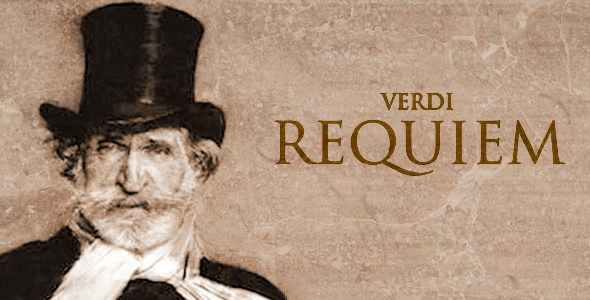
Lorin Maazel conducts a performance of Verdi’s REQUIEM, given at Munich in 2001. The soloists are Angela Gheorghiu, Anna Larsson, Roberto Alagna, and Matti Salminen, with the Bavarian Radio Symphony Orchestra & Chorus.
Listen here.
Lorin Maazel conducts a performance of Verdi’s REQUIEM, given at Munich in 2001. The soloists are Angela Gheorghiu, Anna Larsson, Roberto Alagna, and Matti Salminen, with the Bavarian Radio Symphony Orchestra & Chorus.
Listen here.
Author: Mark Anthony Martinez II
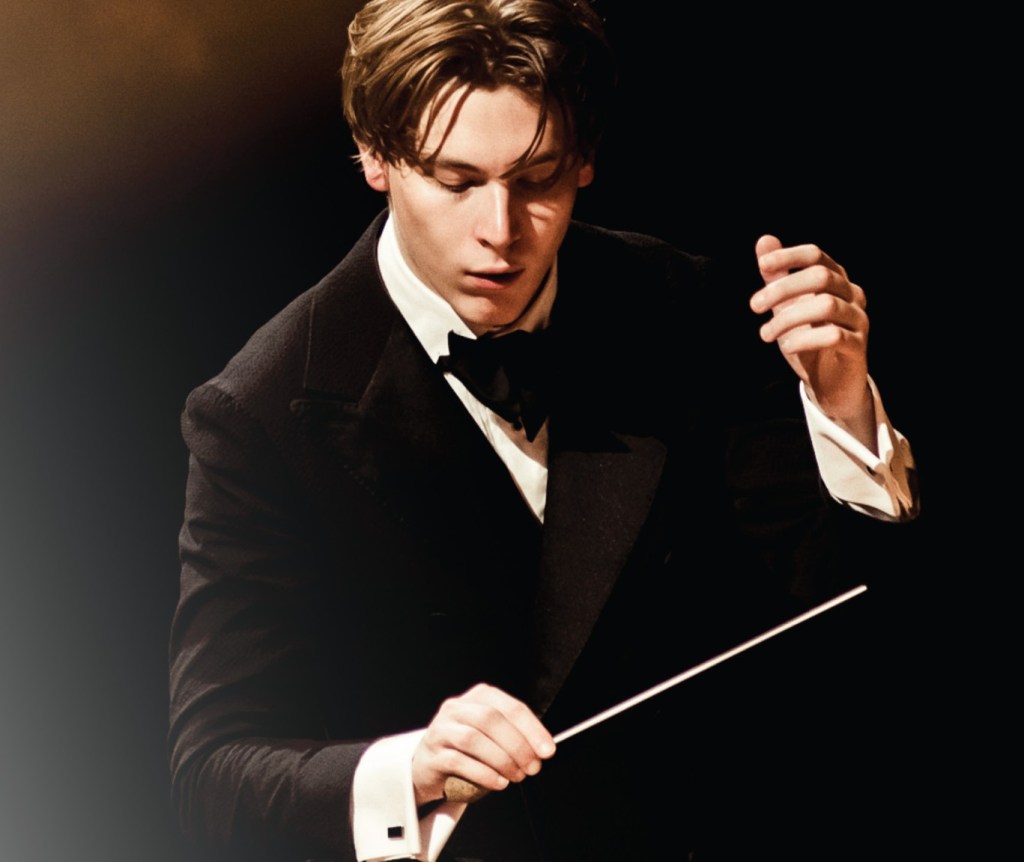
Wednesday February 25th, 2026 – The Chicago Symphony Orchestra at Carnegie Hall under the baton of Maestro Klaus Mäkelä (photo above), performing two less-frequently heard tone poems.
The hall was abuzz, and something I noticed was that the orchestra was already seated on stage instead of coming on with the conductor. As the lights dimmed and the young Maestro Mäkelä cued the first notes, the piece started with a loud brass bass. I was unfamiliar with both pieces on the program, but I noted that, for a Sibelius piece, the music sounded particularly Straussian. At the time, I was thinking, “Wow, Sibelius really did learn a lot from Strauss.” After several more minutes of thinking the same, I realized that the program order had been flipped and that instead of starting with Sibelius’ Lemminkäinen, they were in fact playing Strauss’ Ein Heldenleben!
I was so glad that I eventually realized my mistake, but thought it was funny that it took me so long to do so.
Mäkelä was fun to watch, as he was one of the more animated conductors I had seen in a while. As he conducted the piece joyously, with his hair flying with each gesticulation, it added another element to the show beyond just the music.
The Chicago Symphony Orchestra did a magnificent job playing the difficult piece, which ranged from tone poem to violin concerto at some points. The piece itself is, funnily enough, conceptualized around Strauss’ own life instead of pulling from the more traditional Grecian, Roman, or mythical source material. Knowing the source material makes certain sections more entertaining, like the wind solo portion, which sounded more like a cacophony than music, representing Strauss’ critics in life.
There was an ascending leitmotif that persisted throughout the piece, passed adeptly among the different instruments. The leitmotif represented Strauss himself (or the Hero).
The structure of the tone poem had eight distinct sections, though they weren’t marked as such in the program. The most interesting section to me was when the concertmaster, Robert Chen, essentially took the role of a violin soloist in a concerto-like movement. Strauss’ wife, Pauline, was a soprano, and Chen’s violin took on the emblematic role of portraying her throughout Strauss’ life.
One interesting moment was an extended trumpet solo that appeared to come from offstage. I was trying to pinpoint where it might be coming from, but I saw that the stage-right door was open, and once the fanfare had ended, the door closed again. I love the use of these spatial elements in music, because it really expands everything so it’s not just “on stage,” but all around.
The orchestra charged through the difficult piece, and figures from earlier sections, like the hero’s leitmotif and Pauline’s violin, returned as the piece ended in a blaze.
After the intermission, the orchestra reduced in size and was now set to play Sibelius’ Lemminkäinen. The piece is actually a set of tone poems that Sibelius wrote with similar thematic material. One interesting historical note is that the Chicago Symphony Orchestra was the first American orchestra to perform Sibelius’ music, so it was fitting that they are still continuing that tradition.
The pieces are inspired by the Finnish epic poem The Kalevala. This poem follows the titular character along his adventures. What is interesting is that these pieces weren’t originally conceptualized as one set, but came together over time. As they were composed, the first two in today’s set were performed as a unit, and as Sibelius wrote more, they were added to the larger work.
As a pairing, the Strauss fit very well with the Sibelius. The two works heavily feature brass and have a mystical aura to them. The first movement, Lemminkäinen and the Maidens of Saari, was a gorgeous and restrained piece evocative of nature and spring. The cellists in particular had a lovely solo section that continued for much of the movement.
Sibelius seemed to have a soft spot for the cello, because the second movement started with a plaintive cello solo, with an oboe eventually soaring above it. The second piece, The Swan of Tuonela, is interesting in that it started its life as an opera. Sibelius abandoned writing the opera after visiting Bayreuth and realizing that the competition as an opera composer was extremely fierce, but selfishly I wish that Sibelius had taken that dramatic leap and finished it. The movement felt in many ways like an overture, with memorable tunes and lush atmospheric music seeming to rise out of the earth.
The fourth movement, Lemminkäinen’s Return, was a standout for the orchestra. The piece starts with string tremolos, but has a melody built into them in a way that I haven’t really seen before. This movement felt the most Finnish in nature, as the main motif was passed from the strings to the brass, then to the woodwinds.
Toward the middle of the piece, there was a dramatic col legno section where the celli played with the wood of their bows instead of the hair, as the final movement came to a dramatic close.
My friend, who I was seeing the piece with, noticed that we were “jamming” out to classical music at the end, and I found it so funny that a non-modern art form can have the same physical effect as something played on the streets of Manhattan. Truly a testament to the Chicago Symphony Orchestra’s playing.
~ Mark Anthony Martinez II
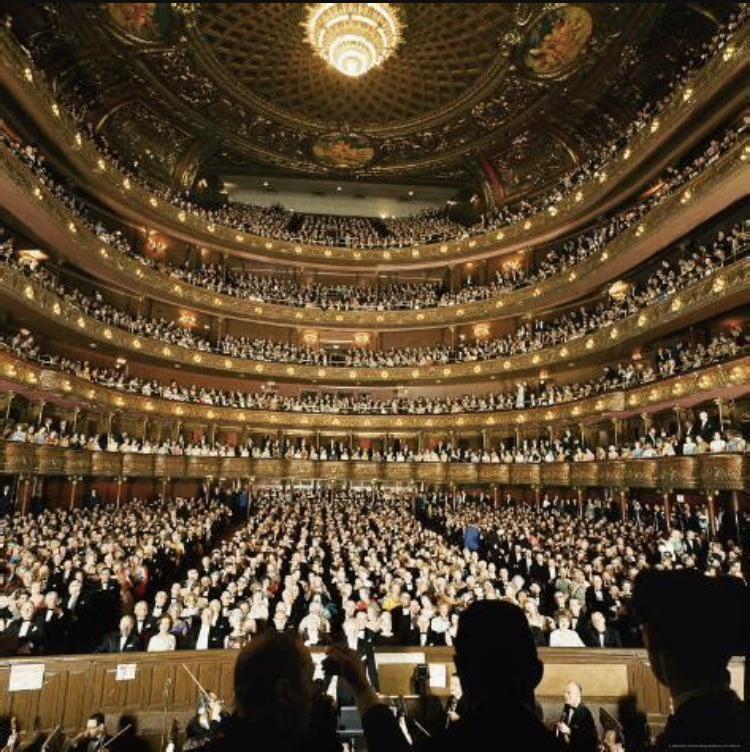
I was already in the 13th year of my opera obsession when Sir Rudolf Bing stepped down as General Manager of the Metropolitan Opera. To honor him, a gala concert at the opera house took place on April 22nd, 1972. The singers who appeared were among my idols at the time….and they still are.
I’ve seen parts of this concert on video before, but the sound quality here is the best I’ve encountered. Unfortunately, the same cannot be said for the video quality.
Watch and listen here.
The program was a veritable parade of stars. Among the most notable moments, Franco Corelli was singing the only portion of Verdi’s OTELLO he ever sang on the Met stage: the Act I love duet. His Desdemona is the luscious Polish spinto, Teresa Zylis-Gara. And the luminous Spanish soprano Pilar Lorengar brought Marietta’s Lied from Korngold’s DIE TOTE STADT to new generations of opera lovers. The aria became a cult favorite, prompting the New York City Opera to mount the opera in 1975.
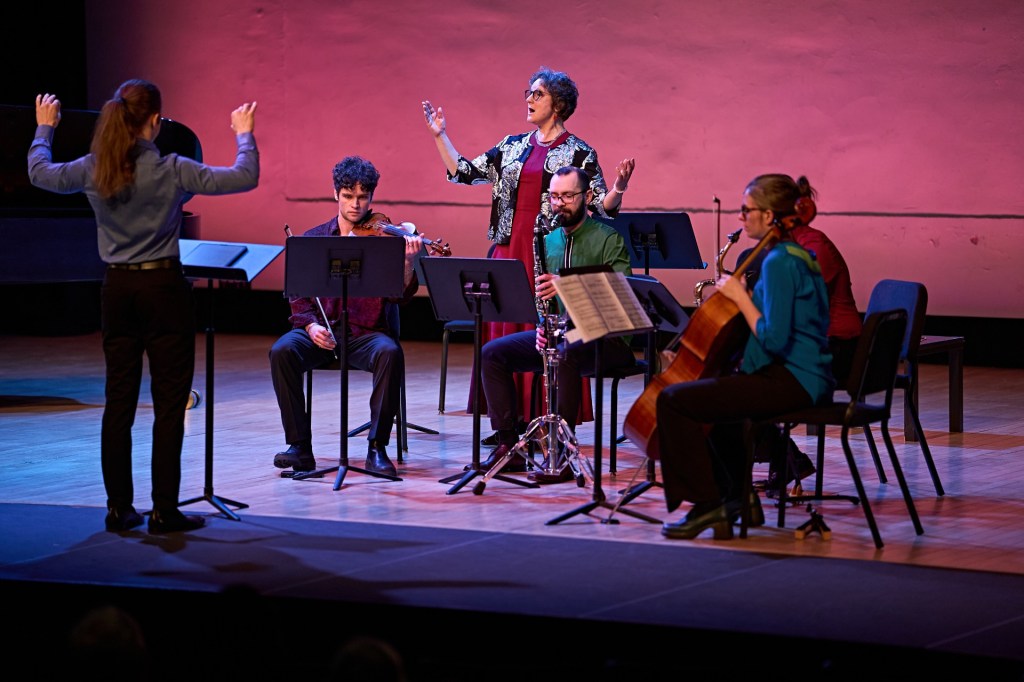
Above: performance photo by Rob Davidson
Author: Shoshana Klein
Monday February 26th, 2026 – Lisa Bielawa’s “thing” that I know her for (other than being a performer in the Philip Glass ensemble) is large-scale choral work, and pieces she puts together remotely. During summer 2020, she was doing these broadcasts where she would take people’s voice recordings and musical snippets and weave them all together into a new piece every week. I was involved with one or two through the festival that I was running – it was a really meaningful moment of togetherness during isolation. She also has done a lot of other large-scale works bringing large groups of people together to perform.
This was the first time I’d seen her chamber works live and also heard her perform her own music. The first piece, “Incessabili Voce” started with only Lisa on stage – a small group of instrumentalists played off stage and slowly entered, and left as the piece ended. She’s a really powerful singer – I guess that’s not surprising since she’s been in the Philip Glass ensemble since 1992, but hearing her in a different context showed off more of her skills and range vocally.
Her bio talks about growing up with new music and early music and not much in between, which felt particularly exemplified in the first piece, which went back and forth between early choral music and newer techniques.
The second piece on the program was called Balloon Variations, which was a premiere and a “study” for an opera she is writing. The opera is based on a true story of the first woman who went up in a hot air balloon, who happened to be an opera singer – she sang an Aria from the balloon. In this piece, some of the instrumentalists played guitars as well as their other instruments – in some cases, holding them at the same time which seemed extremely precarious but didn’t result in any disasters. The whole thing was definitely whimsical (there was also a power drill involved) and at one point the ensemble got the audience to participate by singing the word “balloon” in a simple phrase (so maybe it really is a mass choral piece like those I remember hearing about).
The structure of these composer portraits is that they have a little Q&A with the composer after intermission. It was a particularly good one, in which Lisa talked about how she likes to bring the audience in with a moment of joy and how it opens everyone up. Just the simple act of getting people to sing “balloon” on two notes – which did bring a smile to my face. In the last piece, Graffiti dell’amante – we voted on the order of the movements. The piece was arranged in a way that the movements were not in any particular order and we got to decide how they were performed. It was a love story, and the movements had names like absence, desire, forgiveness, and ravishing. It was an interesting and delightful process and I thought that the audience didn’t put it in a very interesting order. That said, it was a good piece and I really like the mechanism that the story is different each time. The texts drew from a wide range of sources.
I was surprised that there weren’t more people at the concert, since Lisa has brought so many different people into her work and has such a name for herself in so many different spaces. I expected lots of old collaborators to be there. That said, there were a couple of prominent people in the music world that I spotted and I’m sure I didn’t recognize them all. The concert was a good reminder of how much I like Lisa and her music – I’m glad I remembered enough to go uptown on a Thursday!
~ Shoshana Klein
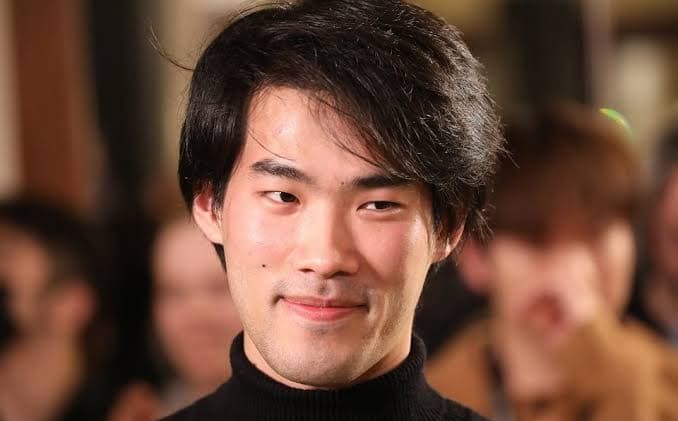
Above: pianist Bruce Liu
~ Author: Mark Anthony Martinez II
Saturday February 20th, 2026 – It had been a while since I saw a solo piano concert, and I was reminded how beautiful and replete an evening of piano music can be.
Bruce Liu is an acclaimed pianist and the winner of the 18th Chopin Piano Competition in 2021. I had never heard Liu play before, but I was excited to hear how he’d play. In a former life, I was a pianist, and I truly love the music and instrument, even if I never play it anymore.
As the concert lights started to dim and everyone was settling in, Liu briskly strode onto the stage and got himself comfortable at the piano.
Liu jumped right into the first piece, which was “Fanfares” by Ligeti. This is a showpiece with fluttering notes that span the whole keyboard, and Liu had such a mellifluously light touch throughout. It was almost as if he were floating over the keys. It’s an interesting choice to start off the program with a contemporary piece, but it set the tone well for the first half of the program, which consisted of three pieces with lots of movement across the whole keyboard in near-constant motion, so thematically it all made sense.
Once the Ligeti was over, Liu started the French Suite No. 5 by Bach. Liu’s playing of the Bach was simply exquisite, delicate, and elegant. Liu’s playing was so assured and beautiful that I was able to just drift off into the sound.
The Allemande and Sarabande were two of the best-played movements by Liu. Even though the piano is a percussion instrument, the music was able to sing through. The Gigue was another fantastically played movement. What I particularly loved was Liu’s ability to really let the inner voices ring out in the movement. It’s easy to let the lower and upper notes cover a middle voice moment, but Liu’s control and musicianship let each appropriate voice sing out.
After he finished the Bach, the crowd erupted into applause, and Liu stood up to take a bow.
I was extremely excited to see what Liu would do with the next piece, the Waldstein Sonata by Beethoven. This is one of my favorite pieces that Beethoven wrote, and I’ve heard many seminal recordings of it.
I was particularly interested in how Liu would play it because he is such a Chopin specialist and has such a light touch. Beethoven, though still solidly in the Classical era, has flavors of romanticism, but also the classic Sturm und Drang. I was curious to see how Liu would navigate both.
Before Liu started the Waldstein, he took a moment to compose himself, then played the iconic opening. Liu started the piece faster than I was used to, and I sat listening to see how things would develop.
Liu really knocked the Waldstein out of the park. What was really so interesting was that Liu played the Beethoven in such a way that it sounded more romantic than I normally had heard it. The fluttering of notes and the well-placed rubato made it at times sound closer to Chopin than Mozart, and I loved it!
For a warhorse like the Waldstein, it’s easy to fall into the patterns of pianists over the ages, but the way that Liu played the piece made it feel like a fully new piece of music to me. Somehow this tried and trodden sonata had a breath of new life that shimmered as Liu swept up and down the keyboard. The voicing was again perfect and just so wonderfully played overall.
After Liu finished, he stood up for a well-deserved applause and then strode off for intermission.
The second half of the program was more of a motley crew of pieces. It started with some Chopin classics, then there were single movements from larger works by Ravel, Mompou, Albeniz, and ended with a grand Liszt piece.
Liu’s handling of the Chopin was great and very much what I expected a Chopin specialist to play like. What was really interesting, though, was that I felt more of a unique touch on the preceding pieces, the Beethoven in particular, than I did with the Chopin. It might be that since Chopin is at the core of Liu’s style, it is the style that affects the other pieces, but Chopin’s music remains unchanged.
The crowd loved the Nocturne in C-sharp Minor and the Nocturne in D-flat Major. The largest applause of the night up until this point followed the two Chopin pieces.
I loved Liu’s treatment of Ravel’s Alborada del gracioso. Ravel is truly a pianistic composer, and Liu took full advantage of the music that utilized so much of the keyboard. This piece has an infamously difficult triple glissando, and Liu managed that without a shred of difficulty. The piece was fiery and passionate and somehow more aggressively played than the Beethoven.
Another highlight for me was Albeniz’ El Puerto from Iberio, Book I. If there was a theme for the second half of the program, the music seemed to be inspired by Spain or have some Spanish influence throughout. This piece was classic Albeniz and was such a jolly piece with a very humorous mood throughout.
Before Liu tackled the last piece on the program, Liszt’s Rhapsoddie espangole, he took a quick break. True to Lisztian form, this piece was a monumental flurry of notes that left the listener in shock and awe at the virtuosity of the performer.
Once Liu finished, he received a very well-deserved standing ovation before jumping into encores of Beethoven and Chopin to more rapturous applause.
~ Mark Anthony Martinez II

The Italian baritone Simone Piazzola (above) sings the great aria “Per me giunto è il dì supremo” from Verdi’s DON CARLO. The pianist is Francesco Rosa. The recording was made during the pandemic, hence, there is no audience present.
I discovered this voice just recently, and was very moved by his singing of this touching aria: Posa’s farewell to his friend, Don Carlo. Piazzola’s phrasing – and his amazing breath control – remind me of Hvorostovsky. Now I am following him on Facebook. Lisette has sung with him in Europe and she speaks highly of him.
Watch and listen here.
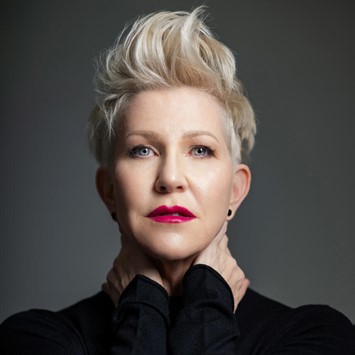
Above: Joyce DiDonato, photo by Chris Gonz
~ Author: Mark Anthony Martinez II
Thursday February 19th, 2026 – Emily Dickinson wrote such beautiful and moving poetry that in many ways she has become one of the great poetic geniuses of the United States, and it’s no surprise that there are many musical works set to her writing.
In the program notes for the concert at Carnegie Hall with Joyce DiDonato, singing from Dickinson’s perspective, and Time for Three, acting as a further inner dialogue at times, it was noted that over 3,000 pieces have been written using Dickinson’s words.
The Carnegie debut of this cycle set itself apart with the grandeur of the set and the sheer scope of the music itself.
Carnegie is most often a concert hall, with the music alone being the focal point of the venue. Today’s concert was an exception. On the stage there was a large set which would be befitting enough for a one-act opera. The set had an elevated platform with a singular writing desk placed approximately in the middle of the platform. Above the platform was a forest of white fabric draping down in strips with pendulous lights mixed in.
There were words being projected onto the stage and around the hall as well, although I couldn’t catch what they were actually saying.
Before the concert started, I noticed that Joyce DiDonato was walking around the back of the stage, grazing the walls, clearly in the character she was playing. People didn’t seem to notice her as she made her home on stage, since I hadn’t heard anyone say anything about it around me.
The lights dimmed, and then the trio Time for Three rushed up onto the platform, performing the first song of the first piece.
Emily – No Prisoner Be is a new song cycle written by the composer Kevin Puts. A product of works originating during COVID, Puts knew from the start he was writing for Time for Three and then Joyce DiDonato.
It’s not too common to understand where the exact origin of a song cycle stemmed from, but the program notes mention this specific Dickinson poem kicked off the entire project.
“They shut me up in Prose –”
As when a little Girl
They put me in the Closet –
Because they liked me “still” –
Still! Could themself have peeped –
And seen my Brain – go round –
They might as wise have lodged a Bird
For Treason – in the Pound –
Himself has but to will
And easy as a Star
Look down upon Captivity –
And laugh – No more have I –”
And just like the original inspiration, the entire night was a journey of exploration, personal freedom, and triumph.
As Time for Three came on stage, the violinist playing as he walked, the stage was immediately set. Unlike a traditional song cycle where the singer stands giving a monologue or a soliloquy of sorts, DiDonato and Time for Three were intent on making the night a true show.
Each song within the larger work was a poem from Dickinson. The first piece was “They shut me up in Prose –,” which set the stage for the night’s music.
DiDonato truly was at home in this music. The style of singing was a mix of classical and contemporary, with good use of amplification so that she didn’t need to rely on operatic technique to be heard throughout the hall. DiDonato really did sound fantastic in this medium, and clearly Puts, the composer, endeavored to make the piece utilize the best parts of her voice.
Time for Three not only were the instrumentalists but also joined in quite frequently to provide backup vocals in the piece. I loved their playing but was actually quite a fan of their singing as well. The folksy nature of the piece and their dynamic style really made the night feel more like a contemporary folk concert than just a traditional classical performance.
Many of the pieces were beautiful, though at times the tonal quality of them felt so alike that it was hard to distinguish when one began and one ended. My highlight of the night was the music set to perhaps Dickinson’s most famous poem, “Because I could not stop for Death –.” This piece revealed a total tonal shift, and instead of the flowing, watery nature of the pieces beforehand, it was punctuated, loud, and full of drama.
The audience loved the short instrumental-only intermissions which were also inspired by Dickinson poems but did not use her words. The titles of each piece, as well as lyrics of the songs, were projected onto the bottom of the platform on stage. The first instrumental-only section was labeled “Bee Scherzo,” but subsequent ones cheekily wrote things like “Another Bee Scherzo,” which drew larger and larger laughs from the audience each time the title came up.
The night concluded with the namesake of the whole work, the song “No Prisoner Be.” After the musicians performed the work, Kevin Puts came up on stage to a warm ovation, and DiDonato started to lead the crowd in a chorale of the melody from the last song. The musicians all embraced, and the crowd left the theater humming the final melody.
~ Mark Anthony Martinez II
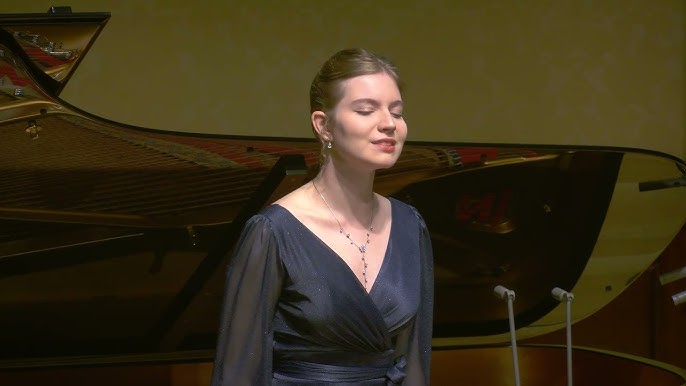
The voice of 23 year-old Austrian mezzo-soprano Anja Mittermüller enchanted me when a brief clip of her singing popped up on YouTube the other day.
In 2024, Ms. Mittermüller – then 20 years old – was the youngest singer ever to win the Wigmore Hall/Bollinger International Song Competition.
Her rendering of Schubert’s Litanei auf das Fest aller Seelen, accompanied by James Baillieu, may be found here.
~ Author: Oberon
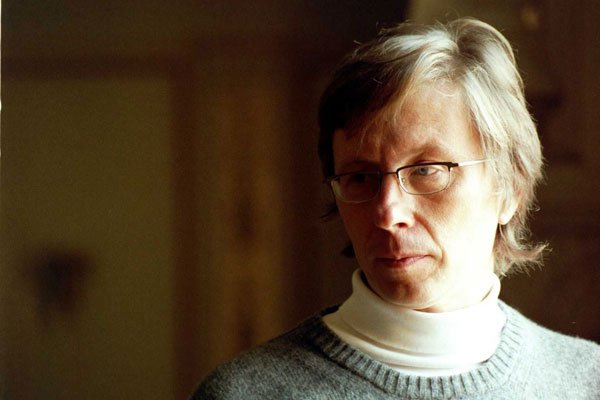
Above, the composer Georg Friedrich Haas
Sunday February 22nd, 2026 – This afternoon’s concert by Parlando had intrigued me since it was first announced. The orchestra’s founder and conductor, Ian Niederhoffer, had provided this “preview”:
“What does it mean to make music in complete darkness? Join Parlando for an immersive performance of Georg Friedrich Haas’s in vain, a gripping, hour-long work that bends time, light and memory. Written in response to the far-right’s resurgence in Austria and described by The Guardian as “the first masterpiece of the 21st century,” in vain confronts the fragility of democracy through waves of harmony, shimmering stillness, and sudden rupture. As politics around the world grow darker, Haas offers both a warning and a vision: a plea to keep listening, even when the lights go out. In this performance, lighting is written into the score, alternating between brightness and darkness.”
As the afternoon of the performance drew nigh, uncertainties about the weather caused my guest and I to wonder if the MTA would be reliable; and whether we should simply stay home. But the storm had not yet hit, and so a mere misty rain with a smattering of snowflakes decided us to venture out to Merkin Hall, where a full house of intrepid New Yorkers gathered for a mind-blowing performance of a terrifying and gorgeous 21st century masterwork that kept us enthralled from start to finish.
Maestro Niederhoffer gave a brilliant, truly informative introductory speech, telling us of what had impelled Georg Friedrich Haas to write his hour-long symphonic poem; the gist of his talk can be read in the program quote at the top of this article. He also told us what to expect in terms of the complex lighting scheme of the presentation, and of the darkness that would envelop us at times. The program charmingly included a reference to the level of “listening difficulty”; my companion and I had no difficulties whatsoever.
The work commences with tingling, cosmic sounds. A pulsing beat from the orchestra’s bassist, Dara Bloom, heralds a loud passage which develops into drooping motifs. Marimba, harp, and xylophone keep lightness in the mix, but sustained wind tones flow into the ominous darkness, with the vibrating gong a harbinger of fate. Echoing sounds and fading light leave harpist Kristi Shade illuminated: an outstanding visual effect.
Shivering violins and lingering wind notes evolve into long chords with dense harmonies. Bursts of brightness are offset with growling, sighing, whining sounds. The music develops a soul-searching depth, with descending brass arpeggios. Cymbals crash; massive sonic attacks and chilling strings fill the air. Hell-fire is evoked; we hear oozing chords, stutterings from the marimba, and fractured brass sounds. The lighting causes the polished surface of Ms. Bloom’s double-bass to turn blood red. The doom-ladened gong is struck.
Swirling, plunging motifs suddenly run out of gas. The music crawls along, with sighs from the cellos. A brief passage of tonality – a mystical quietude – gives way to rising fanfares. Throbbing rhythms, a rattling bell, and brass chords are played as darkness descends for the second time. The insistent bell underscores the music’s tension; deep resonances are explored. Then harp glissandos signal a sonic sunburst of hope. A repeated piano note as the music sails into the stratosphere, with gong attacks seeming to carry a warning. Tumult ensues. Weighted chords descend, only to rise again; the rhythm speeds up. The ebb and flow of the music, which perhaps goes on a bit too long here, ends in silence. After a profound pause, the applause commenced, soon turning into a standing ovation.
A mixture of despair and elation as we emerged into the developing storm. Awakening the morning after, I could feel the intense silence of an island now buried in snow. For a few minutes, all was peaceful. But then the morning’s headlines drew me back into reality all too soon.
Boundless admiration for the composer’s thrilling, daring work…and for Maestro Niederhoffer and his marvelous band of music-makers for bringing it to us with such stunning clarity.
~ Oberon
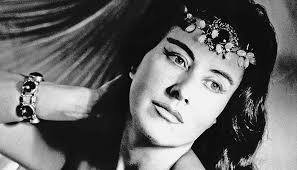
I love discovering singers I’d never previously heard…or even heard of.
The German mezzo-soprano Ute Walther (above) made her operatic debut as Octavian at Staatstheater Schwerin in 1968. From 1980, she was a leading artist with the Dresden State Opera.
Her roles included Dorabella, Cherubino, Strauss’s Composer, Wagner’s Fricka, Waltraute, Brangäne, Magdalene, Mary, and Ortrud; Hansel, Carmen, Prince Orlofsky, and Verdi’s Amneris, Meg Page, and Princess Eboli.
Ms. Walther also appeared with the Deutsche Oper Berlin, Dresden State Opera, at the Cologne Opera House, the Vienna State Opera, the Bolshoi, the Edinburgh Festival, Teatro Real in Madrid, and the Teatro Nacional de São Carlos in Lisbon.
She was also a noted concert singer, admired especially for her Bach interpretations.
Ms. Walther’s 1989 rendering of Mahler’s Kindertotenlieder may be heard here. The orchestra of RAI Turin is conducted by Wolfgang Rennert.
 Oberon's Glade