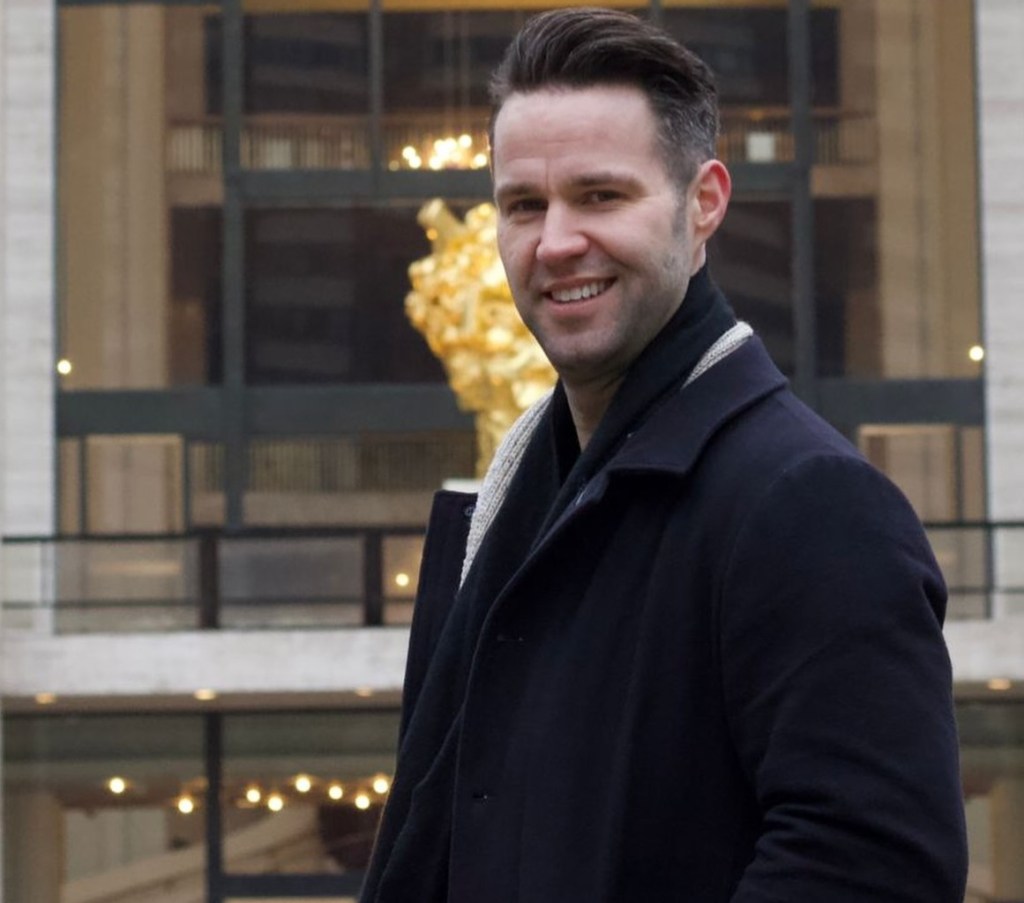
Author: Philip Gardner

  • Patti LuPone @ Carnegie Hall ~ 2026

    ~ Author: Mark Anthony Martinez II

    Patti LuPone’s solo show at Carnegie Hall on February 2nd, 2026, was a love letter: to love itself and to her fans. She sang about every variety of love: passionate, long-term, maternal, carnal, even more carnal, familial, somehow even more carnal, and every minute of her performance showed why she is the legendary performer she is.

    I was thrilled to see Ms. LuPone, having somehow missed every previous opportunity to catch her onstage, whether in a show or in concert. The hall was packed, and the stage was awash in a hazy palette of pastel pinks and blues.

    The concert, titled Matters of the Heart, turned out to be LuPone’s third time performing the program. She first conceived it with her longtime collaborator Scott Wittman while living in Los Angeles in 1993, and revived it roughly thirty years later.

    The stage was set with the Four Play String Quartet, Will Curry, Molly Goldman, Suzy Perelman, and Jessica Wang, alongside Joseph Thalken, the concert’s music director and pianist. After a brief musical prelude, LuPone walked onstage in a white dress lined with rhinestones and adorned with ribbons at the neckline. She sauntered in, introduced the evening, and immediately captured the audience with her comic timing, before singing a single note.

    LuPone opened with a medley built around “Love Makes the World Go ’Round” from Carnival, breaking into spoken monologue as she guided the audience through the night’s musical journey.

    From the outset, I was struck by the fact that she appeared to perform the entire concert from memory, something many singers opt not to do in such a stripped-down setting. The only pause she took between numbers was to sip water from a glass perched atop the piano; otherwise, she powered through the evening like a workhorse.

    She sang beautifully, of course, but this being my first time seeing her live, I hadn’t fully realized the sheer magnitude of her comic ability. Some of the night’s best moments came from its most outrageous songs, which showcased both her vocal prowess and her acting chops. Her rendition of “Shattered Illusions,” originally sung by Fascinating Aïda, set the tone for the evening. The song recounts a series of failed romances, each riddled with dashed expectations, culminating in a verse about having sexual relations with an abbot while dressed in a habit: if that gives any indication of what followed.

    Another standout was her performance of Randy Newman’s “Better Off Dead,” which hilariously captured the misery of a one-sided relationship. Each complaint ended with the deadpan refrain, “Better off dead.” The song concluded with the strings quoting the theme from Psycho, perfectly sealing the piece’s off-kilter energy.

    After several more numbers, the first half of the concert ended with a rousing rendition of “Being Alive” from Company, allowing LuPone her big diva moment of the night.

    What was particularly wonderful to witness was how generously LuPone shared the spotlight. When the audience responded enthusiastically to a song, she consistently turned to acknowledge the instrumentalists, inviting them to stand and receive their applause as well.

    In that same spirit, toward the end of the evening she brought Scott Wittman onstage to thank him for his collaboration and to give him the flowers he so richly deserved for helping make the concert possible.

    After intermission, the white flowers atop the piano were replaced with red ones. LuPone returned to the stage in a purple, rhinestoned dress and launched into the second half of the show.

    This set opened with a medley of “When the World Was Young” and “I Never Do Anything Twice,” another standout in which music and comedy worked hand in hand. At one point, during a reference to certain sexual acts, the musicians donned white blindfolds while LuPone produced a whip and cracked it several times. She was not joking when she said that a good portion of the evening’s repertoire revolved around lust.

    Some of the sweetest moments of the night came when, between songs, LuPone spoke candidly about her own life and loves. One highlight was her story of how she met her husband, by sitting on his lap to get his attention. It was deeply satisfying to see such a consummate performer not only as a singer and actor, but as a person whose lived experience fuels the stories she tells onstage.

    LuPone is also famously unafraid to speak her mind, a trait that often results in unintentional viral moments. Near the end of the evening, she addressed the current political climate in the United States, expressing her anger and heartbreak over recent developments at the Kennedy Center, including its renaming and a planned multi-year shutdown. She urged the audience not to stand idly by, but to protect art and culture in this country.

    Before her final number, LuPone briefly left the stage and returned holding a disposable camera, snapping photos of the audience and her fellow performers as the musicians played the outro of the previous song. When she finished, she tossed the camera into the audience, presumably to her husband, though if not, one lucky patron went home with quite a souvenir. The concert ended with “Haste Ye Back,” bringing a truly wonderful evening of music to a close.

    ~ Mark Anthony Martinez II

  • All-Shostakovich @ Chamber Music Society

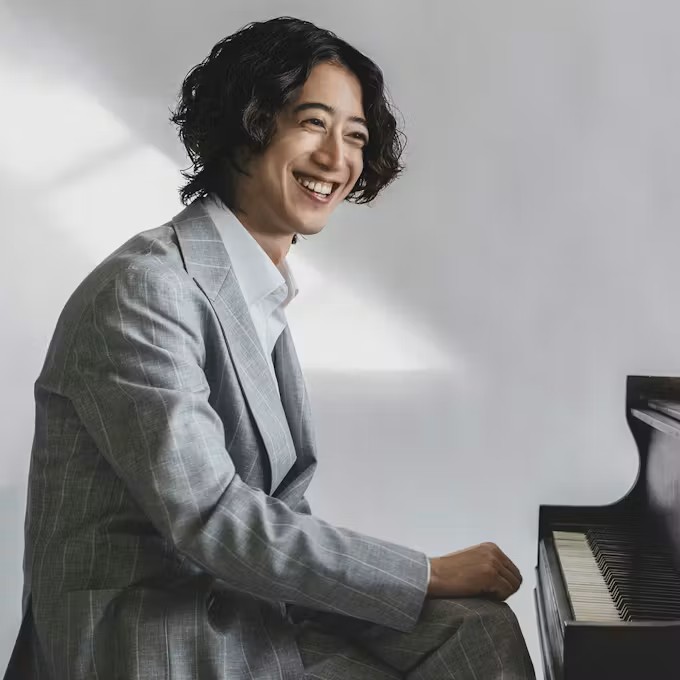
    Above: Alexander Sitkovetsky, Wu Qian, Andriana Chuchmann, and Isang Enders; photo by Tristan Cook

    ~ Author: Oberon

    Sunday February 1st, 2026 – Having missed last week’s all-Beethoven program at Chamber Music Society due to the storm, it was lovely to settle into our seats at Alice Tully Hall for an all-Shostakovich program this evening which drew together an ensemble of superb musicians, including a lovely soprano who was new to me: Andriana Chuchmann. 

    The Sitkovetsky Trio opened the concert with the Trio #1, Op. 8, in C-minor. It’s always a great pleasure to hear – and to watch – these three wonderful players: Alexander Sitkovetsky (violin), Wu Qian (piano), and Isang Enders (cello). The stage lighting – all evening – was particularly impressive.

    Composed in 1923, and structured in a single movement, the trio opens in an andante mood; a descending motif, coloured by sorrow, is introduced by the cello. Mr. Enders’ gorgeous tone and soulful expressiveness immediately draws us in, and soon he is exchanging phrases with the silken sound of the Sitkovetsky violin. Ms. Qian, at the Steinway, brings radiant, glowing tones to the mix. Pulsing music turns sprightly, and then things get noisy, with insistent piano rhythms. The opening theme is reprised, only to become more animated as a violin/piano dance springs up. Mr. Enders cello sings over delicate piano phrases, and Mr. Sitkovetsky’s delicious phrases lead on to tempestuous, urgent sounds from the Steinway. Peace is restored; the poignant violin and the meltingly lovely cello entwine. The music becomes epic – cinematic, really – before lapsing into a playfulness that yields to passion. 

    Ms. Chuchmann, in a ravishing silver-blue gown, then joined the trio for Seven Romances on Poems of Alexander Blok, Op. 127. Again, the lighting of the stage was truly evocative as a heartfelt cello solo introduces the soprano’s clear, lyrical voice is the sad Song of Ophelia. Ms Qian at the Steinway gives a grandiose feeling to Gamayun, the Bird of Prophecy with energetic, almost relentless vocalism from Ms. Chuchmann. A more pensive air leads to some very sweet singing; the song has a somber finish, with four accented notes from the keyboard. Violin and voice blend in We were together (That Troubled Night) which has the feel of a folksong. The soprano’s tonal radiance was especially appealing here, whilst Mr. Sitkovetsky’s violin spun out high, buzzing motifs. 

    Ms. Qian and Mr. Enders blend beautifully to introduce Ms. Chuchmann’s ardent singing in The City Sleeps (Deep in Sleep). As the remaining three songs – The Storm, Secret Signs, and Music – unfolded, I stopped taking notes, the better to savor the music and the soprano’s inspired renditions, as well as the intrinsic poetry of the playing of the three musicians. 

    During the interval, a vast array of percussion instruments were set up on the stage in order to give us an opportunity to hear a fascinating chamber arrangement, by Viktor Derevianko, of the Symphony #15, Op. 141.

    Viktor Derevianko’s setting of the symphony seems to have had the blessing of the composer, and it was sensationally played this evening by pianist Inon Barnatan, percussionists Ayano Kataoka, Ian Rosenbaum, and Victor Caccese, and a peerless string duo: violinist Paul Huang and cellist Jonathan Swensen. These players made for a performance as fascinating visually as it was musically: watching the choreographed alertness of the percussionists, Mr. Barnatan shifting between grand piano and celesta, and Mssrs. Huang and Swensen’s animated bowing and brotherly camaraderie was truly engrossing, whilst references to Rossini’s GUILLAIME TELL and Wagner’s GOTTERDAMMERUNG teased this opera lover’s ear charmingly. 

    While it was a challenge to the musicians to sustain a 45-minute work that is normally awash with a wider variety of sonic colours, the ensemble – also having had to endure a coughing fest from audience members during some of the most intriguing musical passages – came thru with flying colours, evoking a house-wide standing ovation as they took their bows:

    Above: Ian Rosenbaum, Inon Barnatan, Paul Huang, Ayano Kataoka, Victor Caccese, and Jonathan Swensen; photo by Tristan Cook 

    ~ Oberon

  • Heartbeat Opera’s MANON!

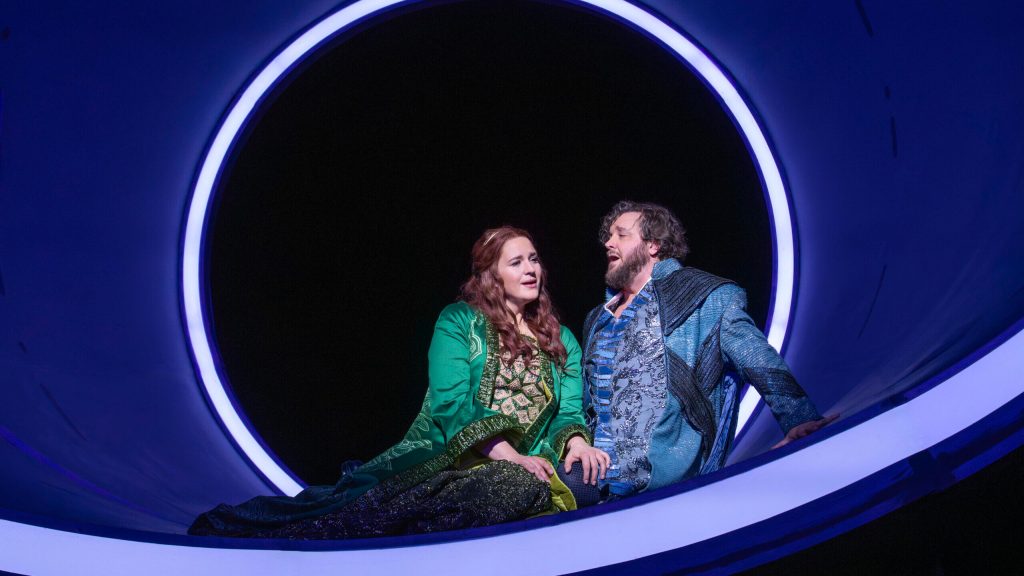
    Above: Emma Grimsley and Matt Dengler in Heartbeat Opera’s MANON! Photo by Andrew Boyle.

    ~ Author: Mark Anthony Martinez II

    January 30th, 2026 – What a treat! Heartbeat Opera’s translation and re-envisioning of the classic Massenet opera MANON brought a breath of fresh air and timeless relevancy to this classic staple.

    Heartbeat Opera is known for their innovative performances. Setting TOSCA in Iran, bringing to the forefront the homosexual subtext that exists within Tchaikovsky’s EUGENE ONEGIN, and in this performance staging Manon more like a musical theatre piece than an opera.

    Re-envisioning classic opera is at times a controversial take. I personally think that as long as the piece makes sense and has a point, I’m all for new imaginings. I will say that when I first saw that MANON would be done in a more musical theater style, with amplification, I wondered if this was a good choice or just done in order to be “different.” But the more I thought about it, Massenet’s Manon is really similar to a musical. The famous tunes like “En Fermant Les Yeux” aren’t typical bombastic arias, and if anything are closer in style to sweet ballads you might hear on Broadway now. So I went in with an open mind.

    Before going into any more detail, I’ll say this: the opening night performance of MANON! was fantastic, moving, beautiful, and so well staged. It was perhaps one of my favorite stagings and performances of an opera I’d seen in a long while, and it was truly an intelligent and worthwhile adaptation. Not everything was perfect. There was one line I noticed that was fumbled and some pitchy notes, but as a whole work, it was phenomenal.

    I think the ultimate litmus test of whether something is successful in creating a show is if a true neophyte can go in and enjoy it. I went to see the show with a friend who hasn’t had much exposure to opera or musicals for that matter, but she loved it. That’s not something that can be said of most productions.

    As we entered, audience members were given a letter with a green wax seal bearing the Heartbeat Opera logo. A very cute touch if you know how important letters are to the plot.

    The set at the Irondale in Brooklyn was minimal but interesting. The stage initially was draped in a white cloth with chandeliers hanging right above it. Emma Grimsley, who plays Manon, prances out, inspects the stage, and then pulls the cloth away, revealing the stage underneath, and leaves.

    The show then starts for real as Kathryn McCreary (Pousette), Natalie Walker (Javotte), and Glen Seven Allen (Guillot) stampede onto the stage for a very lightly veiled night of debauchery and sex.

    The audience and I loved these heel characters who so adeptly sang and acted out their roles. They all brought life and comedy to characters who could easily become mere plot devices.

    Ms. Walker was the socially intelligent courtesan who did her best to navigate the difficult life of depending on fickle men for her livelihood and safety. She was always funny but had clear direction and motivation for survival. Ms. McCreary was the bawdier of the two and was the one who spoke up for the needs of both herself and her comrade of sorts.

    What I loved about this duo was that they had a humanity to them that made them more than plot devices. You could tell they fought for their own survival, but they also cared for the well-being of Manon, a young country girl who was being preyed upon by Guillot.

    Guillot was fantastically acted and sung by Glenn Steven Allen. He was a lecherous older man who preyed on weak women, but he had a comedic quality that didn’t make him a blank villain. We never rooted for him, but you knew that when he was on stage it would be an entertaining romp.

    The orchestra was behind the stage, which is an added difficulty because the conductor and singers can’t see each other easily, but from the moment the music came in until the end, there was never an issue.

    I was wondering if something different would be done with the music since it was a new interpretation of the opera, but besides being a reduced ensemble, the music stayed true to the original.

    When Ms. Grimsley made her first real entrance, the plot really got started. What struck me about this production was how well acted it was. Opera is largely a music-first art form, but by treating this as a musical theatre piece, the singers were able to lean into the acting to enhance the drama of the music and plot. For instance, when Jamari Darling (Lescaut) and Ms. Grimsley arrive on stage, you can immediately tell that there is something sinister about their relationship; this sets the plot into motion.

    Darling was a scene-stealing actor and a true audience favorite. He brought a sliminess to Lescaut, but in a sort of Disney villain way. You hated him for what he was doing, but he was just so entertaining that you couldn’t help but want him to stay on stage longer. On top of singing and acting, Darling is a phenomenal dancer and brought tastes of the NYC ballroom world to the stage.

    Ms. Grimsley truly embodied the character of Manon phenomenally. At times young and naive, but always with the femme fatale lurking underneath. As is the case with most shows when one is the title character, Ms. Grimsley had the monumental task of performing almost nonstop, and she did it with technical perfection and aplomb.

    Every note of coloratura was used in service of what Manon was feeling; every musical gesture furthered the plot. Ms. Grimsley really was the star of the show for a reason.

    As the plot progressed and Des Grieux came into the fold, the two of them had instant chemistry. Matt Dengler looked and sounded like the naive but loving chevalier. You could tell from the very beginning that the two of them truly felt a special bond, and one couldn’t help but grin when they absconded away with Guillot’s carriage.

    Throughout the entire show, what struck me was how true to the material the production was, but also how much the plot was elevated by the adaptation. Things like the genuine sexual chemistry between Manon and Des Grieux that brought about her downfall would normally be lost in florid staging. However, in this adaptation, the more carnal side of their relationship is not hidden or merely alluded to, but shown, all while still being PG-13, in a true-to-life, realistic way. It now actually made sense why Des Grieux would leave the priesthood for Manon, as one example.

    Heartbeat Opera’s production of MANON! was truly a wonderful show and a great re-imagining of a classic. I can’t wait to see what their next performance will be.

    Note: The run of MANON! has been extended thru February 15th. Details here.

    ~ Mark Anthony Martinez II

  • TOSCA @ The Vienna State Opera ~ Stikhina/Tetelman/ Tézier

    Elena Stikhina and Jonathan Tetelman (above) join Ludovic Tézier in the principal roles in a performance from the Vienna State Opera, conducted by Pier Giorgio Morandi.

    Watch and listen here.

    I saw Ms. Stikhina’s Mimi and Mr. Tetelman’s Pinkerton at The Met and very much enjoyed their singing.

    An additional treat for me in the Vienna TOSCA is having Jusung Gabriel Park in the role of Angelotti; this Korean baritone was an audience favorite at the 2021 Cardiff Singer of the World competition.

  • Münchner Rundfunkorchester ~ New Year’s Eve Gala ~ 2025

    Soprano Elsa Dreisig and tenor Matteo Ivan Rašić in a 2025 New Year’s Eve concert from Munich. The conductor is Ivan Repušić.

    Watch and listen here.

  • Kol Nidrei

    Max Bruch’s Kol Nidrei played by violist Janeks Niklavičs (above) with the Jēkabpils Chamber Orchestra conducted by Mārtiņš Bergs.

    Watch and listen here.

  • Oropesa/Anduaga: PURITANI from Naples ~ 2022

    Xabier Anduaga and Lisette Oropesa (above) head the cast in this concert performance of Bellini’s I PURITANI from the Teatro San Carlo, Naples, in 2022. The conductor is Giacomo Sangripanti. Watch and listen here.

    Full Cast:

    Arturo Talbo – Xabier Anduaga; Elvira – Lisette Oropesa; Sir Riccardo Forth – Davide Luciano; Sir Giorgio – Gianluca Buratto; Enrichetta di Francia – Chiara Tirotta; Lord Gualtiero Valton – Nicolò Donini; Sir Bruno Roberton – Saverio Fiore

  • TURANDOT in Boston ~ 1983

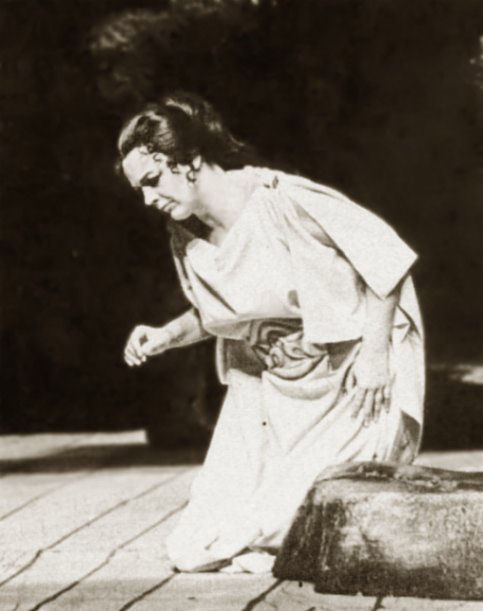
    The great Hungarian soprano Eva Marton (above) sang the “In questa reggia” from Puccini’s TURANDOT at the Metropolitan Opera’s 100th Anniversary Gala on October 22, 1983. I was there, and was very impressed by her interpretation of the aria. Watch and listen here.

    About 3 weeks later, my partner Jan and I went up from Hartford to Boston (our first excursion together) to hear Marton sing the entire role of Turandot for the first time in her career. That performance has just recently turned up on YouTube: listen to it here.

    Turandot: Éva Marton; Calaf: James McCracken; Liù: Sarah Reese; Timur: Harry Dworchak; Ping: James Rensink; Pang: Steven Schnurman; Pong: Noel Velasco; Emperor Altoum: Michael Hume; Mandarin: James Rensink; Prince of Persia: Michael Olsen

    Conductor: Sarah Caldwell/Chorus and Orchestra of the Boston Opera Company

    Aside from the powerhouse duo of Ms. Marton and tenor James McCracken, the cast included a lovely Liu from Sarah Reese and an excellent Timur: Harry Dworchak.

  • The Cleveland Orchestra ~ Verdi REQUIEM @ Carnegie Hall

    Concert photo by Chris Lee, courtesy of Carnegie Hall

    ~ Author: Oberon

    Tuesday January 20th, 2026 – This evening’s performance of the Verdi REQUIEM at Carnegie Hall was one of the first events to go on my calendar when Gotham’s classical music venues began announcing their 2025-2026 plans nearly a year ago. 

    Over the years, I have experienced this masterpiece at such expansive settings as Tanglewood and in more intimate spaces like the Chapel at Trinity College in Hartford. Though spiritual in nature, the REQUIEM is very operatic; I sometimes think of it as my favorite Verdi opera. It’s been performed at The Met nearly 60 times since 1901; in 1981, the Company even took the piece on tour. In 1982, I attended a Met matinee performance with Leontyne Price heading the cast and conducted by James Levine; in 2017, another matinee marked Maestro Levine’s last appearance on the Met podium. In 2023, Yannick Nézet-Séguin conducted a performance at the Met from which I snuck out after the Lacrymosa.

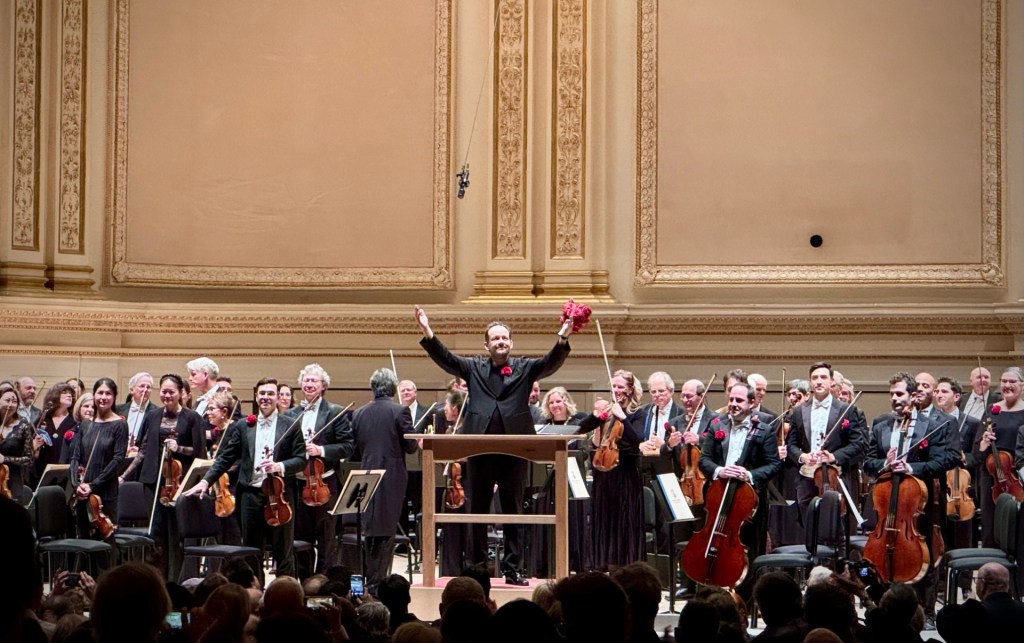
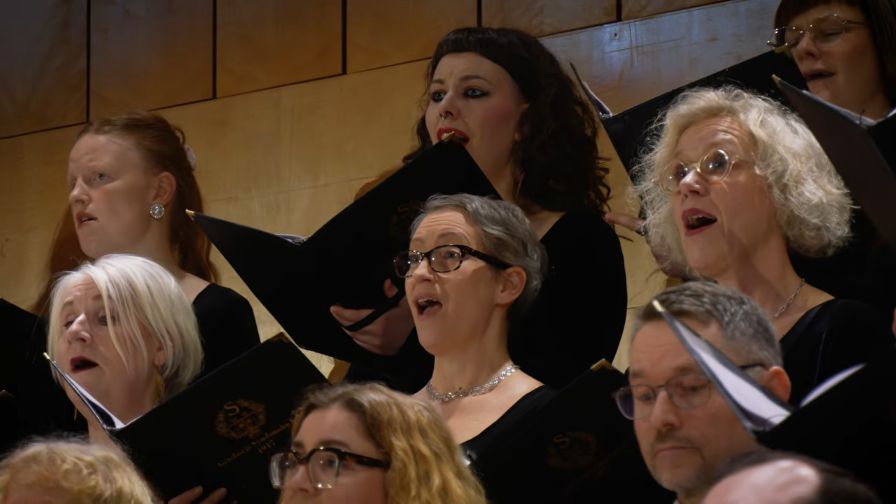
    Tonight at Carnegie Hall, Franz Welser-Möst, the Cleveland Orchestra’s Music Director, was wielding the baton. The Cleveland Orchestra Chorus, under the direction of Lisa Wong, were in full flourish, and the soloists were:

    Asmik Grigorian, Soprano
    Deniz Uzun, Mezzo-Soprano
    Joshua Guerrero, Tenor
    Tareq Nazmi, Bass

    Of these artists, only Asmik Grigorian was familiar to me. 

    On this bitterly cold evening, the Hall was packed; anticipation was running high. We kept our coats on as we waited nearly 15 minutes past start-time. At last the soloists and the Maestro took the stage and we were drawn in by the chorus’s nearly- whispered words “Requiem…requiem aeternam“. The magic of this masterpiece was already casting its spell. 

    What I loved most, as the evening unfolded, was Maestro Welser-Möst’s forward impetus; things never seemed rushed, but the flow of the music was steady; no contrived piety from long pauses and drawn out phrases. After the Requiem’s first half, the conductor did not take a prolonged break but kept the soloists standing so that there was no interruption in the emotional arc of the evening. 

    The chorus, in their A cappella passage, established the necessary reverent mood, and then the soloists rose to introduce their voices to us. Tenor Joseph Guerrero has a full, lyrical sound with traces of an Italianate sob that I always find intriguing. The tall basso Tareq Nazmi has a huge, resonant voice that immediately established his authority; as the evening progressed, he proved to also be a very subtle singer. Asmik Grigorian sounded angelic as her voice wafted on high, and mezzo-soprano Deniz Uzun displayed a wide ranging voice which would keep the alto line nicely prominent all evening.

    The chorus’s “Dies irae” was powerfully launched, but the voices and the orchestra brought an interesting dynamic range to this music. The trumpet sounded from the upper reaches of the Hall, and then a massive sustained chord was cut off suddenly, the choral voices echoed thrillingly – a moment I always love.

    Mr. Nazmi’s “Mors stupebit” was chillingly rendered, and Ms. Uzun’s “Liber scriptus” allowed us to savor both the power and subtlety of her singing, with sure-voiced tops and ample chest tones mixed in with her hauntingly hesitant “Nil…nil…”  

    The bassoon’s playing during the “Quid sum miser” was so appealing. Mr. Guerrero’s sound continued to allure, Ms. Grigorian floating her high phrases sweetly. The “Rex tremendae” was galvanizing, the soprano’s “Salva me” was delicious…and was echoed by the basso’s beautiful intoning of the same plea. 

    The contrasted timbres of Mlles. Grigorian and Uzun made for interesting colorings in the “Recordare“, which was laced with enticing traces of rubato.  Their duetting was truly lovely, with a polished finish. Mr. Guerrero’s “Ingemisco” brought a fine mix of poetry and strength. He sang from the heart, with some attractive mezza voce effects mixed in, and with power to spare. The sweet sounds of the oboe led to the tenor’s wonderfully hushed “Interoves locum praesta” before rounding off with a blazing finish.

    Mr. Nazmi then gave us a stupendous “Confutatis maledictus“, covering its vast range with finely contrasted elements of lyricism and strength. The basso’s haunting singing of “Ora suplex at acclinis” and his heartfelt “Gere curam…” led us to his superb finish of this moving segment of the Mass.

    The Lacrymosa was given a beautiful start from Ms. Uzun; the basso joins, and Ms. Grigorian keeps hovering magically in the heights. The four voices harmonize in a extended unaccompanied passage. Their final “Amen” brings a key change, a captivating moment to end the Requiem’s first half.

    Ms. Uzan and Mr. Guerreo remain standing – preventing unwanted applause – and they are ready to go with “Domine Jesu Christe“, aided by the cello. What music! This soon becomes a quartet, over which Ms. Grigorian’s soft, sustained tones float angelically. Mr. Guerrero’s “Hostias” has a marvelous hush to it, and he offers the trills which elude some tenors. The basso chimes in, and Ms. Grigorian’s crystalline “Fac eas de morte transire ad vitam” leads to the simply gorgeous postlude.

    The chorus sings the joyous “Sanctus” to perfection. The duet “Agnus Dei” was taken just a shade too fast but was lovingly sung by Mlle. Grigorian and Uzun. The mezzo-tenor-basso trio “Lux aeterna” was finely done, the a cappella section with nicely integrated timbres. 

    Ms. Grigorian’s “Tremens, factus sum ego et timeo” was wonderfully detailed, and her “Requiem aeternam” was mesmerizing. She soared over the chorus before reaching the austere beauty of her final “Libera me.” 

    For me, this was a performance that fulfilled all expectations, reminding me yet again how well I know – and how much I love – this music. A special bravo! to Maestro Welser-Möst for his thoughtful, clear vision of this monumental work.

    ~ Oberon

    (If you are on Facebook, find more performance photos here.)

  • Prototype Festival: WHAT TO WEAR @ BAM

    Production photo by Stephanie Berger

    ~ Author: Shoshana Klein

    Saturday January 17th, 2026 – I had no idea what to expect when I went to What to Wear at BAM on Saturday. I think it’s often somewhat safe to assume that when something is hard to explain in promo materials, it might be hard to describe in a review. Unfortunately, those are often the performances I am drawn to. I’m still not sure what would have helped prepare me — this opera is about someone named Madeline X, and also a duck, and also beauty and ugliness. 

    The set of What to Wear had a Queen of Hearts/Alice and Wonderland vibe — it was hard for me to pinpoint exactly why, but everyone I talked to had the same impression. The set also had sheets of plexiglass between the stage and the audience, with some of the lyrics written on them. I wondered if there was some acoustic reasoning for them, or just aesthetic. The musicians were all amplified, and sounded quite good together.

    I found myself wishing I had the lyrics with me during the performance (the program was all digital). You’d think with something so repetitive, it wouldn’t be necessary, but somehow it seemed it would be helpful. I read through later, which tied things together a little bit, though there was no narrative. While there was a lot of repetition in the lyrics and the music, there was also a lot going on — visually, in the set and costumes, and the choreography. It was very engaging, and I didn’t want to miss anything — I had the sense that if I did it would be something very important. 

    I don’t want to give the impression I had no idea what to expect — I know Michael Gordon’s work, and Bang on a Can, and those elements were familiar. The minimalist textures and repetitive melodies are in the same family as a Phillip Glass opera, and the other oratorio-like pieces that have come out of that downtown, minimalist scene (not to lump them all together, they have tones and styles distinctive from one another, but also related).

    Knowing more about Richard Foreman may have given one an idea what to expect — it seems this is more his creation than anyone else’s: his voice provided some narration, and this was a recreation of a production from 2006 for which Foreman had quite a lot of artistic control (in addition to having written the libretto). The surrealist, experimental quality seems to be his influence. One specific example: the lights went down and immediately back up at times that seemed almost random, sometimes in the middle of scenes. 

    One notable moment was around halfway through, there was something of a solo aria by the “ugly duckling” that I noted as a tone shift and a beautiful moment. It turns out it was a guest appearance of the musician St Vincent — a detail I may not have noticed if my concert companion hadn’t guessed and double-checked in the program. 

    The whole thing was an interesting combination of abstractions and structure: absurdist visuals and words, but organized music and choreography. Unfortunately, this was the only Prototype event I was able to go to, but it seemed like one not to miss. 

    ~ Shoshana Klein