Dame Felicity Lott, who excelled in both opera and song repertoire, has passed away at the age of 79.
Born in Cheltenham, England, the soprano trained at the Royal Academy of Music in London. She made her operatic debut in London in 1974 in Handel’s TOLOMEO, and went on to become revered for her Strauss and Mozart, and beloved for her concert and recital engagements, working with such conductors as Carlos Kleiber, Sir Simon Rattle, Bernard Haitink, Zubin Mehta, Andre Previn, Kurt Masur, Franz Welser-Möst, Wolfgang Sawallisch, and Sir Andrew Davis, and pianists Graham Johnson, Malcolm Martineau, and Roger Vignoles. She was made a CBE in the 1990 New Year Honours and, in 1996, was created a Dame Commander of the British Empire. In February 2003 she was awarded the title of Bayerische Kammersängerin. Most recently she was made Doctor Honoris Causa of the University Paris Sorbonne.
I saw Dame Felicity at The Met as Contessa Almaviva conducted by Carlos Kleiber) and the Marschallin (conducted by James Levine); these were her only two Met roles. I also had the great pleasure of hearing her sing Chausson’s Poème de l’amour et de la mer at a concert at UConn in Storrs, Connecticut; I still recall her gorgeous aquamarine gown and beautifully coiffed hair.
While she was in New York City for her Met Contessas in 1998, she popped into the opera room at Tower Records one afternoon where I was working. I let her browse for a few moments, then walked up beside her and started singing – very softly -“There Is Nothing Like A Dame“; she burst out laughing, and we had a lovely chat.
Dame Felicity gave her last recital in Paris, in 2025.
Listen to the soprano singing Schubert’s Gretchen am spinnrade, with Graham Johnson at the piano, here.
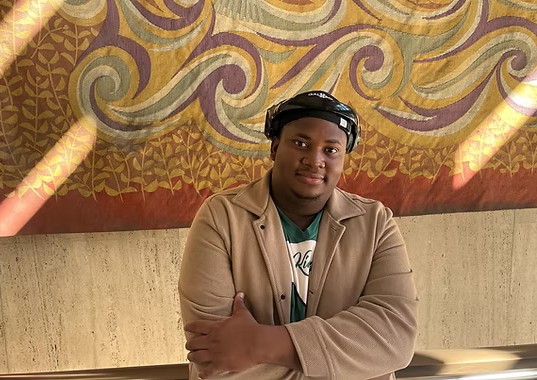
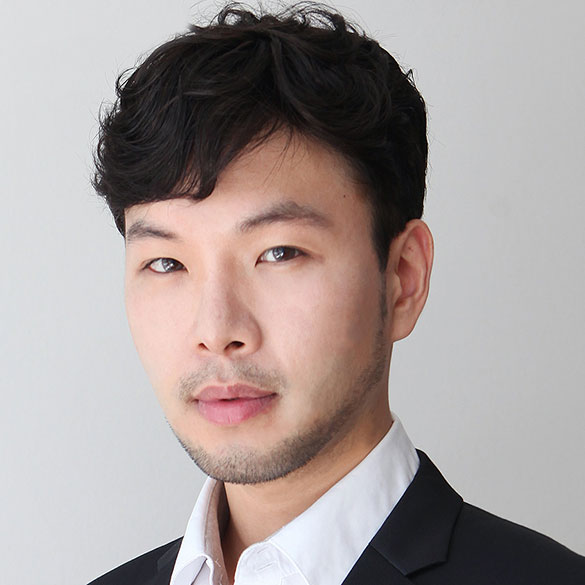
Lately, I’ve been hearing singers new to me who make me curious to hear more of their singing. Two such gentlemen are Lonwabo Mose (a basso from Cape Town, South Africa) and Siman Chung (a countertenor who hails from Busan, South Korea). Mr Mose is currently in the Metropolitan Opera’s Lindemann Young Artists Development Program; Mr. Chung has already made his Met debut in John Adams’ El Niño in 2024.
After hearing both singers in the recent Sejong Soloists’ gala concert at Zankel Hall, where they were participants in the final ensemble from Mozart’s NOZZE DI FIGARO, I wanted to hear them in solo pieces, which I quickly found on YouTube.
Mr. Mose (above) sings Banquo’s aria from Verdi’s MACBETH at the 2025 Belvedere International Opera Competition. Watch and listen here.
Mr. Chung (above) sings “Vedrò con mio diletto” from Vivaldi’s IL GIUSTINO at a Château de Versailles Spectacles concert with L’Ochestre de l’Opéra, 2022-2023 season. Watch and listen here.
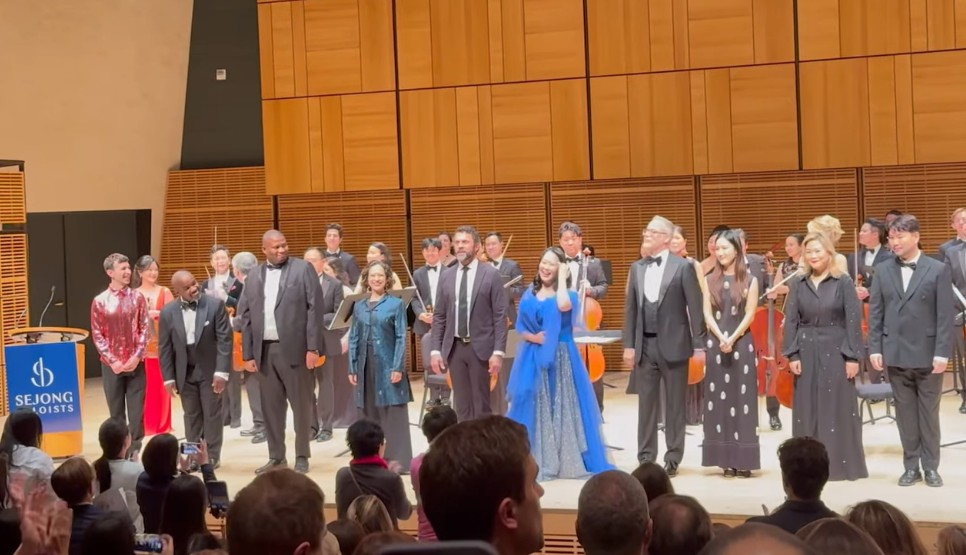
Above, taking a bow (from left): Anthony Roth Costanzo, Chee-Yun, Larry Brownlee, Lonwabo Mose, Jennifer Zetlan, John Moore, So-Chung Shinn Lee, Bradley Moore, Hera Hyesang Park, Hyona Kim, and Siman Chung.
Tuesday May 12th, 2026 – Sejong Soloists were joined this evening by tenor Lawrence Brownlee, countertenor Anthony Roth Costanzo, violinist Chee-Yun, and sopranos Jennifer Zetlan and Hera Hyesang Park for this gala concert at Zankel Hall. The event was co-hosted by Emmy Award-winning journalist Paula Zahn and Mr. Costanzo.
Late seating was a distraction as the concert got underway. The program opened with Frank Bridge’s Valse-Intermezzo, H. 17. The Sejong players sounded marvelous, as always. The piece commences with a tremolo and some plucking before settling into a flowing waltz. It is beautiful music, though it went on a bit too long.
Another wave of late seating infringed on the opening of Henri Duparc’s “L’invitation au voyage“, which pianist Bradley Moore commenced before the late arrivers were settled in. Countertenor Anthony Roth Costanzo wore a glaring metallic-gold shirt for his performance of this captivating song, into which the singer introduced some luminous straight-tones. Singer and pianist created a poetic atmosphere, most notably with the song’s trademark line: “…Luxe, Calme et Volupté…”
Lucas Drew’s arrangement of the Allegro from Giuseppe Verdi’s String Quartet in E-minor gave the Sejong artists many opportunities to display their warm tonal colours and their gift for dynamic shadings. The arrangement introduced wind instruments into the string-based sonic palette: flute, oboe, clarinet, bassoon, and horns all sounding lovely.
Soprano Hera Hyesang Park offered a prayerful rendering of Desdemona’s Ave Maria from Act IV of Verdi’s OTELLO, the soothing sound of her voice cushioned by the ethereal playing of the orchestra. Staying in the realm of opera, Lawrence Brownlee then brought his command of the bel canto style to Nemorino’s wistful “Una furtiva lagrima” from Donizetti’s ELISIR D’AMORE. I’ll never forget my first time hearing this aria performed “live” on the stage of the Old Met by Nicolai Gedda in 1965. Mr. Brownlee carries on the bel canto tradition with his poetic voicing of the words and the radiance of his phrasing. Ms. Park then joined the tenor for “Parigi, o cara” from TRAVIATA in an arrangement by Geoffrey Loff and conducted by Bradley Moore, who I remember playing for Juilliard voice students in my first years here in New York City. Bolstered by Moore’s attentive conducting, the singers achieved a sweet blending of timbres in their final moments of peace before the opera’s heartbreaking end.
Before the start of the program’s second half, So-Chung Shinn Lee was honored for her years of dedicated support of the Sejong Soloists. She made a charming speech, with touches of humor. At the end of the evening’s concert, she joined in the final work as a singer, having graduated from the Manhattan School of Music in 2024 (!). She took her place among the lineup of vocalists for the finale of Mozart’s NOZZE DI FIGARO.
The second half of the program commenced with soprano Jennifer Zetlan in a poetic performance of Ricky Ian Gordon’s “WillThere Really Be a Morning?” with the composer himself at the piano. Their rapport was evident from note one, and they were heartily applauded.
Joaquin Turina’s La oración del torero (“The Bullfighter’s Prayer”) passed thru many moods; I was expecting something more pensive and darkish, but the music has a scurrying start before jogging along amiably for a bit. Breaking into a dance, it then settles into dreaminess before reaching a high, heavenward finish. The violins of the Sejong Soloists were especially mavelous in this piece.
Astor Piazzolla’s Invierno Porteño (“Buenos Aires Winter”) from Las cuatro estaciones porteñas (“The Four Seasons of Buenos Aires“), with violinist Chee-Yun in a striking red gown as soloist, was the highlight of the evening for my companion and me. Echoes of Vivaldi and tango-flavoured rhythms are seamlessly entwined. Sejong cellist Ole Akahoshi weaves phrases around the melodious playing of Chee-Yun, and later Mr. Akahoshi and double bassist Satoshi Okamoto will become prominent in the musical scheme.
At the special request of the evening’s honoree, So-Chung Shinn Lee, the program ended with the finale of Mozart’s NOZZE DI FIGARO in which she sang Barbarina. Anthony Roth Costanzo switched registers to sing Figaro, Ms. Zetlan was Susanna, Ms. Park the Contessa Almaviva, and Mr. Brownlee sang Don Basilio. Hyona KIm, a recent Met Suzuki, was Marcellina, and counter-tenor Siman Chung and bass-baritone Lonwabo Mose made their marks as Cherubino and Antonio respectively. But it was baritone John Moore who – as Count Almaviva – impressed me the most. I remember John as a Met Young Artist; he has since developed into singer who is magnetic both in voice and presence.
On this evening of wonderful music-making, It was so nice running into my violinist-friends Paul Huang and Doori Na.
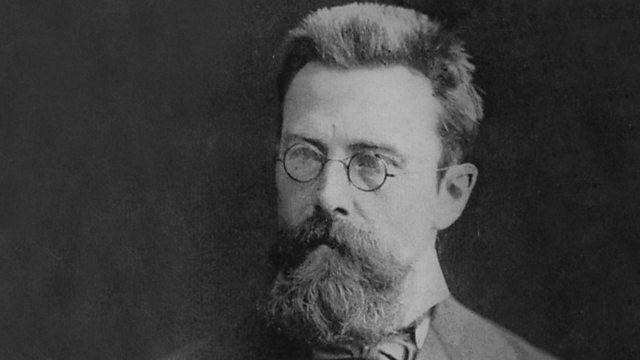
My long-time friend Richard Curtis sent me this video of a marvelous performance of Rimsky-Korsakov’s Sheherazade as performed by the Gimnazija Kranj Symphony Orchestra at a Christmas concert in 2010 at Gallus Hall in Ljubljana, Slovenia. The violin soloist is Matjaž Bogataj, and the conductor is Nejc Bečan.
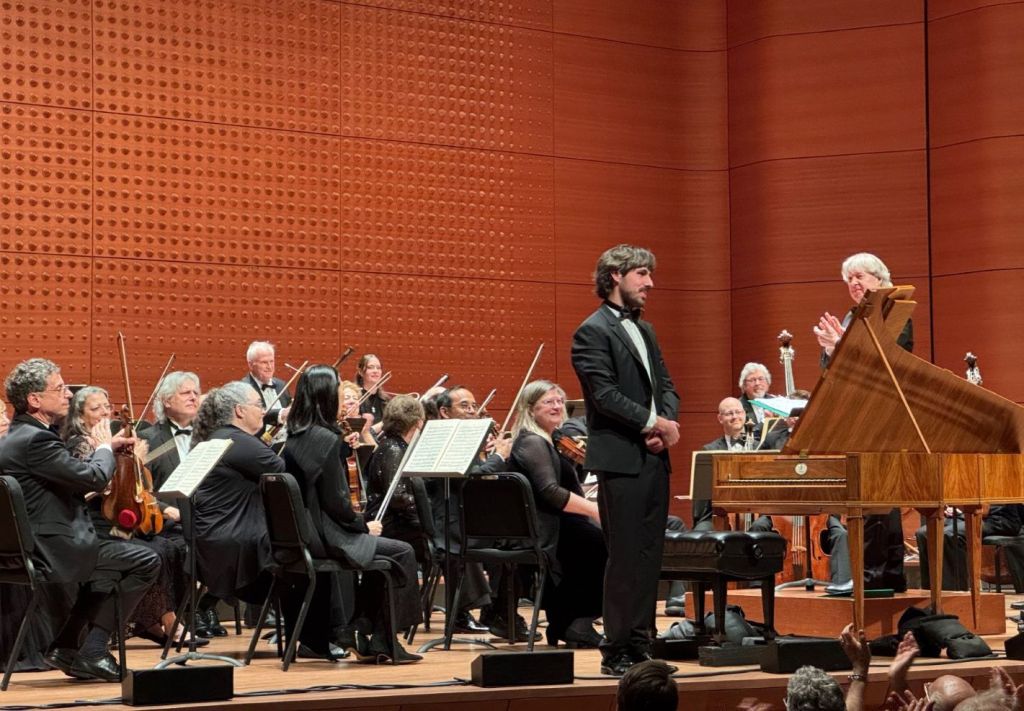
Above: pianist Matthew Figel, Maestro Crawford, and members of the ACO; photo by Kevin DallaSanta
Tuesday May 5th, 2026 – Continuing their multi-season survey of Beethoven’s nine symphonies, the American Classical Orchestra presented the ‘Eroica’ at Alice Tully Hall, alongside Mozart’s PianoConcerto No. 17, performed by Matthew Figel on fortepiano.
Conducted by Thomas Crawford, the New York-based orchestra pursues historically informed performance, both in instrumentation and in interpretation. The enthusiasm of its musicians was infectious, as their delight in the pieces—and the quirks of their historical instruments—gave fresh perspective on familiar favorites.
Mozart’s Piano Concerto No. 17 is associated with his starling, who could purportedly whistle the tune of the final movement, save for one wrong note. Missing none himself, Figel performed on the fortepiano, a keyboard instrument which ironically often appears to modern audiences as lacking broad dynamic range. It is thus a challenge for pianists, who must coax expression out of a limited tonal palette, while dealing with the oddities in balance that emerge.
Figel dispatched these issues with focused and sensitive playing, giving clarity and direction to the melodies without the loss of buoyancy that often accompanies fortepiano performances. The cadenzas were particularly enchanting, as Figel brought out their lyrical and operatic aspects. It is often said that the Eroica ushered in a Romantic era with colorful harmonies and richer emotions; yet Mozart’s language is certainly colorful and emotional.
The fortepiano gives insight into Mozart’s original intent: bass notes resound with surprising volume, and extended trills—which on a modern Steinway drown out the action like a ringtone—become wonderfully delicate and transparent. Numerous cellphones in the audience were initially fortunate to coincide with the work’s key of G. Unfortunately, like the starling, they eventually went out of tune.
The period experience is somewhat different in purely orchestral works, and the historical performance debate typically centers around the symphonic repertoire. Critics highlight the vast uncertainties in how Beethoven originally sounded or what he originally meant. Proponents argue that, similar to the pianoforte, the use of period instruments naturally ground the performance; and that modern ensembles are probably not what Beethoven heard, at least while he could.
For the American Classical Orchestra, period performance evidently involves a number of historical instruments, sparing rubato, and little to no vibrato. Crawford conducted with brisk tempi and a focus on Beethoven’s rhythmic nature, giving liberty to the musicians without over-dictating their movements. His interpretation was careful but not overly conservative, a difficult balance for such a well-known work.
The ‘Eroica’ is often lauded as the giant leap for humankind into the Romantic era. But this comes with the benefit of hindsight: Beethoven’s first two symphonies had their own progressive aspects, and many other works in the repertoire were innovative upon premiere. In some ways, the ‘Eroica’ is a convenient pivot at which to draw a border between eras, all the more because of its enduring popularity among audiences.
A highlight of the period approach to the third symphony was the natural horns, which are stopped with the hand to reach notes outside of the tonic triad. The result is a nuanced and dynamically inflected rendering which particularly shines in the horn trio of the third movement. The “heroic” horn entrance in the first movement recapitulation also seems more striking: its major triad is in the unstopped, loud register.
The performance was characterized throughout by strong string playing, all the more remarkable given their limitations on vibrato. To modern ears, the orchestration can seem somewhat spindly at times. But in many passages, the timbre feels right—suggesting a whiff of authenticity for which historical performance orchestras strive.
The reduced ensemble, small hall, and apparent joy of the musicians further contributed to the feeling of authenticity. In a city with numerous full-time ensembles, and innumerable visiting ones, it is refreshing to hear music made by smaller orchestras with limited performance calendars. Rarely does one get to sit behind the soloist during the second half of the program as they listen intently to Beethoven. If their expertise is any indicator, there is something worthwhile happening onstage.
Tuesday May 5th, 2026 – Lane and I were at Carnegie Hall tonight, celebrating the 50th anniversary of its fabled “Concert of the Century” which took place on May 18th, 1976. Organized by Isaac Stern, that program had featured some of the world’s greatest musicians, joining together to commemorate the anniversary of the Hall’s opening on May 5, 1891.
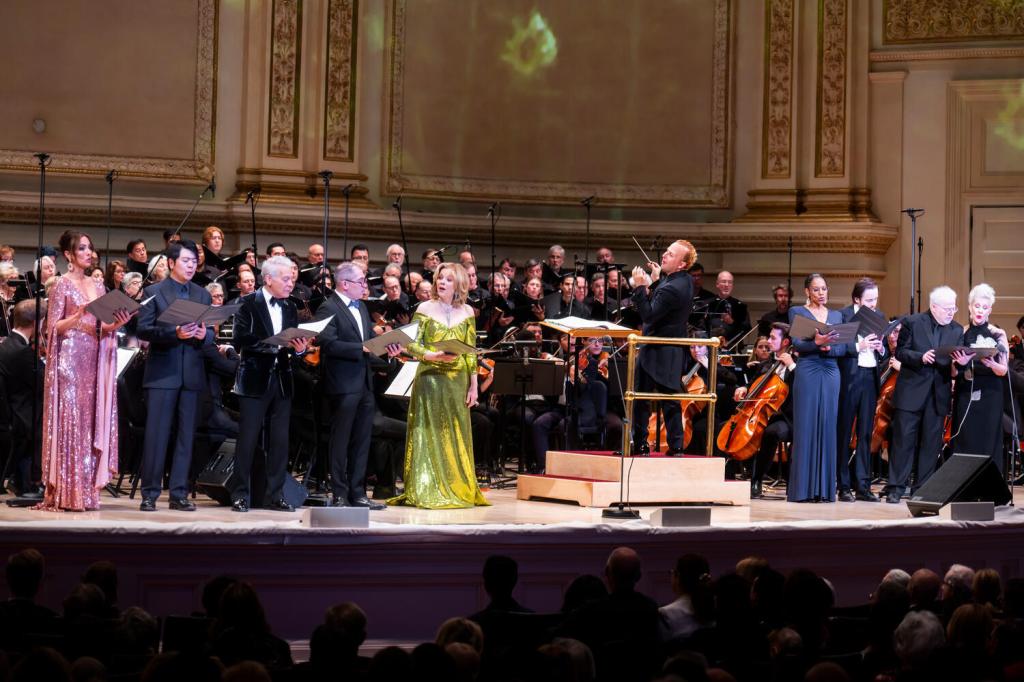
Tonight’s program, which, on paper, looked likely to be quite lengthy, actually sped by; the finale was reached after about 90 minutes. How cool of Renee Fleming to give a gracious “thank you” to the stage crew, who deftly moved a concert grand about as needed. Renee, in addition to singing luminously in a Mozart piece, was the most congenial hostess imaginable.
The venerable Hall filled up slowly, with gorgeously-gowned ladies and black-clad blokes like us mingling whilst the young musicians of the NYO-USA All-Stars and the singers from the Oratorio Society of New York (director: Kent Tritle) took to the stage.
A fantastical set of projections lit up the space throughout the program: quotes from Andrew Carnegie, photos of great Carnegie concert posters from the past, pictures of musical luminaries who performed there, and scenes from city life all mixed into a montage that might have been a distraction but for the fact it was so skillfully designed.
Yannick Nézet-Séguin, the world’s busiest conductor, presided over the evening, which opened with the spirited overture to Bernstein’s CANDIDE and continued with a dazzling rendition of the Allegro molto vivace from Tchaikovsky’s “Pathétique” symphony.
As the backdrop morphed into heavenly rays of sun peeking thru billowing clouds, the familiar opening theme of Mozart’s Laudate Dominum filled the Hall. Ms. Fleming, backed by the Oratorio Society singers, sang serenely, her voice – as ever – so comforting.
Evgeny Kissin sadly withdrew from the evening due to illness; hopefully he’ll bounce back in time for his ‘trio’ concert with Joshua Bell and Steven Isserlis here on May 31st.
Joyce DiDonato, in a glittering, sequined gown of bright red, was joined by the beloved pianist Emmanuel Ax for two songs from Mahler’s Rückert-Lieder. “Ich atmet’ einen linden Duft” was sung and played with a heavenly softness that drew the audience in. Surpassing themselves, singer and pianist then gave an extraordinarily poignant rendering of the heartfelt “Ich bin der Welt abhanden gekommen“…for me, the most meaningful song in all of the lieder repertoire.
Backed by the orchestra, Daniil Trifonov gave us a wild and wonderful performance of the Allegro agitato from Gershwin’s Piano Concerto in F. Looking very dapper as he strode onto the stage, the pianist was as entertaining to watch as to hear. The climax of the piece is a glorious bang on a gong. Bravissimo, Daniil and the All Stars!
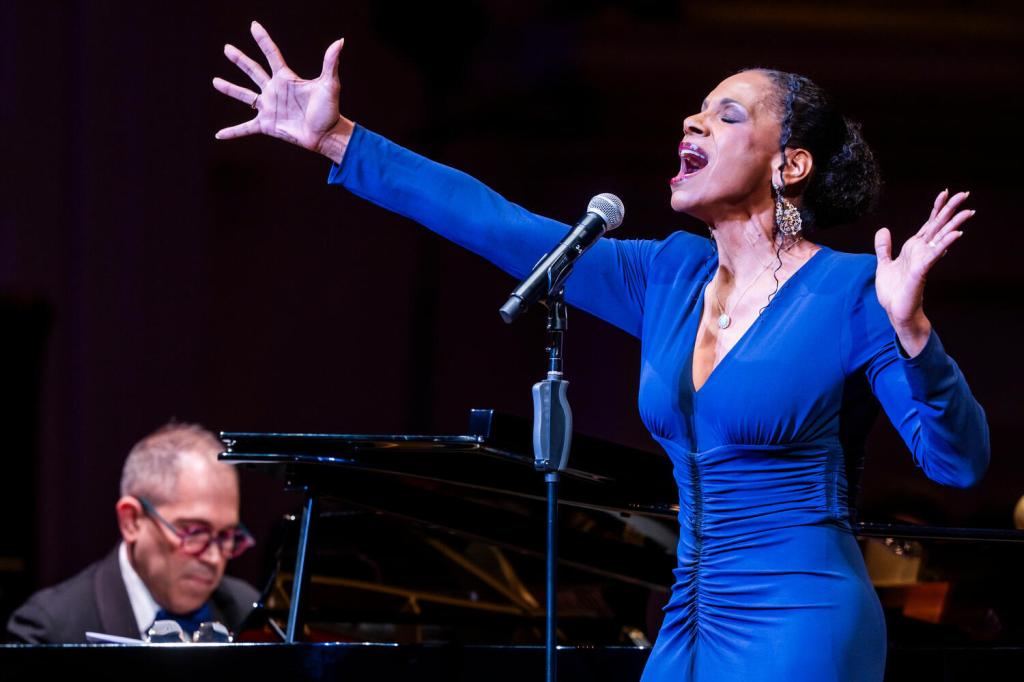
Above, Audra McDonald with pianist Andy Einhorn; photo by Chris Lee.
I had never heard Audra McDonald nor Michael Feinstein “live” before, though I’ve very much enjoyed Audra in her television appearances as an actress (especially in “The Gilded Age” and “The Good Wife”/”The Good Fight”). Looking svelte and lovely in a blue gown, she and pianist Andy Einhorn gave us Ellington’s “Sophisticated Lady” and Gershwin’s “Fascinating Rhythm”, sung and played with fabulous flair. Audra dedicated her set to the memory of the late, lamented Michael Tilson Thomas. Between songs, she had some charming by-play with her reading glasses. During the applause, I was wondering: why do I feel some strange connection to this woman? Answer: we share a birthday.
How well I remember when Michael Feinstein came of the scene…such a handsome fellow, such a relaxed and congenial personality. Unfortunately, we sat thru his set listening to an annoying soto voce conversation from the couple behind us (I won’t tell you what language they were speaking, but it’s something that has cropped up many times before in my concert-going career; my pal Dmitry would have known how to silence them…). At any rate, Michael charmed and delighted the crowd with Arthur Schwartz’s “That’s Entertainment” in an arrangement by Jerry Herman which changes the lyrics to “That’s JudyGarland!” He then followed up with a salute to Tony Bennett with Michel Legrand’s “How Do You Keep the Music Playing”. Mr. Feinstein looks (and sounds) as handsome as ever, with his trademark gift for making you feel that he is singing just for you.
Speaking of musicians I’d never seen “live” before, tonight Lang Lang – performing Tchaikovsky’s Allegro con fuoco from Piano Concerto No. 1 – dazzled the crowd with his spectacular playing. Alternating sublimely soft passages with thunderous displays of speed and dexterity, he brought down the house. His melodramatic stage presence is kind of off-putting, but apparently it’s part of the package.
Isabel Leonard, dressed in pale violet, tossed off the brilliant finale from Rossini’s CENERENTOLA. Aided and abetted by monsieur Nézet-Séguin and his All-Stars, Ms. Leonard sang sweetly as she attempted to console her disappointed father and step-sisters – who had always treated her badly – before celebrating her new-found happiness with the scales and roulades of the brilliant “Non piu mesta“, dispatched with flair. The comely mezzo, much admired by my companion, seems wonderfully at home in the Carnegie acoustic, which suits her to a T.
The pandemic was recalled by a performance of Valerie Coleman’s “Seven O’Clock Shout“, amiable music which includes an actual shout from everyone onstage.
And then, the evening’s grand finale loomed before us, ending – as it had started – with music from Leonard Bernstein’s CANDIDE: “Make Our Garden Grow“, with everyone onstage participating. It was especially fun watching Ms. Leonard sharing a songbook with Lang Lang.
Performance photos by Chris Lee, courtesy of Carnegie Hall.
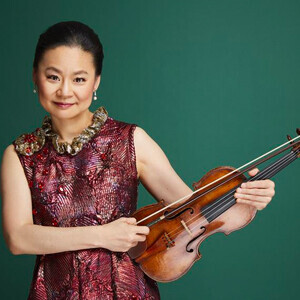
Thursday April 30, 2026 – On Thursday night I went to hear Midori play Beethoven’s Violin Concerto. It was really as simple as that: she is one of the most meaningful musicians in my life and the concerto is one of the most beloved pieces of my twenty-five years of classical music listening.
Midori is noted not only for her transformation from child prodigy into sterling professional but also for her dedication to pedagogy and the generous, ambassadorial spirit she brings to her projects around the world.
One of those projects was a series of weeklong residences with orchestras in small American cities that involved workshops in schools, lunches and other social gatherings, masterclasses and performances with the local youth orchestras, and a concerto performance with the professional orchestra.
In April of 2008 Midori came to Sioux Falls, South Dakota, where I was a Lincoln High School junior, to perform with the South Dakota Symphony and hold one of these residences. For me it was a full week of practicing and going to rehearsals. I played in the two competing youth orchestras (the Sioux Empire Youth Orchestra and Dakota Academy of Performing Arts) and had been selected to play at Midori’s masterclass near the end of the week.
I played Fritz Kreisler’s Variations on a Theme of Corelli, a bravura encore piece without much musical substance. I did a decent job but always struggled with intonation. I don’t remember much of Midori’s specific feedback to me besides her encouragement of my lyrical phrasing and warm vibrato. What I remember well was that, despite the sense of gravity that I felt playing while Midori stood on the stage nearby, I felt something totally different from the usual pit in my stomach that audiences and solo recitals induced. What I felt emanating from Midori was an overwhelmingly positive energy, perhaps a combination of general pride for the younger generation of violinists and a broad joy in the chance to play and discuss music together.
Midori wasn’t just modeling the technical prowess of a great violinist, she was modeling the kind of person a great artist could be.
The next day, a photo of Midori demonstrating for me (with me seen out of focus, from behind) graced the front page of the local paper, captioned with an absurd misspelling of my name.
Fast forward to this Thursday, when I brought a dear friend to hear Midori play Beethoven. An early point of bonding between my friend and me was the discovery that we had played masterclasses for Midori mere weeks apart (He played the much more substantive first movement of the Mendelssohn concerto in Great Falls, Montana).
At the solo violin’s first entrance—more than three minutes into the first movement—we hear Midori at her most Midori. Beethoven’s material here has an almost pedagogical quality with scales and intervals wending up and down the range of the violin. Midori gives each note light and air and we hear the deliberate action of every single pitch on the fingerboard almost like keystrokes. Her sound favors refinement over power and her readings are lyrical but understated.
The Orchestra of St. Luke’s, led by Masaaki Suzuki (the founder and director of the Bach Collegium Japan), matched Midori’s congeniality and buoyancy although there were many moments in each movement when her subtle effects were covered by the ensemble.
The second movement—which I will always associate with the music from the children’s dinosaur film The Land Before Time—had a beautifully veiled sublimity and reached a pinnacle of intensity (that drew clear connections to the overture to Don Giovanni on the program before the Beethoven concerto)in the moments before the attaca to the final movement.
In the Rondo Midori and the OSL relished the joyful, amiable, yet heroic quality of this Middle-Beethoven. Midori’s focused, introverted presence never prevents her from fully embracing the rollicking joy of music like this. The cadenzas (also by Fritz Kreisler) became perpetuum mobile exercises in brilliance and flawless left- and right-hand technique.
As an encore, Midori did what Midori does: she played a movement from Bach’s sonatas and partitas for solo violin. Here was Midori the teacher offering us restraint, erudition, discipline, and perfection, like asking us to eat our vegetables.
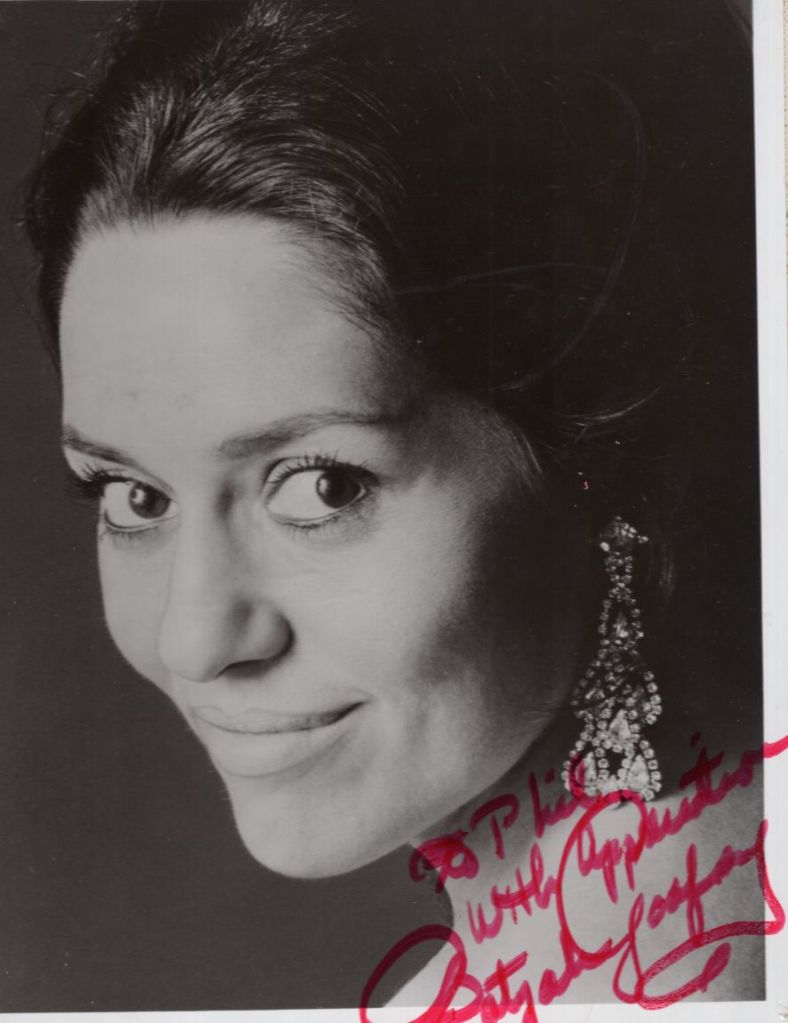
The wonderful contralto Batyah Godfrey Ben-David has passed away at the age of 85. Her voice was unique in its warmth and beauty.
Between 1969 and 1988, Ms. Ben-David sang nearly 600 performances with the Metropolitan Opera. Among her numerous roles were Maddalena in RIGOLETTO, Marthe in FAUST, Mamma Lucia in CAVALLERIA RUSTICANA, the Page in SALOME, Teresa in SONNAMBULA, the 3rd Lady in MAGIC FLUTE, and La Cieca in LA GIOCONDA.
I’ll never forget a performance of CAV in which Ms. Godfrey Ben-David was kneeling next to Martina Arroyo, who was singing Santuzza. During the Easter Hymn, Mamma Lucia’s voice enters a few bars before Santuzza’s. When Martina heard Batyah’s astonishing contralto tones, she beamed a warm smile to her colleague.
In 1974, I tuned in for a Met Opera radio broadcast of GOTTERDAMMERUNG and found that Ms. Godfrey Ben-David was replacing an ailing colleague as the 1st Norn; this is a role that includes quite a bit of solo singing, which Batyah delivered so beautifully. Mignon Dunn and Nell Rankin were her sister Norns that day, and Rafael Kubelik was conducting. You can listen to that Norn Scene here:
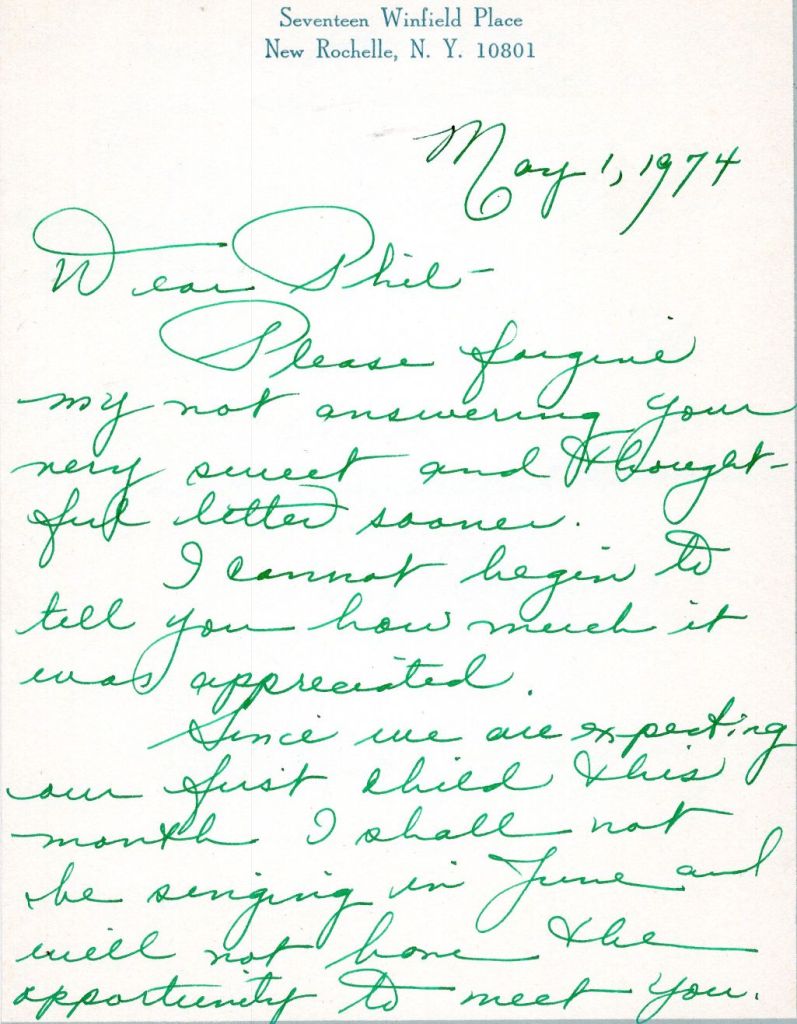
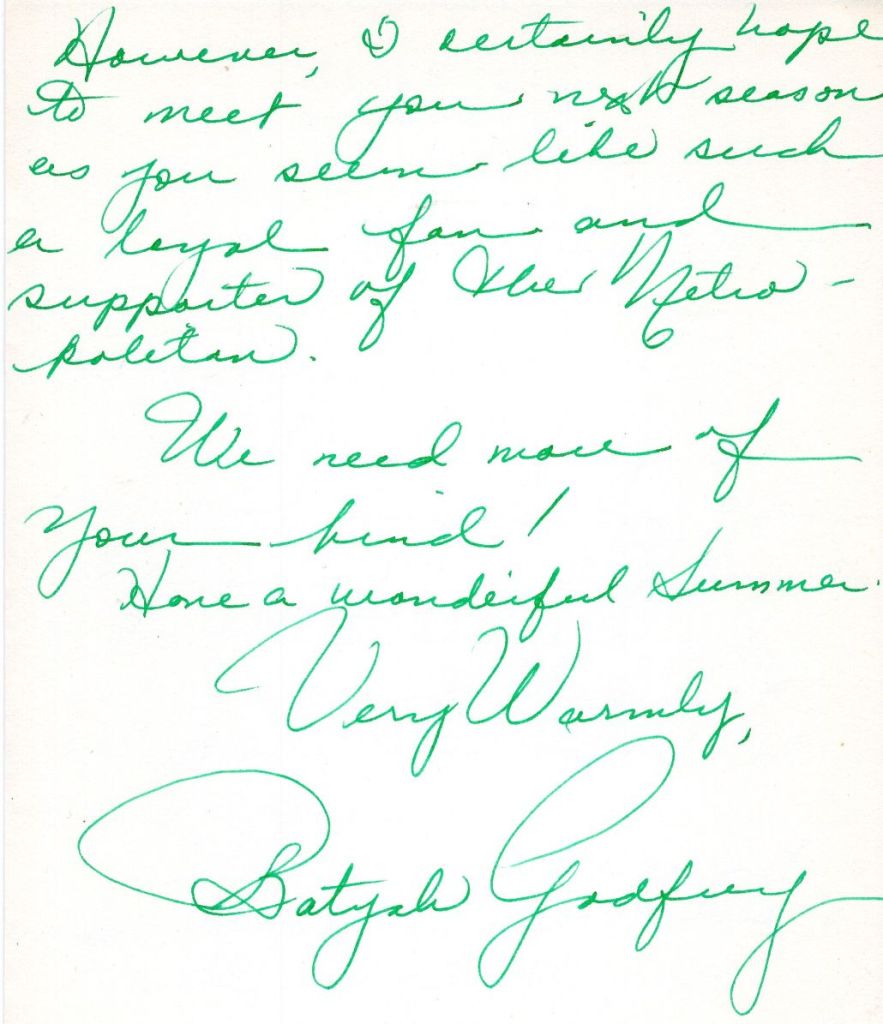
And here is a lovely letter that Batyah sent me after I wrote to thank her for her memorable 1st Norn:
Batyah’s was a voice that meant a great deal to me. I never met her in person, but I did meet her son Adam once, to give him a copy of that Norn Scene recording with his mom’s voice shining thru.
Above, curtain call: Lindsay Martin, Amartuvshin Enkhbat, Rosa Feola, Liparit Avetisyan, Ben Reisinger, and Eve Gigliotti.
~ Author: Oberon
Sunday May 3rd, 2026 matinee – Soprano Rosa Feola enjoyed a personal triumph as Violetta in Verdi’s LA TRAVIATA at The Met this afternoon. Sharing the stage with debuting tenor Liparit Avetisyan and the great Mongolian baritone Amartuvshin Enkhbat, the performance benefited from conductor Marco Armiliato being on his best behavior, fully supportive of the singers.
For me, Ms. Feola was the first Italian Violetta to make such a mark on the role since Scotto and Freni sang it back in their heyday. All afternoon, Ms. Feola kept my emotional temperature at the boiling point: I cried, got breathless, and had chills running thru me as she delivered one marvelous moment after another.
I ran “Italian sopranos who sang TRAVIATA from 1950 on” thru AI and was surprised to find that Anna Moffo, Maria Callas, and Virginia Zeani were all Italian! Who knew??! Anita Cerquetti is listed, though she never sang the role. Licia Albanese, who was my first-ever Violetta at the Cincinnati Zoo Opera in 1963 (and who recorded the opera with Toscanini) is not named, nor is the first Violetta I ever heard (on a MET broadcast): Gabriella Tucci. Adriana Maliponte and Elena Mauti-Nunziata (who I saw singing Violetta in Hartford in 1985) are likewise ignored by AI.
What is the point of all this? Well, simply that somehow, when the Violetta is Italian-born, it adds an inexplicable dimension to the story of the famous French courtesan, Marie Duplessis, on whose brief life the Verdi opera is based. Example: Italian sopranos such as Tebaldi, Tucci, and Renata Scotto have stopped the show with their “Amami Alfredo…!” in Act II (Tebaldi was even known to encore the passage…).
Oddly, I hadn’t even thought about any of this until I was at my score desk; I had come simply to hear Ms. Feola again after enjoying her performances in RIGOLETTO and FEDORA. The presence of Mr. Enkhbat in the cast was another attraction.
Settling in, it looked like the House might end up half-empty, but by the time the conductor entered the pit, there was a substantial crowd. The prelude was hauntingly played; when the singing began, I was afraid Maestro Armiliato might be in his “loud-and-fast” mode. Perhaps because his Violetta was a compatriot, he was more thoughtful in his approach today. In the end, it was probably the most pleasing conducting I’ve ever heard from him.
The singing started. From her first lines, it was evident that Ms. Feola had something special to offer. Tenor Ben Reisinger as Gaston introduces Alfredo (Mr. Avetisyan) to Violetta. I have no doubt that – soon – Mr. Reisinger will be singing Alfredo; he cetainly has everything a tenor needs for the role…and for many other roles. Meanwhile, Lindsay Martin, Christopher Job, Brian Major, and Richard Bernstein are all making their marks as party guests. Mr. Avetisyan leads off the Brindisi, his lyrical voice Italianate in sound, with stylish turns of phrase, and an endearing trace of a sob here and there. Ms. Feola immediately established herself with her full lyric sound, her natural flow of the text, and her wonderful feel for subtleties in the music that will make her all the more riveting as the opera moves forward. Her B-flat to end the drinking song rang beautifully into the big hall.
The tenderness of Mr. Avetisyan’s lines after Violetta has experienced a coughing fit led him on to his persuasively voiced “Un di felice...” sung with ardor. Ms. Feola replied with deft coloratura phrases, and a moment of rubato that made me fall in love with her.
Left alone, Ms. Feola commences the great scena that Verdi constructed to end the act: a gift that every soprano who has taken on the role of Violetta has unwrapped in her own unique way. What a pleasure to hear the Italian language so gorgeously rendered by Ms. Feola. Everything is clear and clean: her lingering higher notes enticing, and a marvelous crescendo carrying her into “Ah, qual amor…”. The audience seems entranced: the silence in the Hall is palpable. We are hanging onto every note and word. The ensuing recit takes her into the dazzling “Sempre libera…” with bright top Cs and words filled with magical colourings. After hearing Alfredo’s ardent serenade, Ms. Feola launches the second verse more introspectively, but is soon relishing the flowing scale passages before soaring up to a house-filling E-flat. The crowd went wild; if – as in days of yore – the soprano had taken a solo bow at this point, the ceiling might have collapsed.
A long interval (not an intermission) with the house lights at the half mark caused people to flock to the restrooms only to be told by the ushers “This is not an intermission!” When the opera started up again, the audience remained unsettled for a minute or two, spoiling the intro to Alfredo’s aria. This Mr. Avetisyan sang beautifully, with a tenderly expressive recit and a seductive flair in the aria proper. Armiliato chose a fairly rapid tempo, but the tenor used it to advantage, letting the long phrases meld into one another: very poetic. We briefly meet Annina, Violetta’s faithful servant, in the person of Eve Gigliotti. After her revealing of the facts of Violetta’s finances to the love-struck Alfredo, he sings the cabaletta “O mio rimorso…” (hardly ever heard in my first decade or two of opera-going) with assured coloratura and fluent diction before rushing off to set things right.
We come now to the heart of the opera: the meeting between Violetta and her lover’s father. This scene has always moved me deeply, ever since Ms. Tucci and Robert Merrill captivated me with it on that Texaco broadcast – which now seems like a lifetime ago. Today, Mr. Enkhbat’s incredibly powerful voice made Germont’s angry first lines truly threatening. The baritone, sounding better than ever, is taken aback when Violetta stands up to him. Every line that Ms. Feola sings in this in this scene (well, all afternoon actually…) turns to gold. Her “Piu non esiste…” and “Era felice troppo…” are deeply felt. Taking on a less combative stance, Mr. Enkhbat attempts to explain his family’s situation; with “Pura siccome un angelo...”, so gorgeously sung, so legato, and full of subtleties, he begins to wear down Violetta’s defense. Shattered by Germont’s demands, Ms. Feola brings some anguished chest tones into play. Her “Cosi alla misera…” is heart-breaking, and then comes the turning point of the opera, from which there is no going back: Violetta’s “Dite alla giovine...” was another Feola treasure, answered by the baritone’s attempt to console her with “Piangi, piangi…” The whole duet was so engrossing…so real. Germont has won. Ms. Feola sings the parting line “Non ci vedrem piu forse...” but suddenly voices from the lighting bay at the top of the hall break the mood.
Violetta sends Annina off to accept Flora’s invitation, Ms. Feola dismissing Ms. Gigliotti severely. The haunting clarinet solo as Violetta writes a farewell letter to Alfredo is broken by his sudden return. Ms. Feola sings a moving “Amami, Alfredo…” which Mr. Armiliato underscores with deep, rumbling timpani.
Mr. Enkhbat’s “Di Provenza…” is spectacularly sung, his mellifluous tone filling the hall, with hushed piano effects etched in. In the second verse, so vibrant, touches of anger emerge, filling out the portrait of a father burdened with a wayward son and a beloved daughter. Mr. Enkhbat sings then sings the cabaletta, which I have never liked. TRAVIATA survived for decades without this piece, which delays the flow of the story. Enkhbat sang it sumptuously, though Armiliato drowned out the singer’s final line.
The intermission felt endless, but Flora’s party finally kicked off with a briskly-paced ballet…I’ll never forget the NY City Opera’s production wherein the Galán sisters took turns dancing the lead, castanets blazing away. At her party, Lindsay Martin’s Flora gets a chance to shine, as do Mssrs. Reisinger, Job, Major, and Bernstein. After the ballet, Alfredo arrives, followed shortly by Violetta on the arm of her former protector. Agitato music underscores the drama as Violetta’s two lovers gamble whilst subtly insulting one another. Armiliato takes this scene super-fast; the tension is palpable.
Violetta begs Alfredo to leave as she fears the Baron might assault him. Furious at being spurned and seeing her with the Baron again,. Alfredo flings his winnings at her: Mr. Avetisyan is fiery here. The chorus upbraids him loudly for his treatment of their beloved friend, Violetta; all is silenced by the arrval of Germont. Mr. Enkhbat scolds his son powerfully and then Ms. Feola, in one of the opera’s most poignant passages, attempts to console Alfredo, who has no idea that it’s his own father who has caused Violetta to break with him. The Feola voice sails over the big ensemble, whilst Mr. Enkhbat’s voluminous sound effortlessly rings thru the finale.
Another long pause went on and on; it might as well have been an intermission. At last, the sorrowful prelude to the final scene commences; here Armiliato and his players are at their most expressive. Two of my favorite humans – Eve Gigliotti and Richard Bernstein – are there to ease Violetta’s final hours. Left alone, Ms. Feola reads Germont’s letter rather quickly and quietly, but ends with an anguished cry of “È tardi”. The soprano’s sung recitative is beautifully thought out, and “Addio del passato…” is colored in heartbreak…a gossamer top-A is strikingly beautiful. Usually, I do not think a second verse of the aria is essential, but today Ms. Feola persuaded me otherwise. The applause that followed was long and loud.
Soprano and tenor found a heavenly blend in “Parigi, o cara…“, with Ms. Feola’s delicate piano at “…tutto il futuro…” especially fine. The soprano’s desperation at “…ma se tornando…” as she faces the inevitable was harrowing. Of all the moments for another intrusion from the lighting bay, the voice of a man talking about his doctor’s appointment was clearly audible during the silence before the funereal “Prendi: quest’è l’immagine…” This was inexcusable. Ms. Feola’s “Se una pudica vergine...” was sheer heaven.
The opera ended; after a few moments of total darkness, the curtain rose again and Ms. Feola came forward to a tidal wave of applause and bravas.
Above: Asmik Grigorian and Iurri Samoilov as Tatiana and Onegin; a MET Opera photo
~ Author: Oberon
Saturday May 2nd, 2026 matinee – The Met put together an impressive cast for their revival of Tchaikovsky’s EUGENE ONEGIN this season. The Russian conductor Timur Zangiev was making his Met debut with these performances, and he and the orchestra forged this into the outstanding sonic experience of the season – one in which the singing onstage was never swamped by the sounds emerging from the pit.
Over the years, I have been fortunate to see a number of sopranos in the role of Tatyana, starting with Raina Kabaivanksa at The Met in 1979 (opposite Yuri Mazurok’s Onegin). Since then, my Tatyanas have been Teresa Zylis-Gara, Ileana Cotrubas, Kay Griffel, Edith Davis (in the opening production of the Glimmerglass Opera House), Mirella Freni, Lyubov Kazarnovskaya, Solveig Kringelborn, Hanan Alattar (especially lovely…at Juilliard), Tatiana Pavlovskaya, and Anna Netrebko. Each has been special in her own way. This afternoon, Asmik Grigorian joined the list.
I remember well first hearing the voice of Iurri Samoilov when he was a finalist at the 2017 BBC Cardiff Singer of the World. His only previous Met role has been Schaunard back in 2022. Joining in the cast’s principals were French tenor Stanislas de Barbeyrac as Lenski, the monumental voice of Alexander Tsymbalyuk as Prince Gremin, and the comely Russian mezzo Maria Barakova as Olga.
The pensive prelude (with a jangling cellphone distraction) immediately assured us that the opera was in good hands with Maestro Zangiev in charge . Mlles. Grigorian and Barakova sang their folk-song dreamily, whilst Elena Zaremba as Madame Larina and the remarkable Larissa Diadkova traded chesty resonances as they recalled days gone by. (Ms. Diadkova had joined the cast after Stephanie Blythe withdrew.). The field workers sang their exhilarating folk song, and Ms. Barakova made a lovely impression with Olga’s aria, her expressive, velvety mezzo very forward and well placed, and finishing off with a gorgeous low line, laced with a sultry nuances.
We now meet Olga’s lover, Lenski, and his friend Onegin. Mr. de Barbeyrac displayed beautiful softness of tone in his song to his beloved, leading to a passionate declaration of love…his voice and Ms. Barakova’s blend poetically. Onegin’s little arietta was superbly sung by Mr. Samoilov, with Ms. Diadkova keeping a watchful eye on these young people. We hear, for the first time, the heart-throbbing melody that will soon open the famous Letter Scene.
Alone with her Nurse, Tatyana is uncharacteristically nervous. Ms. Diadkova tries to calm the girl with a touching narrative from her own past; the nurse leaves, and the passionate theme bursts forth from the celloes. The soprano’s voice bursts into an almost demented excitement, leading to a stunningly-sustained A-flat. As her monolog commences, winds, harp, and horn weaving restless underlying themes. Ms. Grigorian’s voice moved splendidly between lyricism and power; she has so many colours in her palette, making emotions ebb and flow with astonishing control. After her great outpouring, shimmering top notes sink into probing depths of tone. The orchestra plays sensationally as Tatyana hastily scribbles out the end of her letter. Her aria’s final lines are thrillingly voiced. The show then came to a halt as a hearty, porlonged ovation embraced the soprano.
Then the dawn music heralds the nurse’s return; the Grigorian voice is aglow with anticipation. Ms. Diadkova (bless her heart) gets very chesty as the two banter. The letter is sent; torn between hope and fear, Tatyana now awaits her fate. The orchestra and conducting have been sensational during this memorable scene. And Asmik has been spectacular.
In the next scene, the prelude and maidens’ chorus are wunderbar. Tatyana’s hopes are dashed by Onegin’s heartless response to her “juvenile” letter. Mr. Samoilov’s condescending – and eventually cruel – lecture is handsomely sung, taking the written ending to fine affecting.
After a long intermission, Maestro Zangiev is very warmly greeted as he returns to the podium. So far, he and the marvelous Met musicians been magnificent, and every note and nuance from the singers has been heard…and savoured. This is a very welcome change from the usual “fast and loud” atmosphere generated by most Met conductors these days. The Act II prelude is grandly played, with a special nod to the flautist. The beloved waltz commences, orchestra and chorus vivid at every moment. A bravo! from me to Ben Brady, who made the most of the Captain’s brief lines.
At his ball, Lensky and Olga argue…they do not know that their fate will soon be determined. Mr. de Barbeyrac’s plea is so touching, with a gorgeous diminuendo especially impressive. Tony Stevenson now takes the stage as Monsieur Triquet; in the past I have often thought that this vignette is tedious and delays the unfolding drama, but Tony made a masterpiece of it with his lyrical singing, avoiding character-tenor “nuances” and maintaining a melodious approach… Bravo!
The exchange between the friends Lenski and Onegin gets prickly. Mssr. de Barbeyrac as Lenski pours out his memories of the many happy hours he has spent at Madame Larina’s house with his beloved Olga; his singing is incredibly touching, with achingly beautiful piani effects and tender phrasing. In the big finale, the orchestra is loud, but the Maestro makes sure the singers are always heard. Madness takes over, with the tenor’s desperate farewell wrenchingly uttered. Kudos to all – and especially for the conductor – for such a thrilling scene.
It’s always great to have Richard Bernstein is the cast of any of the operas in his extensive repertoire; today he was Zaretsky, who presides over the fatal duel between Onegin and Lensky. Playing of deep richness came from clarinet and cello in the scene’s prelude. Then Mr. Bernstein took up his duties, annoyed at Onegin’s casual lateness. Mr. de Barbeyrac then gave us Lenski’s tragic aria, his singing full of sorrow and regret. As one beautiful, tormented phrase after another rose up, the bassoon offered its own poetic commentary. Lenski the poet was at his most poetic in what is to be his farewell to life. Ravishing sound, so engrossing…such hushed pianissimi that brought tears to my eyes. The uncanny fading away of the final phrase elicited a heartfelt applause from the crowded house, who had listened intently to such poignant singing. An agonizing duet of fate is voiced by the friends, now estranged beyond redemption. The orchestra plays frantically; the gunshot is fired. “Dead?” asks Onegin…”Dead!” is Zaretsky’s numbing reply.
Years have passed; Onegin has wandered the world restlessly. Back in St. Petersburg, with nothing better to do, he attends a ball hosted by an old comrade, Prince Gremin. After a simply brilliant polonaise, played gloriously by the Met musicians, Onegin sings – with undercurrents of regret – of his loss of interest in all things worldly. Following a sort of ‘encore’ by the orchestra (a brisk Allegro vivace), Onegin – to his amazement – then spots Tatiana, now the elegant Princess Gremina, across the ballroom. The prince greets his long-lost friend and tells him, in a splendid aria, of his happiness and contentment with his young wife. Alexander Tsymbalyuk, a bass with a voice of gold, simply pours out this magnificent piece with sustained gorgeousness. A more introverted repeat of the aria’s initial phrases creates a feeling of great tenderness; in his penultimate measures, Mr. Tsymbaluk descends to a solemn low note, which some in the audience mistook for the ending. Applause and bravos broke out. When they finally died down, the maestro and basso took up where they had left off, giving the the aria’s concluding low note its full grandeur. After speaking briefly to Tatiana, who politely withdraws, Mr. Samoilov sings excitedly of newfound hope before he rushes away.
Against her better judgement, Tatiana agrees to meet Onegin. The prelude to this scene found the orchestra at their very finest. Mr. Grigorian voiced Tatiana’s mixture of torment and rapture with marvelous vocal colours. The princess explains that this is to be their last meeting, but Onegin cannot accept her rejection. Things get intense, with Onegin fighting for his life, but Tatiana stands firm. With a sublime floated note, Ms. Grigorian again attempts to dismiss him (and her own feelings). They harmonize, each filled with desire, and at last Tatiana admits she still loves him. But, just as hope fills Onegin’s heart, Tatiana breaks away and, with a searing high note, she rushes off. After what felt like an eternity of silent despair, Mr. Samoilov thrillingly ended the opera with heart-rending cry of anguish.
At the stage door, I met Ms. Grigorian, Mr. Tsymbalyuk, Richard Bernstein, and Maestro Zangiev. The conductor seemed surprised when I told him that his had been best conducting I’d heard at The Met all season. It was not meant as an idle compliment, and I assured him it was true. His respect, not just for the music, but for the singers singing it, was so meaningful to me.


 Oberon's Glade