Author: Philip Gardner

  • Pekka Kuusisto @ Mostly Mozart

    Out_there_Kuusisto_Pekka_2018-19_03

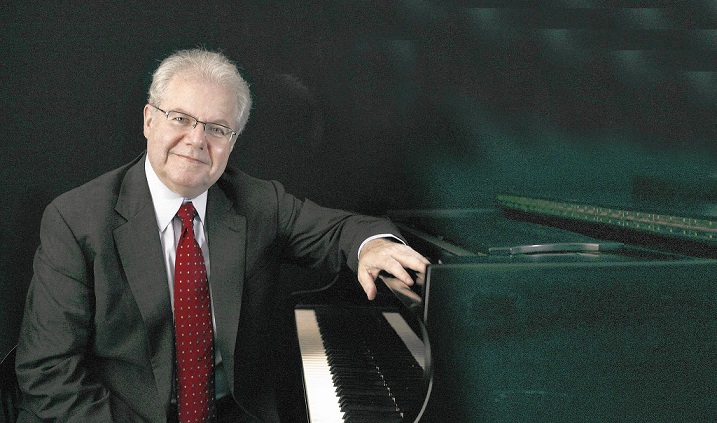
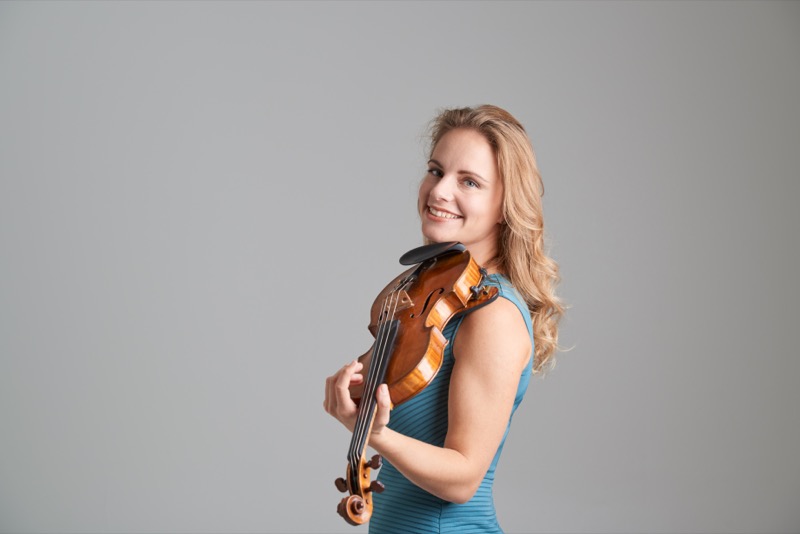
    Above: Pekka Kuusisto, photographed by Kappo Kamu

    ~  Author: Oberon

    Friday July 26th, 2019 – An unusual and exciting program at Mostly Mozart this evening as violinist Pekka Kuusisto joined the Mostly Mozart Festival Orchestra under Andrew Manze’s baton. The program featured music of Bartók, plus Mr. Kuusisto’s setting of Vivaldi’s beloved Four Seasons into which folk music from Norway and Finland has been woven.

    Béla Bartók’s Romanian Folk Dances, arranged for string orchestra by Arthur Willner, opened the evening on an upbeat note. Mr. Kuusisto and his sidekick, bassist Knut Erik Sundquist, participated as members of the ensemble, further spicing up the already lively music. What a treat to hear these pieces played live! They have an irresistible impulse, to which the two guest soloists introduced embellishments that gave an additional flair.

    The six-dance suite commences with Jocul cu bâtă (“Stick Dance”), with an interesting ‘pulling’ rhythm. Then comes the jaunty Brâul (“Sash Dance”), followed by the Pe loc (“In One Spot”) into which Mr. Kuusisto injected a spaced-out, high violin passage. Buciumeana (“Dance from Bucsum”) was my favorite of the dances, being slowish and tinged with sadness. (Sample it is Emmanuel Pahud’s flute rendition here.)

    Then came the lively Poarga Românească (“Romanian Polka”) after which Mssrs. Kuusisto and Sundquist lit into a fast and funky duet which morphed into the Mărunțel (“Fast Dance”); here the violinist exceeded the speed limit with his amazing technical facility as well as fancy foot-work – as much fun to watch as to hear. Sweeping on with the orchestra to a grand finale, the players were awarded a vociferous ovation from the crowd for their exhilarating performance.

    Mwmzzhhrm93k6f281j4m

    If Mr. Kuusisto was in the limelight all evening, bassist Knut Erik Sundquist (above) made a vivid impression in his own right. I imagine that. had he not been constrained by holding onto his bass, he would have joined in the dancing. His facial expressions were priceless. 

    Without intermission, the performance continued with the ultra-familiar Vivaldi Four Seasons, rendered – as if by time-warp – as a fusion of Baroque and contemporary modes, into which Mssrs. Kuusisto and Sundquist interpolated traditional music from Finland and Norway. If you’re going to fiddle around (!) with the classics, this is the way to do it. 

    The great lilting start of “Spring” was flowing along congenially when suddenly sounds like a swarm of birds were heard. Later, the violas sounded seasick, and later still the drone of a bagpipe was evoked. In “Summer”, the strings melted and drooped, the violin and a cello engaged in an off-pitch dialog, and the music sizzled or soured before turning briskly exciting. A decrescendo brought whispers and falterings; and an en masse turn of the page was truly amusing. A storm breaks, the finale carries  on with more interruptions and some scraping motifs.

    “Summer” was perhaps the highlight of the Seasons, and a program note mentioned the fact that this concerto is “…built of exclusively unpleasant conditions, (connecting) it with the ongoing climate debate.”

    Kuusisto and Sundquist opened “Autumn” with a duet; the music sometimes took on an ‘outer space’ feeling. A snoring woman next to us rather spoilt the effect, but she woke up when Mr. Kuusisto started whistling. The tapping of bows on instruments and a ‘drunken’ passage kept us engaged. 

    Animated plucking – and a bit of humming from the orchestra members – were among the felicities of “Winter”; Mr. Kuusisto was by now in full “mad violinist” mode, his virtuosity simply mind-boggling. 

    An enormous standing ovation ensued, the audience clearly thrilled by what they had heard. Maestro Manze and the two soloists were called and re-called, to veritable tsunamis of applause. 

    Before the concert started, Maestro Manze spoke of what we were about to hear, and he asked that everyone in the audience “..stay to the end…”; I’ve never heard that kind of request at a concert. At any rate, a few people did head for the exits during The Four Seasons. But one woman, who was seated in the stage seats, attempted to leave and was sent back to her seat by an usher.

    ~ Oberon

  • Bernhard Sönnerstedt

    Sonnerstedt-Bernhard-01

    Swedish bass-baritone Bernhard Sönnerstedt studied with Karl Nygren-Kloster, and later at the Stockholm Academy of Music from 1935 to 1938 (with Joseph Hislop and Julia Claussens). After the war, he also worked with Giuseppe de Luca in Milan.

    Sönnerstedt debuted the Royal Opera in Stockholm as Prince Gremin in Eugen Onegin. He went on to sing in both opera and recital throughout Scandinavia. Among his operatic roles were Leporello, Mozart’s Figaro, Mephistopheles in Faust, Escamillo, the four Villains in Hoffmann, and King Philip in Don Carlo.

    In 1966, at the Stora Theater, Göteborg, Sönnerstedt appeared as Porgy in the Swedish premiere of Porgy and Bess.

    As a recitalist and concert artist, Sönnerstedt toured the Scandinavian countries, England, Italy, France, and Switzerland, and had a high reputation as an interpreter of the works of J.S. Bach.

    Bernhard Sönnerstedt was a producer of musical broadcasts at the Swedish Radio, and was later appointed managing director of the Stora Theatre, Göteborg. He passed away in 1971.

    Bernhard Sönnerstedt – Wolf~Anakreons Grab

  • Vilda Frang @ Mostly Mozart

    Thumbnail_vilde-frang-2012

    Above: violinist Vilda Frang/photo from EMI Classics

    ~ Author: Ben Weaver

    Wednesday July 24th, 2019 – Beethoven’s two warhorses were on the program of the Mostly Mozart Festival tonight: the Violin Concerto and the Eroica Symphony, with Andrew Manze presiding over the proceedings.

    For the Mostly Mozart Festival, the main auditorium of David Geffen Hall has been transformed into a night-club-like atmosphere (for a couple of years now), with the stage moved up and seating created on the sides and behind the orchestra. Amphitheater-like concert halls have been all the rage in Europe (and to a lesser extent in the US) since the Berlin Philharmonie was built; seemingly every new concert hall replicates that structure. (In the US, Walt Disney Hall, home of the LA Philharmonic, is built the same way). I’ve never been to one of these concert halls, so maybe the acoustics really are ideal 360° around the orchestra in these halls.


    I am, however, not convinced that the arrangement being used for the Mostly Mozart concerts improves the sound for anyone inside David Geffen, where the acoustics have been notoriously bad since the theater’s construction in the 1960s and no amount of fiddling has changed that. (It seems that plans to gut the theater and rebuild with a superior interior are permanently shelved again. Apparently NYC and NY Philharmonic do not deserve a world-class concert hall…) Generally, when a large orchestra plays in David Geffen Hall, the sound in the orchestra section is fine, if a bit dense. However, the further up you go, the more the sound disappears. In the highest sections I find that the sound seems to be coming from across the plaza.


    I bring up my issues with the acoustics of David Geffen Hall because in these Mostly Mozart Festival performances the size of the orchestra is cut drastically; Andrew Manze, a famed violinist and conductor specializing in early music and period instrument practices, has a unique take on the sound of the orchestra. Even tough the chamber-sized ensemble plays on modern instruments, Maestro Manze’s orchestral balance brought to mind a small period-instrument ensemble. This would have been wonderful if the hall’s acoustics were not mediocre to begin with and as I mentioned above, I’m not convinced the rearrangement of seating in the hall enhances the sound in any way.


    It so happens that for Beethoven’s Violin Concerto the light sound of the orchestra was mostly very effective: that’s because Norwegian violinist Vilde Frang, making her MMF debut, delivered a truly unique performance. Beethoven’s demands on the violinist are intense; the concerto shocked the public upon its 1806 premiere. They were not prepared for a long and serious concerto like this: the revolutionary side of Beethoven was definitely part of this work. Ms. Frang, however, did the almost unthinkable: she played one of the most popular works of music in a way I’ve never heard anyone attempt: while abdicating nothing of Beethoven’s power, she delivered a gentle, dreamy performance. If most violinists compete with the orchestra for volume and heft, Frang and Manze joined forces to make the audience lean in: Frang’s frequent pianissimi – quieter than this concerto is used to – floated through the hall like gentle breezes. She never forced the instrument to fight or compete for attention, and Manze never forced the MMF Orchestra either. This was a perfect union of minds and musicians delivering a deeply felt and carefully thought out and fascinating performance. I hope Ms. Frang returns to NYC soon; she is a violinist to watch.


    Andrew-Manze-1920x1280


    Above: conductor Andrew Manze


    Things felt more familiar with the performance of Beethoven’s 3rd Symphony, the famed Eroica. The 1803 work changed the course of music and what a symphony was thought to be; there are now only 2 steps from Beethoven to, say, Mahler (No. 3 to No. 9 to everything that followed.) The opening chords of the Allegro con brio were bright and forceful. The movement unfolded with energy and verve. Marcia funebre was dark and brooding, but seemed closer in spirit to the earlier Violin Concerto than “Beethoven the revolutionary.”  To me, the Scherzo is always the most difficult movement to pull off: it seems to not belong to this symphony. Its jollity and energy are closer to Beethoven’s previous two symphonies, not the granitic Eroica. I’m afraid tonight that feeling remained, though the movement was played well. And the final Allegro molto was a perfectly executed march from darkness to triumph. 


    Except…back to the cursed acoustics of the hall. What was missing was the sound surrounding you, going behind you and coming back to hit the back of your head. The fact that Maestro Manze was using greatly reduced forces isn’t the reason for that; I’ve heard soloists and chamber ensembles at Carnegie Hall deliver ear-shattering sounds. At David Geffen Hall and in MMF’s seating configuration, no matter how much they tried, the sound simply gets lost.


    An orchestra like the NY Philharmonic can make the rafters shake through sheer will and size of the ensemble. It truly is a disgrace that a city like New York is incapable of building a hall for its home band and Festival. Maybe MMF should consider moving some of their performances to Carnegie Hall, which seems to be vacant during the summer. Tonight’s wonderful concert by Andrew Manze, Vilde Frang, and Mostly Mozart Festival Orchestra deserved to be heard.


    ~ Ben Weaver

  • Gia la Pleiade ardente al mar discende…

    Steber

    Above: Eleanor Steber

    One of the most poetic love duets in all opera – and one of the few sung by a husband and wife – comes at the end of Act I of Verdi’s OTELLO.

    Vinay

    Above: Ramon Vinay

    Eleanor Steber & Ramon Vinay – Gia nella notte densa ~ OTELLO

  • Aase Nordmo-Løvberg & Kolbjørn Høiseth

    Aase-nordmo-lvberg-6d8aba9d-d166-4244-b6c9-58dc451cbbf-resize-750

    Above: soprano Aase Nordmo-Løvberg

    Ms. Nordmo-Løvberg spent most of her career at Oslo and Stockholm. She was a highly-regarded soprano who worked with top conductors (such as Karajan and Solti). She sang at the Vienna State Opera, and gave a dozen performances at The Met in 1959-1960 singing Elsa, Eva, Sieglinde, and Beethoven’s Leonore.

    HOISETH Kolbjorn

    Above: the Norwegian tenor Kolbjørn Høiseth

    Mr. Høiseth’s career took him to London, Berlin, Stockholm, Lyon, and Bordeaux as well as numerous German houses. He specialized in Wagner and Verdi, also appearing in WOZZECK, FIDELIO, and ELEKTRA.

    In 1975, the tenor sang Froh in RHEINGOLD (in which role I saw him twice) at The Metropolitan Opera, where he also appeared as Siegmund in a single performance of WALKURE. His voice had a lyric quality, but also ample power when needed.

    Aase Nordmo Løvberg & Kolbjørn Høiseth – WALKURE – ACT I scene – Stockholm 1963

  • …à toi l’enfer!

    1

    Abandoned by Faust, and pregnant with his child, Marguerite goes to church to pray. There, she is menaced by the voice of Méphistophélès, the devil incarnate, who tells her she is going to Hell. 

    FAUST ~ Church Scene – Gabriella Tucci & Justino Diaz – Met 1966

  • …à toi l’enfer!

    1

    Abandoned by Faust, and pregnant with his child, Marguerite goes to church to pray. There, she is menaced by the voice of Méphistophélès, the devil incarnate, who tells her she is going to Hell. 

    FAUST ~ Church Scene – Gabriella Tucci & Justino Diaz – Met 1966

  • Teatro Nuovo ~ LA STRANIERA

    P01br19s

    Above: composer Vincenzo Bellini

    ~ Author: Oberon

    Wednesday July 17th, 2019 – Will Crutchfield’s Teatro Nuovo presenting Bellini’s rarely-performed opera LA STRANIERA at Rose Hall in the Jazz at Lincoln Center home-space. The semi-staged performance featured the following cast:

    Alaide (La Straniera) – Christine Lyons, soprano
    Isoletta – Alina Tamborini, soprano
    Arturo – Derrek Stark, tenor
    Valdeburgo – Steven LaBrie, baritone
    Il Priore – Vincent Grana, bass
    Montolino – Dorian McCall, bass-baritone
    Osburgo – Isaac Frishman, tenor

    Chorus and Orchestra of Teatro Nuovo
    Will Crutchfield, maestro al cembalo
    Jakob Lehmann, primo violino e capo d’orchestra

    Written in 1829, LA STRANIERA was Bellini’s fourth opera. It has, in the last 50 years, been briefly associated with such bel canto paragons as Renata Scotto and Montserrat Caballe. One of the Scotto performances, from Palermo 1968, was in my reel-to-reel collection for years; hearing the opera live tonight brought back memories of enjoying her persuasive styling of this music. 

    In terms of plot, the opera borders on the risible: a queen (Alaide, known as La Straniera – the “Foreign Woman”) has been living incognito in a hut by a lake. She has inspired the love of the local Count Arturo, who murders a supposed rival who is in fact Alaide’s brother. Somehow, it’s Alaide who is accused of having committed the murder; but at her trial, the dead man suddenly shows up, saying he had fallen into the lake. Things muddle on until the king’s messenger appears to tell Alaide (turns out she’s the Queen of France) that she must resume the throne as the ‘other’ queen has died. At this news, the still-smitten Count Arturo kills himself, and Alaide has the obligatory mad scene. As with so many operas written in this time period, the story line is merely an excuse for a lot of singing. 

    Musically, LA STRANIERA has its moments but they are rather few and far between. There’s an awful lot of filler, most of it pleasant enough…but it’s music that rarely grips the imagination. There is no feeling of a musico-dramatic arc in the opera, but rather a series of disjointed scenes in which the story’s convoluted twists and turns make minimal sense. Above all, if these old operas are to be revived, the singing must be spectacular.  

    Vocally, the opening scene for Valdeburgo and Isoletta was really impressive and augured well for the rest of the evening. Baritone Steven LaBrie has a handsome voice, sizeable and expressive, with a gift for dramatic nuance. As Isoletta, a hapless bride-to-be, Alina Tamborini displayed a most interesting timbre, with a trace of flicker-vibrato that was very appealing. She has the wide range demanded by the composer – clear high notes and plush low ones – and a lovely trill.

    Tenor Derrek Stark’s sustained opening note of his long introductory recitative assured us that his would be a pleasing voice to hear in Arturo’s plentiful music. Later, in uncomprehending anger, Mr. Stark unleashed a brilliant top note that sent wave of murmuring approval thru the hall. The tenor’s flashy jacket was something of a visual distraction, though.

    Just as the onstage harp solo announcing the appearance of La Straniera (Alaide) sounded, the man sitting behind us began rummaging thru his belongings; he continued, undeterred by dirty looks and shushing. I think he was looking for a sandwich. This interruption was the beginning of ongoing deterrents to my concentration.

    Soprano Christine Lyons’s offstage opening lines did not intrigue; her voice had a throaty quality which – luckily – would soon become less evident. As the first act unfolded, the soprano produced many fine passages, with a good feel for dynamics and for the text. In her scenes with Mr. LaBrie and Mr. Stark, Ms. Lyons offered expressive singing, with an appealing sense of the character’s vulnerability.

    Having been accused of murdering Valdeburgo, Alaide has a ‘mad scene’ in which she incoherently tries to explain to the angered townspeople why she is holding a bloody sword. The vocal demands here, which come in fits and starts, brought out a weighted chest voice from the soprano that seemed better suited to verismo than bel canto.

    While all this was happening, the hall had become freezing due to air conditioning overkill. A woman in the front row kept checking her phone, the screen flashing brightly. In front of us were a whispering couple. Across the aisle, a squeaky chair added an unwanted obbligato to the music. And the young primo violino e capo d’orchestra, seated at audience level, was animated to the point of distraction. 

    Midway thru the intermission, we decided that Bellini had delighted us long enough.

    ~ Oberon

  • Paolo Washington

    A-1726033-1532529259-1673.jpeg

    Basso Paolo Washington (above) was a featured artist at the major opera houses of Italy, beginning with his professional debut at the Teatro Comunale, Florence, in 1958. He subsequently appeared at La Scala, Rome, and Naples, and participated in broadcasts by the RAI.

    Chicago Lyric Opera was Washington’s home base in the United States. From 1968 thru 1997, he appeared in 14 roles for a total of 101 performances with the Company He sang in operas by Donizetti and Bellini, as well as in Stravinsky’s LE ROSSIGNOL and OEDIPUS REX. He was particularly admired for his moving portrayals of Colline in LA BOHEME and Timur in TURANDOT.

    Washington was heard throughout Spain, and also at Geneva, Marseille, Nice, Toulouse, and Lisbon, and at the Salzburg and Bregenz festivals. His wide repertory extended from Handel to the 20th century works by Prokofiev and Hans Werner Henze. He appeared only twice at the Metropolitan Opera, in the title role of DON PASQUALE in 1979.

    He passed away in 2008 at the age of 75.

    Paolo Washington – Nabucco ~ Tu sul labbro

  • 2nd Summer Evening @ CMS ~ 2019

    Artist_2237

    Above: pianist Juho Pohjonen

    ~ Author: Oberon

    Sunday July 14th, 2019 – The second of three concerts in Chamber Music Society of Lincoln Center‘s annual Summer Evenings series brought together a trio of esteemed CMS artists joined by The New York Philharmonic’s beloved principal clarinetist Anthony McGill. No French music on this Bastille Day program; Austria, Germany, and Russia were represented. The playing was superb.

    Bella-Hristova-FI

    Above: violinist Bella Hristova, photo by Lisa-Marie Mazzucco

    With Mr. Pohjonen at the Steinway, Ms. Hristova opened the concert with Mozart’s Sonata in B-flat major for Violin and Piano, K. 454, which dates from 1784. Fittingly enough, this sonata was composed for a female violinist: Mozart wrote it for the Viennese debut of Regina Strinasacchi, and he himself was the pianist on that occasion. Female violinists were quite rare in those days. Signorina Strinasacchi had studied at the famous Ospedale della Pietà in Venice where Antonio Vivaldi had once served as music director. She was 21 years old at the time of her Vienna debut, and was said to be a dazzling violin virtuoso who had also trained as an opera singer.

    Ms. Hristova, who in March of this year gave a dazzling recital at Merkin Hall, looked fetching in a dusty rose à la Grecque frock. After a courtly – almost regal – introduction, Ms. Hristova’s playing of the affecting first melody set the mood. She and Mr. Pohjonen traded melodic statements, making it clear from the start that they are ideal colleagues. The music gets lively, with little hesitations and subtleties woven in; abundant charm and sweet lyricism prevail.

    A tender theme commences the Andante; the musicians take turns playing melody and rhythmic figurations. Ms. Hristova’s phrasing is so appealing here. The music turns a bit melancholy, with a sense of passion restrained. A sustained note from the violinist leads on to a sort of coda and a gentle finish.

    The sonata’s concluding Allegretto is a lot of fun; violinist and pianist sometimes play in unison and sometimes harmonize. The pacing and dynamics offer pleasing contrasts along the way to a virtuosic finale.

    IMG_7629-e1350511246980-1024x748

    Anthony McGill (above) then joined Nicholas Canellakis and Mr. Pohjonen for Johannes Brahms Trio in A-minor for Clarinet, Cello, and Piano, Op. 114. This was composed in 1891, after Brahms had heard the great clarinetist Richard Mühlfeld and was much taken with the sound of the instrument.

    Mr. Canellakis has the trio’s opening statement – a rich melodic passage – and soon Mr. McGill’s clarinet makes its sublime entrance. From the Steinway, Mr. Pohjonen pulses up and the music takes off, calming for a cello solo in which Mr. Canellakis’s depth of tone makes a marvelous impression. Cello and clarinet bring incredible subtlety to a scale passage, and there’s a trace of gypsy lilt in the music. Following more scalework, the Allegro fades away.

    At the start of the Andante, Mr McGill’s lambent tone is beautifully matched to Mr. Canellakis’s, producing a spellbinding blend: ‘phrasing is all’ here as the voices entwine. To their mix, Mr. Pohjonen adds his poetic playing. The Andantino grazioso begins like a serenade: the clarinet sings while the cello provides a plucked accompaniment. This lighthearted movement transforms itself into a waltz, which proceeds lyrically.

    Mr. Canellakis’s cello digs into the final Allegro, with the piano urgent and the clarinet vibrant. The music is broad, with a folkish feel. Descending phrases are heard, and the trio finds a brisk ending.   

    N C

    Following the interval, Nick Canellakis (above) along with Ms. Hristova and Mr. Pohjonen, offered Anton Arensky’s Trio No. 1 in D-minor for Piano, Violin, and Cello, Op. 32. Whenever I hear Mr. Canellakis playing, I find myself thinking back to his magnificent performance of Leon Kirchner’s Music for Cello and Orchestra at Carnegie Hall in 2015.

    Images

    Arensky (above) is something of a forgotten composer – unfairly, in my view. You can read about him, and hear some of his music, here. Listening to his music, you can see where Scriabin and Rachmaninoff profited from having been Arensky’s students.

    Bella Hristova’s gorgeous violin solo plays over restless patterns from the Steinway; the cello then takes up the melody. Mr. Pohjonen relishes the con moto sweep of the virtuoso writing for piano.  “This is fabulous music!”, I scrawled across my notes.  The string players exchange bits of melody, the pianist deftly dispatches phrase after lovely phrase. A soft, sustained violin note ends the Allegro moderato.

    The second movement is a sprightly Scherzo, with plucked strings and high trills from the piano: at times the instruments sound almost like toys. Mr. Pohjonen’s tone shimmers throughout. An engaging waltz gets quite grand, and, after some wry hesitations, the Scherzo‘s end is lighthearted.

    A tender, reflective cello solo opens the Elegia; the music seems to recall happier times that have been left behind. Ms. Hristova’s violin climbs poignantly higher and higher, whilst Mr. Canellakis’s cello again sounds from the depths. 

    From a turbulent start, the cello and then the violin carry the melody of the concluding Allegro non troppo: this music is very much à la Russe. As passion ebbs and flows thru the melodies, the shining piano and soft strings lend an ethereal air. The composer then crafts a lively finale for his trio.

    Ms. Hristova and Mssrs. Canellakis and Pohjonen were greeted with great enthusiasm at the program’s end, and insistent applause brought them out for a second bow.

    ~ Oberon