Author: Philip Gardner

  • GrahamDeconstructed: Steps in the Street

    2019_MGDC_Steps in the Street_05

    Above: Anne Souder of the Martha Graham Dance Company in Graham’s Steps in the Street; photo by Elisabeth Atjay

    ~ Oberon

    Tuesday September 24th, 2019 – Kicking off their season of studio presentations, the Martha Graham Dance Company tonight gave us an up-close look at Steps in the Street, the second movement of Graham’s powerful and thrilling larger work, Chronicle. It was premiered in New York City on December 20th, 1936, and stands as the choreographer’s glorious response to the rise of Facism. As such, it resonates today when democracy is under threat from forces within our beloved country.

    It was in 2012, at an invitation-only studio rehearsal of Chronicle at Joyce SoHo, that I fell under the spell of Martha Graham. I was only slightly familiar with her work at that time, but on that afternoon, I fell in love with not only the choreography but with the dancers, both as a collective and as individuals. Over the ensuing years, the roster of artists has inevitably changed; but my feelings have not. The current Graham ensemble fascinates me every time I see them.

    Steps in the Street, which was considered a “lost” work for several years, was reconstructed in 1989 by Yuriko and Martha Graham, relying on a miraculously-discovered Julian Bryan film as a starting point.

    On this absolutely beautiful end-of-Summer evening, my choreographer-friend Claudia Schreier and I went down to the Graham homespace on the 11th floor of 55 Bethune Street for Steps in the Street. We were totally prepared to be blown away, and that’s exactly what happened.

    Brief excerpts from the old black-and-white film of Steps in the Street were being shown as we took our seats. Later, the Graham Company’s Artistic Director Janet Eilber used passages of this film as an introduction to the various movement motifs, which were then performed by the current ensemble of Graham women. Thus does this intriguing ballet grow from an opening passage of individual dancers walking backwards in silent, pensive poses slowly transform itself from a state of “Devastation – Homelessness – Exile” into a community of feminine determination.

    During the presentation, projections of drawings being spontaneously created by artist Sohyun Bae were shown; working with ambidextrous haste, the artist produced a series of pictures which did not attempt to literally depict the choreography, but rather to reflect the artist’s emotional response to the dancing and the music.

    A complete performance of Steps in the Street was then given. Leading the ensemble, Anne Souder, a lithe dancer of marvelous suppleness and intrinsic mystique, was spellbinding. Each of the ten women of the ‘corps de ballet‘ was able to display her unique gifts as an expressive artist whilst maintaining the stylized unity of the collective. The performance was simply fascinating to behold.  

    Alongside Ms. Souder, the participating dancers were So Young An, Alyssa Cybulski, Laurel Dalley Smith, Natasha M. Diamond-Walker, Charlotte Landreau, Marzia Memoli, Anne O’Donnell, Aoi Sato, Androniki Vasili, and Leslie Andrea Williams. They left me feeling both elated and hopeful.

    Photos by Elisabeth Atjay from this evening’s studio presentation of Steps in the Street:

    2019_MGDC_Steps in the Street_01

    Anne Souder; in the background, a projection of Sohyun Bae’s spontaneous drawing

    2019_MGDC_Steps in the Street_02

    Walking in silence: Anne Souder in the foreground

    2019_MGDC_Steps in the Street_03

    The ensemble, with Ms. Souder in the foreground

    2019_MGDC_Steps in the Street_04

    The final moments of Steps in the Street 

    ~ Oberon

  • Marion Lippert

    Hqdefault

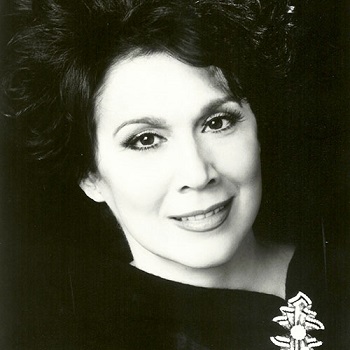
    Marion Lippert is a soprano I will always remember with affection, as she was my first (and a very lovely) Marschallin in a performance at The Met in 1970, conducted by Karl Böhm; she more than held her own in a stellar cast featuring Christa Ludwig, Reri Grist, and Walter Berry.

    Marion Lippert was born in Munich in 1936. Among her voice teachers was Annelies Kupper. Ms. Lippert made her operatic debut as Aida The Hague in 1956, later joining the opera companies of Cologne and Stuttgart, and singing in Berlin, Paris, Barcelona, and Venice. Her repertory included Lady Macbeth, Abigaille, Leonore in FIDELIO, Amelia in BALLO IN MASCHERA, Leonora in FORZA DEL DESTINO, Tosca, Norma, Senta, Elisabeth in TANNHAUSER, and Sieglinde.

    The soprano made her Met debut in 1968 as Turandot; she also sang Senta, and Elisabetta in DON CARLO   (which I saw) at the House in addition to the Marschallin.

    Lippert Turandot

    Turandot became a signature role for Ms. Lippert; here is her “In questa reggia” from an unnamed venue, in 1969. Her Calaf is Flaviano Labò.

    Marion Lippert – In questa reggia ~ TURANDOT – 1969

    Marion Lippert’s ‘Vissi d’arte‘ (though missing the opening line) may be found here.

  • Francesca Todesco ~ Isadora Duncan Classes

    20181011121518-f108-sokolowtodesco2018photobydanieldugan

    Francesca Todesco (above) is offering a series of classes focusing on the technique and repertory of Isadora Duncan, to be held on Fridays from 1:00-3:00 PM at 12 Saint Marks Place, on Manhattan’s Lower East Side. The classes will run from September 20th thru December 20th, 2019. Details below:

    70988457_2955578114469155_7951244578235875328_n

    Francesca’s dedication to the Duncan legacy – both as a dancer and teacher – makes her an invaluable spokeswoman in all matters Isadora. Francesca recently attended the Isadora Duncan International Symposium in London – an event held every other year in a different city – where an international gathering of performers, instructors, and writers meet to celebrate and honor the Mother of Modern Dance.

    Francesca Todesco epitomizes the enduring grace and power of the Duncan style, which has been handed down from generation to generation; she studied here in New York with Catherine Gallant and Loretta Thomas. Thru her classes, Francesca continues the tradition.

    Isadora Duncan is one of the most fascinating women of all time. I read her biography once a year, and have found that my interest in her took on a personal resonance when I realized that I am related on my mother’s side to one of Isadora’s pianists – and lovers: Walter Morse Rummel. Their story is but one of so many intriguing episodes in the life of this spellbinding woman.

    ~ Oberon

  • Enemy of the Fatherland

    Plaque_André_Chénier _Cimetière_de_Picpus _Paris_12

    In Umberto Giordano’s opera, ANDREA CHENIER, there is a powerful aria that could easily be sung in an opera about our current world state. The opera’s story is built on the real-life character of the poet André Chénier, who died on the scaffold in the final days of the Reign of Terror.

    During the years of the French revolution, Carlo Gérard, a former servant in an aristocratic household, has risen to a powerful position in the Reign of Terror. As a prosecutor for the Revolutionary Tribunal, he arranges “evidence” against those charged with treason.

    Now he must present the case against the poet André Chénier, a man he knows full well is innocent of the charges against him. At this moment, Gérard finds his true heart and soul again. At the trial, he defends Chénier, saying that his accusing document is a fabrication.

    Nevertheless, Chénier is condemned to death. He was guillotined on July 25, 1794. Three days later came Robespierre’s fall from power and subsequent execution, ending the Reign of Terror.

    The great baritone Giuseppe Taddei sings the aria, “Nemico della patriahere.

    Follow the words below; it could be happening today:

    “An enemy of the State?!

    It’s an old fable

    That people are still blissfully swallowing.

    Born in Constantinople? A Foreigner!

    Studied at Saint-Cyr? A Soldier!                          

    Traitor! Accomplice to Dumouriez!

    And a poet? Corrupter of hearts

    And morals!

    (a pause)

    I once lived joyfully,

    Without hatred or vengeance

    Pure, innocent, and strong;

    I thought myself a giant!

    But I’m still only a servant…

    One who’s changed masters.           

    An obedient servant to violent passions!

    Ah, worse yet: they’ve made me a killer!

    And while I kill, I weep!

    Me, a son of the Revolution,                             

    One of the first to hear its cry!

    For the world, I united that cry to my own.

    Have I now lost faith

    In that dream of destiny?

    Oh, how my path

    Shone with glory!

    The heart’s conscience,

    A reawakening of the people,

    Gathering up the tears

    Of the vanquished and suffering,

    Making the world a Pantheon,

    Changing men into gods;

    And in one kiss –

    In one kiss and one embrace –

    To love all mankind!”

  • Gertraud Eckert Sings Klytemnestra

    Clytemnestra1

    Above: Clytemnestra by English artist John Collier (1850-1931)

    There’s very little information to be found regarding mezzo-soprano Gertraud Eckert; not even a photo could I find of this singer, who was born in Vienna in 1941.

    Ms. Eckert made her operatic debut in 1964 at Bonn, later appearing at Bregenz, Brussels, Innsbruck, and Graz. It was in the last-named city that she was based thru most of her career. Beyond that, I can find nothing more.

    But I do like her Klytemnestra on this live recording of ELEKTRA from Graz 1973; Ludmila Dvořáková was singing the title-role for what seems to be the only time in her career.

    Gertraud Eckert as Klytemnestra – ELEKTRA – with Ludmila Dvořáková – Graz 1973

    Gertraud Eckert’s singing is both voicy and characterful. I wish I could find out more about her.

    ~ Oberon

  • Olivia Stapp ~ Griffes Songs

    Stapp

    Olivia Stapp sings two songs by Charles Tomlinson Griffes: Le Jardin and La Mer. Diane Richardson is the pianist.

    These are settings of poems by Oscar Wilde:

    Olivia Stapp – Griffes ~ Le Jardin

    “The lily’s withered chalice falls
    Around its rod of dusty gold,
    And from the beech-trees on the wold
    The last wood-pigeon coos and calls.

    The gaudy leonine sunflower
    Hangs black and barren on its stalk,
    And down the windy garden walk
    The dead leaves scatter, – hour by hour.

    Pale privet-petals white as milk
    Are blown into a snowy mass:
    The roses lie upon the grass
    Like little shreds of crimson silk.”

    Olivia Stapp – Griffes ~ La Mer

    “A white mist drifts across the shrouds,
    A wild moon in this wintry sky
    Gleams like an angry lion’s eye
    Out of a mane of tawny clouds.

    The muffled steersman at the wheel
    Is but a shadow in the gloom; –
    And in the throbbing engine-room
    Leap the long rods of polished steel.

    The shattered storm has left its trace
    Upon this huge and heaving dome,
    For the thin threads of yellow foam
    Float on the waves like ravelled lace.”

  • Table of Silence ~ 2019

    L2010773

    Wednesday September 11th, 2019 – Today marked the annual Lincoln Center performance of Jacqulyn Buglisi’s Table of Silence, a danced ritual commemorating the 9/11 terrorist attacks on New York City and Washington DC. This year, it took on an even deeper resonance as a plea for reason and compassion in our dark and dangerous world.

    As each day seems to bring ever more unsettling headlines, I am constantly put in mind of the words sung by the desperate wife and mother Magda Sorel in Gian-Carlo Menotti’s opera The Consul:

    “To this we’ve come:
    that men withhold the world from men.
    No ship nor shore for him who drowns at sea.
    No home nor grave for him who dies on land.
    To this we’ve come:
    that man be born a stranger upon God’s earth,
    that he be chosen without a chance for choice,
    that he be hunted without the hope of refuge.
    To this we’ve come. And you, you too, shall weep.”

    Table of Silence shines like a beacon of hope; each year, it seems more beautiful…and more meaningful. 

    ~ Oberon

    Note: some photos here.

  • Leonie Rysanek as Lady Macbeth

    Scanned Section 13-1

    A year before her Met debut in the same role, Leonie Rysanek made her New York debut as Verdi’s Lady Macbeth in a concert performance with The Little Orchestra Society. Overall, she gave an exciting (if somewhat uneven) performance; she galvanized the audience with her thrilling singing of “La luce langue“.

    Leonie Rysanek – La luce langue ~ MACBETH – Little Orchestra Society 1958

    After hearing Leonie Rysanek’s voice for the first time on a Texaco/Metropolitan Opera broadcast of BALLO IN MASCHERA, I wrote to her and received the photo (at the top of this article) a few days later. She became one of the most potent forces in my enduring obsession with opera. I saw her many times at The Met, including her unforgettable 25th anniversary gala. She was my first Senta, Ariadne, Kaiserin, and Salome; her Met 25th anniversary gala in 1984 was one of the greatest thrills of my opera-going career.

    ~ Oberon