Author: Philip Gardner

  • Stravinsky’s FIREBIRD @ The NY Philharmonic

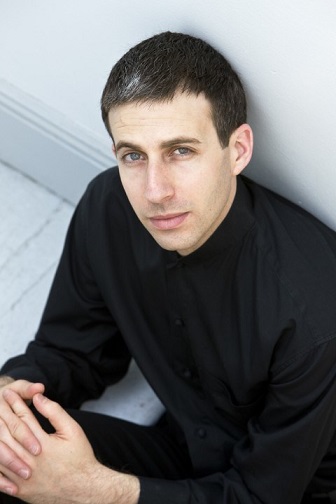
    Pintscher_matthias_1819

    Above: composer and conductor Matthias Pintscher

    ~ Author: Brad S. Ross

    Thursday February 21st, 2019 – It was an evening of exquisite sounds Thursday night at David Geffen Hall as the guest conductor Matthias Pintscher led the New York Philharmonic in music by two early 20th-century greats sandwiching one of his own, composed almost exactly a century years later.  Pintscher, a German-born composer and conductor now residing in New York City, has quickly built a reputation as one of the finest younger composer–conductors of recent memory to emerge on the world stage.  On this night, he brought with him a much-welcomed performance of his recent violin concerto, featuring the talents of the renowned French violinist Renaud Capuçon.

    The evening began with Maurice Ravel’s “Alborada del gracioso” (“Dawn Song of the Jester”) from his 1905 piano suite Miroirs, which he had transcribed for orchestra in 1918.  Ravel, a master of orchestration above all, peppered this score with myriad and most enjoyable colors, including numerous pizzicato phrases, muted brass, and varied percussive bursts.  Pintscher brought the best out of the Philharmonic, which performed here with precision and grace.  It made for a lively and dynamic opening piece.
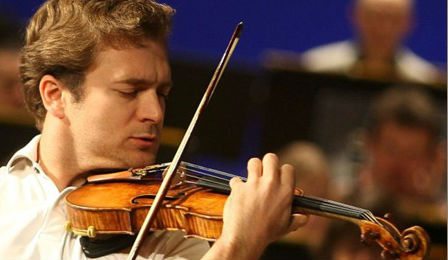
    Violinist-Renaud-Capucon-

    Above: Renaud Capuçon

    Next up was Pintscher’s own mar’eh, a concerto for violin and orchestra composed in 2011 on a commission from the Lucerne Festival, Alte Opera Frankfurt, and the London Philharmonic Orchestra, which was here receiving its New York premiere.  Its title comes from a Hebrew word meaning “face sign” or, as the composer’s note indicates, “the aura of a face, a beautiful vision, something wonderful which suddenly appears before you.”  Why he chose to write it in lower case is as mystifying to me as any other inexplicably ungrammatical contemporary music title.

    The piece began quite eerily on a single suspended note played high on Capuçon’s violin, joined only by an ominous rumble in the percussion.  A languid melody soon entered, trading between Capuçon and various brass soloists, as dark colors began to emerge throughout the orchestra.  Following this menacingly silent introduction, a series of tantalizing full-ensemble swells seemed to indicate a change of direction for mar’eh before the work fell back into another series of quietly shifting timbres.  This carried on for some time until the same solitary high note and percussive rumble returned to bookend the concerto.

    Extended technique abounded throughout mar’eh and the players, including Capuçon, were at their absolute finest, but it was nevertheless hard to shake a sense of dissatisfaction when it was all over.  What the piece lacked was a sense of direction—momentum.  Its tempo always leaned toward the adagio, if that, and its dynamics, aside from the occasional fortissimo burst, rarely seemed to escape mezzopiano.  For a duration of roughly 23 minutes, this made for a hard-going listening experience.  The audience was politely receptive to it, however, even if their enthusiasm seemed more directed at its soloist than the composer.

    After intermission was the third and final piece of the night: Igor Stravinsky’s mighty Firebird.  Written in 1910, The Firebird marked the first of the composer’s many fruitful collaborations with the ballet impresario Sergei Diaghilev—a relationship that would also produce the likes of Petrushka and The Rite of Spring.  Premiering only eight days after his 28th birthday, it was also Stravinsky’s breakout piece and one that placed him on the world stage as one of the finest composers of his time and beyond.

    The audience knew it was in for a treat from the moment it began, as those memorable and ominous opening bars in the cello and bass harbingered the danger ahead.  The First Tableau was equal parts beautiful and menacing leading up to its volatile climax (the unforgettable “Infernal Dance of All Koschei’s Subjects”) and the haunting lullaby that follows.  The Second Tableau redeemed this carnage and misery with its exuberant and triumphant finale—one of the grandest in all classical music.

    The experience of hearing these magnificent bars played live by an orchestra as fine as the New York Philharmonic is one I wish every person on Earth could experience for himself.  The ethnomusicologist John Blacking once defined music as “humanly organized sounds…” if this be so, then these are no doubt some of the finest sonorities ever compiled by a single person.

    The crowd was quick to its feat upon conclusion with many shouts of “Bravo!”  This was easily one of the most animated displays of approval I’ve witnessed all season.  Pintscher and company received several curtain calls and every section of the ensemble was given a chance to take their bows.  The adulation was much-deserved for Pintscher and this stupendous orchestra, the gem of New York City.  Bravo, indeed.

    ~ Brad S. Ross
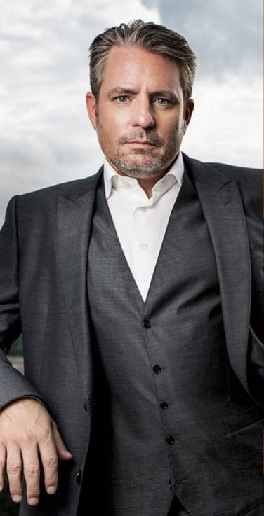
  • Matthew Polenzani @ Zankel Hall

    Polenzani ~ Fay Fox

    Above: tenor Matthew Polenzani, photographed by Fay Fox

    ~ Author: Oberon

    Sunday February 24th, 2019 – This afternoon’s program by tenor Matthew Polenzani at Zankel Hall had been a red-letter date on my calendar ever since Carnegie Hall announced their 2018-2019 season nearly a year ago. To say that the performance surpassed my highest expectations would be an understatement.

    Over the years since Mr. Polenzani first came on the New York operatic scene in 1997, he has given me some of my fondest musical memories. Of particular joy was his portrayal of David in Wagner’s DIE MEISTERSINGER, which I saw four times. Matching his sunny – and very human – portrayal of the young apprentice to his sweetly ingratiating lyrical singing, Mr. Polenzani won the hearts of audiences each time. Those performances, musically sublime under Maestro Levine’s heartfelt leadership, were some of my happiest times at the opera. 

    Since then, Mr. Polenzani has had great success in Mozart, bel canto, and French opera at The Met where his credentials are approaching the 400-performance mark; earlier this month, he produced a sonic miracle in his aria in Tchaikovsky’s IOLANTA. And we will soon hear him as Mozart’s Tito and Verdi’s Duke of Mantua. More red-letter dates!

    Today’s recital opened with a selection of lieder by Franz Schubert in which Mr. Polenzani and the renowned pianist Julius Drake formed a treasurable musical alliance. The two men walked out onto the Zankel Hall stage to a truly warm and long-lasting applause.

    From the opening “Nachtstück” – an old man’s acceptance of impending death – Mr. Polenzani showed himself to be among the most appealing and compelling interpreters of German lieder now before the public. The words flow beautifully, and without fussiness, whilst the multi-hued sound and the incredible skill with which he runs the gamut of the piano/pianissimo spectrum, make each song truly an absorbing experience.

    Two Spring-songs follow: “Im Frühling” (with Mr. Drake’s dramatic piano intervention, and the singer’s incredibly sustained softness towards the end), and the familiar “Frühlingsglaube“. “Der Einsame” (The Recluse…it could be my theme song!) is somewhat jaunty in tone, and has an optimistic outlook. Then the well-beloved “Ständchen” so persuasively phrased by the tenor and finely articulated by the pianist. The concluding  “Im Abendrot“, with its lovely piano introduction, sings like a prayer.

    Julius+Drake
     
    Above: pianist Julius Drake

    Beethoven’s An die ferne Geliebte, the composer’s only true song cycle, strings six poems by Alois Jeitteles together in an uninterrupted flow of song. Mssrs. Polenzani and Drake perfectly captured the songs’ many poetic references to the natural world, which the singer mentally relates to the finding and eventual loss of an idealized lover. Mr. Polanzani’s golden tone, the naturalness of his way with words, and the continuing enchantment of his softest notes kept us riveted; and Mr. Drake matched the singer, nuance for nuance, in their marvelous performance.
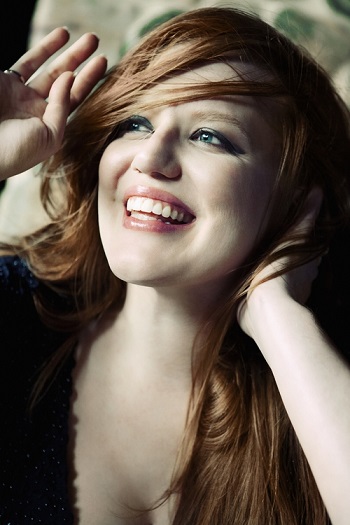
    Cano

    Johannes Brahms’ Zigeunerlieder, Op. 103, brought forth mezzo-soprano Jennifer Johnson Cano (above). This set of gypsy songs served the singer as a prologue to her role as the gypsy lass Zefka in Janáček’s The Diary of One Who Vanished. In a striking deep blue gown, Ms. Johnson Cano gave a vivid performance, in which Mr. Drake, at the Steinway, was a perfect accomplice.  

    Ms. Johnson Cano has the ideal voice, temperament, and personality for these songs; her gift for musical characterization is spot on, and is reflected in her stage manner: she plays the diva one moment and the loving lady the next. Singing with her warm, inviting mezzo timbre, Ms. Johnson Cano was particularly lovely in the cycle’s penultimate song, “Kommt der manchmal in den Sinn” where, at the words “Täusch mich nicht, verlass mich nicht…” the melody takes up an air of longing which the singer conveyed with expressive vocal colours. In the Brahms, as all evening, Julius Drake’s playing was so inviting.

    Following the interval, Janáček’s The Diary of One Who Vanished, was given a mesmerizing performance by Mr. Polenzani, Ms. Johnson Cano, and three offstage singers: Kathleen O’Mara, soprano, and mezzo-sopranos Marie Engle and Megan Grey. At the piano, Julius Drake played this music – which might be described as a chamber opera – with a vast range of colour and brilliant rhythmic clarity.

    This is the story of a young village boy who fell in love with a gypsy beauty and abandoned his safe and simple life to join her in her wanderings. Originally thought to have been drawn from the boy’s discarded diary, the story was eventually discovered to have been written by Josef Kalda, a accomplished author from Prague. In his 62nd year, Janáček himself fell under the spell of a much younger ‘gypsy’ woman; their relationship was revealed in a series of passionate letters, published in the 1980s.

    Julius Drake’s phenomenal artistry was a key element in this fascinating work; one hardly needs an orchestra with this gentleman at the Steinway. His playing again superbly matched Mr. Polenzani’s singing: full of passion, poetry, intensity and natural beauty of expression.

    The first several songs of The Diary of One Who Vanished are given over to the tenor: what a great pleasure to hear Mr. Polenzani and Mr. Drake here in a long stretch of music-making of such evocative qualities. Ms. Johnson Cano then appears, singing splendidly, with a bewitching, smouldering quality to her lower range. An offstage trio of voices – Mlles. O’Mara, Engle, and Grey – produced a lovely blend that sometimes brought to mind Wagner’s Rhinemaidens, or Strauss’s ARIADNE nymphs.

    The finale is an extended sing for the tenor, again with Mr. Drake playing grandly. From lyrical outpourings, the music turns to a hymn of farewell sung by the boy about to take leave of his homeland. Here Mr. Polenzani unleashed hall-filling power; the audience could scarcely restrain themselves from applauding until the last echoes from the Steinway had faded.

    At the end of the Janáček, the sold out hall was the scene of a tumultuous standing ovation. As the artists came forward to bow, the audience clearly wanted more music. But what sort of encore could follow such a performance? After a long delay, during which the applause redoubled, Mr. Polenzani and Mr. Drake came onstage again.

    The tenor spoke of the difficulty of finding the right piece to sing after the drama of the Janáček. In the course of his travels, he said, the most-requested song was the universally beloved “O Danny Boy‘. Taking up the thrice-familiar melody, which has been sung by everyone from Ernestine Schumann-Heink to Johnny Cash, Mr. Polenzani gave the most ravishing performance of it I could ever hope to hear. The words – so simple and moving  – came from the heart, and the colours of the voice were haunting. People around me were holding back tears as Mr. Polenzani took the final ascending phrase of the song to an exquisitely sustained final note than hung magically on the air.

    ~ Oberon

  • A Huw Watkins Premiere @ CMS

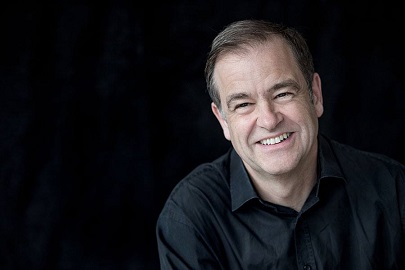
    Huw-Watkins-3-image-B-Ealovega

    Above: composer Huw Watkins; photo by B Ealovega

    ~ Author: Oberon

    Friday February 22nd, 2019 – The US premiere of Huw WatkinsQuintet for Piano, Two Violins, Viola, and Cello was the centerpiece of this evening’s Chamber Music Society of Lincoln Center concert at Alice Tully Hall. The evening further afforded an all-too-rare chance to hear some Khachaturian. As always, the Society drew together a formidable ensemble of musicians, including some particular favorites of mine.

    Unfortunately, my enjoyment of the performance was seriously compromised by the thoughtless behavior of some audience members who were seated (late) in my immediate area. The opening Debussy sonata – excellently played – was thoroughly to my liking: I felt relaxed amid a crowd of eagerly attentive music lovers. Then the intruders arrived: after having my foot stepped on and being hit in the face by a large pocketbook, I tried to re-connect to the music – the much-anticipated Khachaturian – but these new arrivals took time settling in. Soon we had eating, drinking, texting, and picture-taking going on…to say nothing of someone with a noisy runny nose. It took all my powers of concentration to make it thru the fascinating Watkins, after which I headed home rather than trying to focus – against the odds – on the Brahms sextet that closed the evening.

    Opening a program entitled ‘International Collection‘, France was represented by Claude Debussy’s Sonata for Cello and Piano (1915), a brief work in three movements. Cellist Paul Watkins and pianist Gilles Vonsattel brought us this music in a polished performance that evoked ardent applause, calling the two men back to the stage for a bow.

    The sonata begins with Prologue, which commences with a piano solo. The music veers from animated to pensive; it builds and then becalms. Mr. Watkins’ handsome cello sound made a particularly fine impression in a descending passage where the resonance took on an inviting richness. This leads to a deep, poignant melody. Prologue fades gently away.

    Mssrs. Watkins and Vonsattel then commence the witty Serenade, which has an almost sneaky feel to it. Some rather ironic cello plucking leads to a dance, which slows as Mr. Watkins provides some beautifully sustained notes. The Serenade flows directly into the Finale, which rolls along, alternately animated and somewhat thoughtful, to a quirky finish.

    Now the latecomers were shown in; I looked around to see if there might be a seat I could move to, away from them. But there wasn’t.

    Aram Khachaturian’s Trio for Clarinet, Violin, and Piano (1932) was played by the inimitable David Shifrin, joined by violinist Paul Huang and Mr. Vonsattel. This three-part work opens with an Andante of melancholy mood. Mr. Huang is soon un-spooling his trademark silken tone, to ravishing effect in its high range, whilst Mr. Shifrin’s colourful sound brings a folkish feeling to his swirling roulades. From the Steinway, Mr. Vonsattel provides impeccable turns of phrase. The music fades into air.

    The vari-tempo range of the second movement commences with a sense of mystery and allure; sheer gorgeousness flows from Mr. Huang’s violin. Then things speed up with a peasant dance, which slows to provide a finely-blended mix from the three voices. The movement has an unusual ending.

    Mr. Shifrin opens the concluding Moderato with a marvelously-hued solo, and then Mr. Vonsattel shines in his own solo passage.  The mood turns jaunty, with the clarinet sounding sustained phrases as the violin comments; then they switch roles. Another piano solo takes us to a final dance, which slows and then begins to break down, as though the players have decided it’s time to pause for a drink.

    The Watkins work came next: his Quintet for Piano, Two Violins, Viola, and Cello is a CMS co-commission, composed in 2017 and having its US premiere tonight. The composer could not have asked for a finer collective of musicians to advocate for him: Paul Huang and Alexander Sitkovetsky (violins), Richard O’Neill (viola) and the composer’s brother, Paul Watkins (cello).

    The Quintet’s opening Allegro molto kicks off with a fun, jazzy passage; soon, though, the music turns poetic, with a sense of longing. The strings blend marvelously over rapturous piano figurations. As the music becomes more animated, Mr. Huang’s violin soars: he plays over rippling motifs from Mr. Vonsattel’s keyboard while the other strings mesh in dense, highish passages. Outstanding was a poignant ‘chorale’ for the strings as the piano held onto a simple line…so wonderful to hear. Growing in intensity, the music becomes impassioned; then Richard O’Neill’s moonlit viola sings a sad passage. Things settle into a hesitant calm as the movement draws to a close.

    By this point I am thoroughly intrigued; but there is still more to fascinate us ahead. The Lento opens with a sadly sweet violin theme radiating over teardrop notes from the piano. Paul Watkins’ cello joins, and sustained harmonies rise up from the collective. The O’Neill viola produces ‘shining music’, creating a haunting atmosphere. A sublime blending of timbres makes us want to linger, but we return to the movement’s opening violin/piano duo, so expressively played by Mssrs. Huang and Vonsattel. Briefly the music turns grand, only to shade away into delicacy. Paul Watkins takes up a poignant cello theme. The piano’s ‘teardrop’ motif recurs, now with Mr. Huang carrying our spirits to the heights with his serene playing. A long, long unison note from the strings is sustained as a hush settles over the hall.

    Springlike music fills the air, with the piano shimmering, as the concluding Allegro vivace commences. Rising strings herald an increase in animation…and passion. Calming a bit, we hear Mr. Huang and his fellow violinist Alexander Sitkovetsky duetting whilst the viola and cello take a more settled stance. The music then erupts in a joyous tempest of sound to bring the Quintet to its close.

    As applause resounded, the composer walked out onto the stage, thinking the musicians were right behind him; instead, they held back, leaving Huw Watkins to have a solo curtain call. The players then joined him, to enjoy the waves of approbation filling the house. They all left, but the audience – everyone standing – insisted on a much-merited second bow.  

    In an age when so much ‘new’ music is expertly-crafted but fails to evoke an emotional response, Huw Watkins’ new Piano Quintet felt like a breath of fresh air.

    I was sorry to forego hearing tonight’s excellent group of string players in the Johannes Brahms’ Sextet No. 2, but enough is enough: it’s the triumph of indifference, yet again, as people who don’t care spoil things for people who do.

    ~ Oberon

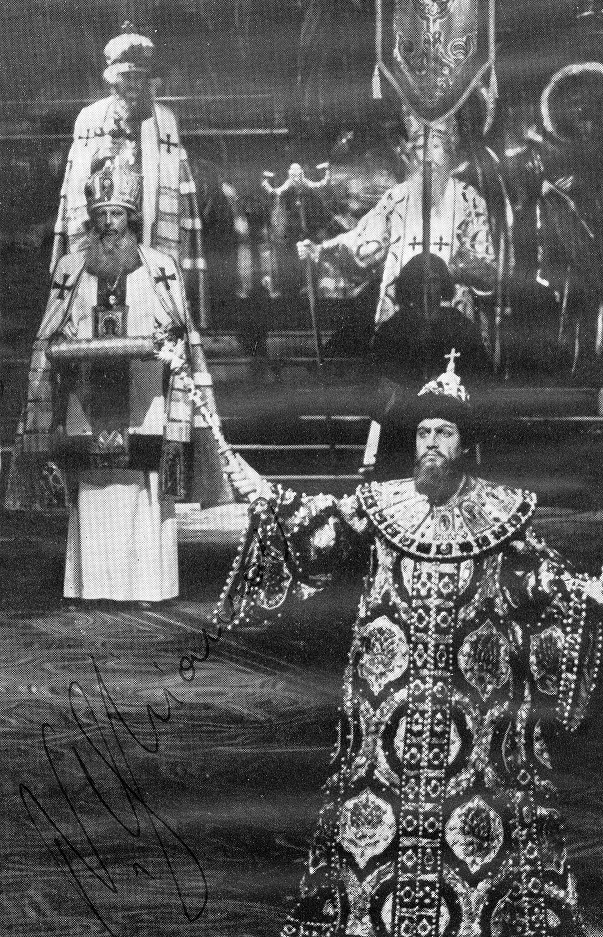
  • Nicolai Ghiaurov as Boris Godounov

    Scanned Section 2-1

    Nicolai Ghiaurov signed this photo for me after a performance of DON CARLO at The Met in 1968.

    Nicolai Ghiaurov – Skorbit Dusha! ~ BORIS GODOUNOV

  • Great Performers: Russian National Orchestra

    Thumbnail_Screen Shot 2019-02-22 at 3.36.48 PM

    Above: conductor Kirill Karabits; photo by Konrad Kwik

    ~ Author: Ben Weaver

    Wednesday February 20th, 2019 – The Russian National Orchestra’s highly anticipated visit to Lincoln Center’s Great Performers series with an all-Rachmaninoff concert drew a big and appreciative crowd, filled with many Russian-speakers who were buzzing about Mikhail Pletnev’s performance. Mr. Pletnev, star pianist and new conductor, was the founding conductor of the orchestra in the early 1990s after the collapse of the Soviet Union found many Soviet orchestras starved for money. Pletnev, pulling in financial backing from the West, formed the RNO and hired many leading musicians from the now former USSR’s other orchestras, creating something of an all-Star ensemble. It remains to this day Russia’s only privately-backed orchestra. Maestro Pletnev has since stepped back from full-time conducting duties and on Wednesday, February 20th appeared as soloist in Rachmaninoff’s 2nd Piano Concerto. Kirill Karabits, who has gained much attention as chief conductor of Bournemouth Symphony Orchestra, was on the podium.

    Pletnev entered to a warm welcome from the audience, dressed all in black, looking very Russian dour. The playing was anything but, however. The brief solo introduction, a series of dramatic chords before the orchestra enters with its famous first theme, showcased Pletnev’s strong, muscled tone. The muscle, however, is not lacking in musicality and lyricism. The orchestra entered with a very slow Moderato. I wondered how the choice of tempo would be able to sustain the musical line without breaking.
     
    At first both Pletnev and Karabits (via RNO) managed fine. Pletnev’s beautiful control of the piano’s dynamics, the legato of the playing, never ceding control to the orchestra, but also never showcasing himself for the sake of showboating, he seemed to be playing a concerto with piano, not just for it. This beautiful integration of sound, the marriage between the instruments, was lovely to behold. But as the movement began to build to its climax and the drama began to build, the slow tempo caught up to the proceedings. Pletnev suddenly felt muzzled, needing to take extended breaks between chords that are usually played together so that the orchestra could catch up. Pletnev seemed to desperately want to move forward and felt restrained; it created an uncomfortable pull and push between orchestra and conductor as the movement ended. The concerto’s famous Adagio sostenuto was lovely – piano and orchestra finally breathing as one, and the thrilling final Allegro showcased Pletnev’s effortlessly perfect finger work. The audience exploded with satisfaction and Pletnev gave a fascinating performance of Scarlatti’s Sonata in D minor, K.9, making it sound like ringing bells.
     
    Thumbnail_mikhail-pletnevcalexey-molchanovsky

    A
    bove: pianist Mikhail Pletnev; photo by Alexey Molchanovsky
     
    All ears were now on Kirill Karabits for Rachmaninoff’s ever-fresh Symphonic Dances, Op. 45, his final composition and one he considered his best. Written in 1941 while Rachmaninoff lived on Long Island, NY, the piece was dedicated to The Philadelphia Orchestra and Eugene Ormandy (who gave the world premiere performance in 1941) and intended to be a ballet choreographed by Mikhail Fokine. Alas, Fokine died before the project could be brought to fruition. (It has been choreographed by several leading choreographers since, including Peter Martins for New York City Ballet.) 
     
    Maestro Karabits, handsome, trim and in a perfectly fitted suit, is a fun conductor to watch, his wide, dramatic and balletic gestures helping to propel the music. The opening dance, Non allegro, was very dramatic with its driving, sharp rhythms nicely articulated; the mournful saxophone solo – and the other wind instruments – shone in the mournful sections of the movement – before the dramatic, Stravinskian rhythms return – only to dissipate like Loge’s Fire Music from Wagner’s Die Walküre, the first time I’ve made the musical connection between those two sections. The boozy, mysterious waltz of the second movement (when the Symphonic Dances were still a ballet, this was called “Midnight”), a cousin to Ravel’s La valse, sashayed nicely with its weird combination of sexiness and creepiness. The dramatic final movement, with its extensive quotations of Rachmaninoff’s favorite leitmotif, the Dies irae, was a thrilling, thundering conclusion to a perfectly paced performance. This was perhaps the most exciting performance of the Symphonic Dances I’ve heard live, so kudos to the superb Russian National Orchestra and maestro Karabits.
     
    The audience shared my enthusiasm and received 3 encores: a ravishing Rachmaninoff Vocalise, The Russian Sailors’ Dance from Glière’s The Red Poppy, and Lysenko’s Overture to Taras Bul’ba.
     
    ~ Ben Weaver

  • Young Concert Artists: Zlatomir Fung

    Fung_Zlatomir5CreditMattDine-1140x642

    Above: cellist Zlatomir Fung, in a Matt Dine photo

    ~ Author: Oberon

    Tuesday February 19th, 2019 – Young Concert Artists presenting cellist Zlatiomir Fung in his New York debut recital at Merkin Hall. Tengku Irfan was the pianist for this wide-ranging, thrillingly-played program.

    “Young” was the operative word tonight. And both of these musicians disprove the old adage that ‘youth is wasted on the young’; they have spent their teen years developing their talent, and building impressive performance résumés. Now they are ready for anything.

    Mr. Fung, a native of Oregon, reveals a charming personality in this Q & A from the Violin Channel. Of Bulgarian and Chinese heritage, the earnest 19-year-old cellist was greeted by enthusiastic cheers from the packed house when he walked onstage at Merkin Hall tonight. In the course of his opening work – four of the Eleven Capricci for Solo Cello by Joseph Dall’Abaco – Zlatomir Fung established himself as both a poet and virtuoso of the highest order.

    These Dall’Abaco works are a very pleasant alternatives to the Bach cello suites with which cellists so often open their recital programs. Mr. Fung displayed clean, warmly resonant tone, a gift for dynamic finesse, and a depth of feeling that seemed remarkable in one so young. In the first Capriccio, trills and grace notes were deftly etched into the musical line. To end his set of four, Mr. Fung chose the 11th, which includes passages of demented agitato, played with great fervor. As applause engulfed the cellist, he took a spot among my top five players of the instrument…or maybe even…my top three? 

    Pianist Tengku Irfan – slender of frame and looking far younger than his score of years – then joined Mr. Fung for a revelatory performance of Enest Bloch’s Baal Shem. This music was new to me; the passion and tenderness with which the two artists played it made a direct connection to my soul.

    Ernest Bloch, a native of Switzerland, was a young violinist on tour in the USA when, falling short of money, he got stranded in New York City and decided to stay here. Moved by a Hasidic Jewish service he attended in 1919, Bloch wrote the Baal Shem, subtitled “Three Pictures of Hasidic Life.

    During the opening Vidui, I was so mesmerized by the playing of Mssrs. Fung and Tengku that I couldn’t write even the briefest note about the music; all I can say is that it moved me deeply – both the music itself and the playing of it. The piano introduction to the ensuing Nigun – masterfully played by Irfan Tengku – leads to music-making of searing intensity from both players. A series of descending trills for the cello took my breath away. In a complete mood swing, the concluding Simchas Torah has a very optimistic feel: an almost romantic-style passage leads to dancing and ultimately to passion. With a tumult of cheers and applause, the audience saluted the two musicians after this spell-binding performance. 

    In a remarkable display of what a cello can do, Mr. Fung gave a triumphant performance of Luciano Berio’s Sequenza. From his opening tapping, patting, and slapping of his cello, Mr. Fung creates all manner of sound effects – shivering, squeaking, barking, scratching, gliding – as the piece proceeds. Mixed in are brief touches of whispered pianissississimo, including an ultra-quiet ending. This bravura showcase knocked the audience for a loop; Mr. Fung took a bow amid a din of enthusiasm.

    Following the interval, the pianist and cellist gave the premiere performance of Prelude by Katherine Balch, the current YCA Composer-in-Residence. This was my second hearing of music by Ms. Balch, and again it struck me as finely-crafted music from a composer who has perhaps not yet found her own distinctive voice.

    From a turbulent start, we go on a magical mystery tour and – via some strong accents – to noisy music that works both players into a frenzy. The gimmick of having the pianist reach inside the piano to produce isolated sounds has been done before – I never get the point of it – but a mad cello cadenza gives the piece a spark. An amusing sour taste sets in as some intentionally ambivalent pitches crop up. Drifting onward, Prelude leads without pause into the evening’s final work: the Brahms Cello Sonata in E-minor, Opus 38.

    TengkuIrfanpianolad001_1533856206

    Above: pianist Tengku Irfan, photo by Owee Ah Chun

    In the Brahms, the partnership of cellist and pianist showed yet again how finely matched these two musicians are. It’s a bit of an odd sonata, in that there’s really not a ‘slow’ movement per se. But the opening Allegro non troppo (actually very ‘non troppo’) makes up for it: it has a darkish glow with a poignant, wistful melodic line. The pianist here was a marvel, and Mr. Fung summoned incredible depth of tone from his cello. The second movement is a Menuetto that sometimes teasingly has the air of a waltz; the musicians play at times in unison. Mr. Tengku had the Steinway in full flourish for the concluding Allegro, and Mr. Fung sealed his New York debut triumph with spectacular playing.

    As an encore, these two young artists offered a luminous rendering of Gabriel Fauré’s “Après un rêve“. The sheer enthralling beauty of their playing held the audience in a state of breathless awe.

    ~ Oberon

  • Miro On A Monday

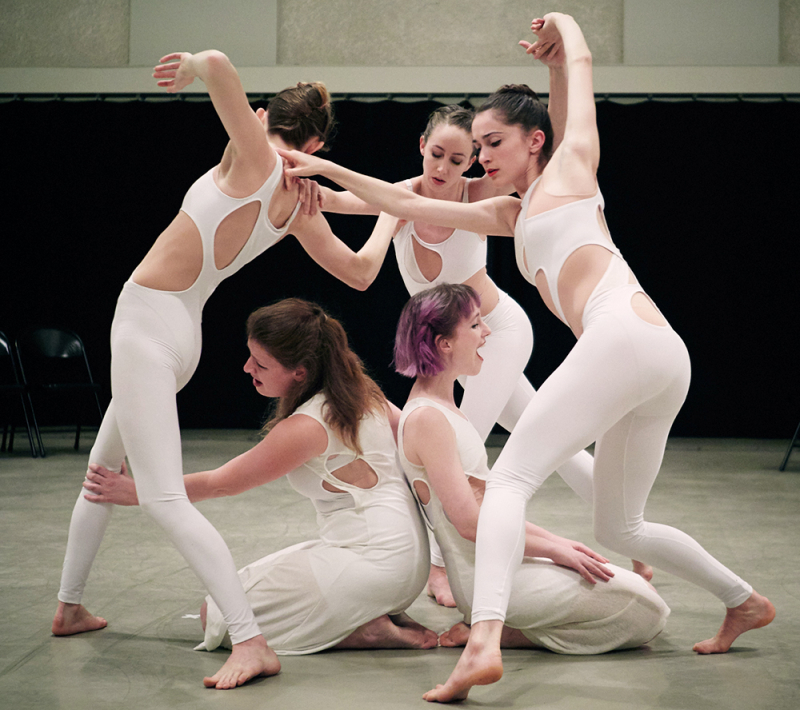
    Tom Schaefer photo

    Above: dancers from New Chamber Ballet and singers from Ekmeles in Miro Magloire’s SANCTUM; photo by Tom Schaefer

    Author: Oberon

    Monday February 18th, 2019 – Miro Magloire’s New Chamber Ballet normally give their performances on weekends, so I was surprised to be invited to see them on a Monday evening. Mondays are often quiet nights for me: neither the Philharmonic nor Chamber Music Society have Monday performances; nor – for that matter – does New York City Ballet. So it was nice to trek down to the City Center Studios on this clear, chilly evening to see Miro’s company, and to hear some incredible music, beautifully played…and sung. I must also say: the 7:30 PM start time was a big plus in my book.

    The program opened with MORNING SONG, a solo dancework to music by John Cage that Miro made on his uniquely marvelous dancer, Elizabeth Brown. Doori Na, a violinist who can master the trickiest score and make it mean something, played Cage’s ‘Cheap Imitation‘ (1st movement) to perfection whilst the dancer moved about the space with lyrical authority: a priestess evoking the dawn.

    With ecstatic gestures that recall the ground-breaking dances of Isadora Duncan, Elizabeth held the audience under a spell throughout the work’s duration. A very long pause, wherein she remains still, has a power if its own. Elizabeth’s slow circling of the space in calm, weighted/weightless stepping turns, was hypnotic. As dancer and violinist bowed to one another at the close of MORNING SONG, the return to reality was like awakening from a wonderful dream. All that is beautiful in music and dance seems to be distilled into this incredible work.

    After only the briefest pause, New Chamber Ballet’s bevy of ballerinas – Sarah Atkins, Kristy Butler, Amber Neff, Rachele Perla, and Madeleine Williams – joined three singers from the Ekmeles vocal ensemble – Charlotte Mundy, Mary Elizabeth Mackenzie, and Elisa Sutherland – and pianist Melody Fader and violinist Doori Na, for the premiere of Miro’s SANCTUM.  Vocal music by Kaja Saariaho (Changing Lights and From The Grammar Of Dreams) and Karin Rehnqvist (Davids Nimm) invites the singers to be part of the dance. Melody and Doori perform – luminously – Saariaho’s Nocturne, Calices, Prelude, Tocar, and Ballade, as well as Rehnqvist’s Dans.

    SANCTUM has been in-progress for some time, in various guises, and I have seen parts of it in rehearsal or in performance over the past several months. Tonight, with the dancers and singers in Sarah Thea’s bone-white costumes, Miro wove all the elements into a 70-minute ballet.

    SANCTUM opens with seated couples (dancers and singers) dreamily dependent on each other, rocking gently. The strikingly clear voice of Charlotte Mundy fills the space: this high, iridescent sound might be the voice we’ve been looking for for Berg’s Lulu. The dancing commences with a duet for two tall women: Kristy Butler and Madeleine Williams. Amber Neff and Rachele Perla, having donned toe shoes, join.

    The music is spectacularly beautiful – Saariaho (along with Penderecki) is for me the most fascinating of contemporary composers – and Melody and Doori play it thrillingly: being seated immediately next to these two musicians, every nuance and demi-tint of the scores become tantalizing.

    The dance continues to unfold, including Madeleine Williams in a solo that creates a stylistic link to the earlier-seen MORNING SONG. Amber Neff and Ms. Williams dance a duet in Miro’s trademark intense/entangled partnering mode; the music here features vertiginous piano scales which Ms. Fader played with intrinsic flair. Sarah Atkins, Rachele Perla, and Kristy Butler engage in a prancing trio, and Sarah also has a demanding, floor-oriented solo. The singers return, each pairing up with a dancer in a stop-and-start circular promenade. The ending of the ballet is not as powerful as one might hope: the women simply walk away, perhaps to carry on their antique rites in another part of the forest.

    Meanwhile, the two musicians have found a path into our subconscious with this other-worldly music. Over the course of the ballet, their playing has created a separate, almost alien, world. And at some point along the way, I realized that this particular work of Miro’s is not best-experienced in a fully-lit, in-the-round studio setting.

    As we observe the grace and power of the dancing, we must also face our mere-mortal counterparts seated across from us: fidgeting, reading their programs, even nodding off. The music continuously draws us away from the everyday to a mythic place of feminine mystique and magic; but the ordinariness of the studio setting keeps jarringly pulling us back to reality.

    I feel that, in a darkened theater with imaginative lighting, SANCTUM could be as compelling visually as it is musically.

    ~ Oberon

  • Philharmonic Ensembles: Bach/Debussy/Fauré

    Kuanchengluwn

    Above: violinist Kuan Cheng Lu of The New York Philharmonic

    ~ Author: Oberon

    Sunday February 17th, 2019 – Artists of The New York Philharmonic performing works by Bach, Debussy, and Fauré at Merkin Hall. This was originally going to be an all-French program, but somewhere along the way, Arthur Honegger’s Sonatine for Violin and Cello – which I was very curious to hear – turned into Bach’s Trio Sonata in C-major, BWV 529.

    The switch soon became irrelevant, as the Bach was vividly performed by Kuan Cheng Lu (violin), Robert Rhinehart (viola), and David J. Grossman (bass). The opening Allegro was dynamically played, with some sustained bass notes giving the music an anchor. To the rather forlorn Largo, Kuan Cheng Lu brought lovely subtleties of phrase; this movement – without a formal ending – leads immediately into the lively concluding Allegro.

    M_srcset.php

    Claude Debussy’s Piano Trio followed, with guest artist Hélène Jeanney (above) at the Steinway; violinist Kuan Cheng Lu (the only artist to appear twice this afternoon) and cellist Qiang Tu joined her for this work, which was composed during the Summer of 1880 in Fiesole, Italy, when Debussy was 18 years old. At the time, he was the musical traveling companion and maître de musique of Nadezhda von Meck, Tchaikovsky’s generous patroness. Most of the autograph material for this trio was thought to have been lost, and was only discovered a century later, in 1982, among the papers of Debussy’s pupil Maurice Dumesnil.

    If we were to hear this music without knowing who wrote it, we’d never guess it’s by Debussy; the young composer had yet to find his own voice. This trio is entertaining salon music, which might be mistaken for Bizet or Delibes. For all that, just hearing it gives a lot of pleasure – especially when played as beautifully as it was today.

    Ms. Jeanney’s playing gives the music a Springtime freshness; the opening Andantino con molto allegro will later turn moody, even passionate. But overall, loveliness prevails. A song-like melody from Mr. Tu’s cello is taken up in turn by Mr. Lu’s violin: both these artists display smooth, savourable tone. Things turn rhapsodic, and the pianist’s expressive playing carries us along.

    The ensuing Scherzo opens with pizzicati from the strings and the piano playing a dancing tune that evoked fanciful marionettes with its wit and sense of irony. Charm is abundant here. Then on to the Andante espressivo, where the cellist again inaugurates a theme that is passed on to the violin. Ms. Jeanney’s playing is so delightful here, full of grace and colour. The blend of the three players becomes quite intense as the music builds, only to recede into another violin passage. The movement ends in a blissful state.

    The final Appassionato commences in a minor-key, agitated state. Things calm to a passage of melodious strings and rippling piano. An interlude of cello pizzicati followed by a jaunty passage lead on to fair finish; the musicians were robustly applauded by the packed house.

    Press-6878

    Following the interval, Gabriel Fauré’s Piano Quartet in G-minor brought forth another excellent pianist: Banjamin Hochman (above). He was joined by Quan Ge (violin), Dorian Rence (viola), and Ru-Pei Yeh (cello).
     
    The first movement, Allegro molto moderato, has a sense of urgency. It begins passionately, almost grandly; a unison melody for the strings is offset by the turbulent piano. Ms. Rence’s autumn-hued viola takes up a sustained melody that is passed on to Ms. Ge’s violin; the piano continues to provide restless undercurrents. Ru-Pei Yeh’s beauteous cello sound blends with Ms. Rence’s viola, then Ms. Ge’s violin sings a silken theme over the shimmering piano. The music turns rapturous. 
     
    The Scherzo features animated passages for the piano; the strings are plucked before moving on to a unison passage. The pianist alternates strong accents with flowing scales. For the Adagio non troppo, Fauré found inspiration in his memory of hearing distant church bells during his childhood. The music has the feel of a luxuriant daydream, the viola playing a pensive melody. The blending of the four instruments here was deeply affecting. 
     
    The closing Allegro molto again finds the piano in a rather agitated state as the strings play a deep, swaying theme. Various flickers of melody gleam and swirl about from player to player, the viola and cello in a darkish mood.
     
    At the end, the audience saluted the players with well-deserved cheers. We met Ms. Jeanney briefly, and are keen now to hear her in recital.
     
    ~ Oberon

  • At Amanda Selwyn’s Rehearsal

    0D9A2416

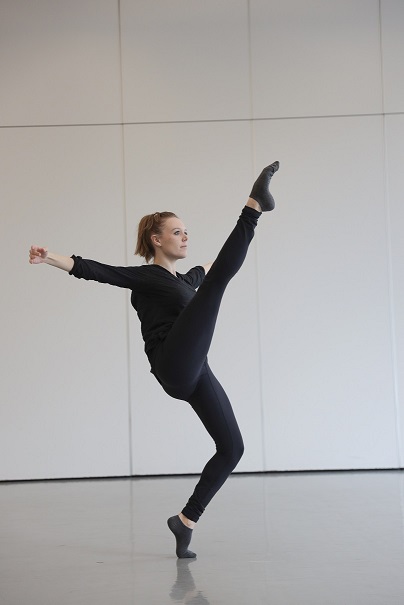
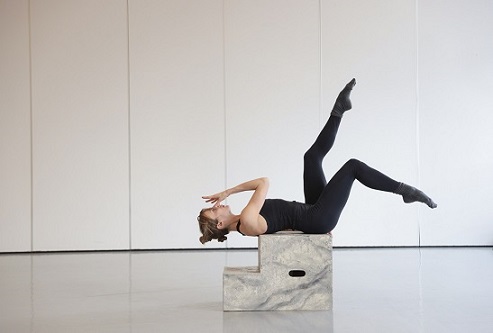
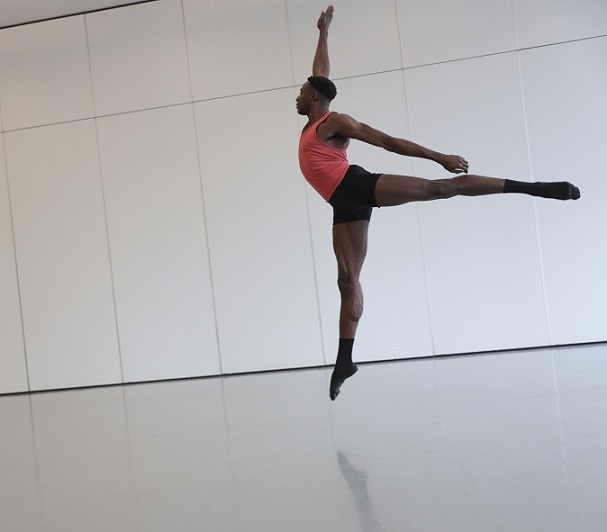
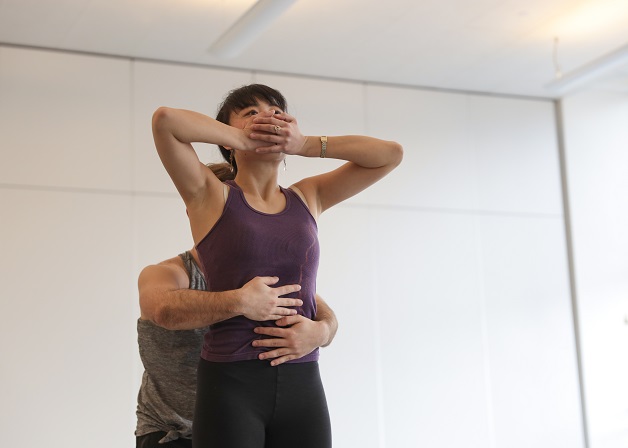
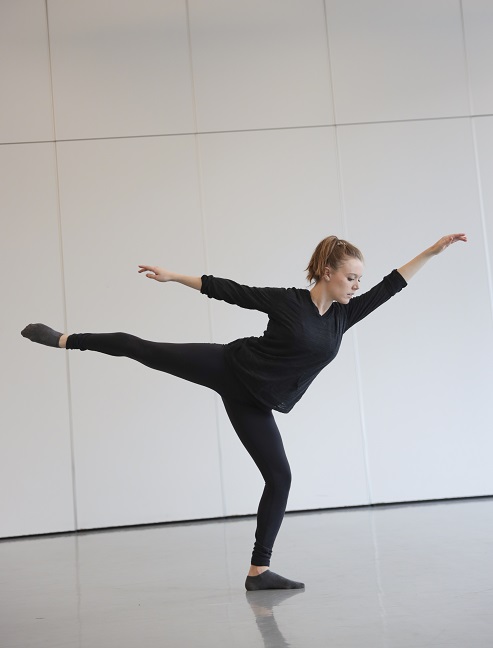
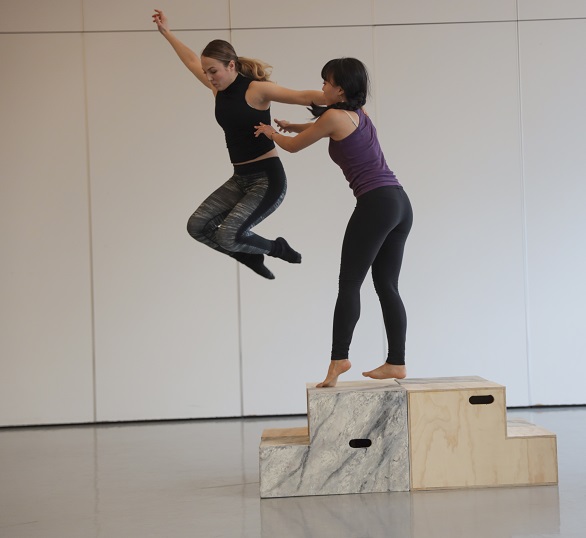
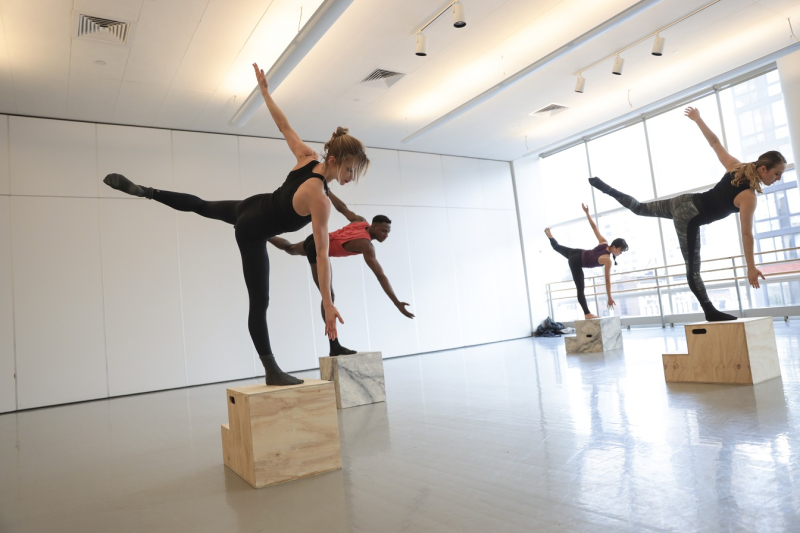
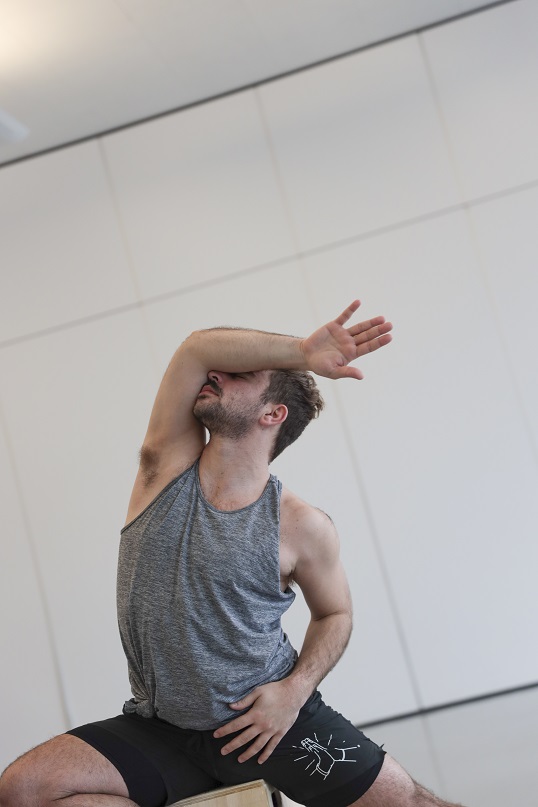
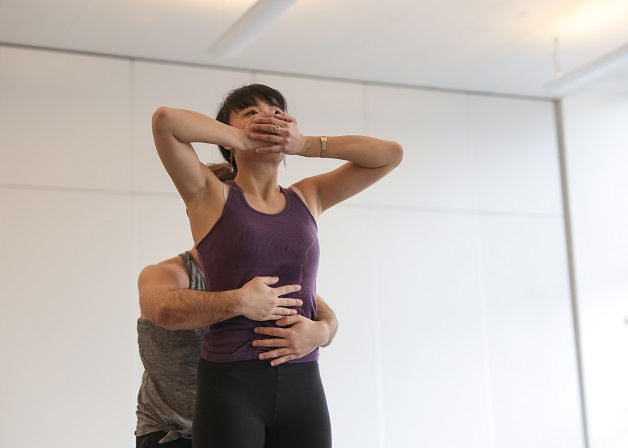
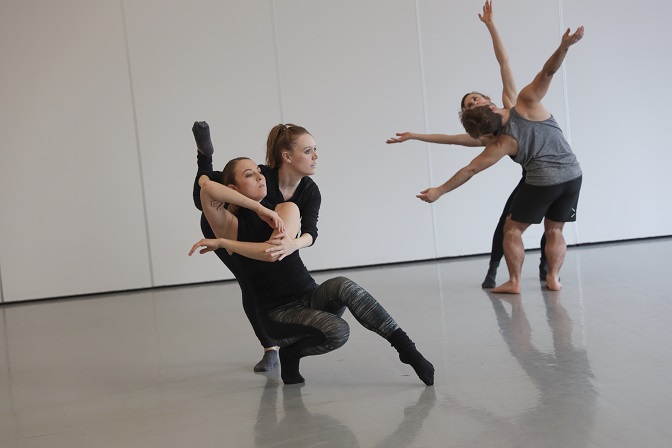
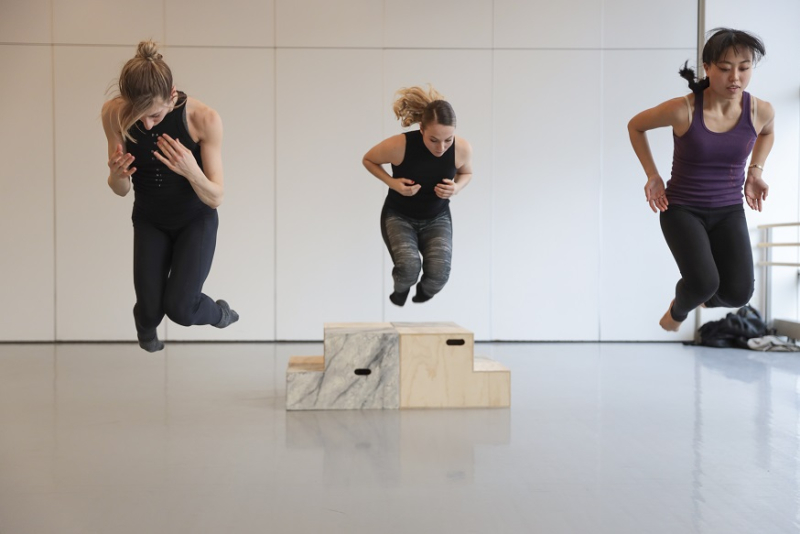
    Monday January 28th, 2019 – Photographer Travis Magee and I stopped in at the Ailey Studios today where Amanda Selwyn and her dancers were rehearsing their work-in-progress, CROSSROADS. Inspired by the art of Magritte and Escher, the premiere performances will be given June 20th thru 22nd, 2019, at New York Live Arts.

    In October, we had a first look at CROSSROADS when the Company held an open rehearsal. There, we watched the individual dancers creating movement phrases which are then taught to their colleagues, and later elaborated on or modified by the ensemble, to be finally woven into the overall fabric of the dancework. 

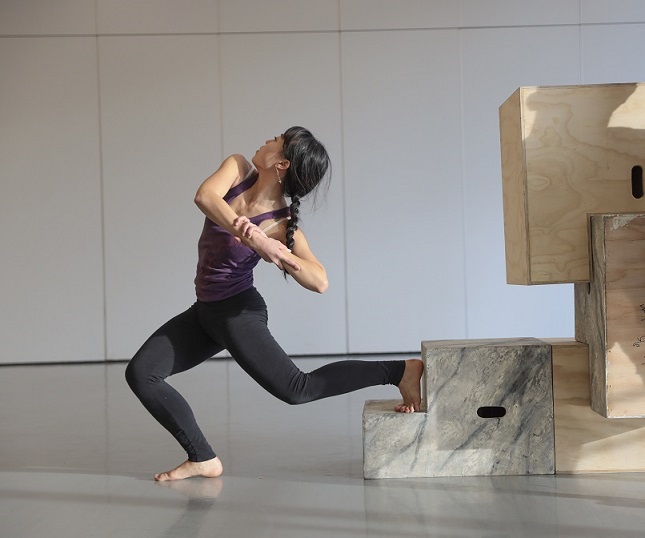
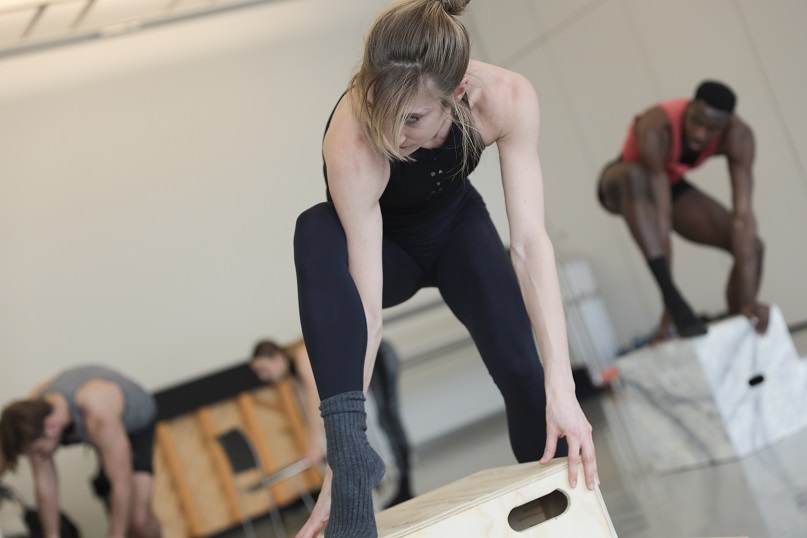
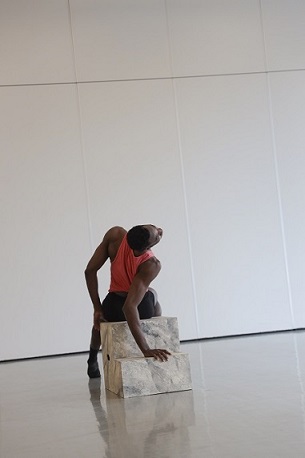
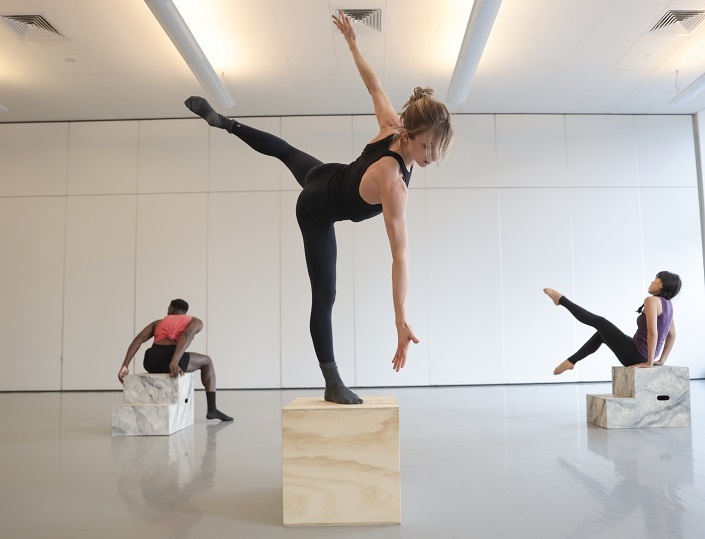
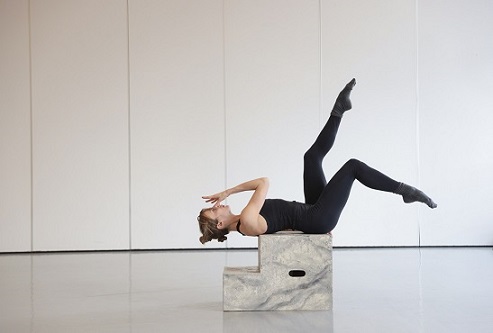
    This process continued today, and Amanda described to me the set pieces (doors, re-arrangeable boxes) that will become part of the staging. This afternoon, the stackable boxes were in play, with the dancers getting used to using them as seats, pedestals, and springboards for athletic feats. 

    The rehearsal atmosphere is relaxed, but with a strong focus on mastering the various movements that will become part of CROSSROADS.

    The dancers of Amanda Selwyn Dance Theatre are:

    0D9A2746

    Torrey McAnena…

    0D9A2476

    …Alex Cottone…

    0D9A2516

    …Sarah Starkweather…

    0D9A2477

    …Manon Hallay…

    0D9A2692

    …Fabricio Seraphin…

    0D9A2877

    …and Misaki Hayama. 

    And here are more of Travis Magee’s images from today’s rehearsal:

    0D9A2407

    0D9A2428

    Sarah Starkweather

    Fabricio

    Fabricio Seraphin

    0D9A2443

    Fabricio, Sarah, and Misaki

    0D9A2450

    Fabricio, Sarah, Misaki

    0D9A2537

    Fabricio

    0D9A2545

    Alex Cottone

    0D9A2658

    Alex and Misaki

    0D9A2709

    Alex and Misaki

    0D9A2736

    Torrey, with Alex and Sarah

    0D9A2751

    Torry McAnena

    0D9A2787

    Torrey, Manon, with Alex and Sarah

    0D9A2835

    Manon and Misaki

    0D9A2804

    Sarah, Manon, and Misaki

    All photos by Travis Magee

    ~ Oberon

  • At Amanda Selwyn’s Rehearsal

    0D9A2416

    Monday January 28th, 2019 – Photographer Travis Magee and I stopped in at the Ailey Studios today where Amanda Selwyn and her dancers were rehearsing their work-in-progress, CROSSROADS. Inspired by the art of Magritte and Escher, the premiere performances will be given June 20th thru 22nd, 2019, at New York Live Arts.

    In October, we had a first look at CROSSROADS when the Company held an open rehearsal. There, we watched the individual dancers creating movement phrases which are then taught to their colleagues, and later elaborated on or modified by the ensemble, to be finally woven into the overall fabric of the dancework. 

    This process continued today, and Amanda described to me the set pieces (doors, re-arrangeable boxes) that will become part of the staging. This afternoon, the stackable boxes were in play, with the dancers getting used to using them as seats, pedestals, and springboards for athletic feats. 

    The rehearsal atmosphere is relaxed, but with a strong focus on mastering the various movements that will become part of CROSSROADS.

    The dancers of Amanda Selwyn Dance Theatre are:

    0D9A2746

    Torrey McAnena…

    0D9A2476

    …Alex Cottone…

    0D9A2516

    …Sarah Starkweather…

    0D9A2477

    …Manon Hallay…

    0D9A2692

    …Fabricio Seraphin…

    0D9A2877

    …and Misaki Hayama. 

    And here are more of Travis Magee’s images from today’s rehearsal:

    0D9A2407

    0D9A2428

    Sarah Starkweather

    Fabricio

    Fabricio Seraphin

    0D9A2443

    Fabricio, Sarah, and Misaki

    0D9A2450

    Fabricio, Sarah, Misaki

    0D9A2537

    Fabricio

    0D9A2545

    Alex Cottone

    0D9A2658

    Alex and Misaki

    0D9A2709

    Alex and Misaki

    0D9A2736

    Torrey, with Alex and Sarah

    0D9A2751

    Torry McAnena

    0D9A2787

    Torrey, Manon, with Alex and Sarah

    0D9A2835

    Manon and Misaki

    0D9A2804

    Sarah, Manon, and Misaki

    All photos by Travis Magee

    ~ Oberon