Author: Philip Gardner

  • My First WALKURE

    T16406_jon-vickers-canadian-tenor

    Above: Jon Vickers, my first Siegmund

    ~ Author: Oberon

    With Wagner’s RING Cycle currently playing at The Met, I’ve been thinking back to when I saw these operas for the first time. My first RHEINGOLD was conducted by Herbert von Karajan; it was part of a thrilling weekend I spent at The Met in 1969.

    It wasn’t until 1975 that I saw WALKURE, in a production based on Karajan’s Salzburg Festival production. Karajan of course had been due to stage and conduct the entire Cycle at The Met, but he never got beyond the first two operas before withdrawing from the project.

    My first WALKURE

    Of my first WALKURE, I wrote in my diary:

    “First time – an uneven performance: the good moments were very good, but much of the performance was a letdown.

    Sixten-ehrling

    Sixten Ehrling (above) did a really great job; he kept things moving, allowed the singers to be heard at all times, and his reading had warmth and clarity. The Valkyries were a mixed lot [I am not sure why I underlined two of the singers’ names on my cast page, especially as people like Marcia Baldwin, Batyah Godfrey, and Jean Kraft were favorites of mine at the time]. Bengt Rundgren was an impressive Hunding.

    Dunn Fricka

    Mignon Dunn as Fricka (above) got off to a rough start, but quickly got things in gear and was very fine. [She was another top favorite of mine, and in 1977 established herself as a star with her portrayal of Ortrud in LOHENGRIN].

    Wotanalone

    Donald McIntyre (above) as Wotan was truly effective: well-sung, very involved, a first-class actor. His long Act II monologue was a high point of the performance.

    Birgit Nilsson was not good as Brunnhilde. She looks really old, was uninvolved as an actress, and she behaved stupidly during the curtain calls. Her “Ho-Jo-To-Ho!” was full of swoops and off-pitch notes. Most of Act II was very ambiguous pitch-wise, and her voice seems to have diminished in size and scope. In Act III, she sounded somewhat better, but pitch was really a problem, and spoiled much of her performance.

    Janis Martin as Sieglinde was very good in Act I, but after that she slid downhill. She does not have the ringing upper range for this music, and seemed always to be singing at full-force. Stage-wise she was not exciting at all. Considering all this, I was surprised that she received a rapturous ovation during the curtain calls.

    Only one word is needed for Jon Vickers’ Siegmund: perfect! Bravo!!


  • Yuja Wang @ The NY Philharmonic

    Thumbnail_Photo by Caitlin Ochs

    Above: pianist Yuja Wang with the NY Philharmonic, photo by Caitlin Ochs

    ~ Author: Ben Weaver

    Wednesday March 27th, 2019 – March 27th was supposed to be an extra-special evening at the New York Philharmonic: the orchestra had announced a one-night-only performance by legendary pianist Maurizio Pollini in honor of the 40th anniversary of his debut with the orchestra (also functioning as a Pension Fund Benefit Gala). Pollini’s appearances with the orchestra have been infrequent over the years, though he did play Chopin’s Piano Concerto (same one as his 1969 debut, Op. 11) in 2015. Alas, it was not to be: the orchestra announced that because of an illness, Mr. Pollini would not be able to appear. Though Mr. Pollini is truly irreplaceable, the Philharmonic did manage to secure a starry replacement: Yuja Wang, in town for appearances at Carnegie Hall, agreed to step in on short notice. The program remained the same: Schumann’s ever popular Piano Concerto in A minor was the centerpiece and Ms. Wang did not disappoint. 

    Though it is alleged that many pianists do not like performing Schumann’s sole piano concerto because they do not find it sufficiently technically demanding, sometimes finding the heart of music can be more demanding than any technical fireworks. Ms. Wang, dispatching every note with ease, also plumbed the depths of Schumann’s great work from the opening moments. The solo section at the beginning of the concerto was played quietly, wistfully, almost regretfully, before the orchestra surged forth. Maestro Jaap van Zweden, always a considerate accompanist, allowed Ms. Wang plenty of leeway to shape her solo moments. Ms. Wang summons a clean, beautiful and strong sound from the Steinway. The lovely slow movement was full of feeling and grace, and the exciting finale was playful and rhythmically alive.

    Ms. Wang is beloved by NY audiences and they demanded encores: she is famous for generous amounts of encores, though tonight she may have been asked to limit it to only two (the audience wanted more.) A gorgeous transcription (by Liszt) for solo piano of Schubert’s heartbreaking Lied Gretchen am Spinnrade kept the audience holding its collective breath. And pianist Arcadi Volodos’ entertainingly jazzy/bluesy arrangement of Mozart’s famous Rondo Alla Turca from the Piano Sonata No. 11 brought down the house. (My companion, whose husband is an established jazz musician who regularly performs with artists like Norah Jones, said approvingly: “You go girl!”)

    The Schumann concerto was sandwiched between two orchestral works. Johan Wagenaar’s forgotten Cyrano de Bergerac Overture, Op. 23 opened the program. This very melodic and entertaining 1905 composition, with its echoes of Wagner and Richard Strauss, deserves more attention than it gets. (Before Maestro Zweden reintroduced it to the Philharmonic’s rep in 2018 it was last performed by the orchestra in 1921 under Willem Mengelberg.) 

    The concert closed with a familiar rendition of Beethoven’s Symphony No. 7, which Wagner once called “the apotheosis of dance.” Maestro Zweden and NY Philharmonic musicians played, one could inelegantly say, the hell out of it. The moody opening quickly gave way to a series of rapturous melodies and dances. The famous Allegretto – many conductors go much too heavy, others speed through it thoughtlessly – was perfectly judged by Zweden. The rest of the symphony built to a thrilling, breathtaking and breathless finale.

    ~ Ben Weaver

  • @ My Met Score Desk for WALKURE

    54727491_10161727100955533_4208711738377371648_n

    Above: Stuart Skelton and Eva-Maria Westbroek as Siegmund and Sieglinde/a Met Opera photo

    ~ Author: Oberon

    Saturday March 30th, 2019 matinee – I admit that I am not feeling excited about the Met’s current RING Cycle performances. Much as I have been starved for Wagner in recent Met seasons, and despite the RING being very high on my list of favorite works, a lot of the casting this time around is uninspiring. And, if the free-standing RHEINGOLD I saw recently was any indication, Philippe Jordan’s Wagner conducting doesn’t really send me. So I went to this afternoon’s WALKURE simply because it’s WALKURE.

    En route to the theater, I encountered Michael Volle, the alternate Wotan, heading for the Met’s stage door in the passageway under Lincoln Center. I wondered if there would be a cast change, but – after a delayed start of fifteen minutes – the performance commenced with the announced cast.

    I did not stay for the third act; after debating with myself, I decided to leave before enduring another prolonged intermission. Then on the train going home, I thought: “What if that was your last WALKURE…ever?”

    Blasts of frigid air (common up in the Family Circle boxes) continued throughout the performance; whilst waiting for the House to go dark, we heard a gorgeous cacophony of Wagnerian leitmotifs from the musicians warming up.

    The singers today ranged from stellar to acceptable, but Maestro Jordan seemed far more impressive here than in the RHEINGOLD, and the orchestra playing was – for the most part – thrilling, both in its overall resonance and in the many featured opportunities; the cello (especially before “Kühlende Labung gab mir der Quell“), the clarinet (as the mead is tasted, and later in the prelude to the Todesverkundigung ), the somber horns and heartbeat timpani in that magnificent Annunciation of Death…and countless other phrases.

    Stuart Skelton’s Siegmund seemed to me to stand firmly in the top echelon of the role’s interpreters of the last half-century, alongside Jon Vickers and James King. Both musically and as a character, this role suits Mr. Skelton far better than Otello. His Siegmund has both power and poetry. The son of a god, he is deeper and more thoughtful than he might seem on the surface; for, in his own way, Siegmund has great nobility…and great humanity. In finding and liberating Sieglinde, he finds a joy and purpose in life hitherto denied him; that it will last less than a day makes him all the more poignant. His overwhelming tenderness towards his sister-bride, his awe in encountering Brunnhilde, and his helpless rage at his father’s deceit are all vividly expressed in his music. And Mr. Skelton took all of this to heart: with generous lyricism, warmth of tone, and vivid declamation, he brought Siegmund palpably to life, making him the central figure of the opera.

    Mr. Skelton’s Sword Monolog in Act I was among the very finest I have ever heard. But even before that, he had so many wonderful passages of clear-voiced, expressive singing: ” Kühlende Labung…”, and the great subtlety and feeling of resignation he brought to “Nun weißt du, fragende Frau, warum ich Friedmund nicht heiße!” 

    The mysterious, uneasy orchestral prelude to the Monolog set the mood for our tenor, who caught every nuance of the text and brought vocal colors into play with masterful modulations of dynamic. Sublime tenderness at “…ein Weib sah’ ich, wonnig und hehr...” was followed moments later by Mr. Skelton’s phenomenal sustaining of the cries of ” Wälse! Wälse!“, so tonally steady and true, whilst the orchestra generated white heat. The trumpet then rang out with the Sword Motif. Magnificent moments! 

    The tenor’s energy seemed to flag momentarily after these arduous pages of dramatic singing, but he quickly attained peak level again with a beautifully poetic “Winterstürme“.  From thence, Mr. Skelton and his Sieglinde, Eva-Maria Westbroek, gave a strikingly passionate account of the final pages of Act I, from the growing excitement as they begin to realize who they are, (Skelton’s “Du bist das bild das ich in mir barg” – “Yours is the image I held in my heart!”…yet another perfect moment) thru the drawing of the sword from the tree, and their escape into the night.

    Ms. Westbroek’s singing overcame the distractions of a widening vibrato and insecurity at the top of her range by sheer willpower: her passionate commitment to the music and to the character made her vocal flaws seem irrelevant. The soprano’s rendering of the narrative “Der Männer Sippe” had its vocal ups and downs, but underlying her singing was this deep raging fire: a hope for freedom…and love. This more than compensated for a lack of ‘ring’ in her upper notes. “Du bist der Lenz” likewise had many lovely touches along the way: and then the A-flat loomed. She got it.

    Sieglinde describes the sensation of having heard Siegmund’s voice before, as a child; and then, at “Doch nein! Ich hörte sie neulich” (“But no, I heard it of late…”) Ms. Westbroek suddenly cut loose vocally, as if liberated. This launched a magnificent outpouring of emotion and song from both singers as the sibling-lovers surrendered to the inevitable. The soprano staked out a long, resounding top-A as she named Siegmund. And the music rolled on, in an unstoppable flood of hope and desire. 

    A titanic ovation rocked the house and, as has long been a tradition at this point, the two singers – Ms. Westbroek and Mr. Skelton – stepped out for a bow as the crowd went wild. Günther Groissböck, our excellent Hunding, joined them and the applause re-doubled. It seemed like old times.

    G groissbock

    Mr. Groissböck (above) is not a cavernous-toned basso in the manner of Martti Talvela or Matti Salminen; the Groissböck Hunding is leaner and meaner. His voice has power, authority, and insinuation. Having patiently listened to Siegmund’s tale of woe, the basso kicks out the blocks with “Ich weiß ein wildes Geschlecht!” and delivers a knockout punch with “Mein Haus hütet, Wölfing, dich heute…”  Bravissimo! 

    Jamie Barton’s Fricka was prodigiously sung; the top notes sometimes have a slightly desperate feel, and to me her over-use of chest voice runs counter to the character: she is the queen of the gods, not a desperate, ex-communicated Sicilian peasant. Barton’s parting lines to Brunnhilde were more to the point: a self-righteous woman calmly dealing from a position of power; a wife who has the upper hand.  

    Greer Grimsley’s voice is now rather time-worn, but he knows the role of Wotan inside-out and makes a vibrant impression through his deep understanding of the character, using the words as a dramatic springboard, and hurling vocal thunderbolts at just the right moments. His long monolog in Act II was rich in detail and feeling, and his dismissal of Hunding was a memorable moment: “Geh!” first as a quiet command, then in a snarling fit of rage.

    A lot of water has flowed under the bridge of time since Christine Goerke gave her revelatory performances of the Dyer’s Wife in FRAU OHNE SCHATTEN at The Met in 2013. At that time, the huge Met contract she was offered following her triumph seemed both exciting and amply justified. But the ensuing seasons, during which Goerke has put her voice to unstinting use in the most demanding repertory, have taken a toll: notes above the staff are thinned out and approximated now, the power of the voice has lessened, and today there were passing pitch difficulties in the mid-range. Perhaps to compensate, the soprano seemed to be over-enunciating the text, spitting out and biting off her words.

    The soprano got off to a rocky start with a helter-skelter Battle Cry. But Ms. Goerke settled in for the opera’s heart and soul: the Todesverkundigung (Annunciation of Death), where the music lies very much in her comfort zone. Maestro Jordan took this scene a bit faster than I’d have liked, and sometimes let the voices be covered. The music is full of foreboding as Brunnhilde tells Siegmund he will die in the coming fight against Hunding, after which she will bear him to Valhalla; there, as Ms. Goerke beautifully tells him, he will be greeted by Wish-Maidens who will serve and delight him.

    When Siegmund asks if Sieglinde can come with him into the afterlife, Brunnhilde/Goerke replies – meltingly lovely of tone – “Erdenluft muß sie noch athmen” (“Earthly air must she keep breathing…”). Siegmund then rejects the bliss of Valhalla. When Brunnhilde chides him for placing his love for this “poor, ailing woman” above the glory of immortality, Siegmund’s reply is one of the great crushing dismissals in all opera:

    “So young and fair you shine before me,
    yet how cold and hard is your heart!
    If you can only mock me,
    then take yourself hence,
    you cruel, merciless maid!
    Or if you hunger for my distress,
    then freely feast on my woe;
    let my grief quicken your envious heart:
    But of Valhalla’s loveless raptures
    speak no more to me!”

    No mortal has ever answered Brunnhilde thus; now, moved by Siegmund’s plight and her eyes opened to her father’s deceit, Brunnhilde vows that Siegmund shall win the coming fight.

    This leaves the stage now to Mr. Skelton’s Siegmund. Gearing up for the battle, he looks upon the sleeping Sieglinde and sings – with infinite tenderness: “So slumber on, till the fight be fought, and we find our  peace and joy!”

    The ominous blaring of Hunding’s hunting horns is heard. And the fight is on! The voices of Skelton and Groissböck – so alive in the House – threaten one another. The orchestra storms wildly. Brunnhilde shields Siegmund, but Wotan suddenly appears out of nowhere, shatters Siegmund’s sword, and Hunding slays his enemy with a spear thrust. Pausing only to dispatch Hunding, Wotan/Grimsley turns his wrath on his disobedient daughter, who has fled with Sieglinde and the pieces of the shattered sword:

    “But Brünnhilde! Woe to that traitor!
    Dearly shall she pay for her crime,
    if my steed o’ertakes her in flight!” 

    Metropolitan Opera House
    March 30th, 2019 matinee

    DIE WALKÜRE
    Richard Wagner

    Brünnhilde..............Christine Goerke
    Siegmund................Stuart Skelton
    Sieglinde...............Eva-Maria Westbroek
    Wotan...................Greer Grimsley
    Fricka..................Jamie Barton
    Hunding.................Günther Groissböck
    Gerhilde................Kelly Cae Hogan
    Grimgerde...............Maya Lahyani
    Helmwige................Jessica Faselt
    Ortlinde................Wendy Bryn-Harmer
    Rossweisse..............Mary Phillips
    Schwertleite............Daryl Freedman
    Siegrune................Eve Gigliotti
    Waltraute...............Renée Tatum

    Conductor...............Philippe Jordan

    ~ Oberon

  • Lori Belilove ~ Isadora Duncan Dance Company

    Wj180622016-website-featured-image-2

    ~ Author: Oberon

    Thursday March 28th, 2019 – A studio performance by The Isadora Dance Company, founded by and under the artistic direction of Lori Belilove (above), presenting an evening of Duncan works in an intimate salon setting. At the piano, New York City Ballet’s Cameron Grant regaled us with his vibrant playing of works by Chopin, Brahms, Schubert, and Scriabin. 

    The room was packed to the bursting point as Lori greeted us, and then the dancing immediately commenced. A set of Duncan works set to music of Franz Schubert opened the evening, starting with dancers Hayley Rose and Faith Kimberling as light-hearted nymphs Moment Musical. Throughout the evening, the women wore classic Grecian-style tunics, iconic elements of the Duncan repertoire, in various hues. Emily D’Angelo, in pale blue, danced Lullabye, with the evocative Isadora motif of raising the arms heavenward. Becky Allen and Caroline Yamada, in pink with flowers in their hair, gave us Classical Duet, and then Lori Beliliove, in dark blue, spoke to us in Duncan’s striking gestural language in the waltz-like Water Study.

    The music by Frederic of Chopin – waltzes, etudes and mazurkas – came next, all of it immaculately played by Mr. Grant (I was seated just behind his right shoulder, and could follow along in his score). Nikki Poulos was the soloist in the joyous Grande Valse Brillante – a feel-good Isadora work to be savoured for its freshness and vitality. Mlles. Yamada, Allen, Kimberling, and Rose were the attractive ensemble here. Emily D’Angelo’s solo opened Prelude, with Becky Allen and Caroline Yamada transforming it into a trio; this very familiar music was most cordially played by Mr. Grant. Faith Kimberling – always such an appealing dancer to watch – then appeared for a second trio, Line Mazurka, with Becky and Caroline.

    In the solo Ballspiel, Hayley Rose used the space to fine advantage, her dancing responding ideally to the music’s shifting changes of pace. In the moody Slow Mazurka, Mlles. D’Angelo, Rose, Poulos, and Yamada took turns striking stylized poses on the floor – classic Isadora, this – whilst their companions danced. Becky Allen’s dancing of the immortal Minute Waltz was perfectly dovetailed to the playing of Mr. Grant: this was one of the evening’s many highlights.

    Hayley Rose, Nikki Poulos, and Faith Kimberling appeared as woodland sprites in Butterfly Etudes, employing scarves in a space-filling dance. Nikki Poulos gave a poignant performance of Death and The Maiden, her gestures indicating longing and then withdrawal, her expressive face beautifully mirroring the sorrowing music.

    Isadora’s suite of Brahms waltzes entitled The Many Faces of Love opened with Caroline Yamada’s cheerful energy in Greeting, followed by Faith Kimberling’s Frolic, with its folkish flavour, so lovely to watch. Lori Belilove performed Scarf Dance, a lilting, provocative piece, followed by Mlles. Rose, Yamada, and Poulos in the unison trio that opens Cymbals, with its accented music. Ms. Rose then gave Flames of The Heart a Romany flair: fast, passionate, with streaks of wildness. The lyrical, lovely Rose Petals was danced by Emily D’Angelo with cherishing grace; at the end of the dance, she slowly scatters the flowers about the floor.
     
    Two of Isadora Duncan’s great Scriabin solos were given exemplary performances by Lori Belilove: the deep melancholy of Mother, in which she comforts her ghostly children, and the madly passionate, red-clad  Revolutionary, with its silent screams.
     
    As a triumphant finale, honoring Women’s History Month and embracing the power of sisterhood, Nikki Poulos led Mlles. Yamada, Allen, Kimberling, and Rose in the bracing Military Polonaise of Chopin, thrillingly played by Cameron Grant. This made our spirits soar.
     
    ~ Oberon

  • Ballet Hispánico @ The Joyce ~ 2019

    Jared Bogart and Melissa Fernandez (c) Paula Lobo

    Above: Jared Bogart and Melissa Verdecia of Ballet Hispánico; photo by Paula Lobo

    ~ Author: Oberon

    Wednesday March 27th, 2019 – Ballet Hispánico’s season at The Joyce offered a very strong program: Annabelle Lopez Ochoa has re-set her brilliant masterpiece Sombrerísimo, originally danced by the Company’s men, for an all-female cast; and Asian influences came into the mix with world premieres by Edwaard Liang and Bennyroyce Royon, each of which was highly successful in its own way.

    I last saw perform Ballet Hispánico in 2016, and there have been major changes in their roster of dancers since then. Watching the Company tonight at The Joyce, I realized how bad my eyesight has become over time; it’s much more difficult for me now to single out individual dancers, and to put names to faces.

    Edwaard Liang, formerly a soloist at New York City Ballet and now the Artistic Director of BalletMet in Columbus, Ohio, has established himself among the front rank of international choreographers; his works have been danced by the Bolshoi Ballet, Houston Ballet, Joffrey Ballet, Kirov Ballet, New York City Ballet, Pacific Northwest Ballet, San Francisco Ballet, Shanghai Ballet, Singapore Dance Theatre and Washington Ballet. Tonight, Ballet Hispánico opened their program with Liang’s El Viaje (“The Voyage”).

    Set to the lushly lyrical Ralph Vaughan Williams score Variations on a Theme by Thomas Tallis, and gorgeously lit by Joshua Paul Weckesser, El Viaje resonates with themes of emigration and cultural re-location, particularly of Chinese peoples; it speaks to me personally as I married one such emigrant. 

    Liang

    Above: from El Viaje, photo by Paula Lobo

    Melissa Verdecia, striking in a red dress, is spotlit facing upstage as the curtain rises. Such rushes into a high lift as the ballet begins. The dance has a ritualistic feel, and a strong architectural framework. Partnering motifs, performed by the couples in unison, underscore the sense of community. Solo and duet opportunities abound, in which the Hispánico dancers revel in their power and beauty, buoyed by the marvelous music. At the end, the dancers stand together, facing the sunrise, uncertain but hopeful. 

    Dandara

    Above: Dandara Veiga in El Viaje, photo by Paula Lobo

    Sombrerísimo was commissioned by New York’s City Center for Fall for Dance in 2013; I was present at the premiere, which was a huge hit with the audience. Choreographed for an all-male ensemble by Belgian-Colombian Annabelle Lopez Ochoa to a collage score by Banda Ionica, Macaco el Mono Loco, and Titi Robin, it of course now has a very different feel as danced by six women: Shelby Colona, Jenna Marie, Eila Valls, Gabrielle Sprauve, Dandara Veiga, and Melissa Verdecia. The movement ranges from swift and accented to cool and sexy, and there’s much by-play with the hats that inspired the ballet’s title. Joshua Preston’s lighting is atmospheric, and often produces a shadow-dancing effect. At the end, the girls toss their hats into the air while dozens of other hats fall from above.

    Sombrero

    Above: the Ballet Hispanico women in Sombrerísimo, photo by Paula Lobo

    Bennyroyce Royon’s Homebound/Alaala is a danced memory-book of his homeland in The Philippines. On the other side of the world, in Bato, Leyte, mi amor de loin keeps me in daily touch with that world – a unique on-line love affair that made Benny’s ballet especially meaningful to me.

    Chris B

    Above: Chris Bloom in Homebound/Alaala, photo by Paula Lobo

    Opening with a dazzling stars-scape, the stage is full of boxes which the dancers carry, push, construct, take down, open, and close throughout the ballet. Perhaps they are boxes full of memories: some are marked Fragile. To popular songs of the Tagalog, the people work, relax, joke, flirt, and dream. Unison dance passages emphasize the sense of community, which is so very strong in the Filipino culture.

    Central to Benny’s ballet is a gay ‘cruising’ duet, performed in silence. The two men warily circle one another, unsure of a response. In an overwhelmingly Catholic society, being gay in The Philippines faces barriers to acceptance; President Duterte tends to send mixed messages on the subject. My Brix thankfully has the support of his family, which many young people in the life there do not.

    But, back to Bennyroyce’s ballet: flip flops are lined up as the finale is reached. While I might have wished for more dancing in this piece, I loved the music, the spirit of commitment from the dancers, and feeling the connection to my Tico…a love from afar.

    ~ Oberon

  • Bella Hristova @ Merkin Hall

    Hristova

    Above: violinist Bella Hristova

    ~ Author: Oberon

    Tuesday March 26, 2019 – A thoroughly impressive and enjoyable evening at Merkin Hall, as Young Concert Artists presented violinist Bella Hristova in a recital that mixed the familiar with the rare. A striking Bulgarian-born beauty, Ms. Hristova had a perfect colleague in pianist Anna Polonsky; together, the two women evoked a shouting, standing ovation at the end of their program. 

    Glamorously gowned in black, Ms. Hristova seemed to have stepped off the fashion runway and onto the Merkin stage. The abundant richness of her tone – which maintains its allure throughout the dynamic range and even at speed-of-light tempos – is matched to a mastery of technique and a depth of emotion that makes her a paragon among violinists of the day. 

    Mlles. Hristova and Polonsky opened their imaginative program with Olivier Messiaen’s Theme and Variations, a work which deserves wider exposure. Composed in 1932 – nearly a decade before the composer’s monumental Quartet for the End of Time – the opening Thème has a dreamlike quality, with a sustained violin line and a marvelous role for the piano. The ensuing five variations bring a buildup of speed, tension, and drama which climax with the fourth – marked Vif et passionné – before calm descends in the final Tres modéré, with its sustained ending. At the Steinway, Ms. Polonsky brought a wonderful forward impetus as the first four variations progressed, whilst Ms. Hristova dispatched the swift passages and some lively trills with élan. The Vif et passionné movement found the violinist playing on high over accents from the keyboard: the music reaches a grand passion indeed. The return to a more peaceful mood was finely evoked by the two musicians. Insistent applause drew them back for a bow, the pianist’s red shoes an added delight to the evening’s visual aspects.

    In a violin ‘test piece’ sans pareil, Ms. Hristova dazzled the crowd with Ellen Taafe Zwilich’s Fantasy for solo violin. And a test piece it literally is, having been written by Ms. Zwilich as a compulsory work for the Indianapolis Violin Competition. From a passionate start, Ms. Hristova soars on high; later the music percolates, and there’s a touch of the blues. Stretches of coloratura were effortlessly dispatched, some of them extremely fast…and delicate. The music rises to a shining softness, then morphs into an agitato that develops into a rocking sway. Simmering down, Ms. Hristova plays high and sublime before the Fantasy‘s brilliant ending. The audience went wild for this exciting piece, again summoning Ms. Hristova back to bask in a wave of affection. I was hoping that the composer might be among us, so we could express our admiration. 

    There followed a thrilling rendering of the beloved Partita no. 2 in D-minor, BWV 1004, by J S Bach. Ms. Hristova was not only in total command of every aspect of this music, she brought a distinctive glow to it that made it seem ever fresh and vital. The thoughtful melody of the Allemande showed her radiant tone, pristine articulation, lovely phrasing and dynamics. What more could we ask? In the lively dance of the Courante, Ms. Hristova’s flowing musicality carried us along. The melancholy Sarabande was beautifully played, with exquisite touches, and in the Gigue, the reams of fiorature – played very fast – had true clarity, further enhanced by dynamic nuance. An astonishing display of virtuosity…a real treat!

    In the famous Chaconne which concludes the Partita, Ms. Hristova’s passionate playing – and her inspired control as she shaped her vision of this masterpiece – made me wish it could go on and on. The audience, having been held under her spell throughout, gave the violinist a fervent ovation, so eminently deserved.

    Annapiano

    Above: pianist Anna Polonsky

    Arnold Schönberg’s Phantasy for violin and piano, Op. 47, is a remarkable piece which I’d never heard before. After a jagged start, quiet settles briefly over a misterioso passage for the piano; this peace is broken by slashes from Ms. Hristova’s violin, and her isolated notes, plucked from the air. Music of near violence alternates with moments of gentle, somewhat eerie lyricism.

    With Ms. Polonsky playing twinkling notes in the upper end of the keybord, Ms. Hristova joins on the heights. After a whimsical passage, there’s sudden drama, followed by some sneaky music which then turns quite perky. Again, the lyric and the spiky take turns, becoming intense. A pulsating violin note creates a buzz. The Phantasy ends suddenly. 

    Olde World richness of musicality and grace marked evening’s final offering: Johannes Brahms’ Sonata no. 3 in D-minor, Op. 108. Of this familiar piece, I need only say that both violinist and pianist played with overwhelming tenderness and compelling beauty of sound. The hall felt like a haven for those of us seeking solace in a darkening world; for such moments of hope and contentment – however fleeting – I feel a deep gratitude.

    As the two artists beamingly acknowledged the wildly enthusiastic applause of the standing audience, there was no question that an encore was in demand. With sublimely poised lyricism, the players offered a Bach Largo that felt like a benediction, eliciting murmurs of admiration as the music came to an end.

    ~ Oberon

  • CMS: New Music @ The Rose Studio

    Commissions_pintscher_1024px

    Above: composer Matthias Pintscher

    ~ Author: Brad S. Ross

    Thursday March 21st, 2019 – Thursday was a unique night of sounds with the Chamber Music Society of Lincoln Center in the organization’s cozy and intimate Daniel & Joanna S. Rose Studio.  The all-contemporary music program, featuring four works written between 1983 and 2013, ran the gamut of cutting-edge of sonorities, offering its refreshingly engaged audience a small cornucopia of contemporary classical music.  It was also a heavily American program, featuring only a single piece by a European composer—something that can seldom be said of most music programmed at Carnegie Hall or the New York Philharmonic.  Performing that night of the CMS players were the pianist Micheal Brown, violinist Bella Hristova, violist Richard O’Neill, and cellist Mihai Marica.  Their playing was at such a high level of proficiency that one could be forgiven for scarily noticing the ease with which they navigated such technically demanding music.

    The evening began with some academic and mercifully brief opening remarks by the CMS Director of Artistic Planning and Administration Elizabeth Helgeson about the composition of the first two pieces.  Once finished, the players wasted no time diving into the first work of the evening:  Alexandra du Bois’s L’apothéose d’un rêve for Piano, Violin, and Cello.  L’apothéose d’un rêve, translated in English as “The Apotheosis of a Dream,” was originally commissioned by the pianist Menahem Pressler for the Beaux Arts Trio for the trio’s semicentennial in 2005.  The work is cast in five movements played without pause and features a musical voice much befitting its decidedly ambiguous title.

    Its tone is often longing and somber, lingering and dramatic—a stark contrast to the ferocity for which so many contemporary compositions have been known.  Light on extended technique, but rife with developed thematic material, du Bois achieved an almost tragic beauty in L’apothéose d’un rêve, evoking the dreamlike imagery of its name.  The third movement Molto vivo, with its arpeggiating piano lines, seemed almost to harken the swells of some discontented ocean.  The closing movement Misterioso ended with haunting and almost funereal bell tones on the piano as the strings suspended an eternal minor third above them.  Its beauty set a lofty standard for the works to come.

    Next was the revered octogenarian Charles Wuorinen’s Trio for Piano Violin, and Cello.  Composed in the summer of 1983, the piece was originally commissioned and performed by the Arden Trio.  It is cast in a single movement over approximately ten minutes, making it handily the most concise work of the evening.  Compared with the previous piece by du Bois, Wuorinen’s Trio was volatile and ferocious—rich with exquisite colors and textures that brought the most out of the ensemble.  The players had their best work out here and effortlessly demonstrated their expert musicianship on its numerous intricate runs, tightly dissonant intervals, and relentless difficult counterpoint.  It all culminated in an unsettling and richly dramatic ending that, in the best possible sense, left me wanting more.

    Helgeson returned to the stage for a few more brief words about the program and the performers soon launched into the third work of the evening: Matthias Pintscher’s Janusgesicht for Viola and Cello.  The German-born Pintscher, the sole aforementioned non-American on the program, composed Janusgesicht in 2001.  Its title refers to the god of Roman mythology Janus, whose two faces stair simultaneously in opposing directions.  Janusgesicht, as the composer writes, is “less about correspondence or communication among the two voices, but about the dissolution of one’s voice into the other.”  For this piece, the players thus faced away from each other as the lights in the hall were near-completely darkened, minus some ambient blue lighting cast upon the back wall.  Gimmicky as this setup may seem (I indeed had my doubts), it turned out to be one of the more interesting performances of the evening.

    Janusgesicht was understandably the most dissonant and atonal work of the night—no tone center was to be found amidst its eerie scratchings and unholy strikes as these two string players weathered some of the most discordant sonorities of the evening.  The work is characterized by myriad unnerving atmospheres, haunting silences, and arresting sonic textures, none of which ever outstayed their welcome.  Following a lugubrious and tantalizing final decrescendo, the performers froze in place for what must’ve been half a minute before finally lowering their bows to receive a well-earned applause.  Though it required patience and a mind considerably open to challenging music, Janusgesicht was well-worth the effort—the audience knew it, too.

    The fourth and final piece of the night was David Serkin Ludwig’s Aria Fantasy for Piano, Violin, Viola, and Cello.  Written in 2013, this quartet was the most recent composition of the program, though its roots stretched the furthest back of all. It was inspired, as the program indicated, by the opening and closing arias of Johann Sebastian Bach’s Goldberg Variations from 1741, but was pleasantly light on direct quotations.  Ludwig, who was present for the night’s proceedings, was humorously short-winded in a pre-performance talk about the work, quipping that “a composer should never speak for longer than the duration of the piece.”  What unfolded over the next sixteen minutes turned out to be a wild and adventurous combination of musical idea.

    Aria Fantasy began on a lullaby-like piano line accompanied by almost science fiction-like glissandi in the strings.  This unusual combination of pleasantly tonal melodies contrasted with obstinately discordant harmonies and modern musical techniques played like a dream that was equal parts pleasant and frightening.  After this eerie opening came a dramatic and eventful middle section (andanteadagio), followed by a growing momentum that built to a grand final section (con moto).  When the final diminuendo played the piece to its close (tempo di aria), the audience—including yours truly—was left wanting it to continue long after the piano’s final harmonic resolution.

    This was a resounding finale to a night of superb contemporary music—music that should be performed as often and as widely as anything by the late masters.  Other ensembles would do well to take their example and program more works by living composers.  If Thursday night’s enthusiasm was any indication, audiences are itching to hear it.

    ~ Brad S. Ross  

  • The Borodin Quartet ~ Chamber Music Society

    54390889_10156374663898666_1471336215130144768_n

    Above: the members of The Borodin Quartet: Vladimir Balshin, Sergei Lomovsky, Igor Naidin, and Ruben Aharonian.

    ~ Author: Oberon

    Sunday March 24th, 2019 – For the grand finale of their Russian Panorama festival, Chamber Music Society of Lincoln Center welcomed The Borodin Quartet. Formed in 1945 by four students from the Moscow Conservatory, the Borodin are world-renowned for their interpretations of the Shostakovich quartets.

    The Frankfurter Allgemeine Zeitung said of The Borodin Quartet: “…here we have not four individual players, but a single 16-stringed instrument of great virtuosity.” Truer words have ne’er been written. The members of the Borodin are Ruben Aharonian and Sergei Lomovsky (violins), Igor Naidin (viola), and Vladimir Balshin (cello); seldom have I heard such an intrinsically beautiful blending of sound as in this richly rewarding concert.

    To open the program: Nikolai Myaskovsky‘s Quartet No. 13 in A-minor, Op. 86, written in 1949. A composer of vast output, Myaskovsky is not well-known outside Russia, where he is considered part of a triumvirate alongside Prokofiev and Shostakovich; Myaskovsky’s music is far more conservative than that of his two compatriots, and he disdained European influences. On the evidence of this 13th quartet, opportunities to hear more of his music would be most welcome.

    To a pulsing rhythm, a cello solo is passed on to the violin and then to the viola; immediately the unique sound of the Borodins captivates the ear. The themes of this opening Moderato entwine in a miraculous intermingling of the four instruments. A sense of urgency rises, then subsides as Mr. Aharonian’s violin sings a sad, sweet song. A fugue springs up, then the melodic flood resumes, sweeping on to a reverential ending.

    The Presto fantastico is a swift, scherzo-like affair with a driven accompaniment figure until things slow for a poignant melody from the violin and cello in turn. To a plucking motif, cellist Vladimir Balshin plays a melancholy air. The music then peps up, dancing along at increasing speed to a witty, plucked finish.

    The Andante con moto e molto cantabile is solemn and wistful: the signature feeling we associate with the most poignant Russian music. Cello and violin are again featured, and the movement ends in a benedictive state. 

    The energetic start of the Molto vivo offers perfect contrast: violin and cello passages – the violin sailing over dense harmonies – evolve to a delightful section for duetting violins as the lower instruments are plucked. Violin and cello resume their thematic game of tag; the violin duo revives itself, joined by cello and viola as the the music comes to an amusing end.

    Shostakovich’s Quartet No. 13 in B-flat minor, Op. 138, was composed in 1970. In this single-movement work, the viola takes a prominent role; the quartet further features moments when the players tap on their instruments with the wood of their bows.

    From the opening solo, violist Igor Naidin’s playing made a deep impression. As the other players join, dissonances crop up. The violin wanders above, the cello deep, the harmonies brooding. The violins duet, and the music turns searing before resuming is slow, darkish aspect. The high violin makes stuttering comments, and from dense dissonances the trilling viola emerges. Now the tapping starts. The higher voices commence a rhythmic pattern, with the cello sounding below. A sense of mystery develops, broken by insistent slashings. The the viola plays alone, the music rich and gloomy, and the violin on the rise. Cello and viola duet; the viola begins to ascend and – against the tapping – Mr. Naidin sounds simply ravishing. The music ends on high, sustained tones. 

    Following the interval, Alexander Borodin’s Quartet No. 2 in D-major, from 1881, was given a phenomenal performance. The opening Allegro moderato, with superb playing from Mr. Balshin, was a pure delight. The Scherzo, quite bubbly, brings out the familiar melody of “Baubles, bangles, and beads“, adapted in the musical Kismet. Lyricism and finesse sustain the ebb and flow before returning to the charm of the Kismet theme, underscored now by the insistent sound of the cello’s tones. There’s a sudden rush, to a sprightly finish…:”Wow!” is what I wrote here.

    The cello’s plushy resonance and the violin’s silken sweetness intoxicate us in the Notturno: andante: music of magical romance. As heart-on-sleeve theme follows gorgeous theme, the players outdo themselves: the violins ethereal, the cello stunning, as the music becomes truly sublime.

    A rather weird entr’acte introduces the Finale, with the cello setting the pace as the viola takes off. All play briskly, the music scurrying before turning lyrical. The “entr’acte” returns, feeling a bit out of place. Slow and fast passages alternate, leading to the dense finish with the violin poised in heaven.

    Tonight’s Alice Tully Hall audience were not about to let The Borodin Quartet go without an encore: insistent applause and cheers brought the players back to their chairs, where they offered a hauntingly beautiful rendering of Shostakovich’s Elegy for String Quartet: a perfect ending to a perfect evening. 

    ~ Oberon
  • The ASO Presents Martinů’s JULIETTA

    B martinu

    Above: the composer Bohuslav Martinů

    ~ Author: Oberon
    Friday March 22nd, 2019 – Bohuslav Martinů’s opera JULIETTA in a concert presentation by The American Symphony Orchestra at Carnegie Hall, conducted by Leon Botstein. Based on the French play Juliette, ou La clé des songes (Juliette, or The Key of Dreams) by Georges Neveux, Martinů’s opera explores a world where dreams and reality converge.

    The plot of the opera was once described thus: “Michel Lepik, a bookbinder from Paris, is dreaming. Finding himself in a small seaside town, he sets out to look for a woman, Julietta, he’s absolutely convinced he met there three years before. The only problem is, everyone in the town has lost their memory. After a search, he finally finds her and tries to coax from her memories of their time together. Frustrated, he shoots her. But did it all really happen? Michel finds himself  in the “Central Office for Dreams”, where the nightwatchman tries to persuade him to leave…because, if he stays past the allotted time, he must stay forever.”

    While it was interesting to experience JULIETTA live, not all operas work well in a concert setting. The story is somewhat intriguing in its own right, but it seems to me that it cries out for an imaginative staging: it is not really a strong enough narrative to sustain interest over a three-hour span without some visual context. Beyond the leading roles of Julietta and Michel, the singers each portrayed multiple characters. A booklet with the full text was provided, but it is not easy to watch the stage, read the words, and take notes all at the same time. Also, throughout the performance, the sound of text booklets dropping to the floor was annoying.

    Martinů’s orchestration is sometimes fascinating, but only in the final moments of Act II did the opera draw me in musically. Much of the first act is given over to banter – some of it spoken, in English – and at times it felt more like a play or a Broadway show than an opera; I must say, in truth, it became tiresome after a while. At 10:00 PM, there was an intermission, with another act still to come. Knowing how whimsical the MTA is at night, I decided it was safest to leave Carnegie Hall at the point. Sure enough, I had an ordeal getting home.

    The orchestra played very well under Maestro Botstein’s detailed leadership; the score is strewn with brilliant little instrumental opportunities, which the players eagerly seized upon. Tenor Aaron Blake, slender and lively, impressed in the role of Michel. His music calls for plaintive lyricism but also power and passion. Mr Blake’s voice had the needed beauty of tone as well as the intensity required to give a truly impressive performance. In the title-role, the attractive soprano Sara Jakubiak sang with a warm spinto sound, making me wish the character had more extended passages of song. David Cangelosi, who has been so excellent as Wagner’s Mime and in other highlighted character roles at The Met, was simply superb as the Police Chief.
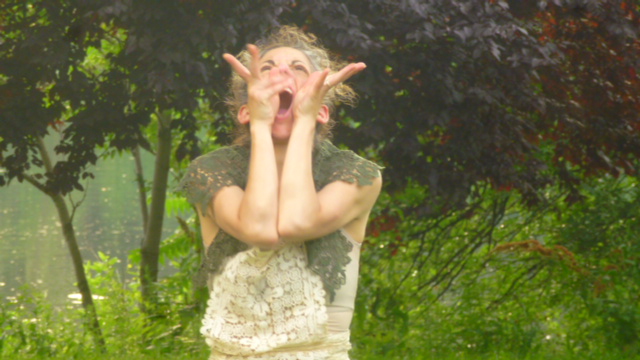
    Multi-tasking in myriad roles were: the comely young mezzo Rebecca Jo Loeb, the lively and boisterously endearing mezzo Raehann Bryce-Davis, the always-wonderful contralto Tichina Vaughn, Met stalwart and strong-voiced baritone Philip Cokorinos, the fine basso Kevin Burdette – who I heard many times in his Juilliard days – and the inimitable Alfred Walker, a vocal scene-stealer and impressive presence, with ultra-clear diction. A small vocal ensemble from the Bard Festival Chorale (James Bagwell, director) sang from stage right.

    I wish I could feel more enthusiastic about the piece itself; I also wish the ASO would start their performances at 7:00 PM, so as to end before the MTA makes getting home a chore.

    ~ Oberon