Author: Philip Gardner

  • Ballets Russes @ Chamber Music Society

    Photo nicolas dautricourt 74

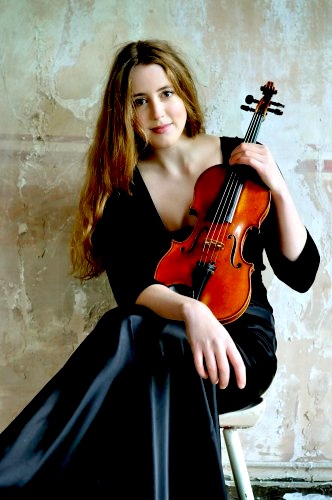
    Above: violinist Nicolas Dautricourt, photographed by Bernard Martinez

    ~ Author: Oberon

    Sunday May 19th, 2019 – For their final concert of the 2018-2019 season at Alice Tully Hall, Chamber Music Society of Lincoln Center offered a program of works by composers associated with Serge de Diaghilev’s Ballets Russes. It was a long program, full of rewards.

    Jennifer Johnson Cano, the Metropolitan Opera mezzo-soprano who in February shared a memorable program with tenor Matthew Polenzani at Zankel Hall, sang works by Manuel de Falla and Maurice Ravel, and a septet of marvelous musicians were heard – in varying configurations – in these, plus music by Debussy, Prokofiev, and Stravinsky. 

    JJC

    Ms. Cano (above, in a Matthu Placek portrait) opened the concert with Manuel de Falla’s Psyché in which she was joined by Tara Helen O’Connor (flute), Nicolas Dautricourt (violin), Yura Lee (viola), David Finckel (cello), and Bridget Kibbey (harp). Composed in 1924, as a setting of a poem by Georges Jean-Aubry, this is the awakening song of Psyché, a mortal woman whose beauty has caught the eye of Cupid, god of Love, who she will eventually marry.

    The flûte enchantée of Tara Helen O’Connor opens the work; the addition of M. Dautricourt’s ethereal violin and Ms. Kibbey’s delicate harp create an exotic atmosphere. Ms. Cano’s singing – clear, warm, and wonderfully nuanced –  was vastly pleasing; in her unaccompanied opening passage, the sheer beauty of her tone and its evenness throughout the registers marked her as a singer of exceptional natural gifts.

    Adding depth and colour to the enticing ‘orchestration’ were Ms. Lee’s viola and Mr. Finckel’s cello; overall the five instrumentalists created an impression of a larger ensemble thru the richness of their individual timbres. The music becomes urgent, and Ms. Cano’s singing golden, as flute trills and harp melismas lure the ear.  Psyché this evening was an intoxicating delight.

    For Maurice Ravel’s chamber arrangement of Shéhérazade, Ms. Cano and Ms. O’Connor returned, along with pianist Alessio Bax. It’s Mr. Bax’s delicate, silvery playing that sets the mood of the opening song, Asie. At “Je voudrais voir des assassins souriant“, passion builds: Ms. Cano brought an operatic quality to her performance at this point, rising to her steady and blooming upper range to fine effect. Asie has a little pendant at the end, full of lovely mystery. It ends on an exquisitely tapered note.

    La flûte enchantée brings forth limpid, entrancing sounds from Ms. O’Connor’s flute, and the weaving together of voice, flute, and piano is hypnotic. The concluding song, L’indifferent, begins with a calm lullabye played by Mr. Bax. Ms. Cano’s beguiling singing, sometimes bringing straight tone into play, was a marvel of expressiveness.

    Infringing on our enjoyment of the Ravel was the sound of text booklets dropping onto the floor, and a crash of something falling in the outside corridor. But Ms. Cano held to her course; this is a truly wonderful voice that I would love to hear in the music of Massenet’s Charlotte.

    Maxresdefault

    Above: harpist Bridget Kibbey

    Mlles. O’Connor, Lee, and Kibbey then offered a sublime performance of Claude Debussy’s Sonata for Flute, Viola, and Harp, written in 1915. In an evening filled with marvelous sounds, the opening sustained flute tone of this sonata – taken up by the viola – sent chills thru me at the start of the Pastorale. The blend these three remarkable musicians produced was exceptional. A gentle animation arose – soft and merry – only to subside. Mlles. Lee and O’Connor duet, the viola deep and buzzy. Swirls of notes from the harp – and then from the flute – lingered on the air.

    The Interlude commences with a viola melody underpinned by the harp, After a sprightly interjection, viola and flute play in unison, and the harp tapers to pianissimo.The viola is plucked, the music soft and swift. A percolating motif opens the Finale, like the break of dawn on a sunny day; after a momentary slowing down, the piece ends abruptly.

    Prokofiev’s Sonata in D-major for Violin and Piano, Op. 94a, brought together Mssrs. Dautricourt and Bax for a fabulous performance that sparked a shouting, standing ovation from the crowd. Though the piece was composed in 1943 as a flute sonata, Prokofiev later obliged the great violinist David Oistrakh by creating a violin version, which premiered in 1944.

    Mr. Dautricourt launched the sonata with a high sweet/melancholy song. As the music becomes increasingly animated, an ultra-familiar theme is heard, which will crop up several times along the way. Vibrant, agitated, march-like music ensues; Mr. Bax displays magic tricks of his own, and the movement has a lovely ending.

    In the Scherzo, Mr. Dautricourt’s virtuosity is astounding. A demented, off-kilter dance commences, then slows to a high-lying interlude before resuming. The music, and the playing of it, are thrilling…and then it comes to a sudden halt.

    The audience, who all evening applauded between movements, prompted the violinist to declare “Two more!” before commencing the Andante: a sorrowful song which tends to meander a bit over time, with a hint or two of of jazz thrown in; in the end it becomes high and eerie. 

    The concluding Allegro con brio dances along, with some respite for a poignant interlude before dancing on again. Moodiness briefly takes over, and then a rush to the finish. The applause began before the music stopped: Dautricourt/Bax are a winning team.

    Alessio-600

    Lucille Chung and Alessio Bax (above, photographed by Lisa-Marie Mazzucco) joined together for the evening’s Fokine finale, saluting Diaghilev’s ground-breaking choreographer with a piano-four-hands arrangement of Igor Stravinsky’s Petrushka.

    Despite more intrusions – a loud clang from the balcony, and the sound of something (or someone) falling – Stravinsky’s brilliance prevailed. For 40-minutes, the outstanding Bax/Chung duo sustained the vibrancy of a theatrical presentation; everything felt so alive – with dazzling rhythms and infinite colours – that the entire ballet danced in the mind. For their brilliant and generous playing, the couple were rewarded with hall-filling, joyous applause. What a way to end the season!

    ~ Oberon

  • Larcher and Brahms @ The NY Philharmonic

    07_Banner_WDW__Vorlage

    Above: composer Thomas Larcher

    ~ Author: Brad S. Ross

    Thursday April 25th, 2019 – This evening at David Geffen Hall saw the performance of two imposing, if wildly dissimilar, symphonies—one old, the other new—as The New York Philharmonic made their best effort of this decidedly peculiar concert pairing.  Guest conducting the program was the Russian-born Semyon Bychkov, whose steady command brought typically formidable results from our city’s prized orchestra.  

    The first half of the concert was given over to the United States premiere of the Austrian composer Thomas Larcher’s visceral Symphony No. 2: Kenotaph.  It was prefaced with opening remarks by Larcher, who offered concise and mercifully brief pre-performance context for the work. The title (German for “cenotaph”) refers to an empty grave or monument to those buried elsewhere. It was composed between 2015 and 2016 amid the peak of the Syrian refugee crisis, which saw hundreds of thousands of migrants fleeing from their homeland towards a less-than-welcoming central Europe. This tragedy was foremost on Larcher’s mind as he wrote Kenotaph, which, as he put it, is not so much programmatic music as it is “music with empathy.”  Its form is cast, quite traditionally, in four movements over a duration of roughly 37 minutes.

    It opened with a bang on a furious, colorful Allegro, marked by numerous volatile bursts.  This momentum retreated briefly into a somber elegy, before returning with ferocious energy—an energy marked with shrieking strings, discordant brass bursts, and unrelenting percussion that led it to a frightening close.  Although occasionally on the discursive side, the movement was characterized by a gripping sense of musical drama that would set the tone for the rest of the work.

    It was followed by a mournful, string-heavy Adagio that opened on repeating glissandi in the high strings as warm brass chords and descending mallet lines swelled and trickled underneath—the effect was almost like something out of science fiction.  A voluminous march then launched the music into fearful new atmospheres as a lone violin line, performed by the concertmaster Frank Huang, faded the movement into a haunting silence.

    Next up was plucky and energetic Scherzo, molto allegro, driven by excitingly colorful percussion.  Accelerating tutti bell tones led the piece to a series of fortissimo bursts before an almost Baroque and, by comparison, shockingly tonal phrase brought the movement to a pleasant, bittersweet end.

    The final movement, Introduzione, was a somber and almost elegiac affair.  It began with a number of featured soli—trumpet, violin, viola—which, once again, were surprisingly tonal in sound.  The movement soon became violent and triumphant, as though the gates of hell had been thrust open and the devil himself was leading the charge.  The composition here was not unlike Camille Saint-Saëns’s Danse macabre, Malcolm Arnold’s Tam O’Shanter Overture, or some other ghastly jaunt of classical music history.  Larcher delightfully milked this for all it was worth and brought the movement to a number false codas before its final climax—always finding ways to say more without ever overstuffing the piece.  A quiet postlude followed that featured a ghostly violin solo—again performed by Huang.  Finally, as if burying the dead, a tasteful, yet haunting funeral march brought the symphony to its final and, appropriately, unresolved cadence.

    The audience’s response was kind, if not totally enthusiastic.  A modest number of curtain calls gave Larcher, Bychkov, and the work’s soloists much-deserved chances to take their bows, which, given the strangely contrasted pairing, is perhaps the best for which one could hope.  Nevertheless, musically Kenotaph should be regarded as one of the New York Philharmonic’s most exciting premieres of recent memory, alongside Esa-Pekka Salonen’s Cello Concerto, Anna Thorvaldsdottir’s Metacosmos, or Julia Wolfe’s Fire in my mouth.

    Had the evening had ended here—and it probably should have—this might have been one of the best concerts of the season.  Ticket-holders tend to require more than forty minutes of music to feel satiated, however, so after intermission the audience returned for an enjoyable, if unremarkable, performance of Johannes Brahms’s Fourth Symphony.

    Composed between the summers of 1884 and 1885, this would be the last of the Romantic composer’s symphonies before his death in 1897.  Cast in four movements over approximately 45 minutes, it comprises a lush and stately Allegro non troppo, a warm and overlong Andante moderato, a fairly dainty Allegro giocoso, and a lively Allegro energico e passionato, which finally injected some much-needed energy to the second half of the program.

    After the riveting first half of the concert, this listening experience was almost soporific by comparison.  Perhaps it’s simply unfair to judge such an antiquated work against the rigorous complexities of one so new, but it’s one this odd pairing begged to be made.  Nevertheless, one could not possibly walk away from this concert feeling anything less than satisfied.  All in all, it was another splendid night at the New York Philharmonic—the gem of this great city.

    ~ Brad S. Ross

  • From Mendelssohn @ Chamber Music Society

    Barnatan-8-gallery

    Above: pianist Inon Barnatan, photographed by Marco Borggreve

    ~ Author: Oberon

    Sunday April 28th, 2019 – Music by Felix Mendelssohn, and by three composers he inspired, was on offer by Chamber Music Society of Lincoln Center at Alice Tully Hall this evening. The Society drew together an international ensemble of extraordinary musicians for a program of mostly familiar works, with a Schumann gem – a piece I’d never heard, nor even heard of – thrown into the mix for good measure. 

    5ae1bc9352939

    The Swedish cellist Jakob Koranyi (above in a Lisa-Marie Mazzucco photo) and Israeli pianist Inon Barnatan opened the concert with Mendelssohn’s Lied ohne Worte in D-major, Op. 109. The musicians proved to be an ideal pairing: they both play from the heart. This is a song sung by the cello, with a bittersweet melody, and an interlude that is passionate and then animated, before leading back to theme. The cellist ranges from a ravishingly sustained and tapered high note to – soon after – a plunge to the depths; the music ends with a rising phrase. A packed house called the two gentlemen back for a bow. The evening was off to a wonderful start.

    Robert Schumann’s Märchenerzählungen (‘Fairy Tales‘) for Clarinet, Viola, and Piano, Op. 132, was one of the composer’s last completed works. It was written in 1853, just five months before his attempted suicide and his subsequent confinement in a mental institution, where he died in 1856 at the age of 46. 

    Romie_Formal_2

    Märchenerzählungen brought forth the excellent Canadian clarinetist Romie DeGuise-Langlois (above); living as we do in a time when a number of superb clarinetists have thriving careers, it’s always a special pleasure for me to hear Romie, with her colorful tone and abundant technique. She was joined by violist Paul Neubauer and Mr. Barnatan for the four miniatures that comprise Märchenerzählungen

    The entwining of the mezzo-soprano-ranged voices of clarinet and viola was intriguing to hear: in the first movement, the music veers from playful to songful with lightness of mood, and Romie’s dynamic range – and her very pretty trill – were beautifully evident.

    An almost march-like pace commences the second movement, with blithely harmonized duetting from the clarinet and viola. An ensuing darkish mood felt a bit tongue-in-cheek: was Schumann toying with us?

    Mssrs. Neubauer and Barnatan open the third movement with sublime softness, joined soon by the clarinet. A wistfully exquisite blend of the three instruments – with immaculate turns of phrase – became achingly beautiful in its freely flowing lyricism. The movement’s sustained ending was very touching.

    In the final movement, clarinet and viola converse, then are heard as a duo. A charming interlude, with lightly etched motifs from Mr. Barnatan at the Steinway, shifts onward to a gallant finish. The only fault I could find with this Schumann work was that it’s too short: I wanted to hear more from Ms. DeGuise-Langlois.

    Paul-neubauer-by-tristan-cook

    Paul Neubauer (above, in a Tristan Cook photo) returned immediately with Mr. Barnatan for a lustrous performance of Johannes Brahms’ Sonata in E-flat major for Viola and Piano, Op. 120, No. 2, composed in 1894. The opening Allegro amabile brings us a sweet and subtle song, followed by a passionate passage from the pianist. Things then settle into a rather pensive state, both players delighting us with their dynamic palette and their feeling for the ebb and flow of the themes. A Romantic atmosphere, with the music soft and lovely, carries us thru a change of mood.

    In the second movement, Appassionato, the urgent passion of the opening statement subsides, but an underlying restlessness lingers. A hymn-like theme for solo piano lets us savour Mr. Barnatan’s artistry; joining in, Mr. Neubauer’s viola carries the melody to the instrument’s depths. In a sudden upswing, the music turns waltzy…and then finds a cool, darkish ending.

    The sonata’s final movement has a simple theme; the music is slow, with an air of Bach about it. A charming dance variation crops up, playful in its quirky swiftness, which is eventually becalmed. The work ends with a multi-faceted coda. Mssrs. Neubauer and Barnatan were rightly hailed for their warm-hearted performance. 

    Following the interval, Mr. Barnatan had the stage to himself for “Juin – Barcarolle” from Tchaikovsky’s Les saisons for Piano, Op. 37b.  This is echt-Tchaikovsky, with Mr. Barnatan relishing each note of the theme, which is thoughtful, and almost somber. Following a brief animation, descending notes bring us back to the melody. The music takes on a sort of shimmer, and then goes deep before rising to a soft, fading finish.

    Cho-Liang Lin

    Above: violinist Cho-Liang Lin, photo by K C Alfred

    The evening ended with a glorious performance of the Mendelssohn Trio No. 2 in C-minor for Piano, Violin, and Cello, Op. 66, in which Mssrs. Koranyi and Barnatan were joined by master violinist Cho-Liang Lin. The two Mendelssohn piano trios were the first chamber works to seize my attention, back at a time when I listened almost exclusively to opera.

    The passion – and the abundant lyric detail – of the music was served to perfection by Mssrs. Lin, Koranyi, and Barnatan. Their performance had a polish and glow that somehow made the music sound even more gorgeous to me than it ever has. It would be hard to imagine anything more moving – and thrilling – to me on a personal level than experiencing this music (which essentially opened up a new world for me when I heard it by chance on the radio…oh!, so many years ago) played with such lustre and vitality as it was tonight. A sublime, poignant experience; all my emotions were in play.

    It meant so much to me to be hearing this performance, as offered by the Chamber Music Society where – in the past few years, thanks to their generous welcome – I have had the opportunity to explore the vast chamber music repertoire, played by the great artists of our time. I became quite emotional as the trio of musicians produced one glorious passage after another tonight. And, in fact, the entire audience seemed to have fallen under a spell of enchantment. 

    The bows were not even off the strings when the applause commenced, the audience expressing their fervent delight with the performance – and their admiration for the musicians – in a spontaneous, full-house standing ovation. The players took a second bow as shouts of ‘bravo!‘ rang thru the hall. 

     ~ Oberon

  • @ My Met Score Desk for GOTTERDAMMERUNG

    1600x685_gotter

    Above: the Norn Scene from the Lepage/Met Opera production of GOTTERDAMMERUNG

    ~ Author: Oberon

    Saturday April 27th, 2019 matinee – The best thing about today’s matinee of Wagner’s GOTTERDAMMERUNG at The Met was the Norn Scene. With a mood of mystery and doom evoked by Maestro Philippe Jordan and the Met Orchestra in the prelude, the three singers who were weaving the ‘Rope of Destiny’ today were Ronnita Miller, Elizabeth Bishop, and Wendy Bryn Harmer. Each sounded splendid in her own way.

    Ms. Miller has a rich, deep contralto timbre; Ms. Bishop a brighter quality with a strong feeling for lyricism; and Ms. Harmer an authentic Wagnerian soprano voice: house-filling, with an ample high range. Each has a prolonged solo passage, describing much that has transpired in the first three operas of the RING Cycle.

    From her lush “Dammert der Tag?“, Ms. Miller had me in her thrall: such a dusky, abundant sound. She continued to fascinate me with “Die Nacht Weicht…” and concluded the scene with a deep plunge on “Hinab!” that had an other-worldly resonance.

    Ms. Bishop, who has been an excellent Dido and Iphigénie at The Met, was likewise in excellent voice today, and she brought subtlety and point to the words. Ms. Harmer’s singing was huge and grandly styled, her high notes gleaming.

    As the Norns descended to their mother, Erda, my hopes were high that the vocal standard they had set would be upheld as the afternoon progressed. In the interlude before the Dawn Duet, the noble horns and the Met’s fabulous clarinetist Inn-Hyuck Cho gave a sublime build-up to the entrance of Christine Goerke and Andreas Schager as Brünnhilde and Siegfried, the latter making his Met debut today.

    Ms. Goerke got off to a fine start, but – later in the prologue – her notes around G above the staff seemed a bit sour, and the high-C was there – and long – but a shade flat. Mr. Schager has a voice of helden-power, with some brassiness cropping up, and a steady beat to the tone. 

    The Rhine Journey was light and lively at first, and then turned epic. At the Gibichung Hall, we meet Gunther (Evgeny Nikitin, darkish of timbre and firm-toned), Gutrune (Edith Haller, debuting in a role Ms. Harmer might have doubled), and Hagen (Eric Owens, somewhat lacking in the monumental power of a Salminen or a König). The conductor tended to cover Mr. Owens at times, but the bass-baritone was chilling as he described in whispers the potion with which he would ensnare Siegfried.

    Siegfried arrives at the Gibichung Hall to the sound of bungled horn calls; blood-brotherhood is sworn, and the hero’s fate is sealed. Left alone, Mr. Owens in Hagen’s Watch sang well, but seemed more efficient than thrilling, and was unaided by the conductor.

    The clarinets depict a return to Brünnhilde’s Rock, where Ms. Goerke impresses as she welcomes her sister Waltraute, sung by Michaela Schuster – the mezzo whose Klytemnnestra last season was so impressive.  Ms. Schuster brought a wealth of nuance to her narrative, which had a sense of intimacy as well as urgency: doom is at hand, she warns.  Bringing a spine-tingling sense of introspection to her description of the resigned, weary Wotan, Ms. Schuster’s singing seemed truly personal, showing great vocal control; telling Brünnhilde that their father had spoken wistfully of her, the mezzo’s low notes were so alive. And she was simply glorious at “Erlöst warGott und Welt…” Her plea to Brünnhilde to abandon the ring causes the final rift between the two sisters: with a desperate cry, Waltraute rushes away.

    The excitement as Brünnhilde senses Siegfried’s return was somewhat dulled by Ms. Goerke’s non-blooming top range. But in the final moments of the act, Mr. Schager suddenly sounded like the tenor we’d been reading about.

    I would have liked to have heard Tomasz Konieczny’s Alberich in his scene with Hagen that opens Act II, but decided instead that the RING was over for me this season, and I headed home. The good has been very good, but there’s also been quite a lot of singing that left me feeling indifferent. It’s not a matter of how these operas should sound, but how they can sound.

    ~ Oberon

  • ABT Studio Company @ The Joyce

    57605248_10157352309708319_238433348500848640_n

    ~ Author: Oberon

    Thursday April 25th, 2019 – The American Ballet Theatre Studio Company has three evenings at The Joyce this week; I went on the second night for a program in which a pair of well-beloved pas de deux book-ended four new (or very recent) works.

    Tarantella, George Balanchine’s Neapolitan duet set to music by Louis Moreau Gottschalk, opened the evening. When the dancers made their entrance, my first thought was that they were too tall for this ballet. They executed all the steps and went thru the motions well enough, but their dancing didn’t sparkle, and the feeling of imminent sex was missing. Perhaps it’s been toned down for the MeToo crowd.

    Neon by Claudia Schreier, having its New York premiere, is set to music by Marc Mellits. The dancers, wearing black belted in teal, look sleek and dashing. At curtain rise, two men stand in a pool of light, one behind the other, their arms in sweeping arcs seeming to depict the hands of a clock. Then the dance erupts to the propulsive Mellits music. The sometimes complex partnering motifs Ms. Schreier demands of her dancers are smoothly executed; this is a choreographer who likes to set challenges for her dancers, then rehearse them astutely so they end up looking well-polished.

    Neon’s first movement ends with all eight dancers in a circle, taking up the rotating arm gestures of the work’s opening moments. A series of departures clears the stage for a men’s trio in which the women eventually join. Sub-groups come and go, enhanced by excellent lighting. The ballet’s third section opens with a striking overheard lift, the couple commencing a luminous pas de deux, wherein Ms. Schreier’s choice of music pays off handsomely. The concluding movement, alive with musical agitation, displays the choreographer’s trademark surety of structure into which a sense of contemporary poetry has been woven.

    As with every Schreier work I have seen to date, Neon ended with the audience whooping up a storm. The choreographers should have been given a bow after their respective ballets tonight, so we could properly show our appreciation.

    Overture by Ethan Stiefel is a ballet that mixes – in perfect measure – gorgeousness with wit. In choosing Beethoven’s Egmont overture, Mr. Stiefel is already halfway down the road to success. And a success it was, in every respect: from the stunning opening tableau with the dancers classically arranged in silhouette, Overture is a pleasure to watch…and to hear. 

    The dancers are prettily costumed in traditional ballet style, but soon we notice contemporary touches – each man has one bare arm. The dancing also mixes old with new: a Romantic atmosphere has been established, and the choreography abounds in classic vocabulary and time-honored partnering themes; but modern modes crop up – a shoulder-shrugging motif and some quirky port de bras keep the ballet vivid. The dancers excelled here, taking their cues from the Beethoven score and bringing touches of tongue-in-cheek charm to their dancing. Overture is a winner on all counts.

    Returning to my seat after the intermission, I found the curtain already up. Soon a lone dancer ambled onto the stage and began chatting us up. The performance of Pliant by Stefanie Batten Bland, he told us, had already started…and we were to be part of it. Dancers moved up and down the aisles, supposedly ‘interviewing’ audience members. Since they did not have hand mikes, the rest of us were not privy to these conversations, so we sat there twiddling our thumbs. 

    Finally the dancers hauled themselves up onto the stage and, to nondescript music, they struck poses and did a bit of dancing (nothing strenuous). While this was going on, I was thinking that I could have been home doing my ironing, whilst one of my fellow writers seated nearby fell deeply asleep. Pliant is exactly the kind of clever, now-for-something-different “ballet” that has dampened my enthusiasm for dance in recent years. 

    Gemma Bond’s Interchangeable Text was a perfect restorative. Some people think Philip Glass has been done to death in the dance world; I disagree, and I’m glad Gemma shares my feeling that it’s ideal music for dancing. Her ballet, impeccably danced by four couples, had the benefit of atmospheric lighting.

    Interchangeable Text opens with a male dancer alone in a pool of light; the music comes from the “romantic” Glass catalog. Soon it begins to pulse, and the dance takes off. Ms. Bond shows off her gift for making classic ballet combinations look fresh. Through ever-shifting patterns, the eight dancers are fully-engaged, the music being their springboard. A chain of pas de deux commences, each couple in turn having their chance to shine. The ballet ends as it began, with the man isolated in the glowing circle.

    The Don QuixoteWedding Suite’ brought the evening to an end; danced with fine technique, lively spirit, and a dash of allure à lEspagnole by Chloe Misseldine and Joseph Markey, this gave the hardcore classical ballet fans in the audience something to cheer about. The two ‘bridesmaid’ solos were woven in, and though they were not named in this evening’s cast list, I believe the dancers were Leah Baylin and Kanon Kimura, who were dancing these solos on the other two nights.

    The ABT Studio Company has always been a place to spot stars of the future: it’s where I first saw David Hallberg dancing! Tonight, one dancer who often caught my eye was Melvin Lawovi, a native of Toulouse. It did not surprise me to read that Mr. Lawovi is the recipient of The David Hallberg Scholarship.

    ~ Oberon

  • @ My Met Score Desk for TRAVIATA

    Domingo hartig ken howard met opera

    Above: Placido Domingo and Anita Hartig in LA TRAVIATA; a Ken Howard/Met Opera photo

    ~ Author: Oberon

    Wednesday April 24th, 2019 – TRAVIATA is the opera I’ve seen more than any other. Along with Tosca and Turandot, Violetta is my idea of a test role; I’ll go to see almost anyone who tries it. From A to Z – from Licia Albanese to Teresa Zylis-Gara, from Ainhoa Arteta to Virginia Zeani – I’ve experienced every kind of Violetta: good, bad, or indifferent. Patricia Brooks, Anna Moffo, and Diana Soviero remain among the most memorable in the role; and in recent seasons, Hei-Kyung Hong and Marina Rebeka have struck gold in the part. Inexplicably, I missed seeing Tucci, Sutherland, Lorengar, Scotto, and Sills as the fragile courtesan. But as Lois Kirschenbaum always said: “You can’t go to everything!”…a notion she herself seemed to disprove.

    Knowing I’ll be seeing the Met’s current TRAVIATA (which some have described as Disneyesque) next season, when Lisette Oropesa takes on the role of Violetta at The Met, I took a score desk for tonight; my main reason for being there was to hear Anita Hartig, whose Mimi and Liu in recent season captivated me.

    Ms. Hartig’s voice, with a mixture of enticing vibrato and curiously effective straight tone, was sadly beset by pitch problems tonight (and, from comments I have read, throughout her run here as Violetta). The voice was annoyingly sharp, at times excruciatingly so. The allure of her timbre, her sense of lyricism, and her brightish upper range should have made her a fascinating Violetta; instead, it became something of a trial to listen to her.

    Stephen Costello’s Alfredo has improved considerably since I last heard him in the part, though he too showed some vagaries of pitch during the evening. I sometimes feel that Mr. Costello doesn’t sense the heartbeat of the music, but tonight he sounded like an ardent, passionate young man with reckless streak.

    Hearty applause greeted the entrance of Placido Domingo, the beloved tenor-turned-baritone, as Germont. After sorting out the voice for a bit, he settled in at “È grave il sacrifizio…” and thereafter sang quite beautifully, finding a nice emotional connection to Ms. Hartig’s Violetta in the great duet “Dite alla giovine“, which is the very heart of the opera. Some small chokes or sobs, perhaps to indicate empathy, were unnecessary; but Domingo impressed by singing the phrase “Dio mi guido…dio mi guido…” in his big aria without breaking for breath. 

    In comprimario roles, so important in the opera, the male contingent excelled: Scott Scully (Gastone), Jeongcheol Cha (D’Obigny), Paul Corona (Dr. Grenvil), the characterful singing of Dwayne Croft (Baron Douphol), and even – in the very brief role of Giuseppe – tenor Marco Antonio Jordão, each made an impression.

    Maestro Nicola Luisotti’s TRAVIATA was overall on the fast side, which is fine. He suddenly sped up the final reprise of the Brindisi, which felt exhilarating in a way, and he took “Di Provenza” at a fast clip: maybe that’s what Mr. Domingo wanted. I could have done without that aria’s cabaletta, though.

    The ballet music had gypsy charm at first, and vigor as the matador theme took over. I was recalling the many times I heard it at New York City Opera, when the incredible Esperanza Galán transformed this scene with her Flamenco flair, castanets blazing.

    Listening to Violetta’s touching reply to Alfredo’s public insult, “Alfredo, Alfredo, di questo core…”, I was yet again reminded of one of the most painful things in life: living with remorse.  

    ~ Oberon

  • The Chéreau ELEKTRA ~ On Film

    Elektradvd

    ~ Author: Oberon

    Patrice Chéreau’s production of Richard Strauss’s ELEKTRA originated at Aix-en-Provence in 2013, in the 1350-seat theatre there. It did not impress me when it came to The Met in 2016; though musically vivid, as a theatrical experience it got lost in the vast space of the world’s largest opera house.

    The Aix performance was filmed, and released on DVD in 2014. I came upon it by chance at the library, brought it home, and was blown away by both its musical and dramatic power. It is a production that cries out to be seen up-close, and the camera work for the DVD takes us right into the action, as if from the start we are in service at the House of Atreus and watching this domestic horror-story unfold before our eyes. A brief sampling from the DVD here.

    The opera’s story is absorbingly told, with some liberties taken. The shifting loyalties of the maids and other household members are cunningly delineated.

    Veterans Renate Behle (visually fascinating), Franz Mazura, and Donald McIntyre make vivid impressions in smaller roles, and Chéreau’s idea of casting the beloved soprano Roberta Alexander as the sympathetic 5th Maid pays off handsomely: her singing and her portrayal are riveting, and she is hugely applauded during the bows.

    Memorable portrayals in the production:

    Rmassague32918919-icult-elektra-richard-strauss-direttore-esa160225184321-1456422413450

    Above: Tom Randle as Aegisth is aghast at being shown the corpse of his paramour Klytämnestra.

    24iht-loomis24-picA-articleLarge

    Above, siblings reunited: Evelyn Herlitzius as Elektra and Mikhail Petrenko as Orestes; the bass-baritone makes a strong impression as the haunted son of Agamemnon.

    9134600514_4a6e833a97_b

    Above, the sisters: Adrienne Pieczonka as Chrysothemis and Evelyn Herlitzius as Elektra. Ms. Pieczonka sounds fantastic in this film (of a live performance), her top notes pealing forth.

    Aix Elektra

    Above: Waltraud Meier as Klytämnestra. Ms. Meier’s singing, so alive with subtle inflection, did not always register at The Met, but she makes a striking impression – both vocally and visually – in the film. M. Chéreau eliminates the queen’s hysterical laughter on learning of the death of her son; I for one don’t miss it.

    3-format6001

    Above: Evelyn Herlitzius scored a great personal triumph as Elektra at Aix-en-Provence, and it is wonderful that her performance has been preserved. With a voice I would describe as “big lyric”, Ms. Herlitzius does not sing the music as we are accustomed to hearing it sung. Both in voice and in her athletic physique, the soprano seems almost youthful, though in fact she was around 50 years old when the film was made (You’d never guess it by watching her!). She powers thru the vocal demands, and shows off a secure, brightish top.

    However, the pressure she has put on her instrument in such arduous music has worn the voice down over time; her 2018 Met debut performances as Kundry were disappointing, showing the effects of hard usage on her timbre, the voice sometimes ineffectual in the large space. This makes having a document of her Elektra on fine vocal form all the more valuable, for her passion and commitment are unquestionable.

    You can find copies of this performance for purchase here. It’s well worth owning.  

    The Participants:

    Elektra Evelyn Herlitzius
    Klytämnestra Waltraud Meier
    Chrysothemis Adrianne Pieczonka
    Orest Mikhail Petrenko
    Aegisth Tom Randle
    Der Pfleger des Orest Franz Mazura
    Ein junger Diener Florian Hoffmann
    Ein alter Diener Donald McIntyre
    Die Aufseherin / Die Vertraute Renate Behle
    Erste Magd Bonita Hyman
    Zweite Magd / Die Schleppträgerin Andrea Hill
    Dritte Magd Silvia Hablowetz
    Vierte Magd Marie-Eve Munger
    Fünfte Magd Roberta Alexander

    Coro Gulbenkian

    Orchestre de Paris

    Conductor: Esa-Pekka Salonen

    ~ Oberon

  • @ My Met Score Desk for CLEMENZA DI TITO

    54523905_663524600746741_7864682115135176704_n

    Above: Matthew Polenzani as Tito

    ~ Author: Oberon

    Saturday April 20th, 2019 matinee – One of my favorites among the Mozart operas, LA CLEMENZA DI TITO is a melodious masterpiece. Though THE MAGIC FLUTE is considered the composer’s final opera, that work was largely complete when he set about writing CLEMENZA.

    LA CLEMENZA DI TITO was something of a throw-back for Mozart: it was written in the old style of opera seria – in which a progression of set-piece (arias, duets, and small ensembles) are linked by brief passages of recitative – to celebrate the coronation of Austrian Emperor Leopold II as King of Bohemia in Prague in 1791.

    This formality of structure is illuminated by some of Mozart’s most personal arias: Sesto’s  “Parto, parto” and “Deh, per questo istante solo“, Tito’s “Se all’impero, amici Dei”, Annio’s “Tu fosti tradito“, Servilia’s “S’altro che lagrime“. and Vitellia’s “Non piu di fiori“, each of which ideally reflects the personality of the character singing it. 

    Giving the overture a nice, weighty feel, conductor Lothar Koenigs presided over a well-paced performance. A sterling continuo duo – Davis Heiss, cello, and Bryan Wagorn, harpsichord – added much to the afternoon’s pleasure, and thrilling playing from principal clarinetist Inn-Hyuck Cho (as both clarinet and basset horn soloist in “Parto, parto” and “Non piu di fiori” respectively) was a complete joy to experience.

    In the title-role, Matthew Polenzani’s pliant and expressive singing flowed forth with Italianate lyricism, the voice clear and sure, etched in with detailed pianissimi along the way (most notably in “Del piu sublime soglio“) to keep the music fresh. The tenor – whose recent Zankel Hall concert was one of the highlights of the current season – showed great sensitivity in the recitatives, especially in the long scene where he weighs his feelings before passing judgement on Sesto. “Se fosse intorno al soglio”  showed expert dynamic control, and the showpiece “Se all’impero, amici Dei” in Act II was triumphant.

    Maxresdefault jdd

    Joyce DiDonato (above) has found a perfect role in Sesto, joining such marvels as Tatiana Troyanos , Lorraine Hunt Lieberson, and Elīna Garanča in the highest echelon of interpreters of this demanding part. Ms. DiDonato, ever alert to the words, sang with dazzling technique and a vibrant sense of dramatic urgency.

    In the great aria, “Parto, parto“, Ms. DiDonato reveled in the vocal and expressive possibilities Mozart has afforded her. After displaying moving vulnerability – her hushed murmuring of “Guardami…!” was sublime – the mezzo was at her finest as she sailed thru neat-as-a-pin coloratura effortlessly (and perfectly matched by the clarinet), winning a big ovation.

    Incredibly, Ms. DiDonato surpassed herself in the second act aria, “Deh, per questo istante solo” where, with touches of straight tone along the way, she sang with deep feeling, expressing the young man’s passion and remorse. In the second verse, tiny embellishments were woven in, and the aria’s fiery finish brought down the house. 

    Elza van den Heever is a puzzling singer: her broad repertoire – from bel canto to Strauss, Wagner and (next season), Berg – seems to indicate a soprano who has not settled on a fach. Which is fine, really, except that the varying demands of the roles she is singing seems to be affecting her tone at times, which can turn rather shrill.

    As Vitellia, she was uneven in this role’s wide-ranging music, and though she touched on the high-D in Act I and successfully reached downward to the low-G in “Non piu di fiori“, the voice lacks sheer beauty and is not really all that fluent in fiorature. The highest notes – a brilliant top-B for one – popped out clearly, but seemed disconnected to the rest of the voice. I really didn’t know what to make of her performance. But for some reason, the audience – perhaps spurred on by the MetTitles – found Vitellia to be something of a comic figure; the soprano was well-received at her bows. 

    Emily D’Angelo as Annio seemed rather muted at first, and Ms. DiDonato simply drowned her young colleague out in their beautiful Act I duet. But Ms. D’Angelo soon made her mark on the performance, with a finely-rendered “Tu fosti tradito” capped by a nice top-A. The audience loved her.

    Lovely, graceful Mozart singing from Ying Fang as Servilia, recalling Hei-Kyung Hong’s beautiful Met debut in this role. Ms. Fang, with sweet-toned lyricism, made “S’altro che lagrime” (perhaps the opera’s most attractive melody) a tender delight.

    Christian van Horn was a superb vocal presence as Publio, showing the advantage of putting a stellar singer in a relatively small – but musically important – role. Bravo!

    The houselights slowly came up during the opera’s finale: a celebratory touch. The singers were all warmly applauded as they took their bows on the classic Jean-Pierre Ponnelle set.

    Metropolitan Opera House
    April 20th, 2019 matinee

    LA CLEMENZA DI TITO
    Wolfgang Amadeus Mozart

    Tito.......................Matthew Polenzani
    Vitellia...................Elza van den Heever
    Sesto......................Joyce DiDonato
    Servilia...................Ying Fang
    Annio......................Emily D'Angelo
    Publio.....................Christian Van Horn
    Berenice...................Anne Dyas

    David Heiss, Cello
    Bryan Wagorn, Harpsichord

    Inn-Hyuck Cho, Clarinet and Basset Horn soloist

    Conductor..................Lothar Koenigs

    Static1.squarespace.com a

    Intermissions at The Met these days can often put a damper on even the best of performances, but this afternoon’s single interval brought an unexpected treat: clarinetist Inn-Hyuck Cho (above) remained in the pit for the entire half-hour, practicing the basset horn part of “Non piu di fiori”. What a mesmerizing sound! The Met is so very fortunate to have this splendid musician in their orchestra. 

    Oberon

  • Buon compleanno, Fiorenza Cossotto!

    Z-1101

    To celebrate the birthday of La Cossotto, a scene from one of her fabulous performances as Santuzza in CAVALLERIA RUSTICANA at the Met in 1970. After the curse, it’s my “brava!” that gets the ovation going.

    CAV – scene – Cossotto – Domingo – Casei – Kraft – Met 1970

  • James Ehnes ~ The London Philharmonic

    Thumbnail_16373_1

    Above: violinist James Ehnes and conductor Edward Gardner, photo from Twitter @ IntermusicaLtd

    ~ Author: Ben Weaver

    Monday April 15th, 2018 – The London Philharmonic’s second New York City concert, a part of Lincoln Center’s Great Performers series, featured some old favorites on the program. Opening with Beethoven’s great and brooding Egmont Overture (why the complete incidental music is so rarely performed is a mystery to me; the work is full of great music!) Today we have gotten quite used to Beethoven performances by reduced ensembles, even when performed by major orchestras the number of players is typically reduced to be closer to an orchestra size Beethoven would have recognized. Not so with this performance of Egmont. Maestro Edward Gardner chose the full London Philharmonic ensemble – and why not, since they all crossed an ocean? The result was a big-boned, massive sound and Gardner’s driven, dramatic reading made for on thrilling start to the concert.

    Violinist James Ehnes then joined the orchestra for Sibelius’ magnificent and never tired Violin Concerto. There is no real introduction to the work: out of the shimmering violins rises the soloist. Ehnes’ beautiful tone, perfect pitch, and deeply-felt playing kept the audience in thrall. Ehnes doesn’t make a huge sound, but the musicality and dedication he brings to every note are second to none among his generation of violinists. Here Edward Gardner was a superb accompanist: he kept the orchestra in the background, letting his soloist shine. The audience’s reaction was predictably ecstatic, allowing Ehnes to play two contrasting encores: Ysaë’s blazing Sonata No. 3 and Bach’s wistful, gentle Largo from Violin Sonata No. 3.

    Mahler’s Symphony No. 1 received a thrilling performance after the intermission. In the first movement, the slow build from hushed strings that open the work to the “full blast of Mahler” was nicely shaped and paced by Gardner. The sudden return of the opening drone had a sinister glow to it, but horns chased away the clouds and the lovely second theme, a pastorale, returned. The rustic swing of the second movement was taken quite fast, though Gardner knew to slow down for the waltz, played lovingly by the orchestra.

    Here some mannerisms from Gardner began to make themselves obvious. Draggy slow parts and extra fast faster sections became the signature of the rest of the performance. Gardner softened the edges of the third movement with its halting funeral march and the child-like melody mocking it. The final movement reinforced Maestro Gardner’s extreme tempos and I don’t think his choices worked. The slow sections began to drag and the Symphony began to lose shape. The hyper-emphasized big moments (already big in Mahler) at the expense of everything else felt contrived. But the London Philharmonic was superb (special praise for the outstanding brass section in the Mahler). It is a great ensemble, I’d go so far as to say LPO is a better orchestra, with its warmer and more versatile sound, than their big cousin, the London Symphony. 

    One curiosity about the concert is there were an awful lot of things being dropped by audience members throughout the evening. At least it wasn’t constant cell-phones, I suppose.

    ~ Ben Weaver