Author: Philip Gardner

  • Sanford Sylvan Has Passed Away

    Sylvan

    Sanford Sylvan’s was one of my favorite voices of all time. It wasn’t simply beautiful and expressive: it had a personal quality, as if he was singing just to you. Very few singers have reached me on that level – Victoria de los Angeles and Dame Janet Baker come to mind – and it is so sad to think that Sandy’s voice has been stilled, at the age of 66. 

    I met Sanford Sylvan long before his name came to prominence in the vocal music field. In the early 1970s, while he was a student at the Manhattan School of Music, Sandy worked as an usher at The Met. At that time, he had long blonde hair that flowed down his back to his waist, and ice-blue, incredible eyes.

    Those were the great, heady years of my opera-loving career; I would make frequent 4-day trips from Syracuse to New York City, staying at the Henry Hudson Hotel and hearing the great singers of the last Golden Age at both New York City Opera and The Met. I had fallen in with a group of deranged young fans – about a dozen of us – who went crazy over such titans as Sills, Nilsson, Cossotto, and Bergonzi. We spent intermissions arguing over who was the best Violetta or Dutchman; we waited patiently at the stage door to meet our idols, and then adjourned to the old O’Neill’s for fondue and more discussion, into the wee hours. And then on to an all-nite diner at Columbus Circle where we listened to the house tapes we had made.

    We all of us, both guys and girls, had a crush on Sandy Sylvan. Since he saw us at the opera all the time, he became friendly with us. We would always invite him to O’Neill’s, and a couple of times he joined us. He was on the quiet side; we knew he was a voice student, but then…wasn’t everyone? Who would have guessed that, years later, he’d be at New York City Opera and making marvelous recordings.

    I first saw Sanford Sylvan onstage at the 1987 summer fest at Purchase, New York, as Mozart’s Figaro in the Peter Sellars production, set at Trump Tower. In the seasons to come, he sang Leporello, the Speaker in MAGIC FLUTE, the King of Scotland in Handel’s ARIODANTE, and Collatinus in Britten’s RAPE OF LUCRETIA at New York City Opera. In each of these diverse roles, he made a vivid impression.

    A champion of the music of John Adams, Sanford appeared in NIXON IN CHINA and THE DEATH OF KLINGHOFFER. In 1989, the baritone premiered Adams’s The Wound Dresser, settings of Walt Whitman’s Civil War poems, which had been composed specially for him.

    In May 2011, I finally had an opportunity to experience Sanford Sylvan’s iconic performance of The Wound Dresser live, in an concert given by the Oregon Symphony at Carnegie Hall. Both vocally and verbally, his was a remarkable interpretation, with a deeply personal resonance. He sang so beautifully, and I had every reason to believe I’d be hearing him again. 

    The baritone voice has always had a special appeal for me; from the very first opera LP I owned as a pre-teenager, featuring the great baritones of the day – Leonard Warren and Robert Merrill – this sonorous vocal range has seemed to have a hot-wire to the human spirit.

    Over time, two baritones came to epitomize for me all that can be enriching in the art of singing: Dmitry Hvorostovsky and Sanford Sylvan. They were so different in repertory and in the scope of their respective careers, but both moved me to the core. And now they are gone.

    From Samuel Barber’s Hermit Songs, “The Desire for Hermitage” tells me everything I love about Sanford Sylvan’s voice:

    Sanford Sylvan – Barber ~ The Desire for Hermitage

    “Ah! To be all alone in a little cell
    with nobody near me;
    beloved that pilgrimage before the last pilgrimage to death.
    Singing the passing hours to cloudy Heaven;
    Feeding upon dry bread and water from the cold spring.
    That will be an end to evil when I am alone
    in a lovely little corner among tombs
    far from the houses of the great.
    Ah! To be all alone in a little cell, to be alone, all alone:
    Alone I came into the world
    alone I shall go from it.”

  • Love Duet

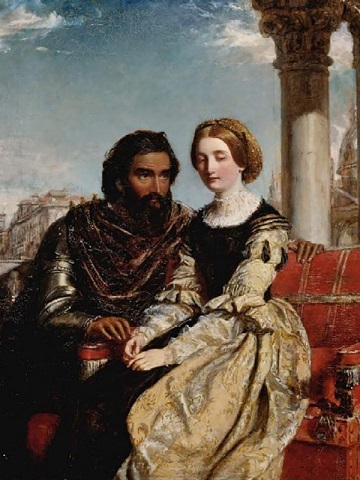
    Inyqyqfxrt2z-otello-i-dezdemona

    One of opera’s few love duets for a married couple, “Gia nella notte densa” closes the first act of Verdi’s OTELLO.

    OTELLO – Love Duet – Barbara Frittoli & Ben Heppner – Met bcast 2005

  • Love Duet

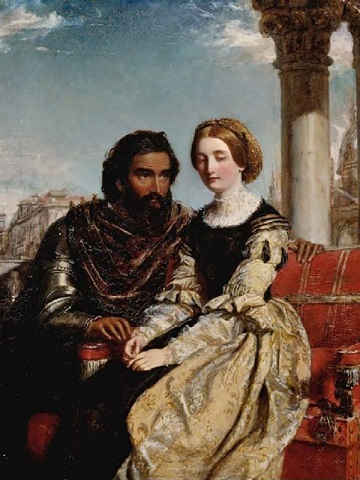
    Inyqyqfxrt2z-otello-i-dezdemona

    One of opera’s few love duets for a married couple, “Gia nella notte densa” closes the first act of Verdi’s OTELLO.

    OTELLO – Love Duet – Barbara Frittoli & Ben Heppner – Met bcast 2005

  • The ASO: Sounds of the American Century

    DSC09652

    Above: Maestro Leon Botstein, in a Matt Dine portrait

    ~ Author: Brad S. Ross

    Friday, January 25th, 2019 – It was another fine program Friday night at Carnegie Hall’s Isaac Stern Auditorium as the music director Leon Botstein led The American Symphony Orchestra in an all-American program of under-performed greats aptly titled “Sounds of the American Century.”  And that it most certainly was.

    Mann

    The evening began with Fantasy for Orchestra, a tone poem by the late violinist and educator Robert Mann (above).  Mann, who died last year at the ripe old age of 97, was a long-time staple of the New York classical music scene, in front of and behind the scenes, and was first violinist of the Juilliard String Quartet for over fifty years.  In addition to performance and education, Mann also dabbled in composition to pleasantly effective results.  His Fantasy for Orchestra was originally commissioned by the New York Philharmonic and first performed by that ensemble under the direction of Dimitri Mitropoulos at Carnegie Hall itself in 1957.

    The piece opened on the violas sustaining a single note.  Other members of the orchestra soon joined and a collage of atonal sonorities began to emerge.  This menace continued to build until a percussive roll launched the work into more energized and frenzied territory.  Mann’s Fantasy played almost programmatically, as if scoring the unseeing drama of some unsettling film or ballet.  A haunting violin solo emerged, performed by the concertmaster Cyrus Beroukhim, as harp ostinati and melancholic low brass chords created an almost dream-like atmosphere.  After a near-silent decrescendo, the drama then built up to a sequence of full-orchestra blasts that rang the piece to a volatile conclusion.  This was a decidedly above-average mid-century tone poem, played with force by the American Symphony Orchestra, and one that should warrant more-frequent airings.

    Vivian-Fine

    Next, receiving its long-overdue New York premiere, was Concertante for Piano and Orchestra by Vivian Fine (above).  Fine, who was one of a handful pioneering female composers in the early 20th century, is perhaps best known for her many chamber works, including the atonally adventurous Capriccio for Oboe and String Trio.  The Concertante for Piano and Orchestra, composed in 1944, was the first of her orchestral repertoire.

    After Mann’s Fantasy for Orchestra, Fine’s Concertante was almost strikingly tonal, as if ripped from the pages of some lost Romantic-era score composed sixty years prior.  Comprising two movements, it opened on a stately and delicate Andante con moto and closed on a convivial and spirited Allegro risoluto.

    Charliealbright

    Pianist Charlie Albright (above) made solid sport of the piece’s numerous solo passages and improvised an impressively intricate and lively cadenza that charged the work to its end.  His admirable commitment to the piece brought much life to what otherwise struck me as a very dainty and anachronistic work, one I don’t expect to hear programmed again anytime soon.

    A minor ovation brought Albright back to the piano bench for an encore of a work that, as a friend of his apparently put it, “takes balls to perform.”  He then ripped into a breezy rendition of 1957’s “Great Balls of Fire” that cheekily concluded the first half of the concert.


    J Druckman

    After intermission came a performance of Prism, a three-movement orchestral set by written in 1980 the great and often unsung composer Jacob Druckman (above).  Inspired in part by Luciano Berio’s 1968 Sinfonia, Druckman crafted Prism by blending the musical styles of historic composers with his own decidedly modern voice.  Fittingly, each movement references the music of a Baroque or Classical-era composer for which it is titled.

    The first movement “After Marc-Antoine Charpentier” began on otherworldly textures consisting of percussion, woodwind clusters, pizzicato hits, and haunting tremolo in the strings.  Quotations of Charpentier soon emerged, complete with a synthesized harpsichord, but carrying with it the wild distortions and eerie timbres of the 20th century.  The second movement, “After Francesco Cavalli”, carried on in similar fashion, blending the sonorities of these disjointed eras.  A clarinet solo accompanied by atonal statements throughout the orchestra brought some much-appreciated color and allowed the piece to stand more fully on its own legs, rather than succumb to pastiche.  Violent punctuations opened the third movement, “After Luigi Cherubini,” which was occasionally discursive to a fault.  Nevertheless, this built to an impressively bombastic finale that rekindled any waning interest.

    Compositions that blend the styles of different musical eras like Prism or Berio’s Sinfonia (or Steven Stucky’s Dreamwaltzes or John C. Adams’s Absolute Jest, for that matter) tend to walk a fine line between tasteful reference and cheeky gimmickry.  While the merits of such genre-bending continue to be up for debate, I must confess enjoying Prism best when lived in its own era.

    P01l7krp

    The final piece of the evening was the Third Symphony by one of America’s greatest composers, William Schuman (above).  A contemporary of Robert Mann, Schuman was also a staple of New York’s classical music scene, albeit with a much wider influence.  Throughout the course of his life, he served as the president of the Juilliard School, president of Lincoln Center, and in 1943 became the first-ever recipient of the Pulitzer Prize for Music.  Among his impressive catalog of compositions are numerous ballets and concertante, two operas, dozens of chamber and orchestral works, and a whopping ten symphonies.  The Third Symphony, composed in 1941, is perhaps his most famous.

    Clocking in at about thirty minutes, the symphony is cast in two parts played with short pause—Part I comprising a Passacaglia and Fugue and Part II concluding on a Chorale and Toccata.  It begins on a slow and somber viola line that is gradually joined by the remainder of the strings and, finally, the rest of orchestra.  This tragic crescendo continues until a great fortissimo brass statement launches the work into new, dramatic frontiers.  Its form relaxed, but never rambling, the rest of the work is colored with mysterious string runs, noble brass statements, haunting solo passages, and occasionally violent musical statements.  Its final Toccata, opening on droning bass and military snare, eventually leads to vigorous string runs and bombastic low brass that slowly build it to a brilliant full-orchestral finale.

    Alternately lively and melancholic, stately and haunting, beautiful and ferocious, the symphony marks a high point of American orchestral writing.  It is one our nation’s finest symphonies and should be played as often as any of the best works of Aaron Copland or Leonard Bernstein.  Alas, it tends to languish, as do so many other great American orchestral works, on the dusty shelves of music libraries as the works of Beethoven, Brahms, and Mozart are performed ad infinitum.  It’s a scandal that American orchestras don’t find more time in their seasons to honor the music of their native soil, one that I’m happy to see Leon Botstein and company attempting to combat.

    While I wasn’t always thrilled with this interpretation of the piece, which occasionally leaned on the sluggish side, this still ultimately made for triumphant conclusion to a grand evening of American classical music at Carnegie Hall.  The mission of the American Symphony Orchestra, now in its 57th season, is one of the most admirable kind.  New Yorkers could do far worse than to hear this orchestra unearth great works of art from our nation’s past.

    ~ Brad S Ross

  • Esteemed Ensemble @ Chamber Music Society

    51295376_23843411079570734_7199686573439320064_n.png

    Above: the artists of today’s esteemed ensemble – Wu Han, Daniel Hope, Paul Neubauer, and David Finckel – at Chamber Music Society of Lincoln Center

    ~ Author: Oberon

    Sunday January 27th, 2019 – Four great musicians joined forces this evening at Alice Tully Hall as Chamber Music Society of Lincoln Center continued their season with a program of works by Josef Suk, Johannes Brahms, and Antonín Dvořák.

    A-1120029-1275043084.jpeg

    Josef Suk (above), the least-known of the three composers, was a prominent violinist and Dvořák’s son-in-law. Suk’s Quartet in A minor, Op. 1, dates from 1891; it was his first published work.

    From its passionate start, with the strings playing a unison theme from which David Finckel’s cello and Daniel Hope’s violin emerge in prominent solo lines, this vivid music abounds in gorgeousness . Wu Han at the Steinway brings the tempo down a bit and a flow of melodies commences. Paul Neubauer’s viola heralds a brief drama – a tempest that soon subsides, though a subtle agitation lingers. Cellist David Finckel’s darkish timbre contrasts with the high silkiness of Mr. Hope’s violin. The strings united provide a rich texture that gives the impression of a full string orchestra in play, whilst Wu Han relishes Suk’s appealing writing for the piano. A passage of soul-filling passion brings the first movement to a glorious end.

    The extraordinary softness of Wu Han’s touch at the Steinway lures us into the central Adagio. Then a cello theme of great richness is brought forth by Mr. Finckel, taken up by Mr. Hope’s violin singing sweetly on high, echoed by the Neubauer viola. The strings have a beautifully blended passage: luminous playing from all. With the rippling piano and gleaming violin, a feeling of rapture rises up. The music stops, then the cello and piano lead us into a new dream. Violin and viola harmonize as the cello offers a plucked accompaniment. The Adagio – in which the magical essence of chamber music seems to be sublimely enshrined – reaches its heavenly end, fading into bliss.

    But there’s no time for reverie: Wu Han launches the concluding Allegro con fuoco at once, the strings offering sharp accents along the way. Later the pianist produces a high shimmer – a sparkling delicacy over which the strings harmonize. Things turn folkish, with a gypsy dance getting quite expansive before a lull of calm; then on to a grand finish. 

    This was my second hearing of Josef Suk’s Opus 1 and the second time it has had the same magical effect on my. Why is this composer’s music not heard more often?  

    Next on the program was Johannes Brahms’ Quartet No. 3, Op. 60 which was written in 1855-56 and revised in 1874. The period in which Brahms began sketching this work was a very difficult time, for his friend Robert Schumann had been confined in a mental hospital; Brahms was in a highly emotional state.

    The dramatic, sorrowing phrases that open the Allegro con fuoco attest to Brahms’s troubled spirit. But the music swirls forward on the wings of a piano theme; it becomes almost celebratory but then retreats to a doleful conclusion.

    The piano is the motivating force of the ensuing Scherzo; the music is agitated, almost angry. The Andante commences with a long cello solo, expressively played by Mr. Finckel. Mr. Hope then duets with the cello; Mr. Neubauer joins in an entwining string trio; the piano has a lovely part to play. A sense of longing builds.

    The concluding Allegro, which begins with a restless motif played by Wu han and Mr. Hope. Far from the traditional upbeat finale, this one by Brahms lingers in a serious, rather pensive mood, ending with an abrupt chord.

    After the interval, Dvořák’s Quartet in E-flat major, Op. 87 (1889) was splendidly played. This quartet has its folksong aspects, especially in the outer movements. The opening Allegro con fuoco is thematically abundant, with trade-offs among the string voices and lovely piano passages. After a big, thrilling buildup, the music simmers down; there’s a very effective tremolo motif exchanged by the violin and viola before the first movement comes to its finish.

    David Finckel opened the Lento with a poetic cello melody, which is carried onward by Mr. Hope’s violin. The piano has a lyrical part to play here – charmingly rendered by Wu Han – as the themes pass thru sublime modulations. A slow dance commences, with plucked strings, and the movement finds its resolution.

    The third movement, Allegro moderato, has the feel of a waltz. From its exciting start, the music presses forward with rustic elements: the piano takes on the aspect of a hammer dulcimer. Mssrs. Hope and Neubauer match subtleties, and the violist has a final say as the movement concludes.

    The zesty Finale is a real crowd-pleaser, and, when played as it was tonight, assures itself of a vociferous reaction from an appreciative audience.

    For all the excellence of the Brahms and Dvořák, it was the opening Suk that lingered in my mind.

    ~ Oberon

  • Esteemed Ensemble @ Chamber Music Society

    51295376_23843411079570734_7199686573439320064_n.png

    Above: the artists of today’s esteemed ensemble – Wu Han, Daniel Hope, Paul Neubauer, and David Finckel – at Chamber Music Society of Lincoln Center

    ~ Author: Oberon

    Sunday January 27th, 2019 – Four great musicians joined forces this evening at Alice Tully Hall as Chamber Music Society of Lincoln Center continued their season with a program of works by Josef Suk, Johannes Brahms, and Antonín Dvořák.

    A-1120029-1275043084.jpeg

    Josef Suk (above), the least-known of the three composers, was a prominent violinist and Dvořák’s son-in-law. Suk’s Quartet in A minor, Op. 1, dates from 1891; it was his first published work.

    From its passionate start, with the strings playing a unison theme from which David Finckel’s cello and Daniel Hope’s violin emerge in prominent solo lines, this vivid music abounds in gorgeousness . Wu Han at the Steinway brings the tempo down a bit and a flow of melodies commences. Paul Neubauer’s viola heralds a brief drama – a tempest that soon subsides, though a subtle agitation lingers. Cellist David Finckel’s darkish timbre contrasts with the high silkiness of Mr. Hope’s violin. The strings united provide a rich texture that gives the impression of a full string orchestra in play, whilst Wu Han relishes Suk’s appealing writing for the piano. A passage of soul-filling passion brings the first movement to a glorious end.

    The extraordinary softness of Wu Han’s touch at the Steinway lures us into the central Adagio. Then a cello theme of great richness is brought forth by Mr. Finckel, taken up by Mr. Hope’s violin singing sweetly on high, echoed by the Neubauer viola. The strings have a beautifully blended passage: luminous playing from all. With the rippling piano and gleaming violin, a feeling of rapture rises up. The music stops, then the cello and piano lead us into a new dream. Violin and viola harmonize as the cello offers a plucked accompaniment. The Adagio – in which the magical essence of chamber music seems to be sublimely enshrined – reaches its heavenly end, fading into bliss.

    But there’s no time for reverie: Wu Han launches the concluding Allegro con fuoco at once, the strings offering sharp accents along the way. Later the pianist produces a high shimmer – a sparkling delicacy over which the strings harmonize. Things turn folkish, with a gypsy dance getting quite expansive before a lull of calm; then on to a grand finish. 

    This was my second hearing of Josef Suk’s Opus 1 and the second time it has had the same magical effect on my. Why is this composer’s music not heard more often?  

    Next on the program was Johannes Brahms’ Quartet No. 3, Op. 60 which was written in 1855-56 and revised in 1874. The period in which Brahms began sketching this work was a very difficult time, for his friend Robert Schumann had been confined in a mental hospital; Brahms was in a highly emotional state.

    The dramatic, sorrowing phrases that open the Allegro con fuoco attest to Brahms’s troubled spirit. But the music swirls forward on the wings of a piano theme; it becomes almost celebratory but then retreats to a doleful conclusion.

    The piano is the motivating force of the ensuing Scherzo; the music is agitated, almost angry. The Andante commences with a long cello solo, expressively played by Mr. Finckel. Mr. Hope then duets with the cello; Mr. Neubauer joins in an entwining string trio; the piano has a lovely part to play. A sense of longing builds.

    The concluding Allegro, which begins with a restless motif played by Wu han and Mr. Hope. Far from the traditional upbeat finale, this one by Brahms lingers in a serious, rather pensive mood, ending with an abrupt chord.

    After the interval, Dvořák’s Quartet in E-flat major, Op. 87 (1889) was splendidly played. This quartet has its folksong aspects, especially in the outer movements. The opening Allegro con fuoco is thematically abundant, with trade-offs among the string voices and lovely piano passages. After a big, thrilling buildup, the music simmers down; there’s a very effective tremolo motif exchanged by the violin and viola before the first movement comes to its finish.

    David Finckel opened the Lento with a poetic cello melody, which is carried onward by Mr. Hope’s violin. The piano has a lyrical part to play here – charmingly rendered by Wu Han – as the themes pass thru sublime modulations. A slow dance commences, with plucked strings, and the movement finds its resolution.

    The third movement, Allegro moderato, has the feel of a waltz. From its exciting start, the music presses forward with rustic elements: the piano takes on the aspect of a hammer dulcimer. Mssrs. Hope and Neubauer match subtleties, and the violist has a final say as the movement concludes.

    The zesty Finale is a real crowd-pleaser, and, when played as it was tonight, assures itself of a vociferous reaction from an appreciative audience.

    For all the excellence of the Brahms and Dvořák, it was the opening Suk that lingered in my mind.

    ~ Oberon

  • “Lydia Sokolova Triumph!”

    IMG

    “Lydia Sokolova Triumph – Famous Dancer’s Ovation at Covent Garden!”  Thus ran the headline in London’s Daily Express following a 1929 performance of LE SACRE DU PRINTEMPS by Diaghilev’s troupe at the venerable London opera house. The ballerina, having recently recovered from a horrendous illness, had taken a chance and re-created her role of the Chosen One in the Massine setting of the Stravinsky ballet. It was reported that her ovation equaled that of the great operatic soprano Rosa Ponselle, two months earlier in the same theatre.

    Born Hilda Munnings in suburban London in 1896, Lydia Sokolova was to become one of Diaghilev’s principal artists; it was the impresario’s idea to Russianize her name. She wrote a memoir, DANCING FOR DIAGHILEV which I recently very much enjoyed reading. In this 100th anniversary celebration year of Diaghilev’s first saison Russe (at Paris 1909) her stories left an especially touching impression.

    The book tells of her formative years as a dancer and of the many personalities who played a part in the Ballets Russes story, from Massine to Dolin, from Karsavina to Danilova. She gives details of the creation of several of the ballets in the Company repertoire and of her participation in their premieres.

    Sokolova’s life as a member of Diaghilev’s nomadic troupe was a rich one, crammed with incidents which she relates with modest charm. She was, for example, aboard the ship headed for South America where Romola de Pulszky and Vaslav Nijinsky shocked the entire Company (and the dance world at large) by falling in love. Their wedding in Buenos Aires, which Sokolova attended, caused a monumental rift between Nijinsky and Diaghilev and eventually contributed to Nijinsky’s decline into madness.

    Trapped with the Company in Lisbon during the war, Sokolova watched helplessly as her baby daughter’s health declined from lack of food and medicine to a point where she gave the child up for dead. Diaghilev, nearly penniless himself, came to her one night and gave her a few of his last coins to obtain a doctor’s treatment. Sokolova relates how on those long, hopeless days Diaghilev would sit in the park with her baby on his lap, allowing the girl to play with his monocle. The dancer had seen the human side of the great impresario and felt that their mutual despair had created a personal bond between them. After much trouble, the ballerina and the director escaped separately to London. Meeting again on the stage of the Coliseum, Sokolova was shocked to find Diaghilev back entirely in his cool, detached impresario mode. She realized that their brief closeness in dire circumstances was not to have any effect on their professional relationship.  

    Mw69606

    Lydia Sokolova and Leon Woizikovsky in LE TRAIN BLEU. The story of Lydia’s love life gave me special pleasure. Since in her photos she looks rather staid, I was delighted to read that she was a passionate woman; her affair with Woizikovsky began while both of them were married to others in the Company. There was a big scene when Leon’s wife found out the truth, and Lydia and Leon were forced to cool it. But things continued to smoulder and eventually their mutual passion won out. Freeing themselves from their spouses, they wed and – despite Leon’s penchant for gambling – their marriage was long-lasting.

    A terrible bout of illness and injury led Sokolova to curtail her activities in the late 1920s. For months she was unable to dance or even to be mobile at all. She tried everything – from freakish medical treatments to prayer – but nothing helped. Slowly, slowly she rejoined the world of the living and the story of her 1929 triumph in RITE OF SPRING in London was in a way a triumph of her will to dance again.

    Diaghilev_sergei

    Above: Serge de Diaghilev. Sokolova’s book ends abruptly with the death of Diaghilev; she and Leon were on a beach on the French coast when the newspaper was brought down to them bearing the tidings of the impresario’s death in Venice. Their lives were altered in that moment; Sokolova went on to teach and coach and even to perform on occasion: she danced for the very last time in London in 1962 and died in 1974.

    My favorite story from the book revolves around flowers. Sokolova, by then a well-established principal dancer, was incensed one day to find herself cast as one of the twelve maidens in FIREBIRD. She went to Diaghilev to protest; his reply was that it was an honor to dance in his corps de ballet. Sokolova stewed and fumed helplessly in the days leading up to the performance and even considered leaving the Company. Warming up backstage on the dreaded night, Sokolova stopped by the large table in the wings where bouquets to be handed the artists during the performance were laid out. She saw a magnificent spray with a card that said “Lydia Sokolova…after FIREBIRD” Since she had a lead role in one of the other ballets that night, she went to the stage manager and asked that she be given the flowers after that piece rather than FIREBIRD; she did not want to be singled out of a group of twelve with a floral offering. “Diaghilev’s order!” the stage manager told her. Her pleading fell on deaf ears.

    And so, during the FIREBIRD curtain calls, Lydia Sokolova was called forward from the corps to receive the enormous bouquet. Diaghilev knew how to make amends.

    {Reviving this article from 2009 as I am re-reading the book for the eighth or ninth time. It’s great!}

    ~ Oberon

  • “Lydia Sokolova Triumph!”

    IMG

    “Lydia Sokolova Triumph – Famous Dancer’s Ovation at Covent Garden!”  Thus ran the headline in London’s Daily Express following a 1929 performance of LE SACRE DU PRINTEMPS by Diaghilev’s troupe at the venerable London opera house. The ballerina, having recently recovered from a horrendous illness, had taken a chance and re-created her role of the Chosen One in the Massine setting of the Stravinsky ballet. It was reported that her ovation equaled that of the great operatic soprano Rosa Ponselle, two months earlier in the same theatre.

    Born Hilda Munnings in suburban London in 1896, Lydia Sokolova was to become one of Diaghilev’s principal artists; it was the impresario’s idea to Russianize her name. She wrote a memoir, DANCING FOR DIAGHILEV which I recently very much enjoyed reading. In this 100th anniversary celebration year of Diaghilev’s first saison Russe (at Paris 1909) her stories left an especially touching impression.

    The book tells of her formative years as a dancer and of the many personalities who played a part in the Ballets Russes story, from Massine to Dolin, from Karsavina to Danilova. She gives details of the creation of several of the ballets in the Company repertoire and of her participation in their premieres.

    Sokolova’s life as a member of Diaghilev’s nomadic troupe was a rich one, crammed with incidents which she relates with modest charm. She was, for example, aboard the ship headed for South America where Romola de Pulszky and Vaslav Nijinsky shocked the entire Company (and the dance world at large) by falling in love. Their wedding in Buenos Aires, which Sokolova attended, caused a monumental rift between Nijinsky and Diaghilev and eventually contributed to Nijinsky’s decline into madness.

    Trapped with the Company in Lisbon during the war, Sokolova watched helplessly as her baby daughter’s health declined from lack of food and medicine to a point where she gave the child up for dead. Diaghilev, nearly penniless himself, came to her one night and gave her a few of his last coins to obtain a doctor’s treatment. Sokolova relates how on those long, hopeless days Diaghilev would sit in the park with her baby on his lap, allowing the girl to play with his monocle. The dancer had seen the human side of the great impresario and felt that their mutual despair had created a personal bond between them. After much trouble, the ballerina and the director escaped separately to London. Meeting again on the stage of the Coliseum, Sokolova was shocked to find Diaghilev back entirely in his cool, detached impresario mode. She realized that their brief closeness in dire circumstances was not to have any effect on their professional relationship.  

    Mw69606

    Lydia Sokolova and Leon Woizikovsky in LE TRAIN BLEU. The story of Lydia’s love life gave me special pleasure. Since in her photos she looks rather staid, I was delighted to read that she was a passionate woman; her affair with Woizikovsky began while both of them were married to others in the Company. There was a big scene when Leon’s wife found out the truth, and Lydia and Leon were forced to cool it. But things continued to smoulder and eventually their mutual passion won out. Freeing themselves from their spouses, they wed and – despite Leon’s penchant for gambling – their marriage was long-lasting.

    A terrible bout of illness and injury led Sokolova to curtail her activities in the late 1920s. For months she was unable to dance or even to be mobile at all. She tried everything – from freakish medical treatments to prayer – but nothing helped. Slowly, slowly she rejoined the world of the living and the story of her 1929 triumph in RITE OF SPRING in London was in a way a triumph of her will to dance again.

    Diaghilev_sergei

    Above: Serge de Diaghilev. Sokolova’s book ends abruptly with the death of Diaghilev; she and Leon were on a beach on the French coast when the newspaper was brought down to them bearing the tidings of the impresario’s death in Venice. Their lives were altered in that moment; Sokolova went on to teach and coach and even to perform on occasion: she danced for the very last time in London in 1962 and died in 1974.

    My favorite story from the book revolves around flowers. Sokolova, by then a well-established principal dancer, was incensed one day to find herself cast as one of the twelve maidens in FIREBIRD. She went to Diaghilev to protest; his reply was that it was an honor to dance in his corps de ballet. Sokolova stewed and fumed helplessly in the days leading up to the performance and even considered leaving the Company. Warming up backstage on the dreaded night, Sokolova stopped by the large table in the wings where bouquets to be handed the artists during the performance were laid out. She saw a magnificent spray with a card that said “Lydia Sokolova…after FIREBIRD” Since she had a lead role in one of the other ballets that night, she went to the stage manager and asked that she be given the flowers after that piece rather than FIREBIRD; she did not want to be singled out of a group of twelve with a floral offering. “Diaghilev’s order!” the stage manager told her. Her pleading fell on deaf ears.

    And so, during the FIREBIRD curtain calls, Lydia Sokolova was called forward from the corps to receive the enormous bouquet. Diaghilev knew how to make amends.

    {Reviving this article from 2009 as I am re-reading the book for the eighth or ninth time. It’s great!}

    ~ Oberon

  • Fire in my mouth @ The New York Philharmonic

    NY Phil ~ Chris Lee

    ~ Author: Brad S. Ross

    Thursday January 24th, 2019 – Thursday evening at David Geffen Hall was one to behold as music director Jaap van Zweden led The New York Philharmonic in its most exhilarating performance of recent memory and more.  The night’s all-American program included the New York premiere of a late master, an American repertory standard, and one of the most hotly anticipated world premieres of the entire U.S. concert season.  One to behold, indeed.

    The evening began with Elegy, an instrumental interlude from the oratorio August 4, 1964 by the late American composer Steven Stucky.  Stucky, who died rather unexpectedly from brain cancer three years ago at the all-too-young age of 66, was one of America’s foremost contemporary composers, having written numerous concerti, one gorgeous symphony, an impressive opera, and two concerti for orchestra, the latter of which won him a long-overdue Pulitzer Prize for Music.  As the title suggests, August 4, 1964 details one fateful day during the presidency of Lyndon B. Johnson, including fallout from the Gulf of Tonkin incident and news of the discovered bodies of the murdered civil rights activists Andrew Goodman, Michael Schwerner, and James Chaney in Mississippi.  A Dallas Symphony Orchestra commission, the work was given its world premiere under the baton of van Zweden himself in September 2008.

    Maestro van Zweden wasted no time at the podium before setting things into motion.

    Elegy opened on a great crash—one that was sure to alert the senses of even the most droopy-eyed concert attendee.  The piece then descended into more somber territory as a quiet oboe, horns, and strings set its decidedly hymn-like tone.  The work possessed an almost filmic sense for drama, often building to thundering crashes followed by slow descents into haunting suspended dissonances.  Stucky aptly captured the turmoil of his subject matter, which seemed a prophetic meditation upon much of our current political turmoil.  Nevertheless, he ended the piece on a long-held major chord—one that seemed to offer a glimmer of hope in the face of uncertainty.  van Zweden milked this finale to tremendous dramatic effect, only lowering his baton after every note had its chance to reverberate throughout the hall several times over.

    Up next was Aaron Copland’s Concerto for Clarinet, Strings, and Harp.  Originally commissioned and performed by the great jazz clarinetist Benny Goodman, the concerto was one of handful of Copland works that incorporates elements of jazz in its composition.  It was written between 1947 and 1949, and went on to become one of the most-programmed clarinet concerti of the entire orchestral repertoire.  Performing tonight was Anthony McGill, the Philharmonic’s principal clarinetist.

    The piece began on a sorrowful elegy in the strings.  Copland’s voice here was its most stubbornly tonal—his broad rhythmic intervals and warm orchestration evoking the great open spaces of North America.  A lively and showy cadenza divided the work between its slow opening and an energetic climax, which Mr. McGill played with remarkable precision and zest.  The pace was then quickened as the orchestra performed a lovely call and answer in typical Copland fashion.  A final ascending glissando in the clarinet and upward rush in the strings brought the work to an animated close.  This exuberant finale brought some much appreciated levity to an otherwise solemn musical evening.

    If the program had ended here, it still would have easily been a great night at the Philharmonic.  What followed, however, transported the merely beautiful to the realm of the sublime.  This, of course, was the long-anticipated world premiere of Fire in my mouth by the celebrated American composer Julia Wolfe.

    Ms. Wolfe, who co-founded the contemporary classical music organization Bang on a Can in 1987 with the fellow composers David Lang and her husband Michael Gordon, has steadily earned a reputation as one of the world’s finest living composers.  Among her notable works are the concerto for string quartet My Beautiful Scream, the chamber/vocal work Steel Hammer, and her Pulitzer Prize for Music-winning oratorio Anthracite FieldsFire in my mouth, a gargantuan work for girls’ choir, women’s choir, and orchestra, marks her largest composition to date.

    A New York Philharmonic commission, the piece is based on the infamous Triangle Shirtwaist Factory fire that took the lives of 146 New York City garment workers, most of whom were young immigrant women, on March 25th, 1911.  The owners had locked the doors factory doors to prevent theft, leaving the workers trapped inside when the fire broke out.  They died of burns, smoke inhalation, or jumping to their deaths trying to escape the inferno.  The political fallout and public outcry for change that followed was as much an inspiration for Wolfe as the tragedy itself.  The work’s title, somewhat to my surprise, comes from a quote by the labor activist Clara Lemlich, who, reflecting on her years of activism, said, “Ah, then I had fire in my mouth.” The text of the piece was compiled from various interviews, speeches, and accounts of the event in addition to folk songs from the era.  Spanning roughly one hour, the piece is cast in four movements.

    50625251_10158453673037293_5445700866956853248_n

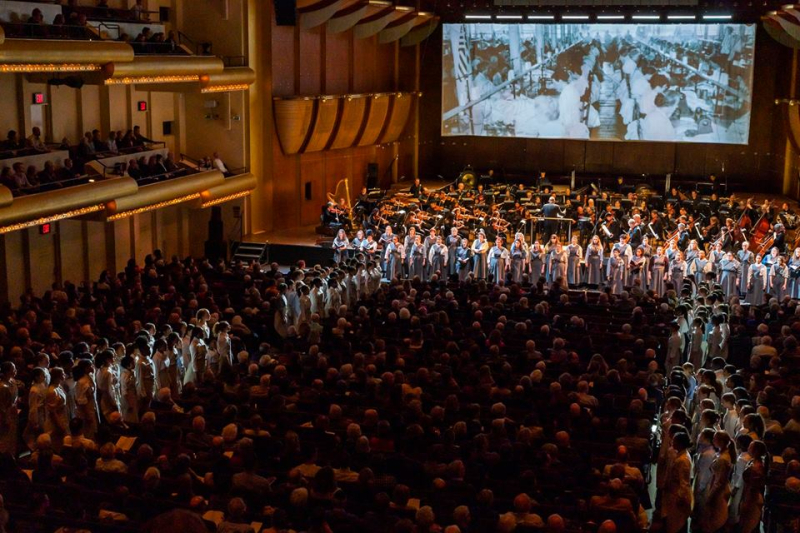
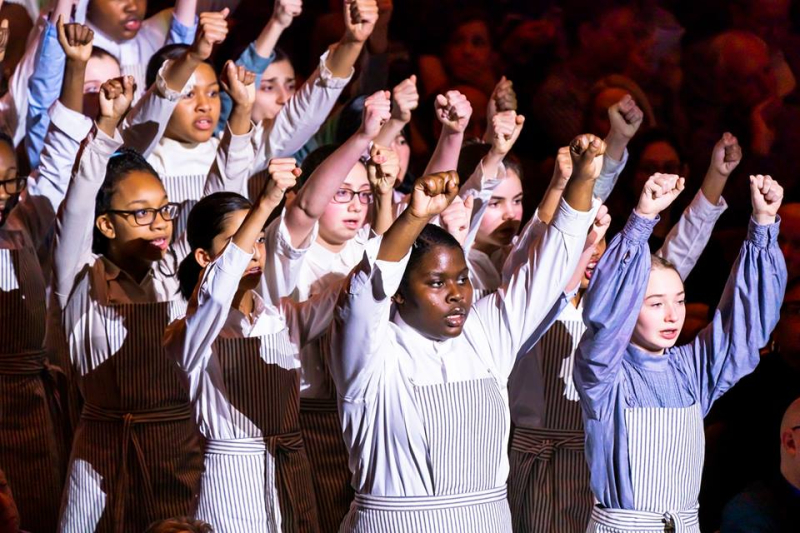
    The orchestra was joined in performance by the Philadelphia-based choral ensemble The Crossing (above) and The Young People’s Chorus of New York City (below). The photos are by Chris Lee.
    51068976_10158453669887293_5221514500502454272_n

    The text of the piece was compiled from various interviews, speeches, and accounts of the event in addition to folk songs from the era.  Spanning roughly one hour, the work is cast in four movements.

    The first movement “Immigration” began with chilling suspended high strings as the women’s chorus, decked in period regalia, began toning, “Without passports or anything we took a boat…”  Blueprints of passenger ships overlaid with footage of foaming ocean waves were projected behind the ensemble as brass swells harkened to the rolling seas of the Atlantic as these young women made their voyage to America.  Propulsive percussion and winds shifted under suspended vocal lines as familiar images of the Statue of Liberty and immigrants arriving to the United States were projected above.  This built to a great crash and silence fell throughout the hall as the first movement came to a close.

    The second movement “Factory” began to the sights and sounds of industry; images of machinery were cast on the screen above while the strings made eerie slaps that echoed the sounds of a sewing machine.  A growing menace emerged from the lower voices of the orchestra as the threat of disaster grew.  Splatting brass notes and unrelenting tremolo in the strings played on as the chorus mimed the actions of Sisyphean industrial labor.  Grainy images of factory workers punching their cards were projected overhead while dissonant vocals, driving bass, and unnerving glissandi rose to a violent and tragic crescendo—the effect was genuinely terrifying.  The chorus then used pairs of scissors to create a peculiar, yet distinct percussive beat as the work quietly transitioned into its third movement.

    The women’s choir then descended to the front of the stage for the start of the third movement “Protest,” singing, “I want to talk like an American, I want to look like an American.”  Rhythmic pulses in the strings played as newspaper headlines of protests and strikes were projected above.  Among the cacophony could be hear the whistles of policemen trying to contain the disorder.  The girls’ choir then emerged from the back of hall, marching and swaying in choreographed motion down the center aisle, as they sang in protest, “I want to say a few words.  I am a working girl.  One who is striking against intolerable conditions.”  The women’s chorus professed, “Ah—then I had fire in my mouth!” as the girls hauntingly repeated, “fire fire fire”—a harbinger of the tragedy to come.

    The girls’ choir joined the rest of the ensemble on stage as the final movement, “Fire”, began.  The string players created the haunting sound of breath by swinging their bows through the air.  Here Ms. Wolfe played up tragedy over terror as faded photographs of women interlaid with abstract images of smoke, fire, and rubble beamed overhead.  Fierce crashes, perhaps the loudest thing I’ve ever heard in David Geffen Hall, deafened the auditorium as musical hellfire consumed the ensemble (“I see them falling, see them falling…”).  A somber vocal line emerged, an indictment of social apathy, pronouncing, “I would be a traitor to those poor burned bodies if I were to speak of good fellowship.  I have tried you good people of the public and found you wanting.”  The chorus then sang the name of every soul who perished that day as Fire in my mouth quietly faded to silence; it was perhaps the greatest musical elegy since John C. Adams’s On the Transmigration of Souls.

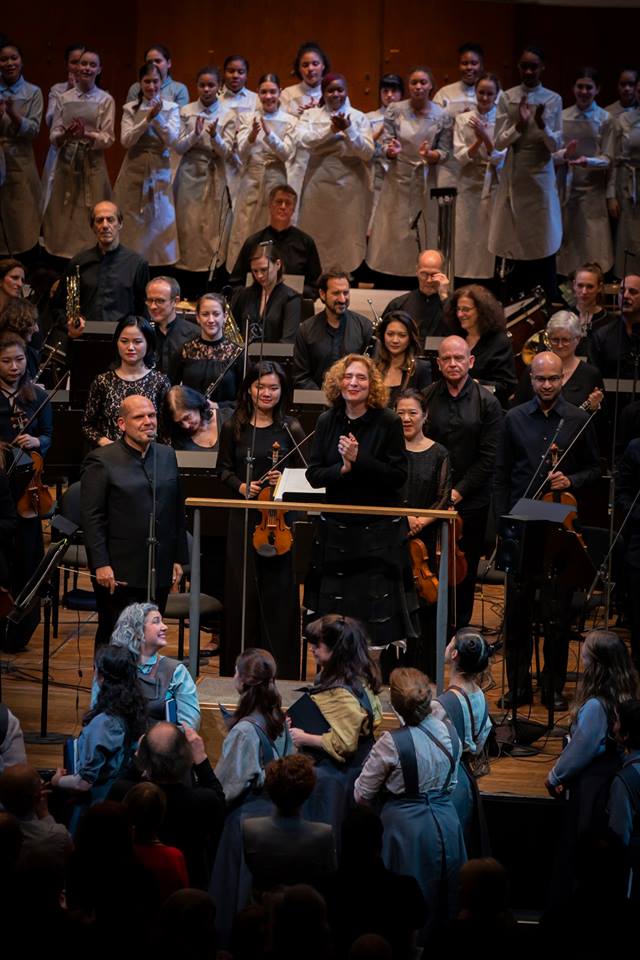
    The standing ovation that ensued lasted for several curtain calls as Ms. Wolfe, Maestro van Zweden, and company each had a chance to take their bows.  No one, save a few wheelchair-bound patrons, was still seated by the time the applause finally died out, something I’ve never seen at David Geffen Hall and don’t expect to see again for some time.  Indeed, it was the finest world premiere I’ve yet had the good fortune to attend.  I can only hope that many other metropoles may be graced with its performances in the near future.  Brava, maestro!
    50896920_10158453670227293_703449887135498240_n

    Above, the ovation: the conductor and composer onstage at the end of Fire in my Mouth. Photo by Chris Lee.

    ~ Brad S. Ross
  • Renata Tebaldi in LA FANCIULLA DEL WEST

    Hqdefault

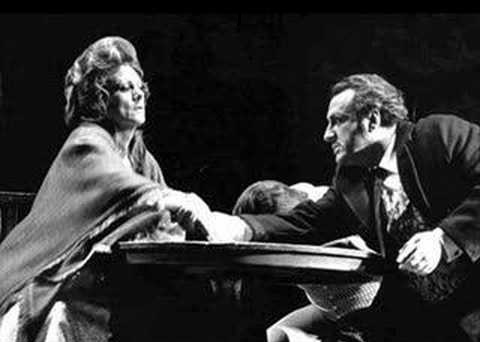
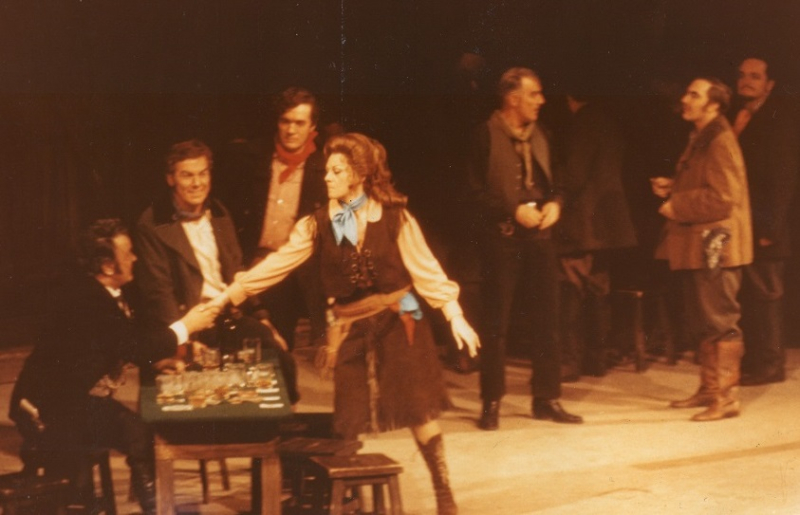
    Above: the Poker Scene from Puccini’s LA FANCIULLA DEL WEST with Renata Tebaldi and Giangiacomo Guelfi

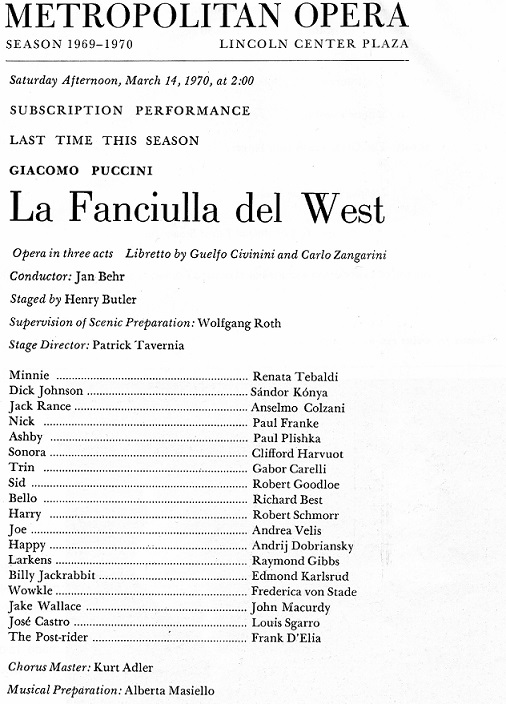
    One of the most memorable operatic experiences of my life was seeing Renata Tebaldi as Minnie in LA FANCIULLA DEL WEST in a Saturday matinee performance at The Met:

    Scanned Section 8-1

    Tebaldi was so fascinating that afternoon. Always known as a diva with a great sense of personal dignity, she really let her hair down as Puccini’s Girl of the Golden West. And her voice was huge, with a radiant warmth in the middle register and a chest voice to shame most contraltos, and her characterization of the saintly but sublimely human tavern-keeper who cheats at cards to save her lover’s life was rich in detail and extremely moving in its sincerity and humanity. Phrase after phrase and gesture after gesture from that portrayal are totally etched on the memory: I don’t need to listen to it – every nuance is unforgettable.

    By that point in her career, Tebaldi’s highest notes were sounding rather strained and on the flat side. That was a small price to pay for so much beautiful, touchingly expressive singing and such a vivid characterization.

    Set in a California mining town during the Gold Rush, the opera tells the story of Minnie, a big-hearted woman living among a rough-and-tumble band of miners. Minnie is a mother figure to these ragtag men, but she is also a woman both passionate and vulnerable. And when the chips are down, she is not above bending her own rules to get the one thing she has ever wanted. In essence, she is Puccini’s most human heroine.

    The opera opens as the miners come in to The Polka, Minnie’s saloon, at the end of a day of panning and digging. Each of these men loves Minnie in his own way, and soon she makes a spectacular entrance, firing off her rifle to quell a near-brawl among her admirers; among them is the local sheriff, Jack Rance.

    After order is restored, Minnie morphs from barmaid to schoolmarm as she reads to the miners from the Psalms:

    Purge me with hyssop, and I shall be clean: wash me, and I shall be whiter than snow.

    Make me to hear joy and gladness; that the bones which thou hast broken may rejoice.

    Hide thy face from my sins, and blot out all mine iniquities.

    Create in me a clean heart, O God; and renew a right spirit within me.

    Cast me not away from thy presence; and take not thy holy spirit from me.

    Restore unto me the joy of thy salvation; and uphold me with thy free spirit.

    Then will I teach transgressors thy ways; and sinners shall be converted unto thee.

    Deliver me from blood-guilt O God, thou God of my salvation: and my tongue shall sing aloud of thy righteousness.

    O Lord, open thou my lips; and my mouth shall shew forth thy praise.”

    The point of this lesson, Minnie says, is that every man, even the worst sinner, can be redeemed thru love. This turns out to be the essence of the opera.

    Scanned Section 7-1

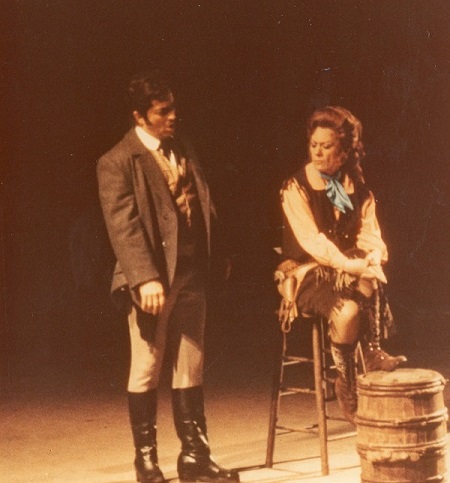
    Above: Minnie (Renata Tebaldi) greets the sheriff Jack Rance (Anselmo Colzani)

    Rance is mad with desire for Minnie. When he offers her a thousand dollars down if she will kiss him, Minnie says she will wait for true love to come along. She sings of being a small girl growing up in her parents’ tavern in Soledad, and of how much her parents loved each other.

    A gentleman describing himself as “Johnson from Sacramento” comes in, asking for whiskey and water. This causes much mirth among the miners; “Here at The Polka…” laughs Minnie, …”we drink our whiskey neat.” Rance is suspicious of the stranger, but Minnie vouches for him: she had met him by chance once before, when he came upon her picking wildflowers in a meadow.

    Scanned Section 6-3

    What Minnie doesn’t know is that Johnson is really Ramirez, a notorious bandit, who has come to rob the Polka, aided by his gang of thieves; they are stationed outside, waiting for Johnson’s signal. Left alone with him, Minnie tells of her simple life in a cabin on the mountainside. Charmed by her beauty, courage, and modesty, Johnson forgets all thought of the robbery and asks if he may come to visit her that evening. “Don’t expect fancy conversation,” she tells him. “‘I’m a simple girl, obscure and good for nothing.” “No, Minnie…you have a good and pure soul…and the face of an angel.”

    Scanned Section 22-1

    Above, Sandor Konya and Renata Tebaldi as Johnson and Minnie. As the Act I curtain falls, Tebaldi as Minnie quietly repeats his words – ” …un viso d’angelo!” with a deep sigh. The audience applauded long and loud for the many curtain calls, with Tebaldi, Konya, and Colzani sharing the ovation.

    Scanned Section 6-1

    Act II: At her little cabin, Minnie anticipates her visitor by putting on her finest outfit, including high-heels, which she rarely wears (above)…during this dressing scene, Tebaldi was briefly seen in a corset and pantalettes, her lovely, long legs getting a wolf-whistle from some fan up in standing room. 

    Minnie and Johnson warily confide in one other, and at last, after much persuasion, he wins a kiss from her: her first kiss. He had been prepared to leave, but a violent snowstorm has swept across the mountain. “Then stay!”, Minnie cries spontaneously.

    Minnie assigns Johnson the bed; she will curl up in a bearskin before the fire. The wind whistles outside. Suddenly voices are heard; Johnson hides in the loft while the sheriff and some on the miners enter, certain they have tracked Johnson to Minnie’s door. They tell her that he is in fact the bandit Ramirez; they have had this information from the notorious Nina Micheltorena, a woman of ill-repute and Ramirez’s mistress.

    Minnie scoffs at the story, but when the men have left she calls Johnson out and reads him the riot act. She can forgive him the wrongs he has done, but she can’t forgive herself for giving him her first kiss. Angrily, she sends him out into the storm. But the sheriff is watching nearby. A shot rings out; Johnson has been hit; he staggers back into the cabin, and Minnie again hides him in the loft.

    Rance now confronts Minnie but she swears Johnson is not there. She and the sheriff tussle briefly, and he is about to leave when, from above, a drop of blood falls on his hand. He orders the wounded Johnson down from his hiding place and is about to haul him off to jail when Minnie makes an offer: she and Rance will play poker. At stake is the life of the man she loves.

    Tebaldi had gone to a casino to learn the art of card shuffling and dealing from a professional. In the House, and on recordings of that broadcast the sound of the cards being shuffled and dealt creates a palpable effect as Minnie and the sheriff Jack Rance play the three hands of poker that will decide the fate of the outlaw. One of the best exchanges in the opera comes as Rance, looking at the injured Johnson slumped at the table, asks Minnie: “What do you see in him?”, to which she quietly replies: “What do you see in me?”

    Moments later, having been dealt a bad hand in the final game, Minnie feigns a fainting spell. While Rance gets her a glass of water, she pulls out winning cards that she had secretly stashed in her stocking. Rance lays down his cards – three kings – saying: “I know why you’ve fainted: you’ve lost!” But Minnie defiantly stands up and replies: “No! I’ve deceived you! It’s from joy! I have won!!” and there Renata Tebaldi slapped her cards onto the the table and in an adrenalin-charged chest voice shouted: “Tre assi e un paio!!” The furious sheriff stalks out as Tebaldi embraces her wounded lover “He’s mine!!!” she cries out. Then, just as the curtain falls, she flings the entire deck of cards into the air. The ovation was unbelievable, and went on for several minutes.

    Act III: Though Minnie won Johnson’s life, eventually he has to leave the cabin on the mountainside. Rance’s men have taken turns watching nearby, and at last the bandit is caught and hauled off to be hung. Johnson  sings a passionate farewell to Minnie, begging the men not to tell her of his fate. The noose is placed around his neck, but suddenly Minnie rides in, firing her gun into the air. There’s a standoff, as none of the miners would ever harm Minnie.

    In a great ensemble, Minnie now walks among the men and, one by one, reminds them of all she has done for them; she literally says, “I’ve given you the best years of my life.” Now she asks them to spare Johnson for her sake. She reminds them of the Bible’s lesson of forgiveness and redemption. This is the most moving part of the whole opera.

    The men struggle with their emotions, but at last Sonora – the gentle miner who has long loved Minnie without hope – persuades his mates that they must do what she asks: “Minnie, your words come from God…in the name of all, I give this man to you.”

    Minnie and Johnson leave, arm in arm, singing “Addio mia California!” as the miners weep.

    The curtain calls after the Met matinee were spectacular. Tebaldi received enormous roars of applause and eventually drew her gun and began ‘firing’ it at the audience. Afterwards, she was mobbed at the stage door.

    Scanned Section 5-1

    This article is written in honor of Craig Salstein, my longtime friend. It was Tebaldi’s voice that turned Craig into an opera fan at an early age. She had that effect on people, including myself.

    ~ Oberon