Author: Philip Gardner

  • Upcoming: Lydia Johnson Dance ~ Studio Showing

    45452618_10156016904073526_5736054735069249536_n

    On Sunday December 2nd at 3:00 PM, Lydia Johnson Dance will present the latest in their ongoing series of studio presentations in which excerpts from works-in-progress and from the repertory will be shown in an intimate setting.

    The event takes place at the Ailey Studios, 405 West 55th Street.

  • @ My Met Score Desk For PEARL FISHERS

    Pearl fishers

    ~ Author: Oberon

    Saturday November 24th, 2018 matinee – The New York City Opera used to perform Georges Bizet’s Pêcheurs de Perles fairly often, and I saw it there four times in the 1980s with such sopranos as Diana Soviero, Carol Vaness, Diana Walker, and the enchanting Rachel Rosales; tenors Barry McCauley and Jerry Hadley; and baritones Dominic Cossa, William Stone, and Robert McFarland. During that time of my life, I really liked this melodious opera, with its enchanting soprano aria, a poetic (and difficult) tenor aria, and – of course – a beloved duet for tenor and baritone: “Au fond du temple saint“.

    But there’s also a lot of filler, atmospheric in its way yet in the long run just…filler. Pêcheurs was not on my initial list of operas to see/hear at The Met this season;  but as I was tallying up my score desk order, I added a couple of operas just to see if they’d still be of interest to me. Pêcheurs, as it turns out, isn’t.

    I had skipped this Met production of Pêcheurs when it was new, because I’d taken a strong dislike to Diana Damrau. This season, Pretty Yende is singing Leïla, a part which I imagined would suit her voice far better than Donizetti’s Lucia had. “O Dieu Brahma!” is not the easiest way to start your afternoon. Ms. Yende’s florid singing was not always fluent, and at times her pitch was a shade off; counter-balancing this were an ethereal high B-flat and a gorgeous high-D. I imagine her “Comme autrefois” would have been quite fine, but I couldn’t outlast the intermission to find out.

    Alexander Birch Elliott had stepped into the role of Zurga midway thru the season prima of Pêcheurs, replacing Mariusz Kwiecien, who has now withdrawn from the production due to illness. Mr. Elliott has a handsome lyric baritone voice, and he blended perfectly with Javier Camarena in their famous duet, which drew sustained applause.

    Mr. Camarena’s singing of the dreamy aria “Je crois entendre encore” was lovingly phrased, with exquisite piano effects. His voice is a bit light for this role in the big house, but it’s wonderfully present and expressive.

    On the podium, Emmanuel Villaume did what he could with this perfumed score, giving an atmospheric prelude (twice interrupted by applause); he sometimes let his orchestra cover the voices, however.

    Hearing this opera again had the effect of finding a disintegrating, powdery rose pressed in the pages of a book you haven’t opened in decades. You can’t remember who gave you the flower or why it was significant enough to save, but you feel a twinge of regret that something that once meant something to you no longer does.

    Metropolitan Opera House
    November 124th, 2018 matinee

    LES PÊCHEURS DE PERLES
    Georges Bizet

    Léila...................Pretty Yende
    Nadir...................Javier Camarena
    Zurga...................Alexander Birch Elliott
    Nourabad................Nicolas Testé

    Conductor...............Emmanuel Villaume 

    ~ Oberon

  • Seven Gates of Jerusalem

    Herod gate 4

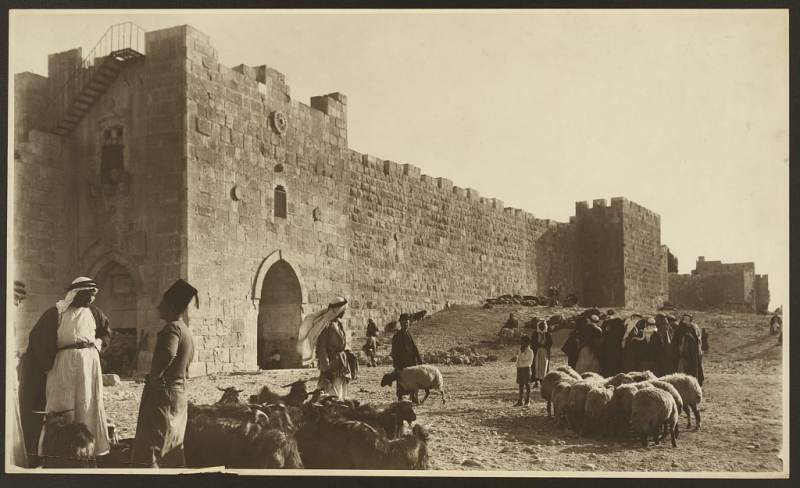
    Above: the sheep market at the Herod Gate, Jerusalem, c. 1900

    ~ Author: Oberon

    Among the many documentaries I watched during those long, humid afternoons of the summer of 2018 was one about the ancient city of Jerusalem. Watching it, and learning about the legendary seven gates of the city, put me in mind of Krzystof Penderecki’s seventh symphony, which is almost always referred to as SEVEN GATES OF JERUSALEM. This oratorio-like work premiered in 1997 at the State Hall in Jerusalem in a performance conducted by Loren Maazel.

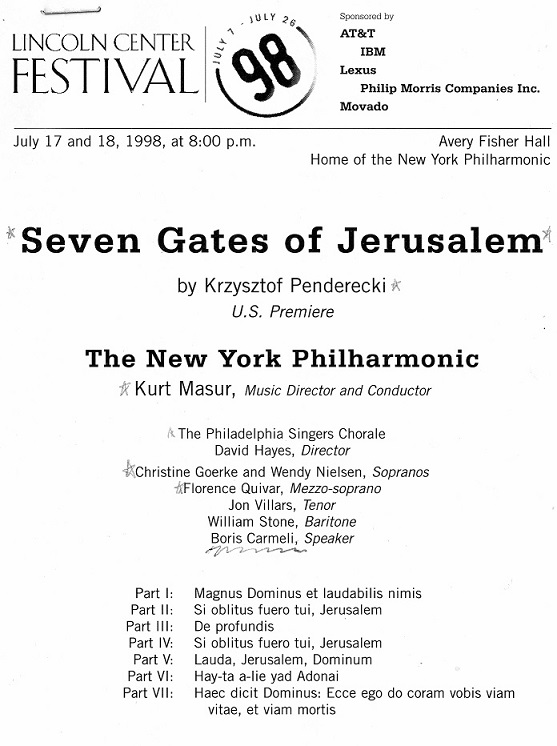
    In 1998, having lived in New York City for less than four months, I decided to attend a performance of the Penderecki work; I was mainly attracted by the listing of Christine Goerke and Florence Quivar among the vocal soloists. At this point in time, I had probably attended fewer than two-dozen performances of symphonic music in my opera-specific lifetime, and with few exceptions those were programs featuring vocal works. I don’t think I’d ever heard a note of Penderecki’s music prior to this concert:

    Scanned Section 22-1

    This was actually the US premiere of SEVEN GATES OF JERUSALEM, and I was completely bowled over by it. From my opera diary:

    “This exciting piece was brilliantly played by the Philharmonic, joined by the excellent Philadelphia Singers, some of whom were positioned in the boxes along the sides of the hall. Masur crafted the massive forces – including a large percussion section – into a cohesive and powerful whole. The work is short (one hour) and cries out for expansion [which the program note indicated might be forthcoming].

    Stretches of lyricism, including a gorgeous horn solo, alternated with pageant-like passages; the orchestration dazzles, with a solo bass trumpet positioned in the auditorium.  Striking rhythmic patterns abound, and the chorus has much to do – from near-whispers to full-cry.

    Of the soloists, Christine Goerke dominated, with her glowingly strong middle register and wildfire forays to the top. Florance Quivar was her usual magnificent self, making me wish she’d had even more to sing. Tenor Jon Villars displayed both power and tonal appeal. Wendy Nielsen and William Stone had briefer parts, but were nonetheless impressive. In a spoken role, Boris Carmeli made a chilling dramatic effect.

    The total impact of the work was splendid; and was greeted by an enthusiastic standing ovation. When Penderecki joined the players onstage, the applause re-doubled.”

    4097876

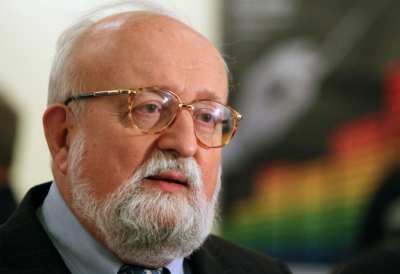
    Above: Krzystof Penderecki

    Flashing forward twenty years, I watched a terrific DVD of the symphony – watched it once, and then immediately straight thru again.  Although I rarely buy CDs any more, I did purchase a recording of this work in an excellent performance conducted by Kazimierz Kord and featuring the distinctive voice of contralto Jadwiga Rappé.

    The importance of Boris Carmeli’s contribution to this work can’t be over-emphasized: the basso’s speaking voice is eerie and quite unique. Mr. Carmeli passed away in 2009. Of Italian heritage but born in Poland, he took part in almost every listed production of the SEVEN GATES OF JERUSALEM up until his death. In both the CD and DVD recordings mentioned above, he makes an incredible, unforgettable impression.

    Carmeli-Boris-11[w-Johannes_Paul_II]

    Above: Pope John Paul II greets Boris Carmeli and Krzystof Penderecki

    Among the countless inventive, evocative sounds one hears in the course of SEVEN GATES OF JERUSALEM is that of the tubaphone. This tuned percussion instrument can be made of metal or plastic pipes (Penderecki calls for plastic) which are cut to various lengths, each producing a different tone. In the DVD I watched, this instrument is set upright, with the player hammering on the ends of the pipes with a mallet to get the desired effect. It is used extensively in the ‘scherzo‘ of SEVEN GATES, Lauda, Jerusalem, Dominum.

    Now my great hope is that I might have an opportunity to experience this thrilling work in a live performance once again, in my lifetime.

    ~ Oberon

  • Emmanuelle Haïm @ The NY Philharmonic

    Haim1hdl17105

    Above: Emmanuelle Haïm

    ~ Author: Oberon

    Wednesday November 21st, 2018 – Music of Handel and Rameau was on this evening’s bill as Baroque specialist Emmanuelle Haïm made her New York Philharmonic debut. Neither composer’s name is really associated with the orchestra (MESSIAH of course being the exception), but their music was most welcome tonight, following in the wake of a pair of less-than-enjoyable ‘contemporary’ works we’d just recently heard at Carnegie Hall.

    From first note to last, the music offered this evening – and the Philharmonic’s playing of it – seemed truly fresh and vital. And Ms. Haïm is so engaging to watch: her deep affection for the music is evident at every turn, and her conducting has an embracing style which drew superb playing from the orchestra. On Thanksgiving eve, we wondered how big of a crowd might turn out, but the house was substantially full. It was the most attentive audience of the classical music season to date – always a good sign.

    It was fun to enter the auditorium this evening and see two harpsichords parked on the Geffen Hall stage, one for Ms. Haïm, the other for Paolo Bordignon. Handel’s Concerto Grosso, Op. 6, No. 1, calls for a relatively small ensemble of musicians, with Sheryl Staples as concertmaster.

    From her first downbeat, Ms. Haïm’s conducting had a choreographic feeling. Swaying with the music, her gestures resonated like balletic port de bras. One could imagine her, gorgeously gowned and bejeweled, leading the dancing at Versailles in another lifetime. What a marvelous presence!

    In the Concerto Grosso, violinists Sheryl Staples and Qian Qian Li along with cellist Carter Brey, form a musical sub-set, playing trio motifs with elegance and verve.  The Allegro movements sparkled, the Adagio soothed and charmed, the exhilarating finale was full of life.

    58216

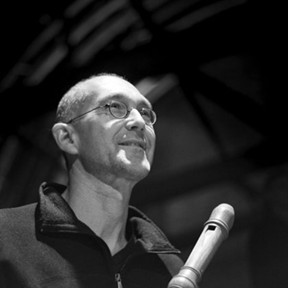
    Two of Handel’s Water Music suites were performed. In the first, No. 3 in G-minor, the tall and slender Sébastien Marq (above) brought his polished recorder tone and technique to the mix. Switching from alto to soprano after the suite’s first movement, Mssr. Marq piped away to captivating effect. Oboes, bassoon, bass, and theorbo add textures that constantly lure the ear, and a violin solo in the Minuet was graciously played by Ms. Staples. The familiar tunes of the final Gigues made for a happy ending.

    Philharmonic horn players Richard Deane and Allen Spanjer joined the ensemble for the Water Music Suite #1 in F-major; they were seated on the highest riser alongside oboist Sherry Sylar, a second young oboist I didn’t recognize, and bassoonist Kim Laskowski. These five artists made musical magic as the suite sailed forward.

    Ms. Sylar’s plangent playing of a solo in the Adagio was pure beauty, and the two hornsmen reveled in the harmonized coloratura passages of the second Allegro. The woodwind trio blended lovingly in the Andante, and then the noble horns graced the Minuet. In the Air, our string trio from the Concerto Grosso emerged again, to lovely effect, as the horns sustained long notes in support. Horn calls open the Minuet, and then the suite dances on with a Bourrée-Hornpipe-Bourrée combination: swift and light to start, with a woodwind trio intervention, and then a fast finale that tripped the light fantastic.

    Applause filled the hall; Ms. Haïm came out for a bow, but made a bee-line for the upper riser, where she drew the horn players from their chairs, then had Ms. Sylar take a solo bow (to warm shouts of ‘brava!‘), and then had the mystery oboist and Ms. Laskowski rise. What a fine gesture!  

    Selections from Rameau’s opera Dardanus, arranged as a suite by Ms. Haïm, made a splendid effect as the program’s second half. The opera, a classic five-act Tragédie en musique which premiered in 1739, follows Dardanus – the son of Zeus and Electra – in his feud with King Teucer. Their eventual pact of peace is reached as Dardanus marries Teucer’s daughter Iphise, who he’d met through the intervention of the sorcerer Isménor.

    If the plot sounds unlikely, the score is enchanting. An enlarged ensemble tonight brought abounding grace and drama to music which covers an extraordinary range of rhythms and textures. Among the many sonic treats are the sound of a repeatedly dropped chain in the “Entry of the Warriors“, a delicate blend of flutes and triangle in the Air, and the suggestive shaking of the tambourine.

    Ms. Haïm’s Philharmonic debut was a sure success; she passed among the musicians, greeting them individually as the applause rolled on. I hope she will come back to the Philharmonic in the future, bringing more Baroque gems with her. And what might she do with Gluck, Mozart, or Berlioz?

    ~ Oberon

  • Cecil Coles, Composer

    CecilFrederickGottliebColesa

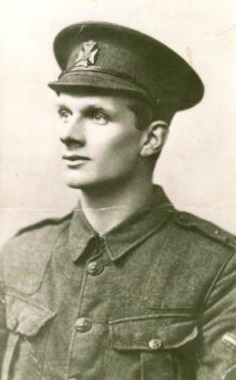
    The name Cecil Coles was completely unknown to me when, at a recent Musica Viva NY concert, one of his works, Cortège, was performed as an organ solo. This sent me on a search for more information about the composer, who served in the Great War and who was killed by a sniper while on active duty in France, in April of 1918.

    Born in Scotland, Coles became an assistant conductor at the Stuttgart Opera, and was the organist at St. Katherine’s Church in that city. At the onset of the Great War, he signed up immediately and joined the Queen’s Victoria Rifles, serving as the regimental band-leader. Coles did not let the war stall his composing career; during his time at the Western Front, he would send his manuscripts back to his friend, composer Gustav Holst, in England. 

    There’s a wonderful page about Cecil Coles on the BBC Scottish Symphony Orchestra’s website here. Conductor Martyn Brabbins talks about the many Coles compositions that languished, forgotten, for decades, and of his own efforts in orchestrating some of them.

    British mezzo-soprano Fiona Kimm sings one of Cecil Coles’ most beautiful songs, A Benediction:

    Fiona Kimm – Cecil Coles ~ A Benediction

    56039937_1498123276

    Cecil Coles is buried at the Crouy British Cemetery in France.

    ~ Oberon

  • Maxim Vengerov @ Carnegie Hall

    Maxim-Vengerov

    Above: violinist Maxim Vengerov

    ~ Author: Oberon

    Tuesday October 30th, 2018 – Three wonderfully contrasted violin sonatas were on offer tonight at Carnegie Hall as the renowned Maxim Vengerov took the stage, joined by the excellent Roustem Saïtkoulov at the Steinway.

    About ten years ago, Mr. Vengerov – as most classical music-lovers know – developed a mysterious arm/shoulder ailment that took nearly four years to diagnose and treat. He returned to the stage in 2012, and I first heard him live in 2015, playing the Tchaikovsky violin concerto with the New York Philharmonic. It was a thrilling performance, and tonight I was very excited to be hearing him again. In the grand and glorious setting of Carnegie Hall tonight, Mssrs. Vengerov and Saïtkoulov made a most congenial collaboration, to the great benefit of the music they’d chosen, and to the great delight of the audience.

    Johannes Brahms’ Violin Sonata No. 3 in D-Minor is in four movements rather than the more usual three. It opens with an achingly romantic lyrical theme, aglow with passionate colours. The Vengerov/Saïtkoulov partnership brought a lot of nuance to the music, with a lovely dynamic palette and finely dovetailed modulations. In a heartfelt piano passage, Mr. Saïtkoulov’s playing moved me. An intoxicating, soulful finish seemed to entrance the audience.
     
    The Adagio commences with a wistful melody, sublimely tailored; the players’ astute attention to dynamics again kept up their intriguing effect. The familiar descending theme of this movement brought a feeling of plushy, Olde World magic, but then a dropped program booklet and a cellphone intrusion ruined the ending.
     
    Rhythmic vitality, and some charming plucking motifs, adorned the Scherzo, which has a somewhat sentimental quality: no mere jesting here.

    Then players immediately launched the concluding Presto agitato, full of great swirls of notes and a rich mix of colours. Syncopations are at work here; the music builds and subsides, and then re-bounds in a rush to the finish. Prolonged applause, but the players did not come out for a bow.

    George Enescu wrote his Violin Sonata No. 2 in F-Minor at the age of seventeen, reportedly in the space of a fortnight. Mssrs. Vengerov and Saïtkoulov play in unison for the sonata’s rather mysterious start. Turbulence is stirred up, but reverts to the unison motif. The piano then shimmers as the violin sings above with rising passion. Vengerov and Saïtkoulov both demonstrated great control of dynamics as the music took on a restless quality. They play in unison again, moving to a quiet finish.
     
    A sad song opens the second movement, marked Tranquillement, pervaded by a strangely lovely feeling of melancholy. Again Mr. Vengerov displays pinpoint control of line in an affecting soft theme that rises to an exquisite sustained note. There’s a darkish quality from the piano as the violin is plucked. Then: a sudden stop. The music resumes – so quietly – with a shivering violin tremolo. The ending is simply gorgeous.
     
    The concluding movement, marked simply Vif (“Lively”), starts off all wit and sparkle; both musicians savor the animation, tossing in wry soft notes from time to time. The music turns briefly grand, then softens, and the liveliness resumes. The players are on the verge of exceeding the speed limit when they suddenly veer into an unexpected ‘romance’. But wit prevails in the end.
     
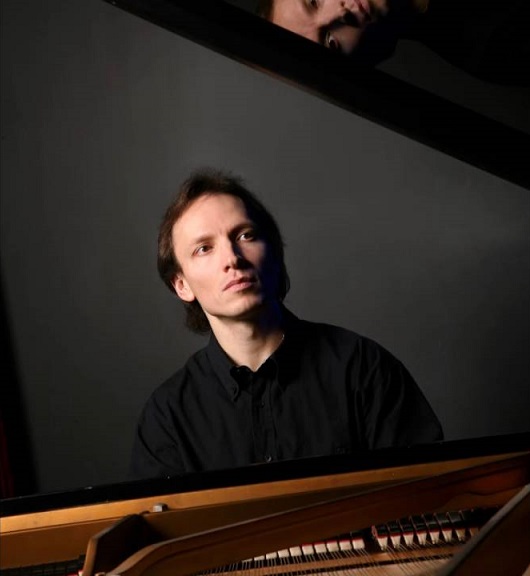
    Roustem Saïtkoulov  Piano
     
    Above: pianist Roustem Saïtkoulov
     
    Maurice Ravel’s Violin Sonata was premiered in Paris on May 30, 1927, with none other than George Enescu as violin soloist, and Ravel himself at the piano. The opening Allegretto starts quietly, with a piano theme that is taken up by the violin. Mr. Vengerov sweetens his tone here, making the most of the melodic possibilities. The violin trembles over a shadowy piano passage, and then a transportive lyricism builds, with the violin rising and lingering. A heavenly conclusion: sustained violin tone over a shimmering piano.
     
    To open the Blues: Moderato, the violinist plucks in altering soft and emphatic notes. The piano sounds rather glum at first, then starts pulsing persuasively as the violin gets jazzy, bending the phrases enticingly.
     
    From a gentle start, the Perpetuum mobile finale lives up to its name. The piano goes scurrying along, and Mr. Vengerov turns into a speed demon. The music rocks along – Rhapsody in Blue and Fascinatin’ Rhythm are evoked briefly – with the violinist verging on manic whilst Mr. Saïtkoulov’s playing stays light and luminous.
     
    The concluding works on the printed program both felt very much like encores: Heinrich Ernst’s decorative incarnation of The Last Rose of Summer and Nicolo Paganini’s super-elaborate take on the great aria Di tanti palpiti from Rossini’s TANCREDI (arranged by Fritz Kreisler) each had an “everything-but-the-kitchen-sink” feeling. Mr. Vengerov managed the fireworks well, drawing a celebratory audience response. My feeling was that one or the other of these two virtuoso pieces would have sufficed.
     
    As an encore, Fritz Kreisler’s Caprice Viennois was beautifully played. The audience then began streaming out. We were in the lobby when we heard a second encore commencing; but it was too late to double back.
     
    ~ Oberon

  • Weilerstein|Bychkov ~ All-Dvořák @ Carnegie Hall

    Af22462a9412c5a25af7c7678f4b1224

    Above: cellist Alisa Weilerstein

    Author: Ben Weaver

    Saturday October 27th, 2018 – The Czech Philharmonic Orchestra, under the direction of its chief conductor and music director Semyon Bychkov, rolled into Carnegie Hall on Saturday, October 27th for a two-concert visit. The first concert was an all-Dvořák program which featured two of the composer’s greatest works: the Cello Concerto (with soloist Alisa Weilerstein) and Symphony No. 7.

    Dvořák’s Cello Concerto was composed in New York City in 1894-95. Dvořák had long-held reservations about a concerto for the instrument: an early effort to write one in 1865 was left unfinished and lost until 1925; attempts by scholars to reconstruct it for performance have met with mixed results. But Dvořák was so impressed by a New York Philharmonic performance of Victor Herbert’s Cello Concerto No. 2 that he decided to try again. (Herbert, a highly successful composer of operettas in his own right, was principal cellist of the NY Philharmonic.) The resulting cello concerto by Dvořák, in the key of B minor, is arguably the greatest one of all. Brahms, for example, exclaimed: “Why on earth didn’t I know that a person could write a violoncello concerto like this? If I had only known, I would have written one long ago.”

    The opening Allegro begins with a mournful clarinet solo, a melody that reappears throughout the movement – and returns in the second half of the final movement. The cello enters playing the same melody, though in a different key. Alisa Weilerstein is one of the finest cellists in the world today and she held the audience spellbound with her passionate, emotionally generous and technically precise playing. With Maestro Bychkov, and an orchestra that has Dvořák in their bones, this was a performance from all that could not be improved. (Special recognition for the magnificent, soulful horn solo playing by, I assume from the roster, Kateřina Javůrková.) The lovely second movement, Adagio, contains Dvořák’s tribute to his dying sister-in-law Josefina (with whom he was secretly in love). He revised the finale of the concerto after returning to Prague and learning that Josefina had died. Dvořák inserted a melancholy section right before the end of the work. He wrote to the publisher: “The finale closes gradually, diminuendo – like a breath…”

    The audience greeted Ms. Weilerstein’s performance with a warm standing ovation. Weilerstein’s control of the instrument is superb. She manages to produce a million colors of sound, the rich and warm tone of her cello glows. The audience kept calling her to return, no doubt hoping for an encore. Alas, not on this night. But it’s hard to top perfection anyway.

    After the intermission the orchestra performed what many consider to be Dvořák’s finest symphony, No. 7, commissioned by the London Philharmonic Society in 1884. Dvořák himself conducted the premiere in 1885. The symphony opens with a sinister theme from the lower strings. This melody, and the dark mood, dominate the movement and haunt the rest of the symphony. No. 7 has a reputation as Dvořák’s tragic work and many conductors emphasize the darkness. But maestro Bychkov and the orchestra find more nuance here. Despite the somber mood of the opening movement there is plenty of humor too, including a lively Scherzo that could have been rejected from Dvořák’s Slavonic Dances. It is a truly great Symphony, even if has not gained the popularity of Symphonies Nos. 8 and 9.  And the Czech Philharmonic plays it better than anyone.

    The glowing strings, warm brass (no barking here), and the obvious love they have for this music are incomparable. Although most great orchestras can play everything well, there is something to be said for orchestras of a composer’s native land taking precedence in how their music can and should sound. Russians play Tchaikovsky better than anyone, Czech musicians do it with with Dvořák and Janáček, the French play French in ways most others simply don’t, an Italian voice can do things with a Verdi line that no one else can, etc. It’s not just about all the notes being played – any decent orchestra can do that – it’s about how the musicians feel about those notes. And this great orchestra clearly feels Dvořák’s music in a  singular way. It’s not just love for the music, it’s pride in the music. It is impossible to replicate anywhere else.

    You could hear and feel this uniqueness tonight, especially in the two encores: two Slavonic Dances, the lilting Starodávný (Op. 72, No. 2; surely one of Dvořák’s most memorable melodies) and the thrilling Furiant (Op. 46, No. 8). If you didn’t sway or tap along to this music, if you didn’t sing it to yourself, you weren’t doing it right.

    ~ Ben Weaver

  • Percussion and Piano @ Carnegie

    ~Author: Scoresby

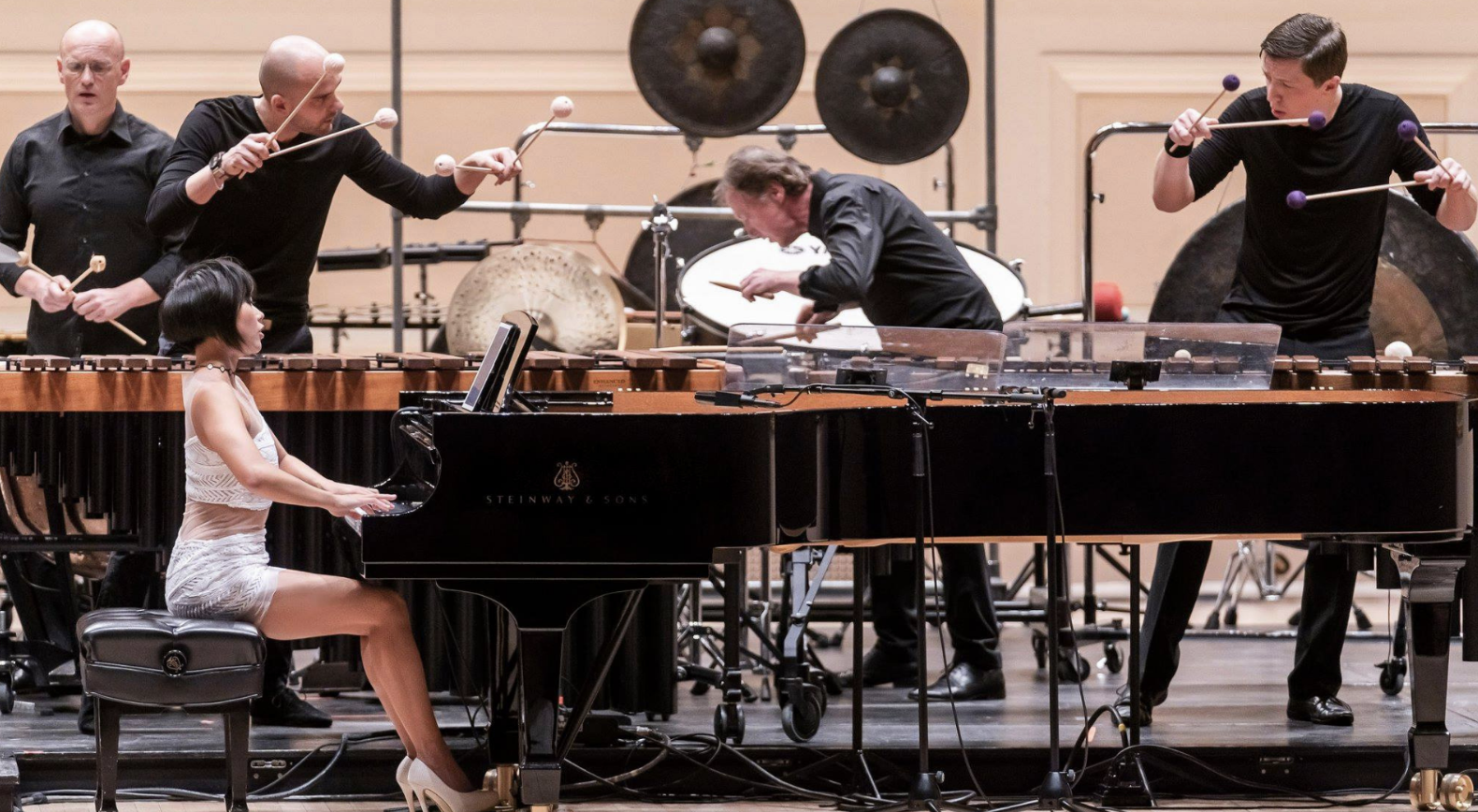
    Friday October 26 2018 – As the first concert in her six-part Perspectives residency at Carnegie Hall, Yuja Wang decided to do a thought-provoking collaboration with percussionists. It is great that instead of playing standard repertoire, Ms. Wang is using her platform to push her audience into more unfamiliar repertoire, such as her recital in Carnegie last season and this performance. Here, she was working with some of the all-stars of the percussion world: Martin Grubinger, his father Martin Grubinger Sr, Alexander Georgiev, and Leonhard Schmidinger for an incredibly fun evening. Unfortunately, the performance was billed as “Yuja Wang, piano and Martin Grubinger, percussion” with the other percussionists relegated to small lettering. The program didn’t even mention which percussionists played on which of the works. Oddly, no instrumentation was given for each work, instead just “piano and percussion”, despite a litany of different percussion instruments used. Nonetheless, Ms. Wang and Mr. Grubinger did give credit to their colleagues and this truly was a collaborative performance between all five musicians.

    Screen Shot 2018-10-31 at 8.19.36 PM
    Above: In the throes of the Bartók (from left to right): Leonhard Schmidinger, Alexander Georgiev, Yuja Wang, Martin Grubinger Sr, and Martin Grubinger; Photo Credit: Chris Lee

    The program began with Bartók’s Sonata for Two Piano and Percussion arranged for one piano and percussion by Martin Grubinger Sr. This was the most successful of the arrangements of the evening. Along with the Music for Strings, Percussion, and Celesta, this is Bartók at his most avant-garde with many references to jazz, interesting instrumentation, and spiky melodies. The biggest change to the score in this arrangement was splitting one of the piano parts into two marimbas played by exceptionally like one instrument by Mr. Grubinger and Mr. Georgiev – their coordination was almost surreal. The traditional percussion was played by Mr. Schmidinger and Mr. Grubinger Sr. The impact that this changed the entire timbre of the piece, becoming less incisive in a way but far more colorful. In a way it made the music sound even more avantgarde. In the mysterious opening chords after the rumbling timpani played by Martin Grubinger Sr, the aggressive playing of Ms. Wang was contrasted with the light tremolos on the marimba.

    With two pianos this texture sounds more like an attack, but the woodiness of the marimbas added a lighter atmosphere and made Ms. Wang’s piano seem more percussive. It was a brilliant play to highlight the piano playing while improving the music making. Ms. Wang for her part seemed to naturally get the score switching from whacking chords for emphasize to lyrical furtive blending into the ensemble. In the second movement, Bartók employs his night music in a classic tenary form. Ms. Wang’s evocative playing here with the military-esque sound of the percussion and softness of the Marimbas worked well in tandem to produce an unusual Messiaen-like ethereal sound.

    Mr. Grubinger and Mr. Georgiev exchanged more and more agitated lines with Ms. Wang leading into the virtuosic agitato with ripples of arpeggios punctuated by chords. Ms. Wang silvery sound moved through the dead hits of percussion, a dialogue less apparent in the original score. The group whipped its way through the Stravinsky-esque finale capturing a raw energy.

    The sold-out crowd seemed somewhat confused by the music, perhaps a little too avant-garde for their taste – but to me it was thrilling. Luckily for most of the crowd the group came back onstage to play Martin Grubinger Sr.’s arrangement of John Psathas’s Etude from One Study for three percussionists and piano. This work is a virtuosic piece that riffs through a bunch different sequences and Mr. Grubinger Sr. made sure that each instrument got its own fun solo to show off. It was the perfect piece for some levity after the serious Bartók and genuinely sounded more in the idiom of a rock concert by the end of the etude, causing the crowd to roar with applause.

    The second half of the program began with another Martin Grubinger Sr. Arrangement: this time of The Rite of Spring for one piano and three percussionists. Mr. Grubinger Sr.’s arrangement of this was magical, using elements of the two piano and one piano versions of the piece combined with marimba, vibraphone, chimes along with Stravinsky’s percussion of timpani, woodblock, washboard etc… to produce a completely unique sound that still paid homage to the original. It is incredibly unfortunate that the Stravinsky Estate decided a few weeks before this tour to ban this group from performing the work anywhere in which the copyright of the piece is still in effect (US being the only place where it is lifted), so this ended up being the second and last performance of the tour.

    Screen Shot 2018-10-31 at 8.09.33 PM
    The group after the final applause (left to right): Martin Grubinger, Leonhard Schmidinger, Alexander Georgiev, Yuja Wang, and Martin Grubinger Sr. 

    The opening was flush with color using the vibraphone as the bassoon mixed with humming tremolos from the piano and marimba to slowly build into the percussive attacks of the Augurs of Spring. The explosive last few movements such as the Ritual of the Rival Tribes and the Dance of the Earth of the first part were where this arrangement really shined, sounding at once razor-sharp and still managing to capture Stravinsky’s innovative instrumentation. In the introduction to Part II, the primordial timbres were still achieved by Mr. Georgiev bowing the vibraphone (and perhaps bowed glass too?) producing an eerie metallic sound mixed with the light woody marimba of Mr. Grubinger and a base structure of Ms. Wang’s piano playing the string part of the score.

    After those first two movements of Part II, the balance seemed quite off with the percussion absorbing all of Ms. Wang’s sound. Nonetheless, all four performances gave a virtuosic and energized performance. Interestingly, the percussion seemed less precise than Ms. Wang’s piano, particularly in the final section of the piece during the complicated rhythmic playing. The percussion chosen wasn’t able to stop its vibration quick enough, so some of the crisp beats sounded muddier from the bleeding sound. Still, the group seemed in perfect sync with one another, this was true ensemble playing.

    To end the performance (personally it seemed odd to me to have anything after The Rite, given how climactic it is already), the group played Mr. Grubinger Sr.’s arrangement of Leticia Gómez-Tagle’s solo piano arrangement the popular orchestral work by Arturo Márquez Danzon No. 2. This poppy but fun piece was thoroughly enjoyable if a little light after The Rite. Ms. Wang seemed to really dig into the opening tango and enjoy the many different Latin American rhythms that come as the piece develops. The group did a good job keeping this fun and energized. After a thunderous applause Ms. Wang and Mr. Grubinger gave an encore of the two of them playing Jesse Sieff’s Chopstankovich, which essentially a virtuosic snare drum part added to Shostakovich String Quartet’s No. 8’s intense second movement (in this case, the string part performed by Ms. Wang on piano). It was a fun little encore to cap the evening’s eccentric program. It was a wonderful collaborative program that broke the more staid conservative environment with some of the best musicians around.

    — Scoresby

  • Bychkov|Czech Philharmonic ~ Mahler 2nd

    3jb9qd-semyonbych-master

    Above: Maestro Semyon Bychkov

    Author: Oberon

    Sunday October 28th, 2019 matinee – Attending a performance of the Mahler 2nd invariably fills me with memories of past performances of the work that I have experienced. By far the most meaningful of these came at Carnegie Hall in December 2001 when my late friend Makiko Narumi sang the solo alto part in a performance by the Juilliard Orchestra. She was suffering from a rare form of cancer, but heroically she sang…and moved everyone to tears with her “Urlicht“. She left Carnegie Hall in a wheelchair that night, and never sang in public again. She flew to Japan in March 2002 to seek treatment there, but she died at her parents’ home in Aomori within a month.

    This afternoon, back at Carnegie, the great conductor Semyon Bychkov led the Czech Philharmonic in a rendering of this Mahler masterpiece that was not quite the soul-stirring experience I had been anticipating; the reasons for this were mainly extra-musical.

    The conductor’s pacing of the work was flawless, and there were long paragraphs of superbly layered sound from the orchestra. The symphony’s epic climaxes and their ensuing ebbing away were impeccably judged by the Maestro. The courtly opening of the second movement, and the ‘Halloween’ dance of the third reminded me yet again of what a great work the Mahler 2nd truly is. Full-bodied strings and expert solo woodwind playing gave a great deal of pleasure, and the chorus played their part in the proceedings to wonderful effect.

    These positive elements were somewhat offset by some fluffed brass playing, and by vocal soloists who were more serviceable than inspiring. Mezzo-Soprano Elisabeth Kulman sounded lovely in the very quiet start of the Urlicht; later, a trace of flatness crept in, and the concluding rising phrase of the song seemed a bit unsupported. She sounded fine, though, in the later O glaube! Soprano Christiane Karg’s upper notes were somewhat tremulous, though overall her sound is appealing.

    But it was a series of noises in the hall that eventually took on a comic aspect – due to their frequency and timing – which made concentrating on the music next to impossible. It started during a dead silence midway thru the symphony’s opening Allegro maestoso; and it happened again during the Andante moderato. Then, just as Ms. Kulman was starting the Urlicht, there was a loud thud. And something else was dropped during an offstage brass passage.

    In the final movement, everything at last seemed to be going smoothly – aside from some wonky brass notes and yet another dropped item – until the chorus made their hushed entrance. Here, atmosphere is everything. But the sound of a door closing somewhere ruined it.

    When so many earth-bound distractions occur in the course of a single symphony, one feels battered down. My high expectations for this concert were slowly frittered away as the afternoon wore on. 

    Considering my abiding love for the Mahler 2nd, this is not at all the type of article I thought I’d be writing this evening. But an accumulation of ordinary annoyances – there were others that I haven’t mentioned – got the upper hand today.

    NOTE: Ben Weaver writes about the Czech Philharmonic’s opening performance at Carnegie Hall, which took place on Saturday evening, October 27th, here. Ben was with me at the Mahler matinee, and said that the blips in the brass playing on Sunday were nowhere evident in the Dvořák program. He felt in general that the orchestra players might have been experiencing some fatigue on Sunday afternoon following a big program on Saturday night. He also said that the Dvořák program was free of audience distractions and extraneous noises. 

    ~ Oberon

  • Ensemble Connect @ Weill Hall

    Gabriella-smith-691px
     
    Above: composer Gabriella Smith
     
    ~ Author: Brad S Ross
     
    Monday October 22nd, 2018 – It was a cold night in New York City—one of those now all-too-often days where summer seems to have skipped fall entirely and moved straight into winter.  Respite could be found for the audience at the Weill Recital Hall in Carnegie Hall, however, where the immensely talented players Ensemble Connect brought some much-needed warmth to a small percentage of classical music lovers.
     
    Ensemble Connect is a two-year fellowship program with Carnegie Hall that comprises some of the finest young players in the United States.  These musicians hail from some of the nation’s top music schools, including, as the program noted, the Curtis Institute of Music, the Juilliard School, the Peabody Institute, and the University of Southern California, among others.  Indeed, there was not one sour note or poorly delivered phrase of the entire evening.
     
    The concert began with György Ligeti’s Six Bagatelles for Wind Quartet—a set of six short movements adapted from his larger piano work Musica ricercata.  Written in 1953 while the composer lived in Communist Hungary, the piece is a texturally rich and rhythmically adventurous foretaste of the polyphonic styles for which he would later come to fame with such works as Atmosphères and Lux aeterna.  Six Bagatelles opens on an amusing Allegro con spirito followed by an attractively dissonant Rubato: Lamentoso, a warm and pulsing Allegro grazioso, a spirited Presto ruvido, a richly mysterious Adagio: Mesto (written in memoriam of the composer Béla Bartók), and an energetic Molto vivace that cheekily concludes the work.  Performed with precision and zest by the members of Ensemble Connect, it was a delightful demonstration of mature musical humor—a rare quality in classical music.
     
    Next was the New York premiere Anthozoa, a 2018 Ensemble Connect commission written for violin, cello, piano, and percussion by the young American composer Gabriella Smith.  Anthozoa, as Smith explained in a brief pre-performance talk, was inspired by recordings that the composer made while scuba diving of sea life (its unique title derives from a class of marine invertebrates that encompasses corals and sea anemones).  It opened on a colorful percussion solo that is quickly joined by prepared piano, sliding pizzicato cello, and unpitched strikes on the violin.  Lengthy and propulsive soundscapes shifted throughout its twelve-minute duration revealing at times otherworldly sonorities.  Dramatic piano chords gradually emerged underneath a rushing full-ensemble crescendo before receding into a somber, elegiac diminuendo that faded to a silent finale.  Extended technique abounded in Anthozoa, which was as much fun to watch as it was to hear, and Smith received a well-earned ovation—perhaps the longest of the evening—before the concert paused for intermission.  It’s a colorful and invigorating new work, one that will hopefully find many more performances in the future.
     
    5ae73b5def11d7a7712dc59adb06728432140a61b8e6d9718e5f2a36ffcd

    Above: composer Kaija Saariaho, photographed by Maarit Kytöharju
     
    Following intermission was Light and Matter for violin, cello, and piano by the Finnish composer Kaija Saariaho.  Saariaho, who by now must be counted among the finest composers alive, more than lived up to her reputation here as a master of the craft.  Written during the autumn of 2014, Light and Matter was conceived, as the composer put it, “while watching from my window the changing light and colors of Morningside Park.”  Menacing pulses open from the lower registers of the piano and cello before being joined by a belated violin.  Once combined, they exchange a series of vivid textures and haunting atmospheres that cast a hypnotic spell for the piece’s twelve-minute duration.  This aptly complimented the October evening of its performance.
     
    The most warmth was brought to the proceedings with the final piece of the night, Johannes Brahms’s Clarinet Trio in A-minor.  Composed in 1891, the trio marked Brahms’s return to composition after he considering retiring one year before.  This is owed to his admiration of the clarinetist Richard Mühlfeld, whom Brahms regarded as “a master of his instrument.”  Clarinetists may be forever grateful of this relationship, which also led to the composition of his Clarinet Quintet in 1891 and two Clarinet Sonatas in 1894.  The Clarinet Trio, cast in four movements over approximately twenty-four minutes, comprises an inviting Allegro, a wistful Adagio, a buoyant Andantino grazioso, and an upbeat Allegro that sings the work to its final minor chord.  The trio’s sweeping musical gestures and warm consonances were the very apex of Romanticism; this, combined with the relative coziness of the Weill Recital Hall, made for a sumptuous conclusion before players and audience retired into the chilly night air.
     
    All of the musicians performed with the seemingly effortless mastery we’ve come to expect from such things, though it’s easy to forget sometimes just how much work and dedication got them there.  Each deserves a mention, and to this end I will oblige; they were the hornist Wilden Dannenberg, the cellist Ari Evan, the pianist Tomer Gerwirtzman, the percussionist Sae Hashimoto, the violinist Jennifer Liu, the clarinetist Noémi Sallai, the flautist Leo Sussman, the oboist Tamara Winston, and the bassoonist Yen-Chen Wu.  All should be cherished for their well-honed talents and can hopefully anticipate bright careers ahead.
     
    ~ Brad S Ross